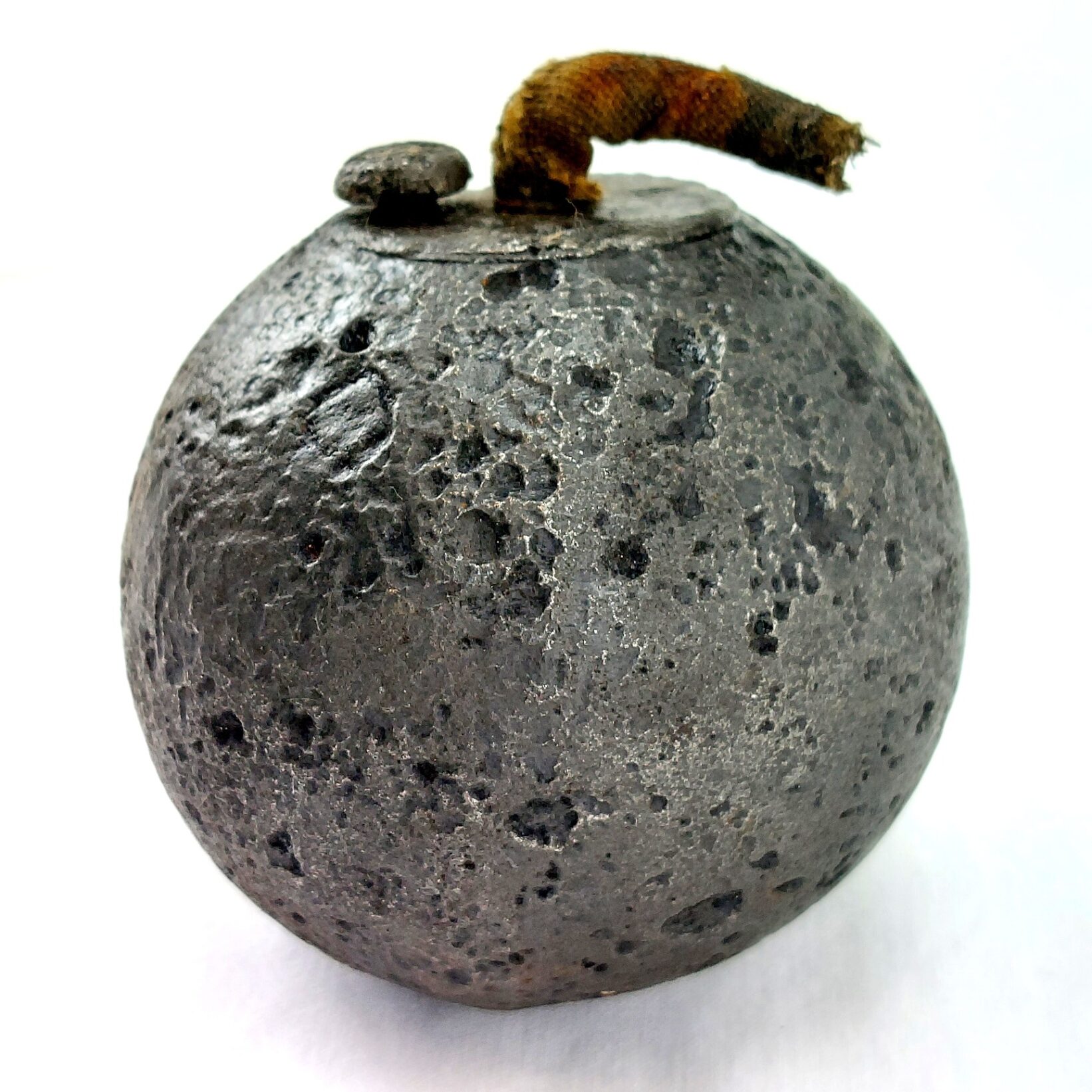
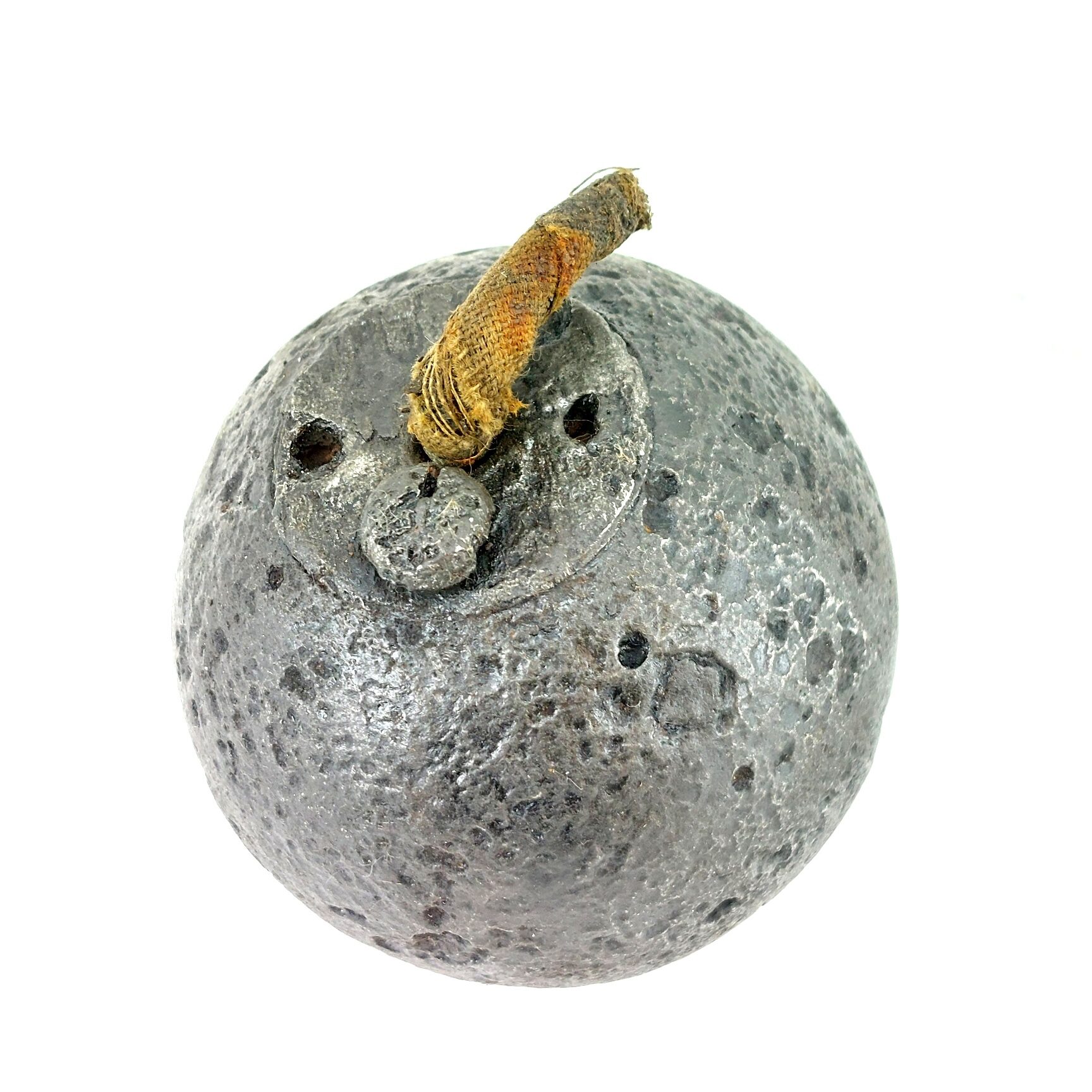
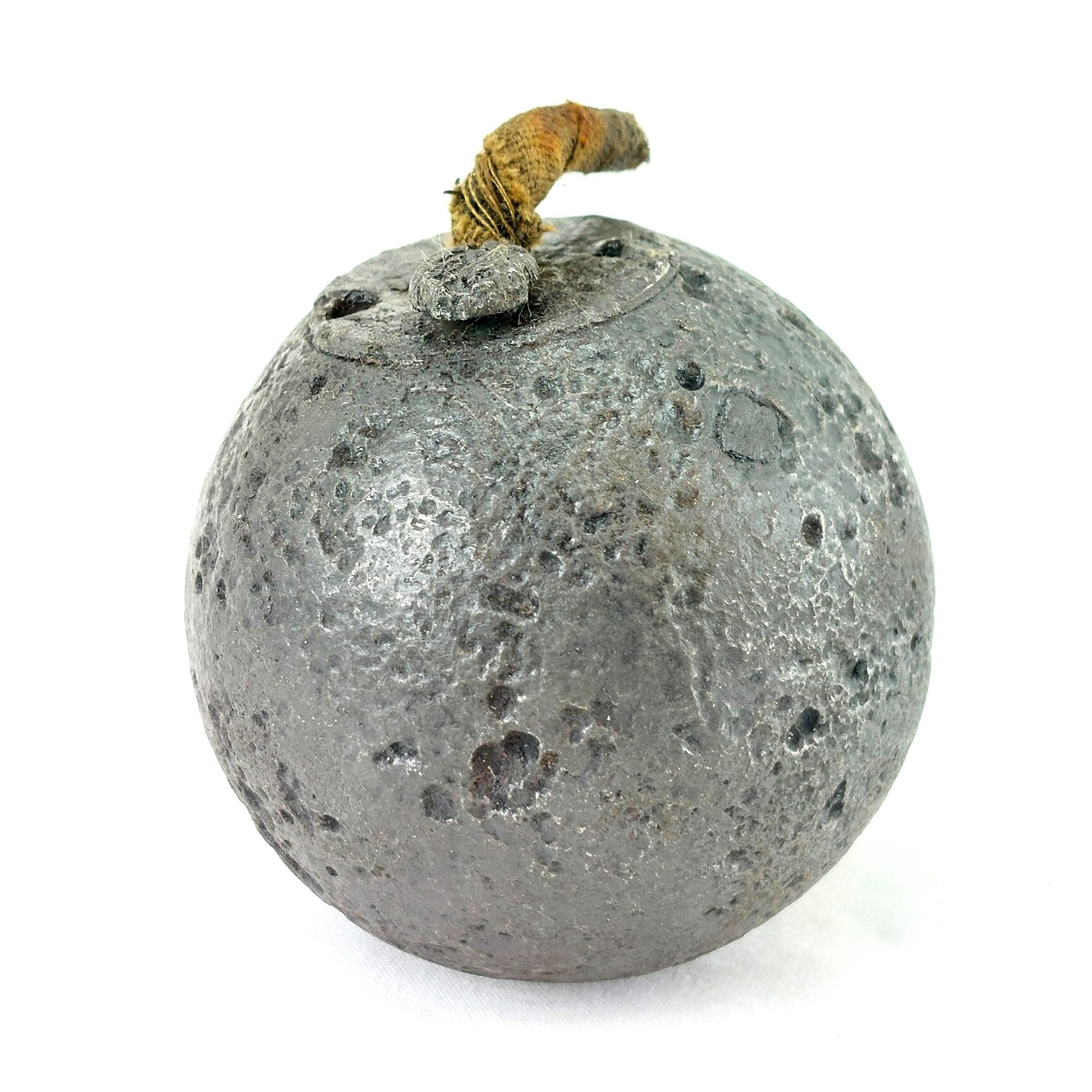
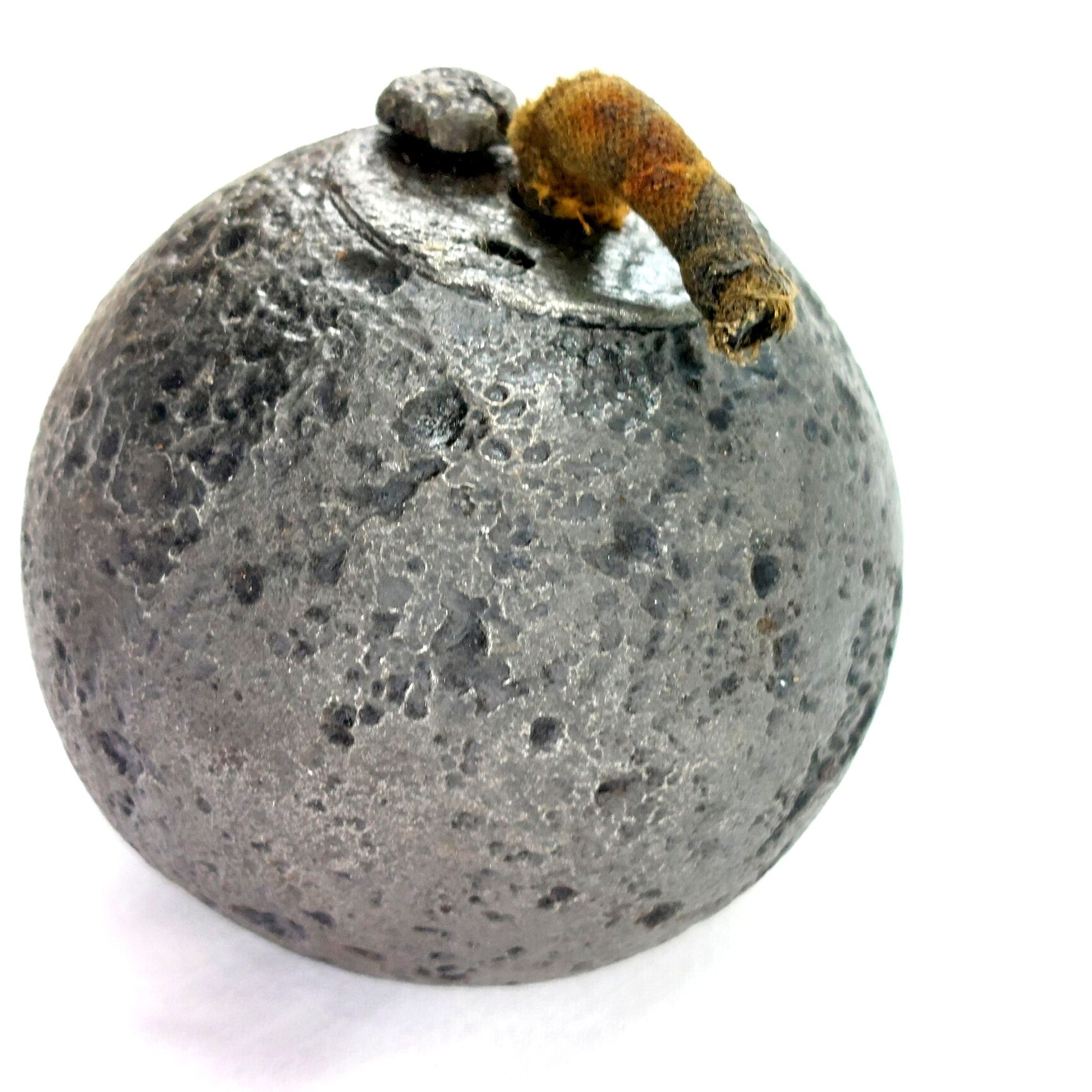
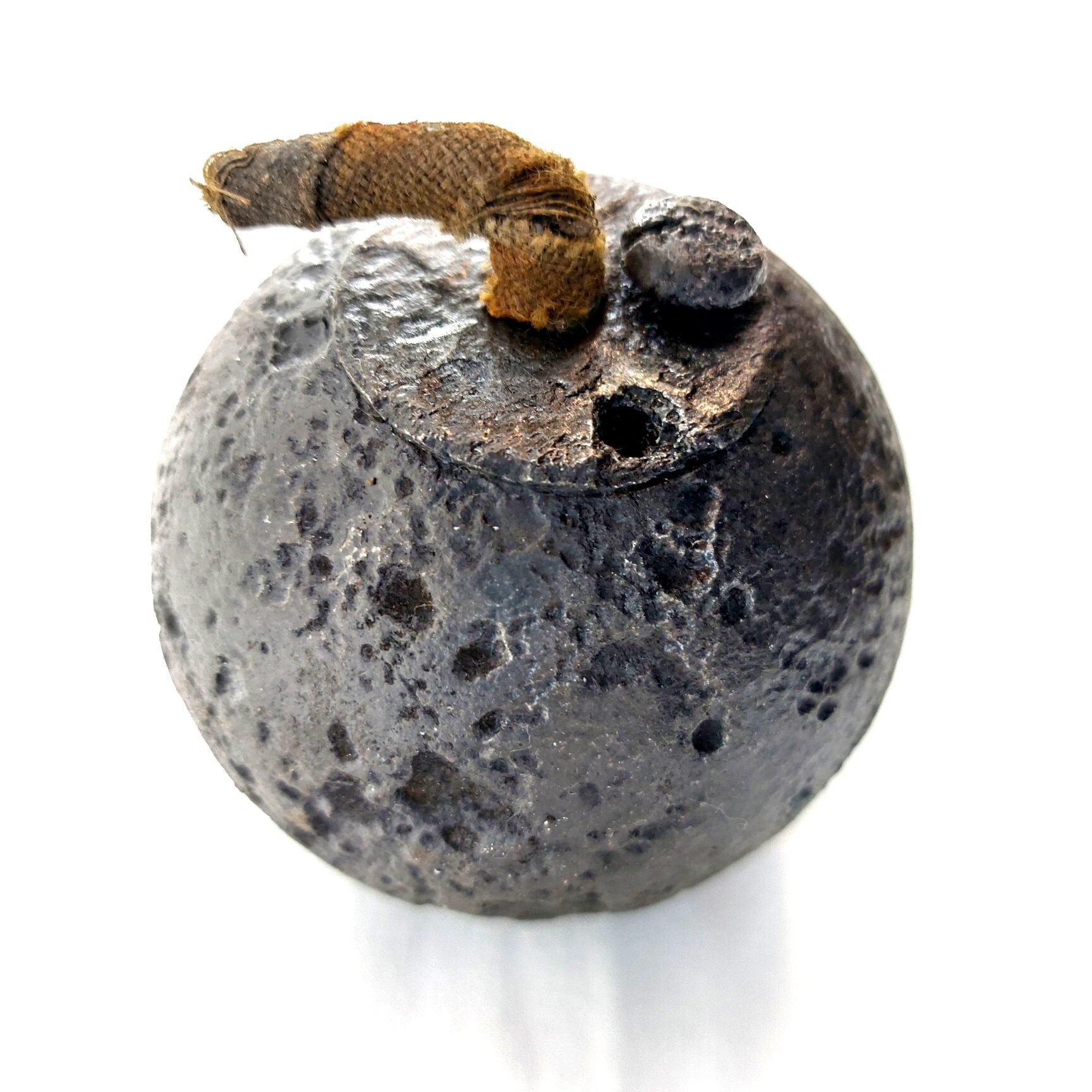
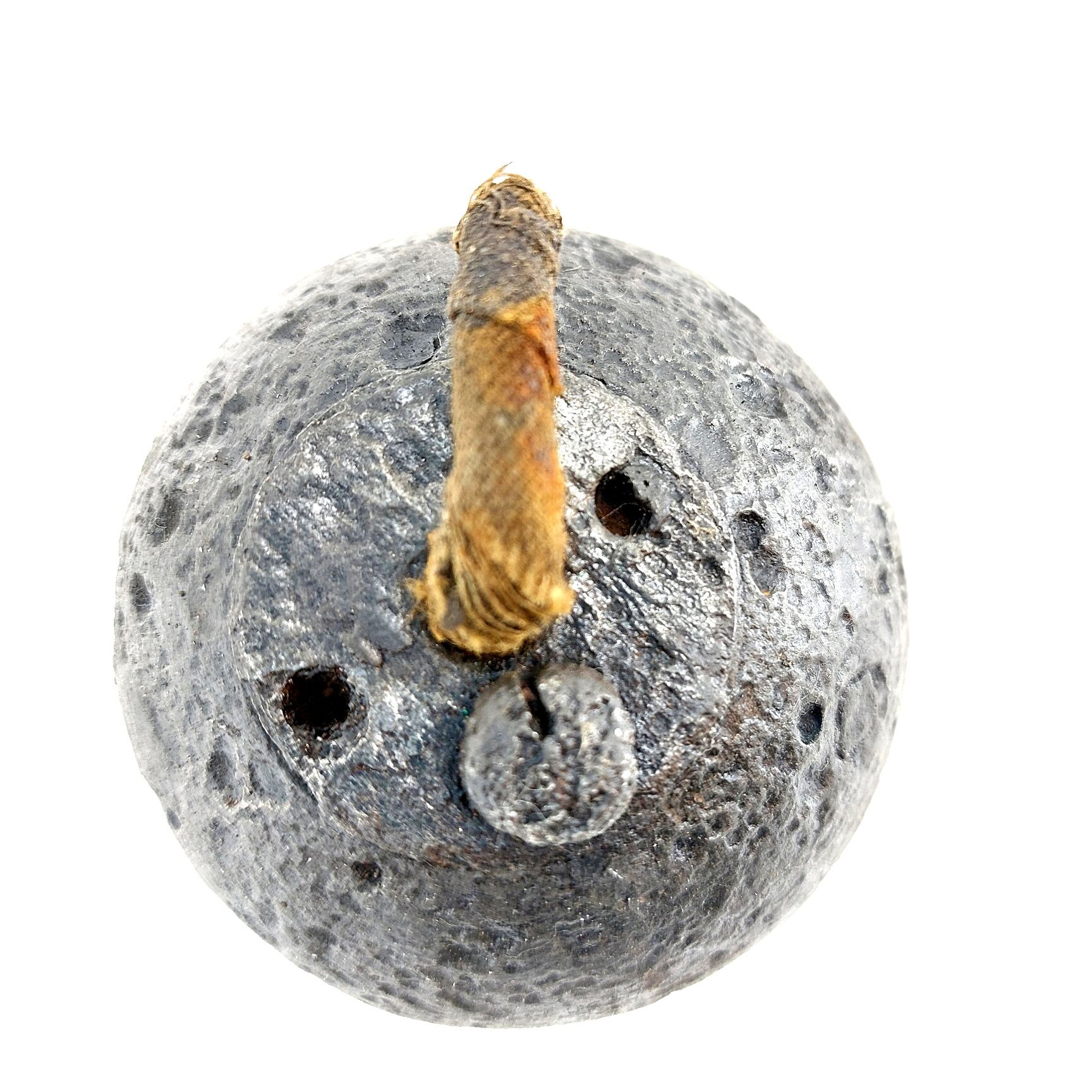
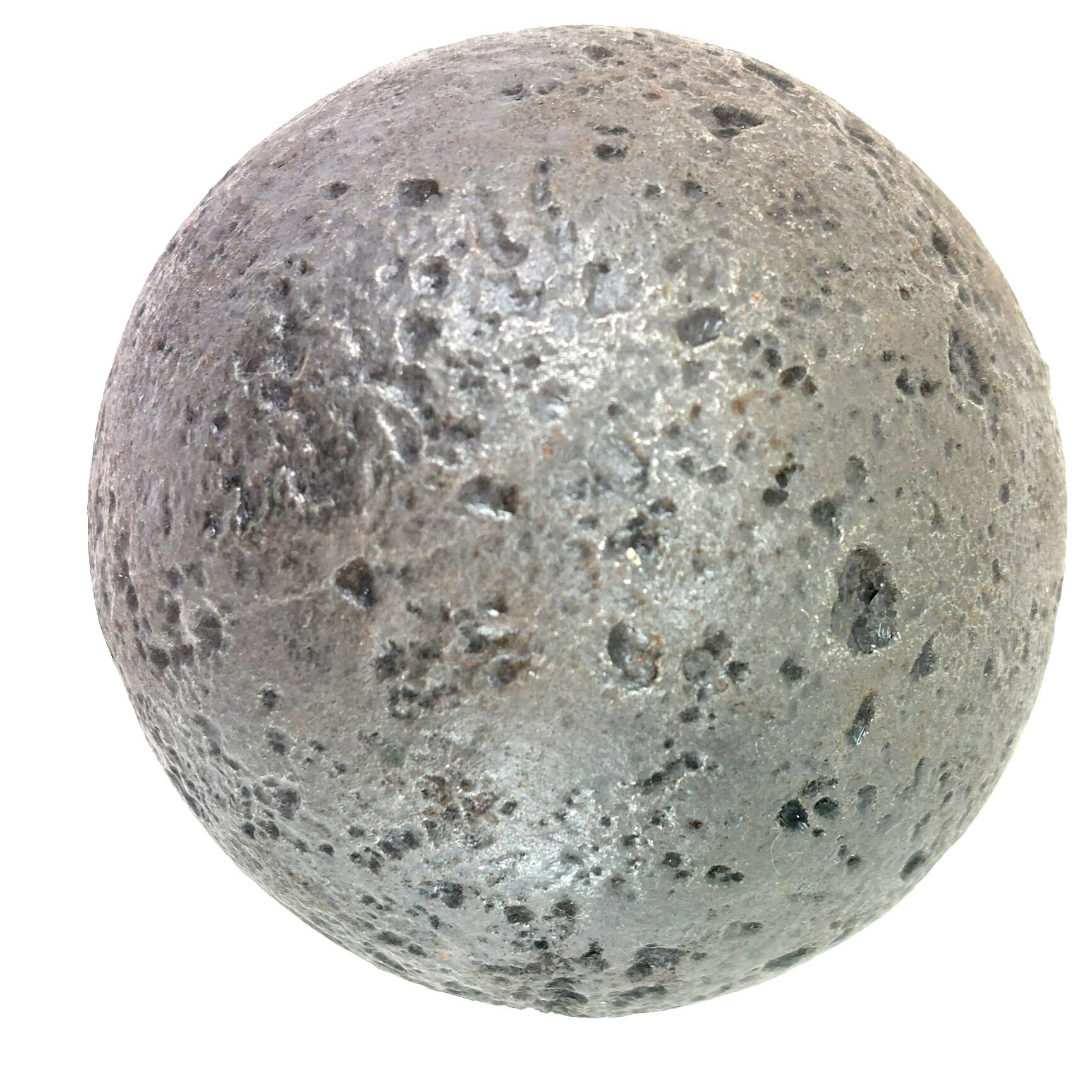
The No. 15 'Ball' grenade, a First World War British time-fused explosive, featured a cast-iron spherical body flattened at the top for a fuse insertion point. Known also as the 'Cricket Ball grenade', it had an internally grooved design for fragmentation. Introduced in July 1915, it was a simple yet mass-producible weapon. By September 1915, production exceeded 200,000 units per week. The No. 15 was utilized during campaigns such as the Dardanelles and the Battle of Loos, filling a gap caused by delays in manufacturing the more advanced No. 5 Mills bomb.
To arm the grenade, the user removed a protective covering on the fuse and ignited it by striking an external Brock matchhead igniter. Two fuse types were available: a five-second fuse for hand-throwing and a nine-second fuse for catapult deployment. However, the design was highly vulnerable to moisture, and operational reliability was poor. Reports estimated that 18 out of 20 grenades failed to ignite due to faulty fuses, leading to its withdrawal later in 1915. Despite its shortcomings, the No. 15 played a critical stopgap role in British wartime efforts.
*Condition*
This is a relic and a fascinating part of the evolution of grenades. Please see photographs as part of the condition report.
*In order to complete the online purchase we will require a picture/scan of a photo ID (Driving Licence, Passport or an official document with a recent picture). If you don't posses any such document please call to buy. If we consider that the proof of ID is incorect or insuficient, we reserve the right to cancel the transaction.
*We also reserve the right to cancel the transaction with a full refund if there is any suspicion that the provided item will be used in any way contrary to the laws and legislation of UK.