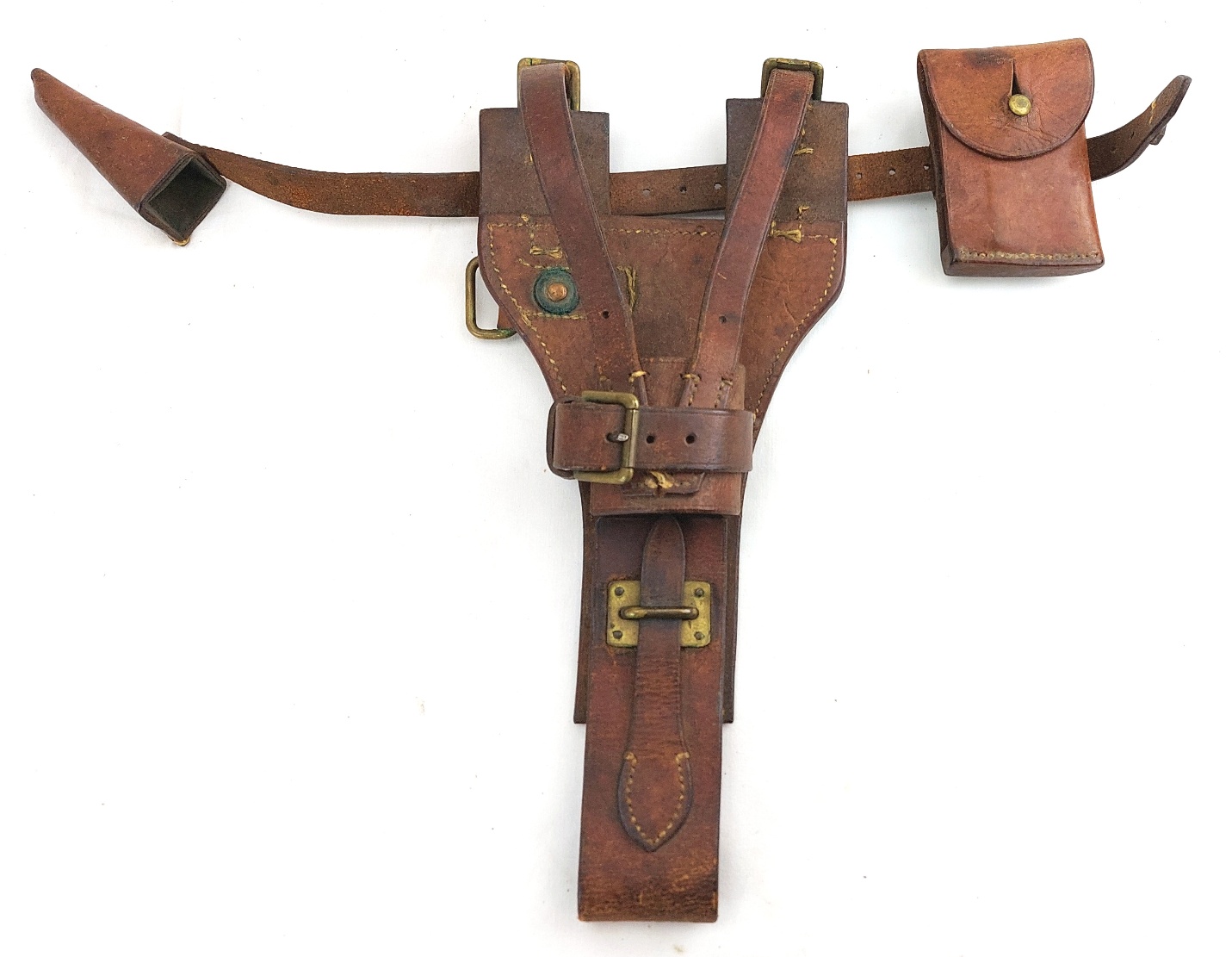
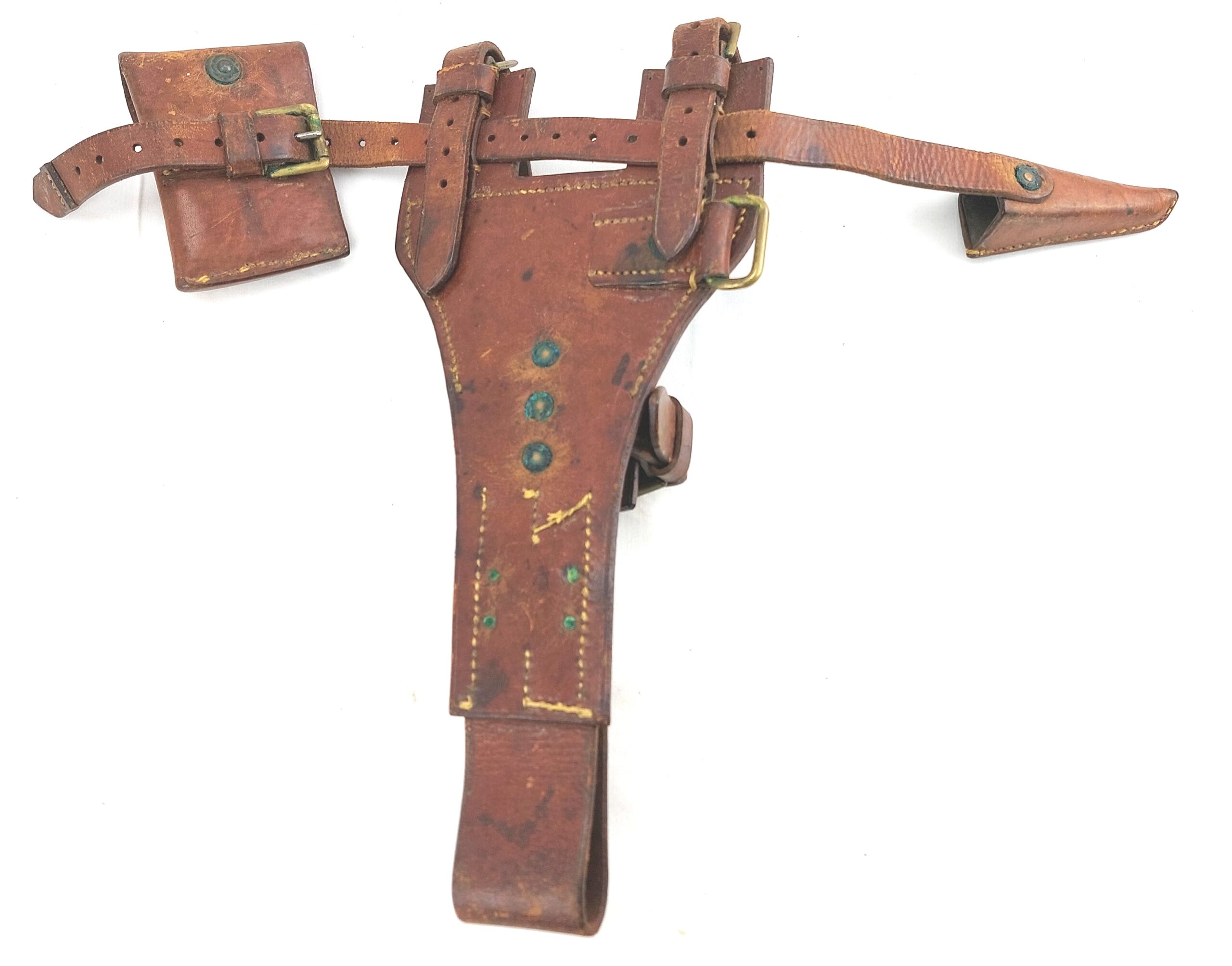
*Portugal, WW1 — c. 1910–1915, Cavalry Leather Belt Rig with Sword-Frog & Metal-Lined Pick-Axe—Entrenching-Tool Carrier / CEP Trench-Kit Carrier*
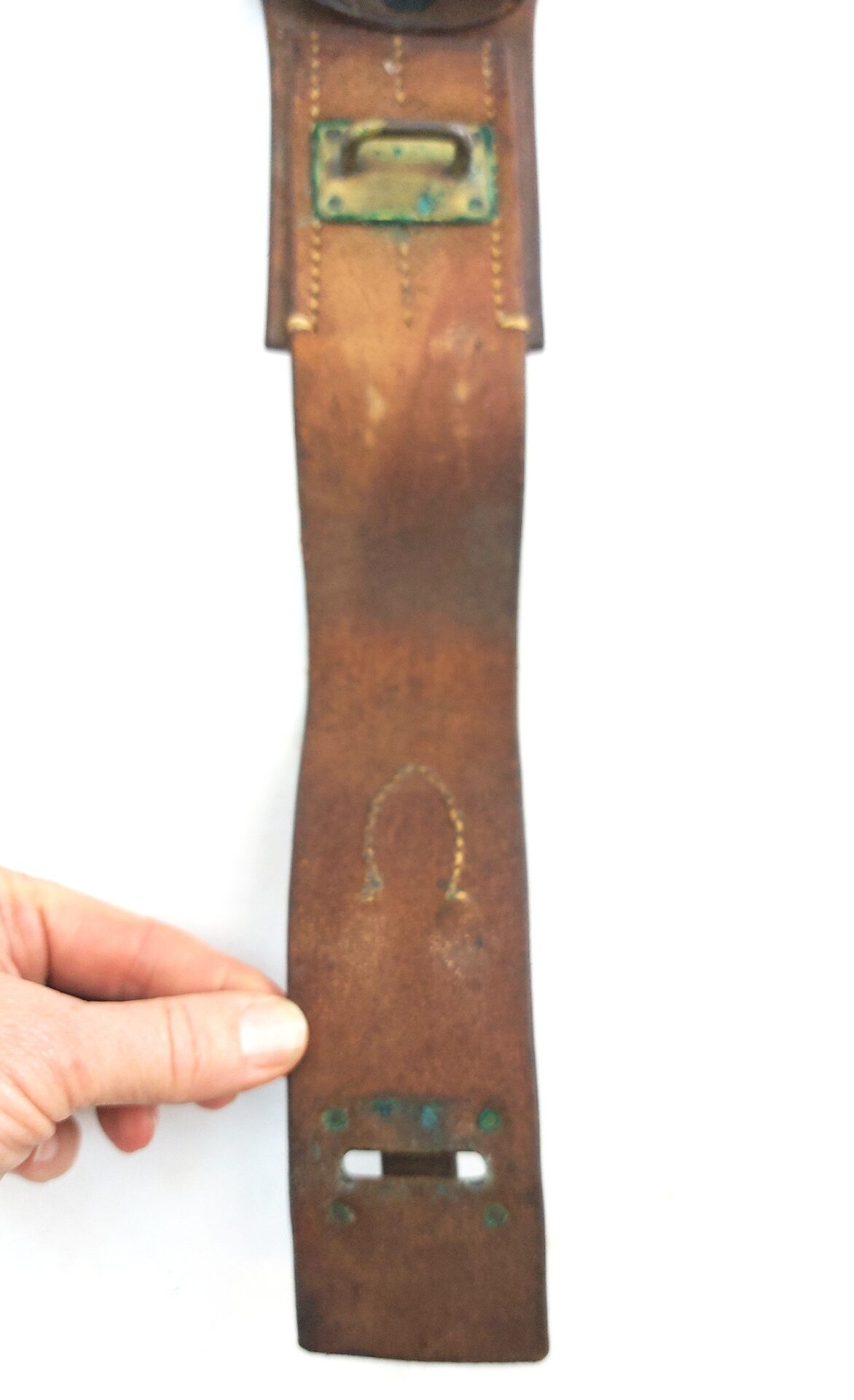
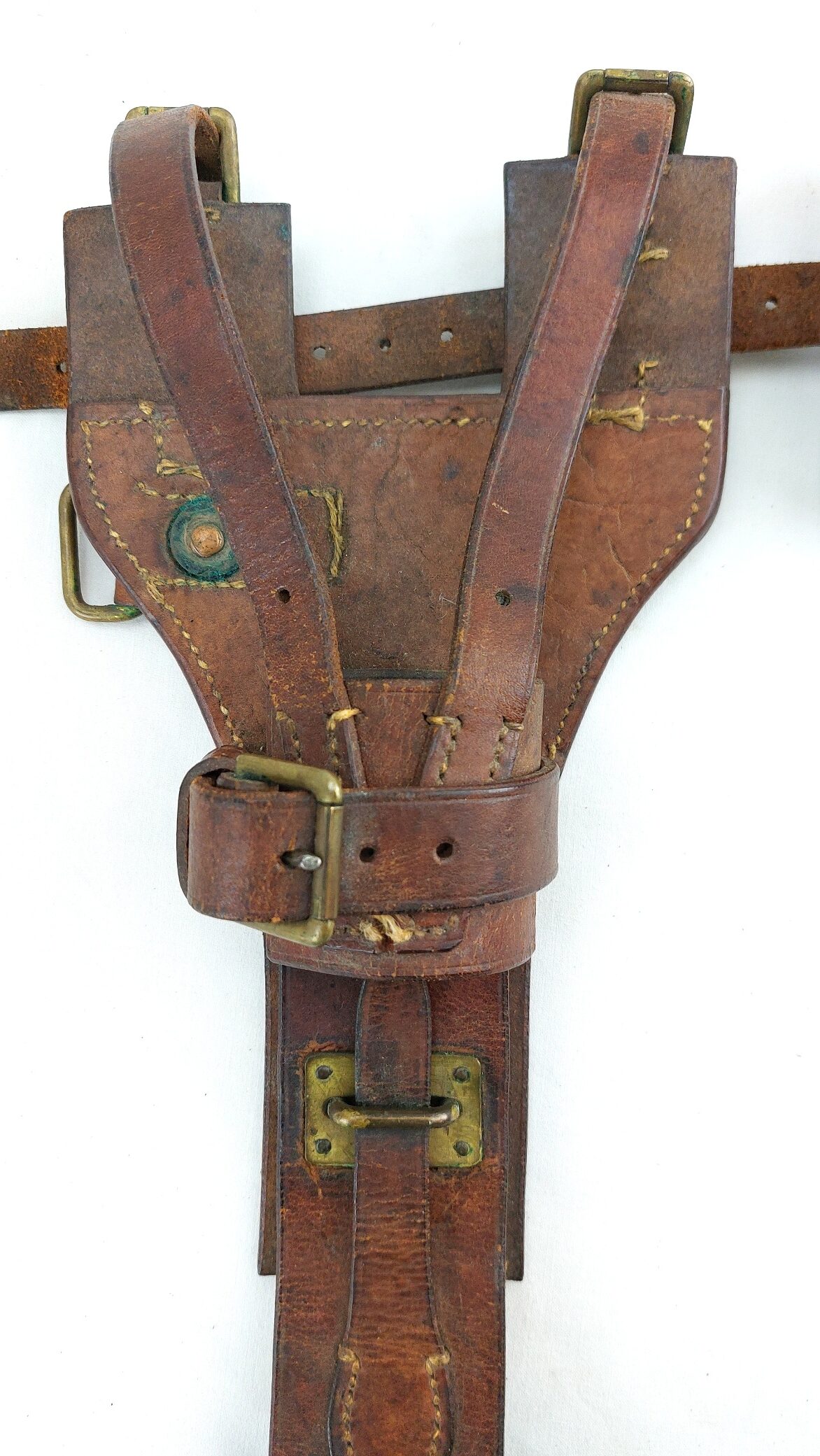
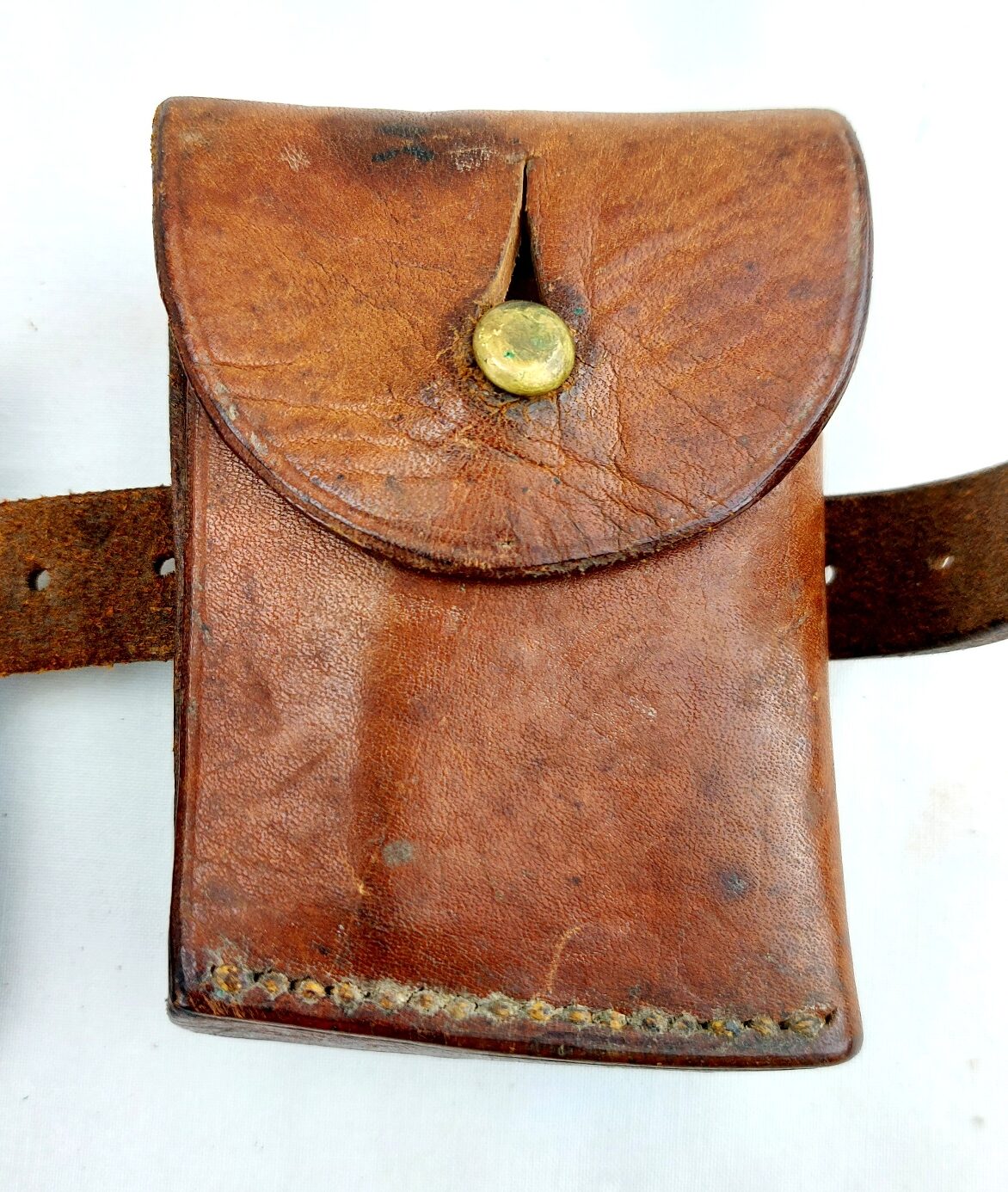
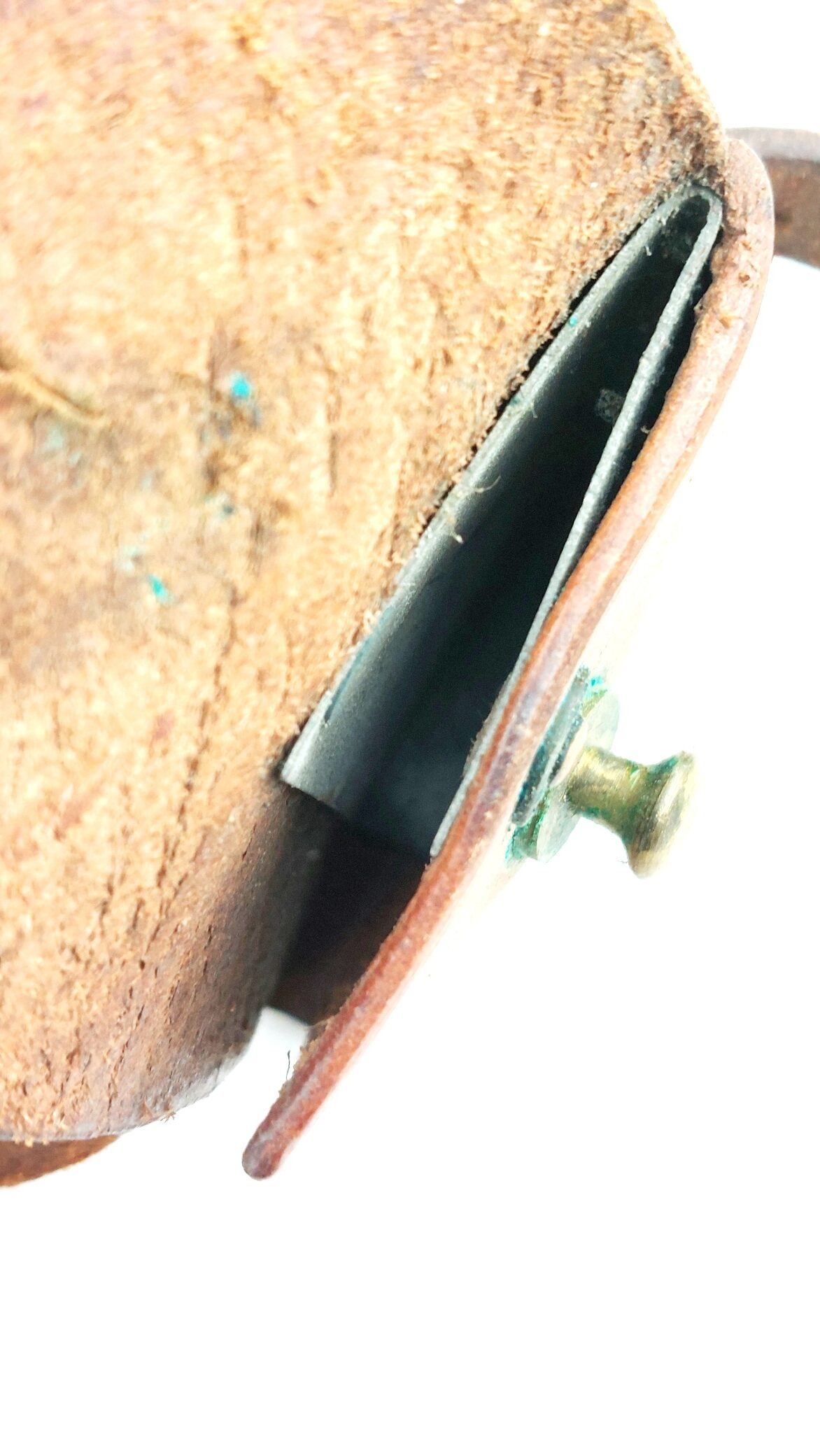
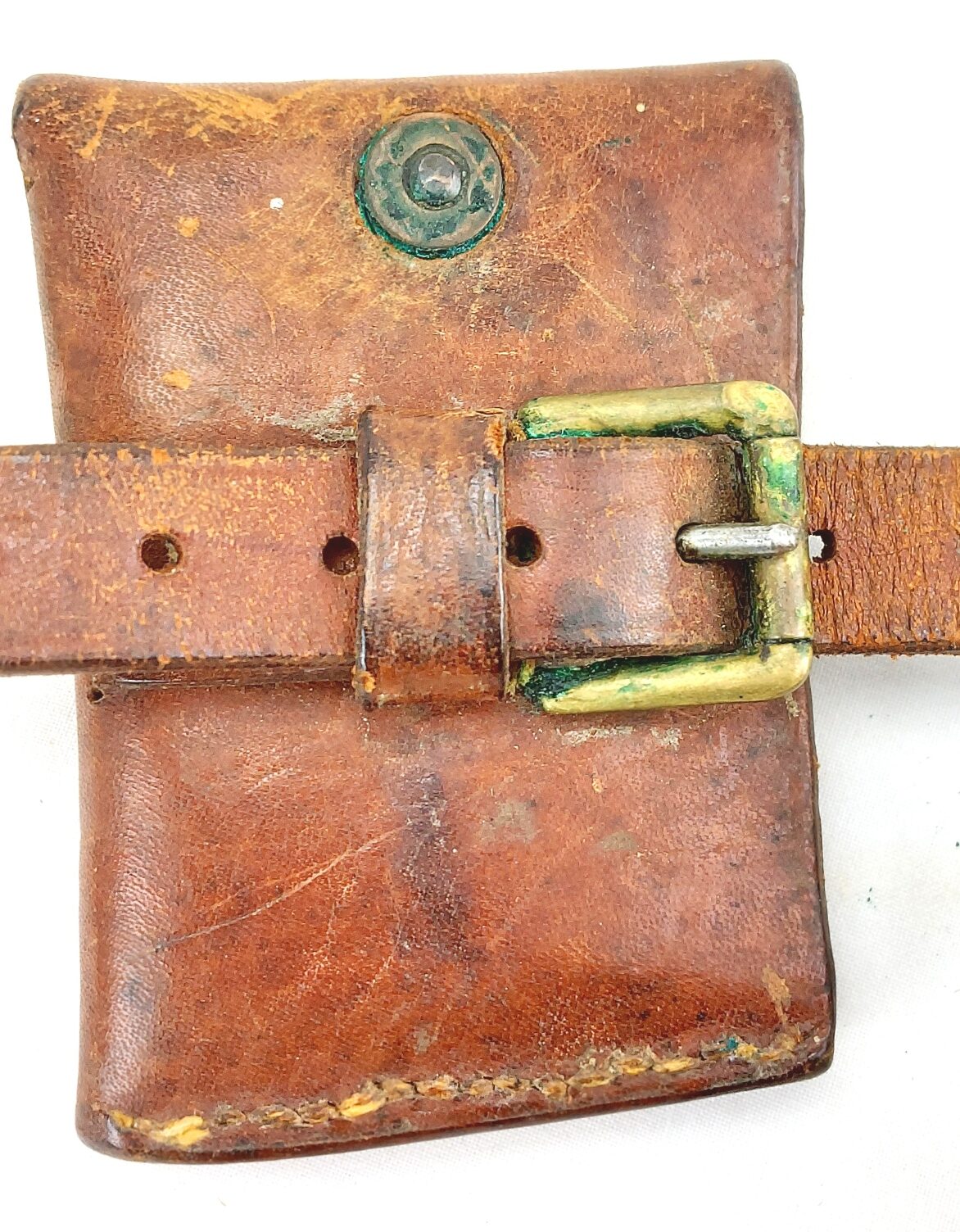
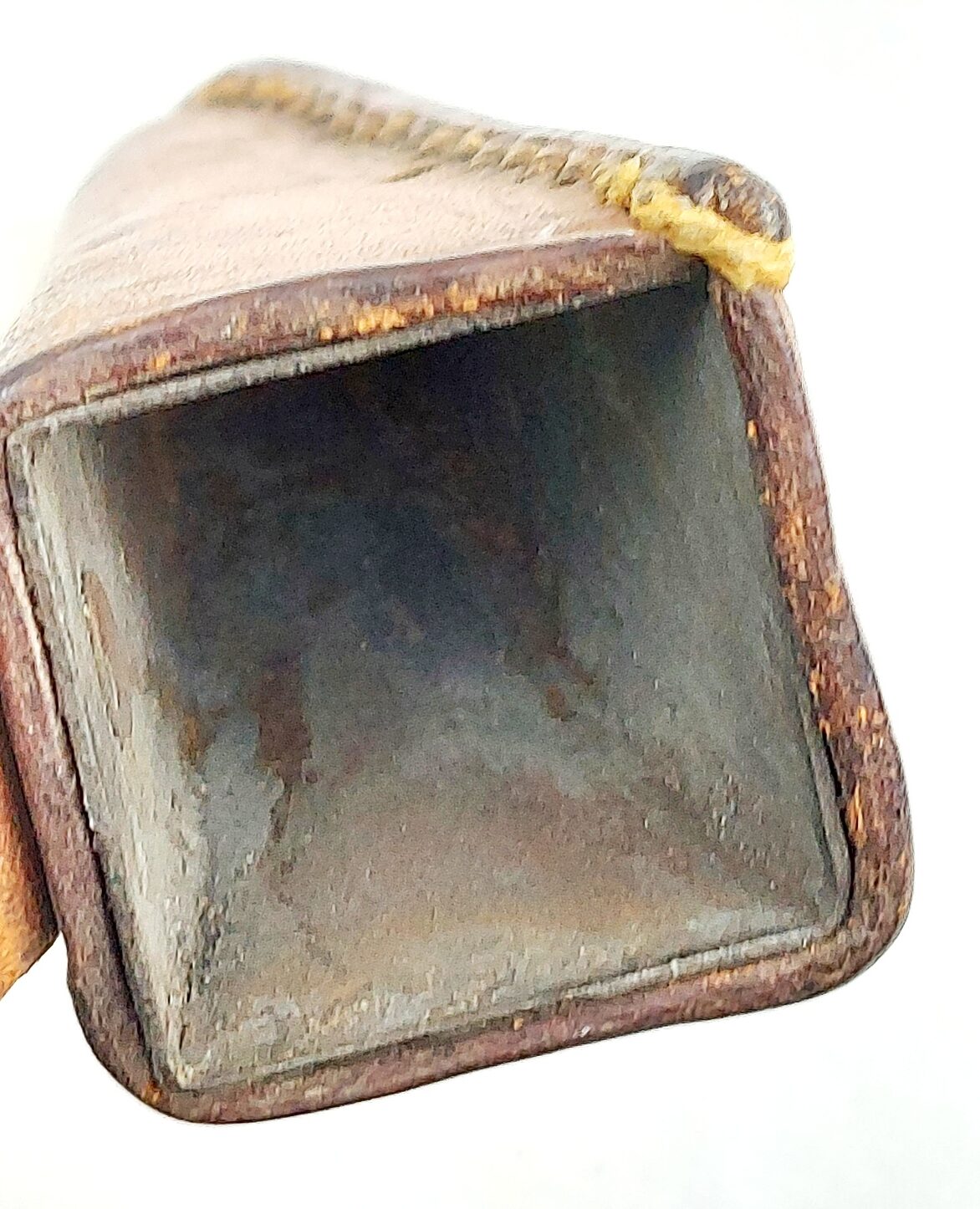
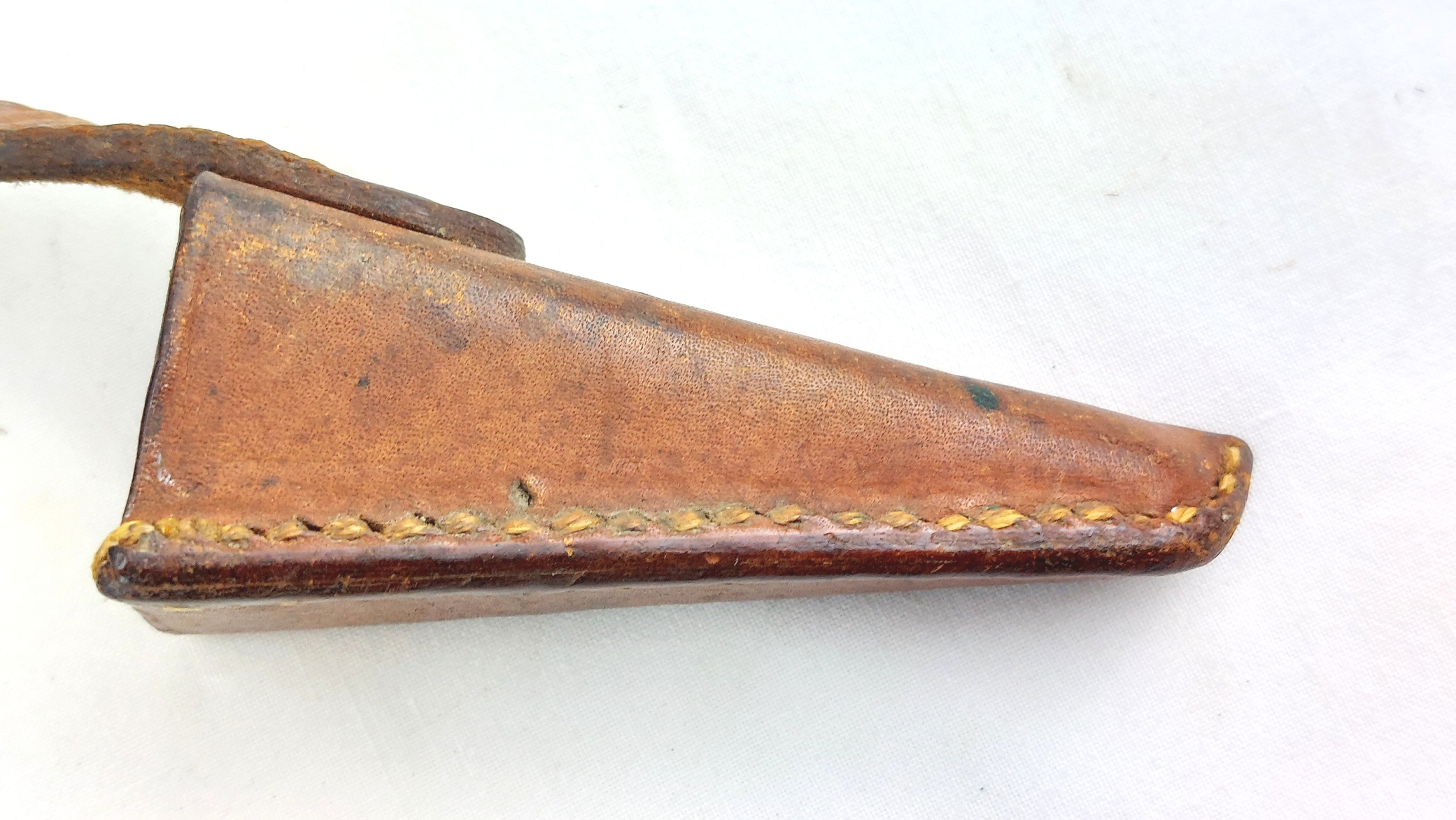
A rare pre-M11 Portuguese cavalry / pioneer leather belt rig, dating to the transitional years just before the 1911–13 adoption of Mills-pattern webbing. Constructed from thick russet harness leather with brass fittings, the rig combines: a long leather scabbard or sword/bayonet frog; a rigid, sheet-metal-lined tapered carrier strongly associated with early pick-axe or entrenching-tool points; and a small field pouch likely intended for wedges, nails or minor pioneer fittings. All three elements are mounted on a purpose-made leather waist belt section with stitched and riveted attachment points typical of Portuguese cavalry & pioneer equipment of the period.
History Note: In the years before the First World War, the Portuguese Army relied heavily on leather field equipment, particularly for cavalry and pioneer troops engaged in colonial operations in Angola, Mozambique and Timor. This changed with the 1911–13 adoption of a Portuguese version of the British Pattern 1908 webbing, designated M11. Much of this early Portuguese webbing was later dismantled, with its brass melted down and reused.
Although neutral in the opening months of the war, Portugal’s position was shaped by tensions surrounding its African colonies. Germany contested Portuguese authority in Angola and Mozambique, and Lisbon feared diplomatic isolation or territorial claims if it remained inactive. From 1914 onward, Portugal increasingly aligned with Britain, providing naval support and coastal patrols while reinforcing its African garrisons. By early 1916, German pressure and repeated seizures of Portuguese merchant ships pushed the country toward open belligerence. In 1917, Portugal committed to major ground participation. The Corpo Expedicionário Português (CEP)—approximately 50,000 men—was deployed to the Western Front in France, officially entering the line in Flanders and first seeing action on 17 June 1917. Pioneer and engineer troops of the CEP relied heavily on compact axes, pick-axes and small entrenching tools—often called “CEP trench axes.” These tools were frequently carried in leather belt rigs with metal-lined holders, like the present example and helps explain its survival pattern: pre-M11 leather items were retained and reused during the war, unlike the fragile or cannibalised webbing.
This rig therefore represents early Portuguese cavalry/pioneer practice, likely produced before M11 webbing standardisation but still entirely appropriate for use by mounted or pioneer elements during the First World War.
*Condition* Original. Leather shows honest service wear with darkening, surface marks and period stitch repairs; brass fittings present with verdigris; the tapered carrier retains its original metal lining for a pick-axe or tool-point; accessory pouch complete; belt loops and frog structurally sound. No modern alterations detected. A very good survivor of early Portuguese cavalry/pioneer equipment. Please see photographs as part of the condition report.