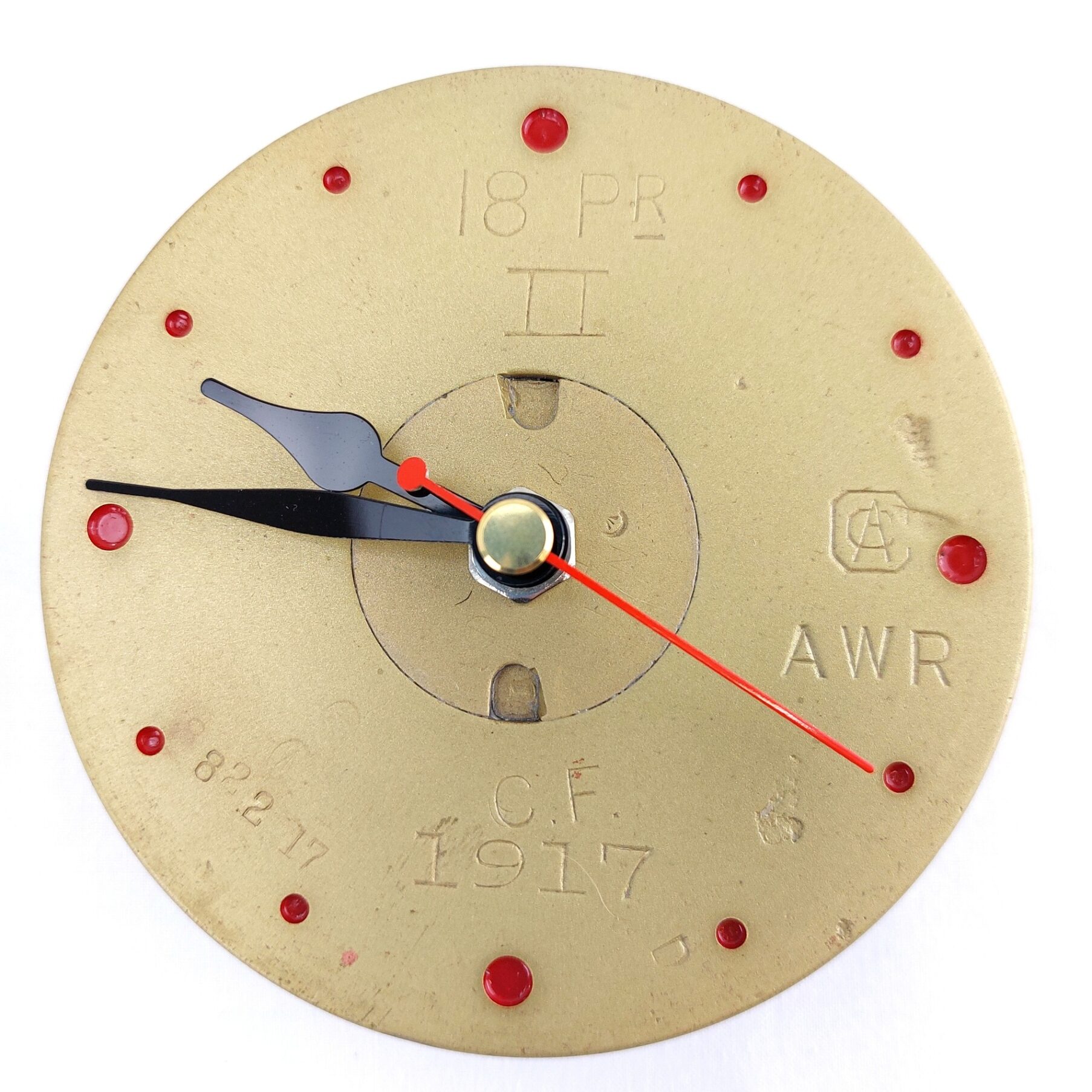
*New Zealand, WW1, Remembrance 18 Pounder Mark II Shell Case Clock, Dated 1917, Made by CAC - Colonial Ammunition Company, Auckland*
Approximate measurements: 10.5cm diameter, 3cm depth
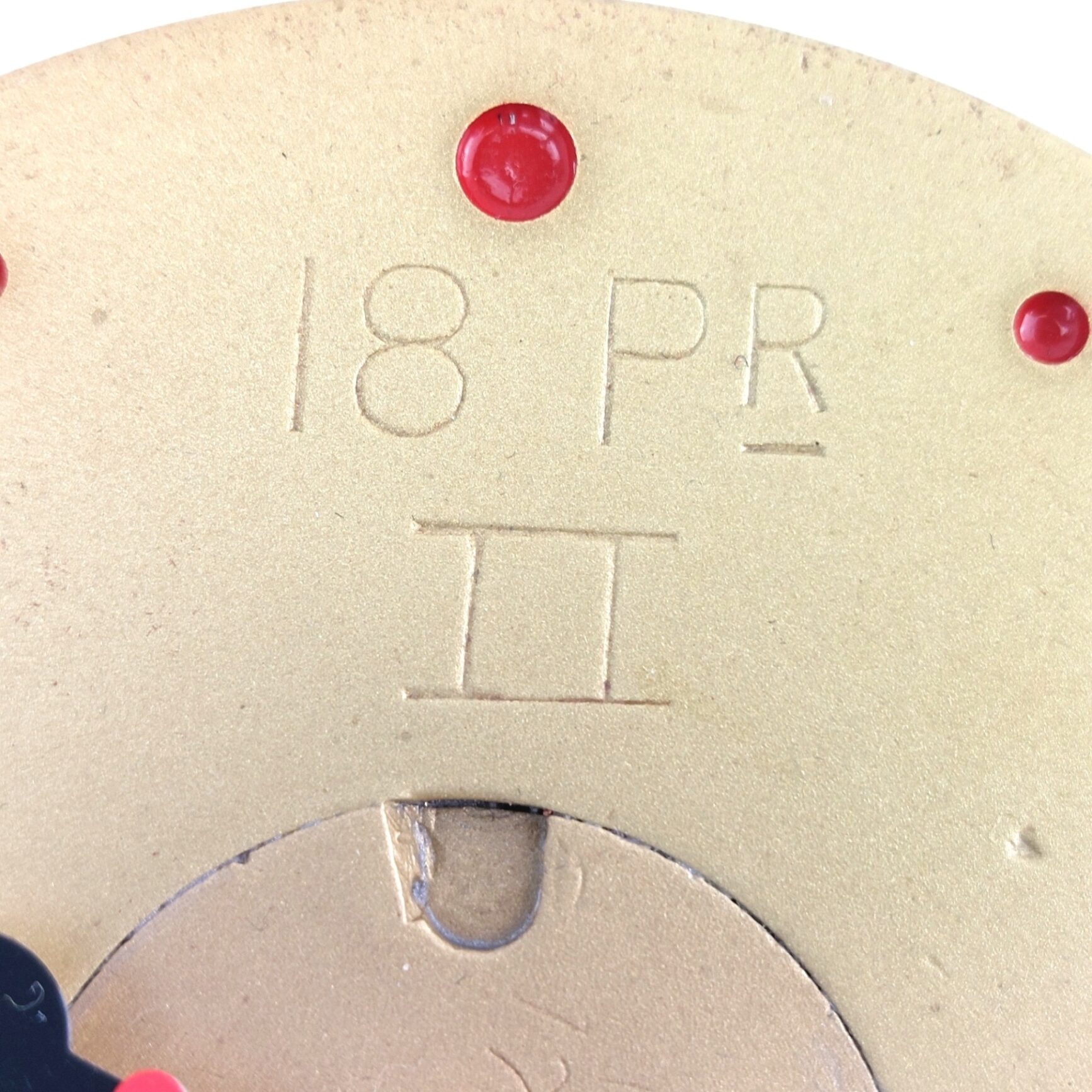
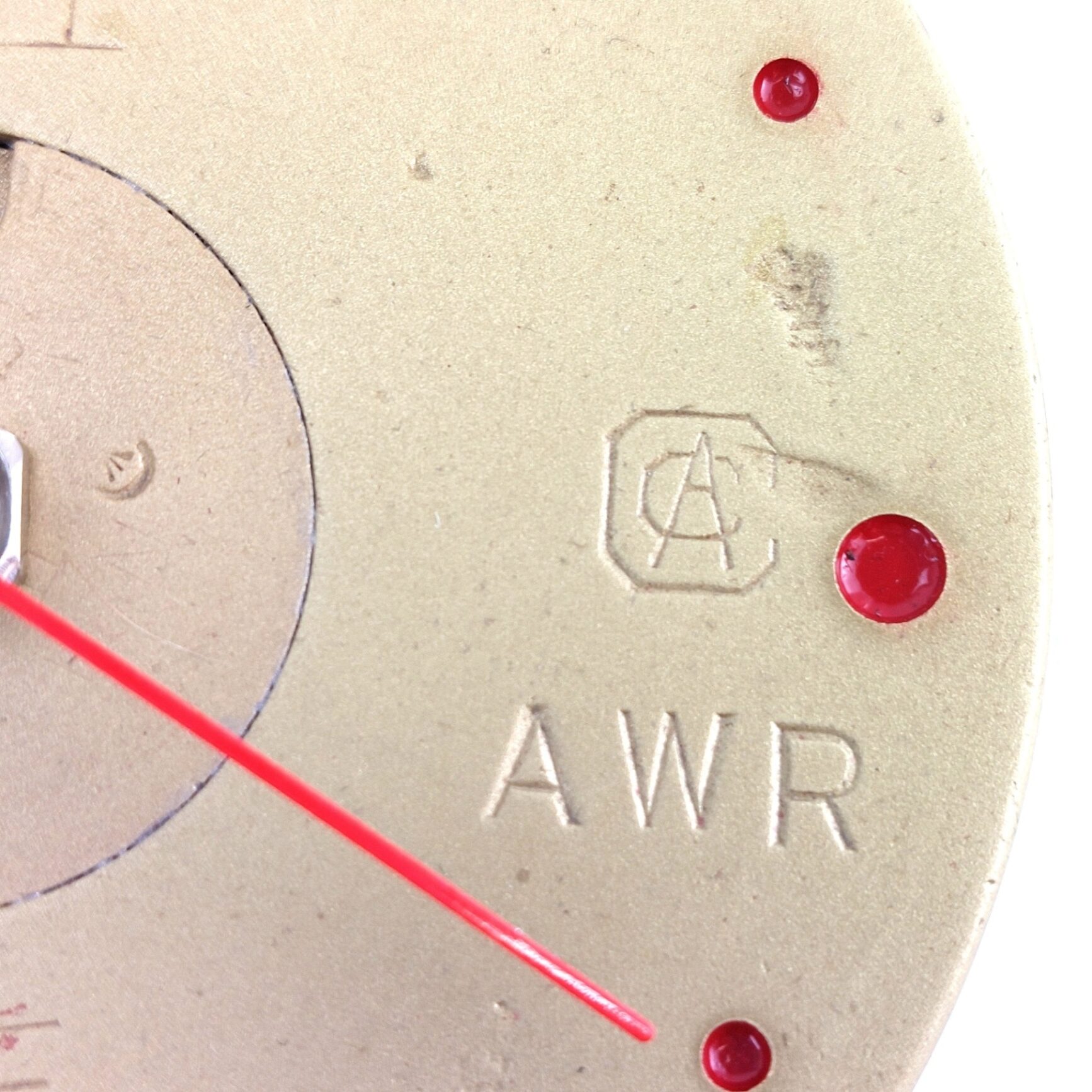
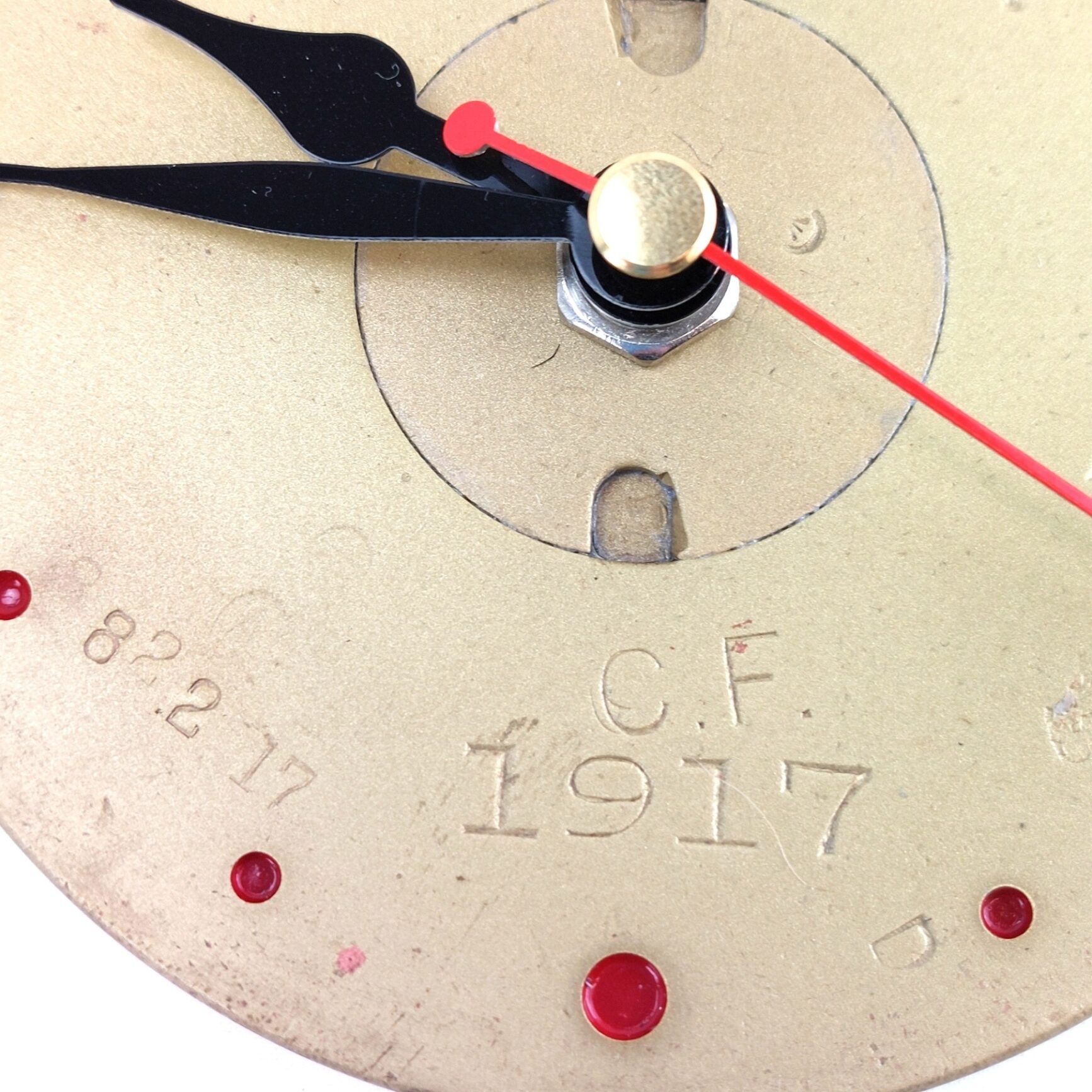
Markings:
18 Pr - (18 Pounder)
II - (Mark 11)
C.F. - (Cordite Filled)
8 2 17 - (8th February 1917)
1917 - (1917)
CAC - (Manufactured by Colonial Ammunition Company, Auckland, New Zealand)
AWR - Batch Number?
Primer Marked:
17 - (1917)
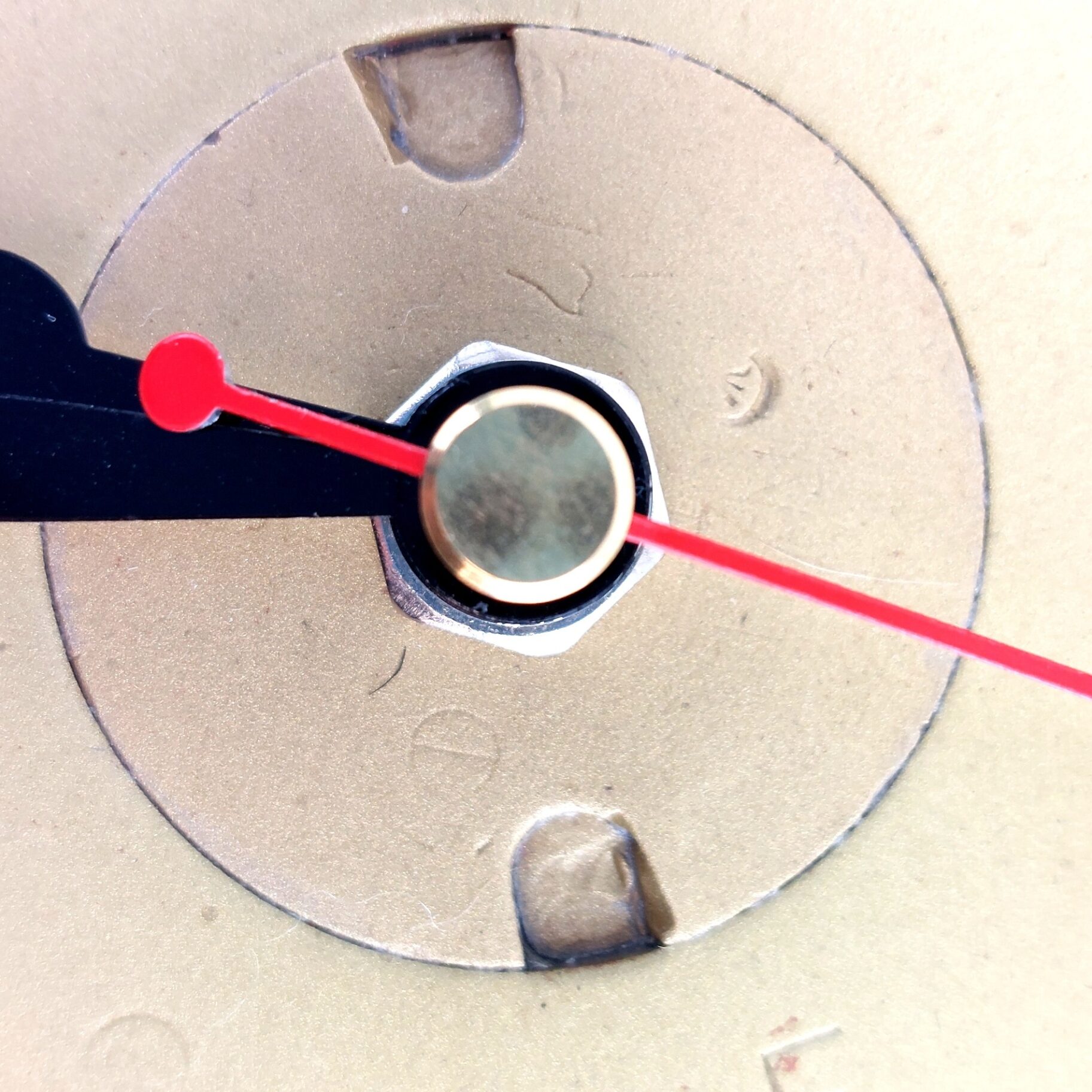
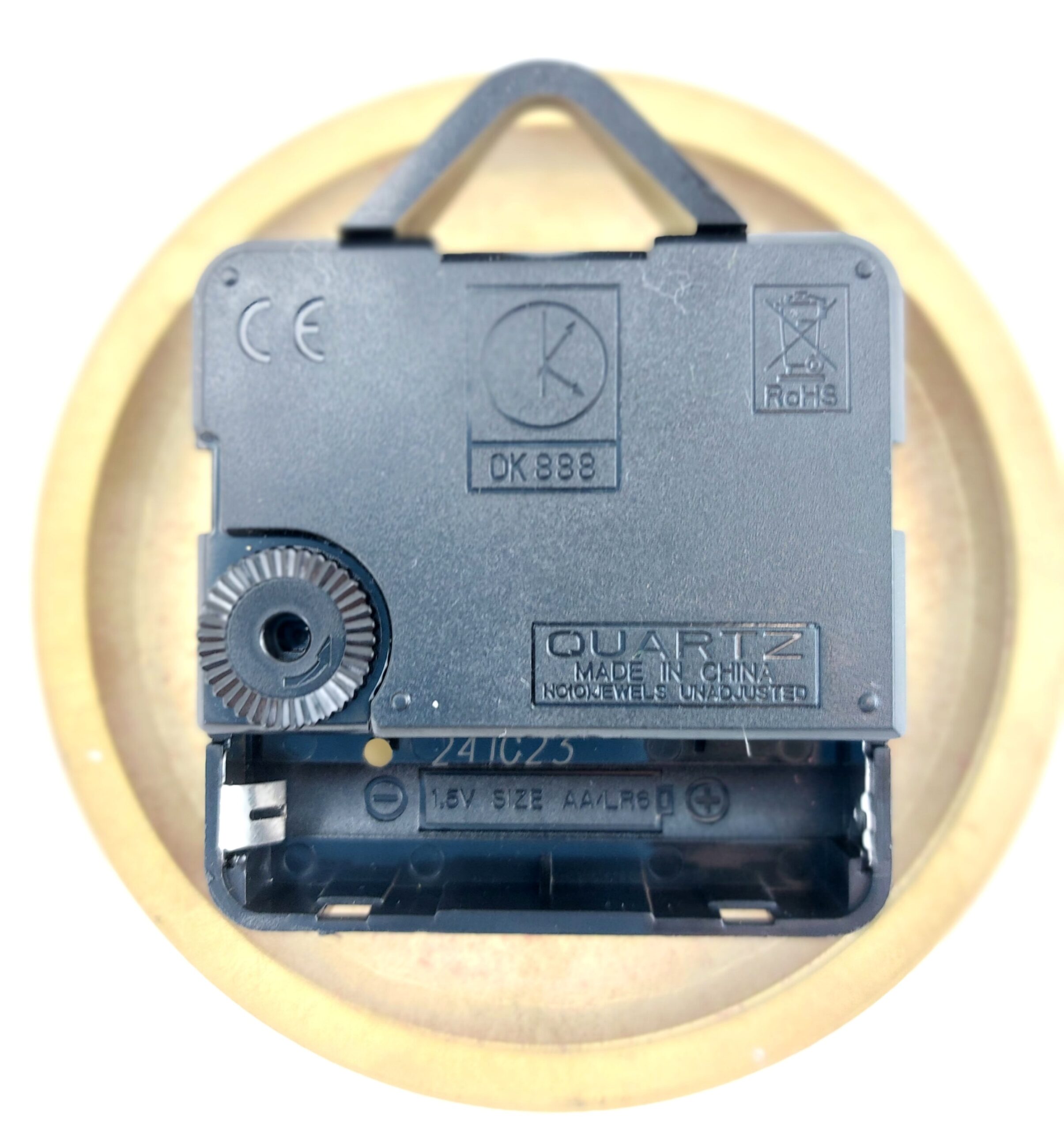
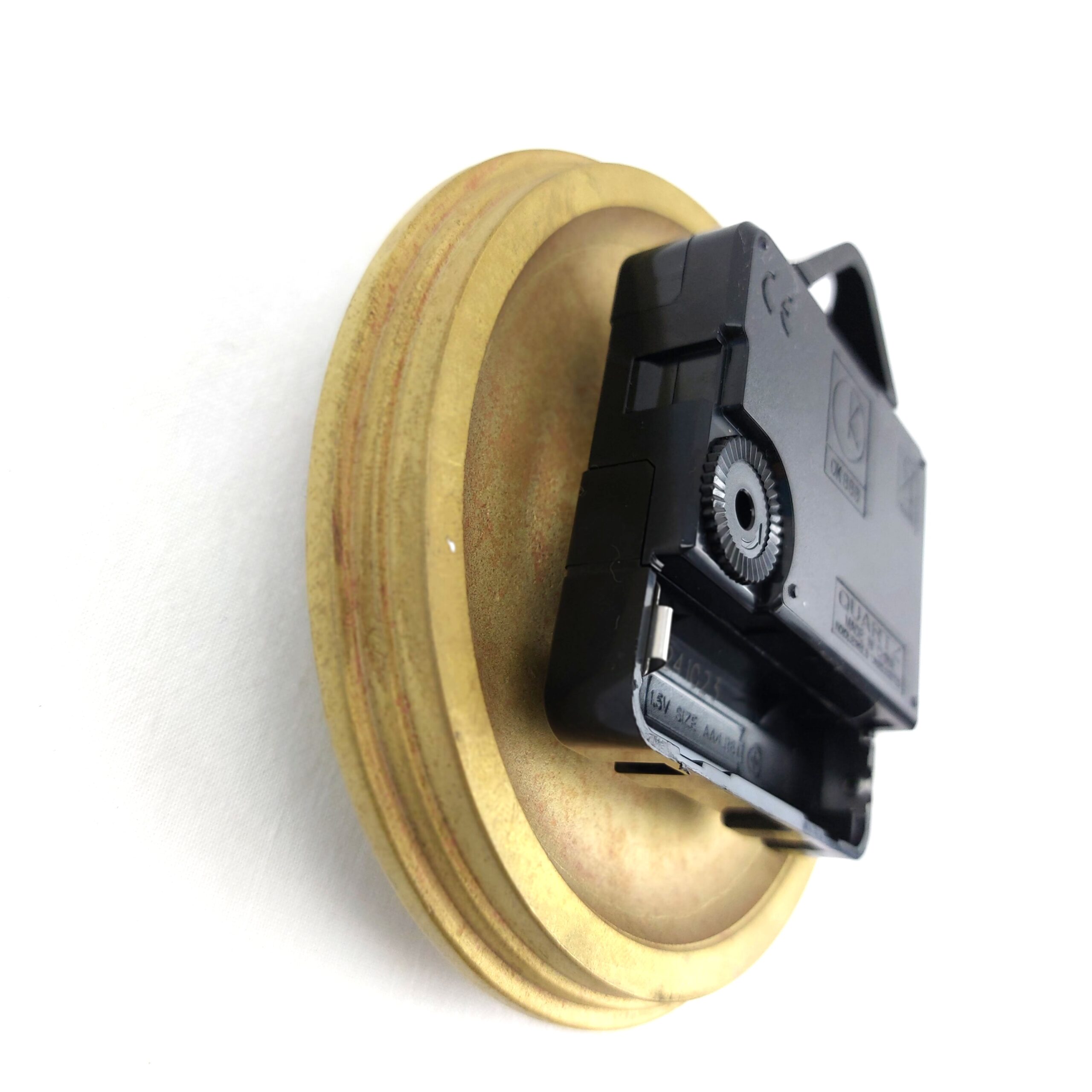
A wonderful WW1 Souvenir - this 18 Pounder shell case has been made into a wall mounted clock, with a quartz battery operated mechanism, depressed red dots have been added for the 5 and 15 minute markers. The shell case was made by Colonial Ammunition Company, Auckland, New Zealand in 1917.
Background Colonial Ammunition Company
In 1888 the Colonial Ammunition Company of New Zealand founded an ammunition factory in Footscray, a suburb of Melbourne, Victoria. During World War One from 1915 to 1918 the plant made over 2 million rounds of rifle ammunition a year. It was purchased by the Australian government in 1927. The Defence Explosive Factory Maribyrnong opened in 1908. A factory annexe was built in 1912 to supply Footscray with domestically-produced cordite. It also had an ordnance annexe that produced artillery pieces, mortars, and shells. During World War One, the phrase "Made in Maribyrnong" referred to how central the town and its industries were to the Australian war effort. The Footscray plant's headstamp was originally CAC from 1888 to 1918. and ->CAC<- (the letters between two horizontal "Government Property" arrowheads) from 1918 to 1920. The headstamp was changed to ->SAAF<- (for "Small Arms Ammunition Factory") from 1921 to 1923 and one lot in March 1924, A↑F ("AF" for "Ammunition Factory", the letters flanking a vertical arrowhead) during 1924 to 1925, "↑F" (vertical arrowhead to the left of the F) from 1925 to 1926, and MF (for "Military Factory") from 1926 to 1945.
Background 18 Pounder
The British 18-pounder (84mm) was an anti-personnel projectile designed to carry low-explosive (HE) and shrapnel payloads, spin-stabilized for accuracy. It was highly effective against troops in the open, including those manning guns without protective shields. At the start of World War I, the British Army’s field guns—primarily the 13-pounder and 18-pounder—were equipped exclusively with shrapnel projectiles, with field guns outnumbering howitzers (5-inch and 4.5-inch) by a 3:1 ratio. The 18-pounder’s shrapnel shell contained 374 small spherical bullets. A time fuse was set to detonate the projectile mid-air just in front of the target, which would eject the nose and send the bullets forward in a shotgun-like cone, effective up to 300 yards from the explosion. With a theoretical rate of 20 rounds per minute, the 18-pounder could release 7,480 bullets per minute, offering a longer effective range than machine guns. Expert artillery gunners from the Regular Army were highly skilled in using shrapnel fire to provide accurate, close support for advancing infantry.
*Condition*
Good used condition. Please see photographs as part of the condition report.
JAQGE#211125_1789194472