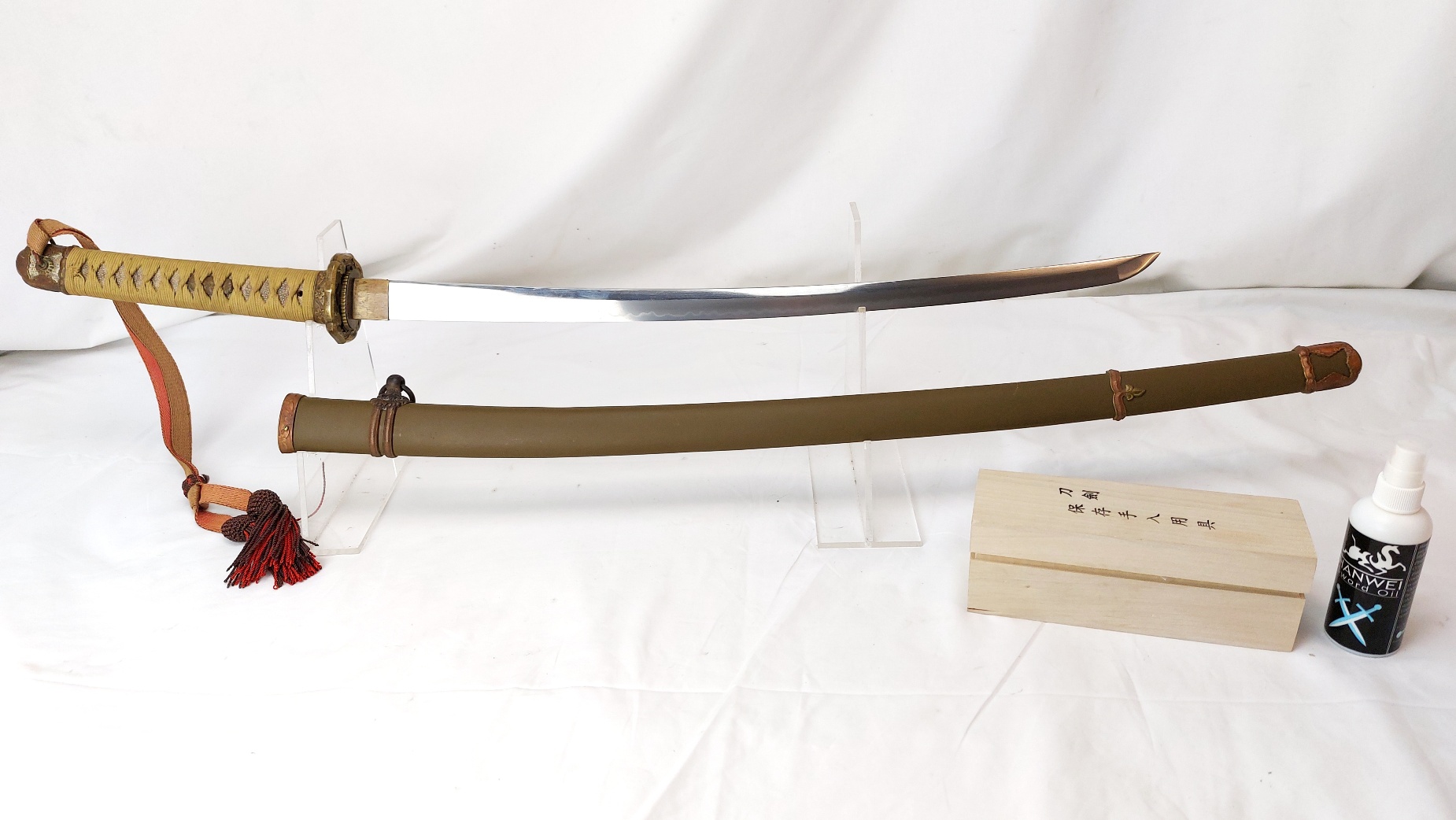
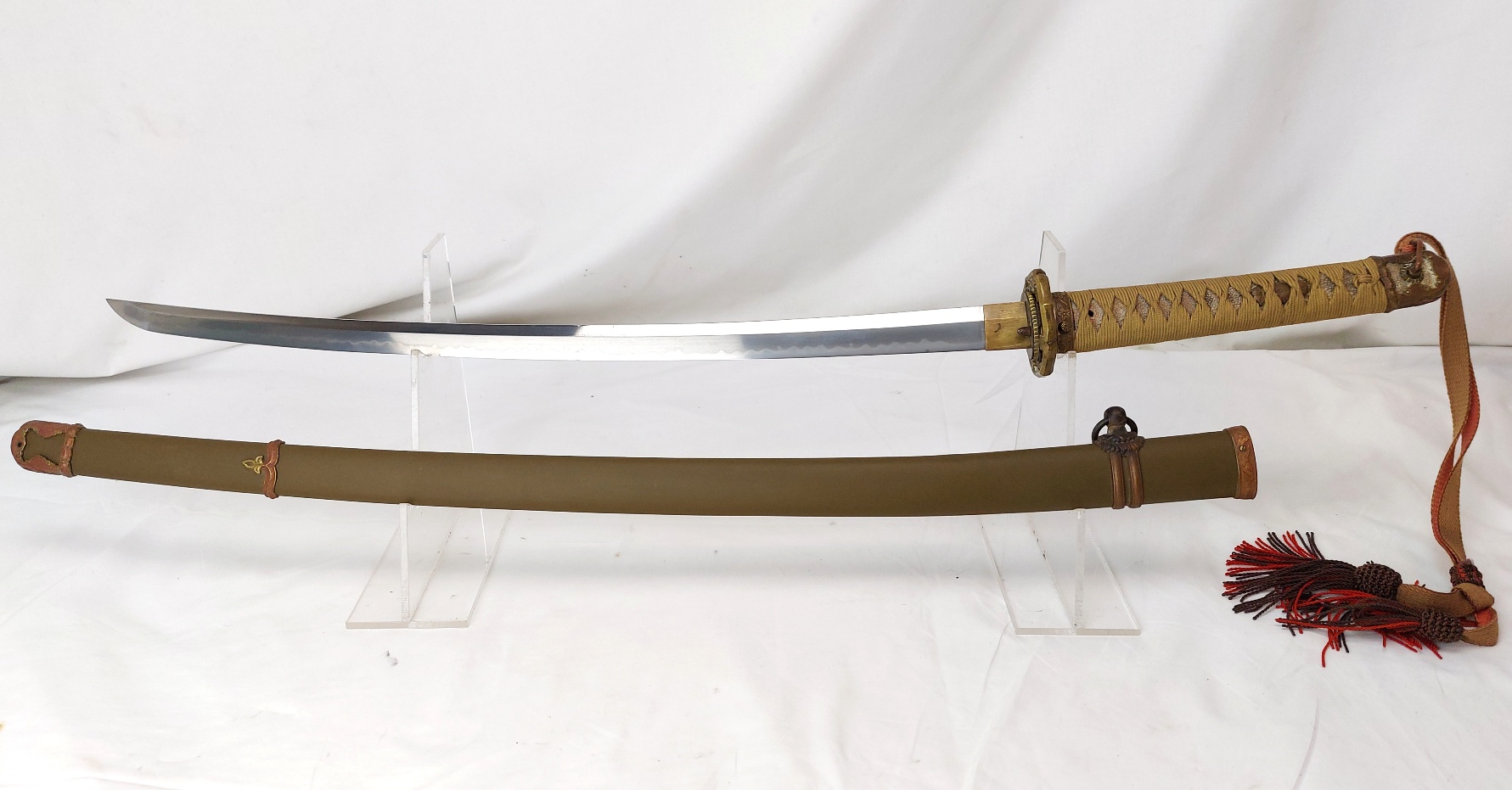
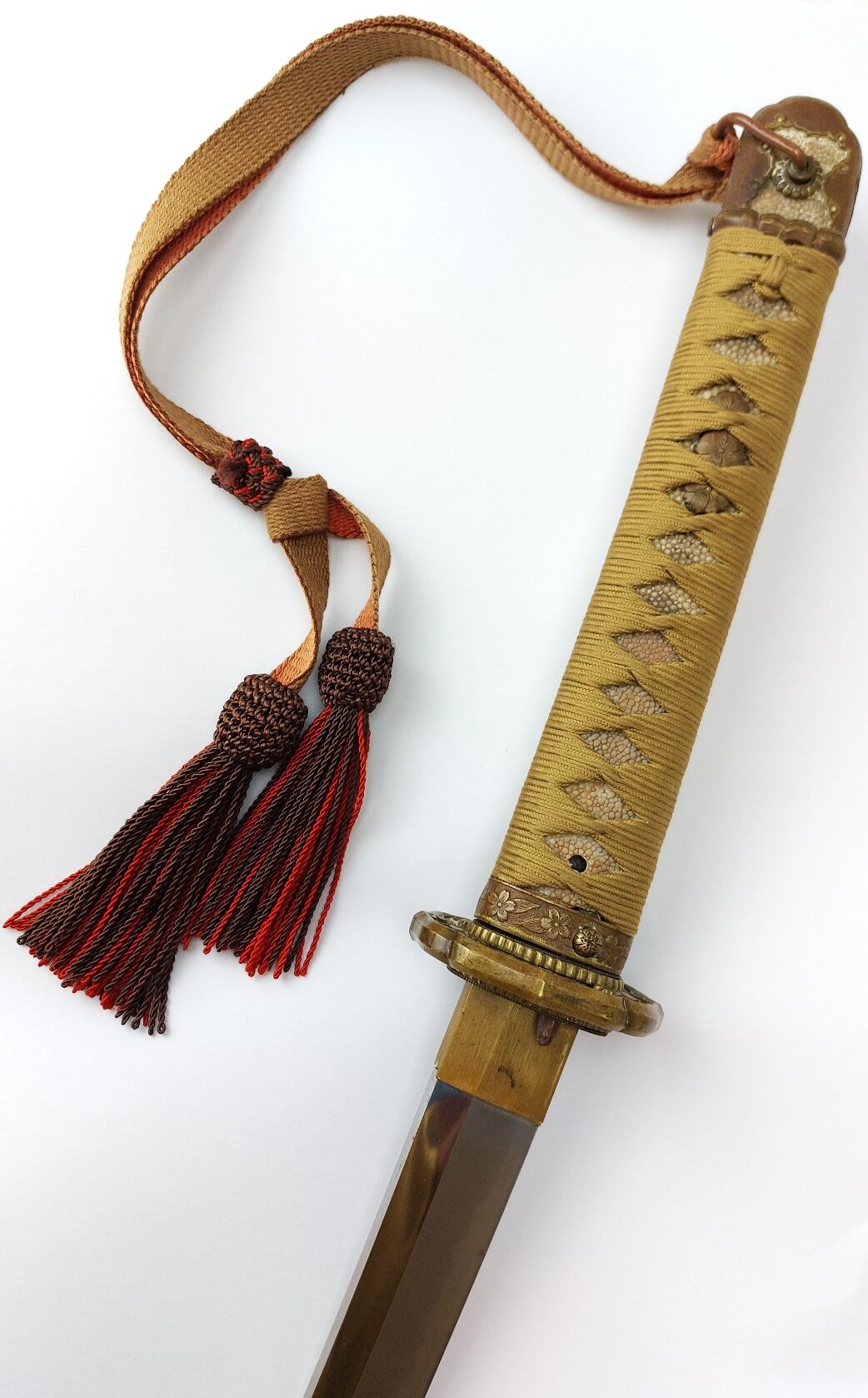
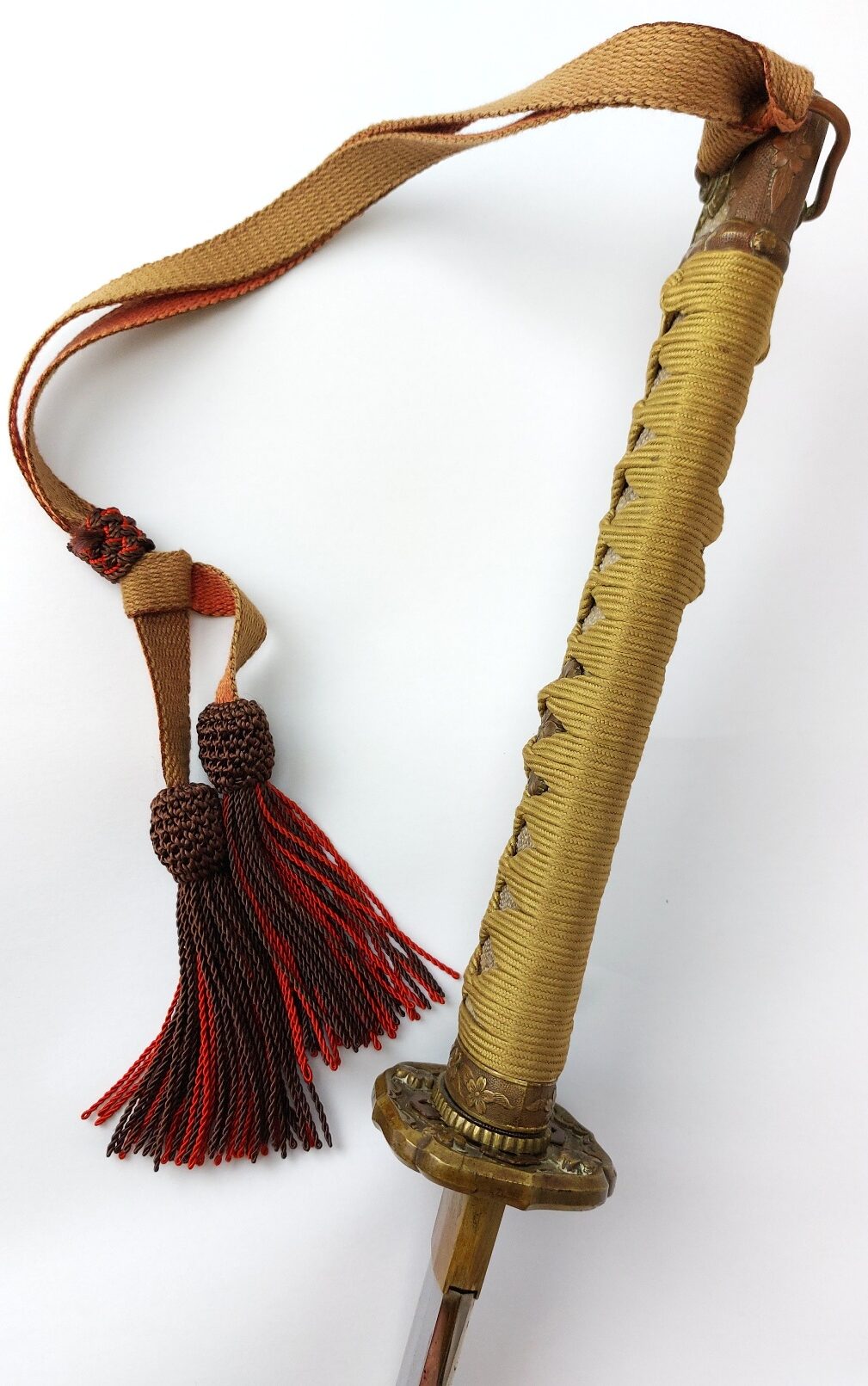
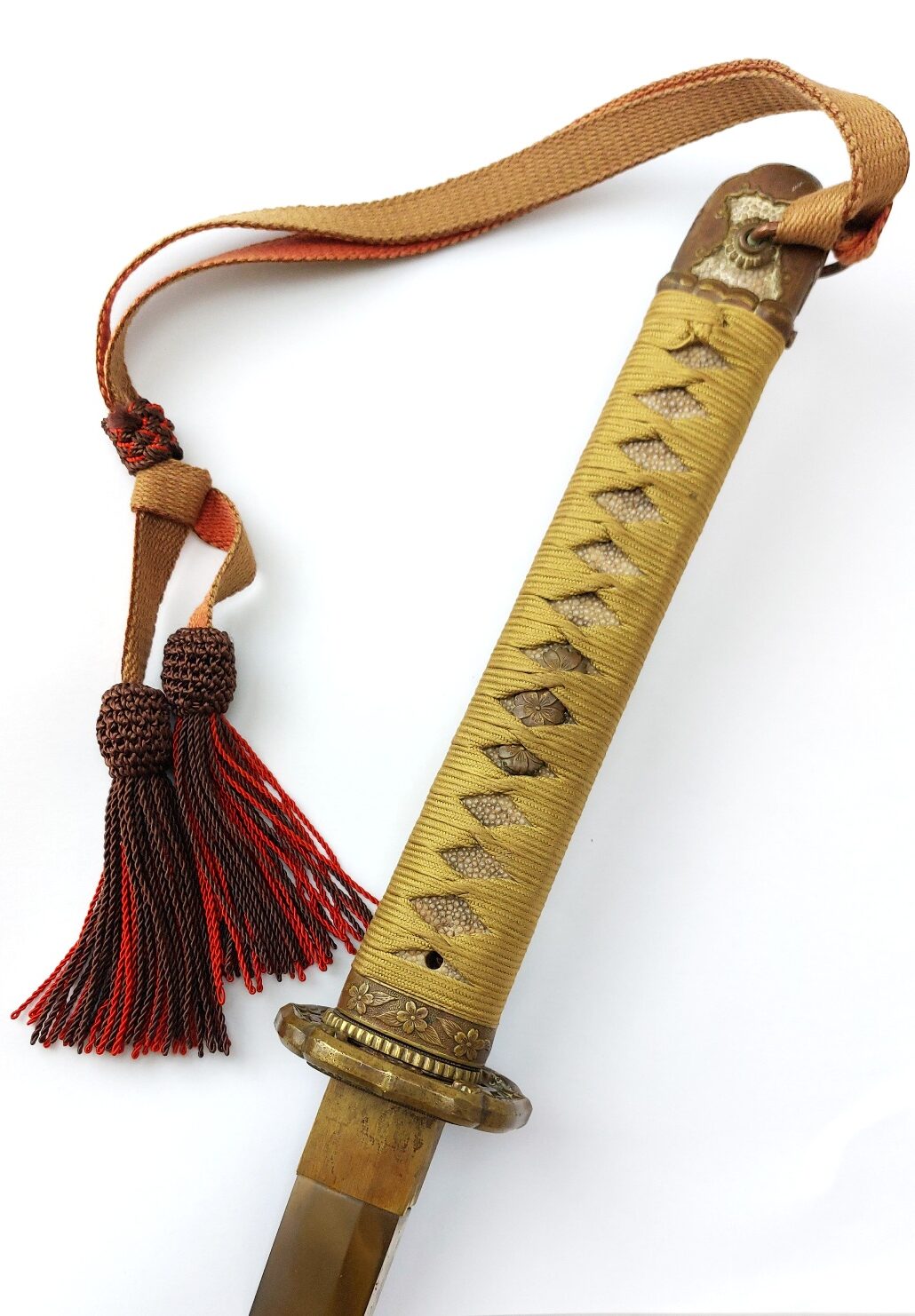
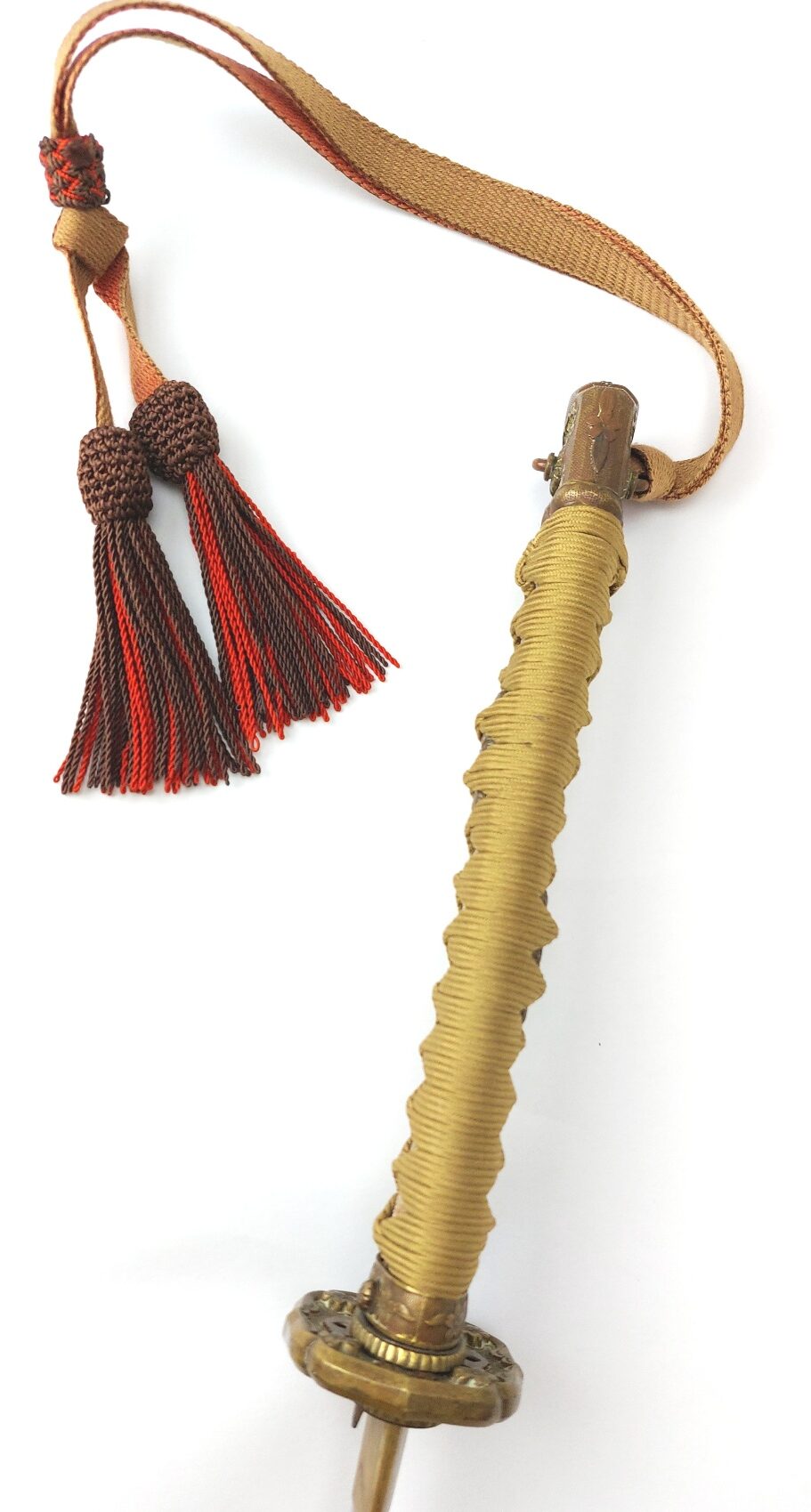
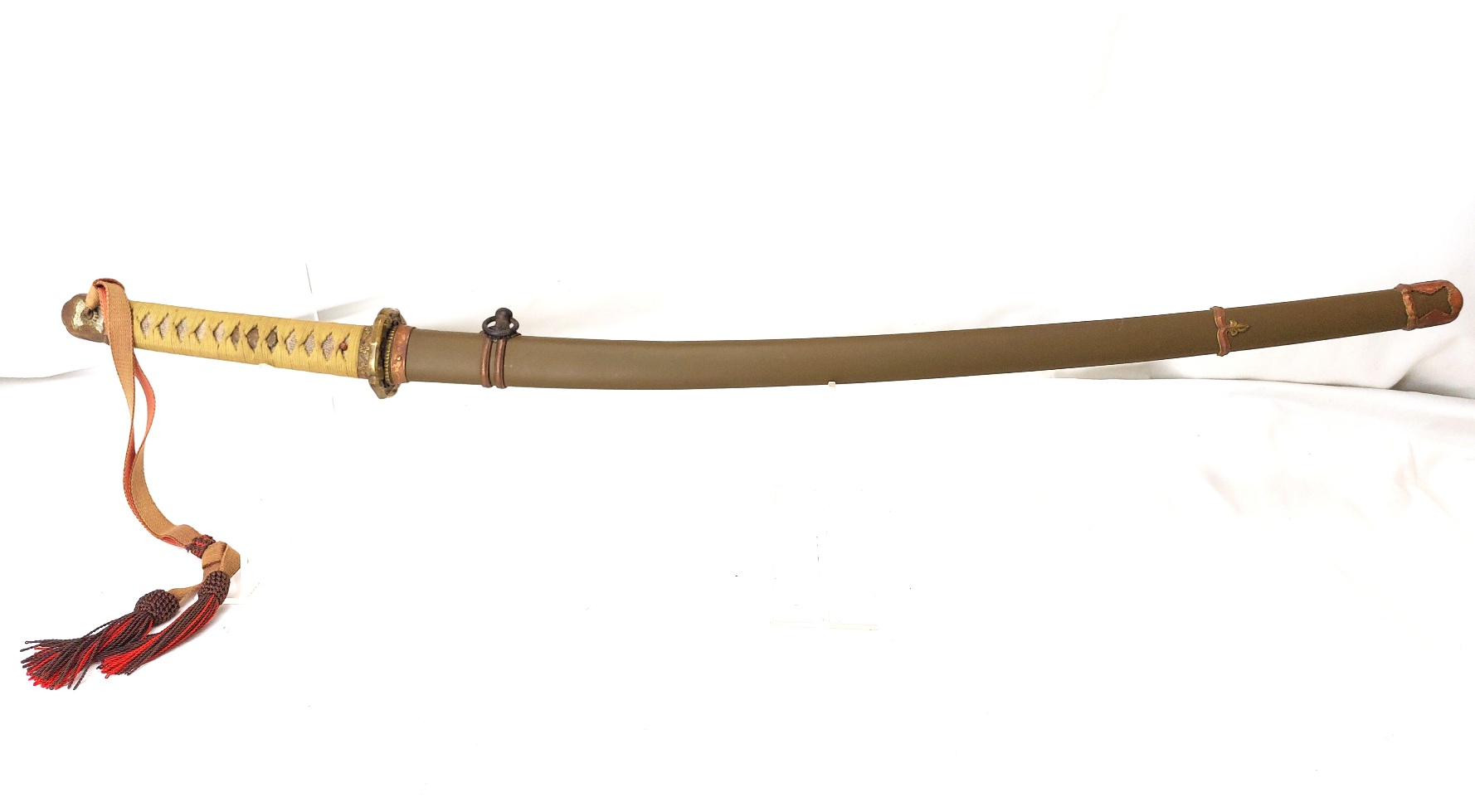
A highly attractive and exceptionally well-preserved Imperial Japanese Army Type 98 Shin-Guntō officer’s sword, retaining an older traditionally made blade mounted for wartime service during the Second World War. This is a particularly complete and visually impressive example, combining classic mid-war officer mounts with a blade showing traditional characteristics, together with officer’s tassel, and accompanying sword maintenance kit.
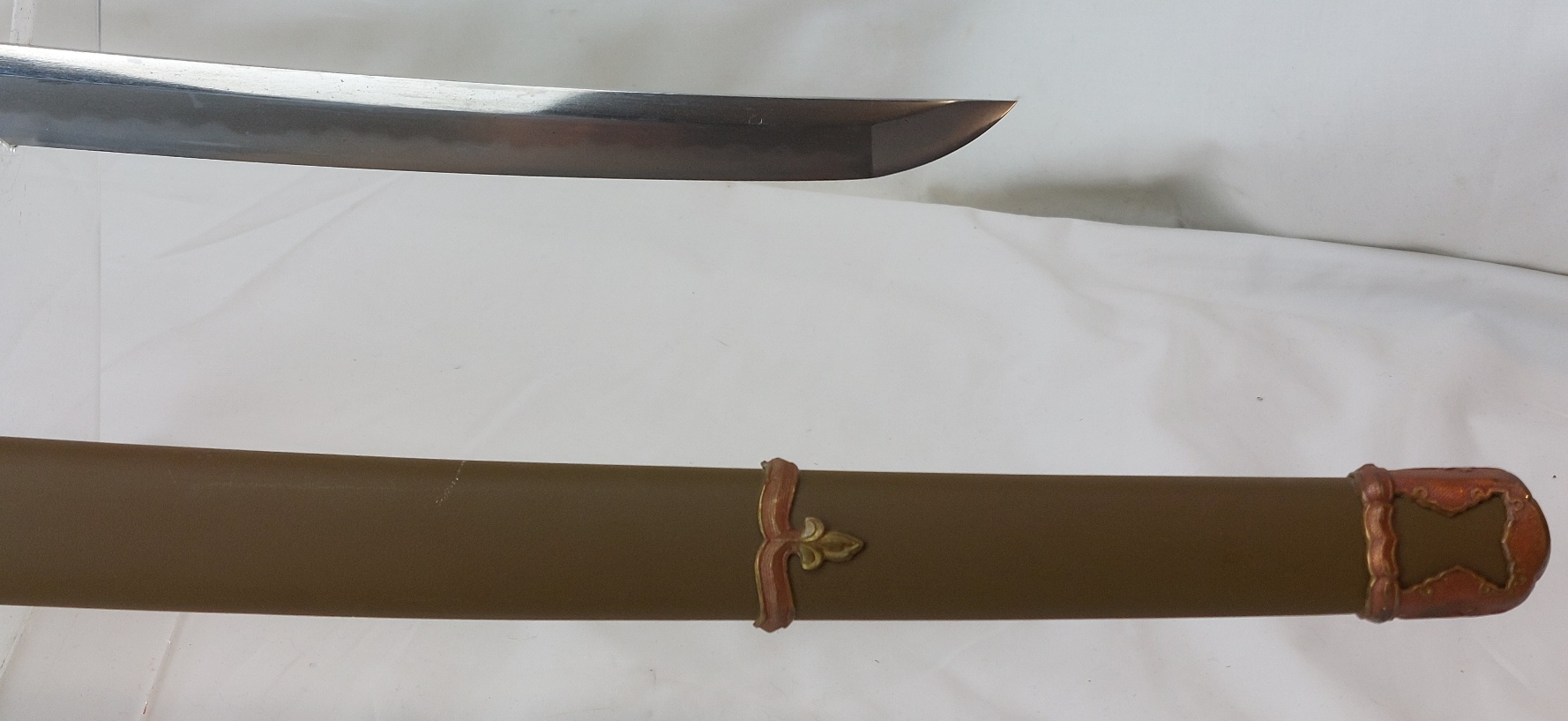
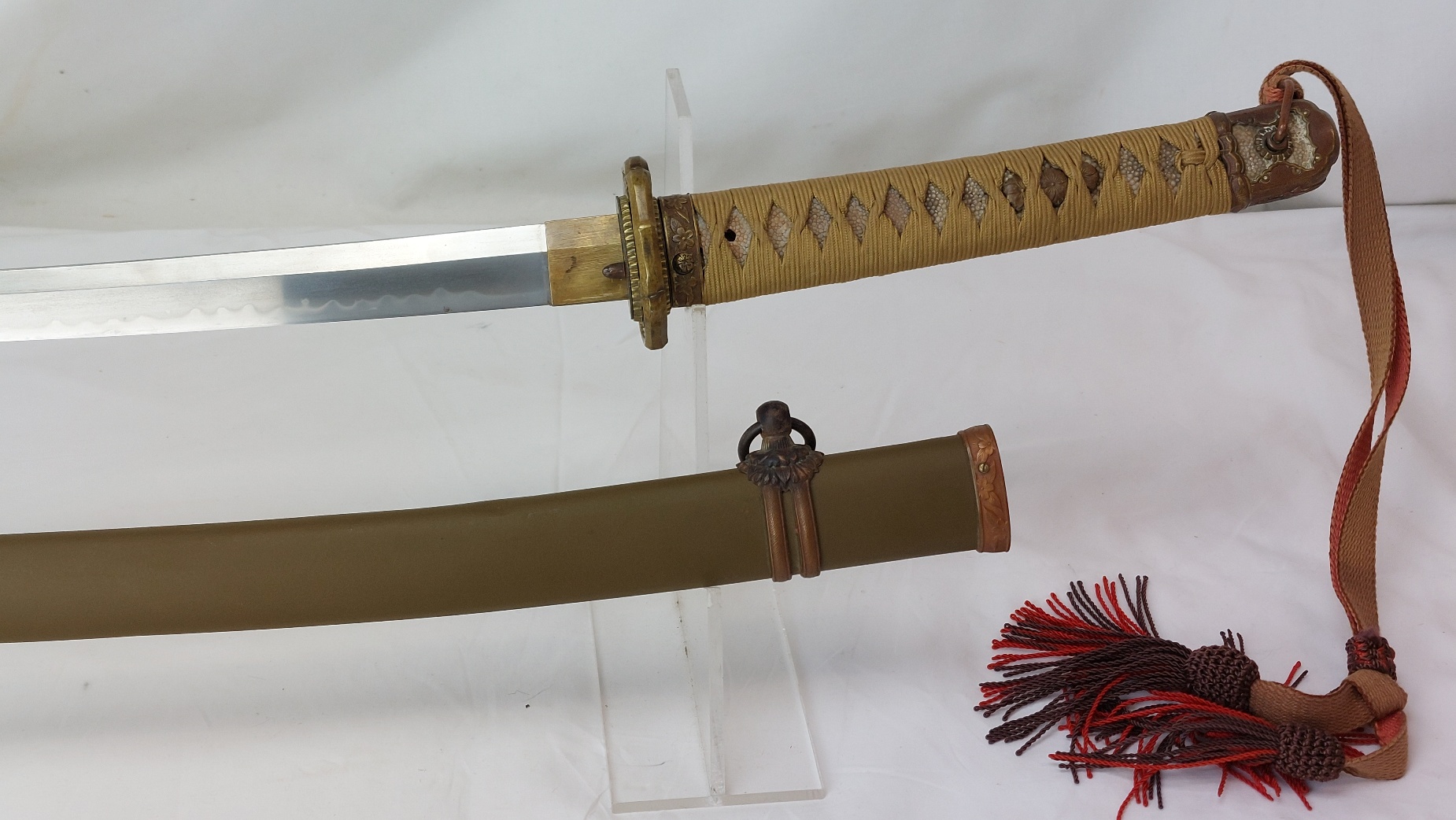
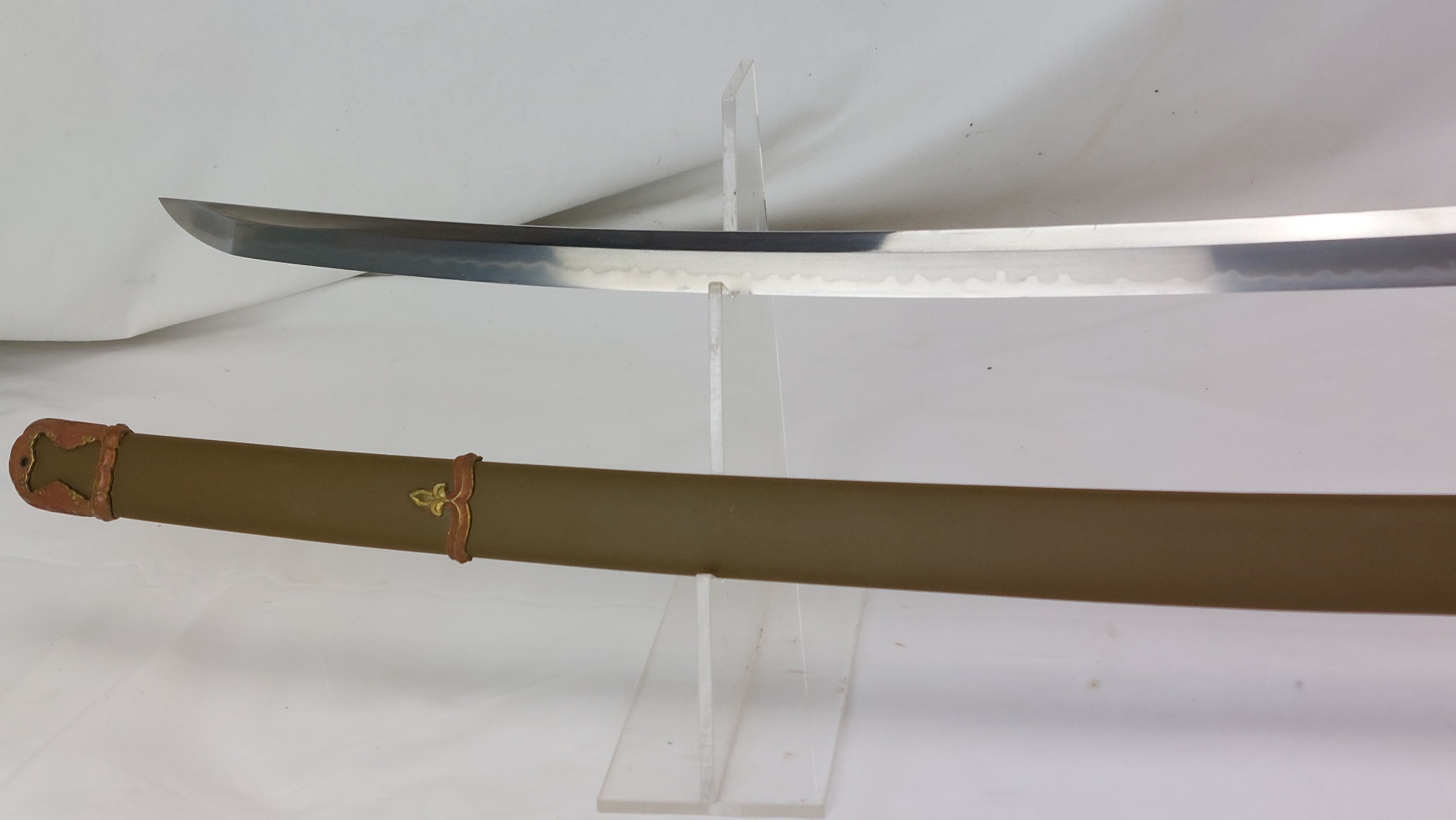
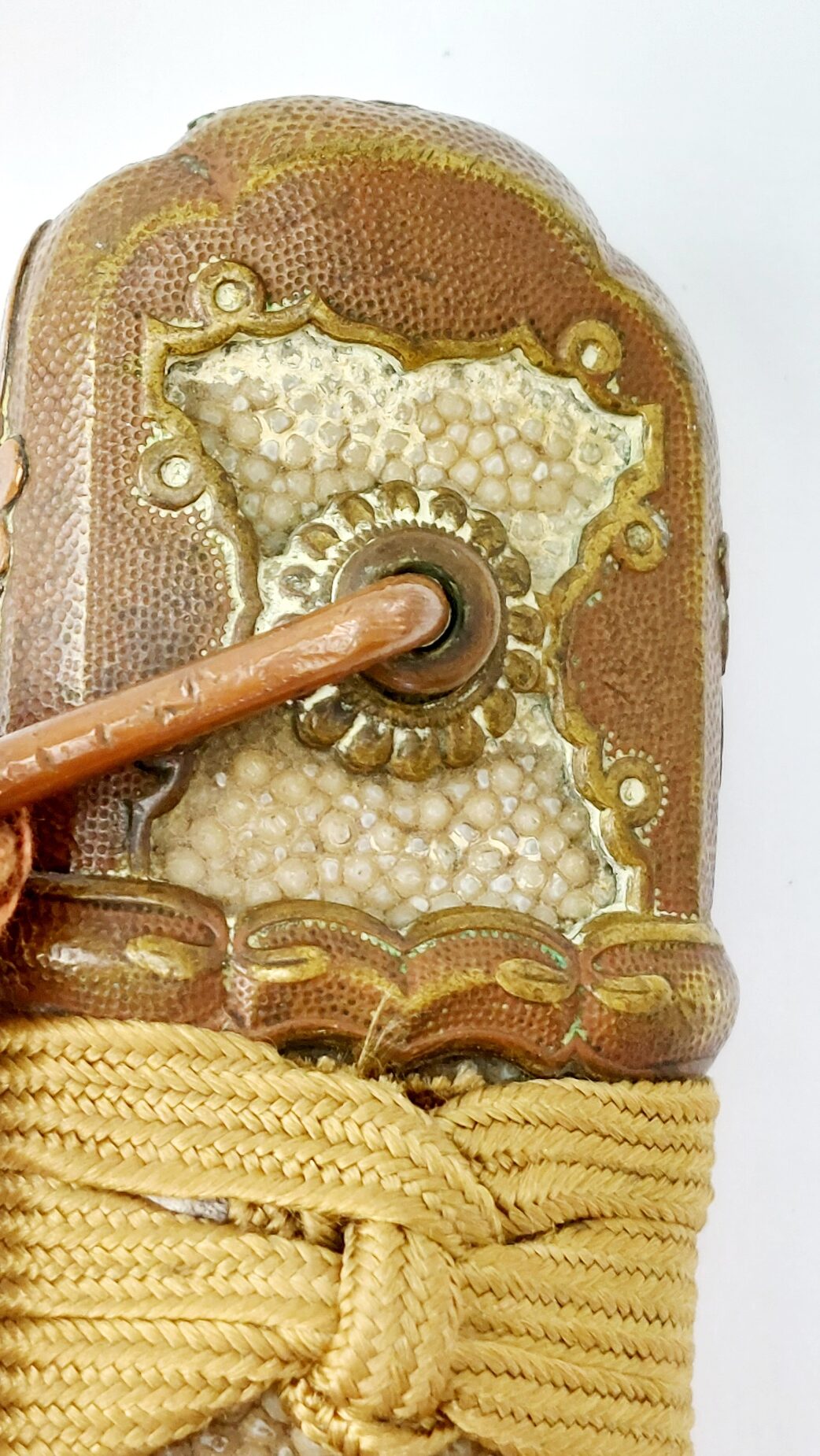
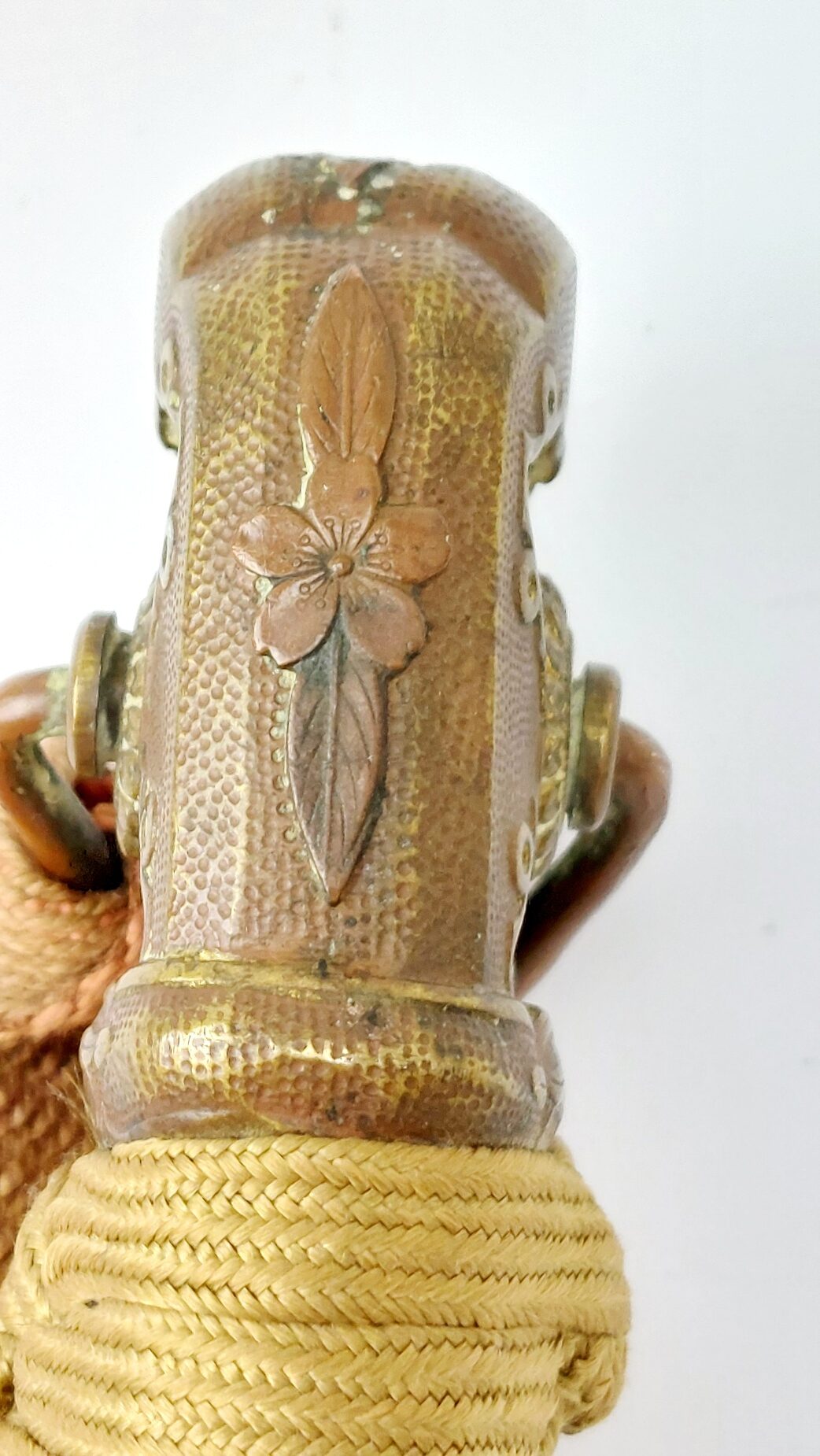
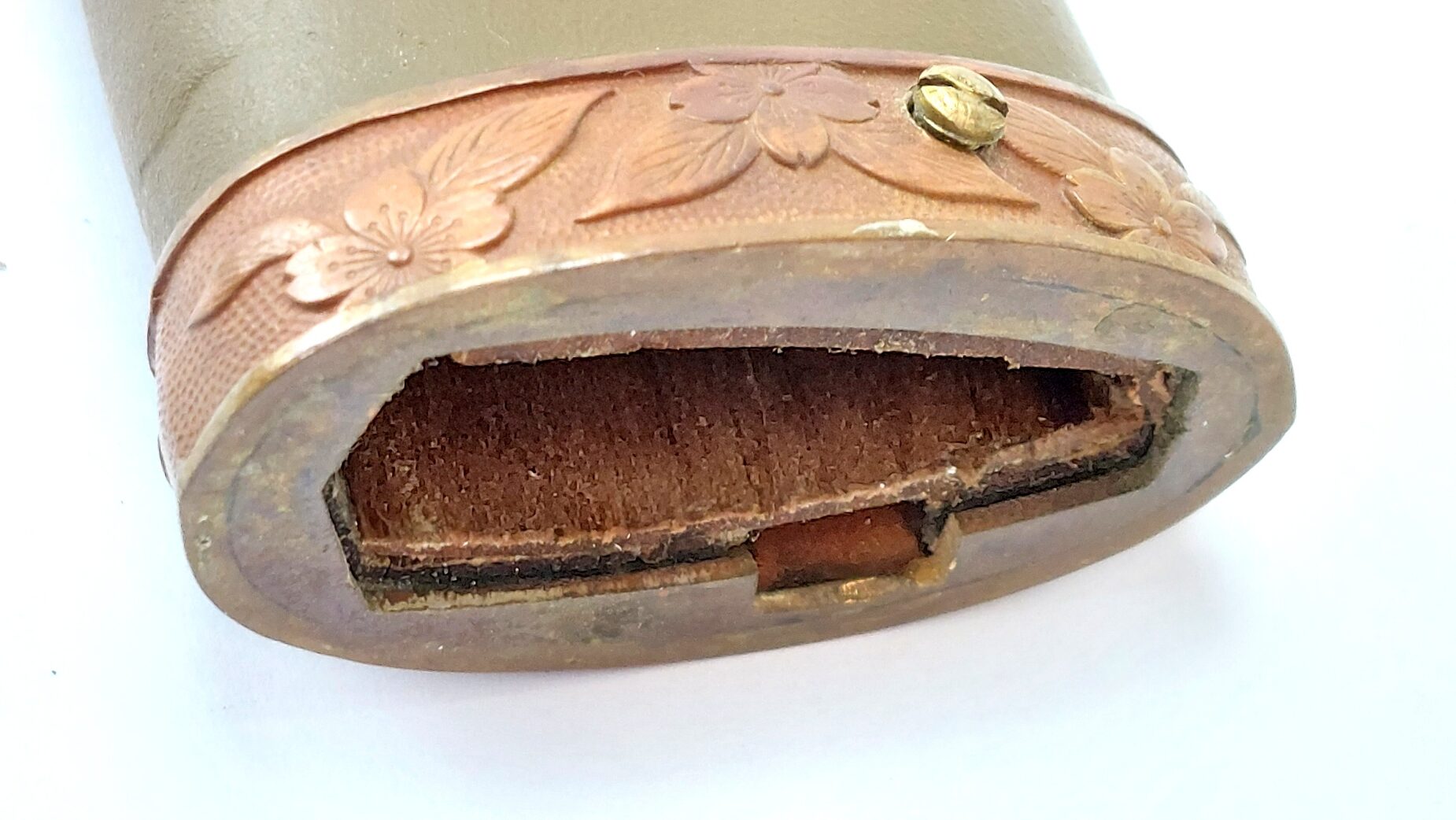
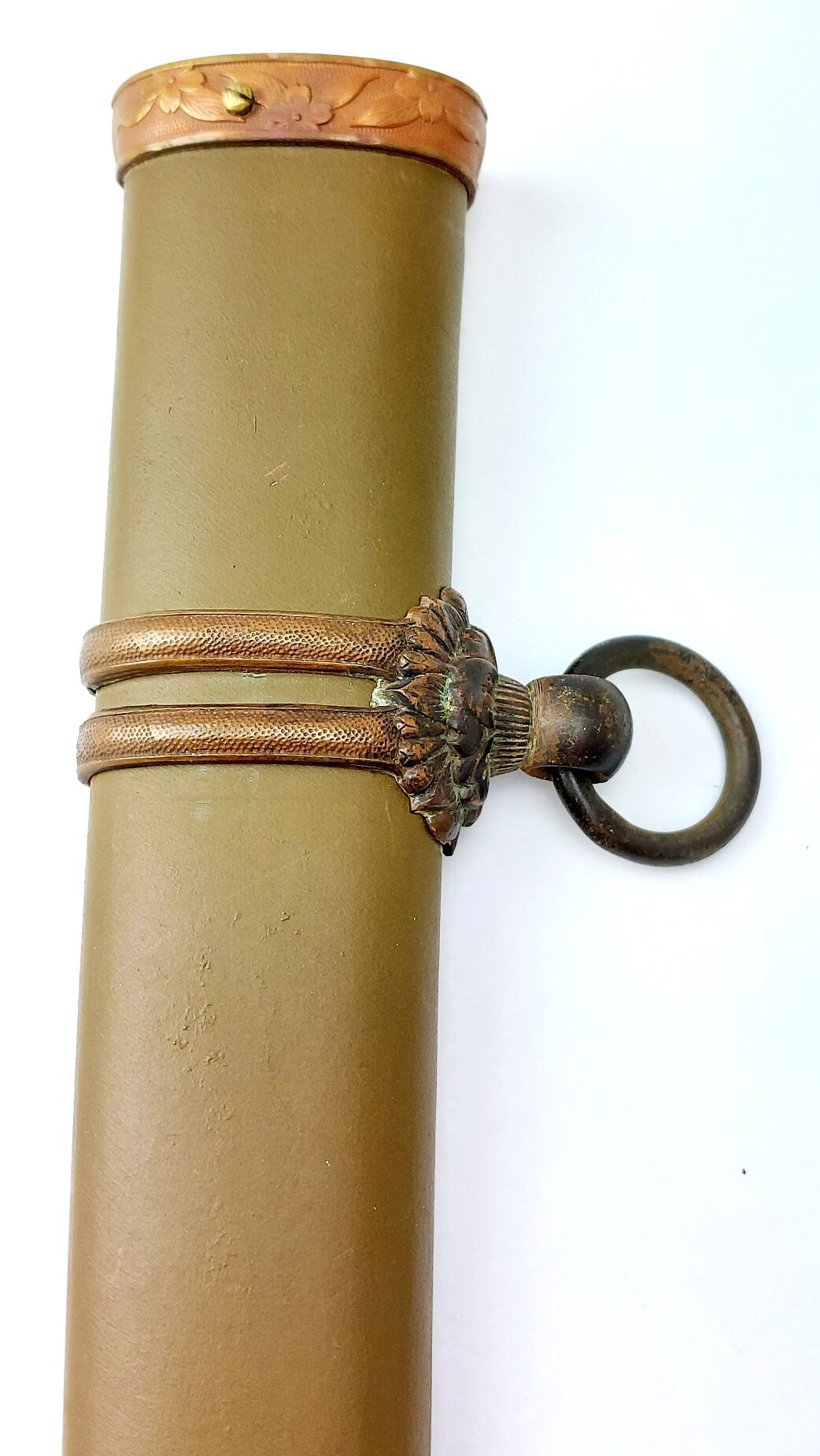
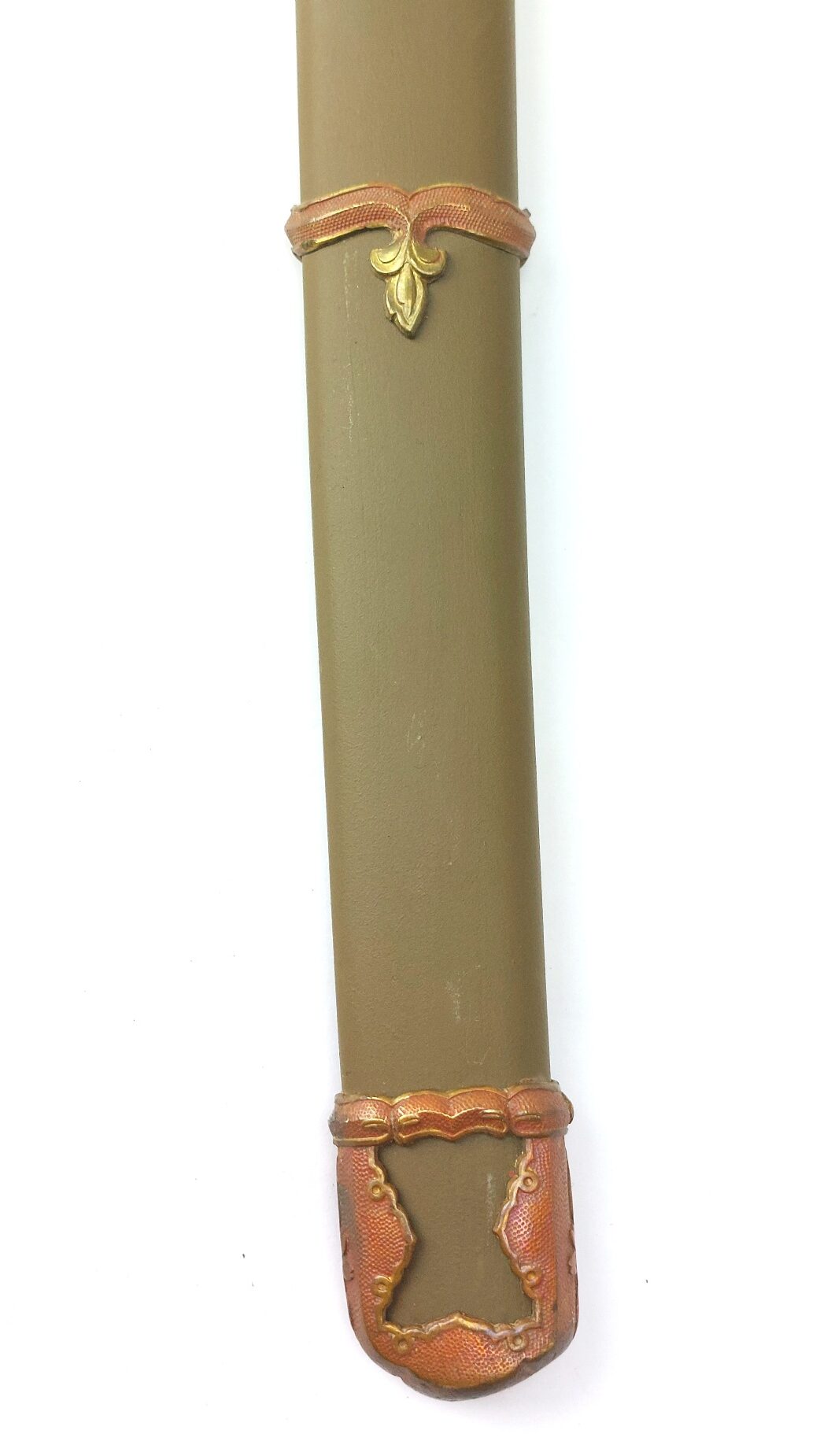
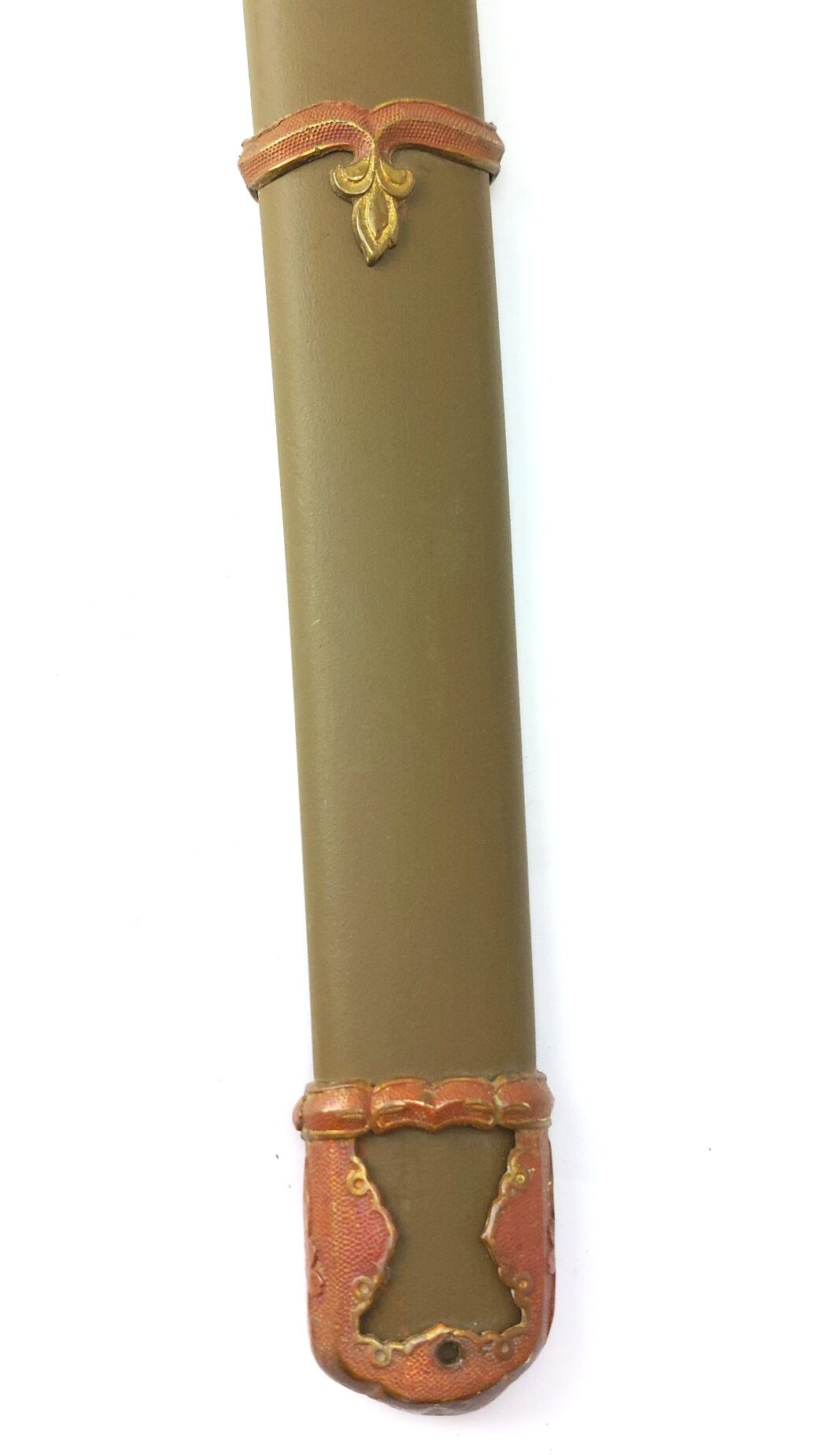
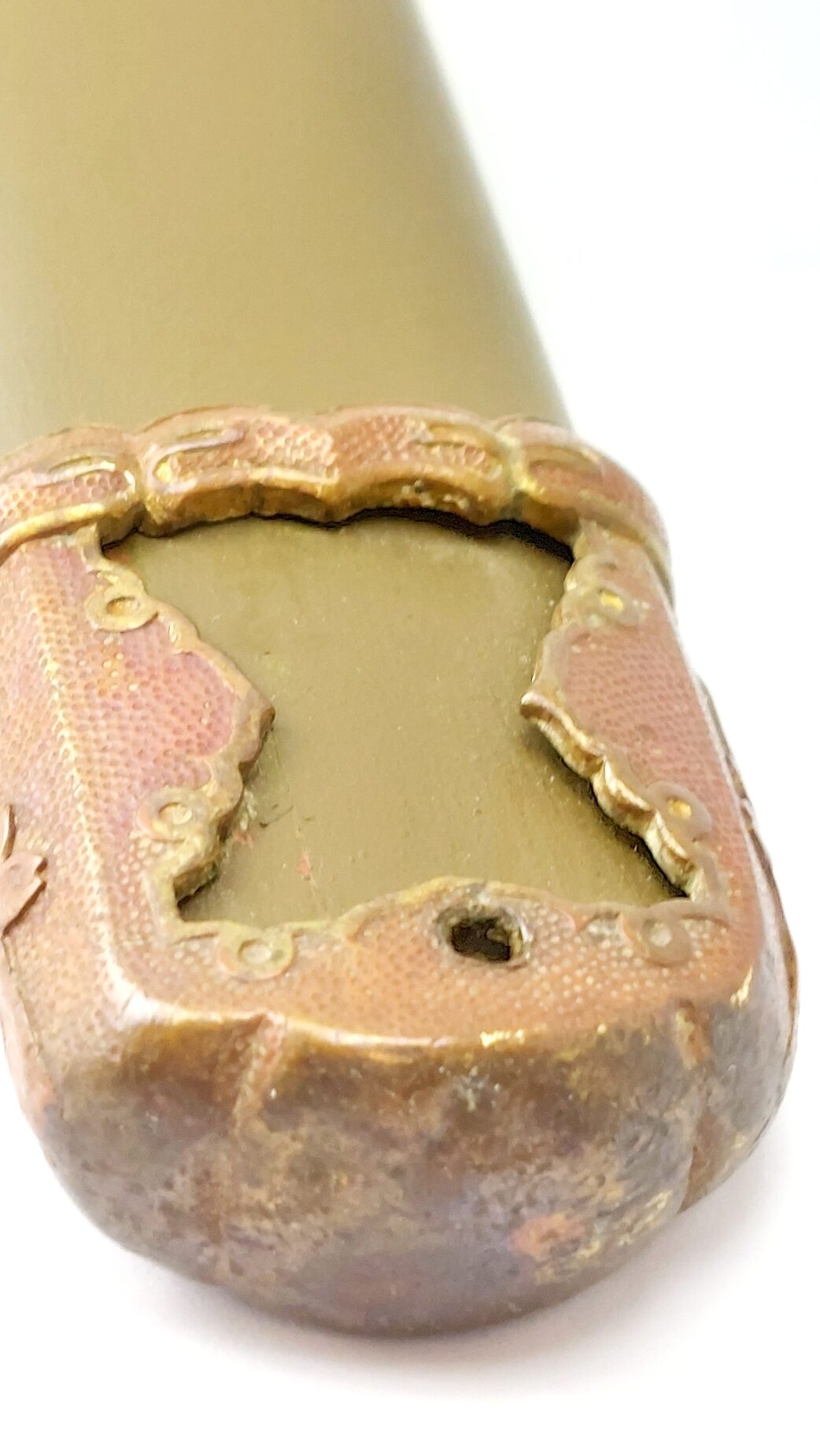
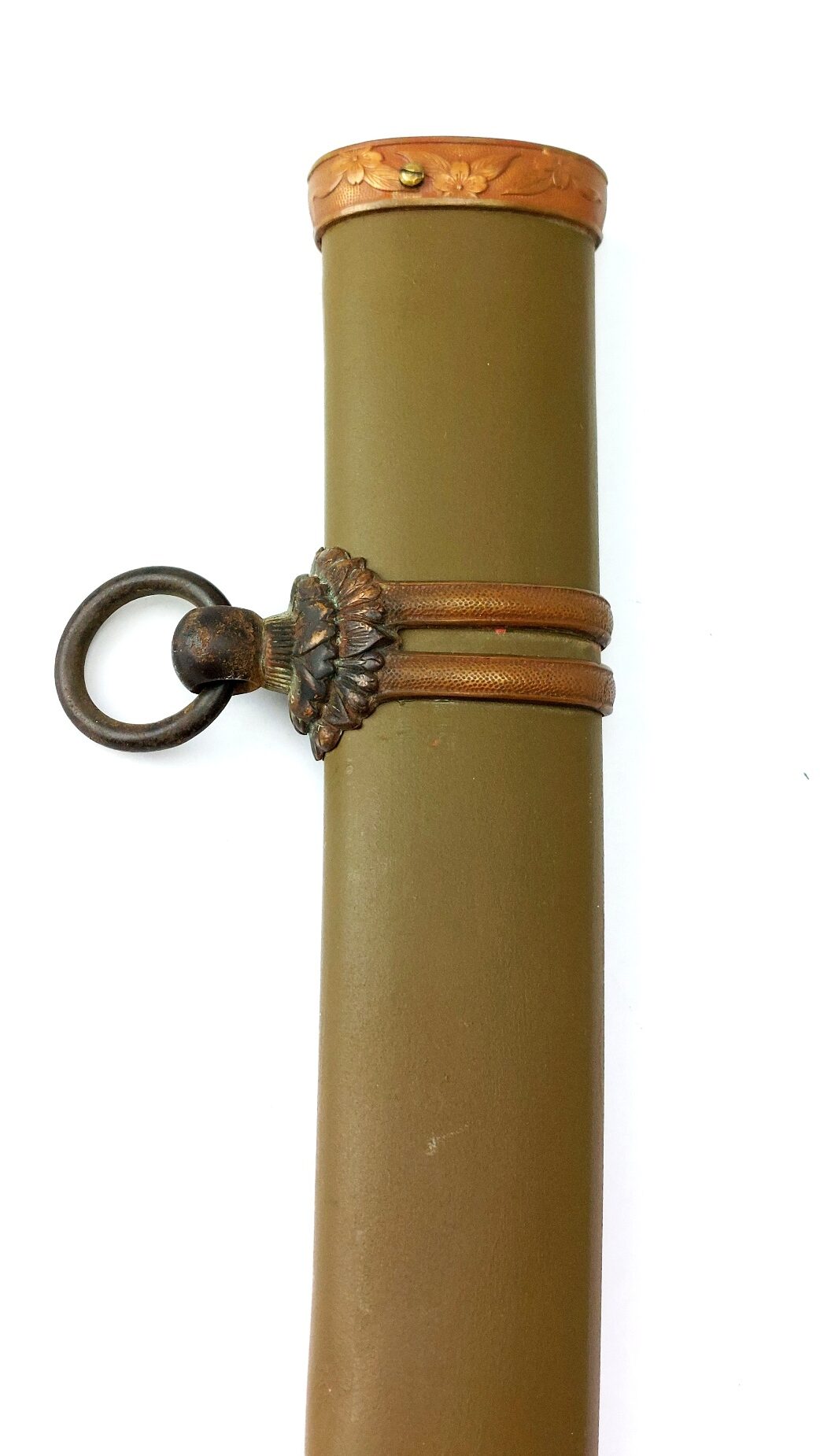
The sword retains its full Type 98 Shin-Guntō koshirae mounted for Imperial Japanese Army officer service during WW2. The saya is of wartime olive-brown painted steel, entirely consistent with mid-war officer production, retaining its suspension mount and carrying ring. The copper and gilt-highlighted fittings to the saya, including the koiguchi, suspension band, and kojiri, remain matching throughout and retain strong original detail and finish.
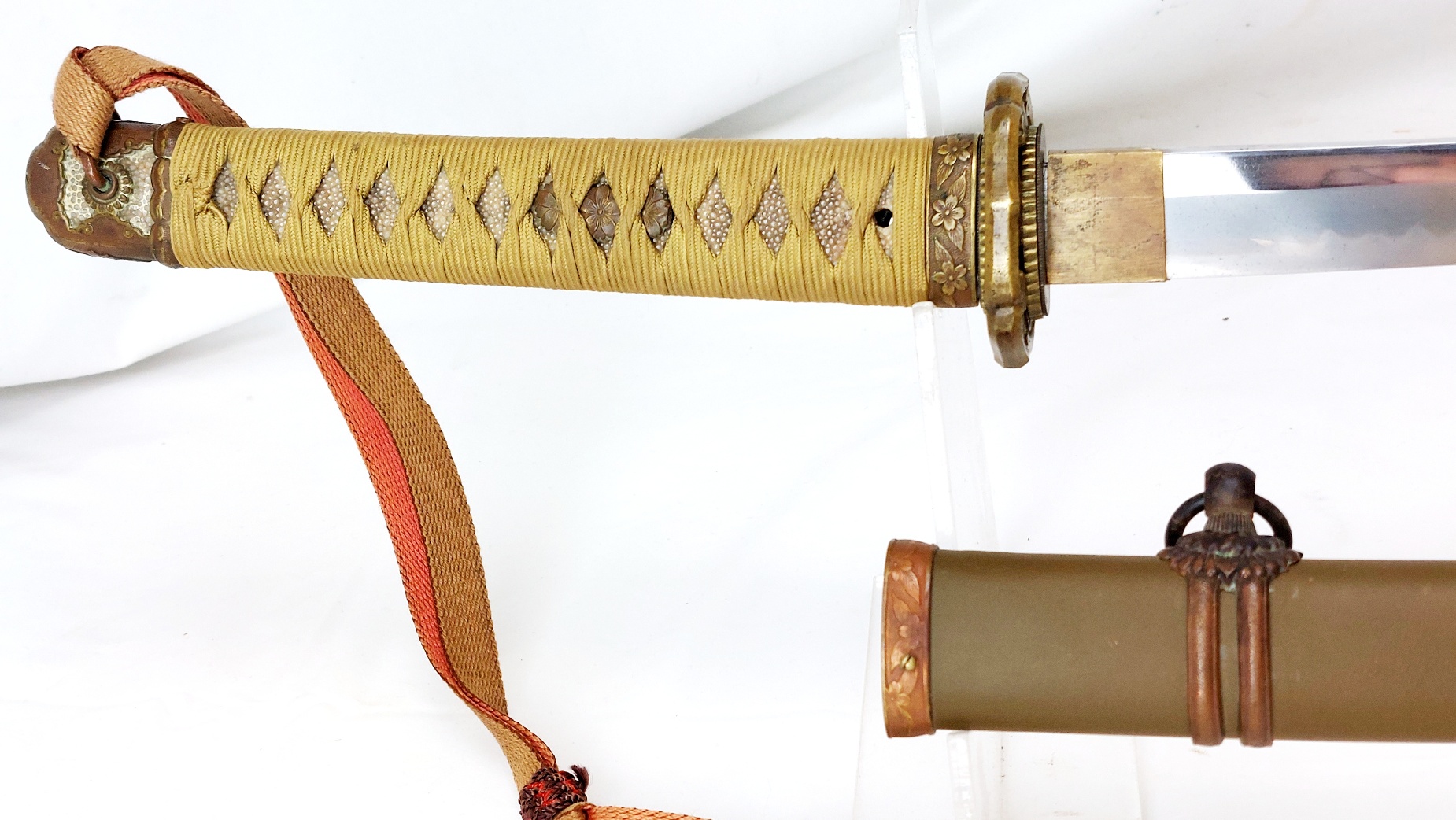
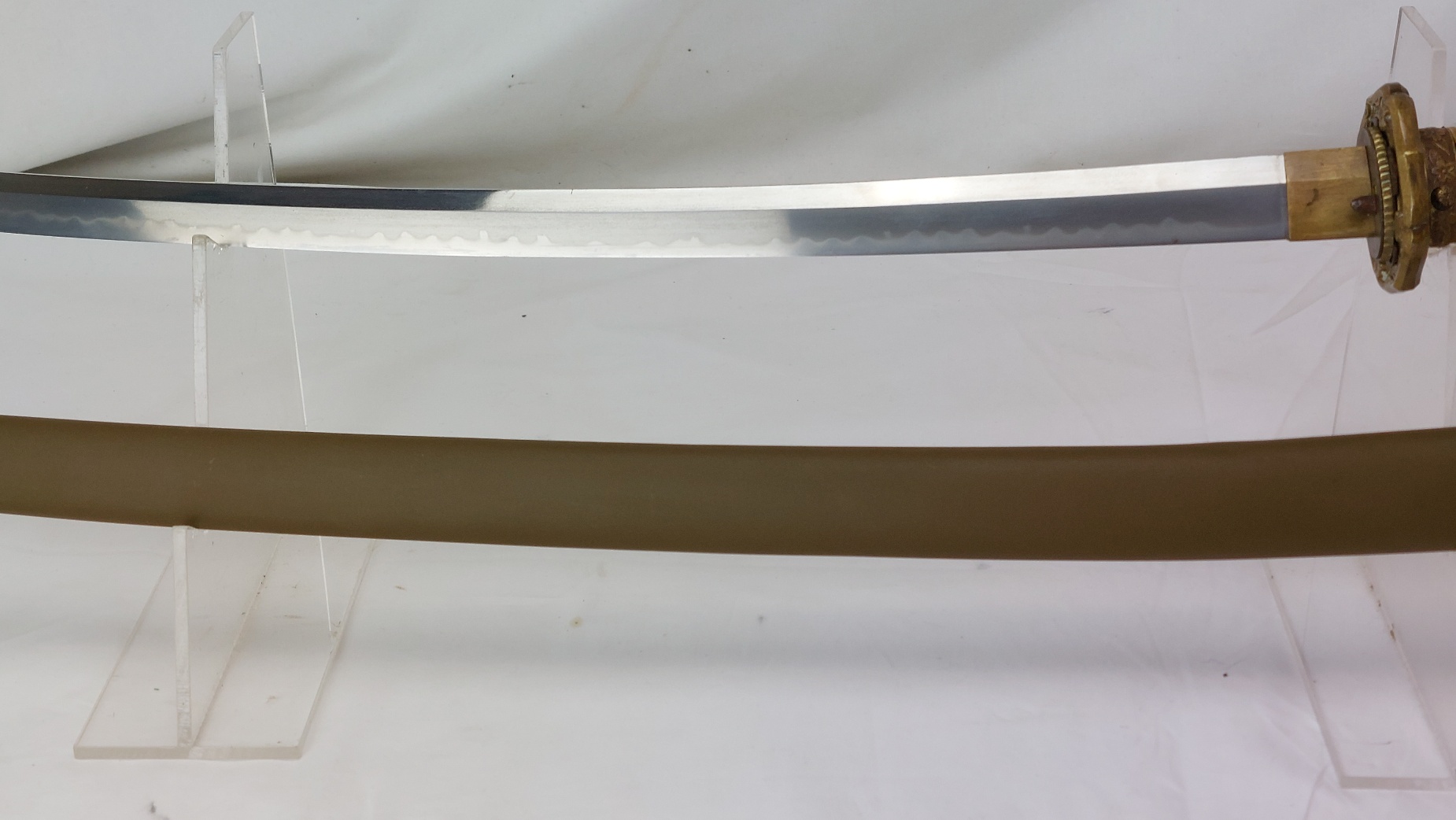
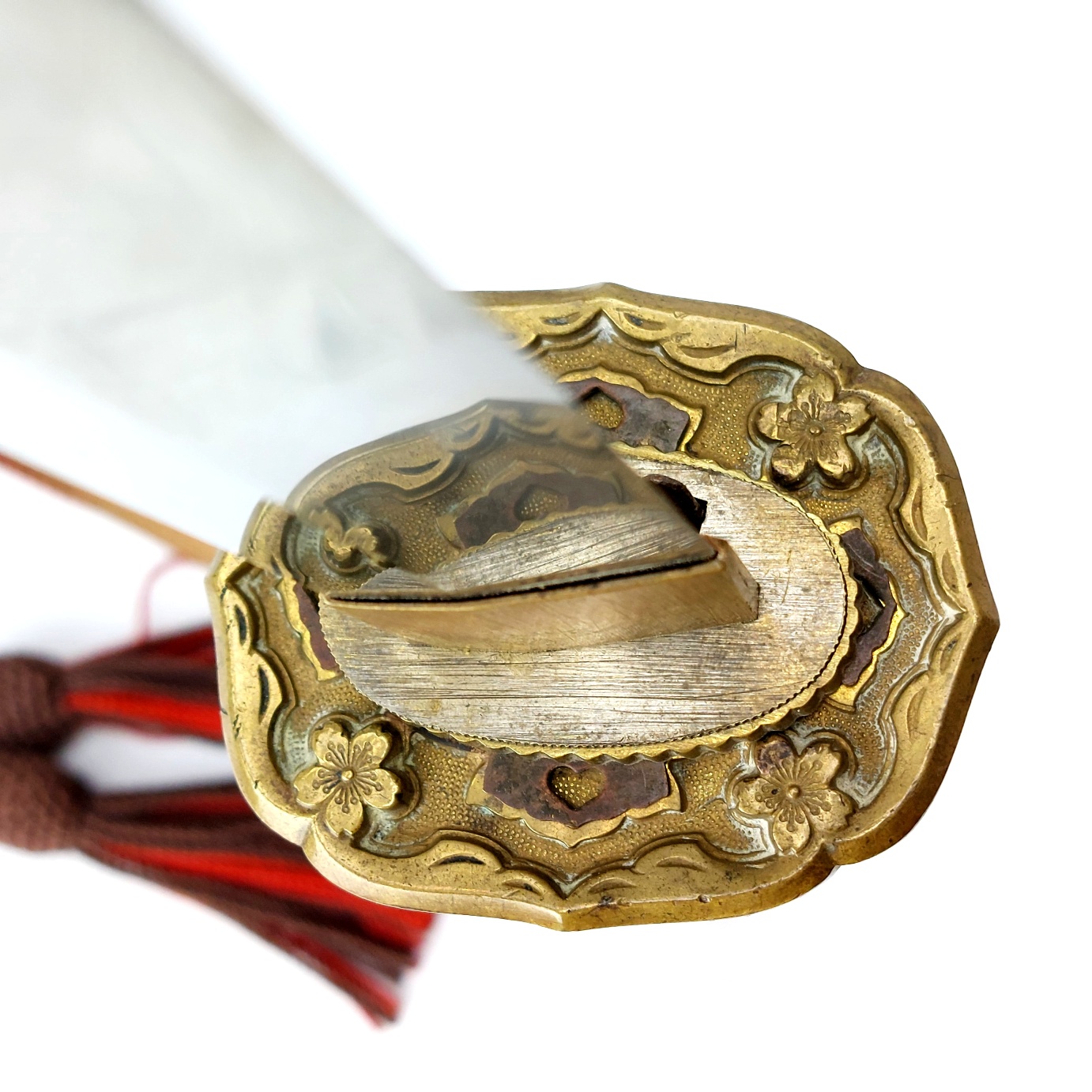
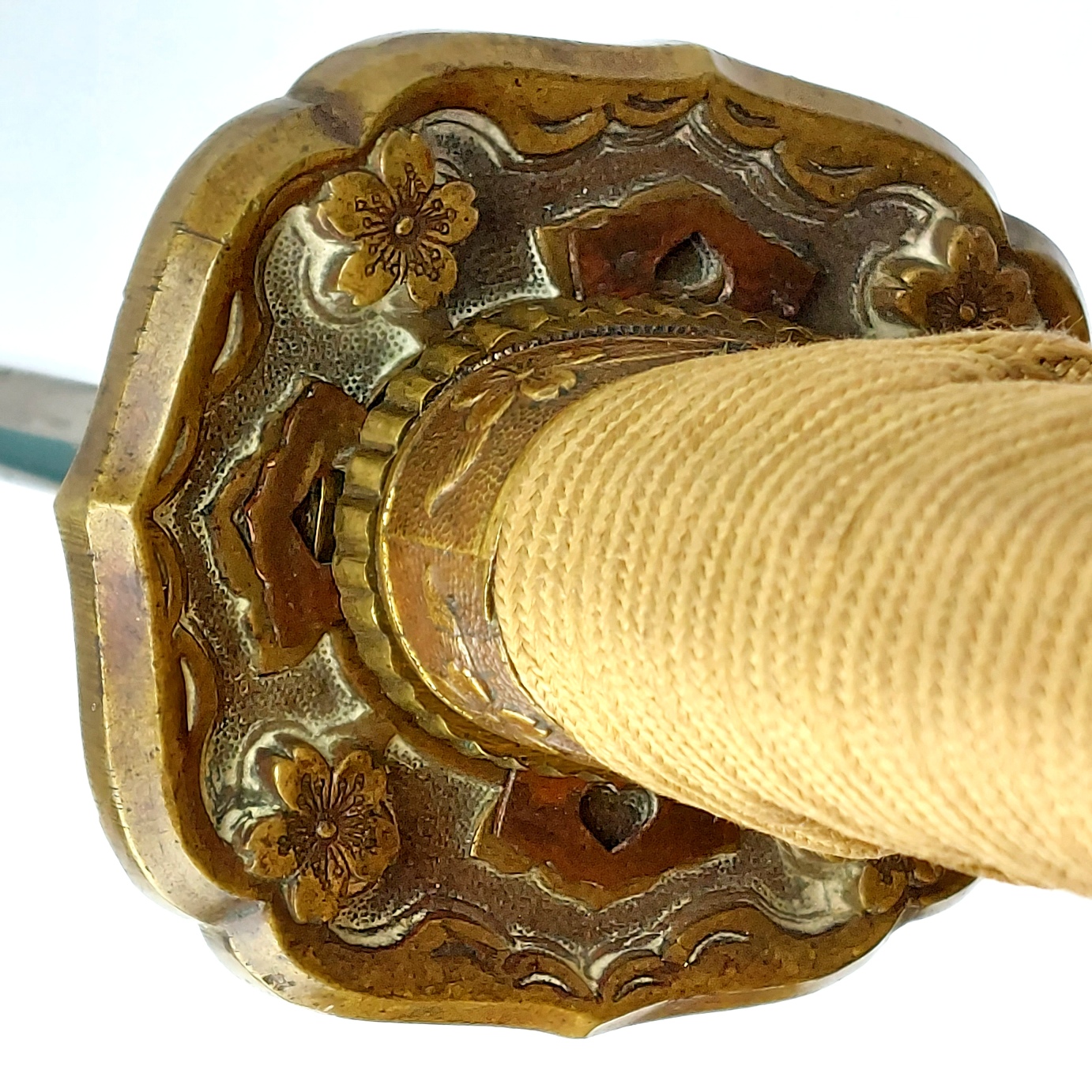
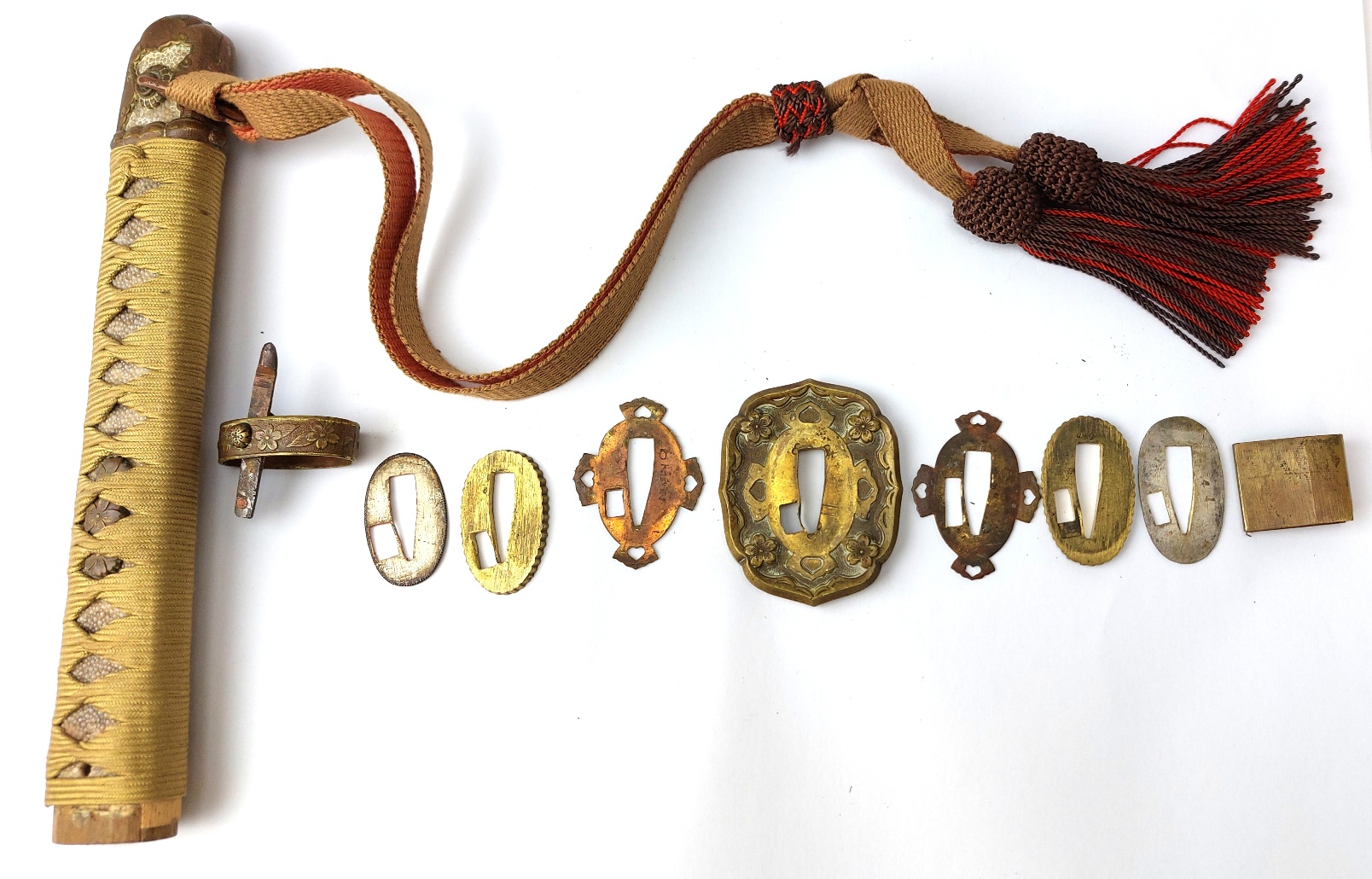
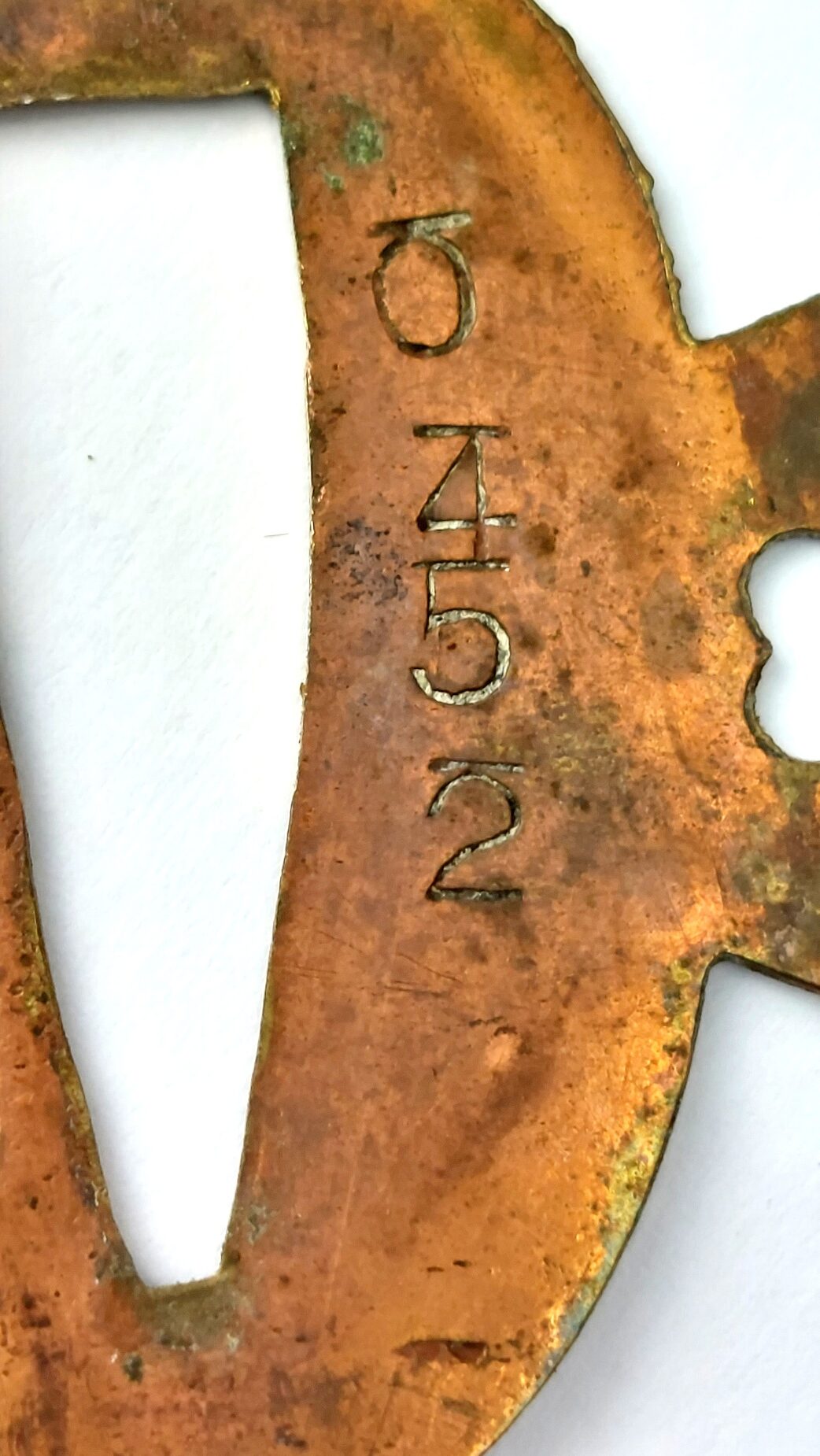
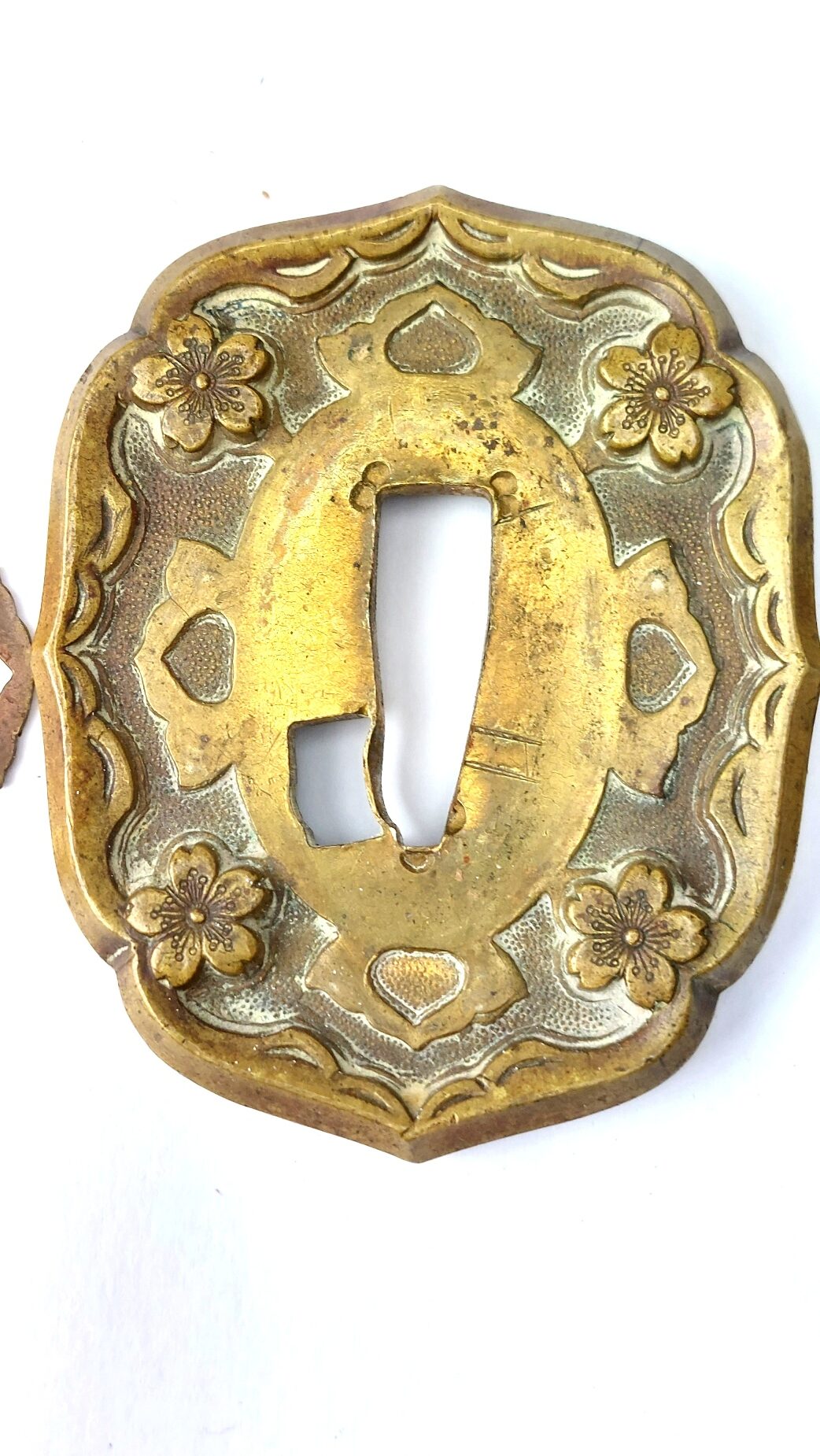
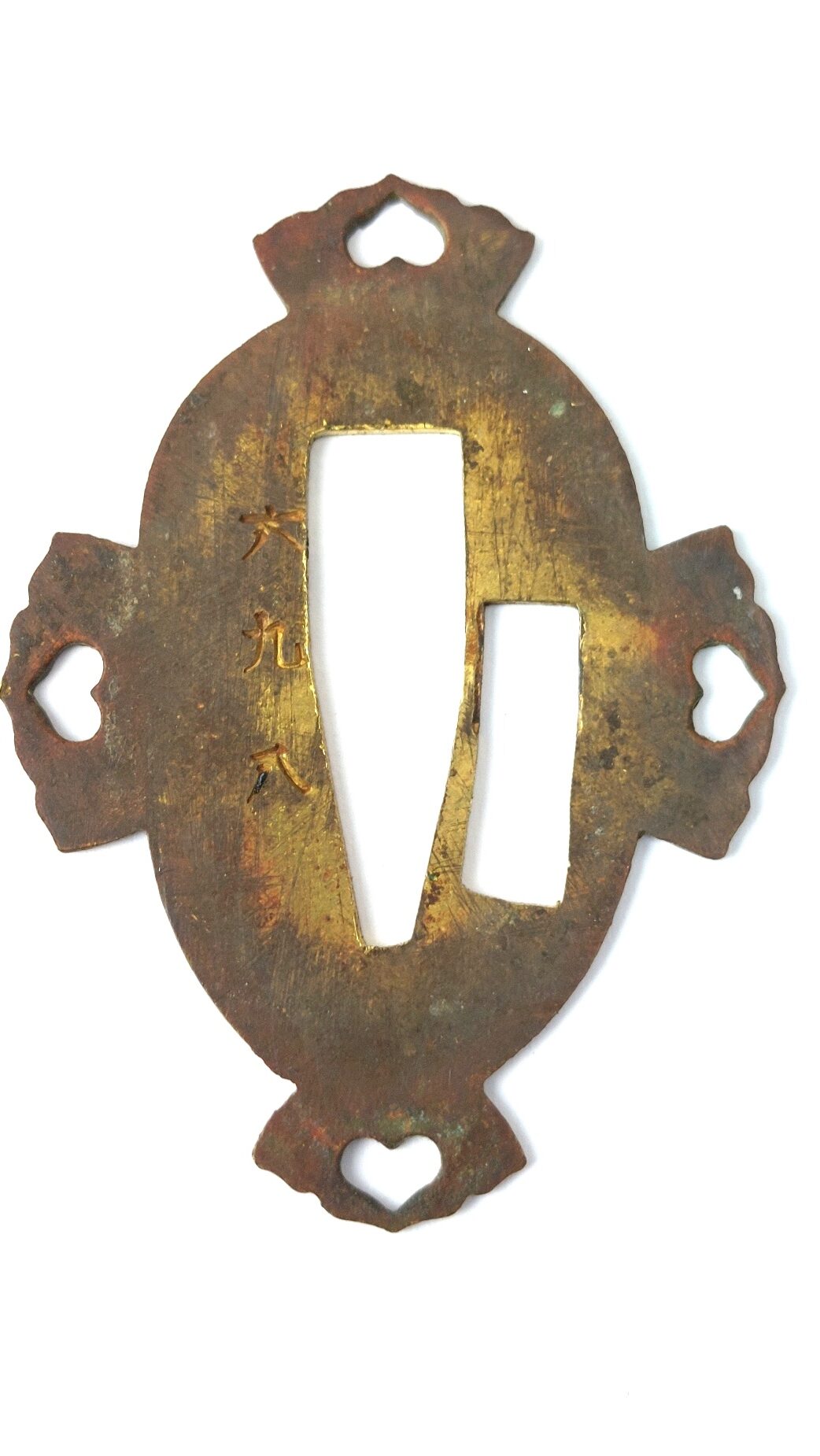
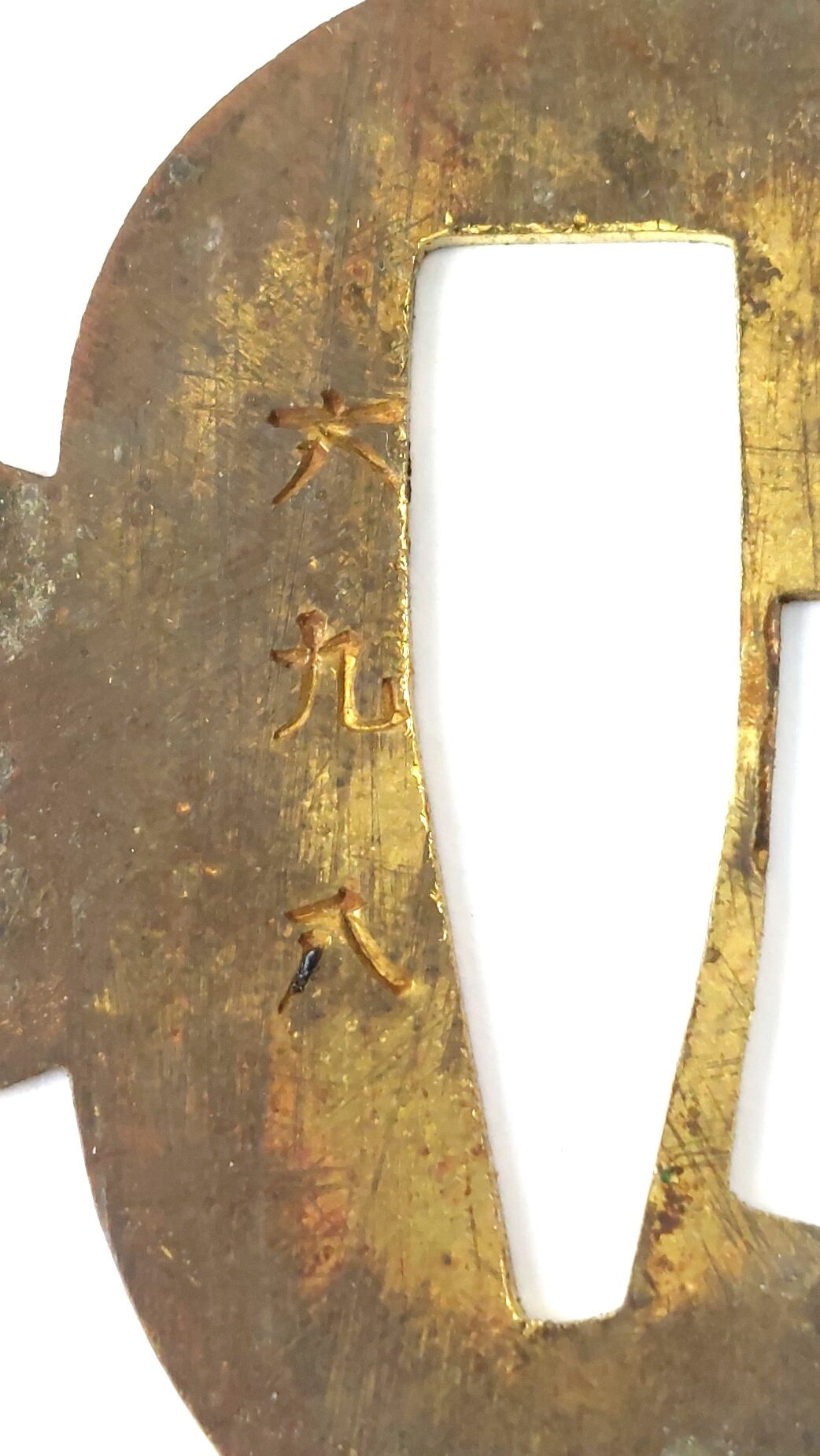
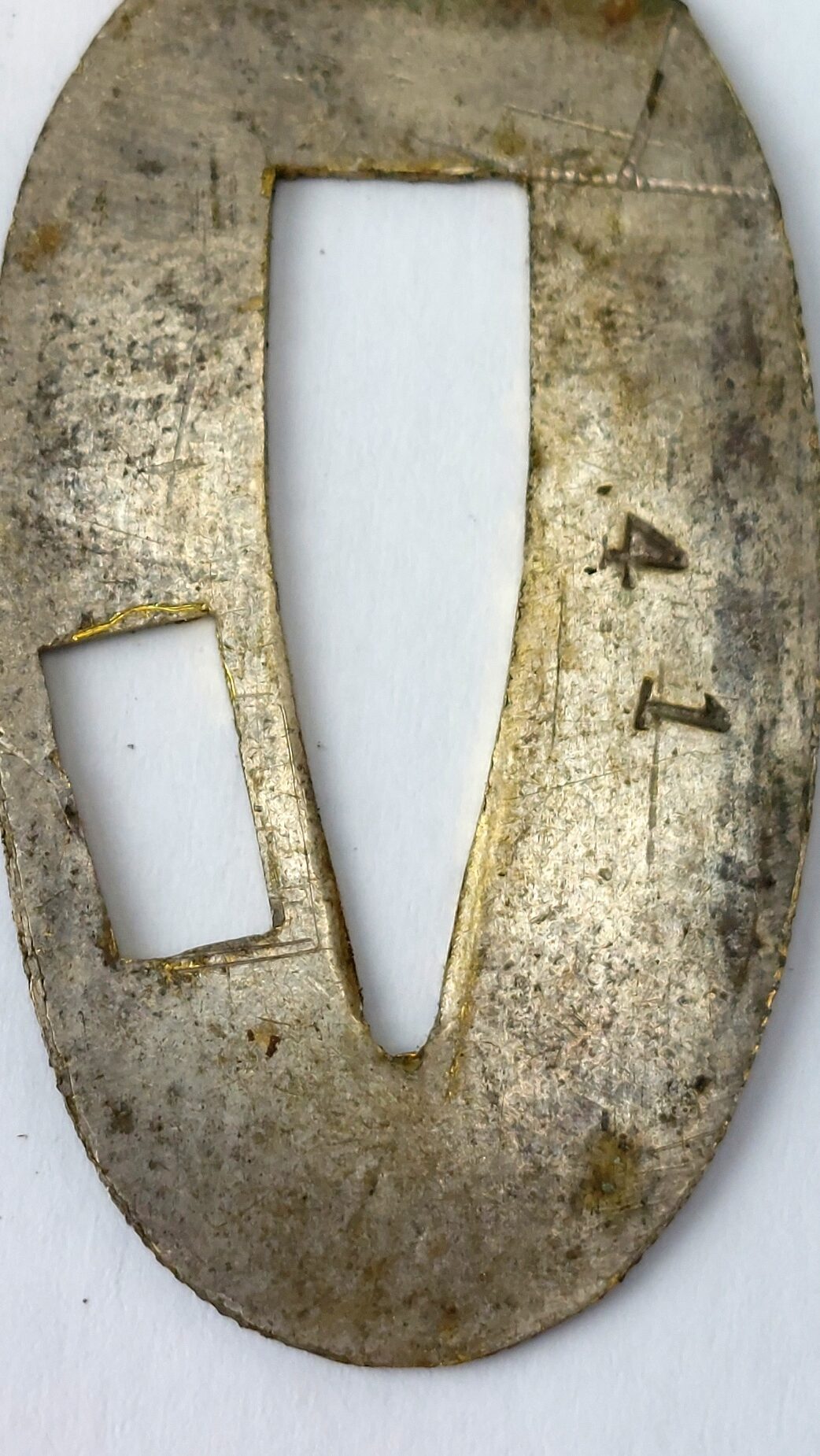
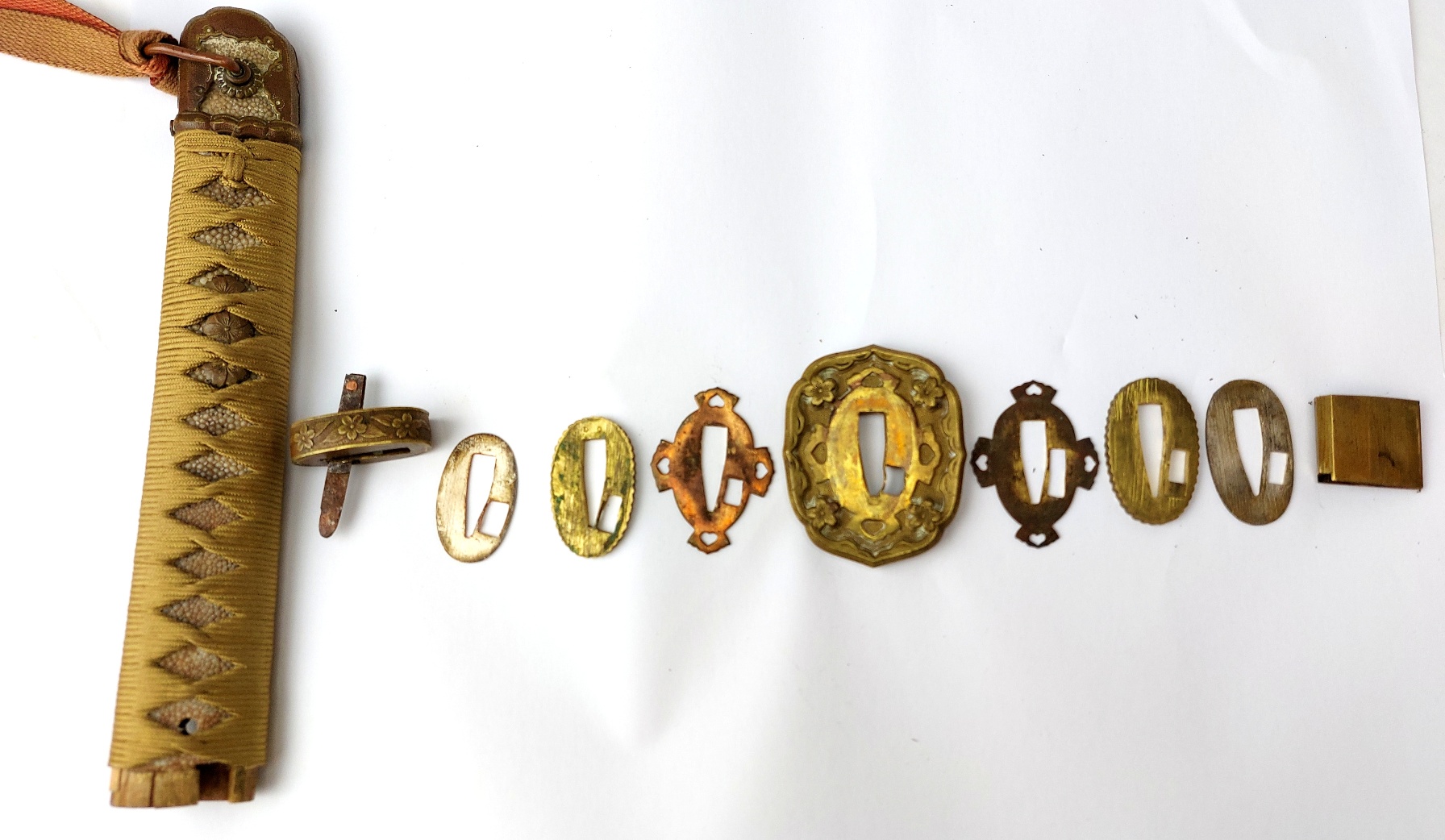
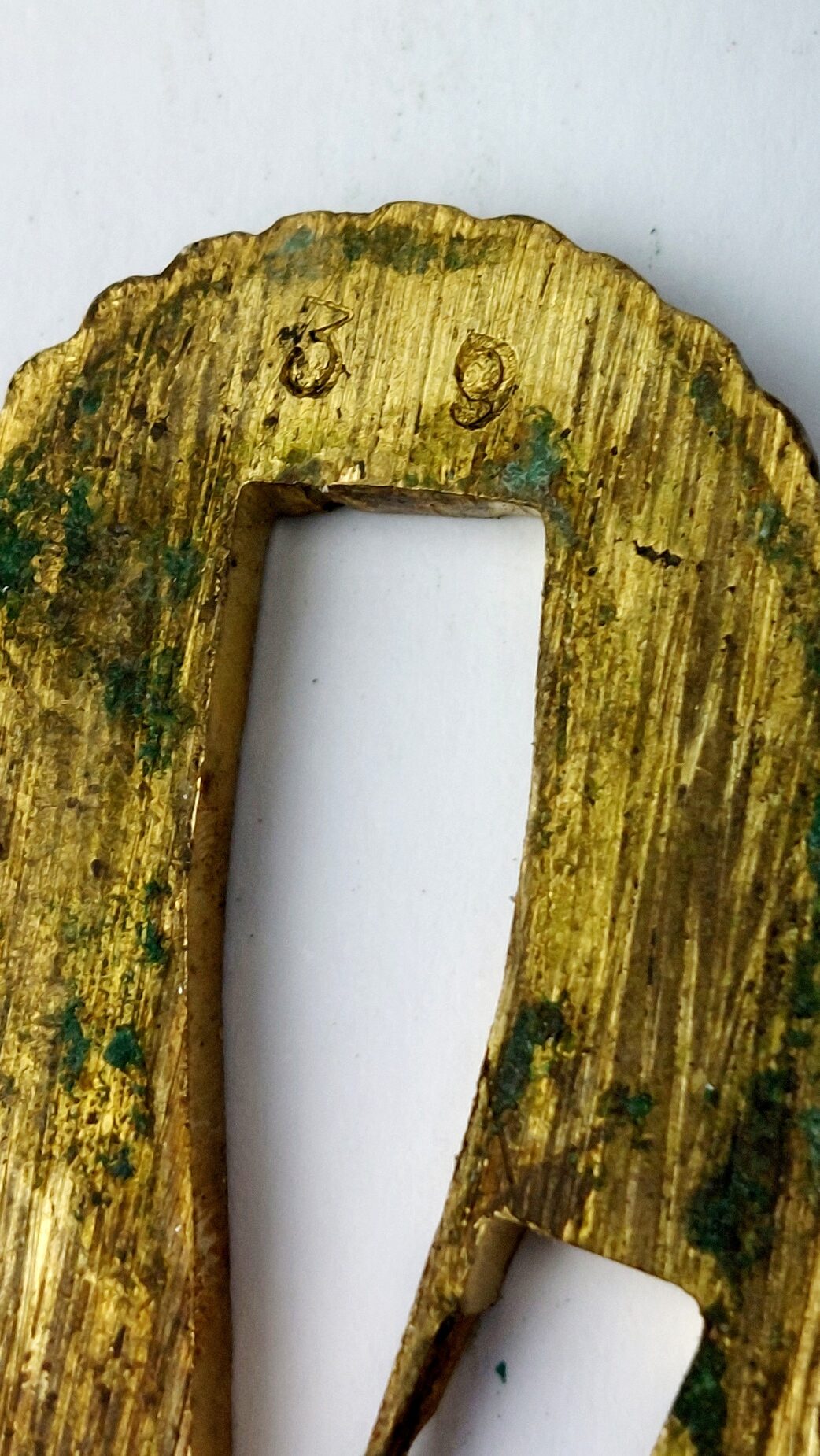
The pierced tsuba is the standard Type 98 officer pattern and remains fitted with its full seppa set, several retaining matching assembly numbers applied during wartime fitting and manufacture, including “39,” “41,” and “0452.” The copper habaki shows good age patina and fit to the blade.
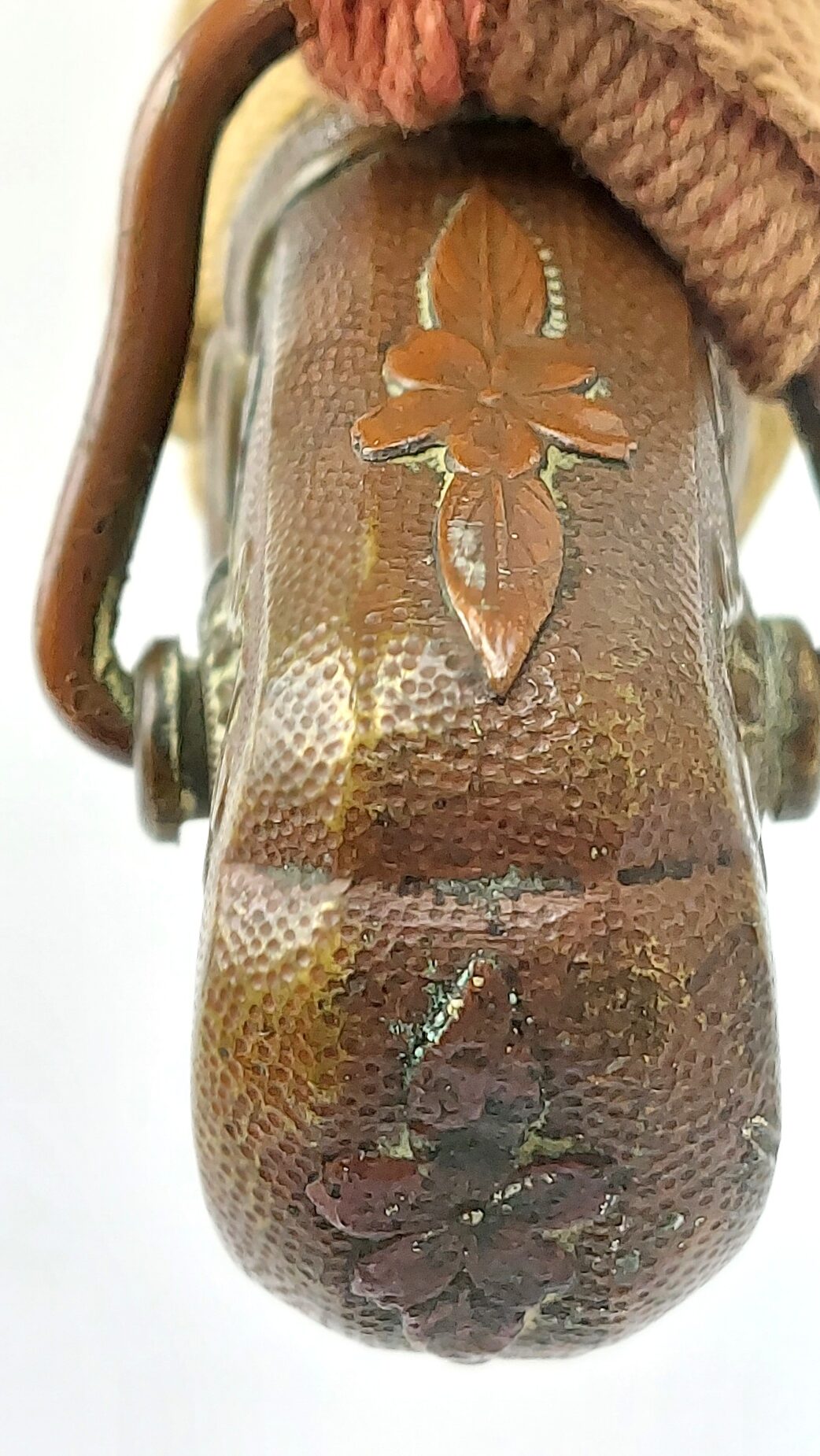
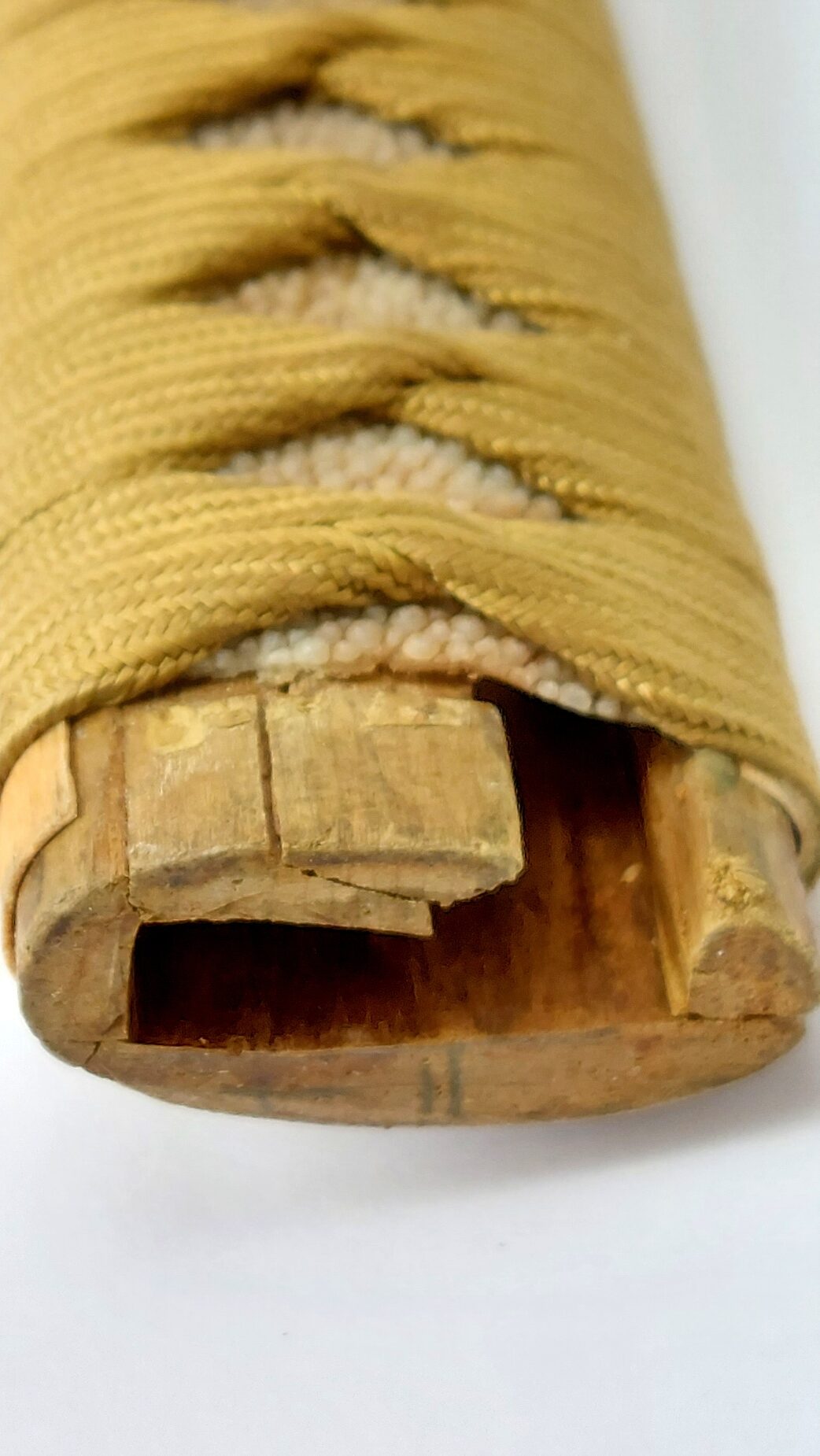
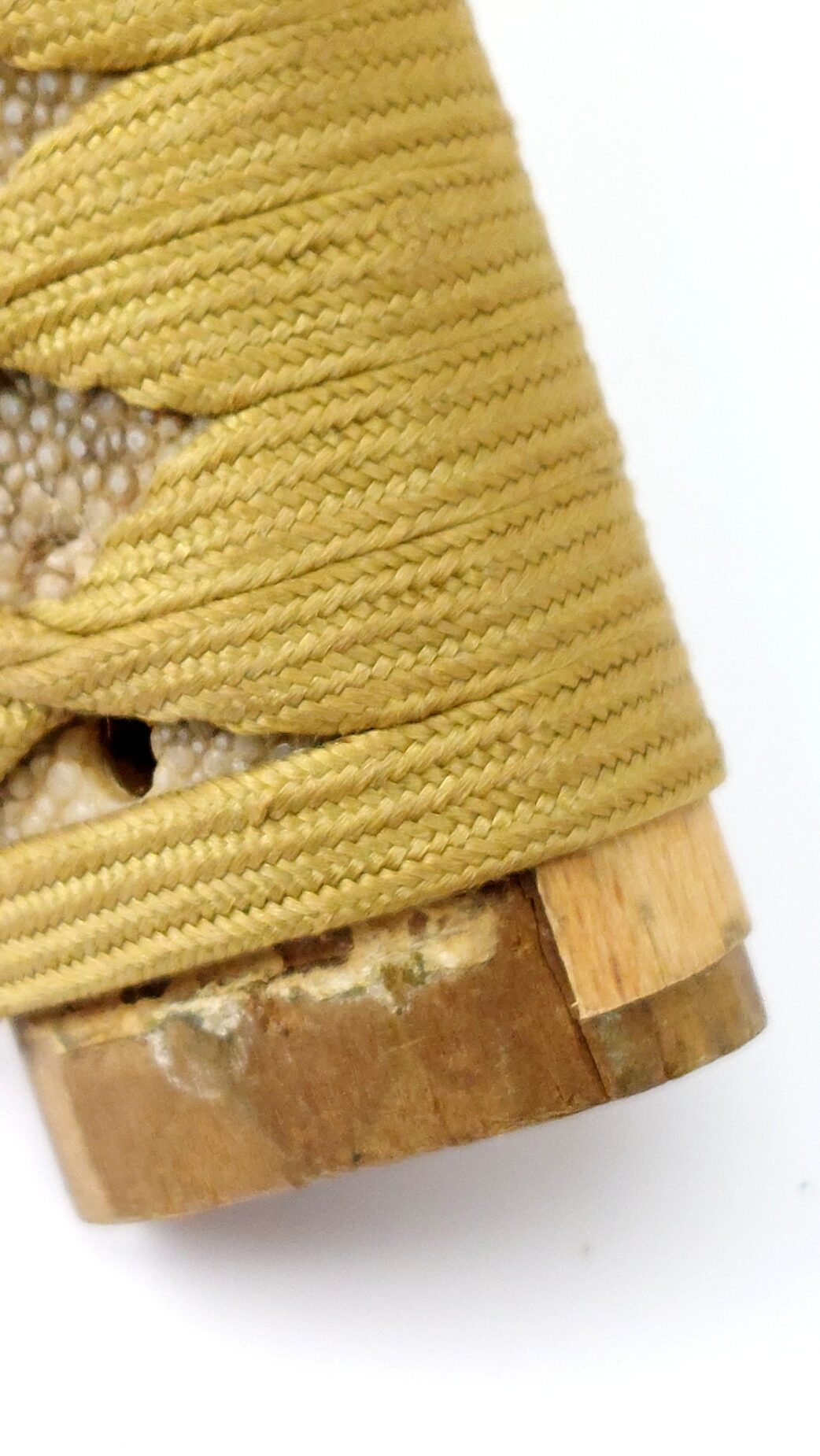
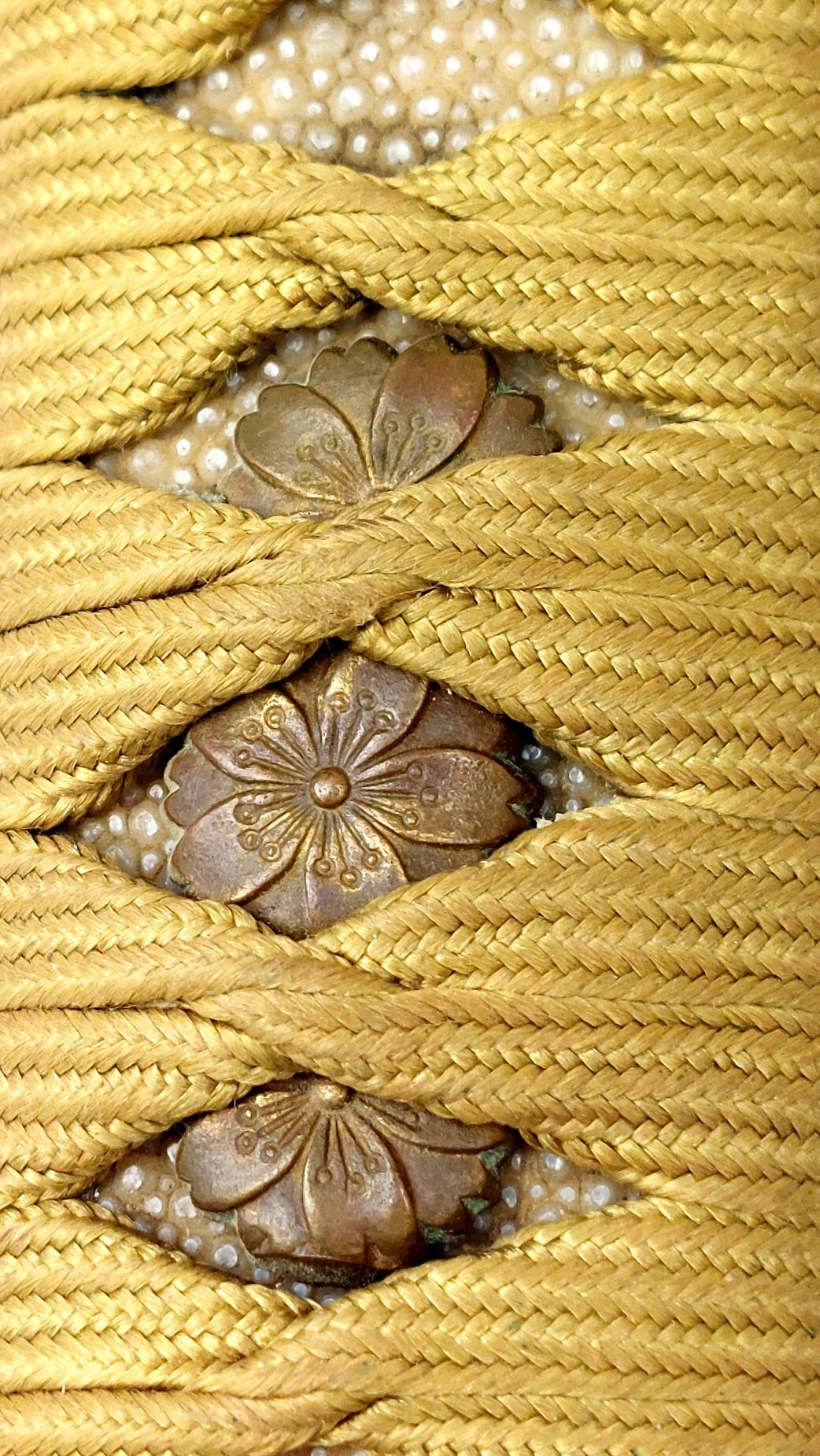
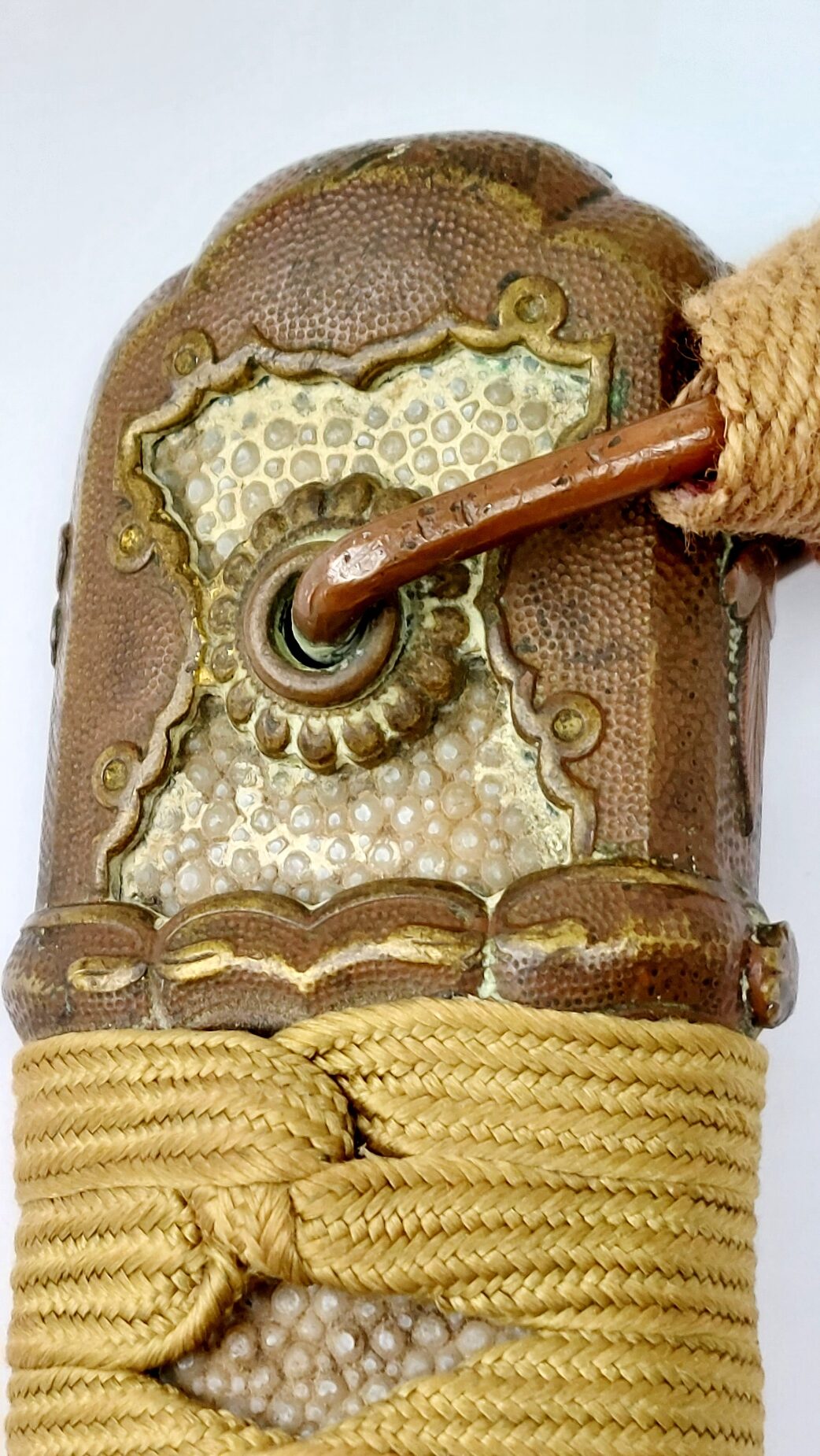
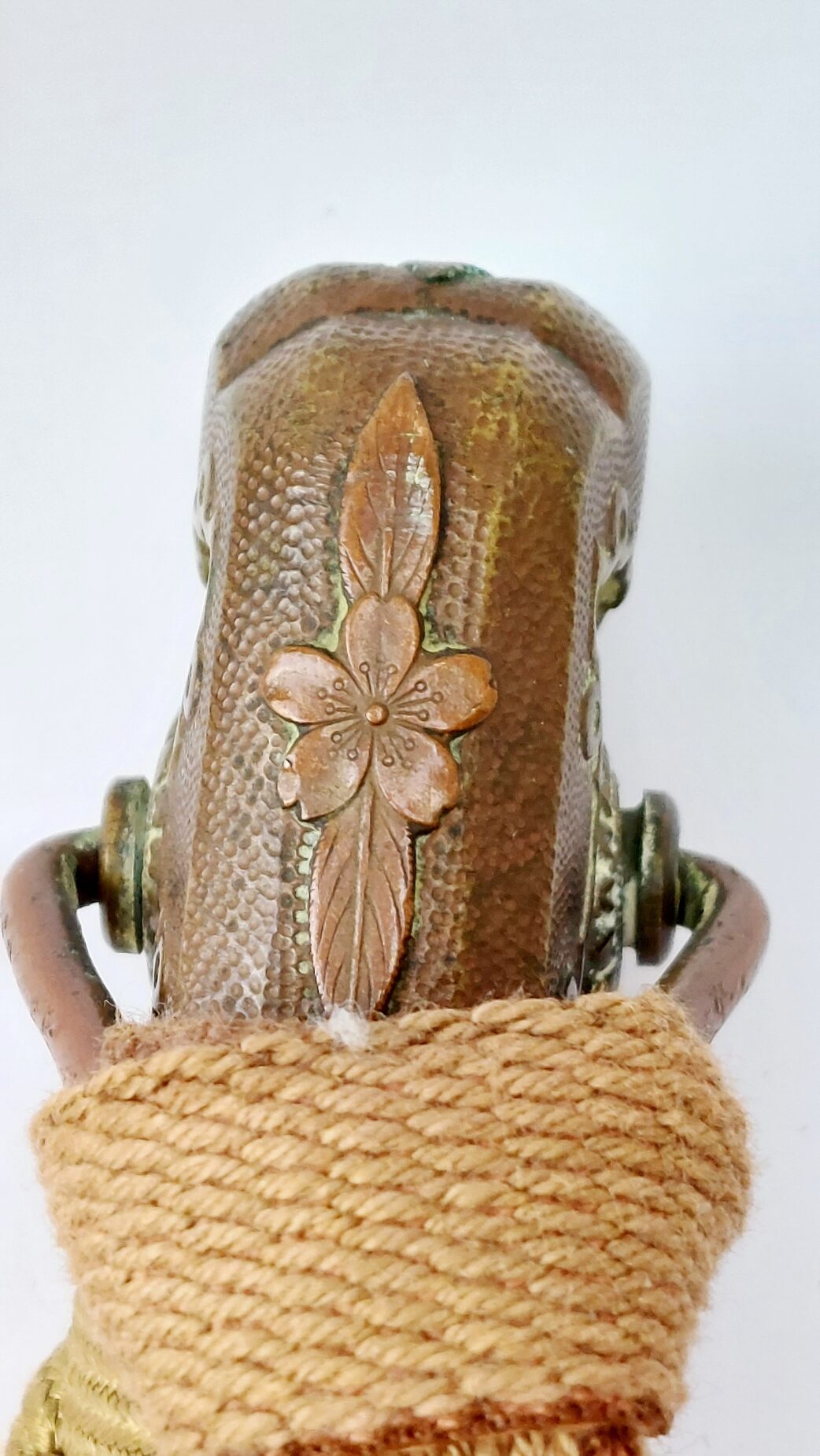
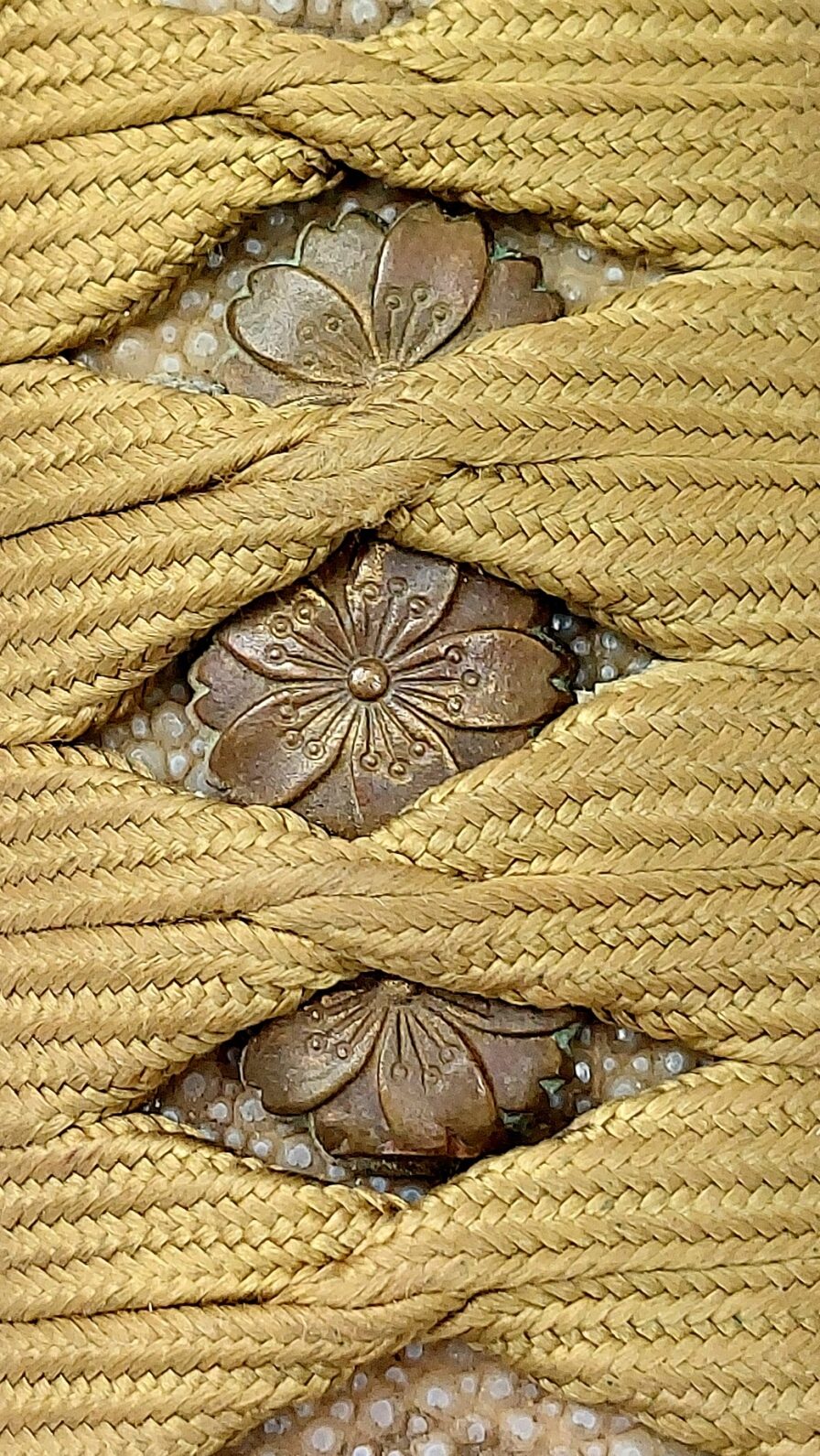
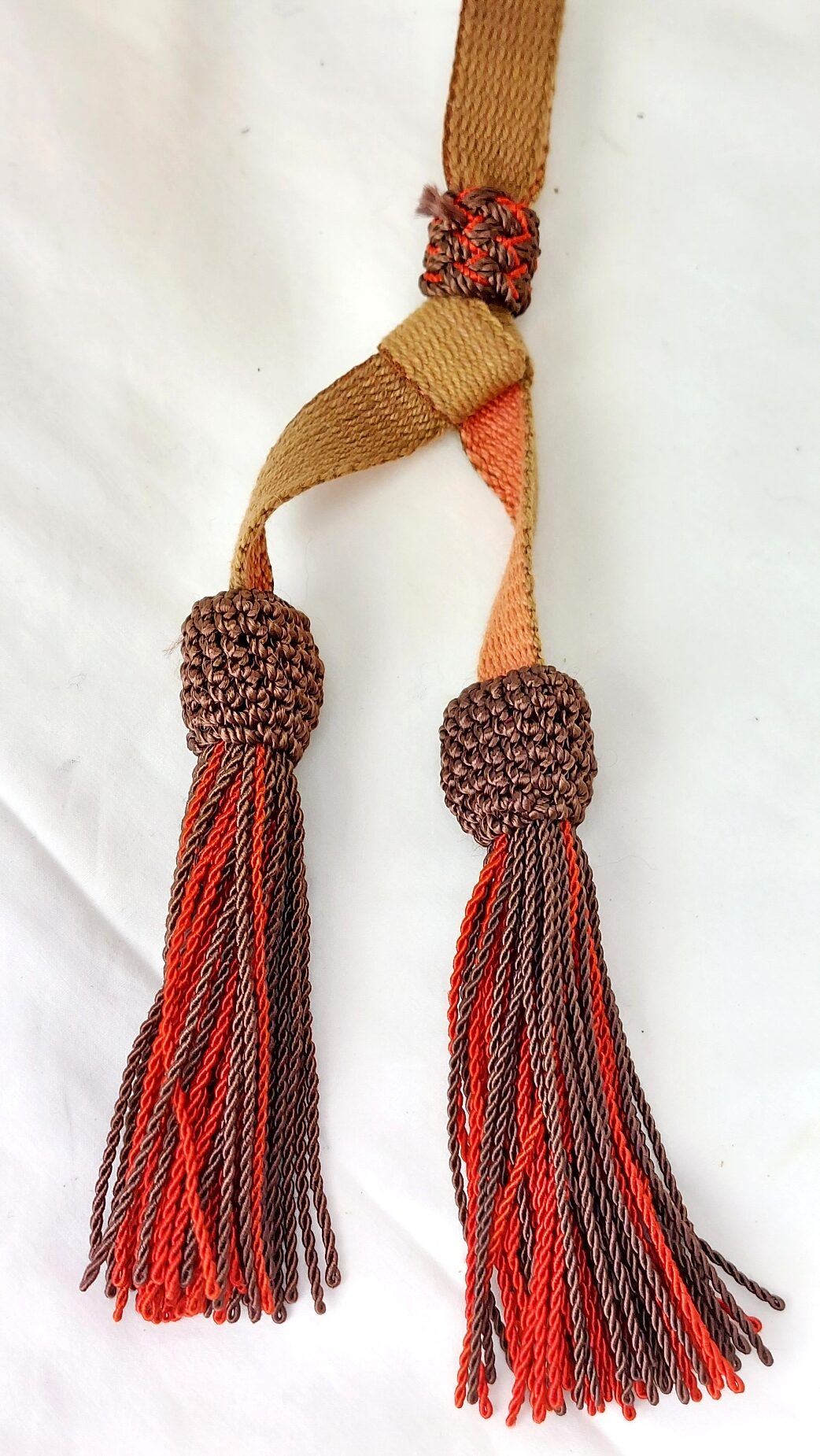
The tsuka retains its original military-style silk ito binding over white samegawa ray skin, together with floral menuki beneath the wrap. The coppered kabutogane retains its sarute loop and attached officer’s tassel in brown and red tones, while the side-mounted locking catch remains present and functional. The mounts overall are notably superior to many simplified late-war examples and display the higher-quality finish associated with mid-war officer-grade Shin-Guntō mountings, with deeply cast sakura (cherry blossom) decoration visible throughout the fittings.
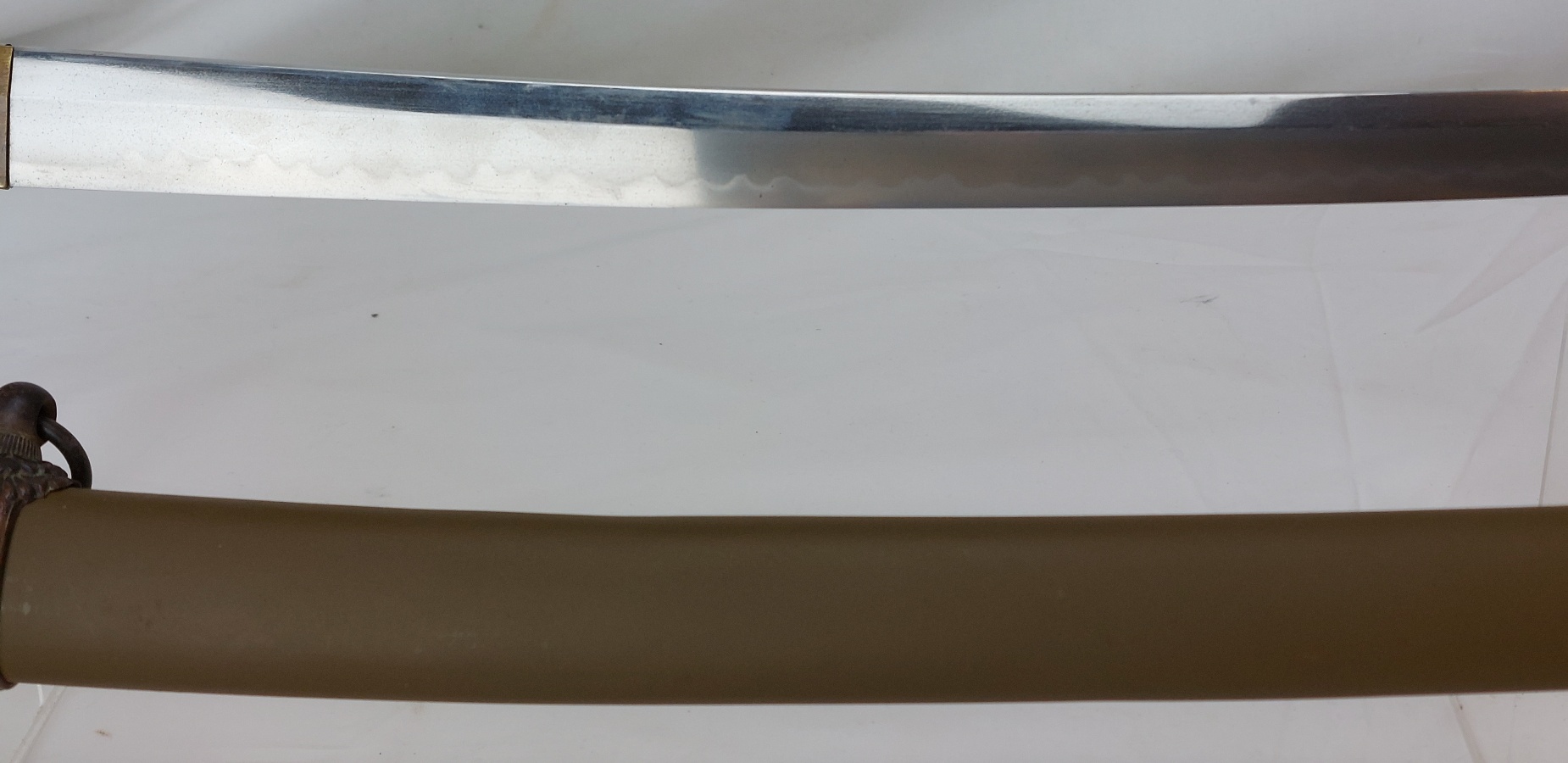
The blade itself appears older than the wartime mounts and displays characteristics associated with a traditionally made Japanese blade rather than a purely late-war machine-finished example. The blade retains a clearly visible hamon with active temper line extending into the boshi, together with elegant curvature and traditional geometry throughout. The surface remains bright overall with good polish and strong visual presence.
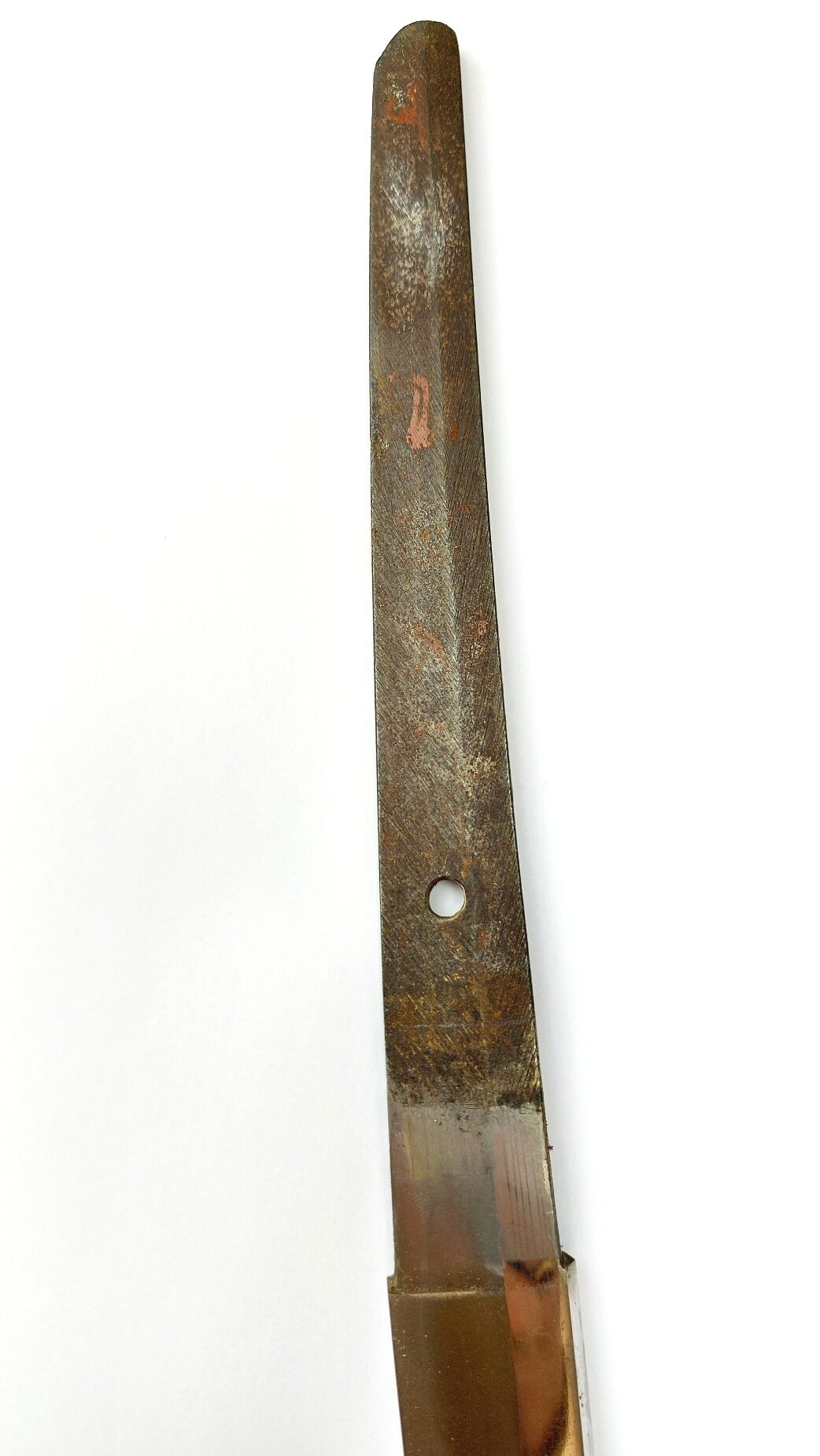
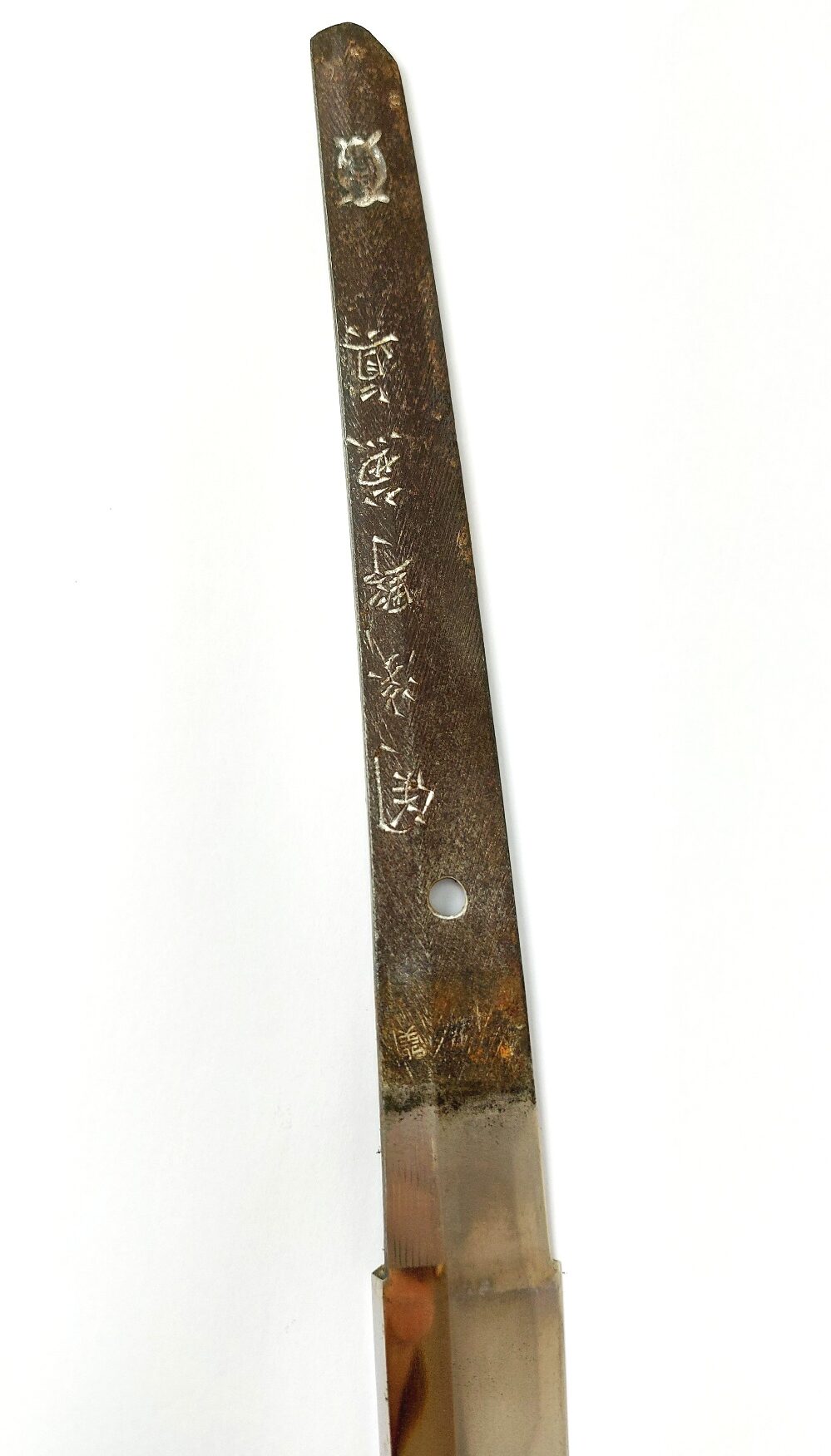
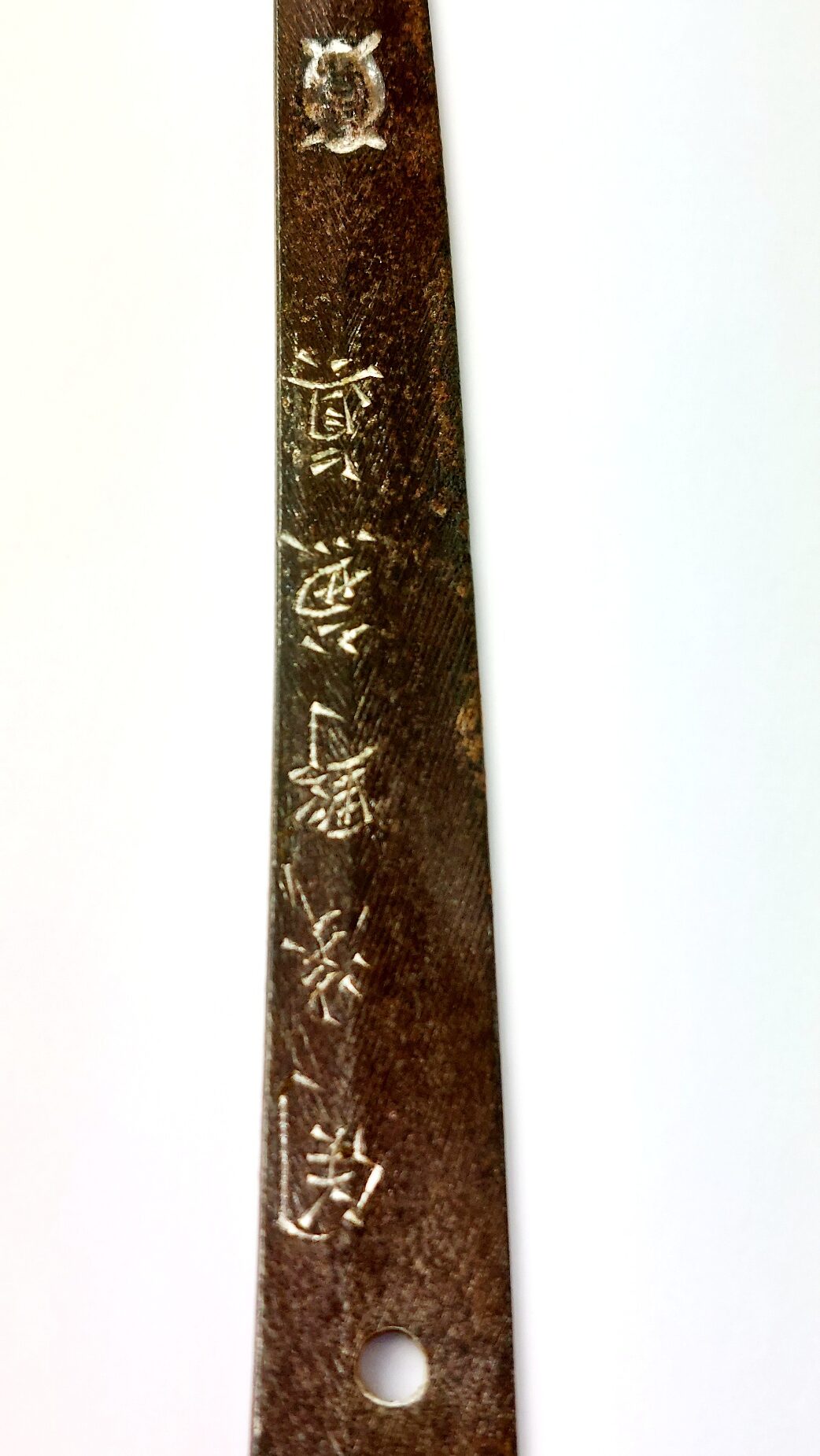
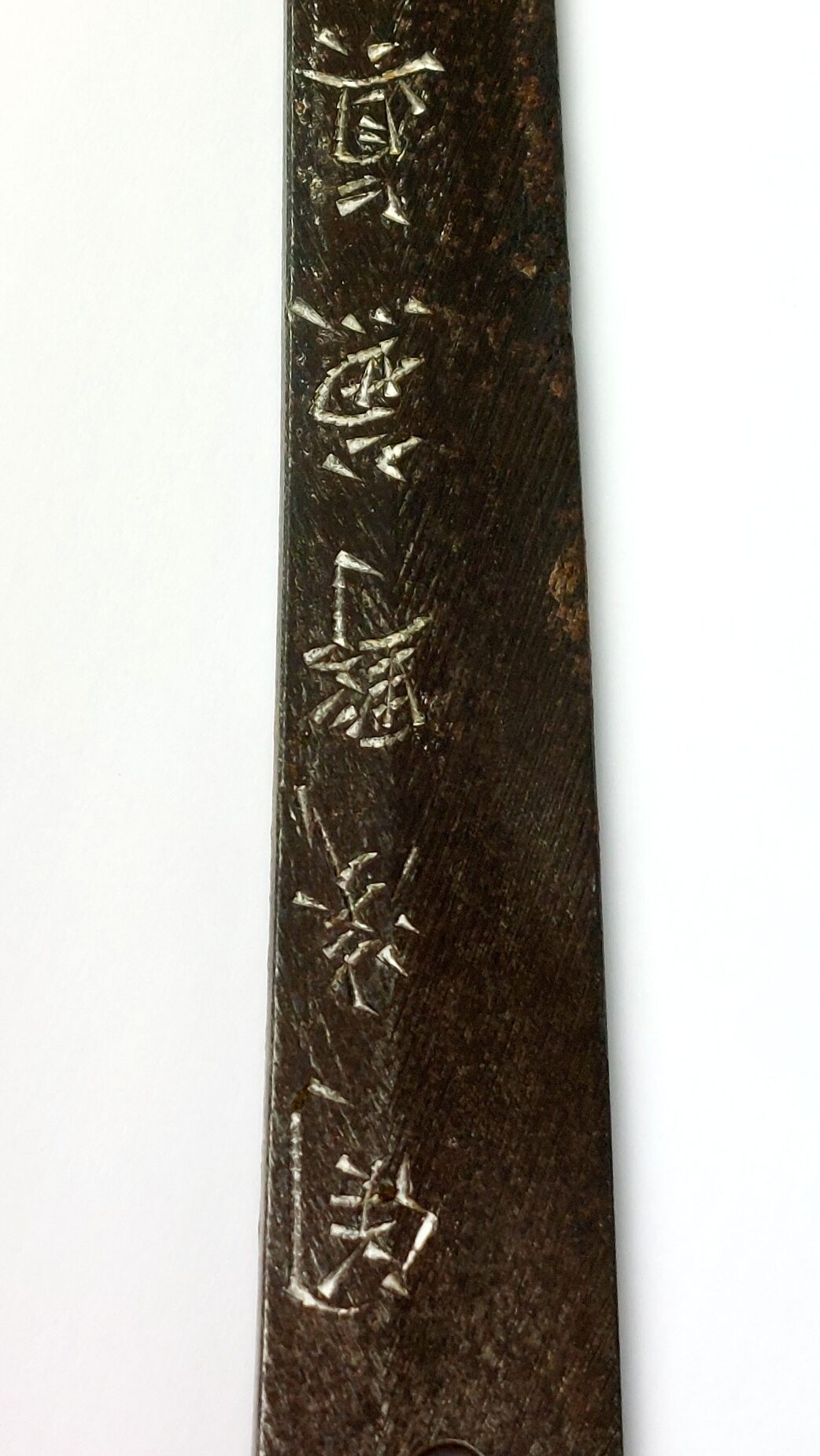
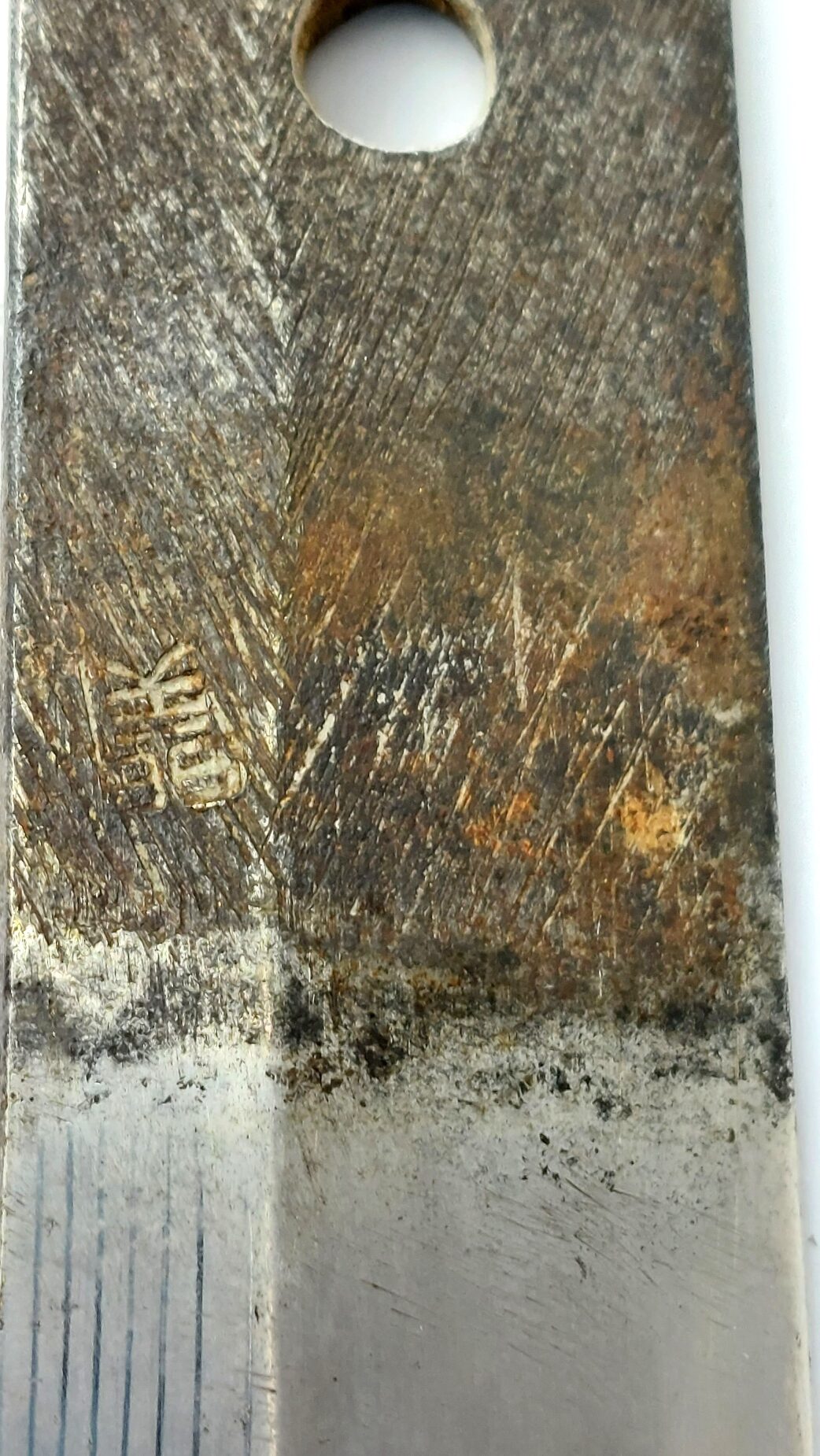
The tang (nakago) carries a wartime arsenal-style inspection stamp near the habaki together with a partially legible hand-cut mei in the traditional Seki format. The inscription appears consistent with the standard wartime form:
「濃州関住 … 作」
(Nōshū Seki jū … saku)
translating approximately as “Resident of Seki, Noshu Province, made this.” While the exact smith’s name remains difficult to conclusively identify due to wear and the compact style of the inscription, the mei is entirely consistent with authentic WW2 Japanese military sword production from the important wartime sword-making centre of Seki in Gifu Prefecture.
Beneath the mei is a further small stamped character or workshop mark, likely associated with wartime fitting, polishing, or inspection procedures rather than the swordsmith’s signature itself. The nakago itself displays deep age-consistent patination together with diagonal sujikai yasurime file marks and a single mekugi-ana, entirely consistent with period manufacture and wartime mounting.
The accompanying officer’s tassel remains attached and displays well with age and service wear entirely consistent with wartime use.
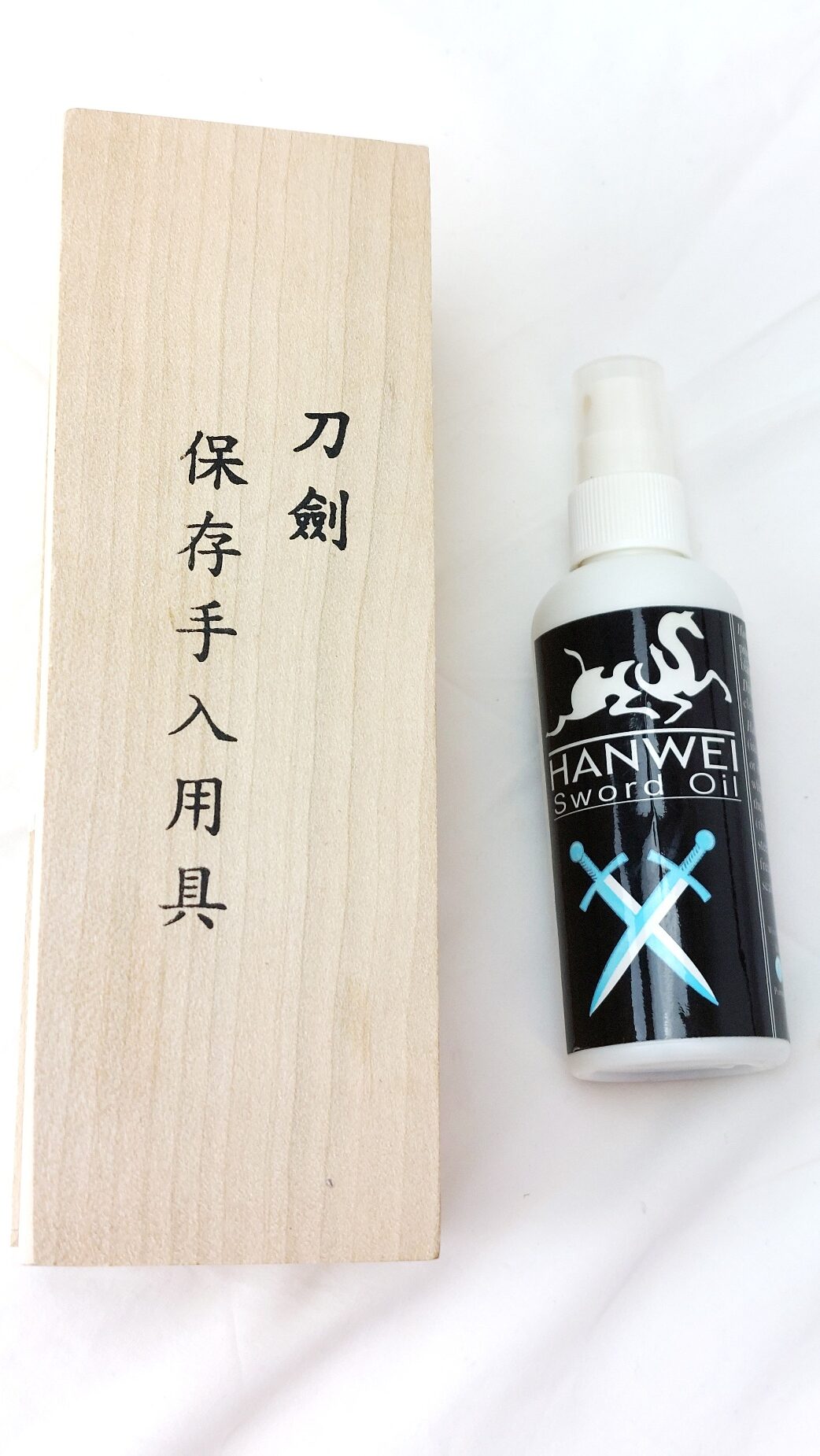
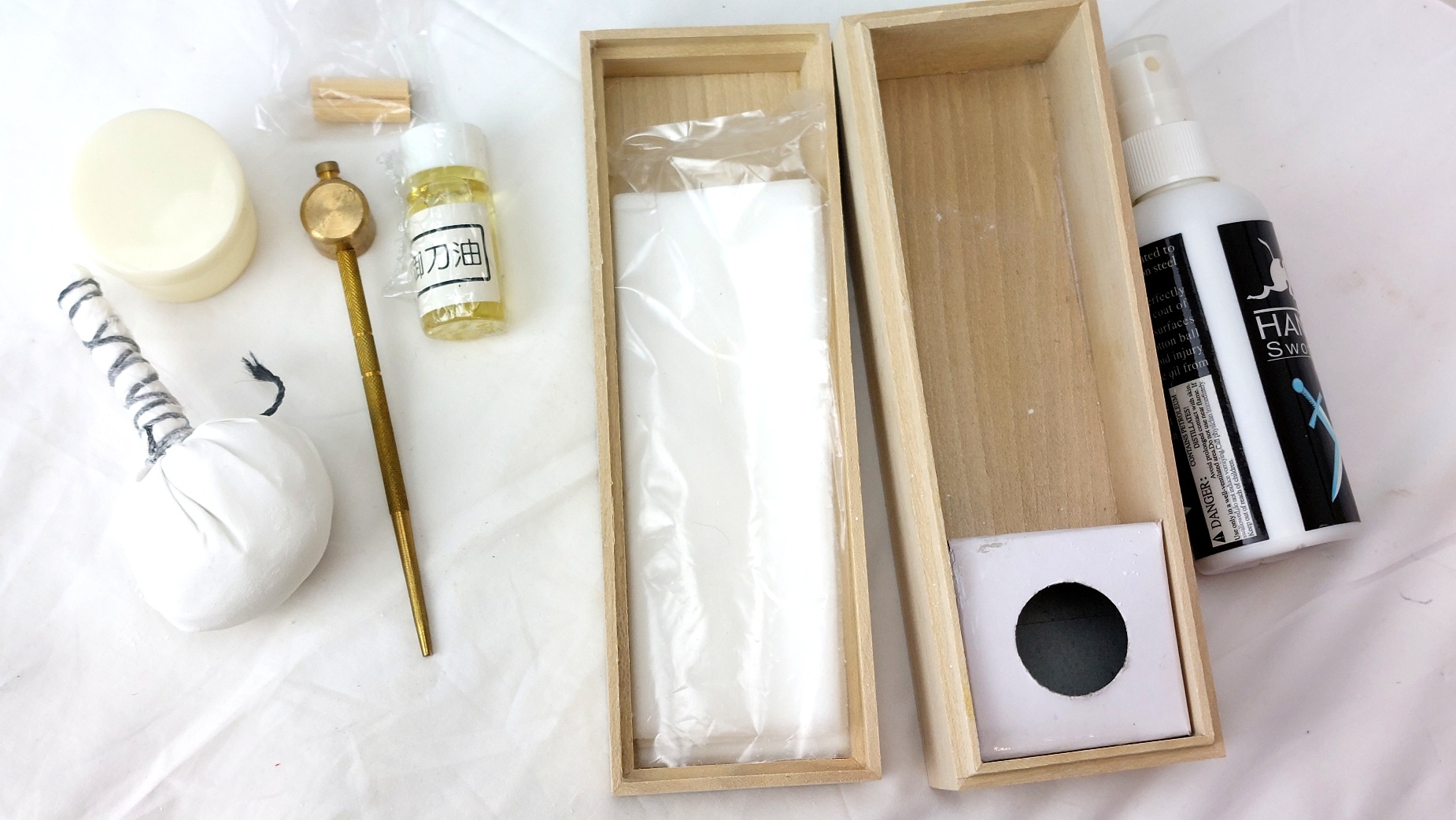
Also included is a modern sword cleaning and maintenance kit comprising oil bottle, powder ball, cloth, and wooden-handled tools.
Approx. Measurements – Blade length: 61 cm. Overall length: 86.7 cm.
History Note:
The Type 98 Shin-Guntō was introduced by the Imperial Japanese Army in 1938 as the standard officer’s sword of the Second World War. While many wartime blades were newly produced, officers frequently mounted older traditionally made blades into regulation military fittings for active service. Such swords combined traditional Japanese sword-making heritage with modern military mountings, resulting in highly distinctive officer weapons balancing martial tradition with wartime practicality.
Seki, located in Gifu Prefecture, became one of the principal wartime sword-producing centres of Japan during WW2. Arsenal and inspection marks applied to tangs during this period served as military acceptance and workshop inspection stamps associated with wartime production and mounting.
The cherry blossom motif seen throughout the fittings symbolised the Imperial Japanese Army and became one of the defining decorative elements of officer-grade Shin-Guntō mountings during the war.
*Condition*
An exceptionally attractive and well-preserved example overall. The blade is excellent but displays light surface marking, minor age wear, and small areas of staining consistent with handling and service use, but remains bright and visually impressive with visible hamon throughout. The mounts remain tight and well-fitted overall. The tsuka wrap remains intact with strong colour and good tension, while the samegawa beneath remains complete and well preserved. The saya retains much of its original wartime olive finish with only minor handling and service wear. The tassel displays expected age-related wear and light fraying.Cleaning kit included. Please see photographs as part of the condition report.
RQMAEOOXBFEO_5943240562