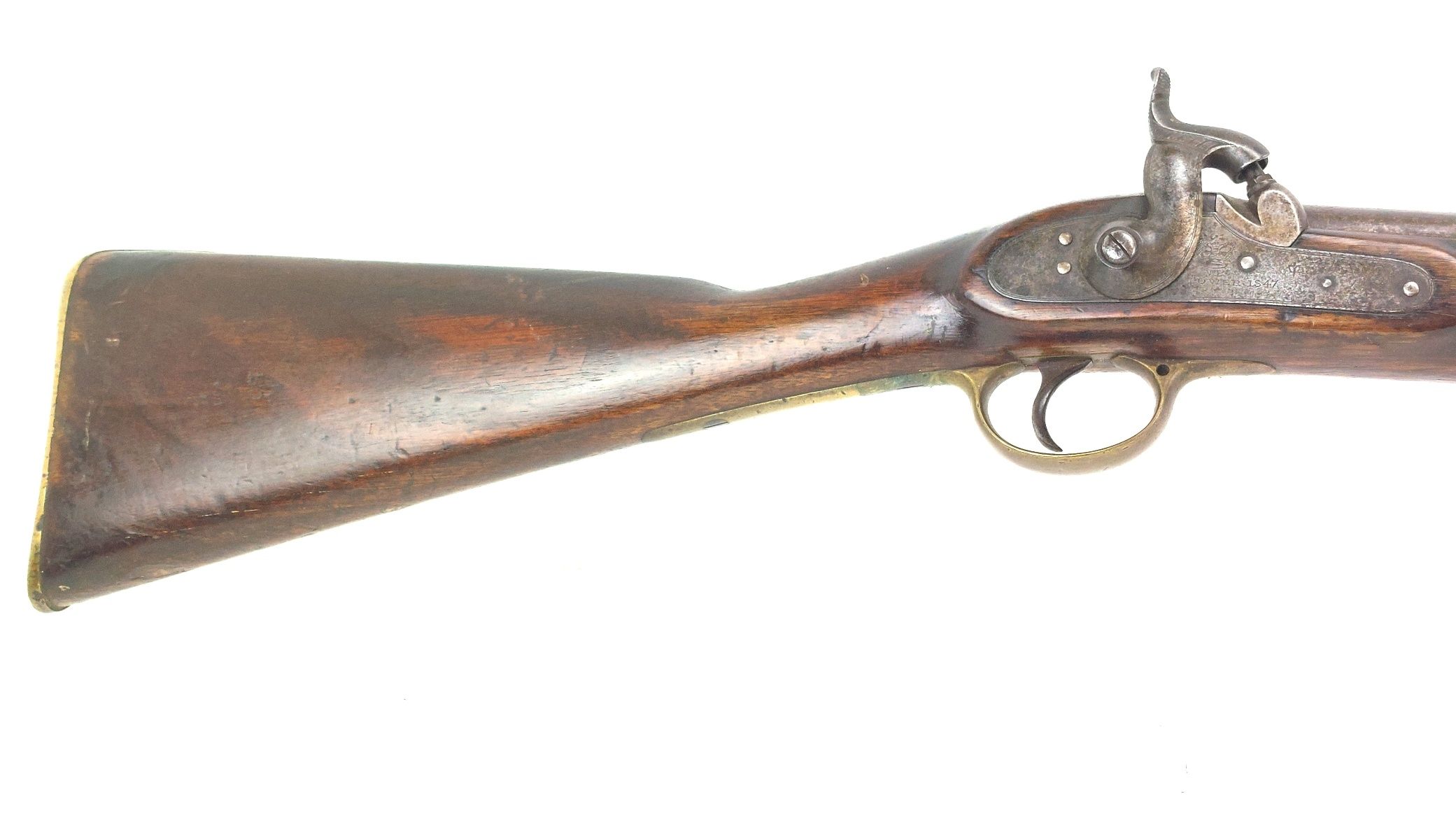
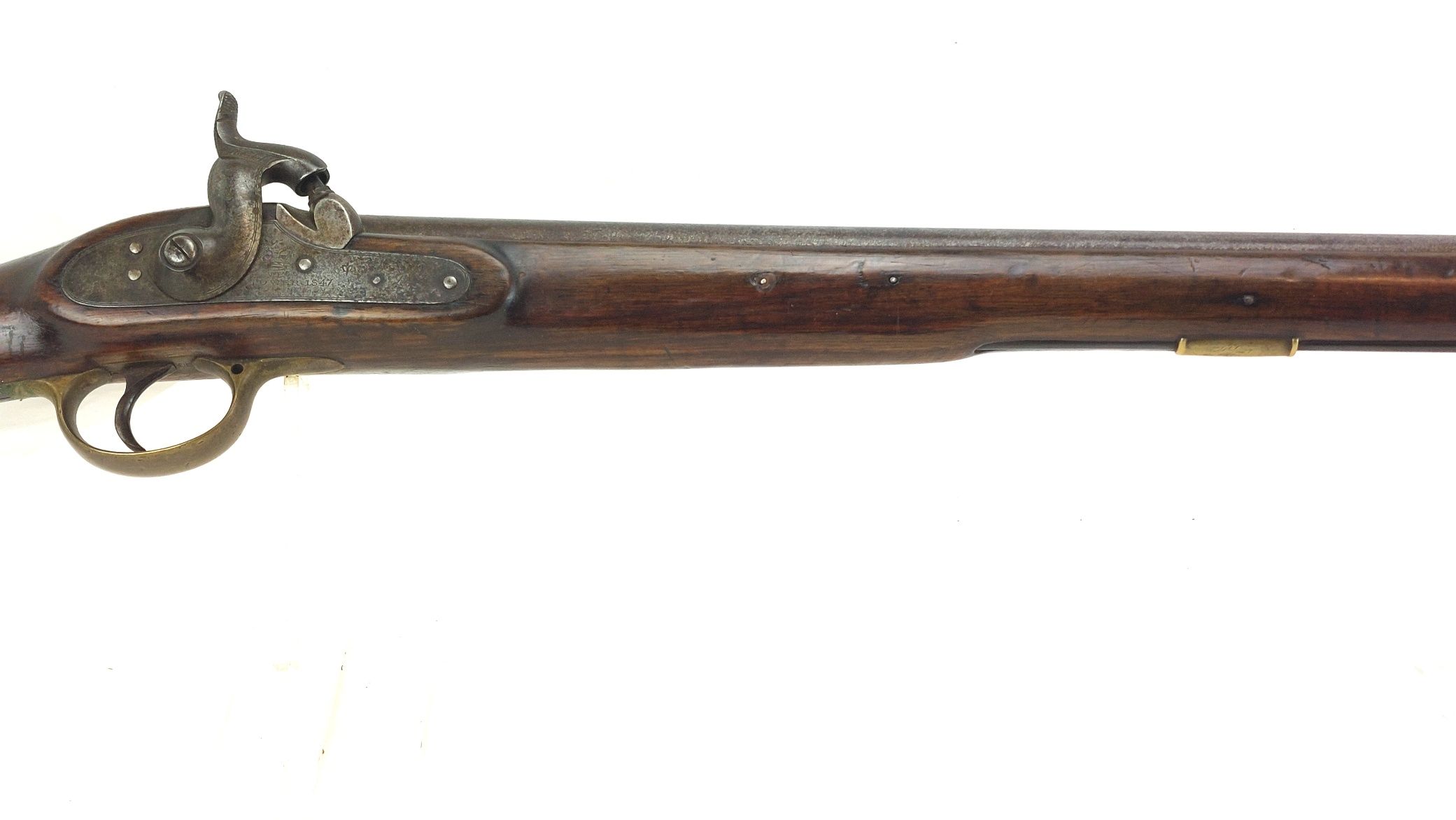
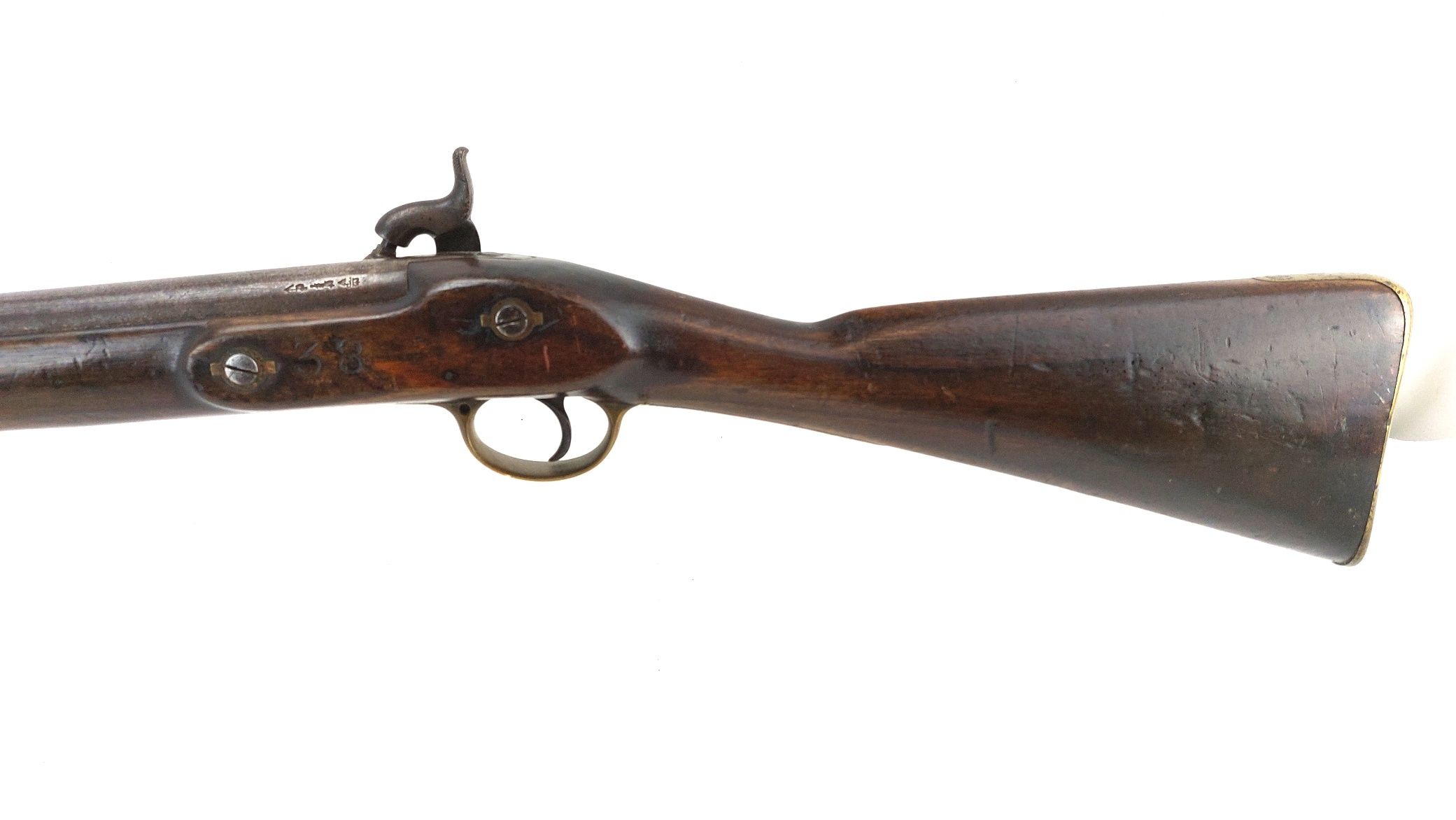
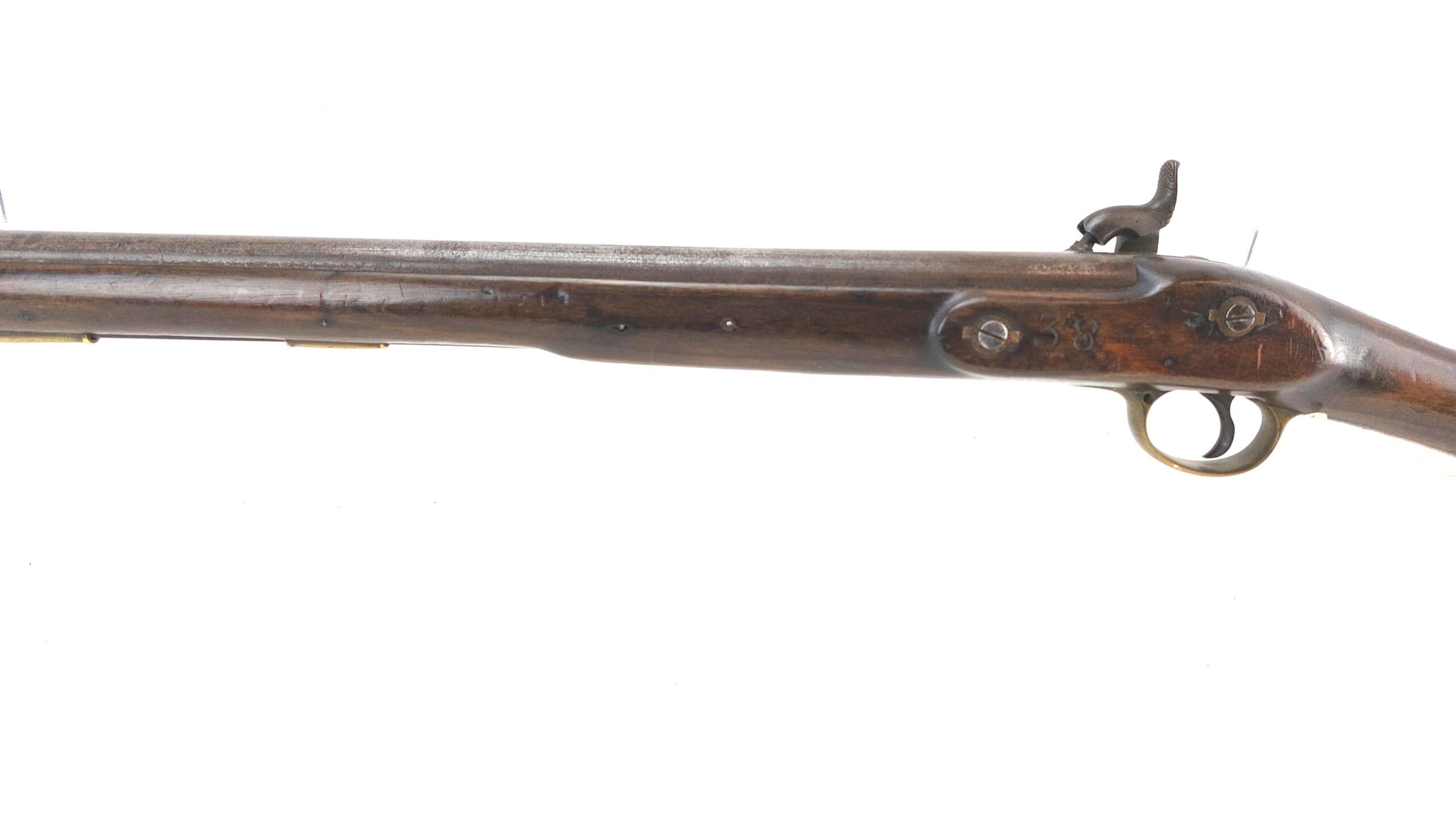
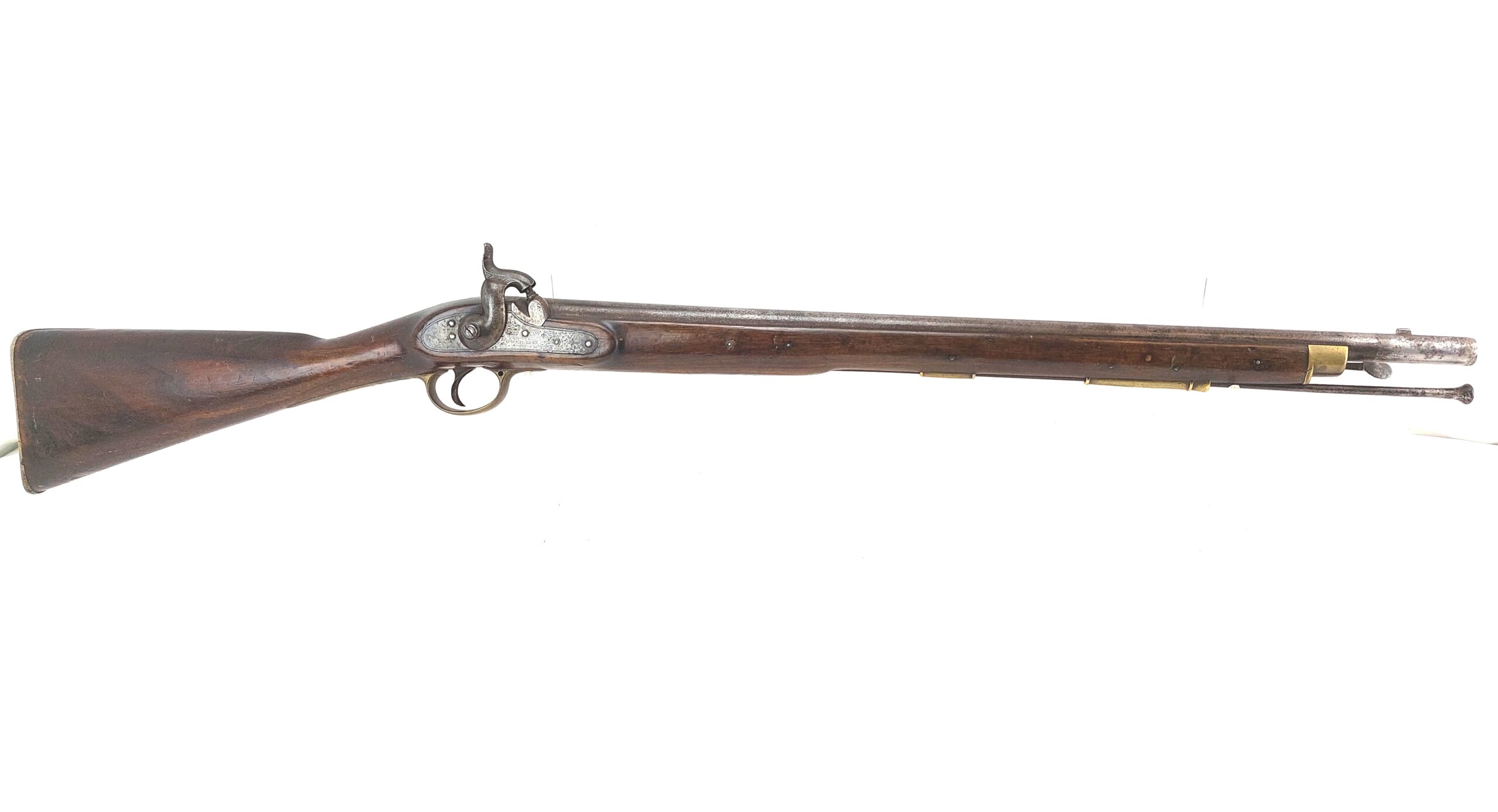
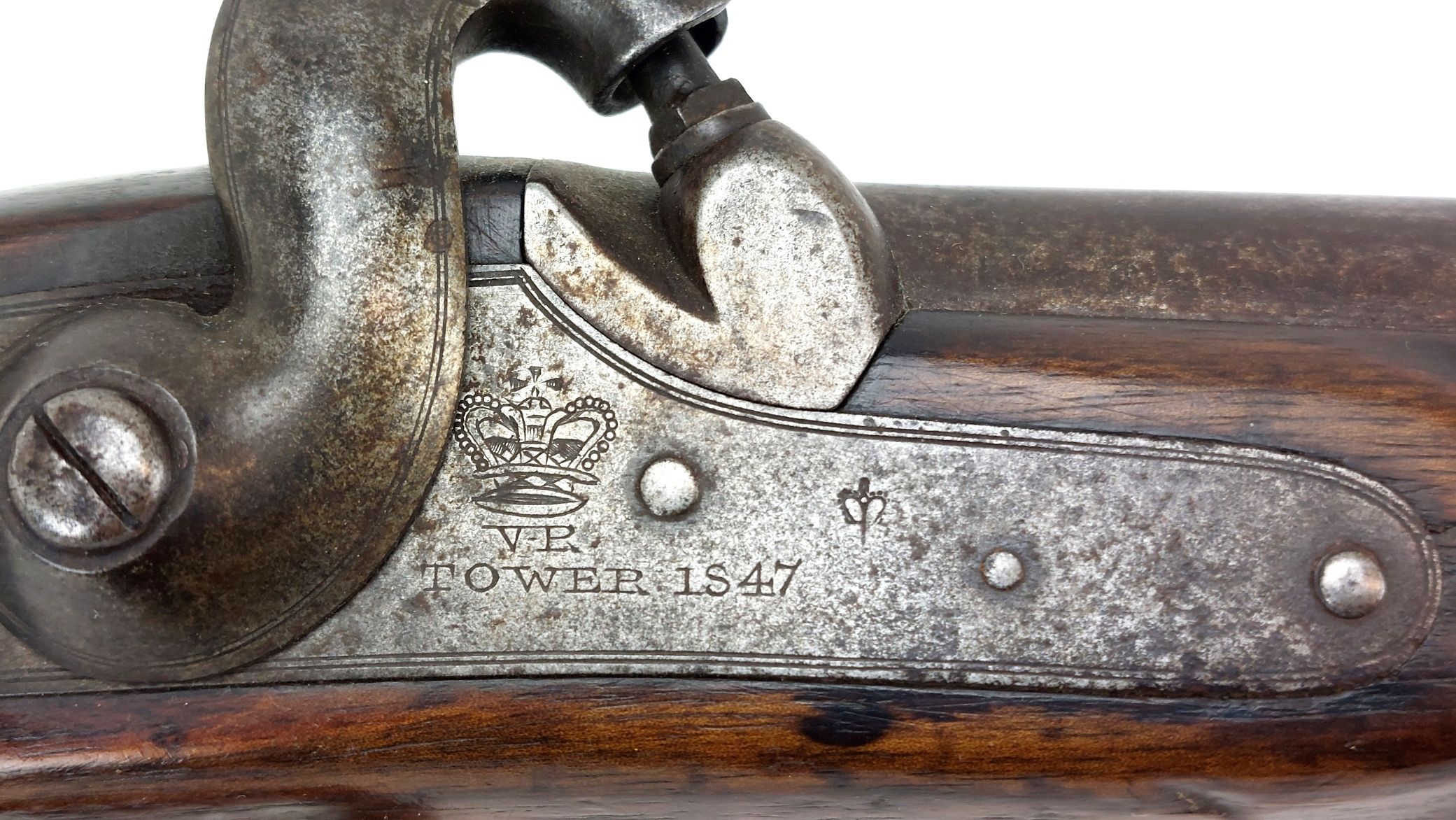
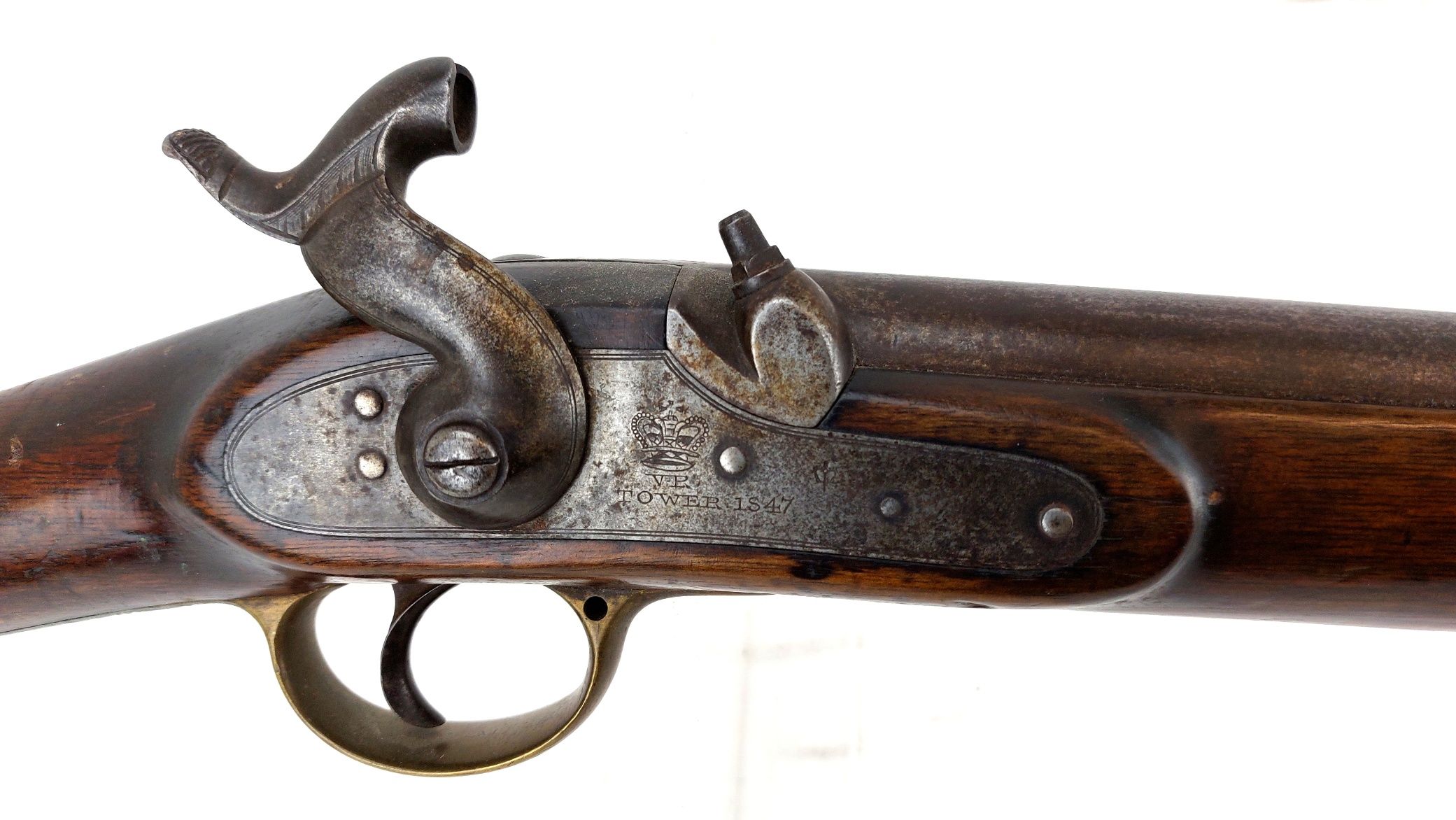
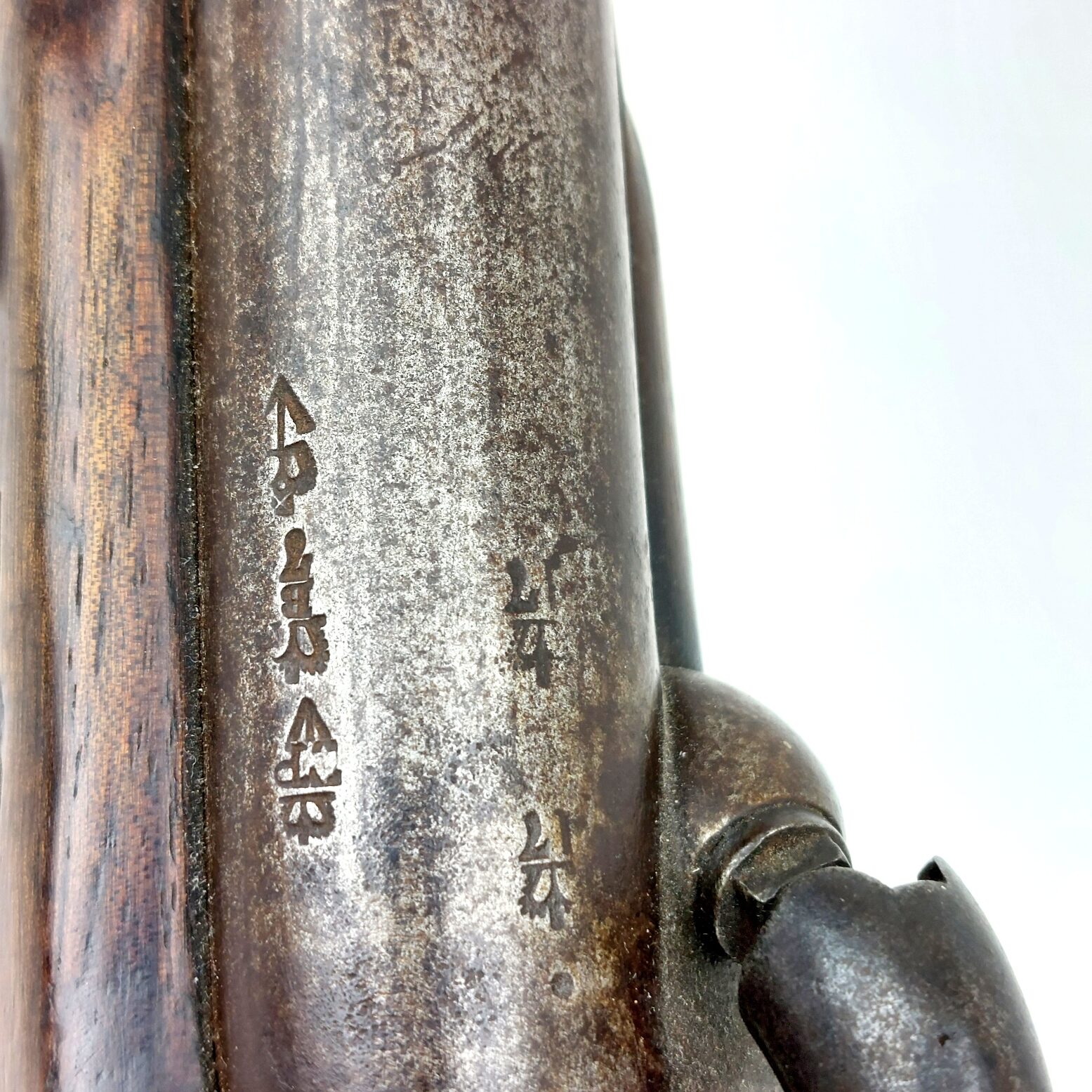
Marked on Lock-plate: Queen Crown, V.R. Tower, 1847.
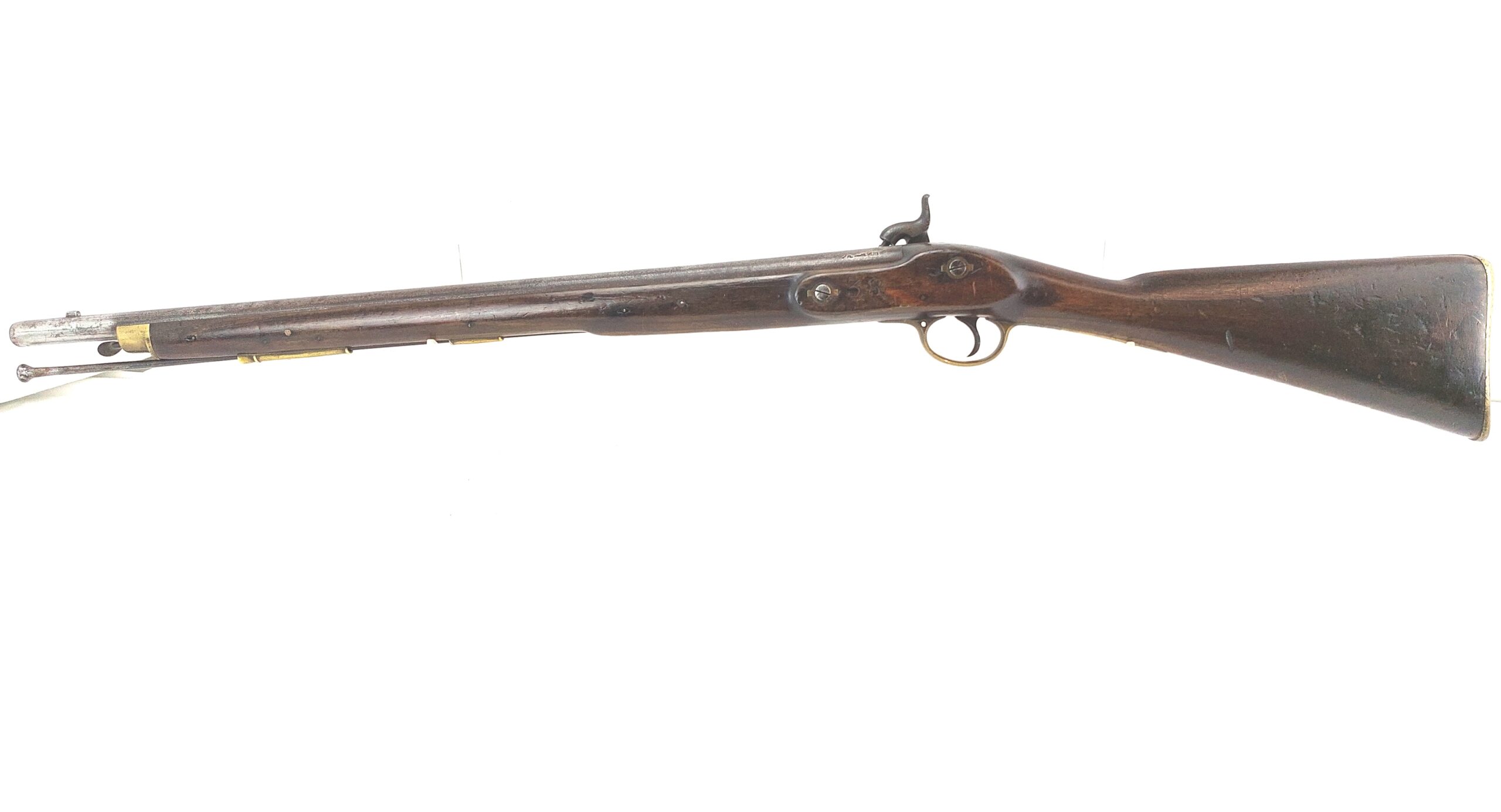
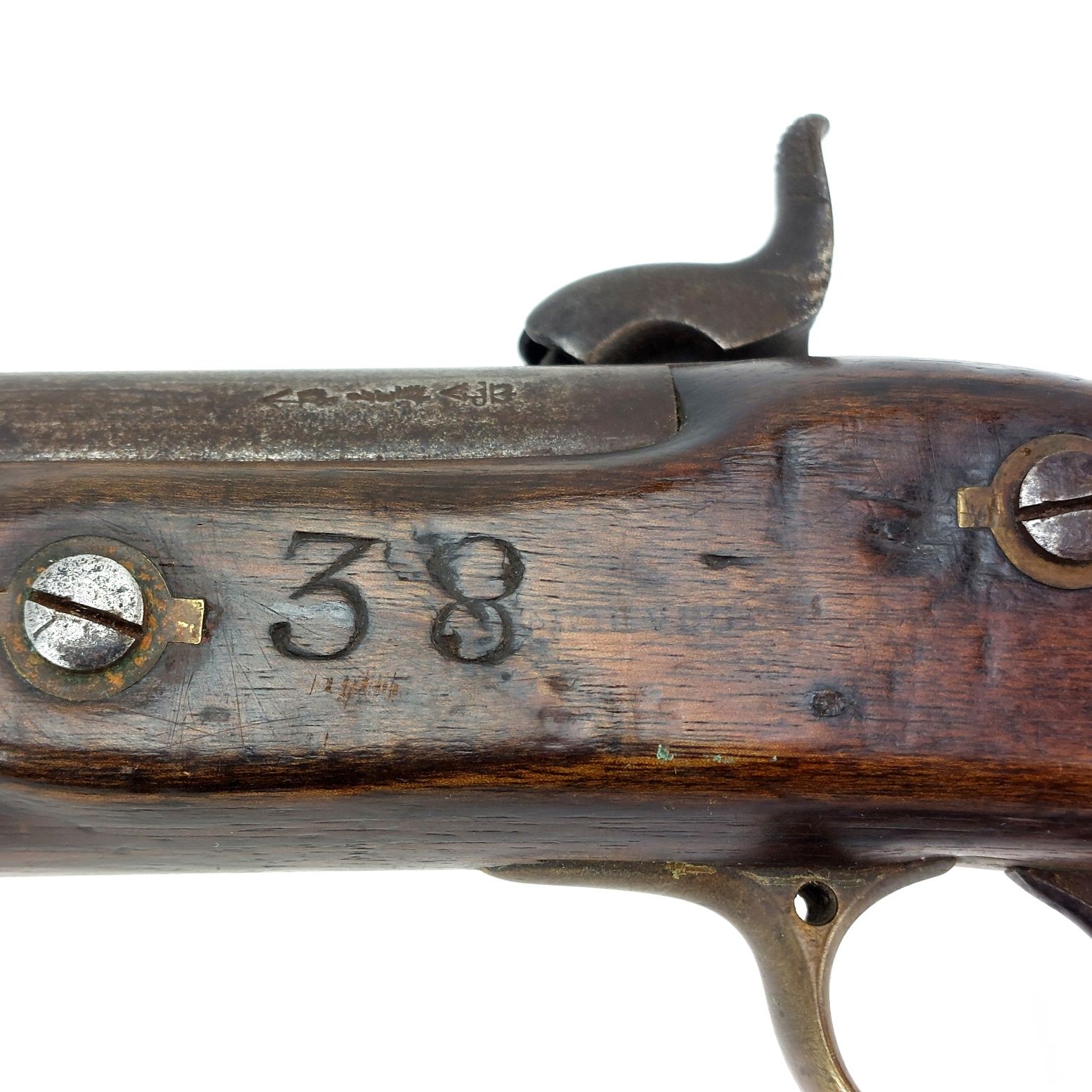
Marked on the wood on the Obverse: 38
Marked on the Barrel: Proof Marks and War Arrows
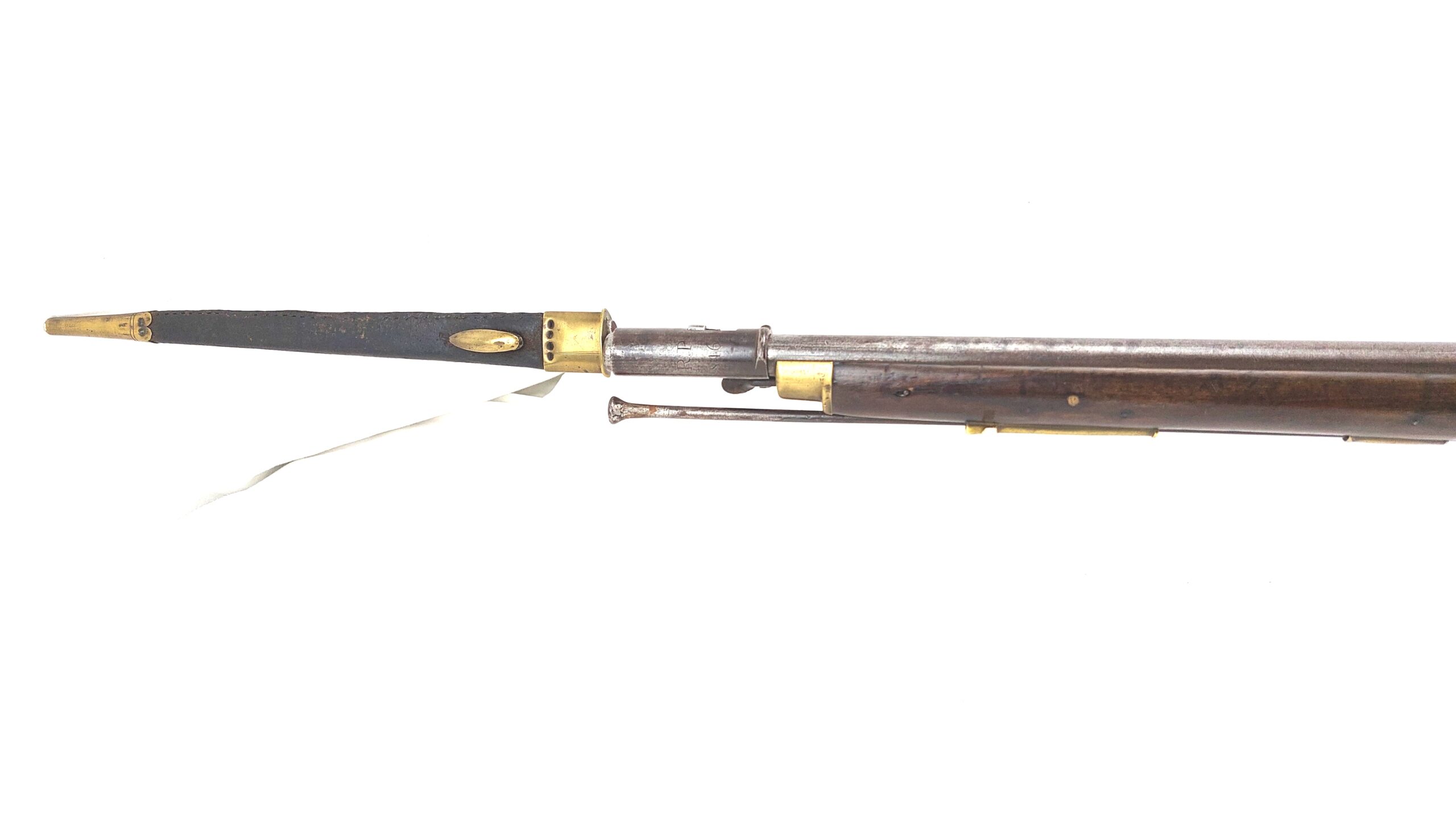
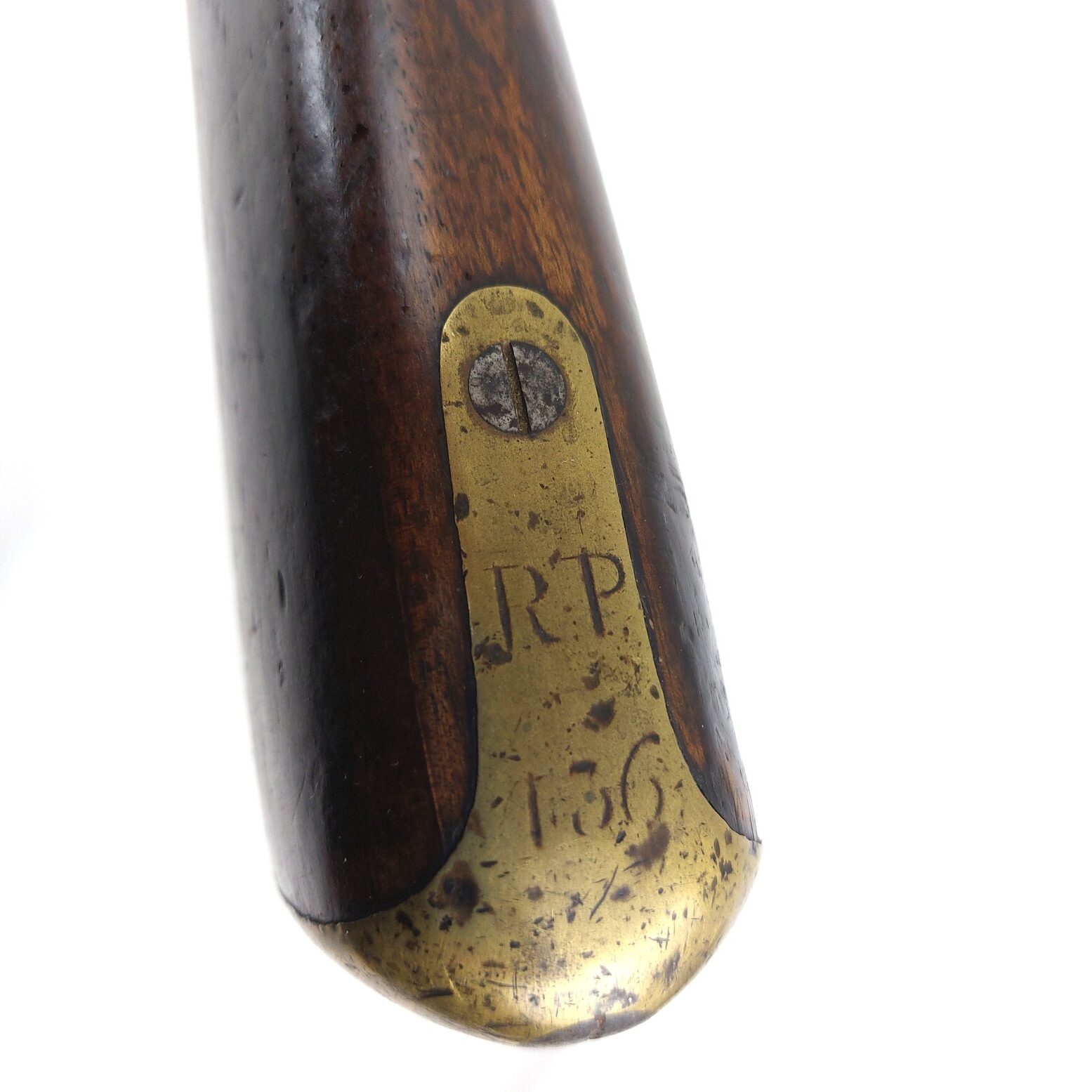
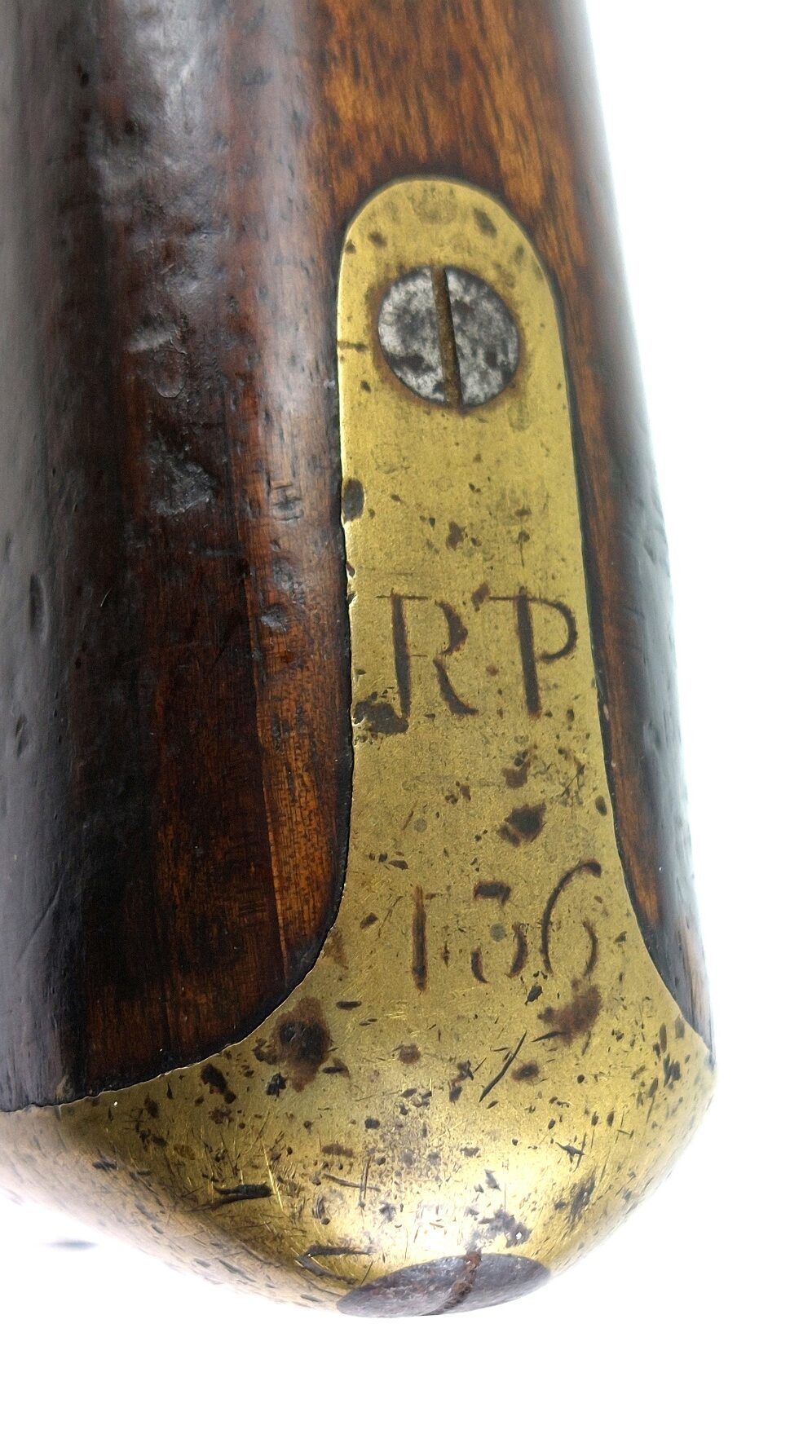
Marked on Butt Strap: R.P 136
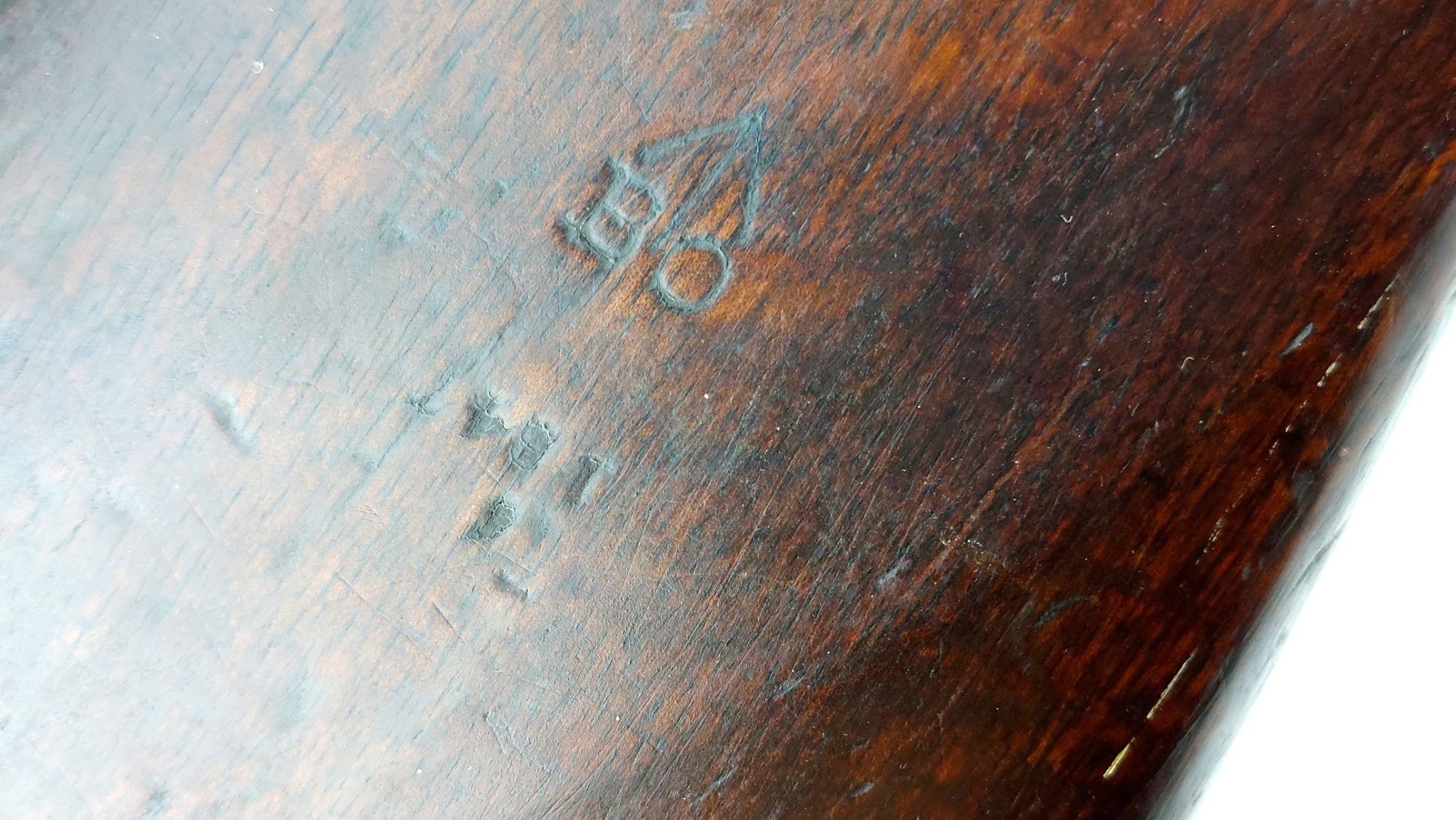
Marked on Stock: BO War Arrow, 1847,
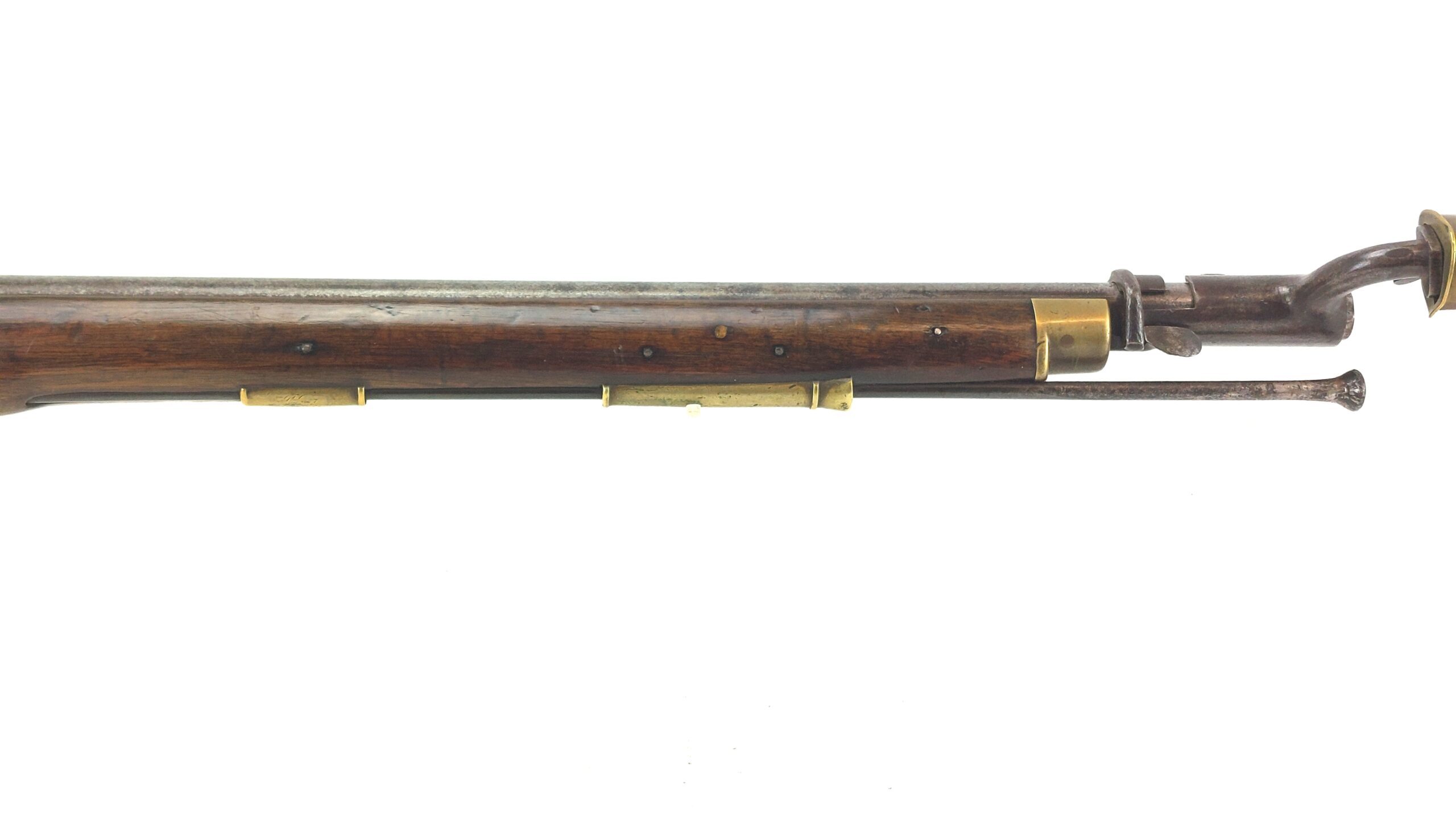
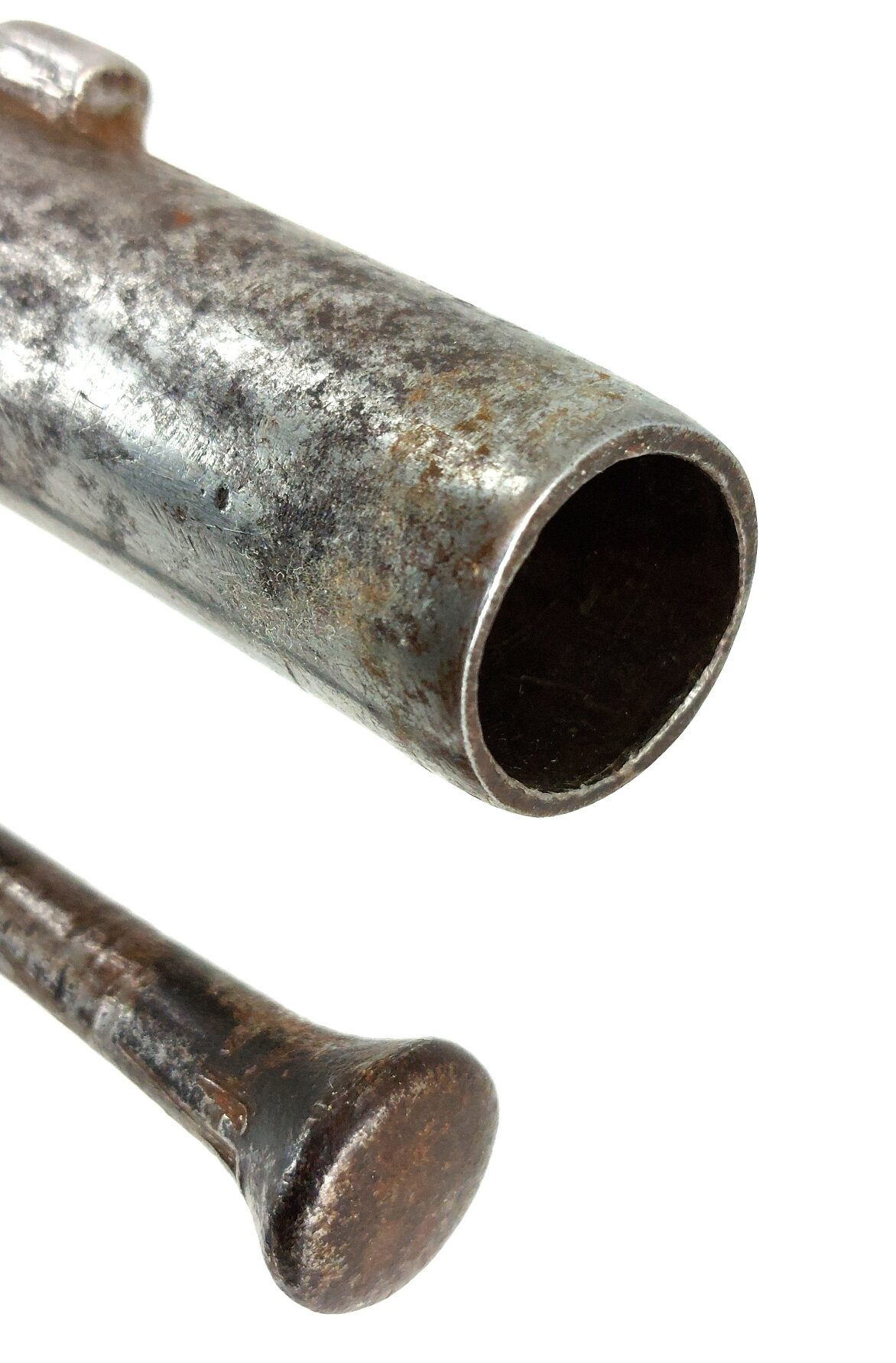
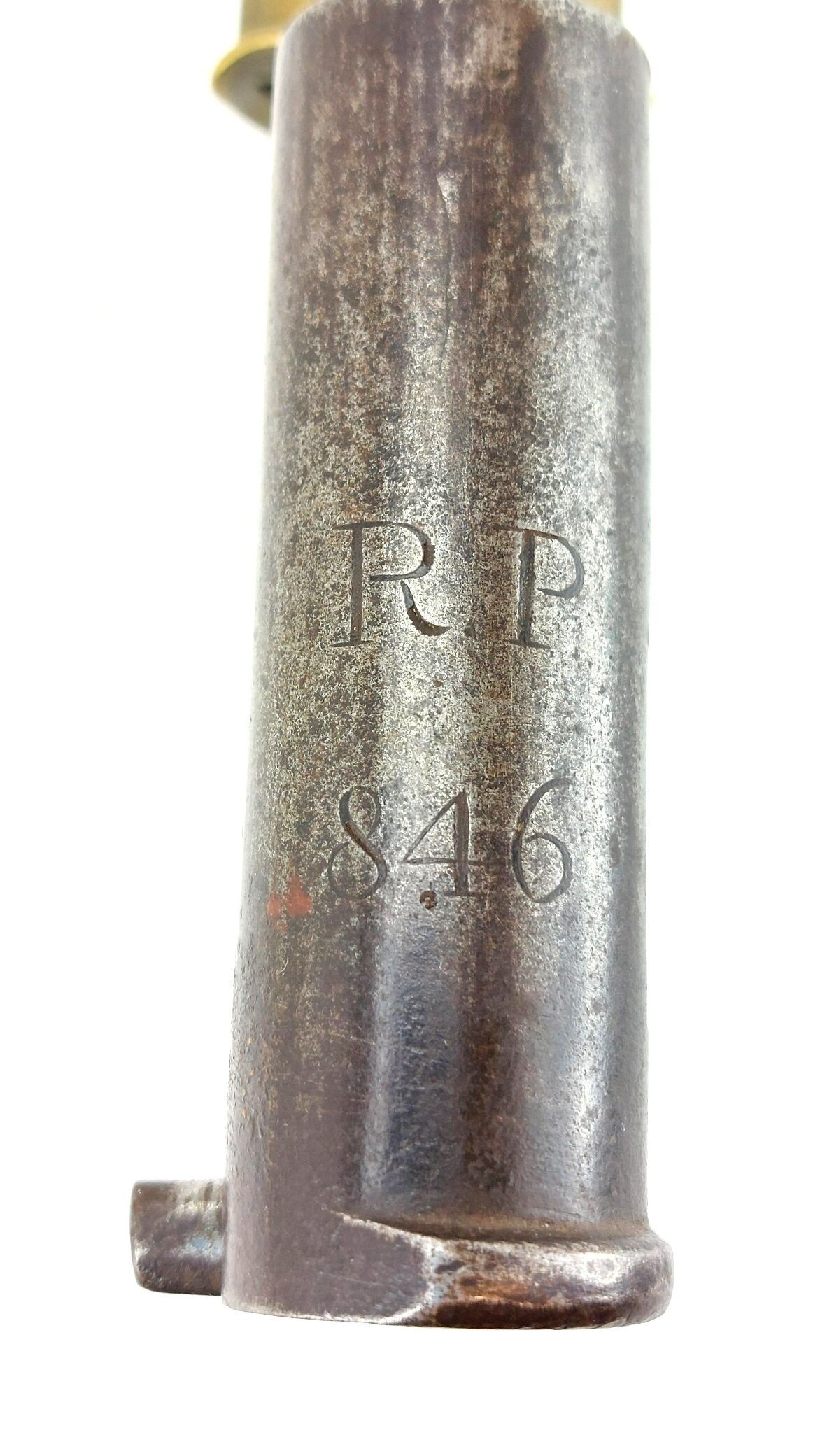
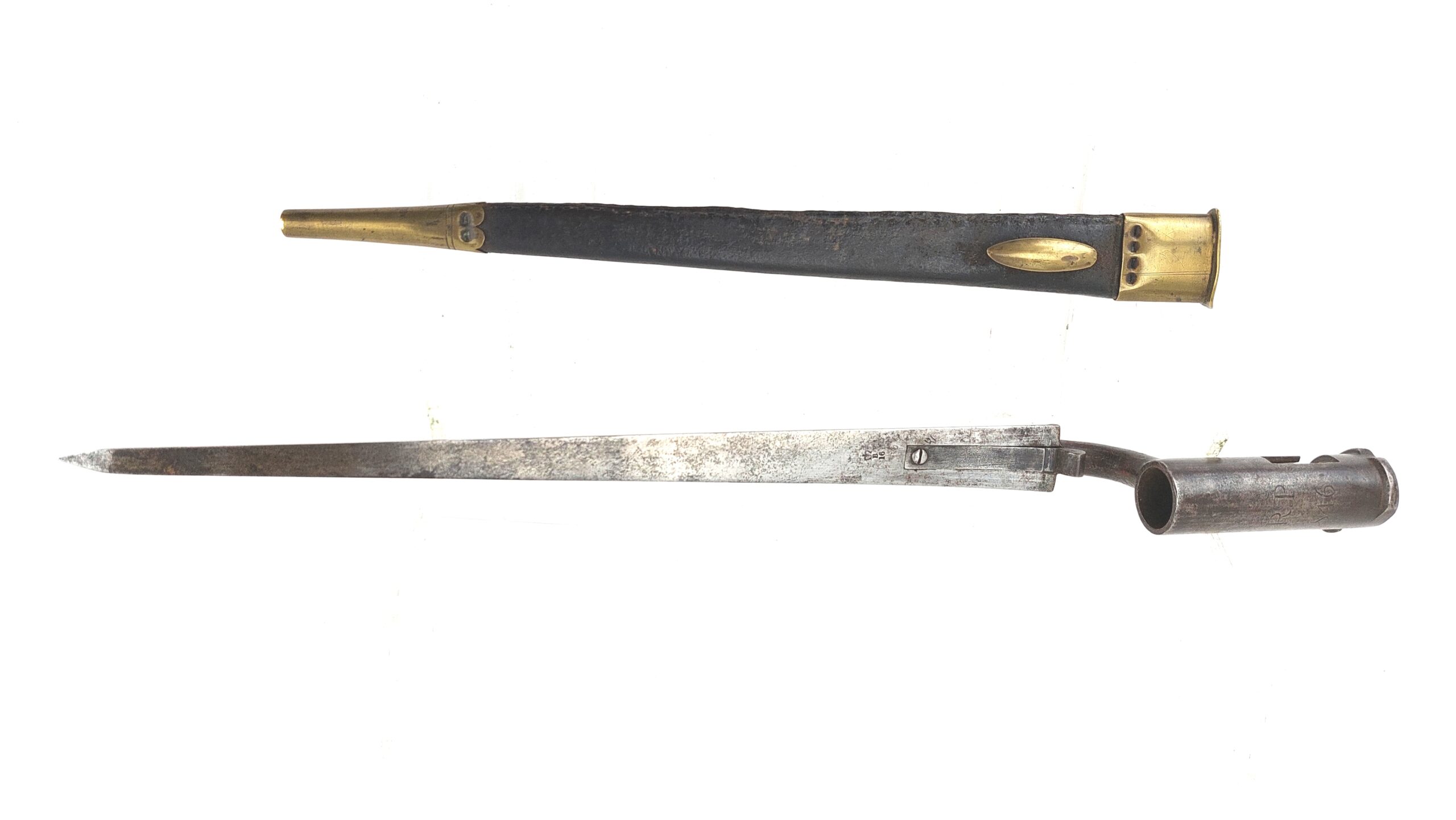
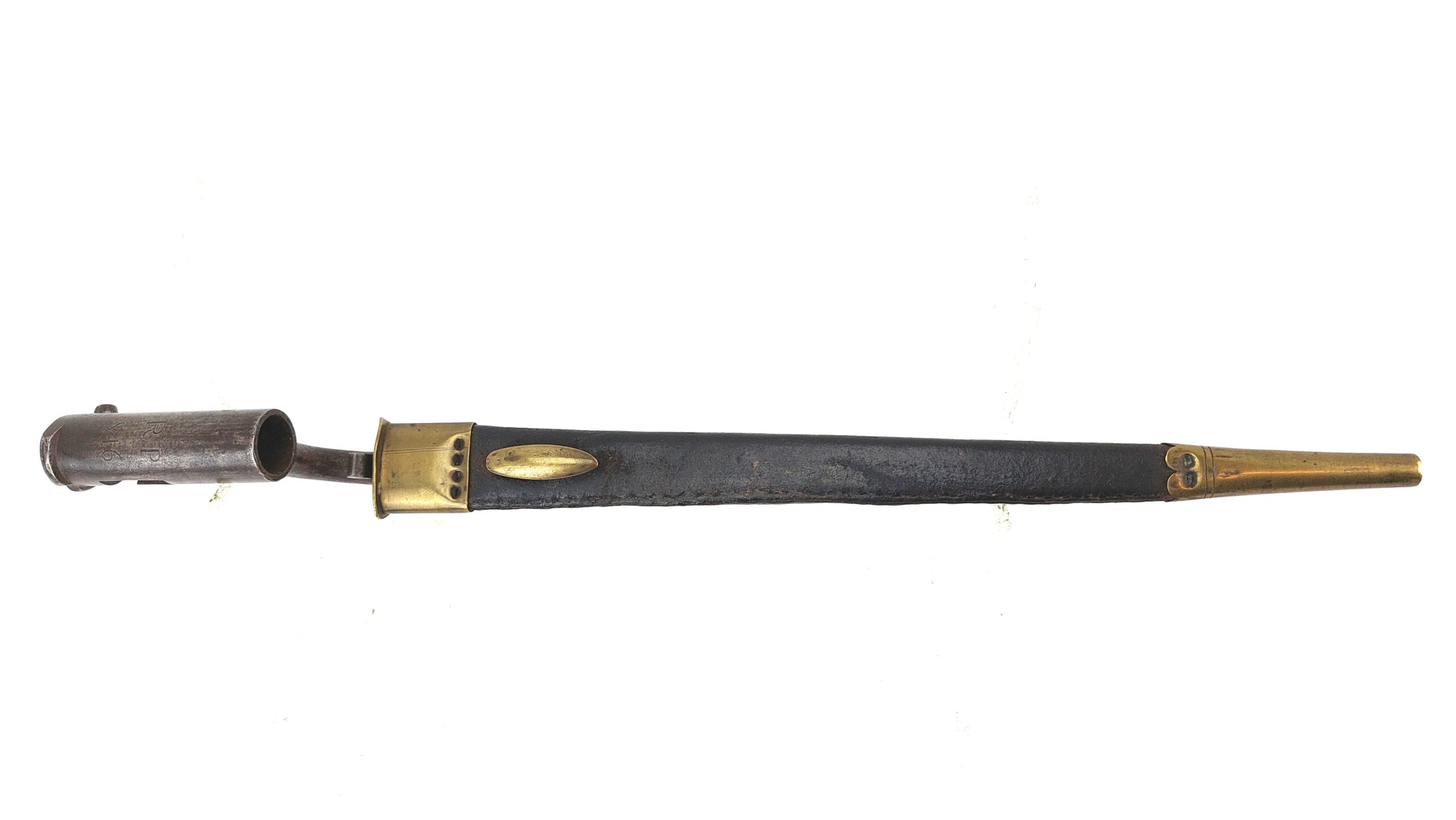
Marked on the Bayonet: R.P 846
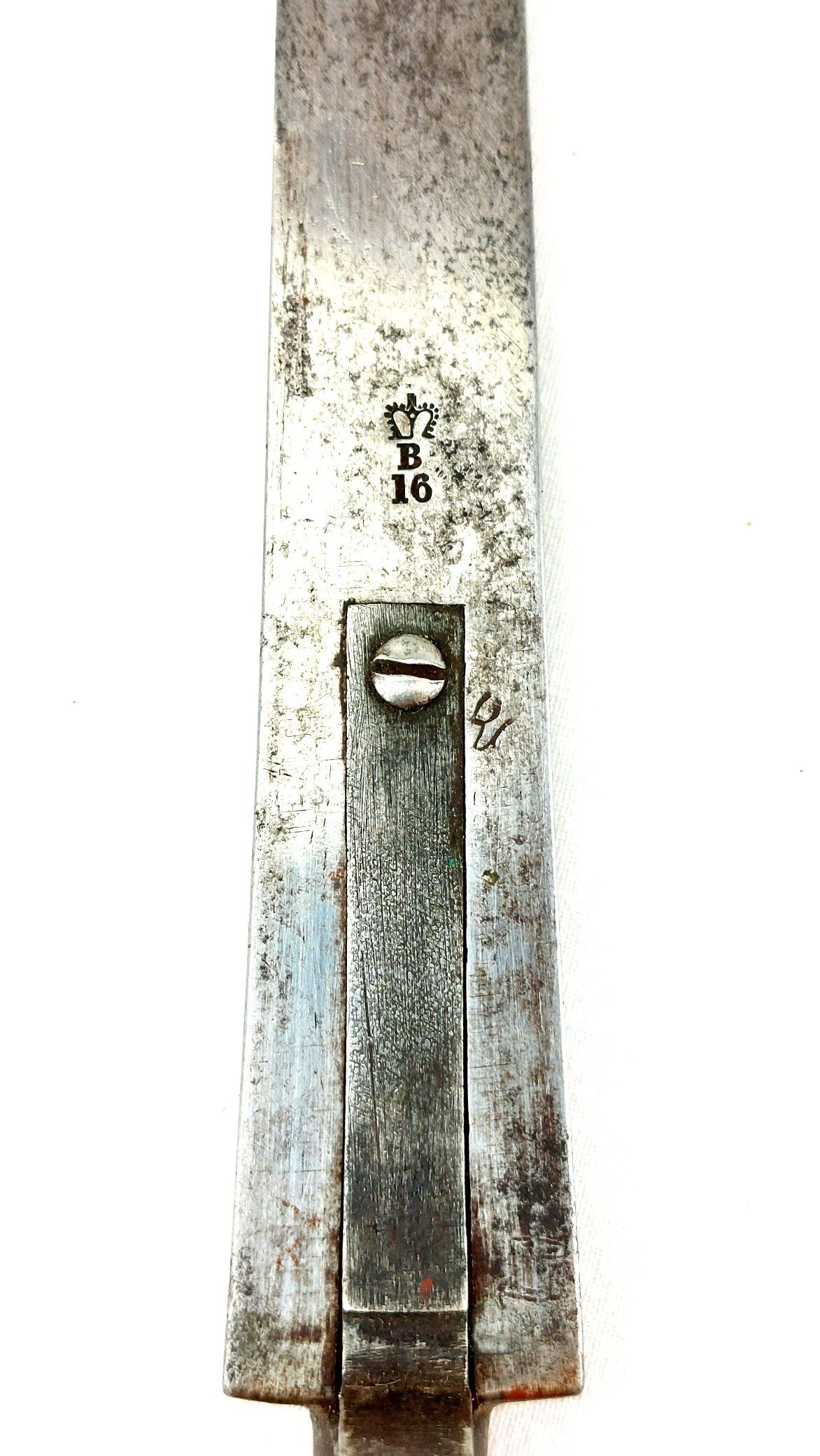
Marked on the Blade: Crown over B over 16 - Birmingham inspection marks.
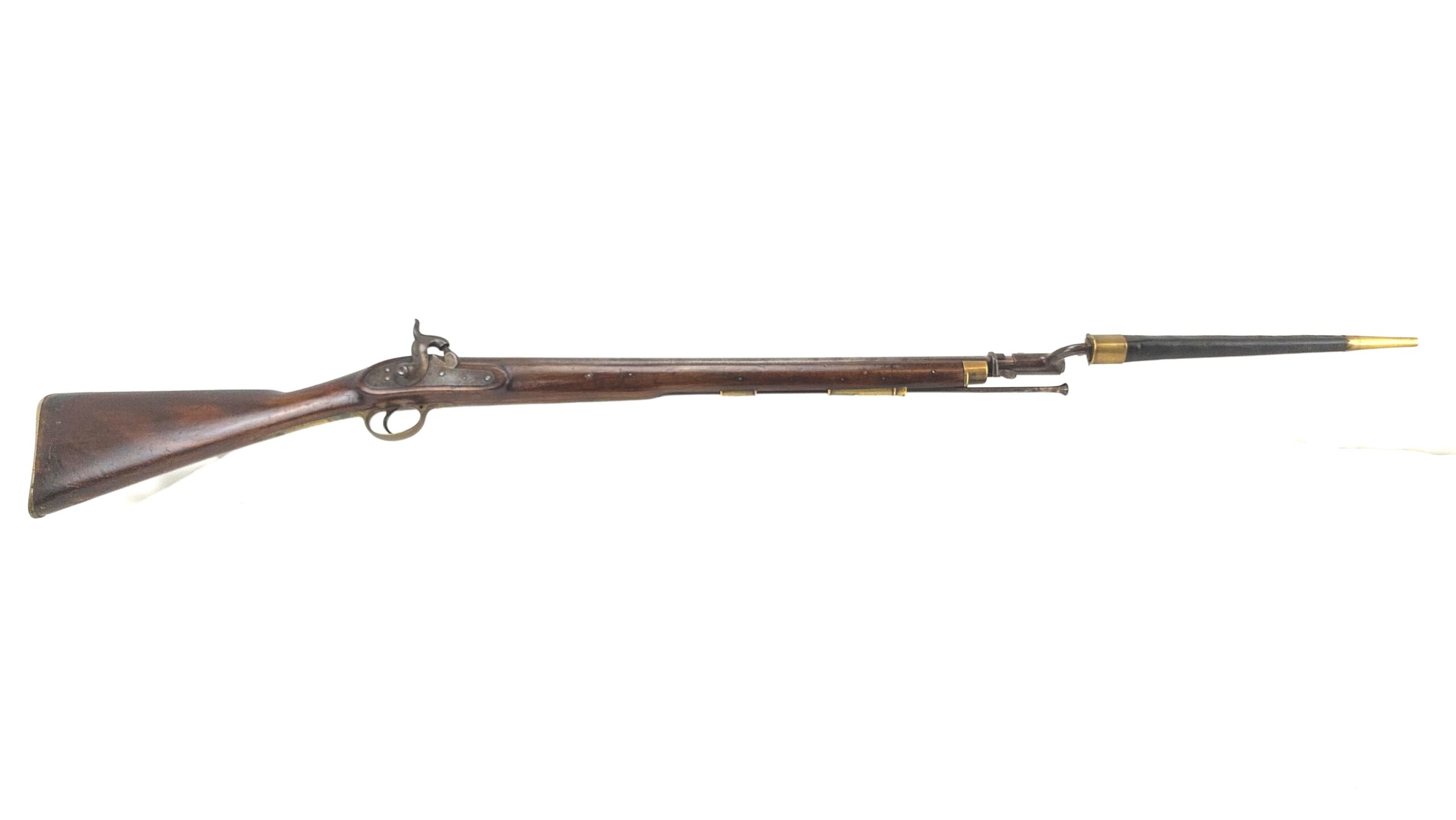
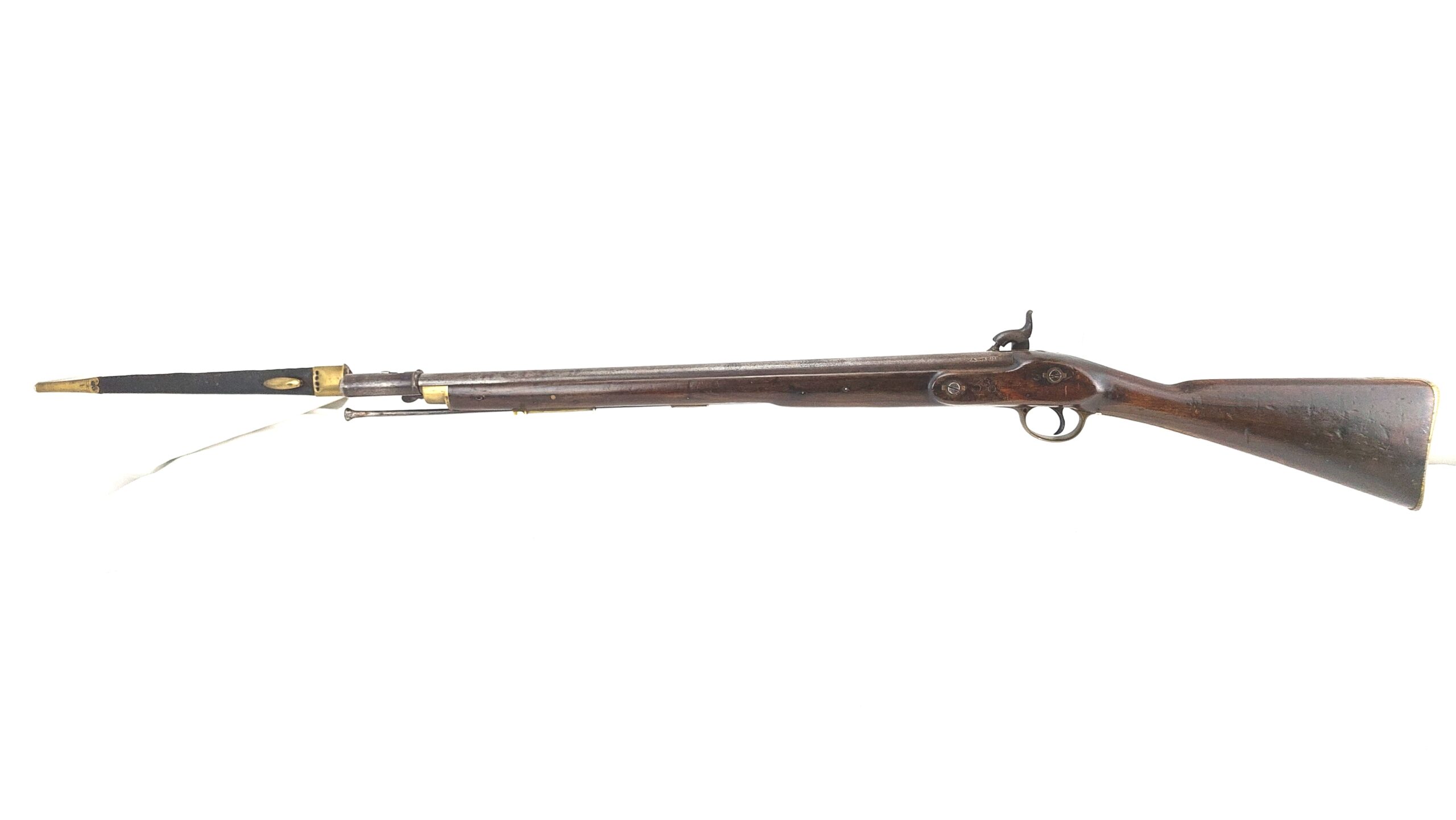
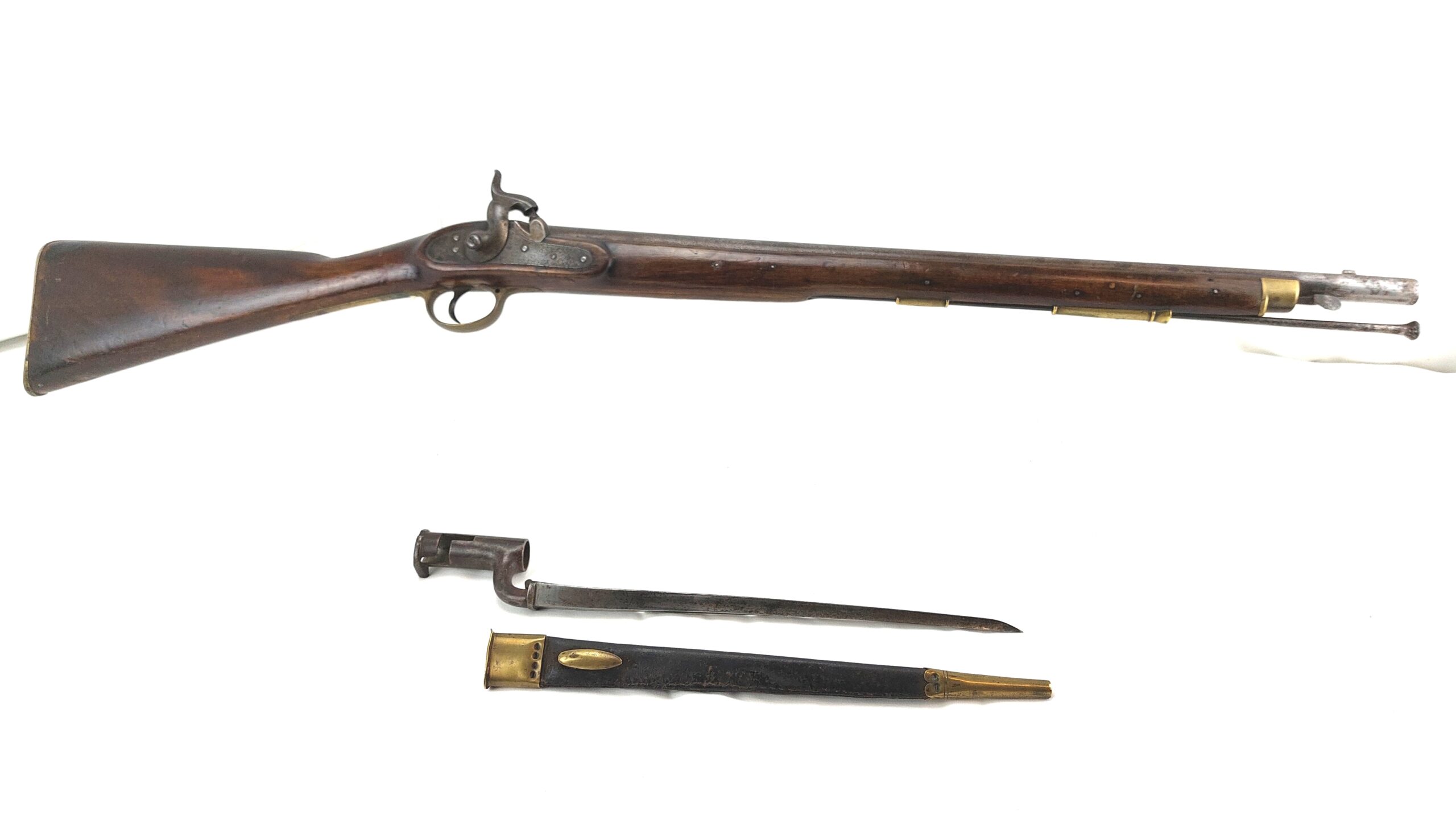
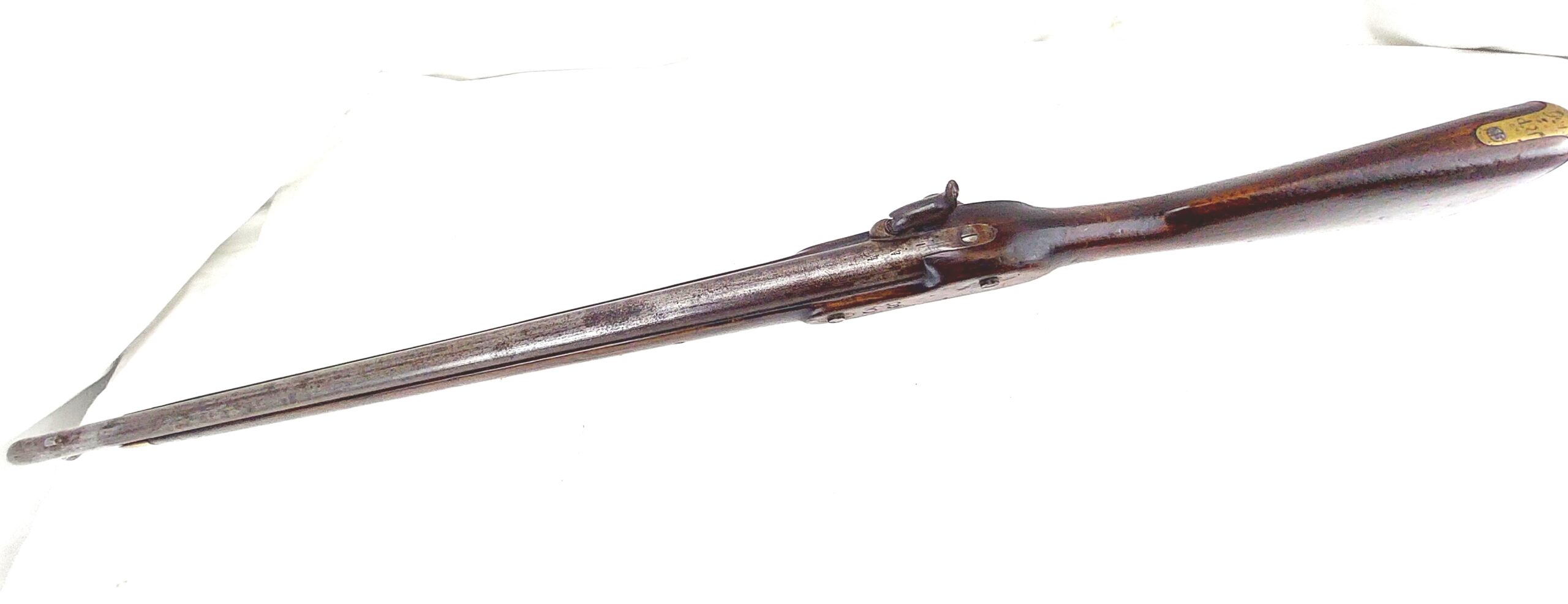
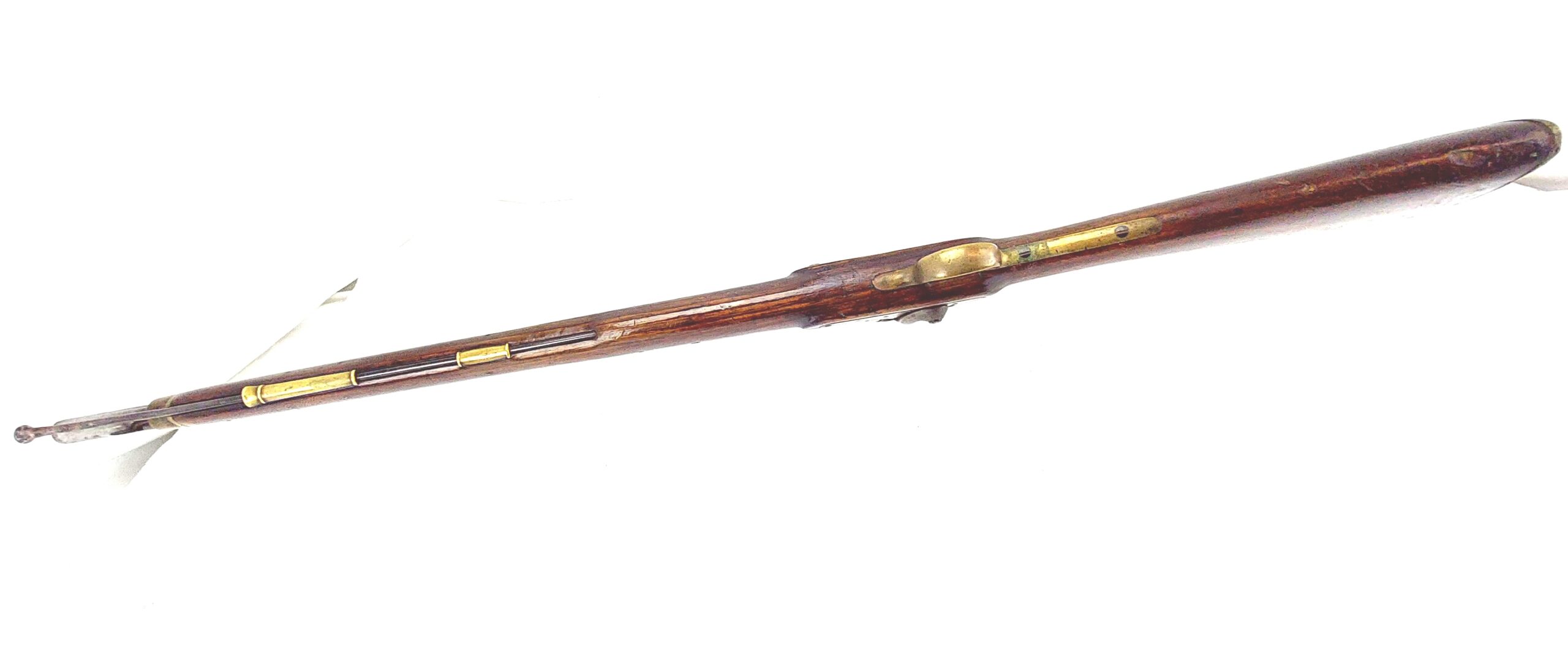
The British Pattern 1840 Constabulary Carbine was produced in two distinct versions. The earlier model was based on the Pattern 1839 Musket, while the later version —like this example— was influenced by the Pattern 1842 Musket. Key differences included the lock, side plate, and bayonet catch: the earlier pattern used the P'39 lock, New Land Pattern side plate, and Hanoverian bayonet catch, while the later model featured the P'42 lock, Lovell cups, and the Lovell bayonet catch.
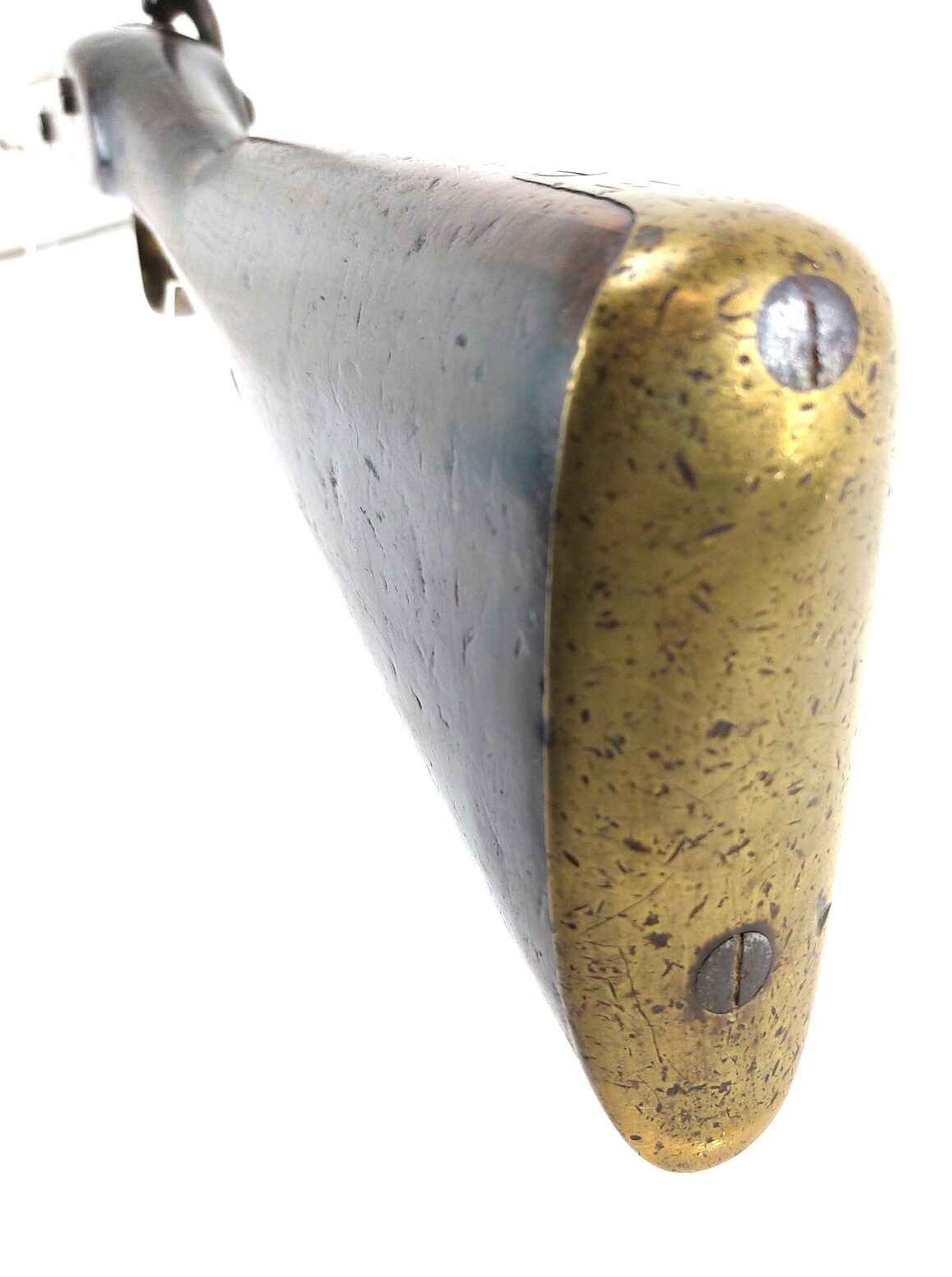
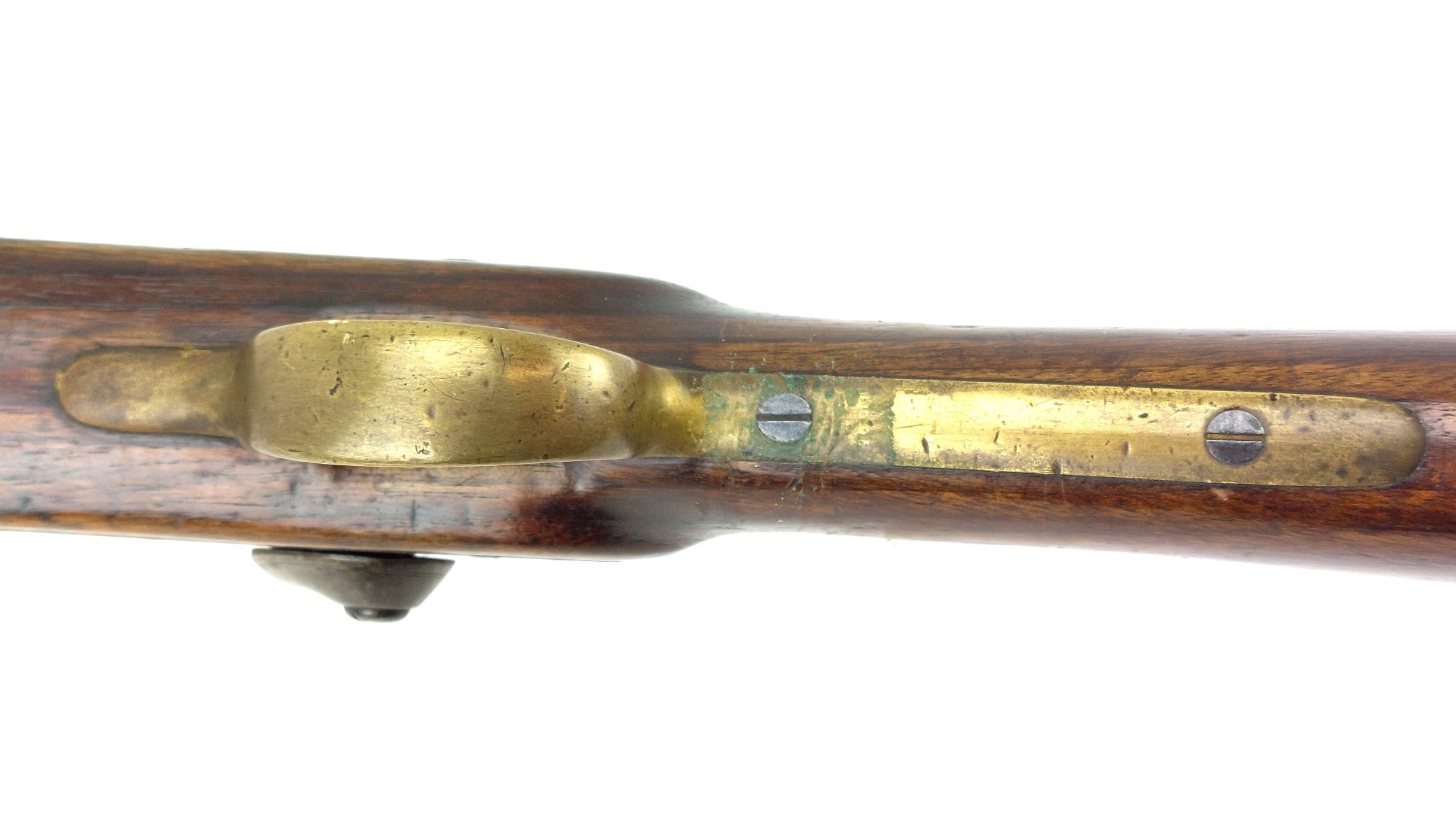
In 1840, it was decided to equip the Constabulary Forces in Ireland with a .65 calibre, muzzle-loading, smoothbore percussion carbine, partly constructed from converted flintlock musket parts. This weapon was issued to the Irish Revenue Police (RP). It has a full walnut stock bearing the BO -Board of Ordnance Storekeeper's stamp, dated 1847. The brass butt-cap is stamped RP 136, and the matching ramrod is stamped accordingly. The lock bears the Tower Crown VR (Victoria Regina) cypher, also dated 1847. Additional markings include the number '38' and a possible 'I. Johnson' on the lock backplate, indicating the Party number and I. Johnson is believed to have been the subcontractor responsible for assembling the carbine.
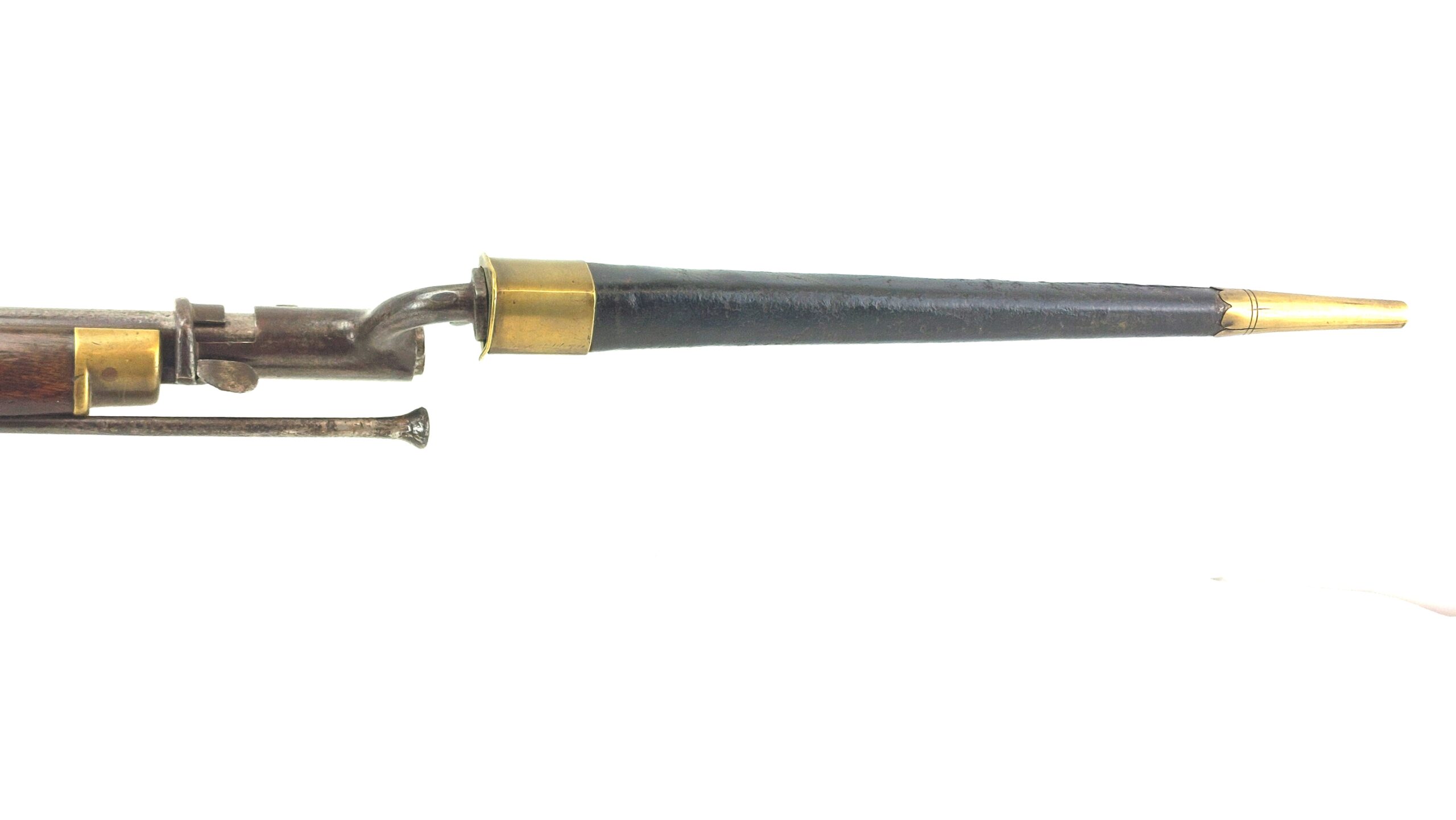
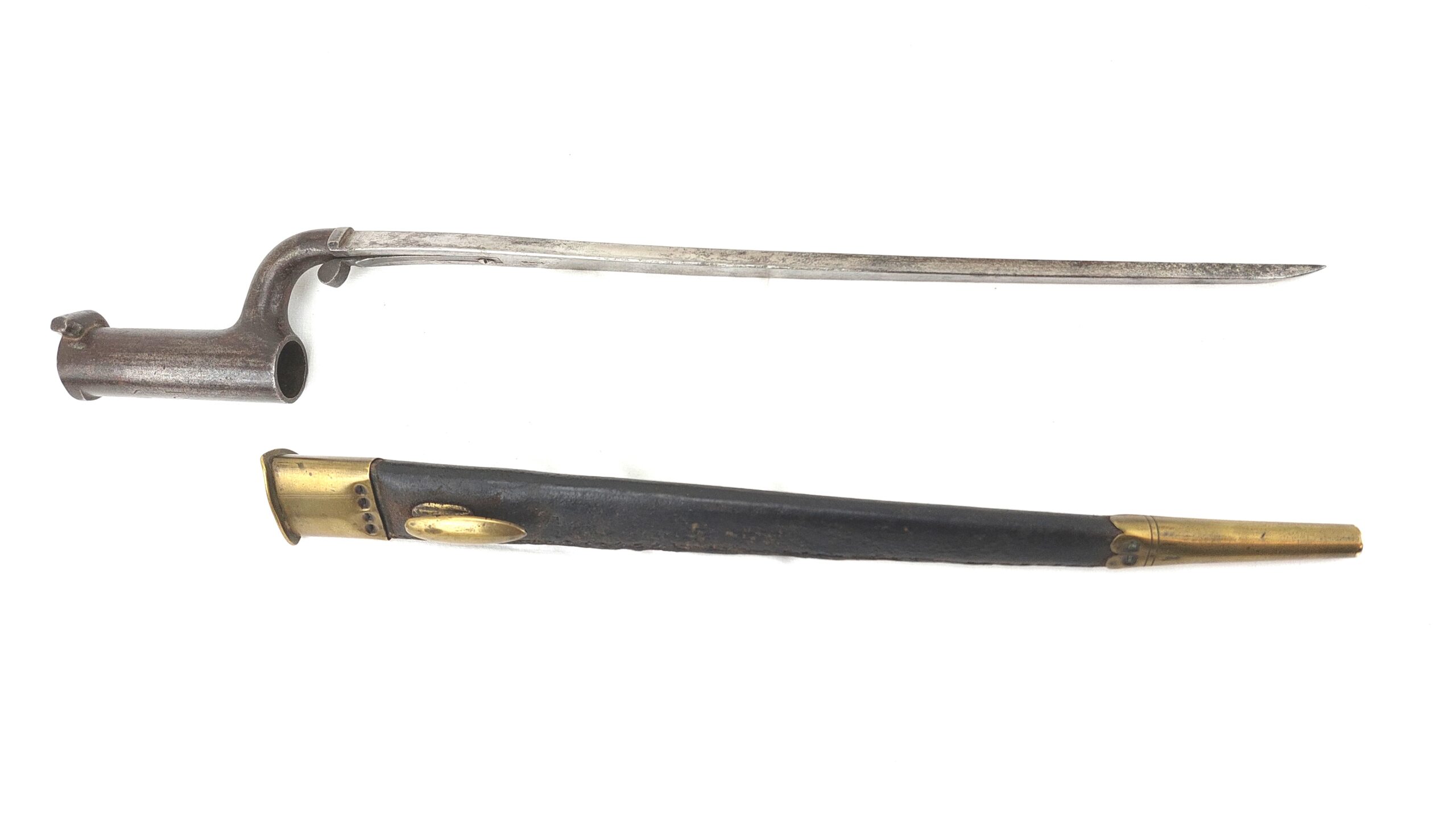
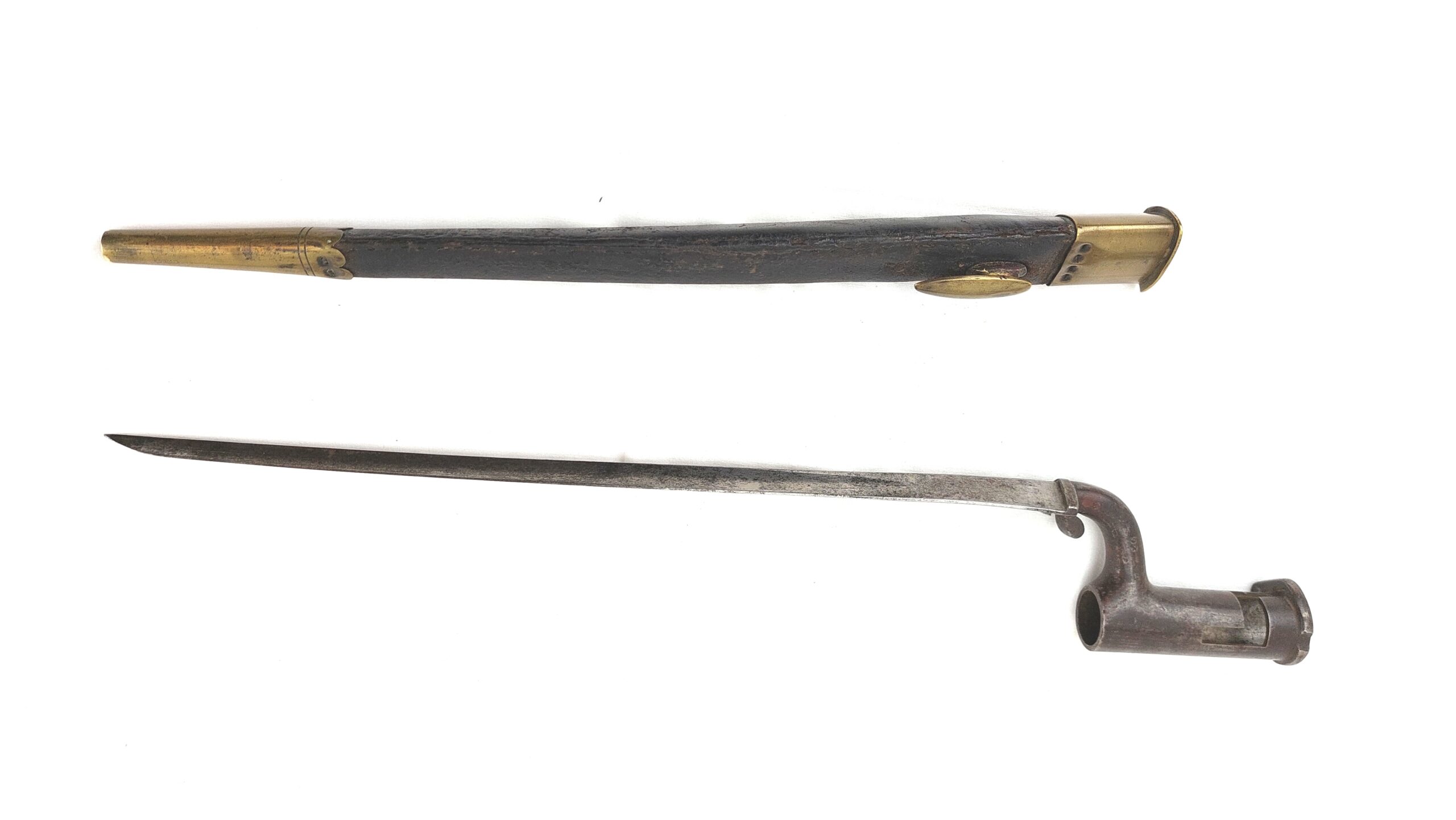
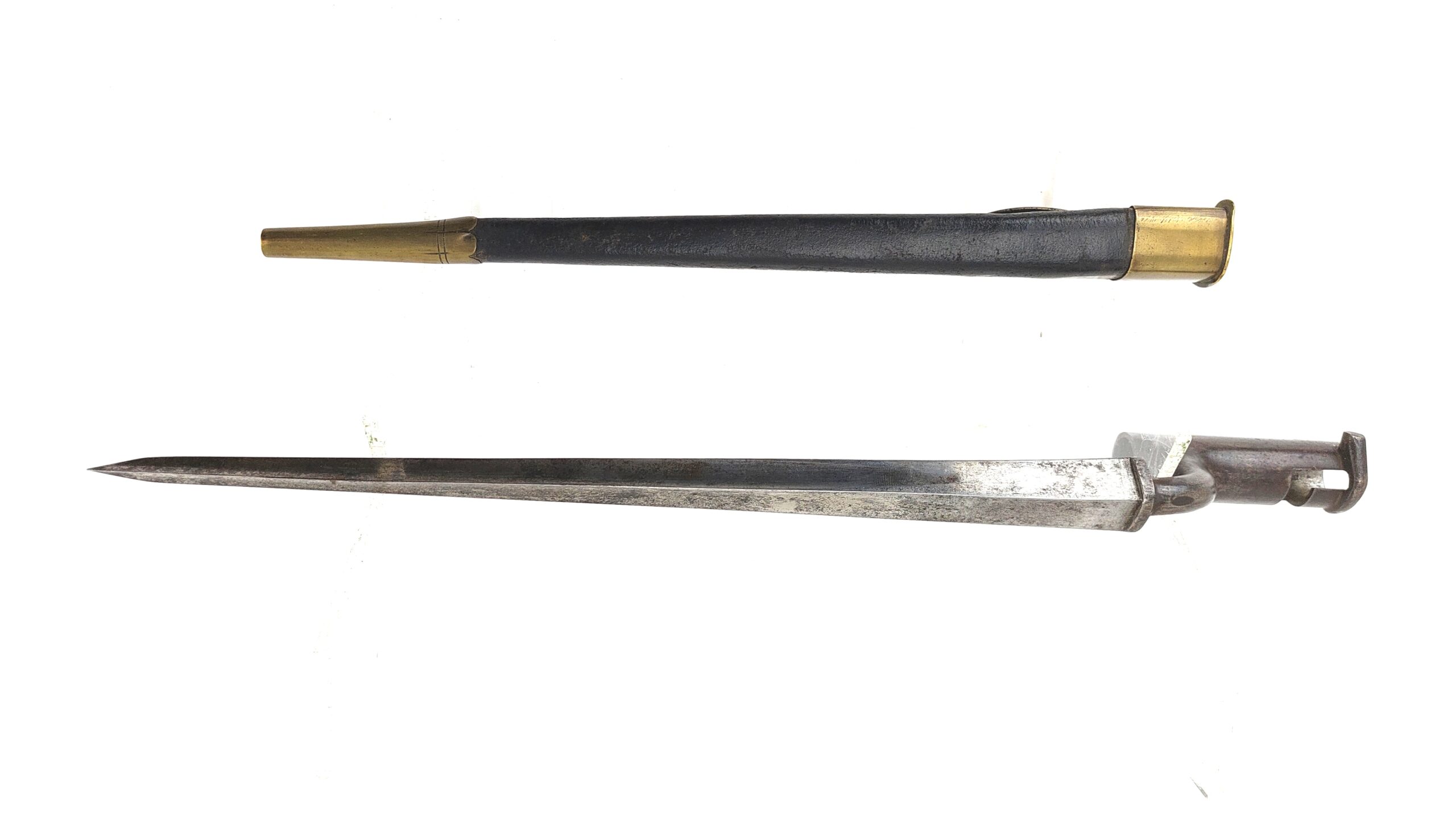
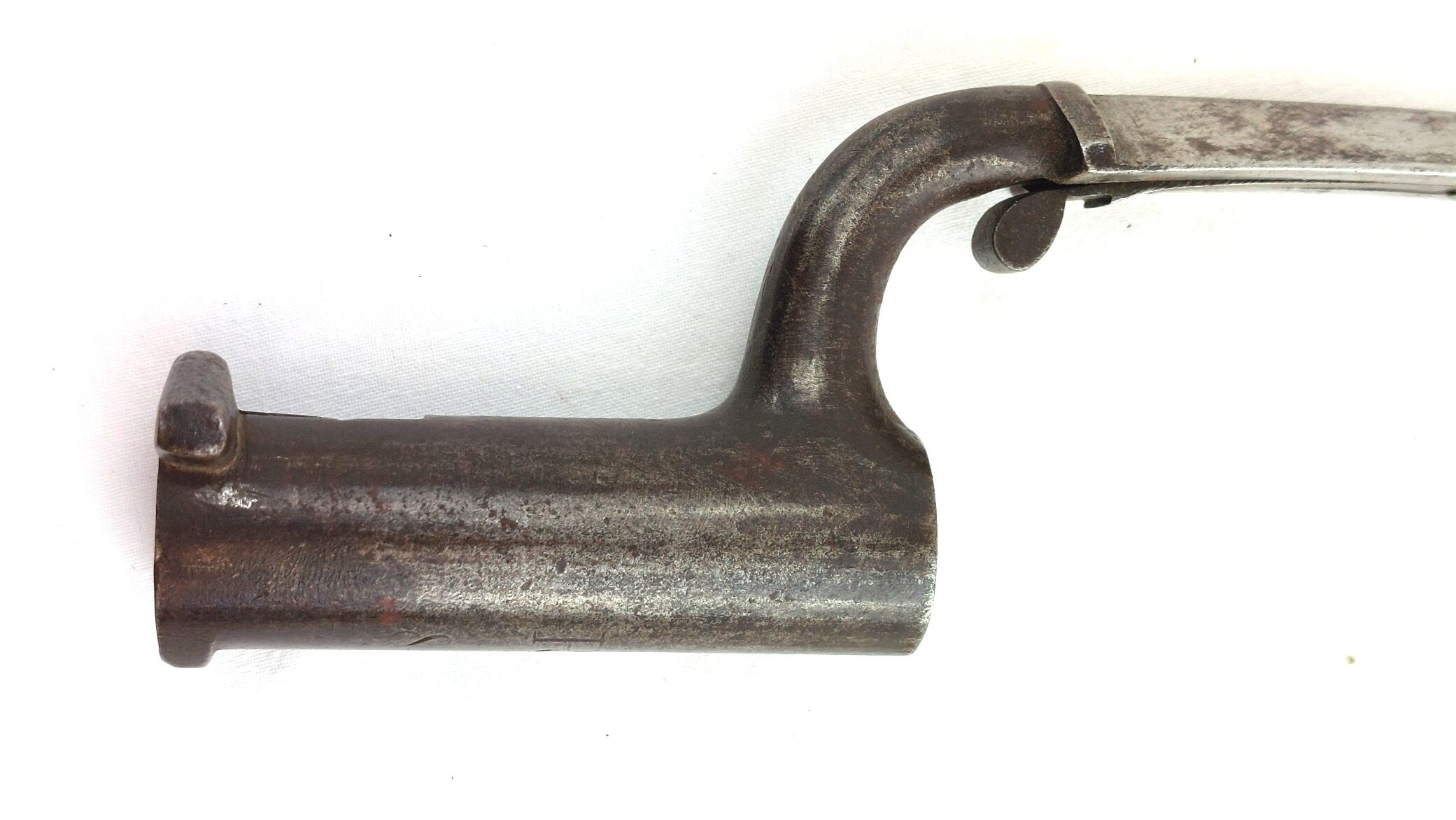
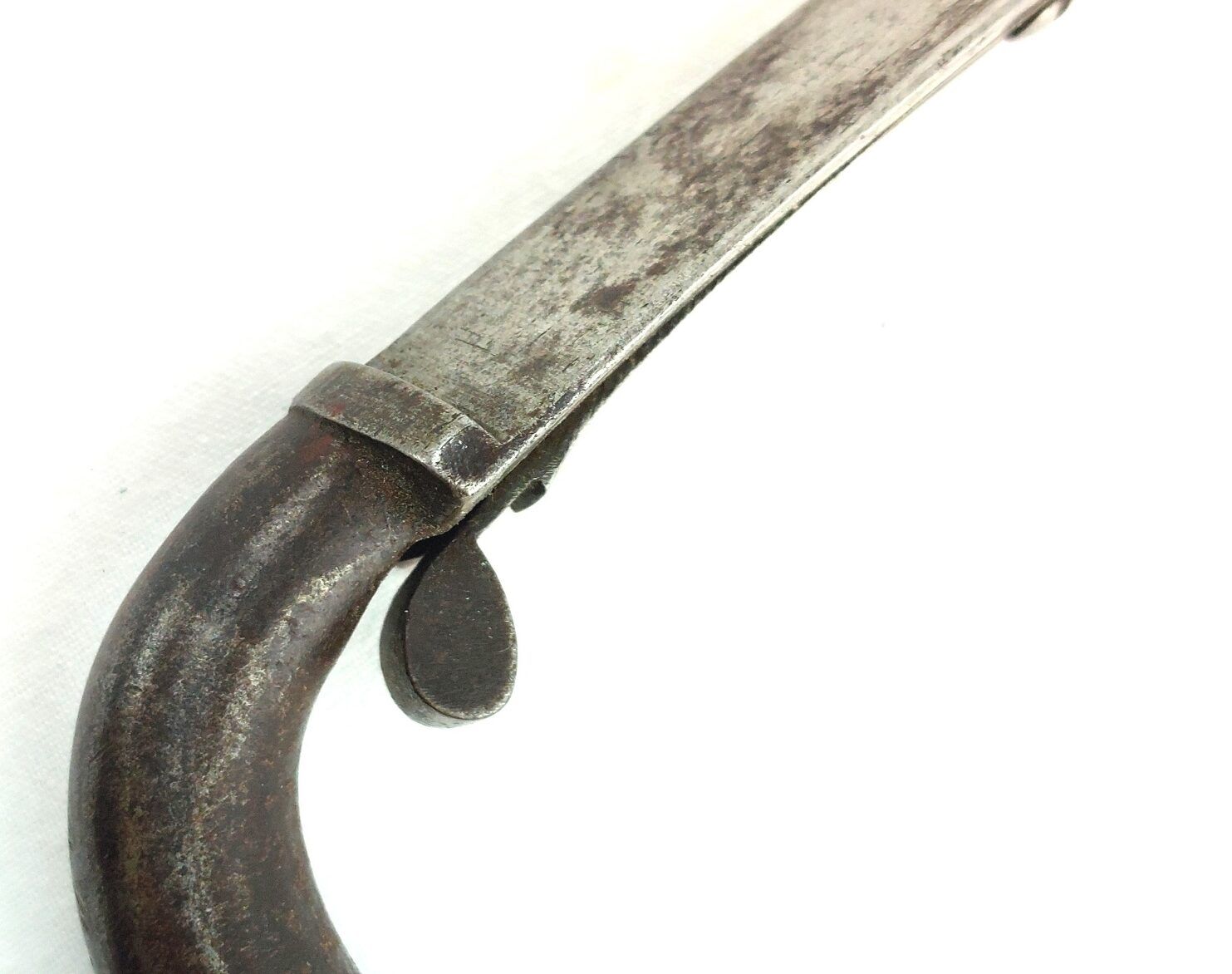
1840 Pattern Type II (P42) Constabulary Bayonet
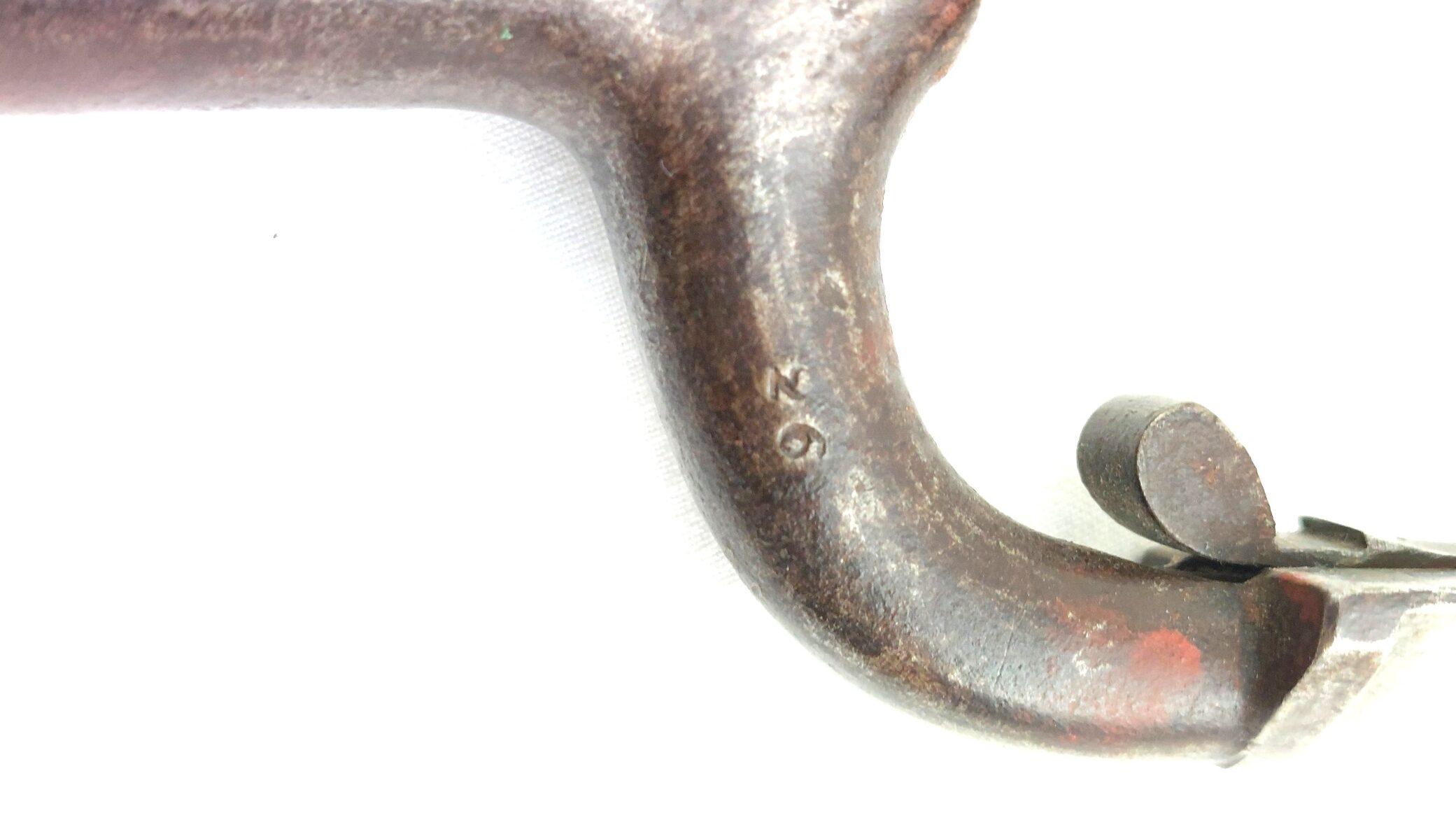
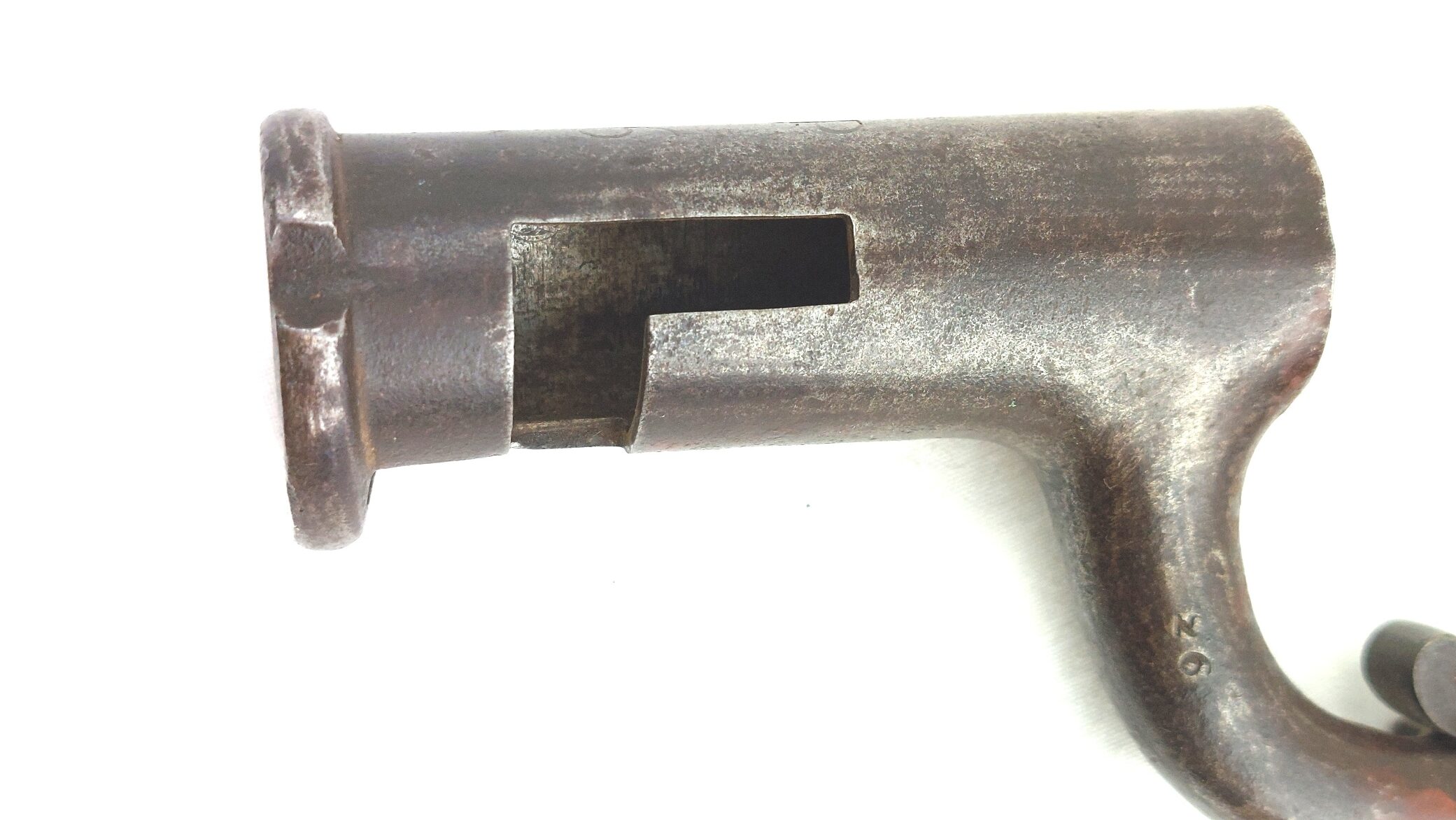
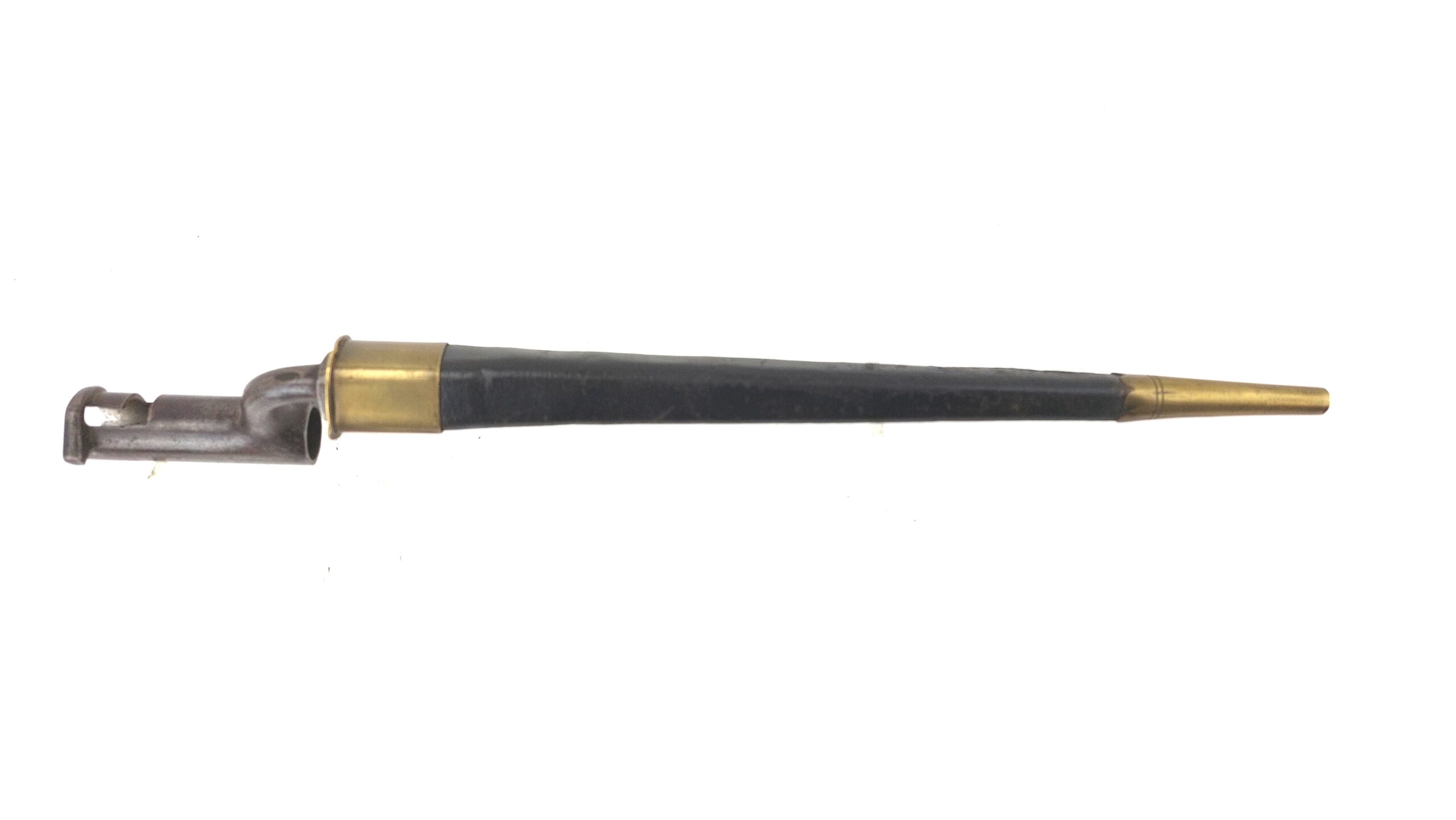
Introduced in 1840 for the Irish Constabulary, later the Royal Irish Constabulary, this socket bayonet was a unique design in British service. It is believed these bayonets were adapted from existing light infantry socket bayonets by adding a spring catch on the blade face, locking it into the scabbard to prevent easy withdrawal. This example features the Lovell Catch, a side-sprung, flattened spoon-shaped mechanism found on the P42 Bayonet Catch. The socket is marked RP 846. The blade is stamped CROWN/B/16, the inspection mark of a Birmingham-based Board of Ordnance inspector, while the rear edge of the Lovell Catch is marked z6. The socket’s rear edge bears a file-slash mating mark of four angled slashes.
Scabbard
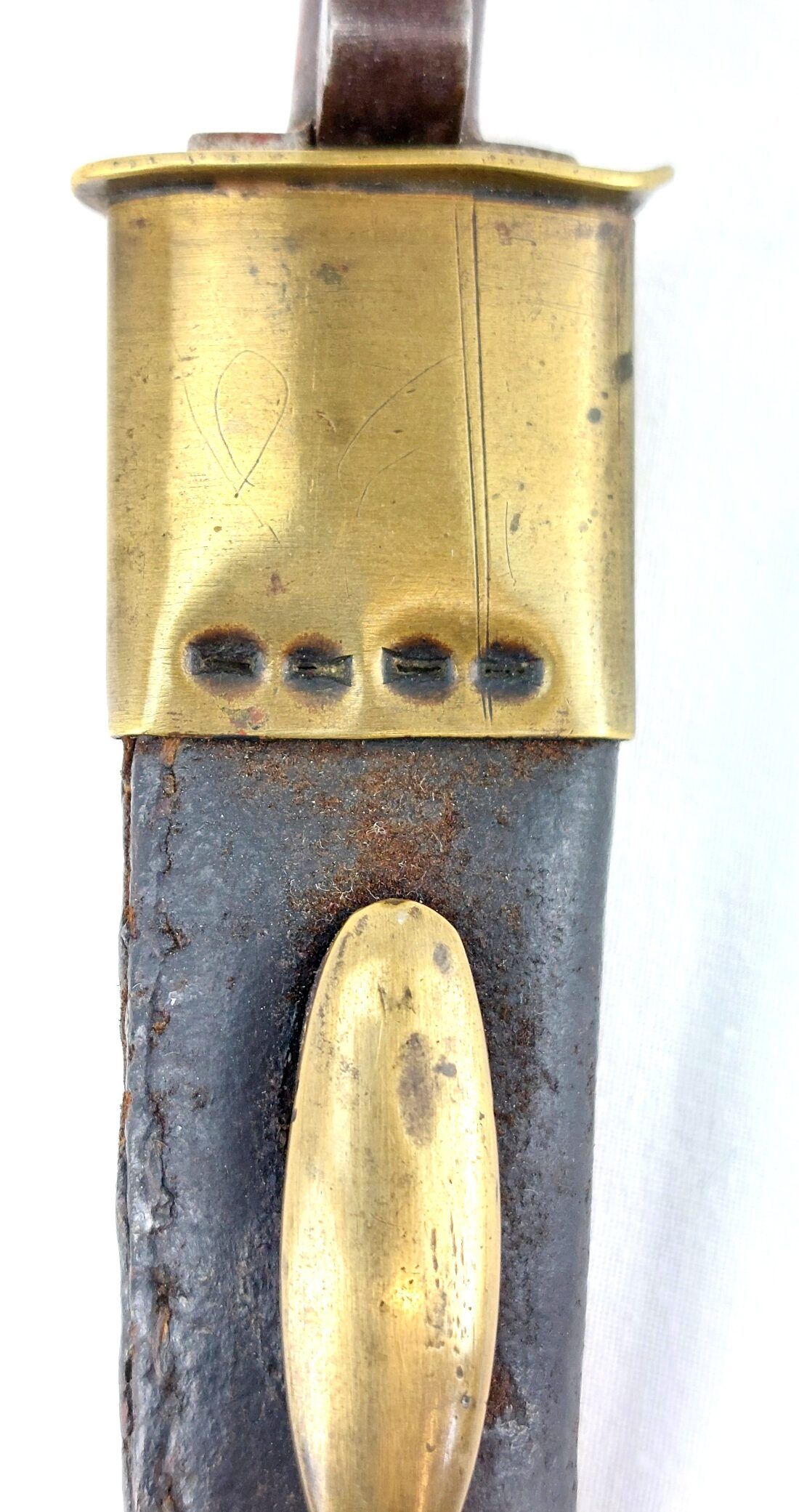
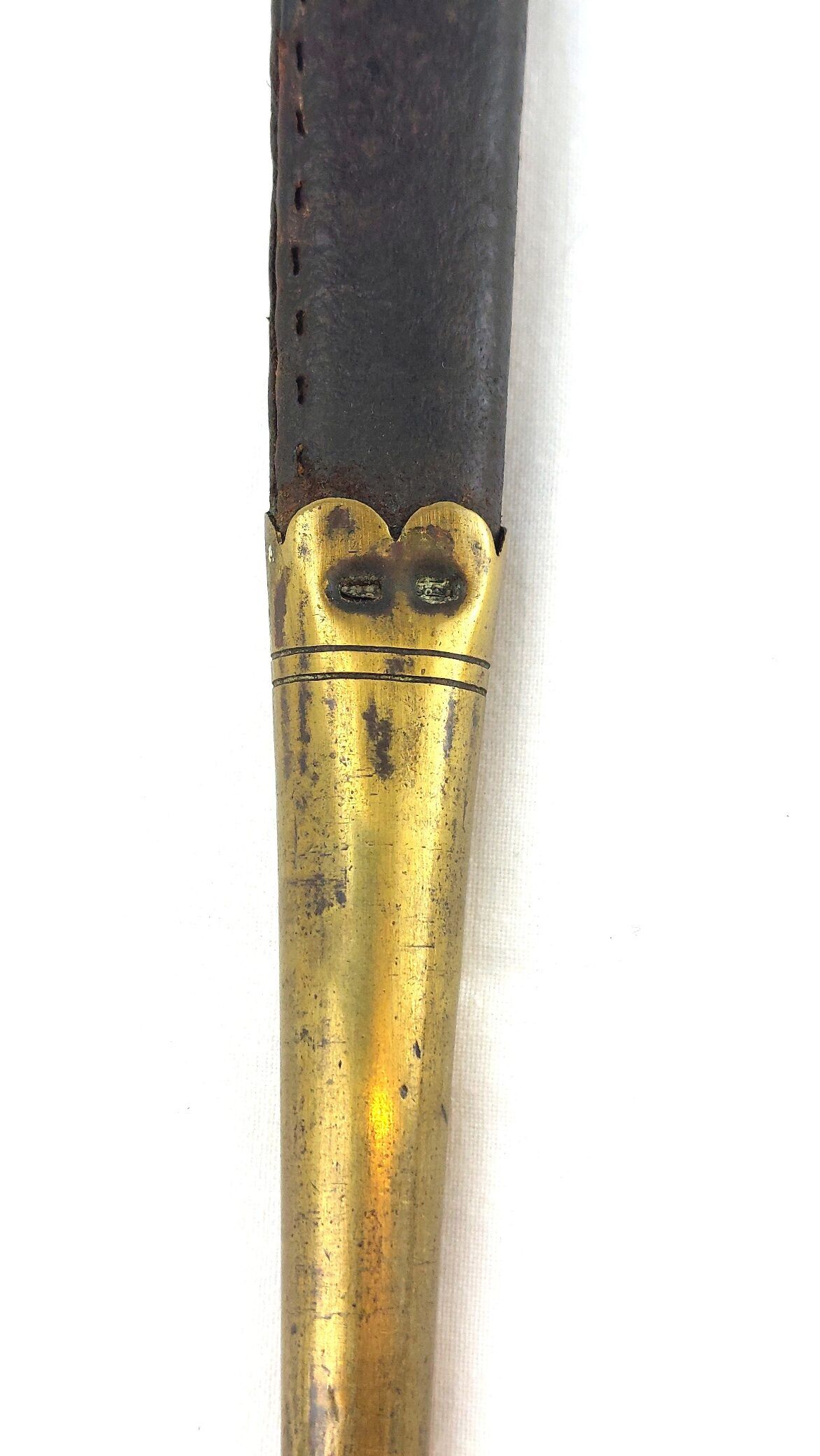
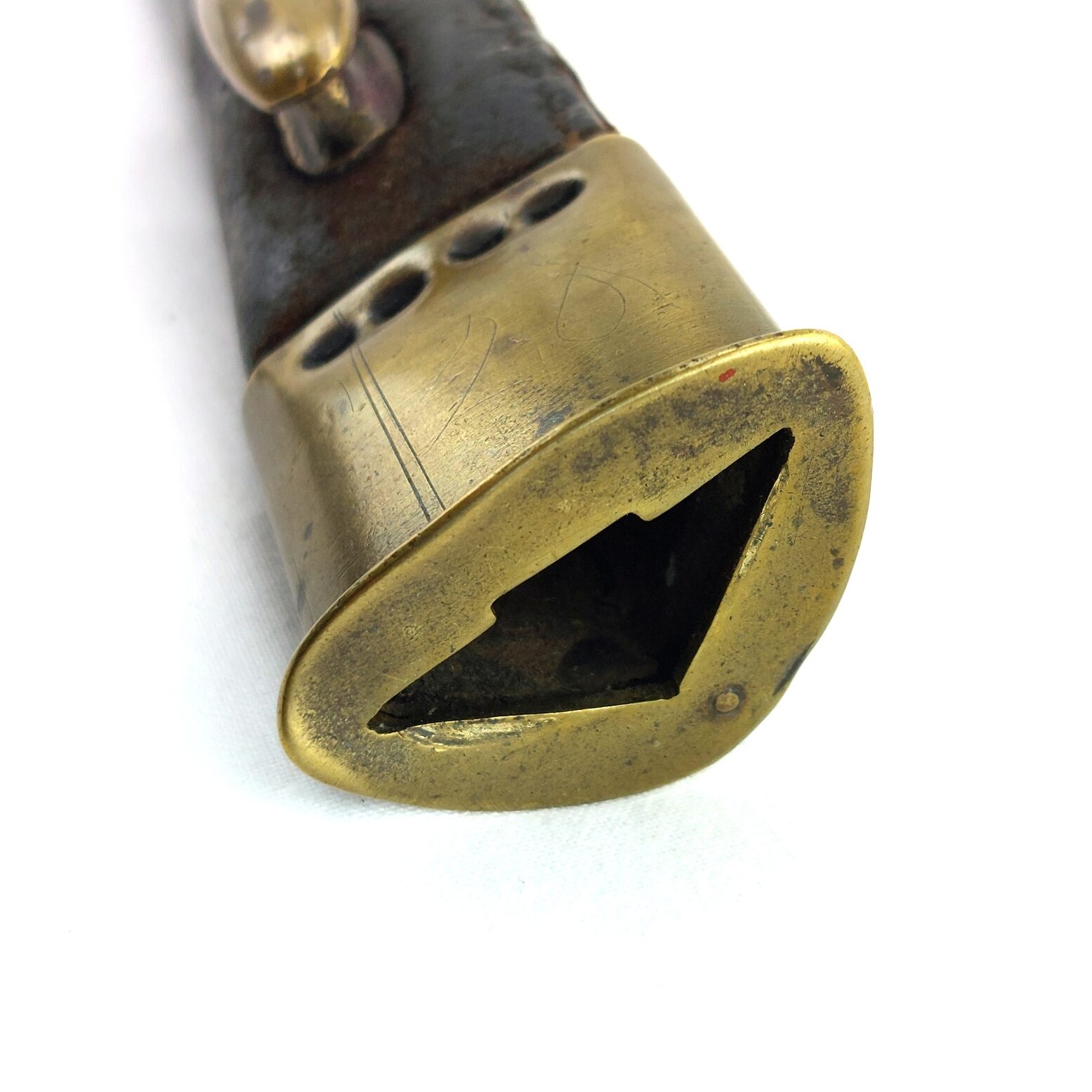
The early-pattern scabbard features a throat cut to engage the bayonet’s locking latch. As typical of British socket bayonet scabbards of the era, it has a front-left seam, which was later moved to the rear in the 1850s. The original throat and drag remain intact, secured with small indented peen marks, and the original frog hook is still present. A faint WD (War Department) and Broad Arrow stamp can be seen below the frog hook.
*Condition*
Excellent condition. Cocks and dryfires. Some oxidation to the metal work but a generally lovely patina on this rare carbine. The bayonet is in excellent condition with the Lovells spring catch working well. The scabbard is also in very good condition and retain much of the original finish on the leather with some scattered scuffing, loss and wear. The stitching remains almost entirely tightly intact and some scuffed wear. Please see photographs as part of the condition report.
*In order to complete the online purchase we will require a picture/scan of a photo ID (Driving Licence, Passport or an official document with a recent picture). If you don't posses any such document please call to buy. If we consider that the proof of ID is incorect or insuficient, we reserve the right to cancel the transaction.
*We also reserve the right to cancel the transaction with a full refund if there is any suspicion that the provided item will be used in any way contrary to the laws and legislation of UK.