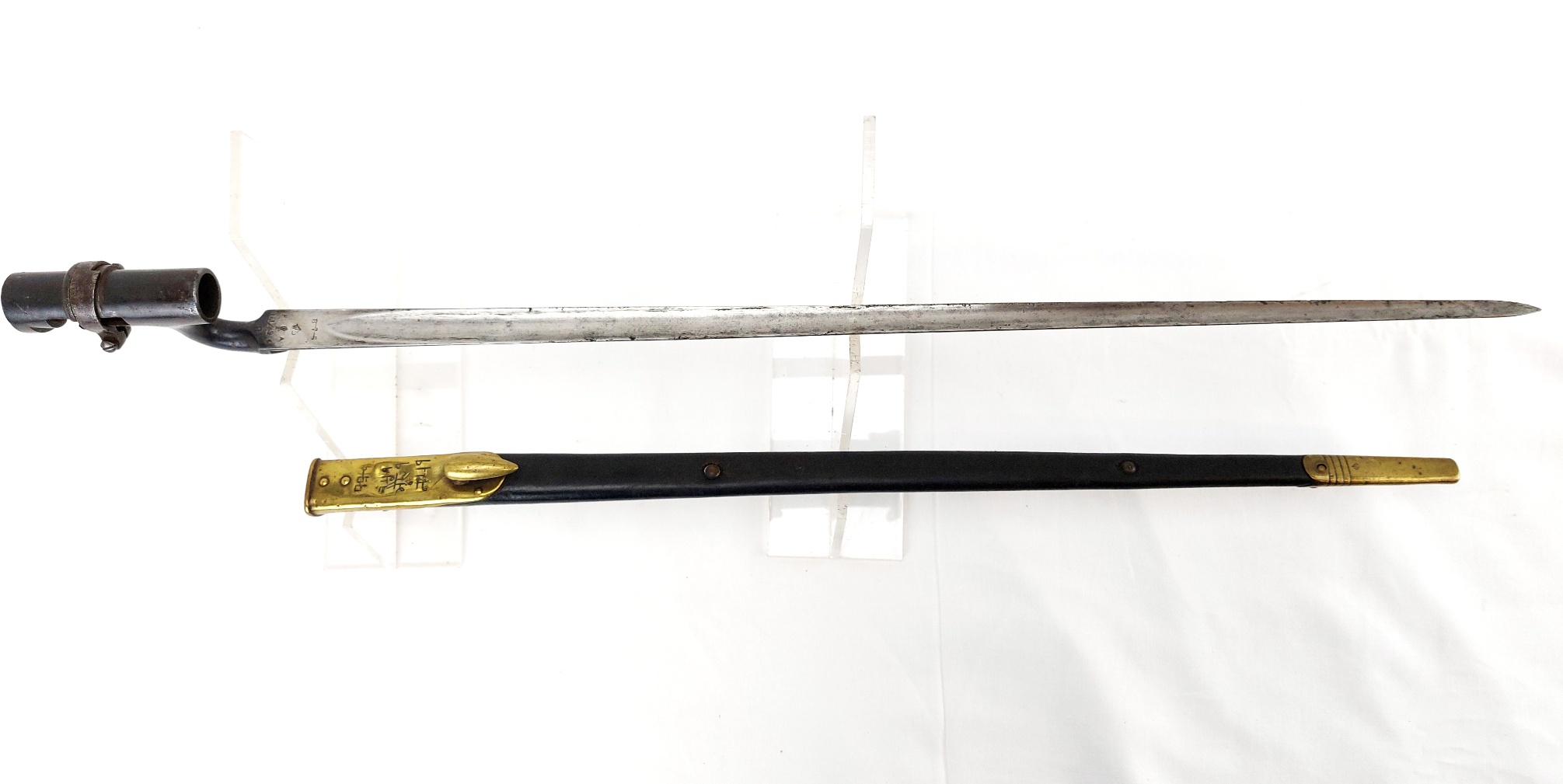
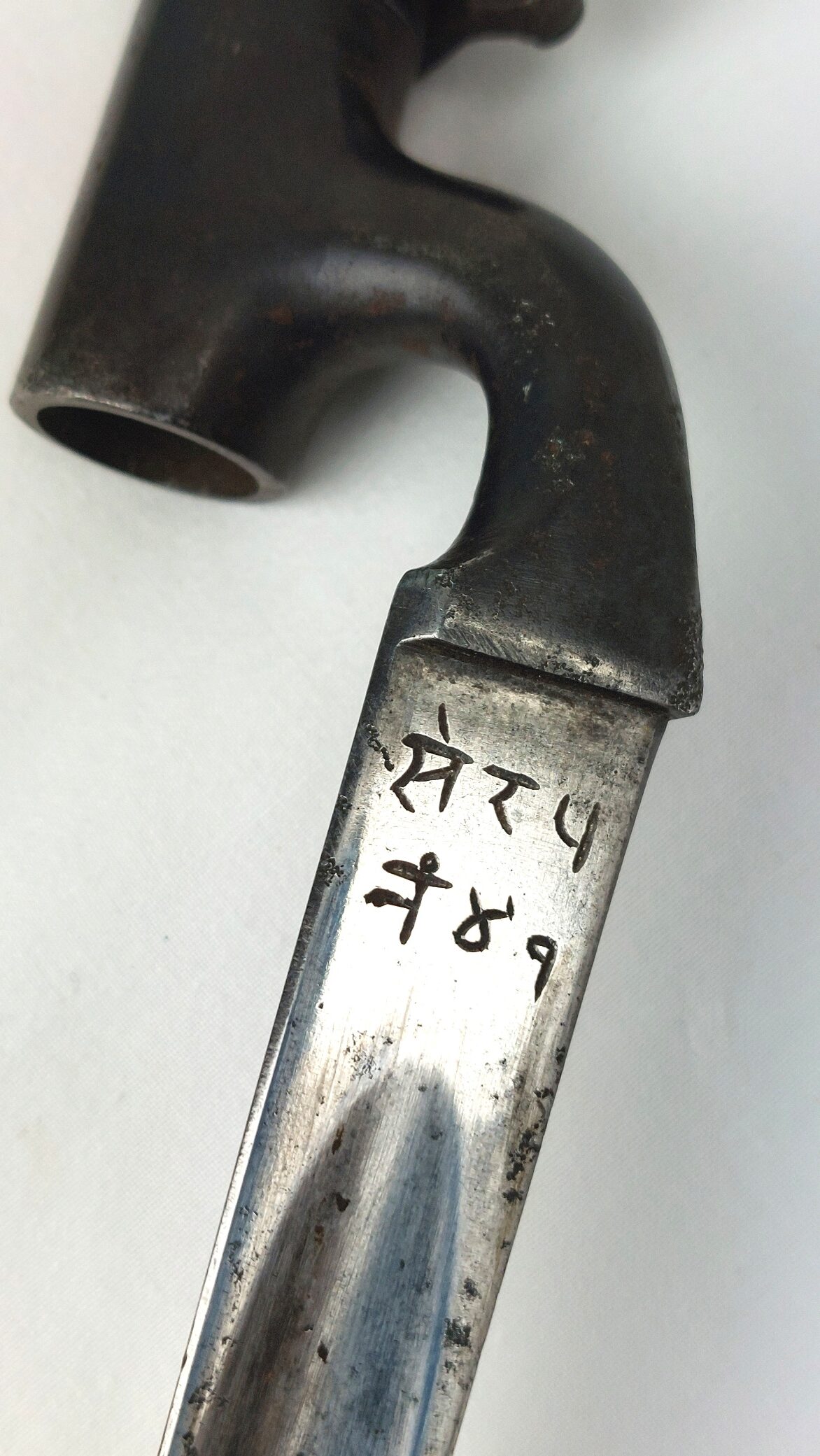
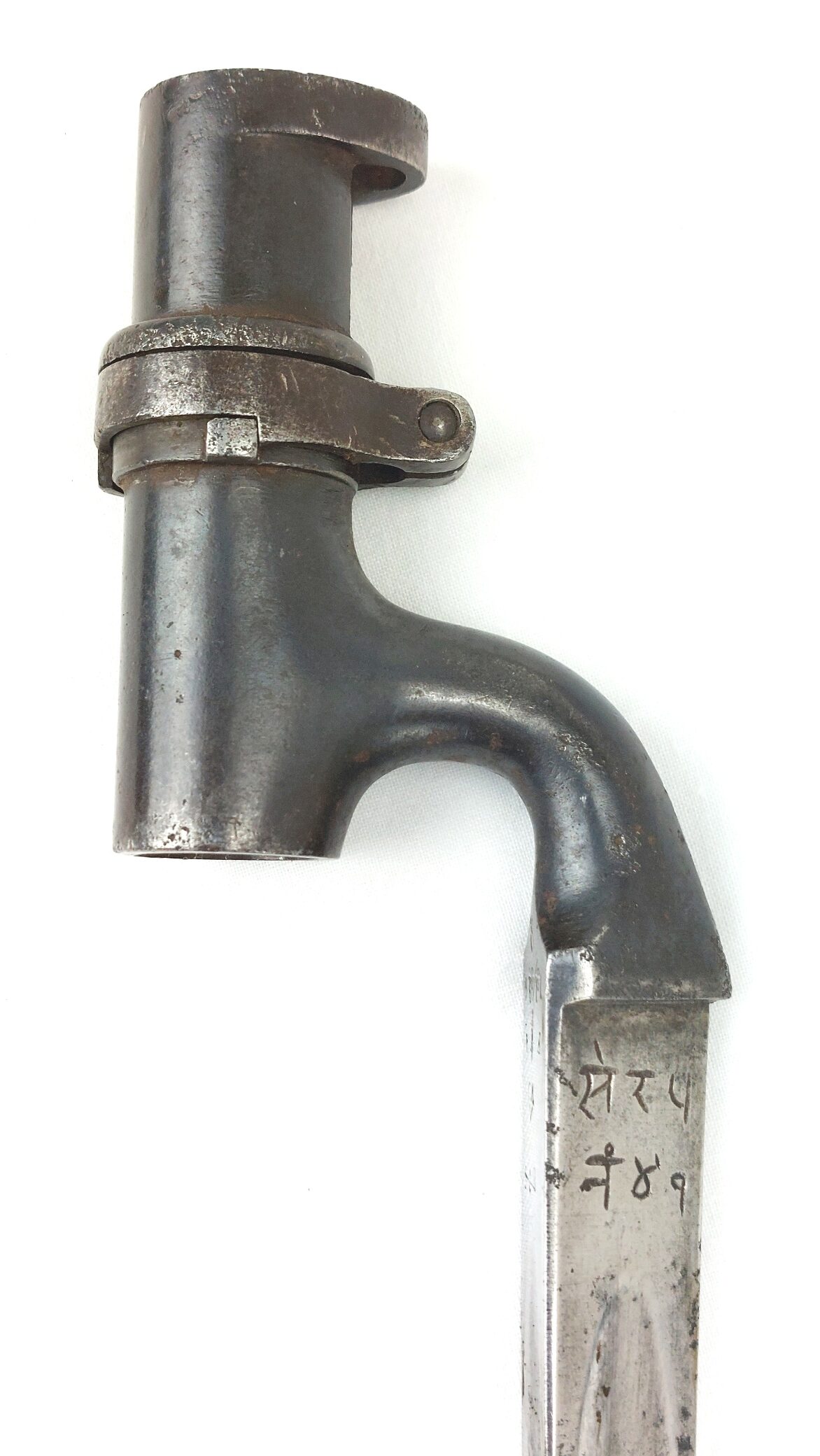
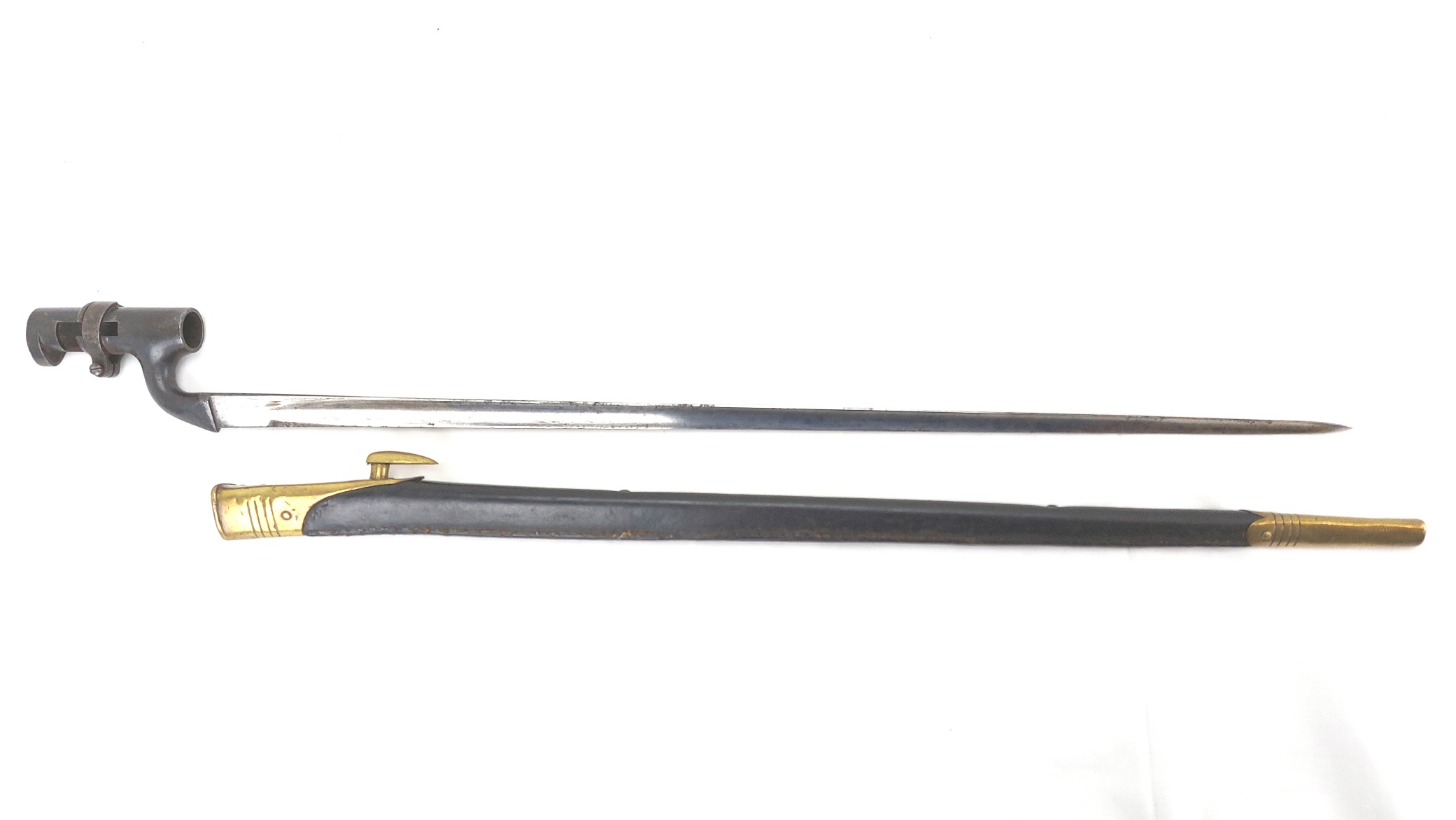
Indian (issued to Nepal), British Pattern 1853 Socket Bayonet & Scabbard, Dated 1885 & 1894, Marked F.W.A. Fort William Arsenal, with Devanagari inscriptions “सेनि १८९”
*Indian (issued to Nepal), British Pattern 1853 Socket Bayonet & Scabbard, Dated 1885 & 1894, Marked F.W.A. Fort William Arsenal, with Devanagari inscriptions “सेनि १८९”*
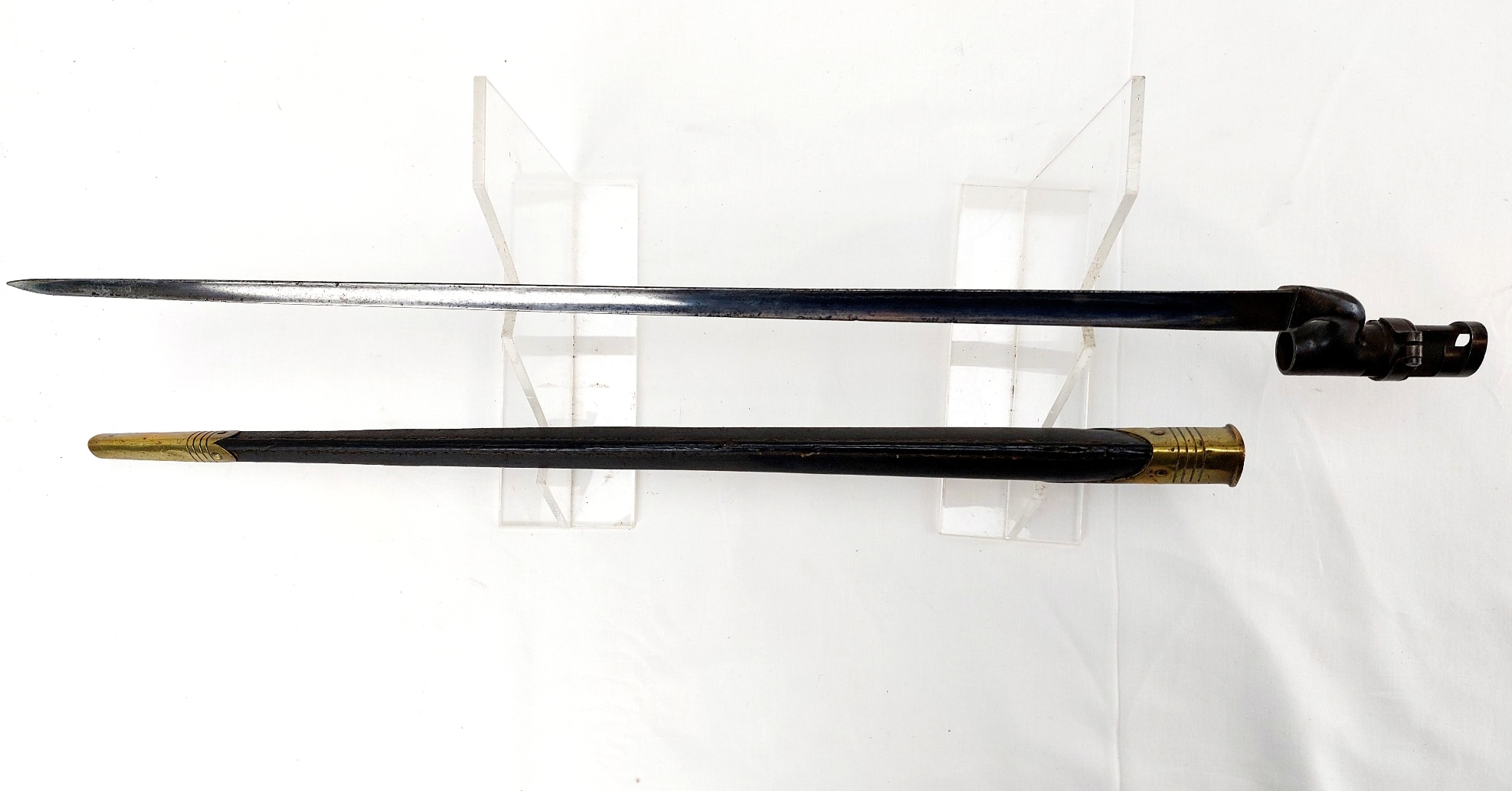
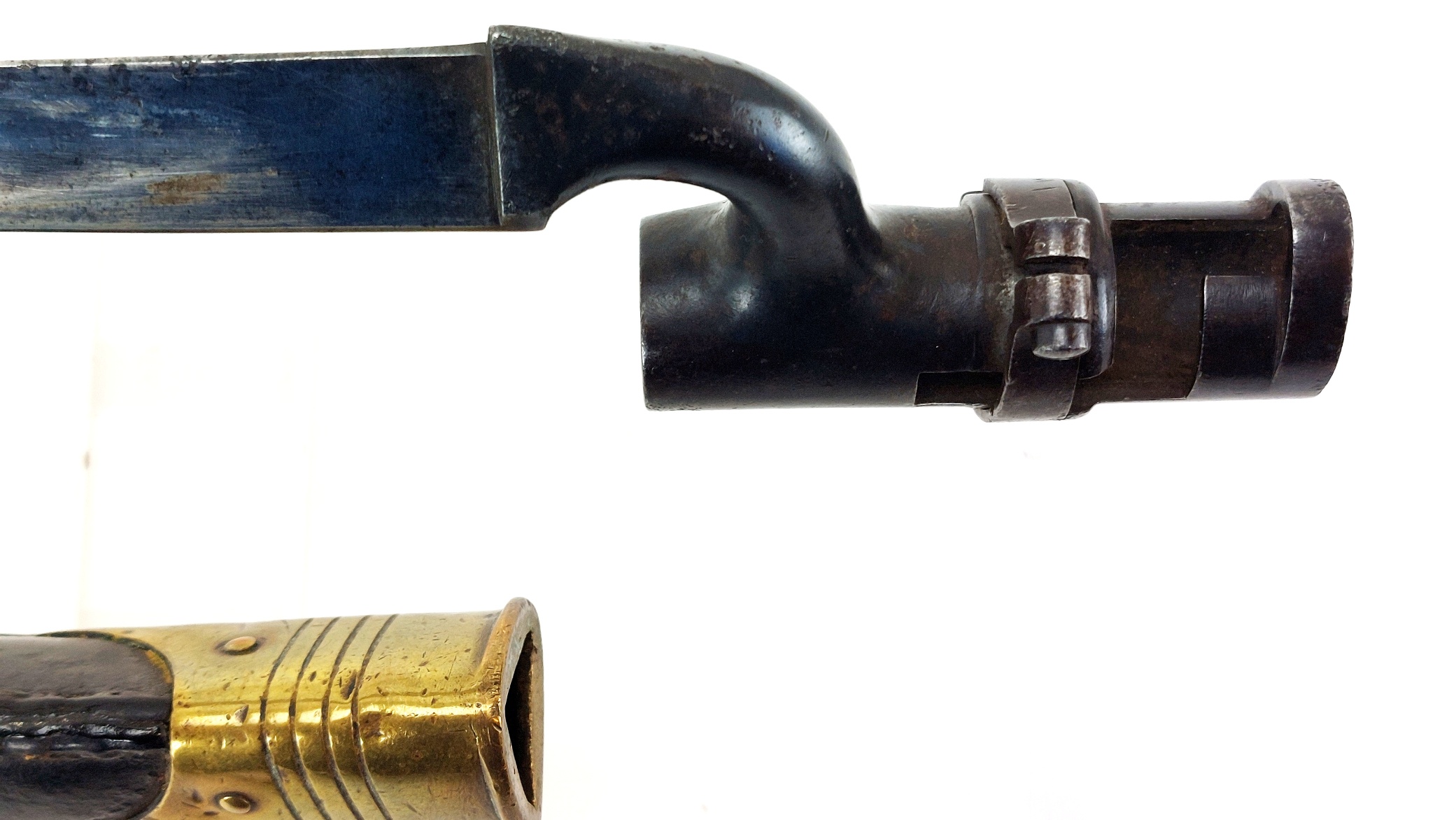
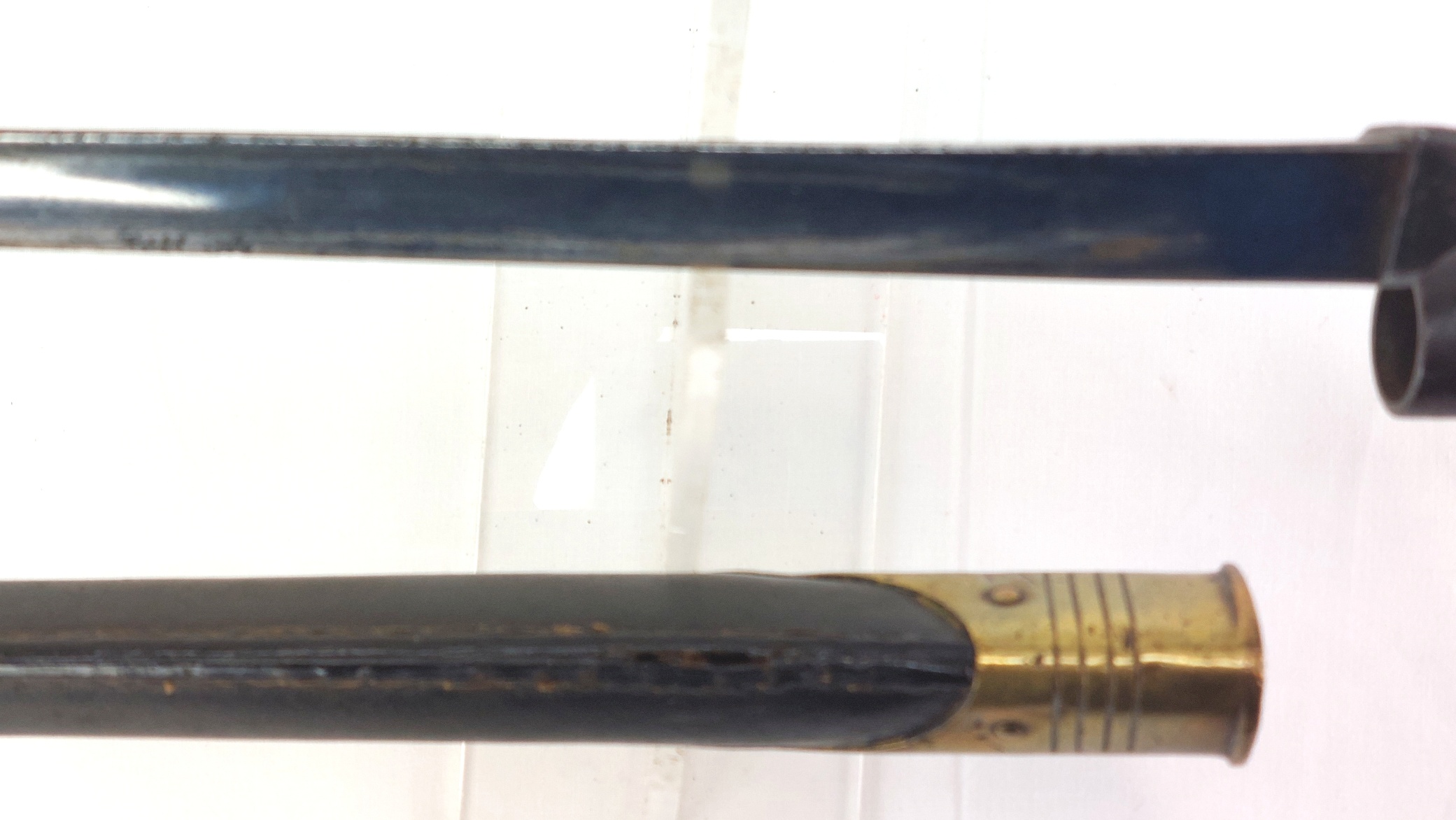
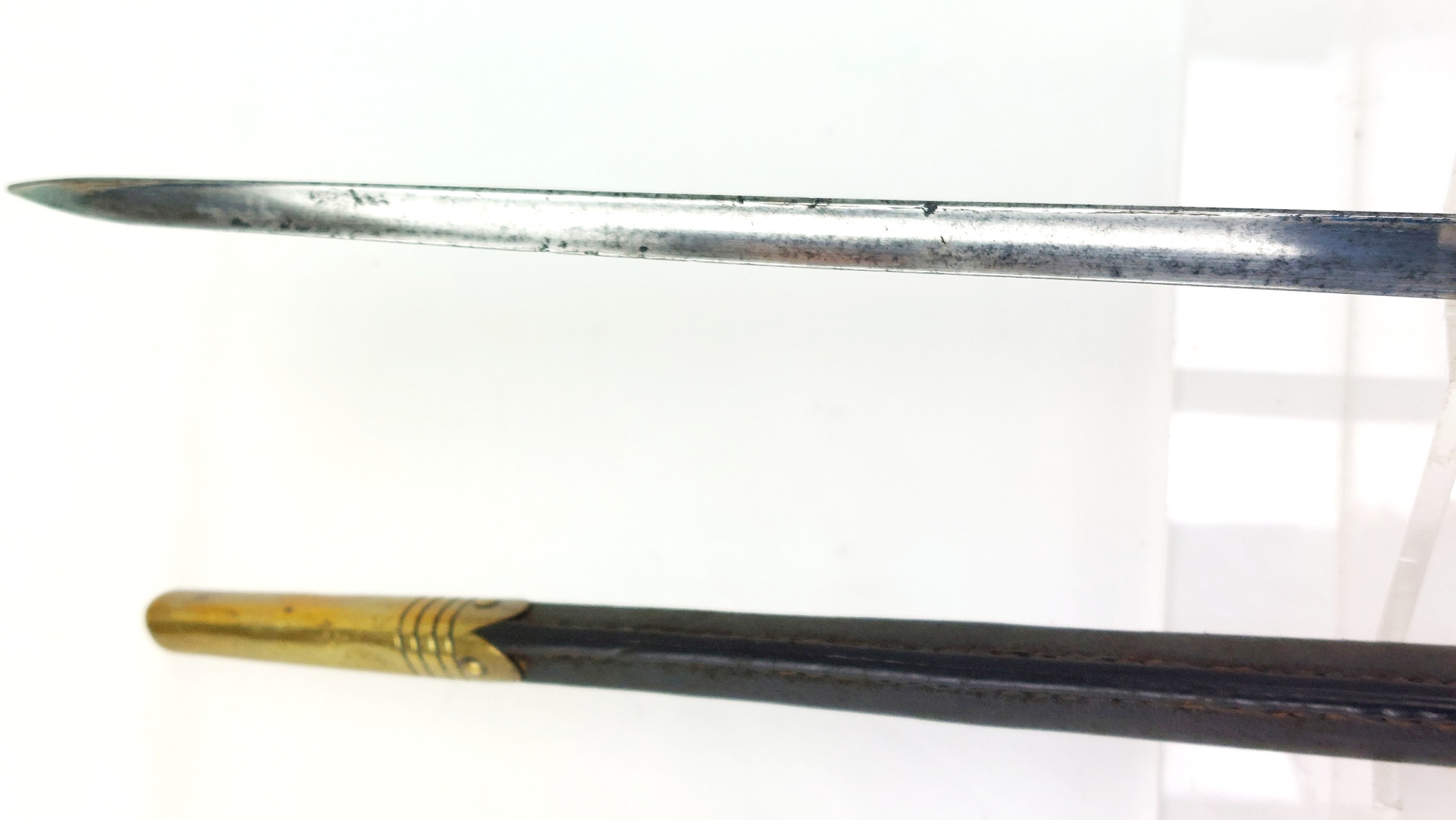
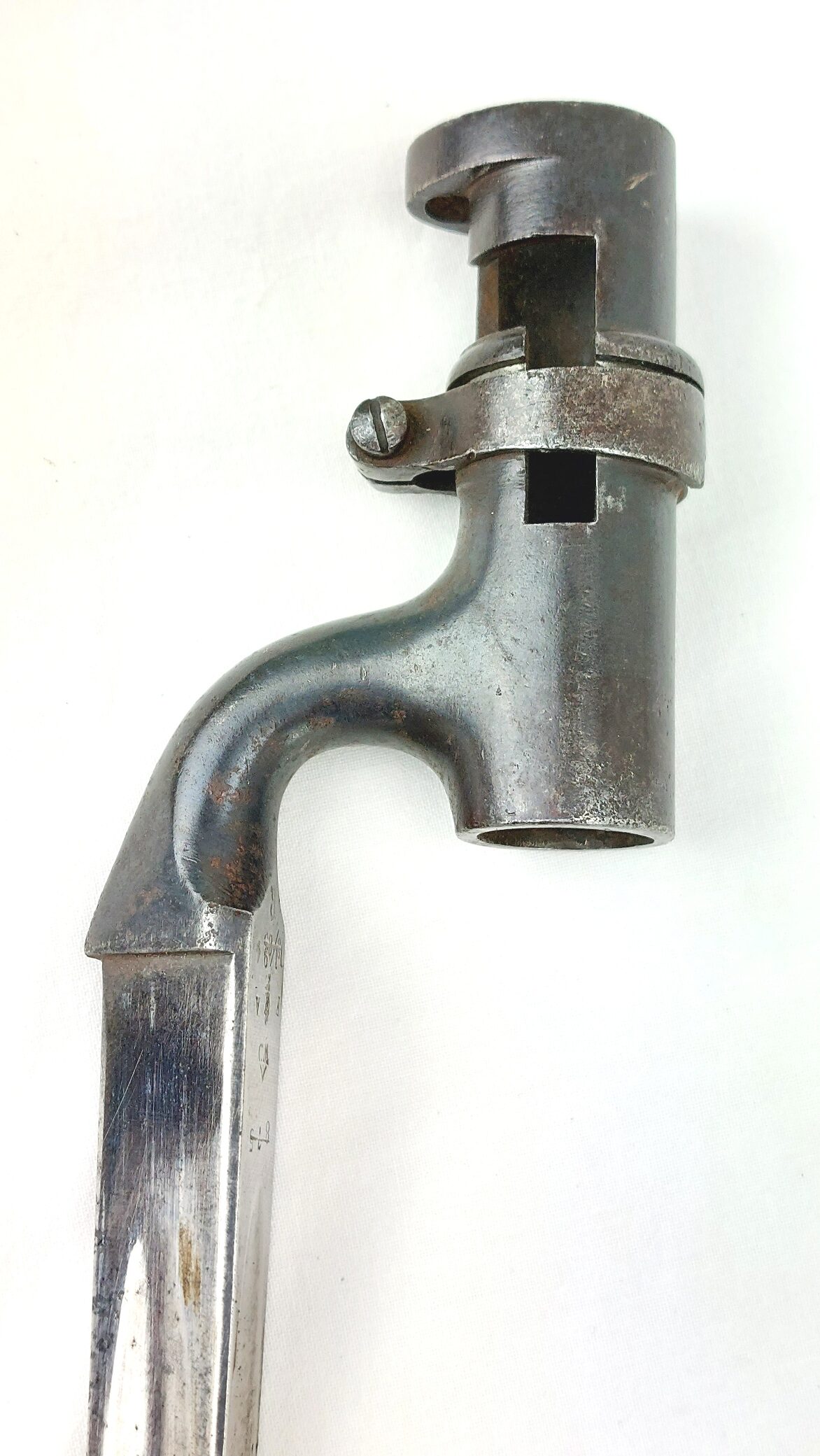
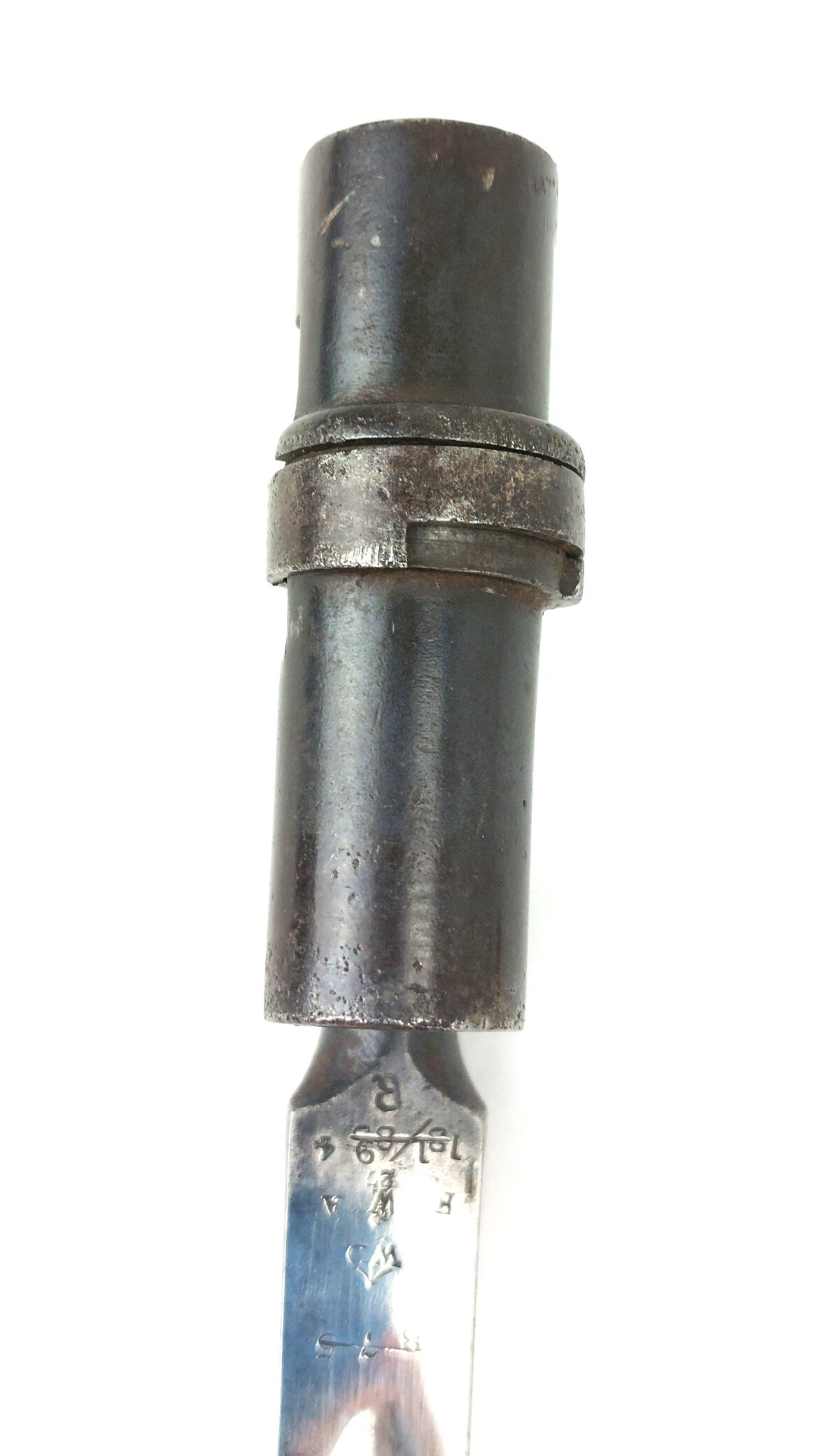
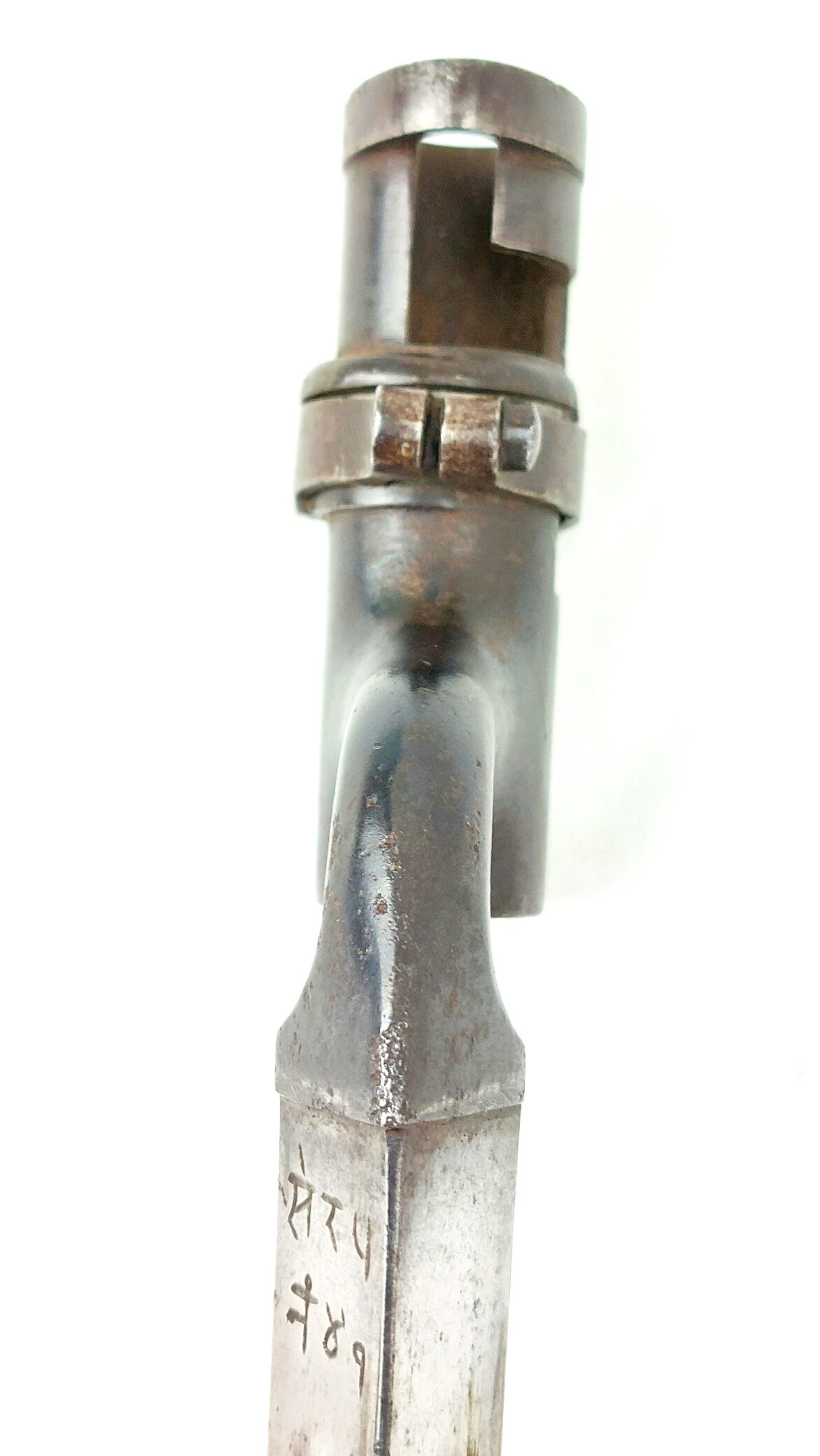
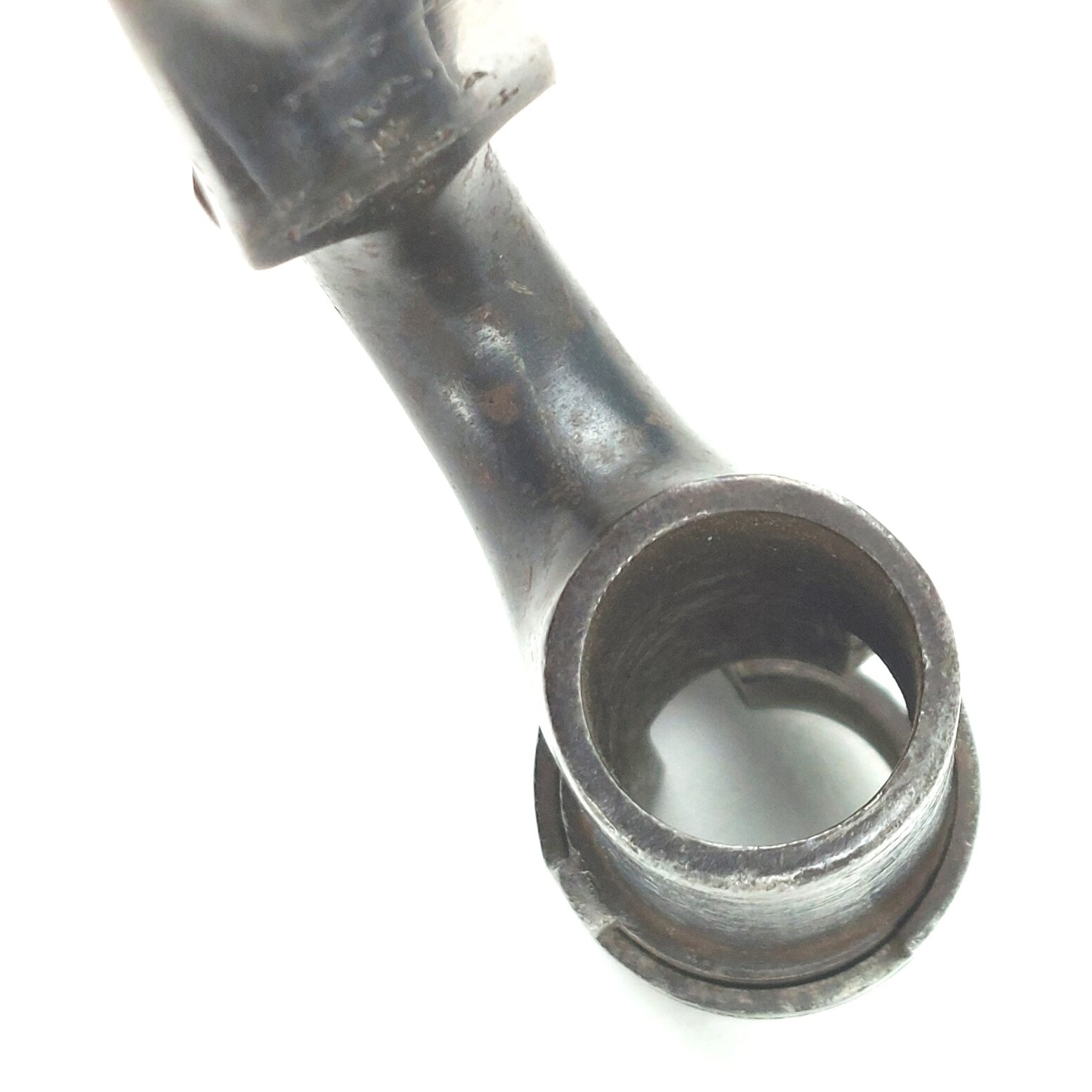
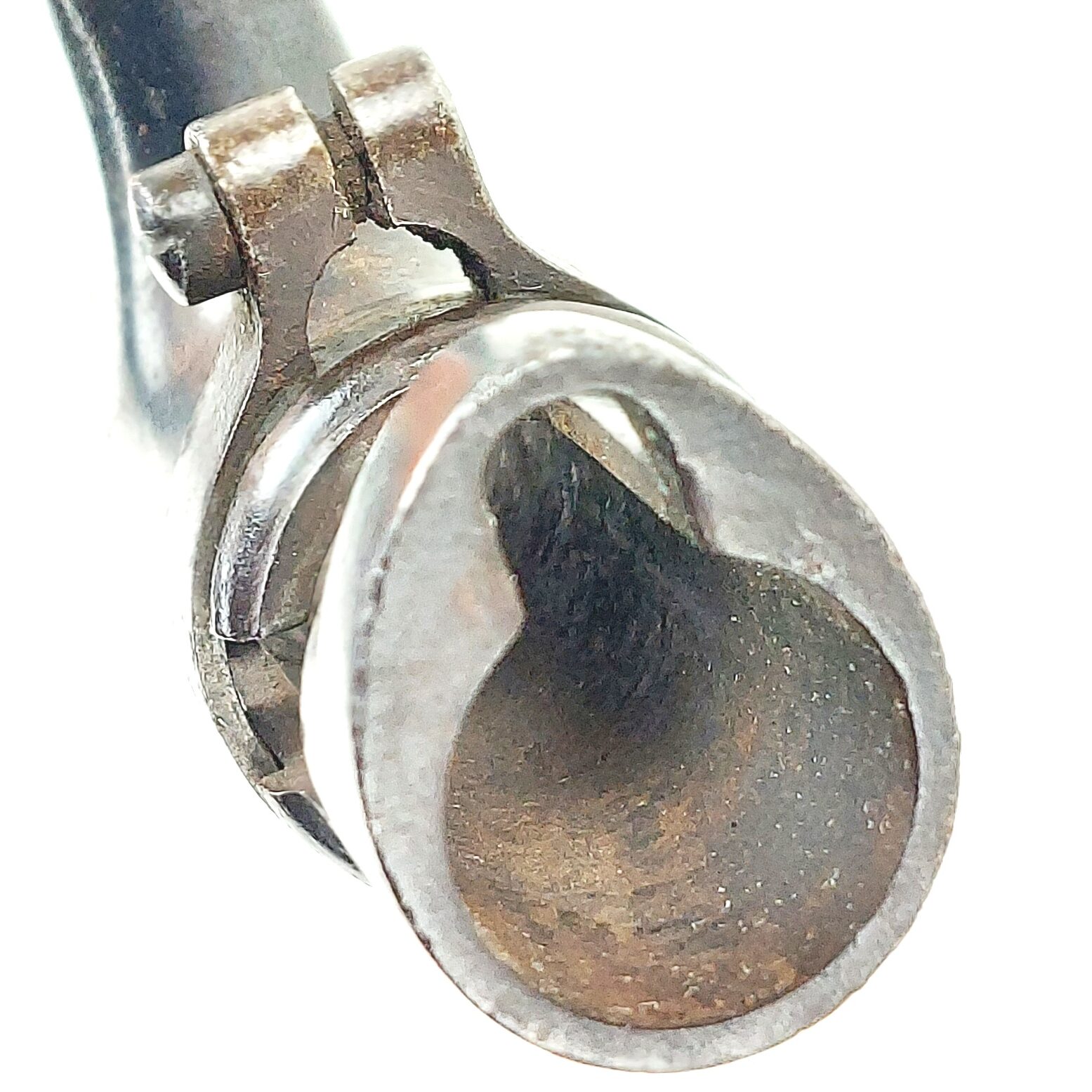
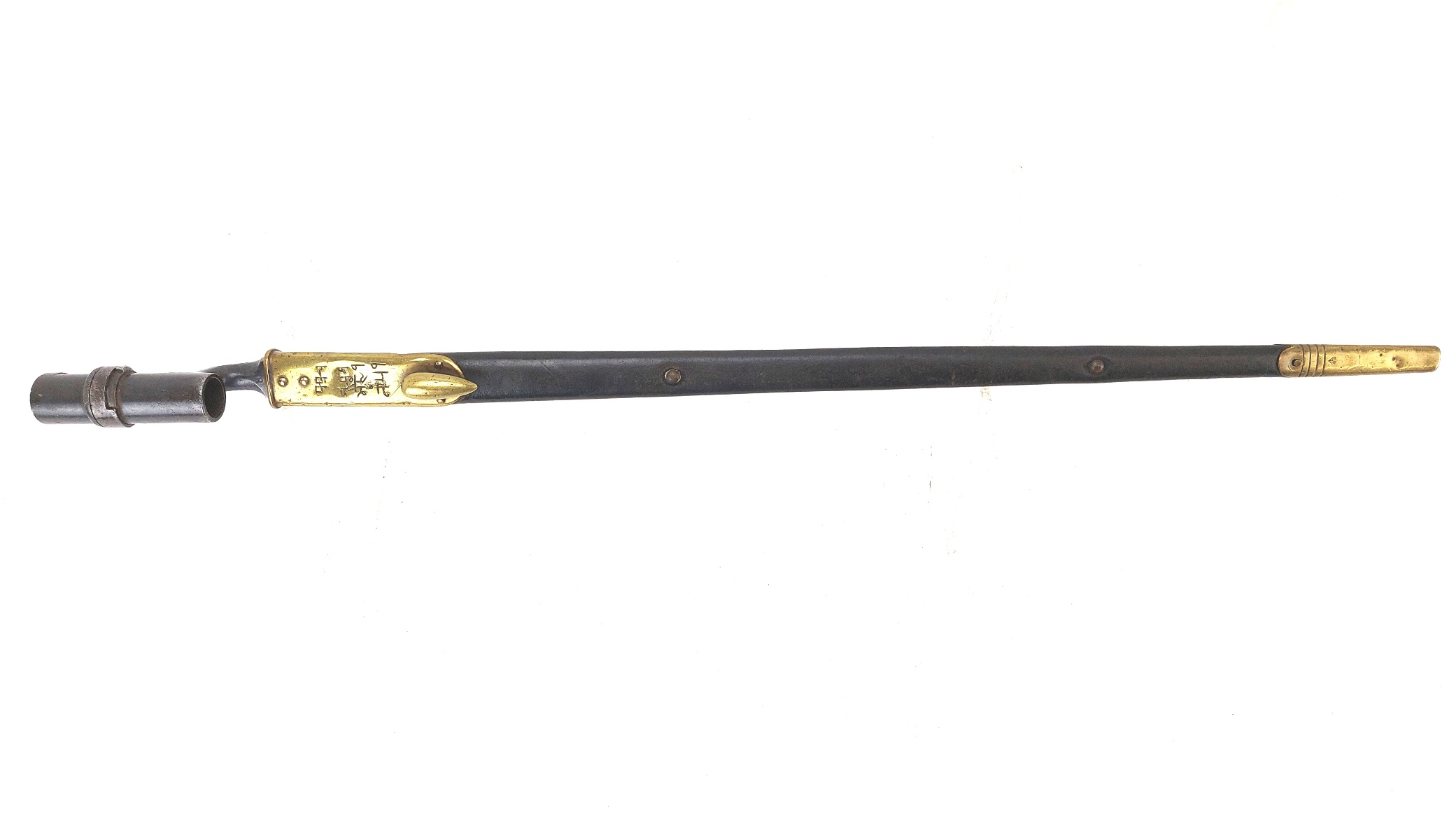
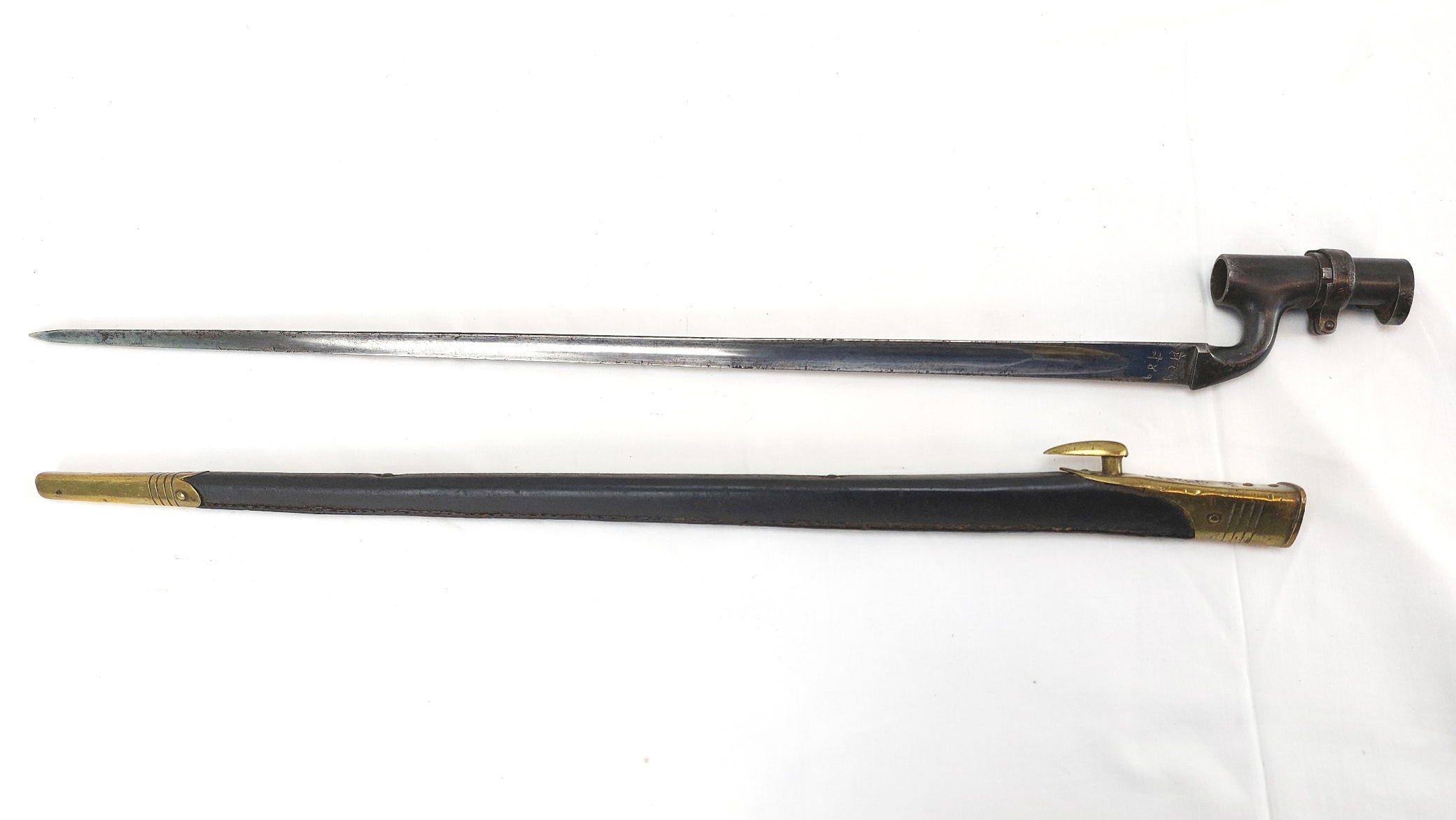
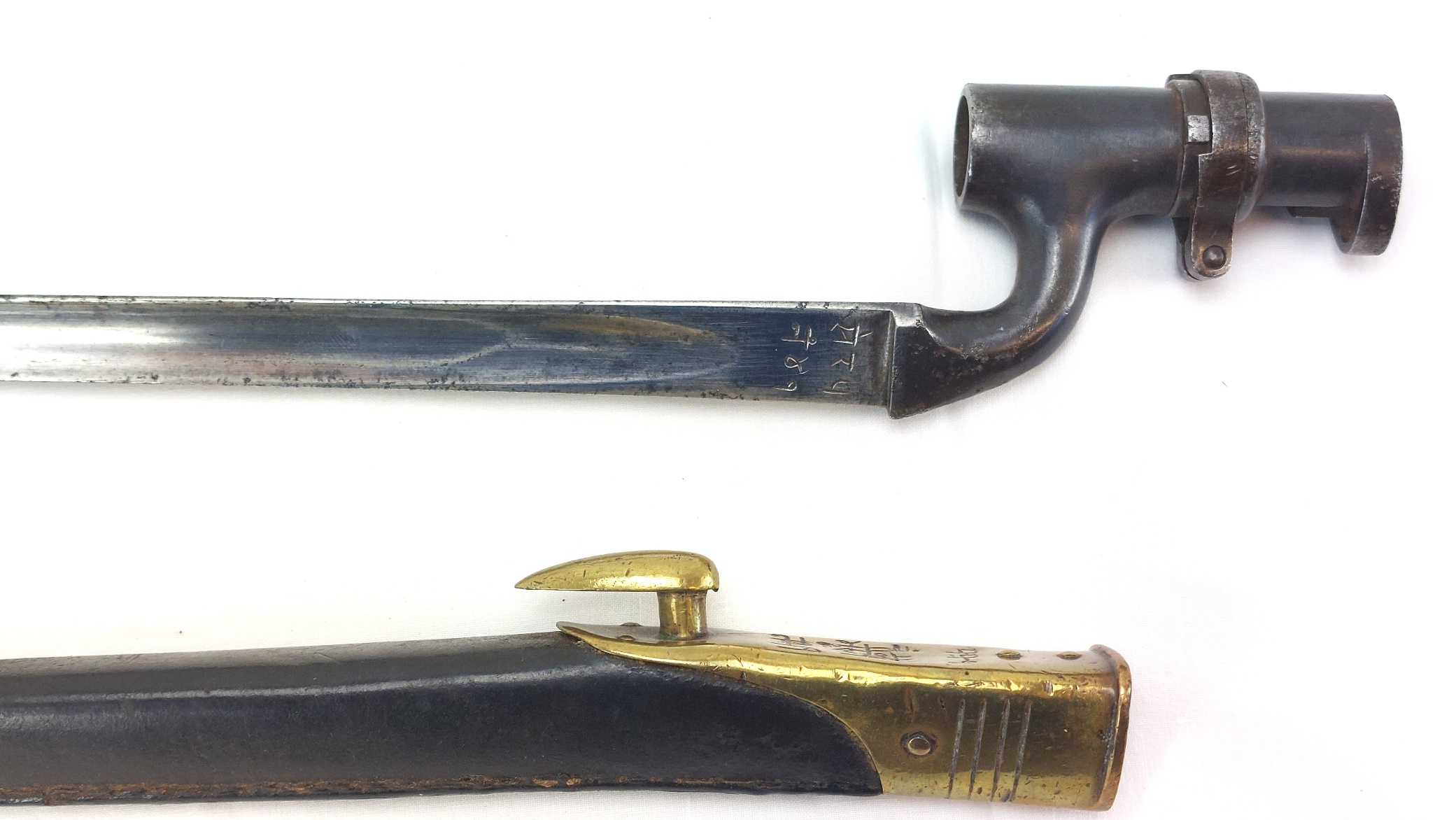
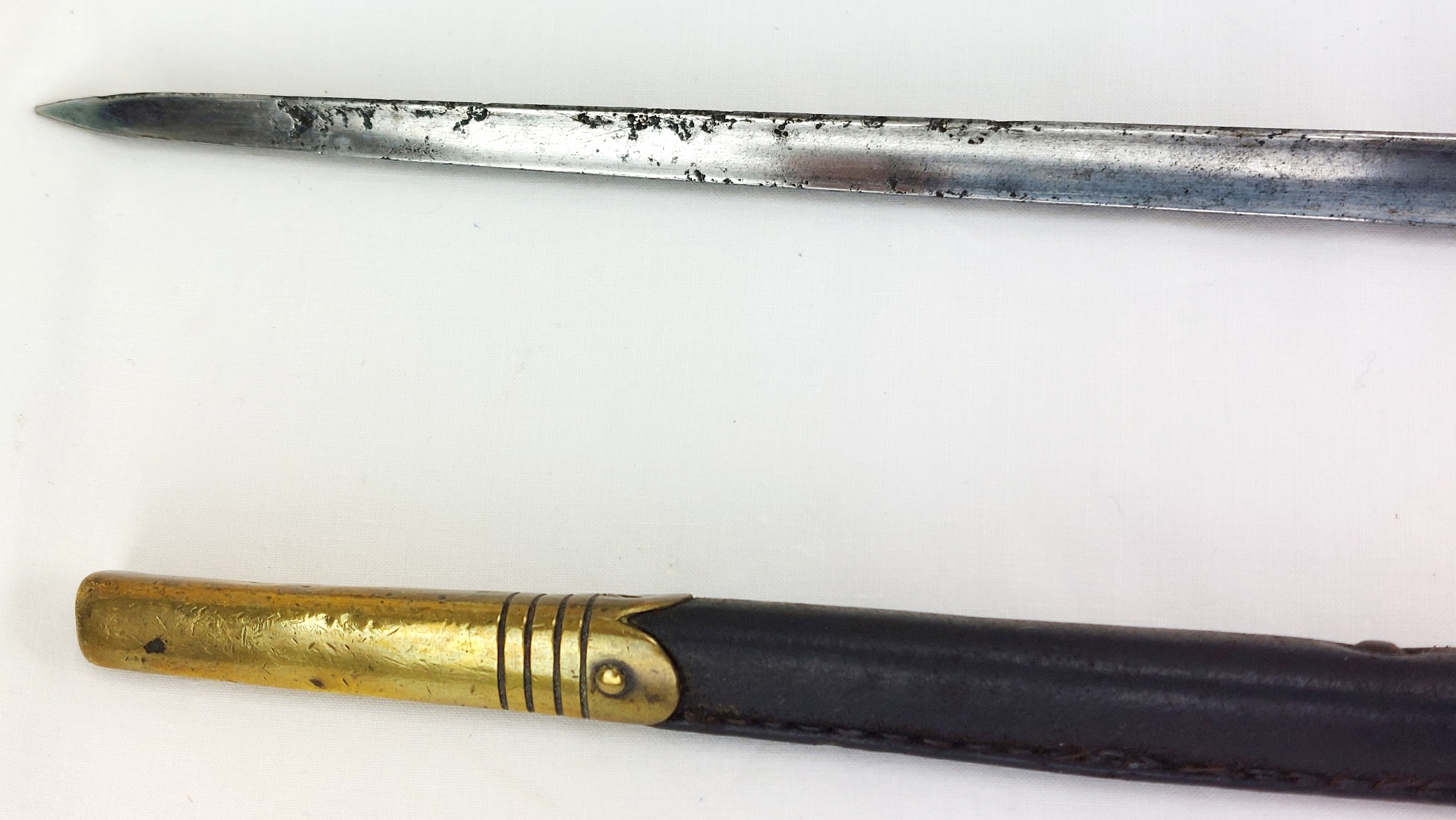
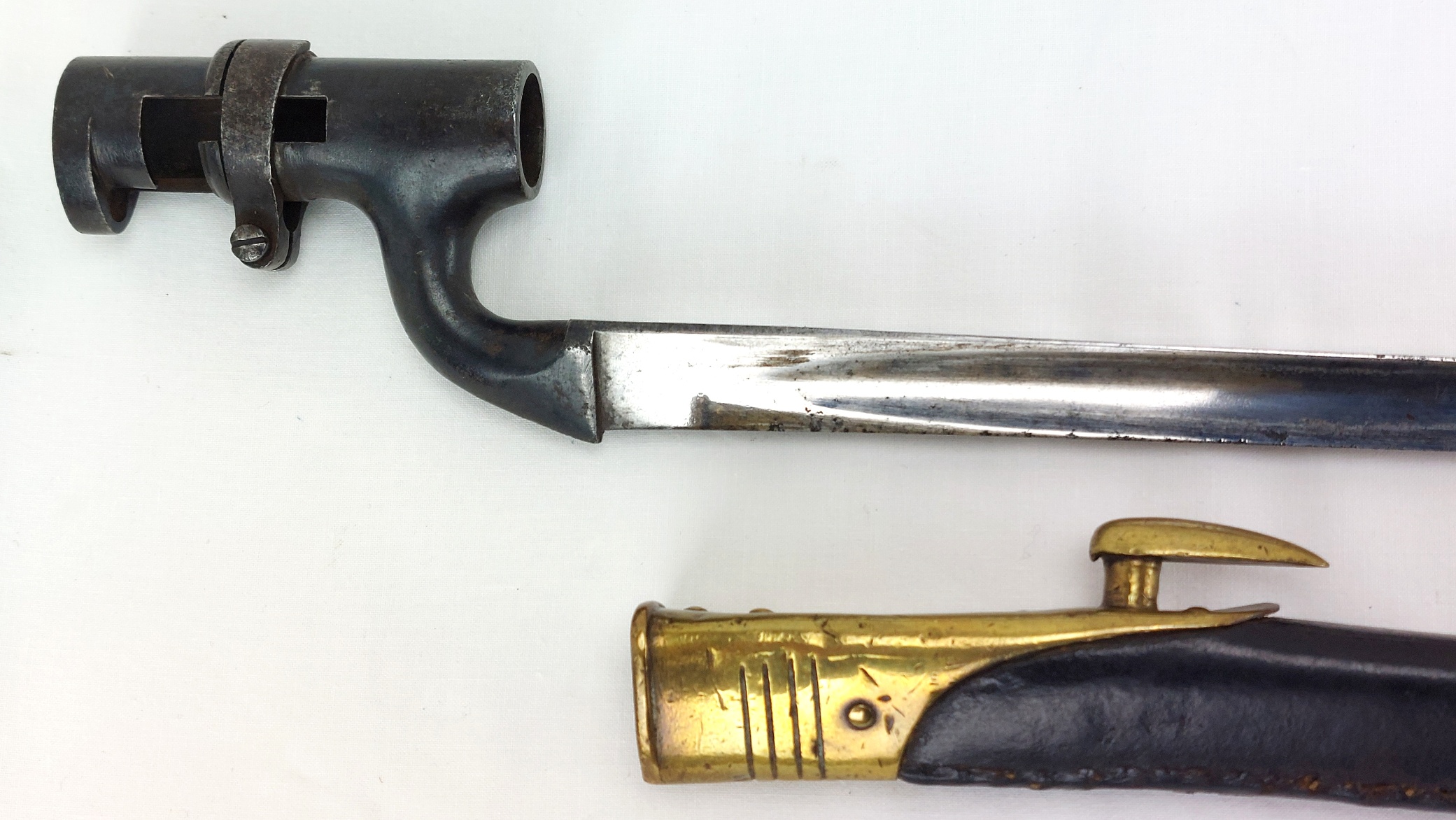
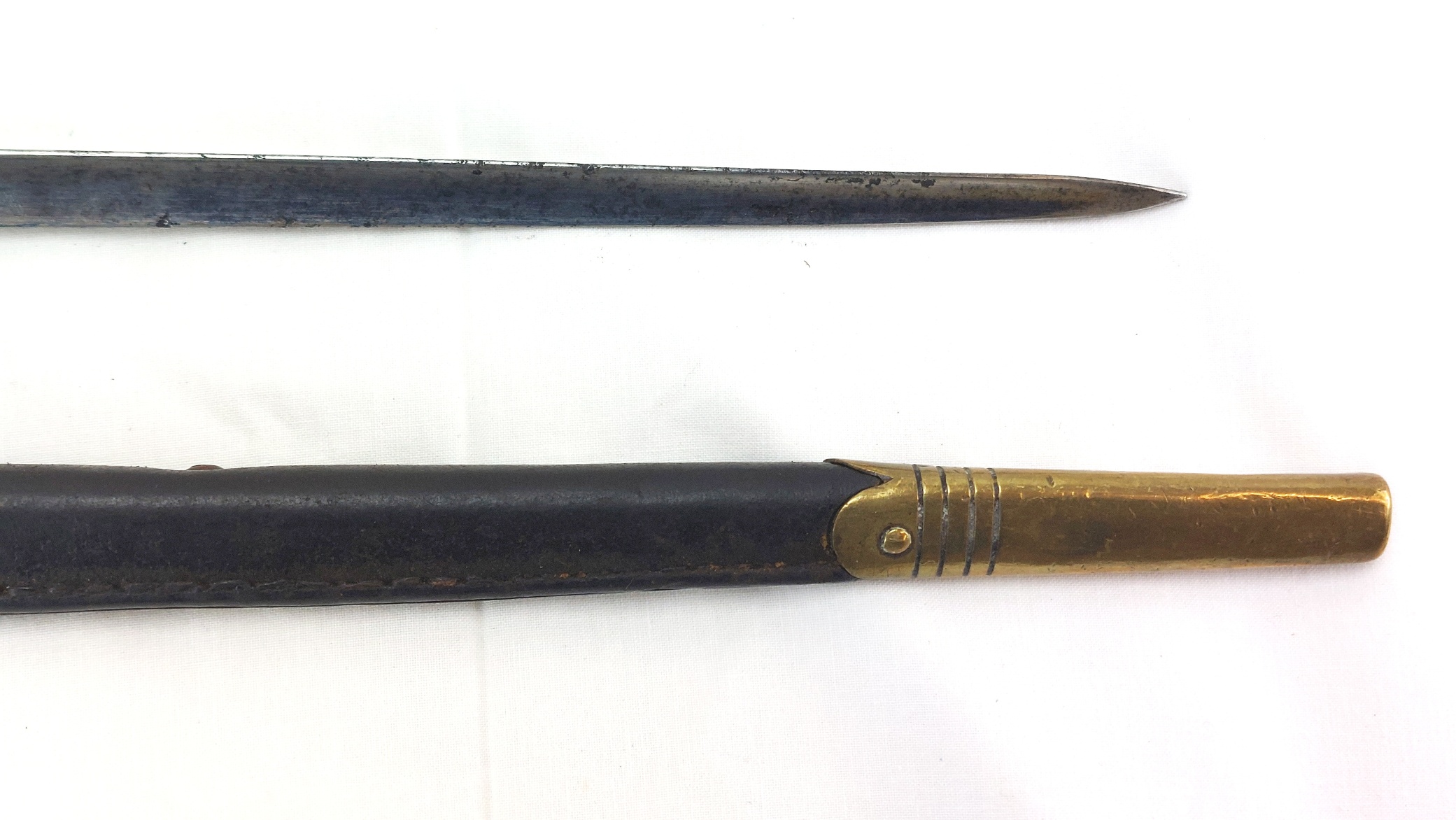
A late-Victorian Pattern 1853 socket bayonet, British-made and accepted into British service in August 1885. This bayonet was re-inspected and re-issued in November 1894 through Fort William Arsenal, Calcutta — one of the key British Indian arsenals responsible for overhauling and distributing arms across the subcontinent. After Indian reissue, it was later transferred north to Nepal, where it received local armoury markings in Devanagari script. The single-piece steel construction has a tapered triangular blade with shallow fullers to each side, converging to a fine spear point. Cylindrical socket with elbowed shank and original locking ring and screw catch present.
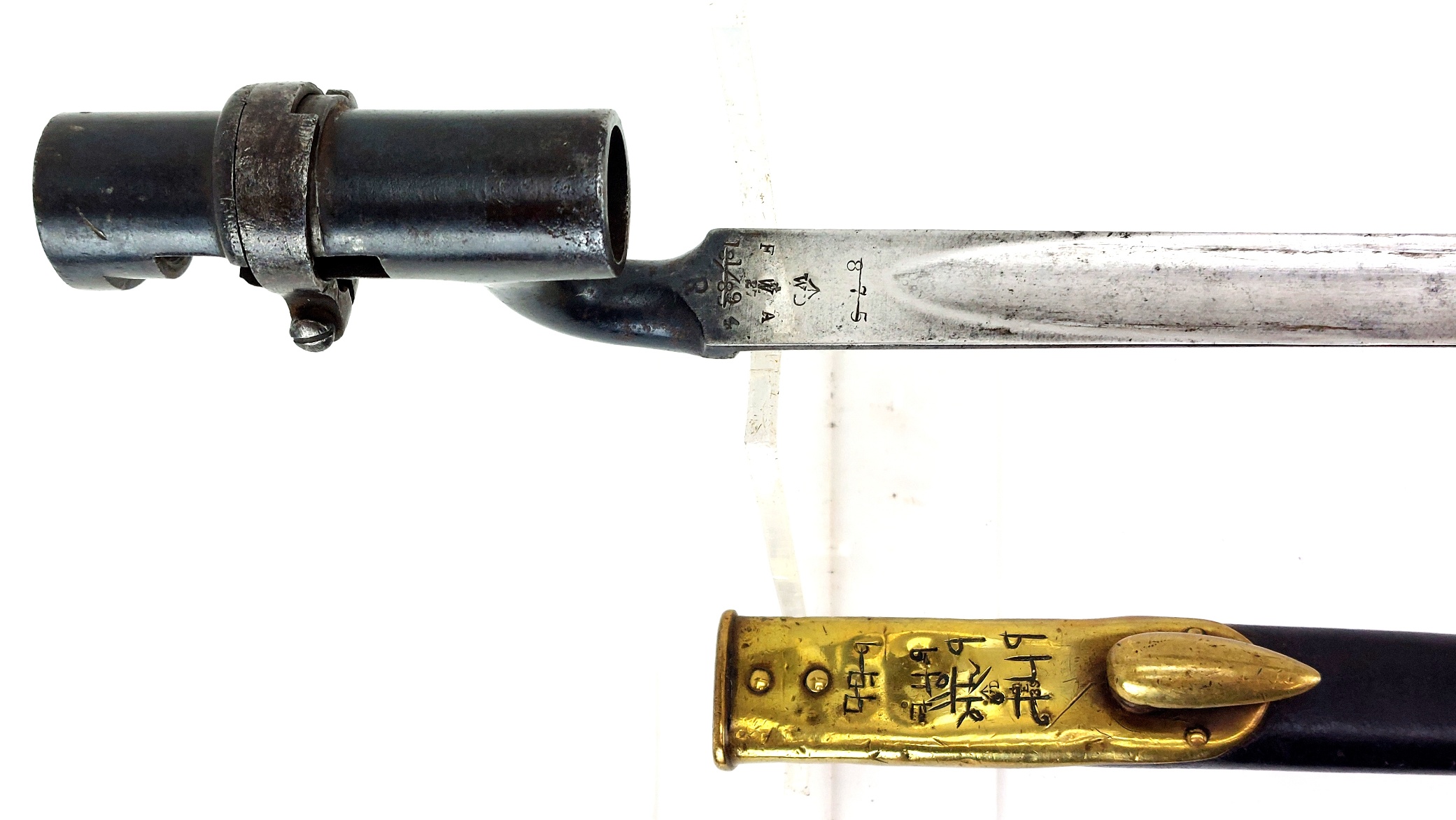
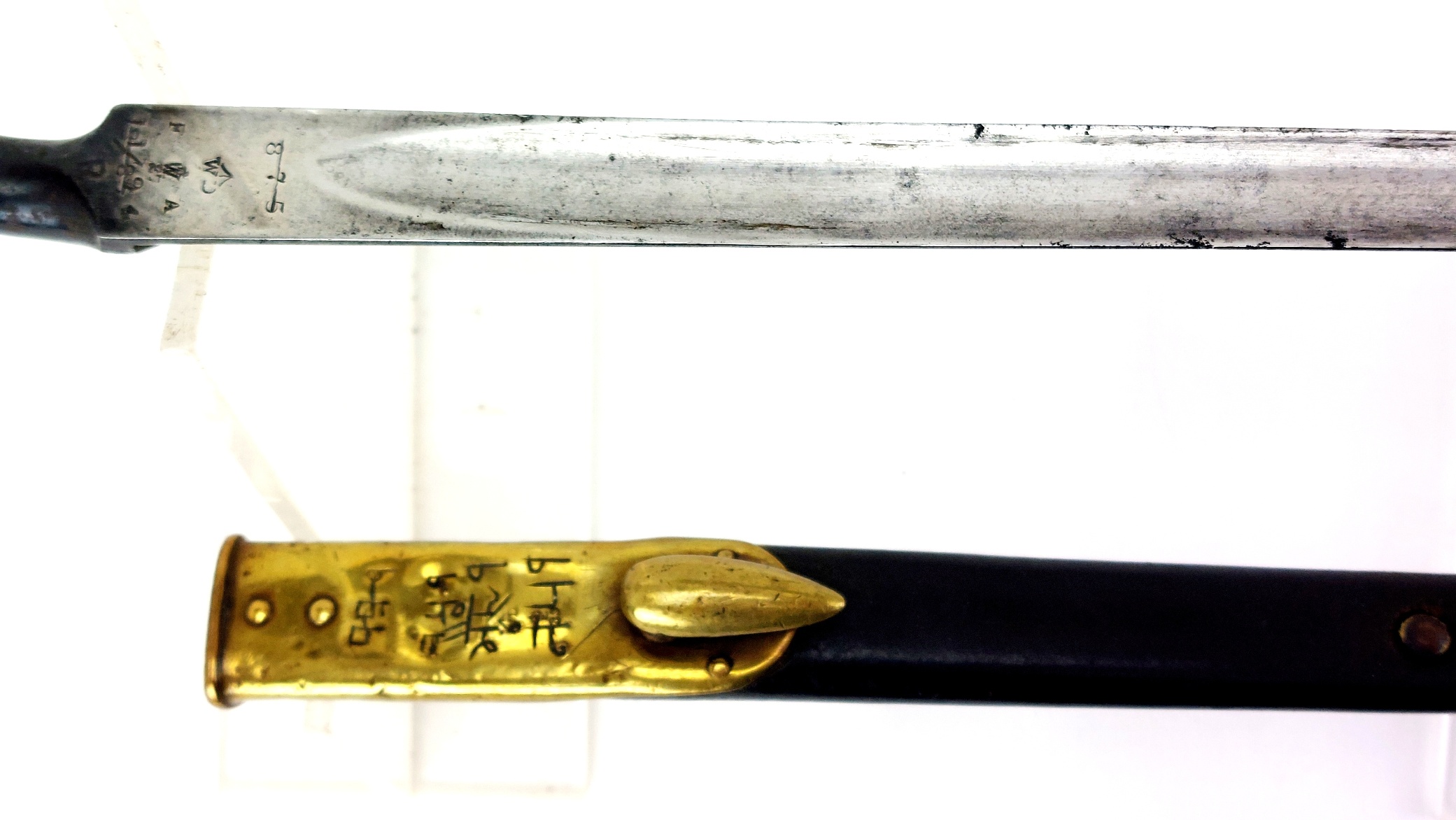
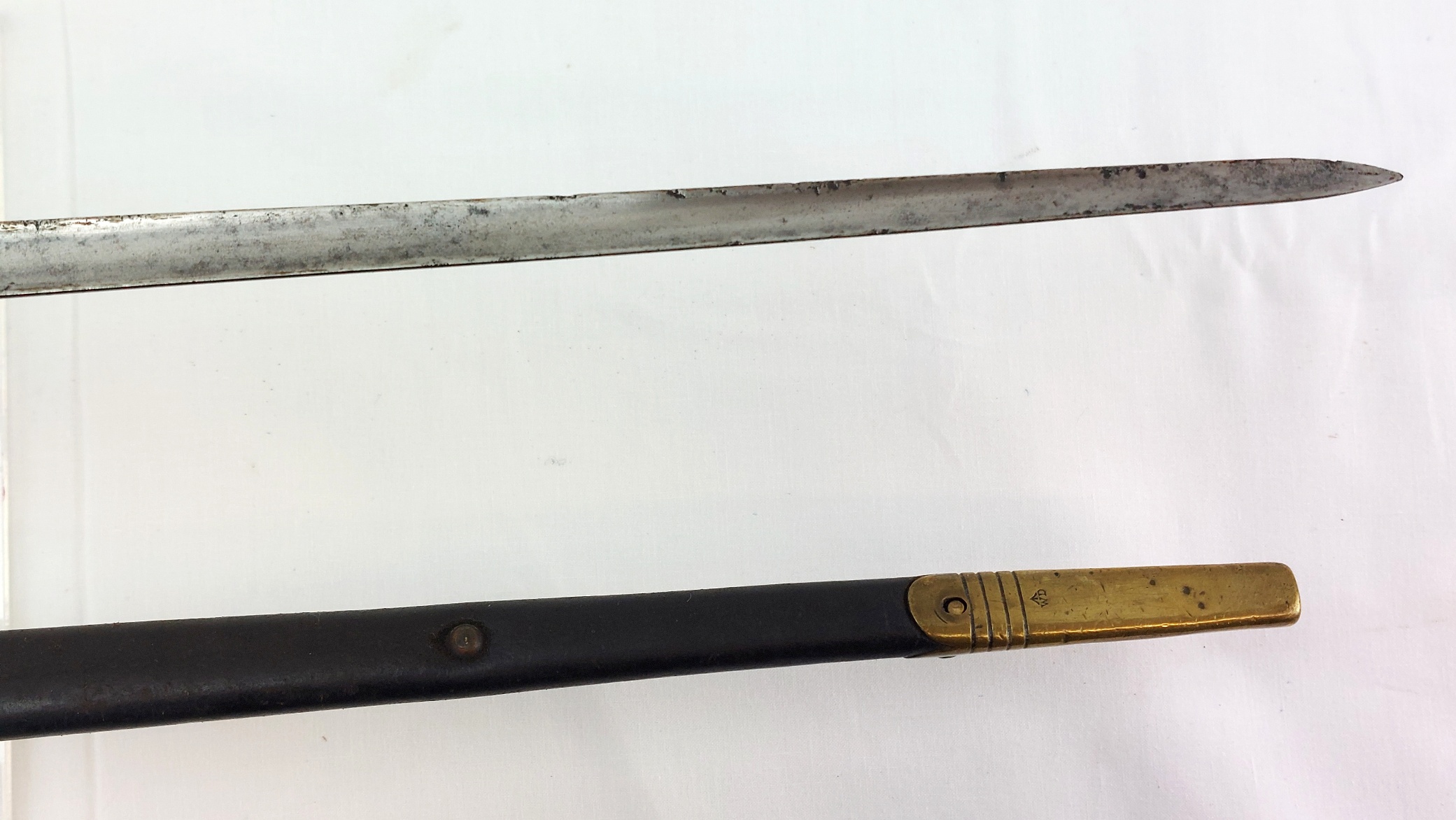
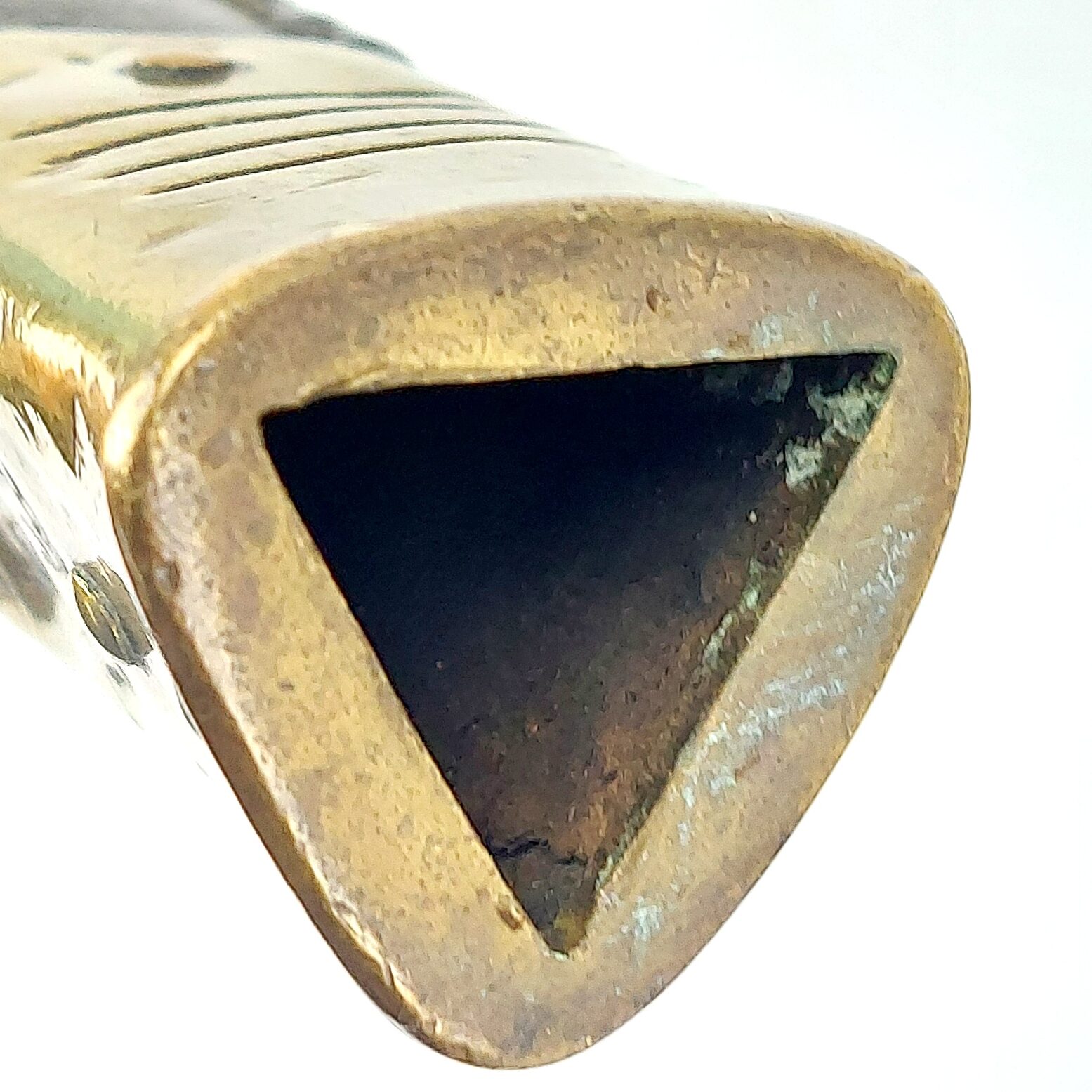
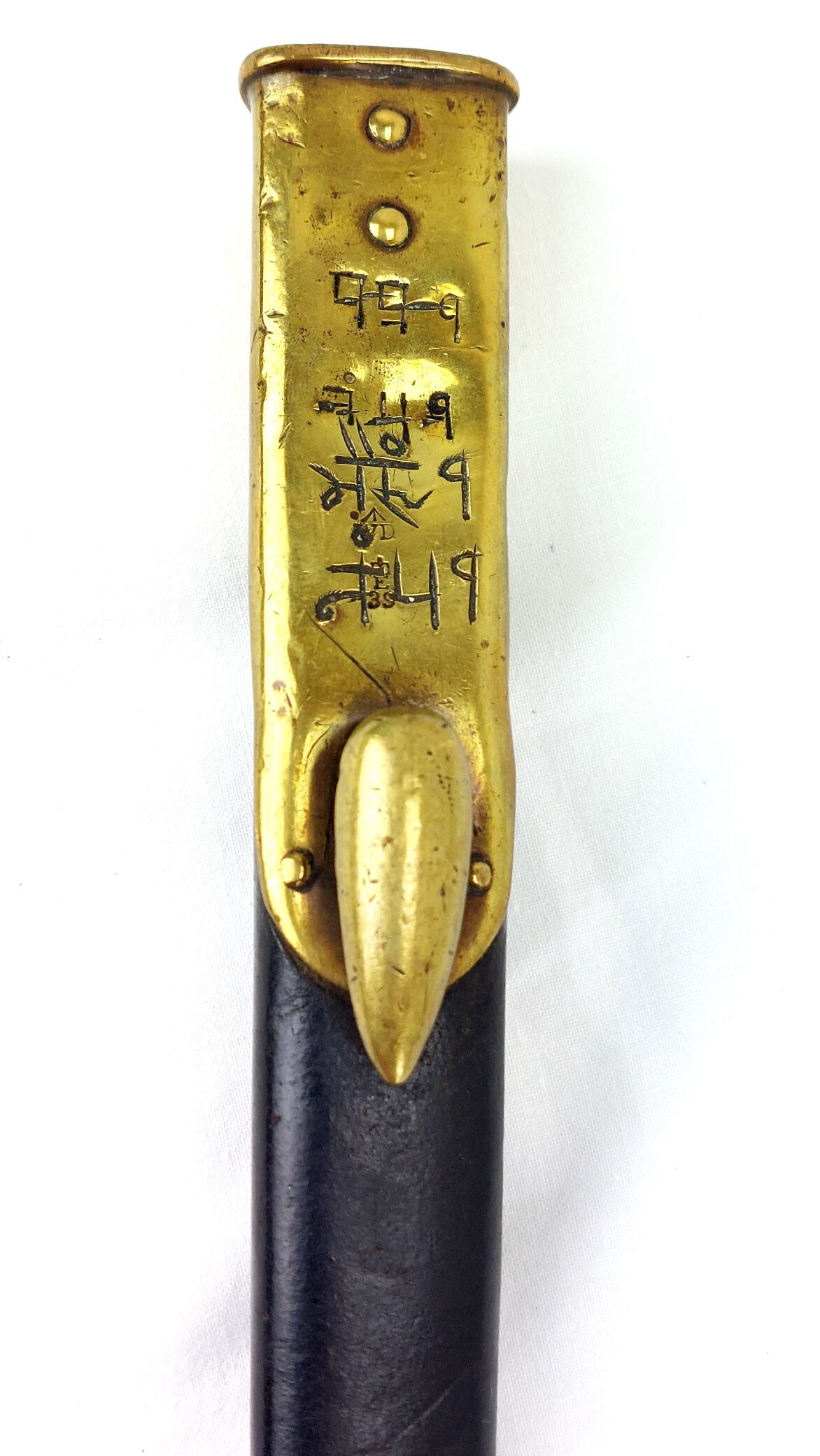
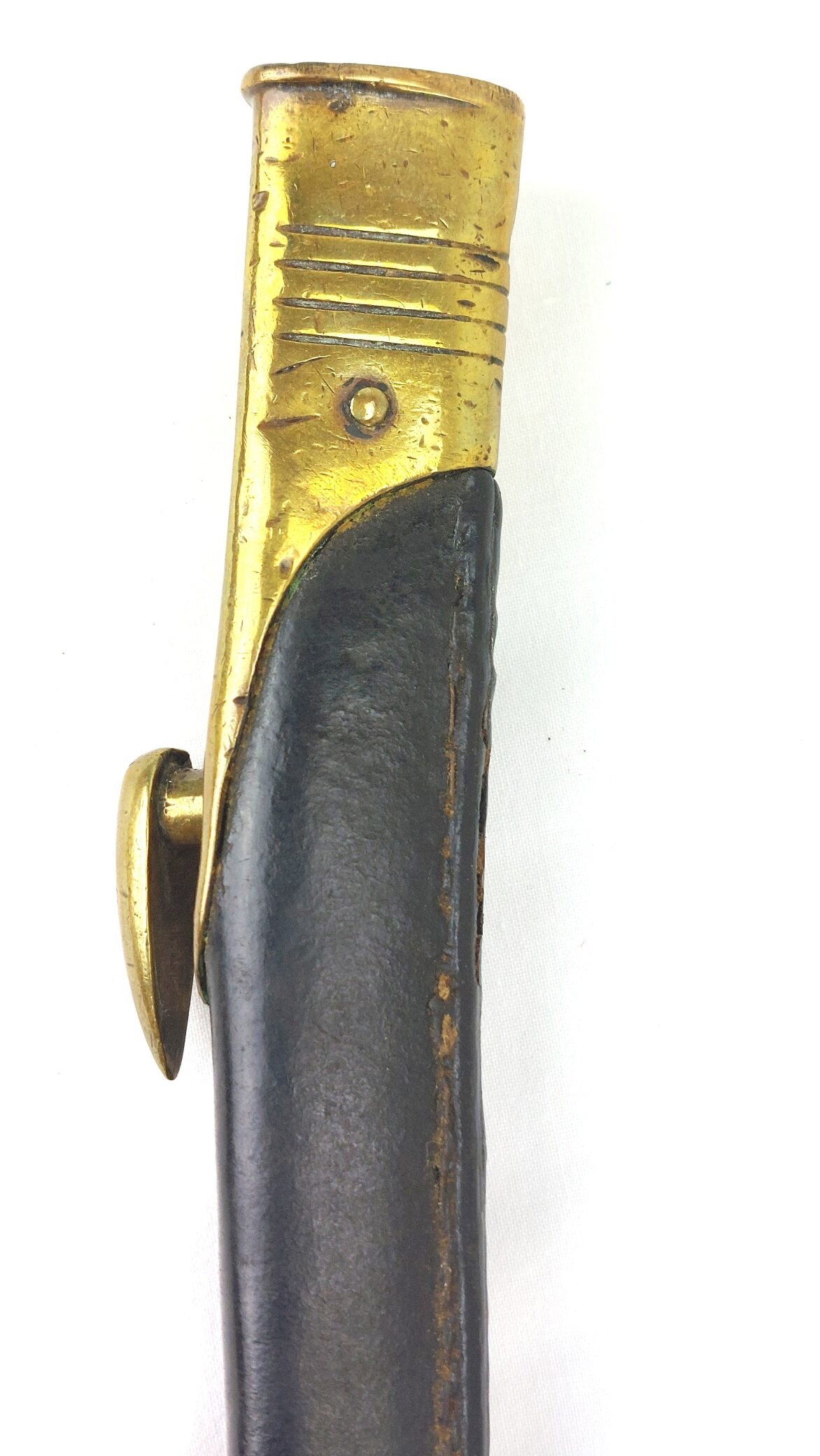
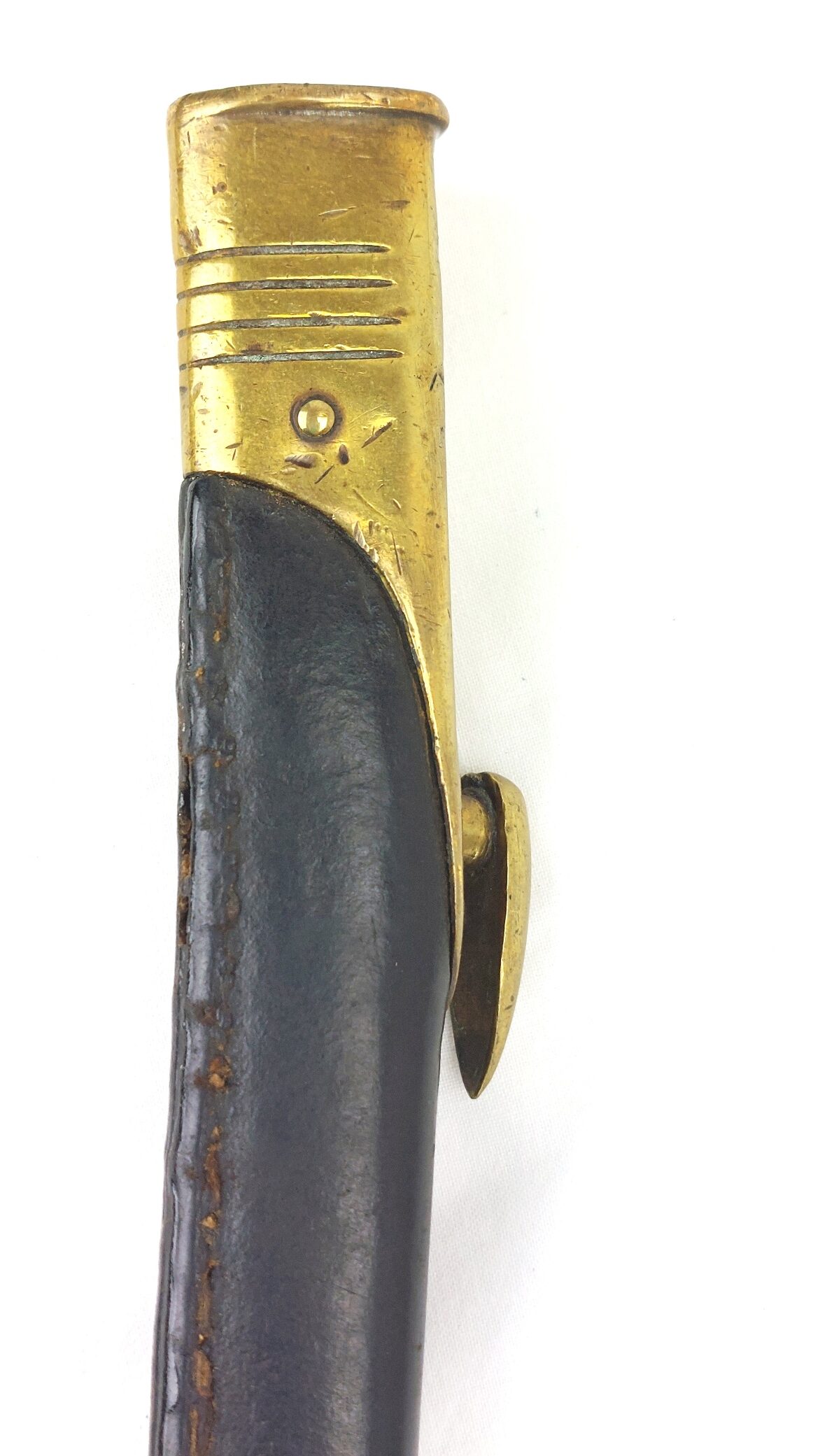
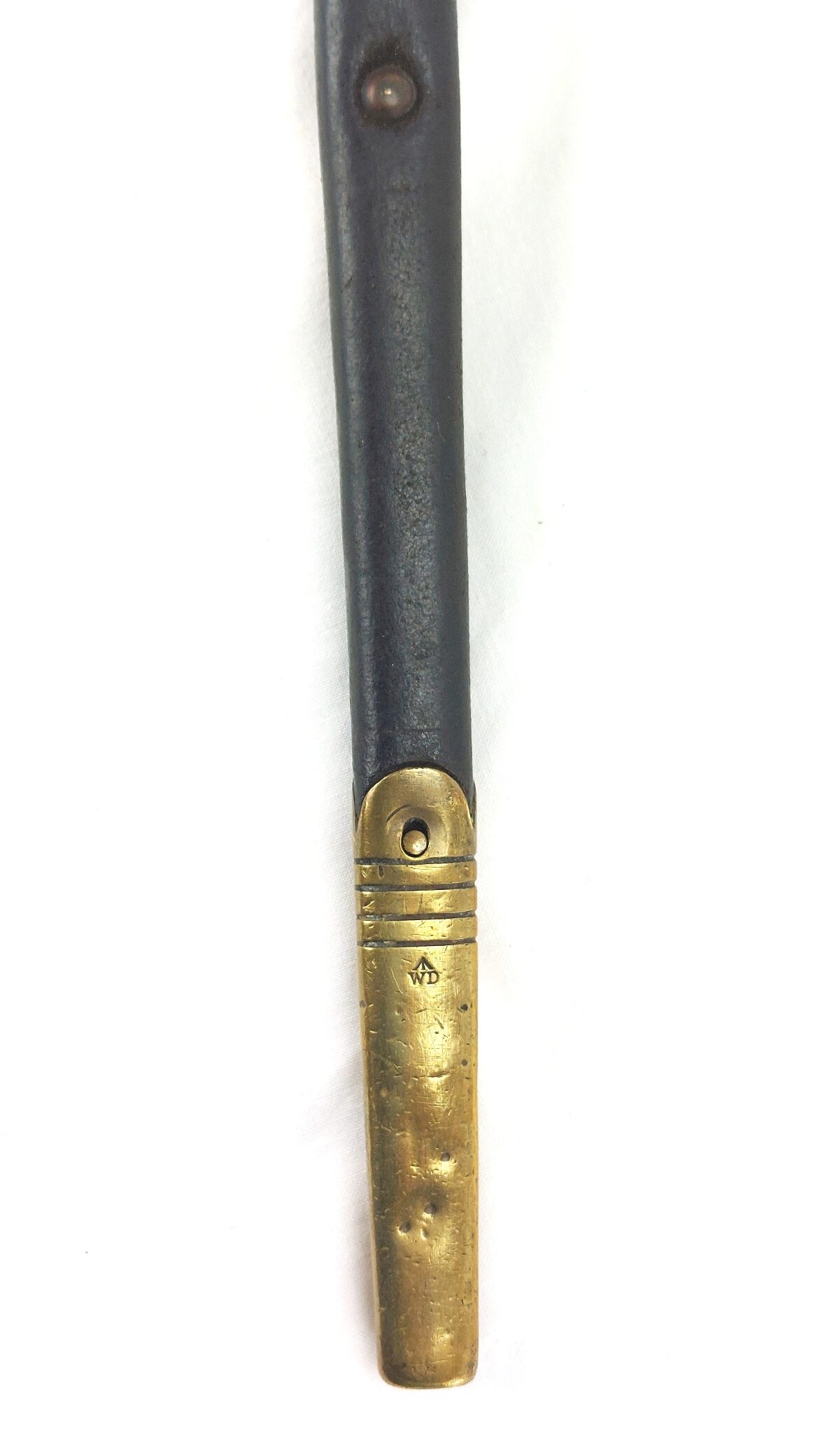
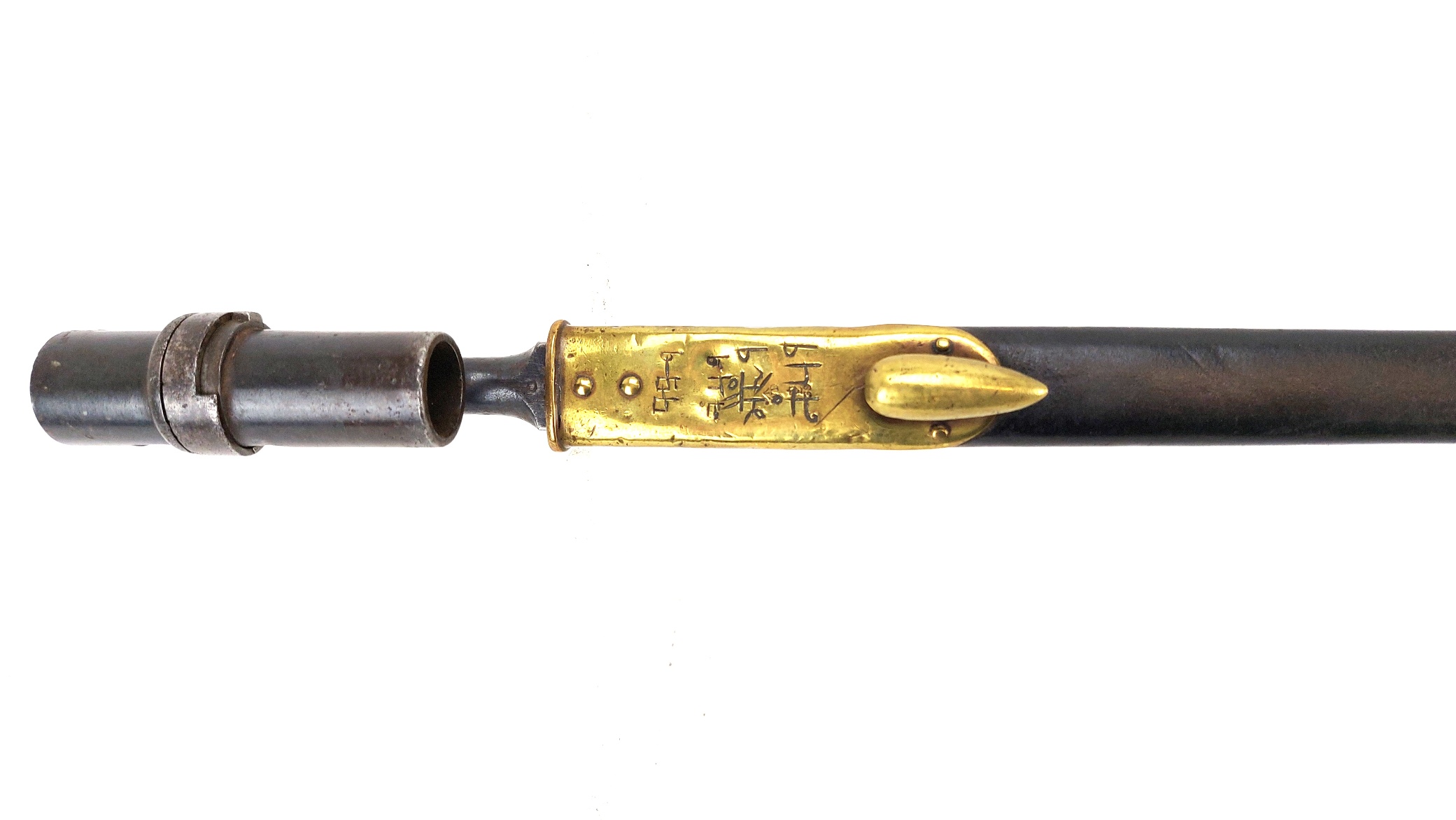
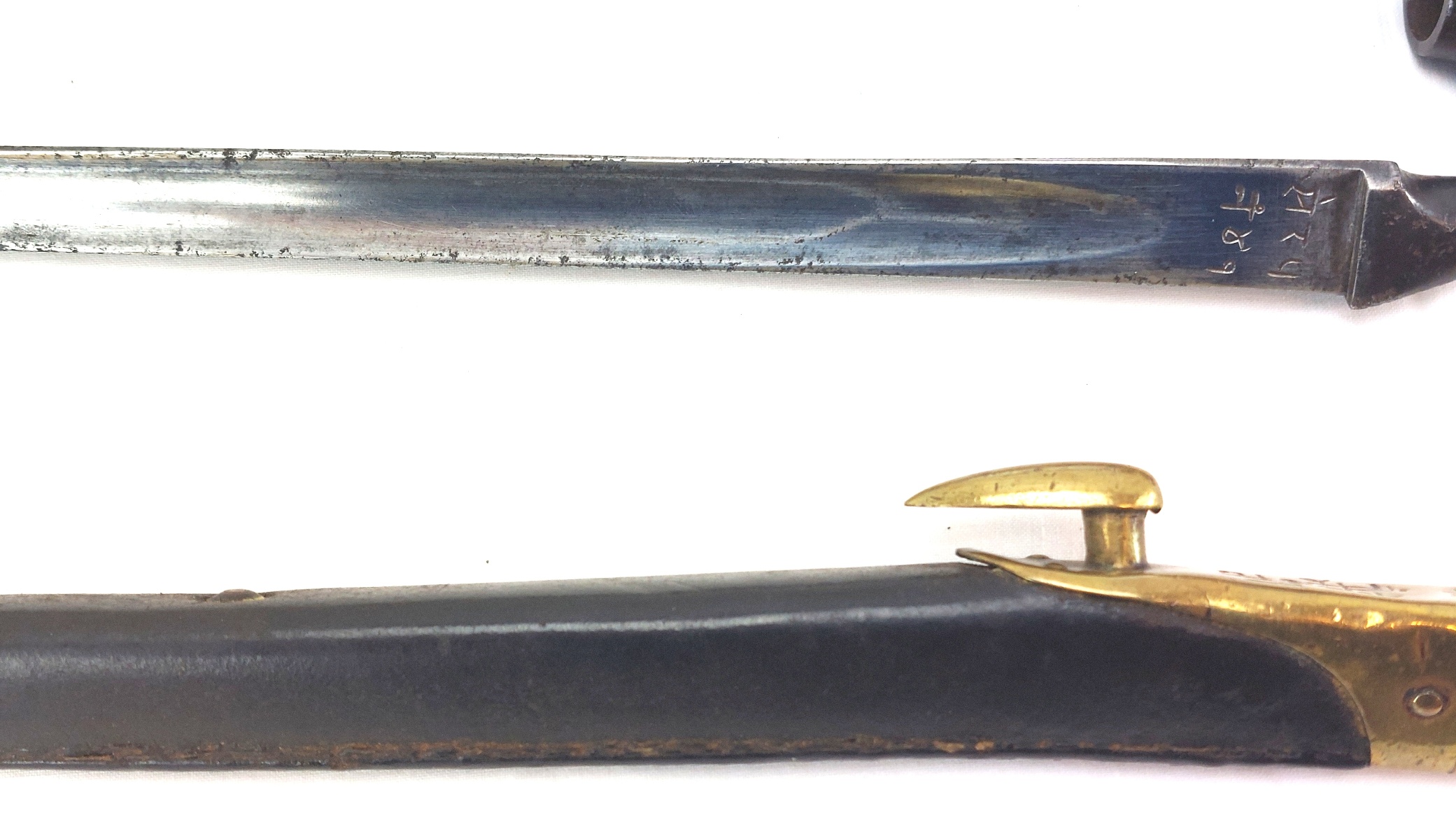
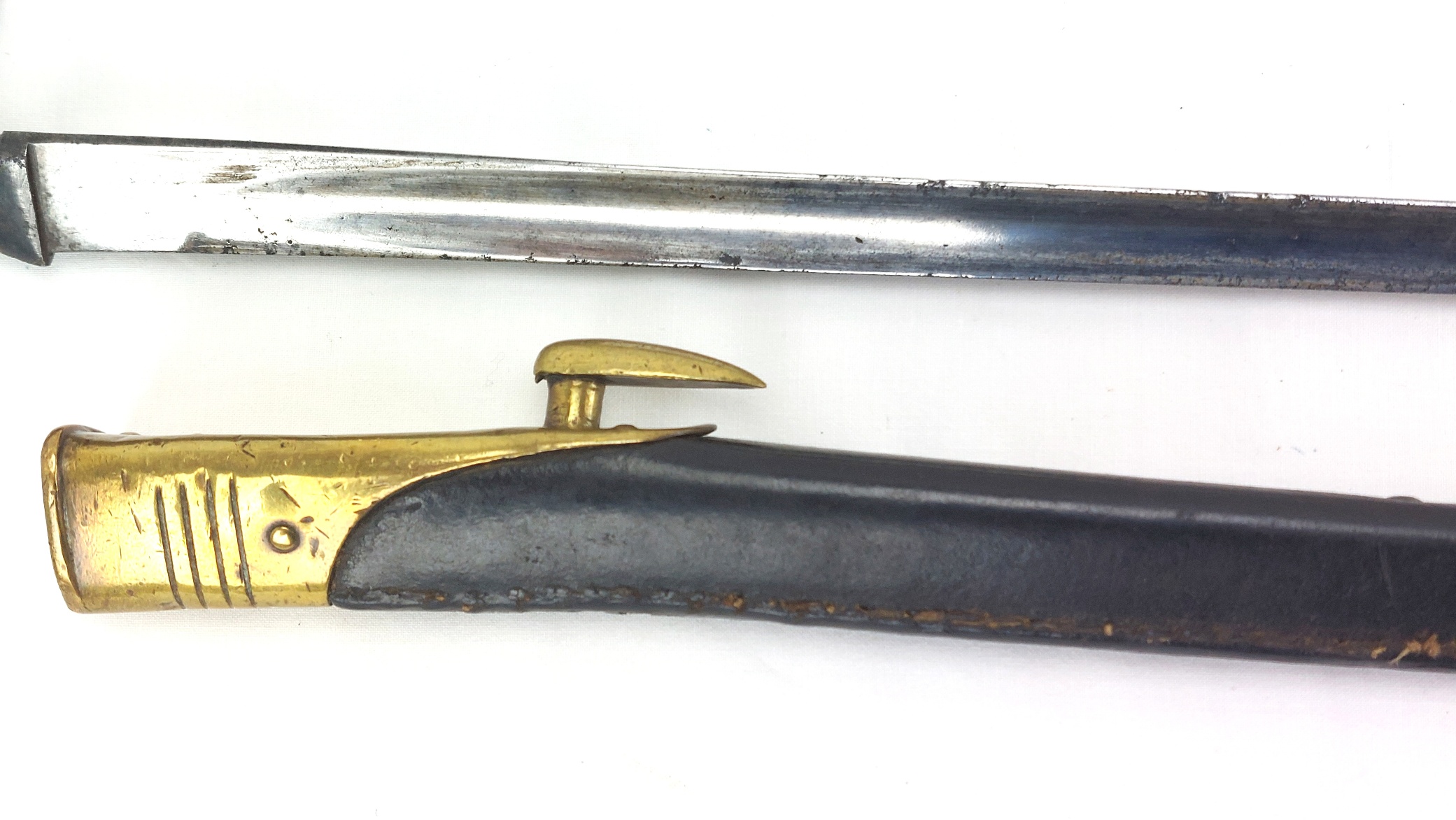
Contained in its original black leather scabbard with brass locket and chape, both mounts bearing War Department (↑WD) inspection marks and clear Devanagari inscriptions added during later Nepalese service. A particularly scarce pair, the bayonet retains its original matched scabbard, confirmed by the identical hand-engraved Devanagari rack number ‘सेनि १८९’ (Seni 189) on both blade and scabbard throat — a rare survival seldom encountered as a fully numbered set.
Approx Measurements: Blade length: 54.5 cm (21.5 in). Overall length: 63.9 cm (25.2 in). Scabbard: 64 cm overall (25.2 in).
Markings:
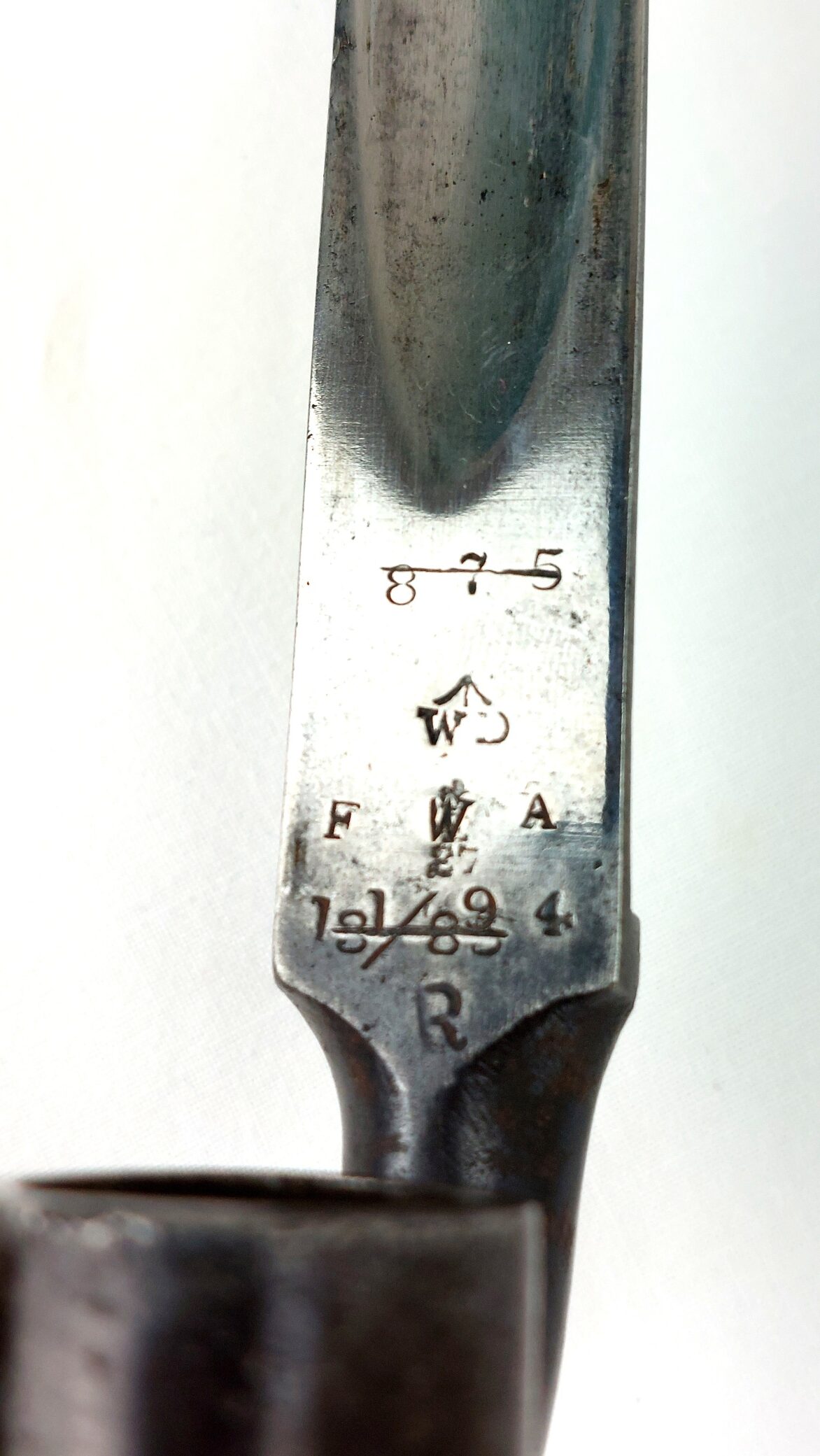
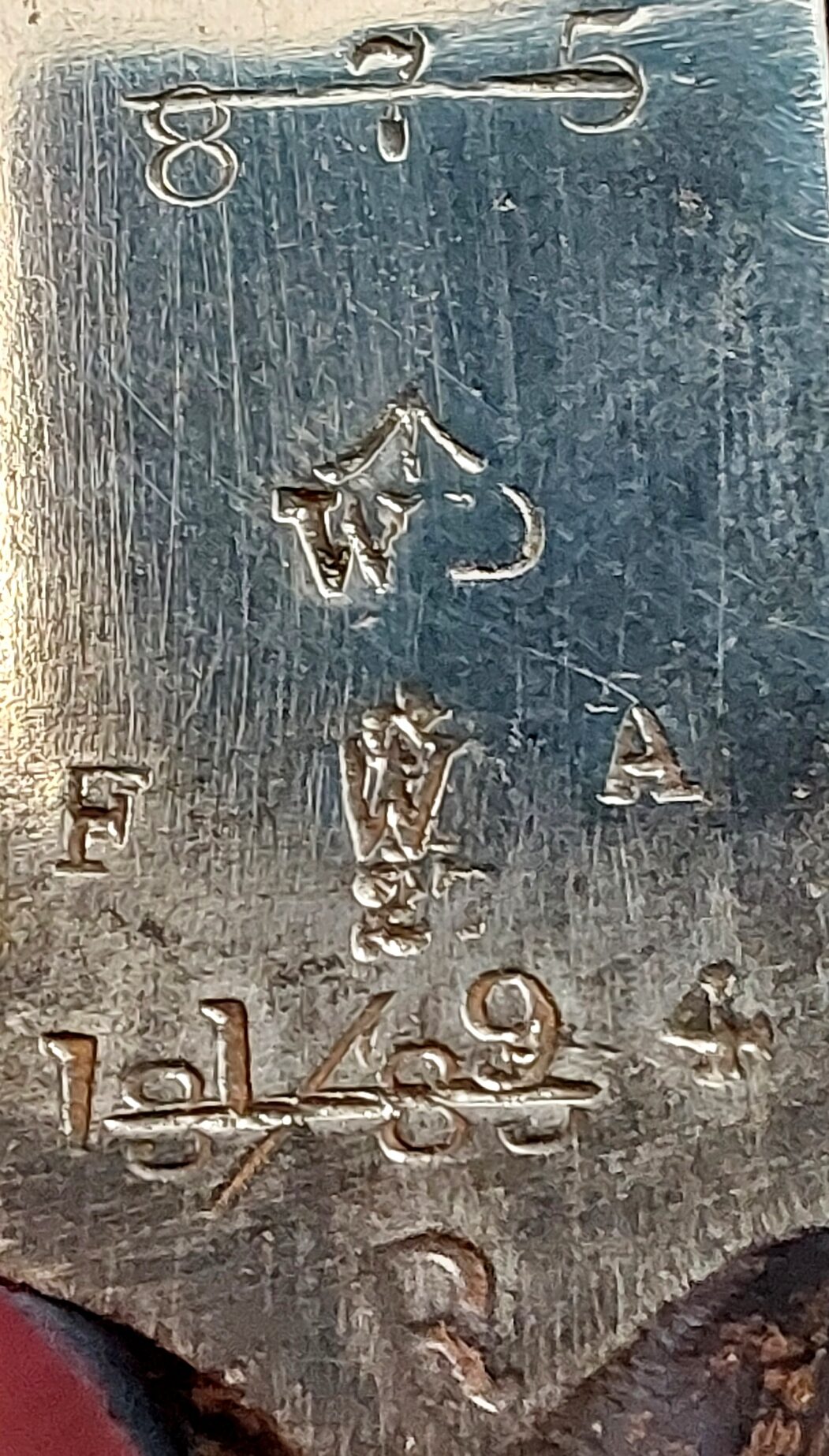
On blade (ricasso/shoulder):
875 - original rack / serial number crossed out
↑ WD - broad arrow over War Department
Crown / 27 - Enfield government inspector’s mark
F W A (over stamping crown) – Fort William Arsenal, Calcutta
8/85 (crossed out), 11/94 (over stamped)
- Date of Issue and Reissue
R - arsenal “repair/refurbishment” indicator
On blade (engraved by hand):
“सेनि १८९” — Seni 189. Transliteration: Seni 189 Translation: “Army No.189”. Locally applied Nepalese rack number, the word सेनि (Seni, from Sena, meaning “Army”) being standard in Nepali armoury inscriptions.
On brass scabbard throat:
“९९९१ / सेनि १८९ ↑WD”. Transliteration: 9991 / Seni 189 Translation: “Rack 9991 / Army No.189”. Repeating the same rack number १८९ (189) confirms this as the original paired scabbard. The additional ९९९१ (9991) likely represents a larger armoury rack or storage number, again engraved in Nepali Devanagari script. This is engraved over the original British War Department ownership stamp.
On brass chape:
↑ WD – British War Department ownership stamp.
Historical Note:
The Pattern 1853 socket bayonet, standard issue with the Enfield rifle-musket, saw widespread service throughout the mid- and late-19th century. This example charts a full colonial service life: manufactured and accepted in Britain (1885), refurbished and re-issued by Fort William Arsenal, Calcutta (1894) for Indian use, and subsequently transferred to Nepal under the long-standing Anglo–Nepalese arms supply agreements. Once in Nepalese stores, local armourers engraved issue numbers in Devanagari script, pairing blade and scabbard for inventory control. The inscriptions “सेनि १८९” (Seni 189) on both components confirm Nepalese army issue — typical of arms later recovered from the Lagan Silekhana royal arsenal in Kathmandu.
A particularly well-documented example of British manufacture, Indian arsenal reissue, and Nepalese service, retaining marks from each stage of its career. Accepted into British service in 1885 and re-issued from Fort William Arsenal in 1894, this bayonet would have armed troops stationed during the tense post-Afghan-War frontier years — a period of rising Indian nationalism and expanding British-Nepalese military cooperation — and was likely issued for frontier or Nepalese service in the years immediately preceding the Chitral and Tirah expeditions.
*Condition*
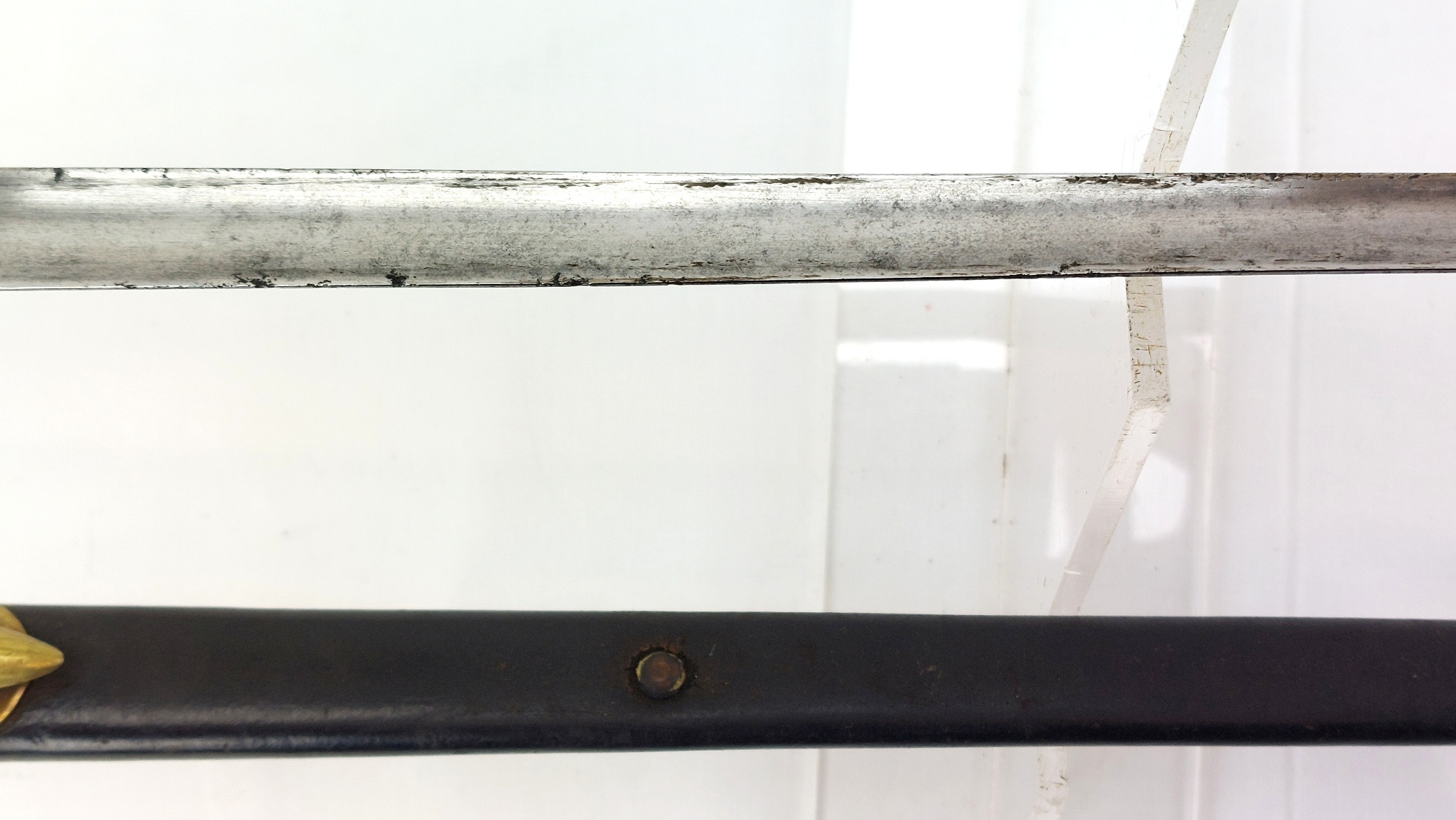
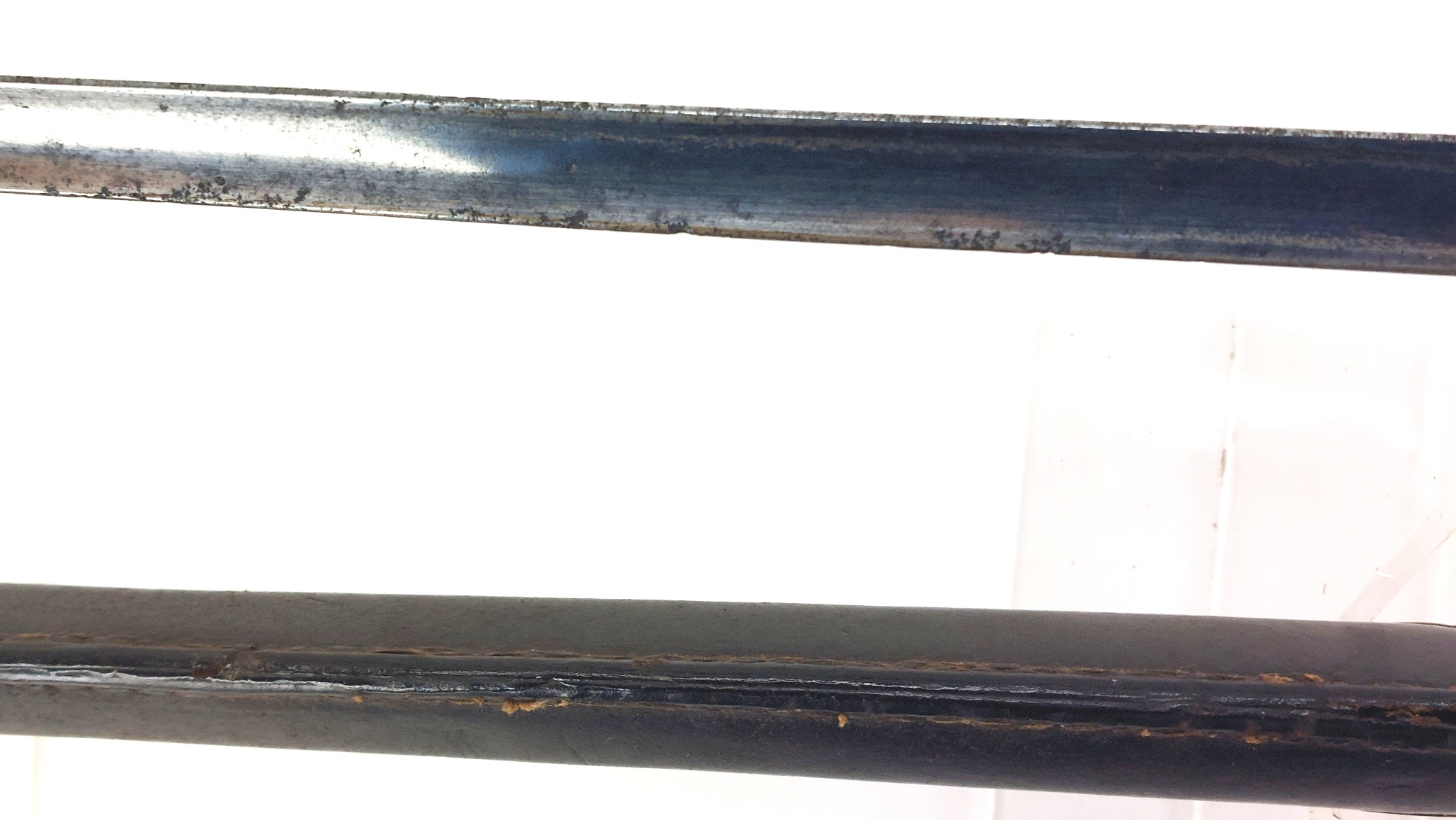
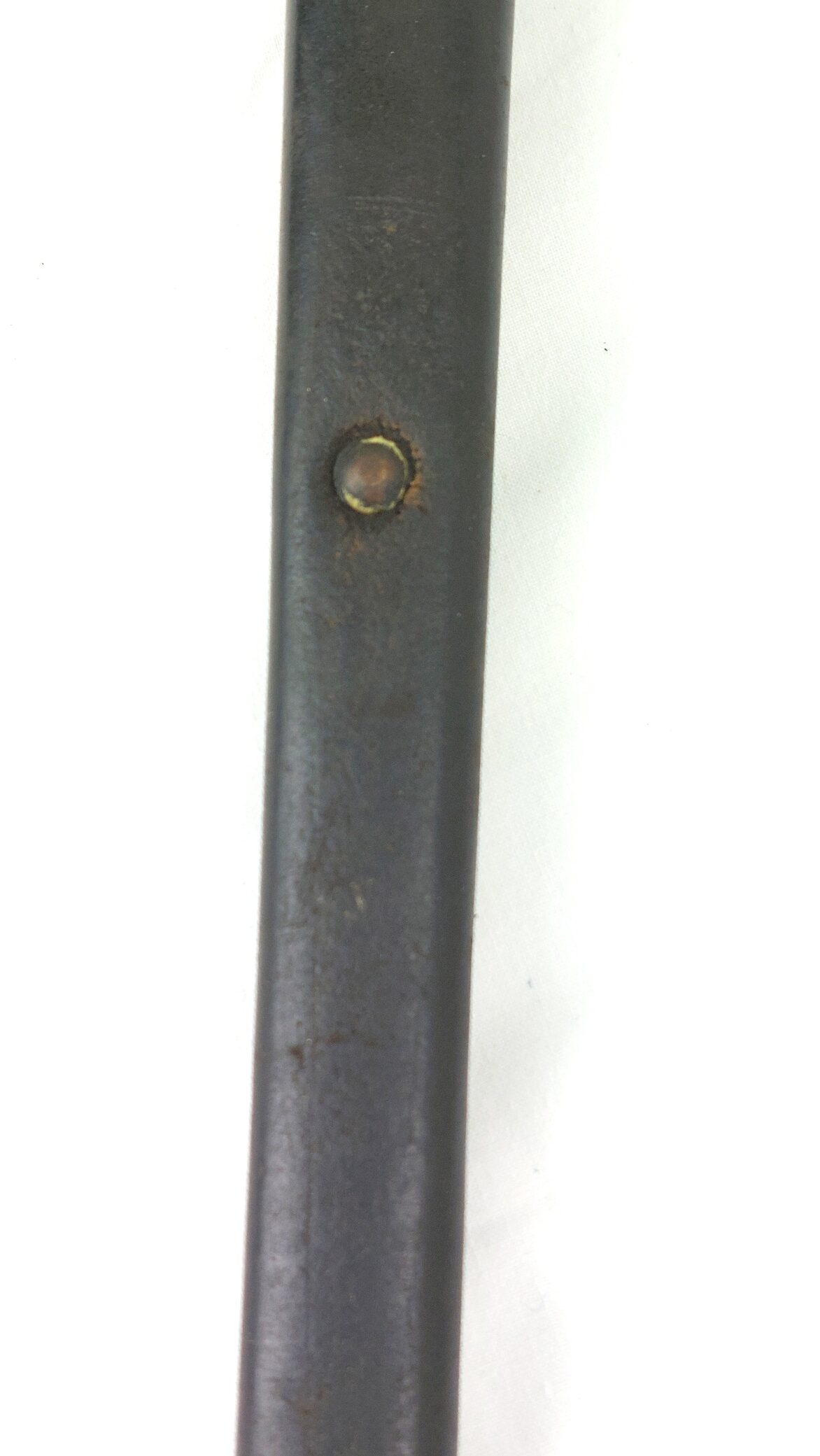
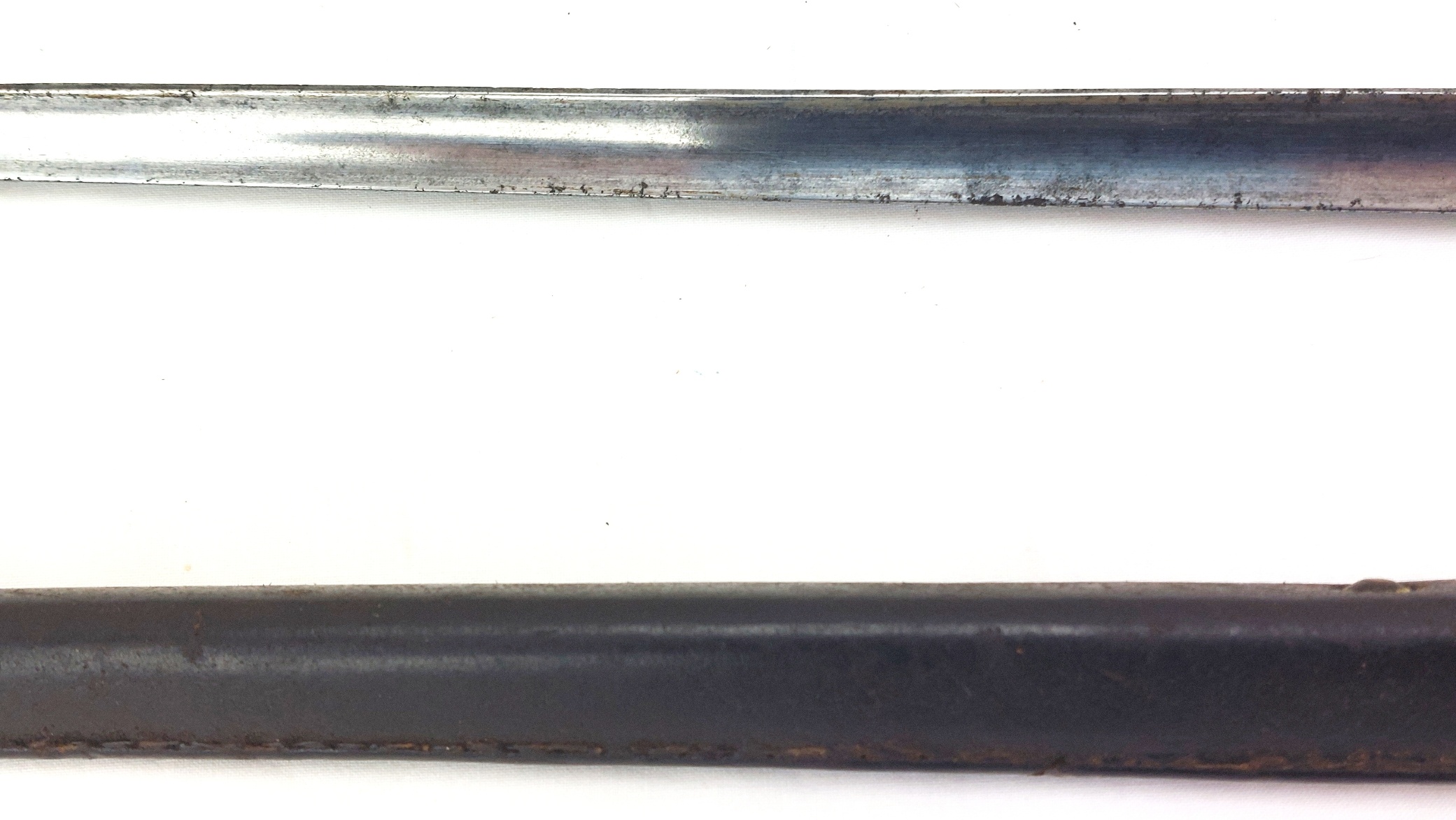
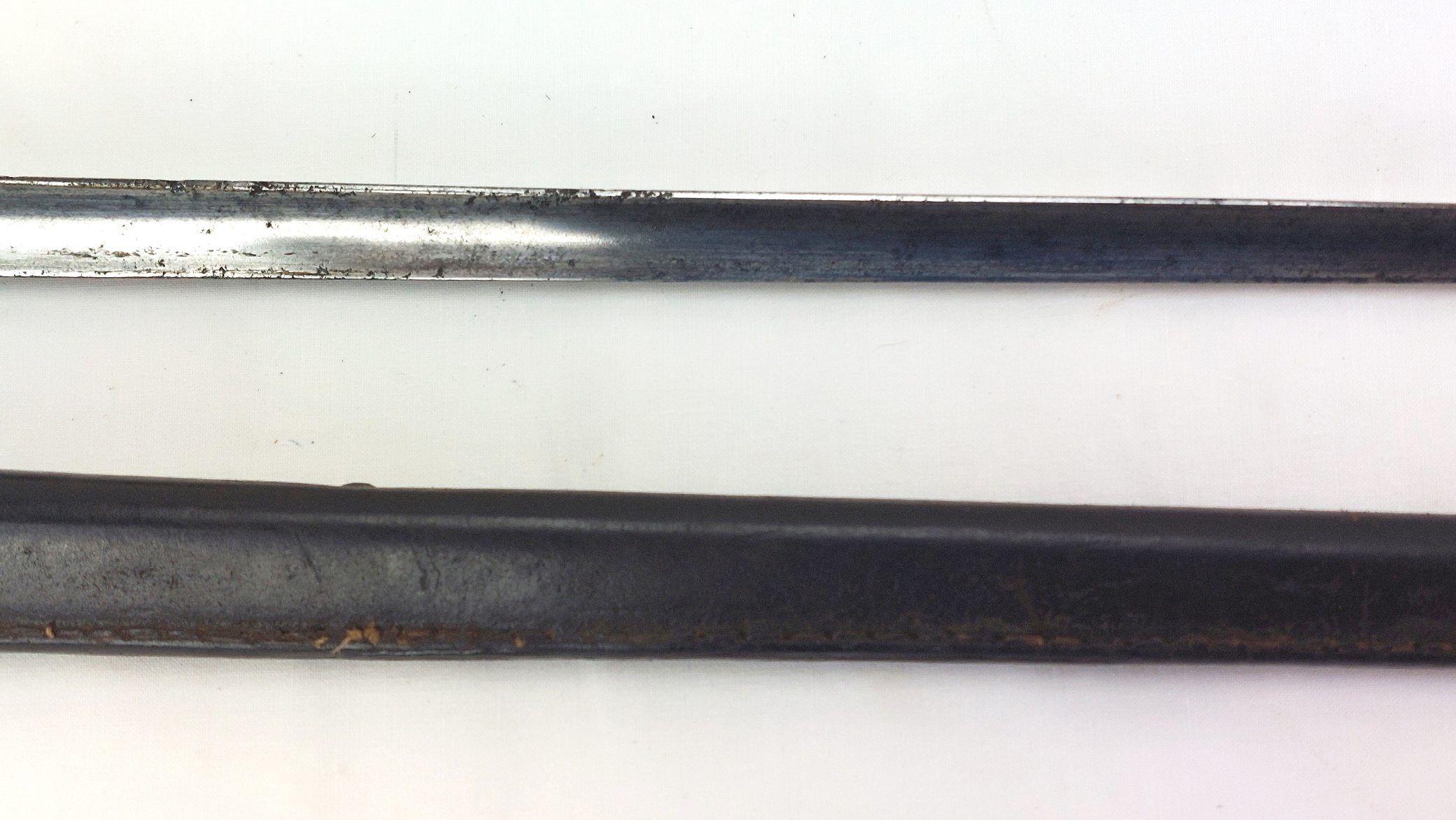
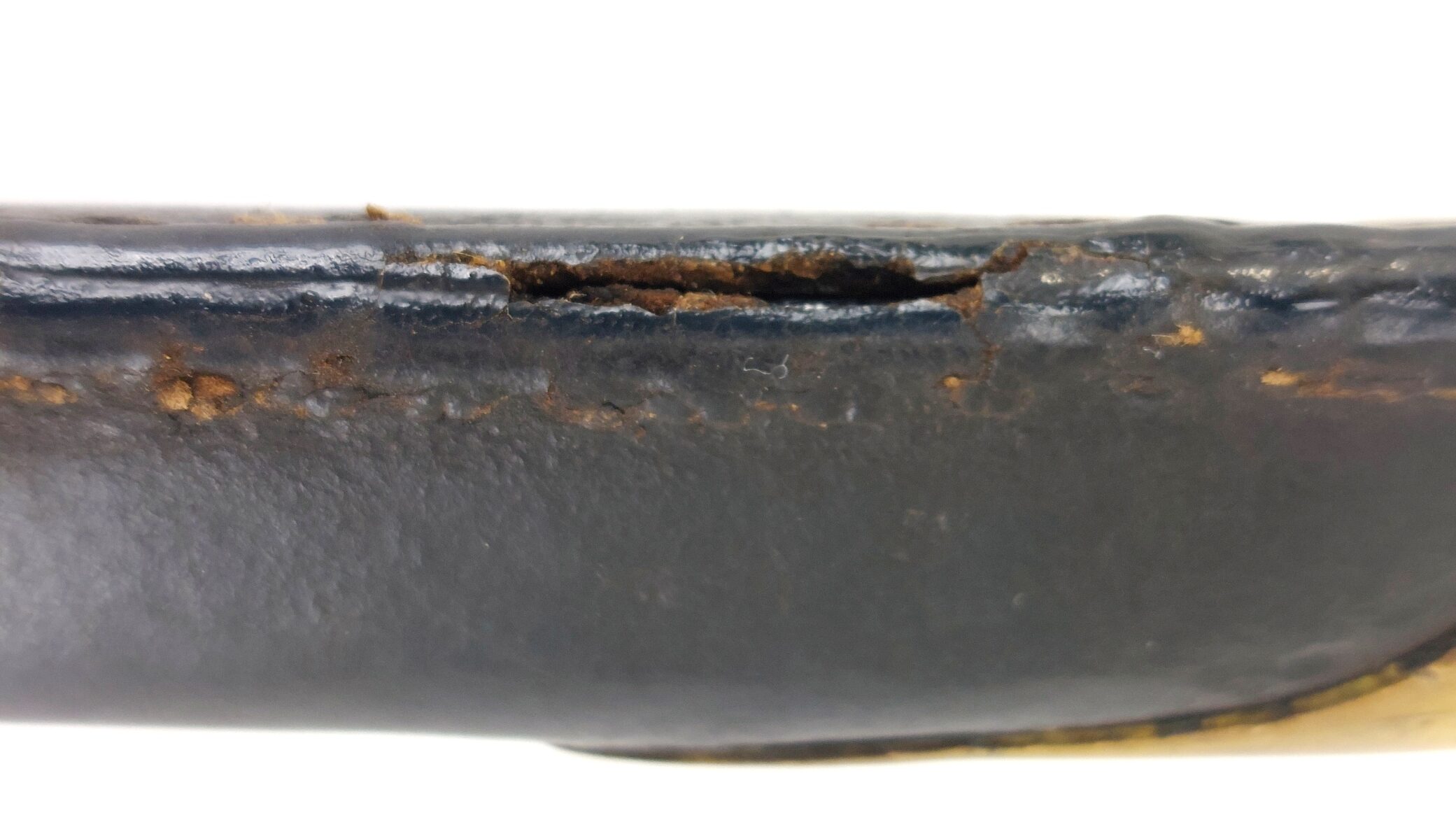
Blade generally bright with scattered patina and minor edge wear; point intact. Socket and locking ring with smooth brown toning, ring screw fully functional. Leather scabbard structurally sound with light surface scuffs and some minor stitching gap to the back; brass mounts with small dents and clear hand-engraved inscriptions. All markings, both British and Devanagari, are crisp and legible. Please see photographs as part of the condition report.
£1,500.00Original price was: £1,500.00.£1,100.00Current price is: £1,100.00.
Important!
*In order to complete the online purchase we will require a picture/scan of a photo ID (Driving Licence, Passport or an official document with a recent picture). If you don't posses any such document please call to buy. If we consider that the proof of ID is incorect or insuficient, we reserve the right to cancel the transaction.
*We also reserve the right to cancel the transaction with a full refund if there is any suspicion that the provided item will be used in any way contrary to the laws and legislation of UK.