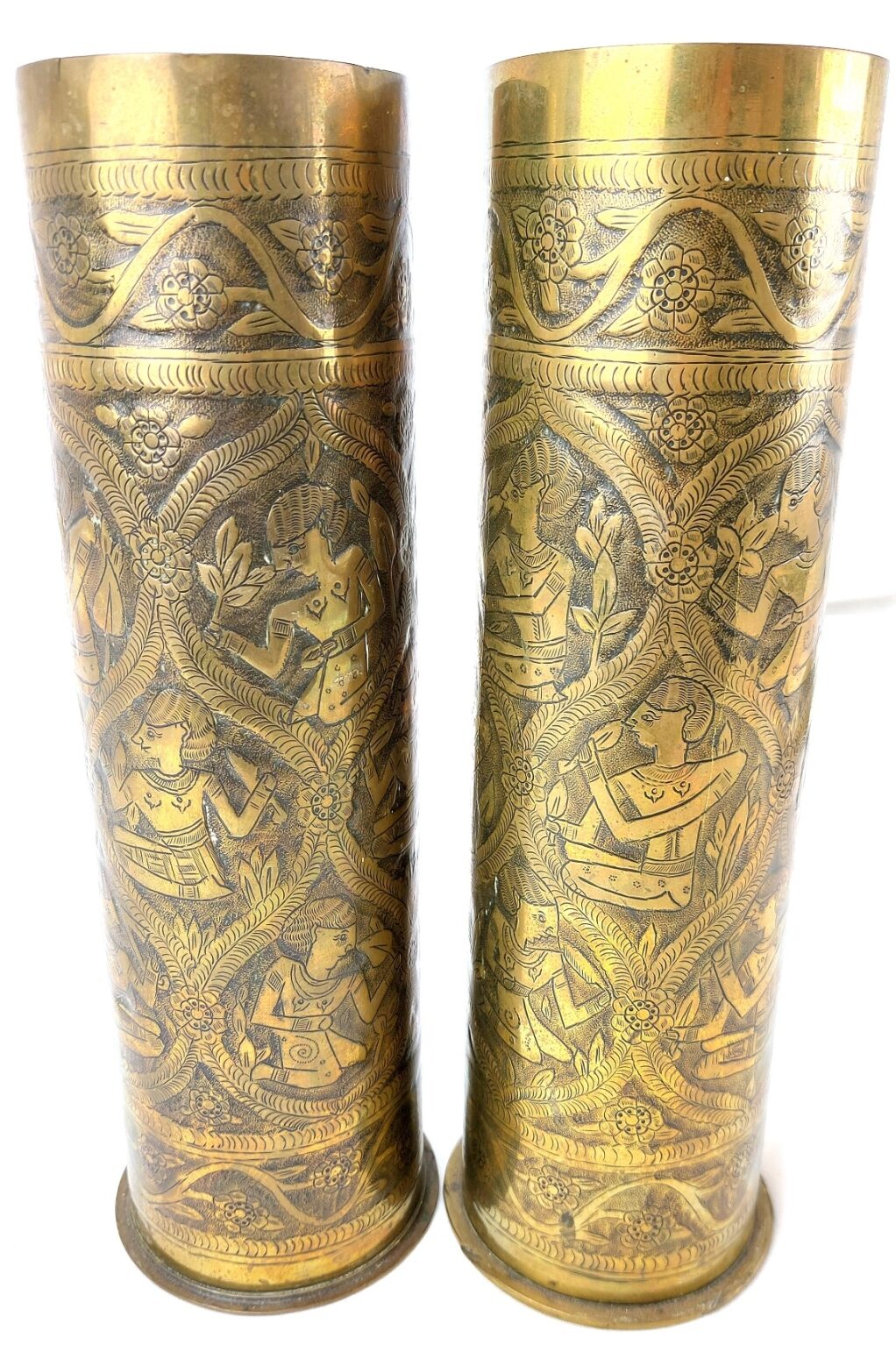
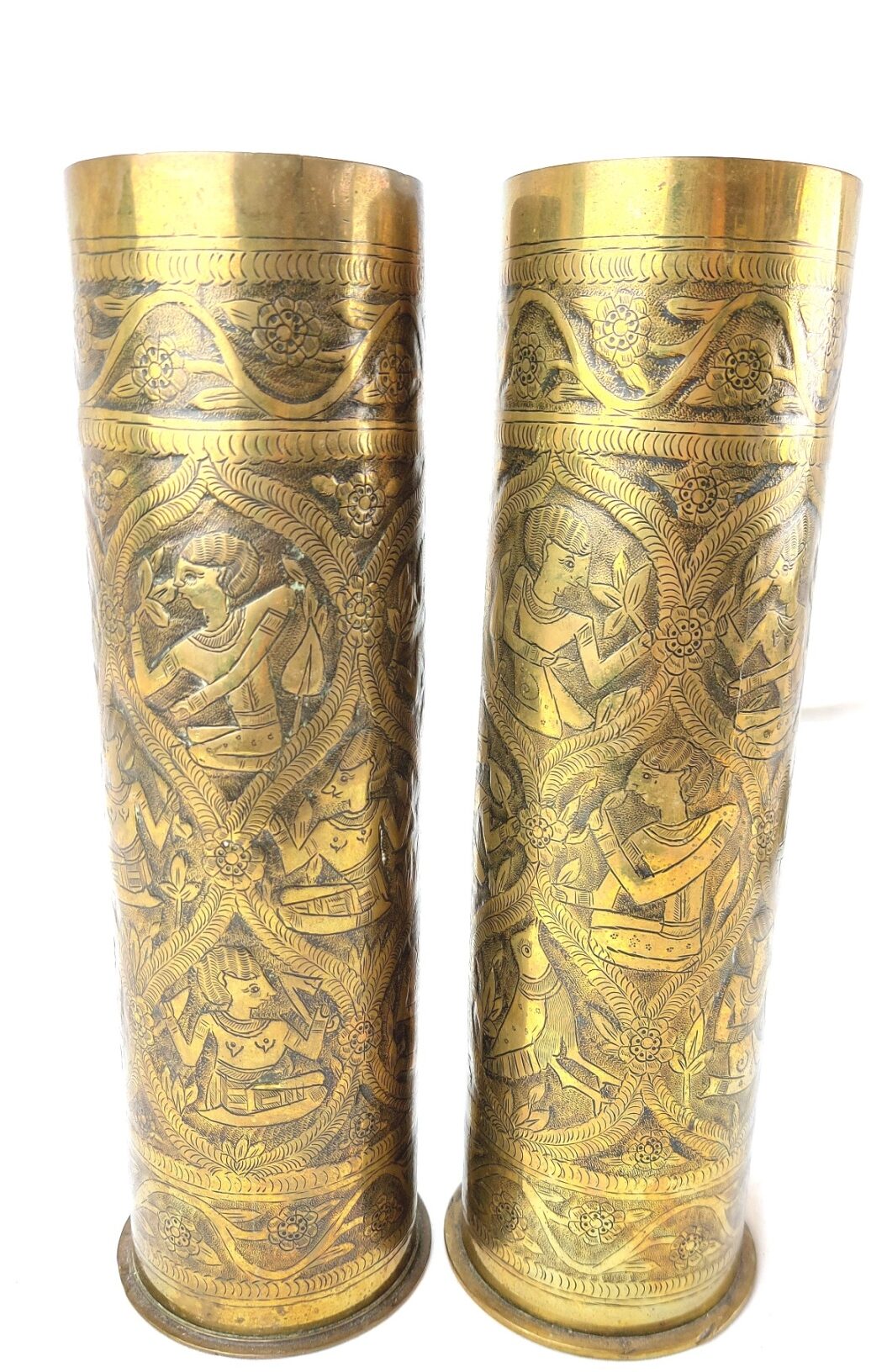
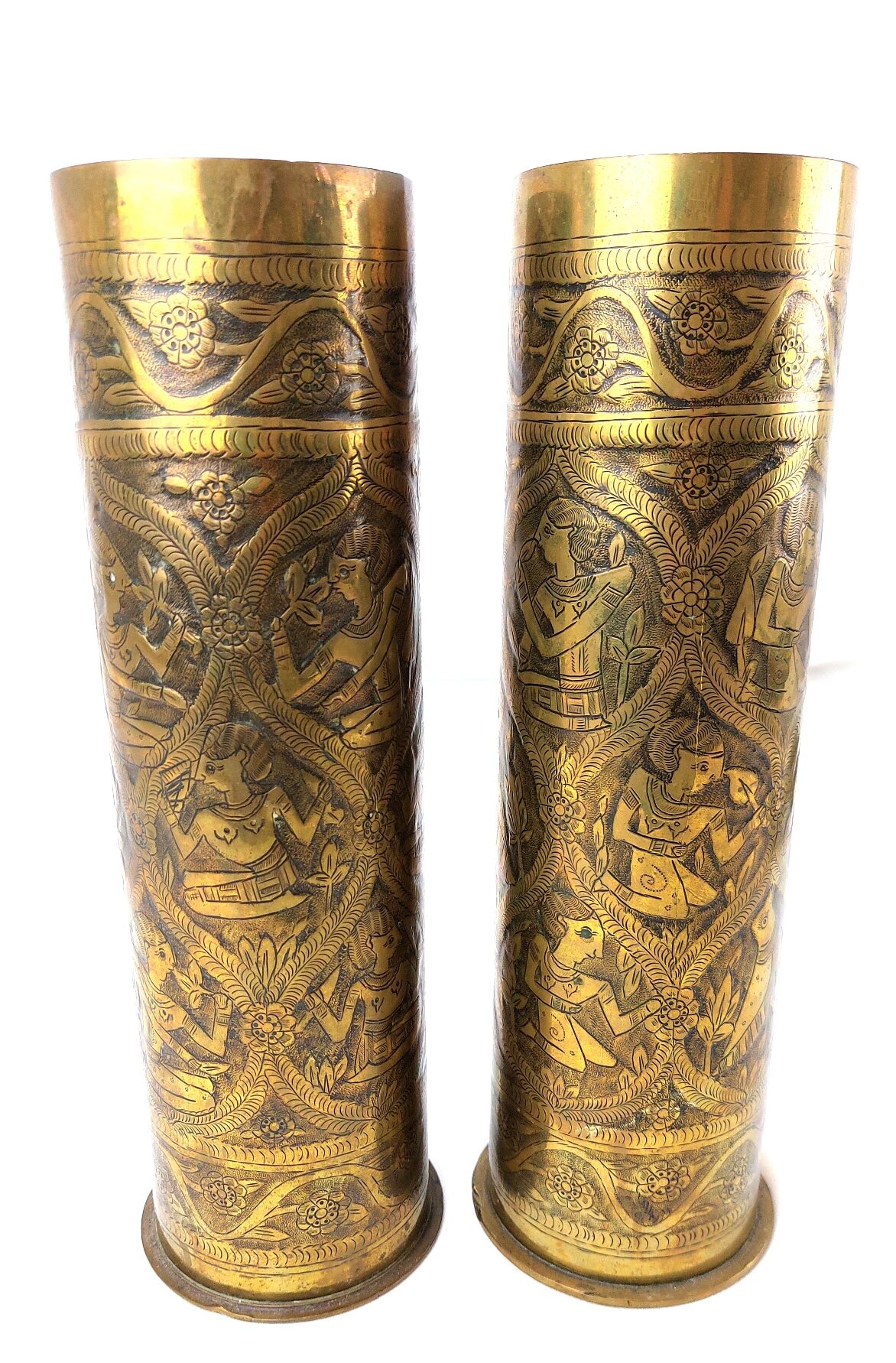
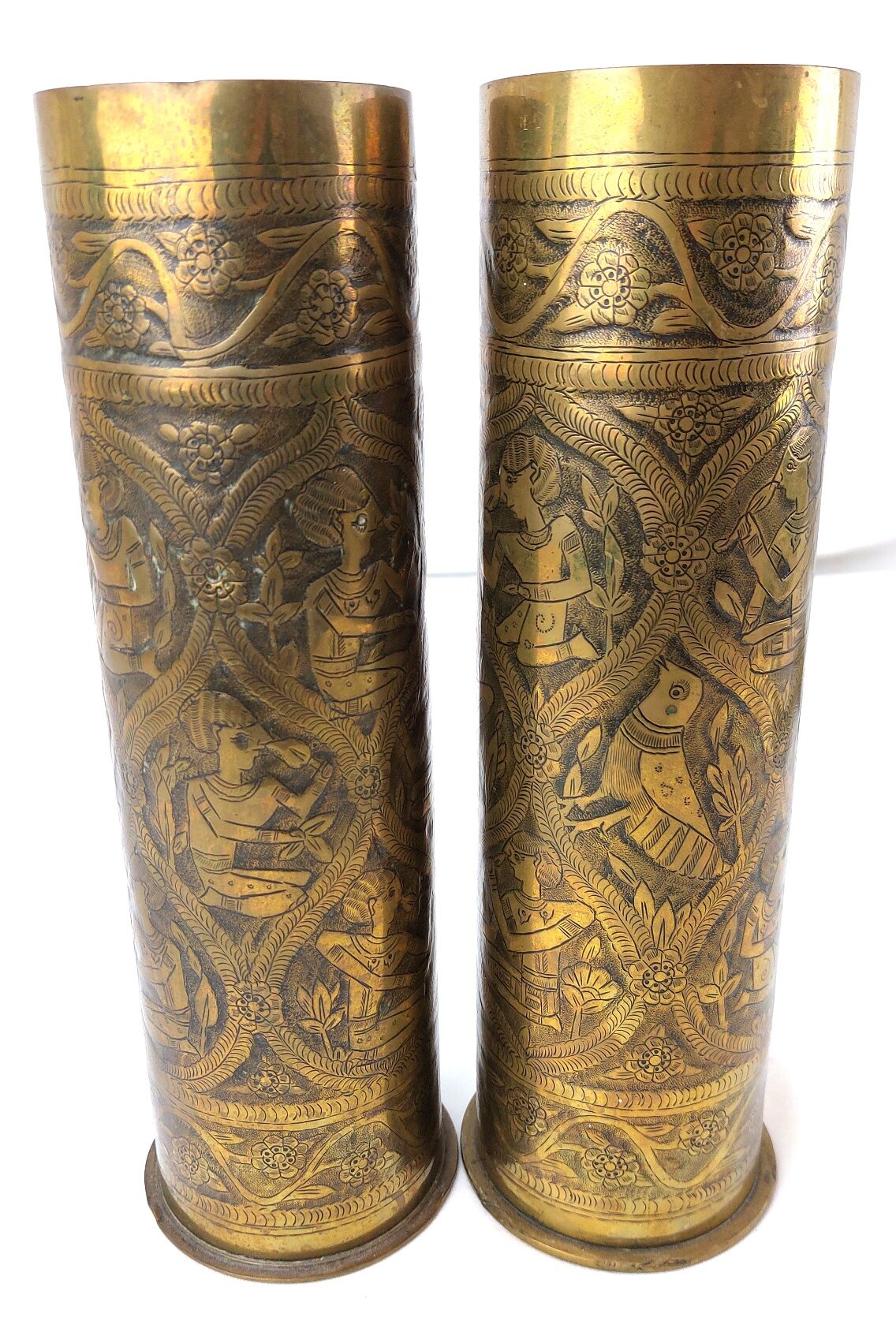
*Imperial German, WW1, 7.7cm Pair of Trench Art Shell Case Vases, Asian Engraving — Dated 1917, Made Polte Magdeburg, Fried. Krupp Primer*
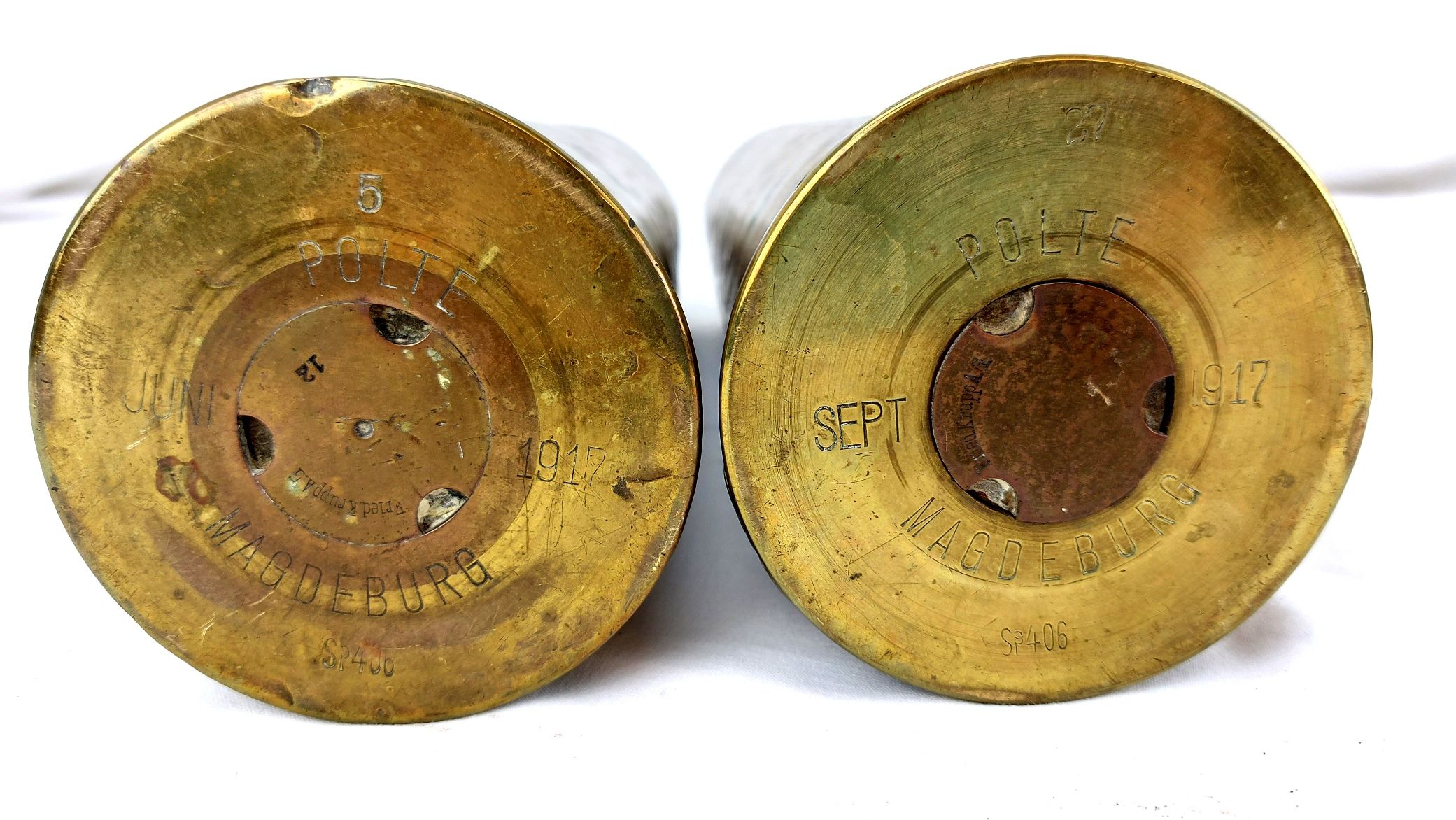
A particularly well-matched pair of German First World War artillery shell cases, with both cases bearing nearly identical markings, dates, and primers, each repurposed into intricate trench art. These tall, matching brass cases stand approximately 27.8 cm high with a base diameter of 8.9 cm and throat diameter of 7.7cm, and are both clearly dated from 1917 — one marked "JUNI", the other "SEPT".
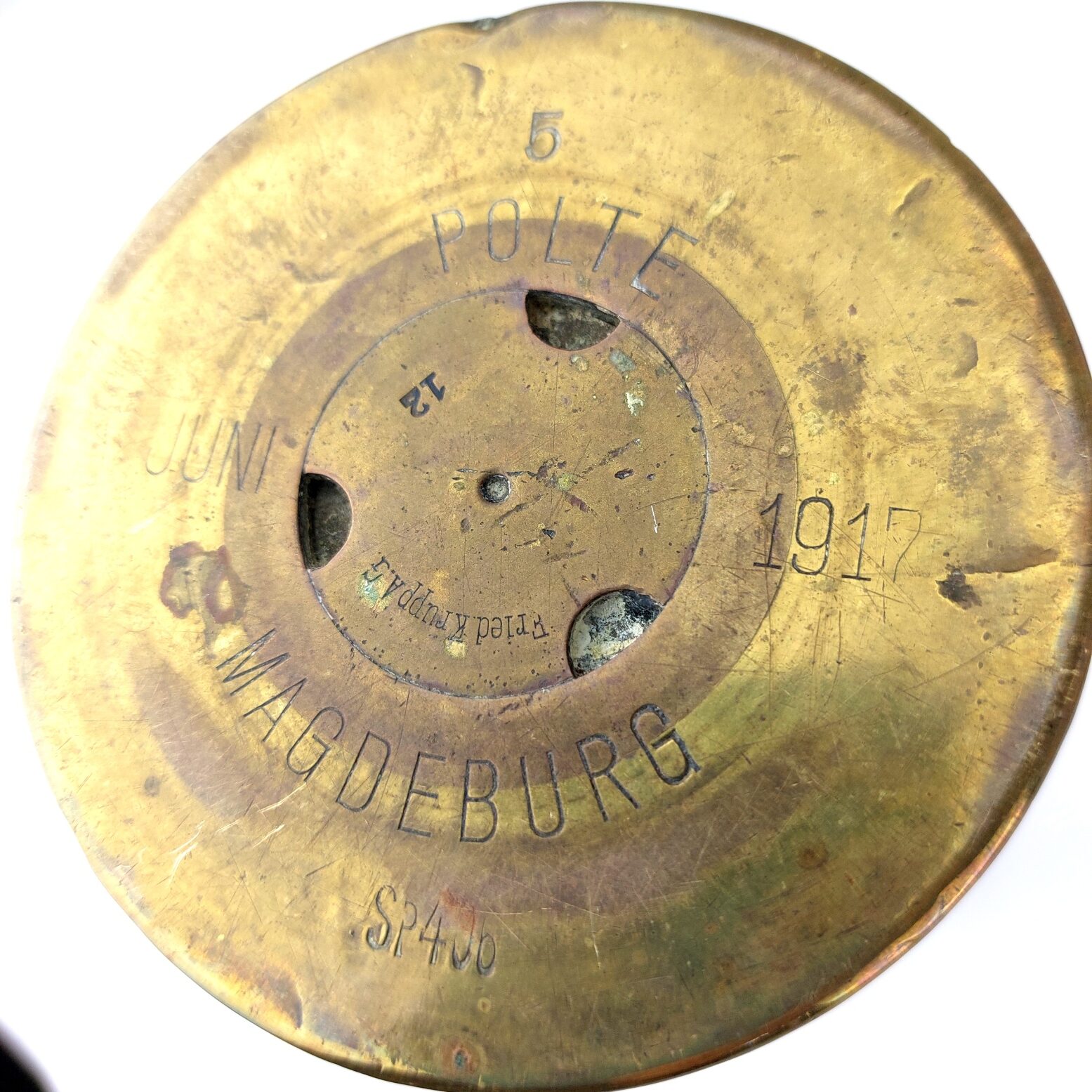
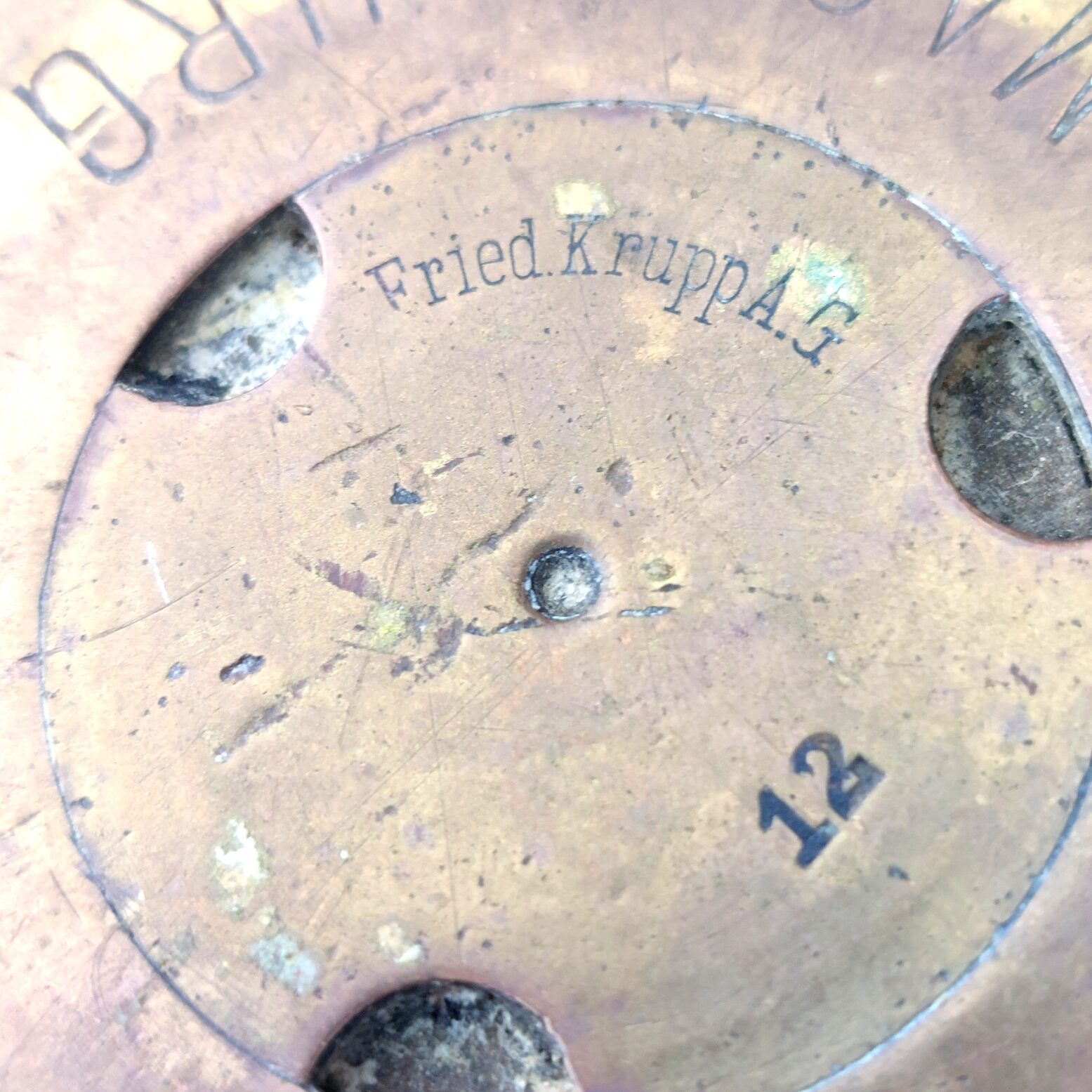
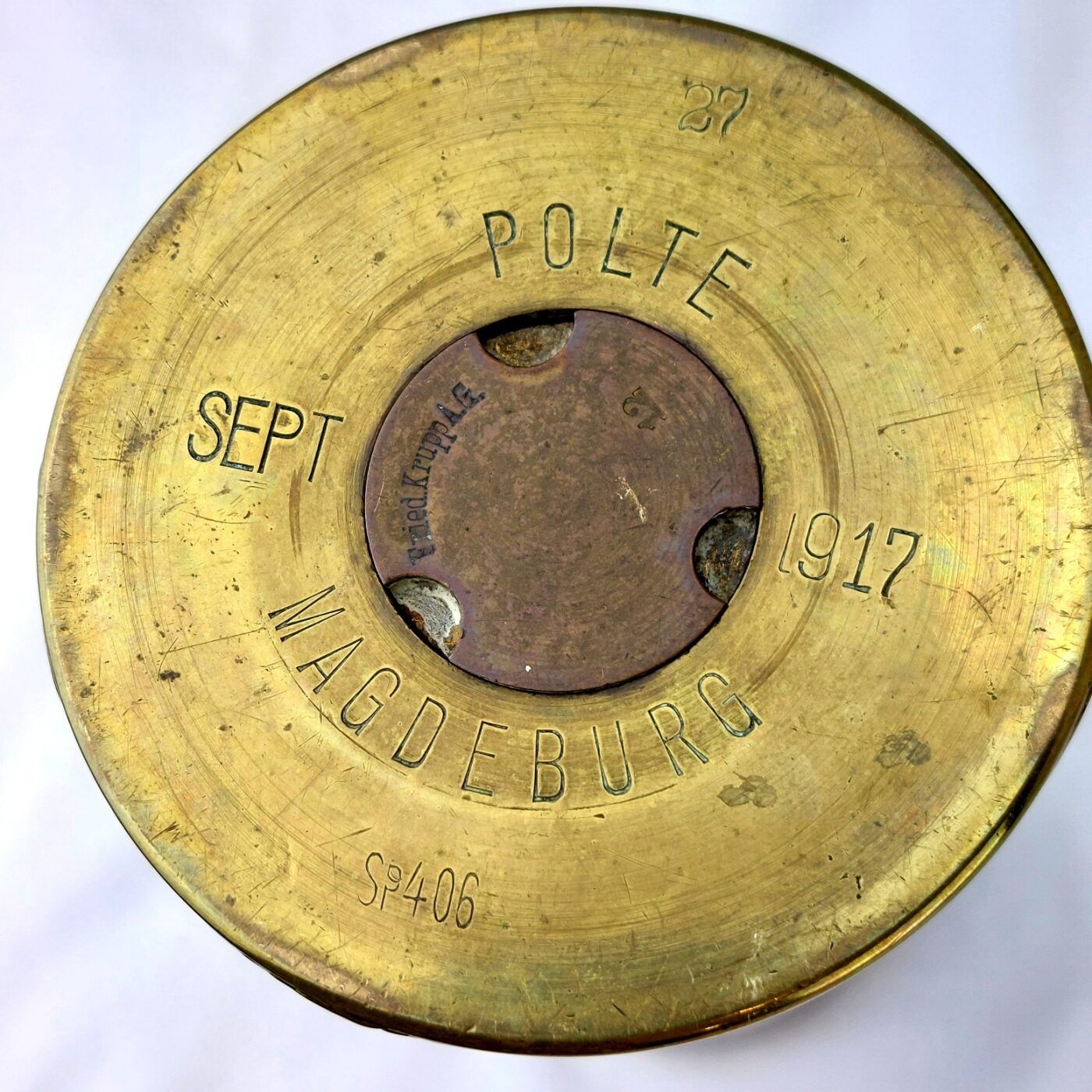
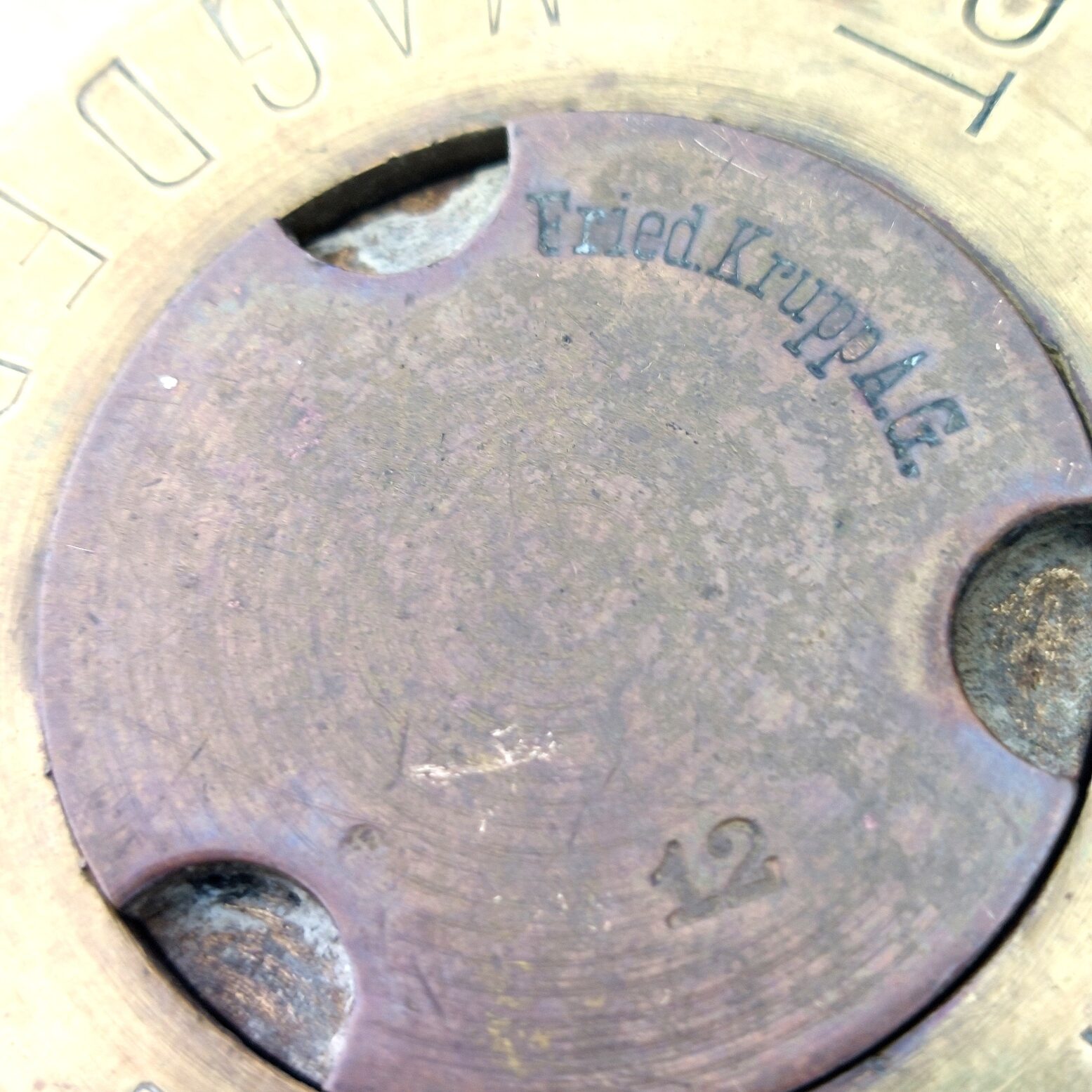
Each is headstamped with the wartime manufacturer POLTE, MAGDEBURG, one of Imperial Germany’s foremost ammunition producers, and the brass primers are clearly marked Fried. Krupp AG, 12, the famed German steel and armaments giant. Both bear the inspector’s code Sp406, confirming they were inspected at Polte’s cartridge factory in Magdeburg.
The most striking feature is the full-height decoration on each shell. Engraved in a distinctively Southeast Asian style, the decoration features panels of male and female figures in traditional dress, holding objects or in motion, interwoven with scrolling foliate designs and repeating flower motifs. The craftsmanship is intricate and stylistically consistent with Thai, Burmese, or possibly colonial Indian decorative traditions.
Historical Note:
The Polte Patronenfabrik in Magdeburg was a major manufacturer of German shell casings during WW1. The Sp406 inspection code was used specifically for cartridges and cases inspected at this facility. After the war, empty shell cases were often retained as souvenirs, and some were exported or engraved by local craftspeople in colonial territories or trade hubs, producing cross-cultural trench art such as this. The mix of German military origin and Southeast Asian artistic tradition makes this pair particularly collectible.
Krupp A.G. were founded in 1811 and during World War One manufactured munitions, heavy guns (16.5 inch howitzer known as “Big Bertha”, only four of these were made), barbed wire, stainless steel and eighty-four U-boats for the German Navy. The Krupp factory was functionally demolished by Allied bombing of Essen in World War II.
Unlike French and British shell cases, the Germans did not identify what the shell case was for via markings on the base but the case is 7.7cm wide at the throat. It was probably fired by 1896 Feldkanone 7.7cm (abbreviated to FK 96) which was still in use or the 7.7cm Feldkanone 96 neuer Art, (“field cannon new type” abbreviated to 7.7cm FK 96 n.A.). The new version combined the barrel of the earlier 7.7cm FK 96 with a recoil system, a new breech and a new carriage. In 1916, the more modern and longer 7.7cm Feldkanone 16 (7.7cm FK 16) was issued, the barrel was 2 feet longer than the 7.7cm FK 96 n.A.
*Condition*
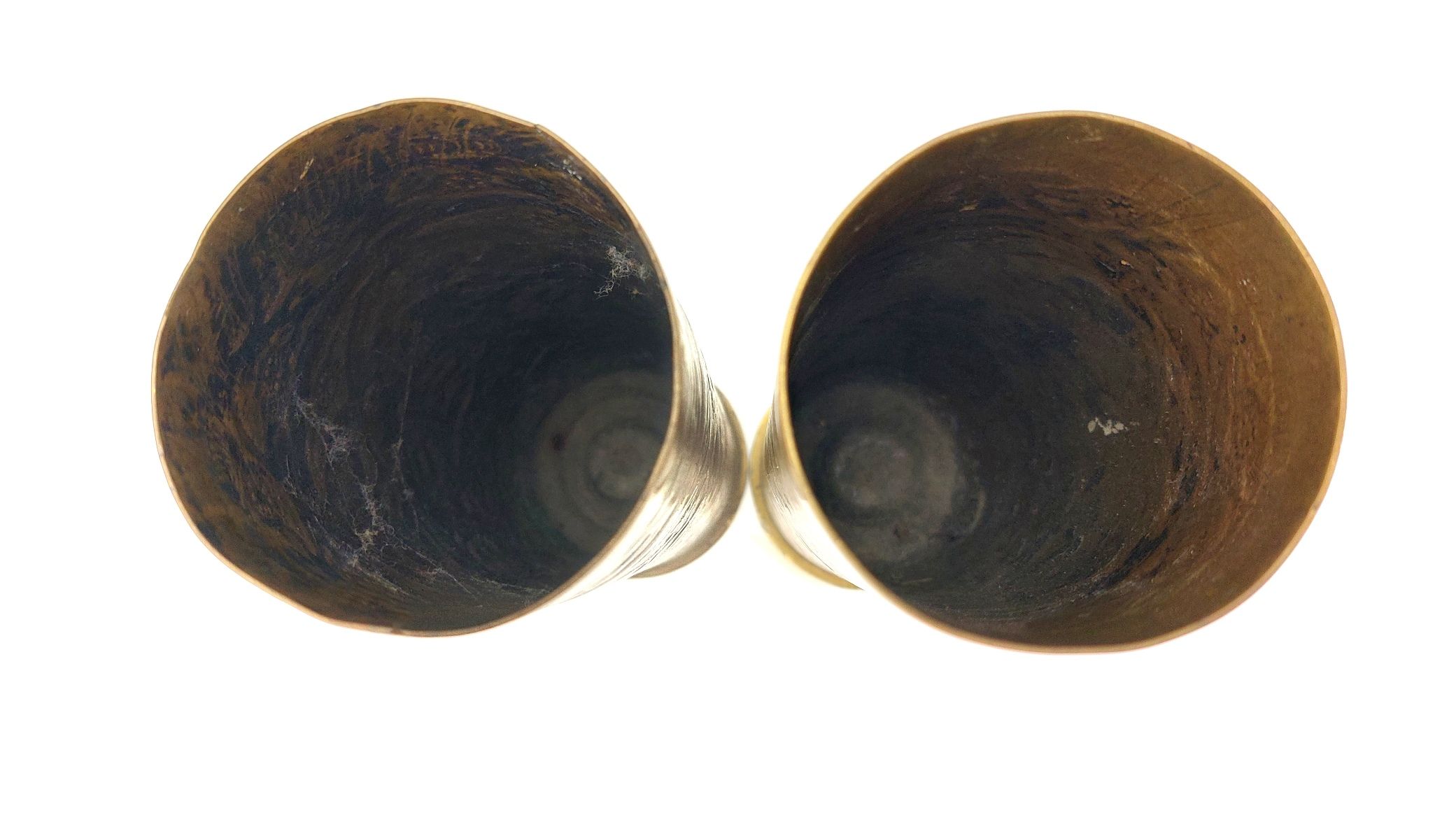
Both cases in good overall condition with even golden patina. Engraving remains crisp and deep throughout. Some small dents to the rims and light surface marks from age. Primers remain seated and legible, both marked Fried. Krupp AG and stamped “12.” Some interior tarnishing and residue consistent with age. One shell is also marked "27" above the POLTE stamp — likely a lot or batch identifier. Please see photographs as part of the condition report.
JAQBG_2701130525