*Imperial German, c.1900, 1-Litre Adolf Diesinger Majolica Beer Stein, Form No. 1306, “A.D.H. Reichs Zinn” Pewter Lid*
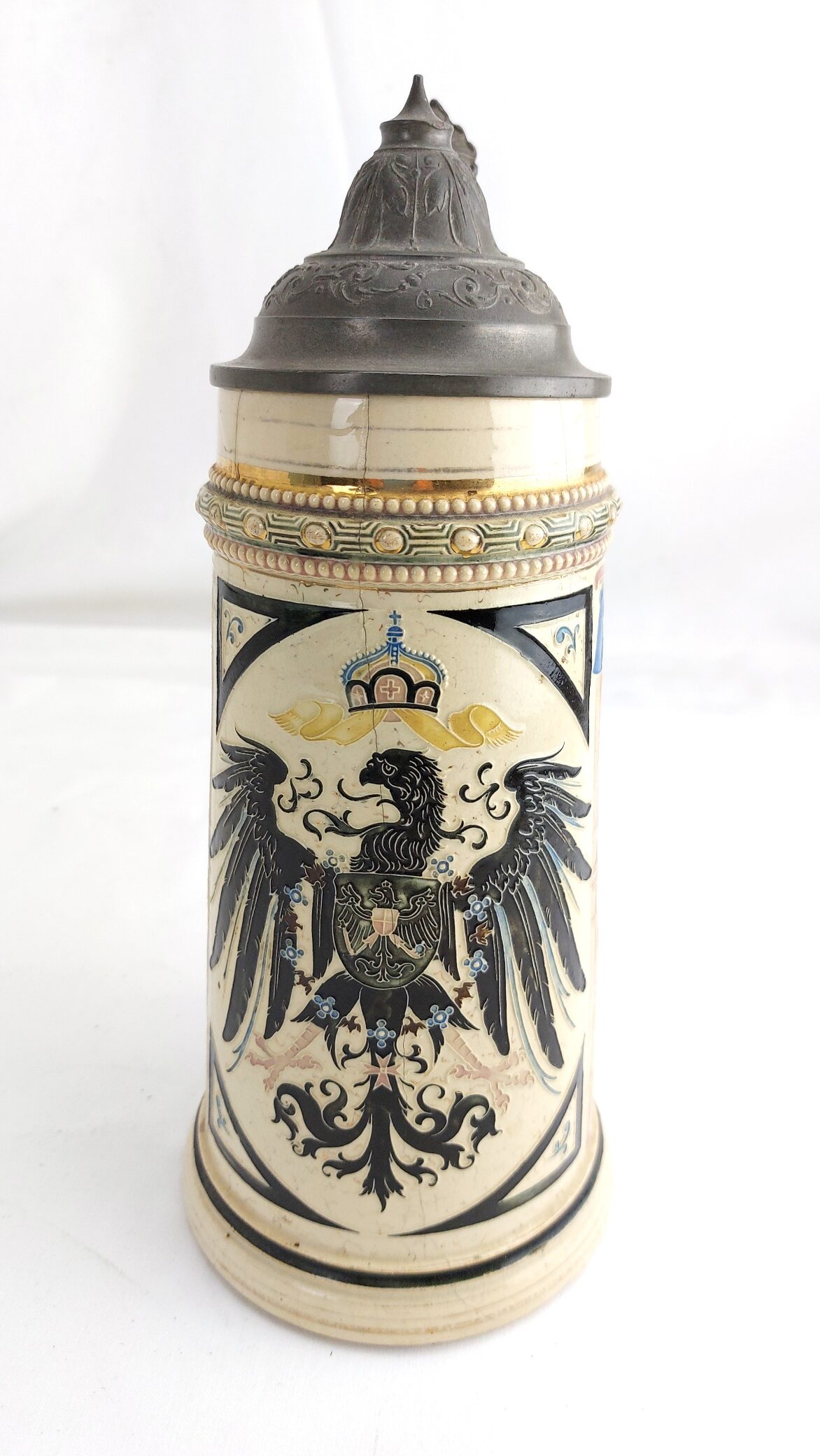
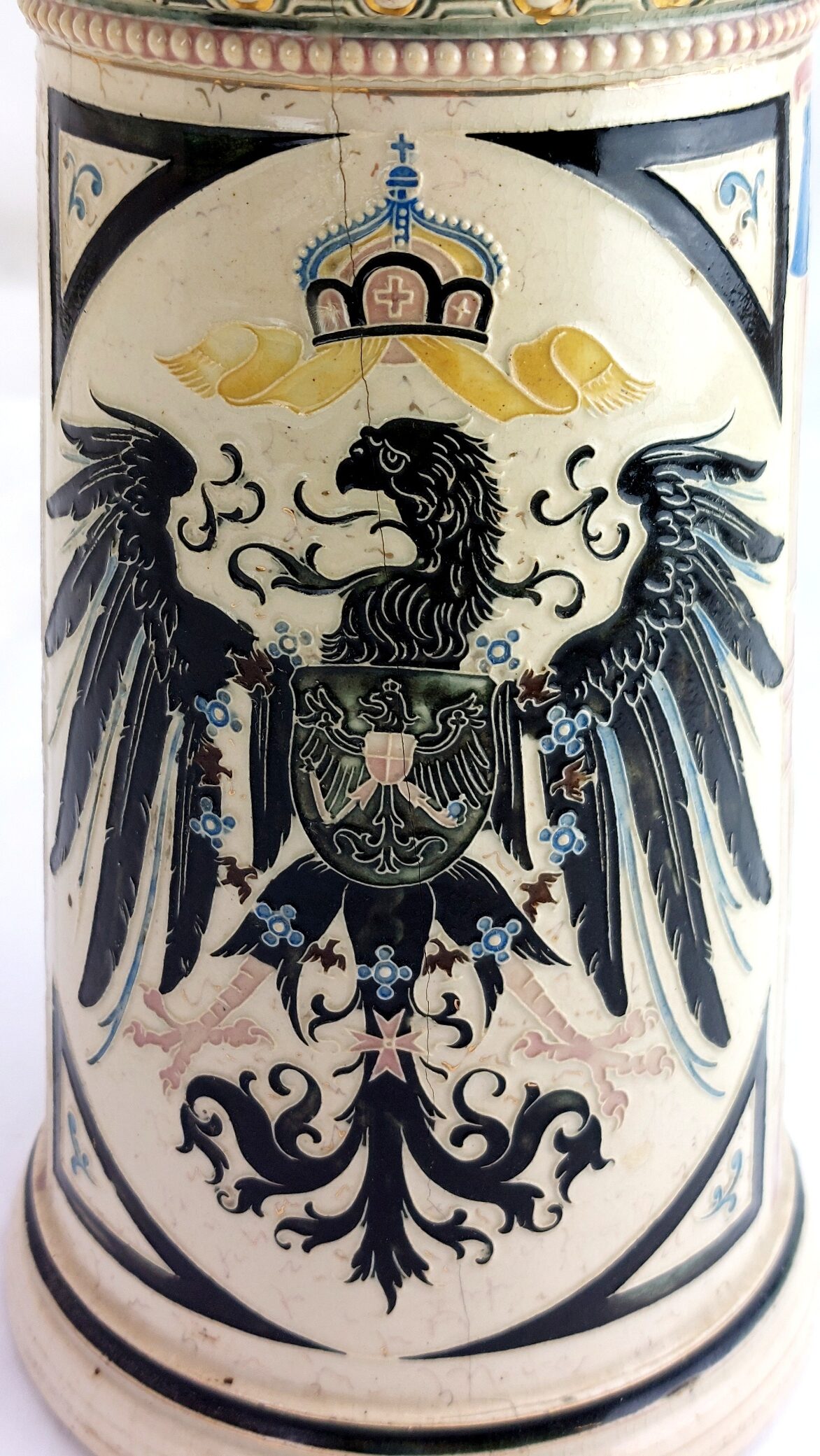
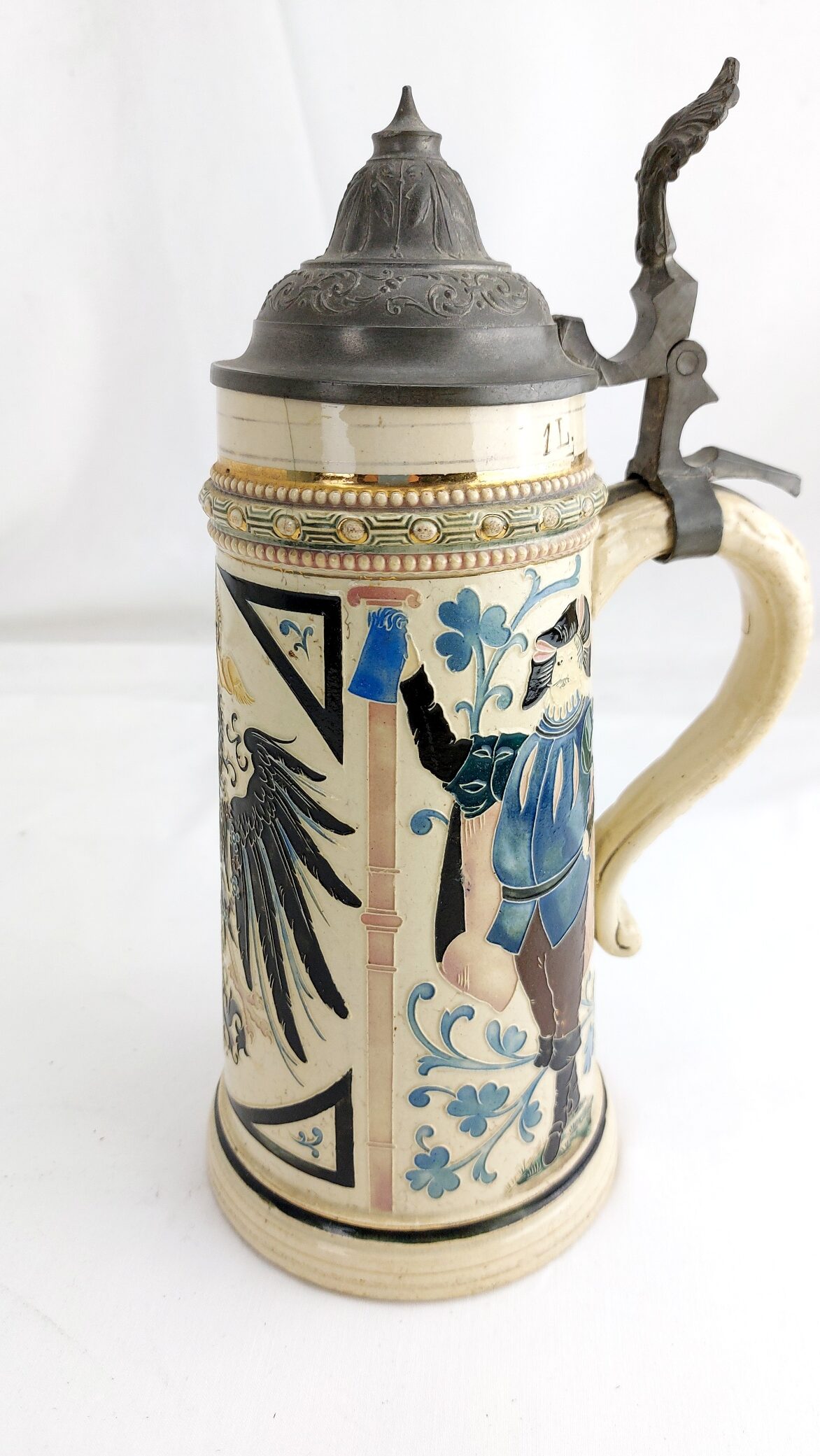
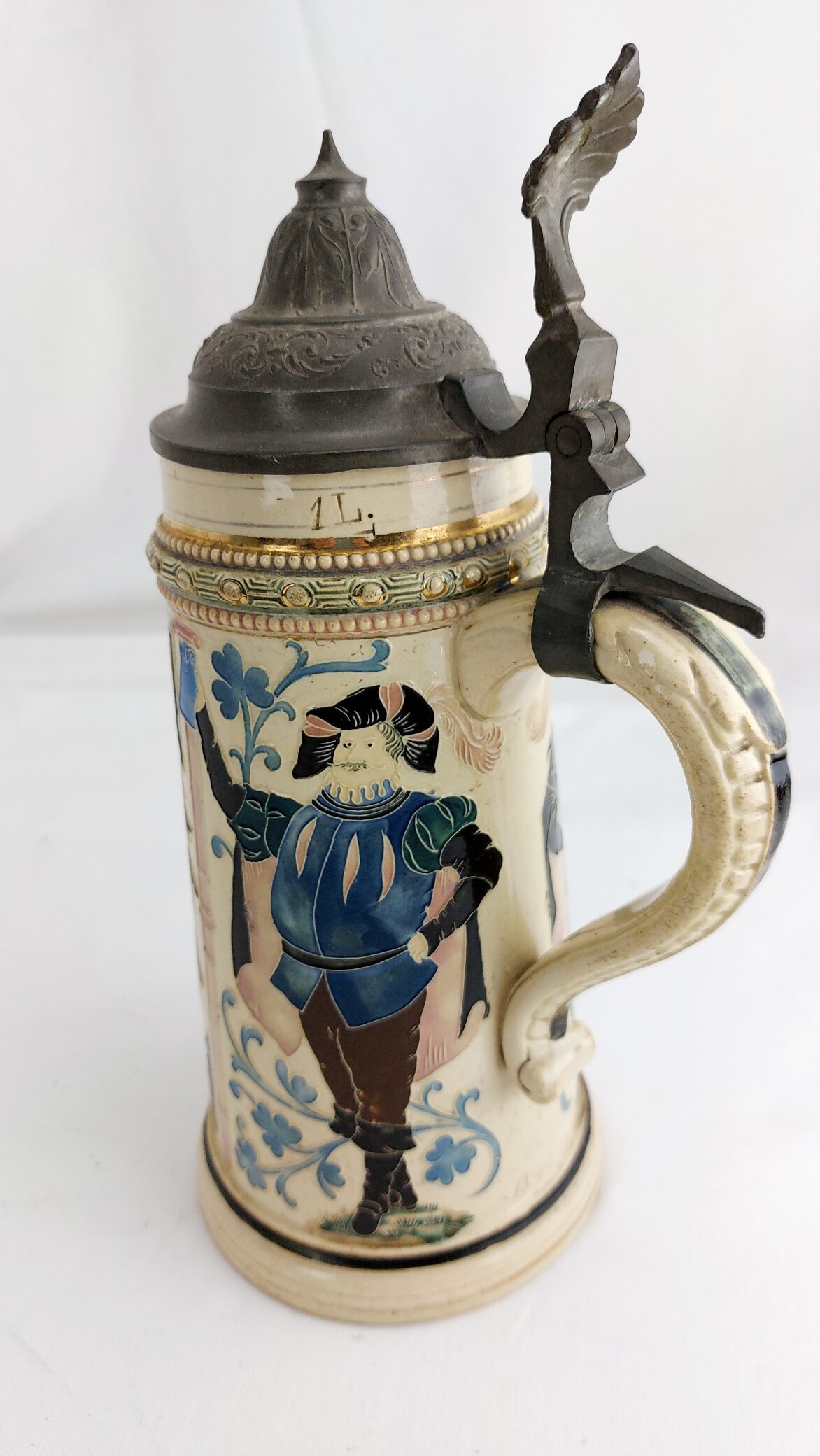
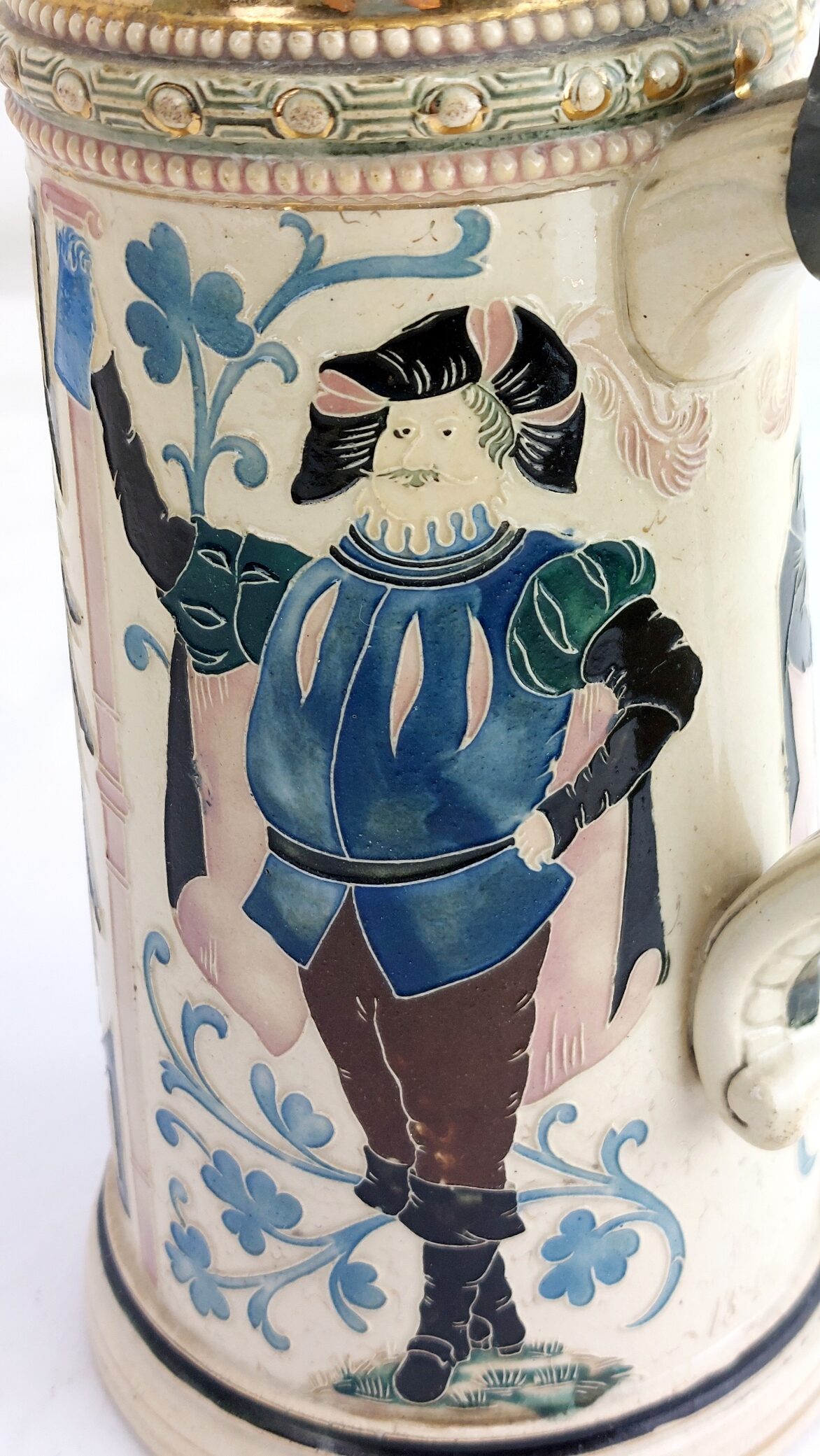
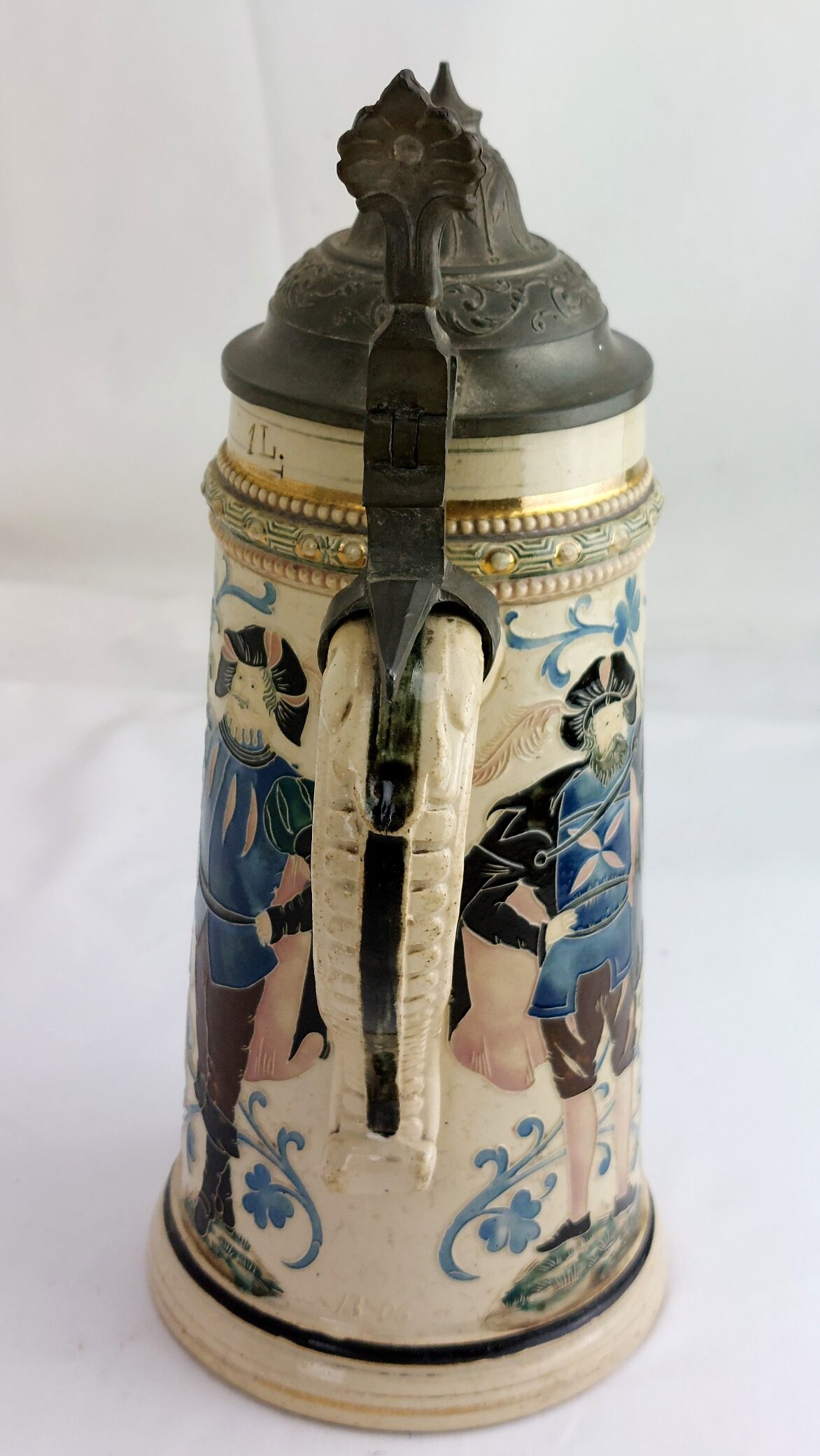
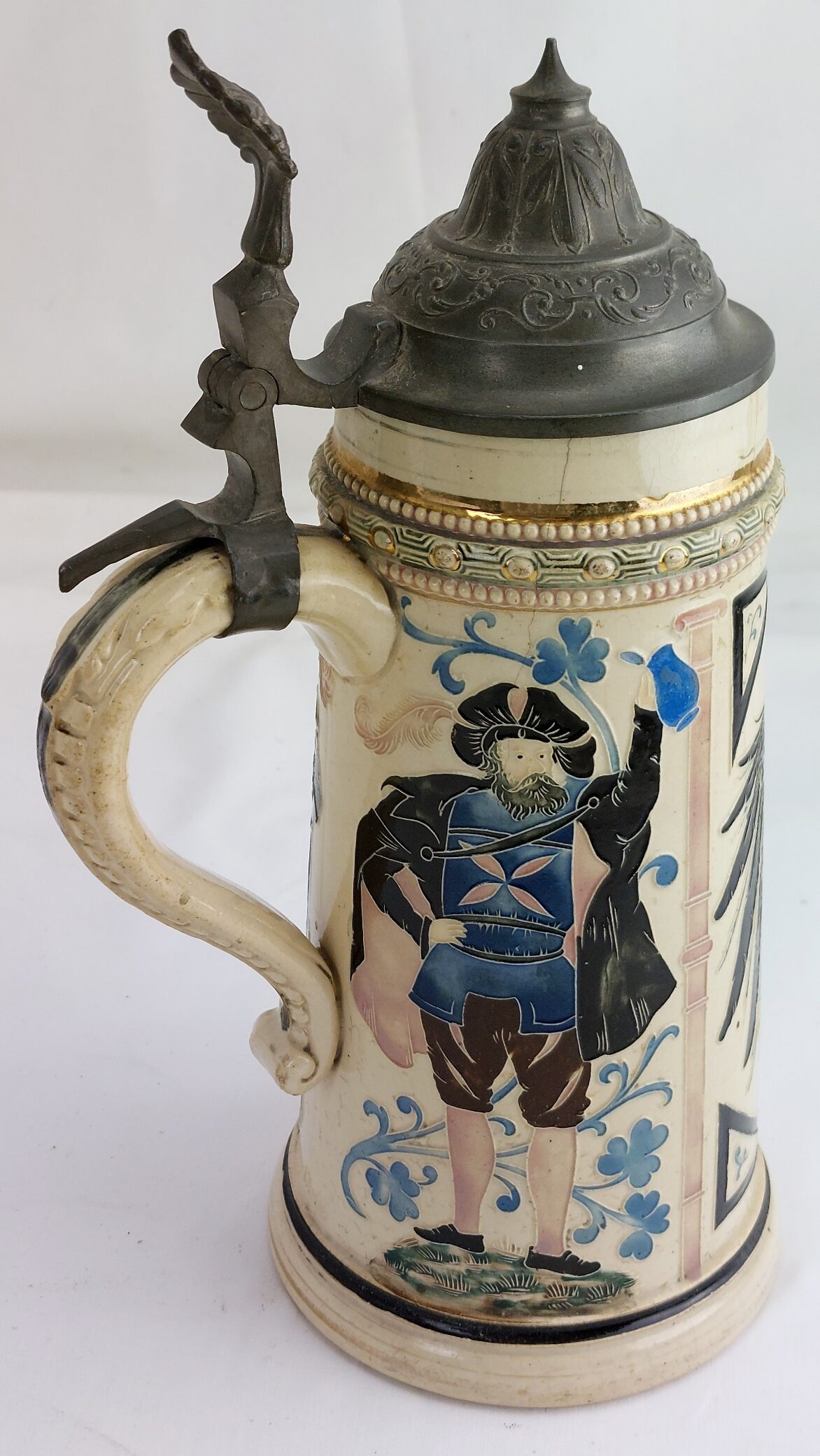
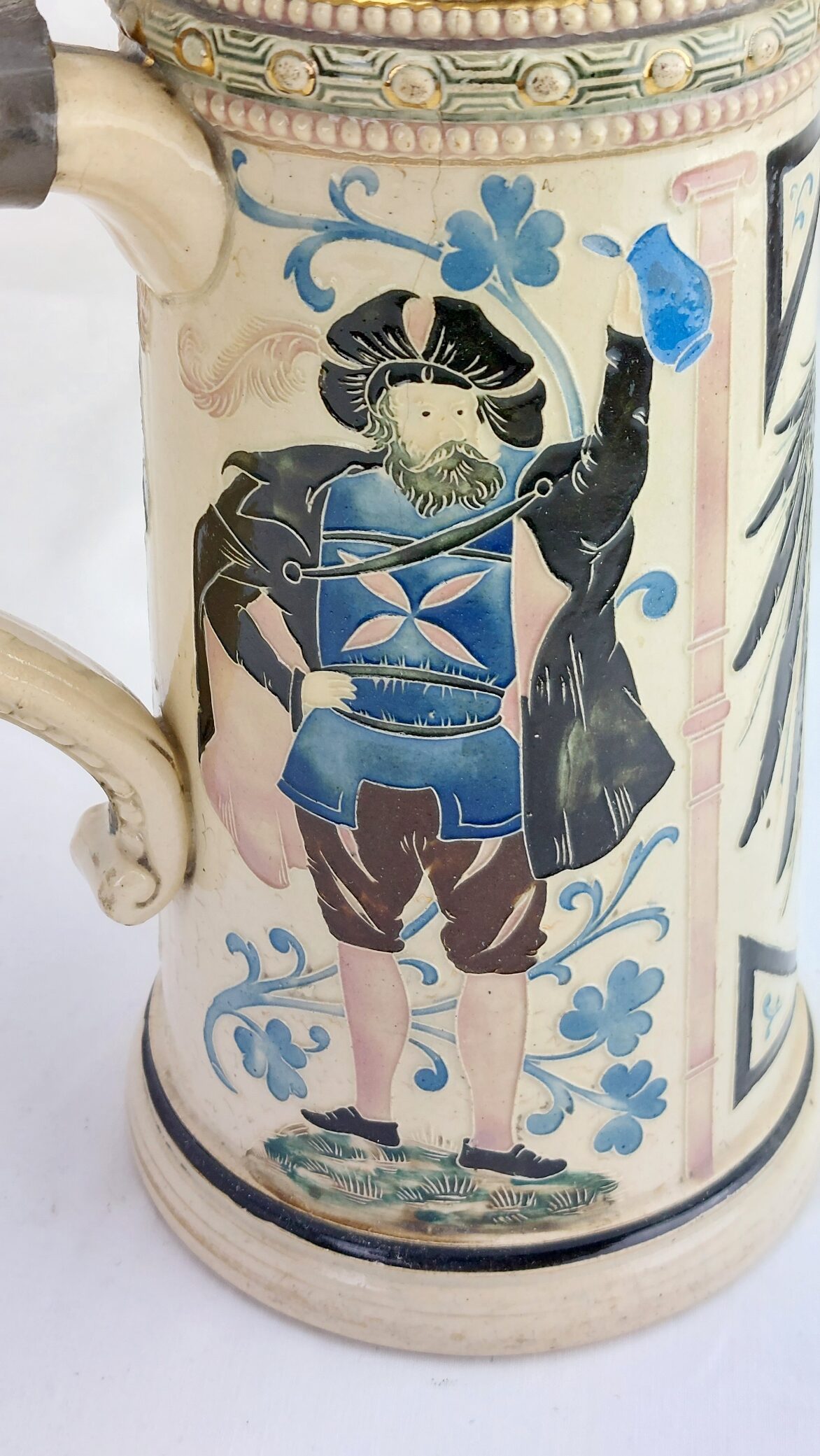
A fine Imperial-period 1-litre relief beer stein by Adolf Diesinger Majolikafabrik & Karl Diesinger, Höhr-Grenzhausen (then Höhr, Hesse-Nassau, Prussia). The cream-ground Majolica body features a deeply moulded relief of two Landsknecht soldiers toasting beside the Imperial German eagle beneath the Kaiser’s crown, framed by scrolling foliage and geometric beaded borders, all hand-tinted in blue, green, and ochre under a clear glaze.
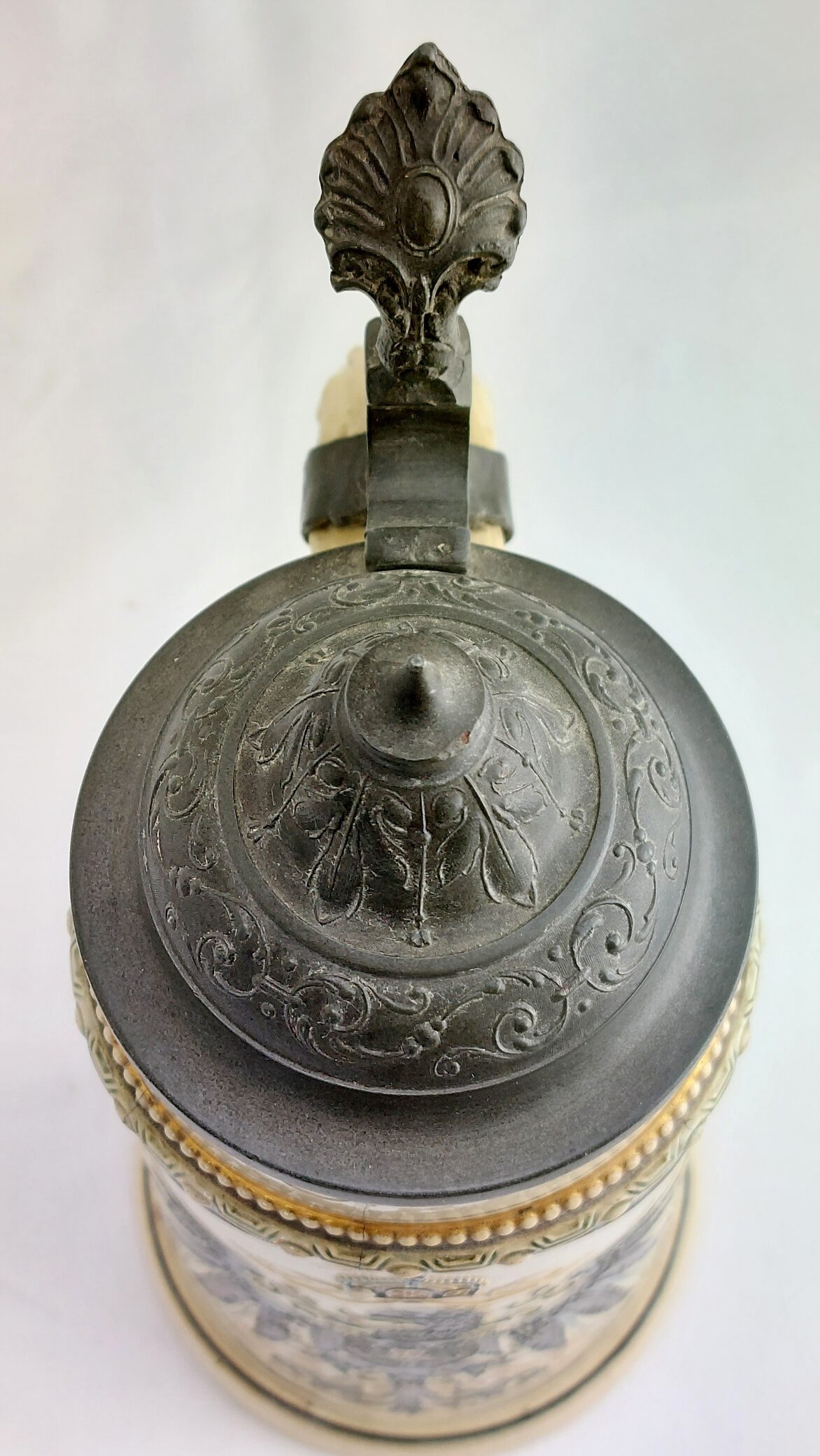
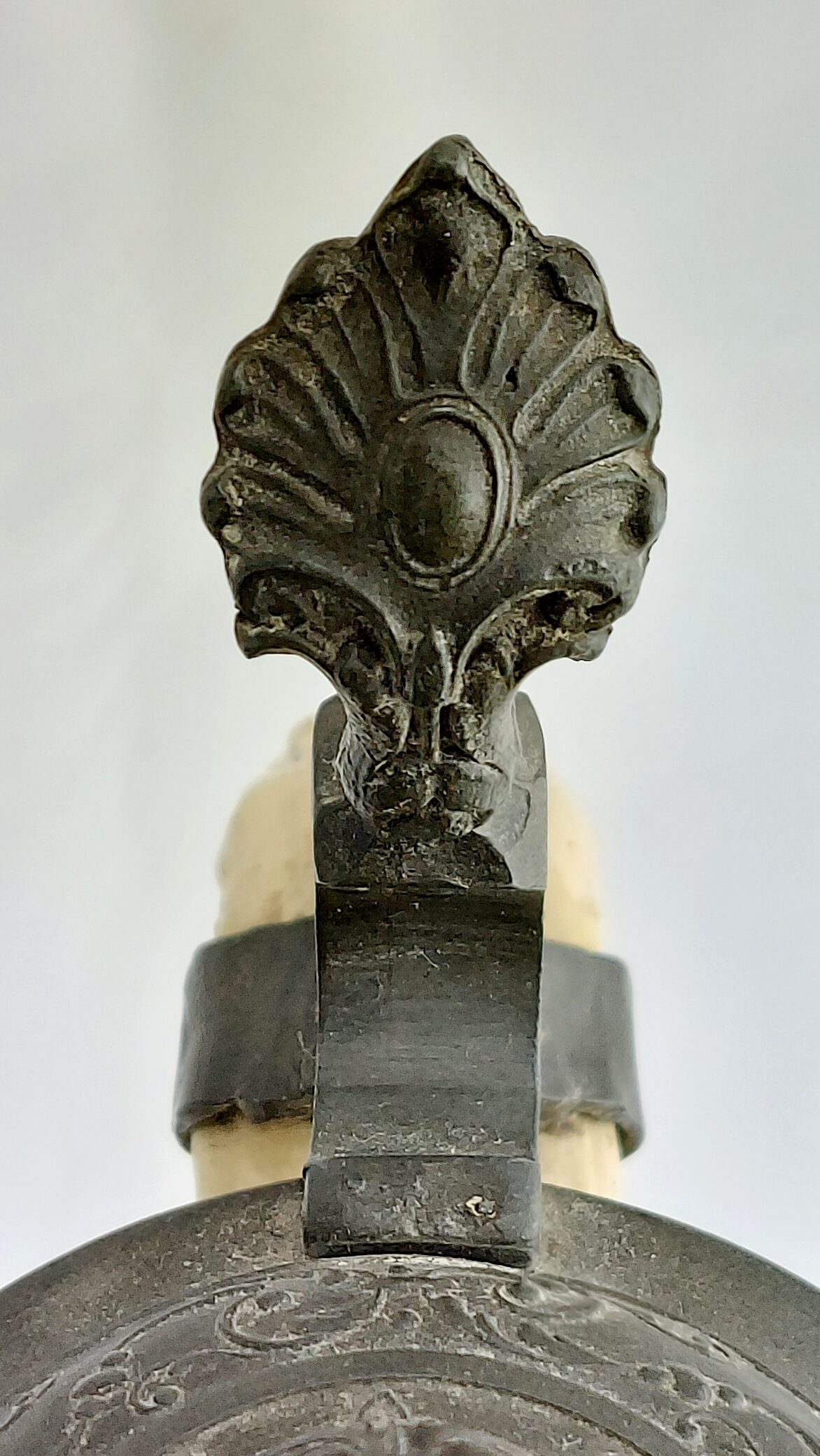
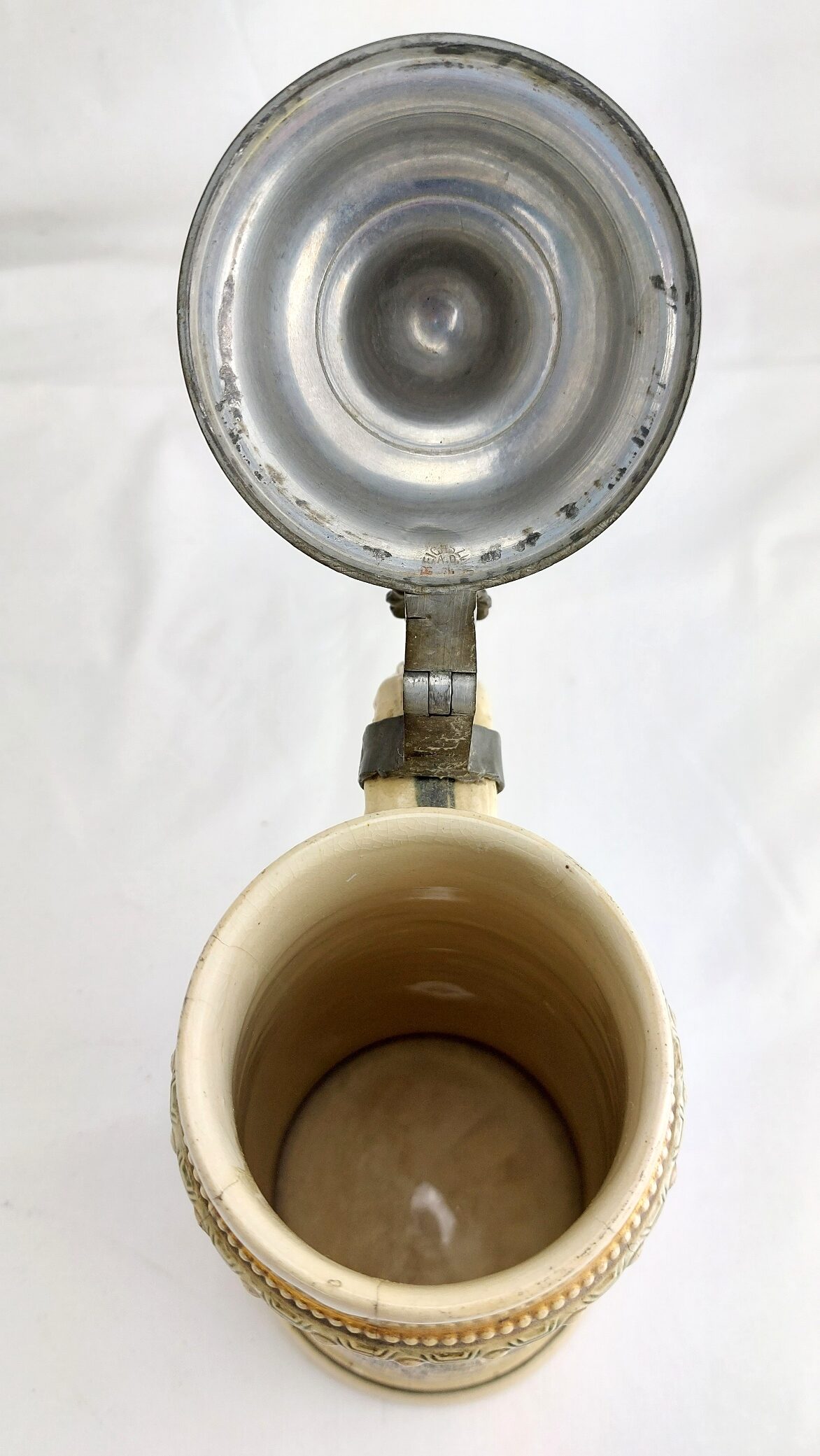
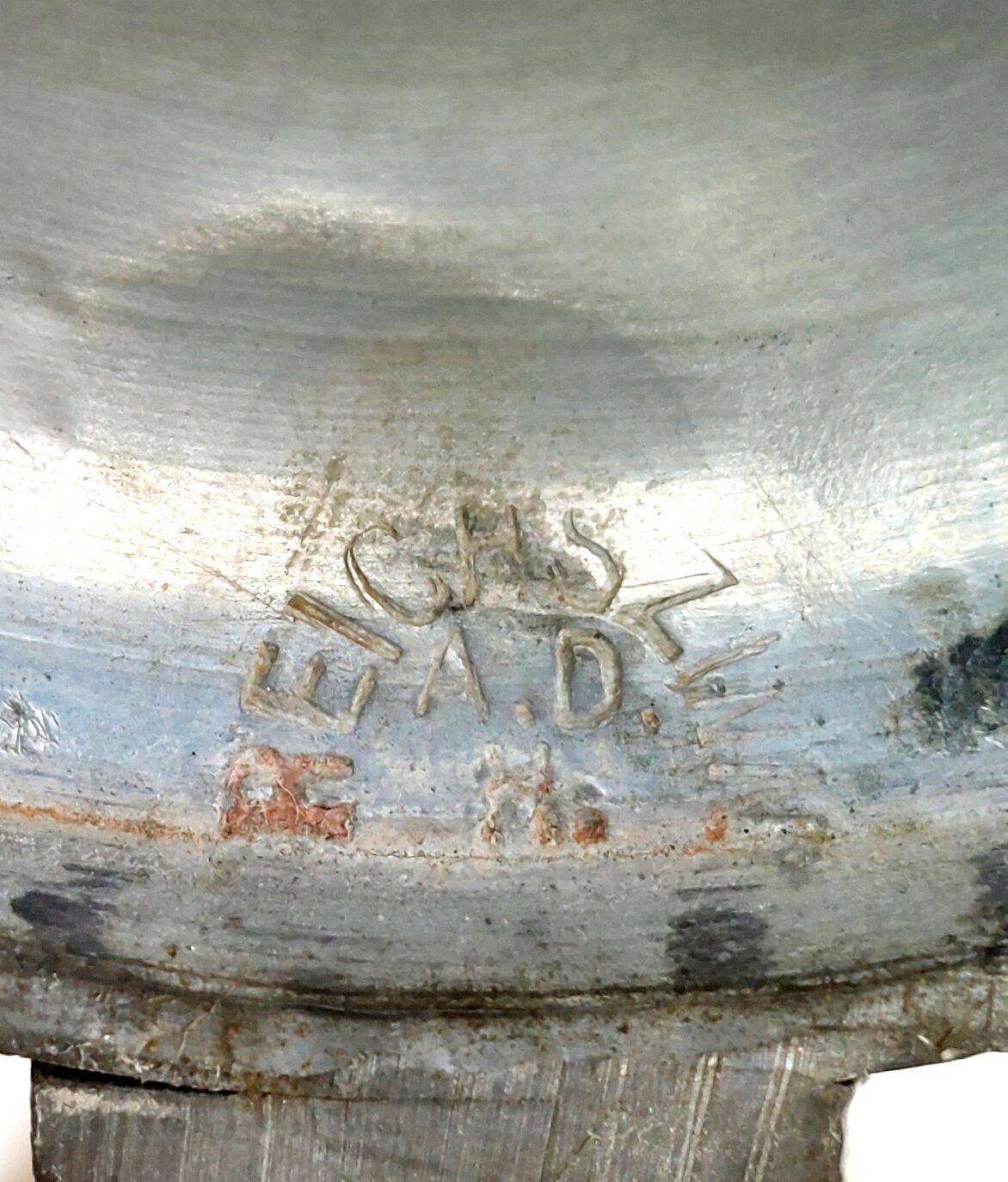
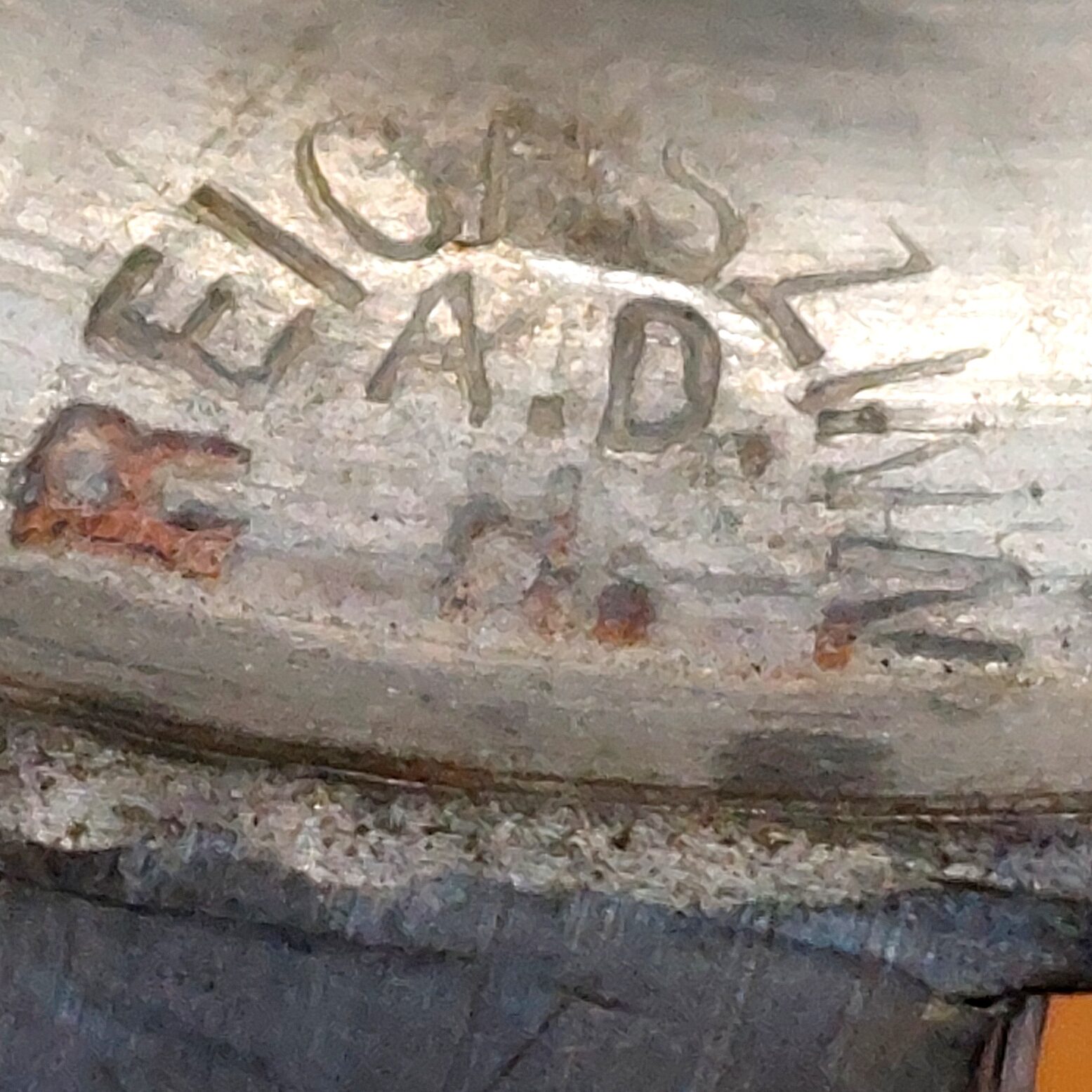
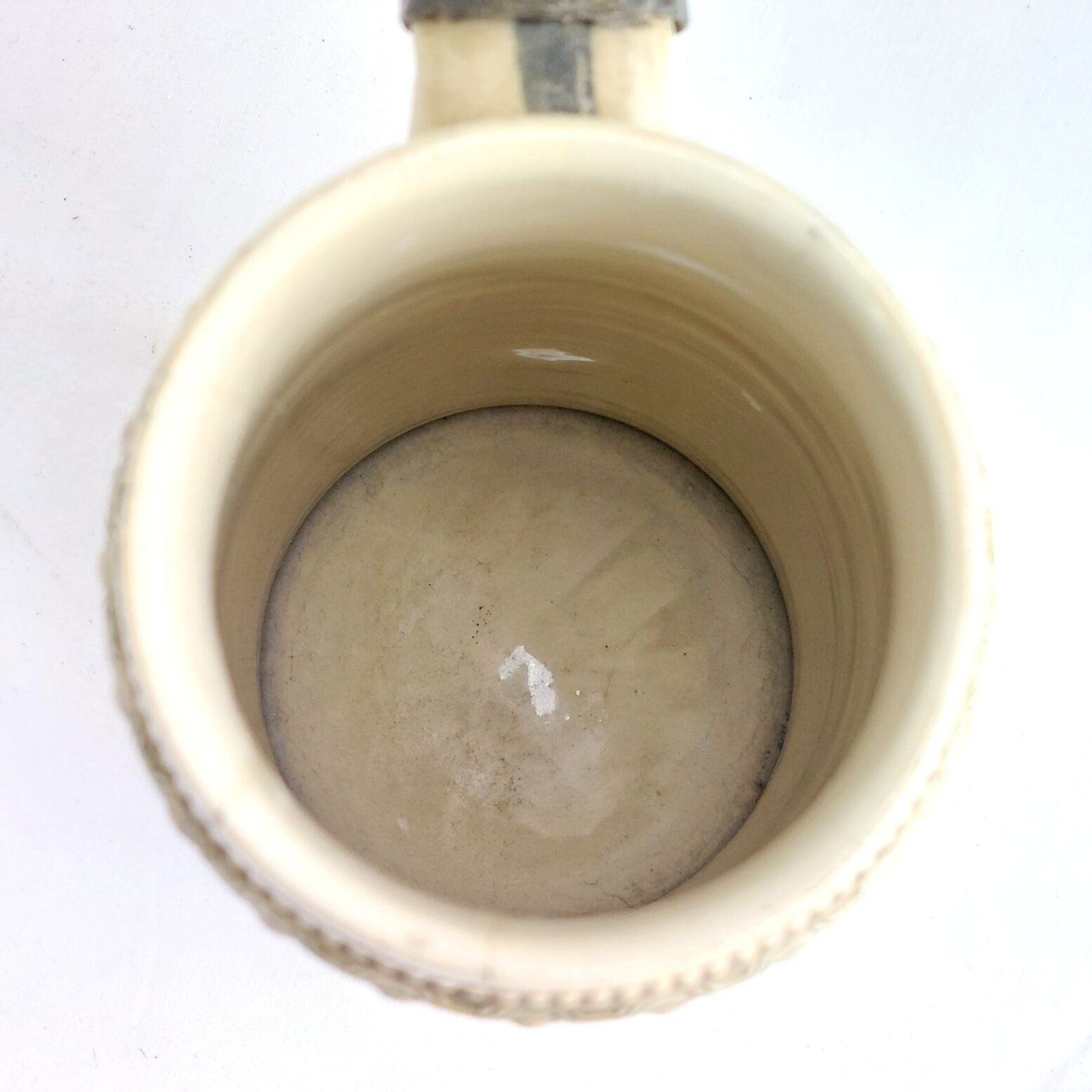
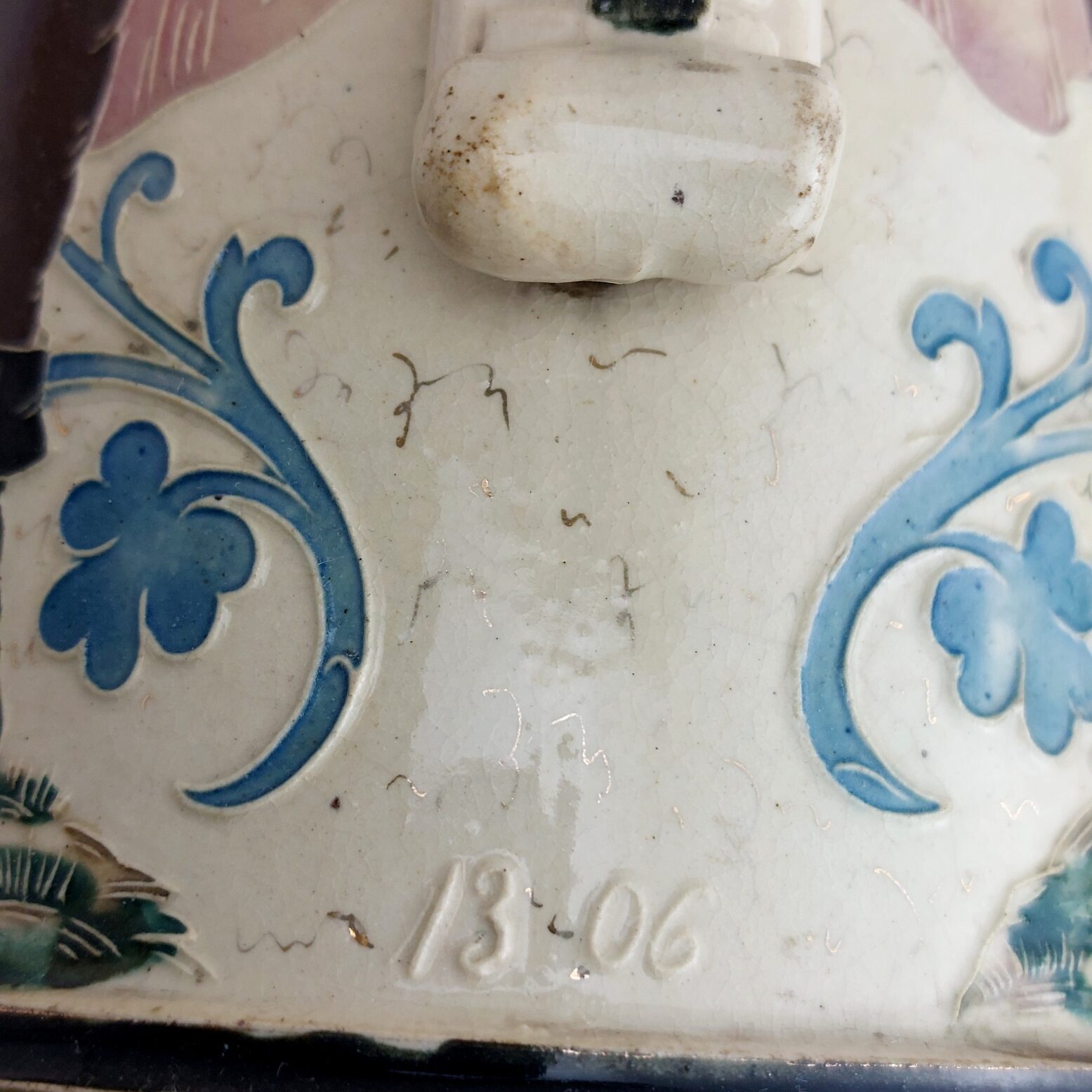
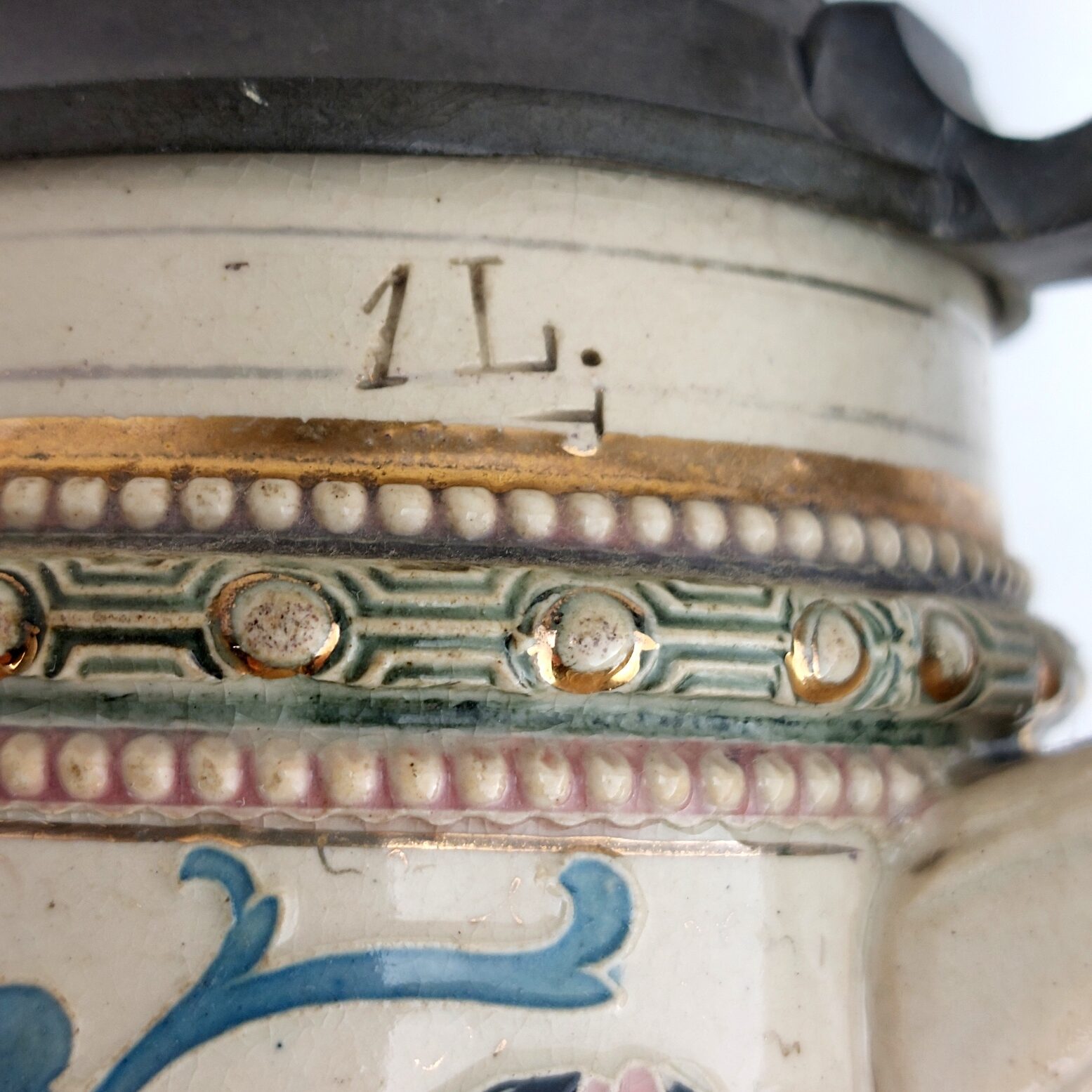
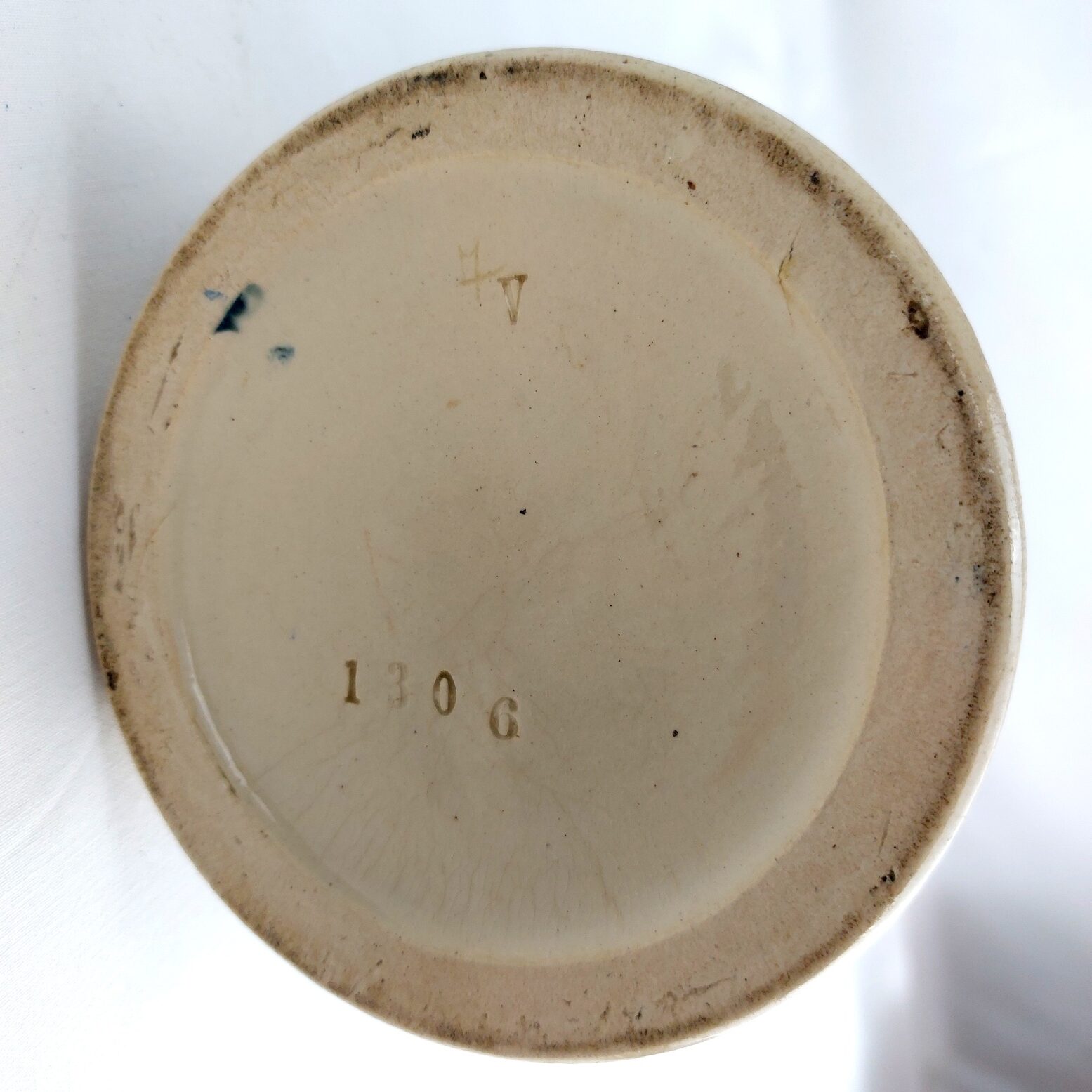
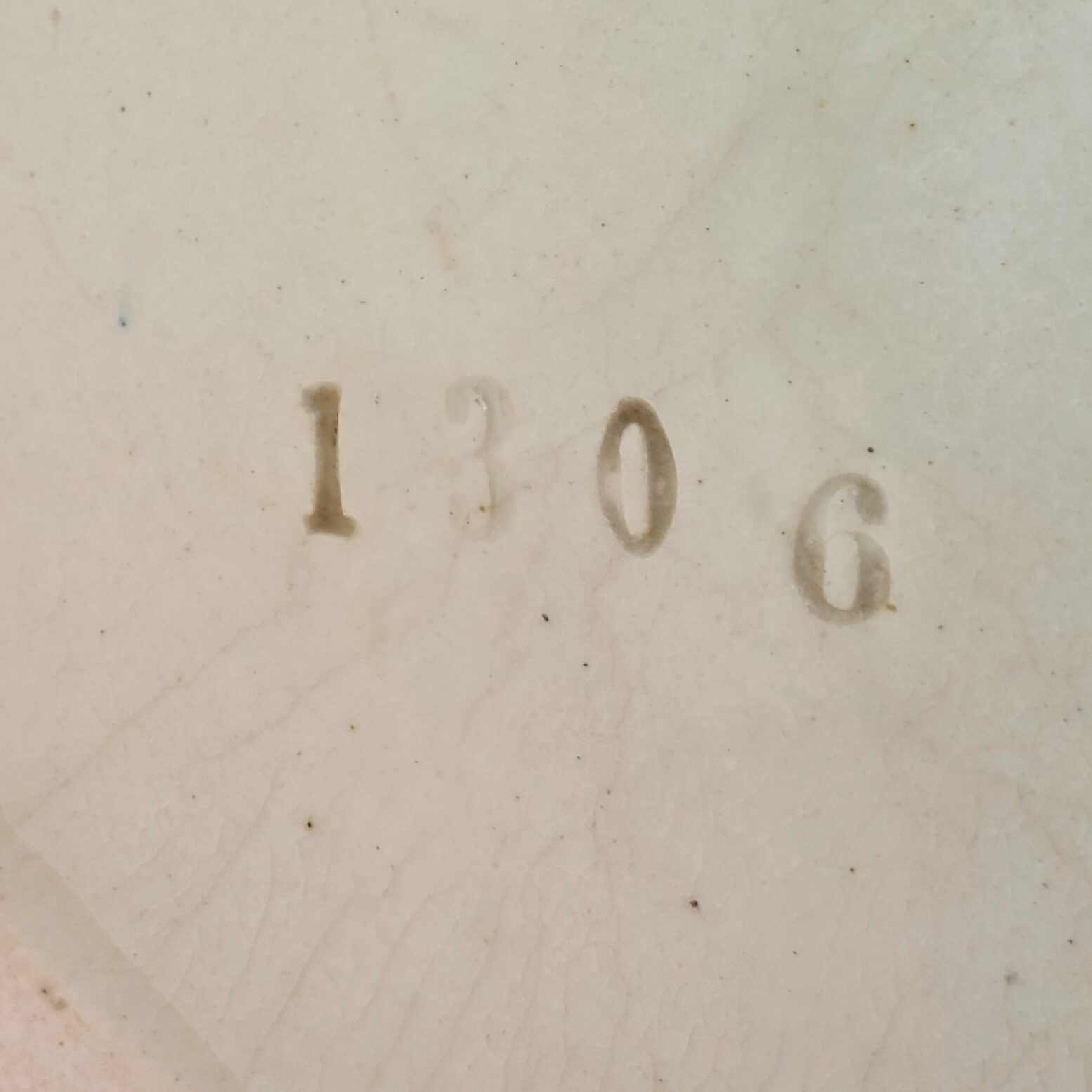
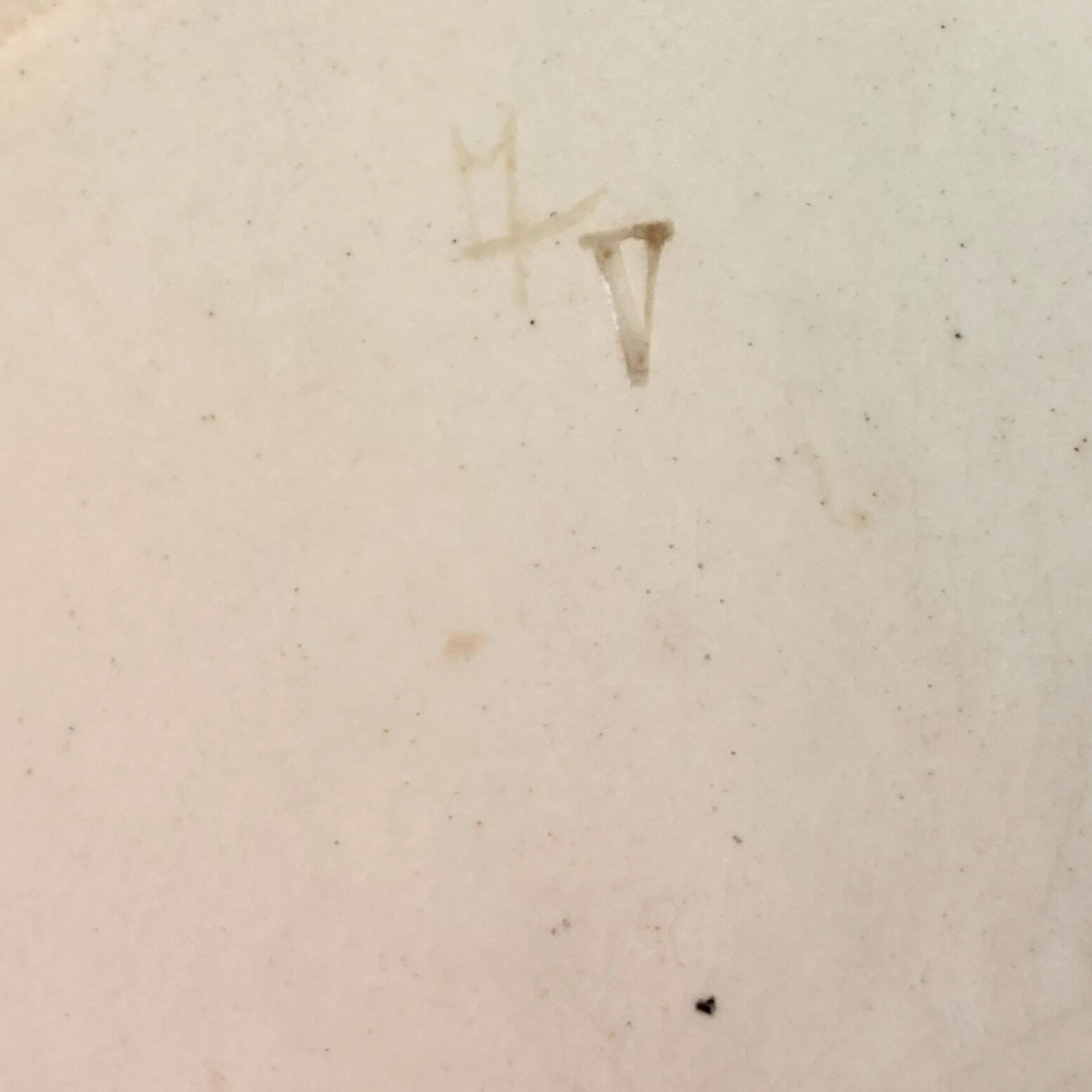
The domed pewter lid is engraved with foliate ornament and fitted with a shell-form thumb lift; the underside bears the stamp “A.D.H. REICHS ZINN”, denoting Diesinger’s own pewter workshop. The side shows the impressed form number “1306” and the capacity is also marked on the side “1 L”.The base shows impressed form number “1306” together with Diesinger’s distinctive hieroglyphic “7” potter’s mark (not actually a 7 but closest we can represent)
A very attractive and authentic example of turn-of-the-century Westerwald craftsmanship combining ceramic and pewter work from one of the region’s most creative small factories.
Measurements: Height: 27 cm. Base diameter: 11.5 cm. Top diameter: 7.7 cm. Capacity: 1 litre
Historical Note: Adolf Diesinger Majolikafabrik & Karl Diesinger Rheinstraße / Schützenstraße 13, Höhr, Hesse-Nassau, Prussia (now Höhr-Grenzhausen, Rhineland-Palatinate)
Founded by Adolf Friedrich Diesinger (1848–1906) and his cousin Karl Ludwig Diesinger (1853–1928), the Diesinger works produced Majolica and cream stoneware with vivid under-glaze decoration and in-house pewter fittings (Zinngießerei). Though sometimes recorded as established in 1860, factory activity is more credibly dated to c.1880, when Adolf opened his workshop beside Marzi & Remy in Höhr. Employing about eighteen craftsmen, Diesinger created high-relief figural steins, jugs and tablewares renowned for their lively modelling and bold colour. The firm’s pewter lids were cast on site and often stamped “A.D.H. Reichs Zinn” — literally “Imperial Pewter”, a quality mark denoting fine, in-house pewter rather than an official state grade. Production ended shortly after Adolf’s death in 1906, when Karl briefly continued operations before closing the factory around 1907.
Today, Diesinger steins are prized for their distinctive 1300-series mould numbers, expressive Renaissance-style figures, and the characteristic hieroglyphic “7” monogram representing Adolf Diesinger’s initials. Collectors rank the firm among the leading late-19th-century Westerwald workshops.
*Condition* Excellent overall condition for age. Glaze with fine age-related crazing and minor firing marks typical of period production. No chips, cracks, or restoration. Pewter lid lightly oxidised with small handling marks; hinge and thumb lift fully functional. Please see photographs as part of the condition report.