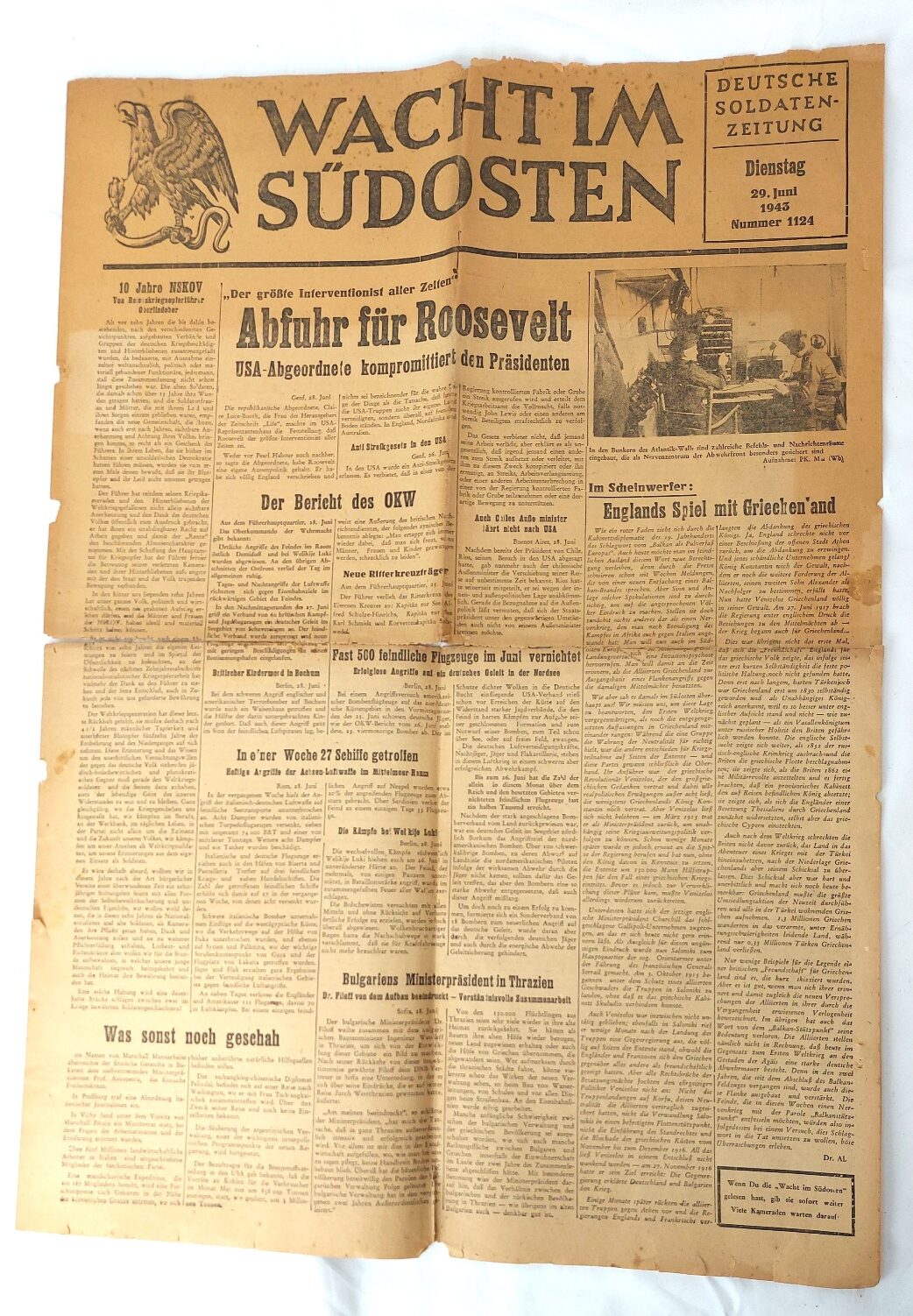
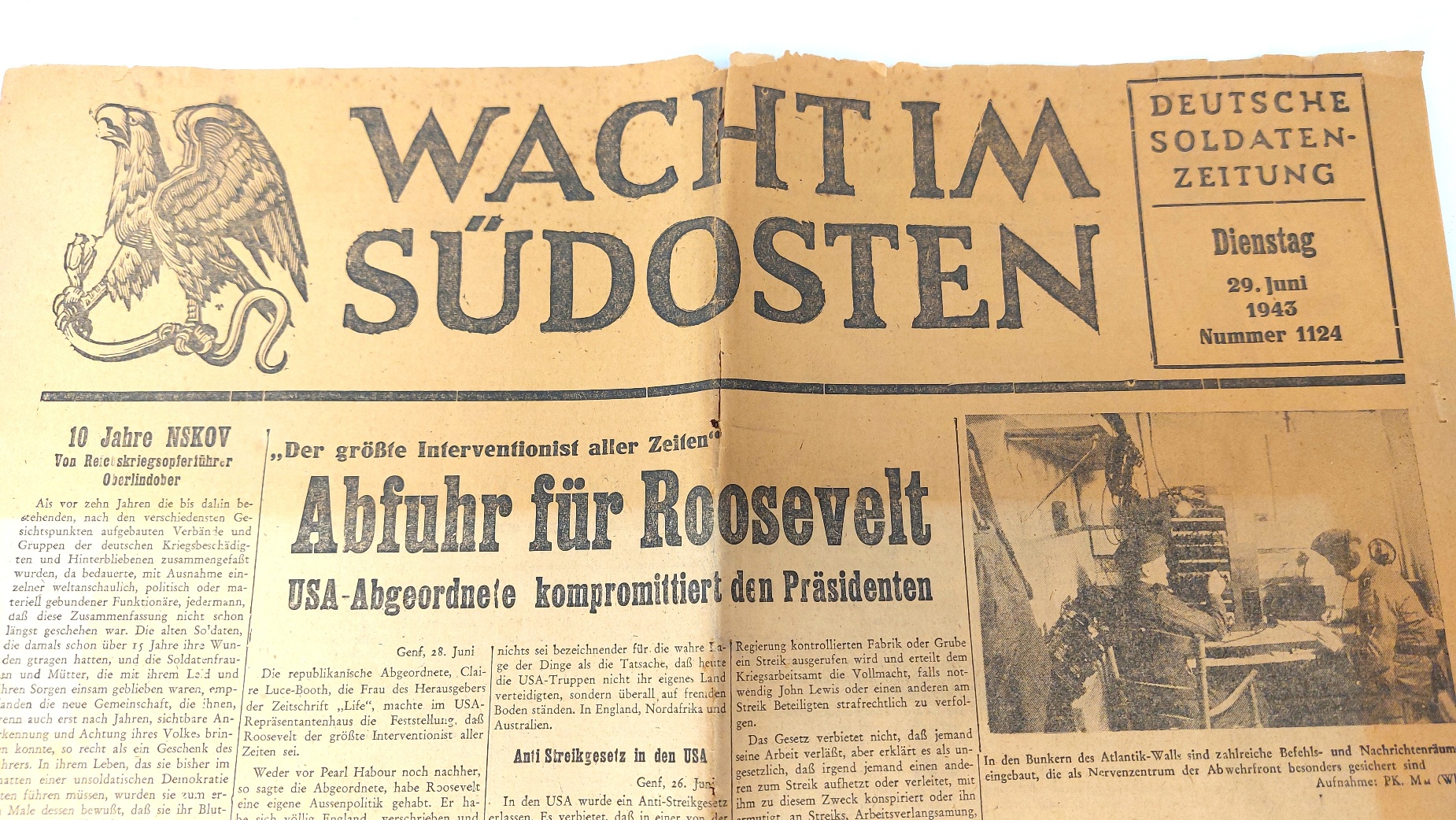
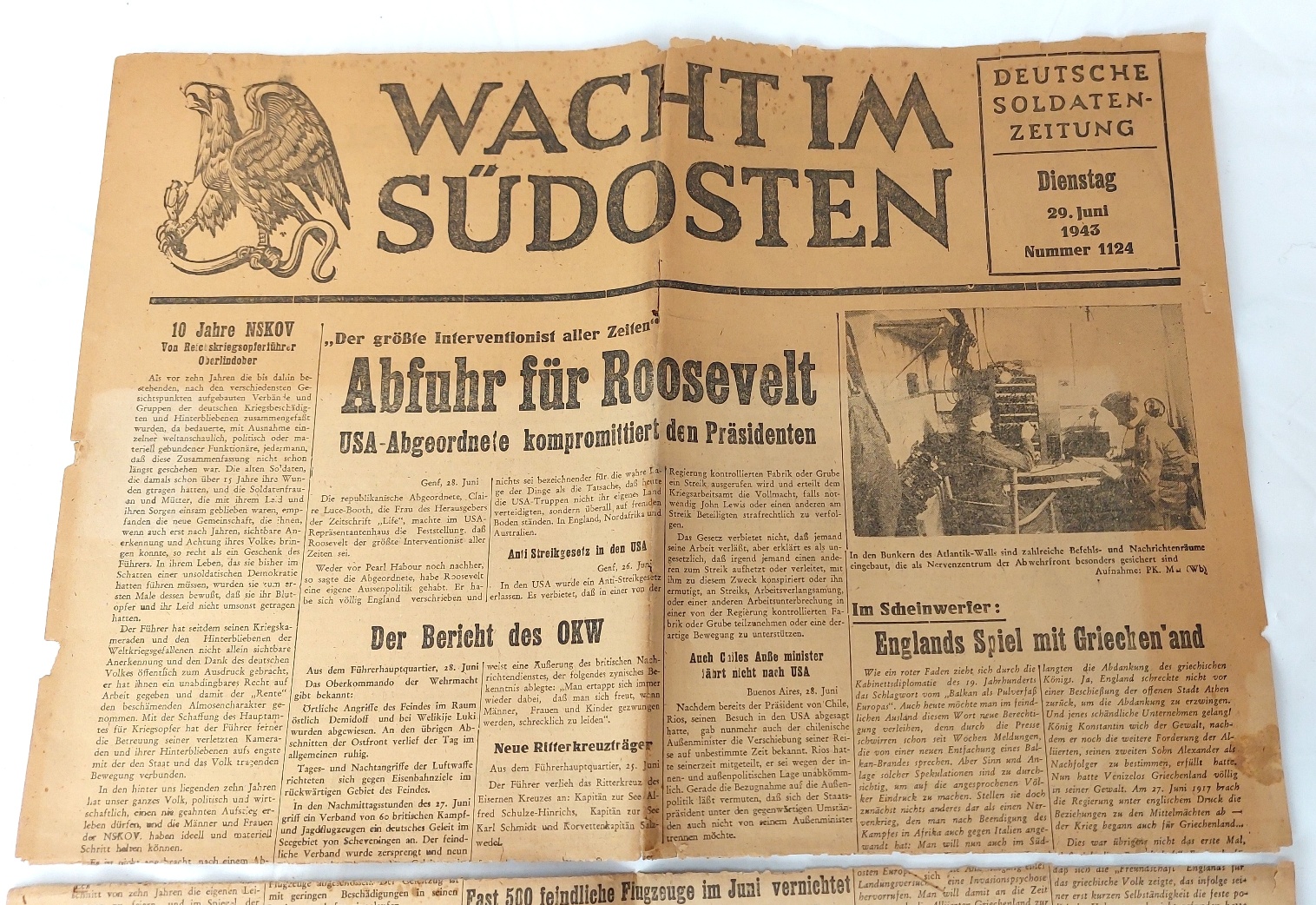
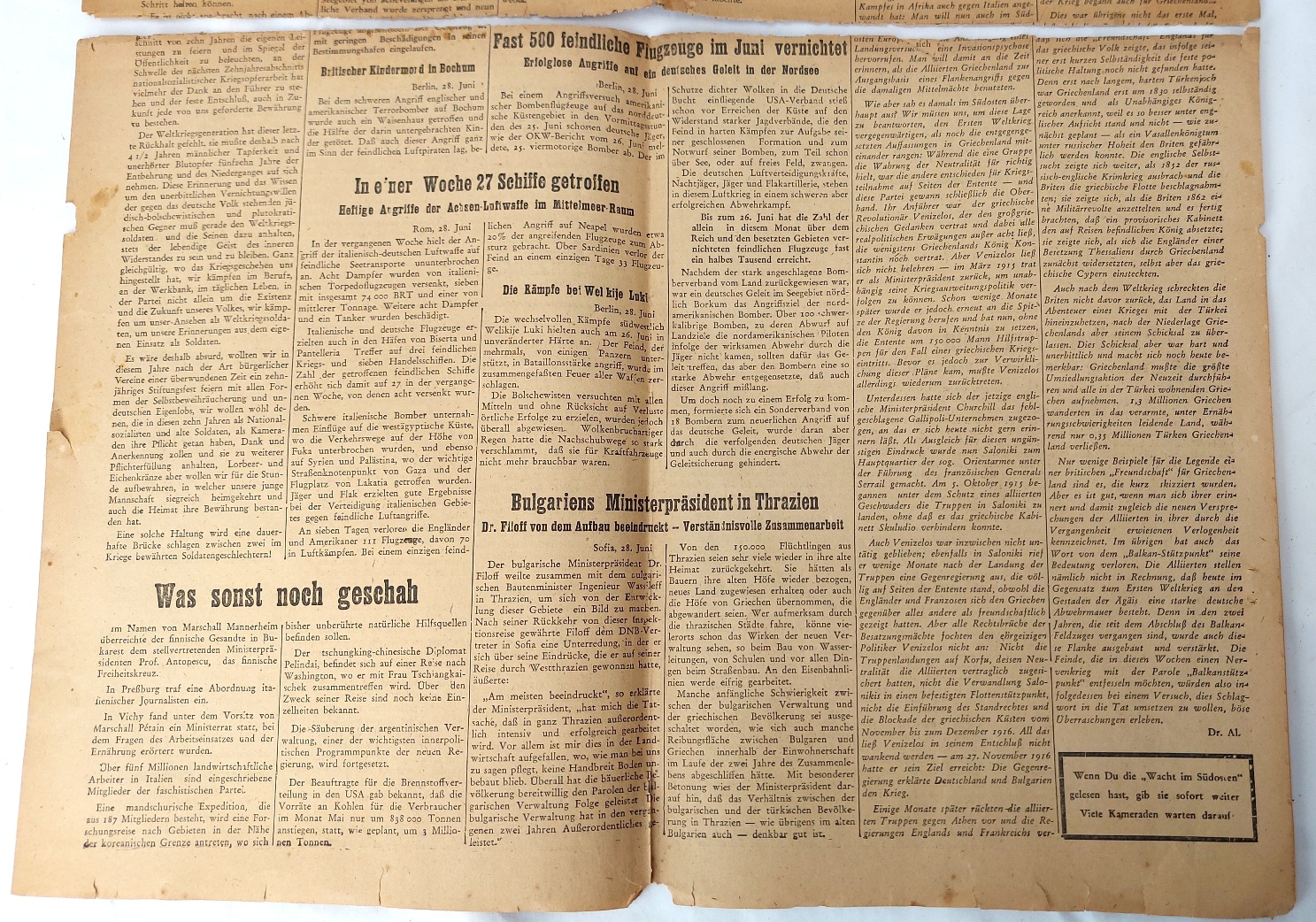
German, WWII, 29 June 1943, Balkan Front Newspaper, Wacht im Südosten No.1124 – Complete 6 Pages – Roosevelt Propaganda – Greece & Balkans – Frontline Soldier Newspaper
£45.00
A scarce and highly evocative WWII German Balkan-front soldiers' newspaper combining anti-Roosevelt propaganda, military reporting, Greek and Balkan political coverage and frontline wartime culture — a fascinating surviving piece of Wehrmacht printed history.
*German, WWII, 29 June 1943, Balkan Front Newspaper, Wacht im Südosten No.1124 – Complete 6 Pages – Roosevelt Propaganda – Greece & Balkans – Frontline Soldier Newspaper*
A fascinating and original World War II German Frontzeitung (frontline soldiers’ newspaper), titled Wacht im Südosten ("Watch in the Southeast"), issue number 1124, dated Tuesday, 29 June 1943. Produced as a Deutsche Soldaten-Zeitung (German Soldiers' Newspaper), it was intended specifically for Wehrmacht personnel serving in the Balkans and southeastern operational theatre. Complete at 6 pages, this issue survives as an evocative snapshot of German wartime propaganda during a critical period of the war.
Printed only weeks before the collapse of the Axis position in Sicily and amid worsening German fortunes across multiple fronts, this issue reveals how propaganda shifted from triumphal battlefield reporting toward political messaging and morale maintenance. As with most frontline newspapers, it was printed on fragile wartime wood-pulp paper intended for temporary use and disposal, making complete surviving examples increasingly difficult to encounter.
The front page is dominated by the large anti-American headline: "Abfuhr für Roosevelt" ("Rebuff for Roosevelt"), with the subtitle: "USA-Abgeordnete kompromittiert den Präsidenten" ("US Representatives compromises the President"). The article attacks President Franklin D. Roosevelt, describing him as "Der größte Interventionist aller Zeiten" ("The greatest interventionist of all time"), illustrating the Reich propaganda effort to portray the Allied war effort as politically divided and unstable.
Several other noteworthy wartime articles appear throughout the issue: - Official Wehrmacht High Command report (Der Bericht des OKW) providing battlefield summaries.
- Claims that "Fast 500 feindliche Flugzeuge im Juni vernichtet" ("Nearly 500 enemy aircraft destroyed in June"), a familiar example of inflated military reporting.
- Reports claiming 27 Allied ships struck within a week in the Mediterranean, reflecting Axis focus on sea operations. - "Englands Spiel mit Griechenland" (England's Game with Greece), discussing British political influence and Balkan affairs.
- Coverage of Bulgarian Prime Minister Dr. Filoff's visit to Thrace, illustrating the importance of Axis-aligned Balkan politics.
- A feature discussing command bunkers and communications associated with the Atlantic Wall, accompanied by imagery.
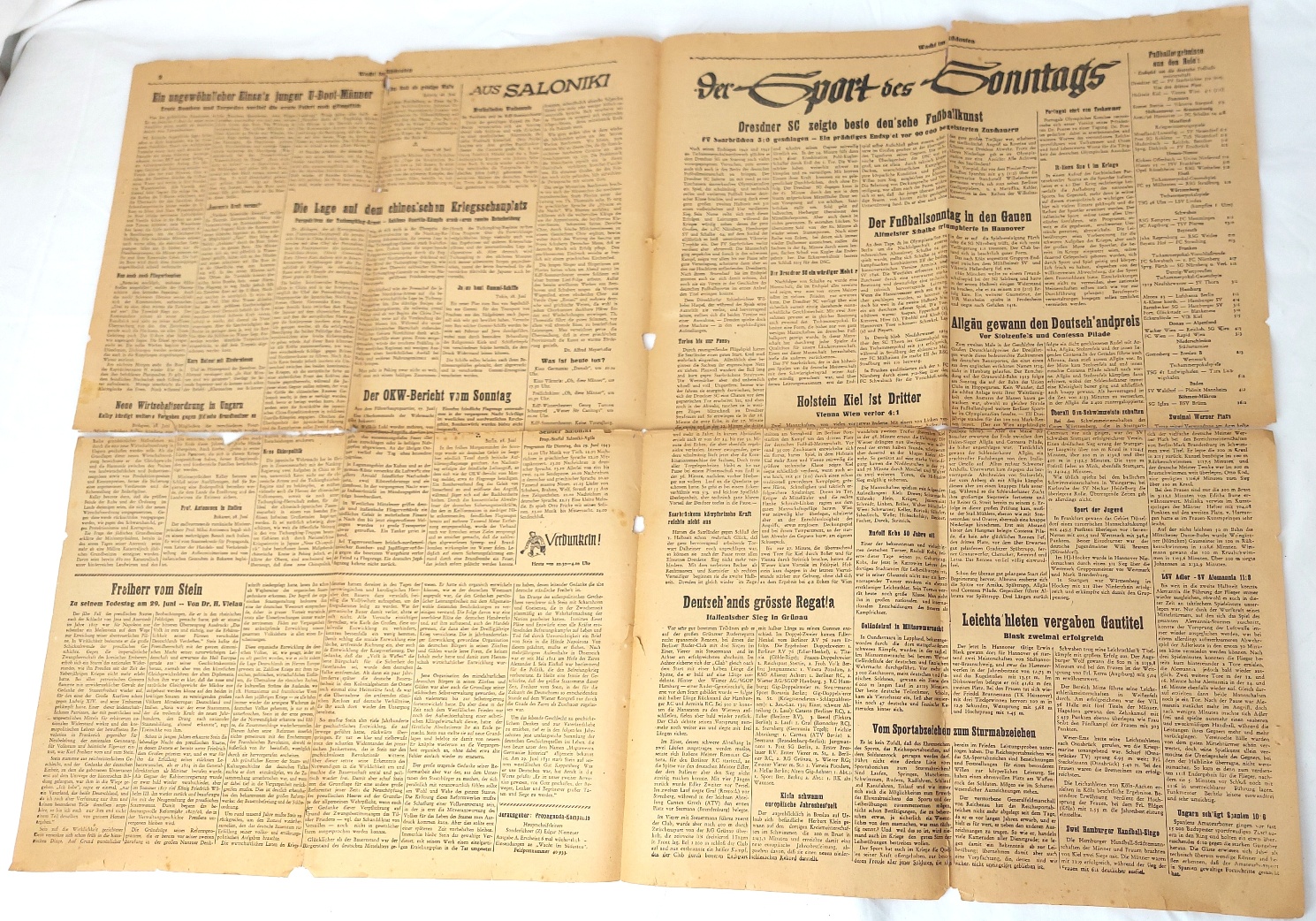
- Sports pages including football results and German sporting coverage, reminding readers that even front newspapers attempted to maintain a sense of normality.
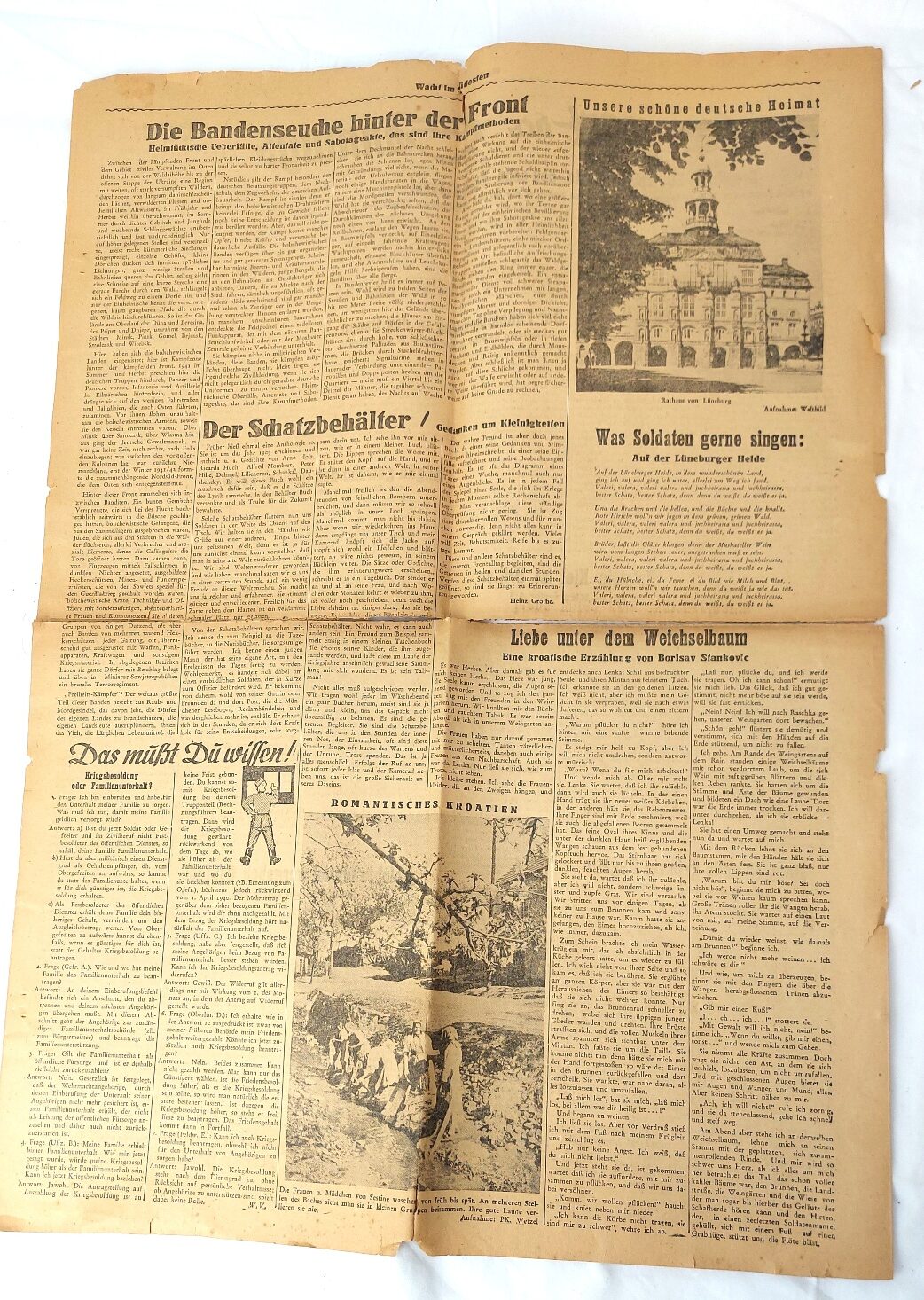
- Human-interest sections including "Was Soldaten gerne singen" ("What Soldiers Like to Sing"), fiction, humour and home-front content designed to sustain morale.
Particularly interesting is the repeated focus on Greece, Thrace and southeastern Europe, reflecting the newspaper's theatre-specific role. Unlike broader Reich newspapers, these regional military papers often contained material tailored to the experiences and concerns of soldiers stationed far from Germany.
Approx. Measurements – Large broadsheet newspaper format.
History Note: German Frontzeitungen such as Wacht im Südosten formed an important part of Wehrmacht morale and propaganda operations. Produced in mobile military printing facilities and distributed directly to troops, they combined official military news with politics, sport, entertainment and ideological content. Their cheap paper quality meant they were generally discarded after reading or repurposed in the field. Consequently, complete examples — especially those retaining multiple pages and theatre-specific content — survive in far smaller numbers than civilian newspapers.
*Condition* Complete 6-page issue. Cleanly torn horizontally in half across the fold line and now separated into upper and lower sections. Various edge tears, small losses and age-related handling wear throughout with typical wartime paper browning and staining. Remains readable and displays well despite its fragile condition. Please see photographs as part of the condition report.