German, WWII, 24–31 December 1941, "Новая Жизнь" (Novaya Zhizn / Neues Leben – "New Life") Russian Collaborationist Christmas Double Issue – Berlin Published – V.M. Despotuli – 16 Pages
£135.00
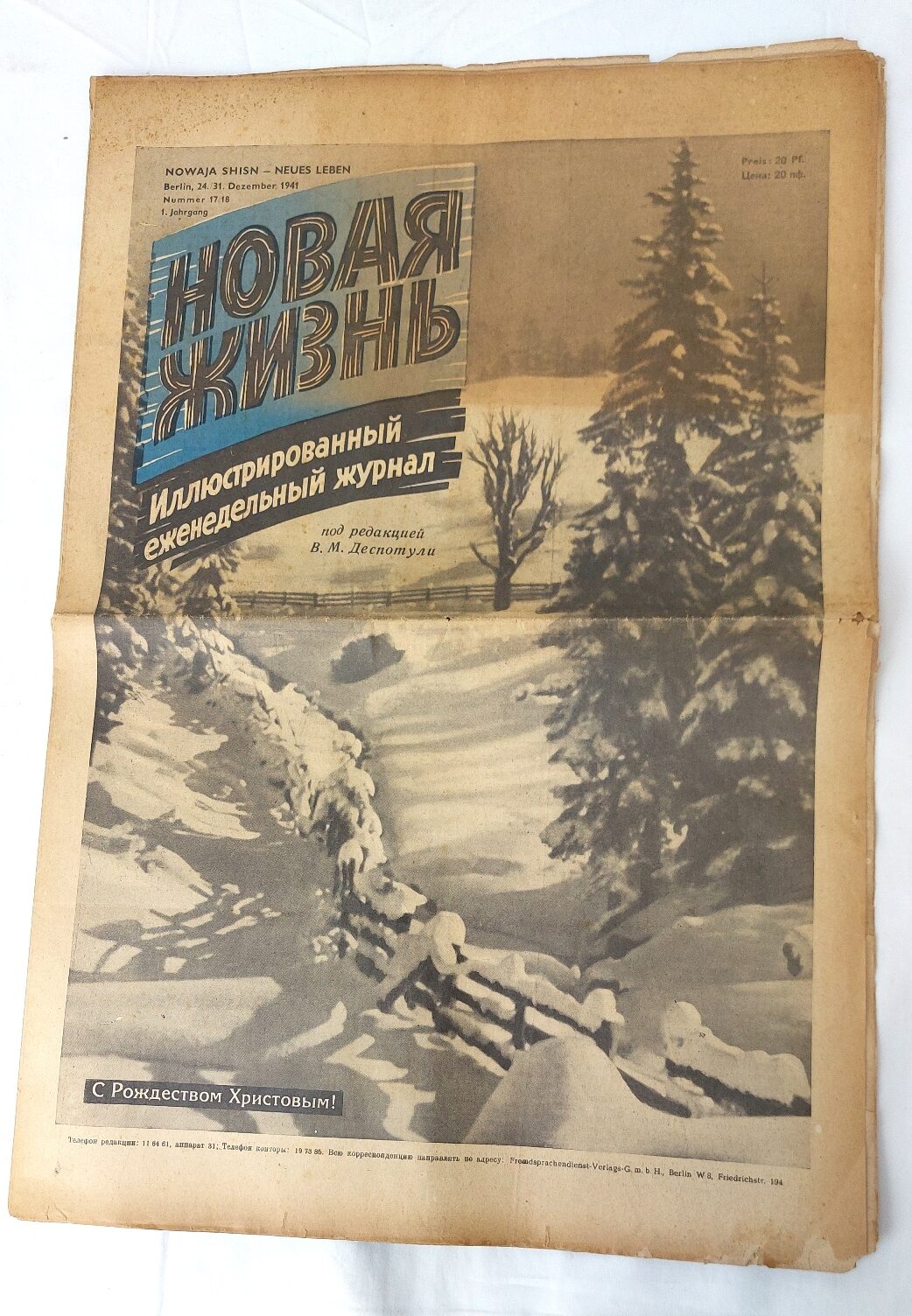
A scarce and visually attractive Christmas 1941 Russian collaborationist magazine from wartime Berlin, combining Eastern Front propaganda, anti-Soviet political cartoons, Christmas themes and illustrated cultural content in a complete 16-page double issue.
*German, WWII, 24–31 December 1941, "Новая Жизнь" (Novaya Zhizn / Neues Leben – "New Life") Russian Collaborationist Christmas Double Issue – Berlin Published – V.M. Despotuli – 16 Pages*
An original and scarce World War II Russian-language illustrated weekly magazine Новая Жизнь (Novaya Zhizn / "New Life"), Numbers 17–18, issued as a special Christmas double edition covering 24–31 December 1941 and published in Berlin during the first year of production. Printed in Nazi Germany for Russian émigrés and audiences within occupied territories, this publication formed part of the broader German propaganda apparatus directed toward Russian-speaking populations following the launch of Operation Barbarossa.
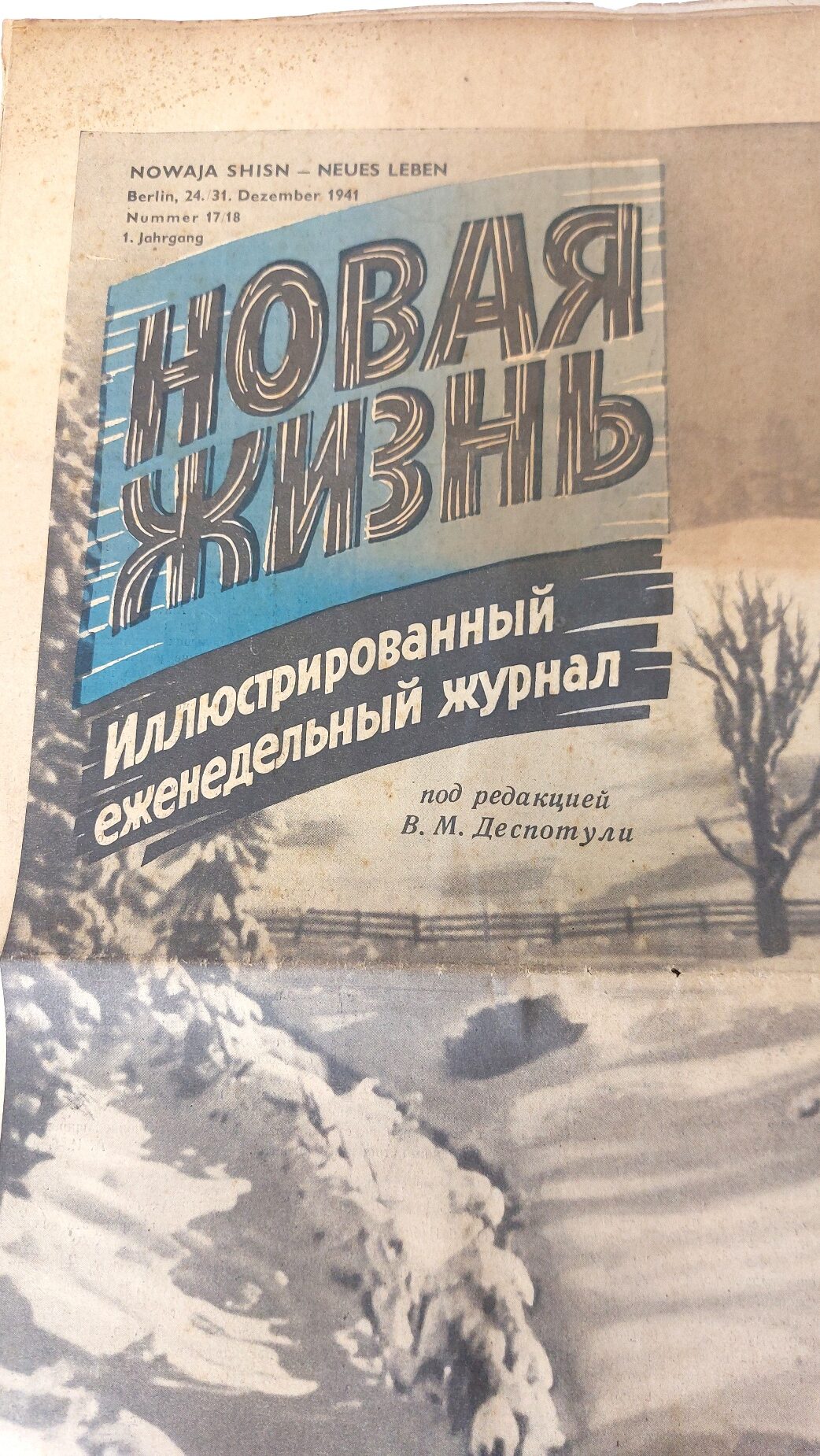
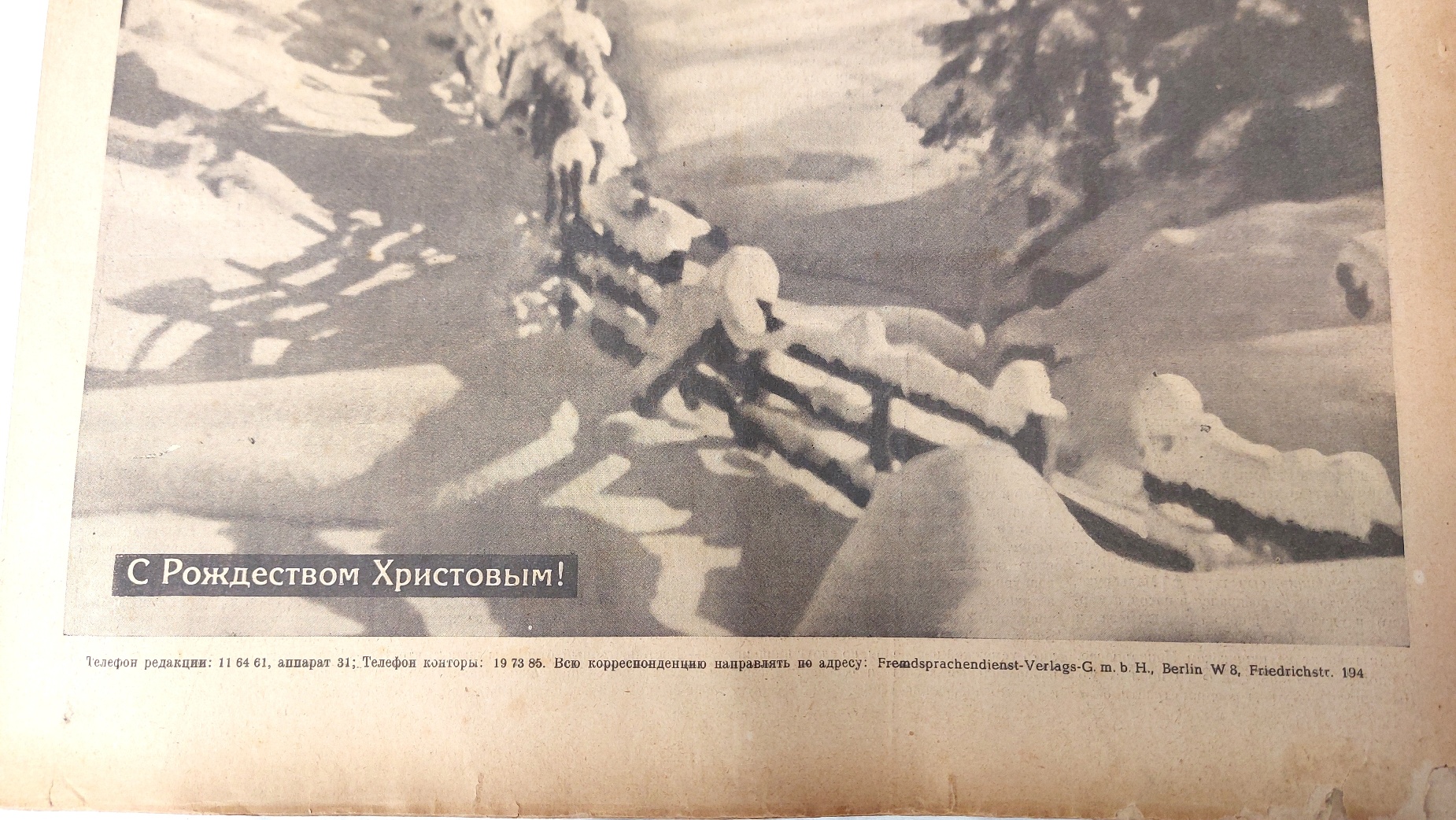
The front cover carries the bilingual masthead NOWAJA SHISN – NEUES LEBEN, identifying it as a Russian publication produced within Germany. Beneath the title appears Иллюстрированный еженедельный журнал ("Illustrated Weekly Magazine"), edited by V.M. Despotuli (В. М. Деспотули), a noted Russian émigré journalist associated with Berlin collaborationist press circles and editor of Novoe Slovo. The winter cover artwork presents an idyllic snow-covered rural landscape accompanied by the greeting С Рождеством Христовым! ("Merry Christmas"), projecting a nostalgic Christian and traditionalist image intended to appeal strongly to displaced Russians and anti-Soviet readers.
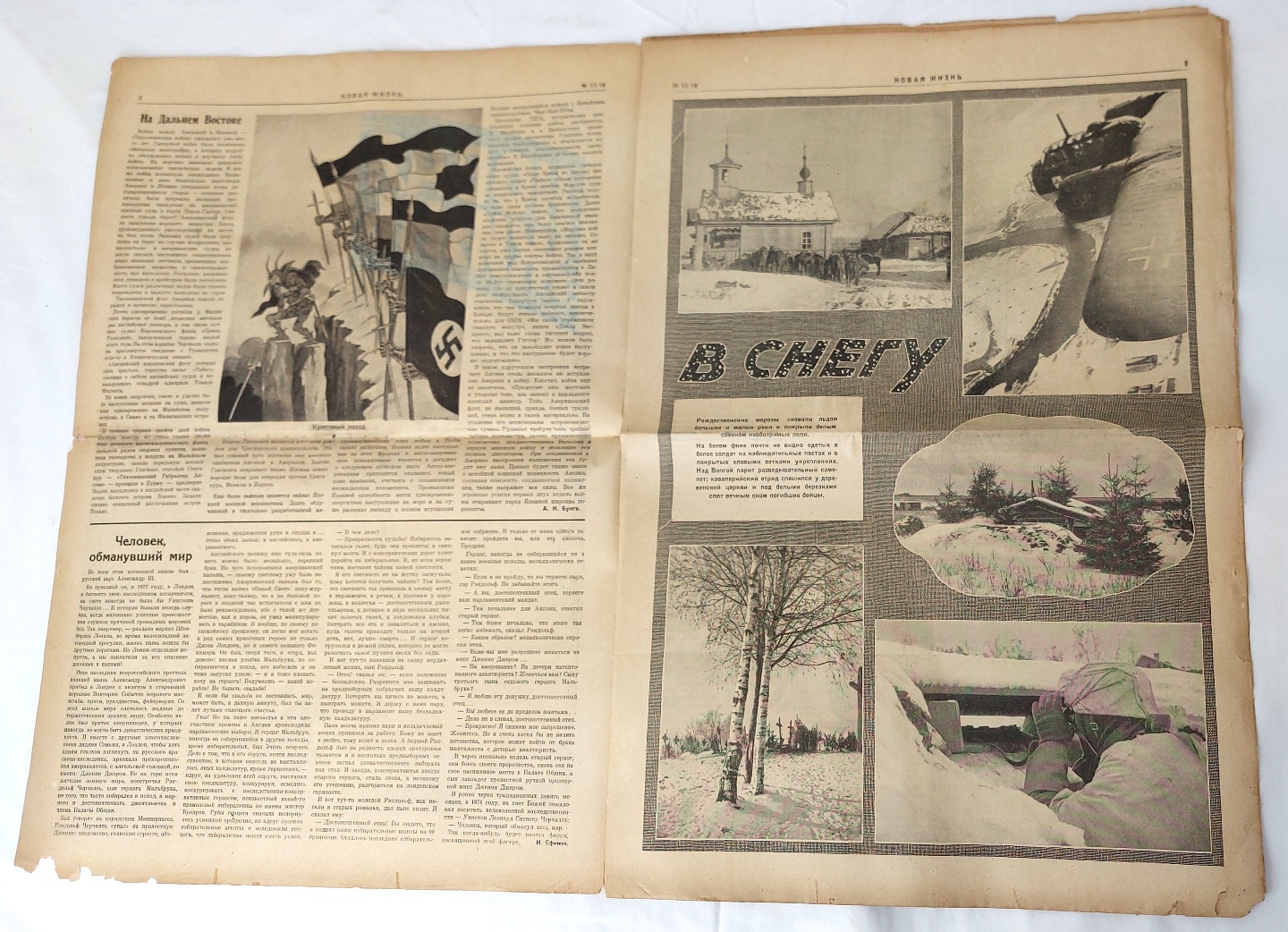
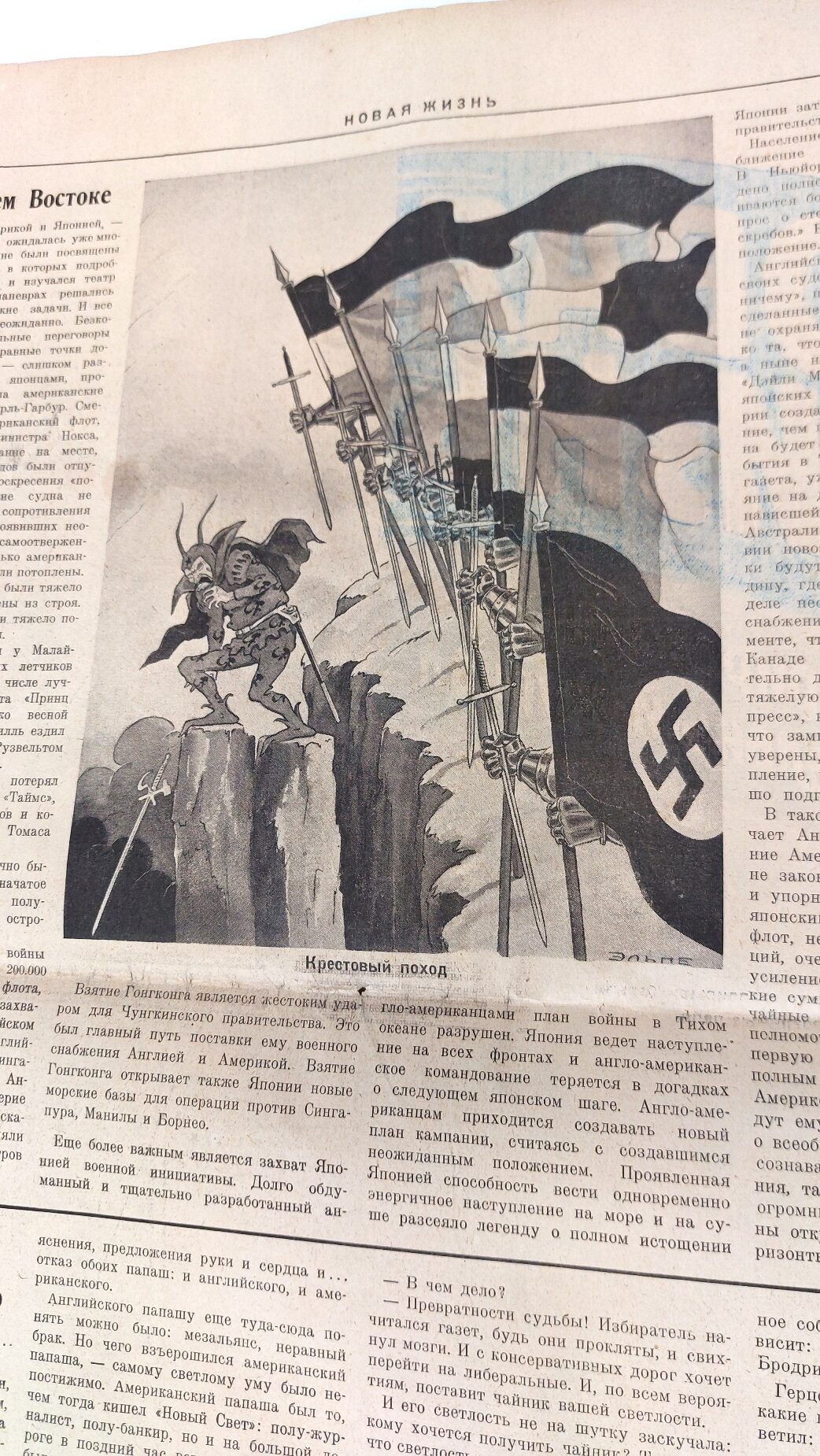
Inside, the issue provides an unusually revealing mixture of wartime propaganda, Christmas material, cultural content and illustrated features. The second page contains a particularly striking political cartoon entitled Крестовый поход ("Crusade"), showing Nazi banners and armoured figures advancing while demonic caricatures stand opposed—an overt visual representation of the German-led campaign against Bolshevism. The accompanying text discusses events in the Far East and presents Japanese military successes as part of a wider anti-Allied narrative.
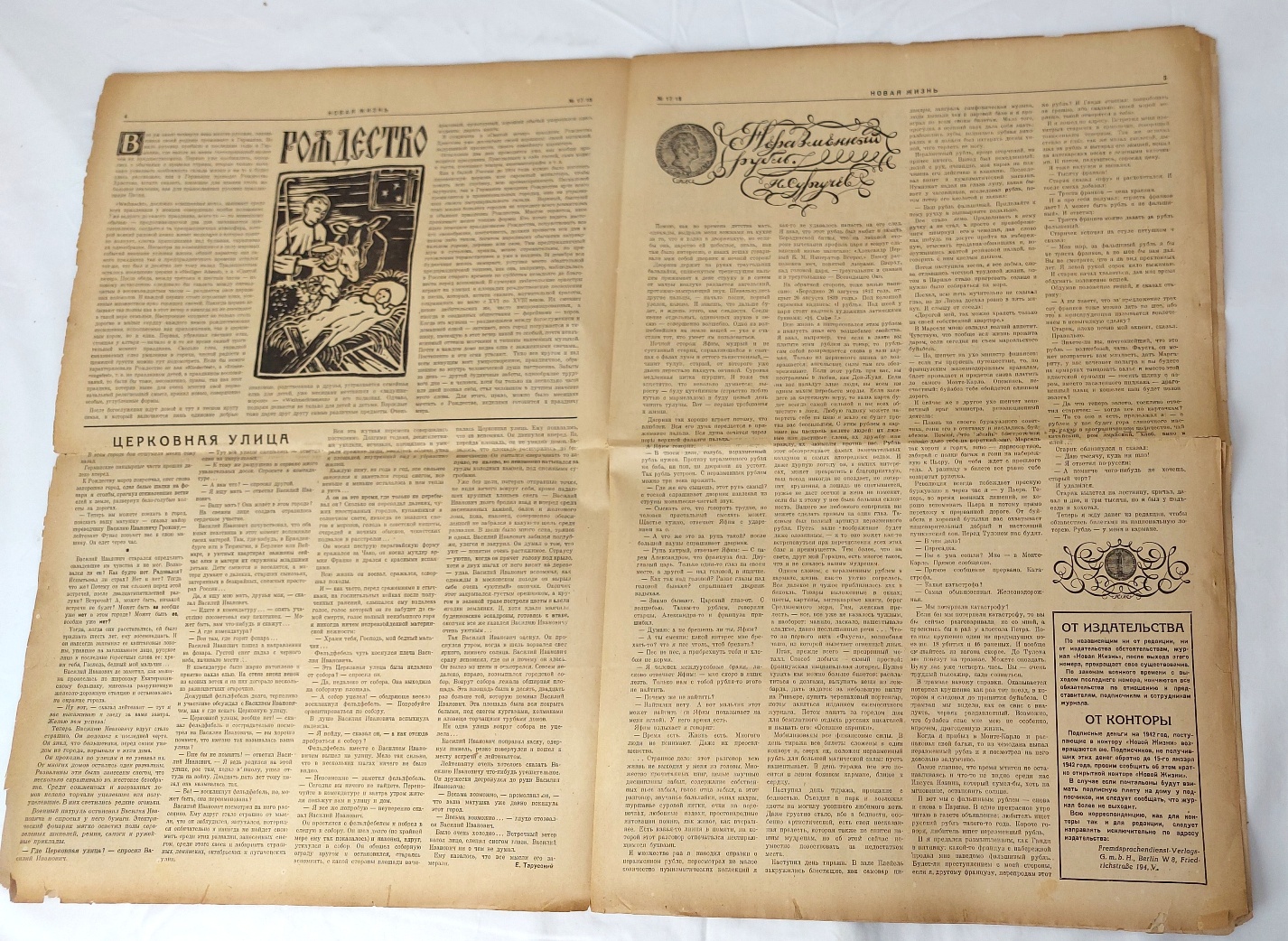
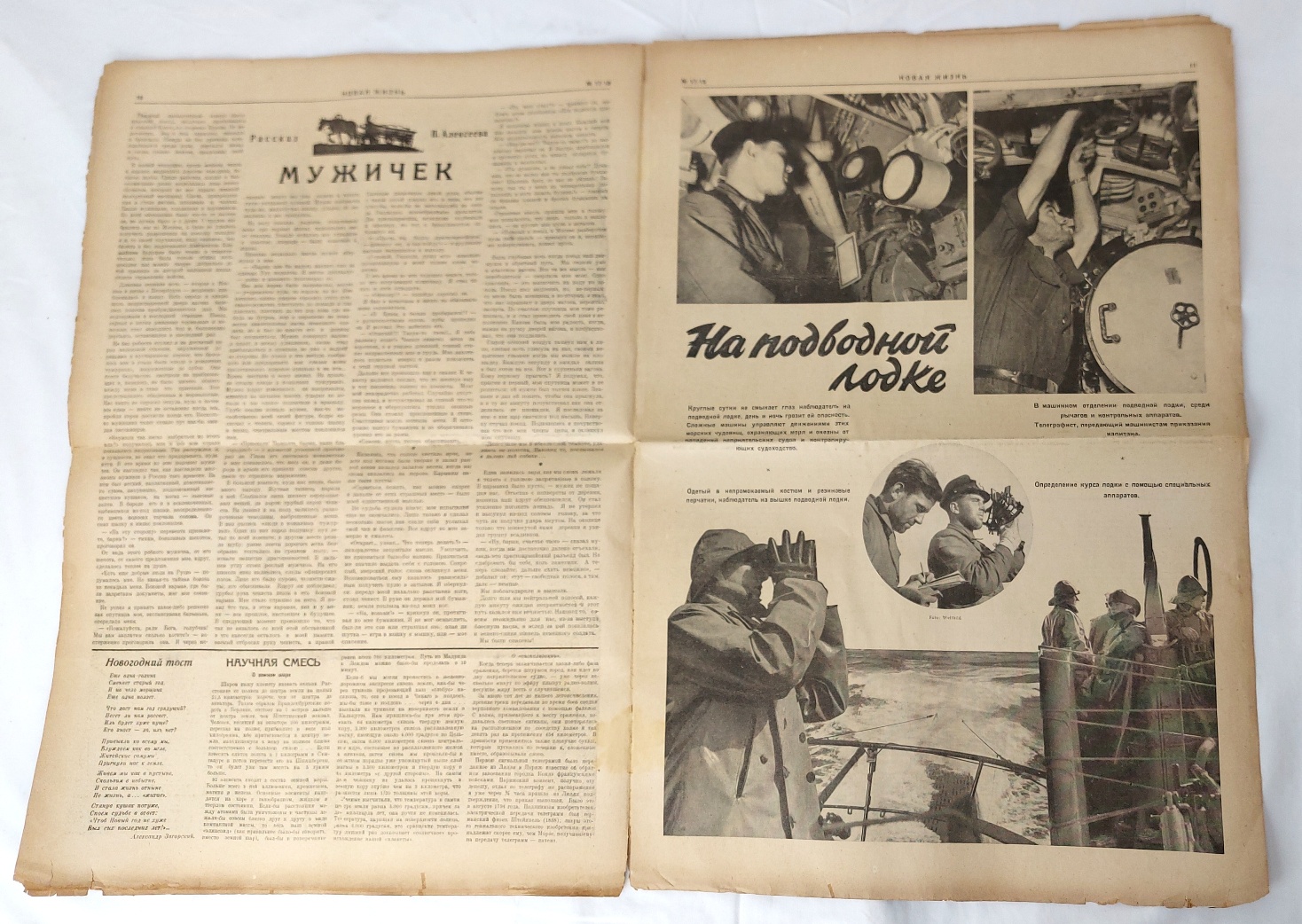
A substantial illustrated feature titled В снегу ("In the Snow") depicts German soldiers operating in winter conditions, including aircraft, field positions and snow-covered combat scenes from the Eastern Front. Elsewhere, Christmas-themed articles and religious content appear under headings such as Рождество ("Christmas"), reflecting the regime's attempt to contrast Soviet atheism with traditional Christian values.
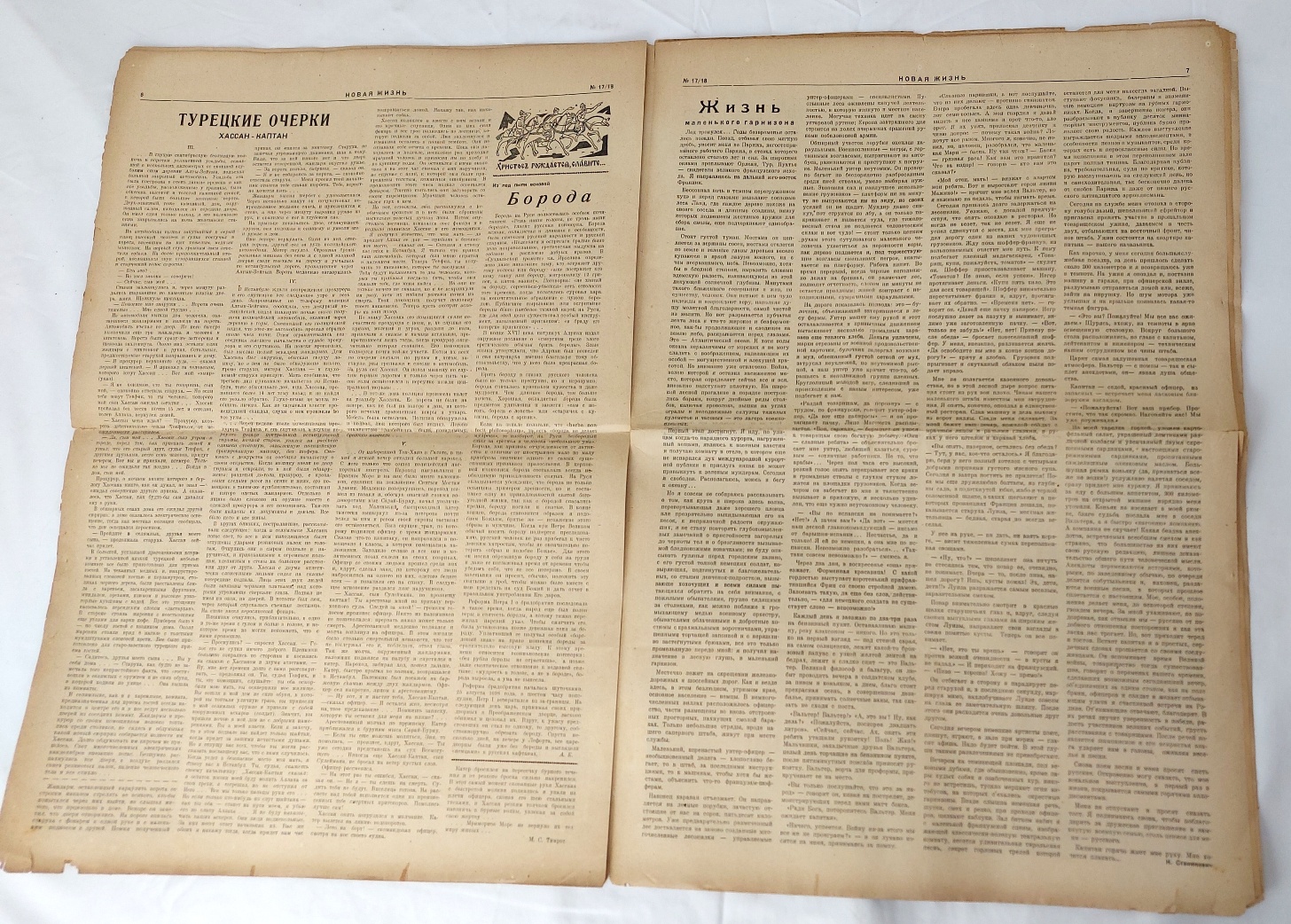
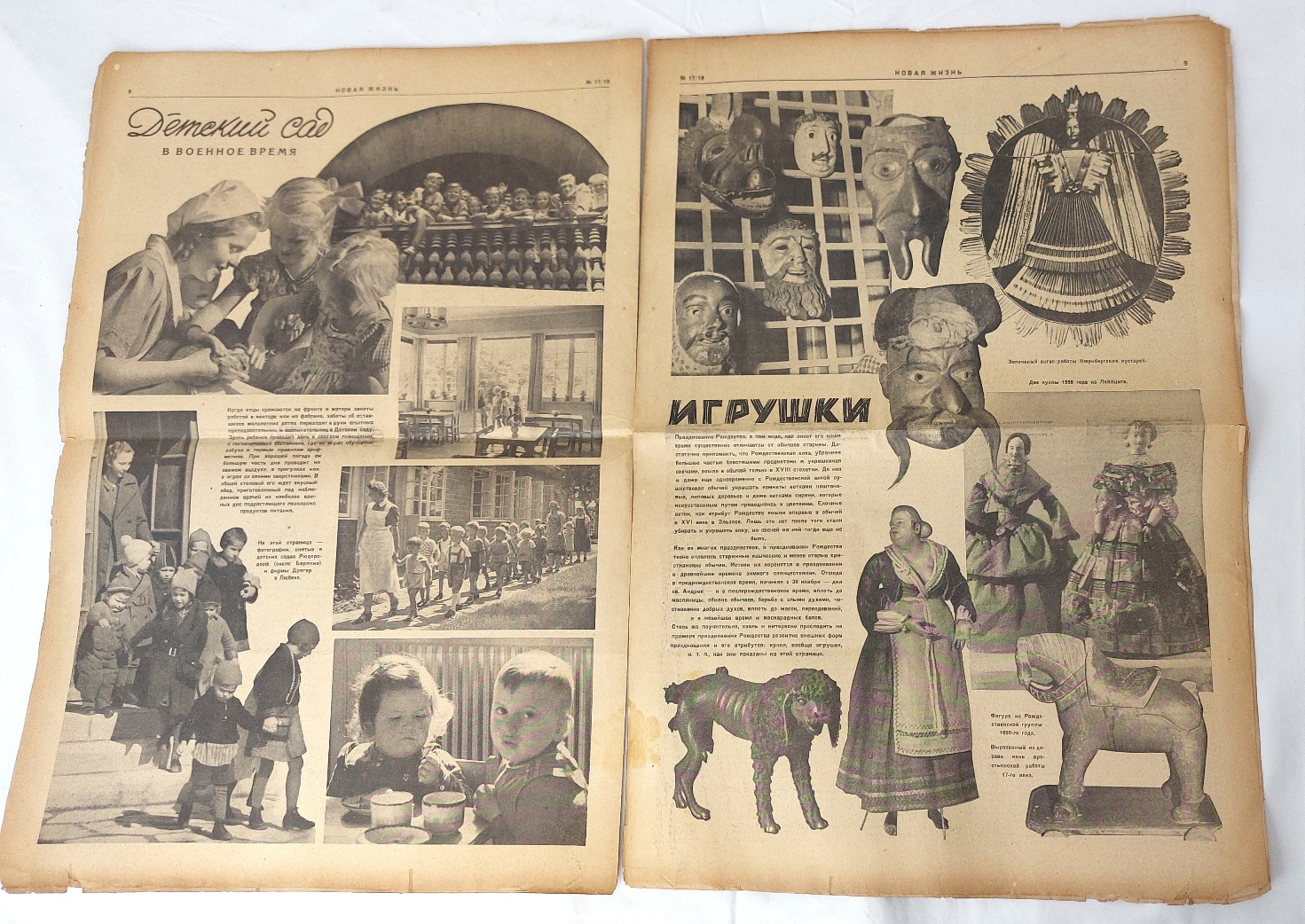
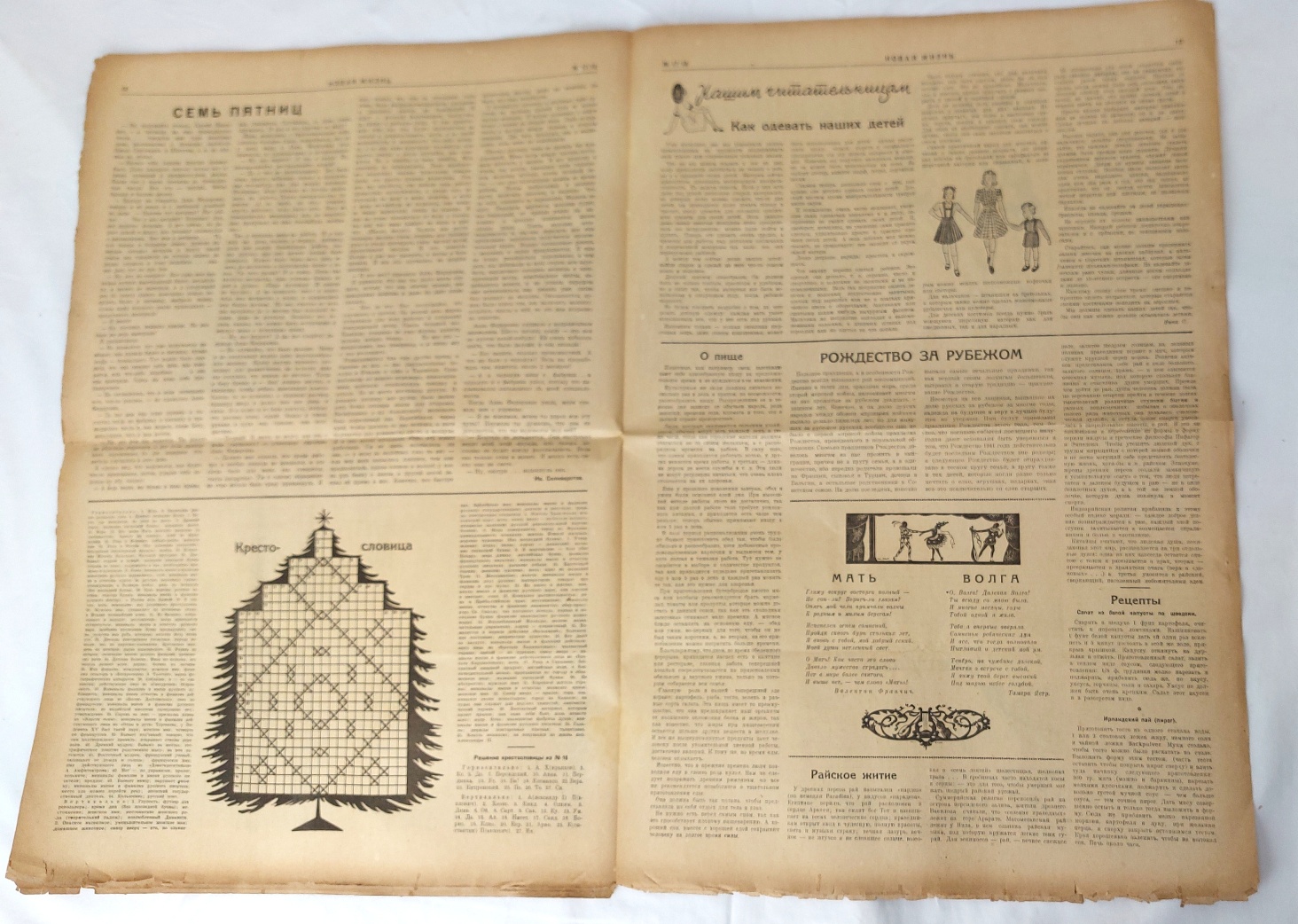
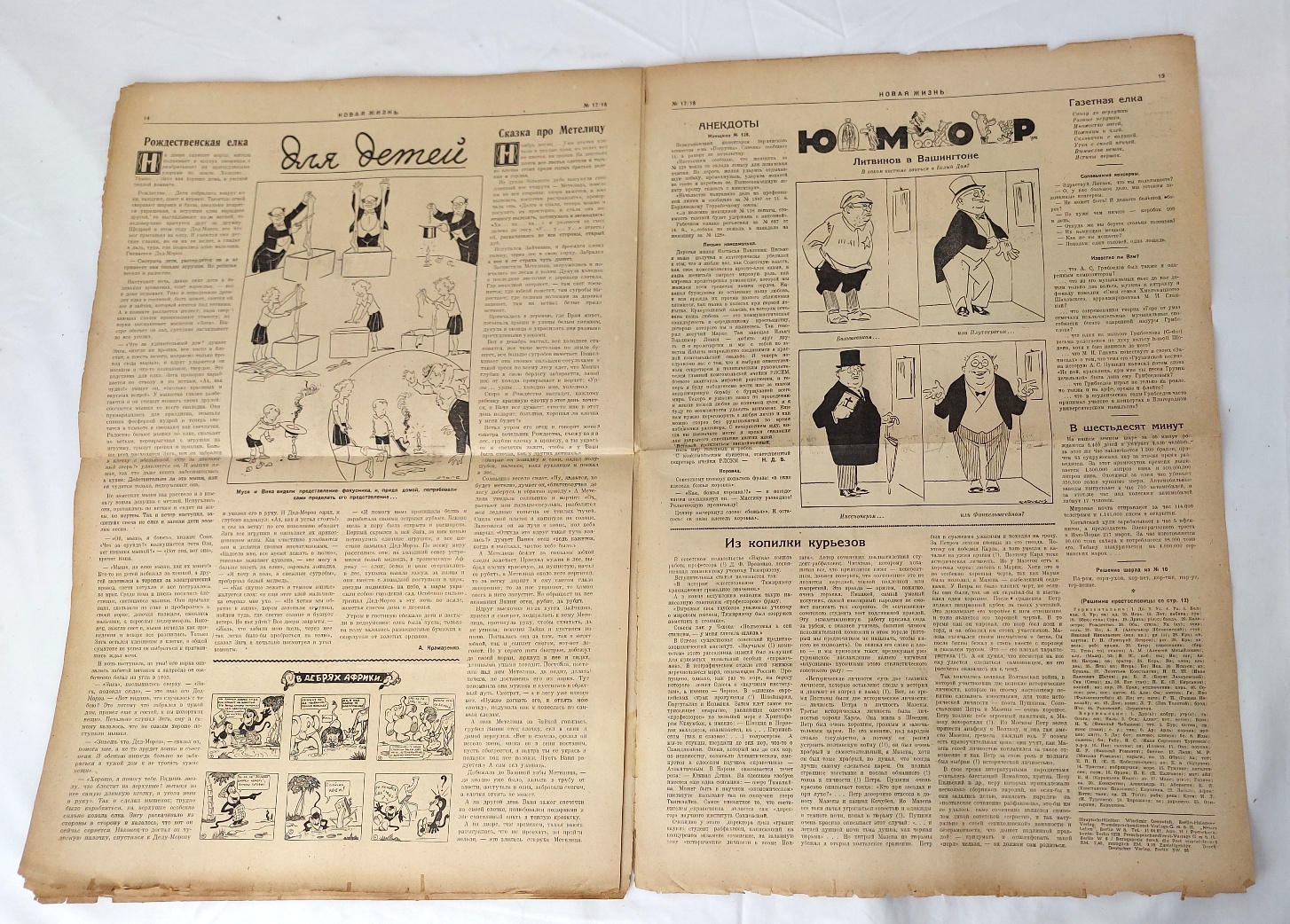
Several cultural and domestic sections provide insight into wartime civilian life and propaganda messaging. Features on children's wartime nurseries, traditional toys and family life are interspersed with lifestyle columns, recipes, puzzles and literary content. Particularly notable is the illustrated page Для детей ("For Children"), alongside comic strips and games intended for younger readers.
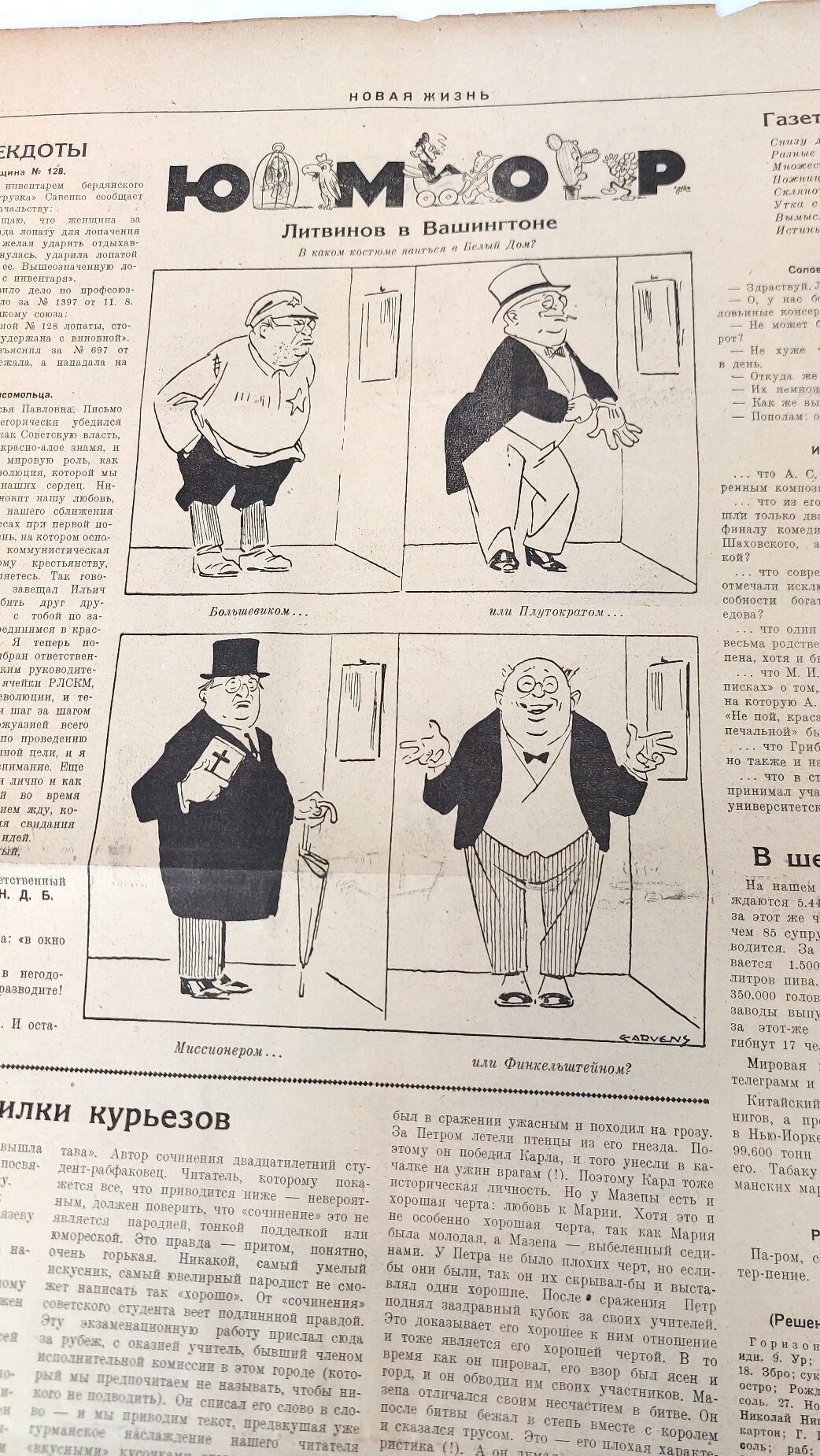
One of the most visually interesting pages contains the satirical humour section Юмор featuring a caricature sequence titled Литвинов в Вашингтоне ("Litvinov in Washington"), mocking Soviet diplomat Maxim Litvinov through a series of exaggerated depictions. Such anti-Soviet and anti-Allied political satire formed a central component of wartime psychological propaganda.
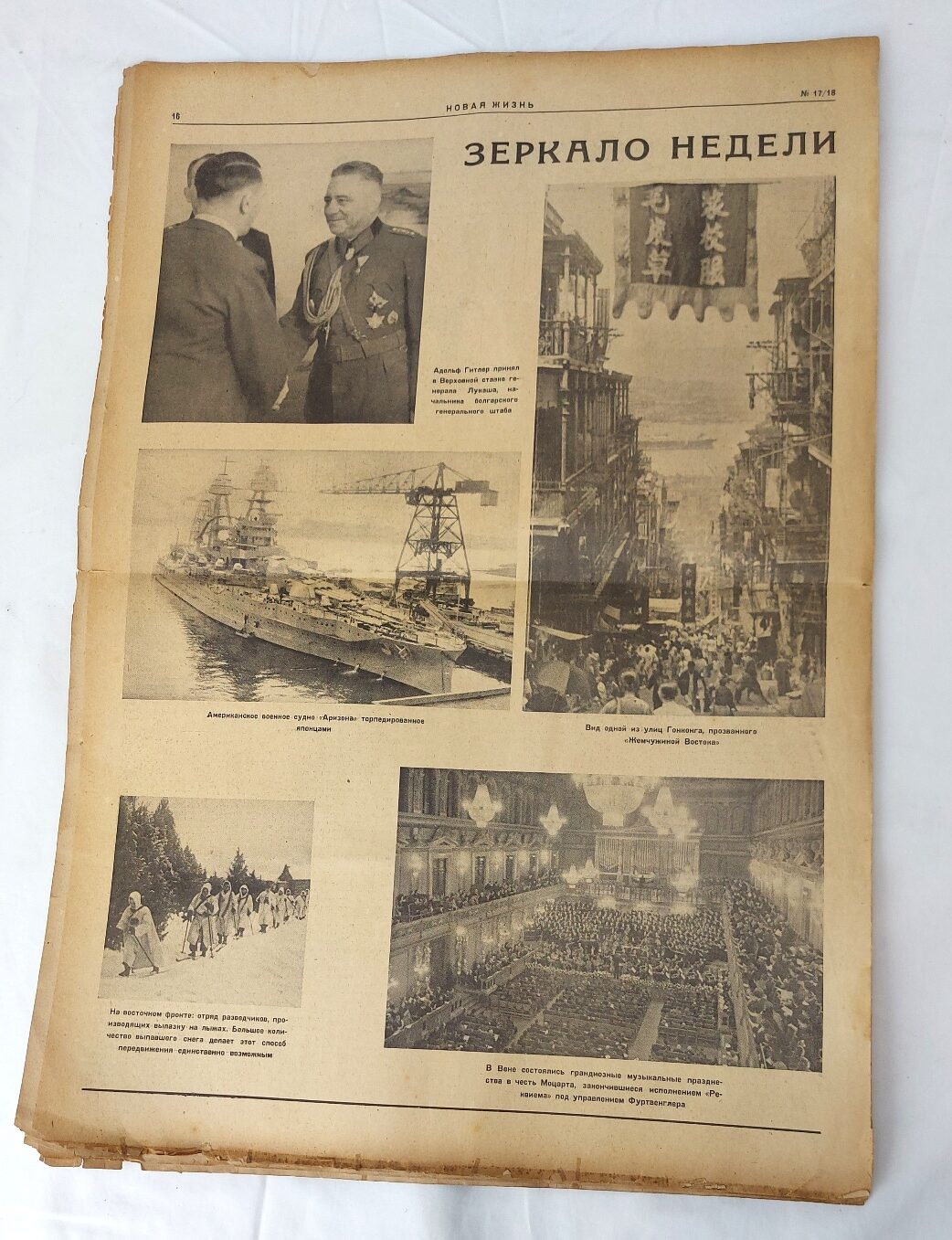
The final page Зеркало недели ("Mirror of the Week") provides a pictorial roundup of current events, including images of Adolf Hitler receiving Bulgarian military figures, wartime naval scenes, Eastern Front reconnaissance troops on skis and cultural events in Vienna. The issue therefore serves as a remarkably concentrated example of early-war German efforts to shape Russian opinion through a blend of entertainment, religion, culture and political messaging.
Approx. Measurements – 16 pages.
History Note: Новая Жизнь ("New Life") was among several Russian-language publications issued in Berlin under German supervision following the invasion of the Soviet Union in June 1941. Rather than straightforward military newspapers, publications such as this attempted to create a parallel Russian cultural space—one rooted in anti-Bolshevik identity, Orthodox traditions and émigré nostalgia. The Christmas 1941 issue is especially interesting because it appeared during the first winter of the Eastern Front campaign, at a moment when Germany still expected rapid victory despite the failure to capture Moscow. Such magazines were printed on low-quality wartime paper and intended for short-term circulation, making complete surviving examples increasingly uncommon.
*Condition* Complete 16-page issue. Minor edge tears and handling wear commensurate with age. Light foxing and age toning throughout. Fold lines from period storage remain visible. Small tears and nicks to page edges and corners as expected from wartime newsprint. Paper remains stable and illustrations and text remain clearly legible. Please see photographs as part of the condition report.