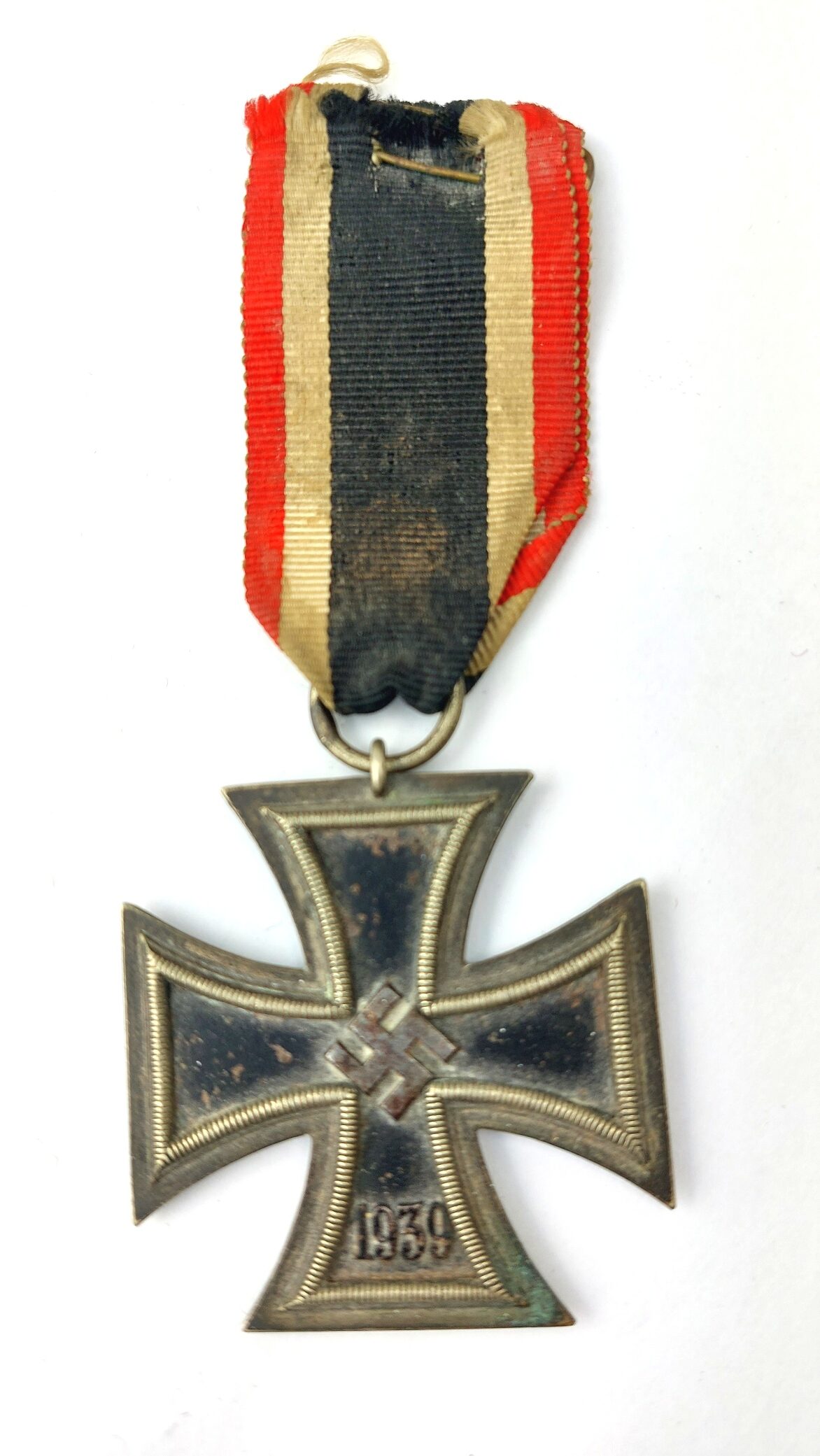
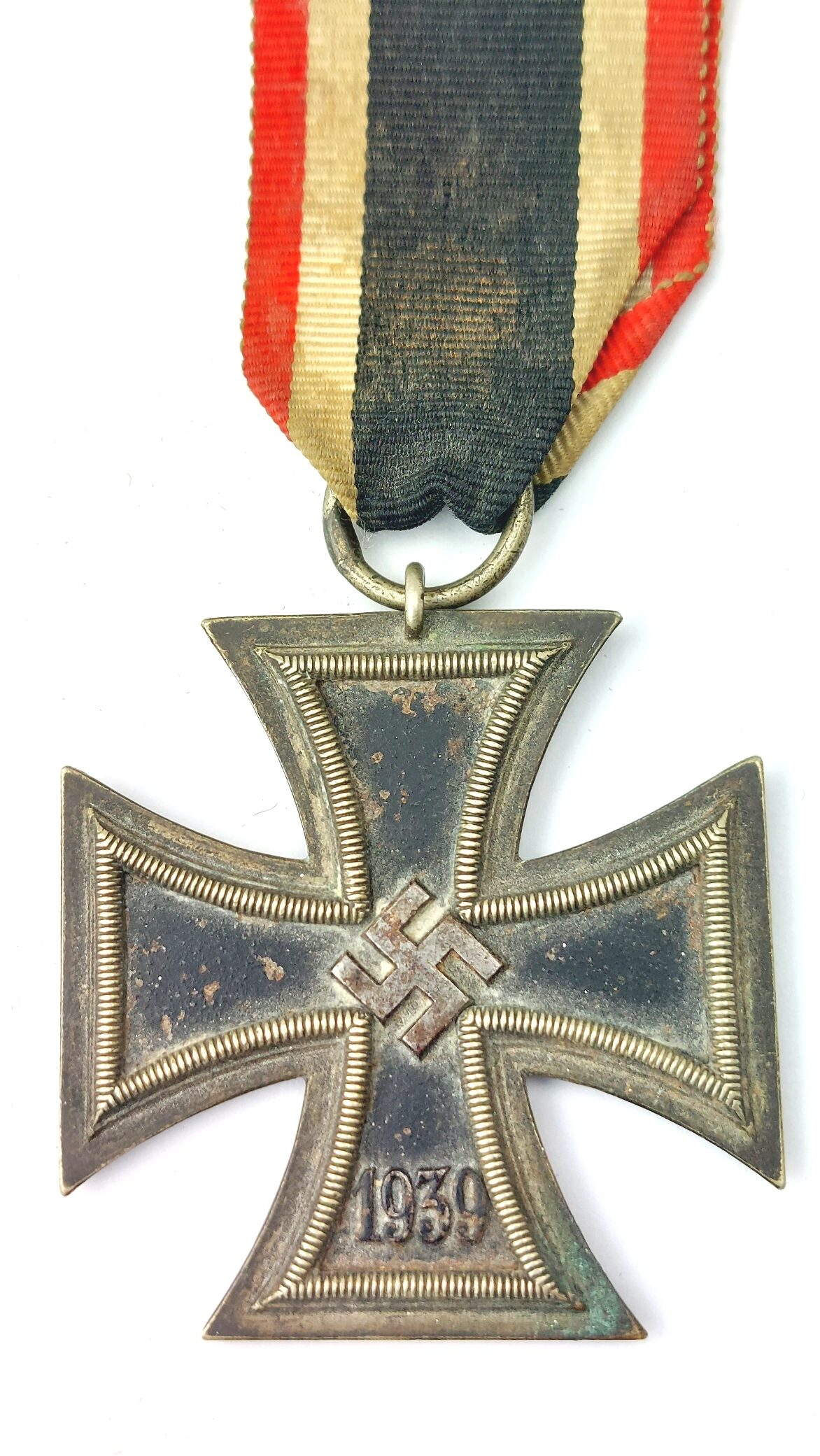
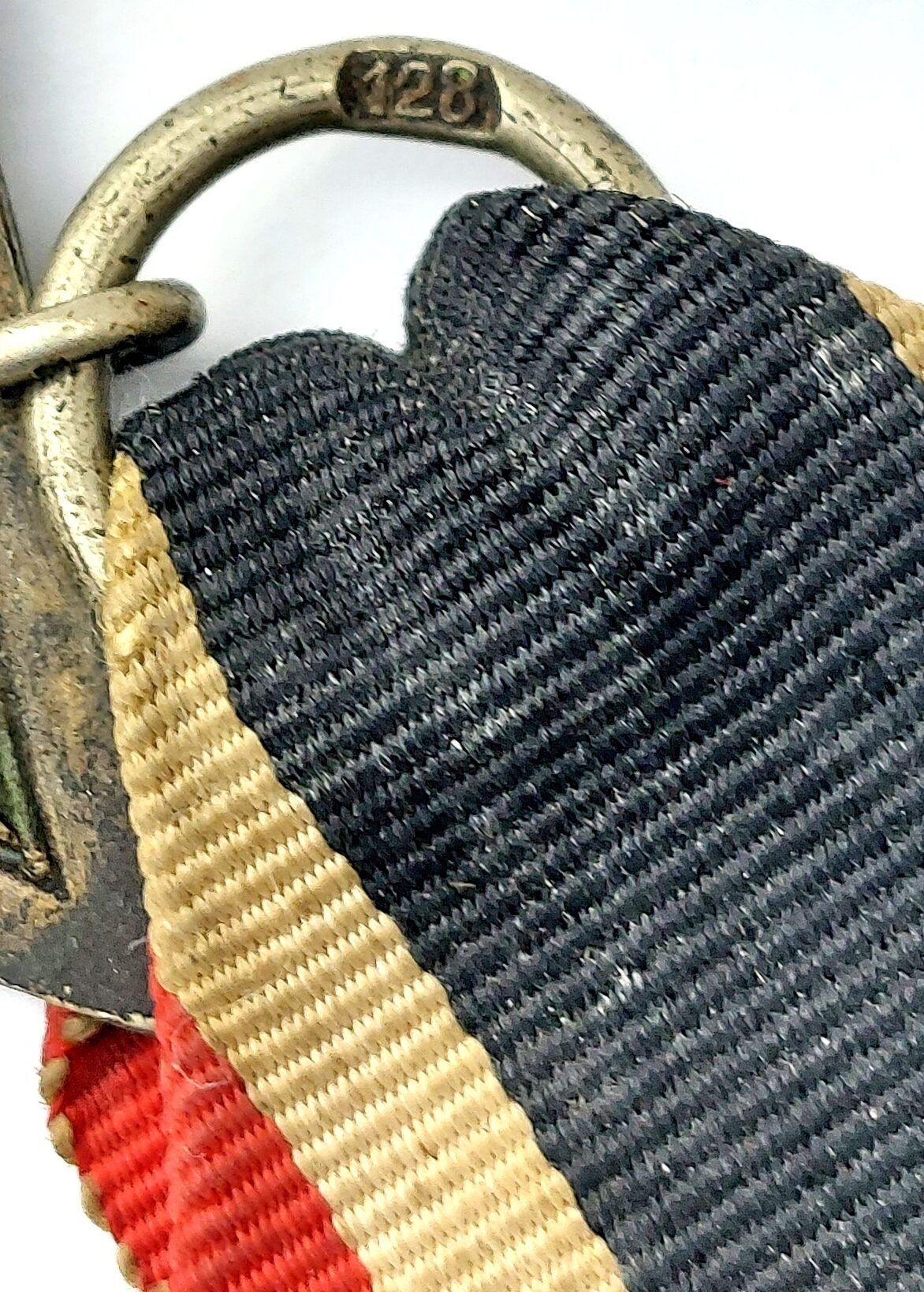
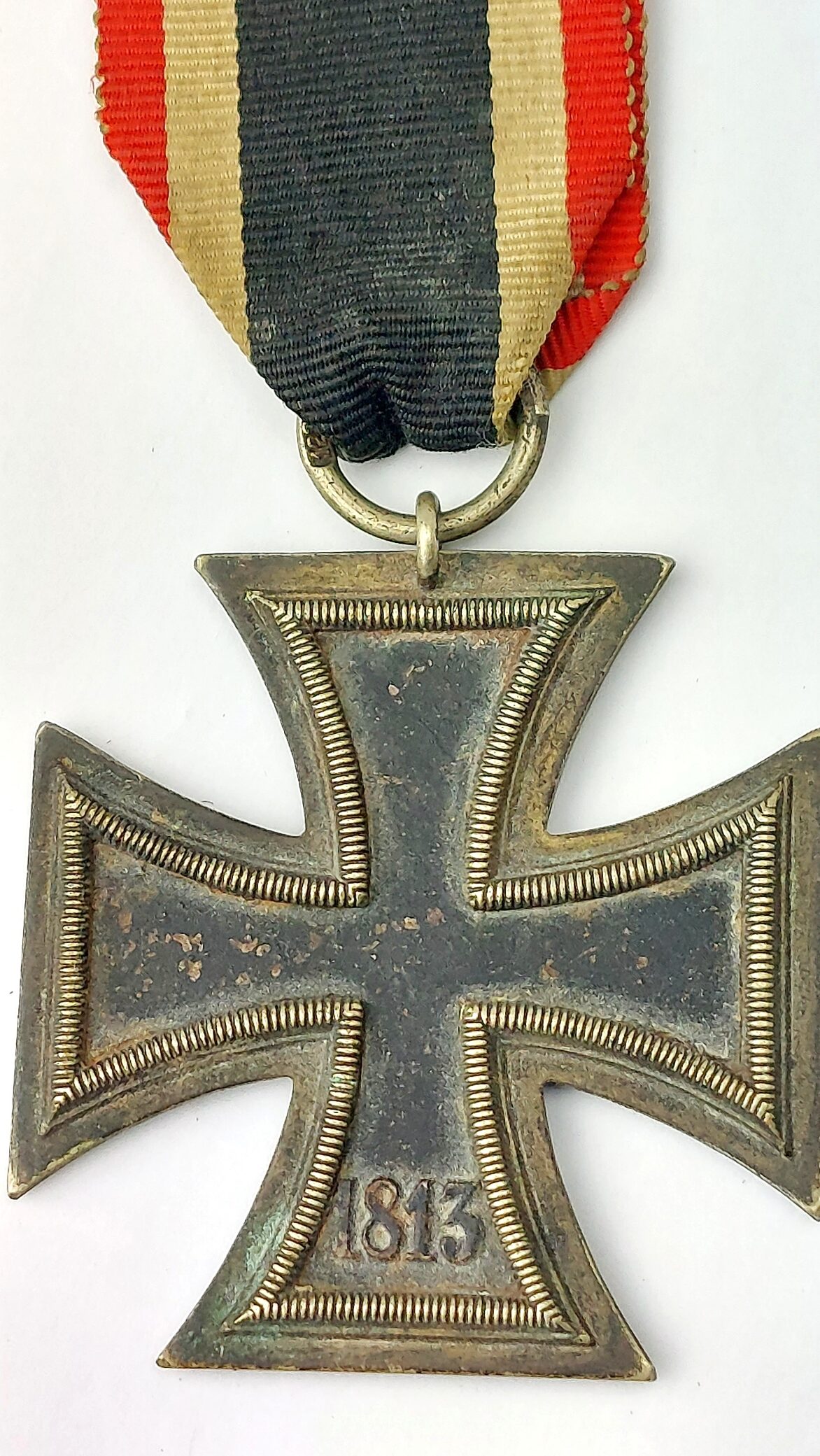
A good and original Second World War German Iron Cross 2nd Class, dated 1939, retaining its original suspension ring clearly stamped “128” for the desirable maker S. Jablonski G.m.b.H. of Posen (modern-day Poznań).
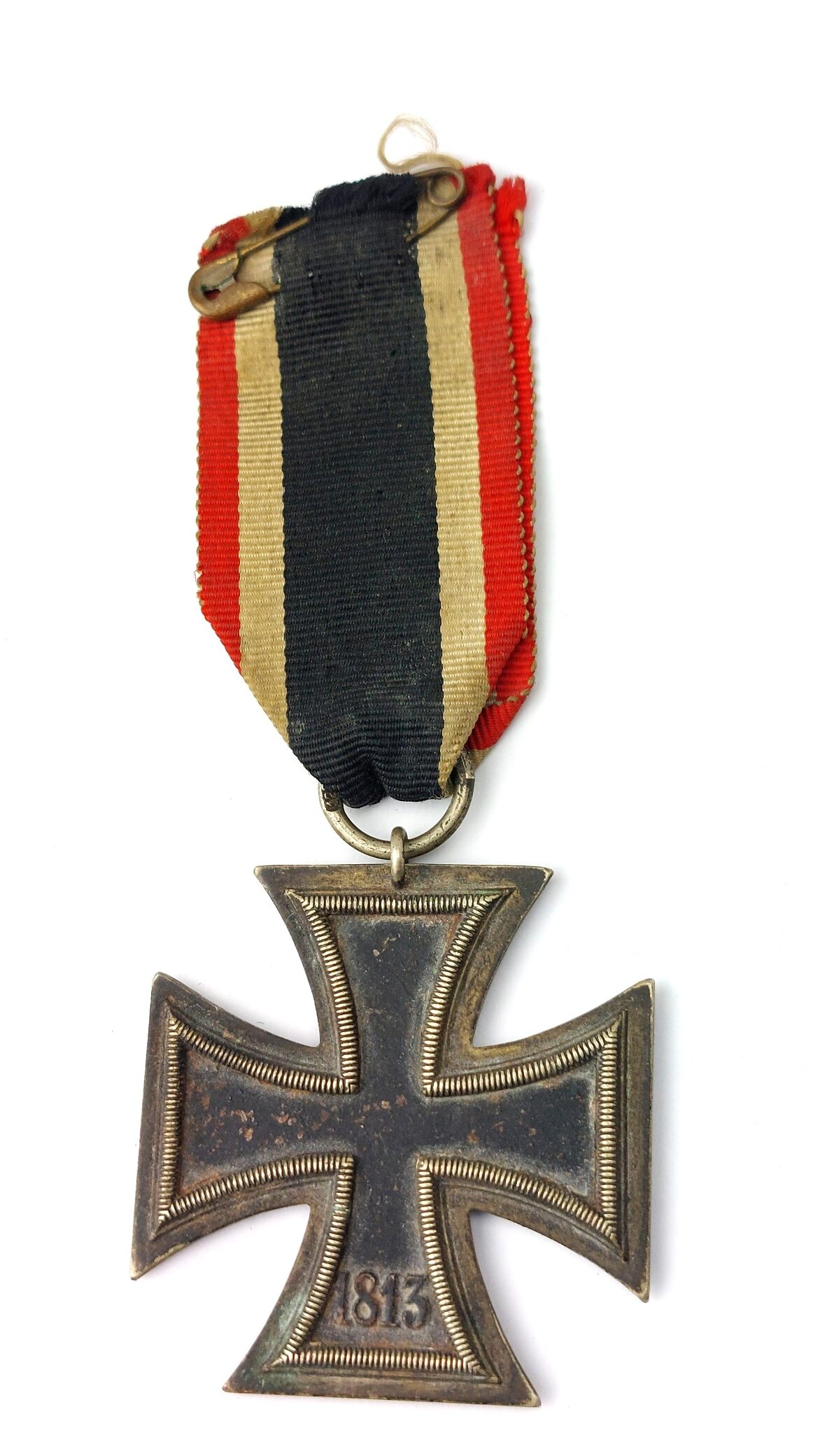
The cross is of classic three-piece construction, comprising a magnetic iron core with black painted finish, set within a two-part silvered (German silver) frame with well-defined beaded borders. The obverse displays the central swastika device with the date “1939” to the lower arm, while the reverse retains the date “1813,” commemorating the decoration’s original institution during the Napoleonic Wars under King Friedrich Wilhelm III of Prussia.
The suspension ring is intact and crisply marked, with the “128” maker’s code clearly legible, a less commonly encountered manufacturer that adds a degree of collector interest beyond the more frequently seen examples. The cross is complete with its original period ribbon in the correct red, white, and black colour sequence, still attached to its original pin fitting.
The iron core is confirmed magnetic, consistent with wartime production, and the overall form, construction, and finish are entirely in keeping with a textbook Second World War example.
Measurements: Approx. 4.6 cm across (standard EK2 dimensions).
History Note:
The Iron Cross was first instituted in 1813 during the Wars of Liberation against Napoleonic France and became one of Germany’s most recognisable military decorations. Reissued in 1870, 1914, and again in 1939, the Second Class award was presented for acts of bravery or merit in wartime service. During the Second World War it was typically worn suspended from the ribbon through the buttonhole of the field tunic, with the full medal reserved for formal occasions. Maker-marked examples such as this provide an additional layer of historical interest, reflecting the wide network of German manufacturers engaged in wartime production.
*Condition*
The cross remains in good, honest condition showing typical age and service wear. The iron core retains a significant portion of its original black finish, with areas of wear, oxidation, and light surface speckling visible, particularly to the high points. The silvered frame has developed a natural, even patina, with minor surface marks and light toning consistent with age. The beaded borders remain sharp and well defined throughout. The suspension ring is undisturbed and clearly stamped “128.” The ribbon shows signs of age, including light fraying, creasing, and some fading, but remains complete and original to the piece. Overall, a well-preserved and untouched example. Please see photographs as part of the condition report.