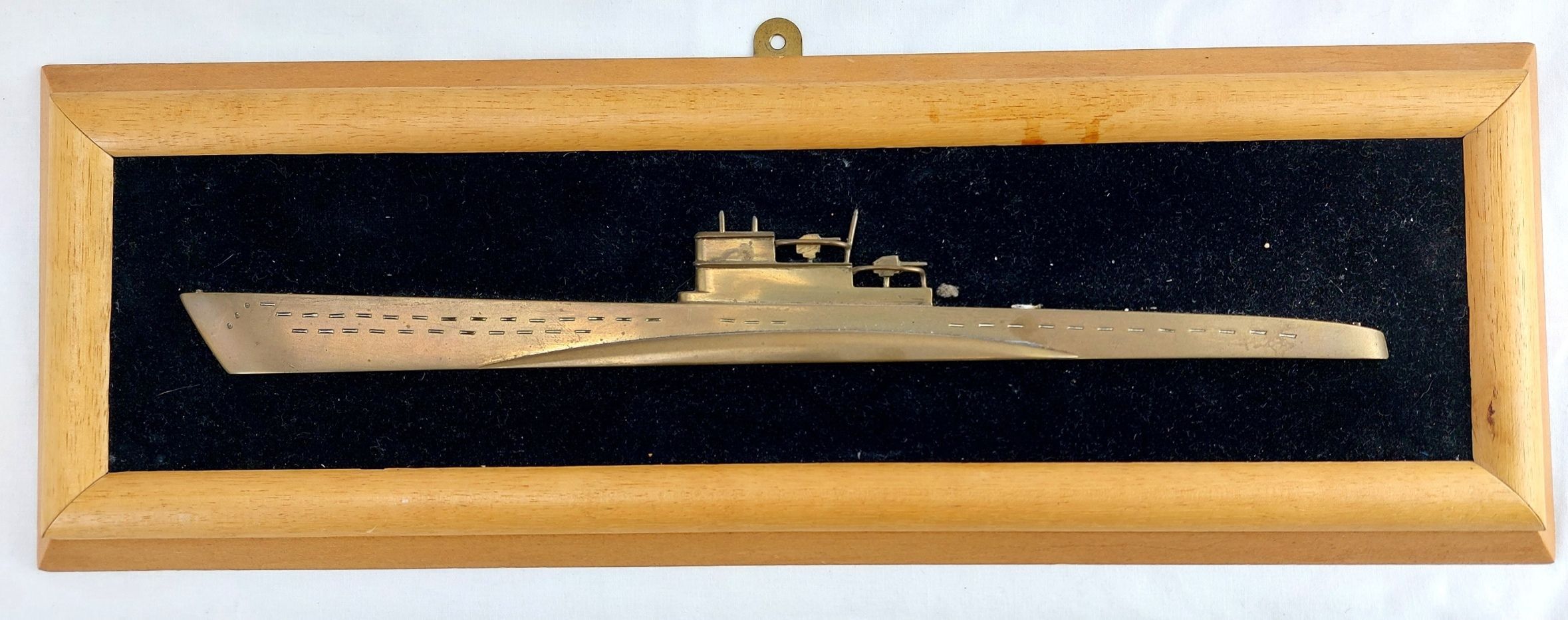
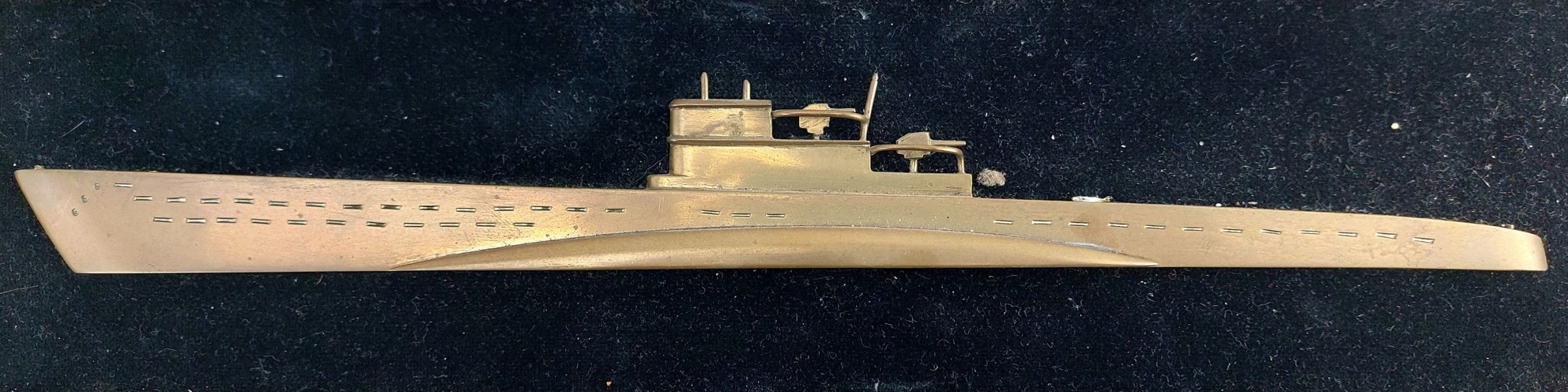
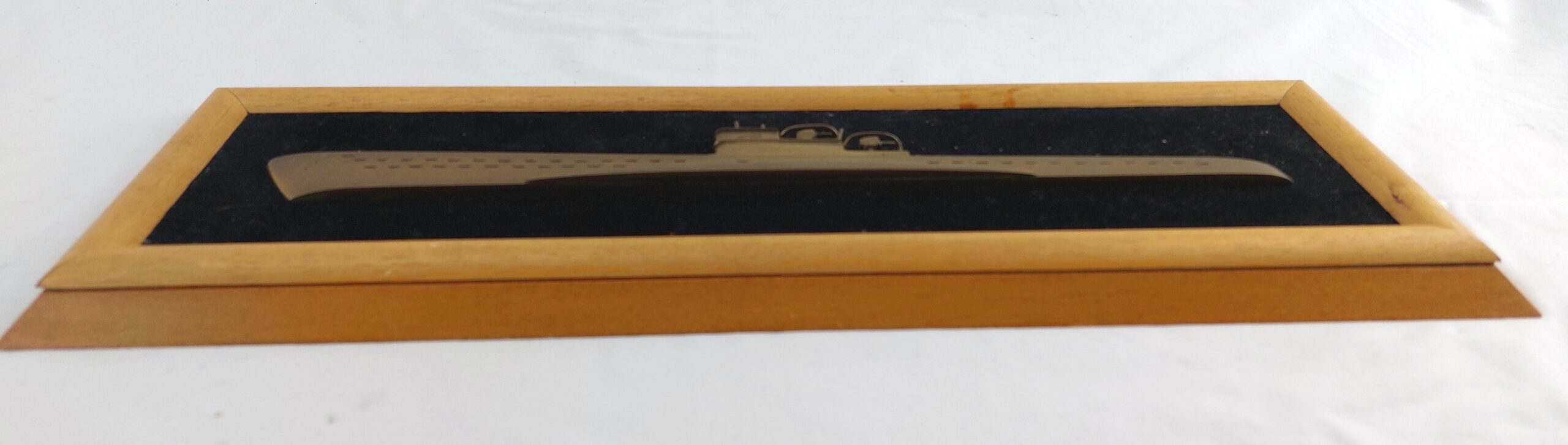
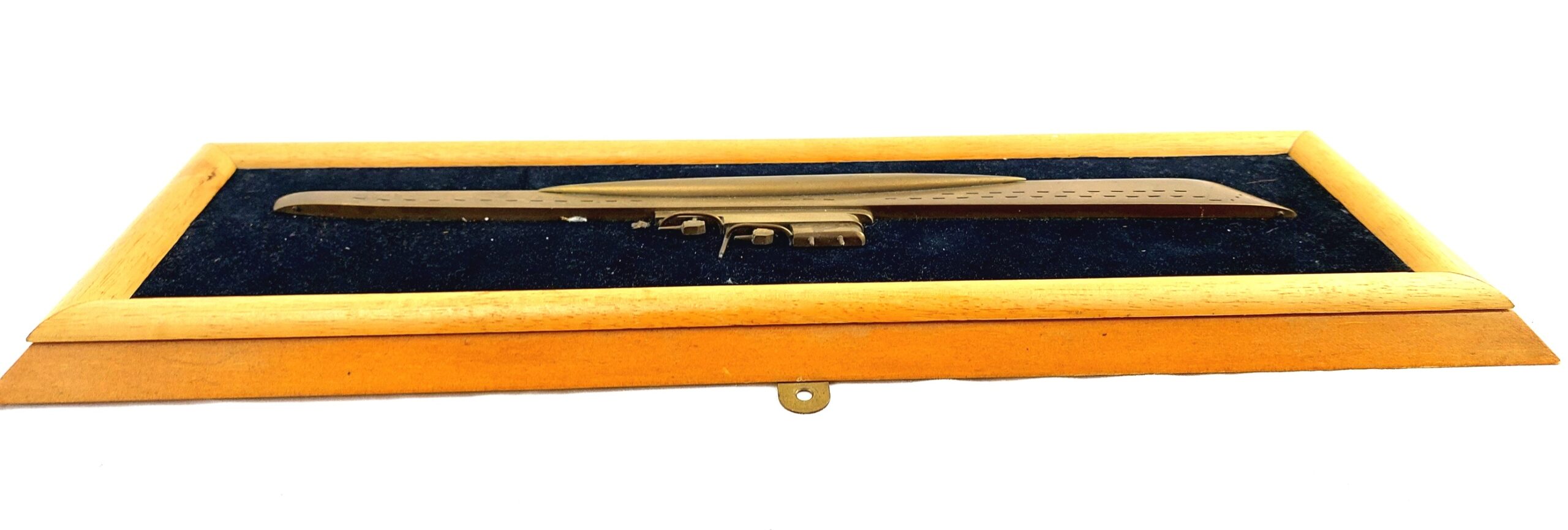
*German, WW2, Type IX U-Boat - Brass Relief Plaque*
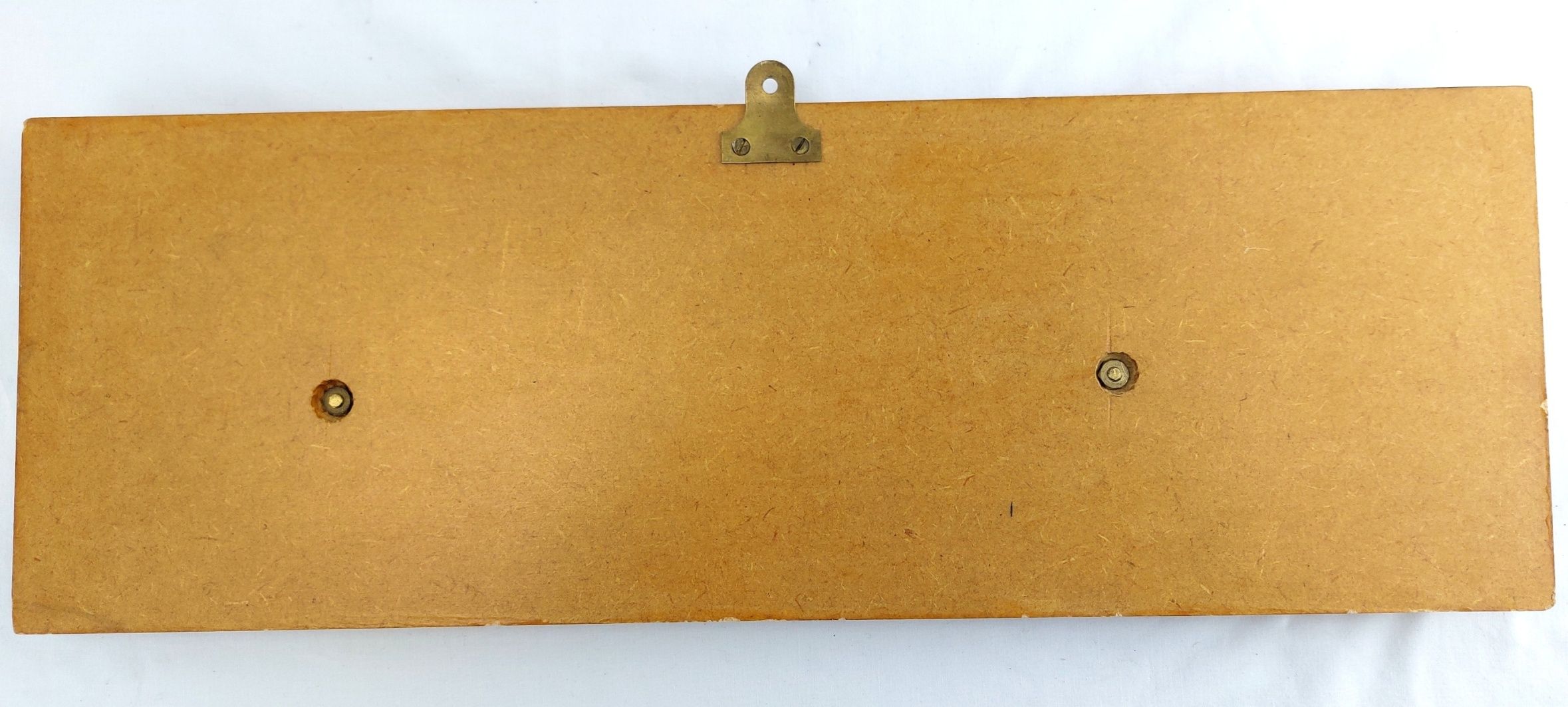
Brass U Boat submarine relief, mounted on to black velvet with wooden frame, it is likely that it is Type 1X.
Approximate Measurements:
Frame: 48cm x 16.4cm
U boat: 37cm x 5cm
U-boats were German naval submarines, particularly significant during World War I and II. The term, derived from the German U-Boot (short for Unterseeboot, meaning "under-sea boat"), is often associated with German wartime subs, though Austro-Hungarian submarines were also called U-boats.
In World War II, Karl Dönitz, supreme commander of the Kriegsmarine's U-boat arm, believed the UK could be defeated through focused convoy battles. U-boats initially achieved significant success in the Battle of the Atlantic, severely disrupting Allied shipping. However, improved Allied tactics, such as high-frequency direction finding and the Hedgehog anti-submarine system, began to diminish their effectiveness. This culminated in May 1943, known as Black May, when U-boat losses surpassed their impact on Allied shipping.
Type IX U-Boat
The Type IX U-boat, developed by Nazi Germany's Kriegsmarine in 1935–1936, was a large, ocean-going submarine designed for extended operations far from home bases. Based on the earlier Type IA, it underwent several modifications and appeared in various sub-types.
Type IX U-boats featured six torpedo tubes—four at the bow and two at the stern—and carried six internal reloads. Additionally, five external torpedo containers (three at the stern and two at the bow) provided storage for 10 extra torpedoes, allowing commanders to shadow convoys and launch repeated attacks over consecutive nights. Some IXC variants were equipped for mine-laying, capable of carrying 44 TMA or 60 TMB mines.
Their secondary armament included a 10.5 cm (4.1 in) deck gun with 180 rounds, while anti-aircraft weaponry varied over the course of the war. Early models (IXA and IXB) featured two tower periscopes and a third in the control room, which was removed in later versions like the IXC. These long-range submarines were often equipped with the Focke-Achgelis Fa 330 rotor kite, a towed rotary-wing aircraft used for reconnaissance.
*Condition*
Very good used condition. Please see photographs as part of the condition report.