*German, WW2-Third Reich Period, Winterhilfswerk (WHW) Donation Tin, No. 1256, by M. Westermann & Co. (WESCO), Neheim-Ruhr*
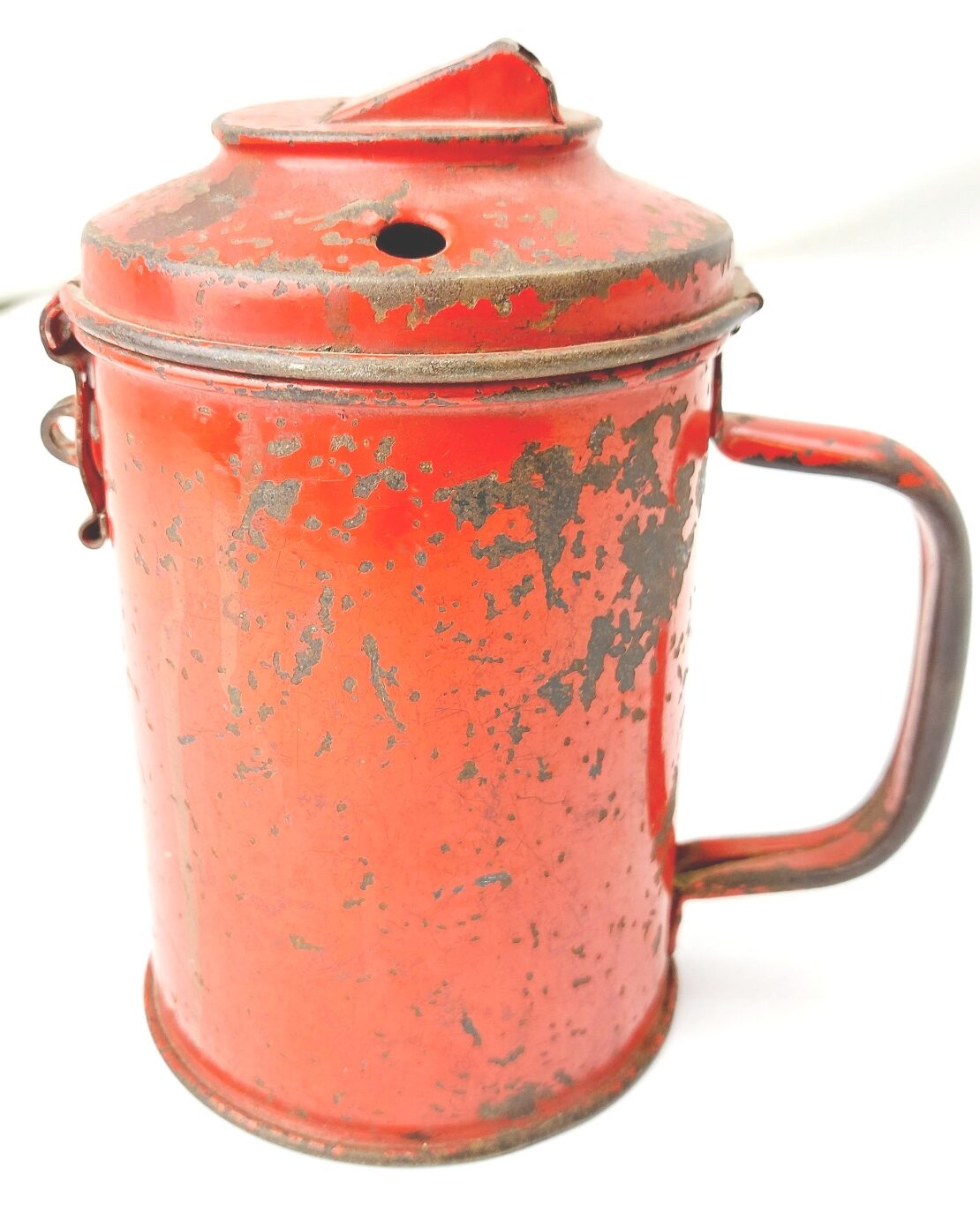
An original red-painted pressed steel fundraising can (Sammelbüchse) produced for use during the Third Reich period charitable collections.
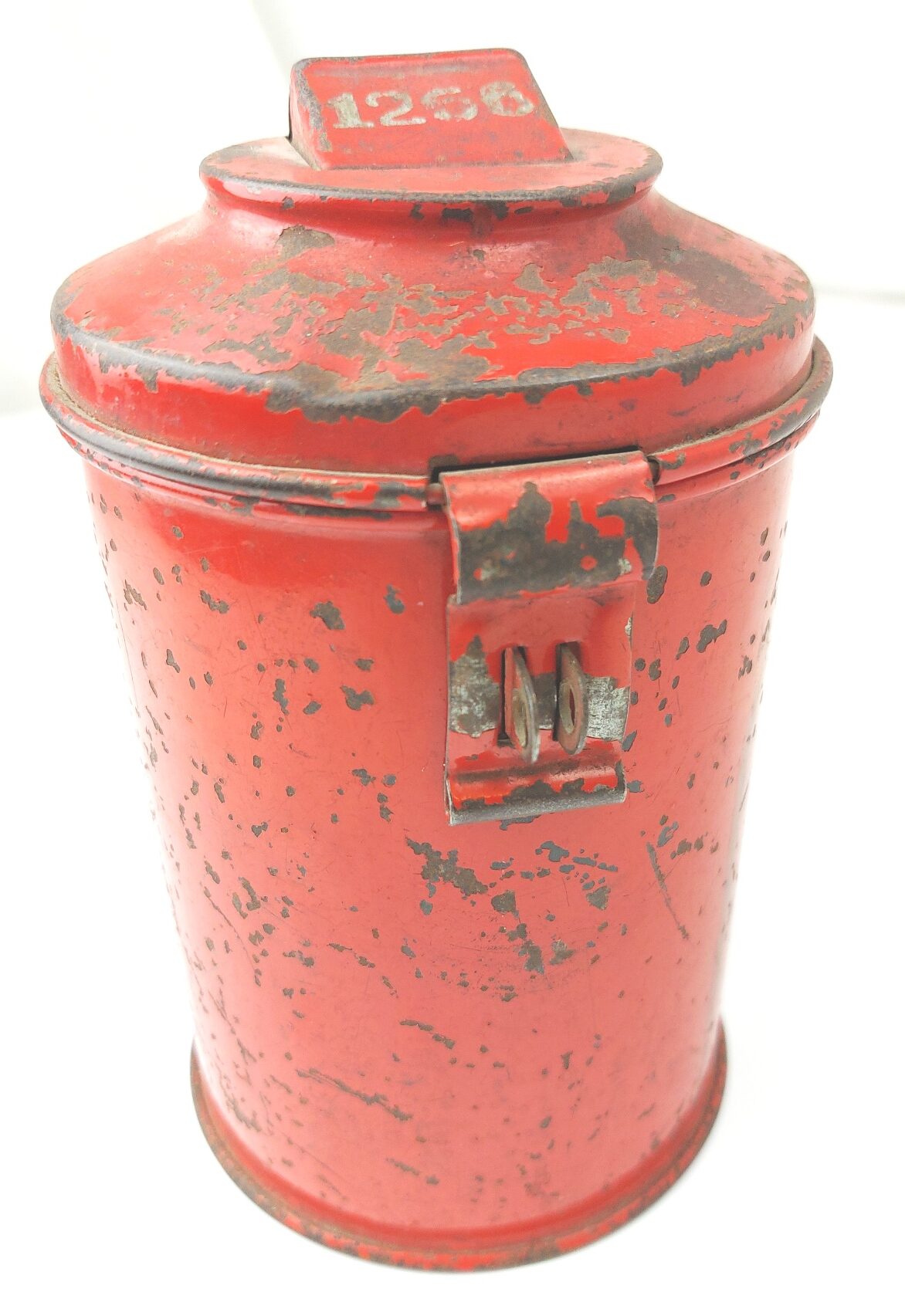
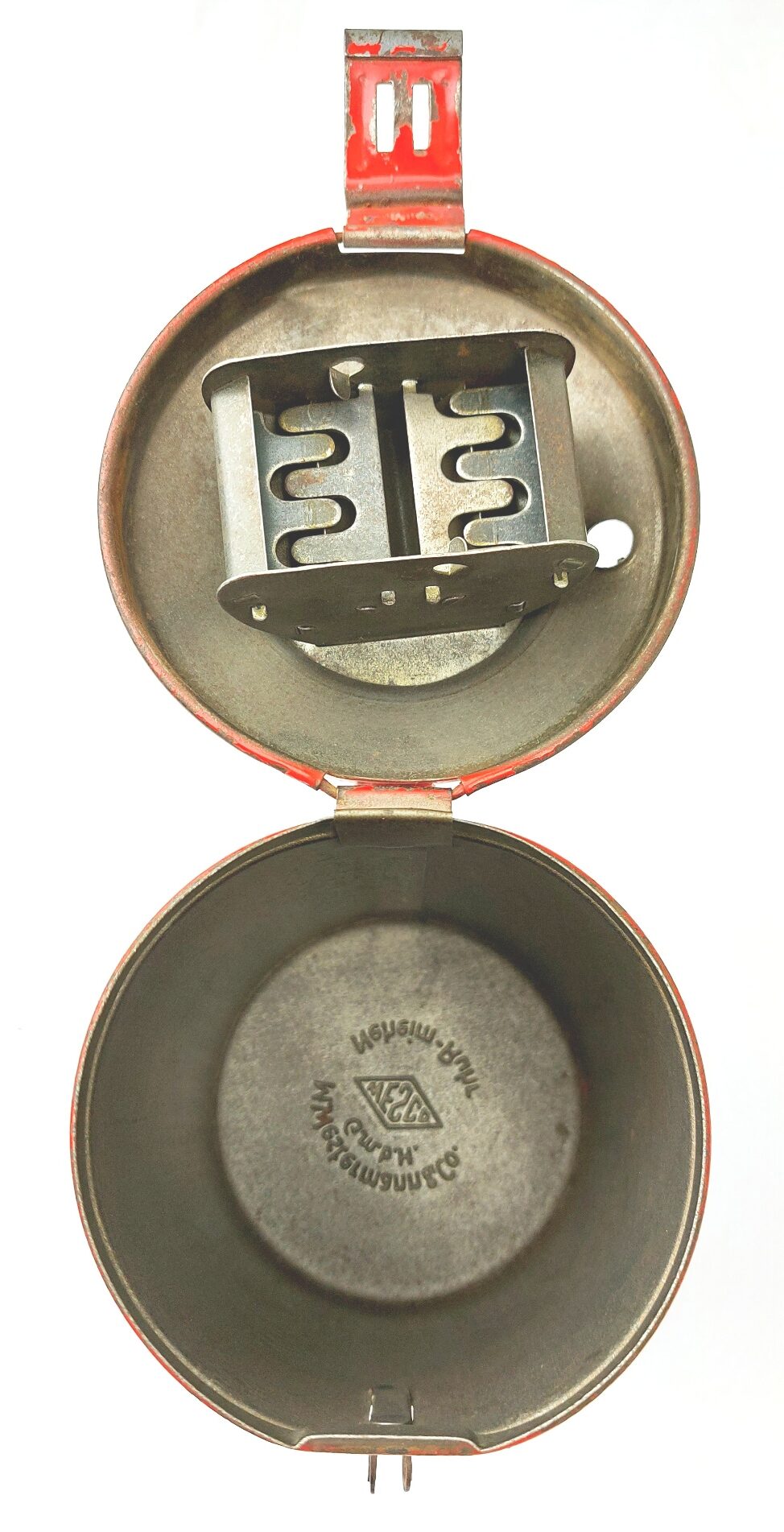
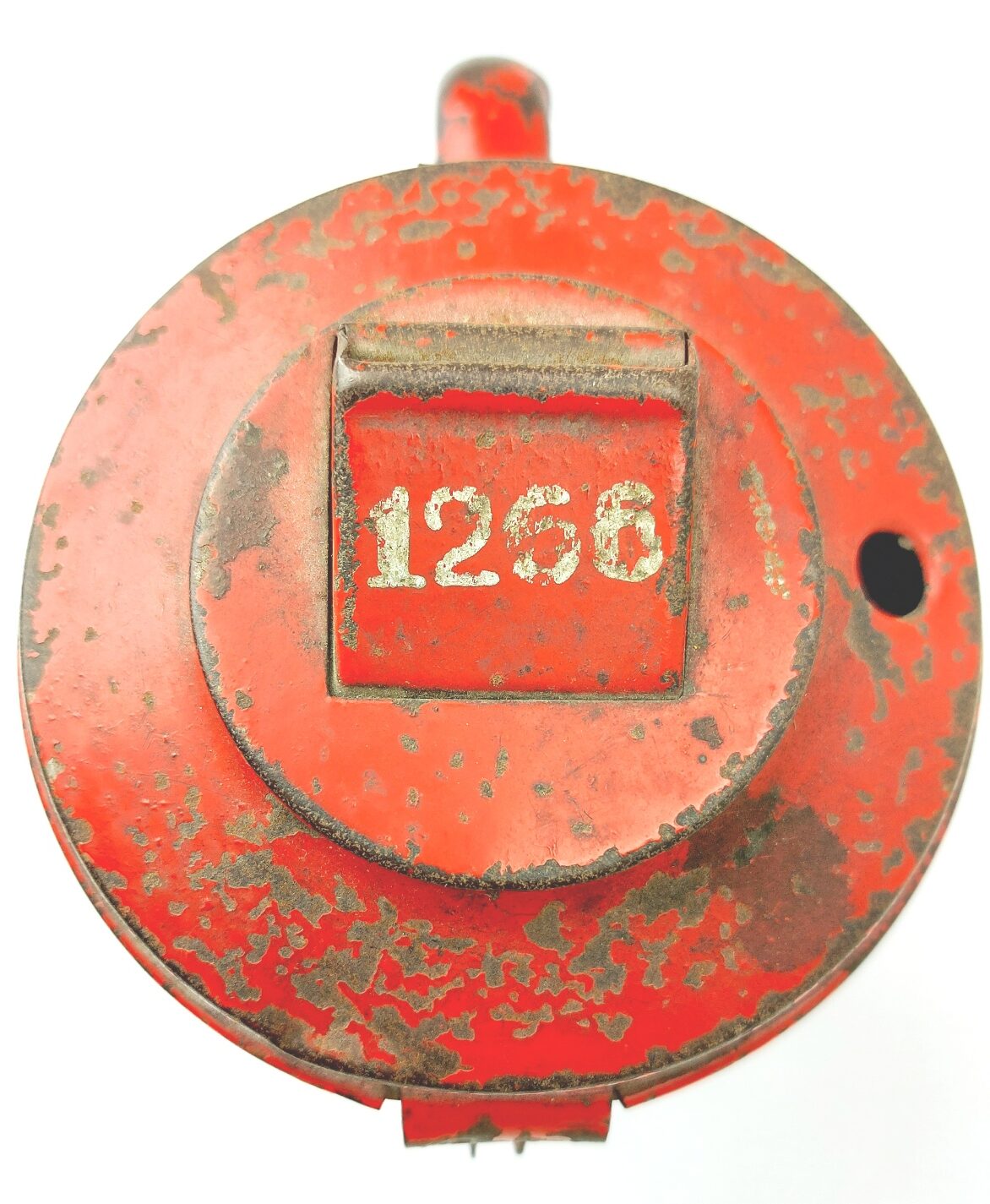
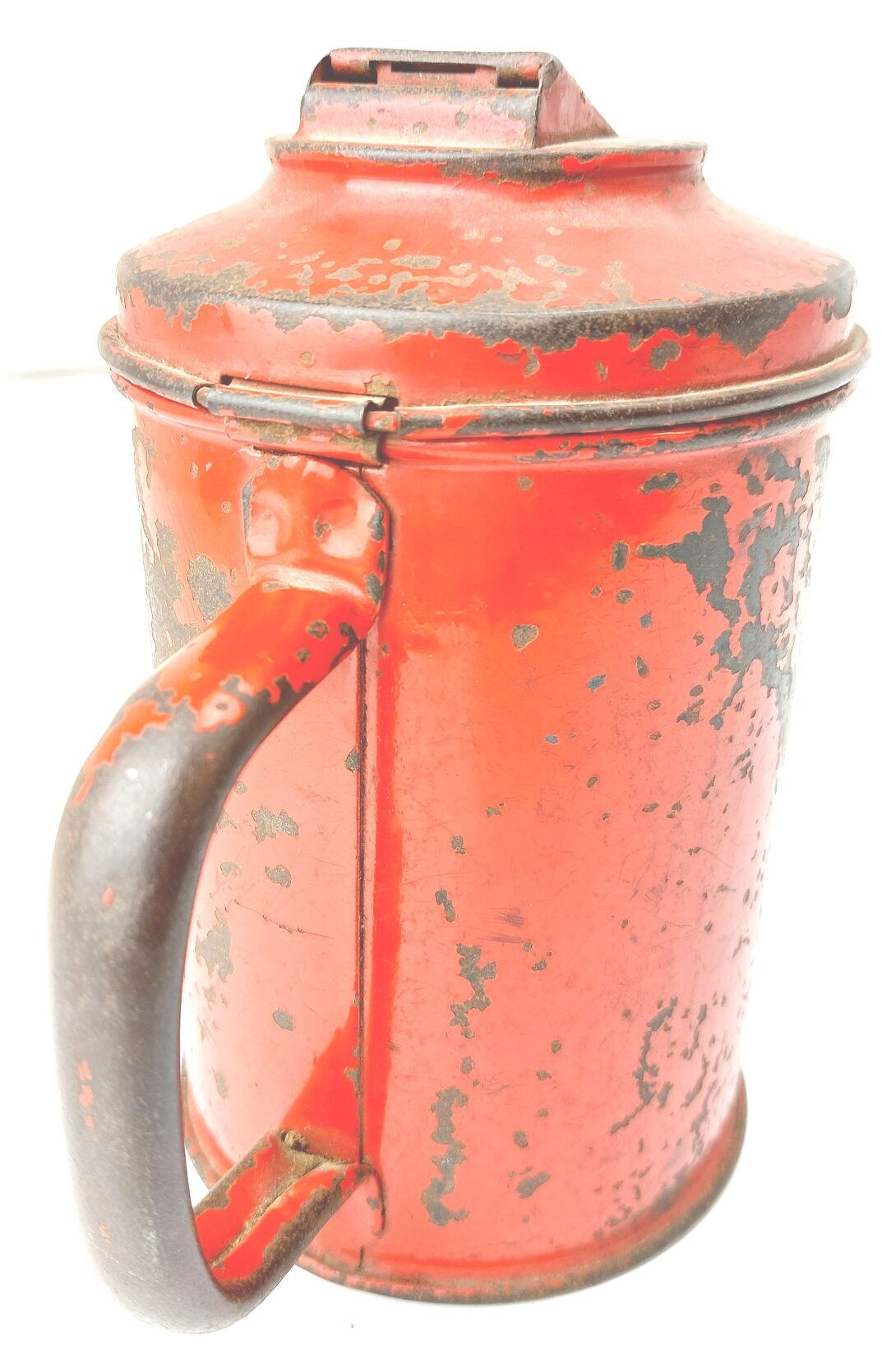
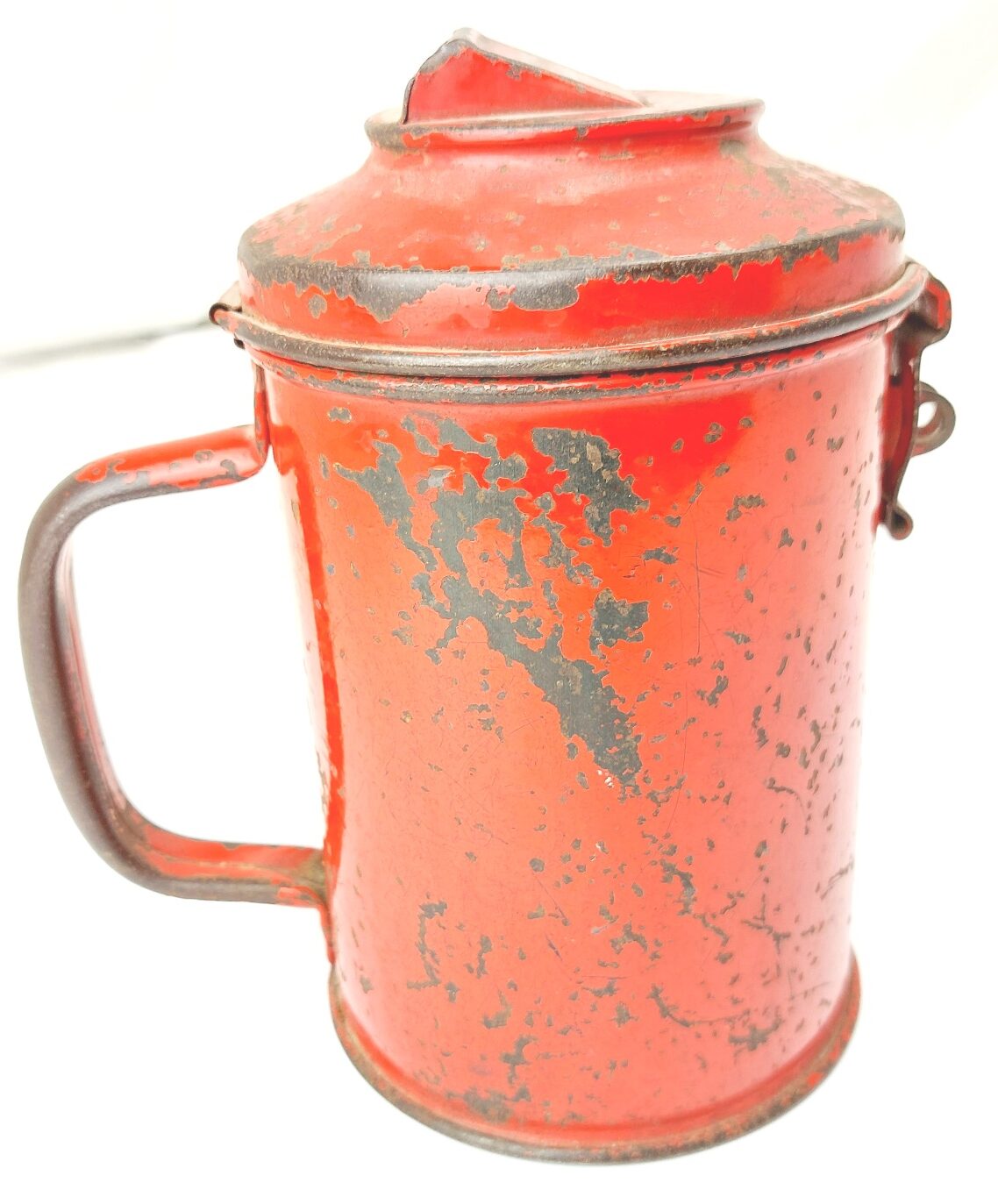
Of cylindrical form with rolled base rim, fixed side handle and hinged domed lid. The lid rises in stepped form to an angled coin slot and retains the raised control number “1256” to the upper face. The locking clasp remains present to the front. A circular aperture to the lid shoulder is present, as issued, for sealing or inspection. Internally, the anti-withdrawal spring mechanism beneath the coin slot remains intact and correctly fitted. This system prevented coins being shaken back out once deposited — a standard feature of official collection tins.
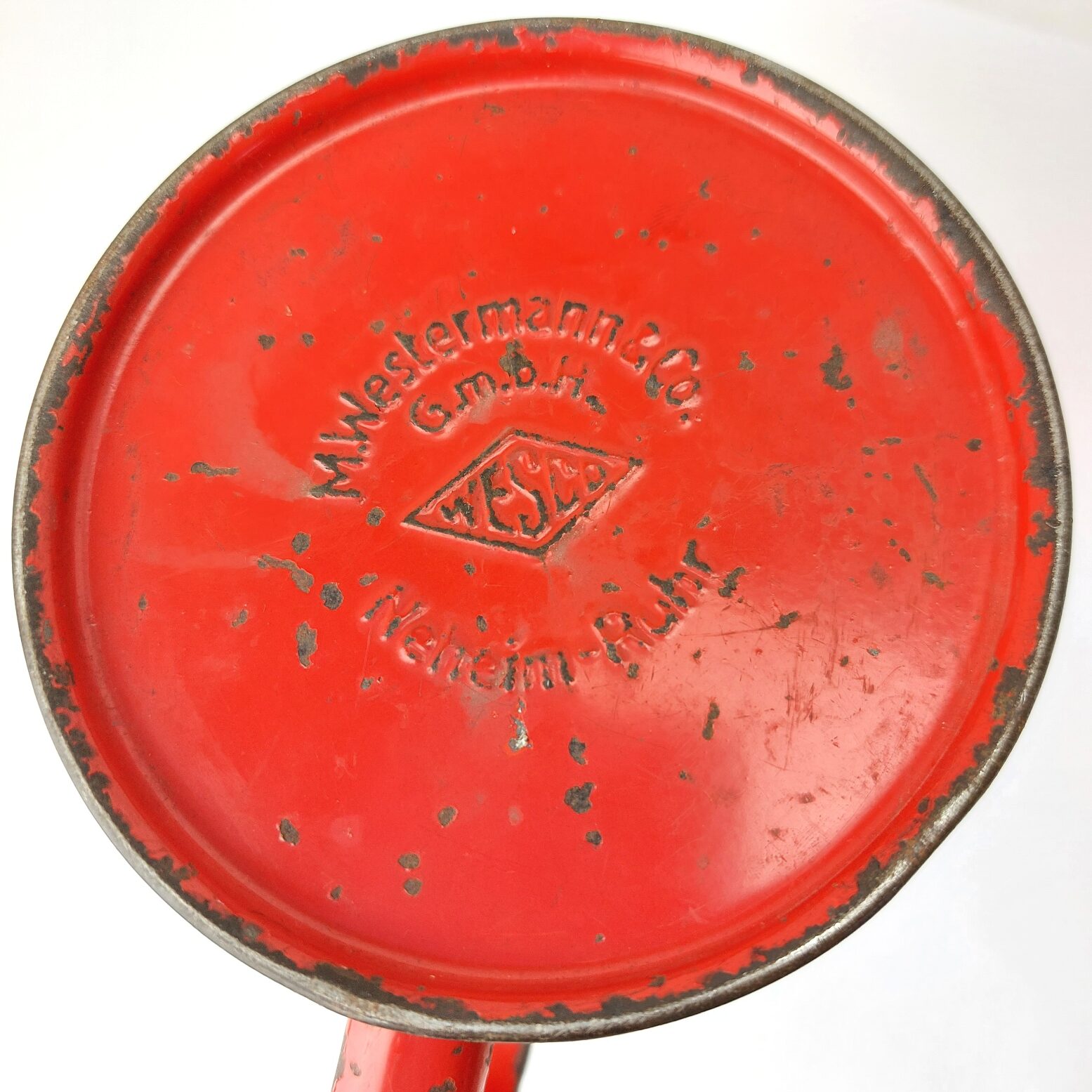
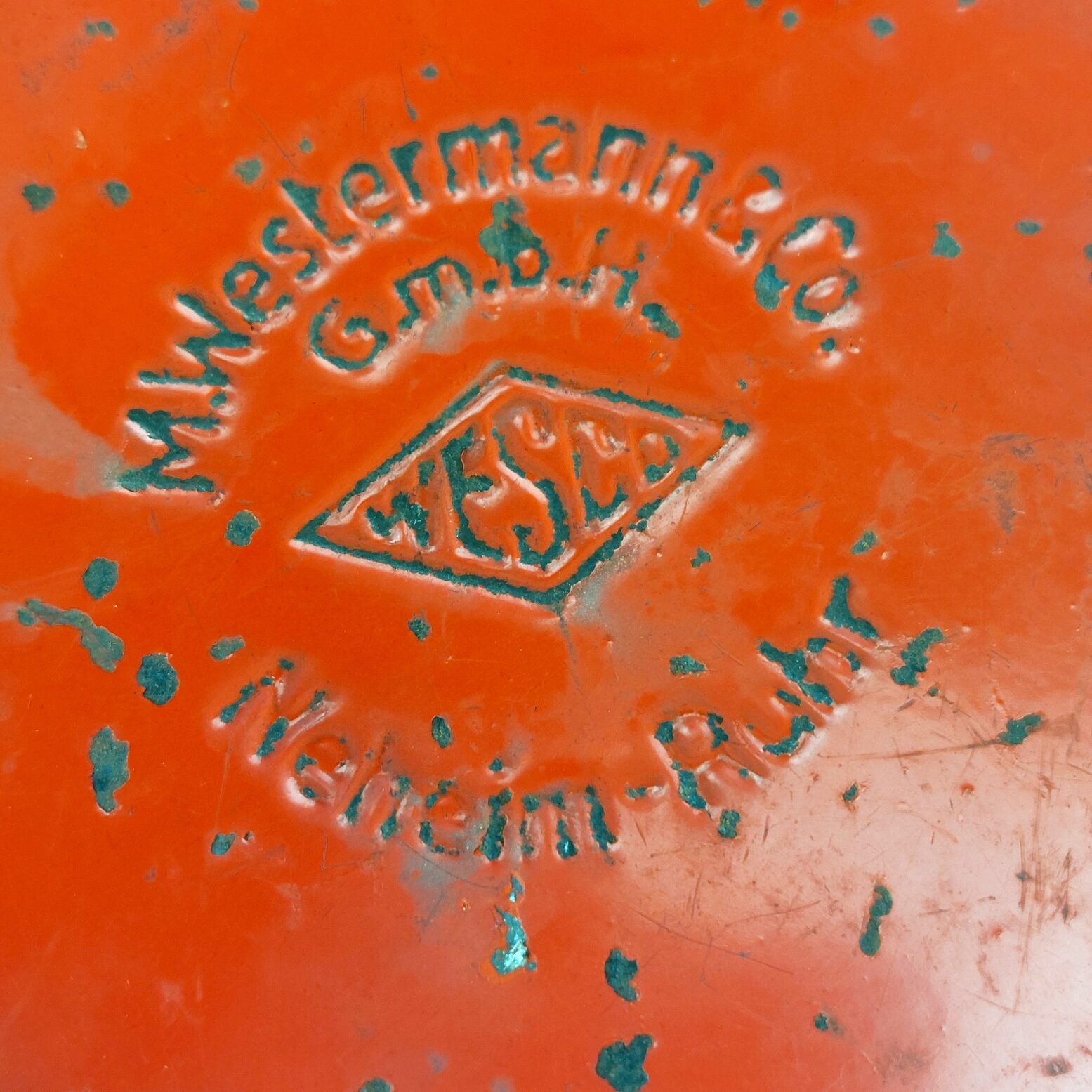
The base is embossed: “M. Westermann & Co. G.m.b.H. WESCO Neheim-Ruhr” with a small embossed “1” beneath, likely a factory production or mould identifier rather than a serial designation.
Approx. Measurements – Base diameter: 10.5 cm. Height: 17 cm.
Historical Note: These tins were used during the annual Winterhilfswerk des Deutschen Volkes (Winter Relief of the German People), a nationwide fundraising campaign organised under the auspices of the Nationalsozialistische Volkswohlfahrt (NSV).
From 1933 onward, uniformed volunteers collected donations for winter aid — food, coal, clothing and financial assistance — with contributors often receiving small badges (Spendenabzeichen) in return. The collections became a highly visible and socially pressured aspect of public life in Nazi Germany.
While many tins were marked with regional “Gau” designations, unmarked examples such as this are well documented and were issued for broader distribution or internal allocation. Identical red WESCO tins were also used by the German Red Cross (DRK) and other affiliated organisations.
The maker, M. Westermann & Co., Neheim-Ruhr, traded under the WESCO brand and was one of the principal manufacturers of official collection containers during the period. The firm survived the war and continues today as a metalware manufacturer.
The lid number “1256” functioned as an internal control or allocation number, linking the tin to a specific collector or district inventory system. It does not indicate production sequence in the sense of early manufacture, and relatively low numbers are not uncommon.
*Condition* An untouched and entirely original example. The red factory paint shows honest service wear with widespread rubbing and flaking consistent with handling and age. Surface oxidation is present in exposed areas but remains stable. The finish is substantially retained but would be more accurately described as approximately 70–75% rather than 90%, with heavier loss to the lid edges and high points. The hinged lid opens and closes correctly. Locking clasp remains present. Internal anti-withdrawal spring mechanism is complete and appears functional. Handle secure. No structural distortion or major denting observed. Please see photographs as part of the condition report.