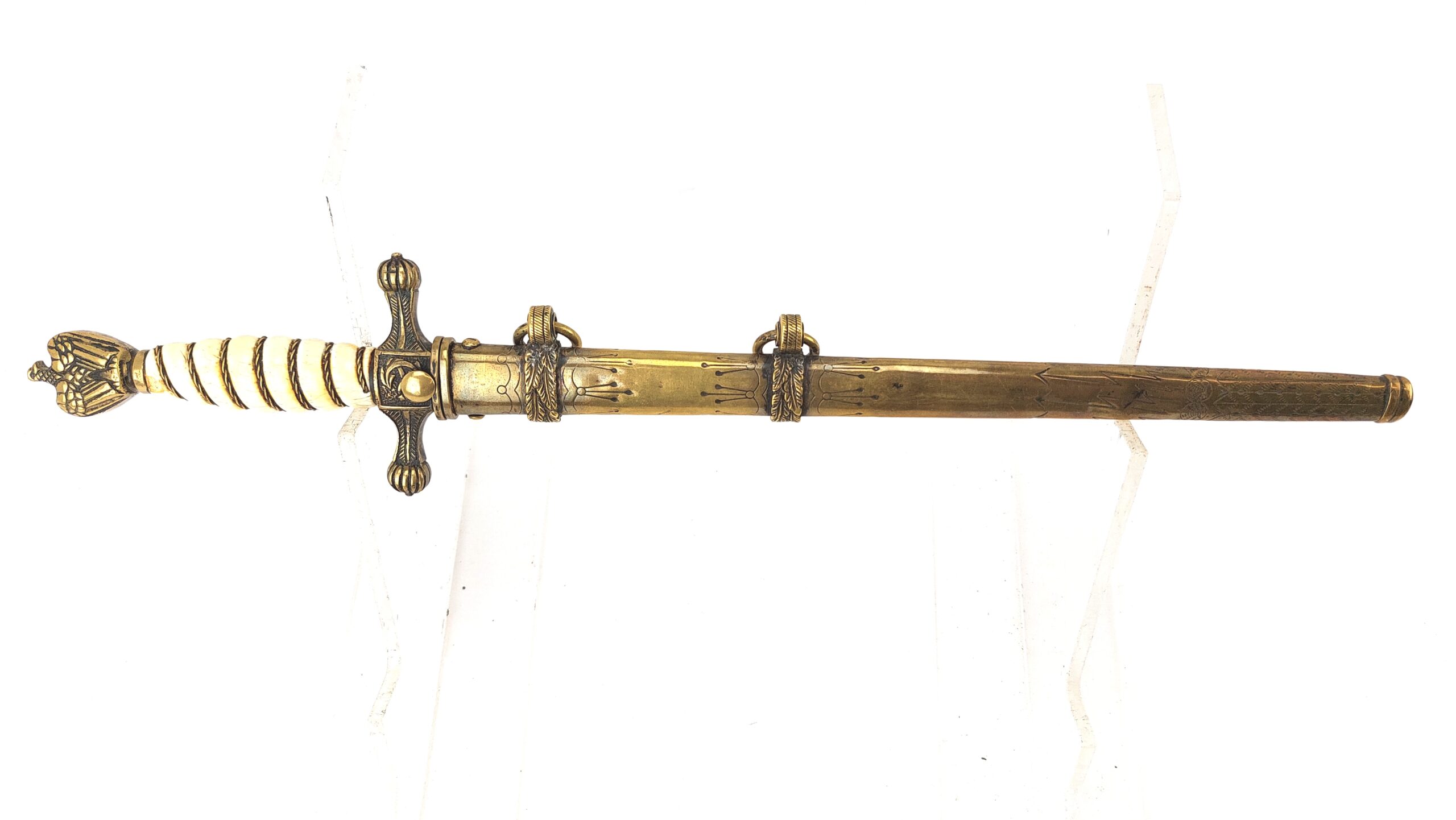
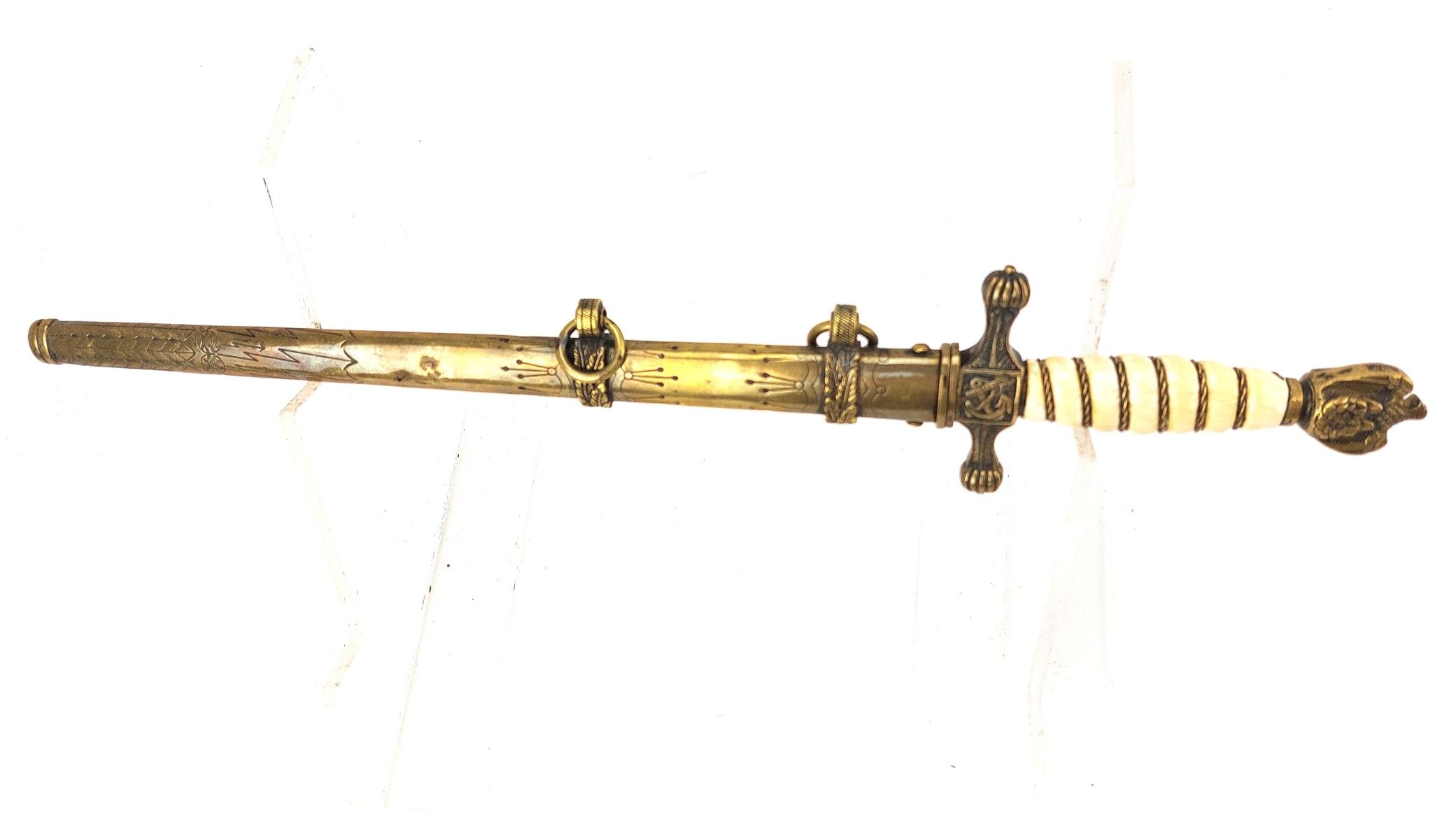
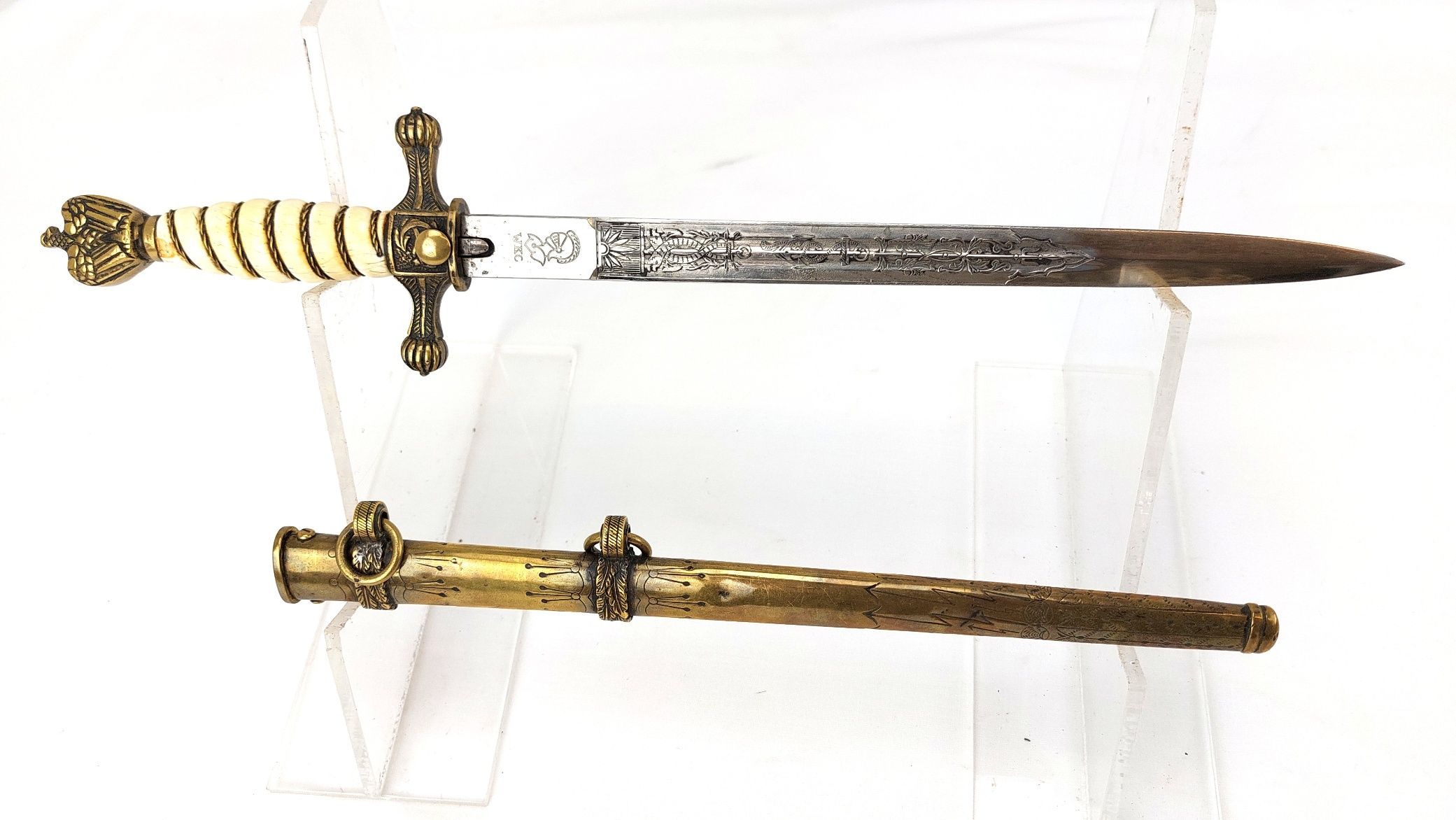
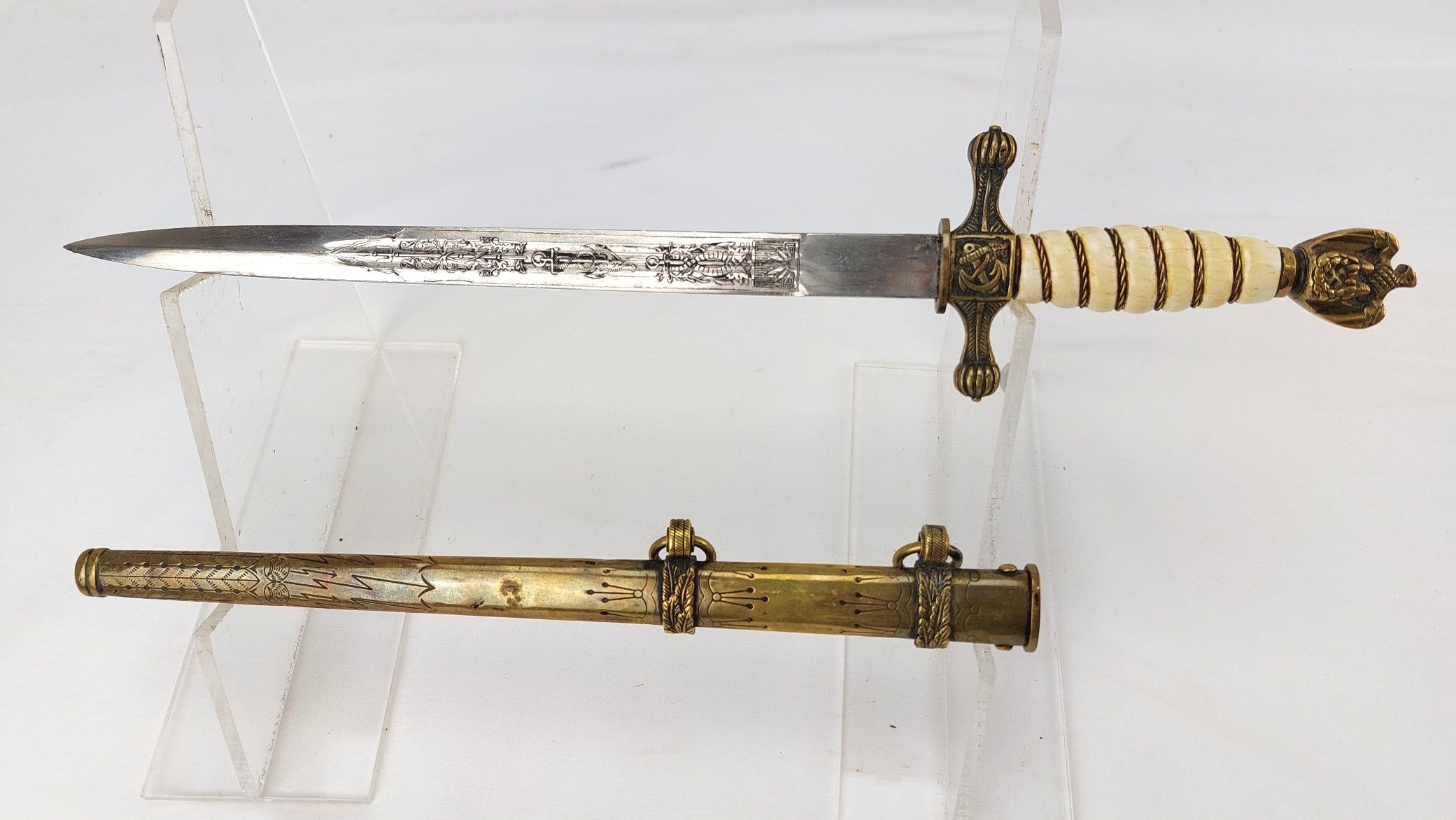
*German, WW2, Third Reich Kriegsmarine Officer’s Dagger by WKC, Early High-Relief Replacement Eagle Pommel, Fine Etched Blade, Lightning Bolt Scabbard*
A fine and authentic example of a German WWII Kriegsmarine officer’s dagger, produced by the respected Solingen maker WKC (Weyersberg, Kirschbaum & Co.).
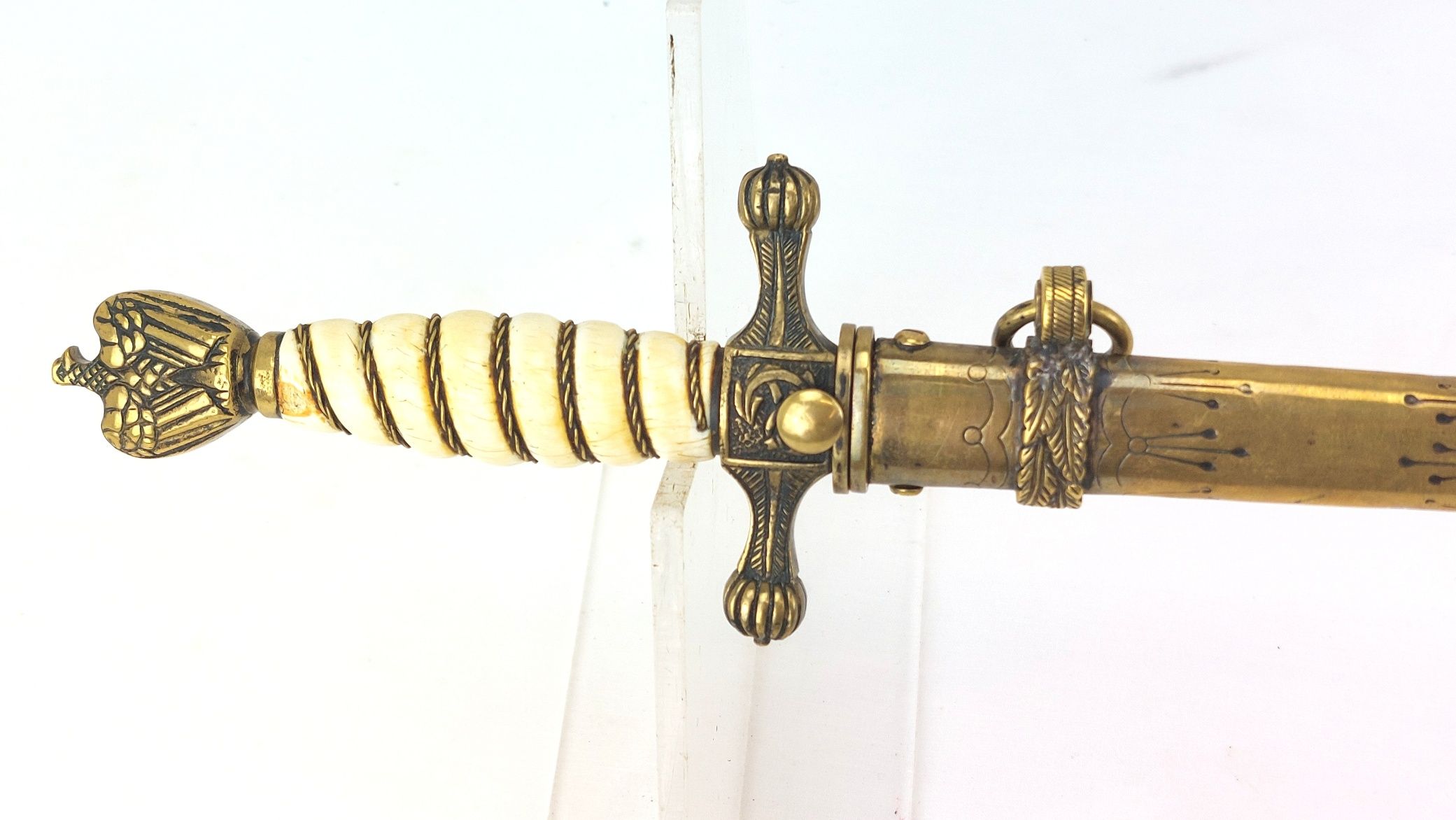
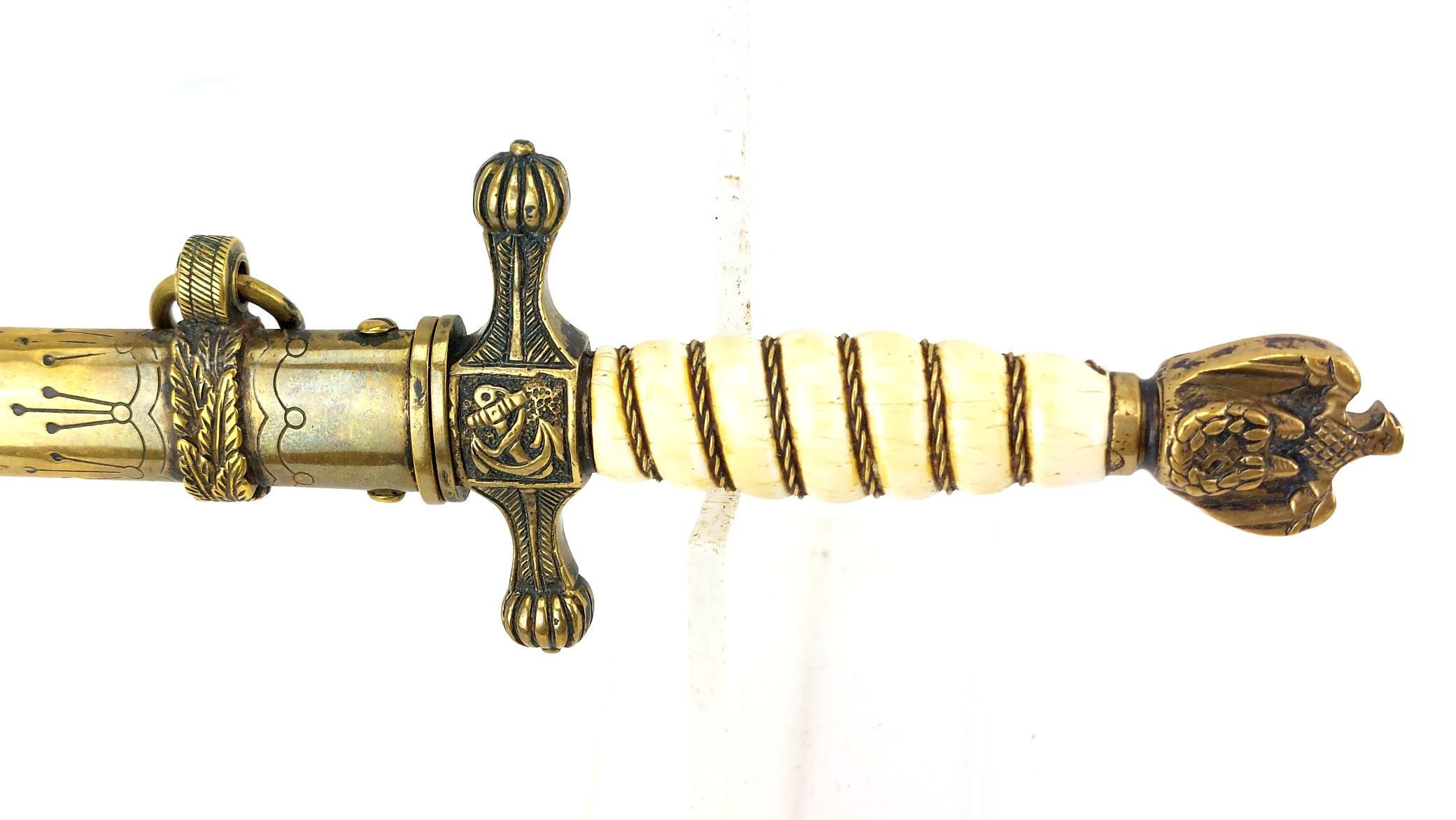
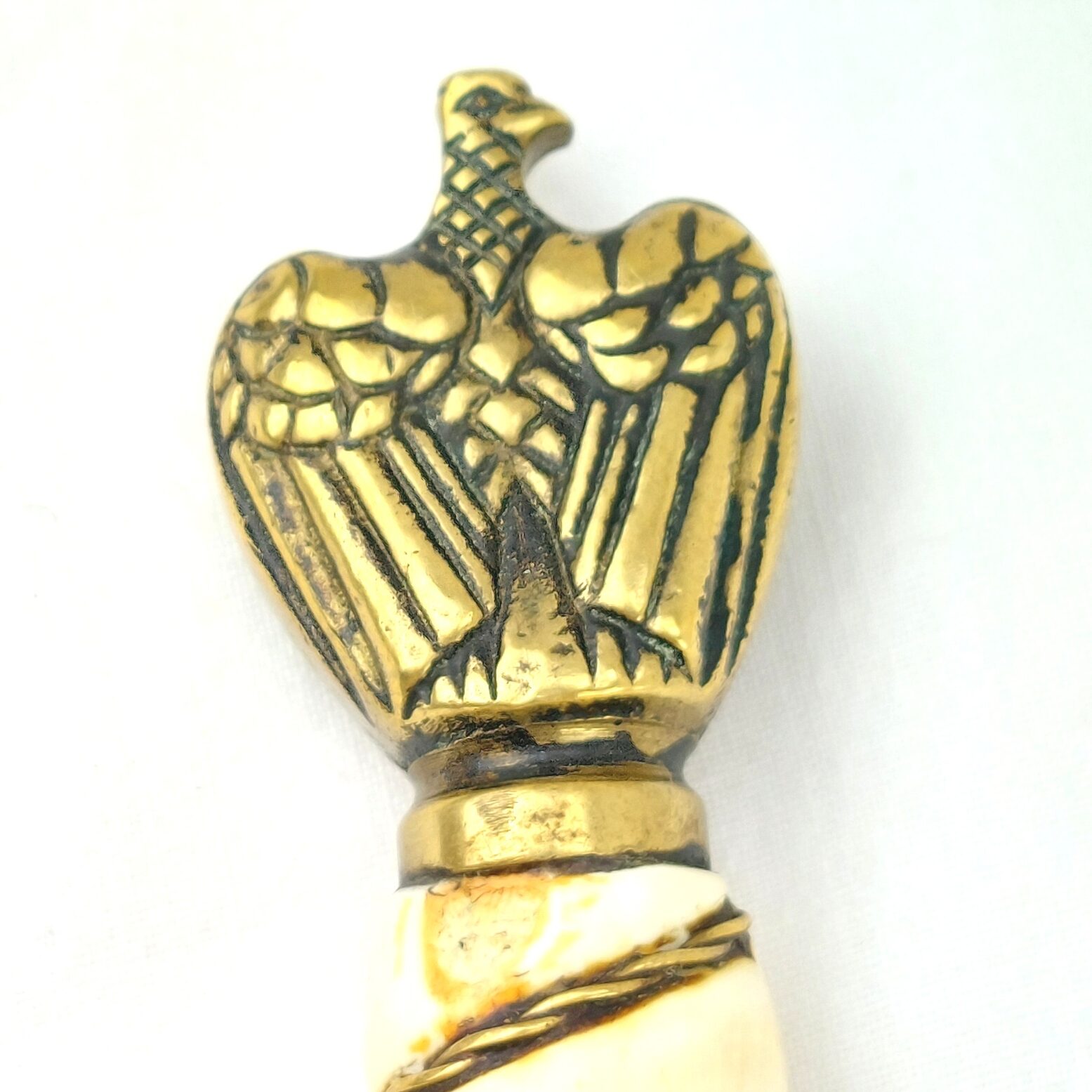
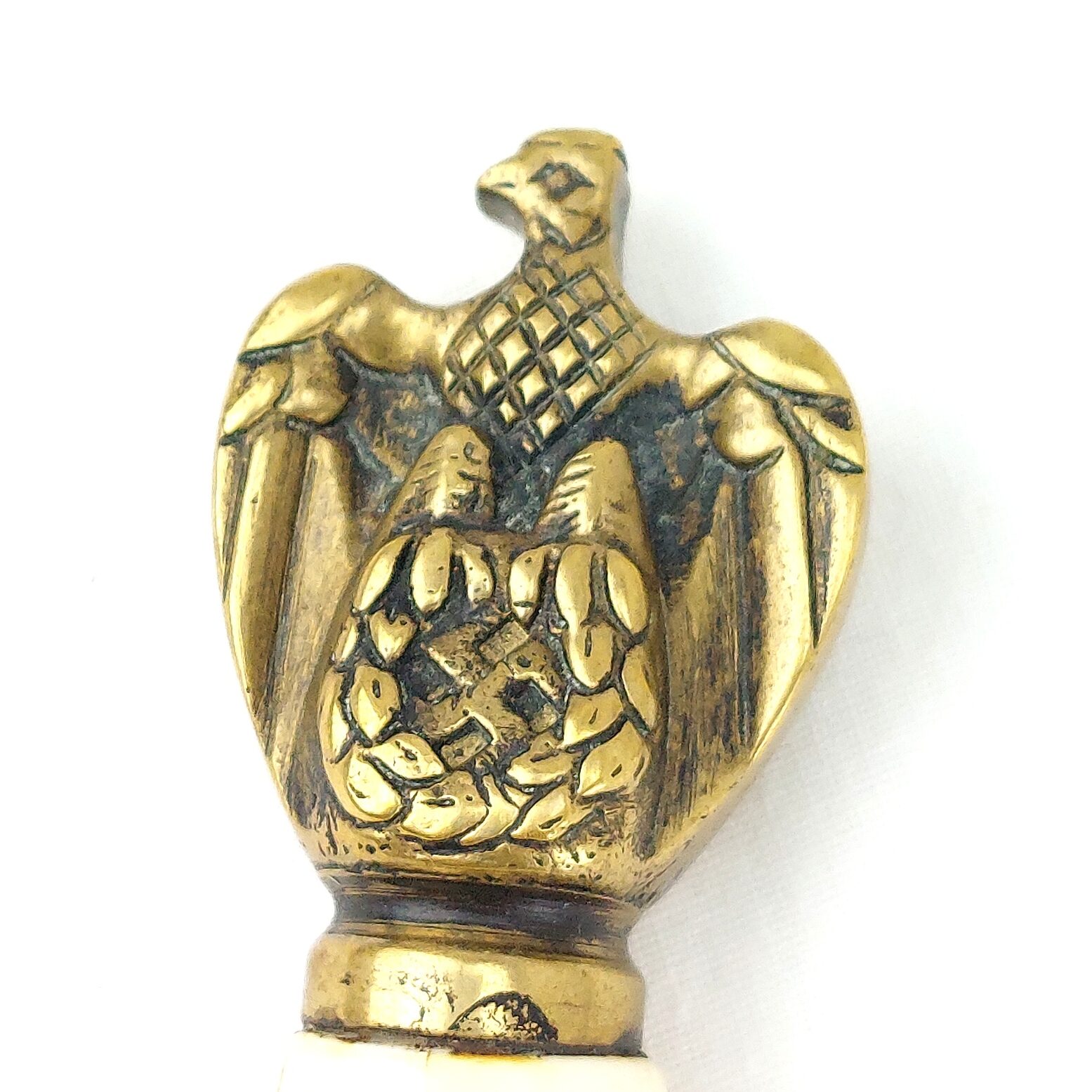
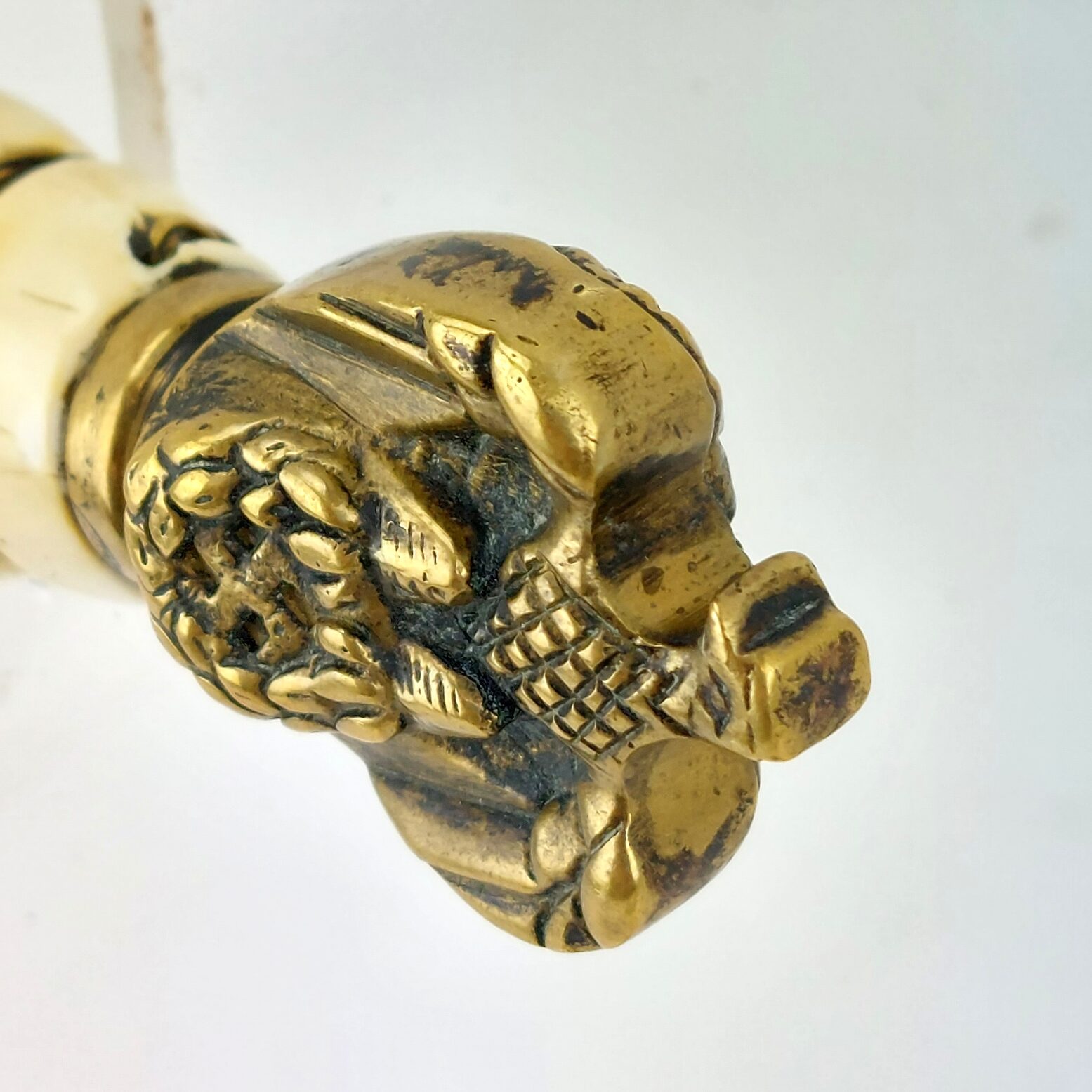
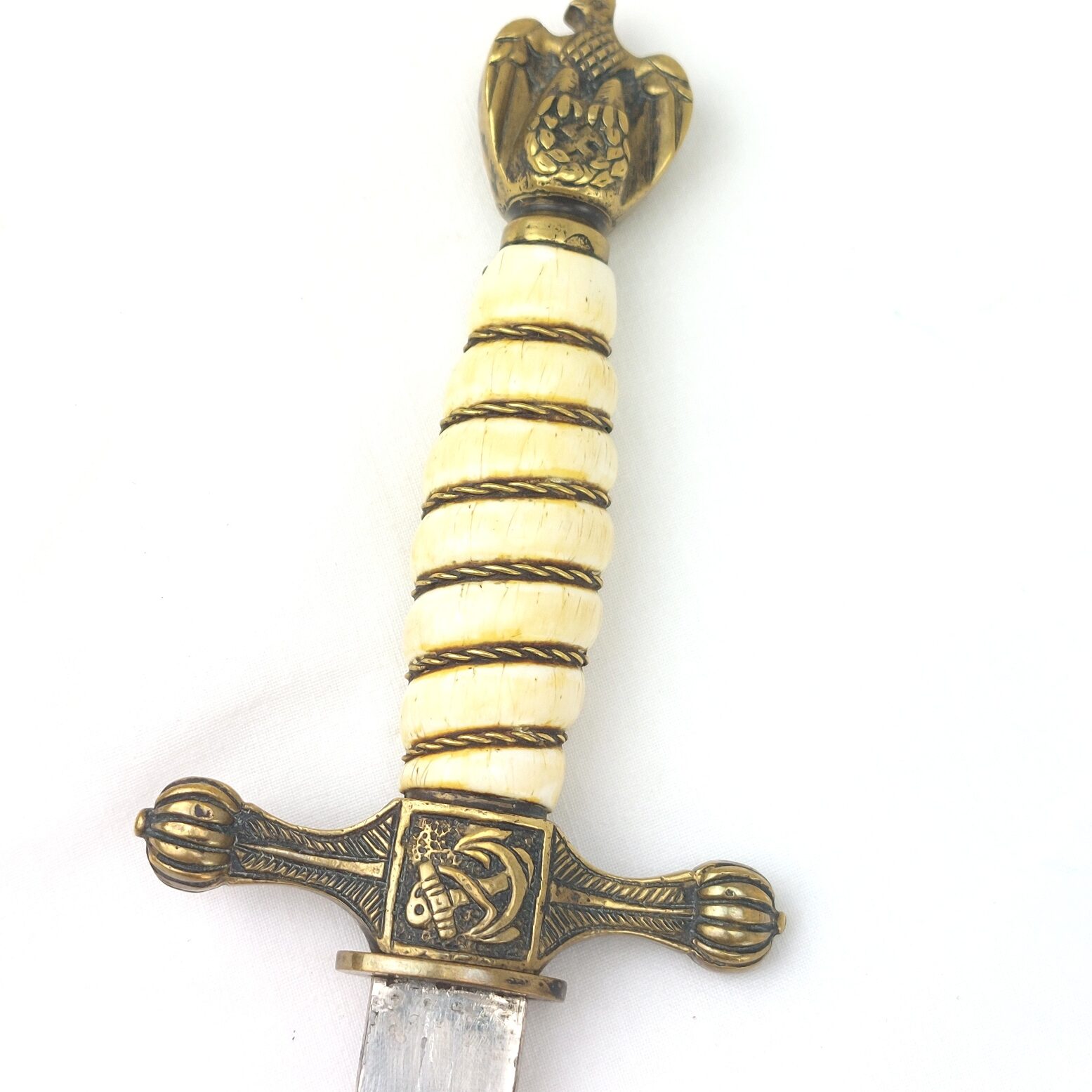
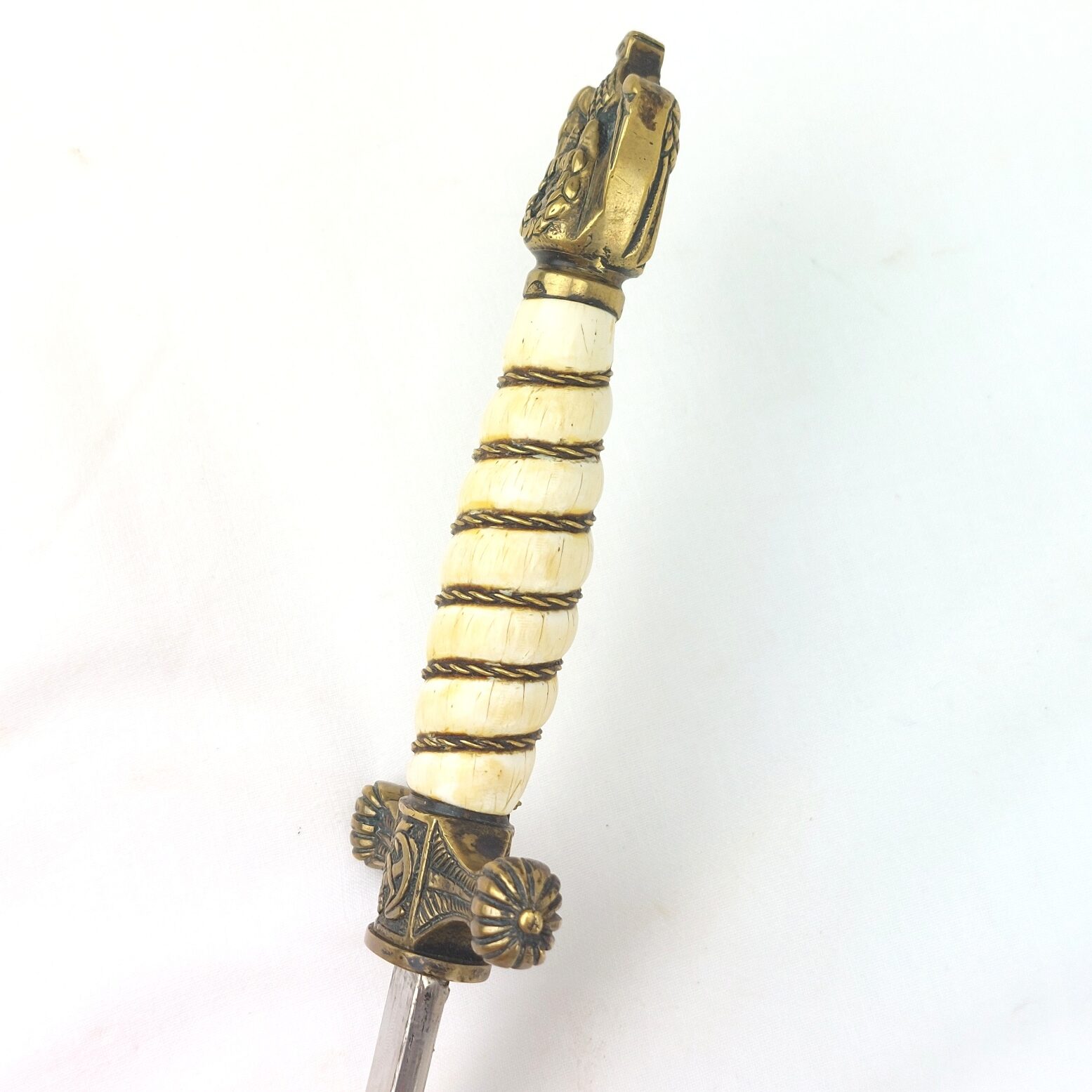
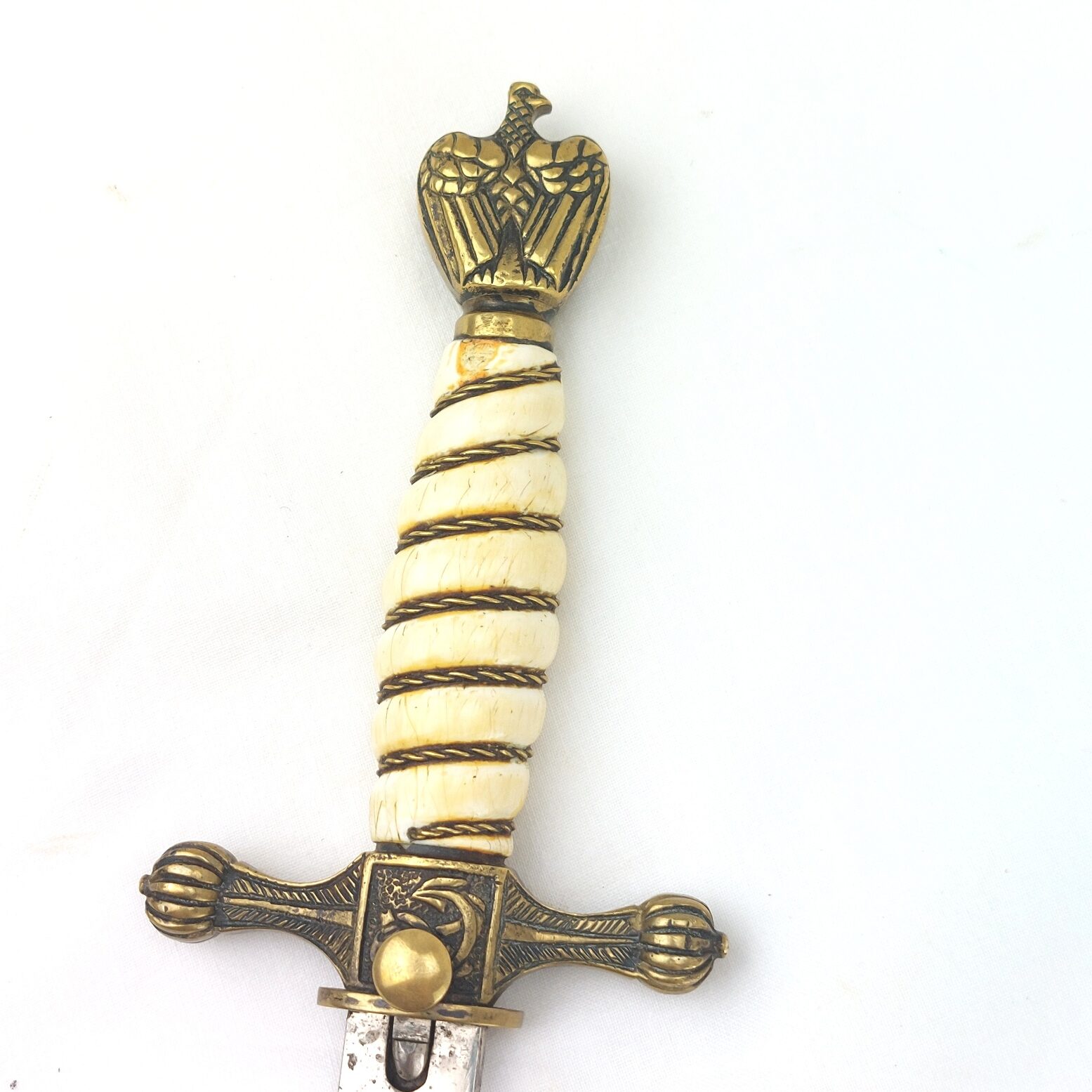
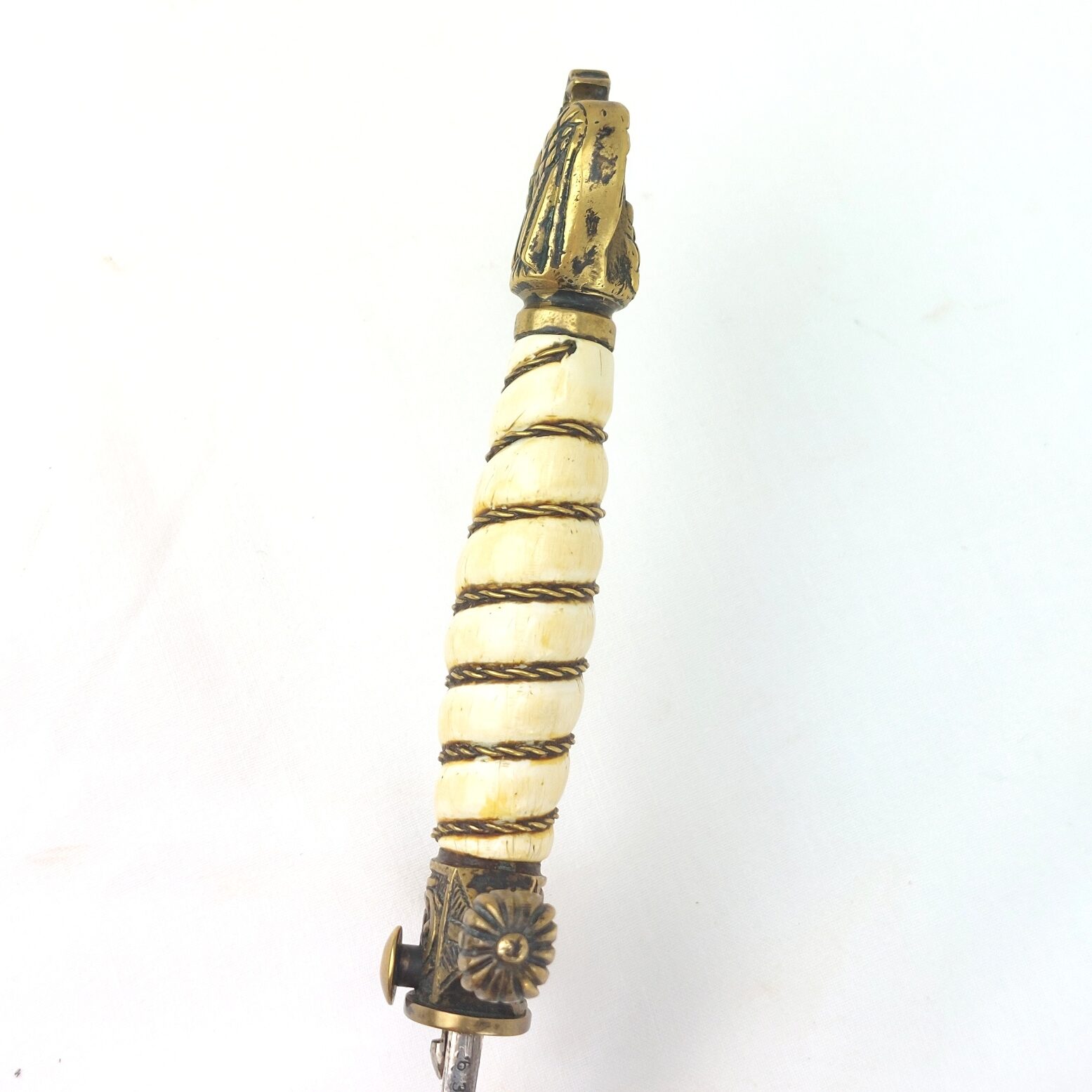
This dagger represents the 1938 pattern carried by officers of the German navy (Kriegsmarine) and features a white celluloid grip with intact twisted brass wire wrap, showing typical age-related cracks but remaining structurally sound. It is fitted with an early high-relief eagle pommel, sharply detailed with defined feathers, a well-modeled head, and a crisp wreath enclosing the swastika. According to Wittmann ("Exploring the Dress Daggers of the German Navy," p. 273), these finely made pommels were often purchased in 1938 as official "replacement" upgrades to convert earlier 1st model daggers per naval regulations, and they are especially prized today for their superior craftsmanship.
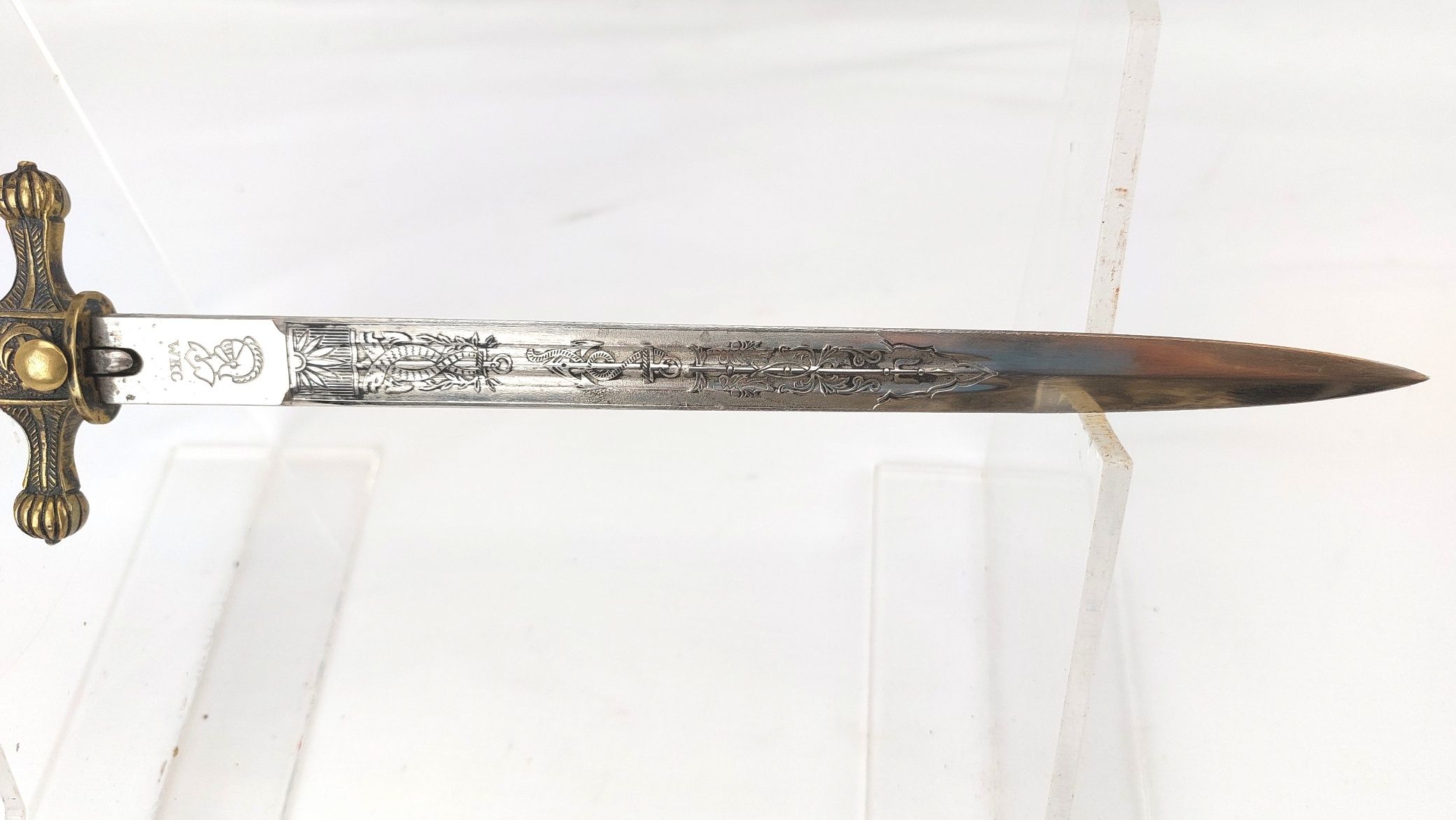
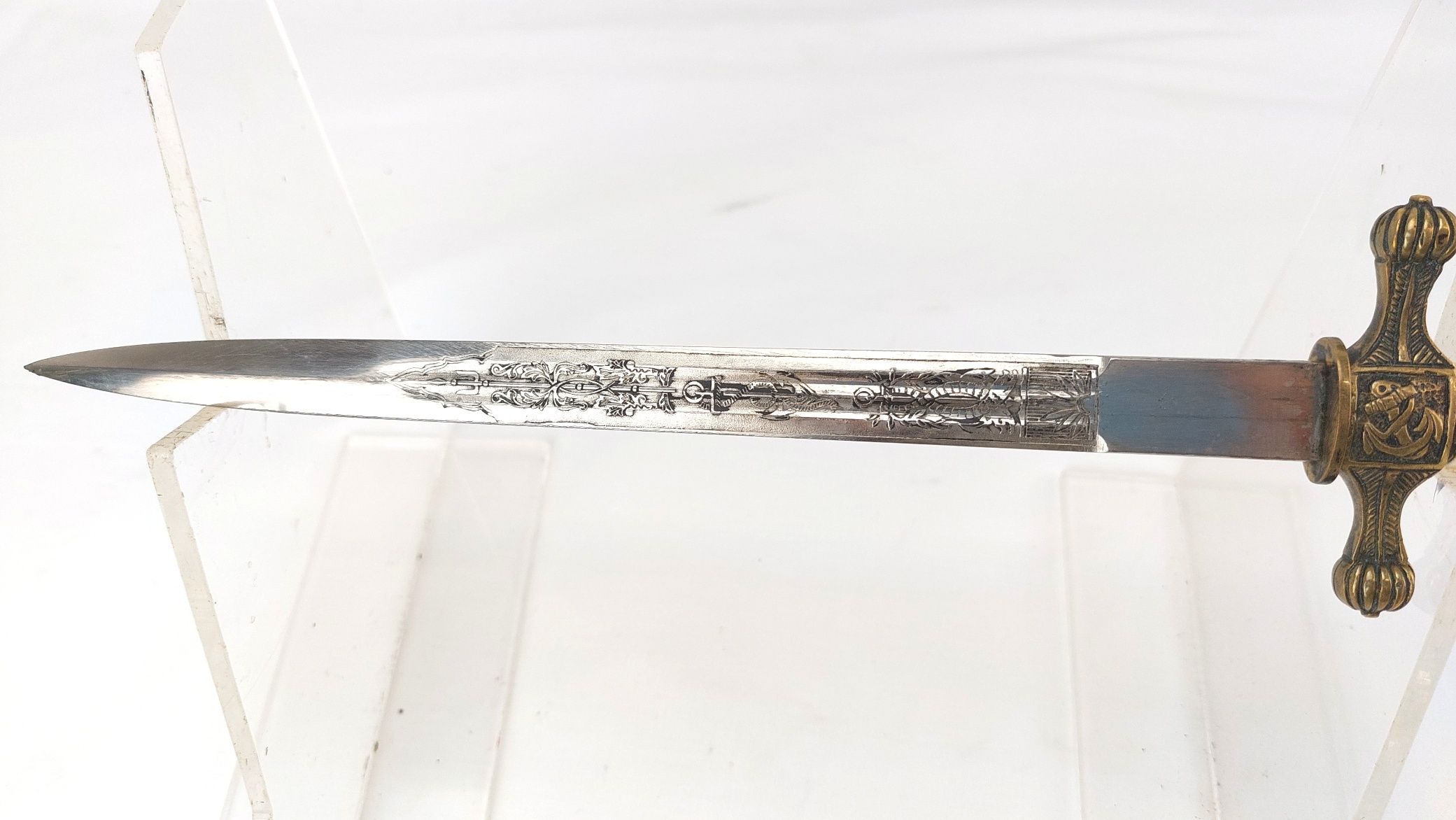
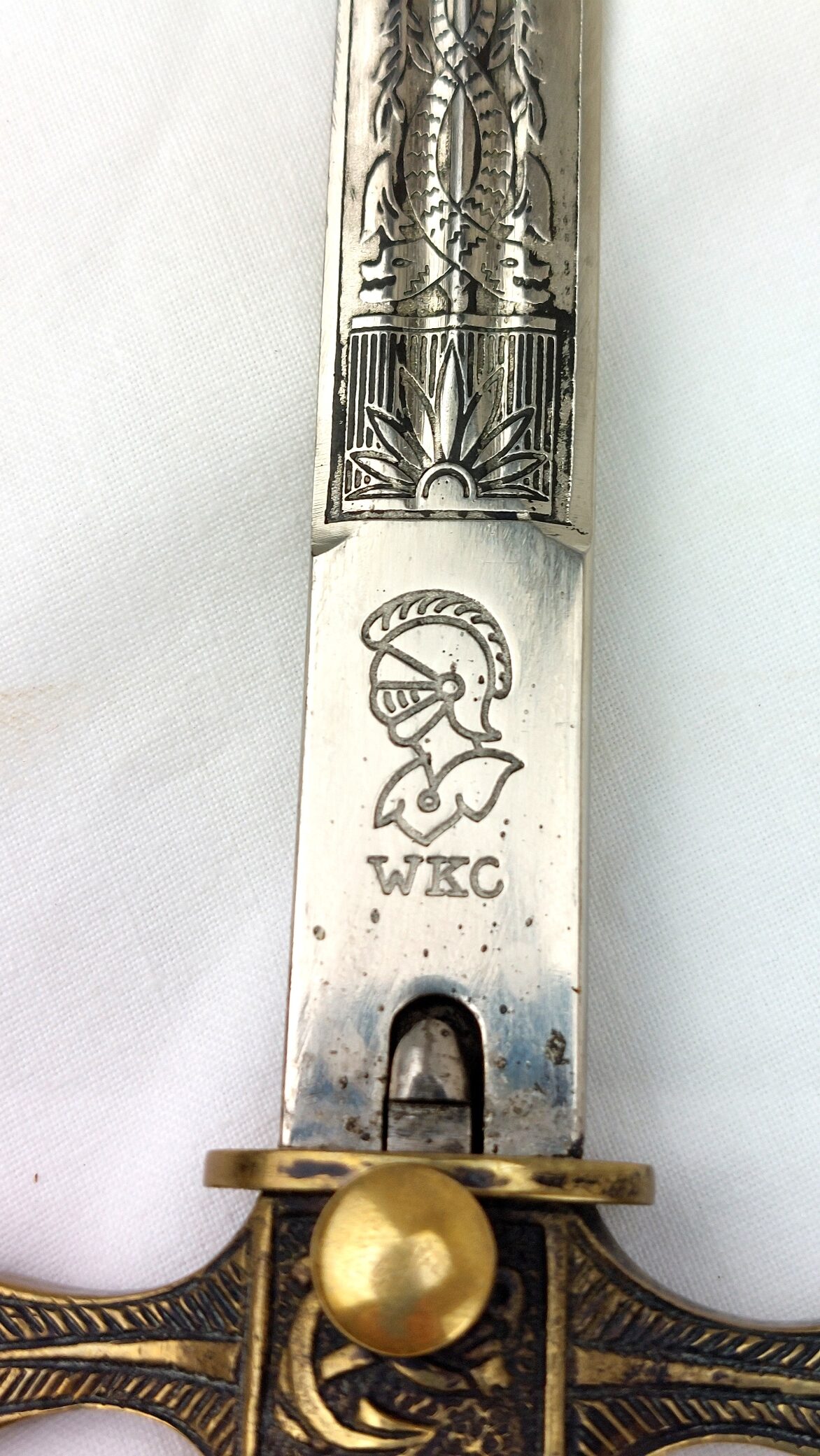
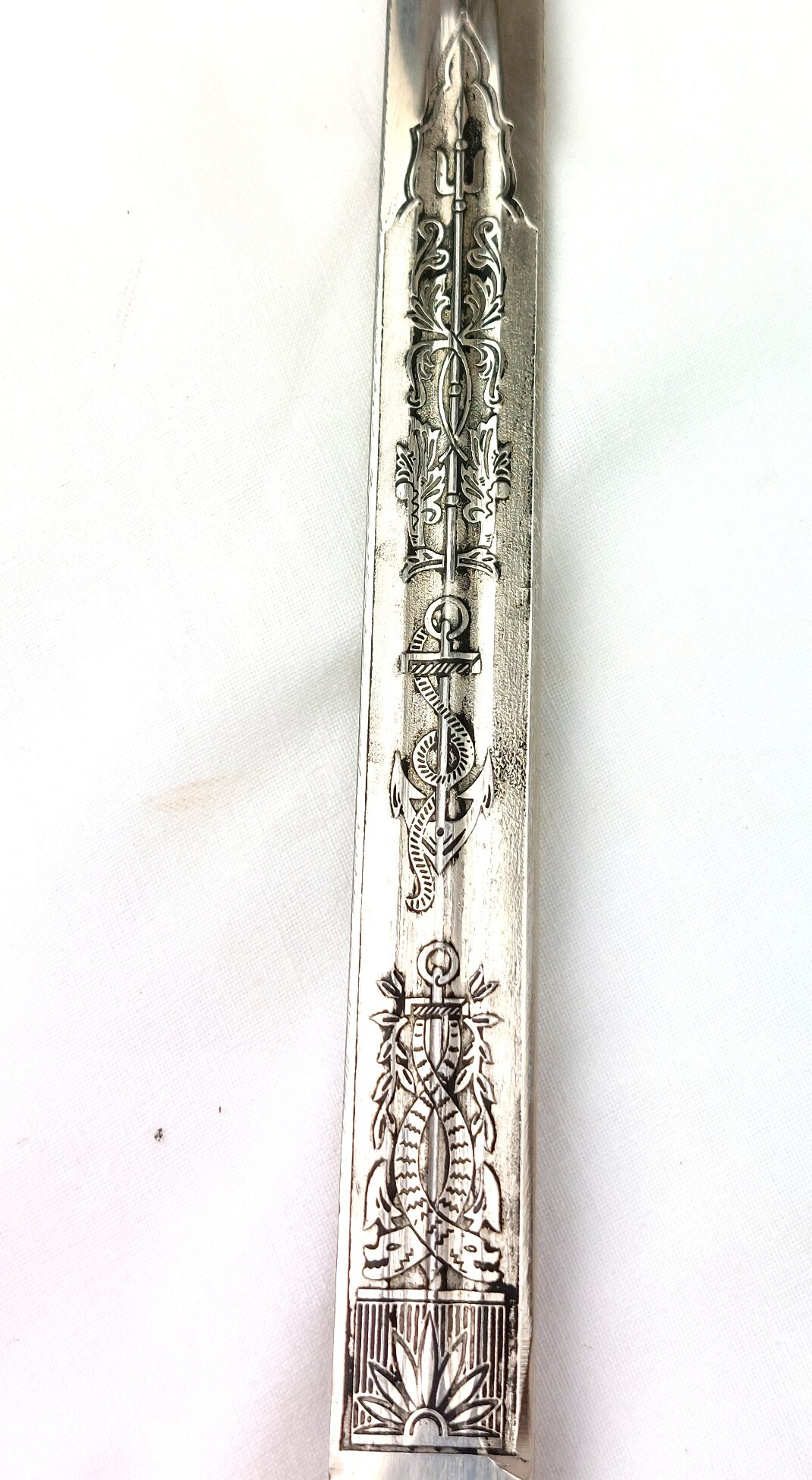
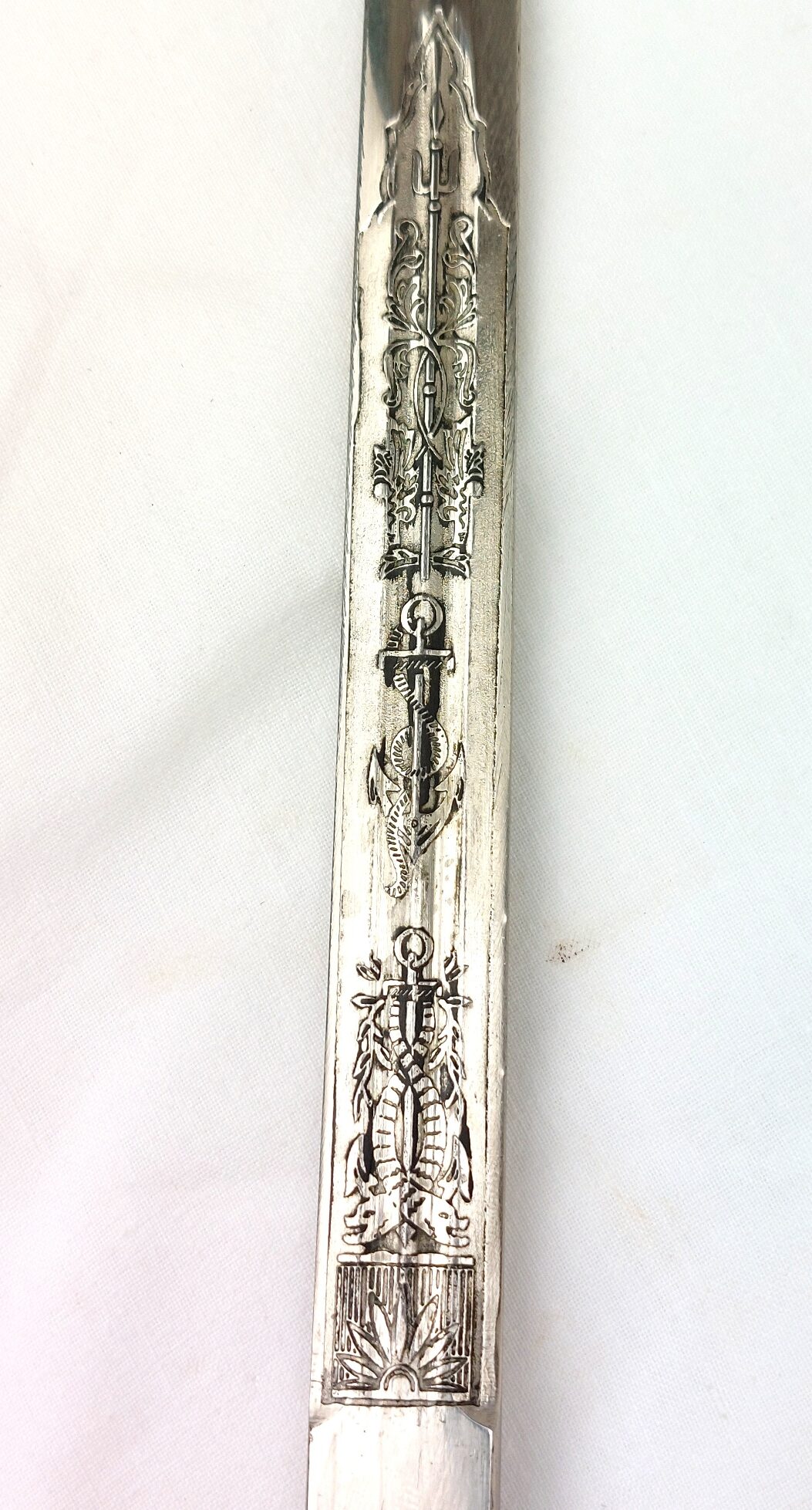
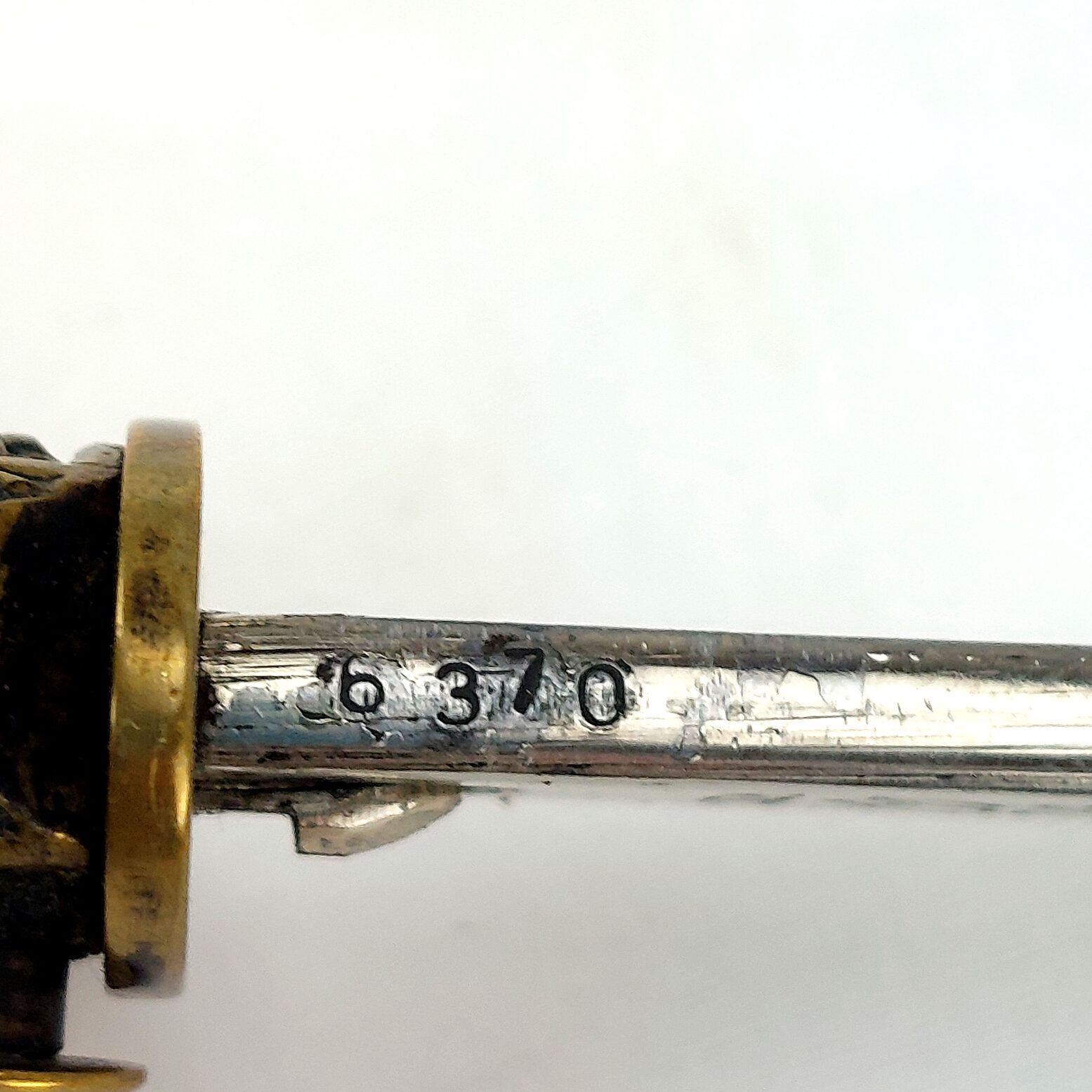
The crossguard displays the classic fouled anchor motif on both sides. The bright steel blade measures approximately 25 cm (approx. 37.6 cm overall) and is beautifully etched with elaborate maritime designs, including fouled anchors, tridents, and scrollwork. The etching is of particularly fine quality — deeply executed and crisp — a hallmark of WKC’s superior workmanship. WKC offered naval daggers in their c.1935 and c.1938 catalogues with similar etching patterns to this dagger. Originally, the etching featured a dark blued background to highlight the designs; as commonly seen, this background has faded over time due to age and cleaning, though the motifs remain sharp and strong. The ricasso bears the knight’s head logo, and the tang is stamped “6370,” likely used for internal tracking.
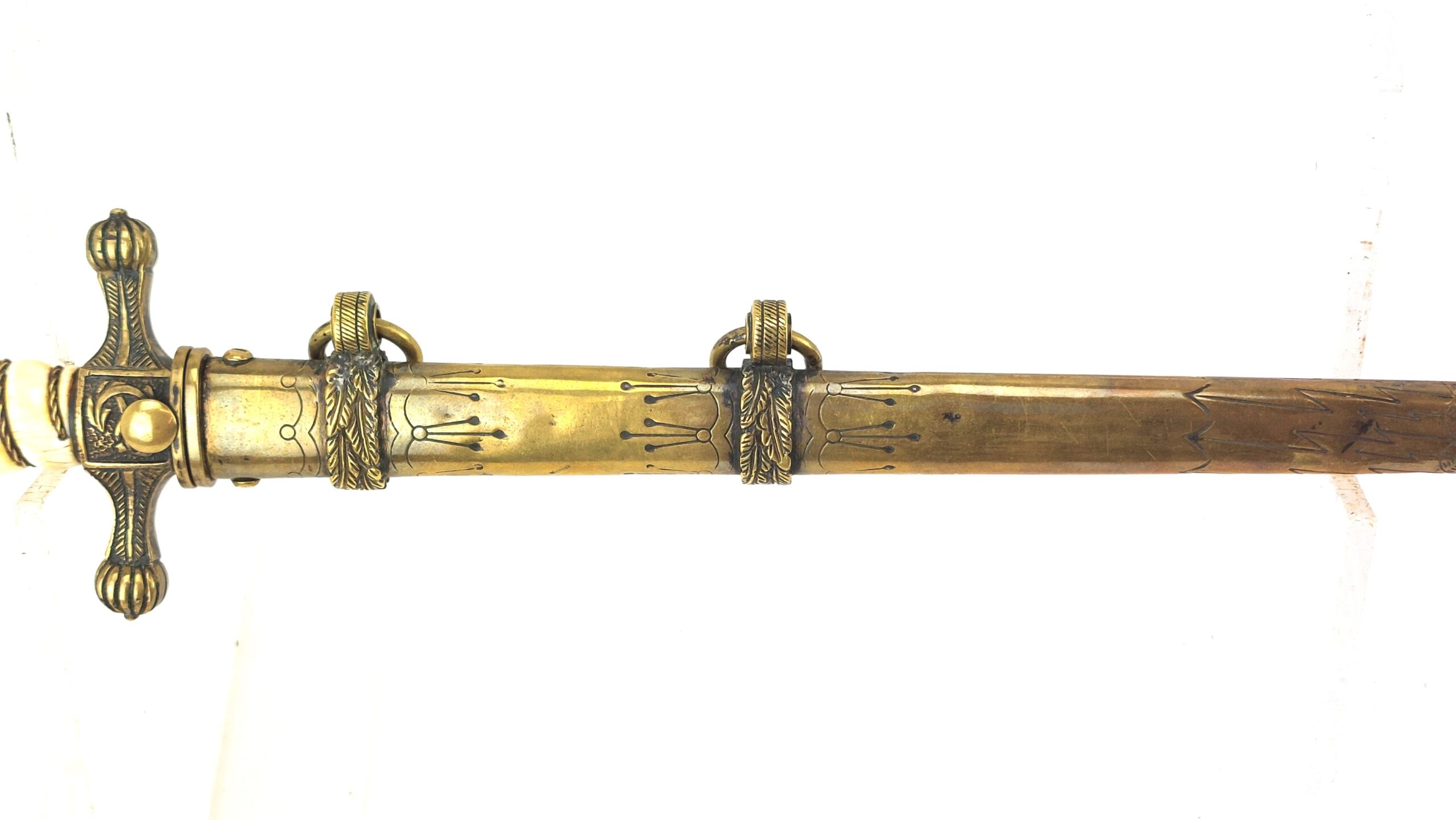
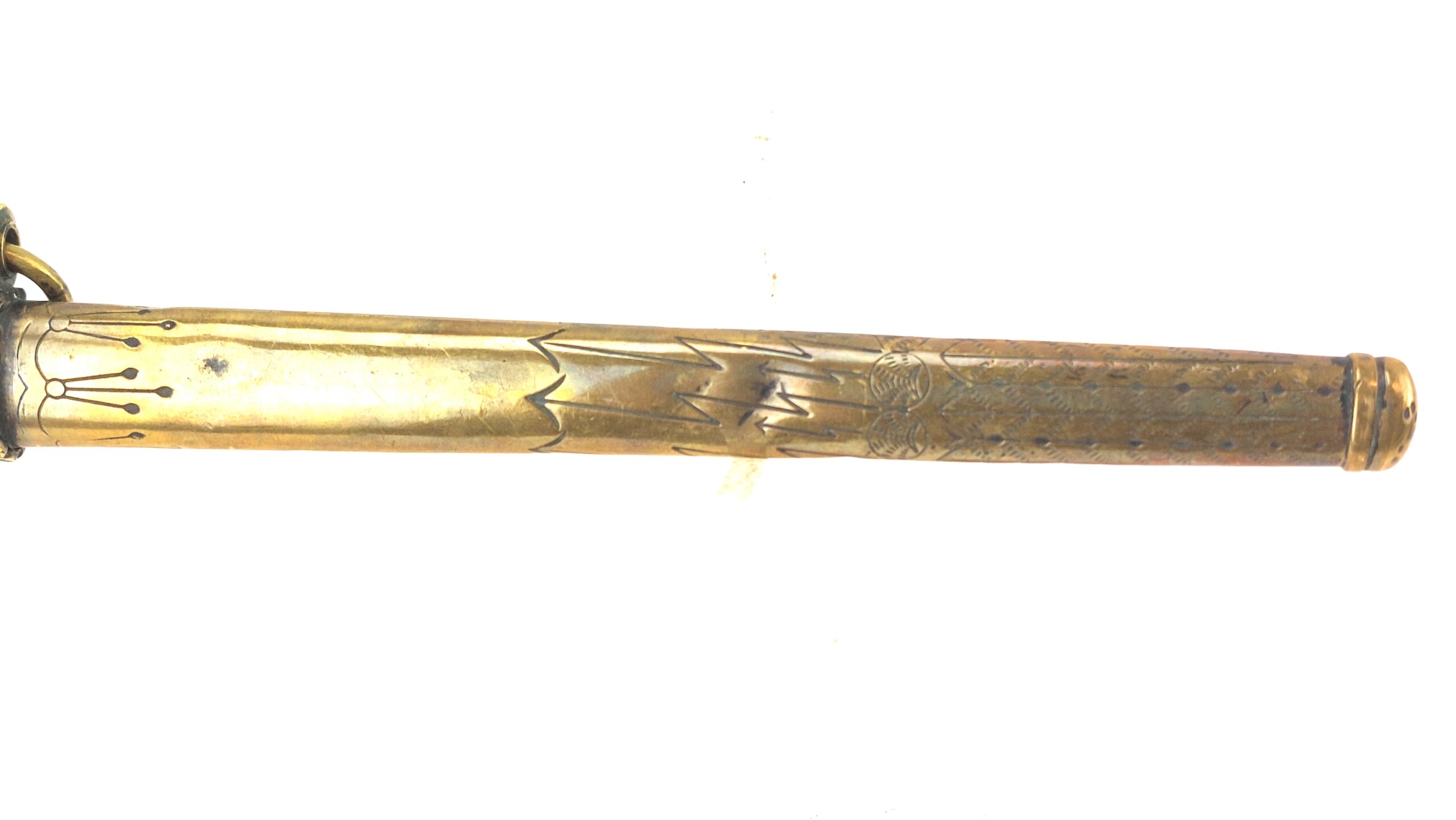
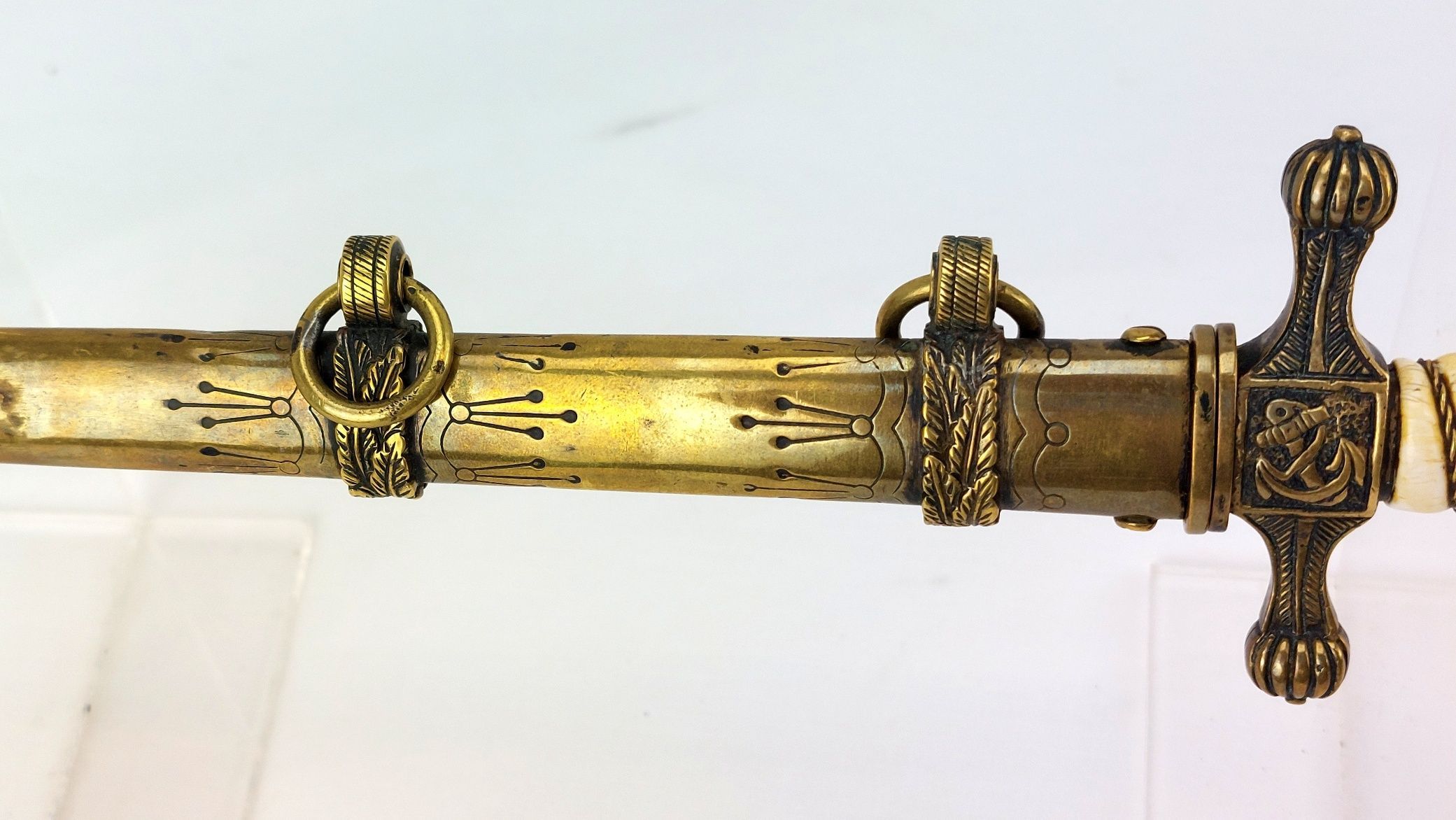
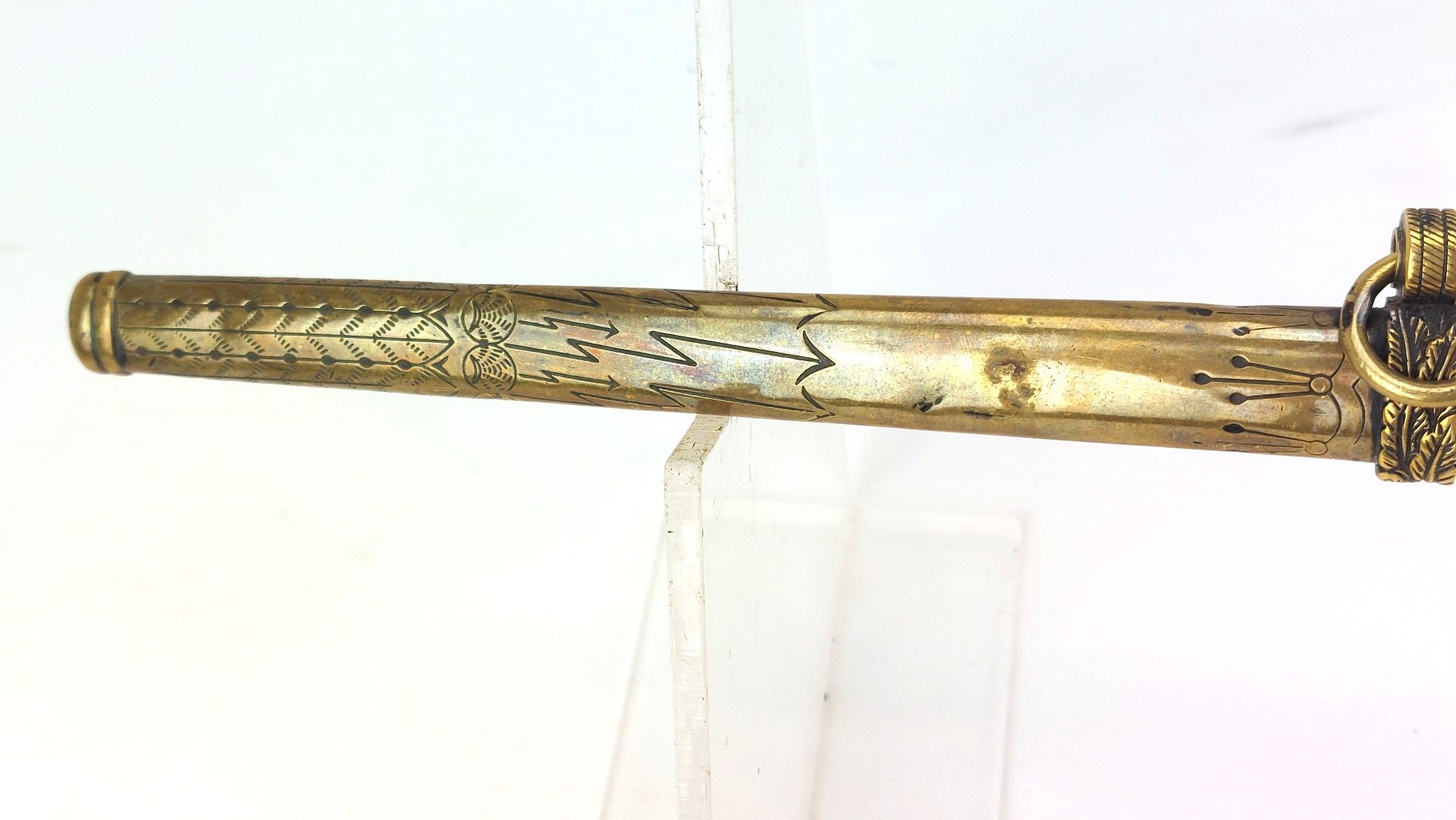
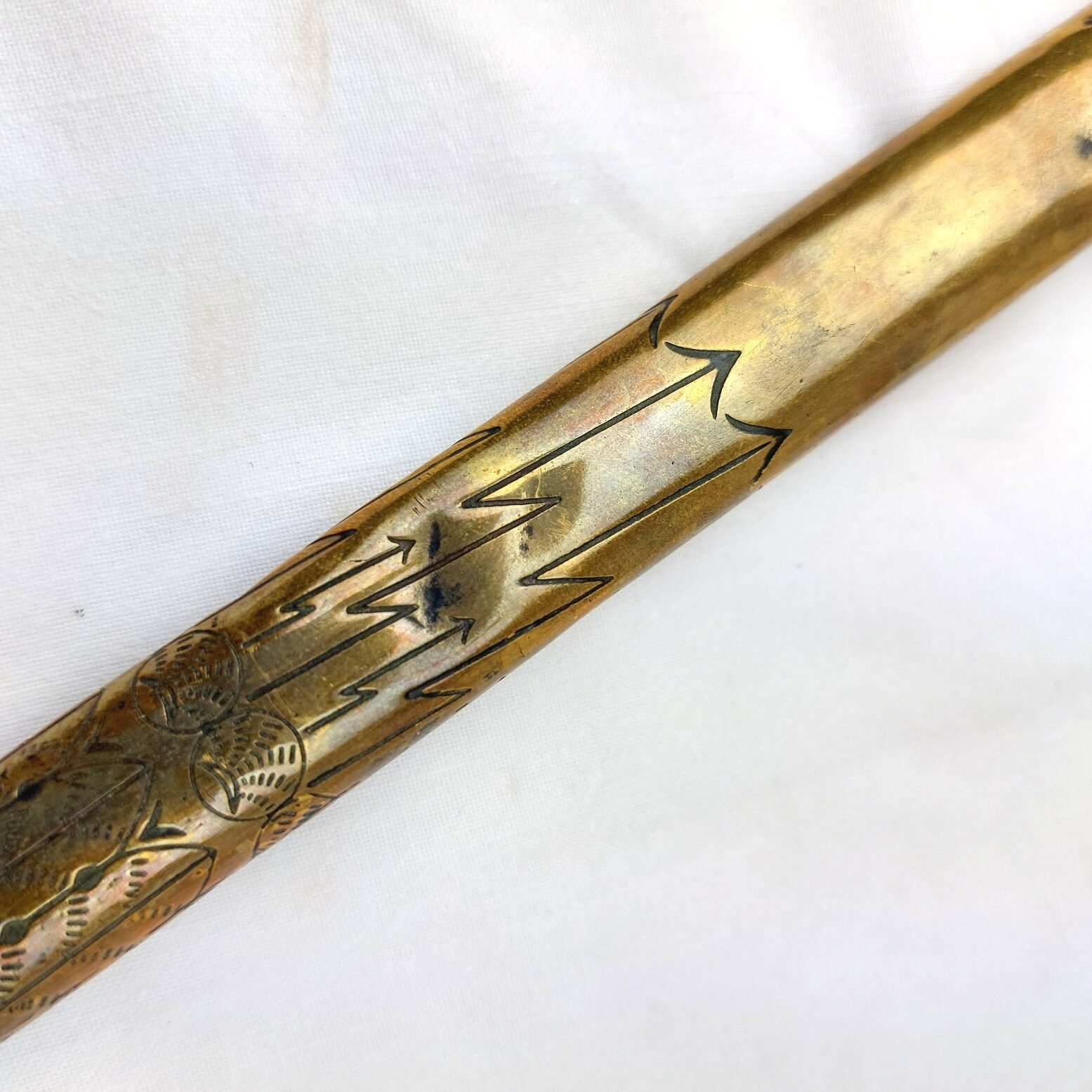
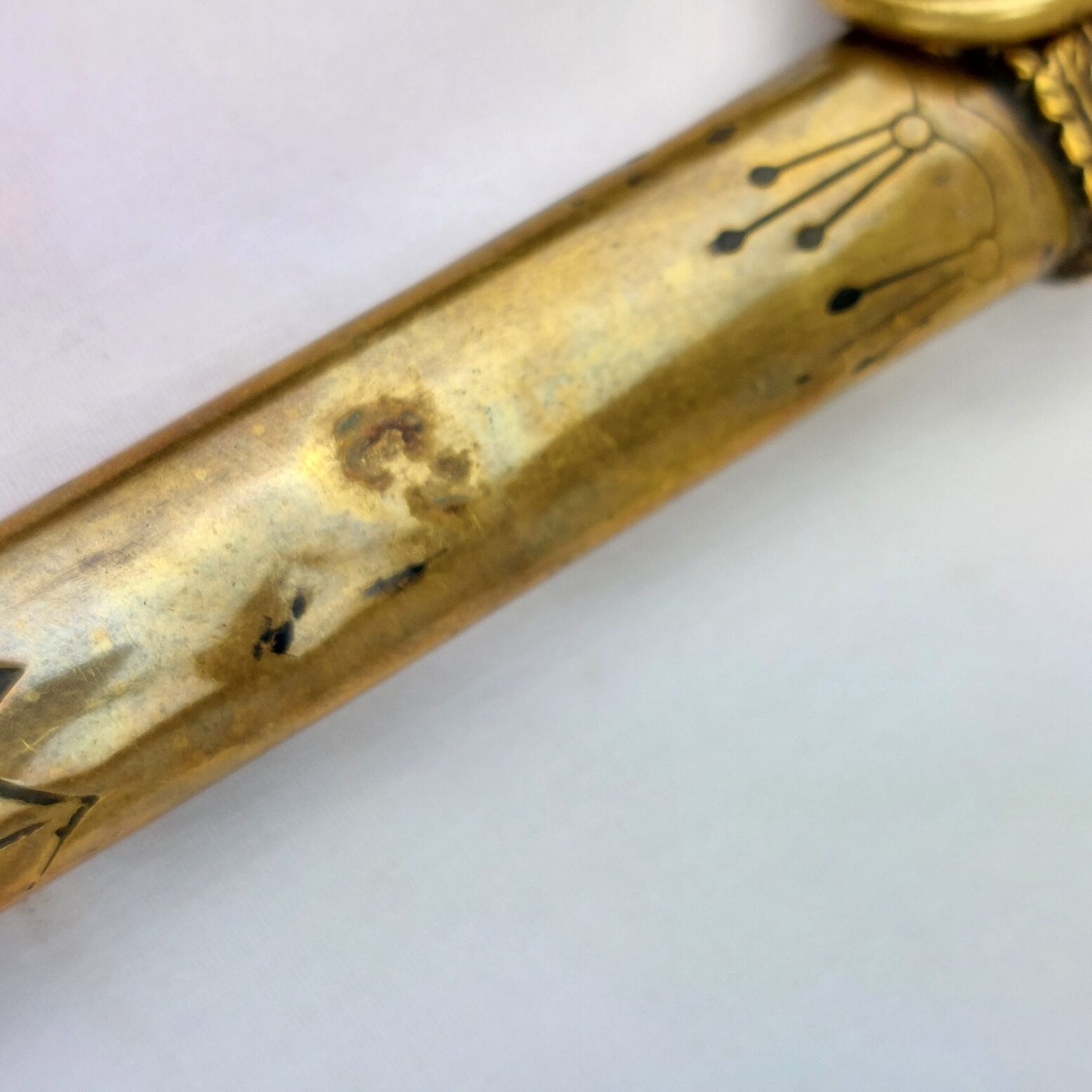
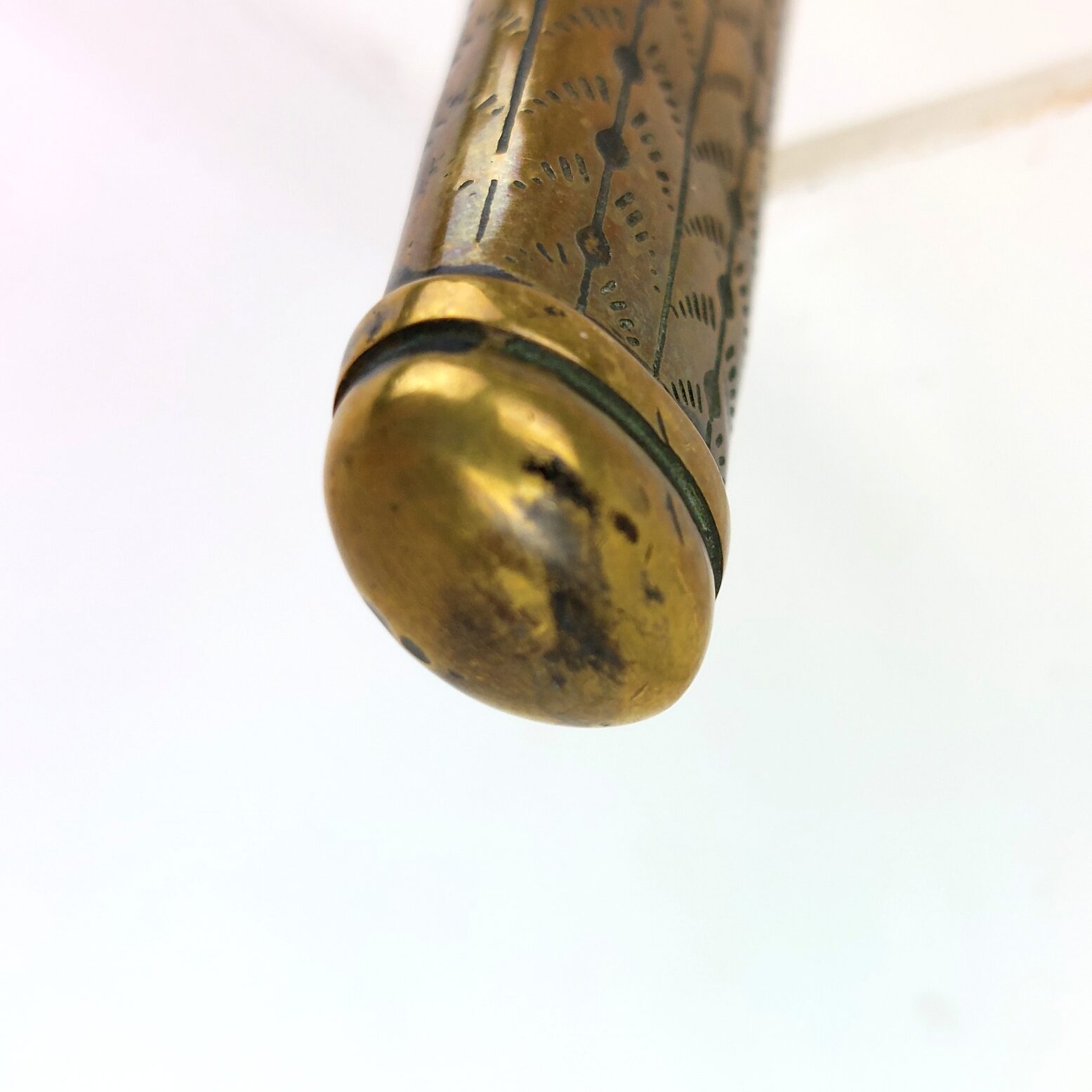
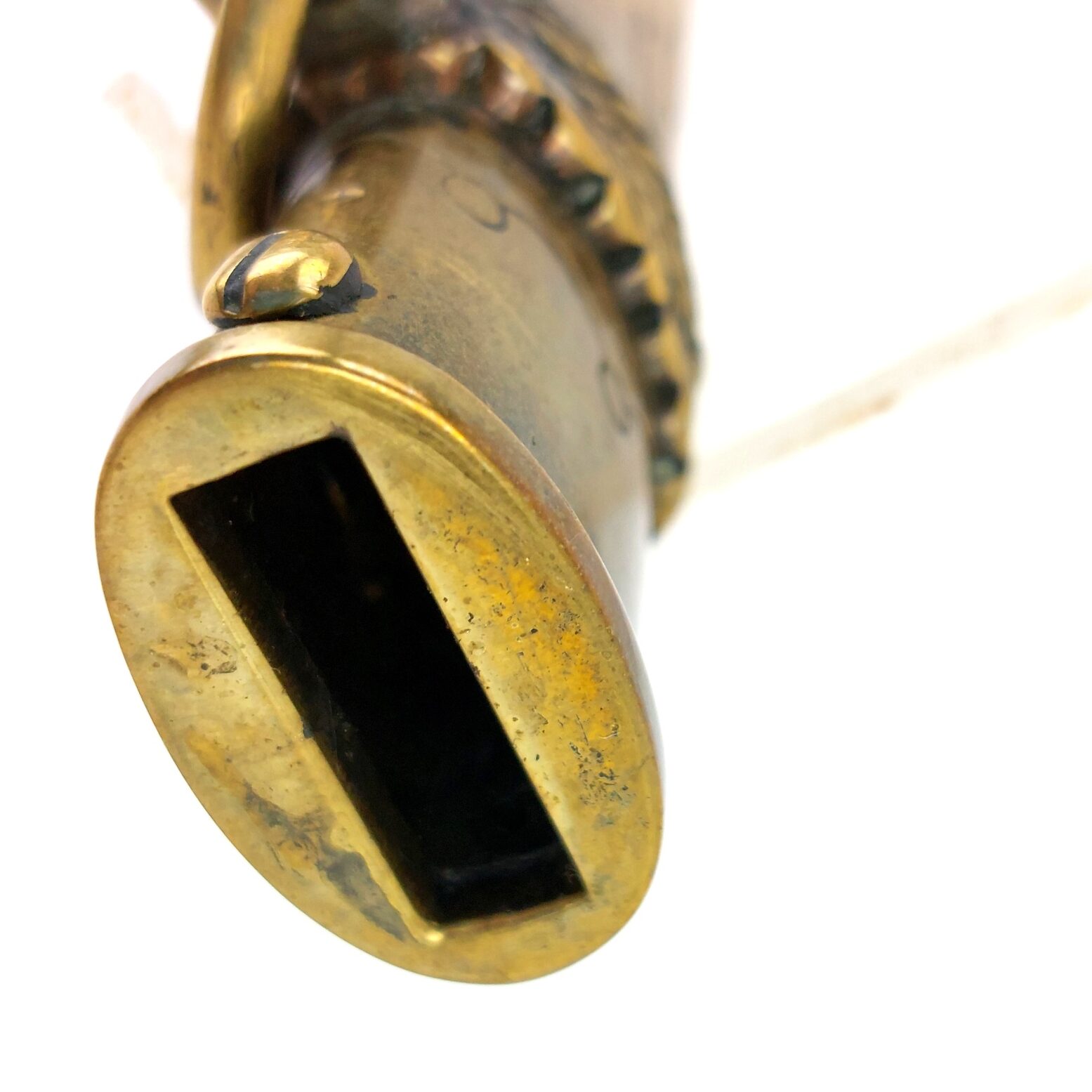
The brass scabbard is decorated with the desirable lightning bolt and oak-leaf engraving pattern, fitted with two suspension rings adorned by oak-leaf band decoration. This more ornate scabbard style was introduced in 1938 under the Third Reich, replacing the simpler or hammered scabbards of earlier Weimar-era navy daggers to reflect the new regime’s emphasis on bold, symbolic design. The scabbard shows typical service wear, including dents, small impact marks, and honest patina, adding to its period character.
Historical background on WKC WKC was formed in 1883 through the merger of Gebrüder Weyersberg and W.R. Kirschbaum & Co., uniting their "King’s Head" and "Knight’s Helmet" trademarks. Reorganized as WKC-Waffenfabrik G.m.b.H. in 1930, the firm became one of Solingen’s leading blade producers, supplying a wide range of edged weapons to the Wehrmacht and police. From 1935, WKC was assigned RZM code M7/42, though naval daggers like this example typically retained the traditional knight’s head mark rather than an RZM stamp, confirming its pre- or early-war production before stricter uniform RZM application.
*Condition* Blade remains bright with sharp, deep etching and minimal darkening near the tip. The original blued background of the etch has faded, as commonly encountered. The grip has age-related patina with a small chip beneath the eagle, with full wire wrap intact. The crossguard and early high-relief pommel show honest handling wear. The brass scabbard has a few minor dents and surface wear but no splits or repairs. Scabbard release button works well. The original felt buffer pad is absent, as often seen on period examples. Please see photographs as part of the condition report.
*In order to complete the online purchase we will require a picture/scan of a photo ID (Driving Licence, Passport or an official document with a recent picture). If you don't posses any such document please call to buy. If we consider that the proof of ID is incorect or insuficient, we reserve the right to cancel the transaction.
*We also reserve the right to cancel the transaction with a full refund if there is any suspicion that the provided item will be used in any way contrary to the laws and legislation of UK.