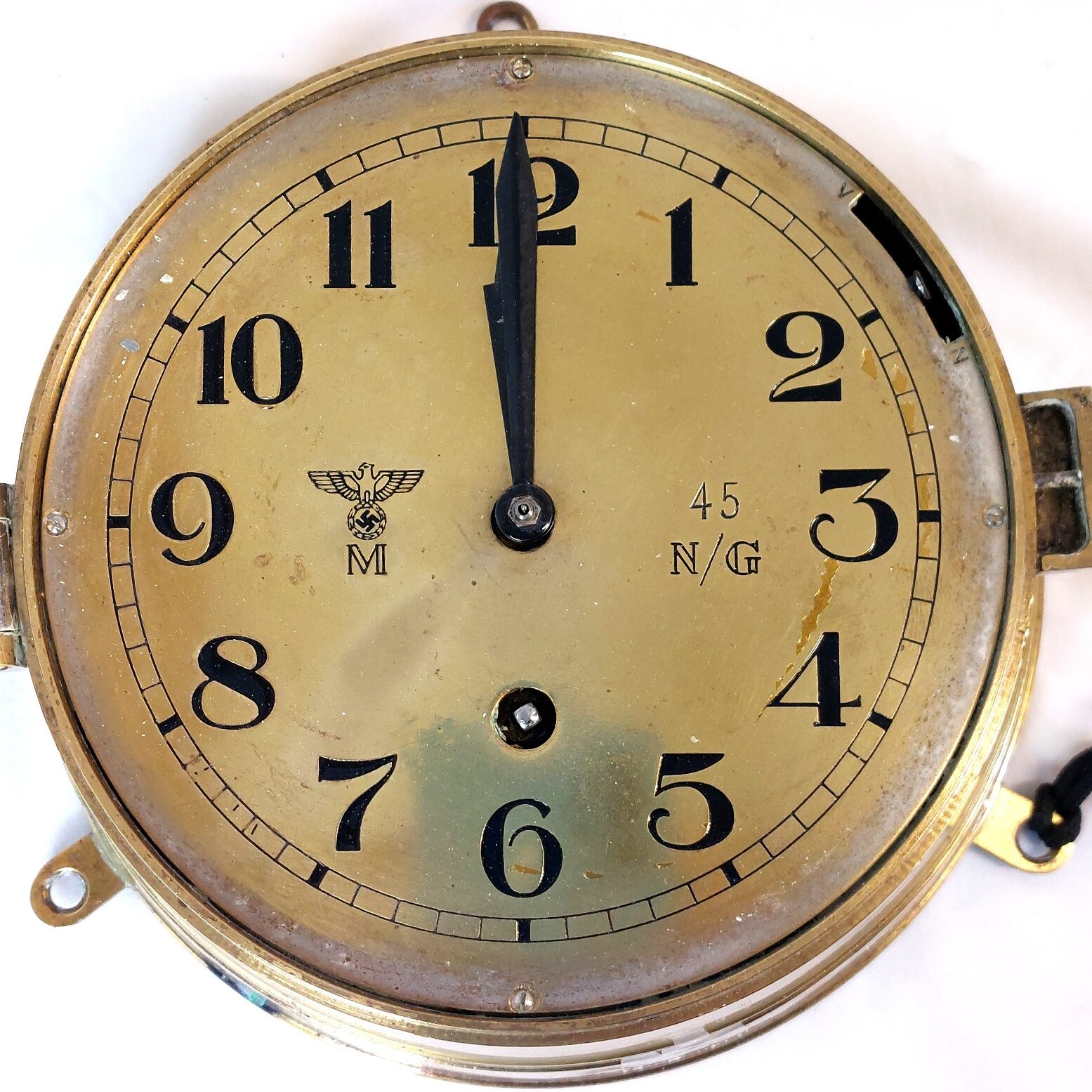
An original WW2 German Kriegsmarine bulkhead clock in heavy brass case, attributed to Kieninger & Obergfell and bearing the correct eagle-M dial with “45 N/G” naval inventory marking, the suffix often associated with Nordsee command allocation, a classic and highly collectible naval instrument of the Second World War.
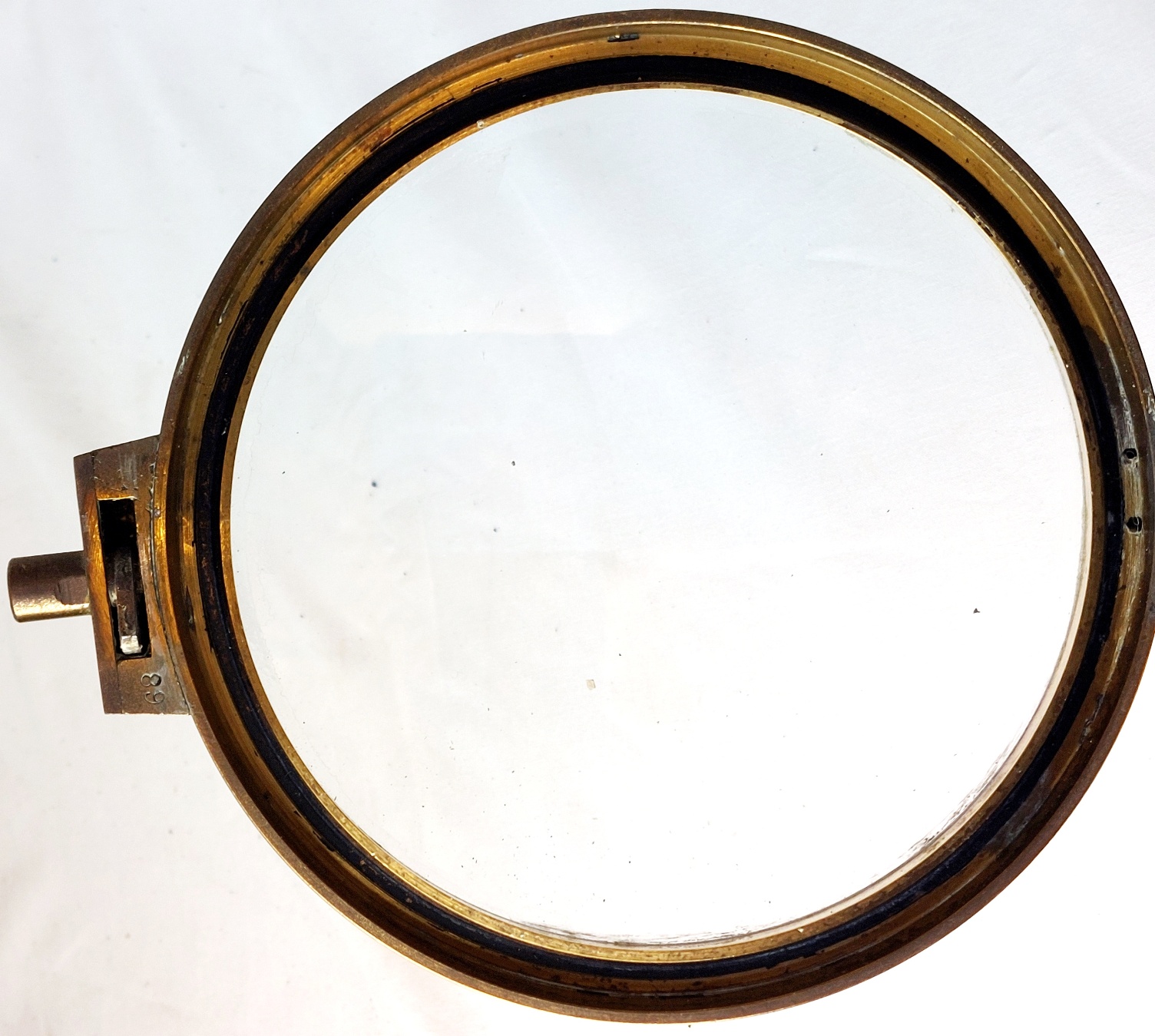
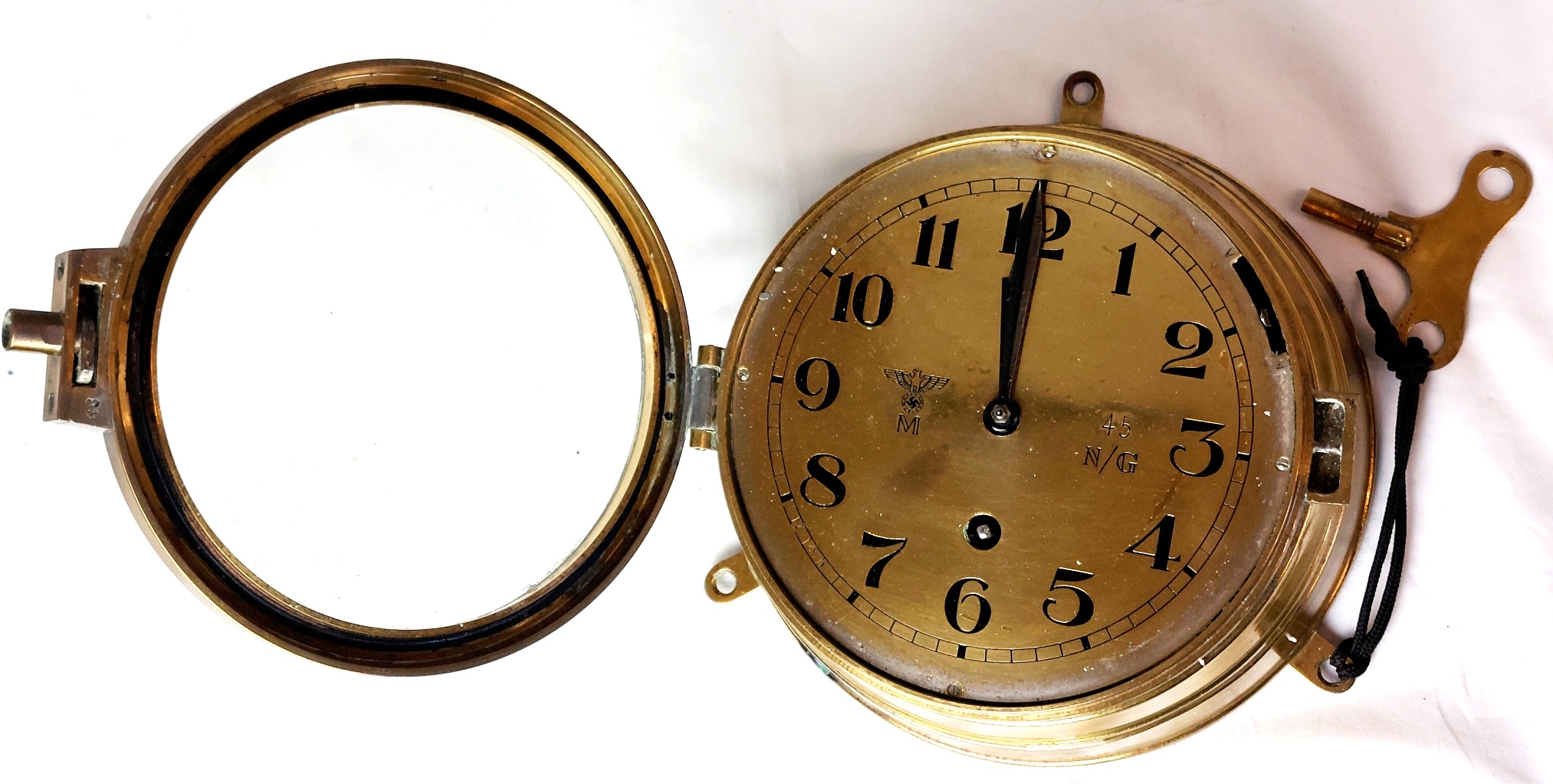
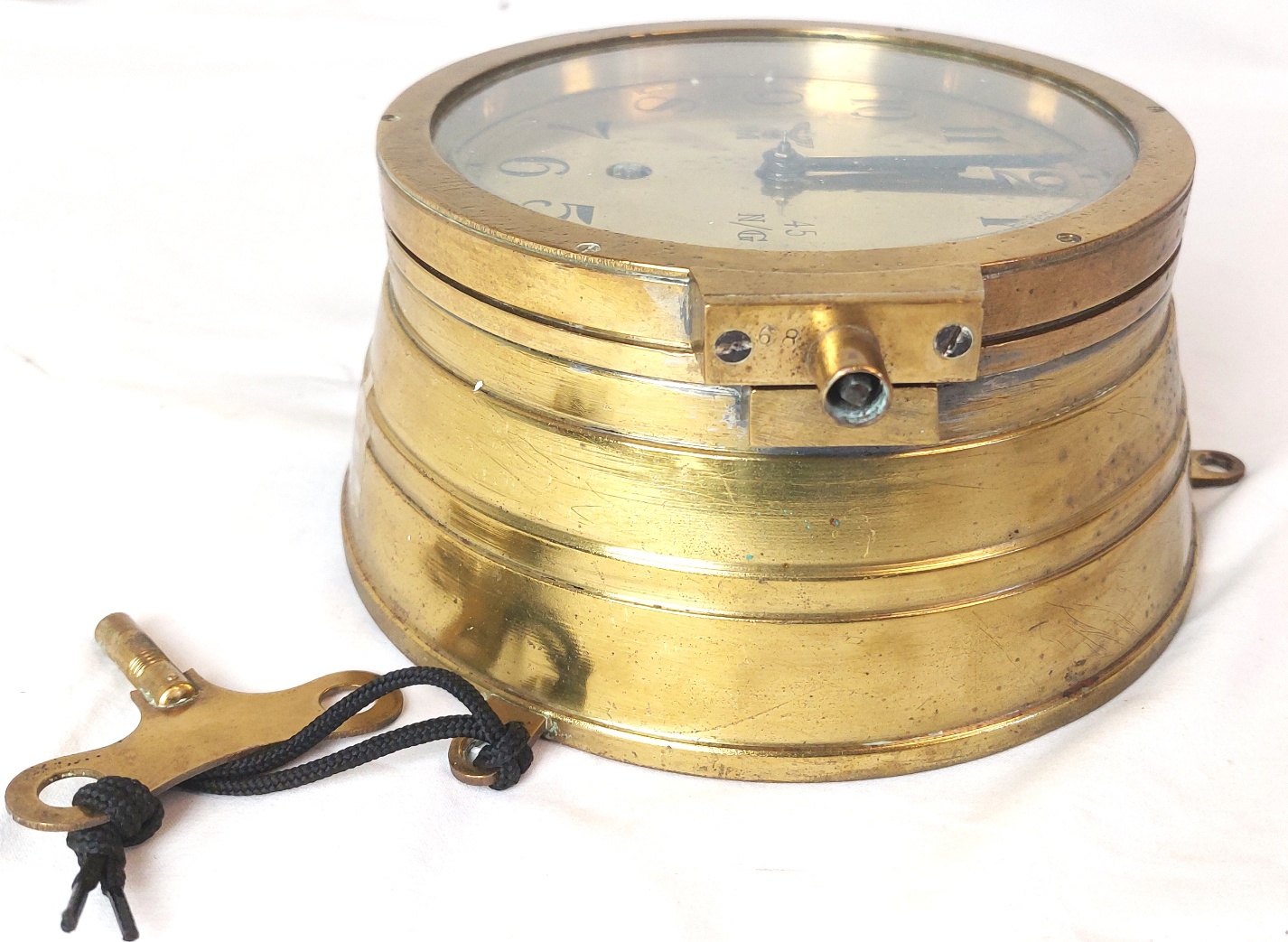
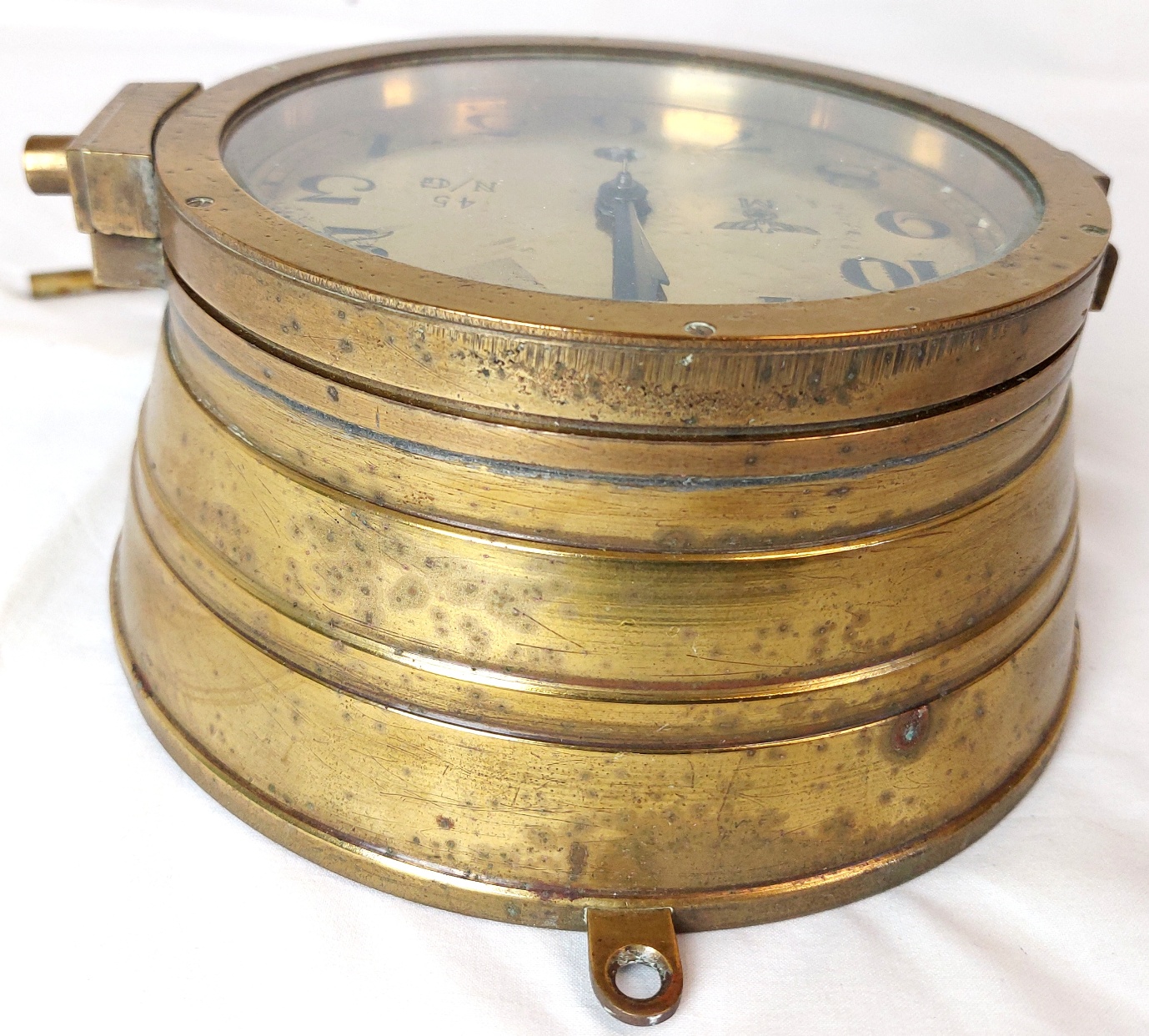
An original Second World War German Kriegsmarine bulkhead clock in heavy brass stepped case, with hinged glass bezel, locking mechanism and original winding key, the dial bearing the Kriegsmarine eagle over the letter “M” and marked “45 N/G”.
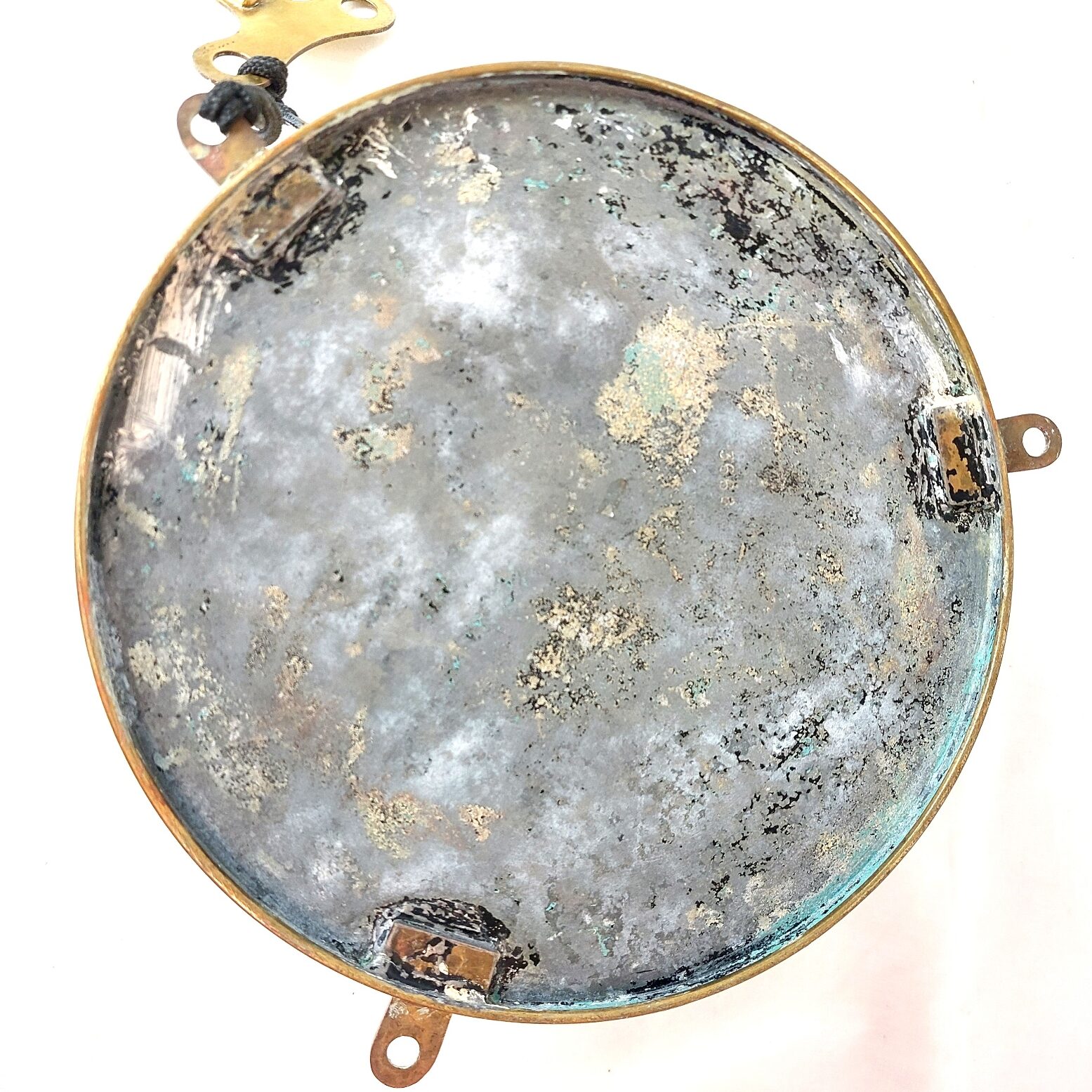
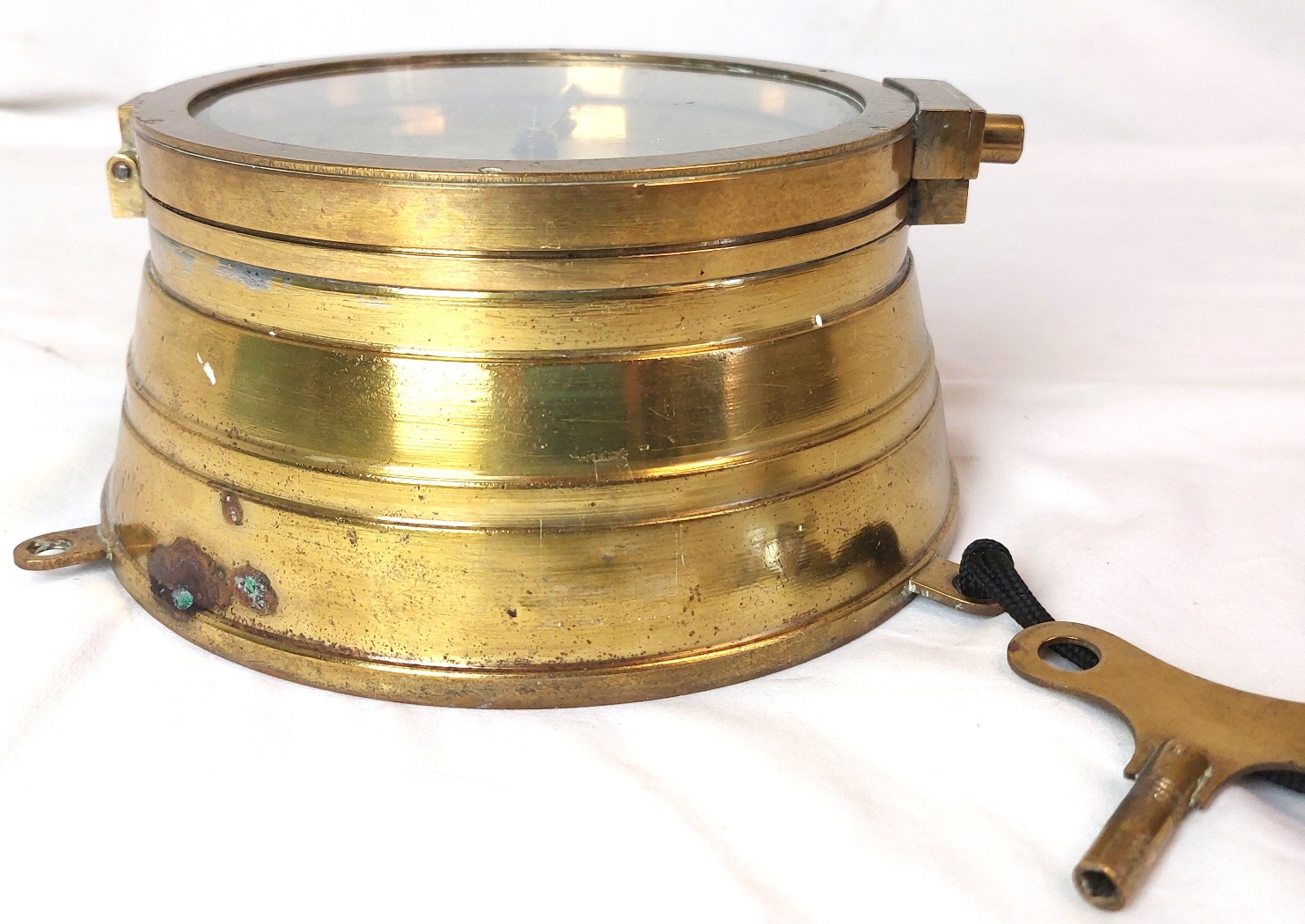
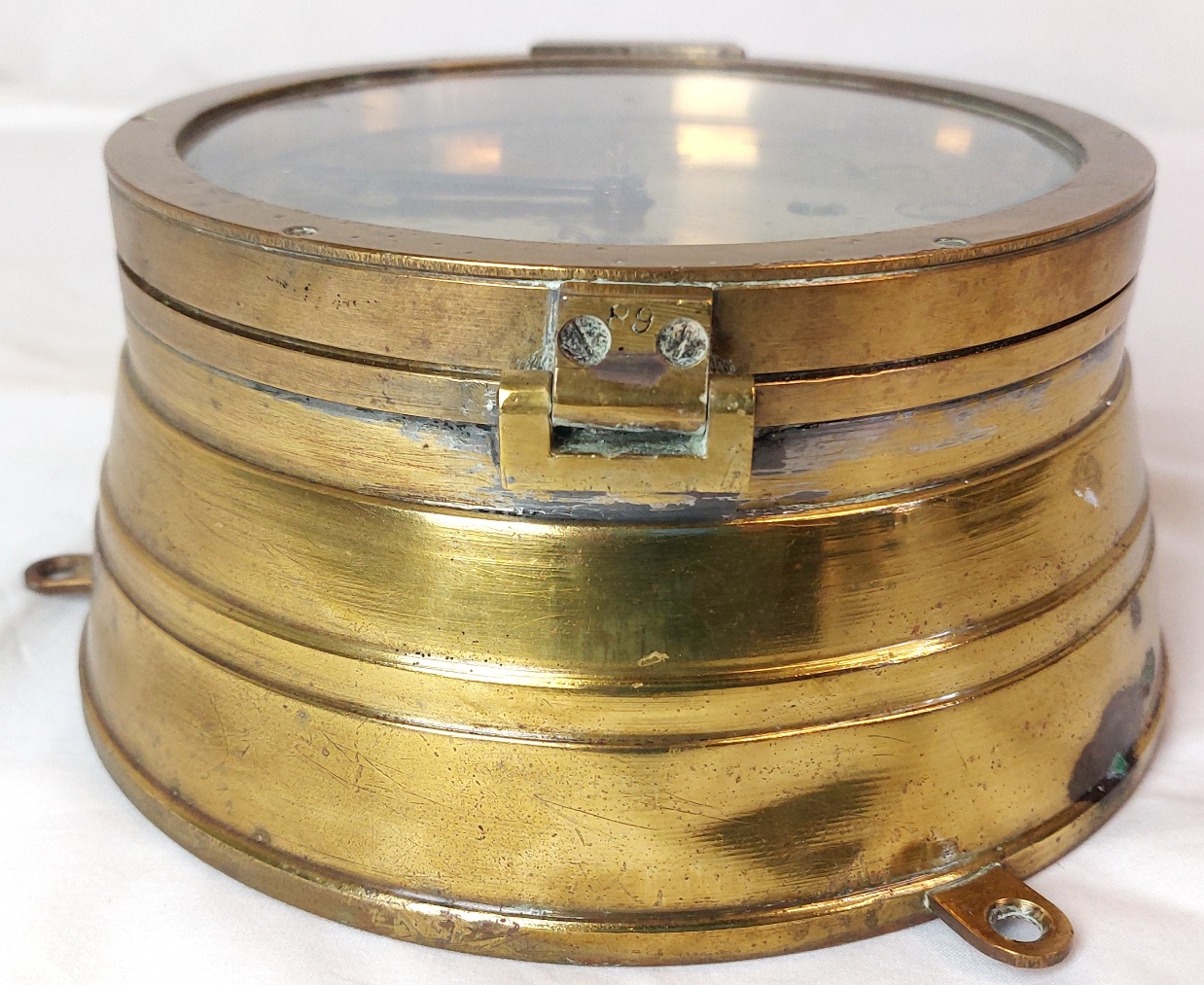
The clock is of the standard naval pattern with thick brass case, stepped outward from the dial, designed for mounting to a ship’s bulkhead using three fixing lugs. The glazed bezel opens on a hinge and locks with the same key used to wind the eight-day movement.
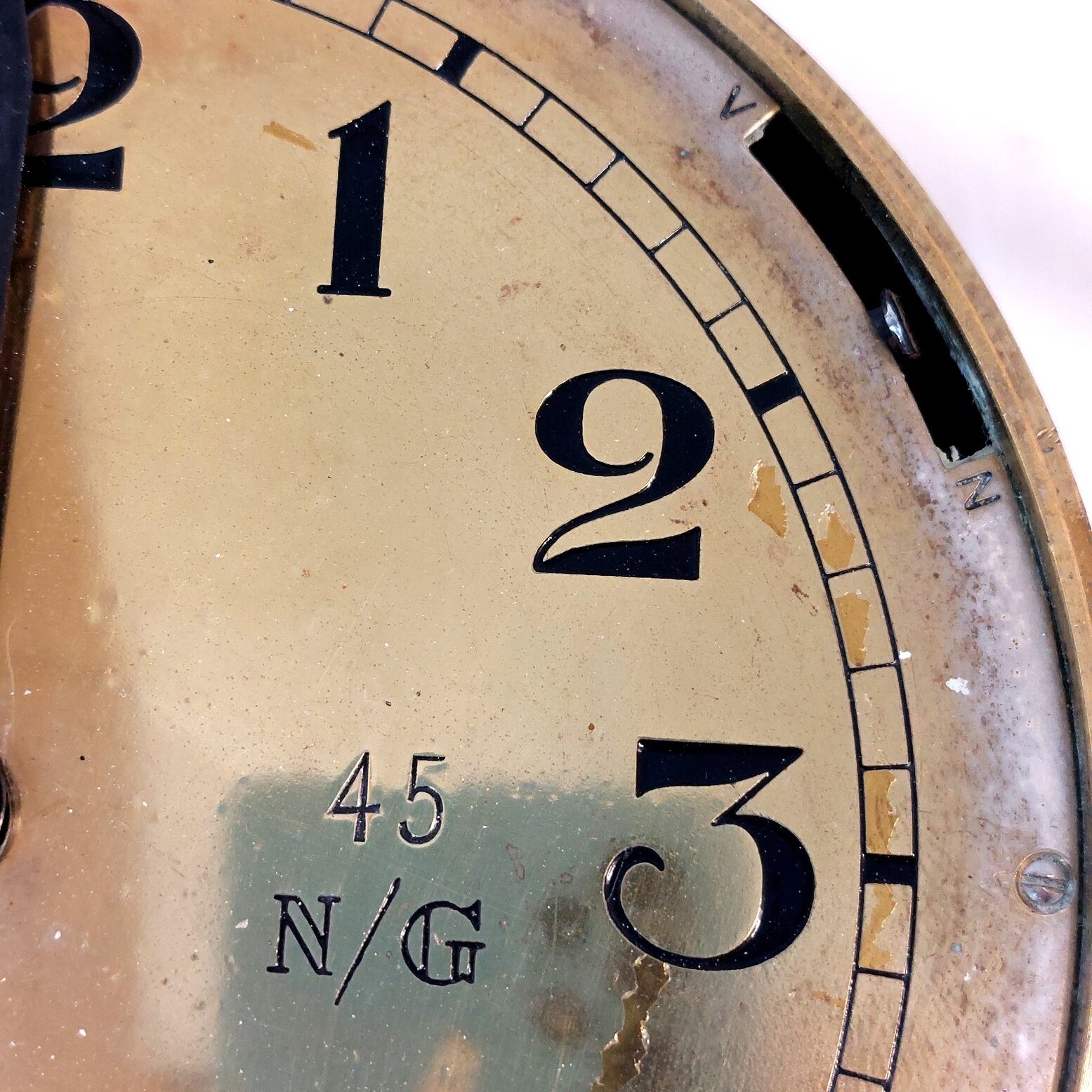
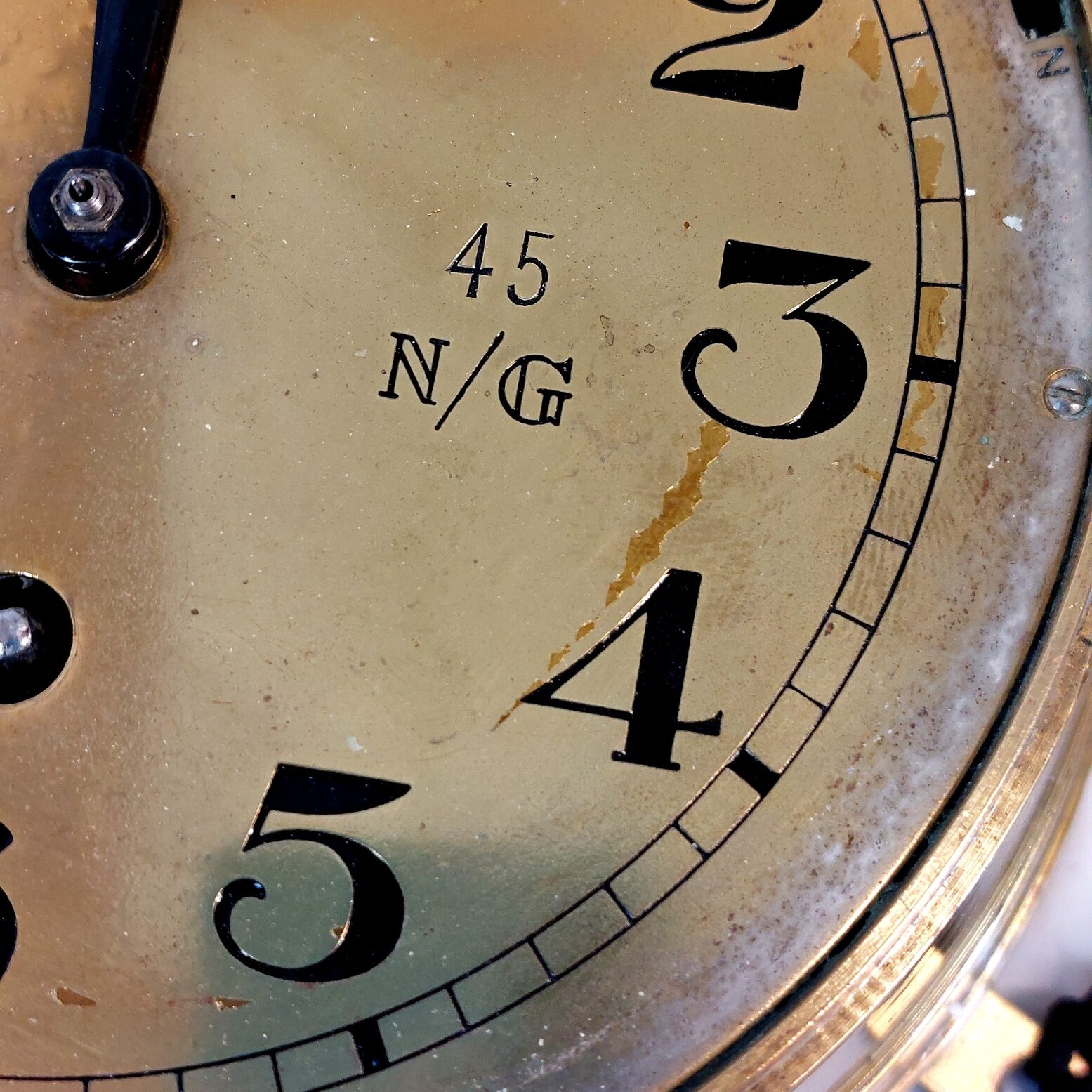
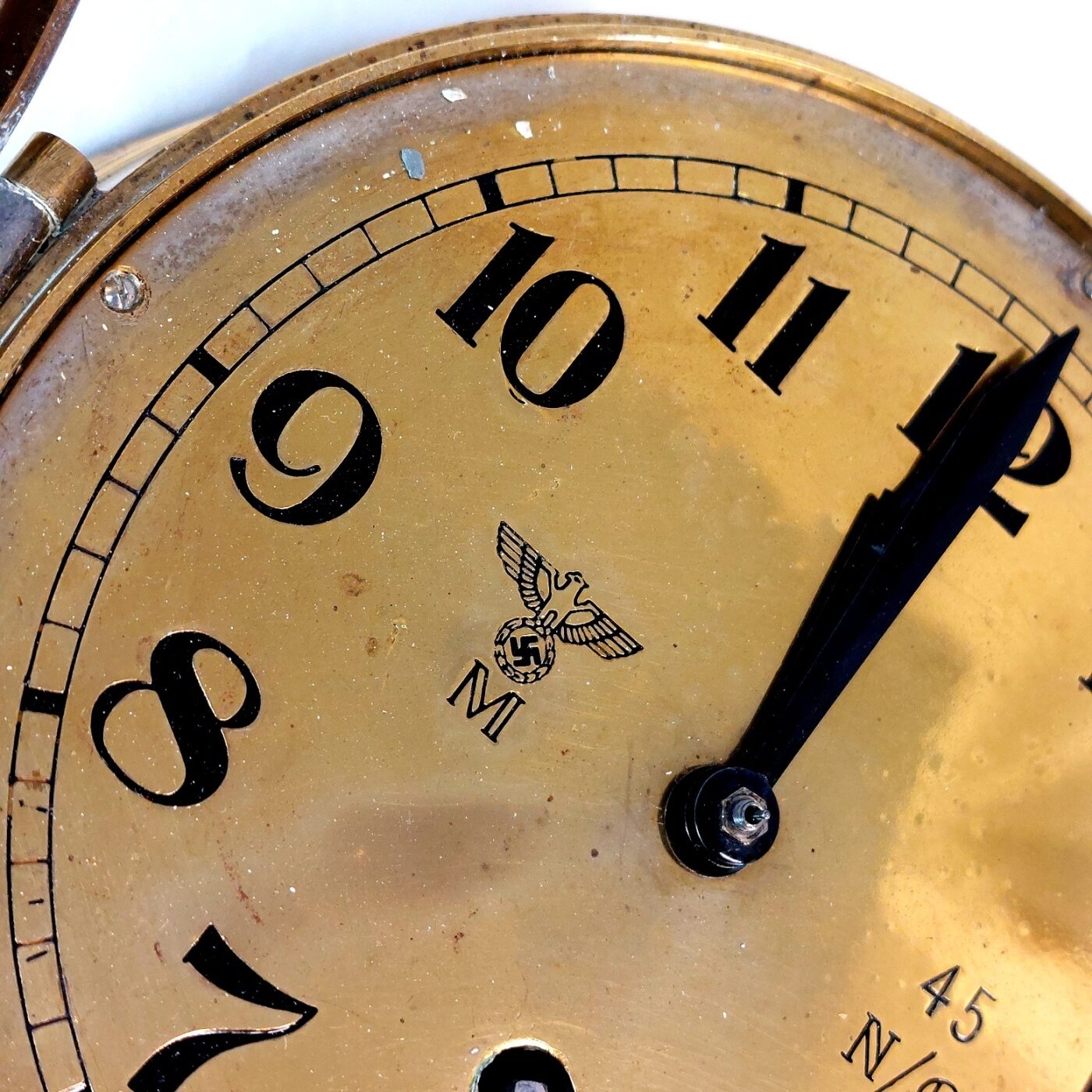
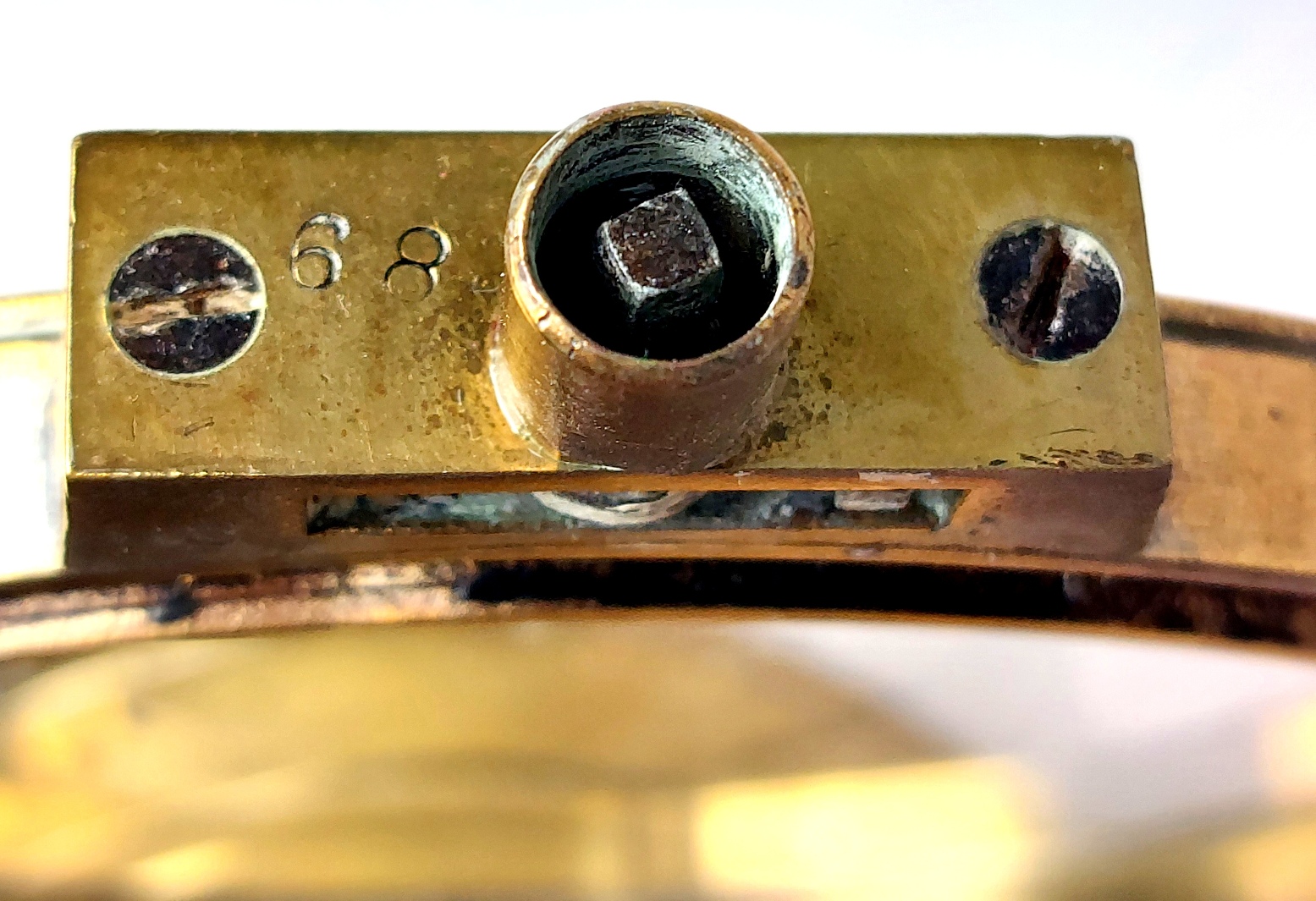
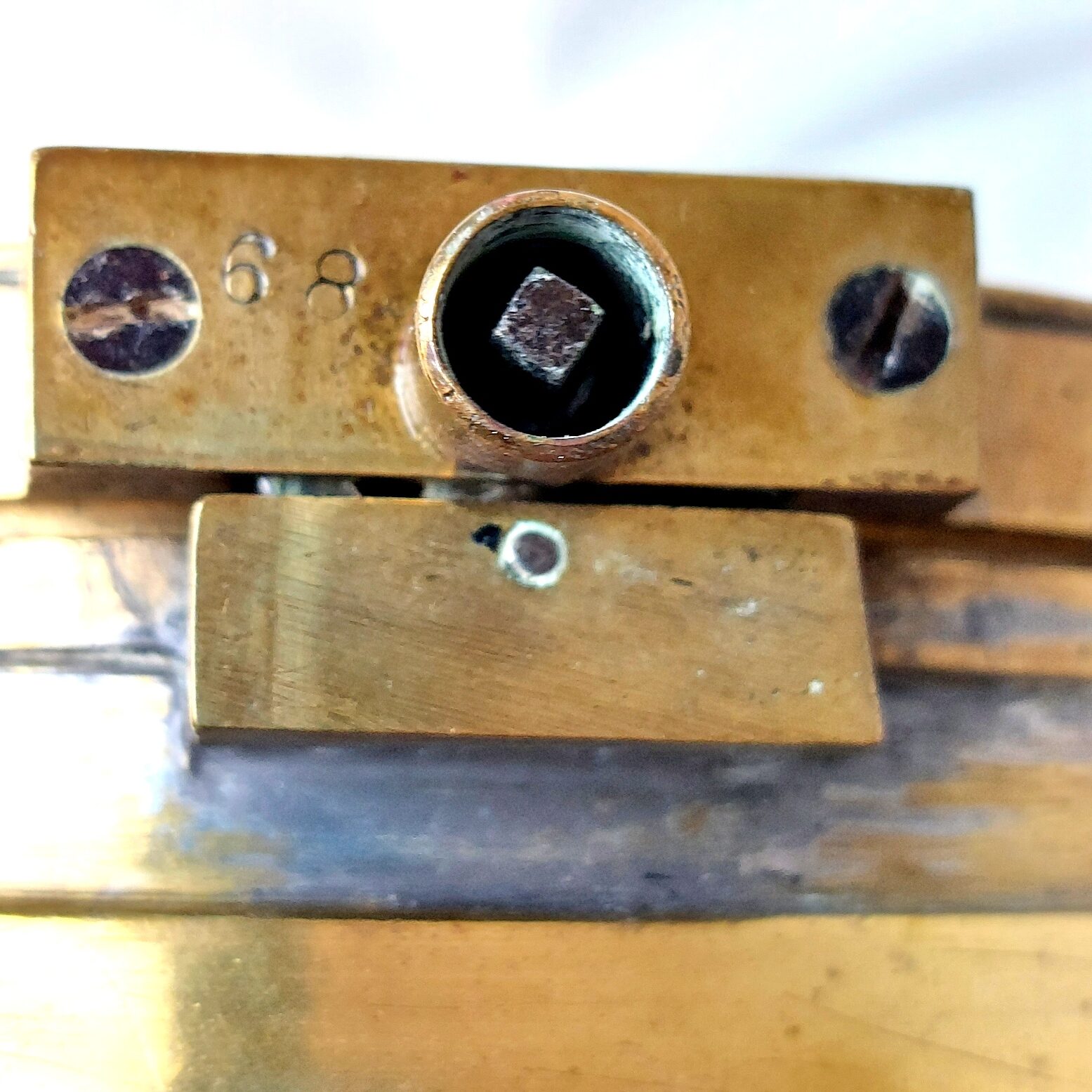
The dial has bold black Arabic numerals with minute track, black steel arrow-form hands, and subsidiary seconds position at six o’clock (second hand missing). The left centre bears the Kriegsmarine eagle above the letter “M”, while the right side is stamped: “45 N/G”. The hinge and lock are both stamped 68, showing matching assembly numbers.
Approx. Measurements – Face diameter: 17 cm. Base diameter: 20 cm. Depth: 9.5 cm.
History Note: Bulkhead clocks of this type were standard equipment aboard Kriegsmarine vessels during the Second World War, fitted in control rooms, engine rooms, navigation compartments and crew spaces on both surface ships and submarines. Their heavy brass construction, screw-mounted case, and locking glazed bezel were designed to withstand vibration, moisture and shock at sea.
The dial marking with the Kriegsmarine eagle over “M” denotes official naval issue. The additional code “45 N/G” follows the known pattern of Kriegsmarine inventory or equipment classification markings found on clocks and other naval instruments. The letter “N” is generally understood by collectors to refer to Nordsee (North Sea) command, while the suffix “G” remains the subject of debate. One commonly accepted interpretation is that the marking indicates issue to the North Sea Fleet, with the “G” possibly denoting allocation to a particular equipment group or to larger surface vessels such as destroyers or cruisers, rather than to submarines, which often used smaller-diameter clocks. Other researchers have suggested that “N/G” may have related to naval district, coastal station, or Baltic assignments rather than to a specific ship, and the precise meaning of the full code is not definitively recorded in surviving wartime documentation, though markings of this type are considered entirely correct for Kriegsmarine bulkhead clocks.
Based on the dial layout, absence of a 24-hour chapter ring, and the position of the inventory marking to the right of the centre arbor, this clock closely follows the known pattern of Kriegsmarine bulkhead clocks manufactured by Kieninger & Obergfell (K&O), one of the principal suppliers of naval timepieces to the German Navy during the war. While the movement has not been inspected, the design is consistent with documented K&O production.
*Condition* Overall an excellent and very presentable example, complete with original key and matching case numbers, and increasingly hard to find in untouched wartime condition. Untested, and the movement has not been examined internally. The sweep second hand is missing. The dial shows age wear and marks, and the original silvered finish has been polished down through age and cleaning, as often seen on naval clocks that have seen prolonged service use. The glass is intact. The brass case retains a good original patina with corrosion spots, small dents and general wear consistent with shipboard use. Matching assembly number 68present on both hinge and lock, confirming the case parts remain together. Key present. Please see photographs as part of the condition report.