*German, WW2-Dated 1943, Feldfernsprecher 33 (FF33) Field Telephone by Telefonbau und Normalzeit (T&N), Waffeamt Marked, WaA905*
A particularly desirable and increasingly difficult-to-find matching 1943-dated Feldfernsprecher 33 (FF33) set, with box, handset and crank all present, and crucially retaining corresponding TN manufacture and Waffenamt WaA905 inspection marks throughout. Sets surviving today are frequently assembled from mixed components; this example shows strong evidence of remaining together as an original factory-issued unit.
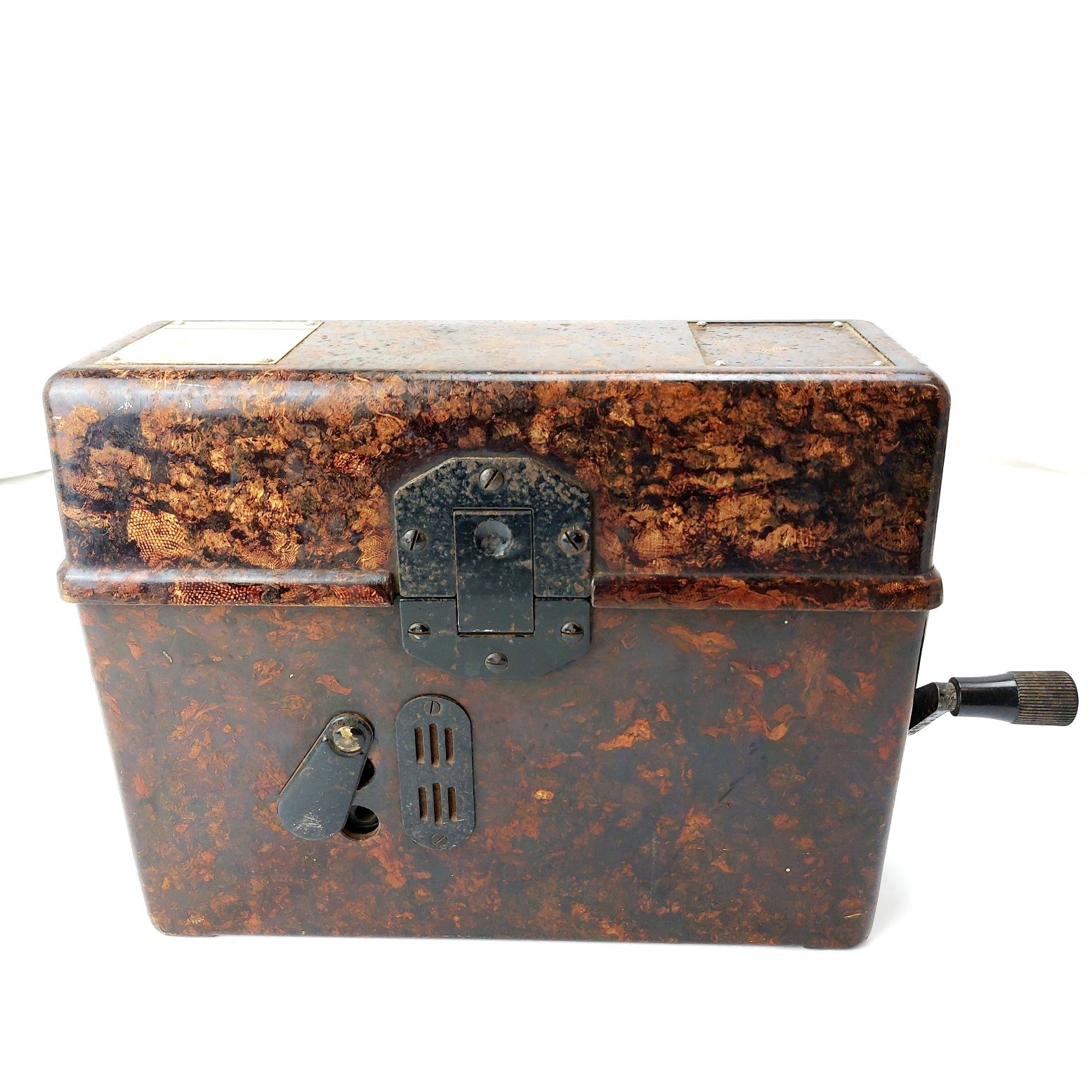
An original Second World War German Feldfernsprecher 33 (FF33) field telephone manufactured in 1943 by Telefonbau und Normalzeit (T&N).
The Bakelite clamshell case is marked:
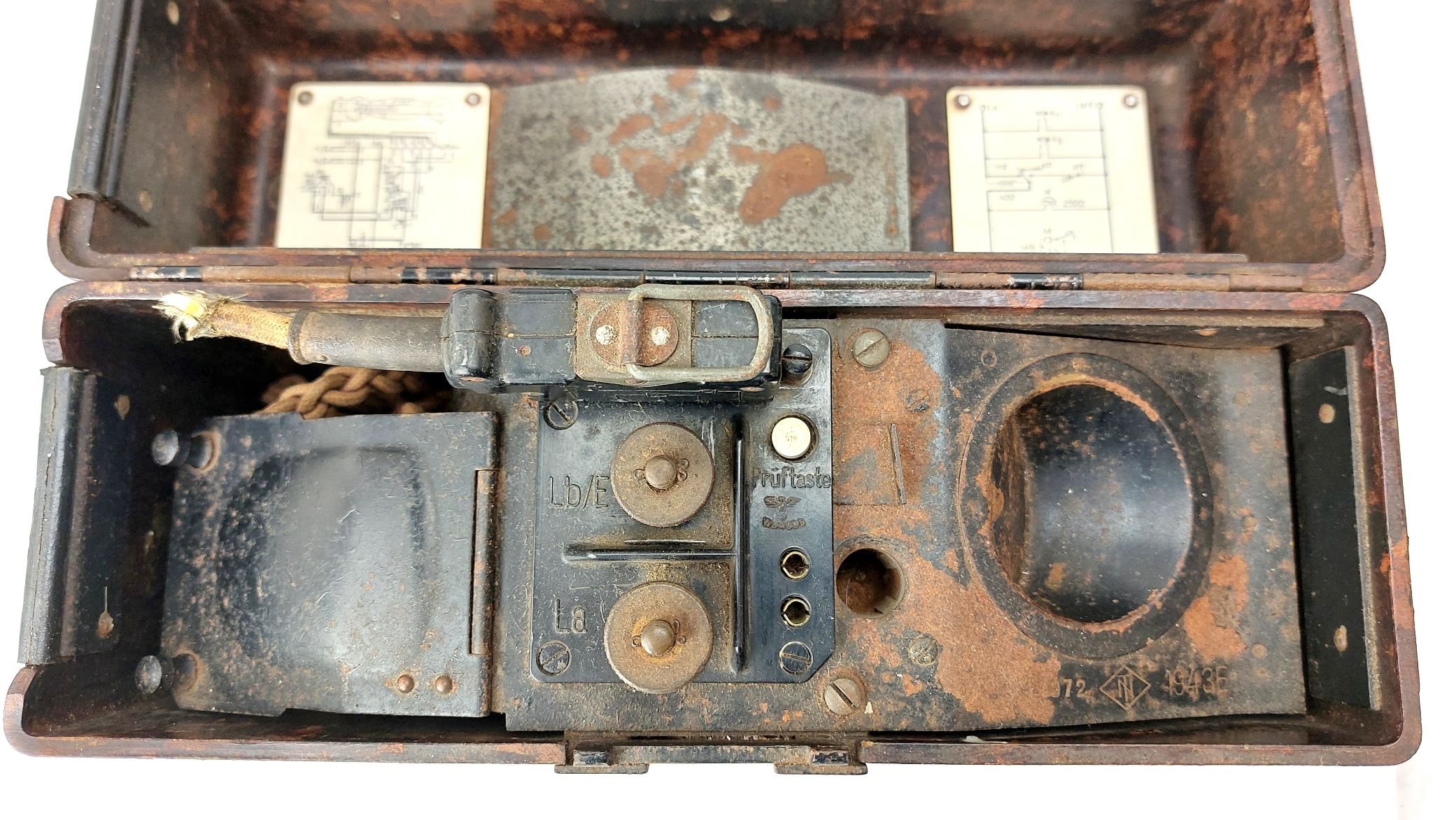
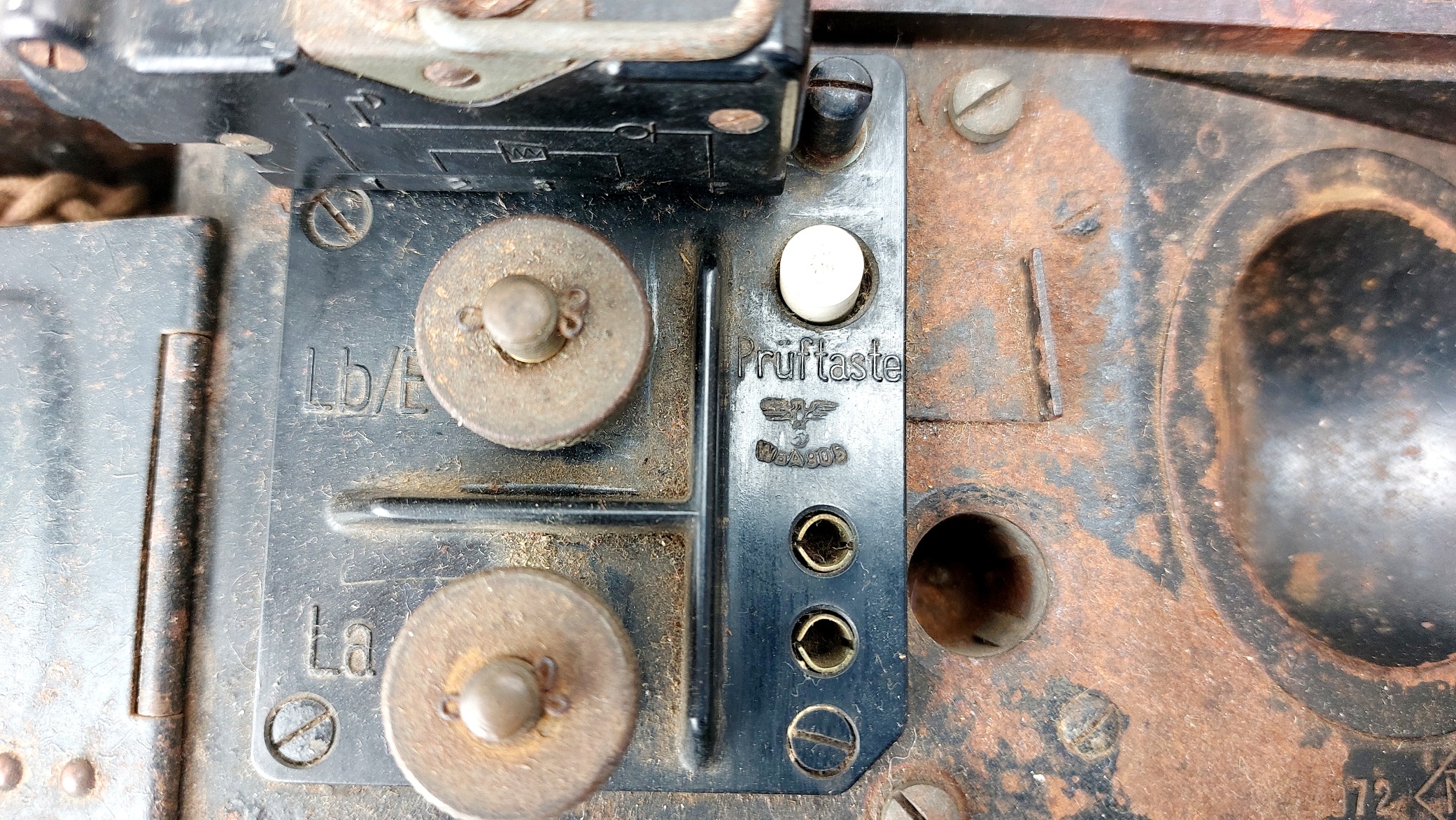
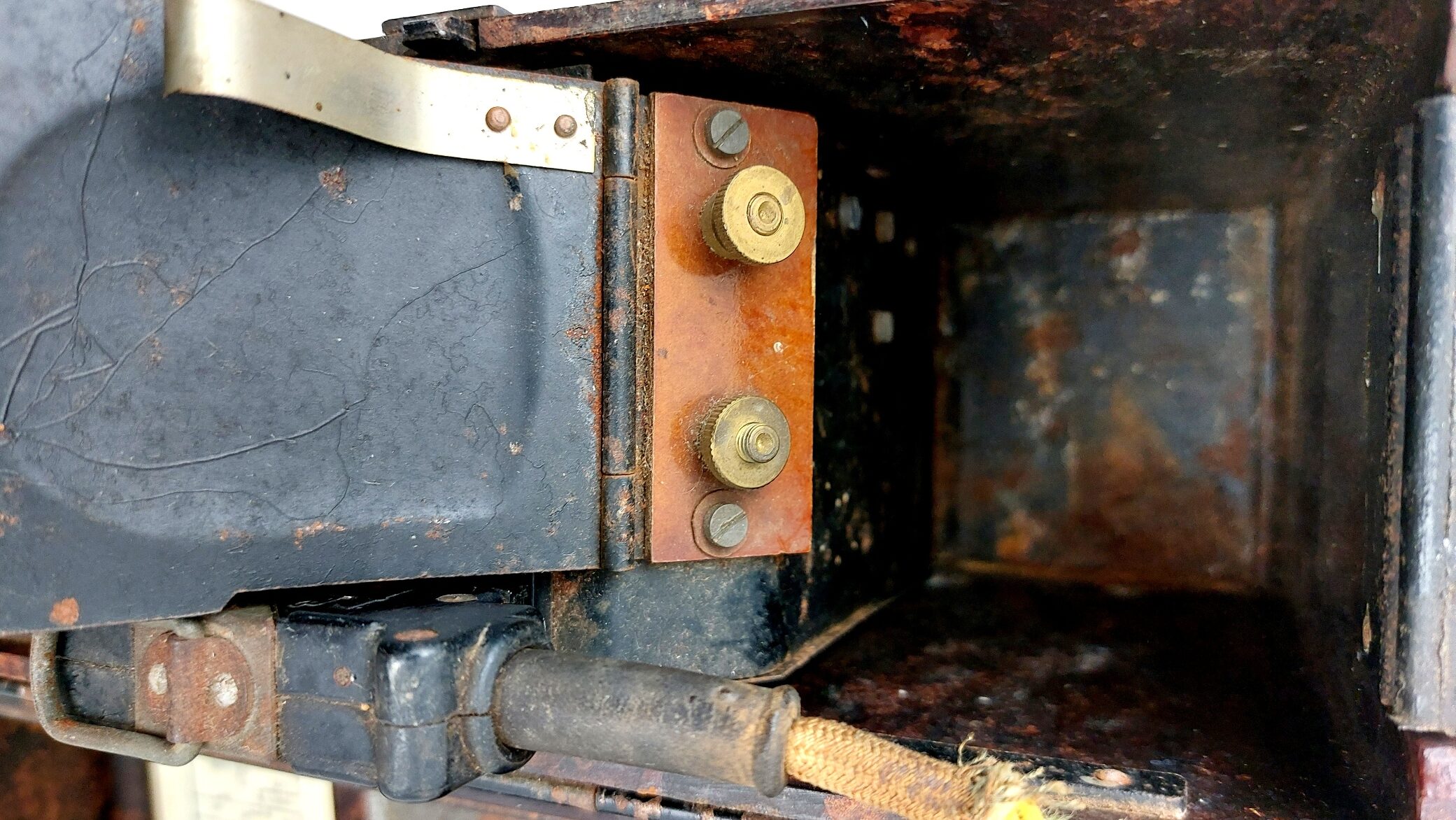
- Lb/E and La terminal designations
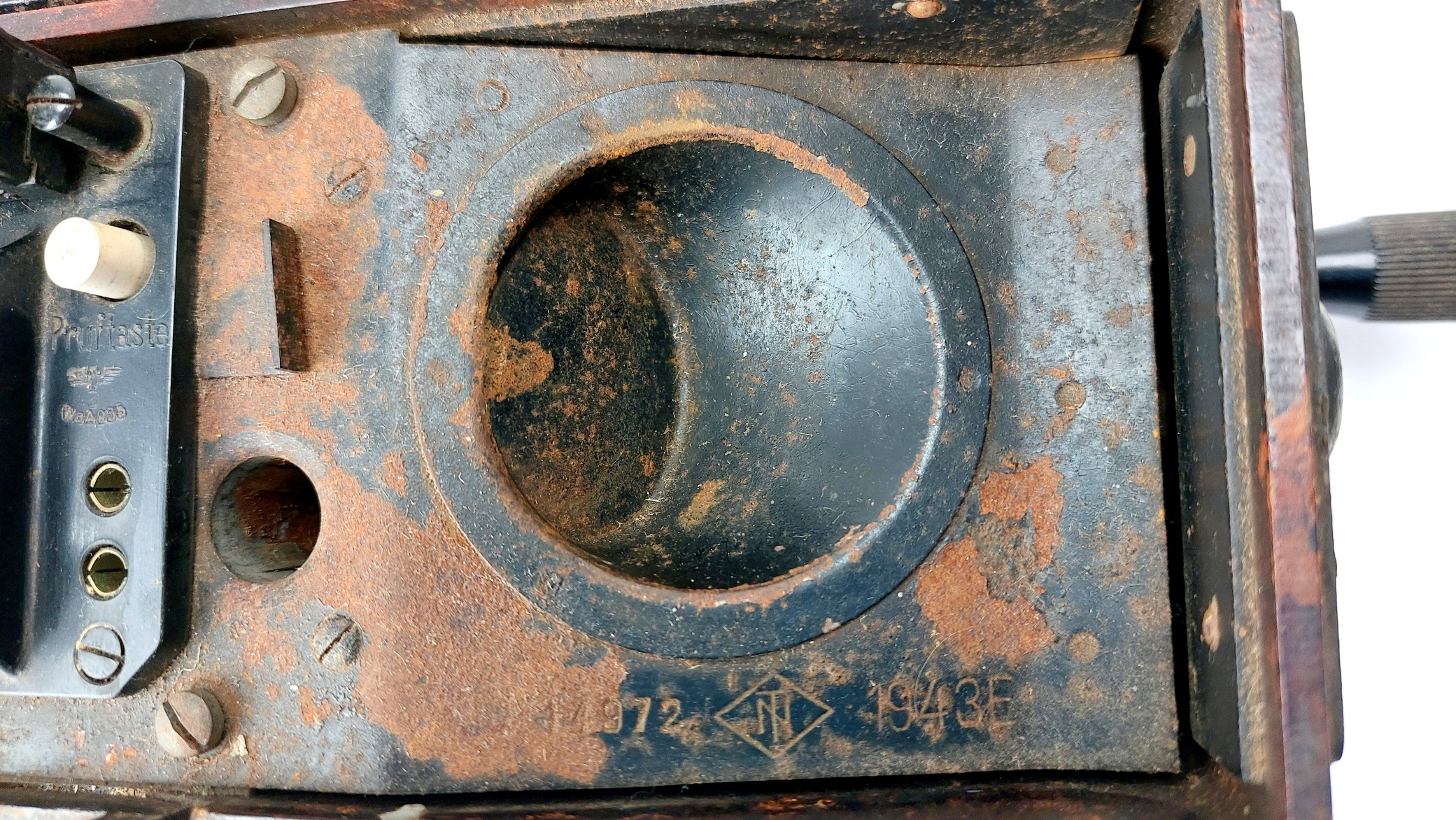
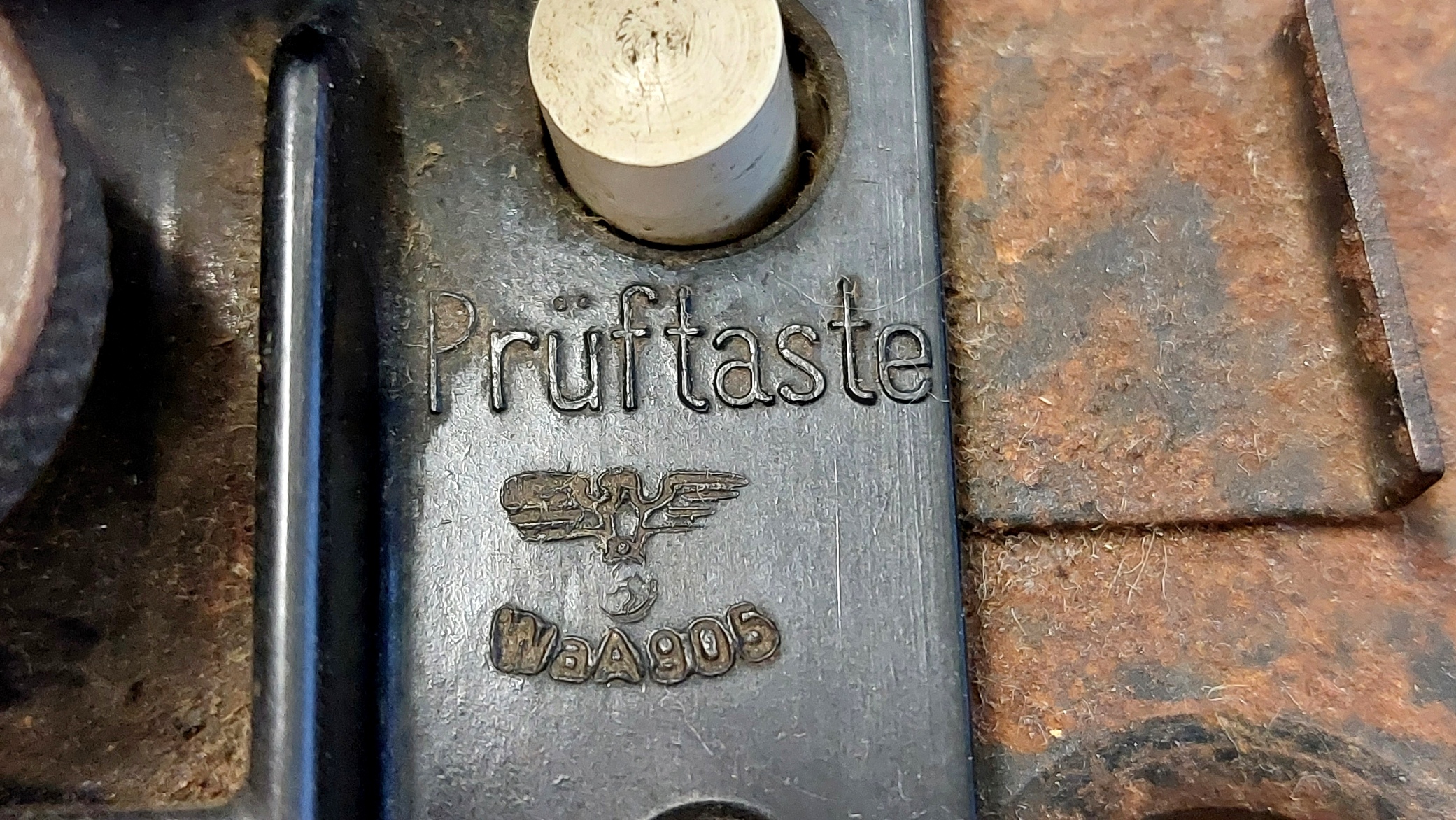
- Prüftaste (test button)
- WaA905 Waffenamt acceptance stamp
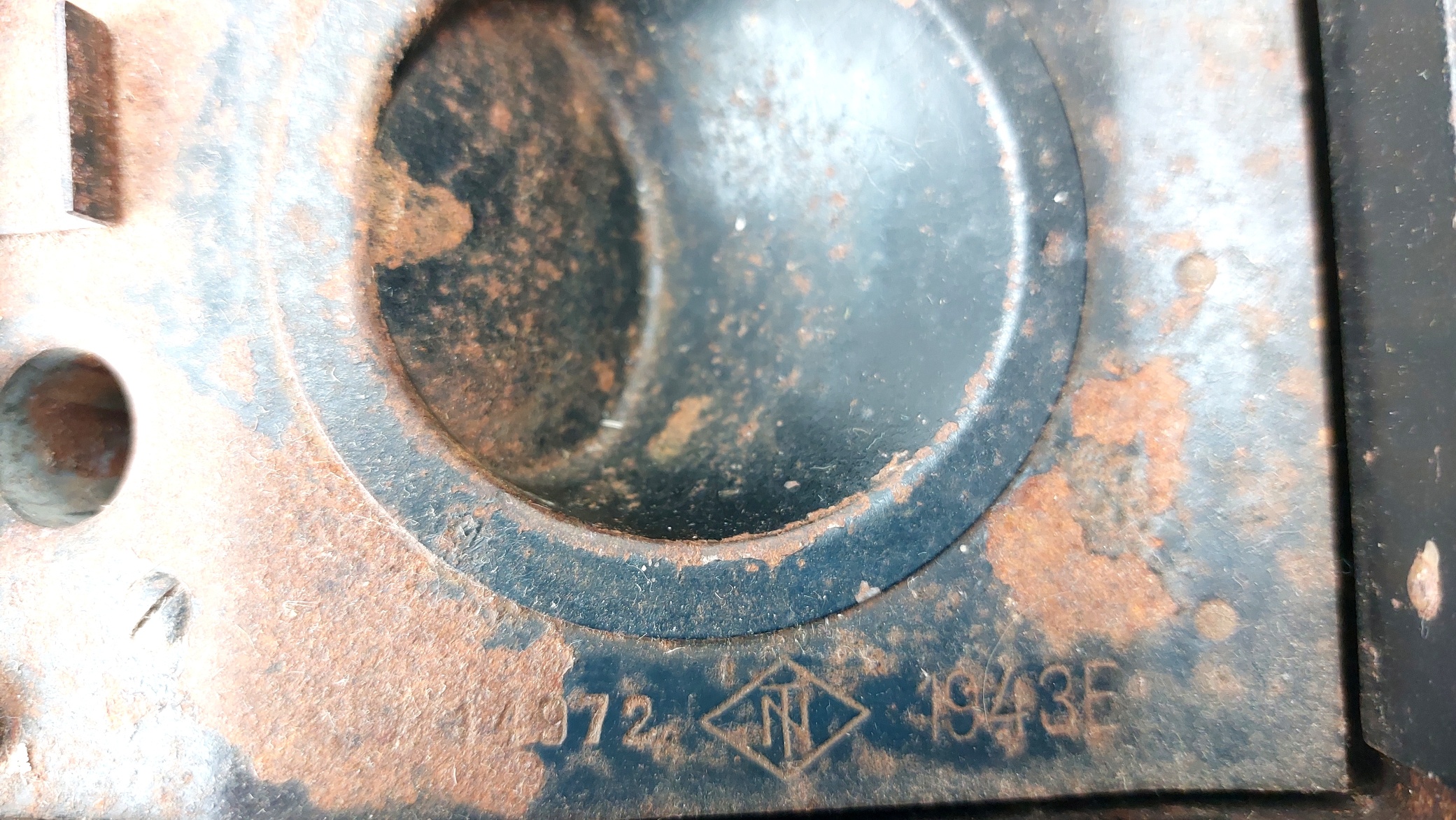
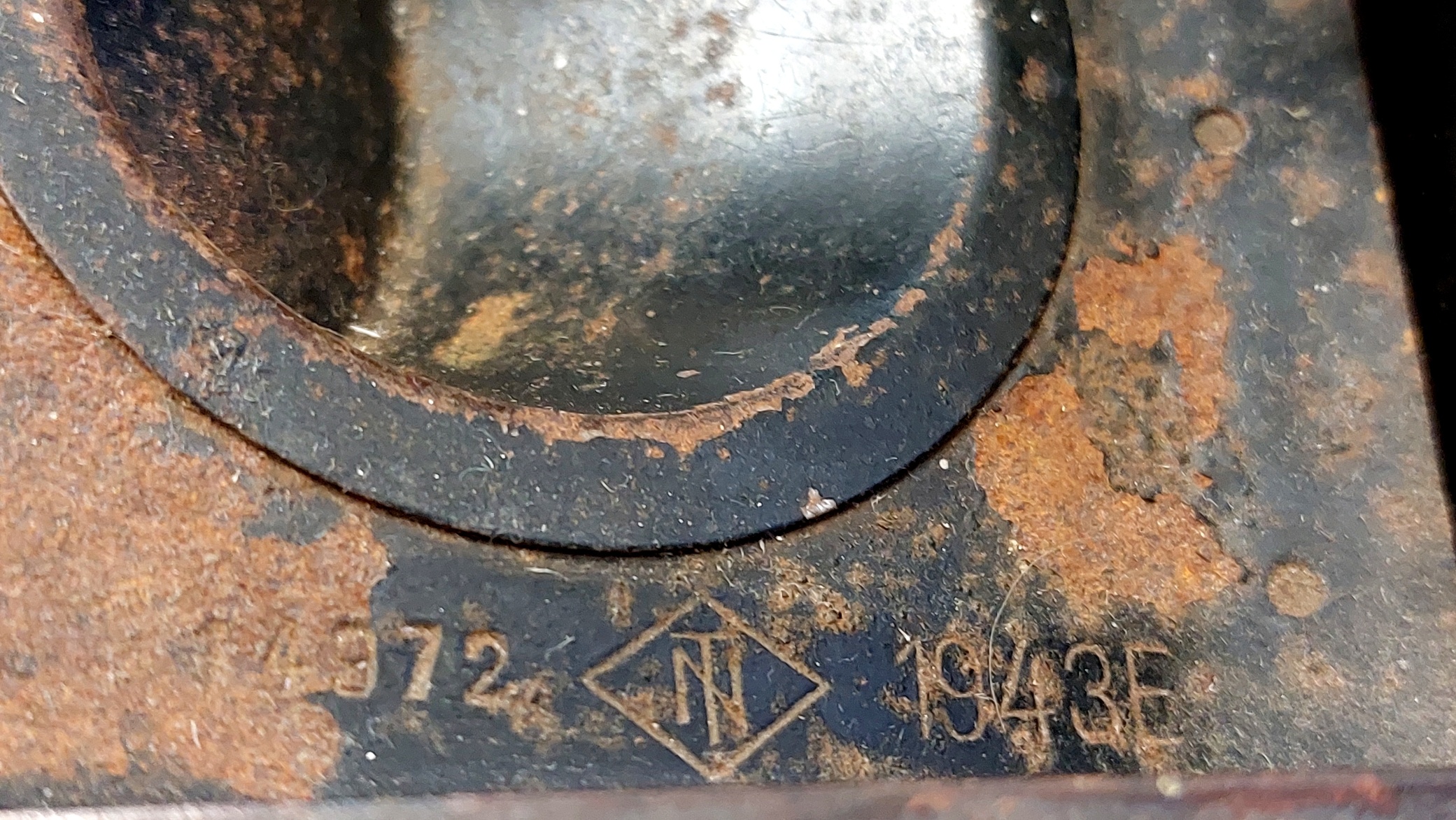
- Serial number 14972g
- TN within diamond trademark
- Date 1943E (the suffix letter likely indicating a production batch or internal factory series)
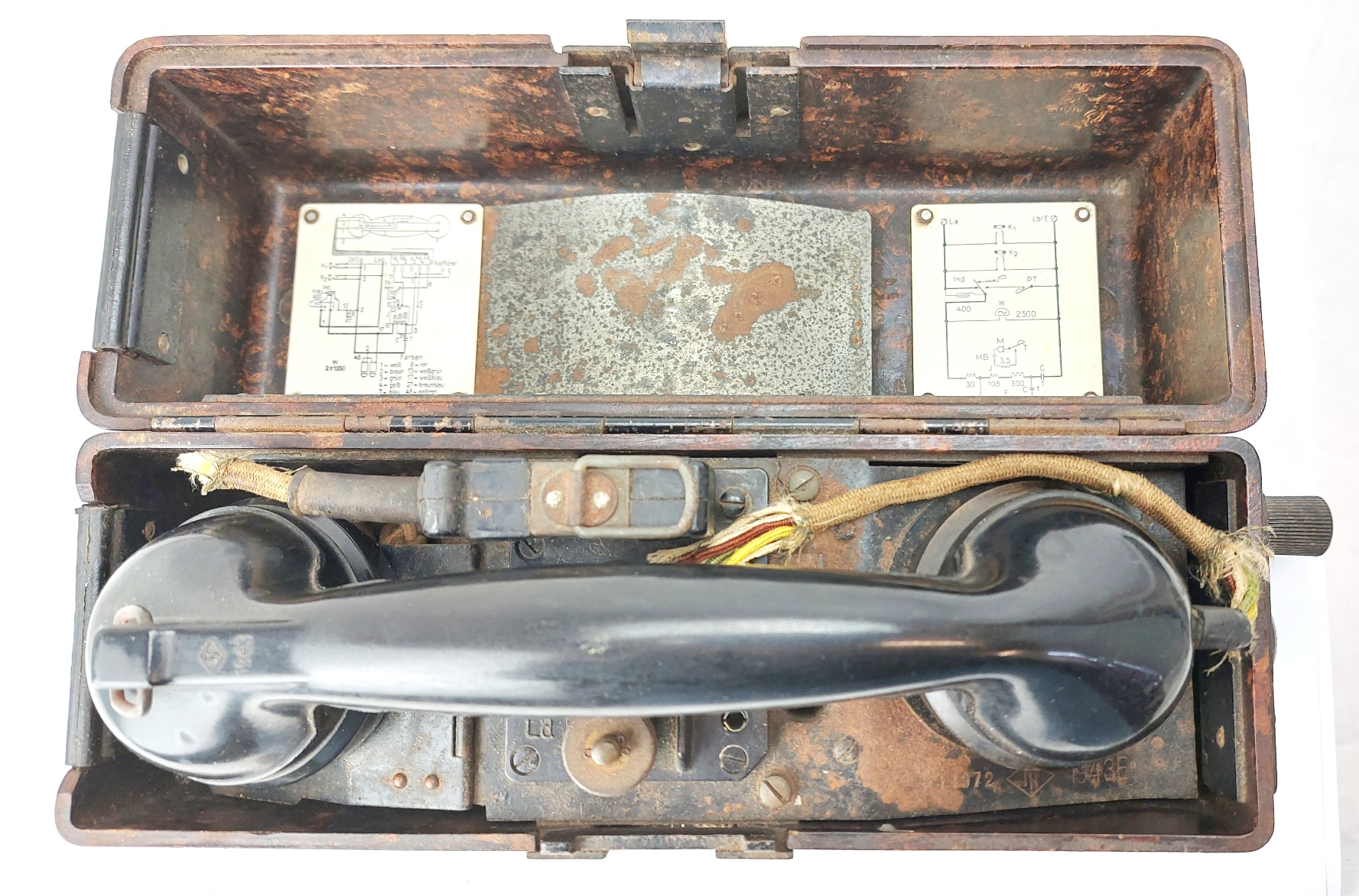
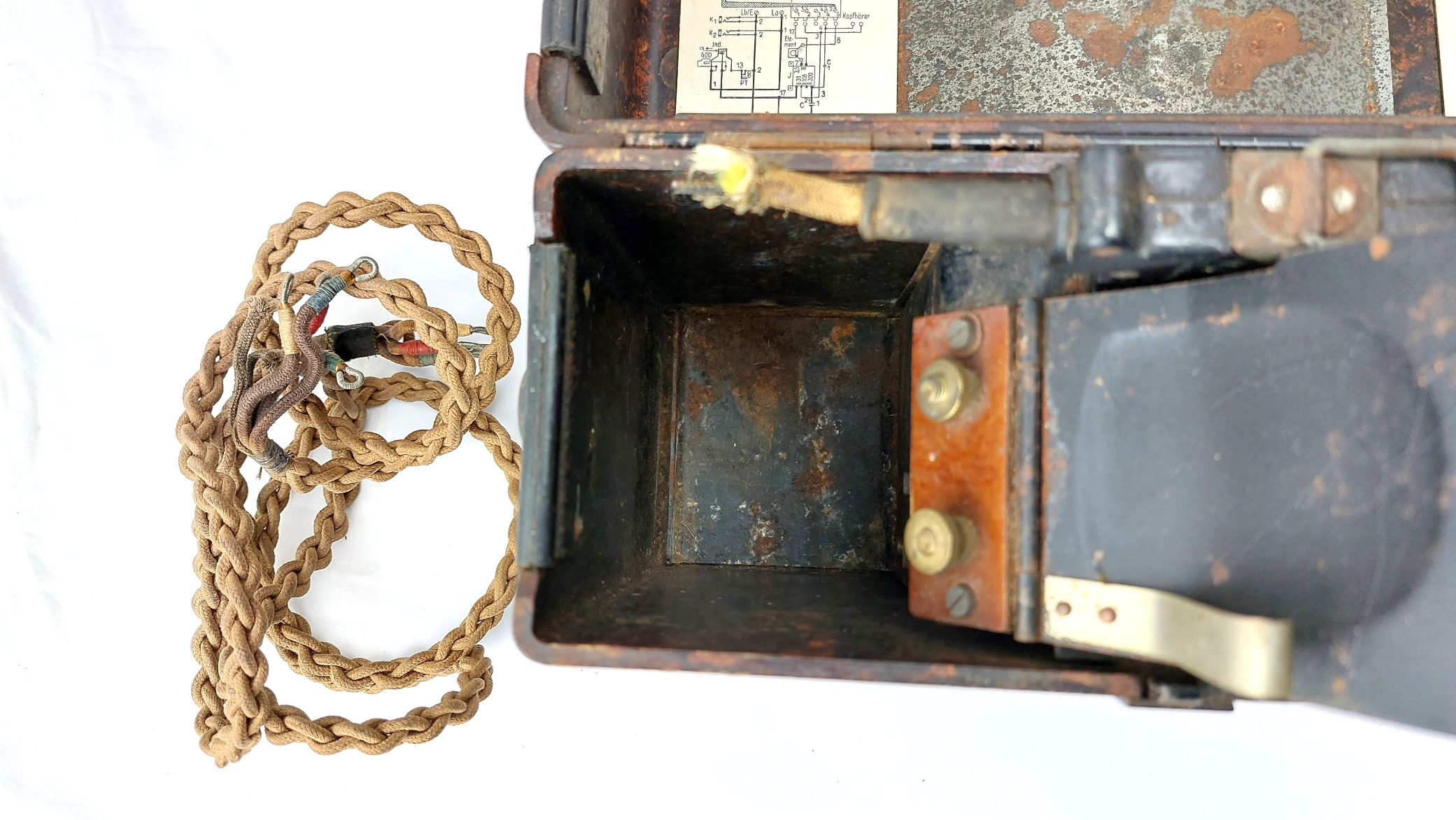
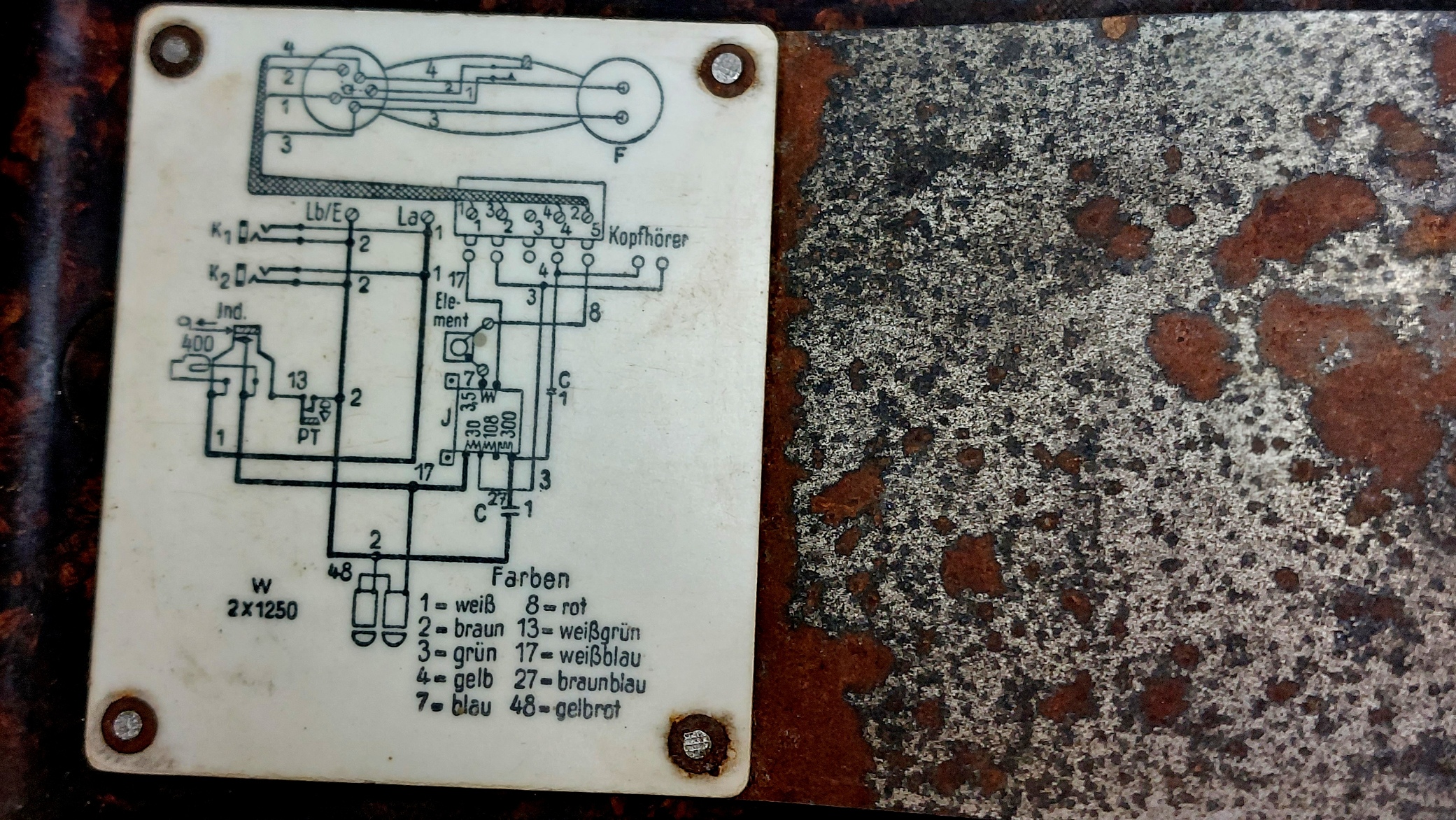
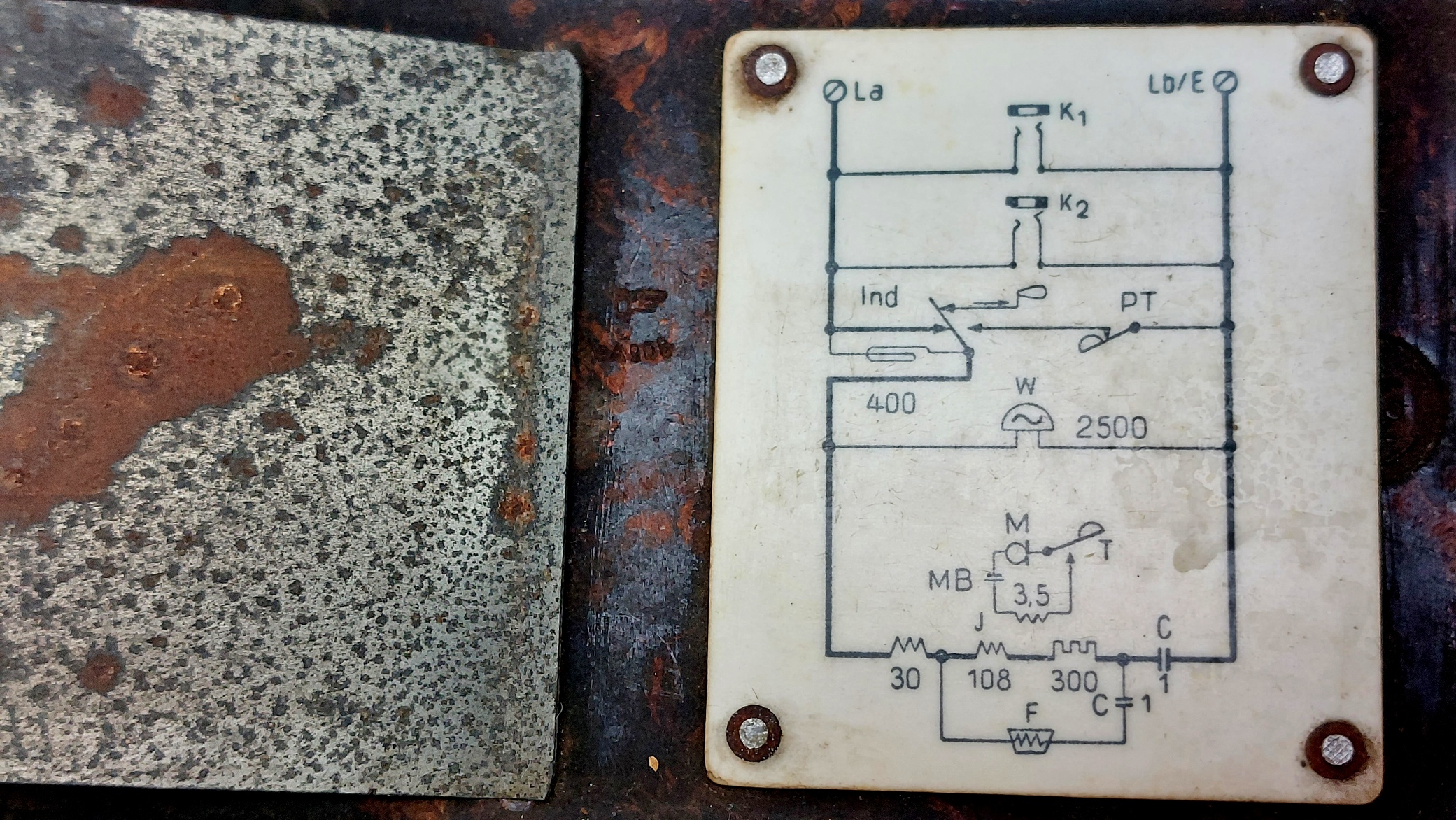
- The interior of the lid retains both original circuit diagram plates, clearly legible.
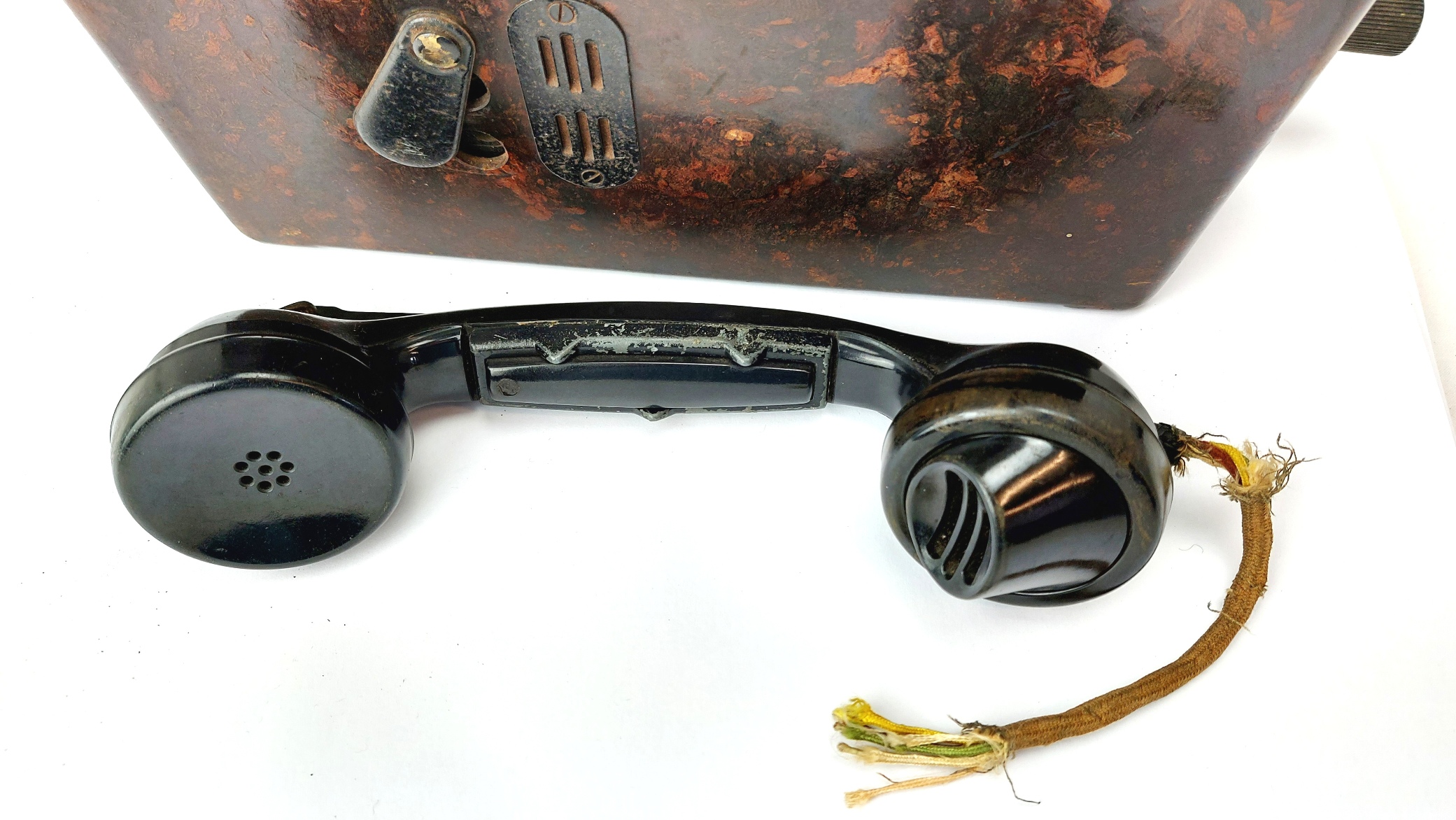
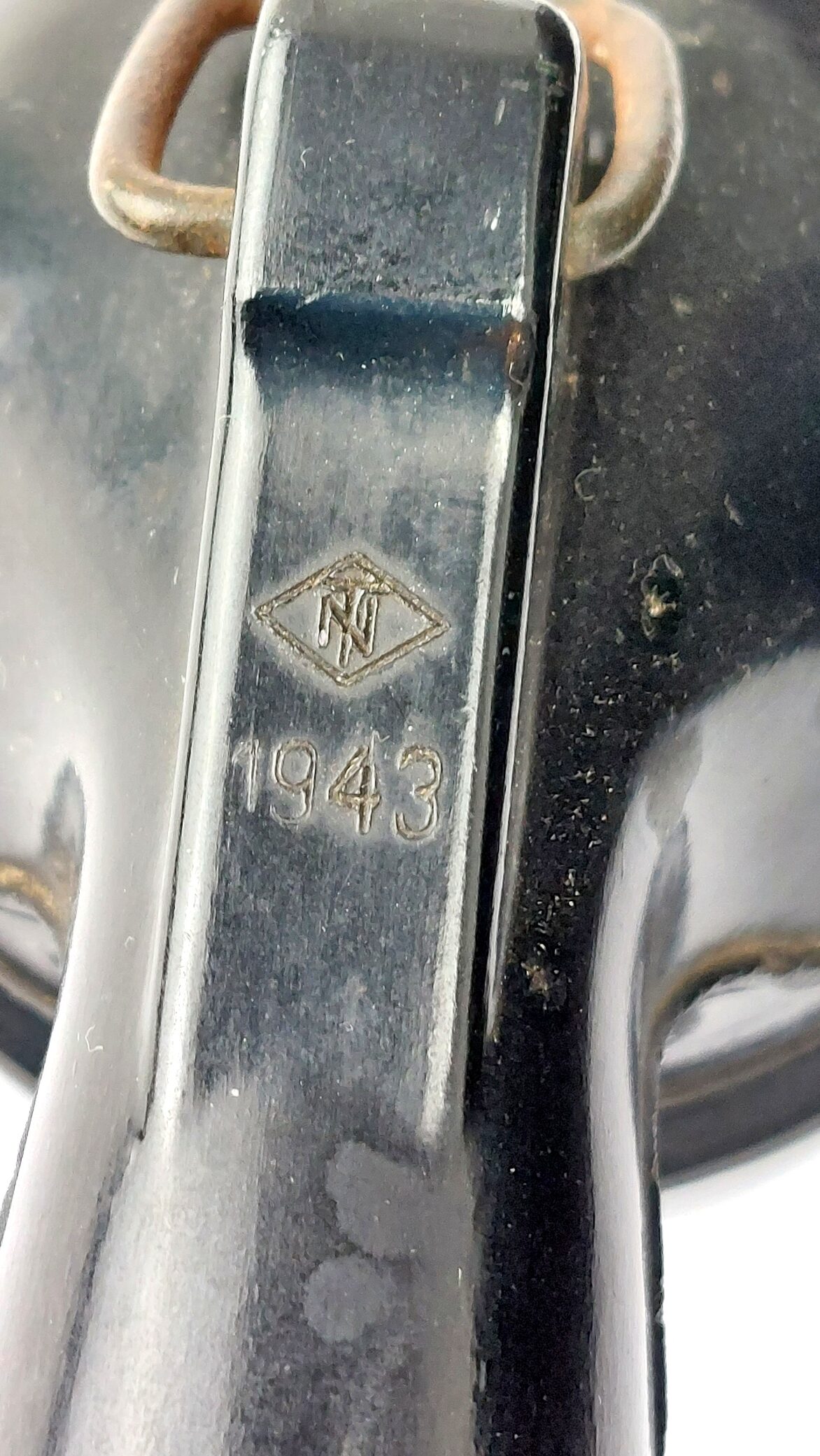
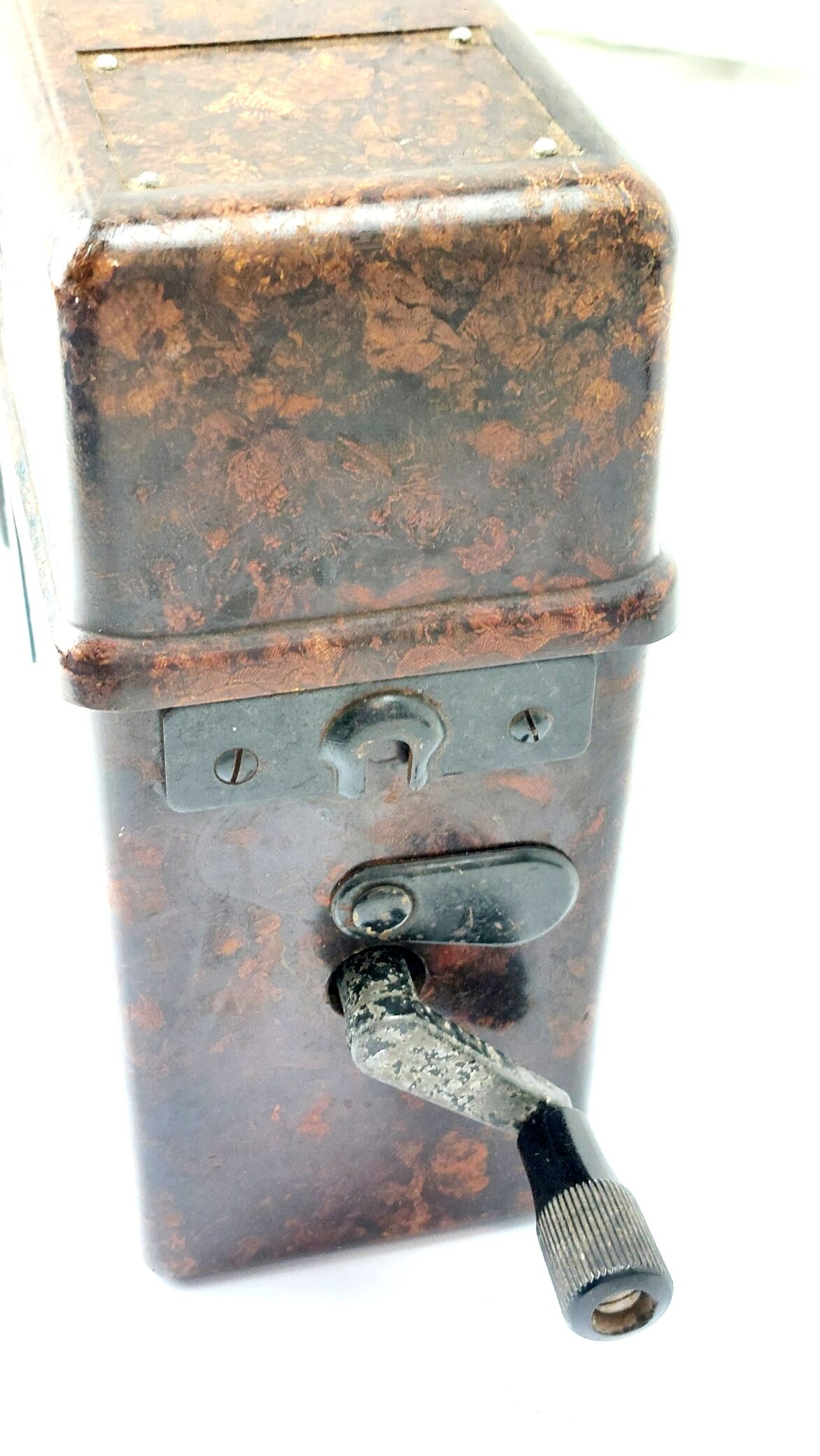
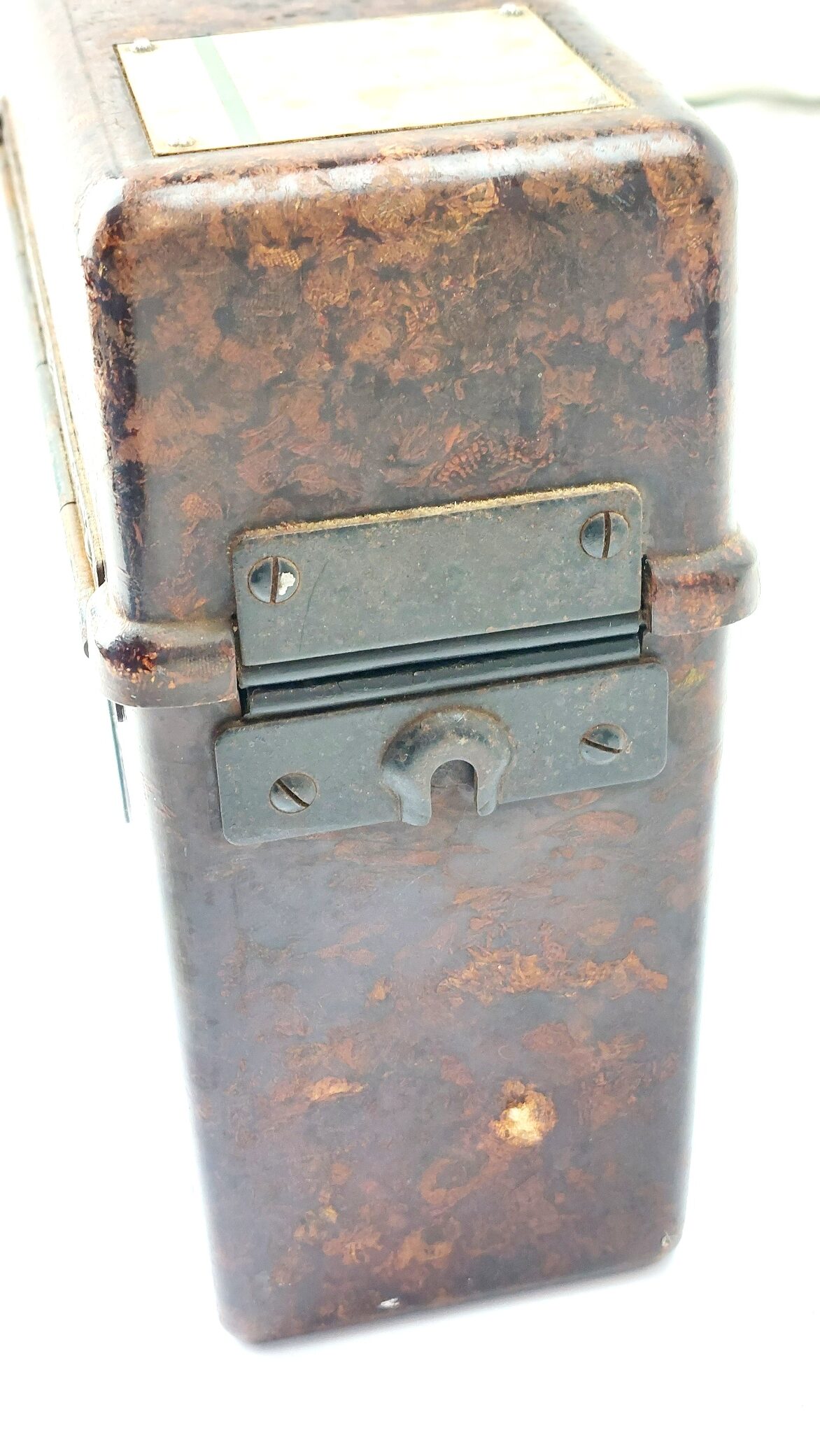
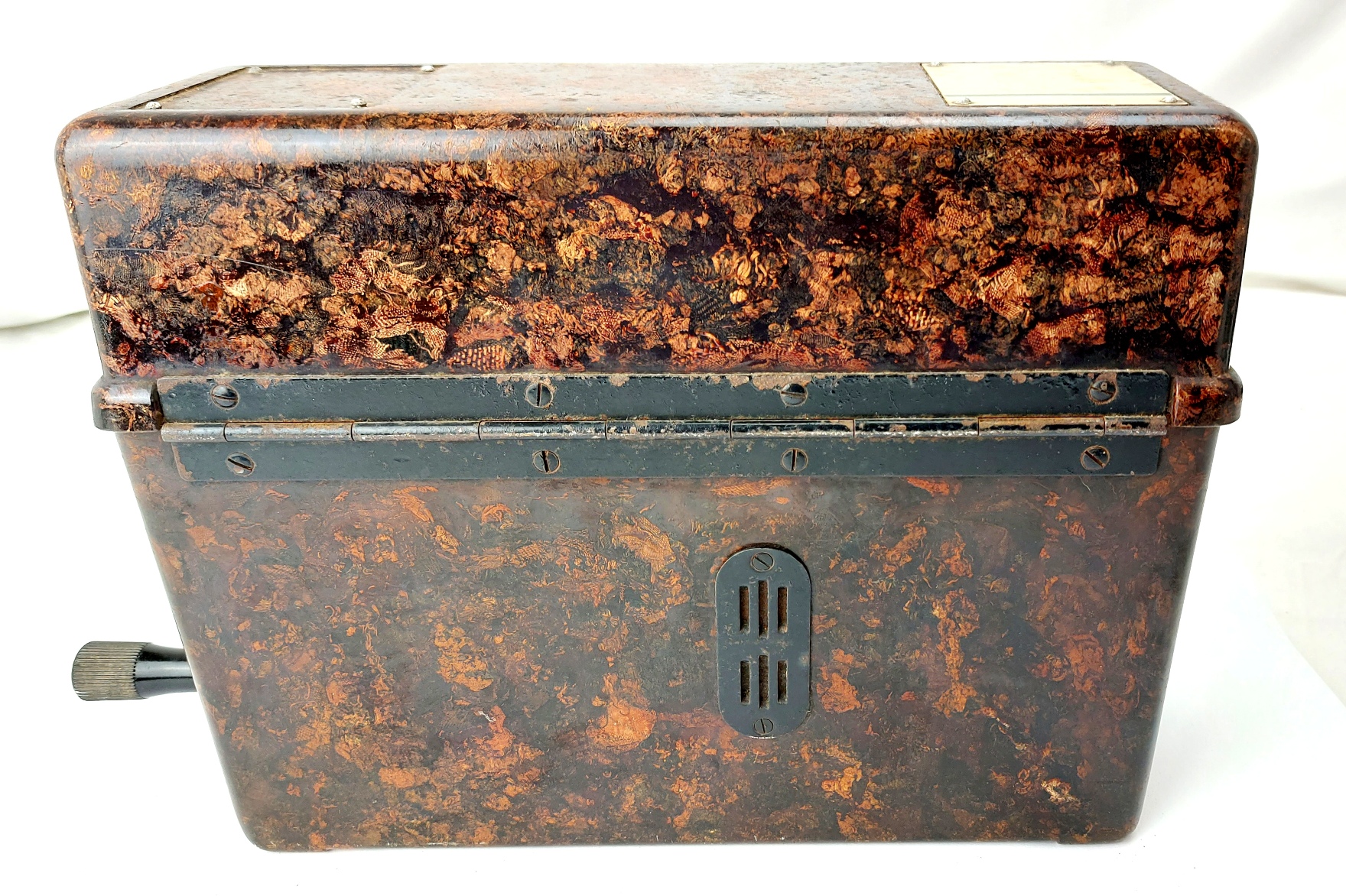
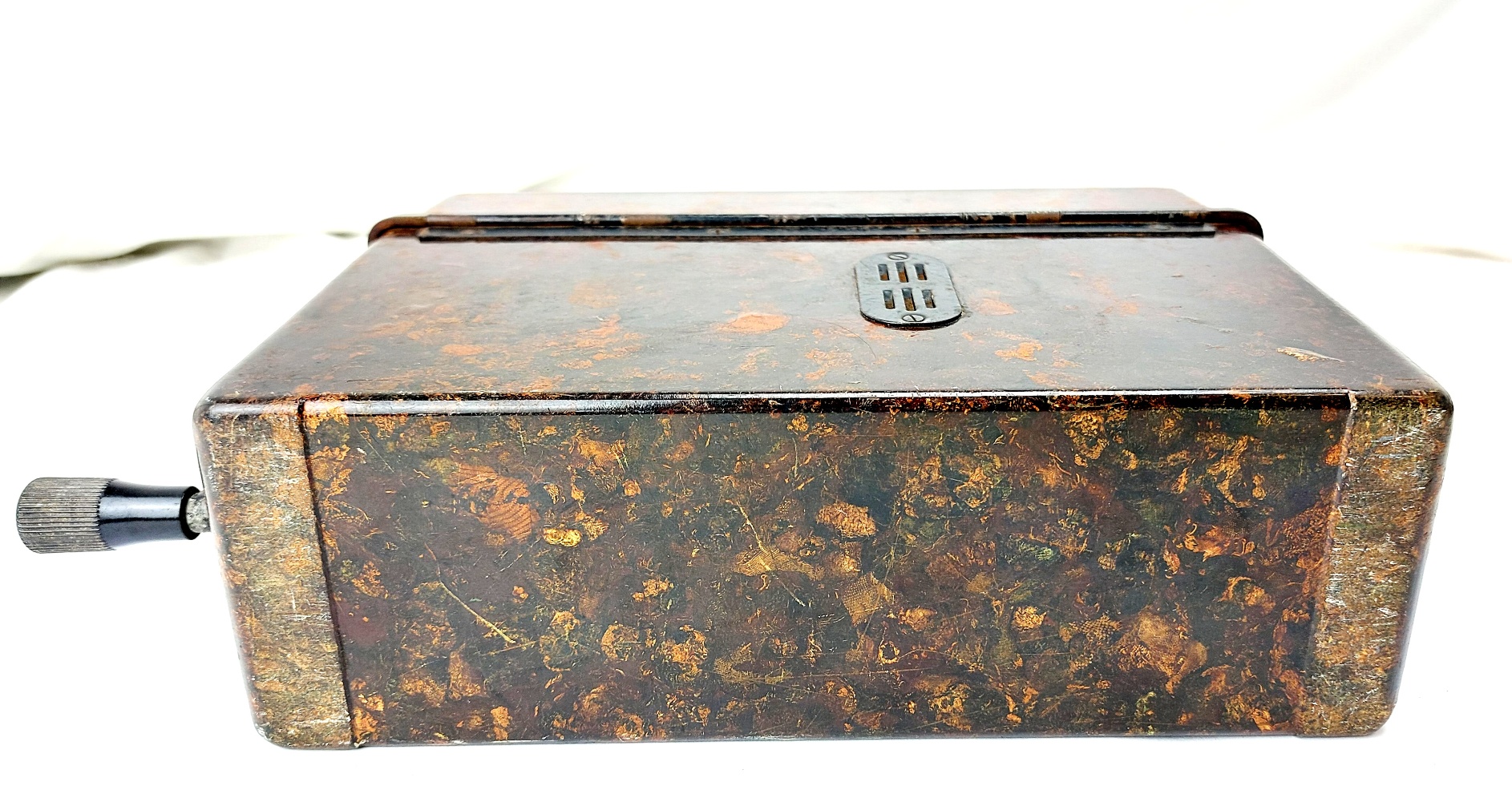
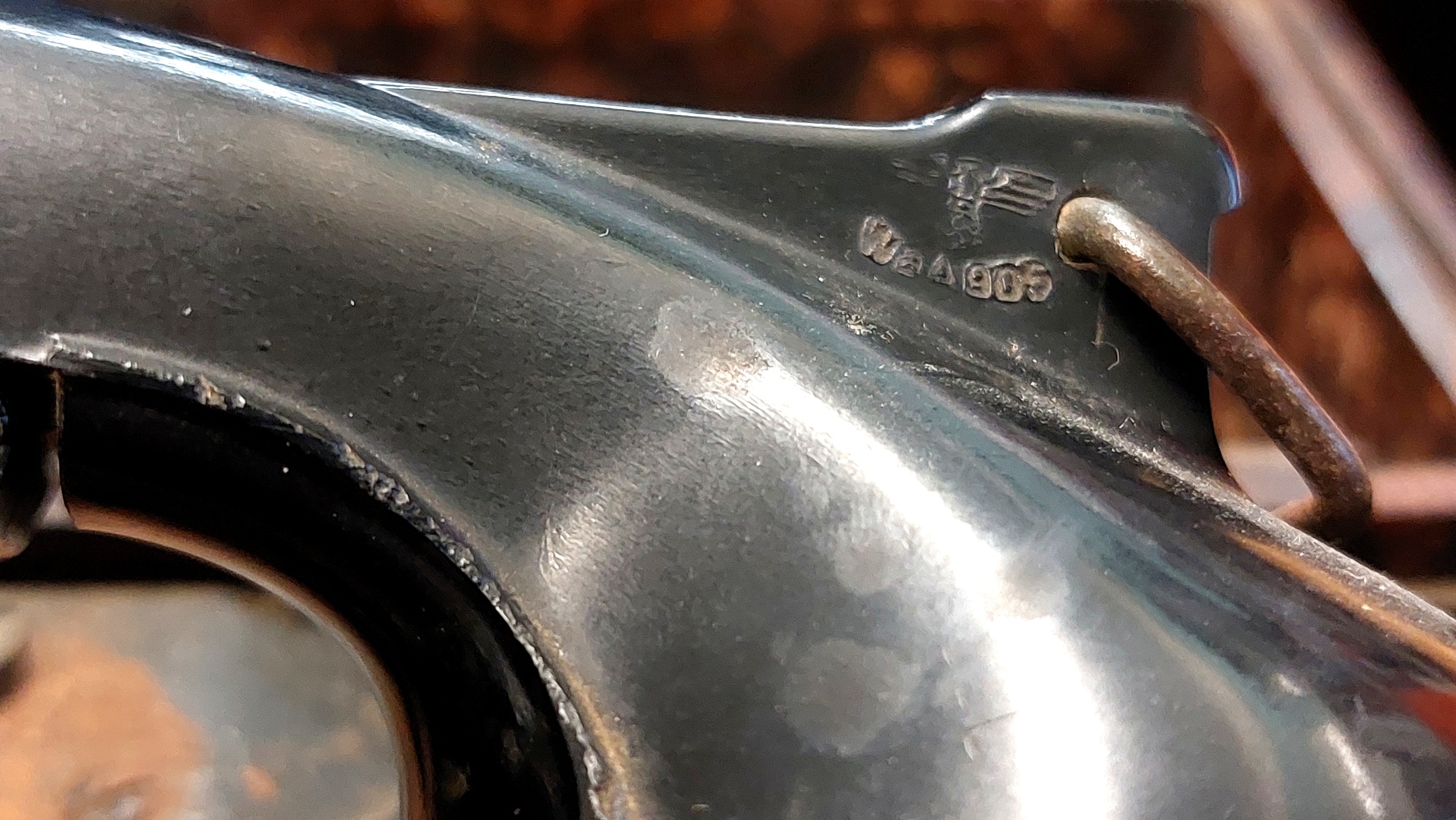
The handset is marked with the TN diamond trademark, dated 1943, and carries a matching WaA905 acceptance stamp to the side. The presence of identical manufacturer, year, and inspector code on both handset and case strongly supports that the components are original to one another and left the factory as a complete inspected set. The unit retains its correct press-to-talk (PTT) handset and original generator crank. The casing is the standard two-part hinged Bakelite construction secured by its spring latch.
The matching TN manufacture, consistent 1943 dating, and corresponding WaA905 inspection marks significantly enhance originality and collector desirability, distinguishing this from the more commonly encountered mixed-part examples that circulated through wartime repair systems and post-war surplus channels.
Approx. Measurements – 27 cm x 22 cm x 10 cm. Weight approximately 5.5 kg.
Historical Note:
The FF33 (Feldfernsprecher 33) was introduced in 1933 as a modern replacement for earlier First World War legacy models and became the standard German field telephone throughout WWII. It was widely issued to all branches of the German armed forces, including: Heer, Luftwaffe and Kriegsmarine. Unlike radio communications, field telephones provided secure wired transmission, immune to radio interception. They were essential for artillery coordination, trench networks, command posts, and defensive positions. The FF33 could also be integrated with Torn.Fu radio systems to act as a remote handset.
The Prüftaste allowed the operator to test the internal generator and ringer circuit. When the line terminals were shorted and the crank turned, depressing the test button would sound the local bell, confirming generator output. The suffix “E” following the 1943 date is commonly interpreted by collectors as denoting “Eisen” (iron/steel) production associated with mid-war material substitutions. However, no surviving factory documentation conclusively confirms this, and it is more likely to represent an internal production batch or series designation used by the manufacturer.
Telefonbau und Normalzeit (T&N) of Frankfurt am Main was one of Germany’s principal wartime telecommunications manufacturers, supplying telephones, switchboards and timing systems for both military and civilian infrastructure. The “TN” diamond logo was adopted in 1933 and appears consistently on wartime production.
The Waffenamt code WaA905 represents the assigned military inspector responsible for acceptance of equipment at the factory, confirming this example as genuine Wehrmacht issue rather than post-war production.
*Condition*
The Bakelite clamshell case remains structurally solid with no visible cracks or major fractures, retaining its original mottled brown marbled finish. There is evident age-related surface wear, scuffing and light abrasions consistent with wartime service and subsequent storage. The metal hinge and latch assembly remain intact and functional, showing surface oxidation and patination. The external generator crank is present. Internally, the components appear complete. The handset is present and TN diamond marked, with age-related wear to the Bakelite and light surface marks. The cloth-covered handset cord is broken. The braided field cable is present and shows period wear consistent with use. The internal metal framework and mounting plate display areas of surface rust and oxidation, particularly to the steel base plate and surrounding fittings. The La and Lb/E terminals remain in place. The white Prüftaste button is intact and clearly marked, with the WaA905 acceptance stamp visible beneath. The interior lid retains both original circuit diagram plates, which remain legible though showing age toning and light staining. The battery compartment is present; internal surfaces show oxidation and historic corrosion residue consistent with age. No attempt has been made to clean or restore the interior. Untested for functionality and sold strictly as a historical collector’s item. Please see photographs as part of the condition report.