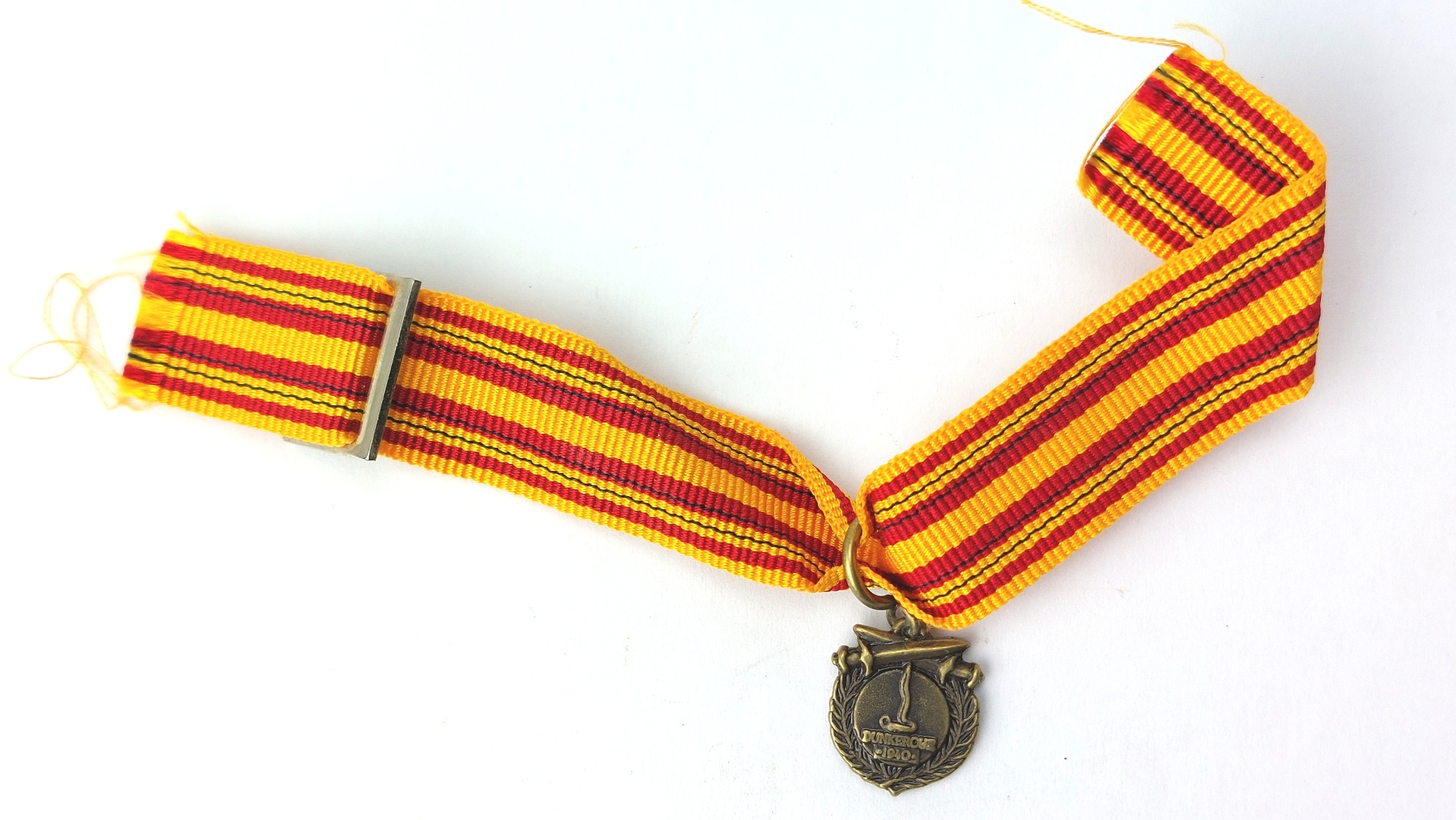
*French, WW2 Awarded 1960, 1940 Dunkirk Commemorative Medal, Médaille de Dunkerque, Operation Dynamo Evacuation Award*
A commemorative Dunkirk Medal (Médaille de Dunkerque 1940) issued to recognise those who took part in the defence and evacuation of Dunkirk during the Second World War.
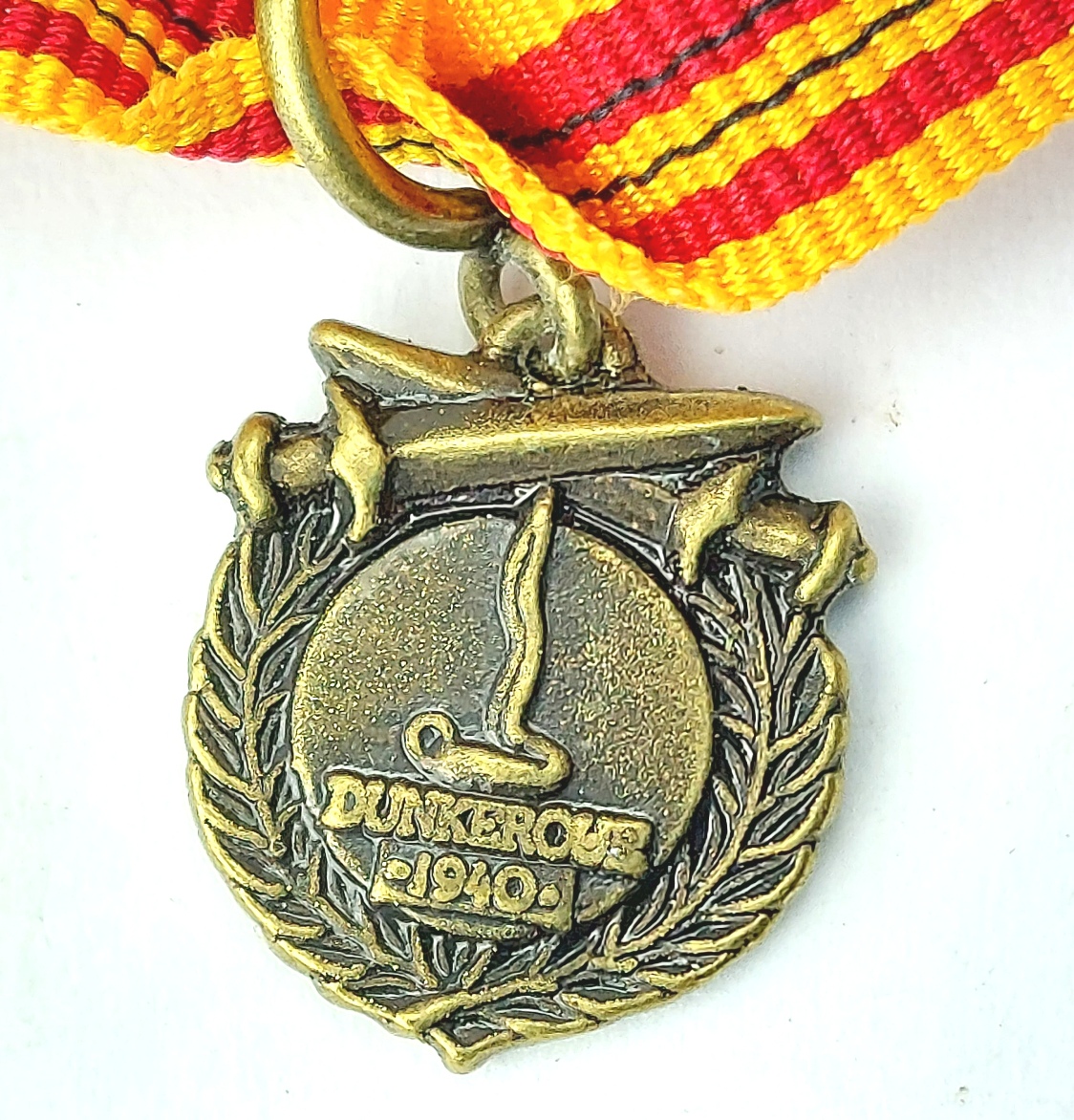
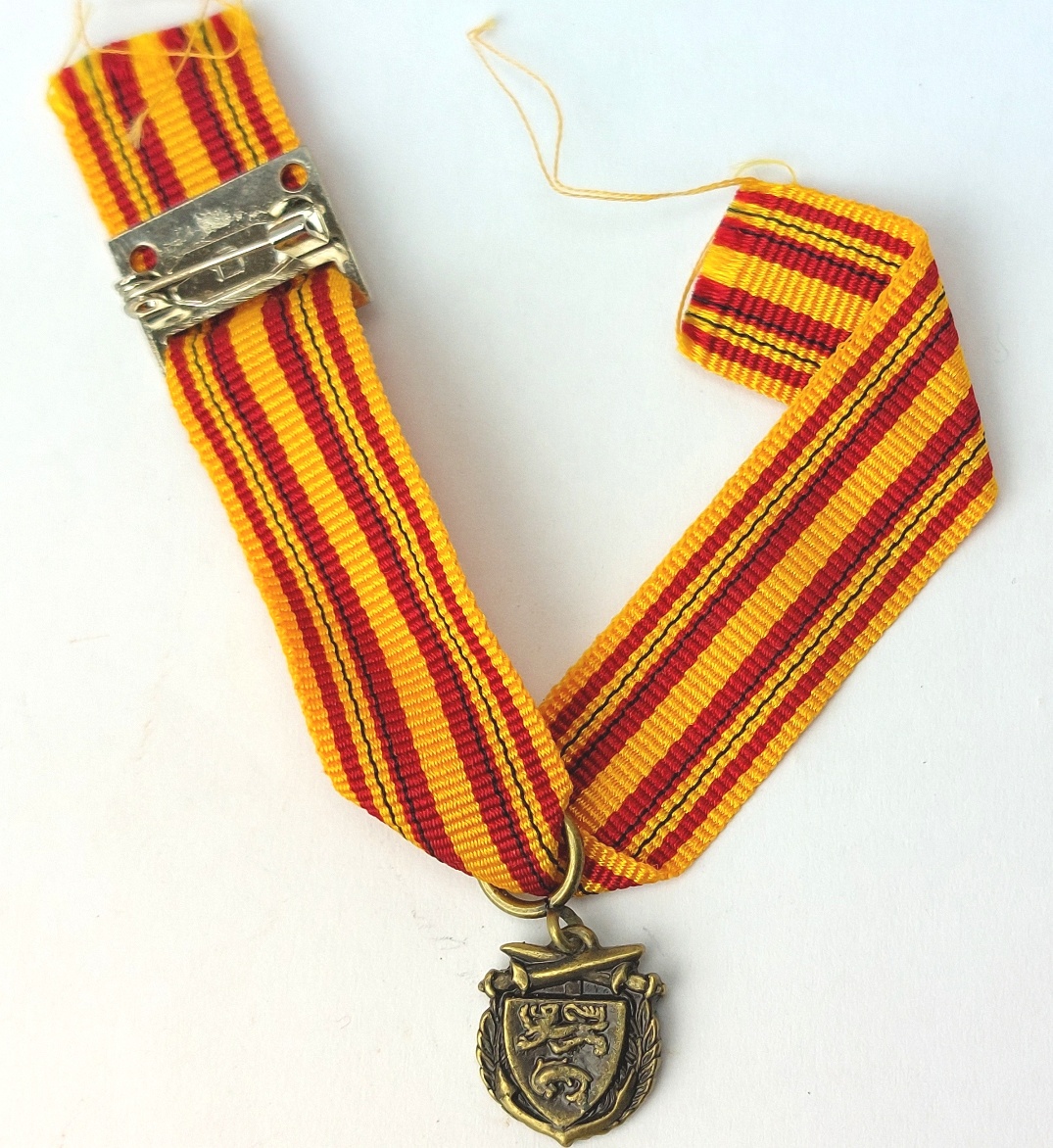
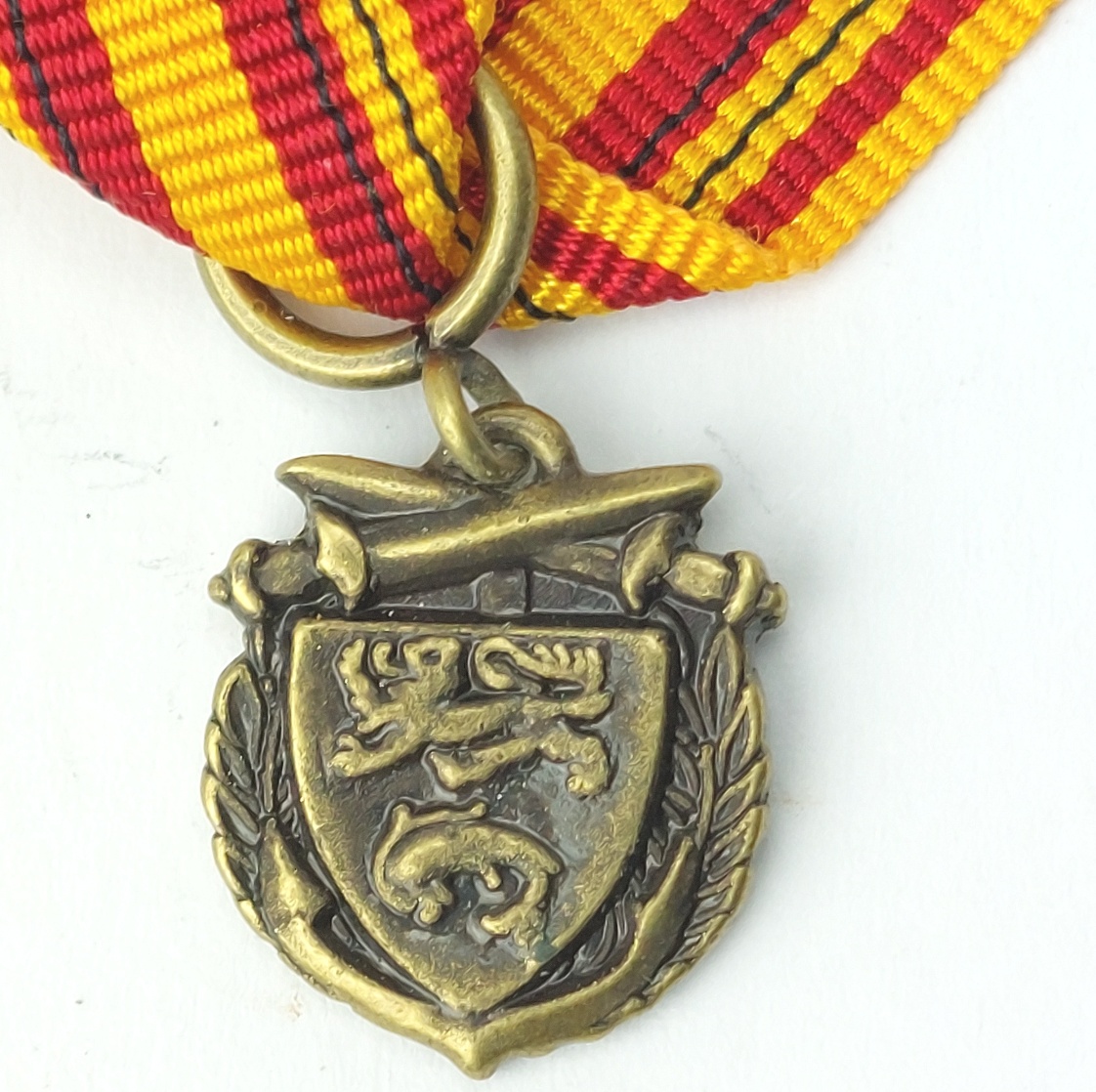
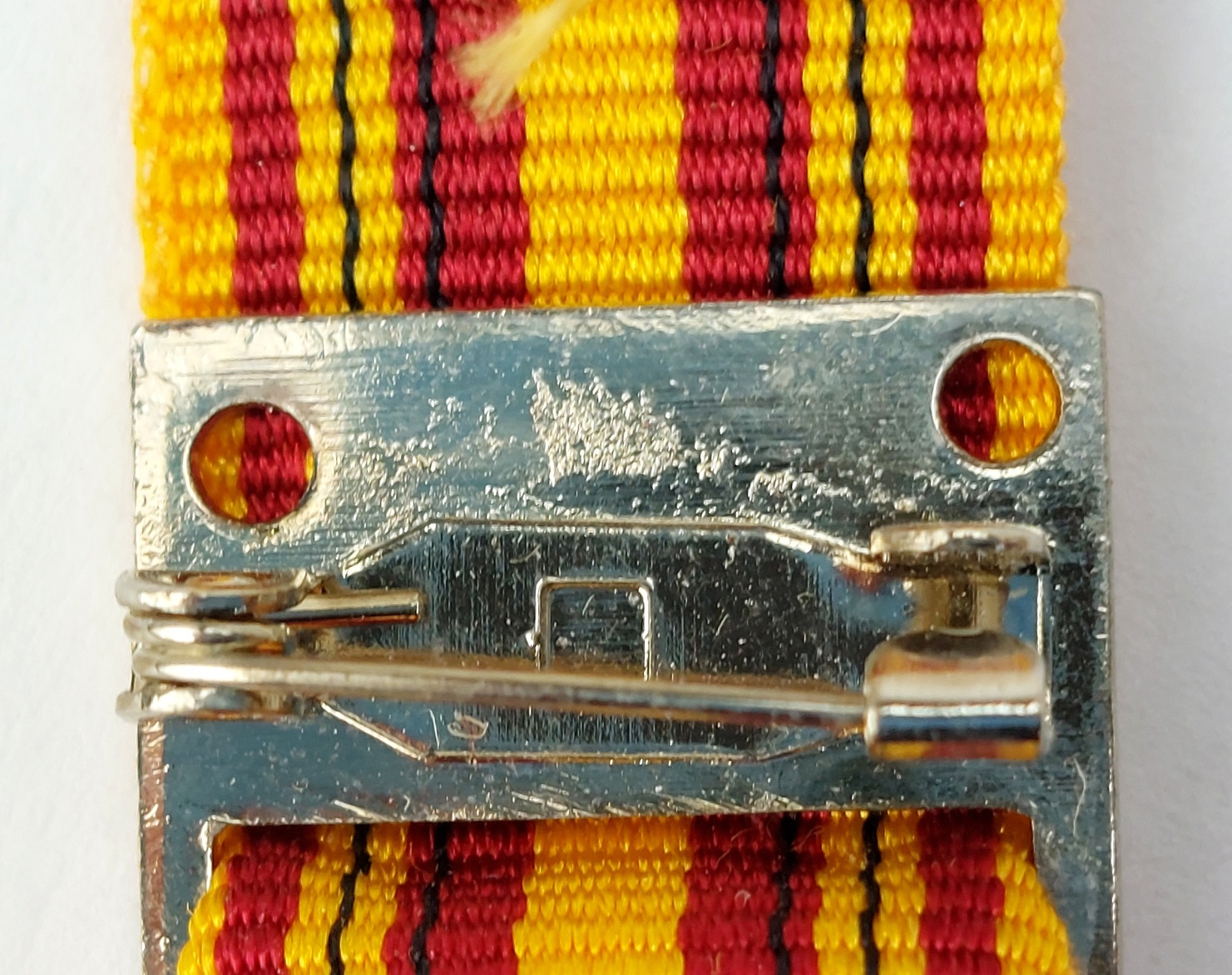
The bronze-toned medal features a circular central panel surrounded by a wreath. The obverse displays an anchor with the inscription “DUNKERQUE 1940”, symbolising the naval evacuation carried out during Operation Dynamo. The reverse bears a shield incorporating the arms of the city of Dunkirk, depicting a heraldic lion above a dolphin, framed by laurel branches and surmounted by crossed swords and an anchor. It is suspended from the distinctive yellow ribbon with red stripes and thin black dividing lines, the recognised ribbon for this commemorative award. The medal is mounted on a pin brooch fitting suitable for wear.
This decoration was created in 1960 by the town of Dunkirk to honour the soldiers, sailors, airmen and civilians involved in the dramatic evacuation of Allied forces from the beaches of northern France between 29 May and 4 June 1940.
Approx. Measurements – Medal diameter: 28 mm. Overall drop (including ribbon): approx. 11 cm.
History Note:
The Dunkirk evacuation (Operation Dynamo) remains one of the most remarkable rescue operations of the Second World War. In May 1940, following the rapid German advance through France and Belgium, more than 330,000 Allied troops were trapped around the port of Dunkirk. Under constant aerial and artillery attack, a vast improvised fleet of Royal Navy ships, merchant vessels, fishing boats and private craft — later famously known as the “Little Ships of Dunkirk” — crossed the English Channel to evacuate soldiers from the beaches and harbour.
Although the medal was not instituted until 1960, it served as a commemorative tribute from the city of Dunkirk itself, honouring the courage and sacrifice of those who defended the town and those who took part in the evacuation. Originally intended primarily for French defenders, the eligibility rules were broadened in 1970 to include all Allied participants. This meant that British Army soldiers, Royal Navy and Merchant Navy personnel, RAF aircrew, and civilian boat owners involved in the evacuation could also apply for and receive the medal.
While widely respected among veterans and collectors, the medal remains a commemorative award rather than an official state decoration, meaning it was not authorised for wear alongside official national medals.
*Condition*
Good overall condition. The medal retains a pleasing aged patina to the metal surfaces with light wear consistent with handling. The ribbon remains bright with clear colours, though the ends show minor fraying. The brooch mounting is intact and functional. Please see photographs as part of the condition report.