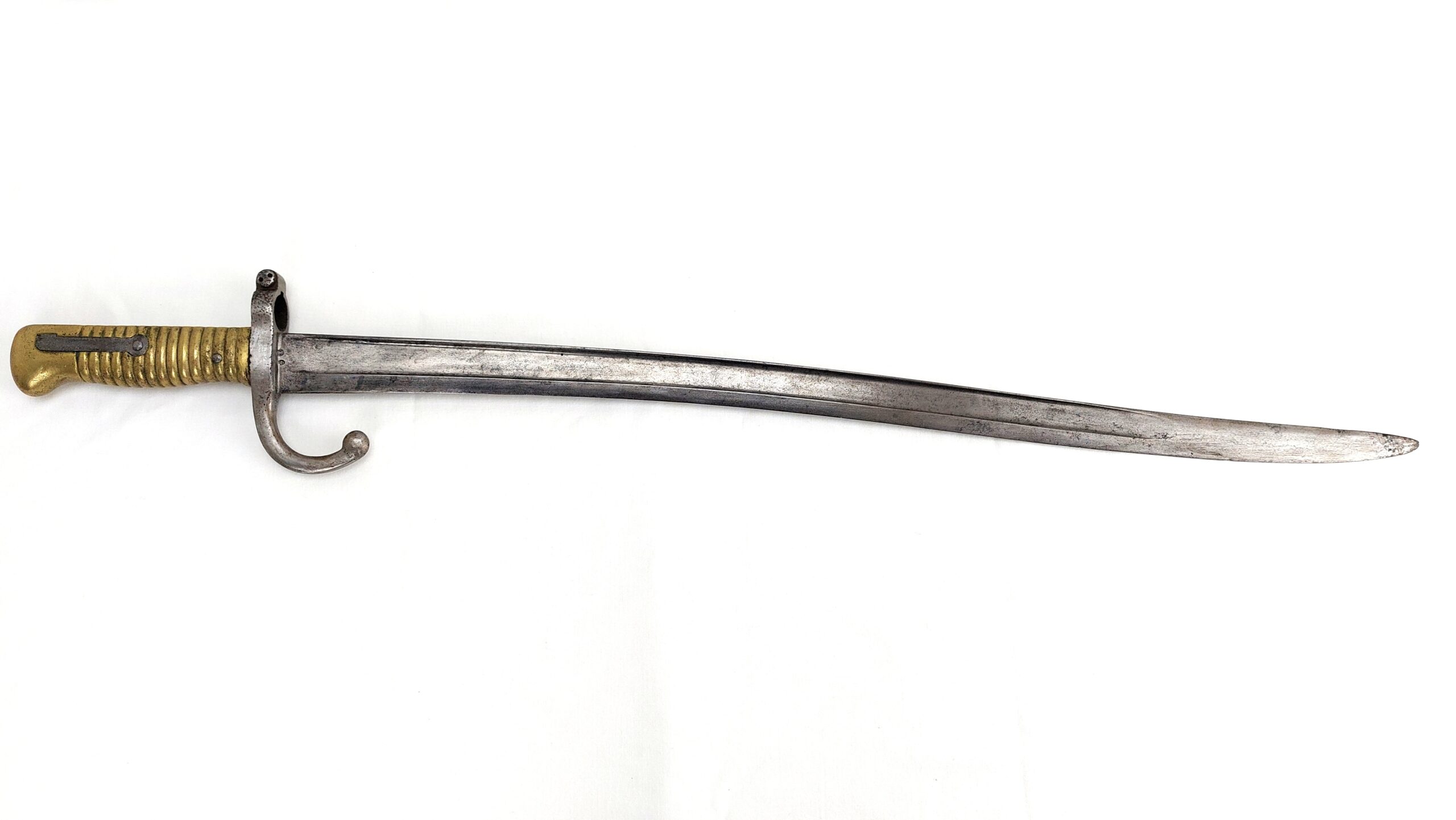
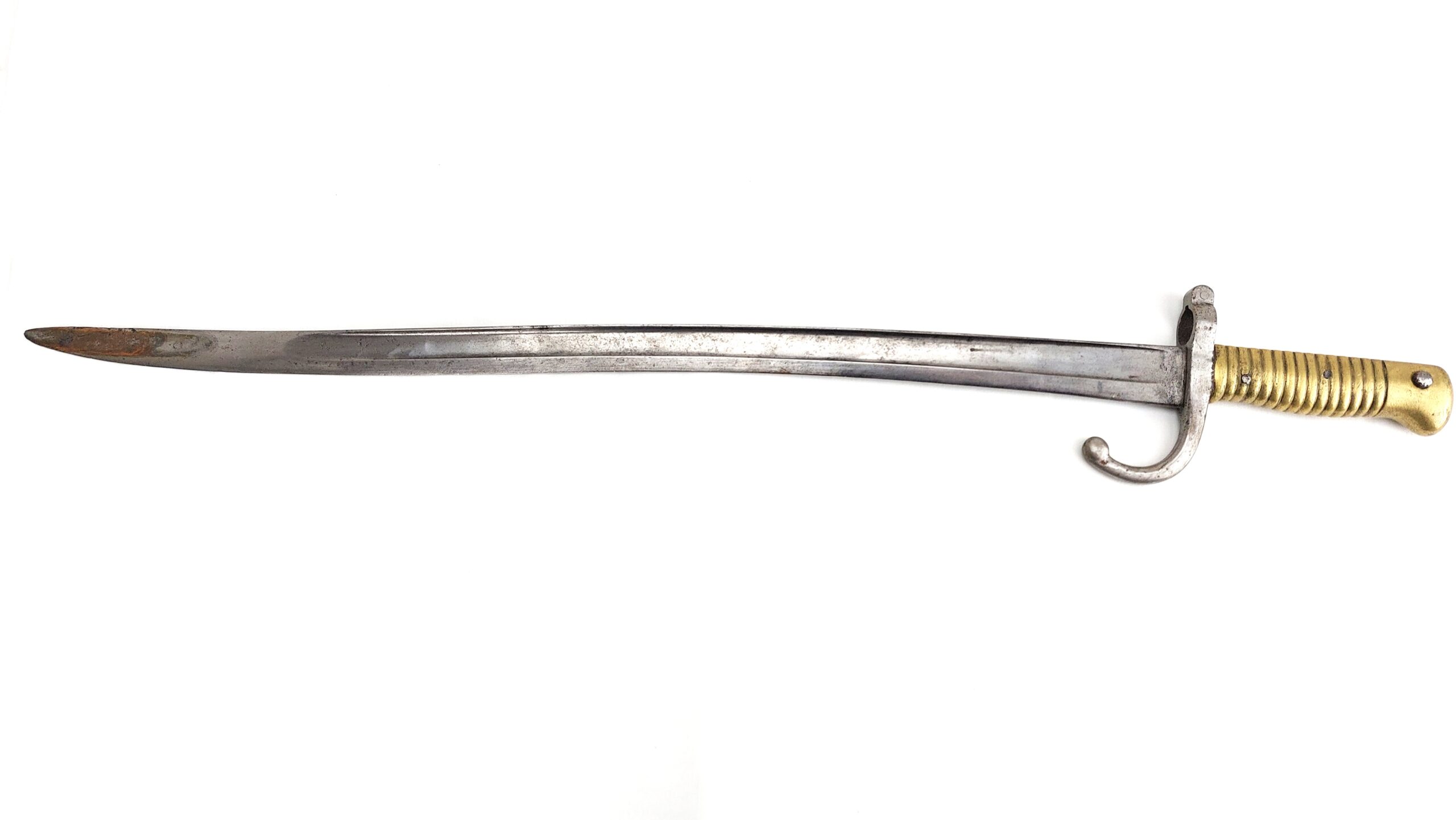
*French, Dated 1868, Model 1866 Chassepot Yataghan Sword Bayonet, St. Étienne Manufacture*
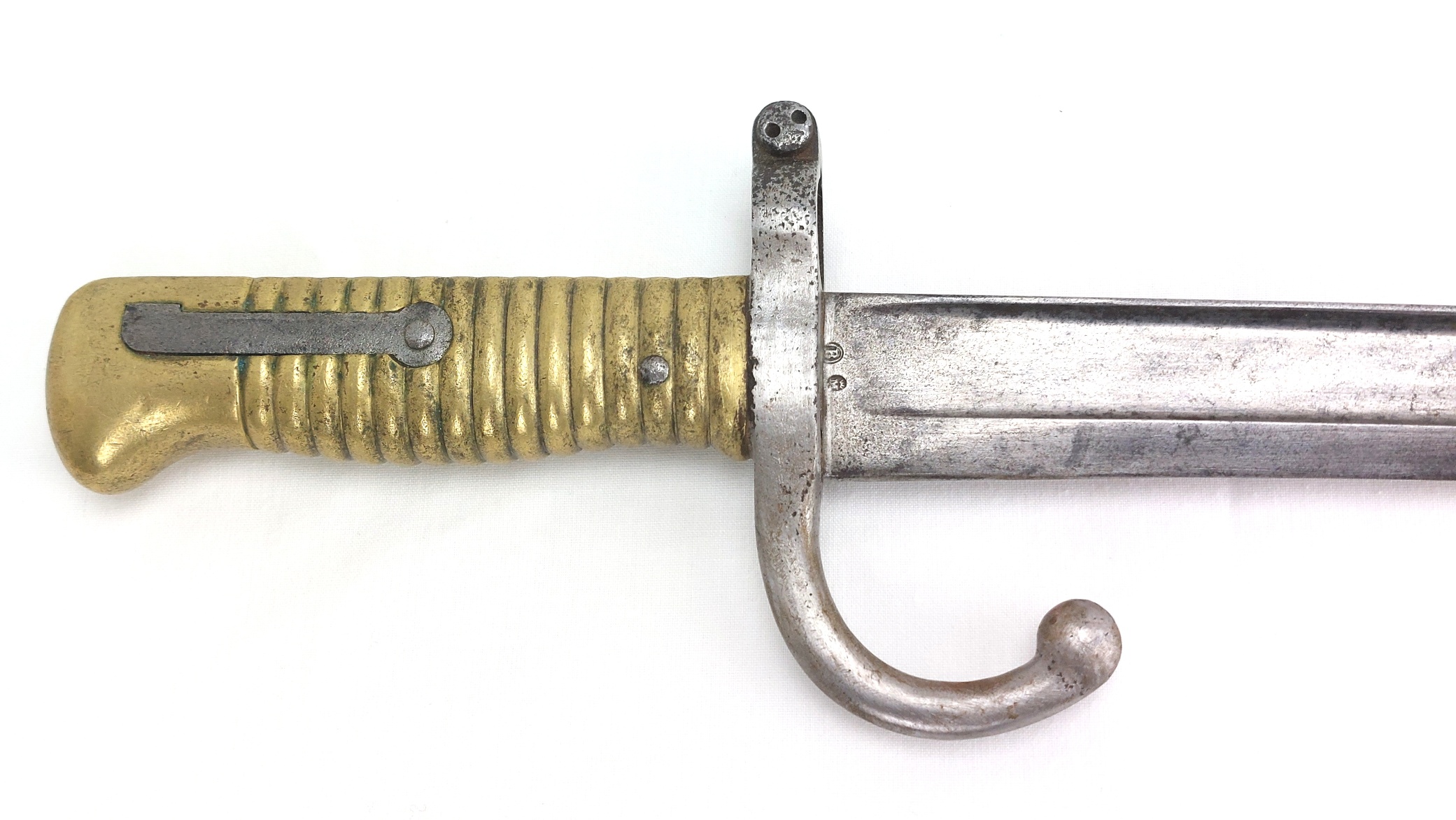
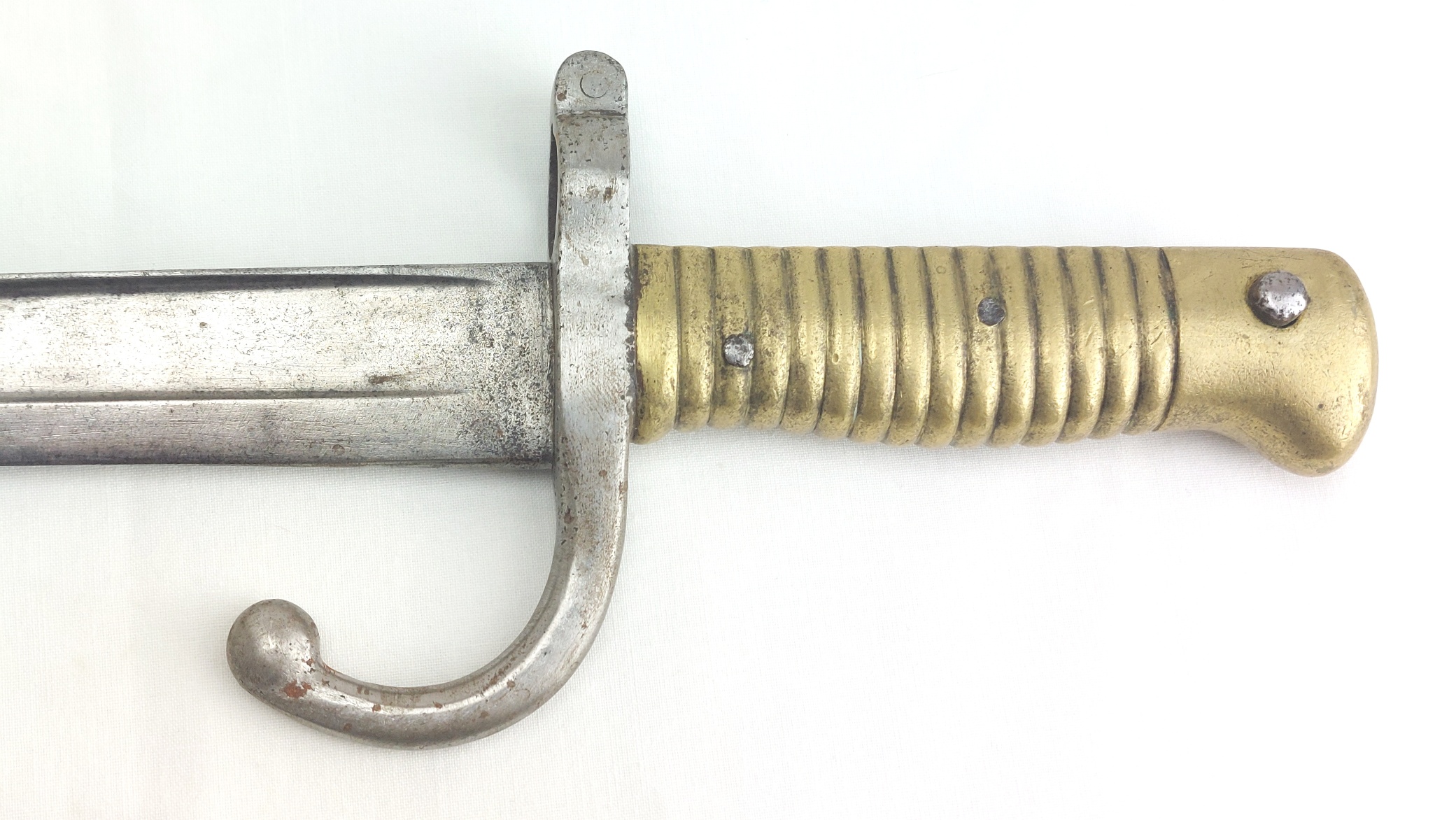
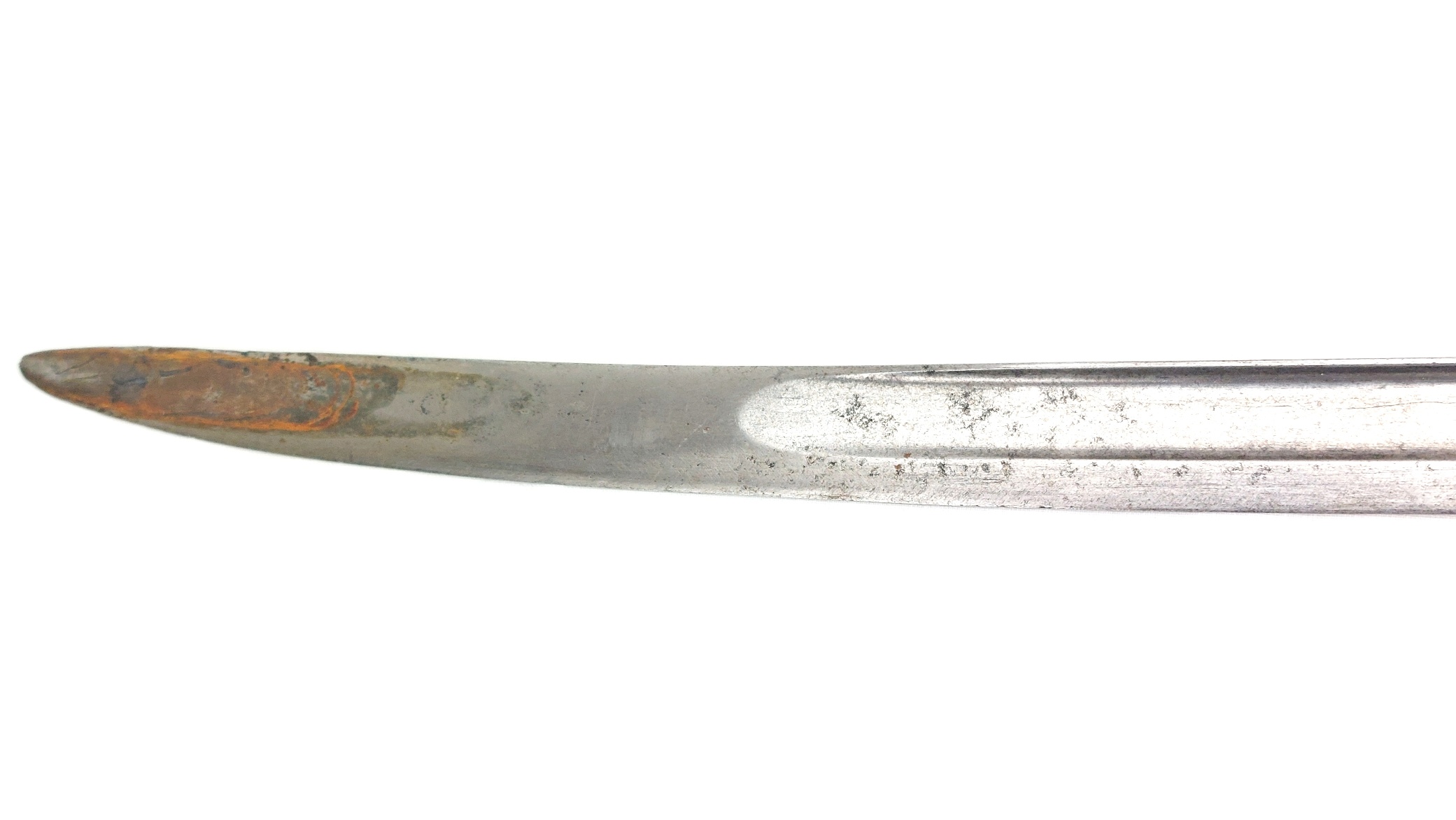
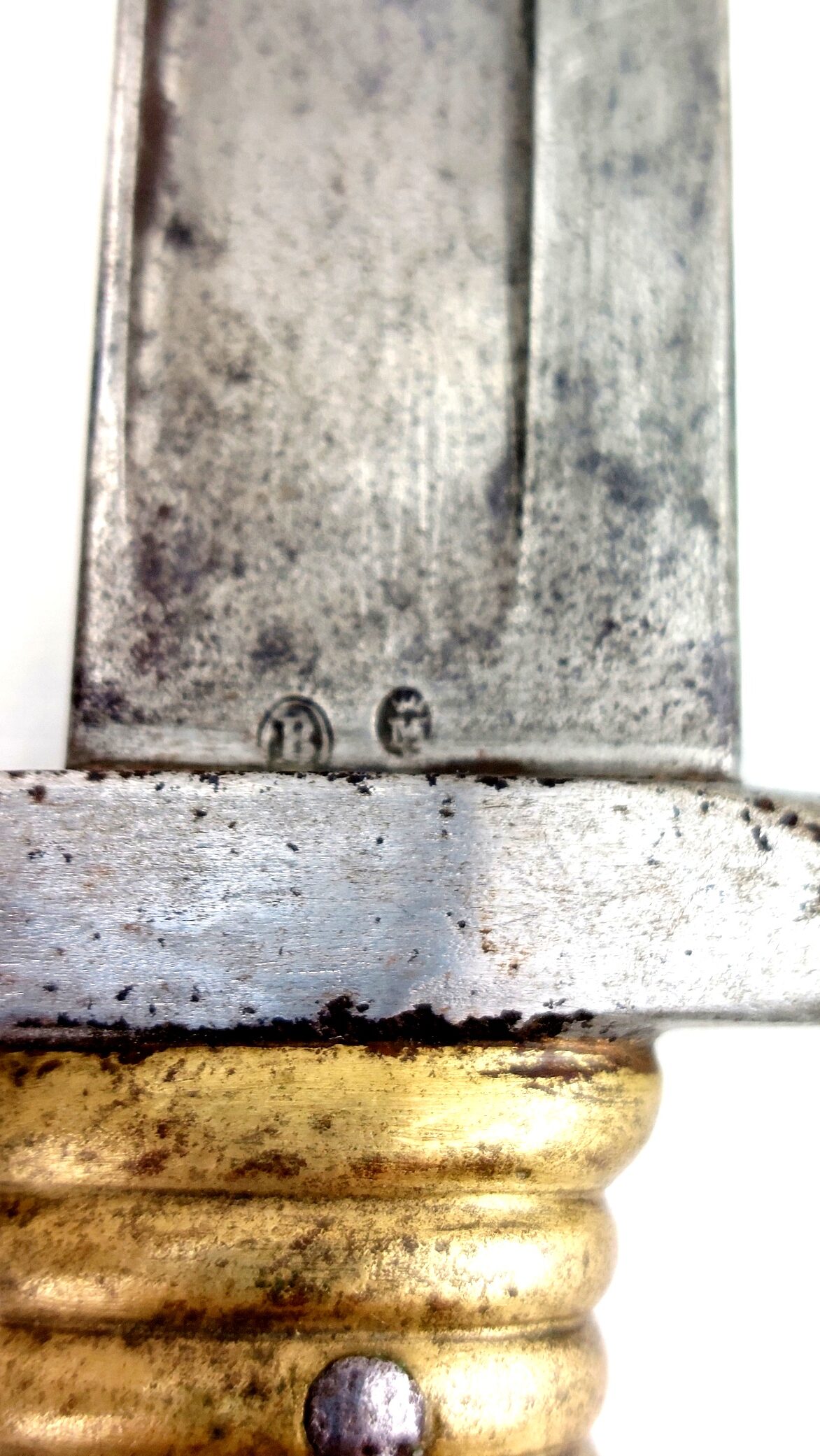
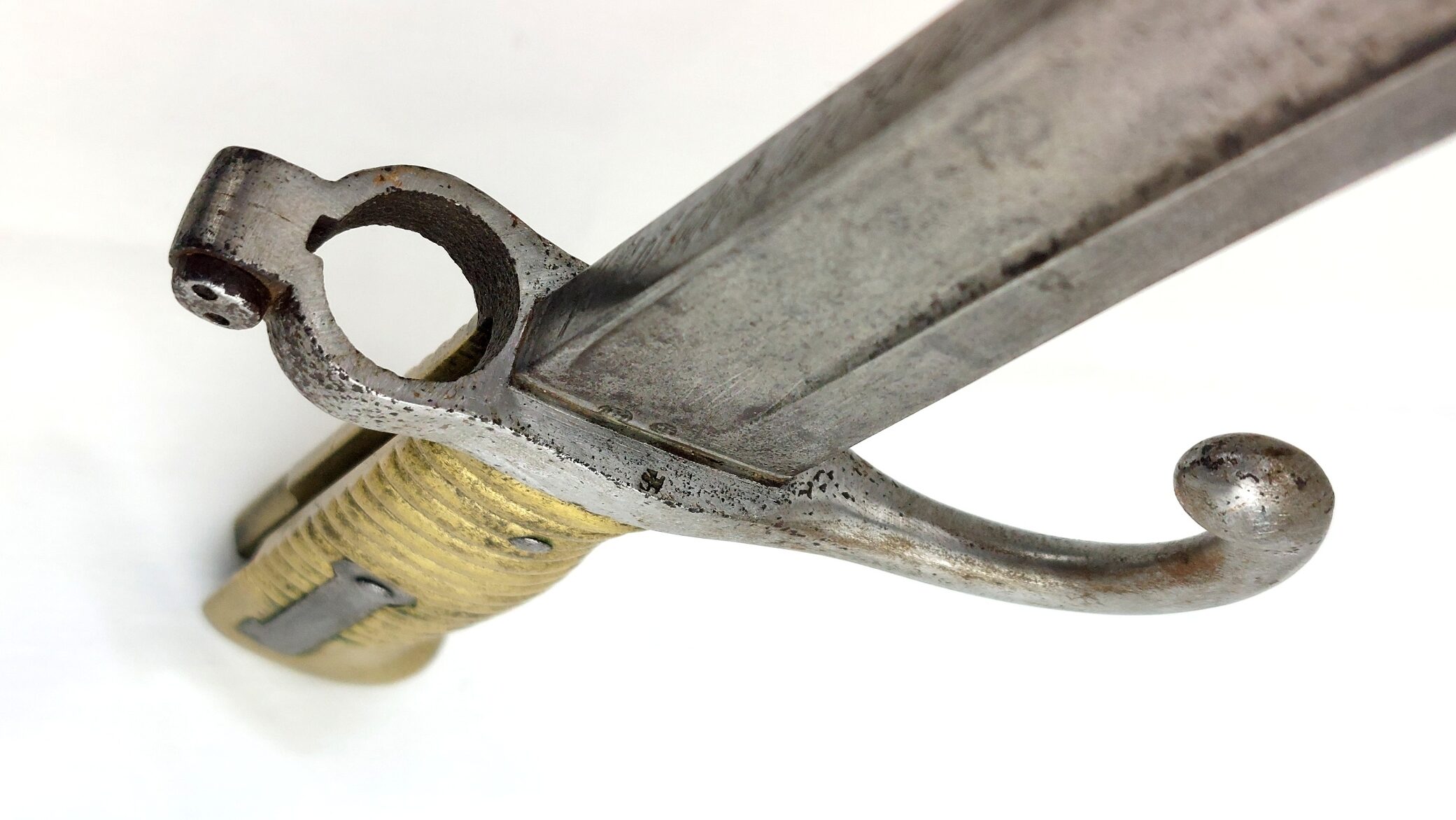
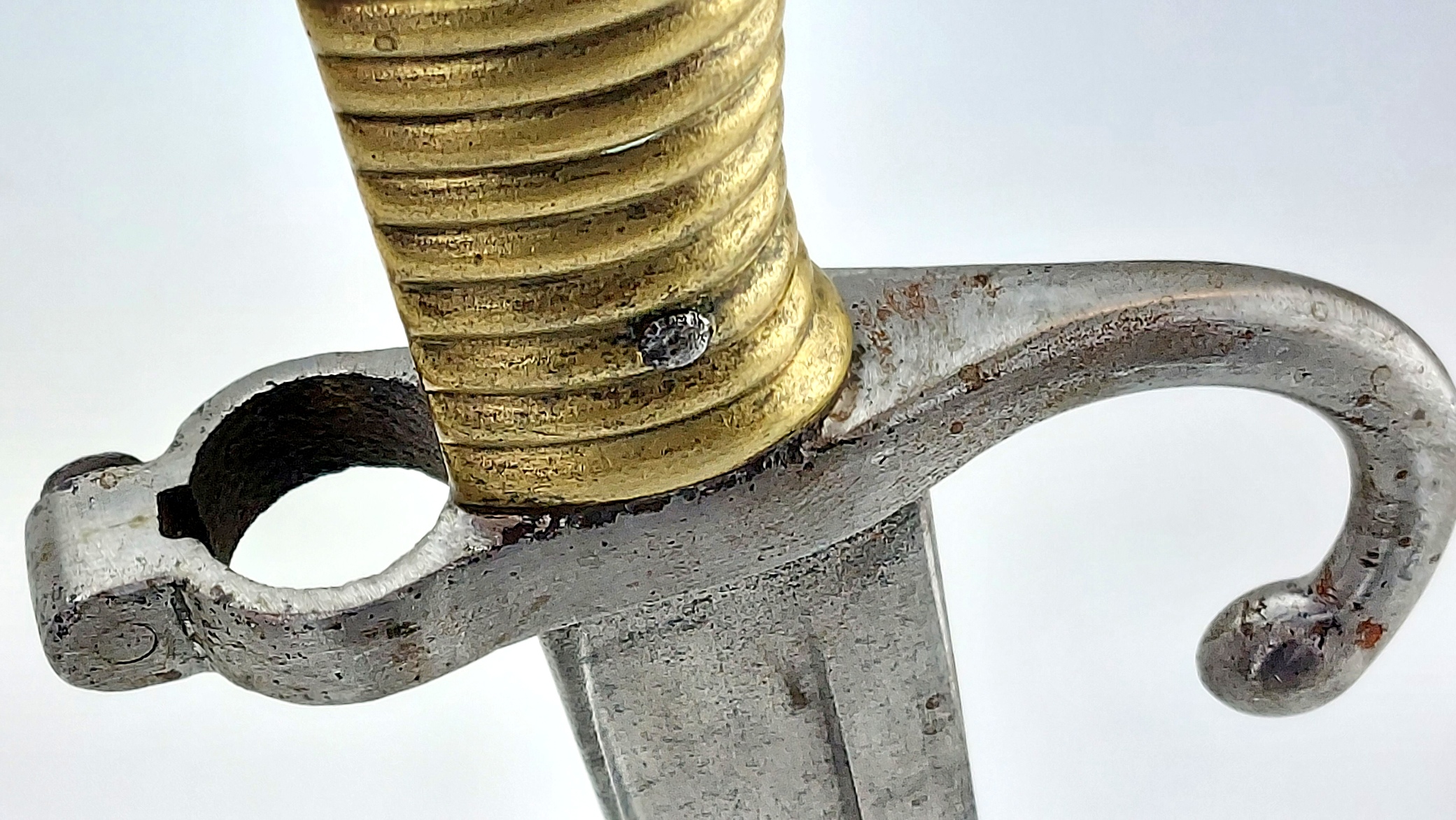
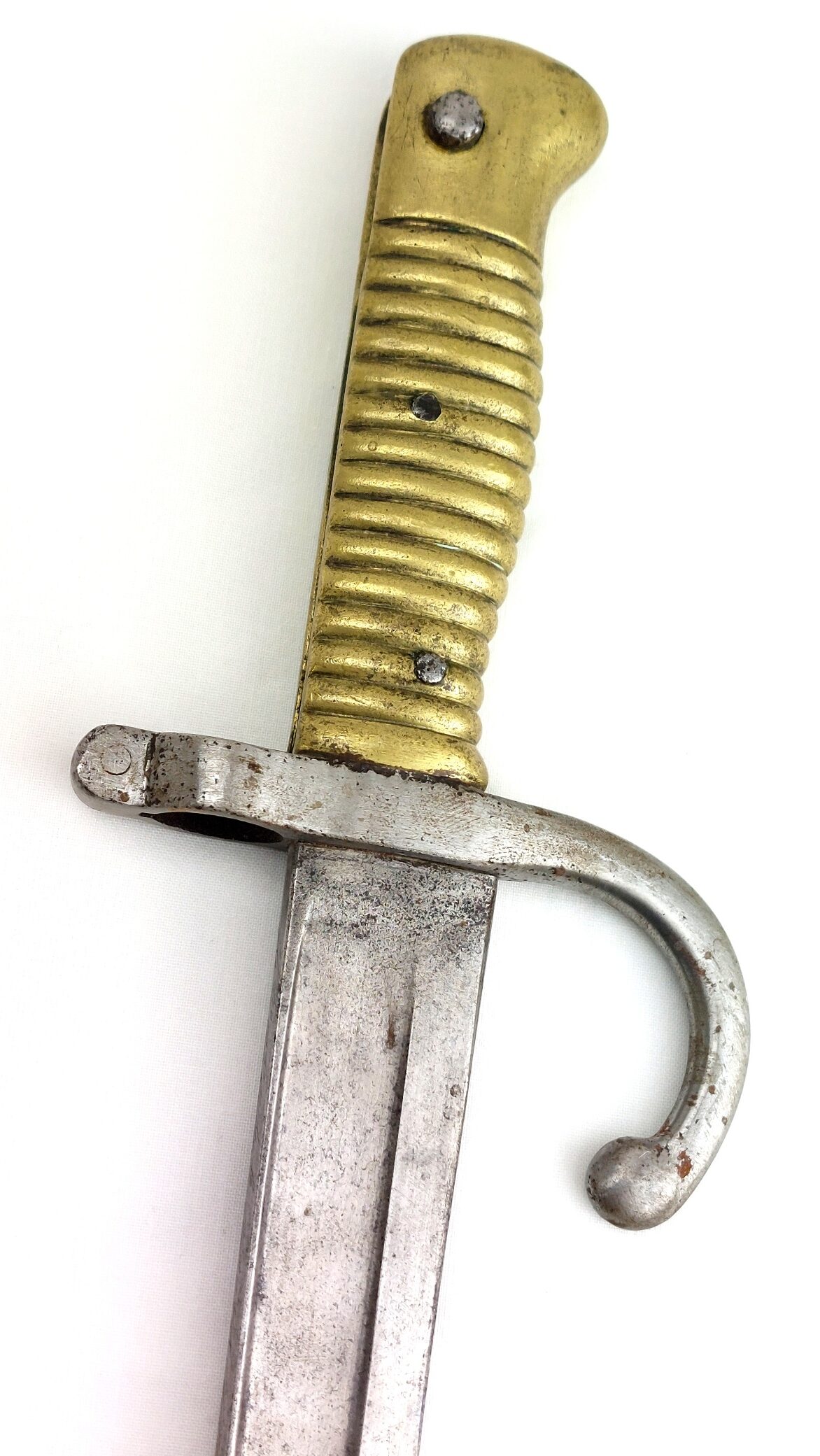
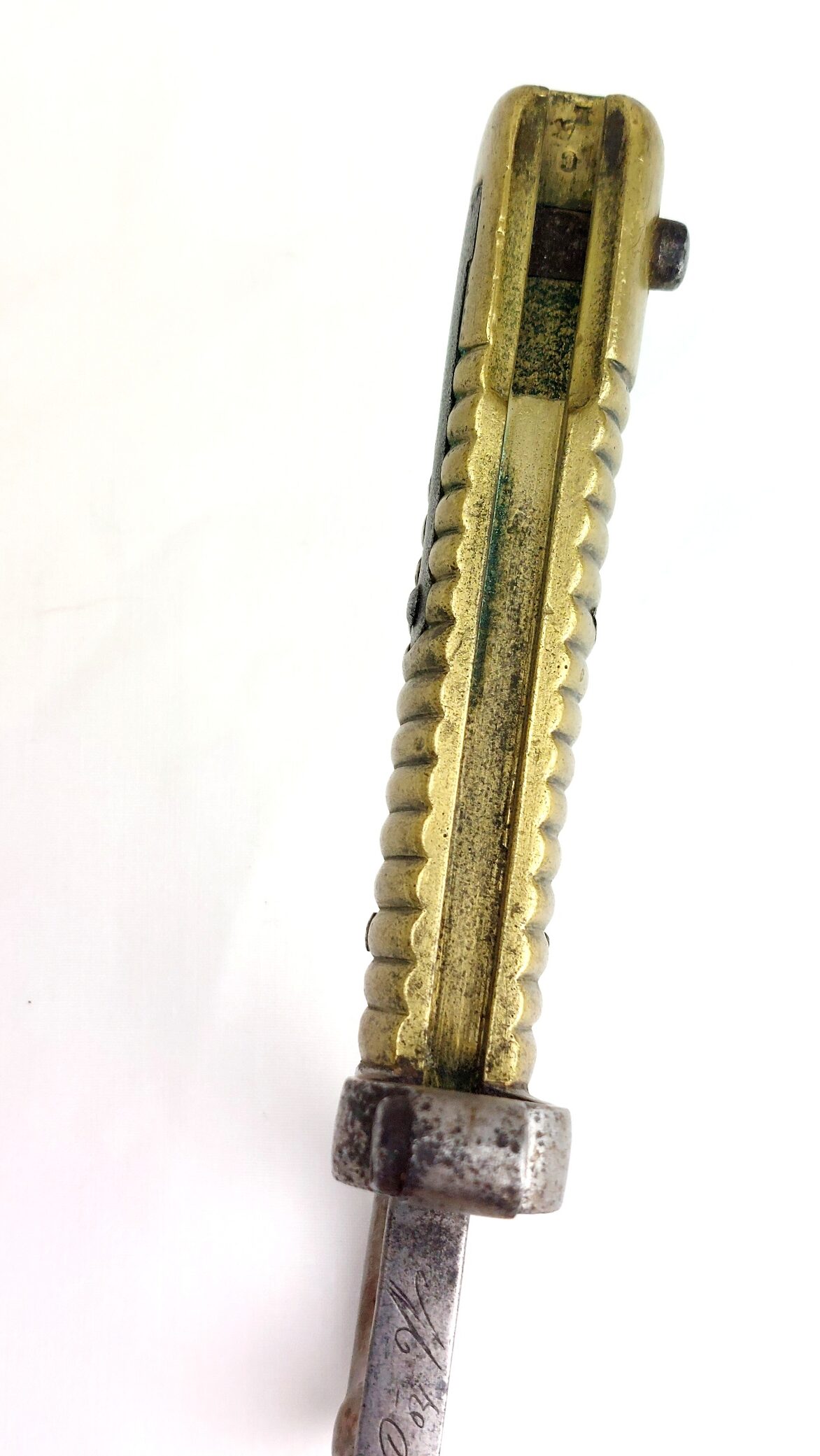
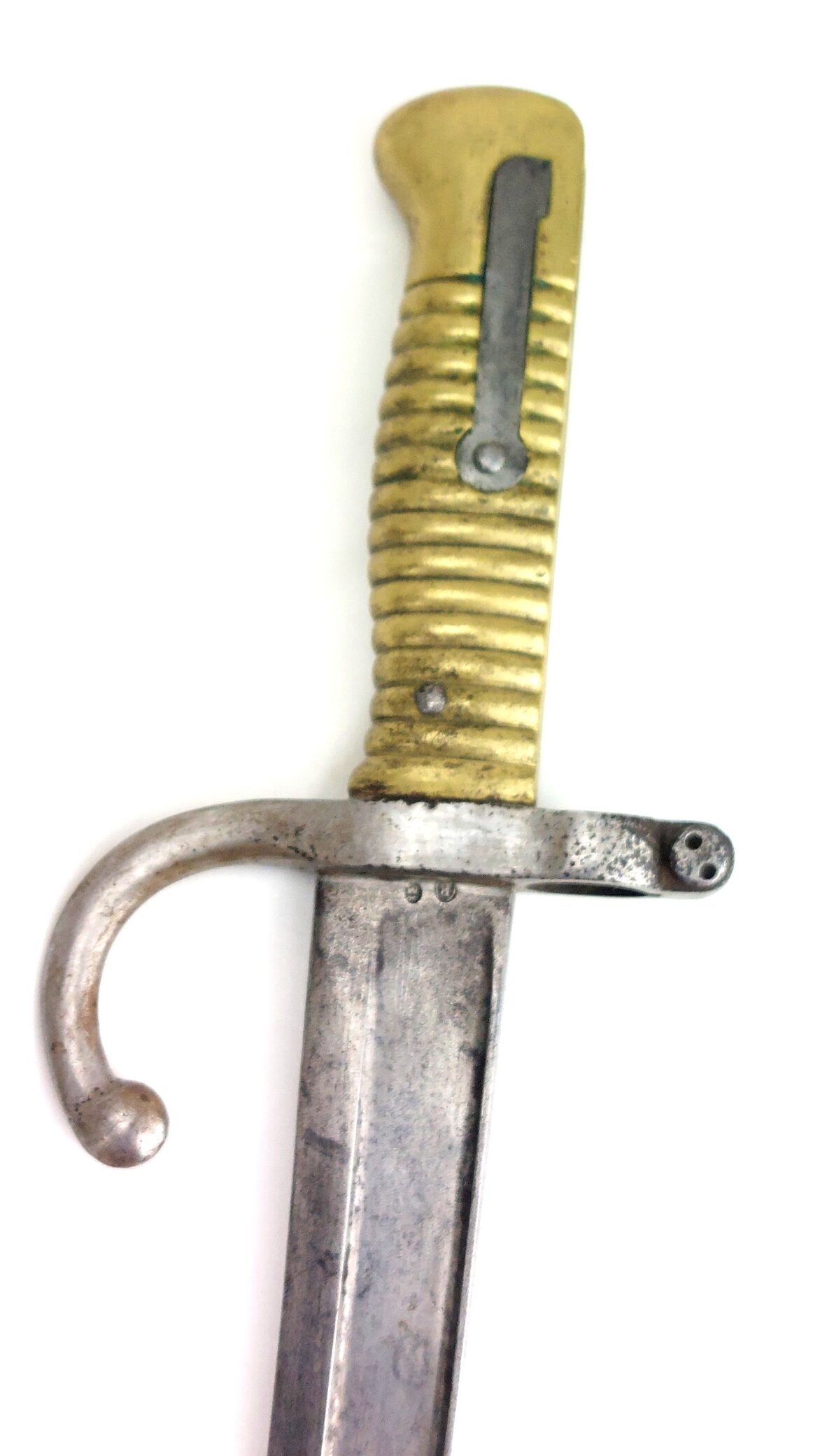
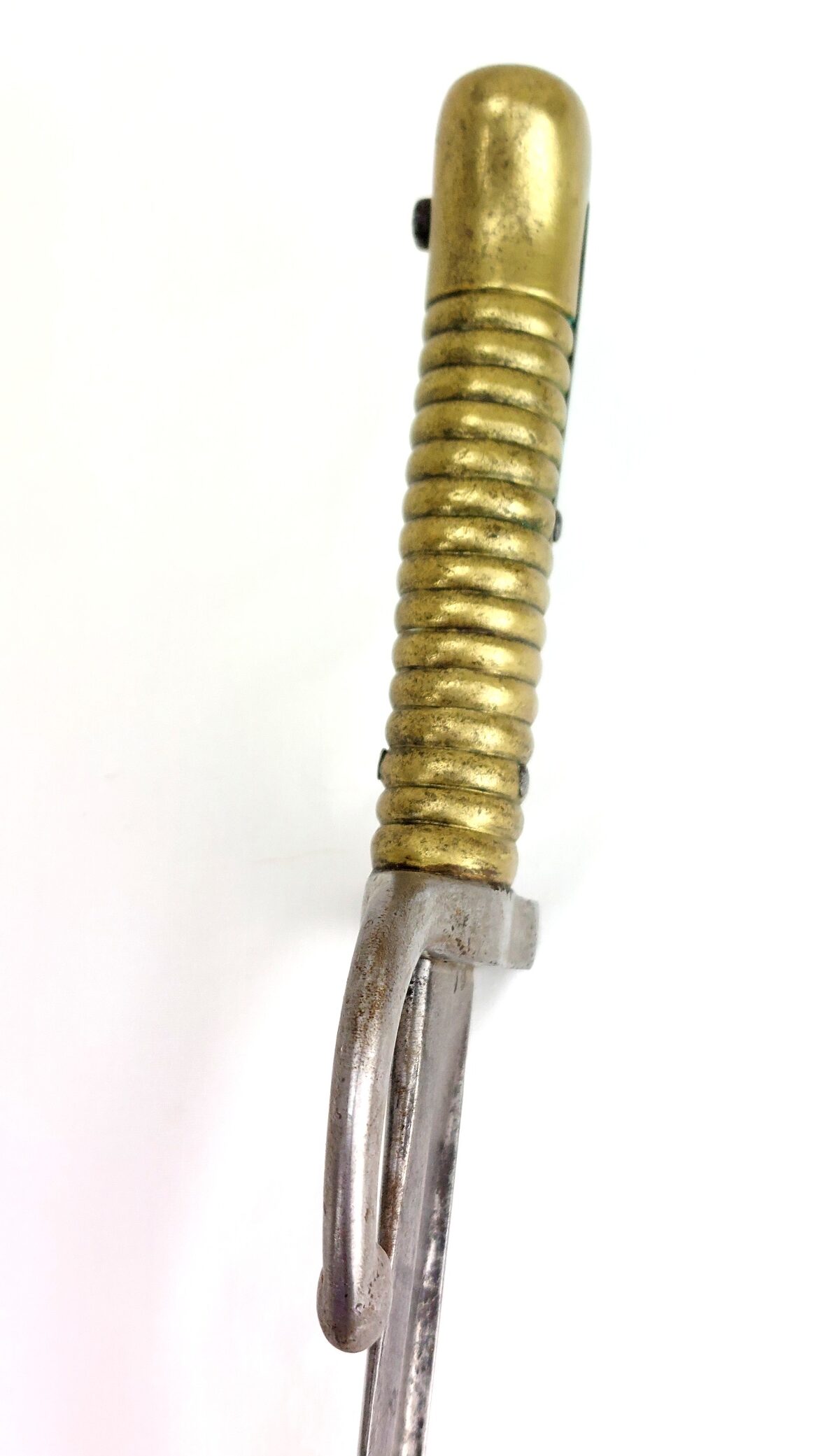
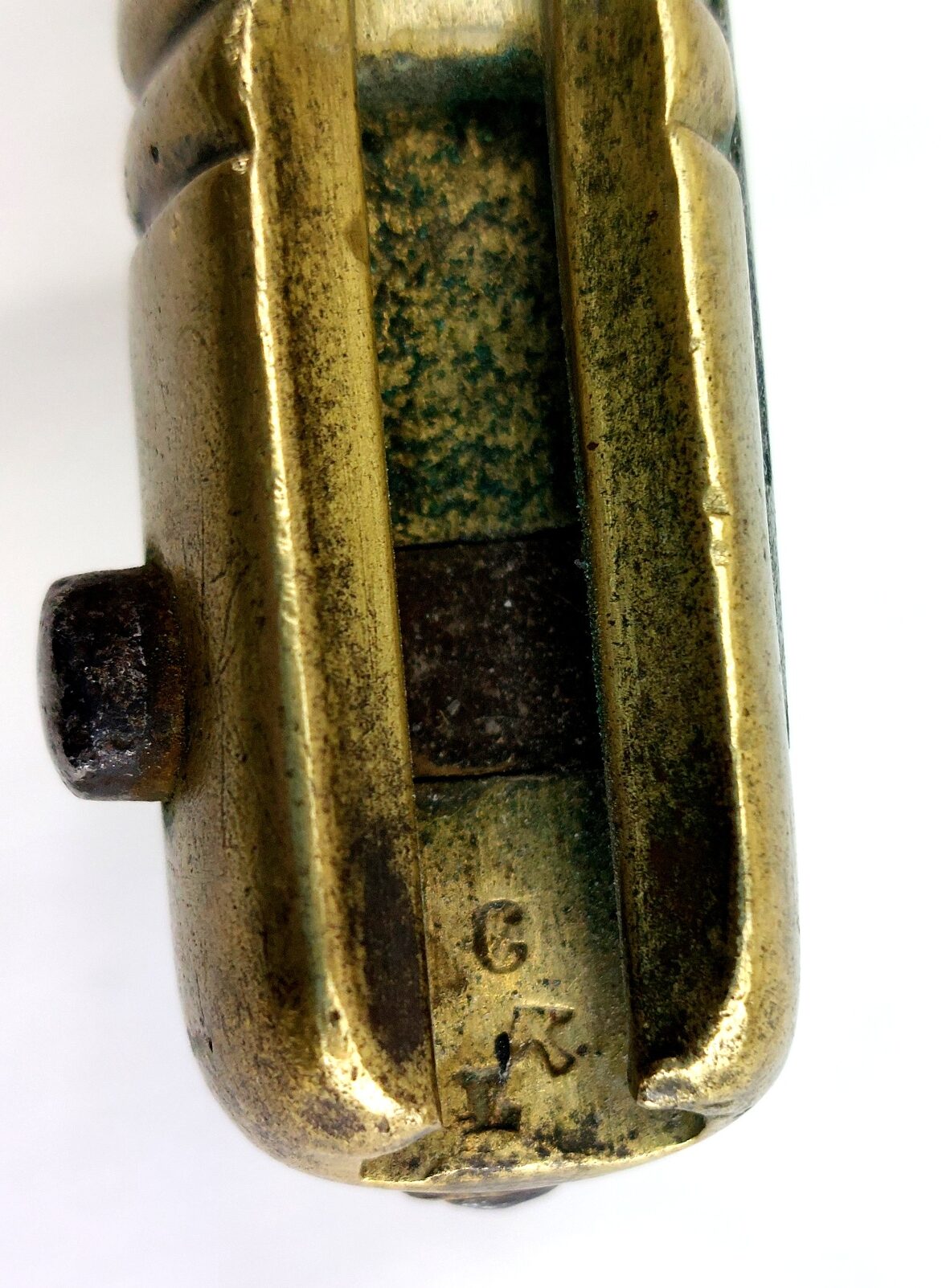
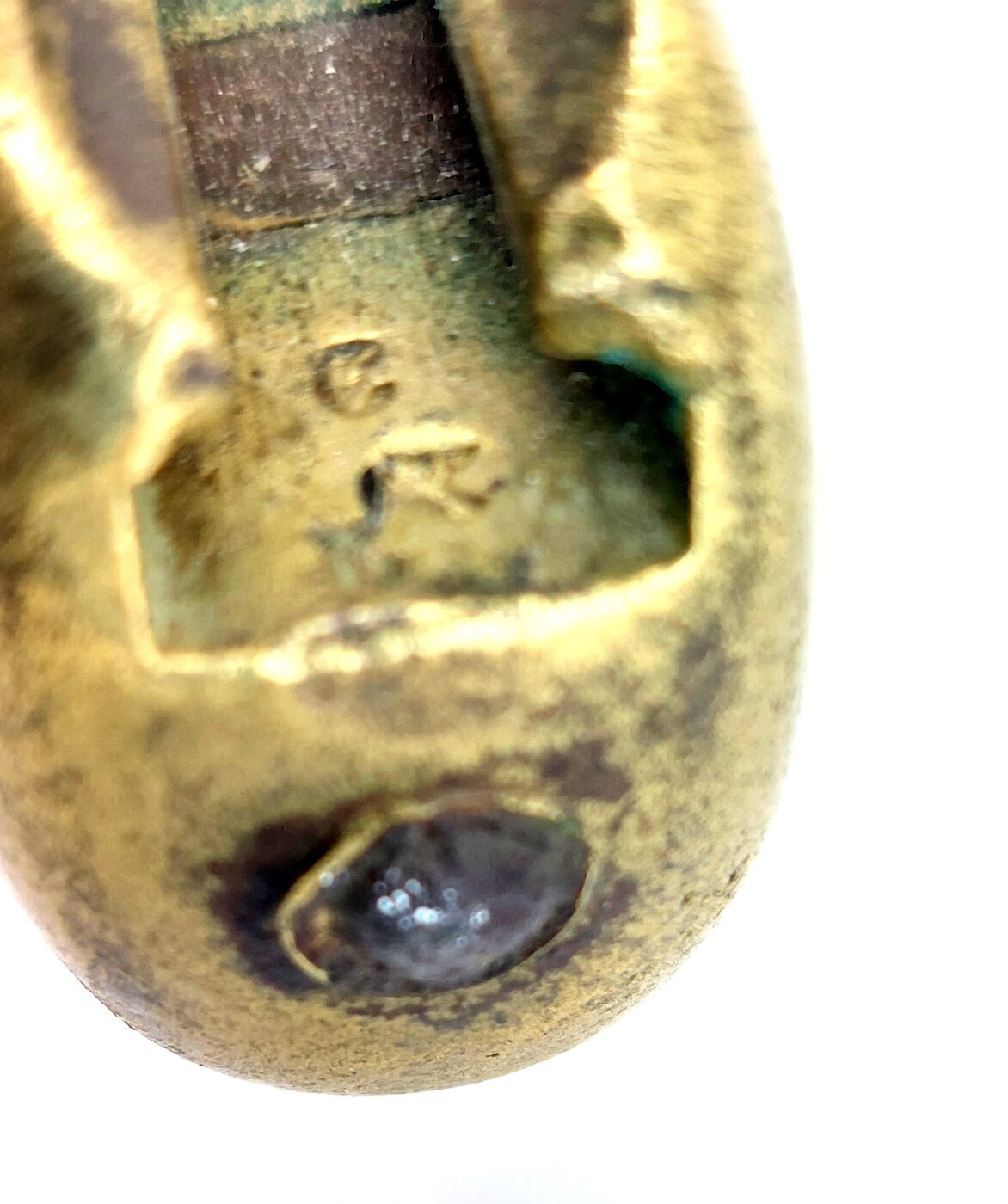
A French Model 1866 yataghan sword bayonet for the 11 mm Chassepot needle-fire rifle, retaining its deeply curved blade and forward-curving hooked quillon. The bayonet is fitted with its original ribbed brass grip secured by steel rivets, and a steel crossguard incorporating the muzzle ring and hooked quillon typical of the pattern.
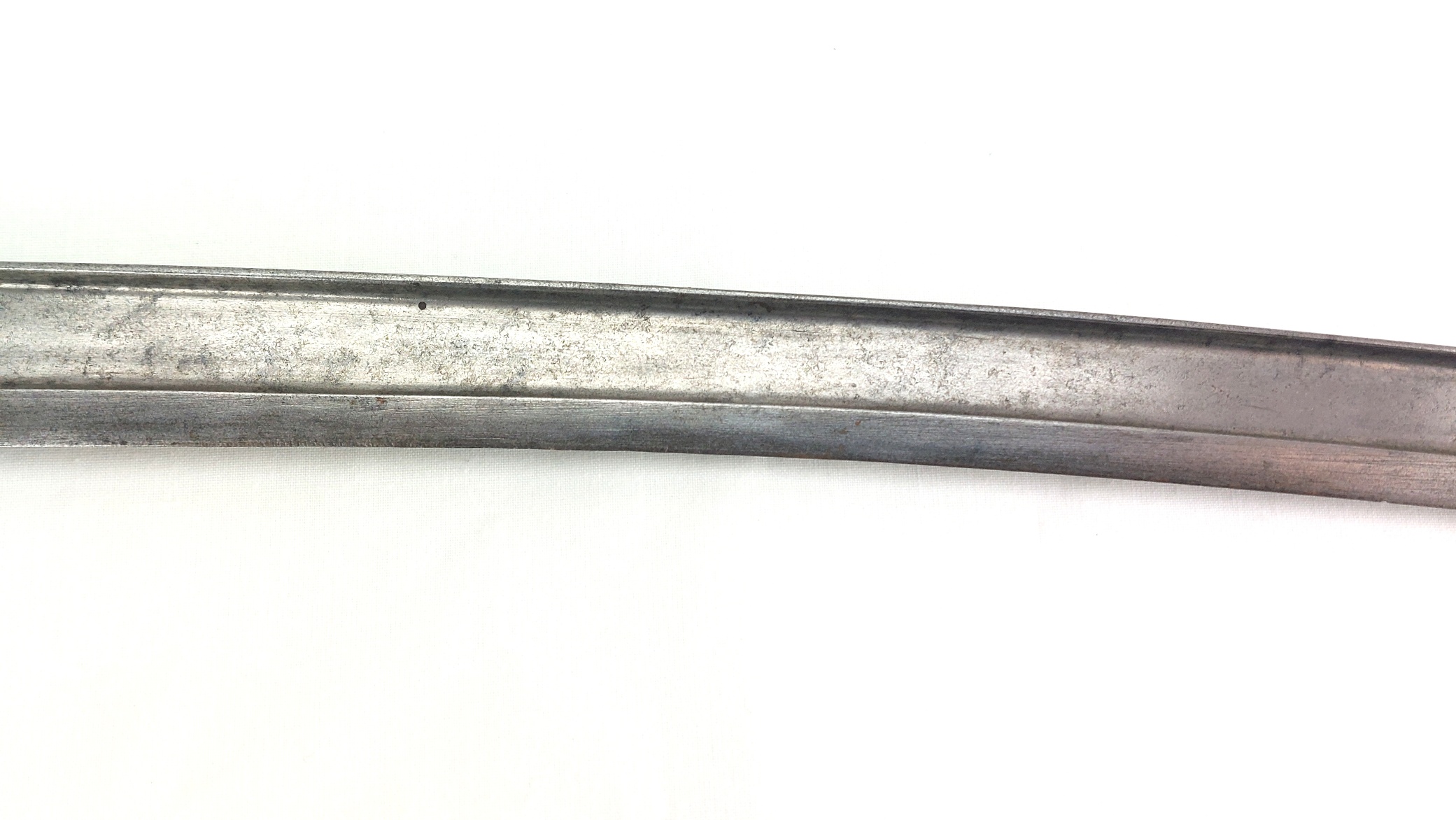
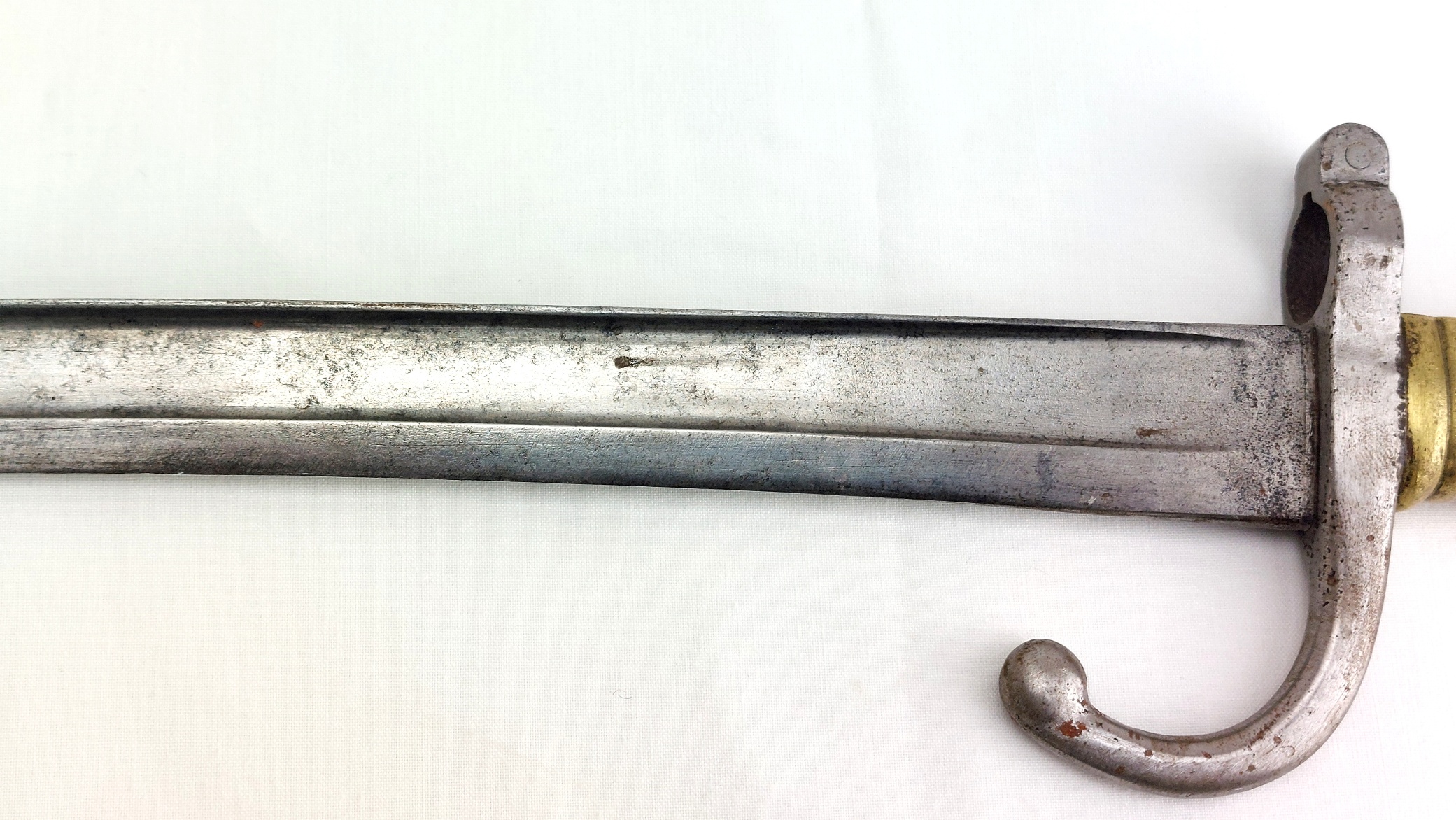
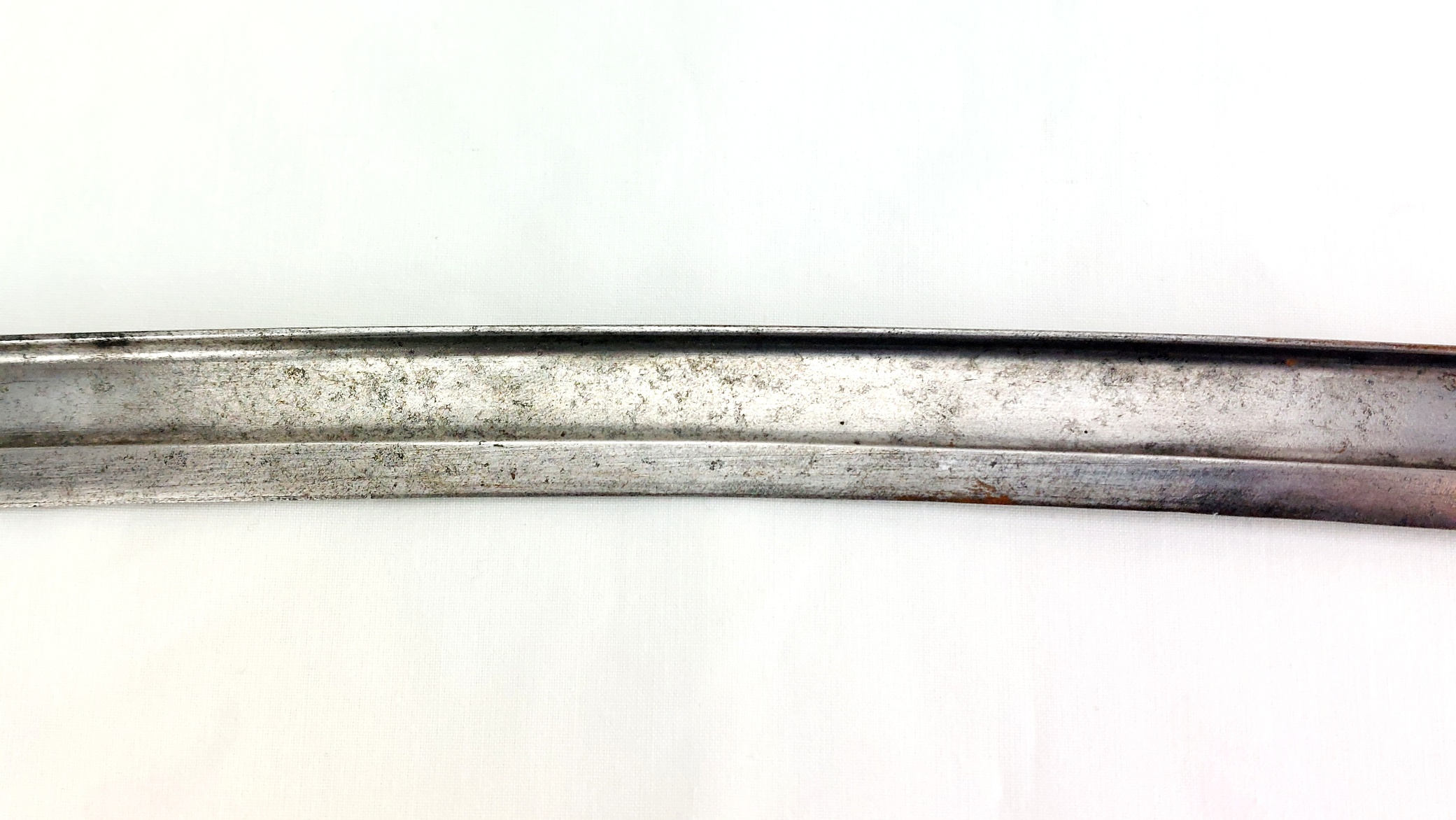
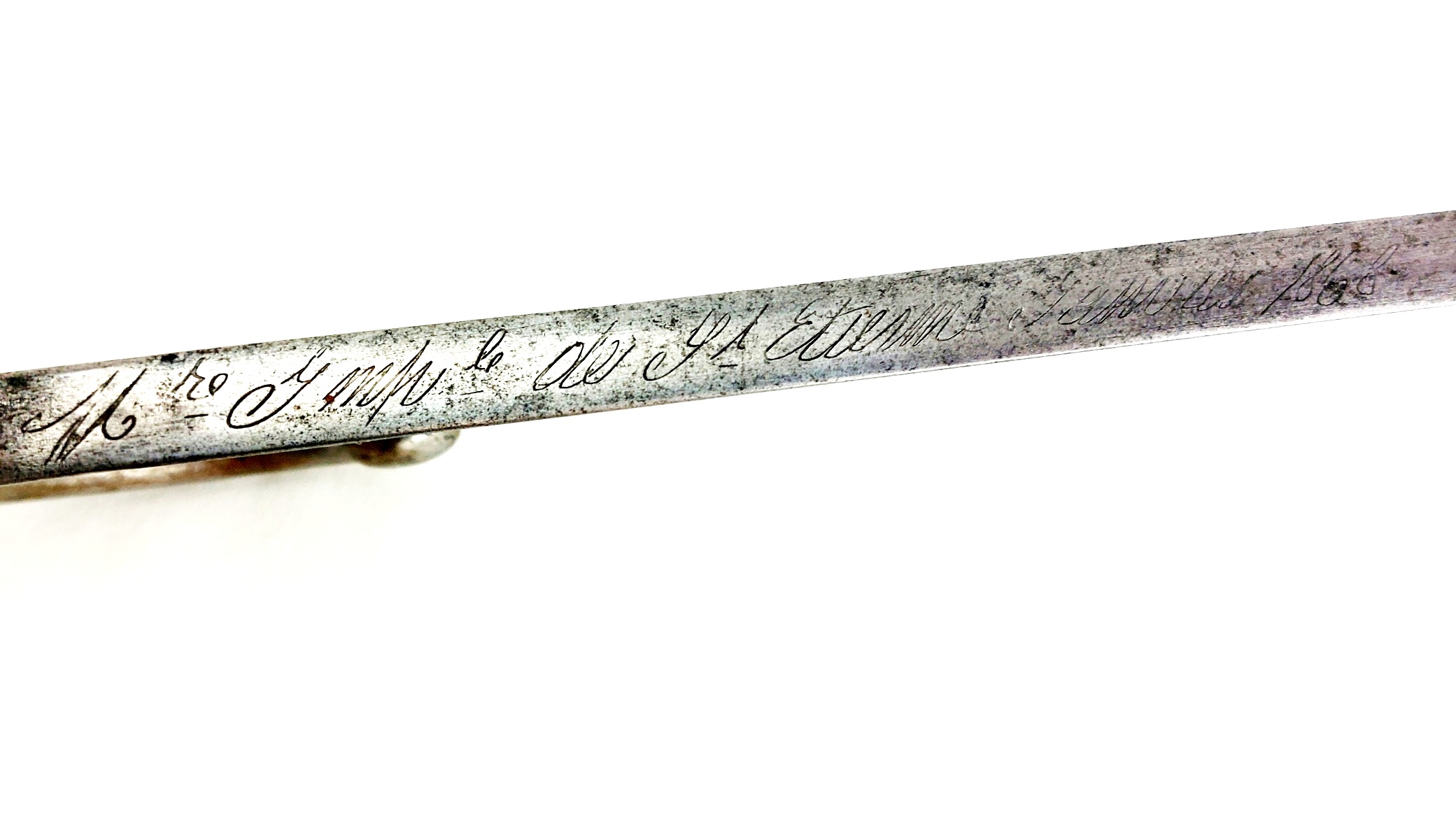
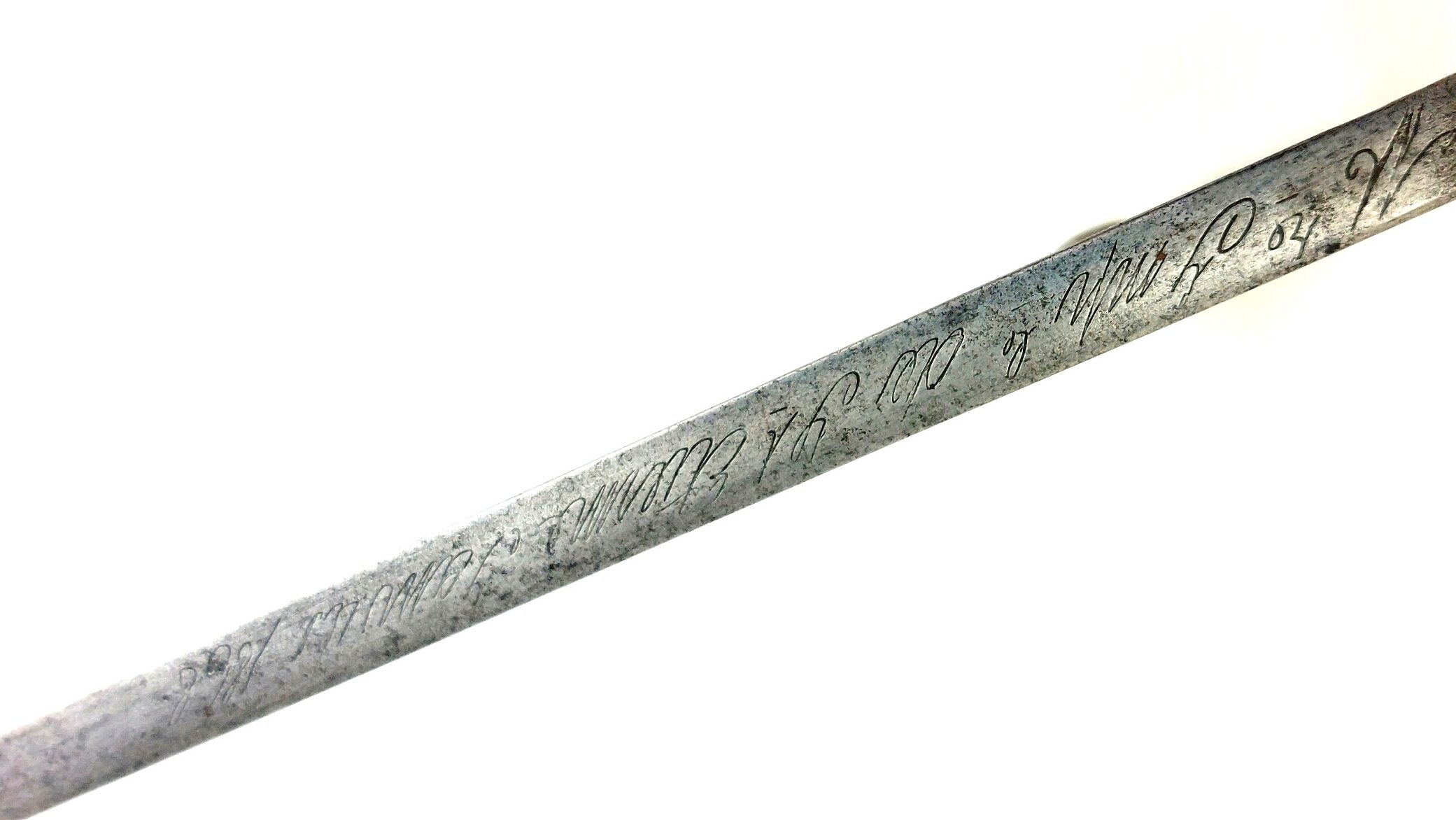
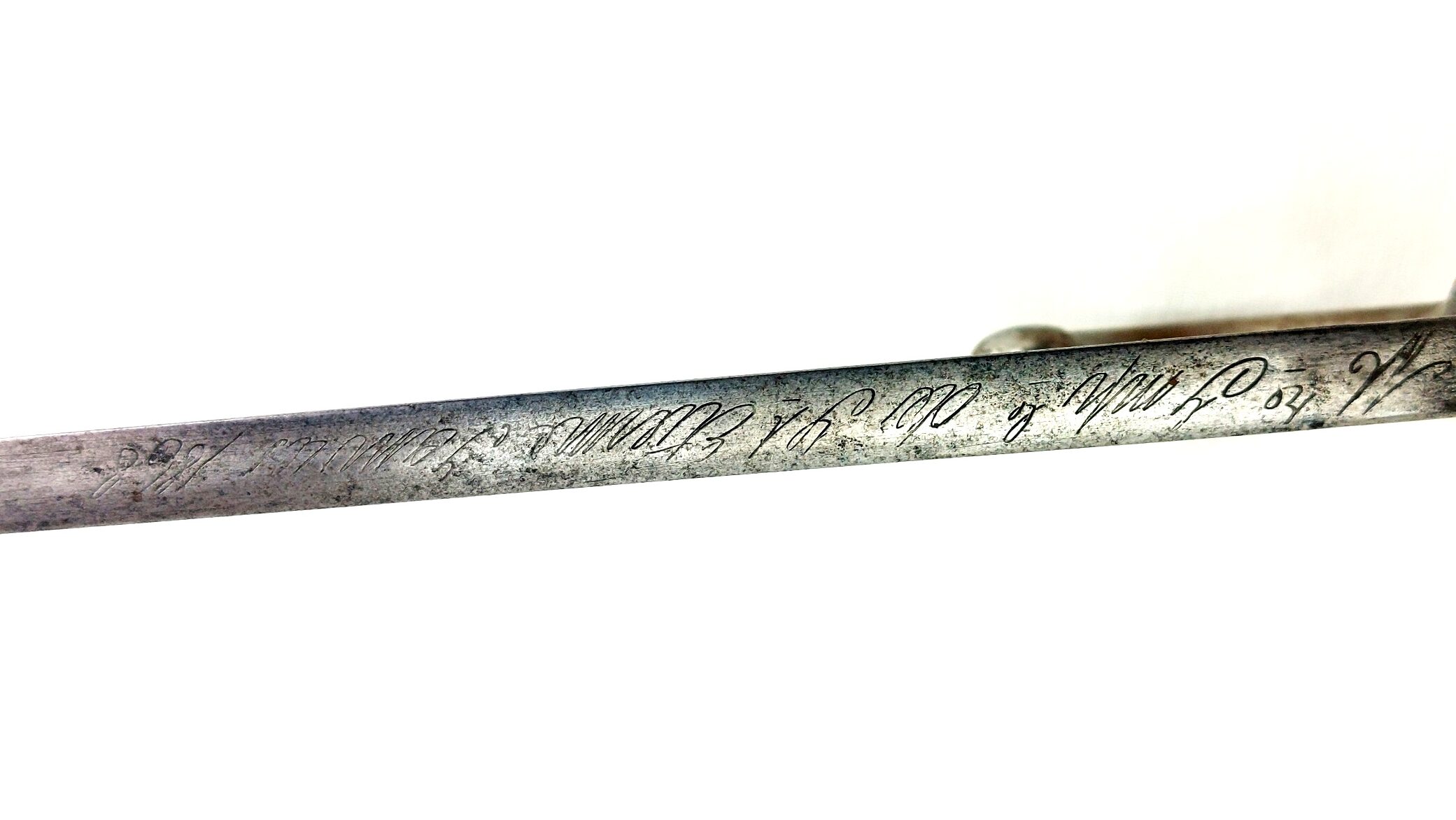
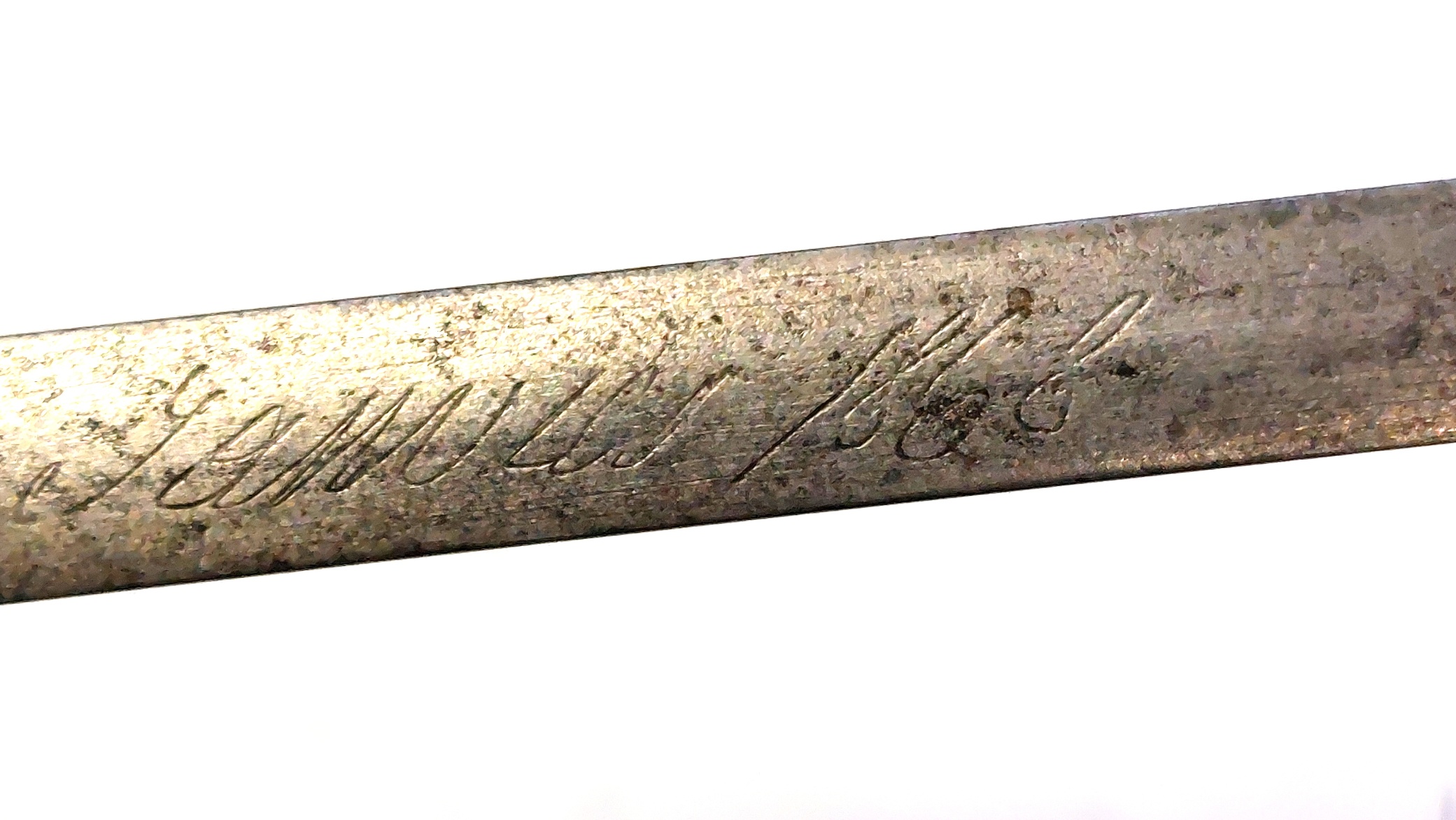
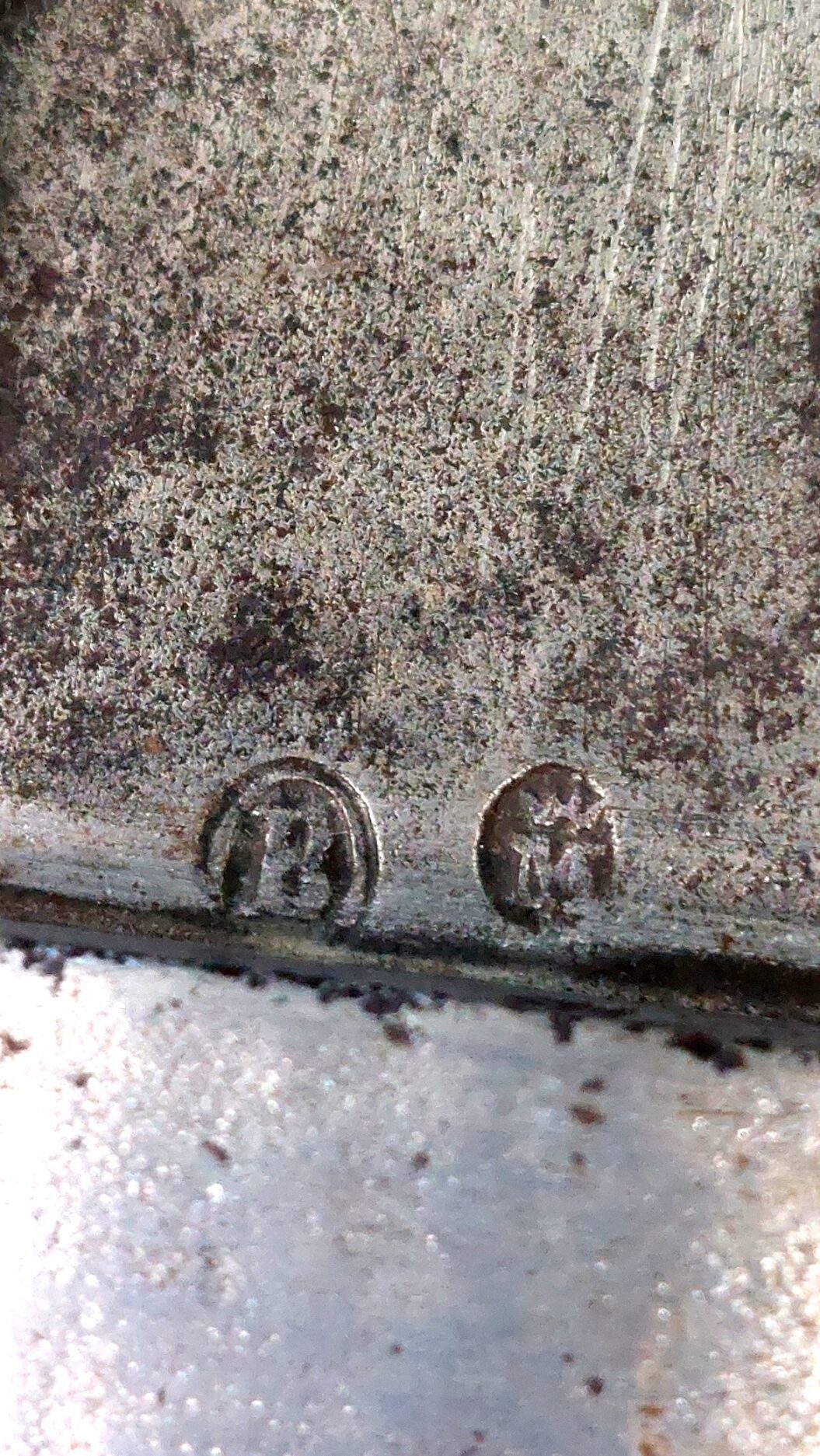
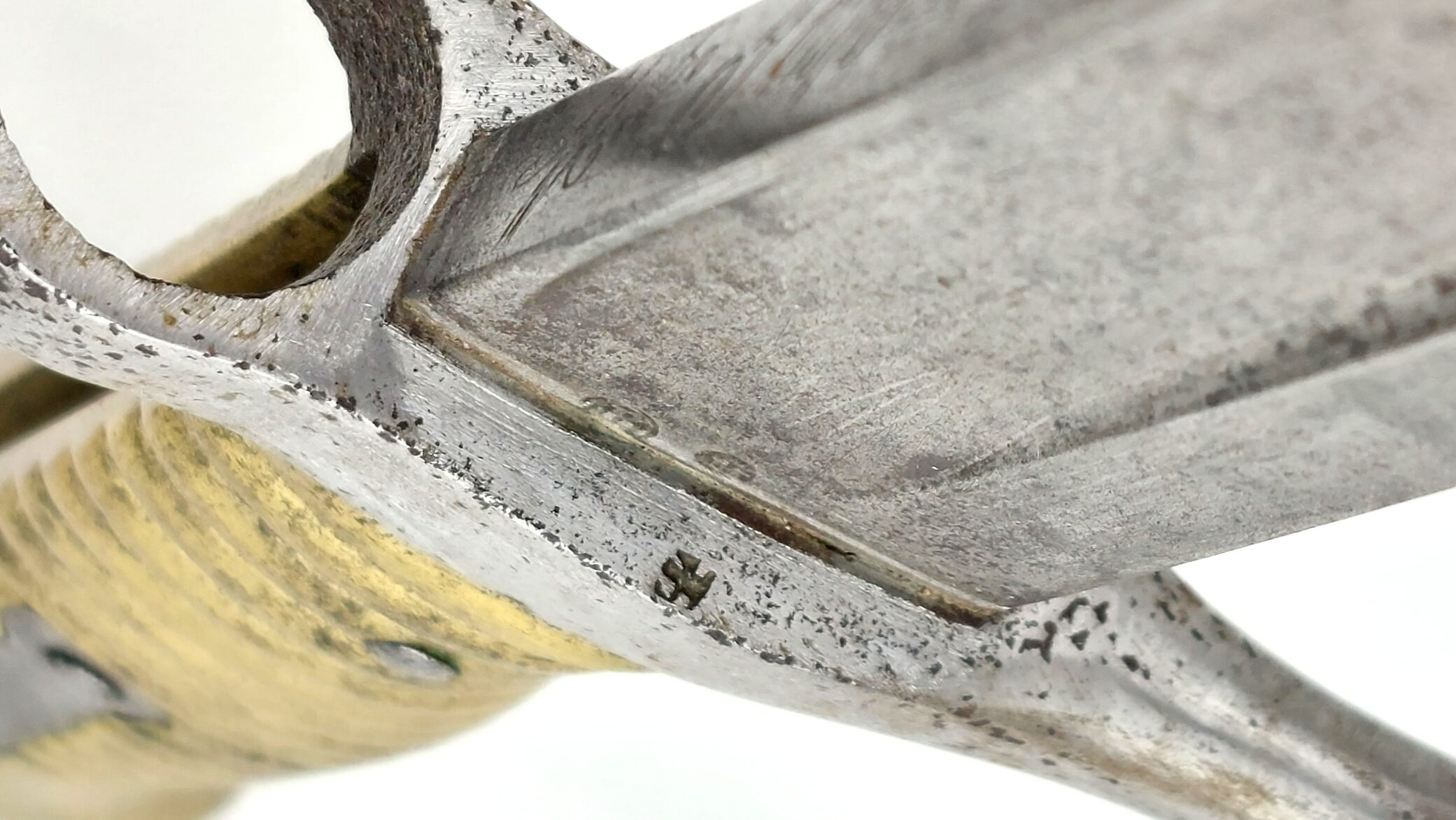
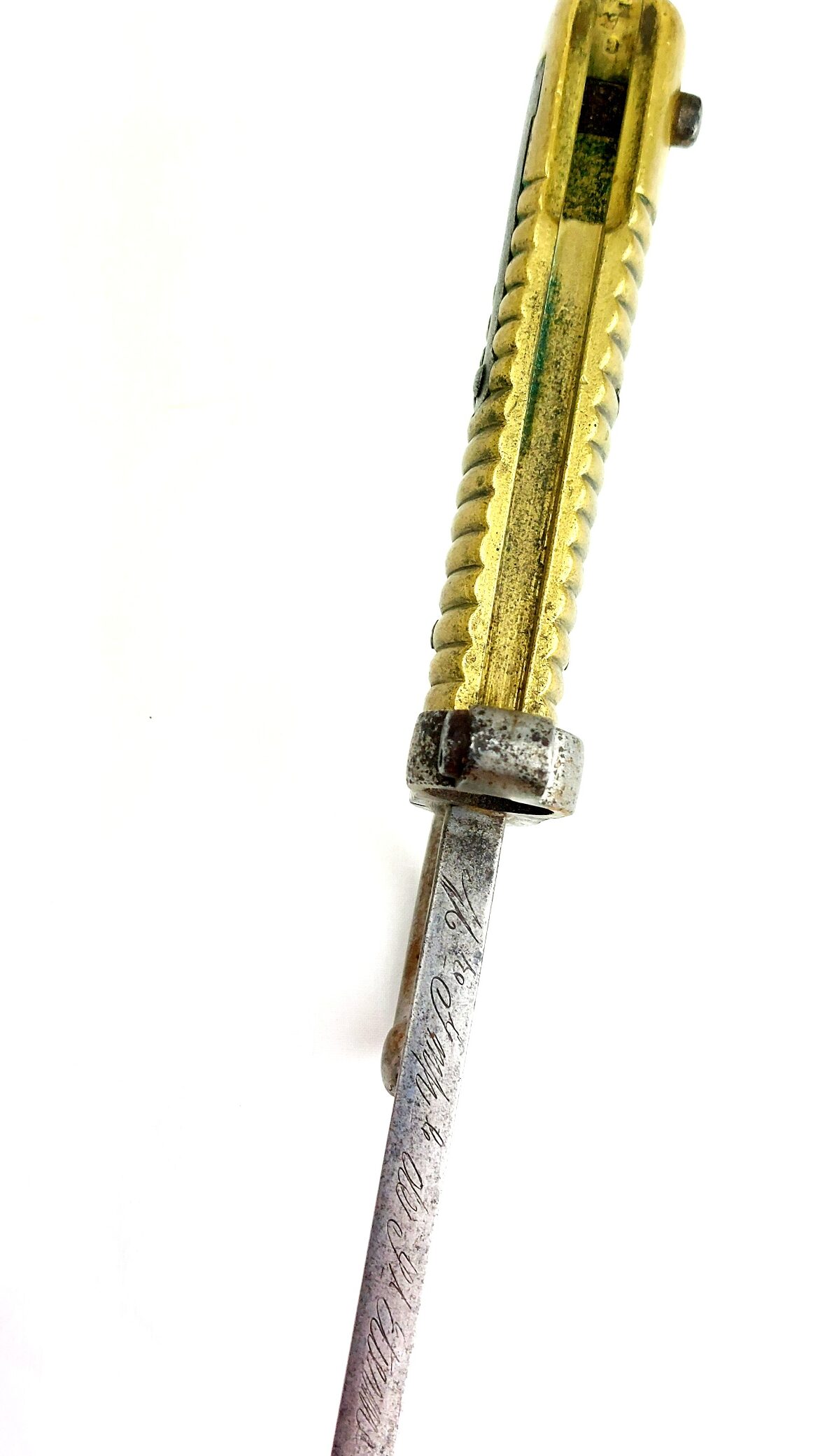
The blade is fullered on each face and bears clear French government markings. On the ricasso are a circled “B” inspection mark and a crown over “M”, consistent with French state arsenal inspection and acceptance. The blade spine is engraved in script with the regulation manufacture inscription “Mre Impale de St Étienne – Janvier 1868”, identifying production at the Imperial Manufactory of Saint-Étienne and confirming the year of manufacture.
Overall form, construction, and markings are correct for a regulation government-issued M1866 bayonet, with no indication of later alteration or refurbishment.
Approx. Measurements – Blade length: 56.7 cm. Overall length: 68.8 cm.
Historical Note: Adopted alongside the Model 1866 rifle—universally known as the Chassepot after its inventor, Antoine Alphonse Chassepot—the M1866 bayonet represents the last flowering of the French yataghan form. Its pronounced curve reflected mid-19th-century French doctrine that favoured slashing capability in close combat, while still allowing effective thrusting when fixed.
Production of the M1866 bayonet was undertaken at the principal French state arms manufactories—Châtellerault, Mutzig, Saint-Étienne, and Tulle—as well as by a number of government contractors in France, Germany, and Britain. State-produced examples are identified by the spine inscription giving the arsenal, month, and year of manufacture, as seen on this bayonet. This was produced at Saint-Étienne, the main French military arsenal founded in 1764. “The spine inscription ‘Manufacture Impériale de St-Étienne’, abbreviated on blades as ‘Mre Impale de St-Étienne’, reflects Second Empire production; following the fall of Napoleon III in 1870, the designation changed to ‘Manufacture d’Armes de St-Étienne’ under the Third Republic.”
Although designed for the Chassepot rifle, the M1866 bayonet was retained in service following the adoption of the Model 1874 Gras rifle, to which it will also mount, reflecting French efforts to economise during the transitional period between needle-fire and metallic-cartridge arms. These bayonets saw extensive service during the Franco-Prussian War of 1870–71 and remained in reserve well into the early Third Republic.
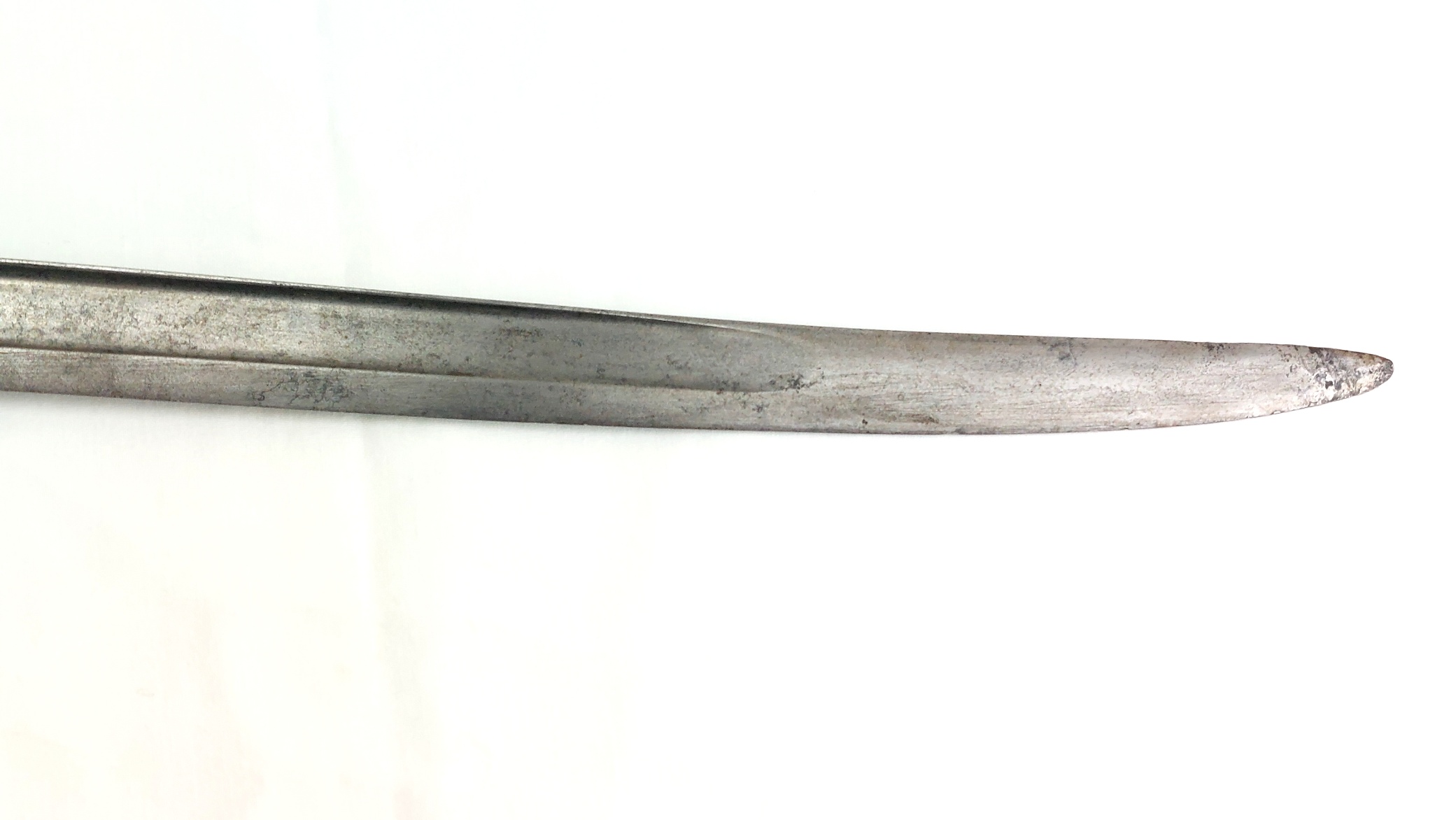
*Condition* Good service-used condition. The blade shows even age-related patination with scattered staining and light corrosion, including more pronounced rusting toward the tip. Edges show no evidence of sharpening. The spine markings remain legible. The brass grip retains a warm, untouched patina with minor handling wear, and the steel hilt components show surface oxidation consistent with age. Structurally sound throughout. No scabbard. Please see photographs as part of the condition report.
*In order to complete the online purchase we will require a picture/scan of a photo ID (Driving Licence, Passport or an official document with a recent picture). If you don't posses any such document please call to buy. If we consider that the proof of ID is incorect or insuficient, we reserve the right to cancel the transaction.
*We also reserve the right to cancel the transaction with a full refund if there is any suspicion that the provided item will be used in any way contrary to the laws and legislation of UK.