*France, WWII, Fairbairn-Sykes “Nail Head” Fighting Knife — Rare French Resistance–Associated Variant (SOE Supply Pattern), and Original WWII Sheath*
A highly desirable and very scarce wartime “Nail-Head” French Resistance Fairbairn-Sykes fighting knife. These rugged, simplified all-steel knives were produced in England specifically for clandestine supply to occupied Europe and were delivered to Resistance groups by Special Operations Executive (SOE) parachute drops during the Second World War.
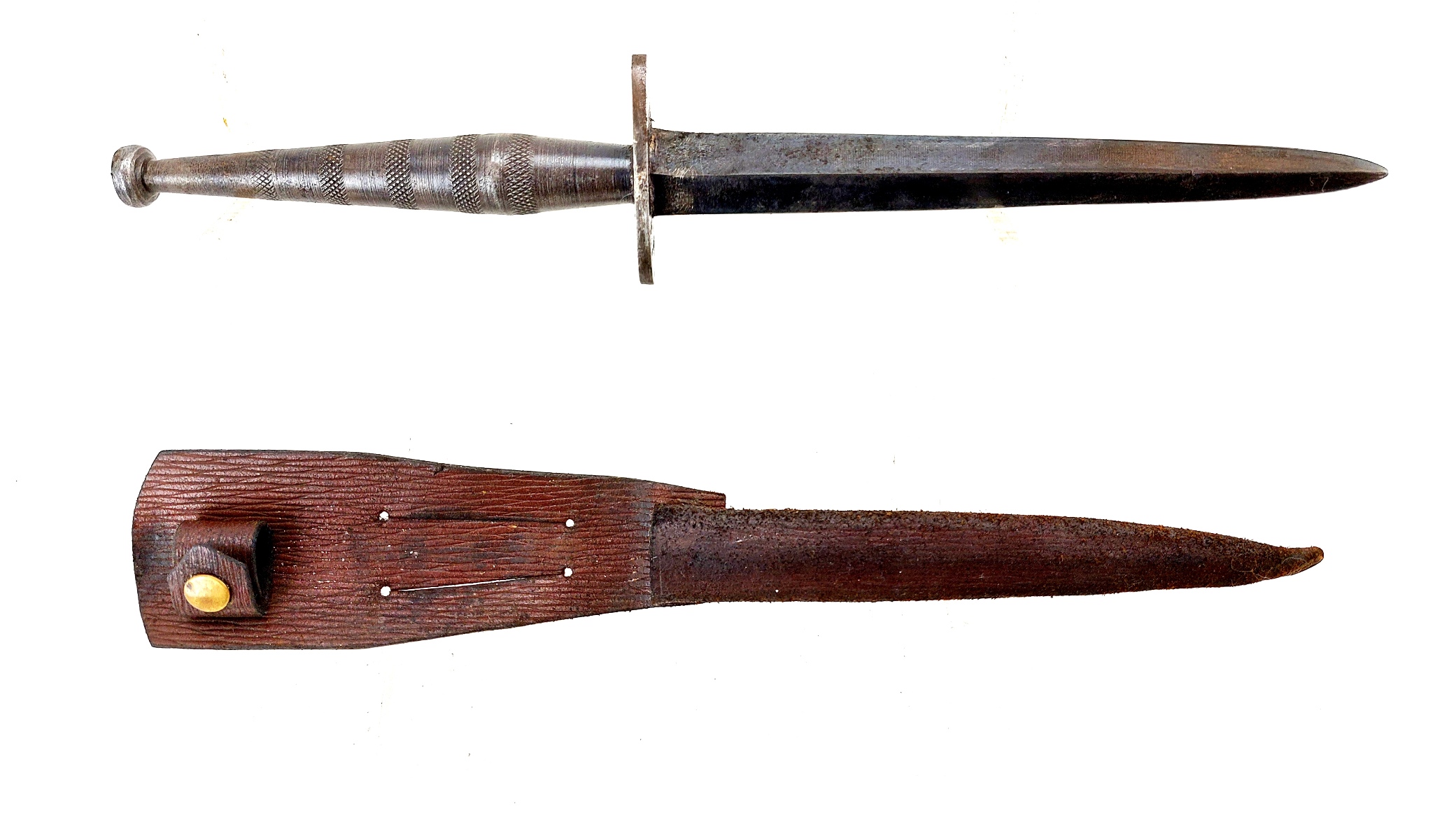
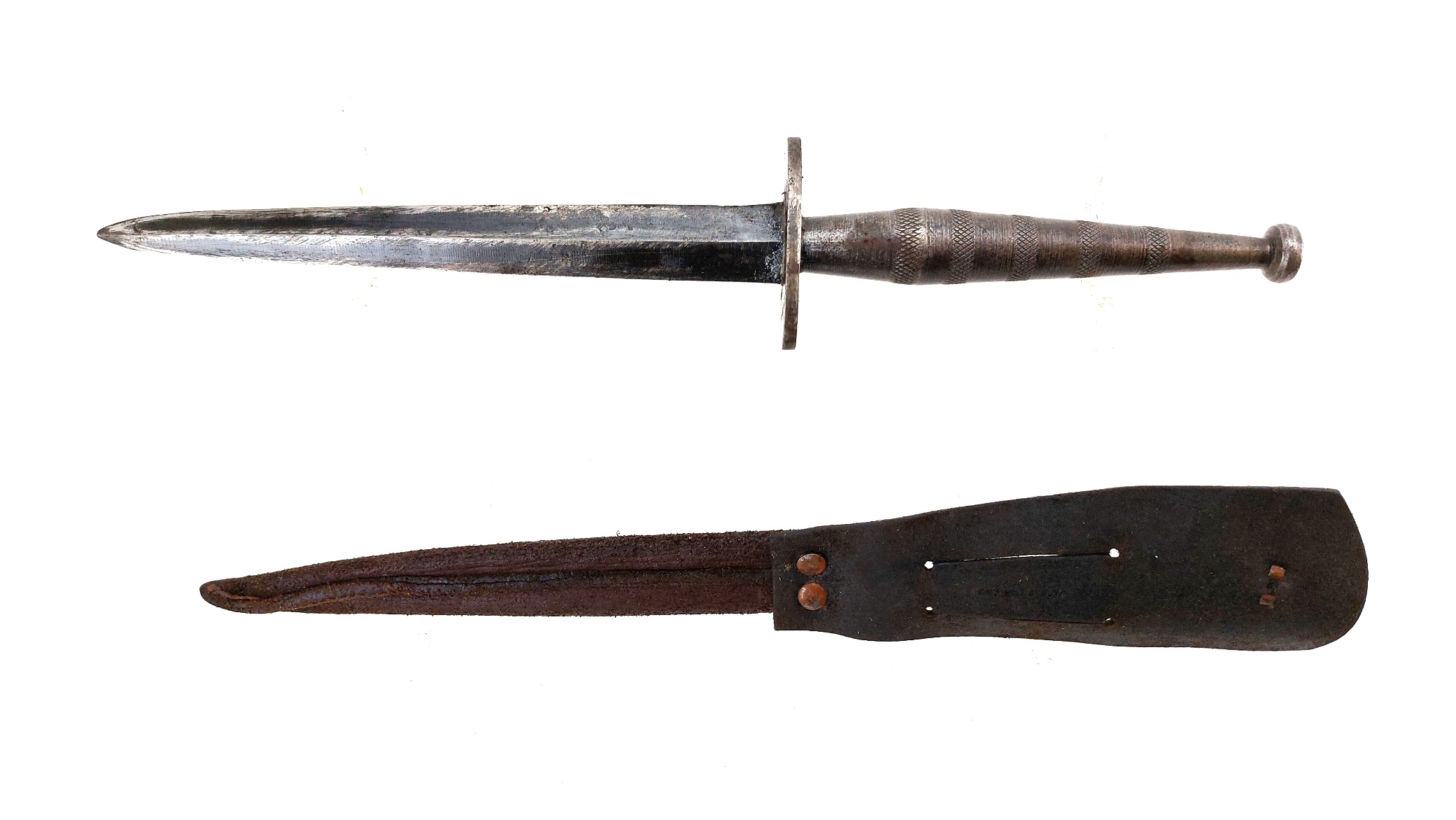
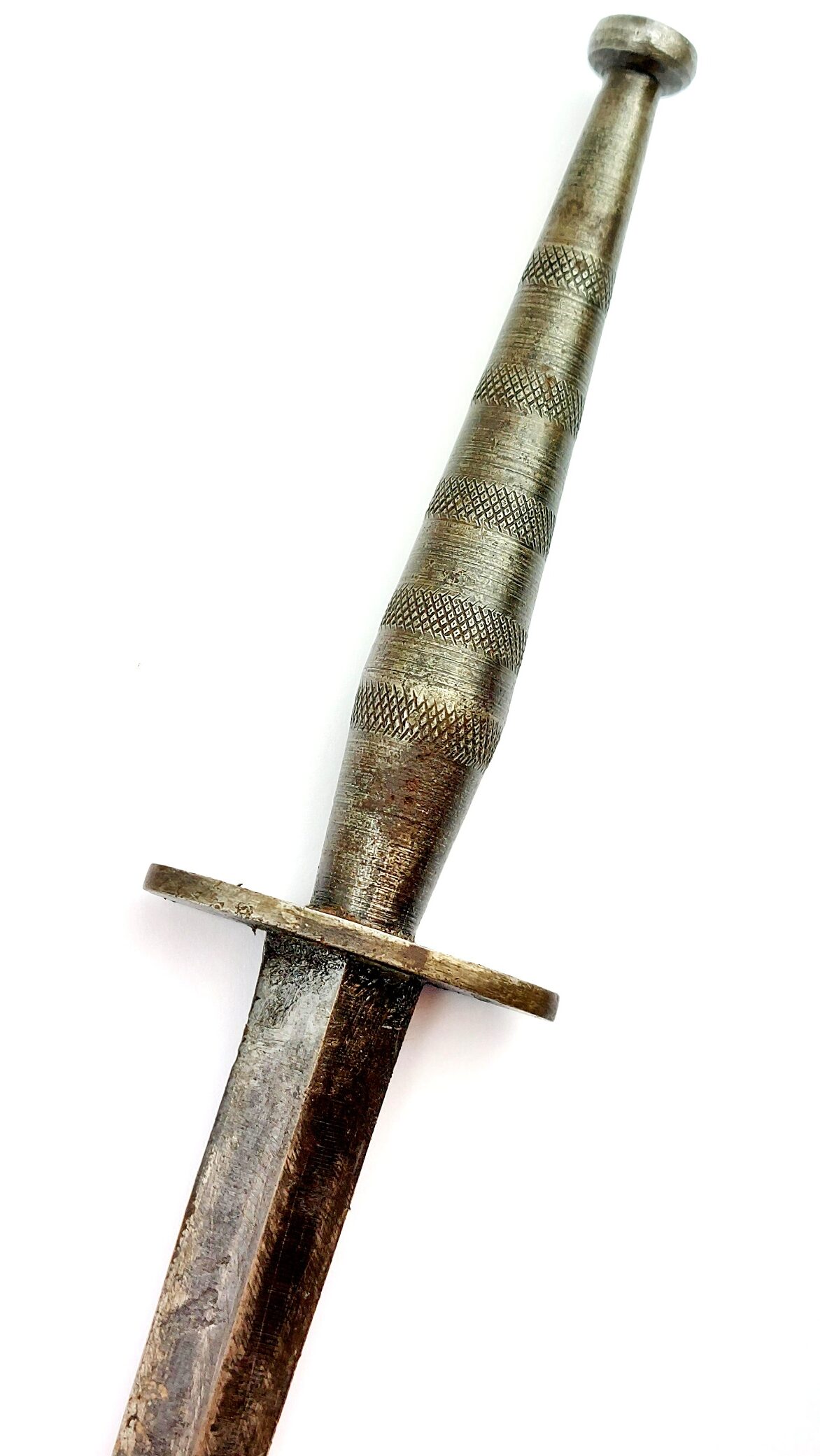
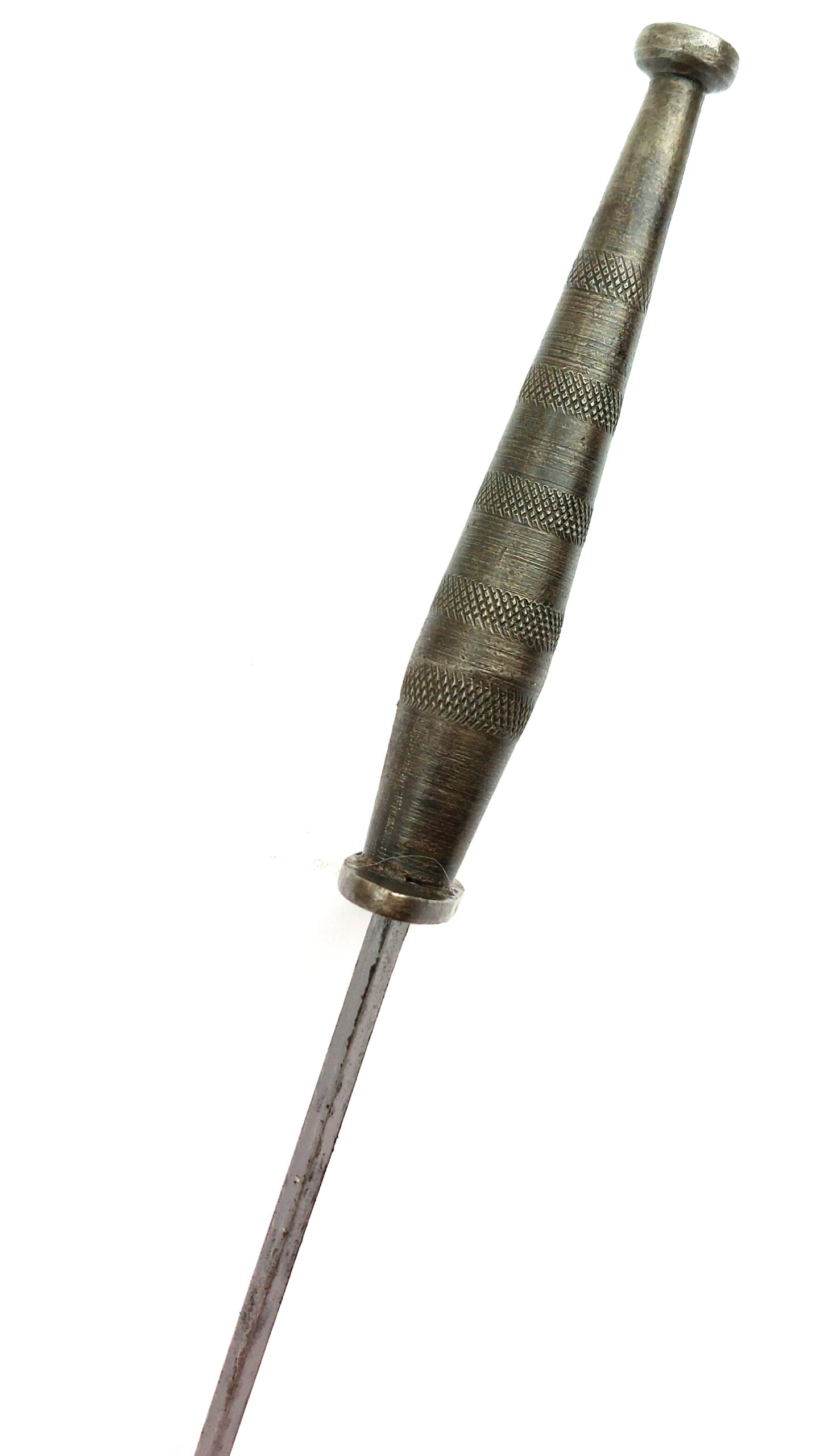
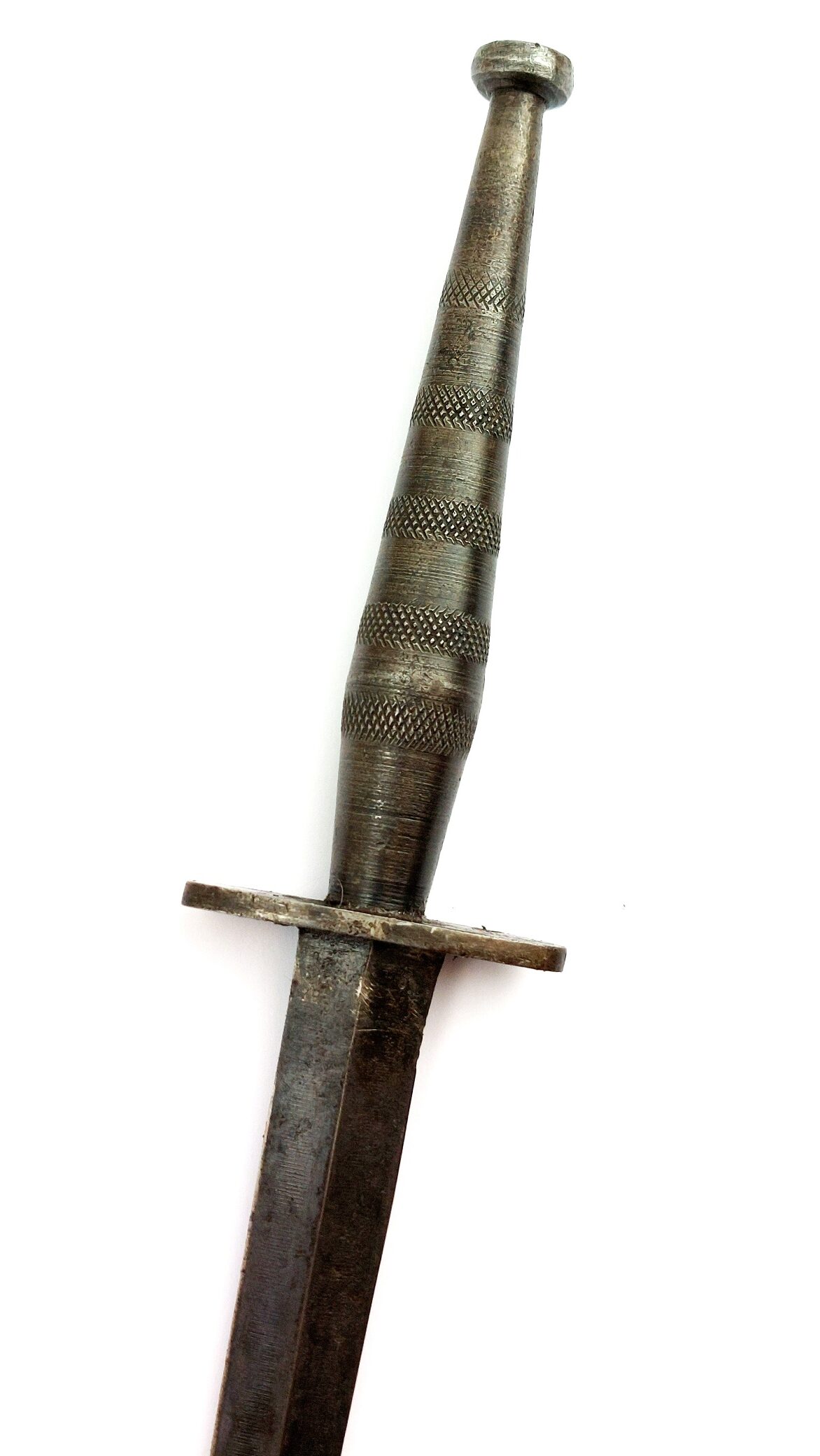
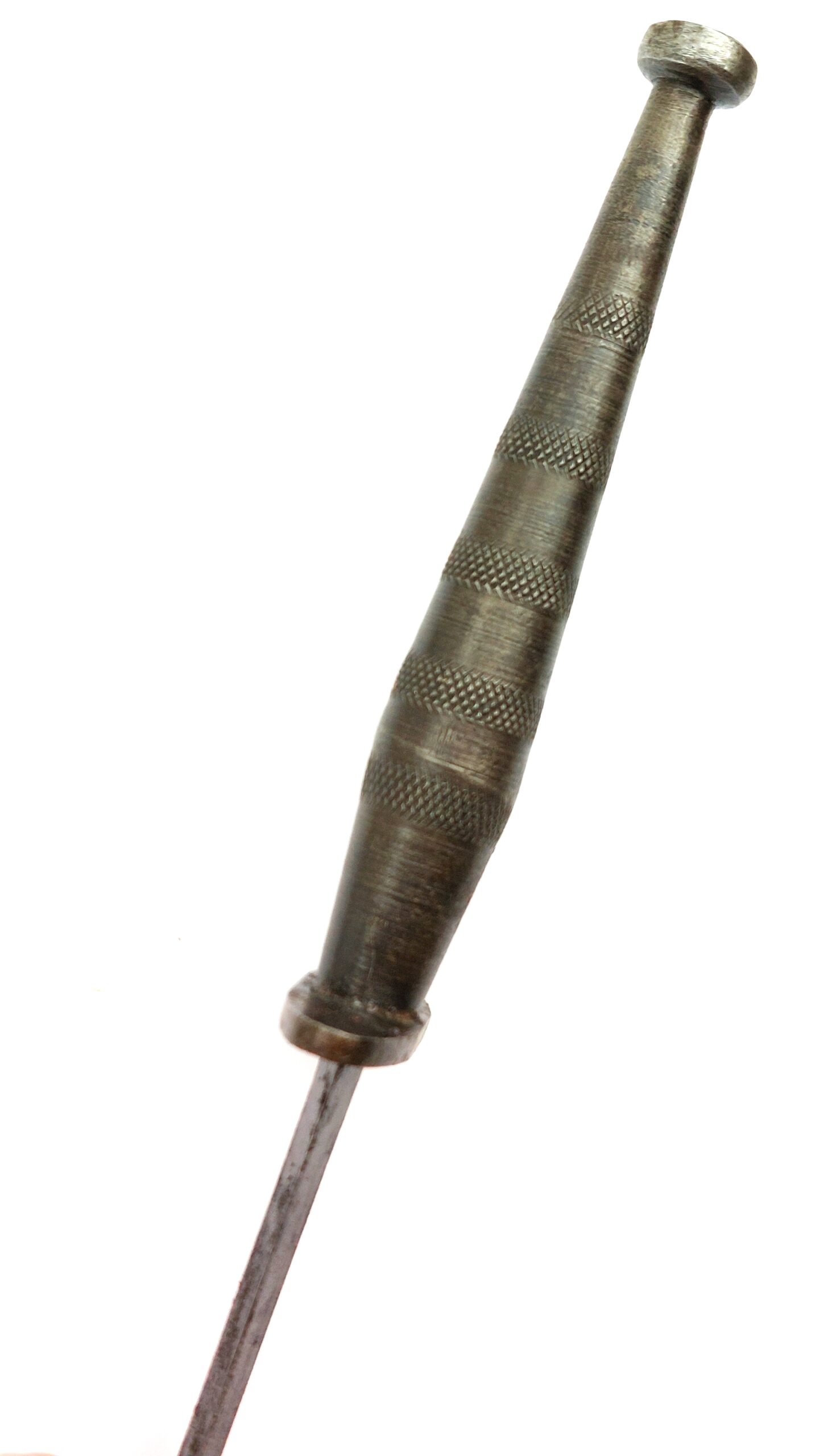
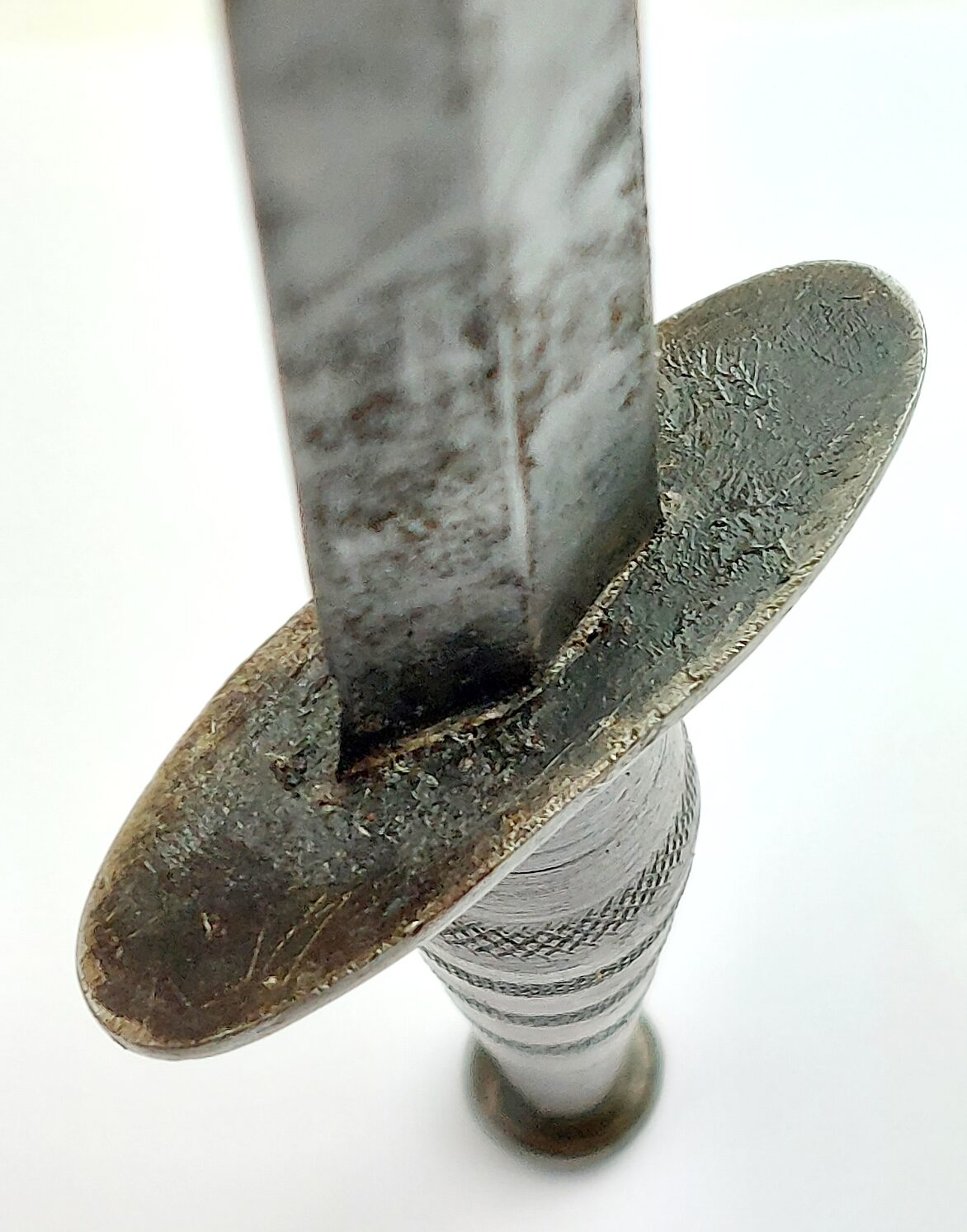
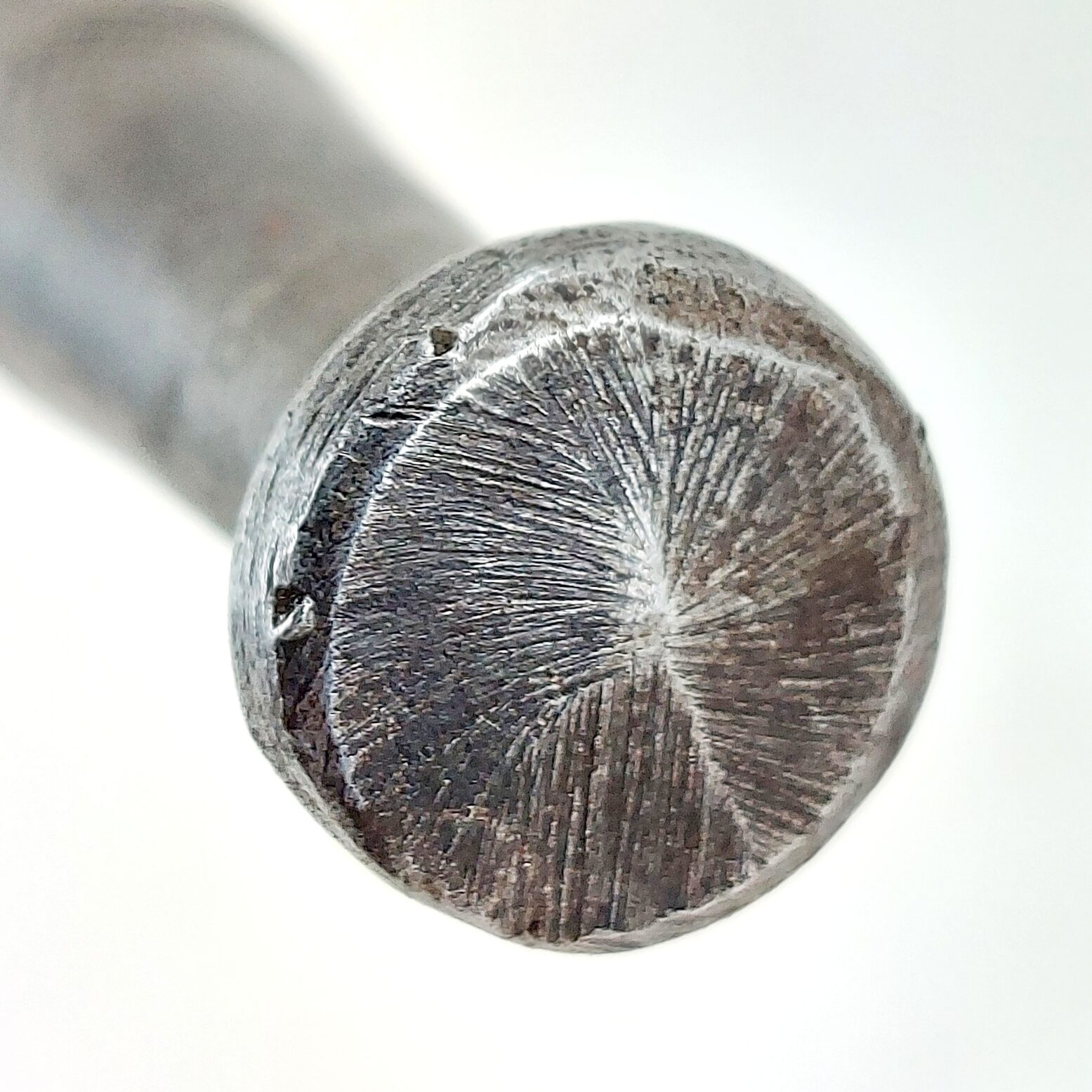
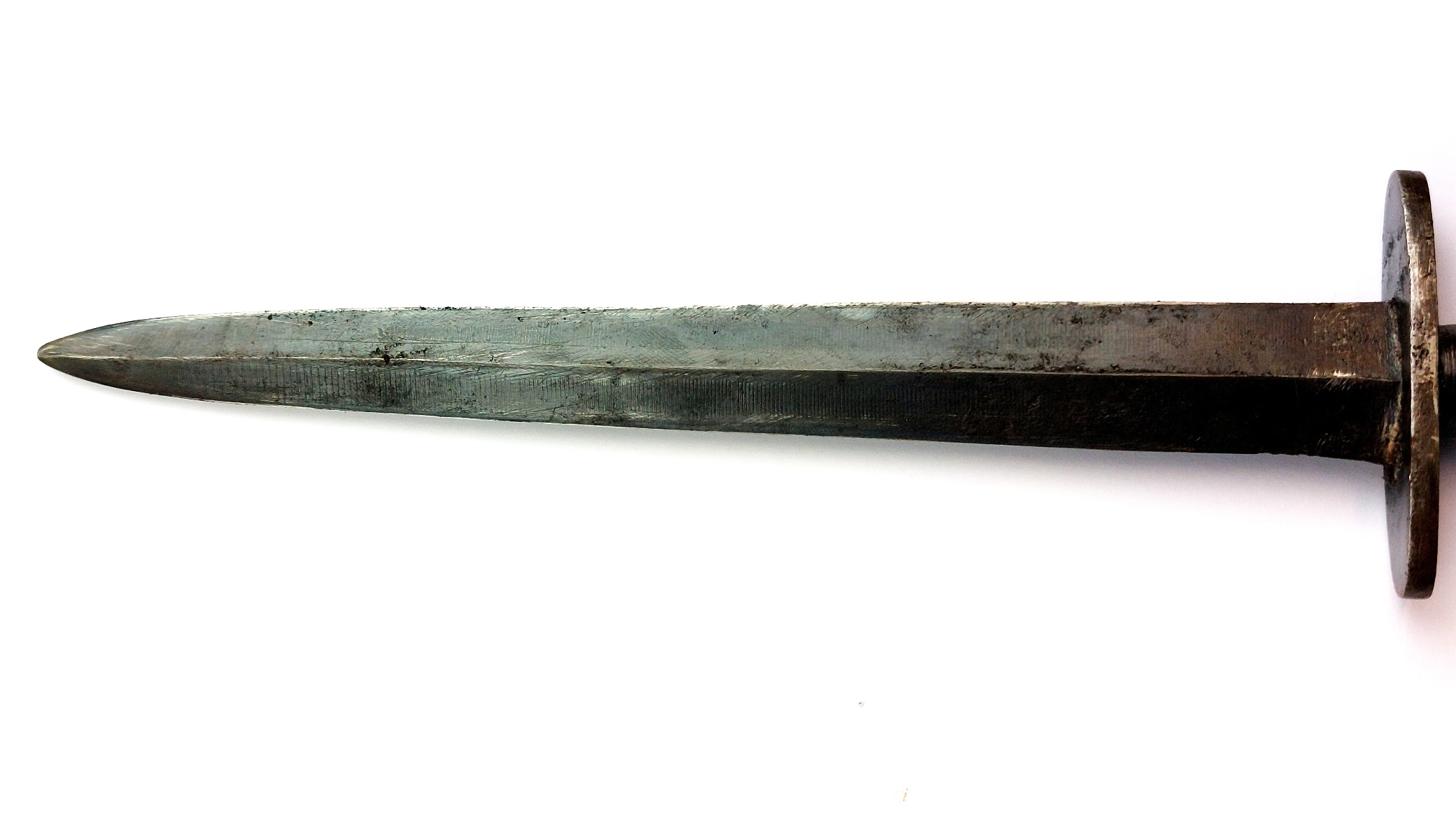
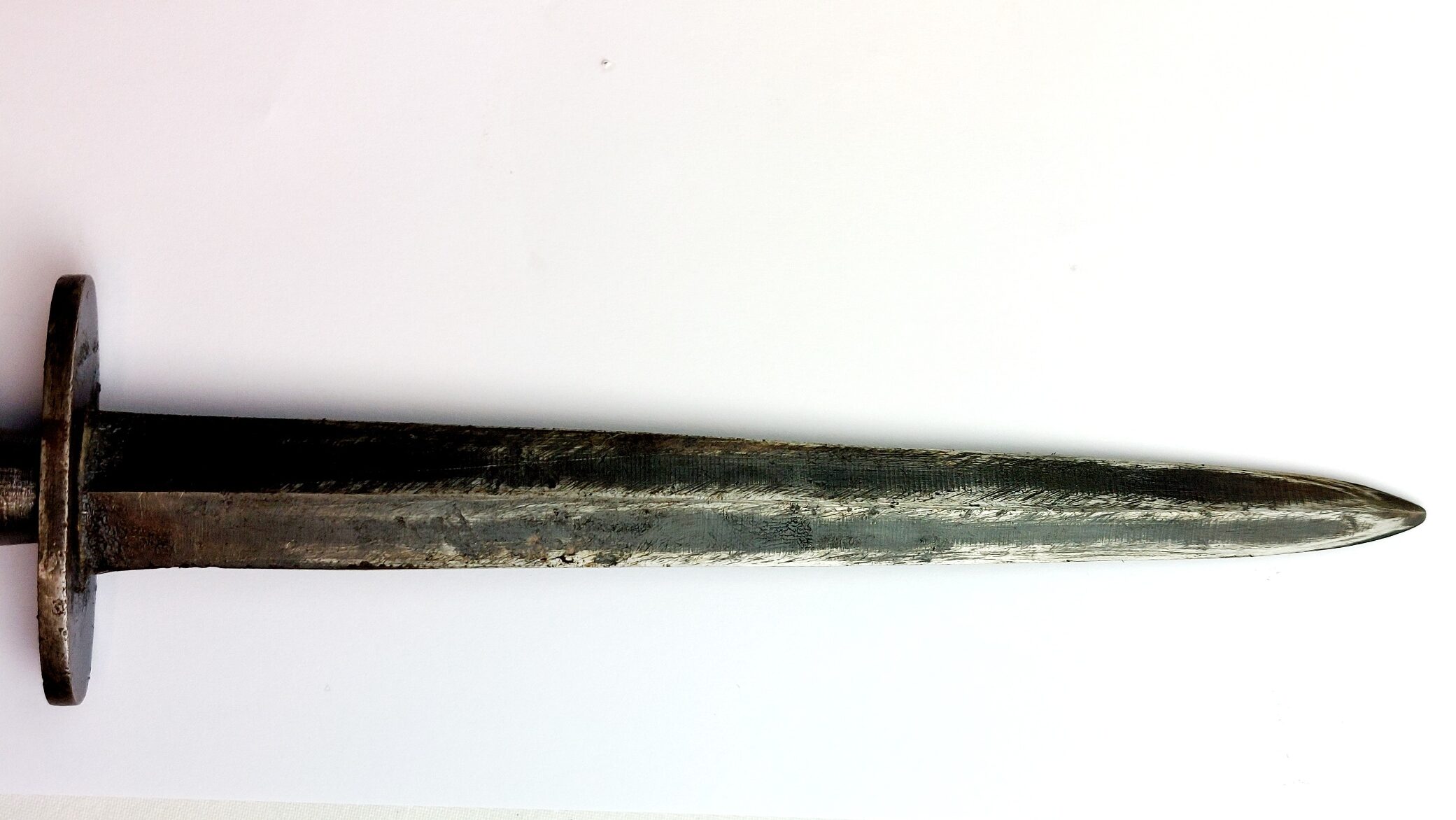
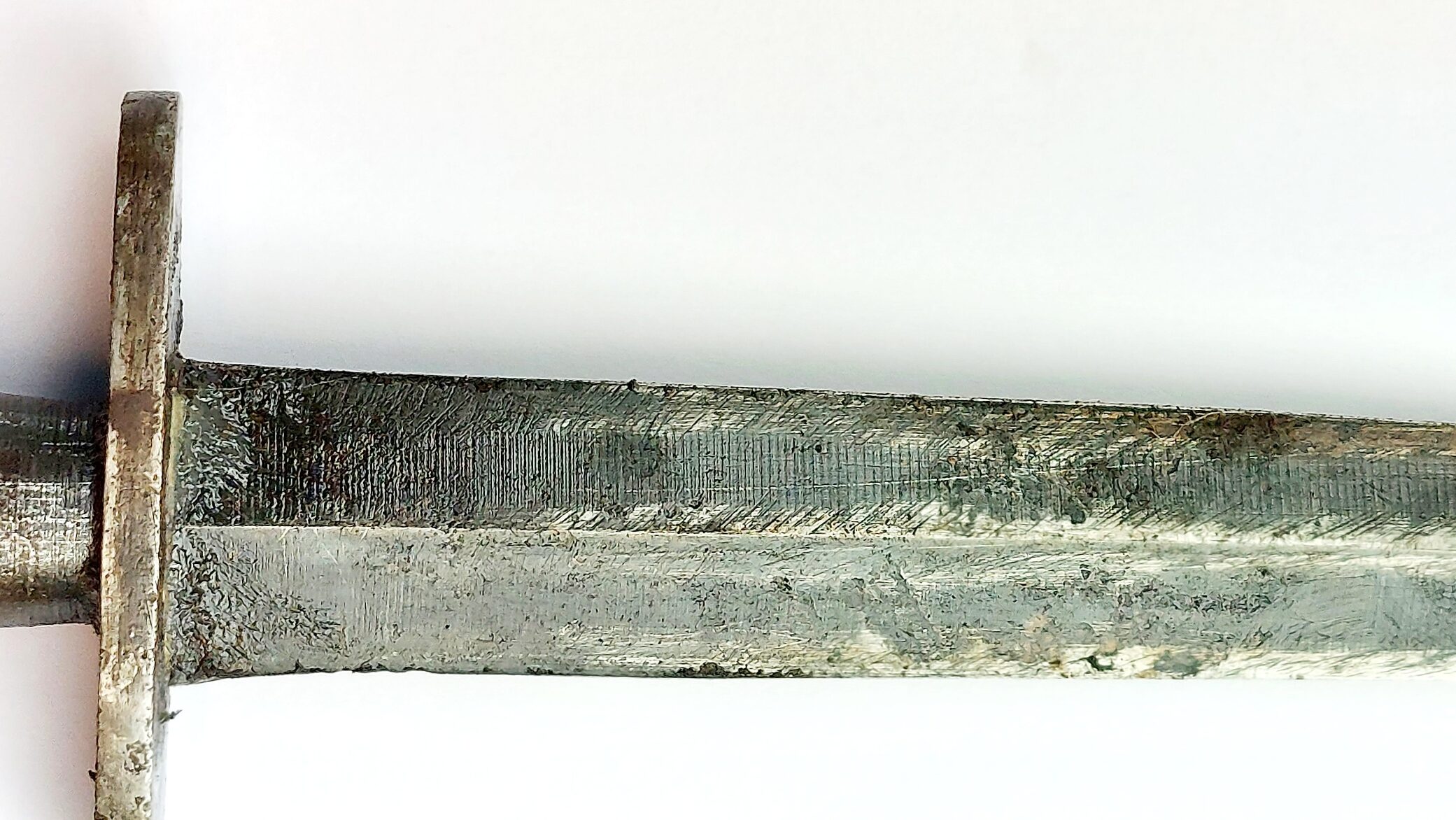
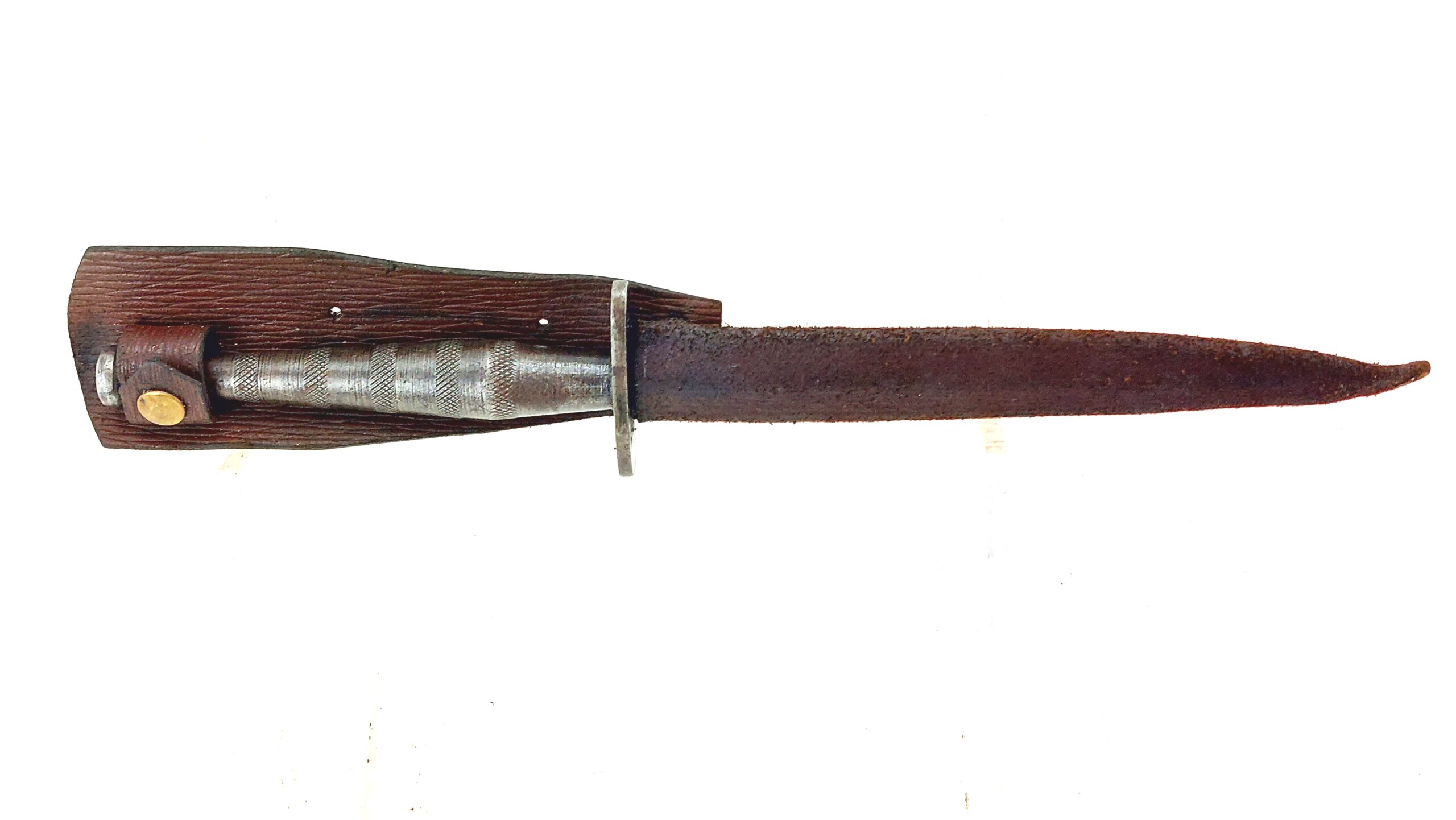
This well-documented “Nail-Head” variant features a solid steel, lathe-turned grip with deep knurled bands, terminating in the characteristic flattened pommel resembling a nail head. The knife follows classic British F-S proportions, with an oval steel guard and a 16.5 cm double-edged stiletto blade showing the correct taper and central bevels.
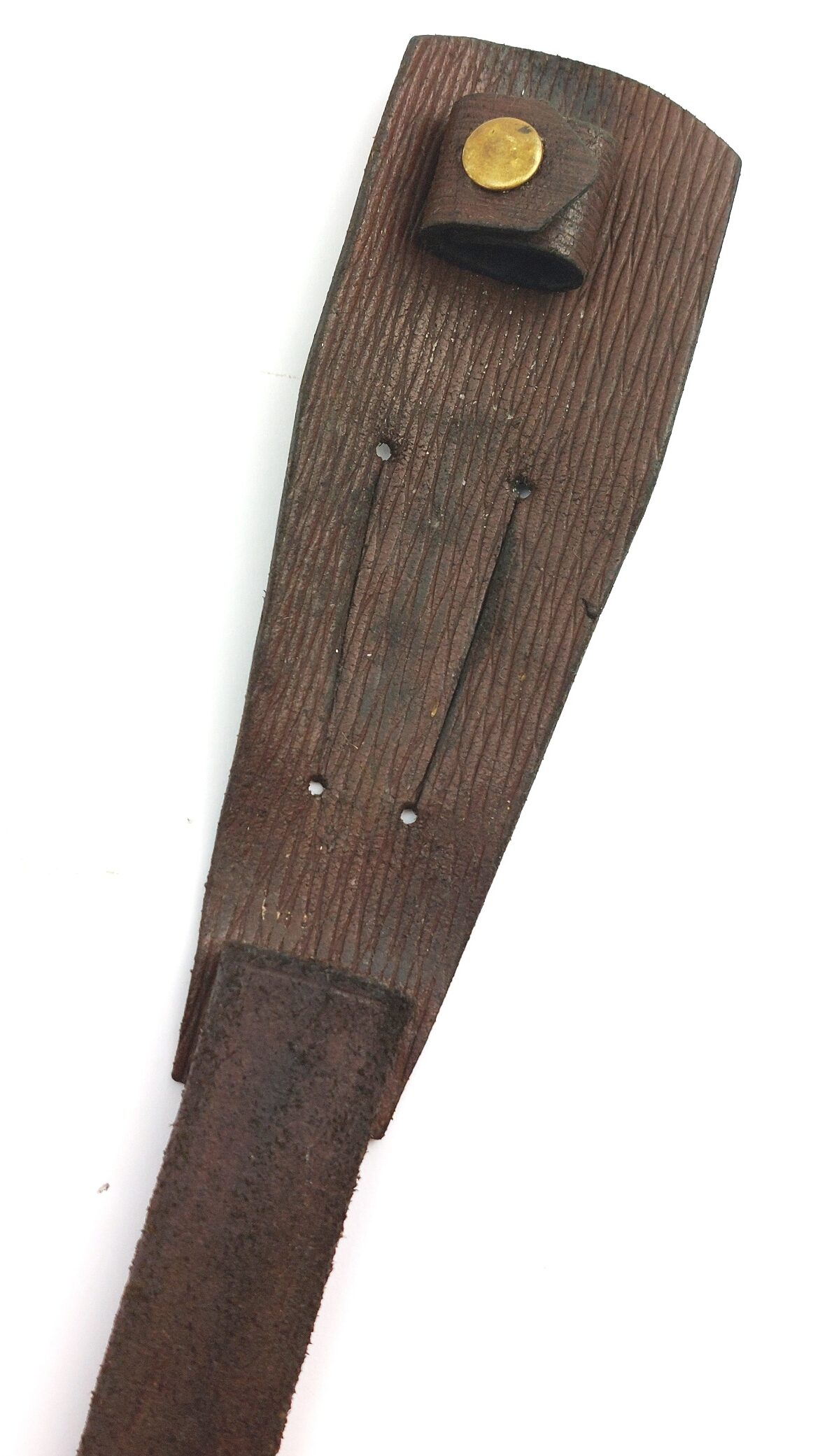
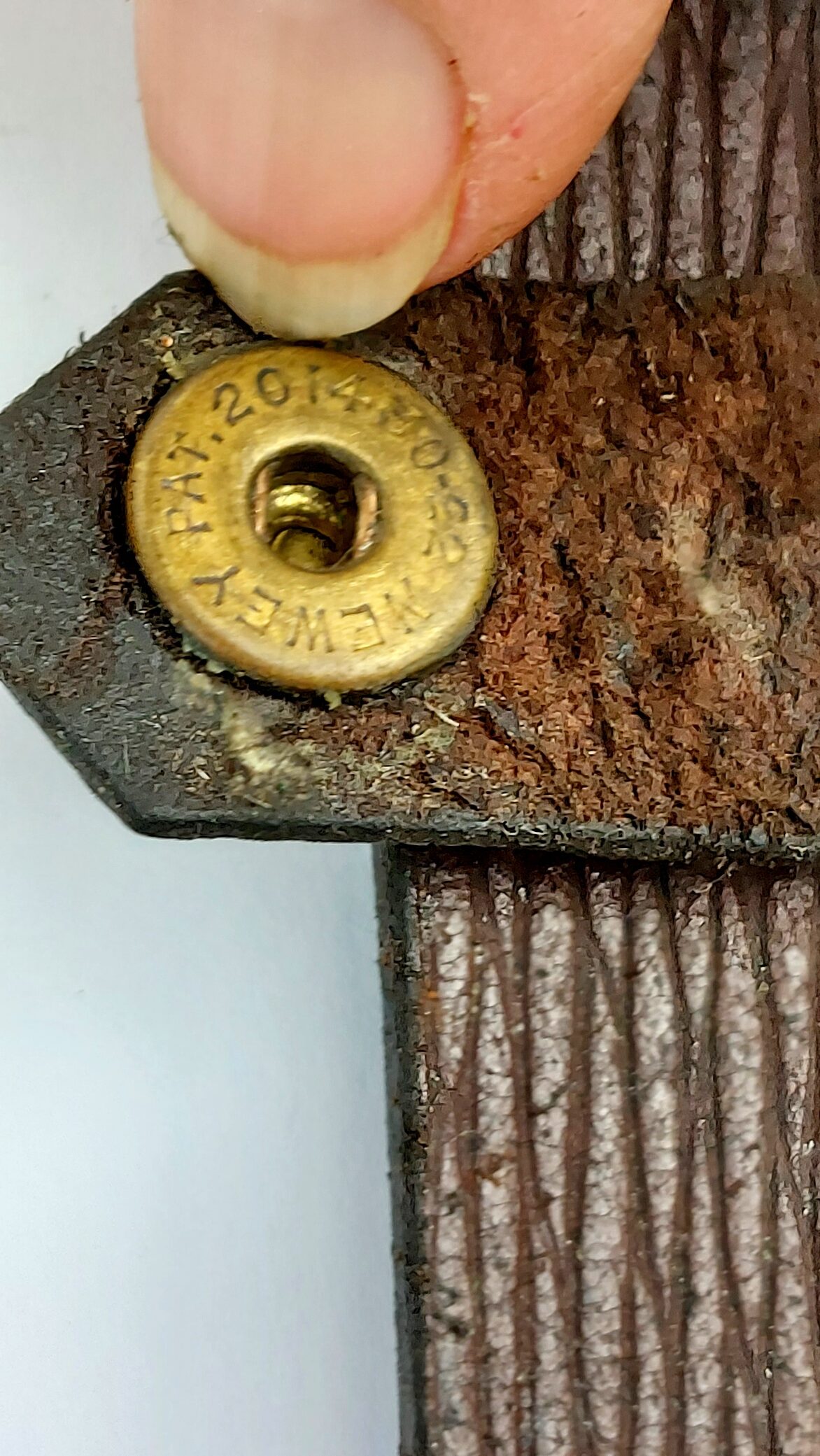
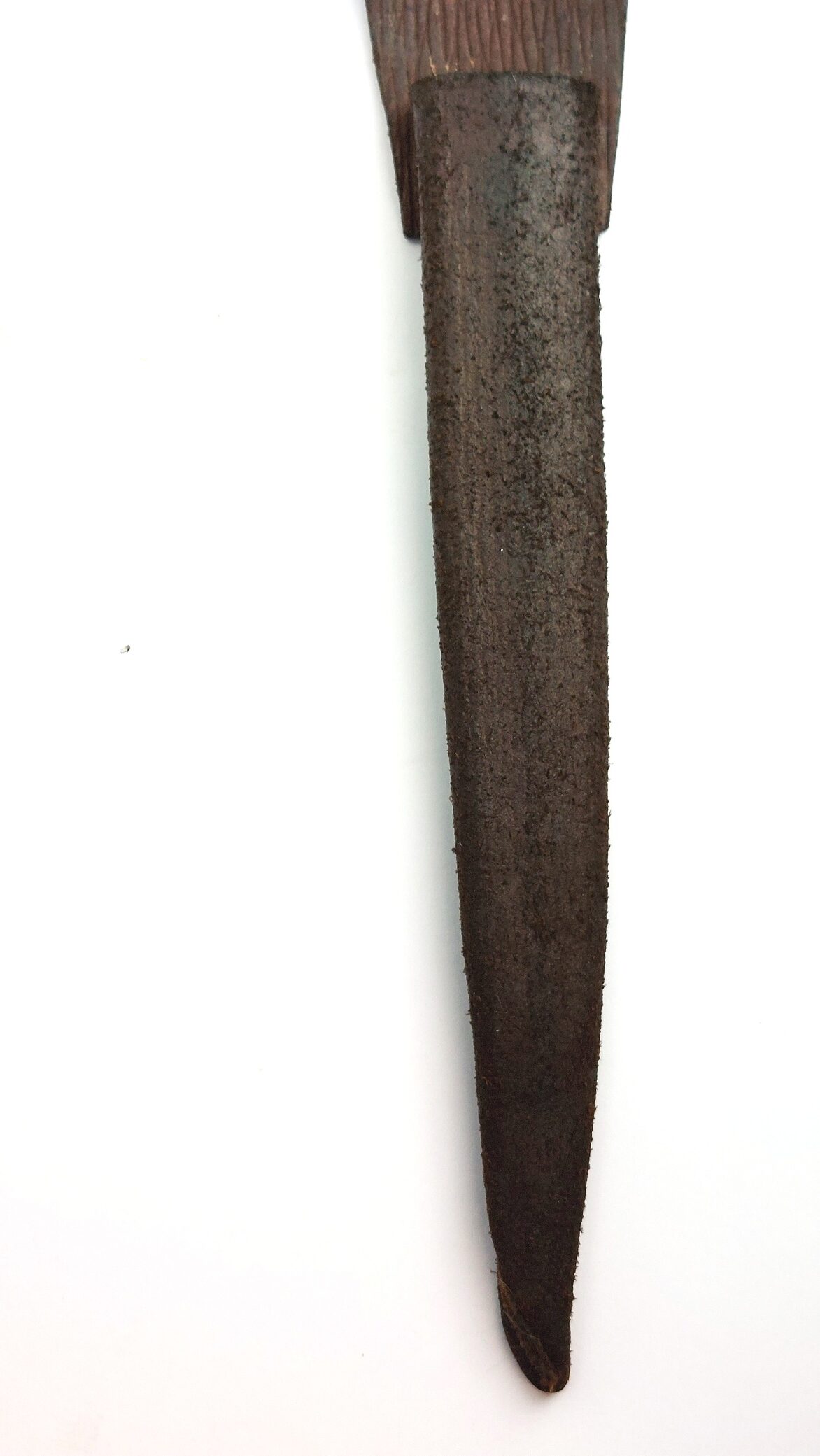
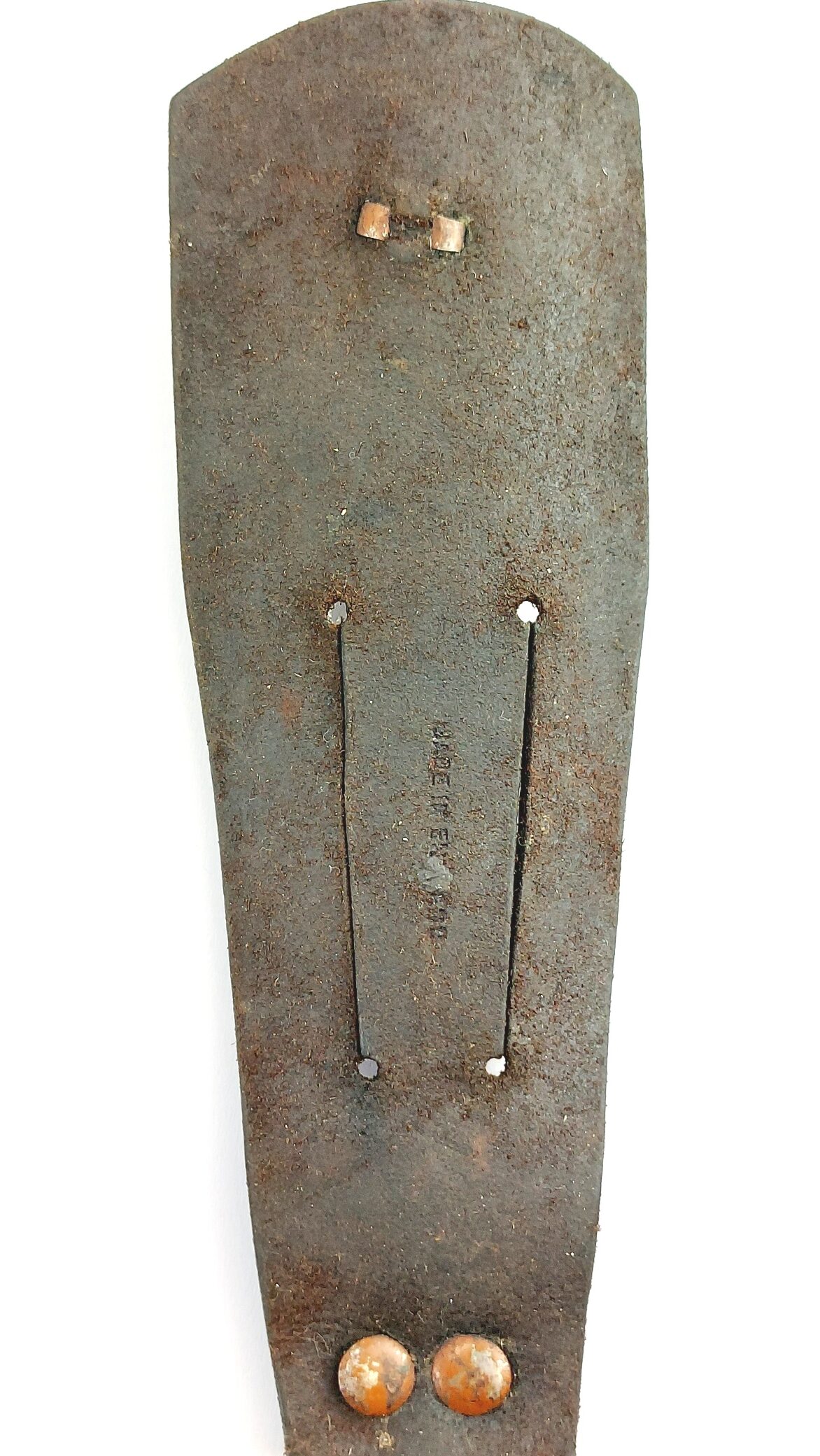
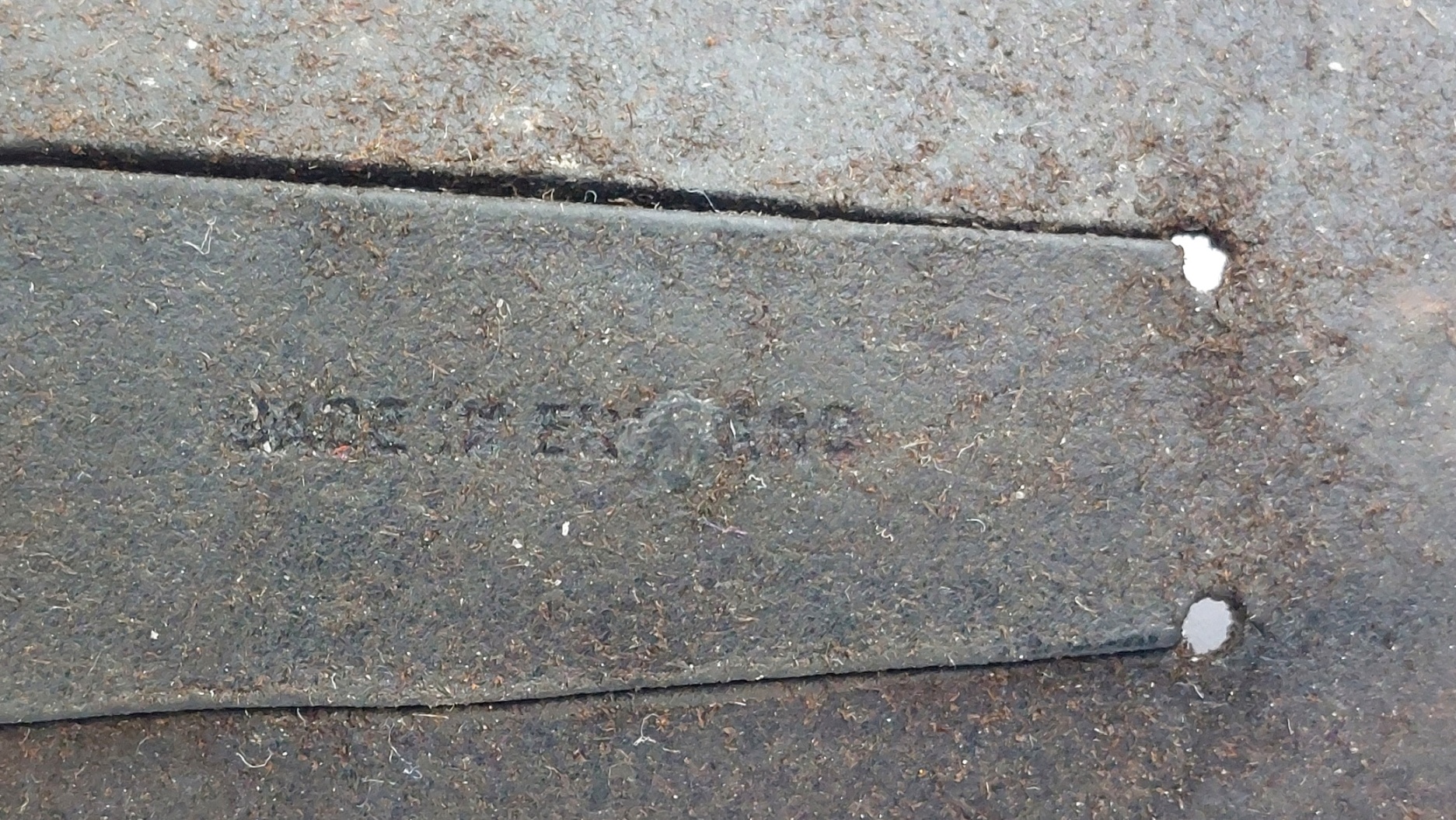
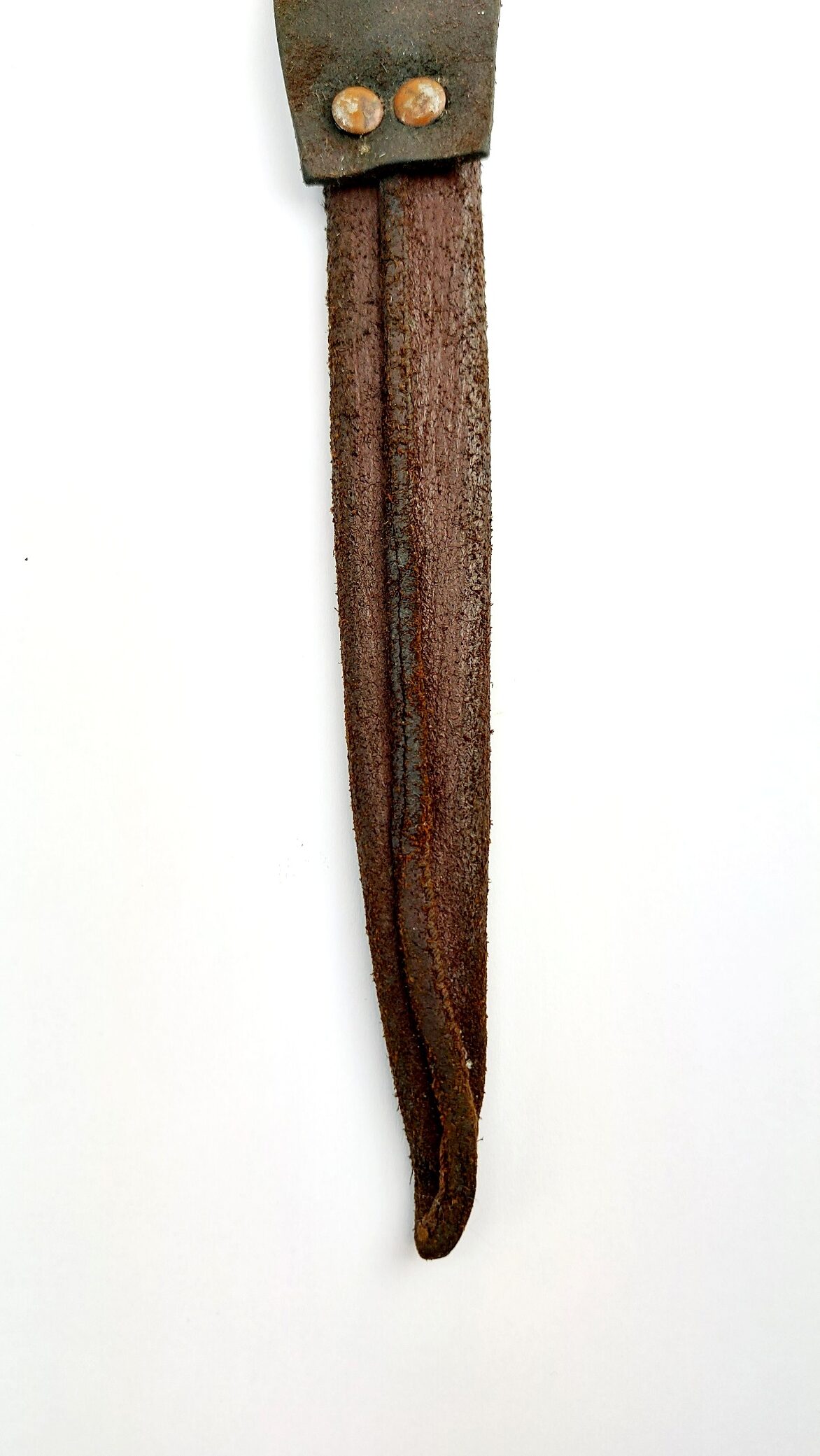
The knife is accompanied by a wartime British-made leather sheath stamped “MADE IN ENGLAND” and fitted with a Newey press-stud marked “PAT. 2014305”, fully correct for 1930s–40s production. The “Nail-Head” SOE knives are widely believed to have been parachute-dropped into France without scabbards, but other historians like Olof Janson, state that this type of sheath -with its patterned criss-cross leather- is the correct sheath for this French Resistance knife. Either way, this is an an entirely plausible wartime pairing, consistent with the wide variety of sheath combinations documented across Fairbairn-Sykes fighting knives in both military and Resistance collections.
Approx. Measurements: Blade length: 16.5 cm. Overall length: 28.4 cm
Historical Note: These very special daggers were used by French Resistance fighters—the Maquis—while operating with direct support from Special Operations Executive (SOE) agents of Britain and Office of Strategic Services (OSS) agents of the United States. Within Resistance circles, this all-steel pattern became known colloquially as the “French Nail”, a reference to the distinctive flattened pommel resembling a nail head.
The Maquis were rural guerrilla bands who fought the German occupation from remote forests, mountains and scrubland regions across France. Many early members were young men avoiding forced labour drafts; by 1943–44 these groups had grown into organised, heavily armed formations working in close partnership with SOE and OSS missions inserted into France. Their operations included railway sabotage, ambushes, assassinations, rescue of Allied airmen, and coordinated uprising activities ahead of the Allied landings.
The all-steel “Nail-Head” Fairbairn-Sykes variant was designed specifically for clandestine supply: simple to manufacture, robust, and fully suited to close-quarters work. Produced in England in significant numbers, these knives were packed into SOE weapons containers and parachute-dropped into occupied France, often alongside Sten guns, explosives, radios and medical supplies. SOE circuits such as Prosper, Jedburgh, Bullfrog, Spindle and others distributed these drops to Maquis groups in Brittany, Normandy, the Vercors, the Limousin and beyond.
Unlike the locally made French workshop daggers—many of which show cast grips, soft tooling lines or inconsistent blade geometry—the British-made Nail-Head knives follow precise Fairbairn-Sykes proportions and machining. This makes them one of the most recognisable and collectible sub-types in the entire F-S family.
Documented examples appear in several respected sources, including: • FairbairnSykesFightingKnives.com (“Nail-Head” section) • Musée de la Résistance collections in France • Verified Vercors and Normandy resistance cache recoveries • Known SOE liaison bring-backs, recorded in post-war veteran groupings
Surviving examples are exceptionally scarce today—far rarer than standard Mk.I–III British Fairbairn-Sykes knives—and are highly sought after by collectors for their direct connection to Resistance operations and Allied clandestine warfare.
*Condition* The dagger is in excellent, honest wartime condition. The blade retains its proper stiletto profile with darkened finish, isolated patina, and light period sharpening. The guard shows age patination and hand-finished tool marks. The grip displays crisp, undamaged knurling, and the pommel remains cleanly peened and untouched. The accompanying original sheath shows minor signs of age and handling wear. Please see photographs as part of the condition report.
*In order to complete the online purchase we will require a picture/scan of a photo ID (Driving Licence, Passport or an official document with a recent picture). If you don't posses any such document please call to buy. If we consider that the proof of ID is incorect or insuficient, we reserve the right to cancel the transaction.
*We also reserve the right to cancel the transaction with a full refund if there is any suspicion that the provided item will be used in any way contrary to the laws and legislation of UK.