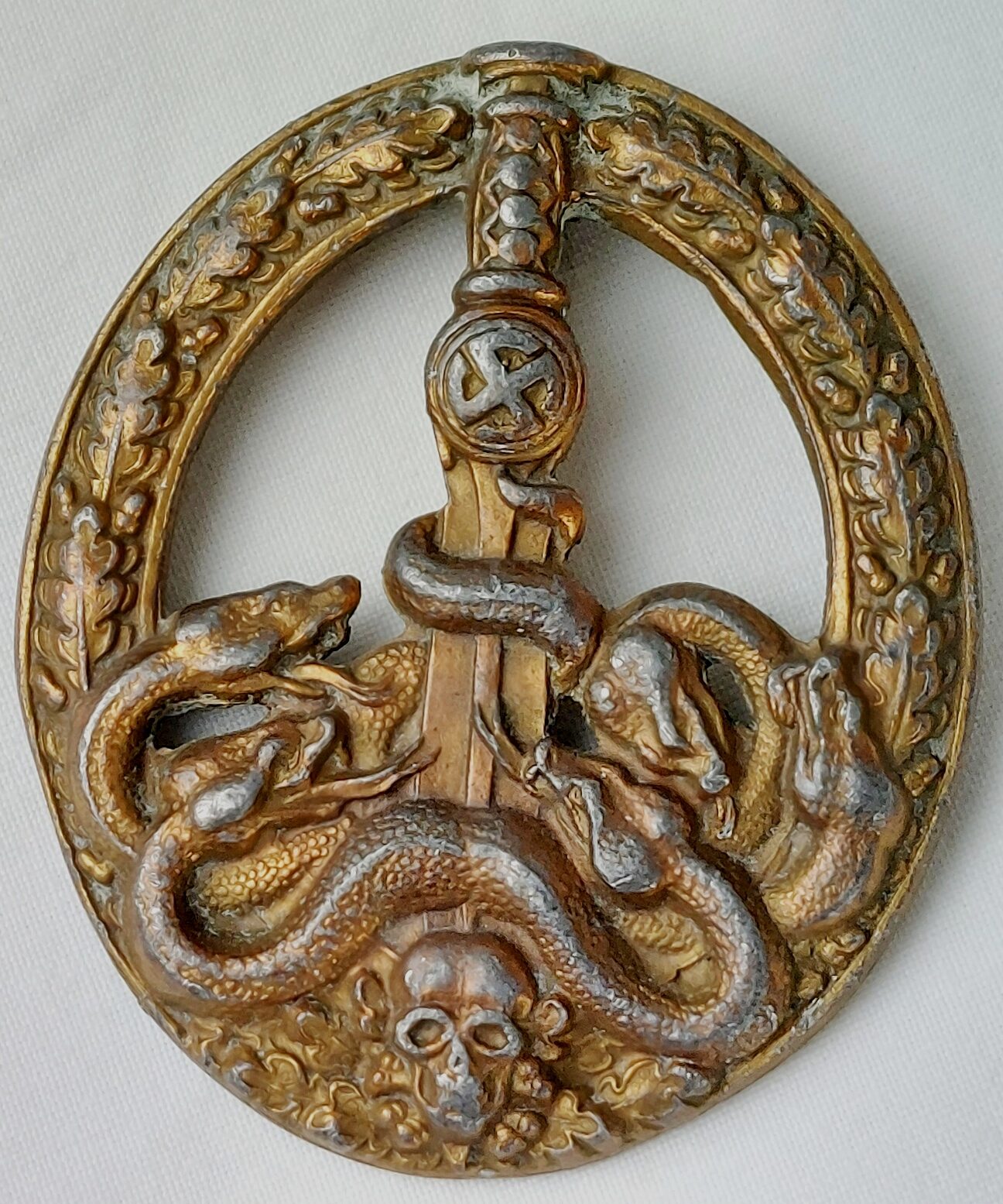
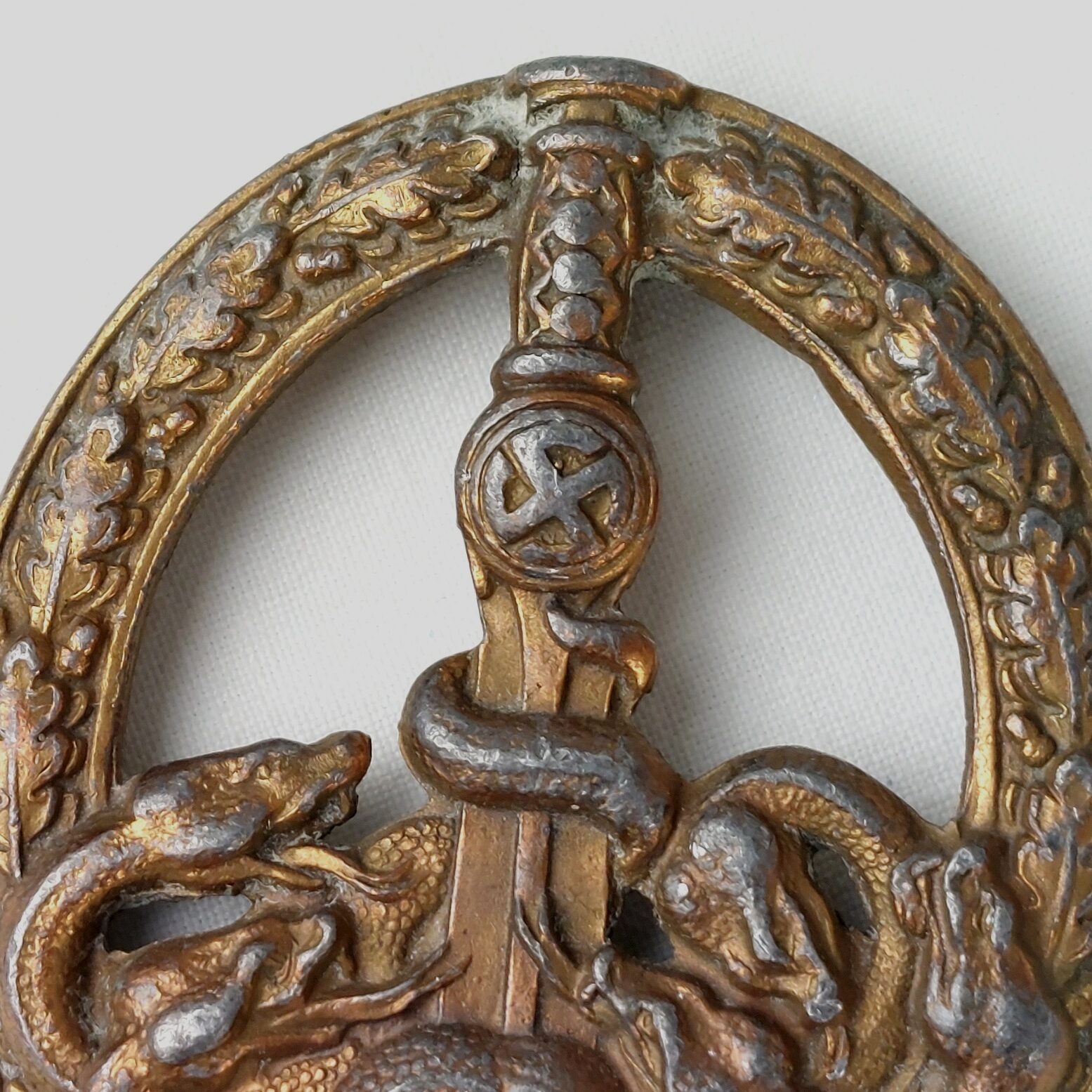
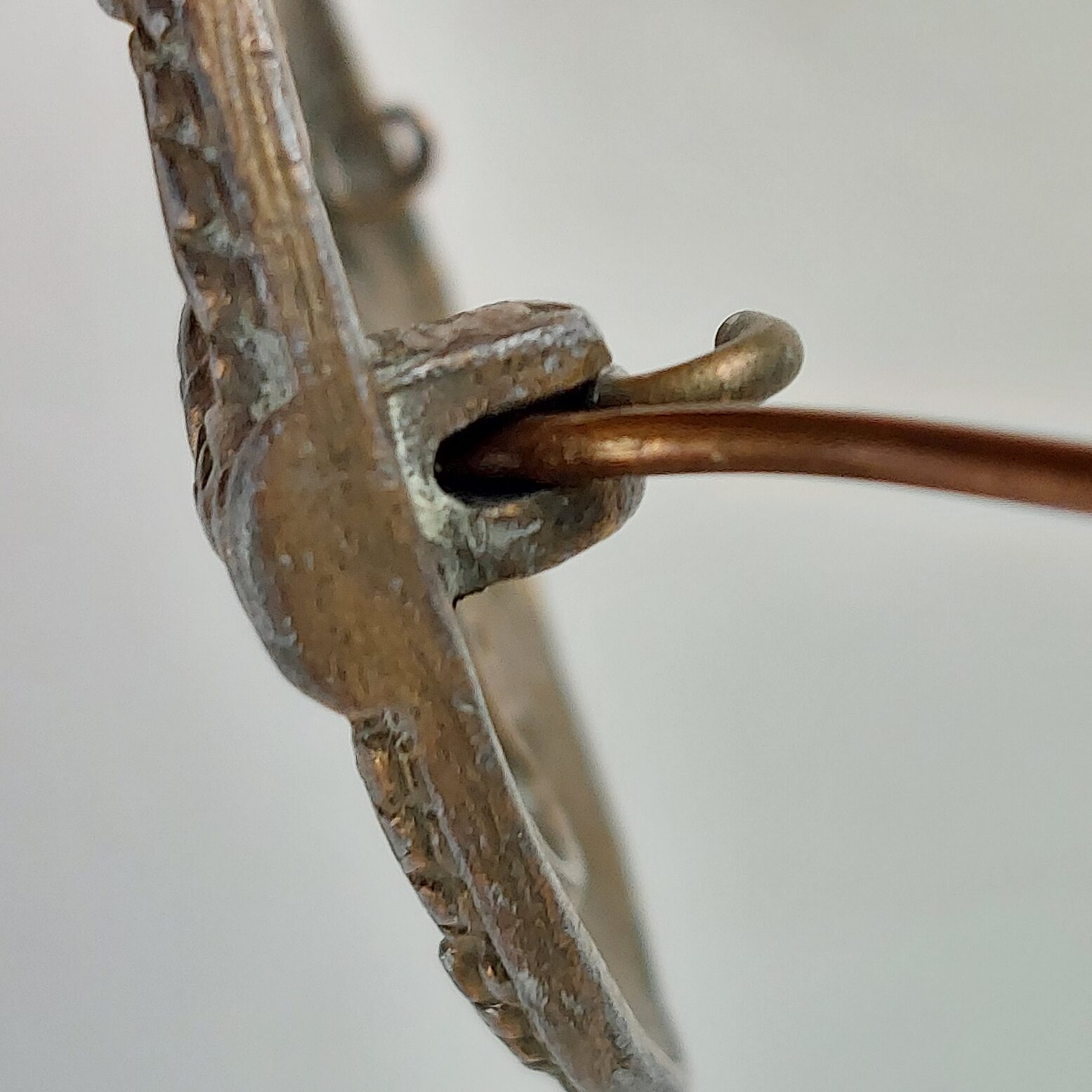
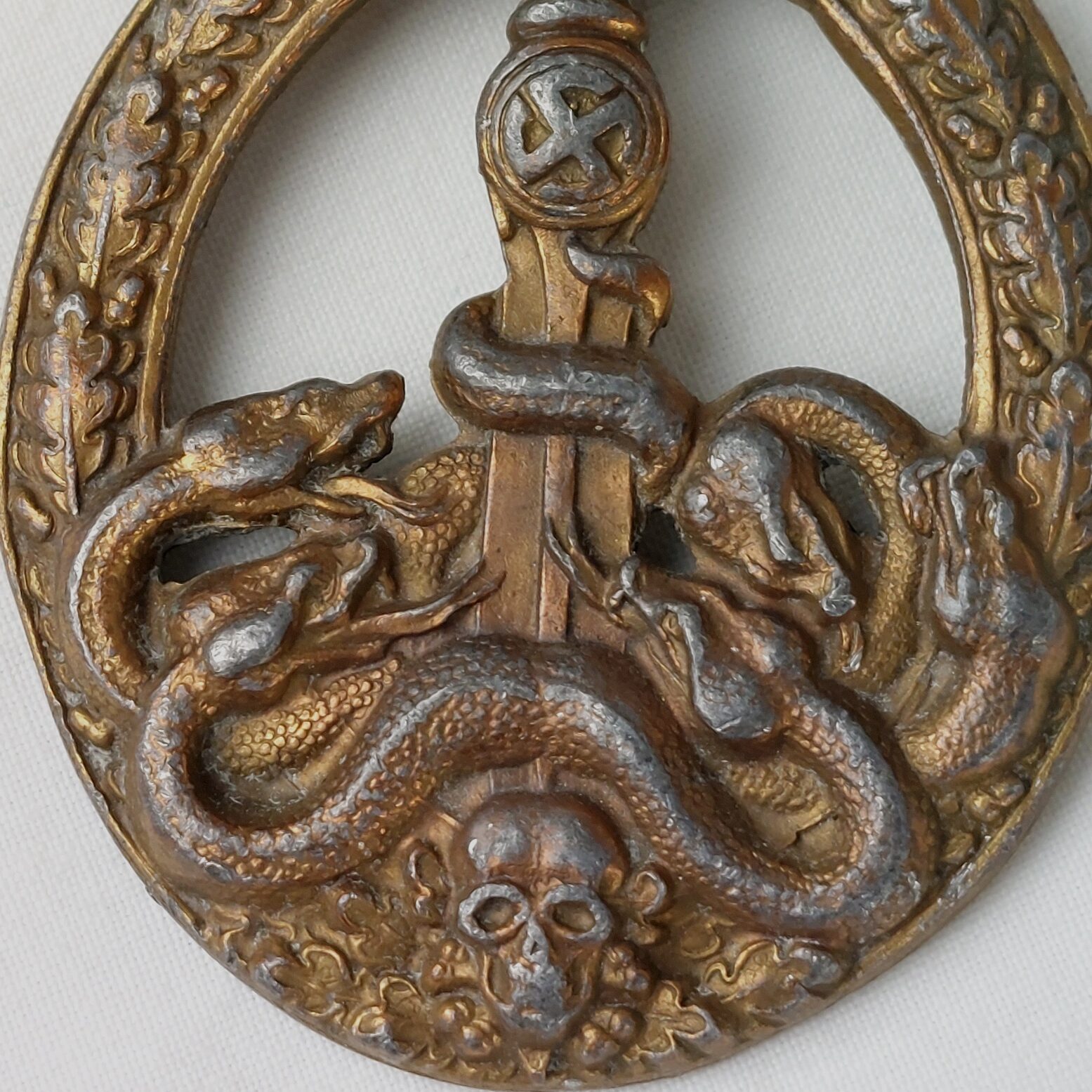
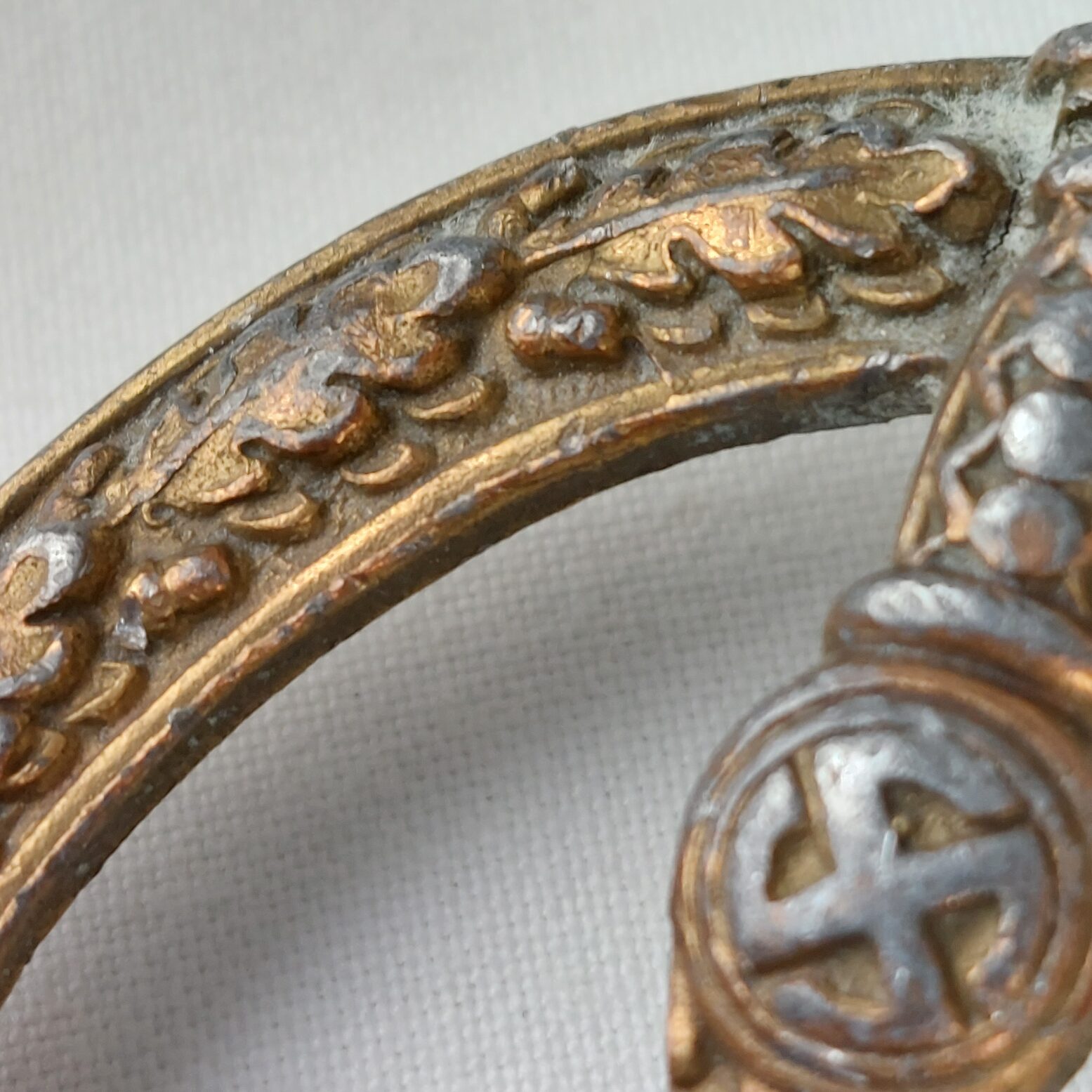
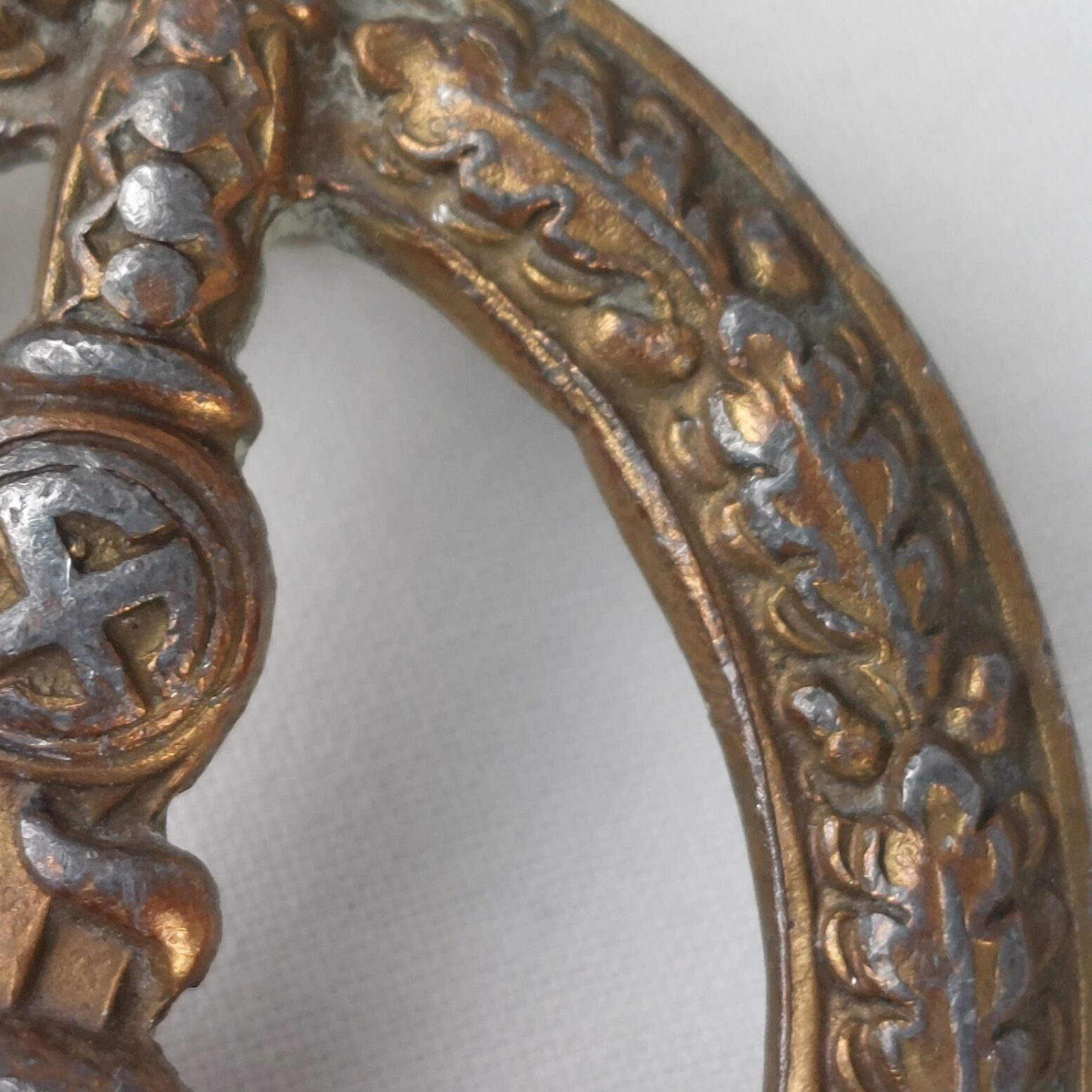
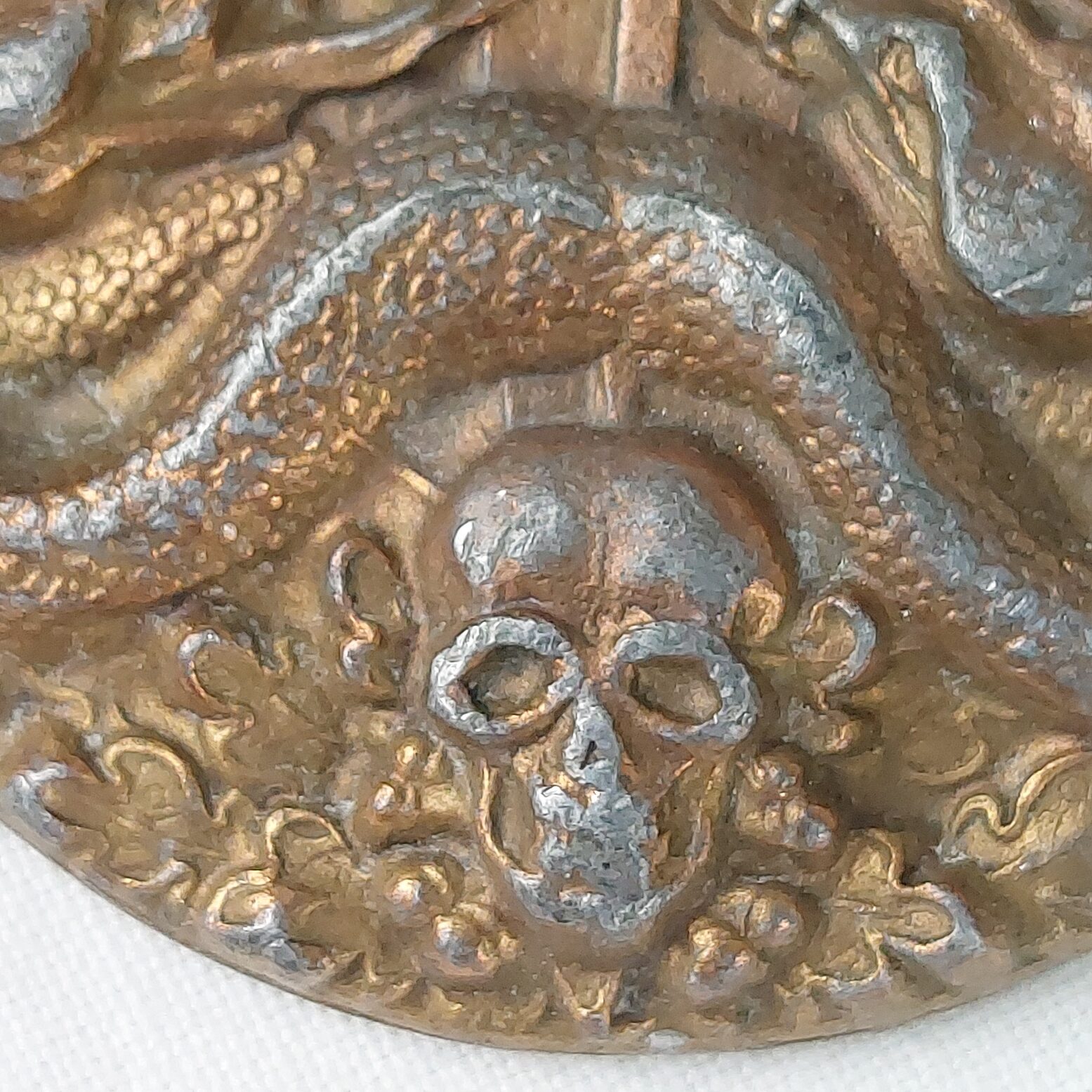
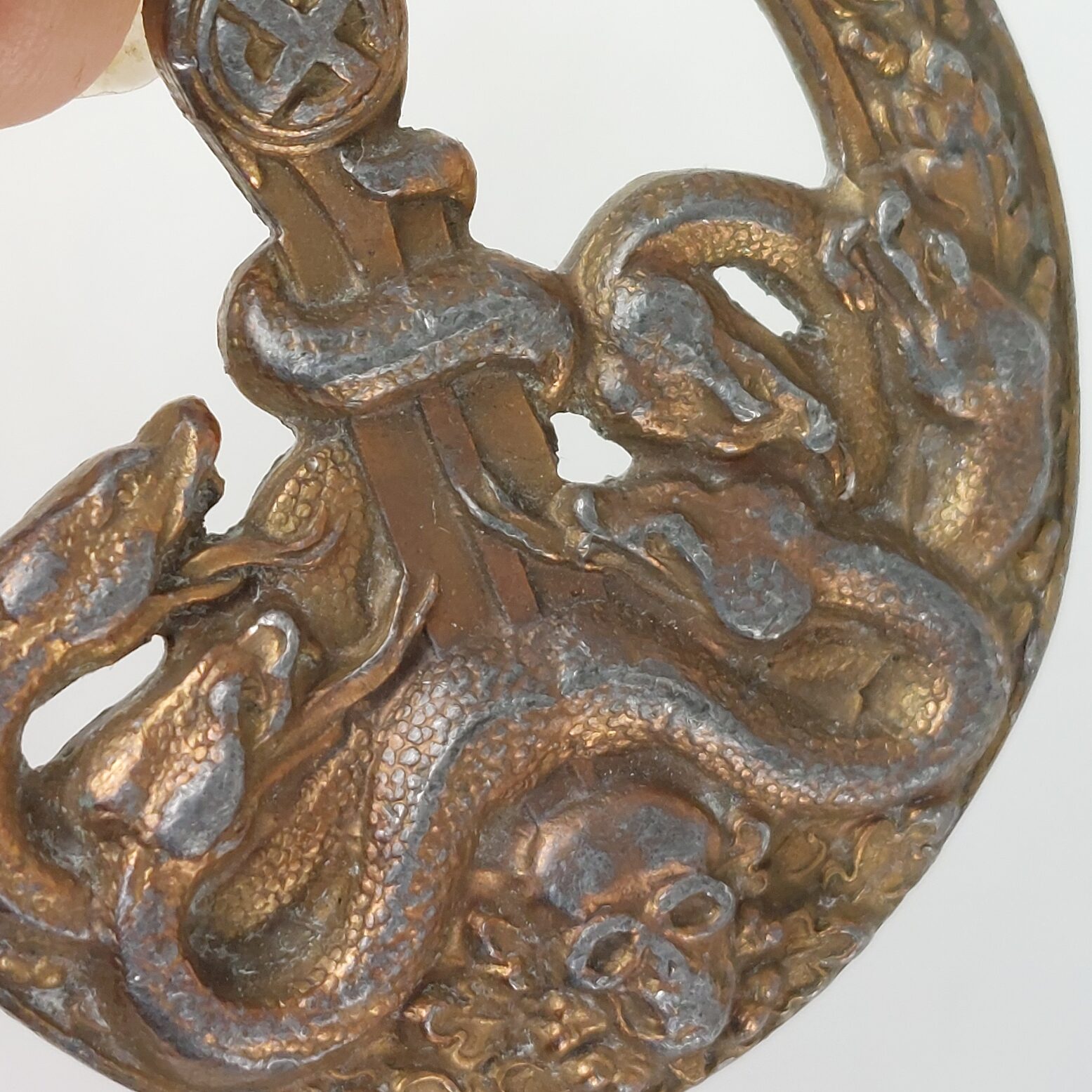
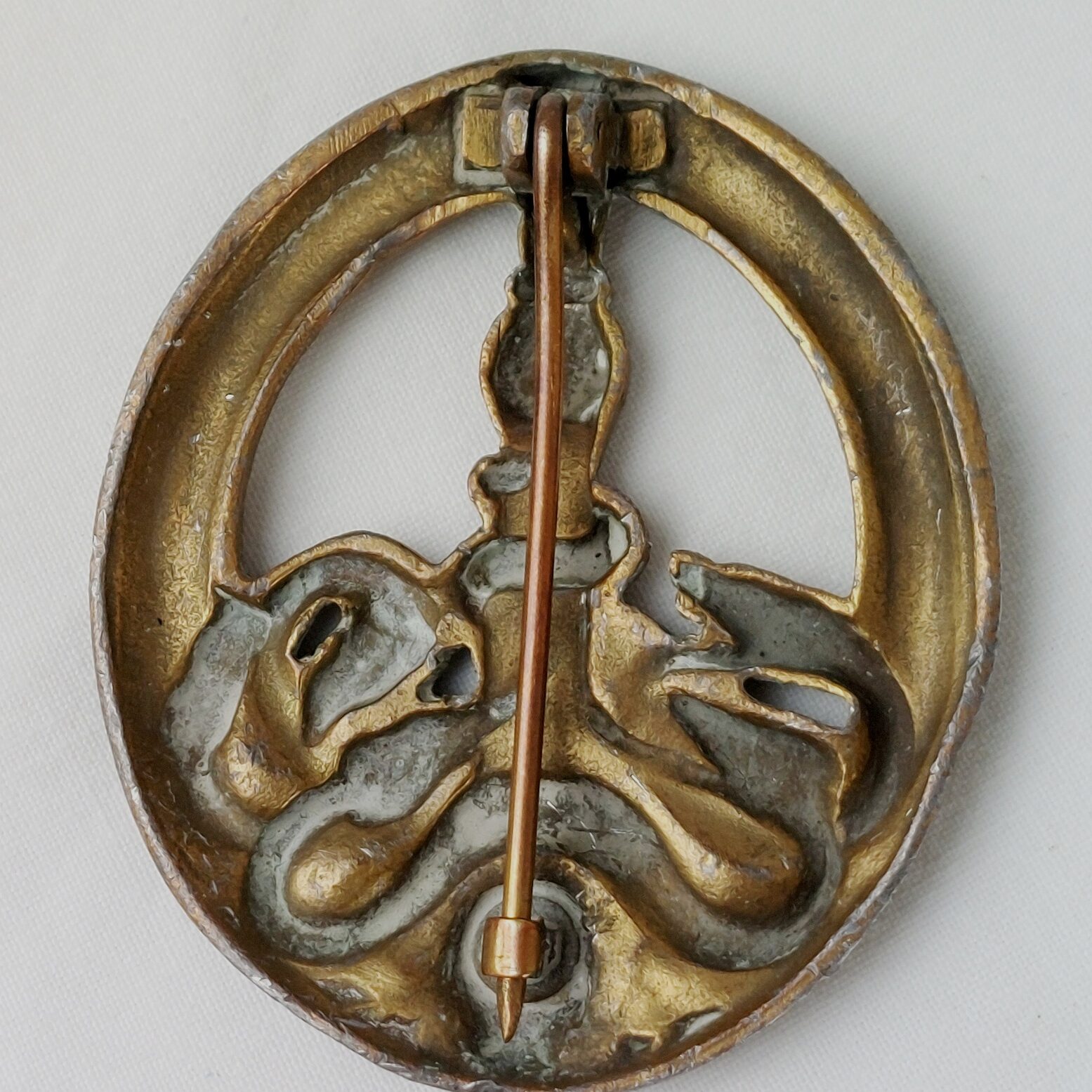
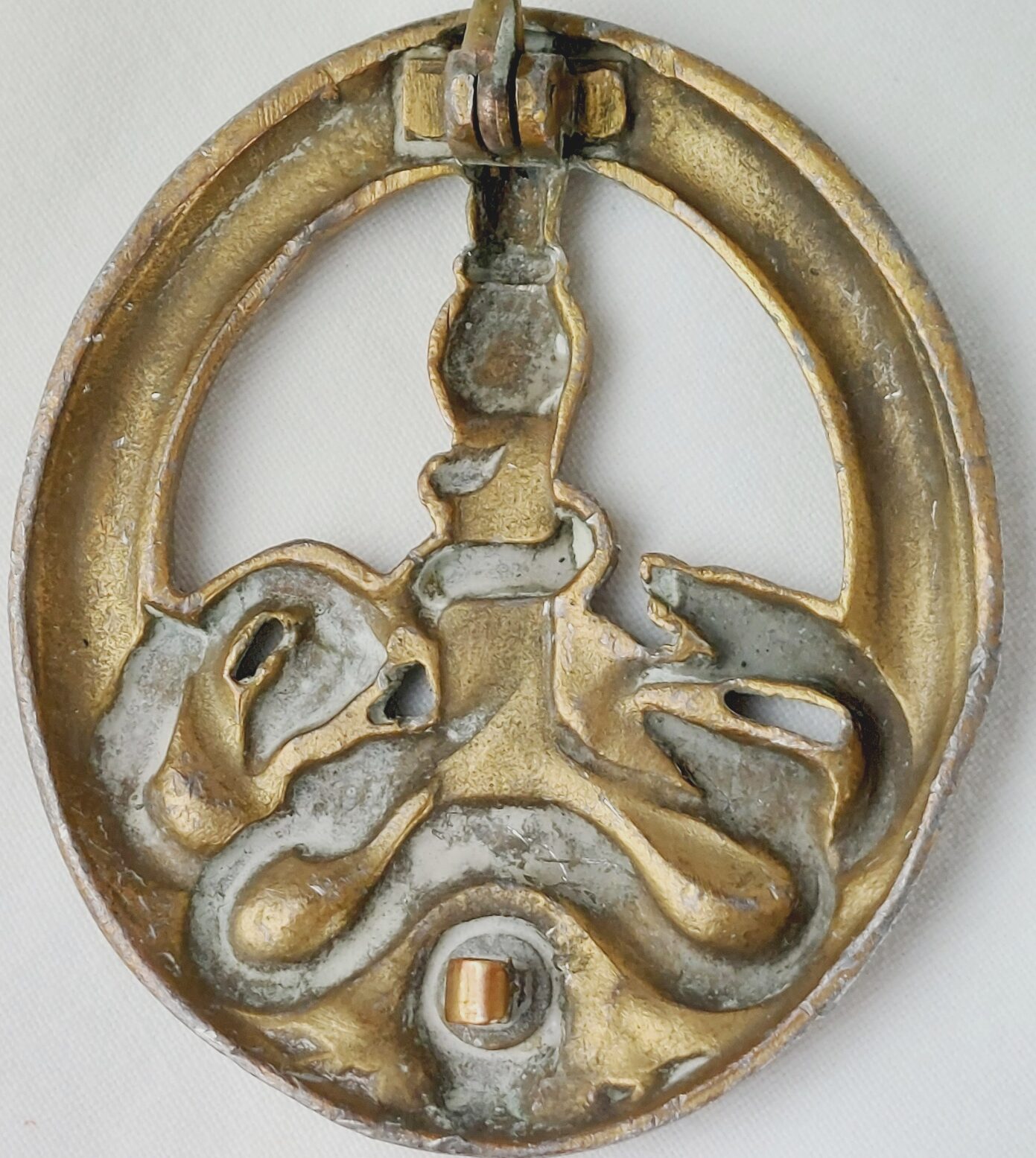
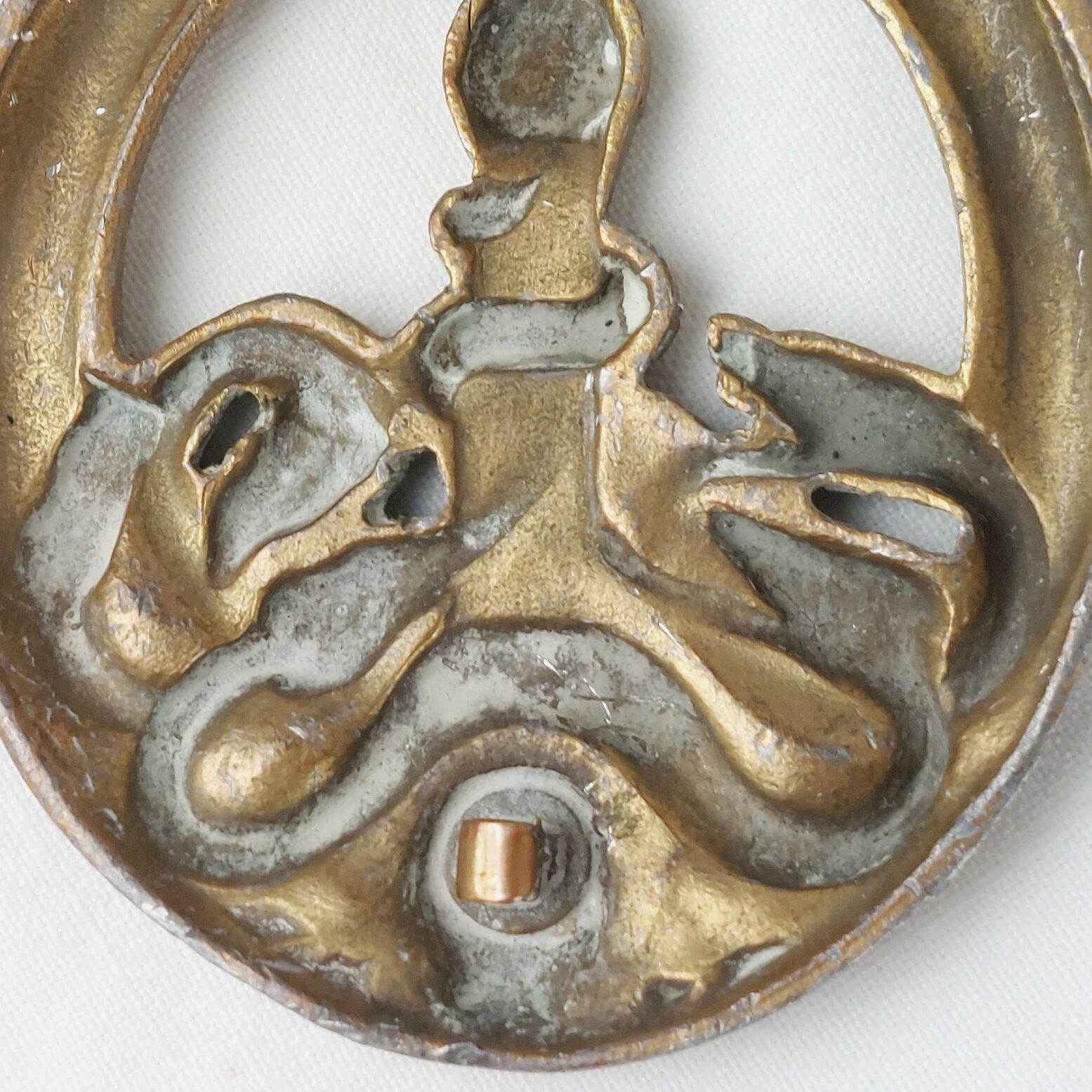
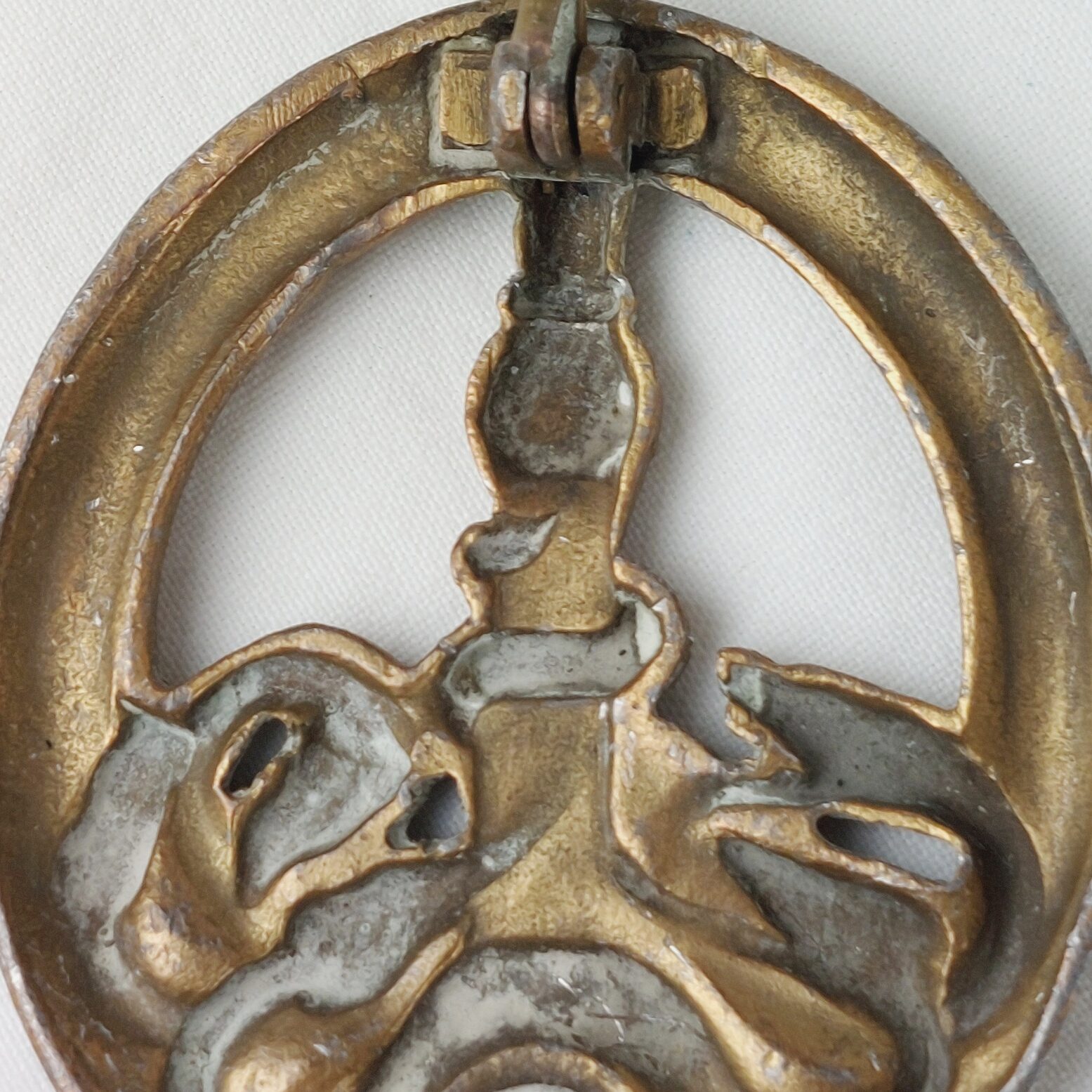
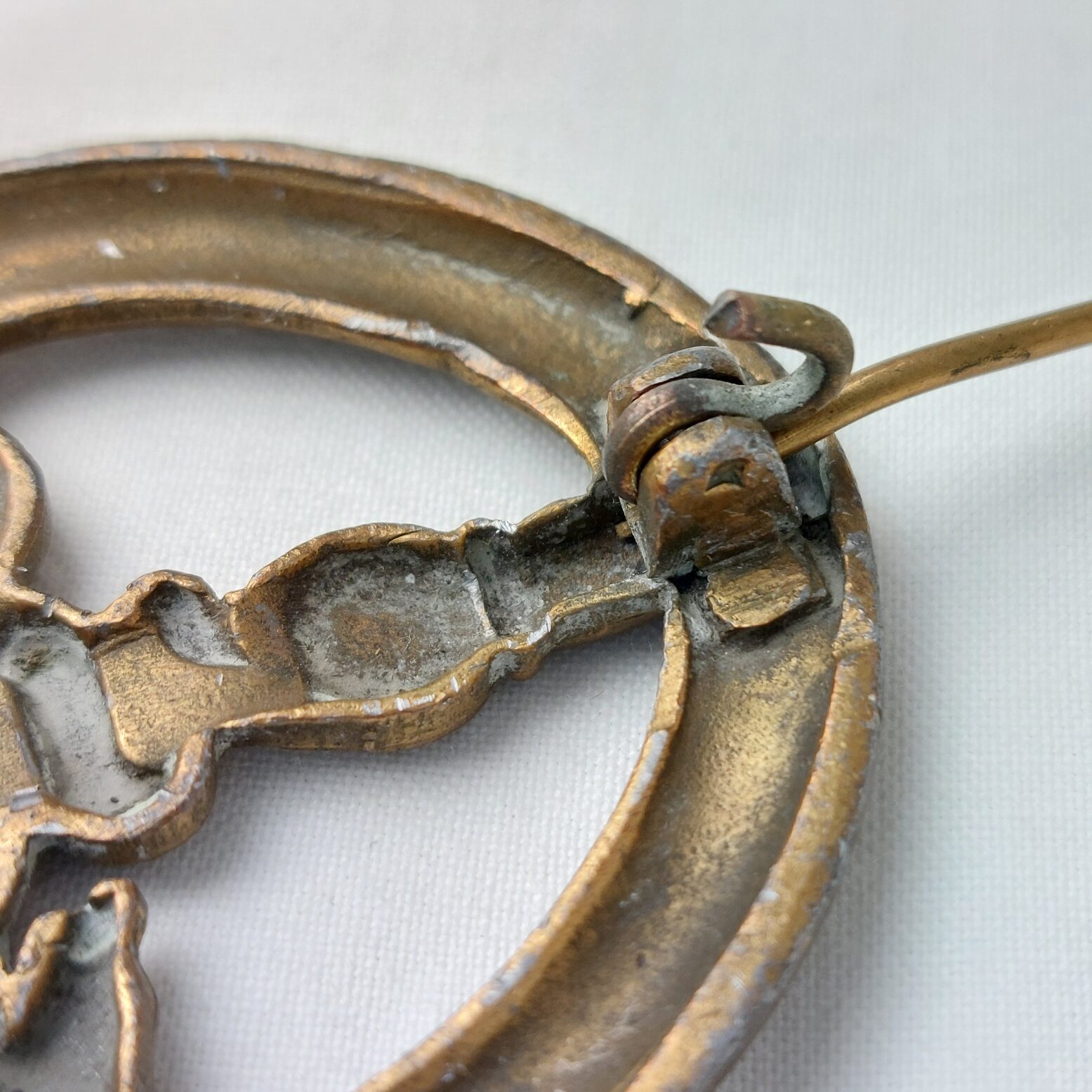
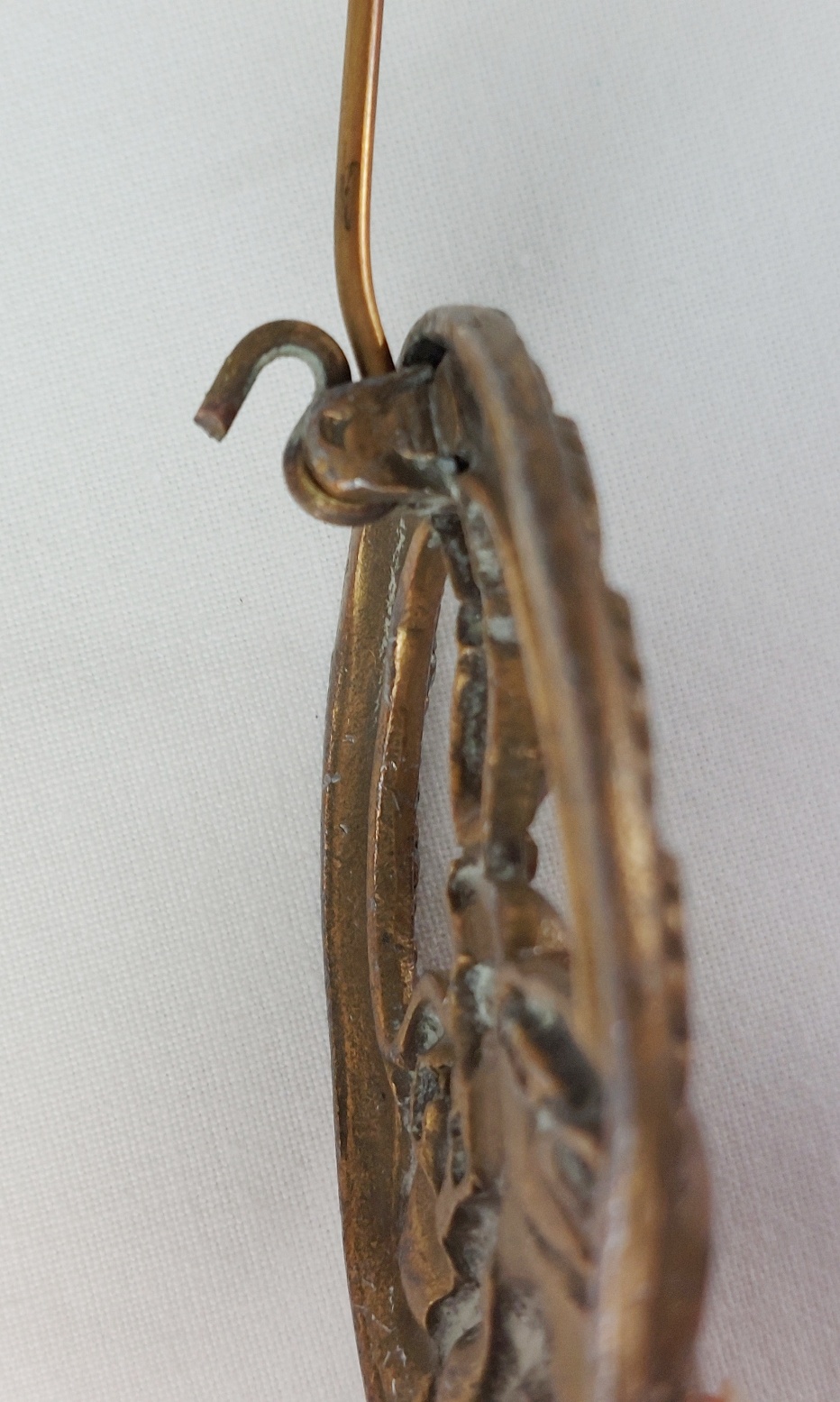
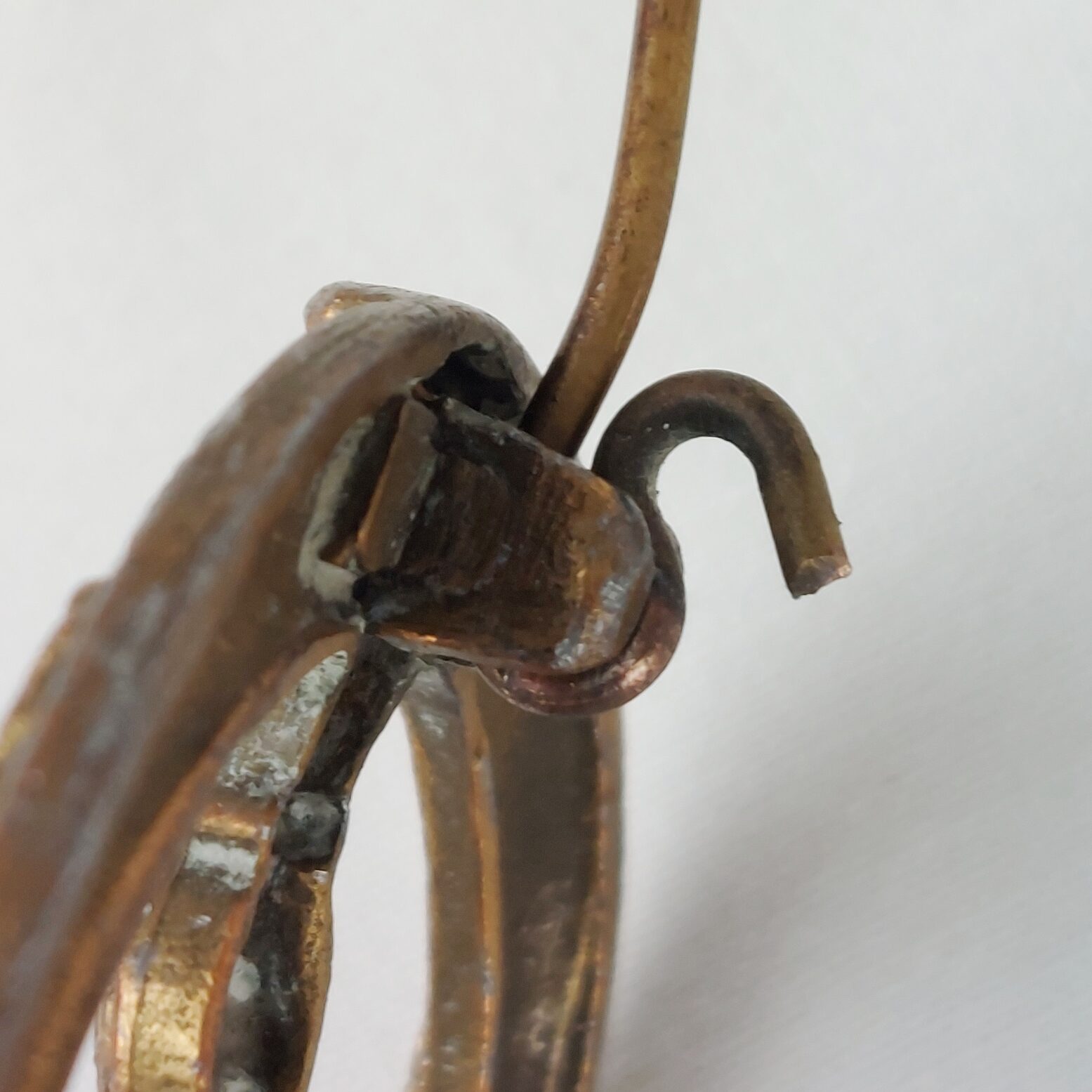
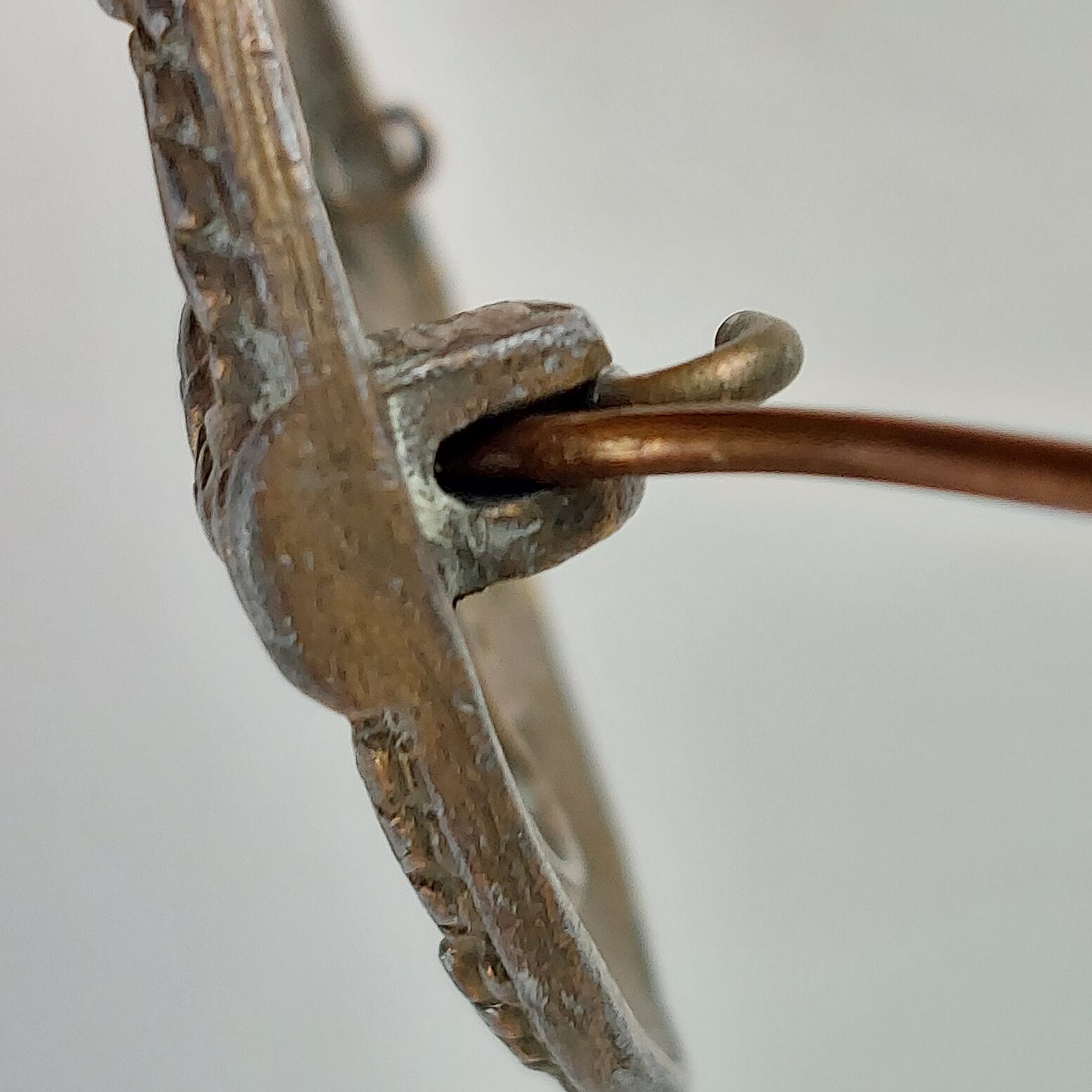
An exceptional and completely original Anti-Partisan Warfare Badge (Bandenkampfabzeichen) in Bronze, likely produced by the prestigious C.E. Juncker of Berlin—the primary wartime manufacturer of this feared and iconic award. This example, unmarked as was typical of Juncker production, represents the rare Type 2.2 transitional configuration, featuring the correct short-barrel hinge, needle-style pin (narrow and even in gauge), and flat-wire catch—a textbook Juncker hardware assembly. The obverse shows striking depth and relief: the sword with sun-wheel swastika plunges through the writhing Hydra, framed by a crisply detailed oak-leaf wreath and skull at its base. Struck in zinc using Juncker’s distinctive hot-press process, the original bronze wash has been partially absorbed by the base metal, producing the soft grey-gold patina characteristic of genuine late-war Juncker pieces. This example displays two chiseled cut-outs in the Hydra field and the sought-after “three-voids to shield” variant.
Historical Note: Instituted by Adolf Hitler on 30 January 1944 at the urging of Reichsführer-SS Heinrich Himmler, the Bandenkampfabzeichen recognised combat service in anti-partisan operations (Bandenbekämpfung) conducted behind German front lines across occupied Europe. These brutal campaigns were waged under SS and Police control, with the Waffen-SS, Ordnungspolizei, Sicherheitsdienst (SD) and Sicherheitspolizei (SiPo) leading composite formations supported by elements of the Army, Luftwaffe ground units, and Kriegsmarine coastal troops. In 1943 SS-Obergruppenführer Erich von dem Bach-Zelewski was appointed Chef der Bandenkampfverbände (“Chief of Anti-Partisan Warfare”), coordinating operations through regional Höhere SS- und Polizeiführer reporting directly to Himmler.
The badge’s design—a sword with sun-wheel swastika plunging through a five-headed Hydra above a skull, framed by oak leaves—symbolised the endless struggle against the “many-headed” insurgent threat. Three grades were issued: Bronze (20 combat days / 30 Luftwaffe sorties), Silver (50 / 75), and Gold (100 / 150). A Gold Grade with Diamonds, produced by Juncker, was intended for Himmler’s personal award but is not known to have been presented.
C.E. Juncker’s production method was unique: heated zinc blanks were hand-pressed between dies and then individually chiseled, sheared and filed. Because of this hybrid process, hinge styles evolved during production—from the long-barrel hinge of early examples to the more compact short-barrel hinge seen here. The Type 2.2 badge sits squarely within this late-1944 phase, bridging early and final variants—a true transitional rarity in Juncker’s sequence.
*Condition* A superb and untouched specimen retaining crisp relief throughout. The absorbed bronze finish has matured to a rich, even patina with faint gilt traces in protected recesses. Reverse shows classic Juncker tooling marks and file finish from the shearing process. The hinge, needle pin and flat-wire catch are completely original and function perfectly. An outstanding and extremely rare Juncker Type 2.2 example. Please see photographs as part of the condition report.