~ Edwardian Cobalt & Gold Japonesque Jardinière - Fan, Crane & Ivy Design, c.1895–1910 ~
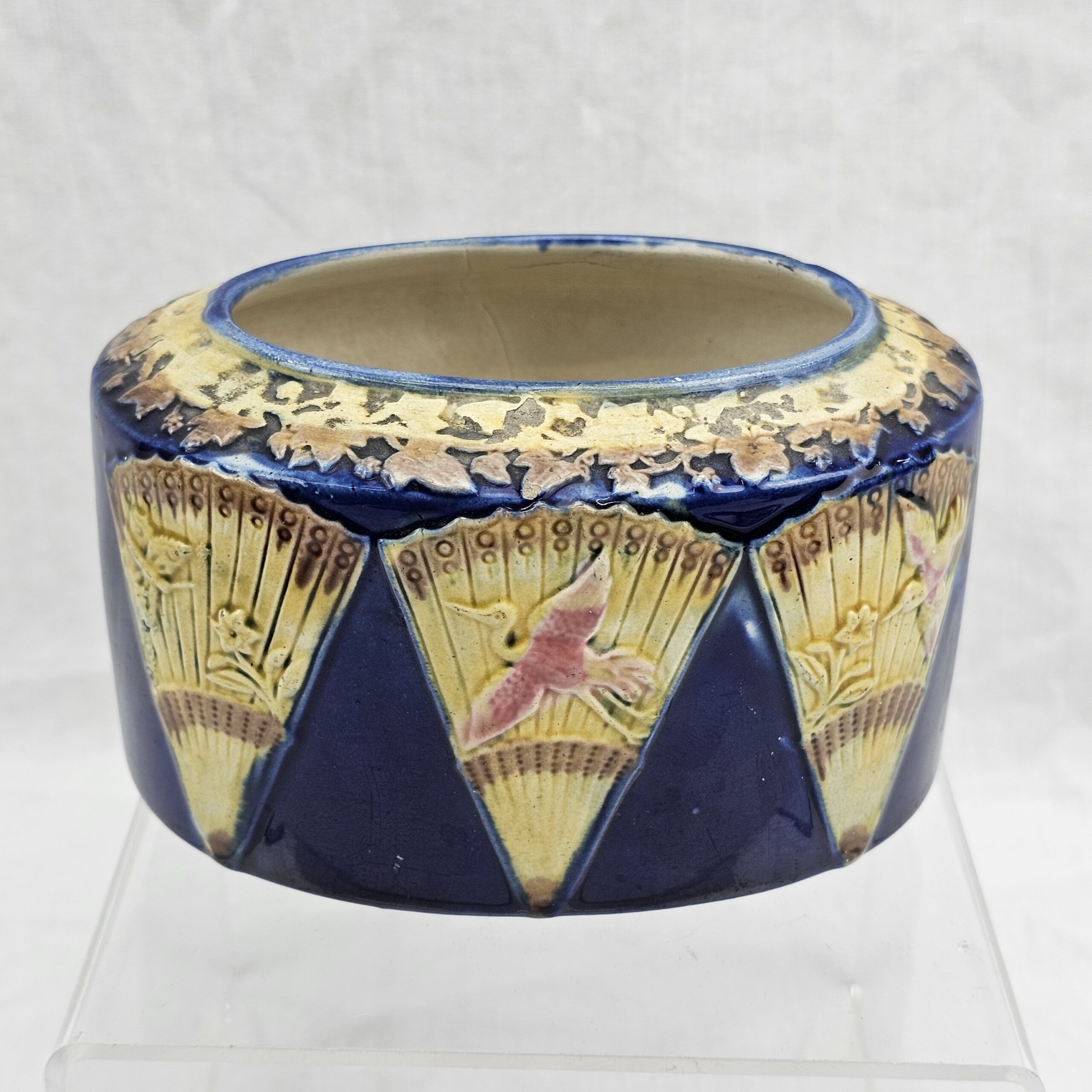
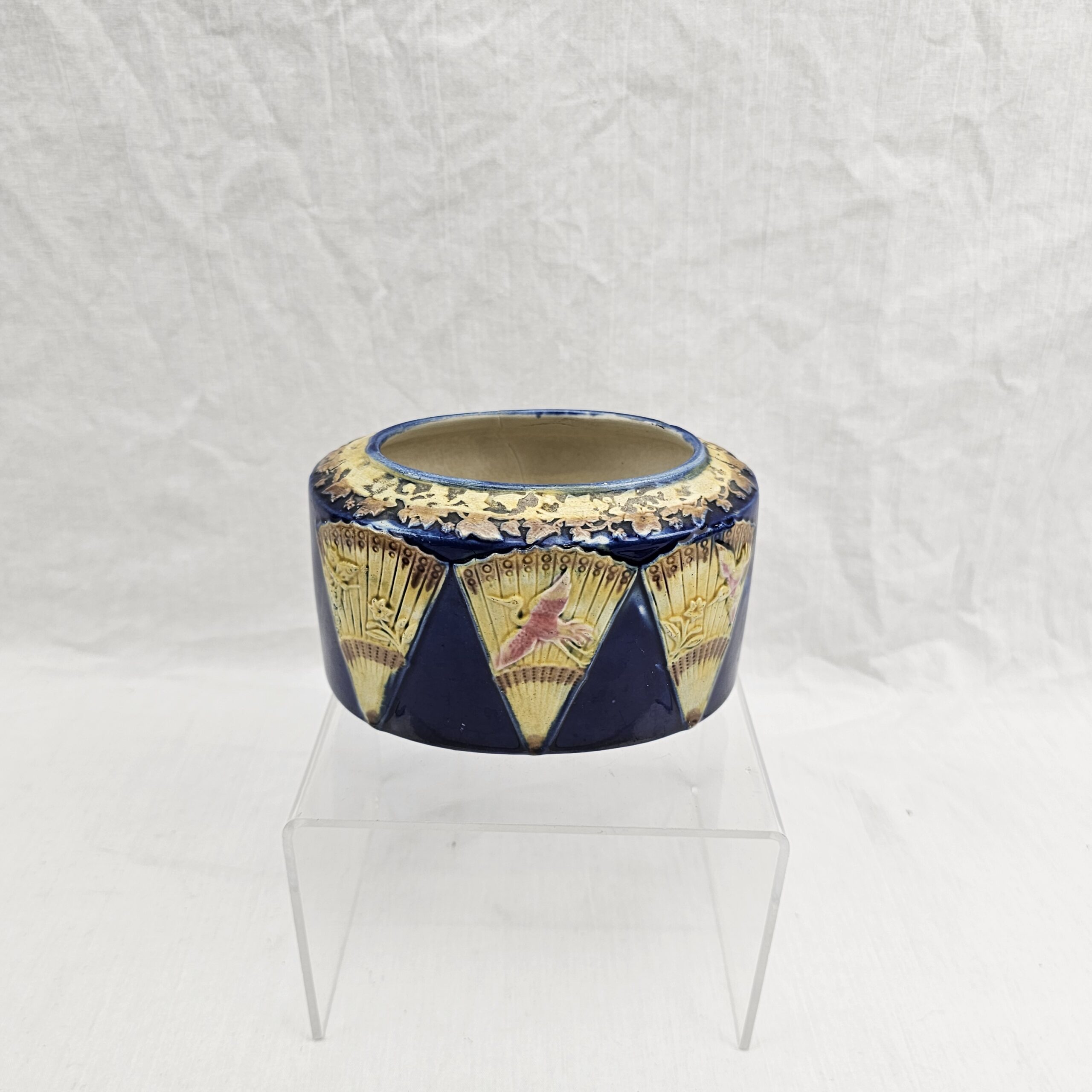
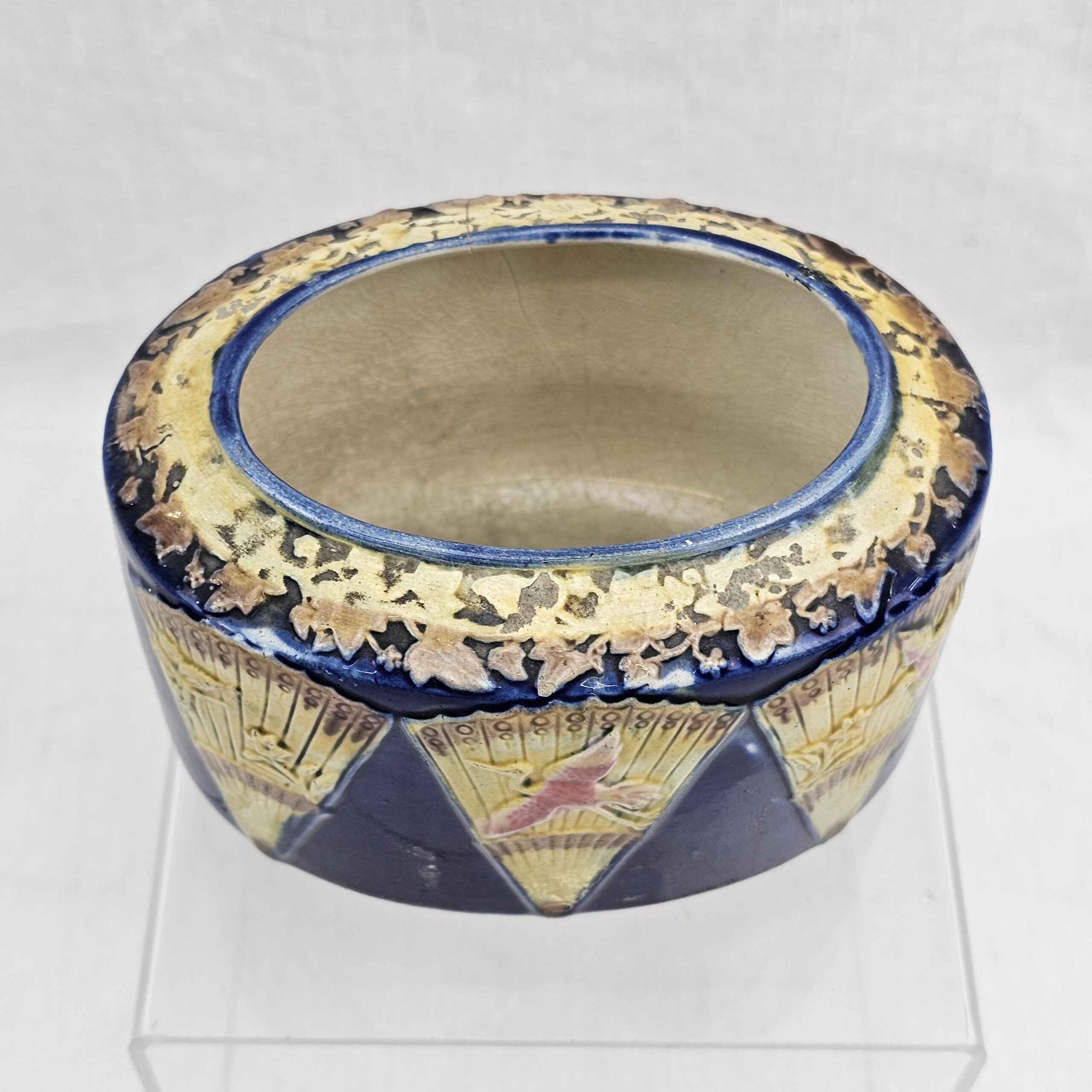
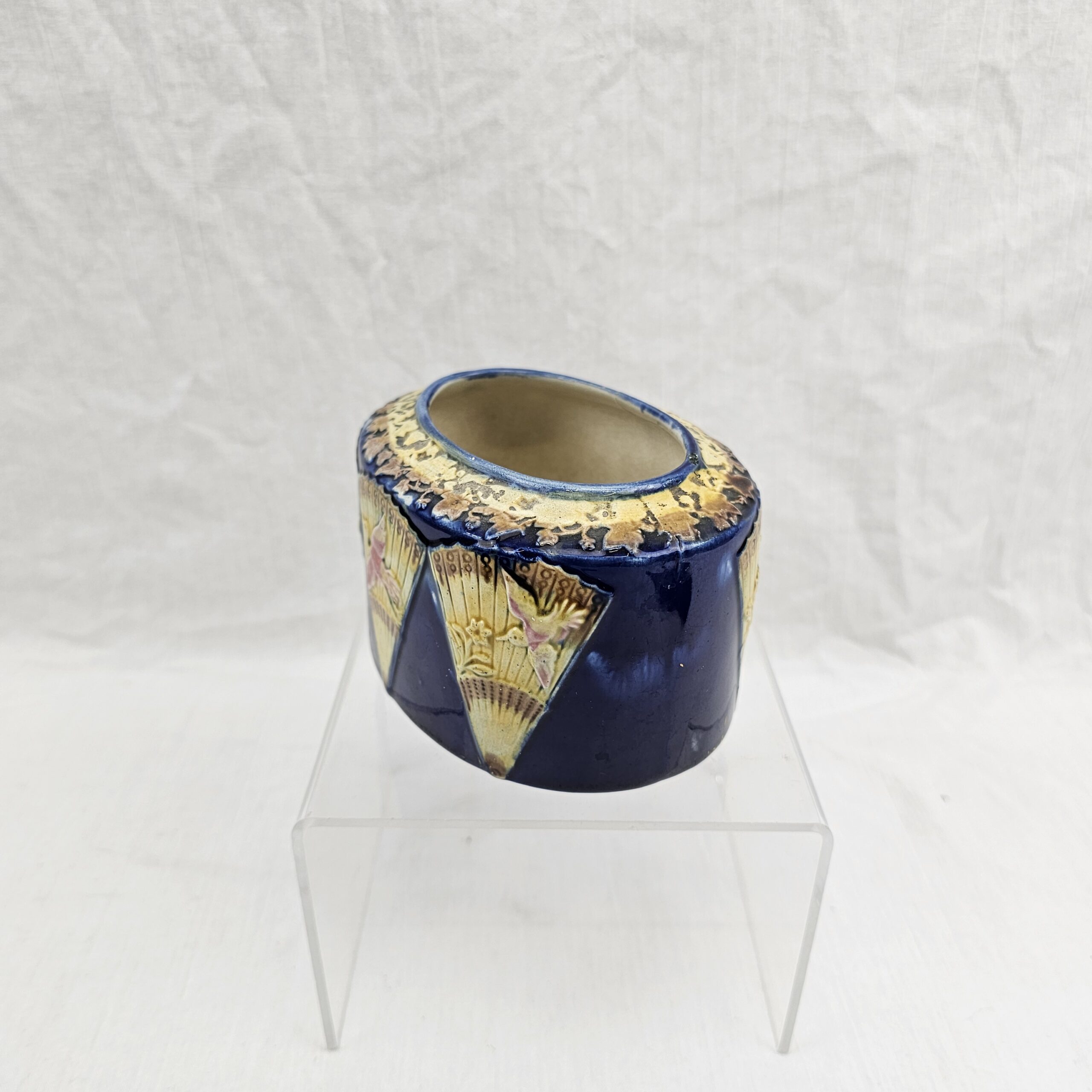
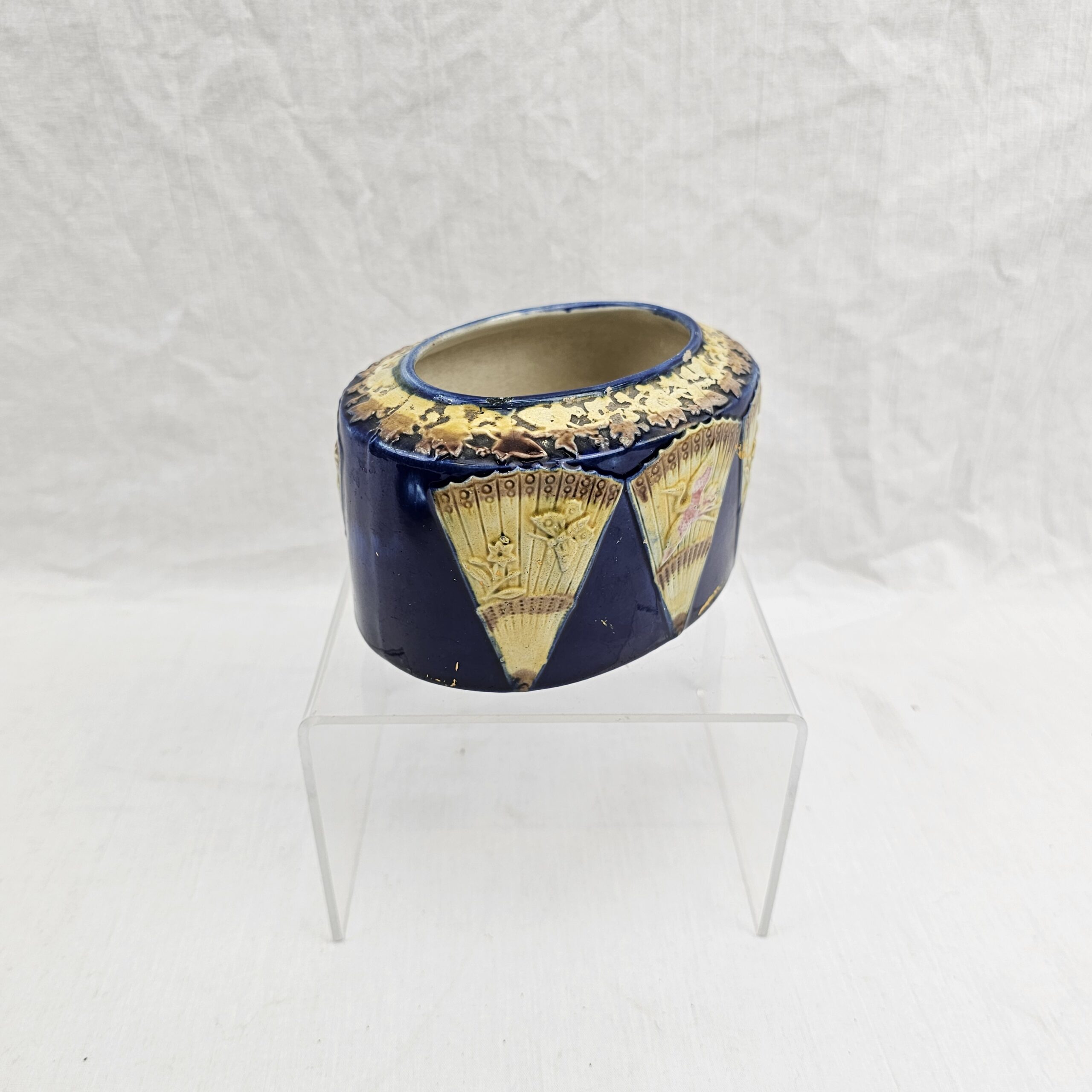
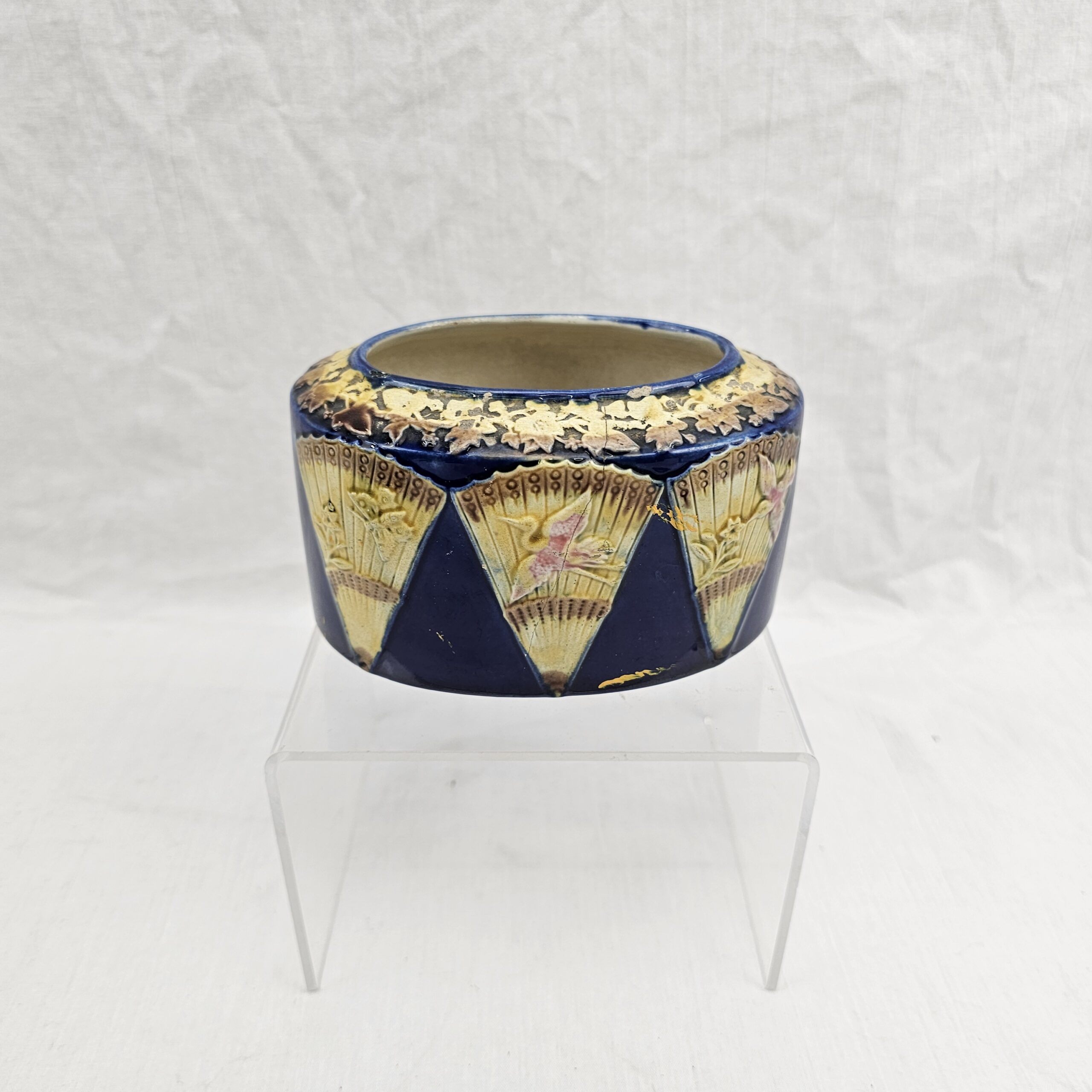
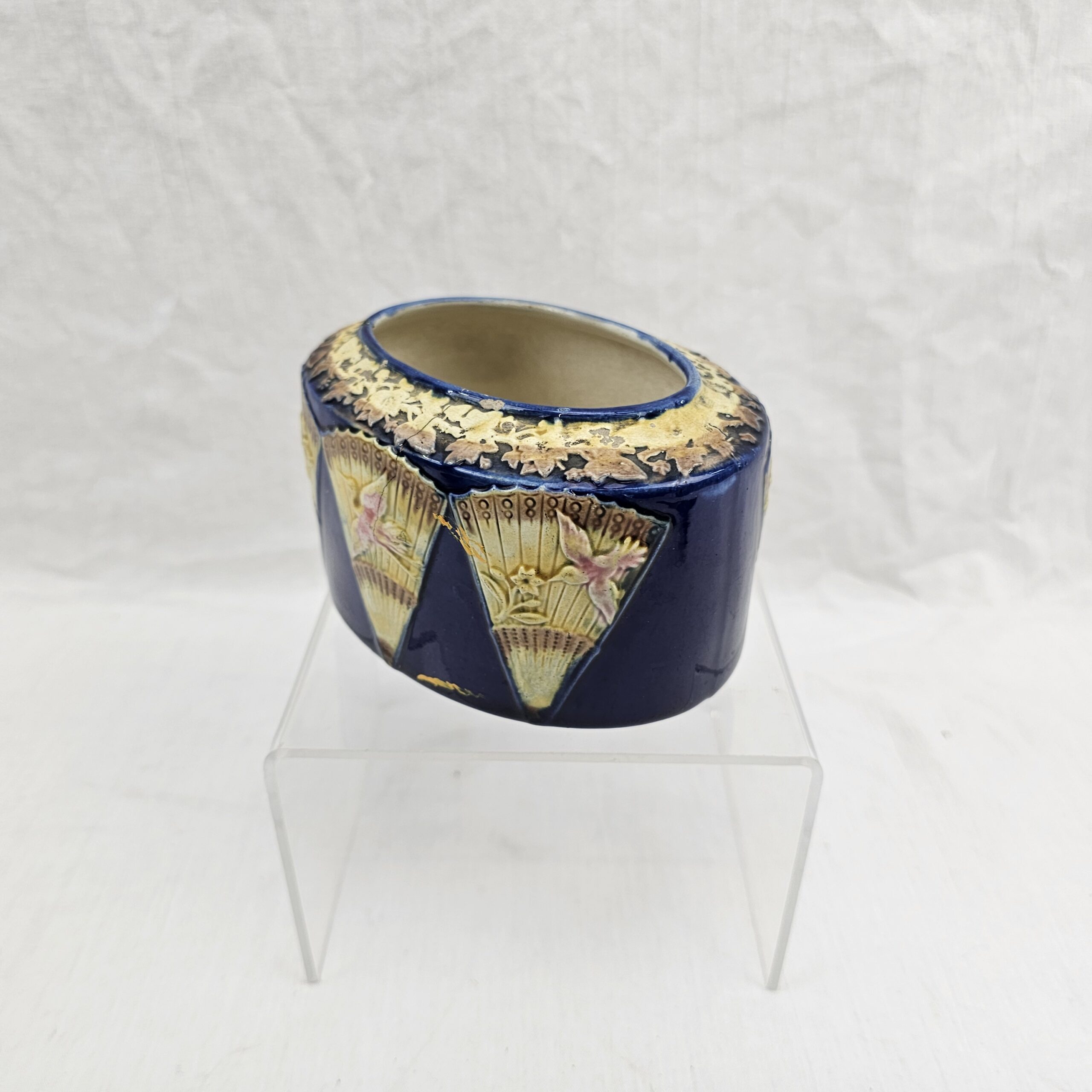
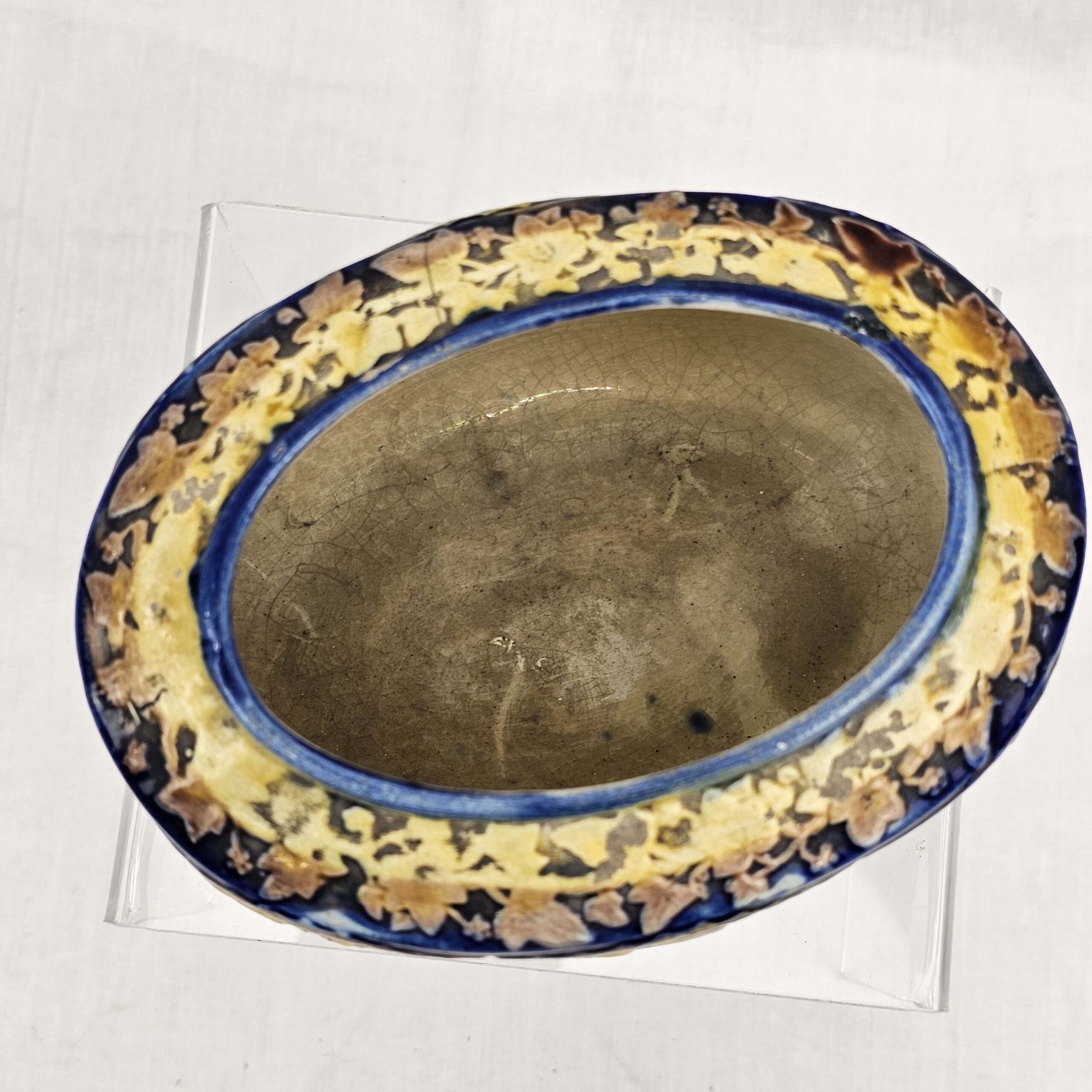
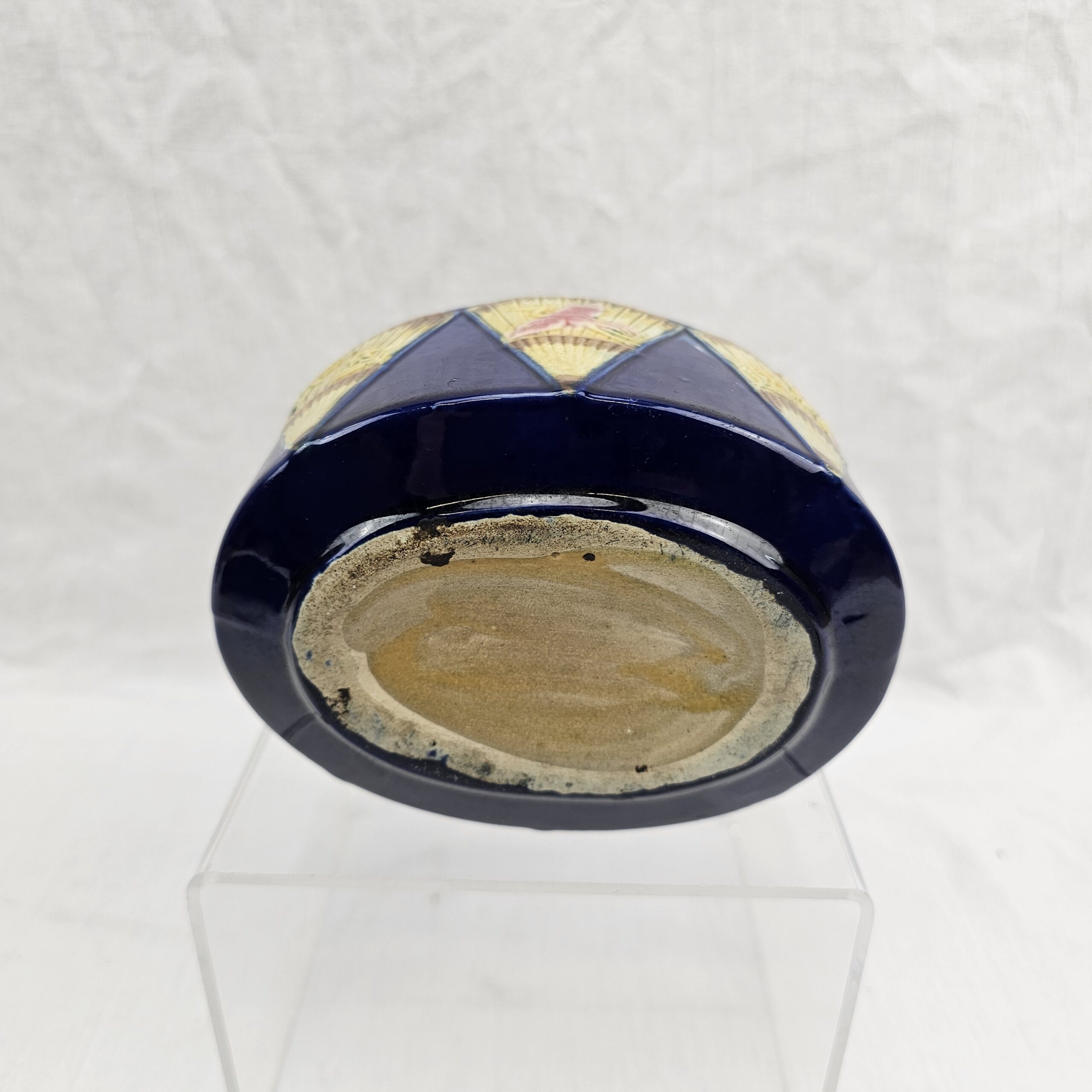
A striking and visually accomplished Edwardian-era jardinière or cache pot in the full spirit of the Aesthetic Movement, its bold Japonesque decoration executed with considerable confidence and quality. Of low drum form with gently rounded shoulders, the piece is decorated throughout in a rich cobalt blue ground from which rises an all-over pattern of alternating moulded Japanese folding fans (sensu) in warm yellow-gold, set in alternating upright and inverted positions to create a repeating chevron or diamond rhythm around the body. Between the fans, within the cobalt spaces, are moulded pink flying birds — cranes or herons — rendered in soft rose-pink, reinforcing the Japanese aesthetic. Above the fan zone, the shoulder of the piece carries a richly decorative border of densely moulded trailing ivy leaves and blossoms in yellow-gold and amber tones against the cobalt blue ground, creating a luxurious upper register.
The interior is glazed in cream-buff. The base (image 11) shows an unglazed oval foot ring in buff-coloured clay; no clearly legible maker's mark is visible, although the quality of the moulding and palette is consistent with English production of the period, and stylistically closely allied to patterns produced by quality manufacturers such as Royal Doulton in this era. The piece dates to circa 1895–1910.
~ Historical Context ~
The Aesthetic Movement, which dominated British and European decorative arts from approximately 1870 to 1910, was characterised above all by its profound engagement with Japanese design — a phenomenon known as Japonisme. The Japanese folding fan became one of the most emblematic motifs of the entire movement, appearing on textiles, wallpapers, metalwork and ceramics alike. Its appearance in moulded ceramic design — particularly against deep cobalt blue with flying cranes and delicate botanical borders — is among the most sophisticated expressions of this aesthetic vocabulary.
Royal Doulton, who had been producing Japonesque and Chinoiserie-decorated wares from the 1870s onwards, created a 'Oyama' pattern jardinière circa 1910 featuring precisely this combination of fan decoration, flying birds and Chinoiserie motifs against a rich cobalt ground — placing this piece firmly within a well-documented and collected tradition of Edwardian ceramic production in this taste. The cobalt blue and gilded-yellow palette was particularly fashionable in the first decade of the twentieth century, when Japanese-inspired design retained strong appeal even as Art Nouveau was also at its height.
~ Condition ~
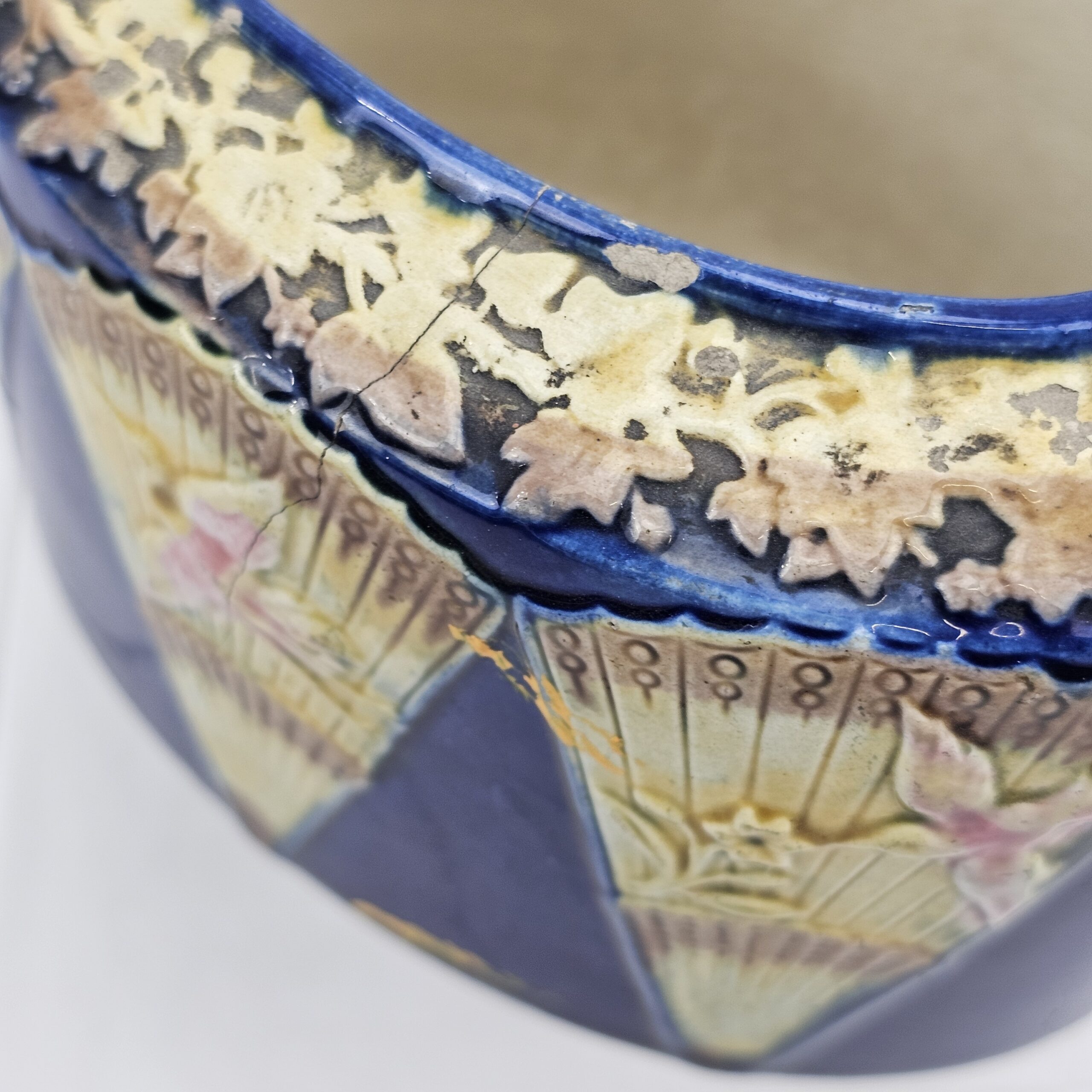
Cracks to upper body — image 8 shows what appear to be cracks in the shoulder area, running through the transition zone between the fan body and the floral ivy border. This is a significant condition issue and must be fully considered
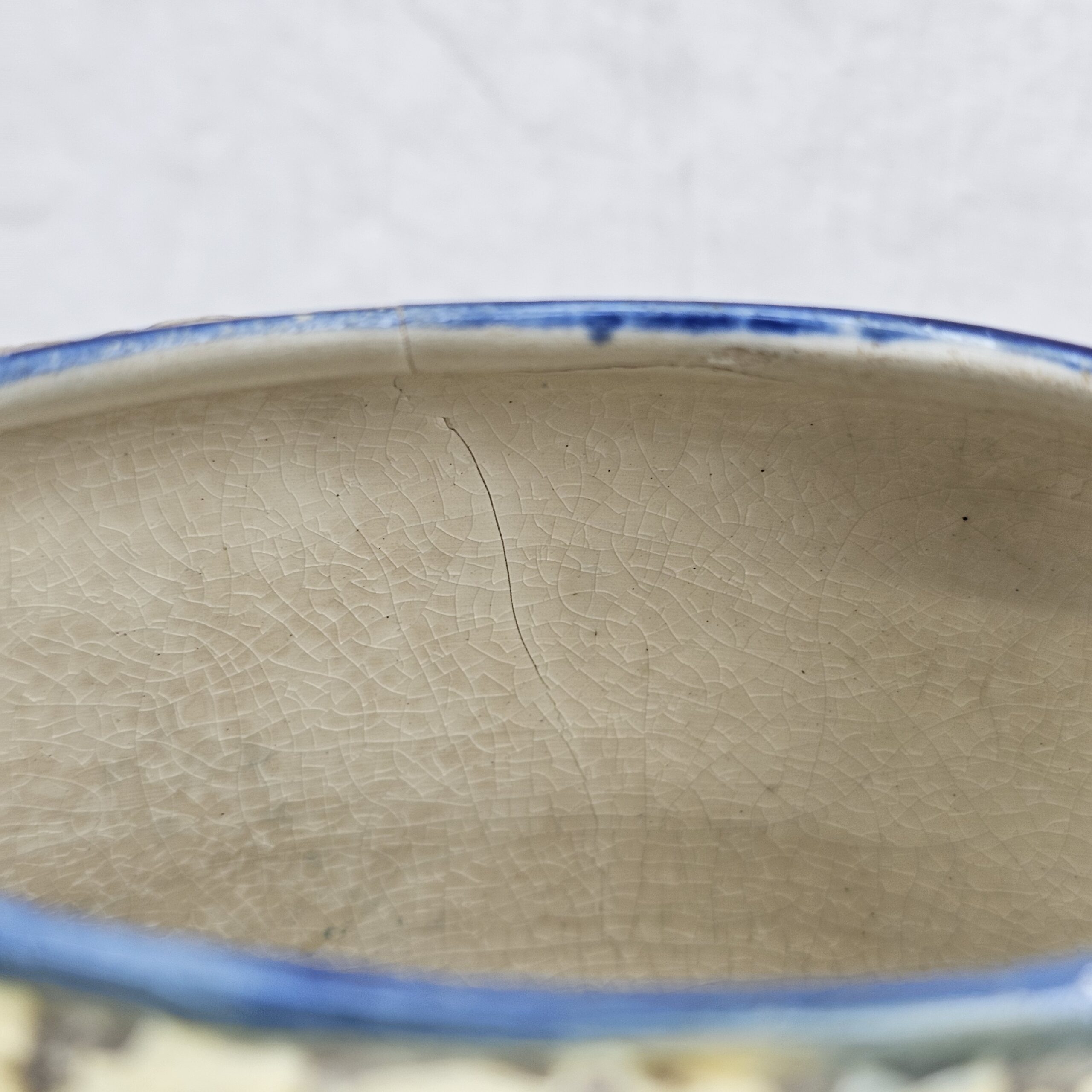
Interior hairline crack — image 9 shows a hairline crack visible in the interior wall
Interior base staining — the interior base (image 10) shows dark staining/discolouration consistent with use as a plant pot
Shoulder border wear — the moulded floral/ivy border on the upper shoulder shows some surface wear and the glaze appears matte in places
Exterior colours — the cobalt blue and the fan decoration retain good depth and vibrancy overall
No maker's mark is clearly legible on the unglazed base; the piece is sold as attributable to an English quality manufacturer but without confirmed attribution