~ Early Victorian Staffordshire Pottery Cottage Pastille Burner on Oval Stand, c.1835–1855 ~
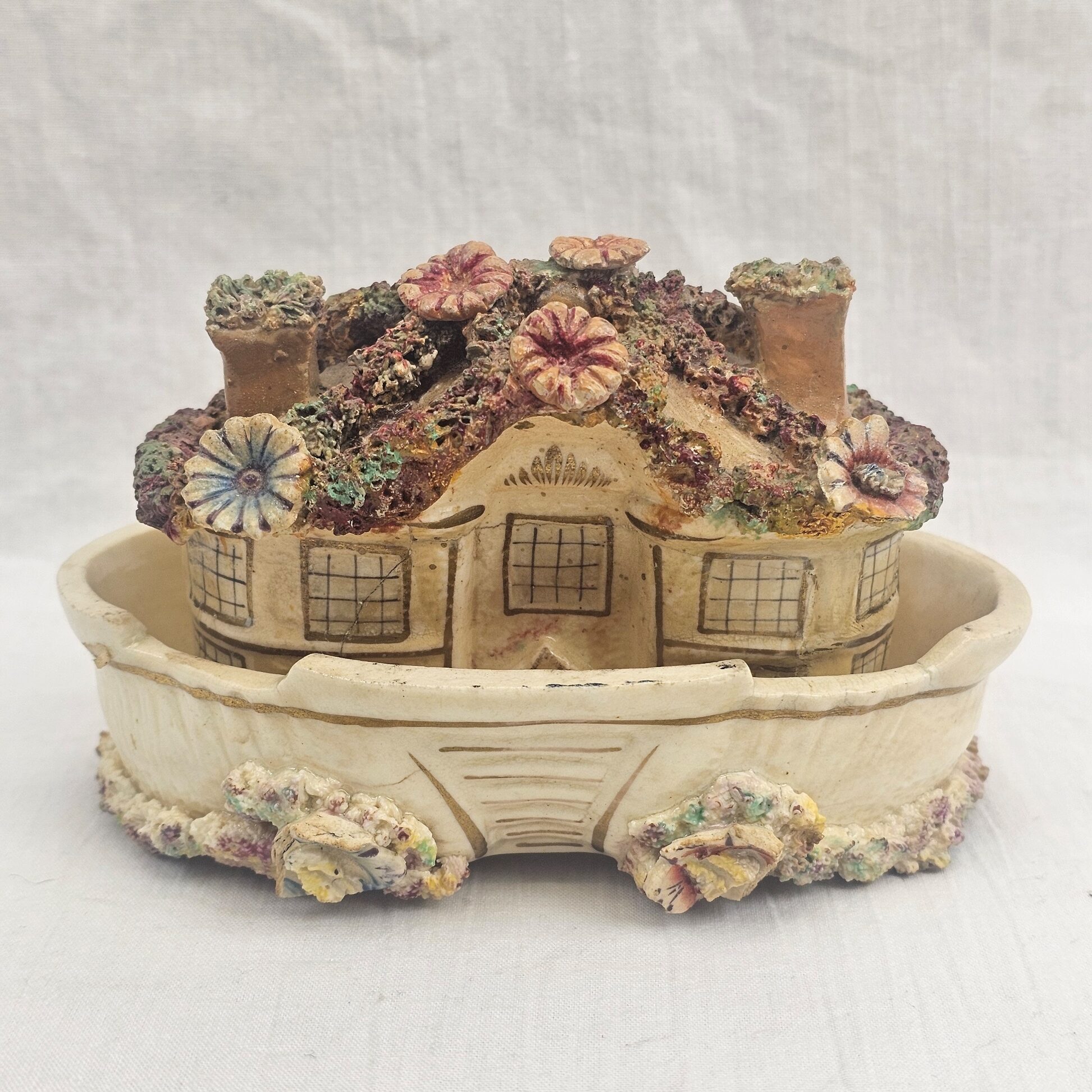
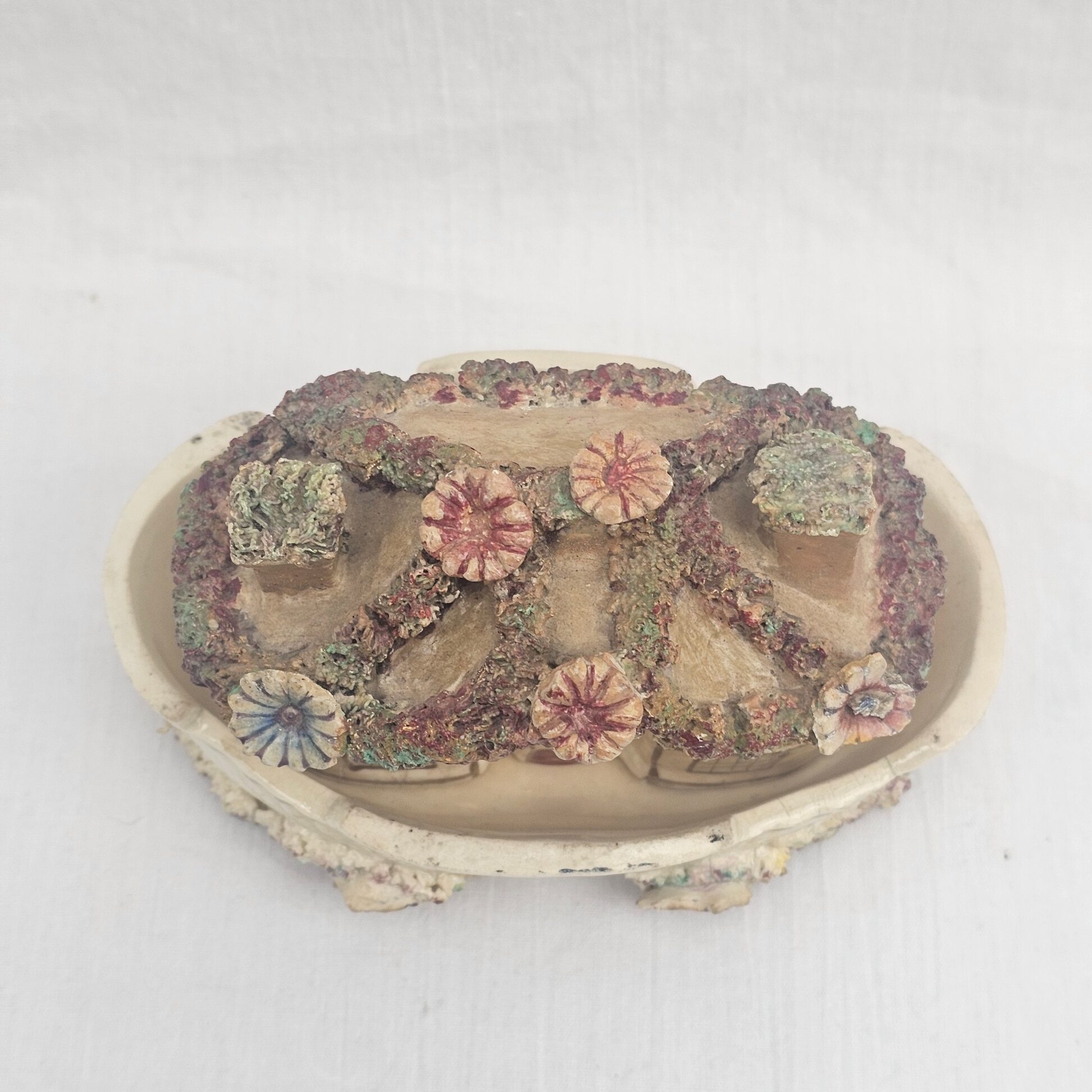
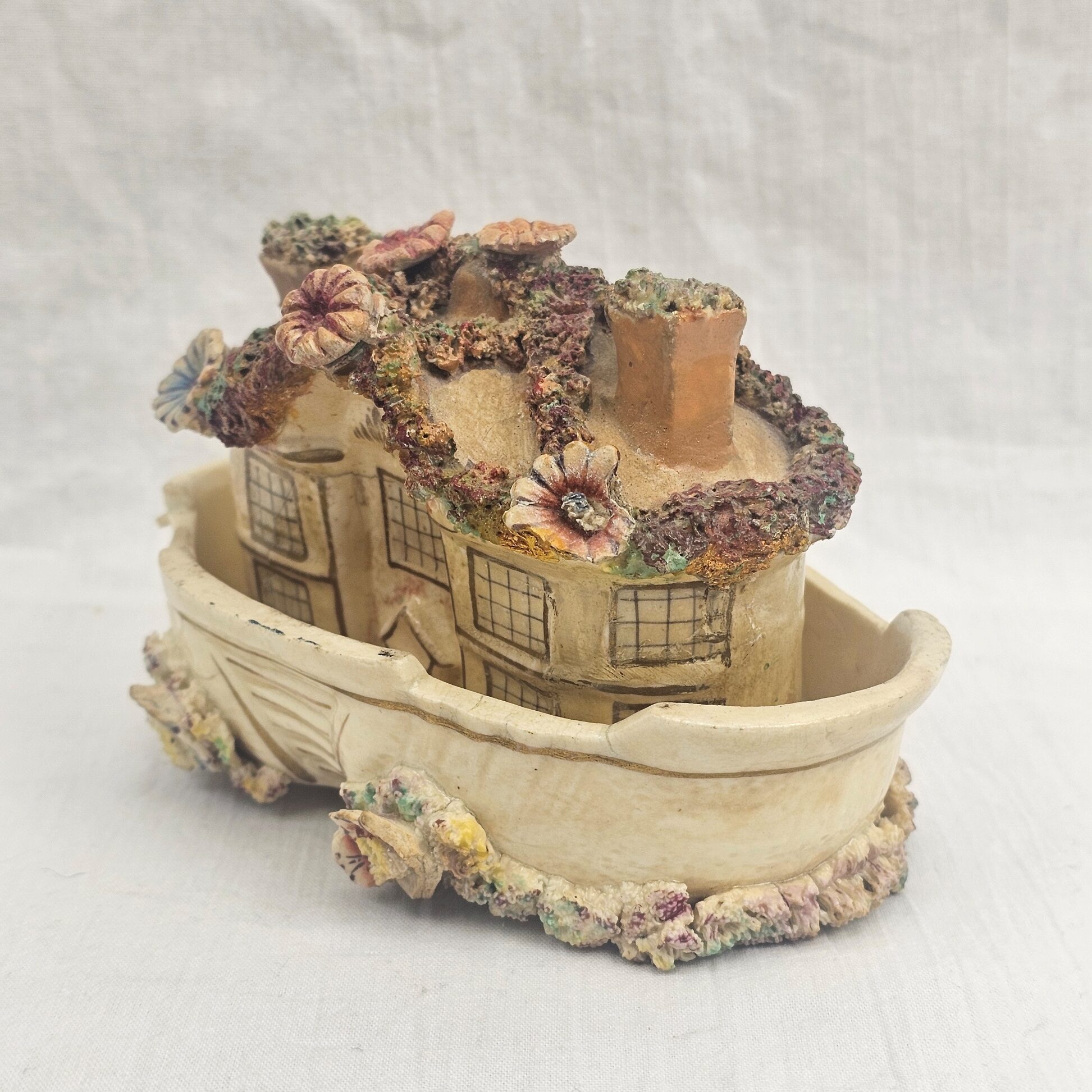
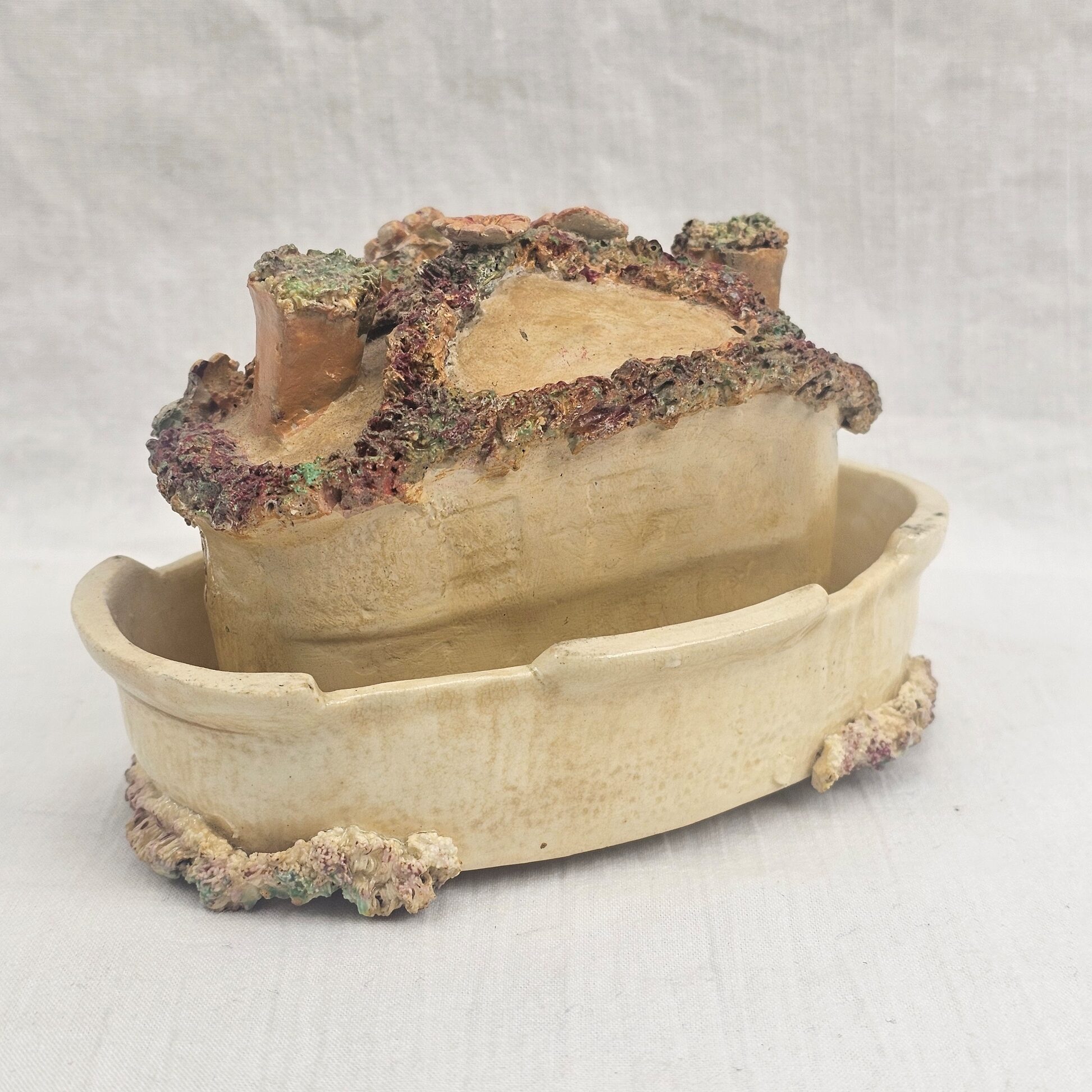
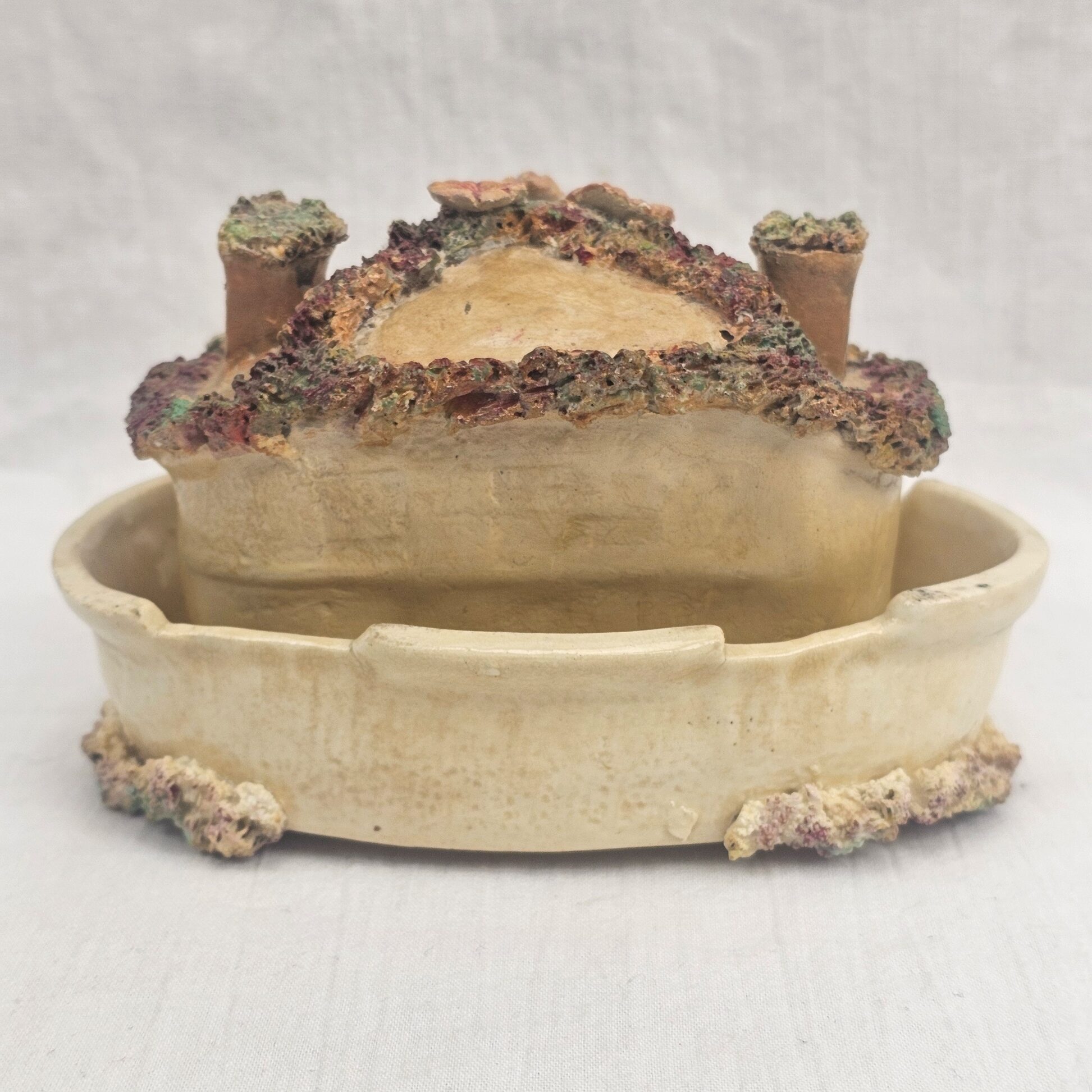
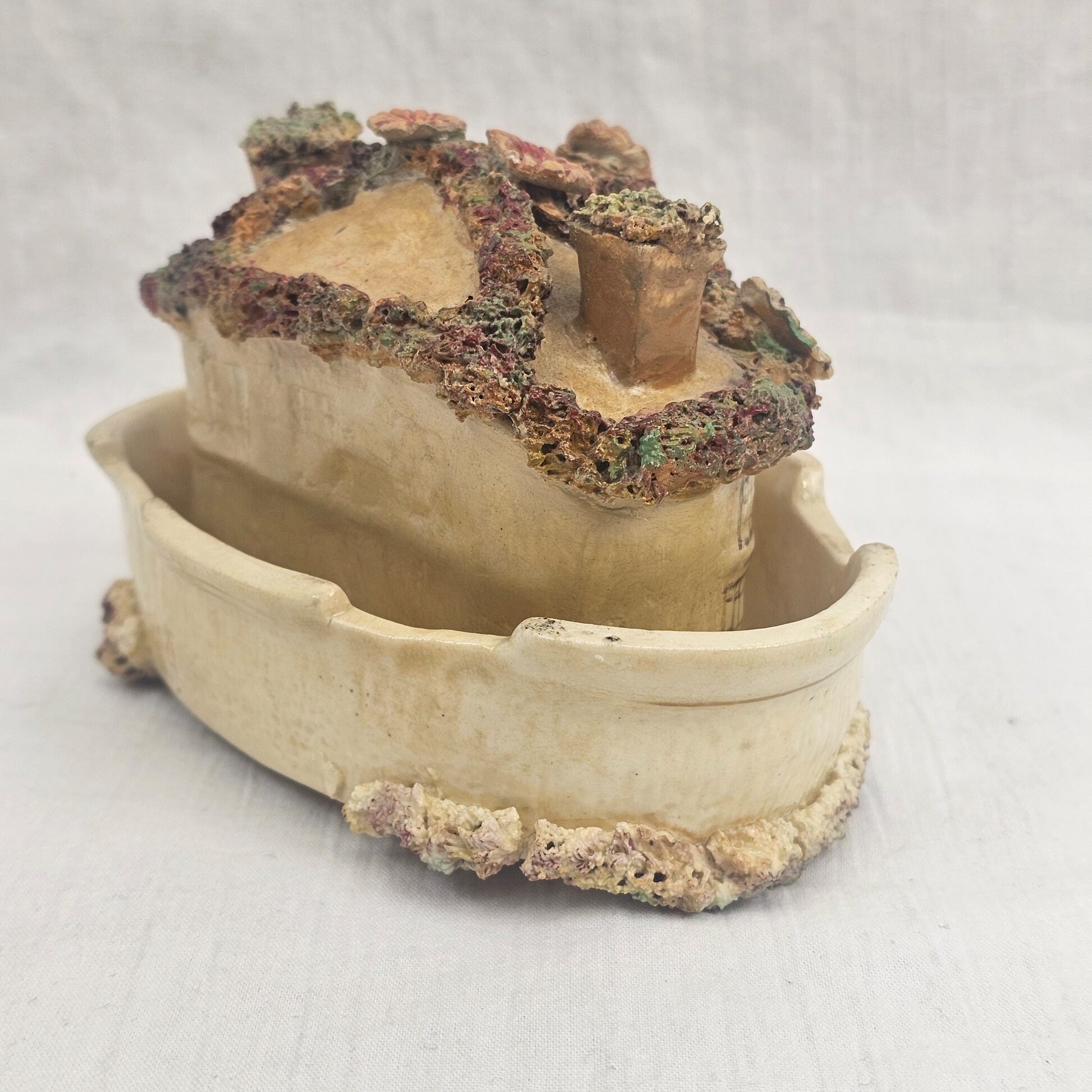
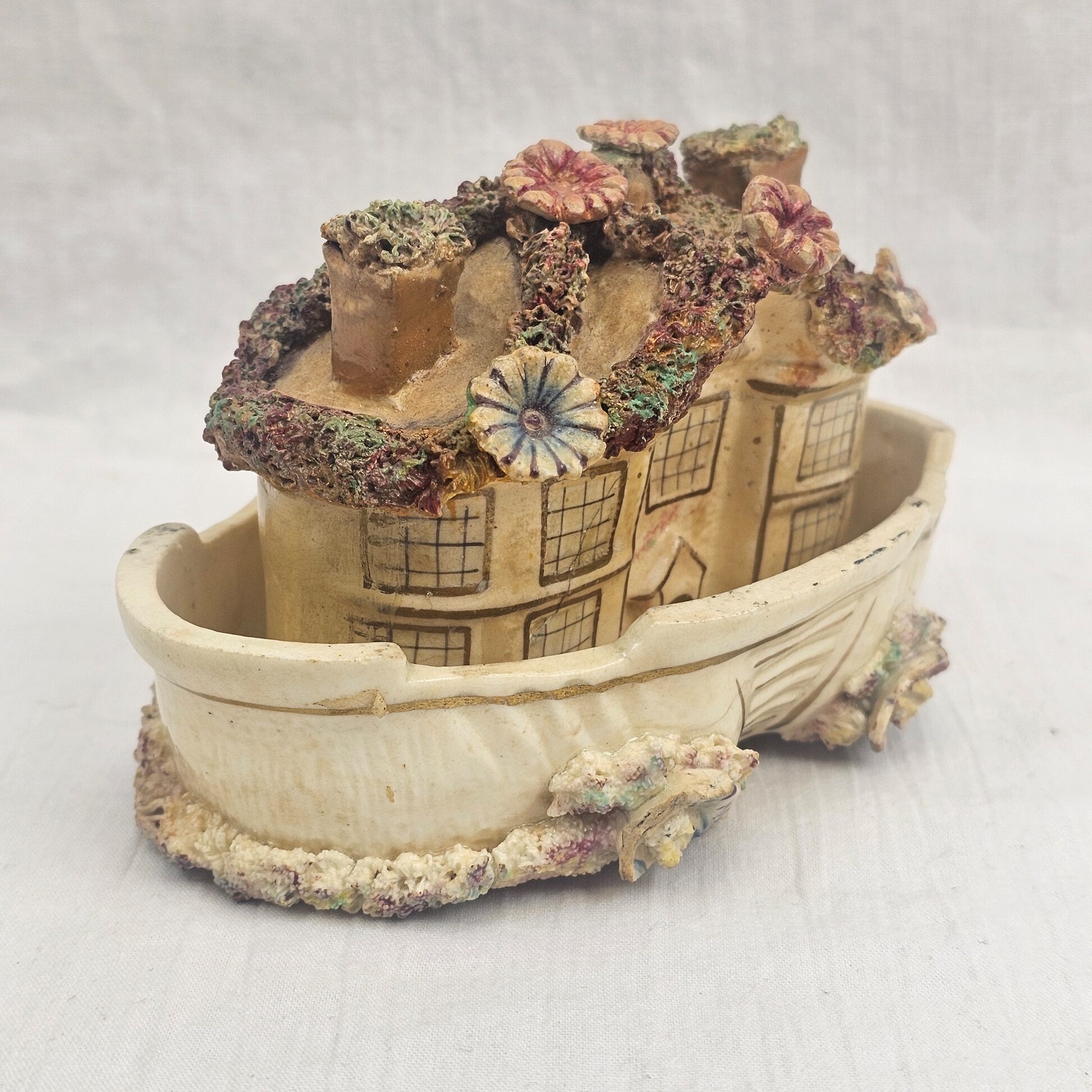
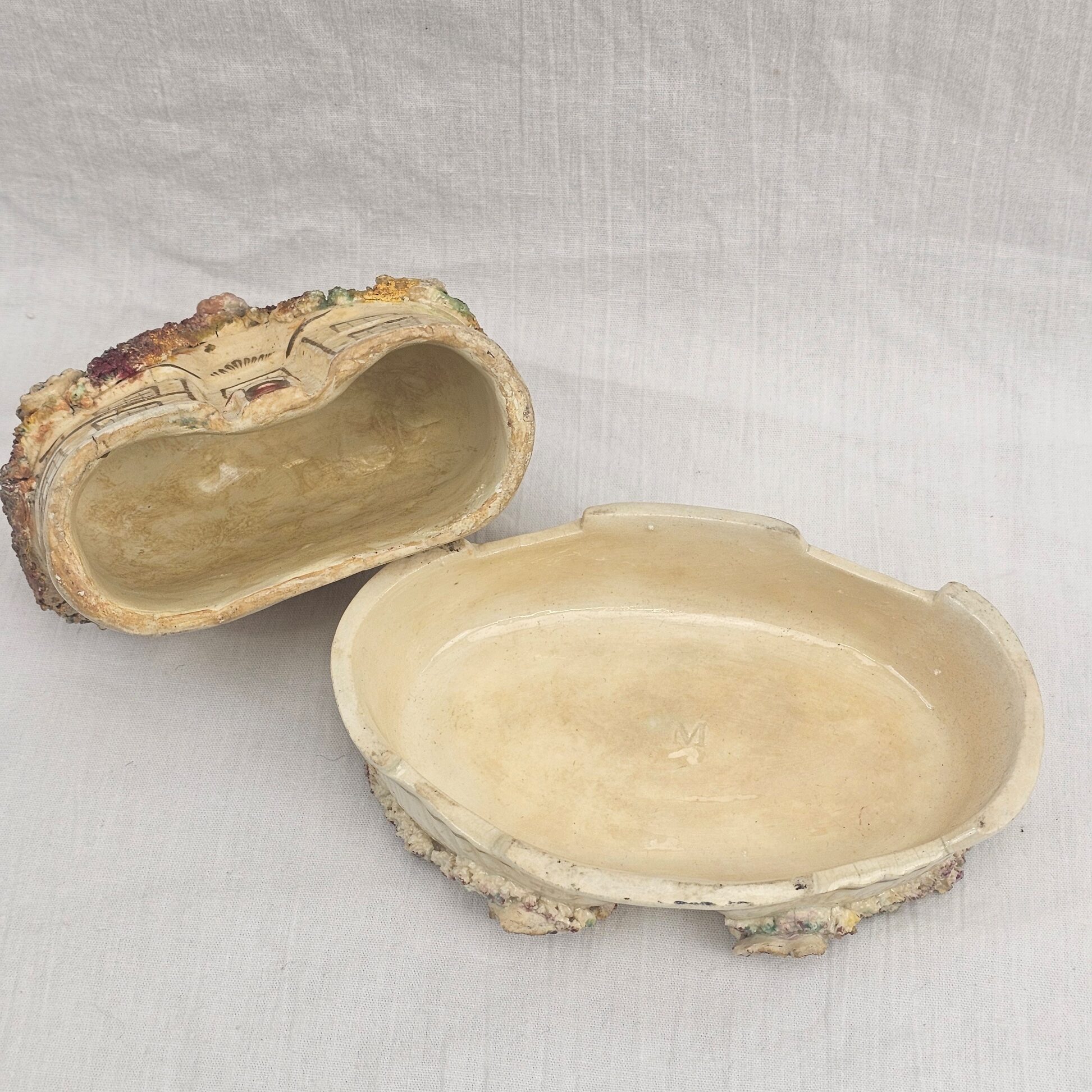
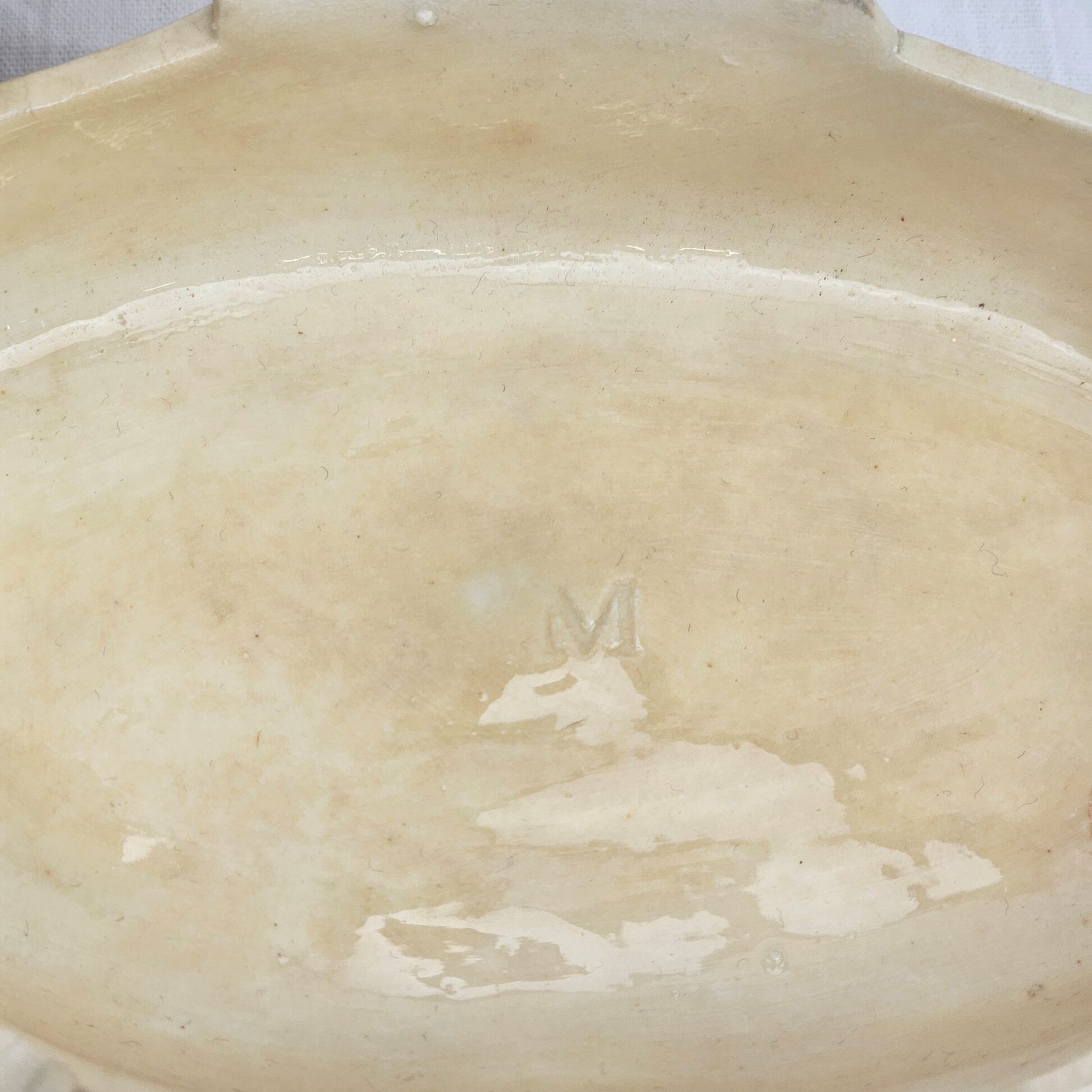
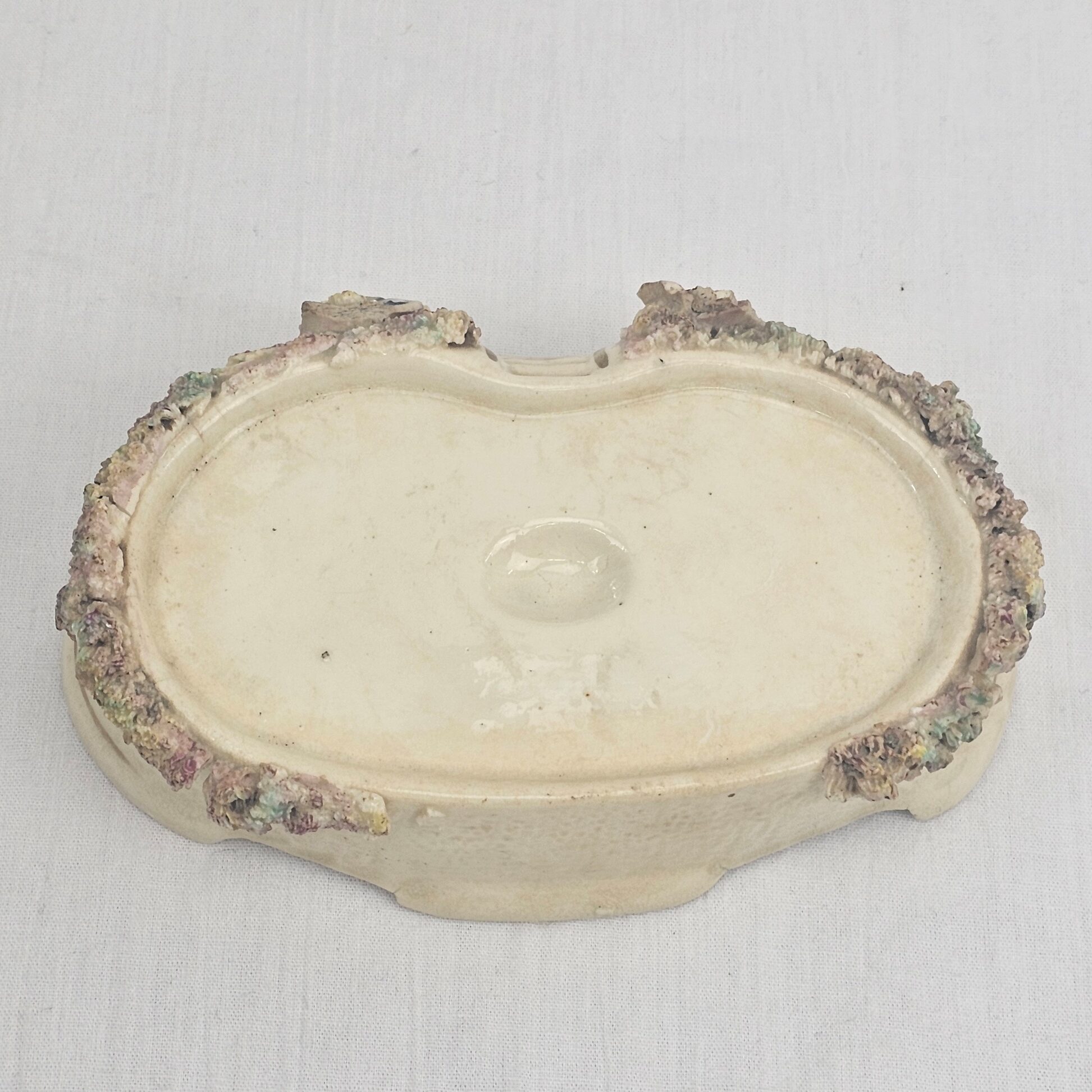
A substantial and richly decorated early Victorian Staffordshire pottery cottage pastille burner, comprising two separable parts: a cottage body and a shaped oval stand. The cottage is modelled as a single-storey country manor or estate cottage with moulded and painted lattice windows, a central canopied doorway, and rendered brickwork walls in cream/buff. The roof is thickly encrusted with sieved-clay bocage foliage in purple-tinged dark mauve and green, interspersed with large applied blowsy flowers in salmon-pink and peach with red and purple-veined centres — likely representing hollyhocks, poppies or similar garden blooms. Four terracotta-toned chimney stacks rise from the roof ridge. Applied floral clusters decorate the cottage eaves and the corners of the stand. The oval boat-shaped stand is cream-glazed with moulded line and cartouche decoration and applied bocage cluster feet. The interior of the stand bears an impressed letter "M" — a maker's or presser's mark. Both parts are hollow, confirming the pastille-burning function: the incense pastille sat inside the cottage body, with scented smoke rising through the open chimneys. Approximate height 12–14 cm overall; approximate width of stand 20 cm.
~ Historical Context ~
Pastille burners — small ceramic vessels designed to hold burning incense or aromatic lozenges — were produced in great quantity and variety by the Staffordshire and other English potteries from the Regency period through to the mid-Victorian era, peaking in production between approximately 1820 and 1860. Pastille burners were used to produce fragrant smells in an attempt to fumigate or deodorise interiors, and in the mid-19th century, theories of disease focused on the idea of miasmas — foul-smelling vapours believed to carry and spread illness. Domestic devices like these could at least rid a house of the worst offending odours. The cottage form, in particular, became the dominant format for English pottery pastille burners from the 1820s onwards, with the smoke rising picturesquely through the chimneys of a miniature dwelling.
Staffordshire pastille burners of this form — modelled as cottages with sieved-clay bocage and applied flowers, set on oval gilt-lined bases — are catalogued from the mid-19th century and have been sold at major UK auction houses including Bonhams, with examples described as having flights of steps, lattice windows, shredded-clay bocage, and oval base. The pale cream body, the distinctive purple-mauve bocage colouring, and the large applied botanical flowers of this example are all characteristic of the earlier phase of Victorian cottage pastille burner production, c.1835–1855, before the simpler and less elaborate later forms took over. The impressed "M" mark on the stand is a production mark; its attribution to a specific Staffordshire maker has not been conclusively established and warrants further specialist investigation.
~ Condition Report ~
The piece presents in good overall condition for an early Victorian piece with inherently fragile applied decoration.
Cottage body and walls: Good. The cream body is intact with no chips or cracks apparent to the main structure.
Bocage and applied flowers (Images 1–7): The extensive sieved-clay bocage encrustation and the large applied flowers are largely present. From the primary front-facing view the coverage is good and decorative impact is strong. The overhead view (image 2) reveals some areas of thinner bocage on the roof surface, consistent with typical age-related minor losses to this inherently fragile type of applied decoration. Buyers should anticipate minor attrition to bocage elements on a piece of this age and type; no dramatic losses are apparent.
Chimney stacks: All four chimneys appear present and intact from examination of all available views.
Oval stand: Good overall. The moulded decoration is intact; bocage clusters at the corners/feet retain colour. Age grime to the interior (image 8). Impressed "M" mark present and legible (images 8 & 9).
Underside of stand (Image 10): Cream-glazed, intact. Small central raised point and minor impressed mark visible. No cracks apparent.
No chips, structural cracks, or evidence of restoration are apparent from examination of the photographs. Buyers are encouraged to review all images carefully before purchasing.