~ Early 19th Century Staffordshire Pottery Cottage Pastille Burner, c.1820–1840 ~
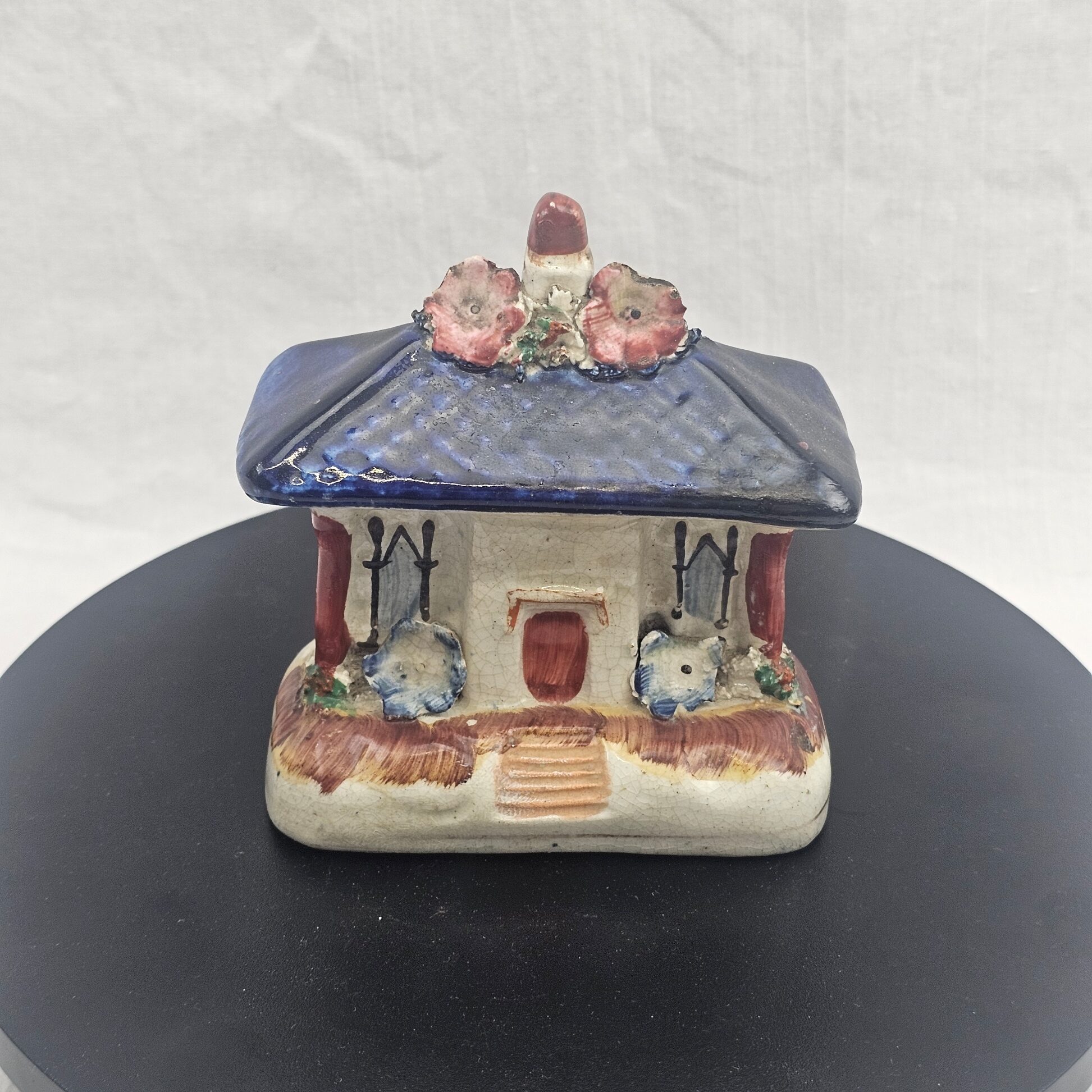
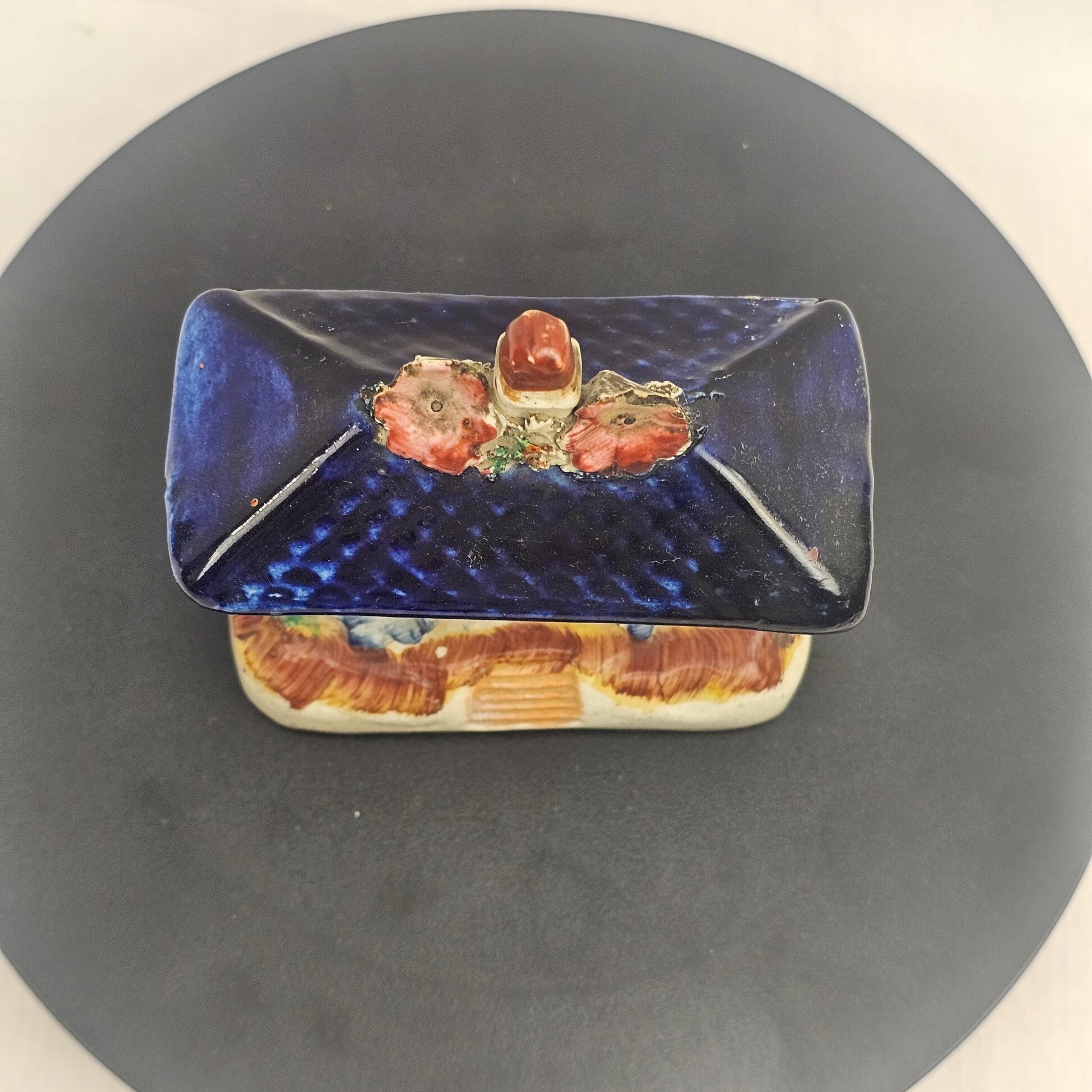
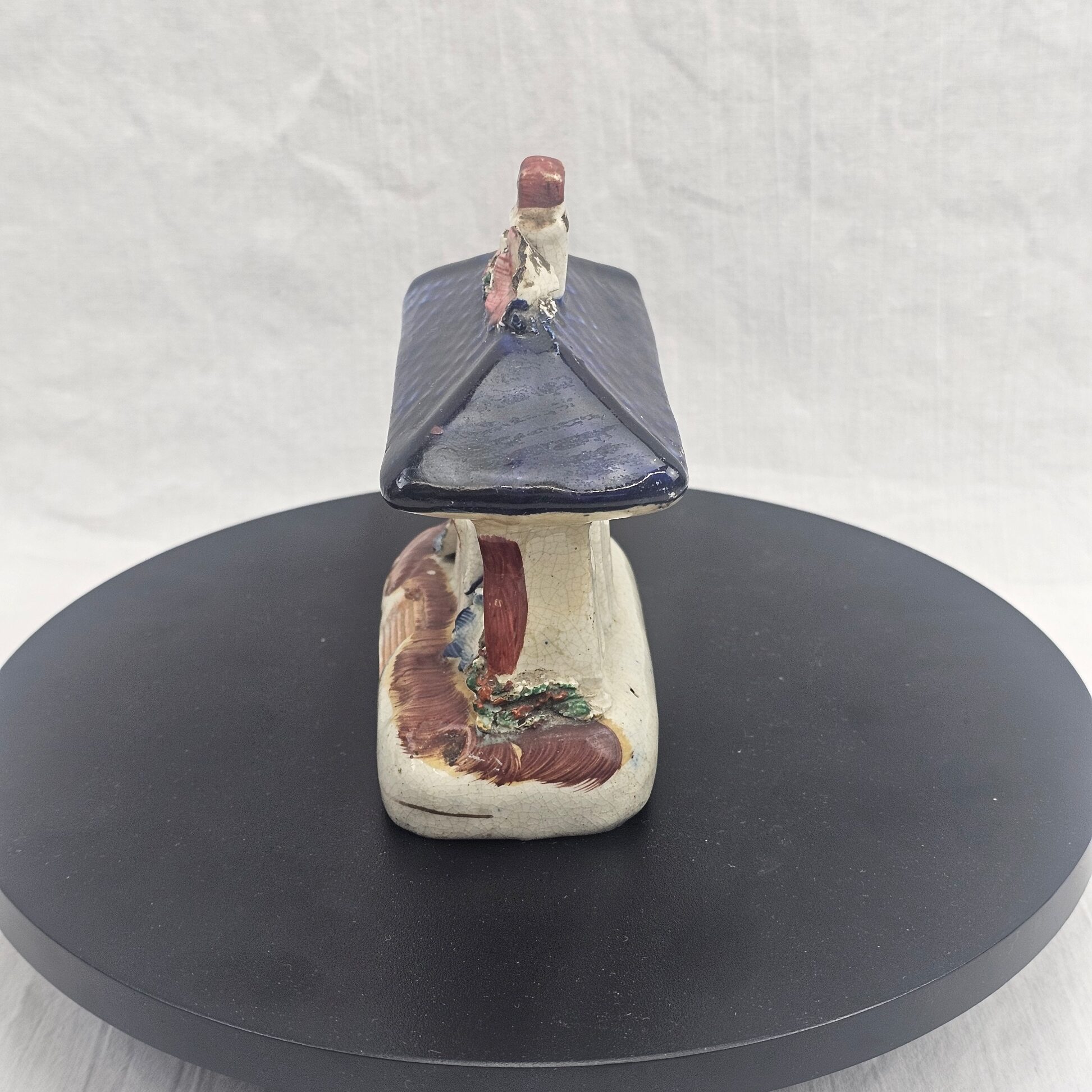
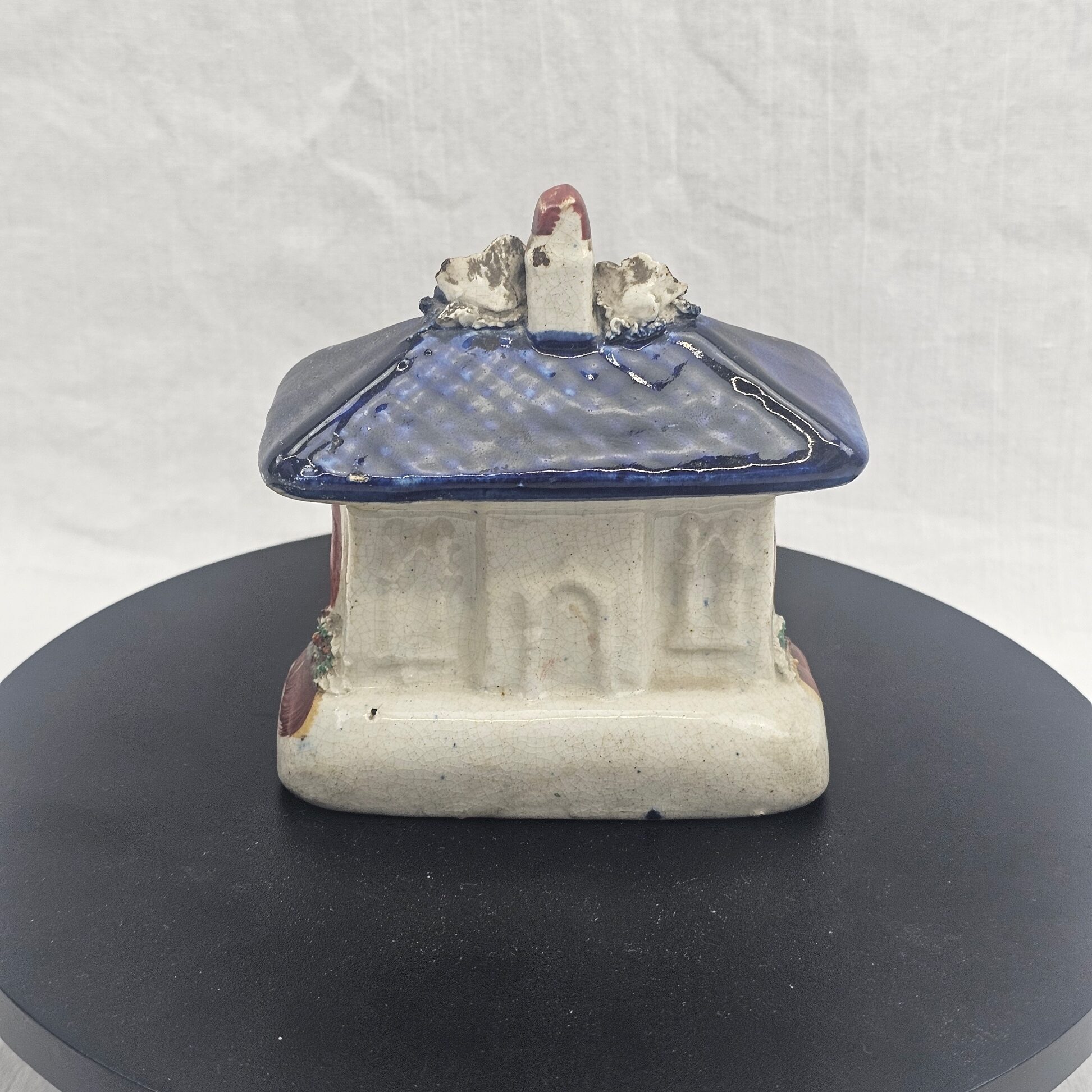
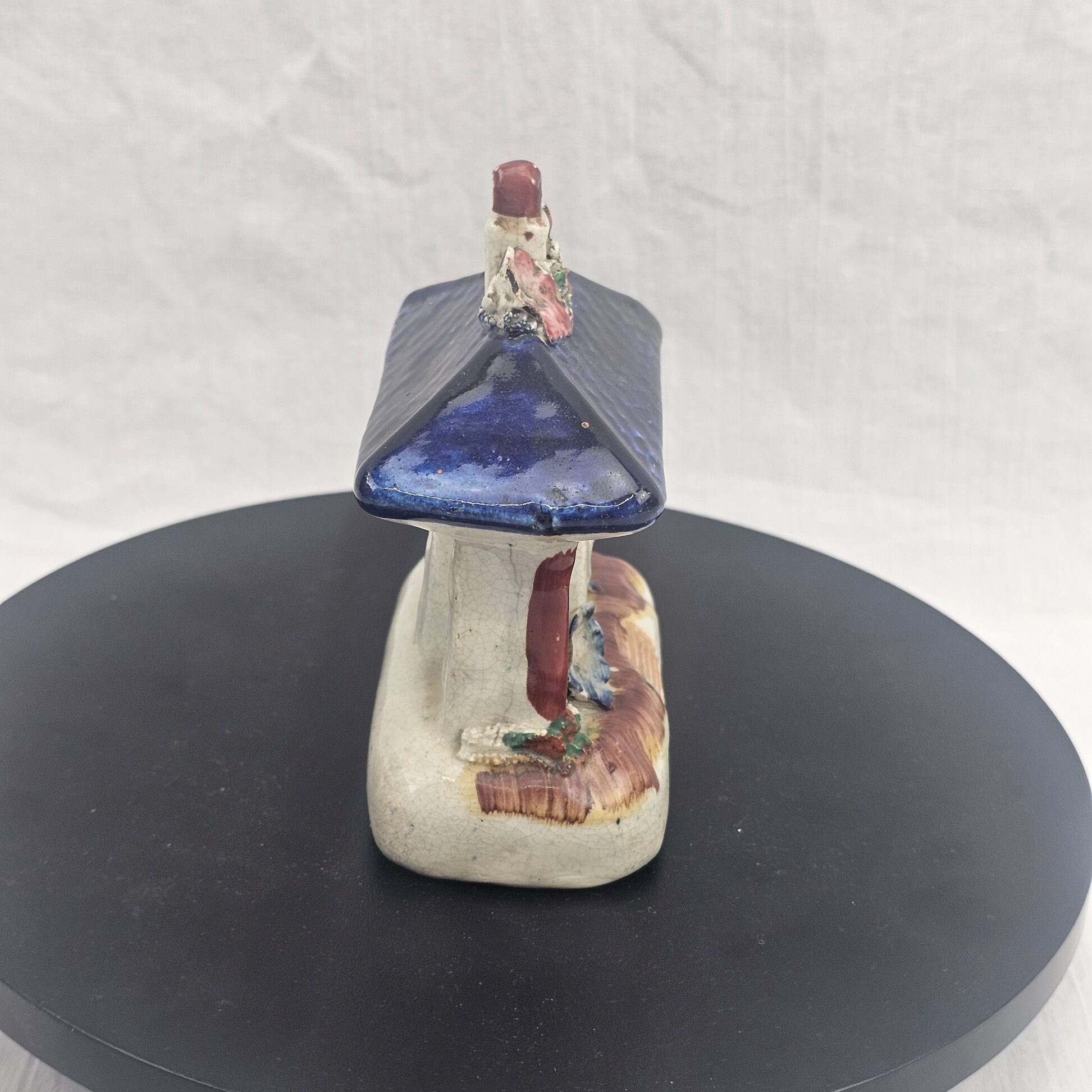
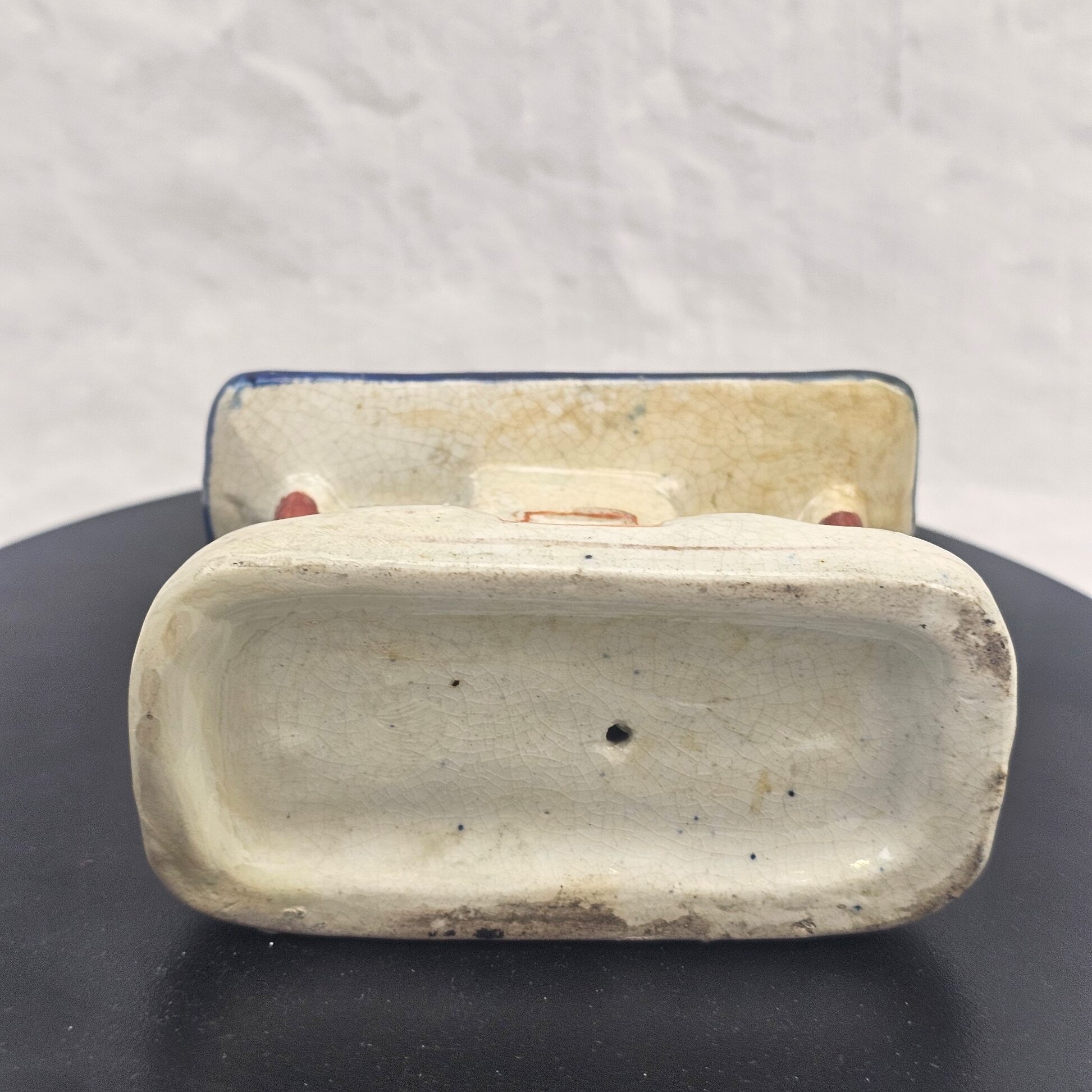
A charming small Staffordshire pottery cottage pastille burner in two separable parts, comprising a cottage body and a flat rectangular stand with rounded corners. The cottage has a distinctive hipped/pyramidal roof glazed in rich cobalt blue with a moulded diamond tile pattern, surmounted by a single red chimney stack flanked by two applied pink blowsy flowers at the apex. The front face is decorated with red painted columns/pillars, black gothic-arched window frames with applied blue flower details at the lower corners, and a central red arched doorway with painted steps at the base. The base of the cottage is painted with swept brown brushstrokes representing thatching or turf, with a yellow/gold ground and a stepped path. The rear face carries moulded but unpainted gothic arch window outlines. The flat stand has a single central vent hole to its underside. All-over crazing is present throughout. Unmarked. Approximate height 9–10 cm; approximate width 9 cm.
~ Historical Context ~
The hipped or pyramidal roof form — as seen on this piece — was among the most distinctive and earliest of the Staffordshire pottery pastille burner formats, produced from approximately 1800 to 1845. Described in the literature as the "umbrella roof" or "pagoda roof" type, this format drew on the fashion for chinoiserie and the picturesque cottage ornée aesthetic that dominated British decorative arts in the Regency period and early Victorian years. A pair of early 19th century Staffordshire pastille burners modelled as octagonal two-storey houses with umbrella-form roofs, highlighted with hand-painted sculpted florals, are recorded in the specialist auction market — confirming this distinctive hipped roof format as a recognised and collected early Staffordshire type.
The combination of the cobalt blue hipped roof, gothic arch window decoration, column pillars, and the heavy all-over crazing of the cream earthenware body all point to a date in the earlier phase of Staffordshire pastille burner production, firmly placing this piece in the Regency-to-early-Victorian period, c.1820–1840. The gothic arch window detailing — a motif drawn from the Gothic Revival taste promoted by the Picturesque movement — was particularly fashionable in pottery cottage ornament of this era. Pieces of this type and dating are generally considered more historically significant and collectable than the later mass-produced Victorian cottage forms.
~ Condition Report ~
The piece presents in honest age-worn condition with two material condition issues to disclose.
Crazing: All-over crazing is present throughout the cream earthenware body, the base, and the stand (visible across all images). This is heavy and consistent crazing rather than the minor surface crazing seen on many Victorian pottery pieces; it is age-appropriate for a piece of this early date and the specific earthenware body used.
Applied flowers at the chimney apex: Significant losses are apparent to the applied flower cluster at the chimney top. The front view (Image 1) shows two pink flowers reasonably intact, but the rear view (Image 4) and the left side (Image 5) reveal that the flower decoration is substantially reduced on those aspects, with visible losses to petals and moulded elements. Buyers should treat the front-view appearance of the flowers as the best-case presentation.
Cobalt blue roof: The roof glaze is rich and intact; no chips to the roof edges are apparent.
Body and columns: The cream body, red columns, and moulded gothic arch window details appear intact on the front face. The rear moulded arches are uncoloured but present.
Stand/base (Image 6): The rectangular stand is intact with the single vent hole present. Age grime to the interior of both parts.
No cracks or evidence of structural repair are apparent from examination of the photographs. Buyers are encouraged to review all images carefully before purchasing.