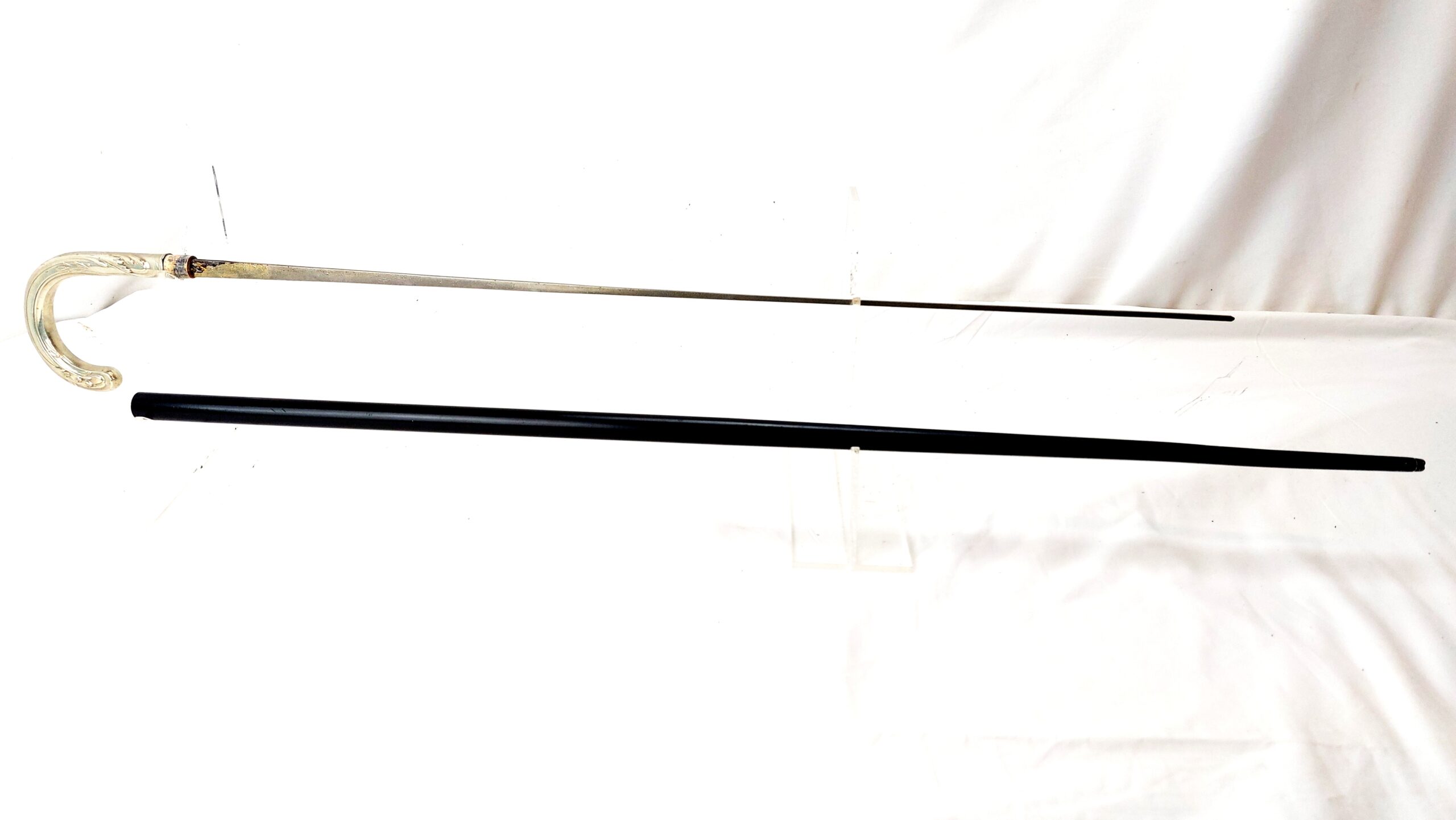
*Continental European, c.1890–1910, Alpacca Mounted Sword Stick with Floral Handle and Steel Blade*
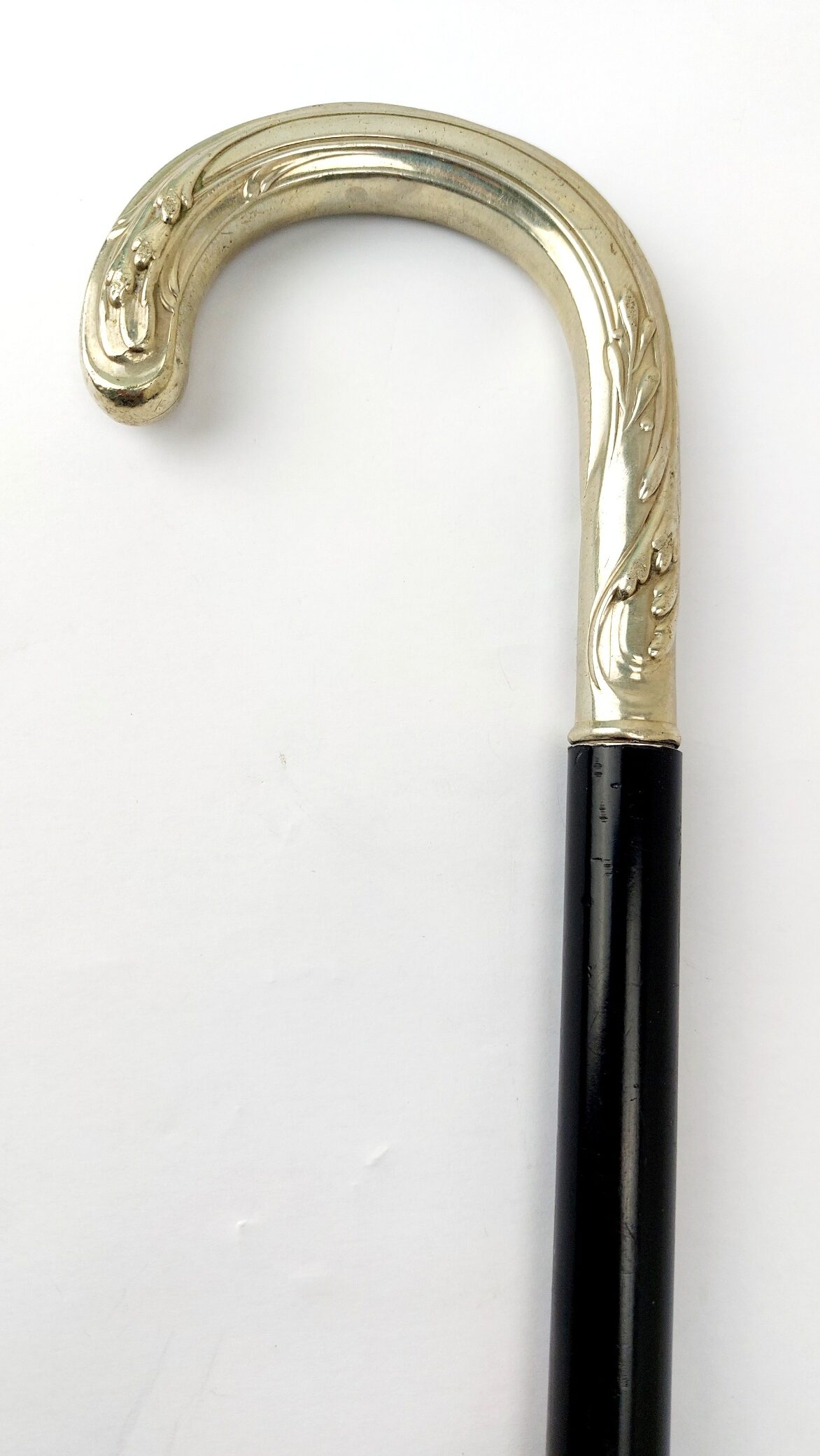
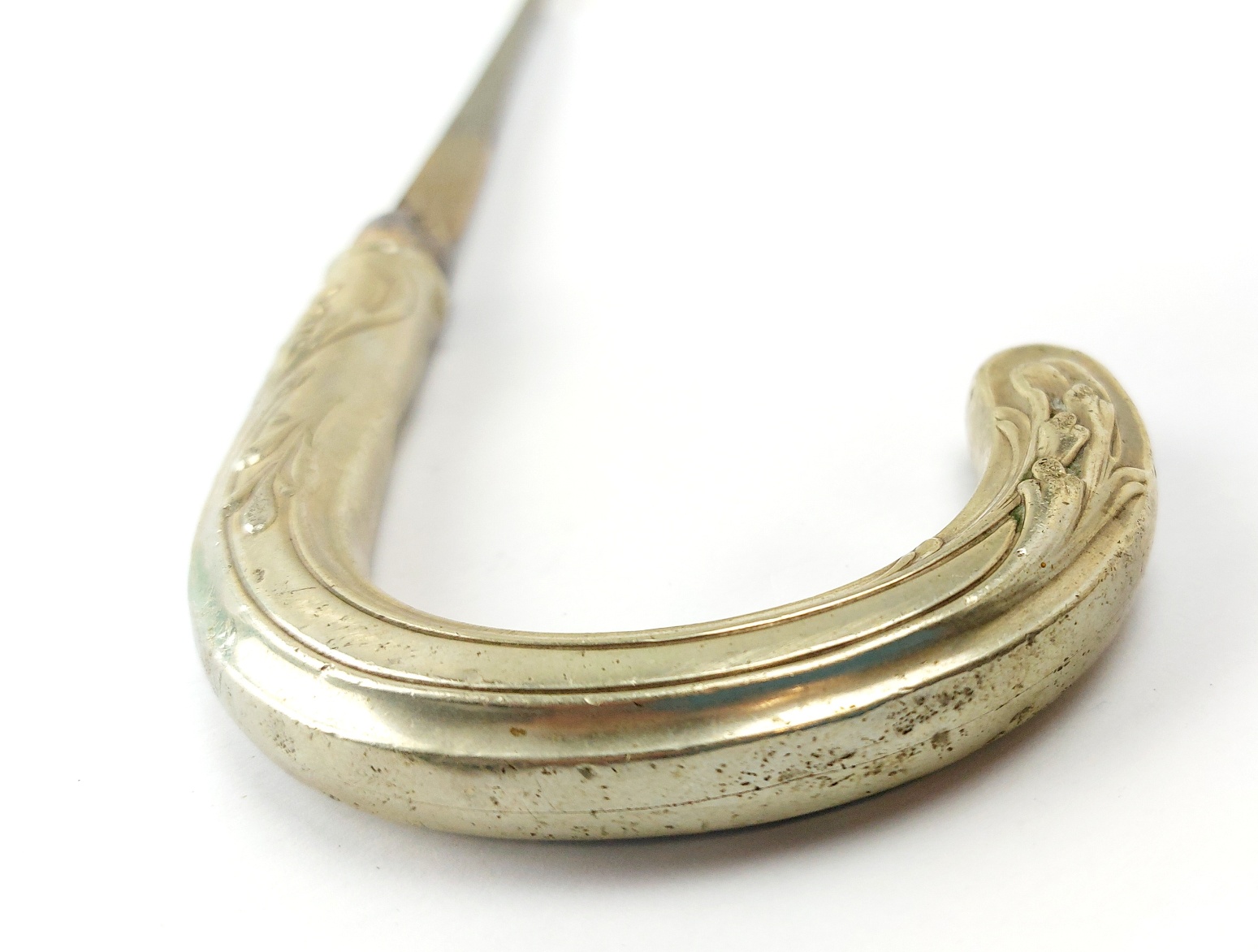
A late Victorian / early Edwardian sword stick fitted with a decorative Alpacca (nickel silver) crook handle, concealing a slender steel blade within the walking stick shaft.
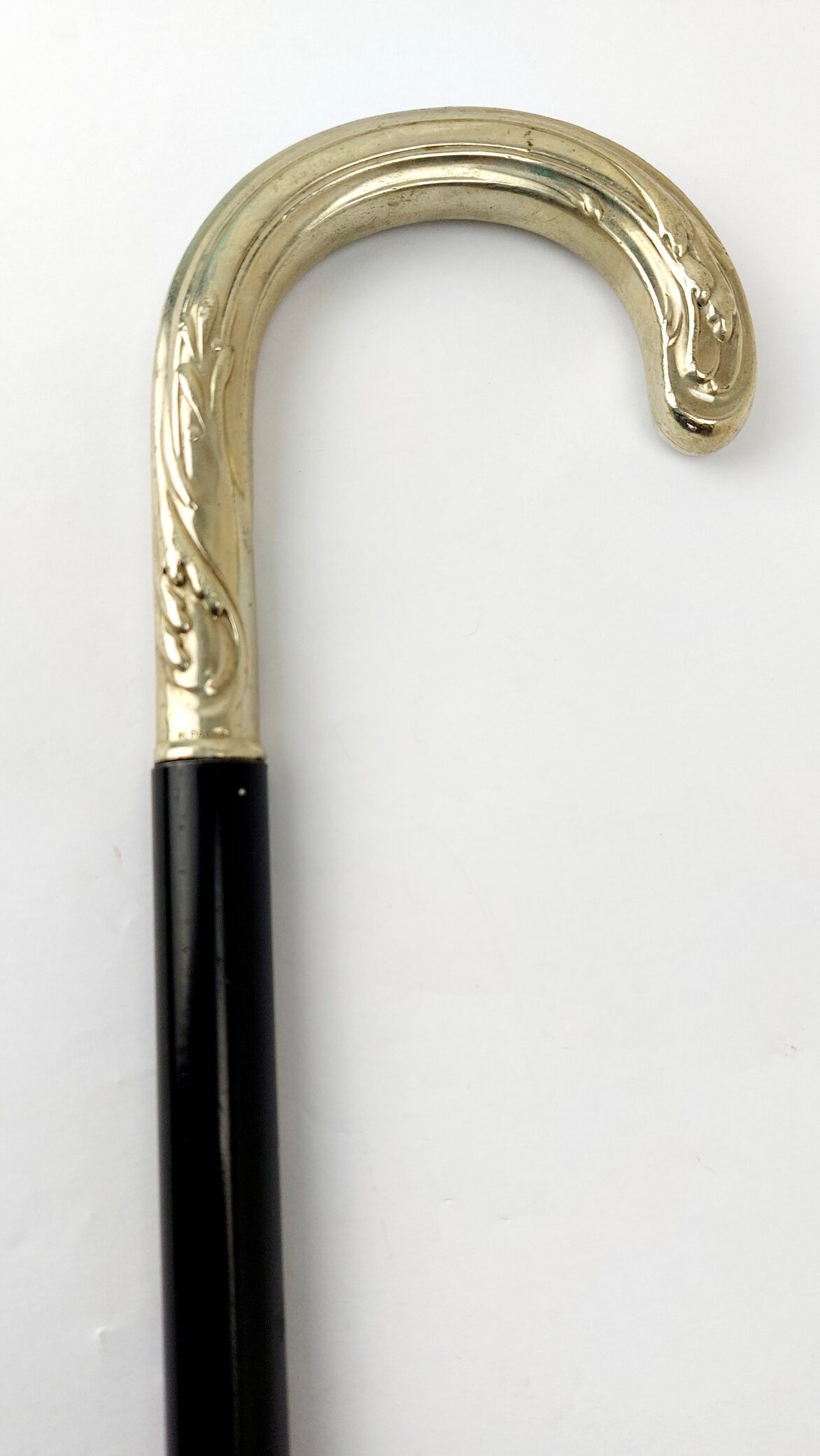
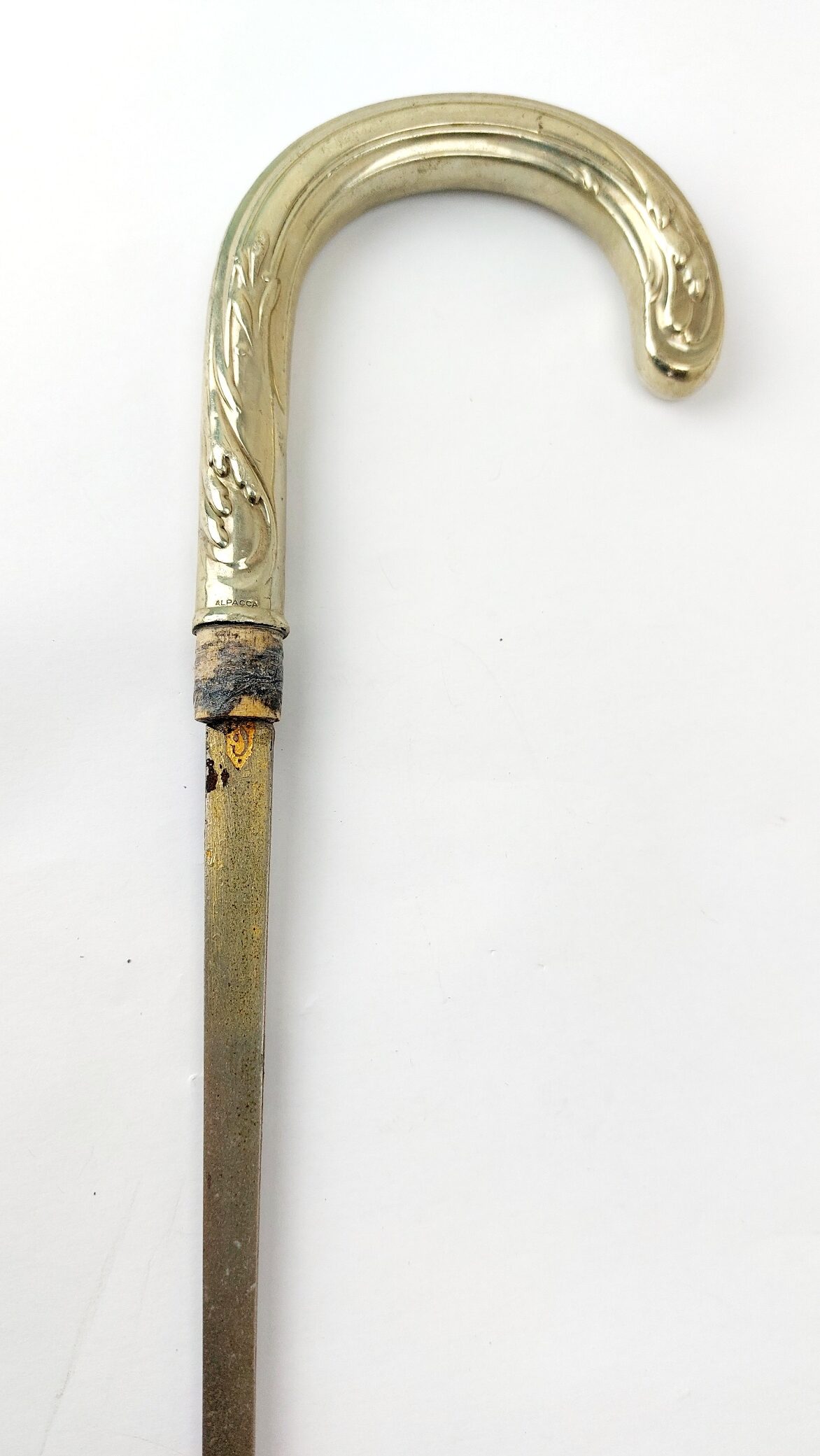
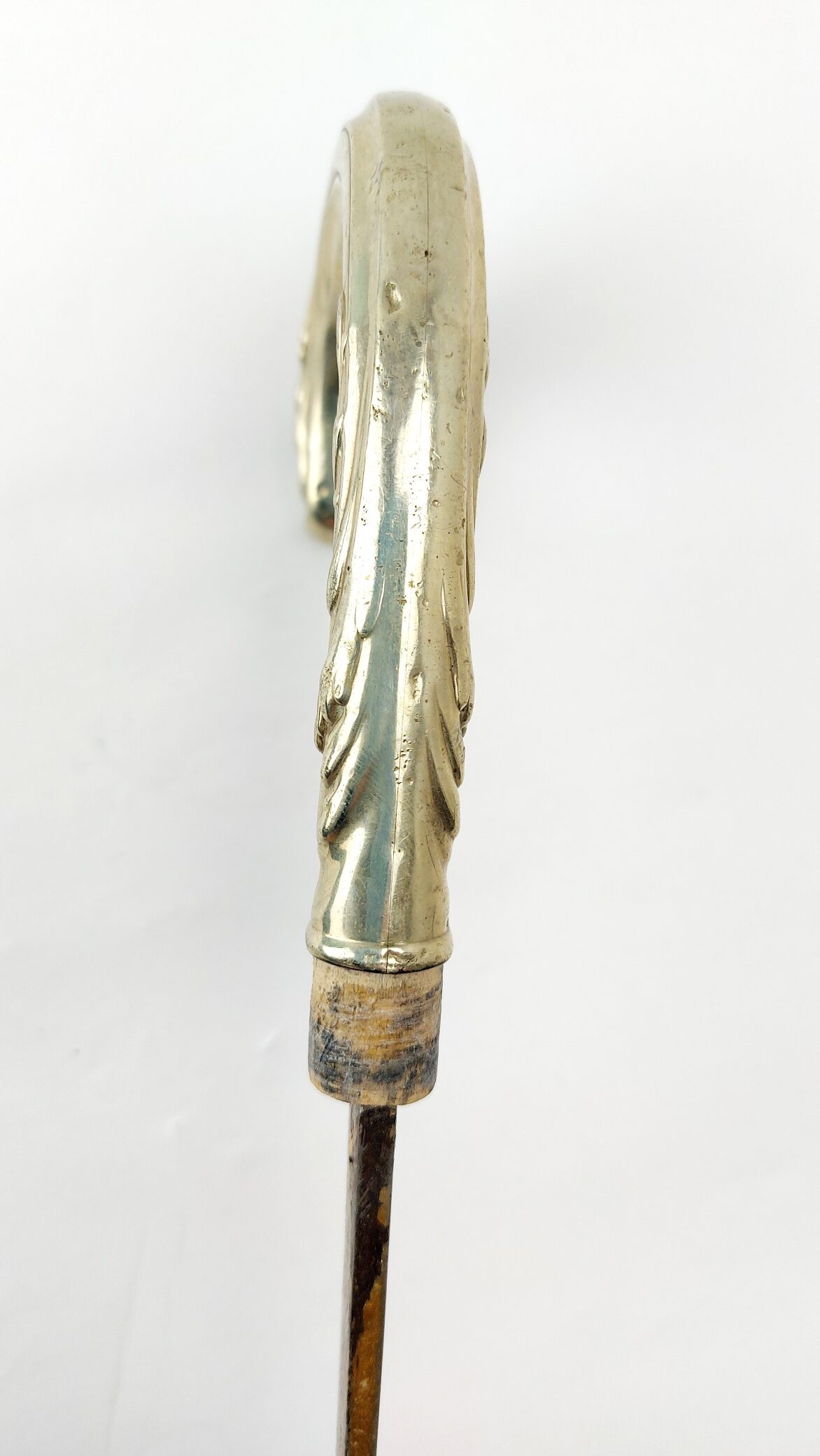
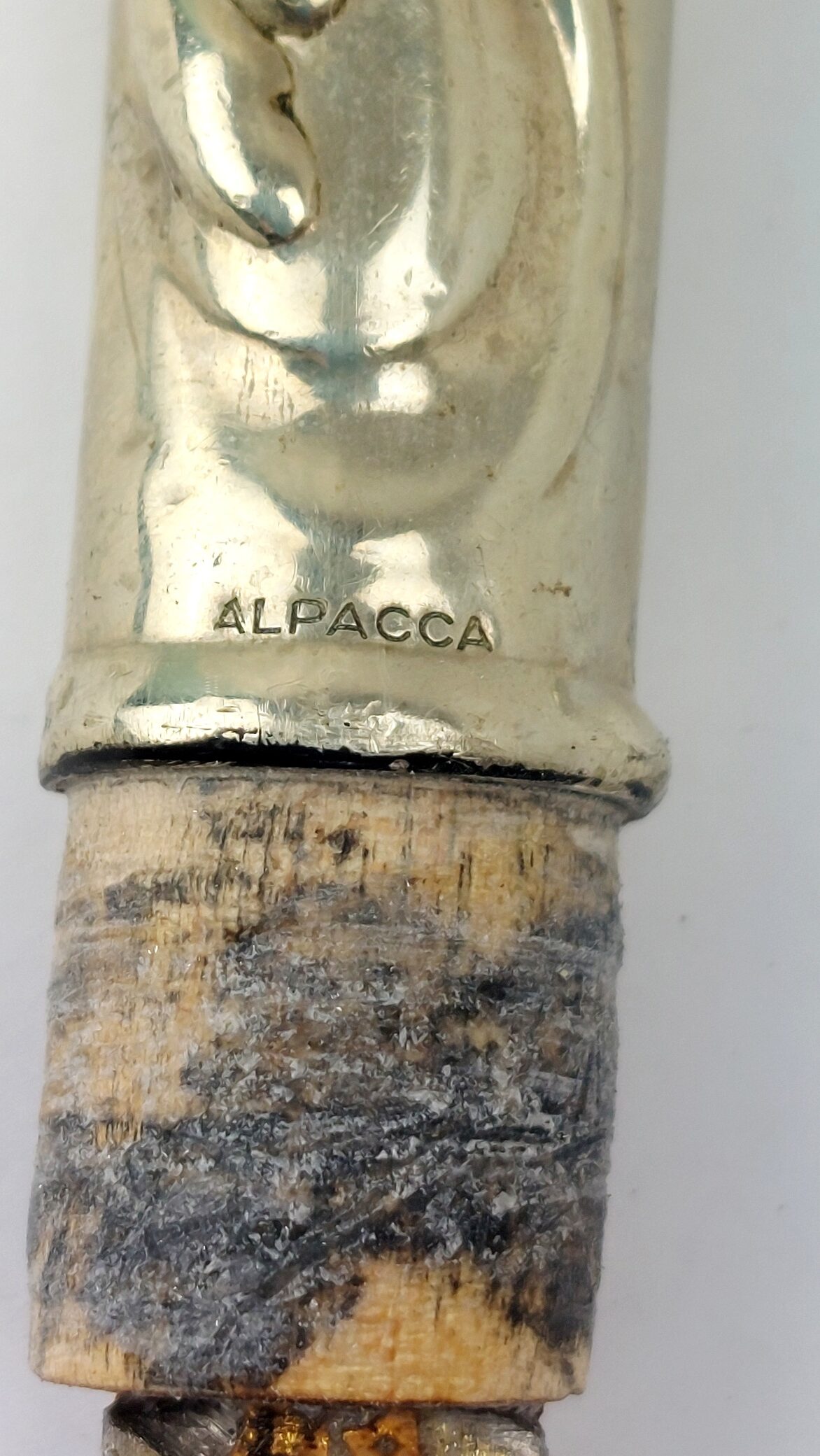
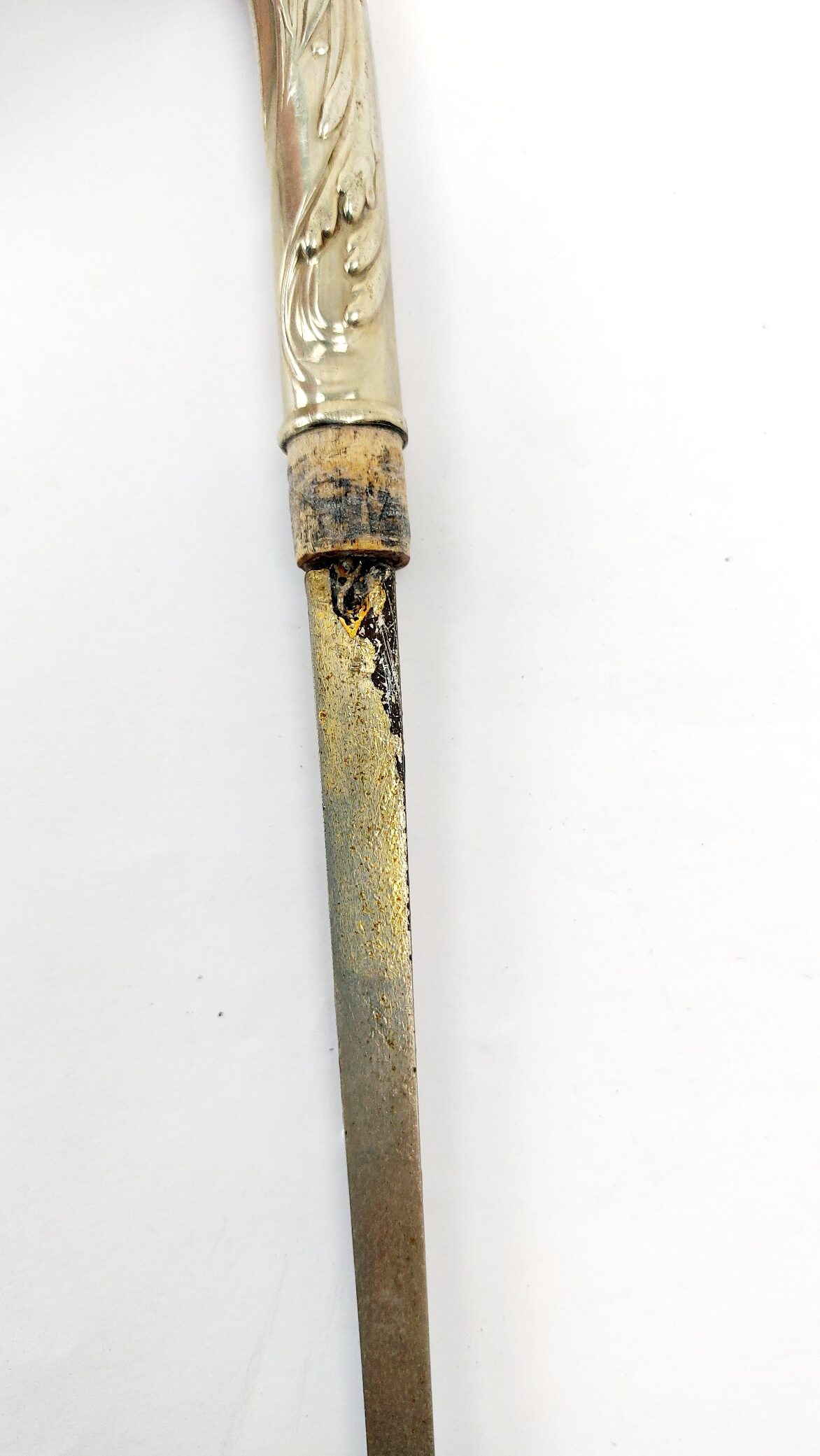
The handle is cast in a traditional gentleman’s crook form and decorated in relief with stylised scrolling foliage in the acanthus manner, typical of late-19th century European decorative metalwork influenced by Art Nouveau styling. The underside of the handle is stamped “ALPACCA”, indicating the mount is made from nickel silver (a copper-nickel-zinc alloy) widely used in continental Europe for cane mounts and decorative fittings.
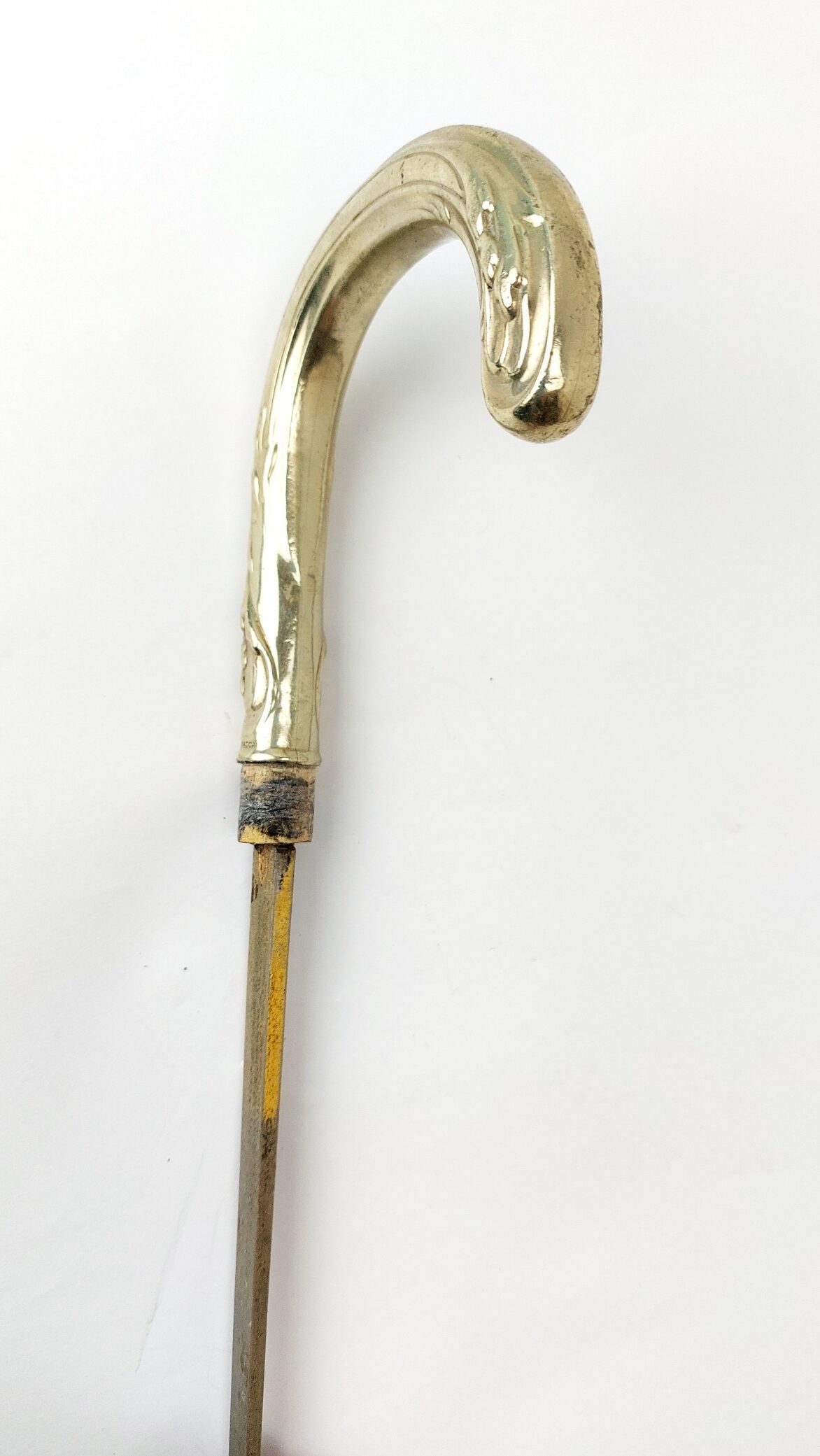
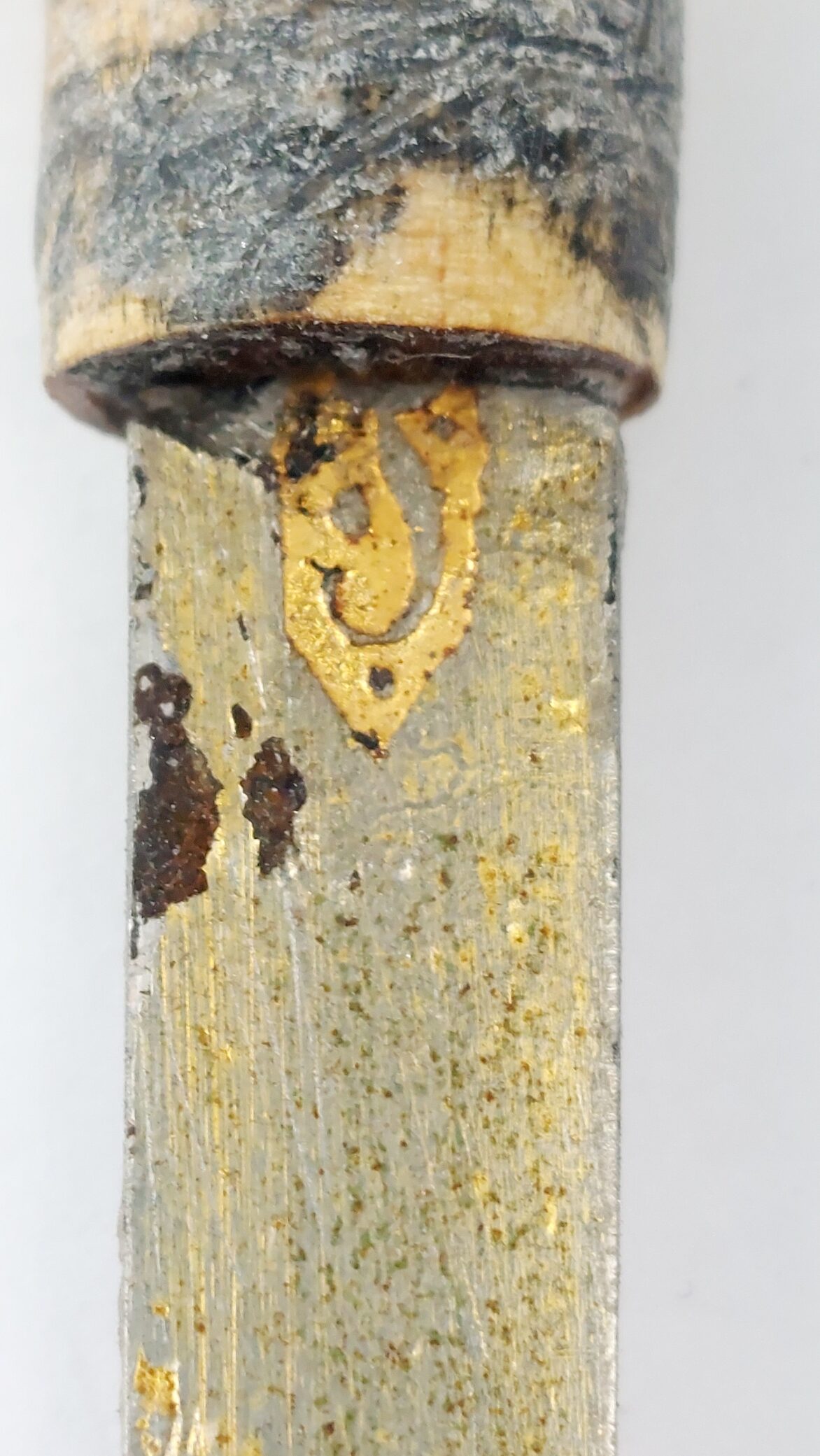
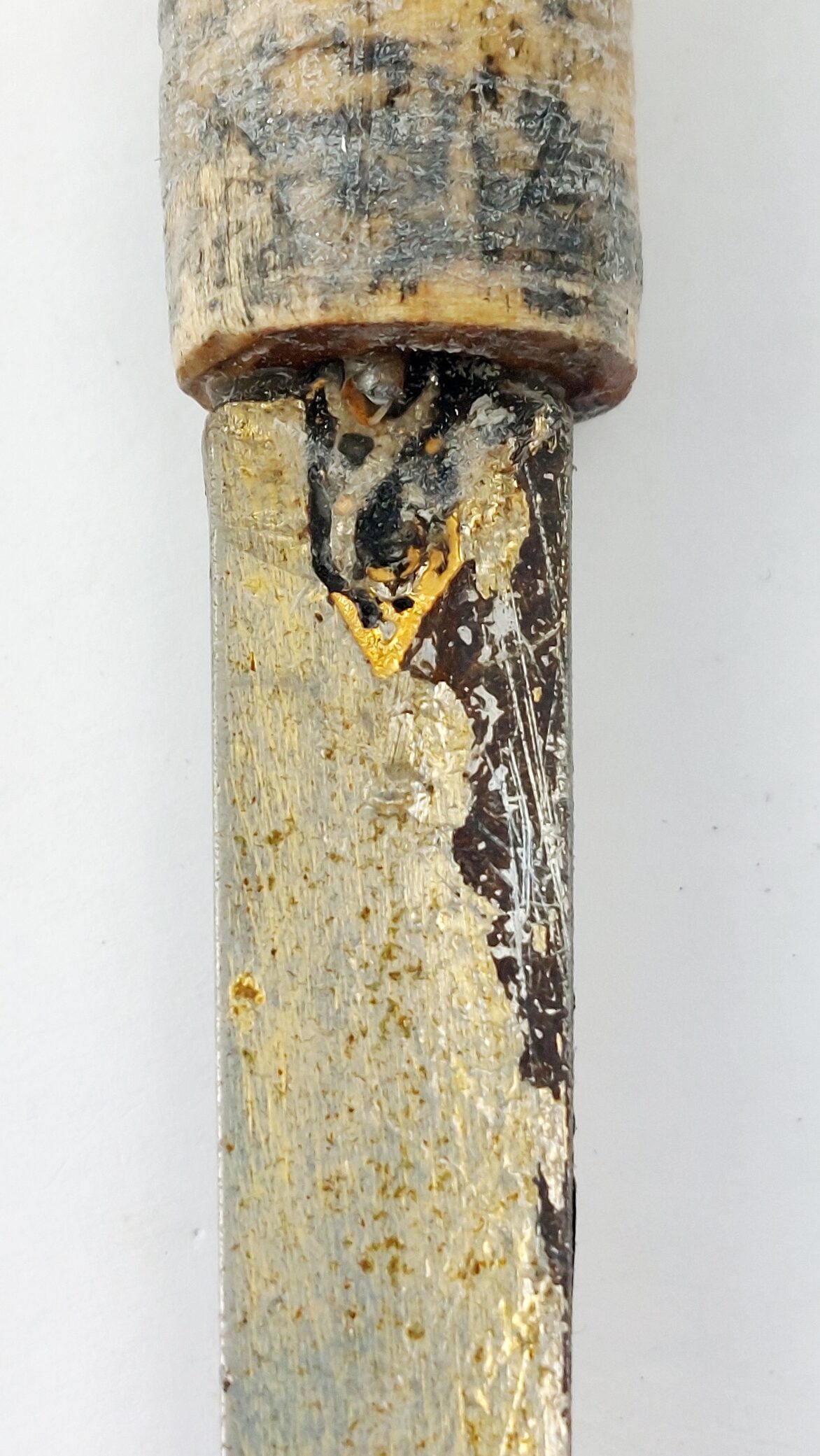
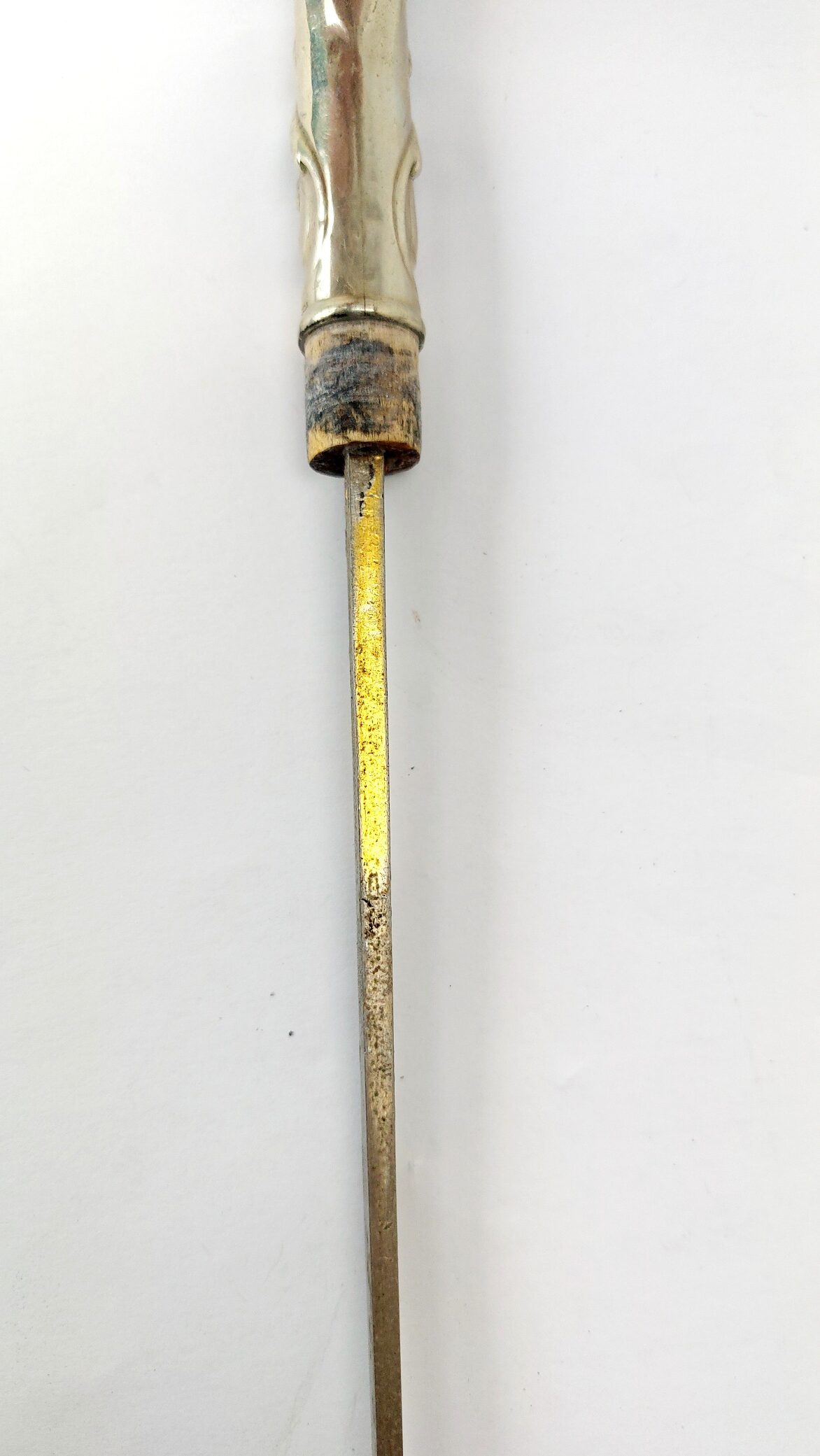
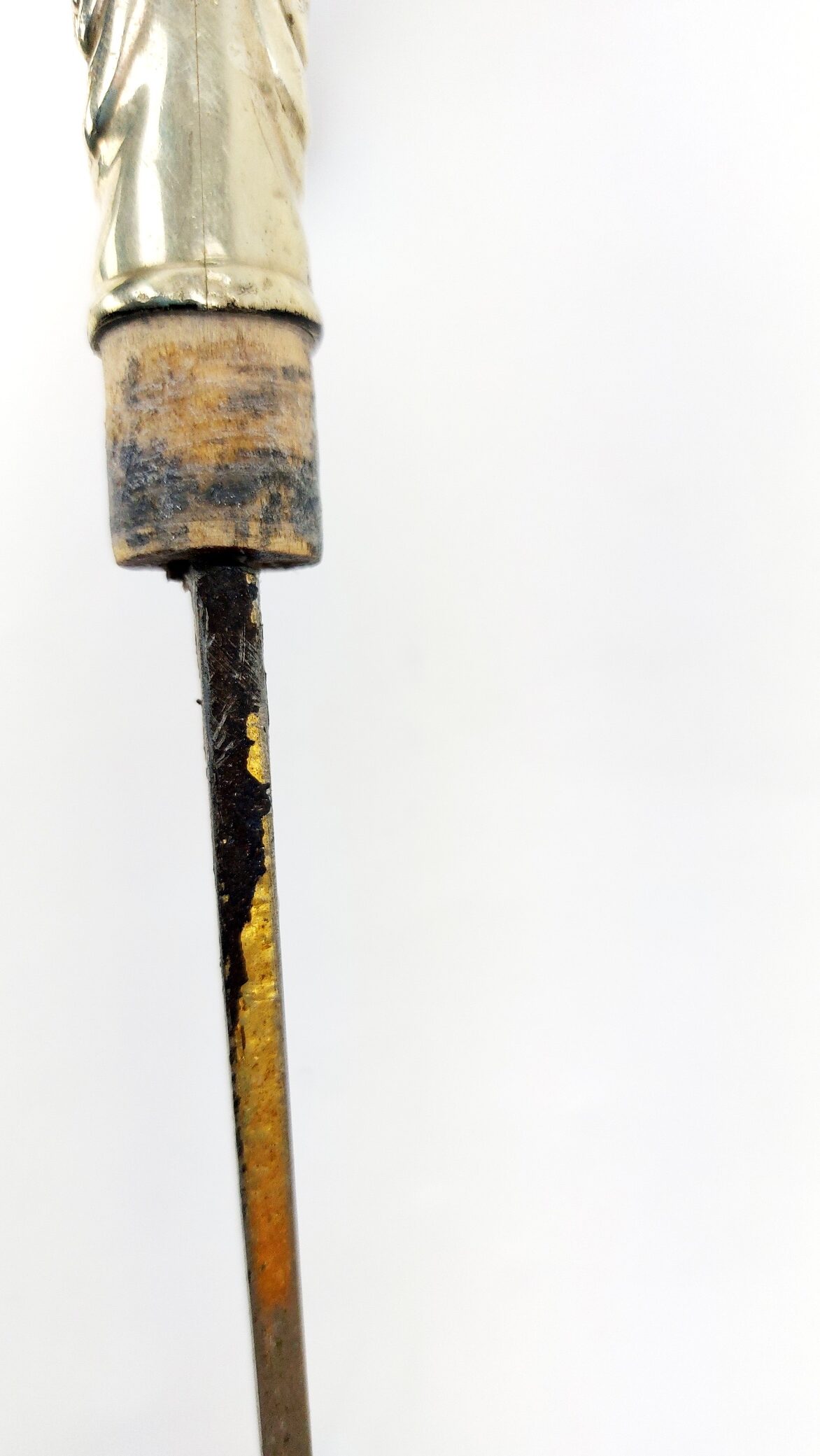
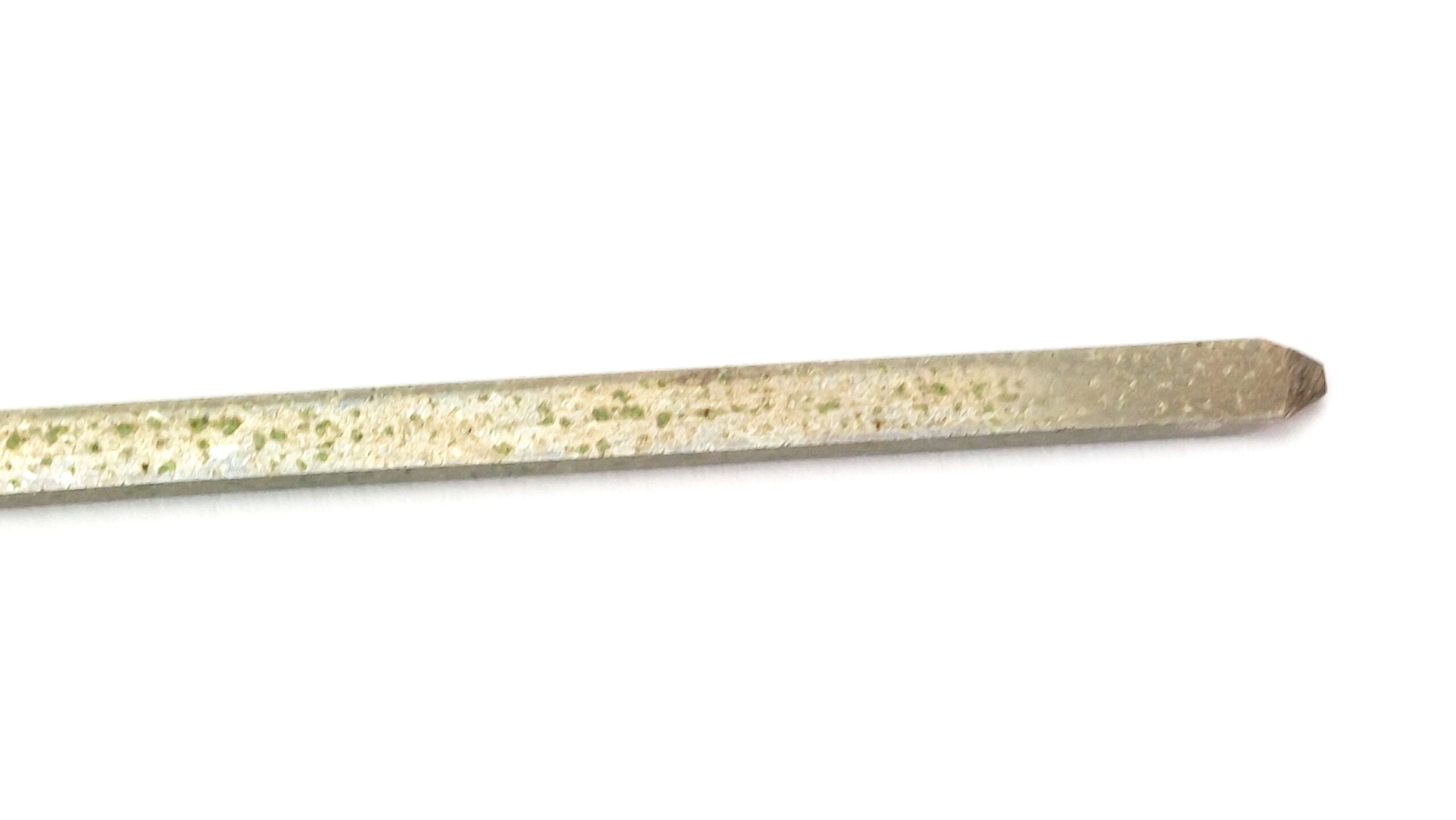
When withdrawn from the shaft the handle reveals a long, square-section steel blade, tapering to a sharp point and displaying traces of original plated or polished finish beneath age patination. A small maker’s or retailer’s device is visible near the forte on both sides of the blade, though now partially worn.
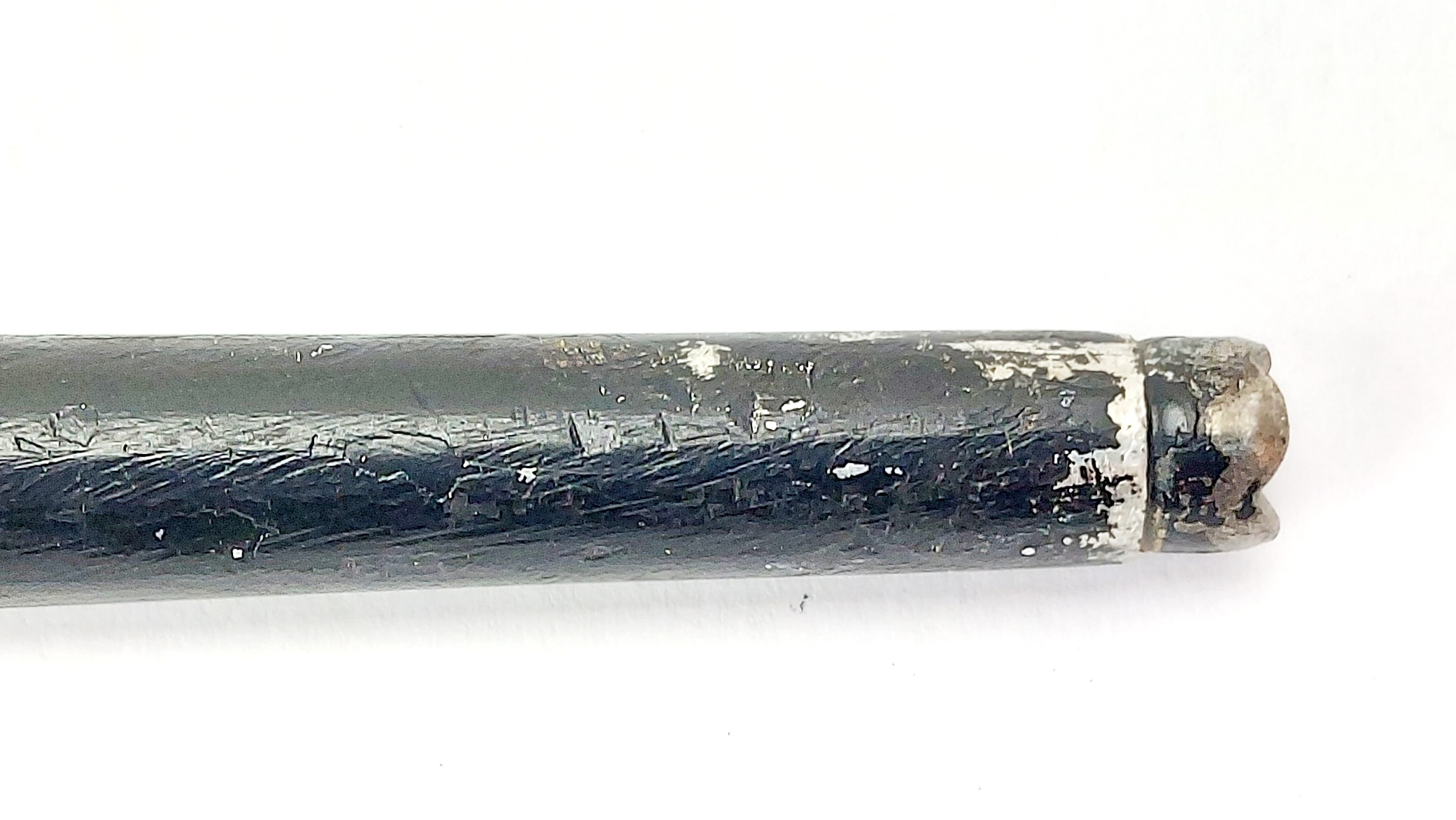
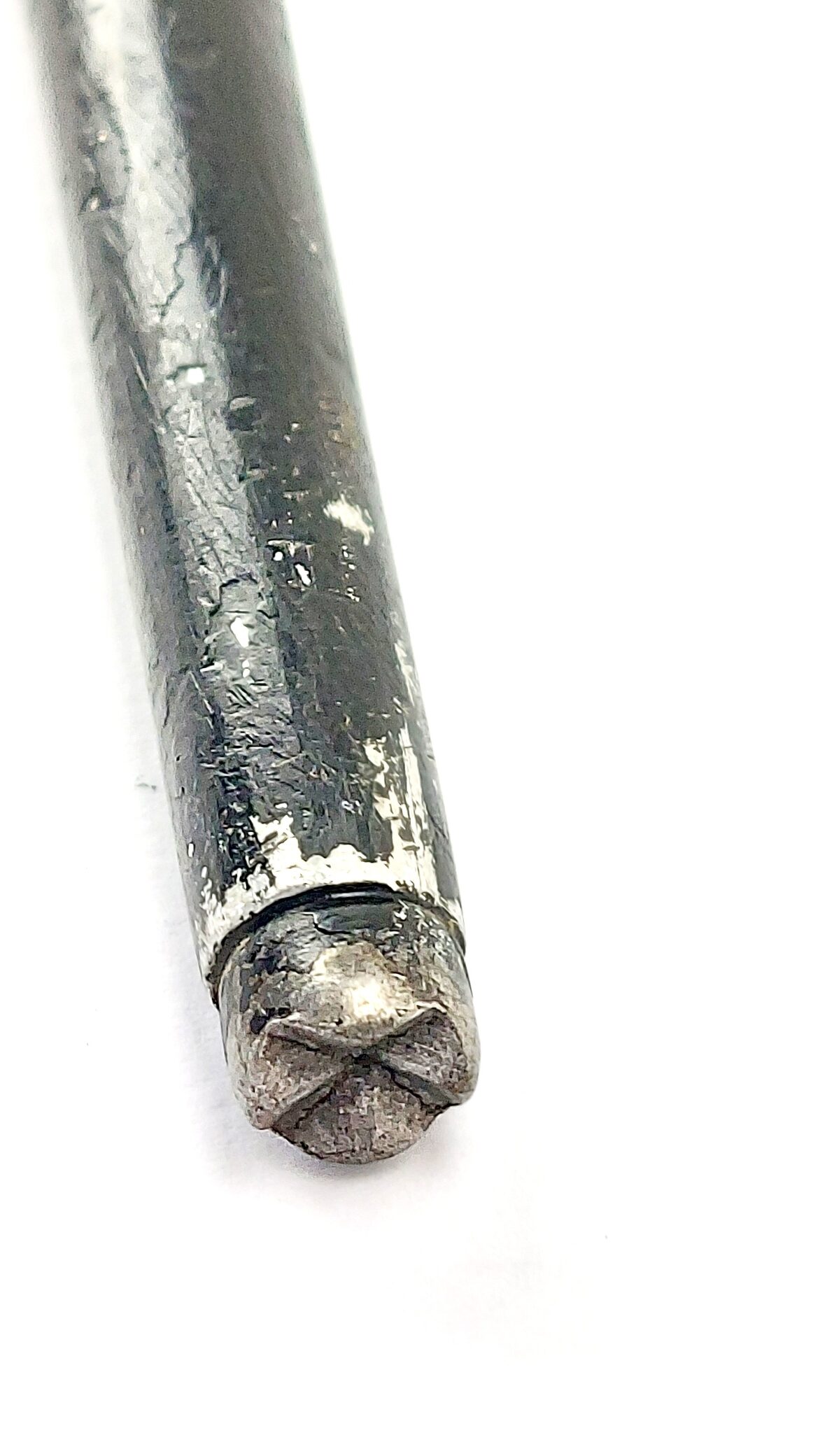
The blade sits within the hollow shaft of the cane, which functions as the scabbard, while the outer black walking stick forms the everyday appearance of a gentleman’s cane. Such sword sticks were produced widely across Germany, Austria, France and Italy during the late Victorian period and were marketed as both fashionable accessories and discreet defensive weapons.
Although frequently associated with Victorian Britain, the Alpacca mark strongly suggests continental manufacture, as British examples were typically sterling silver hallmarked.
Approx. Measurements – Blade length: 69 cm. Sword overall length: 81 cm. Walking stick / scabbard length: 91.5 cm.
History Note:
Sword sticks (also known as cane swords or system sticks) became popular in Europe during the 18th and 19th centuries as discreet personal defence weapons concealed within everyday walking canes. By the Victorian era they had become both practical and fashionable accessories for gentlemen travelling in urban environments.
Manufacturers across continental Europe produced large numbers of such sticks with decorative handles made from Alpacca (German silver), a durable alloy designed to imitate sterling silver while being far less expensive. These mounts were often decorated with floral or scroll motifs reflecting the decorative styles of the period.
While many sword sticks were carried purely as novelties or fashionable curiosities, they also served as practical defensive implements, combining the appearance of a gentleman’s walking cane with the concealed blade of a small sword.
*Condition*
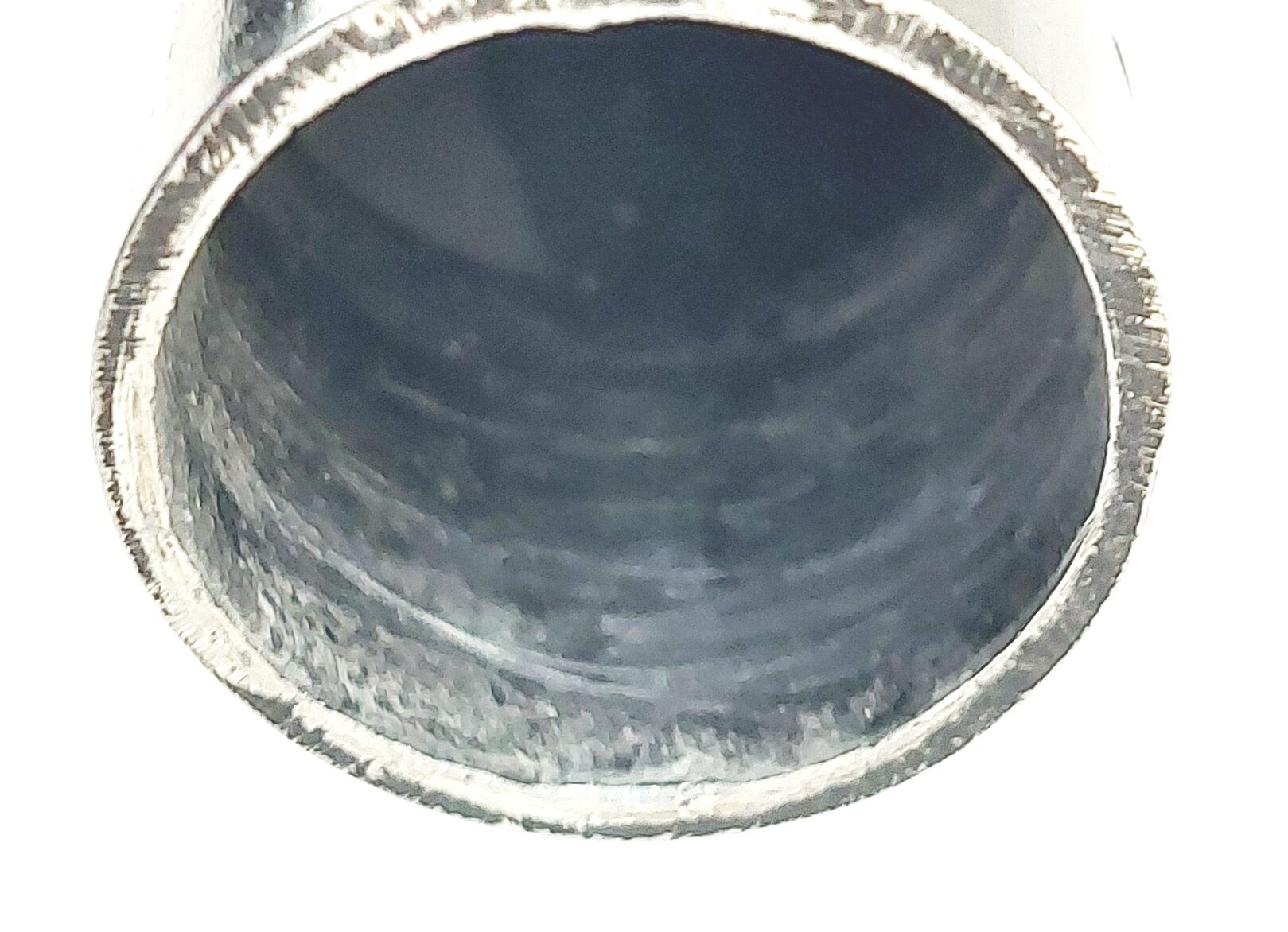
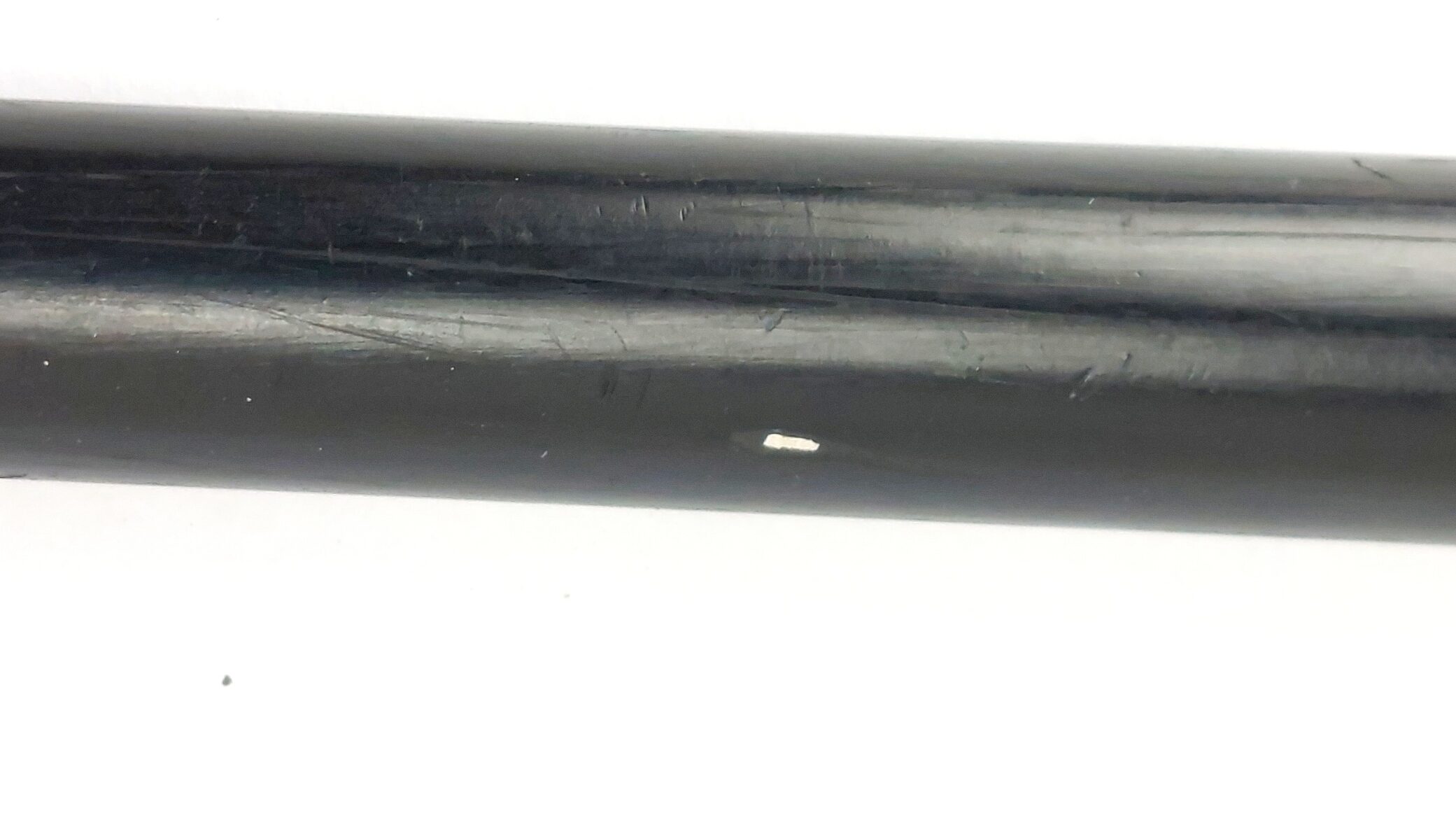
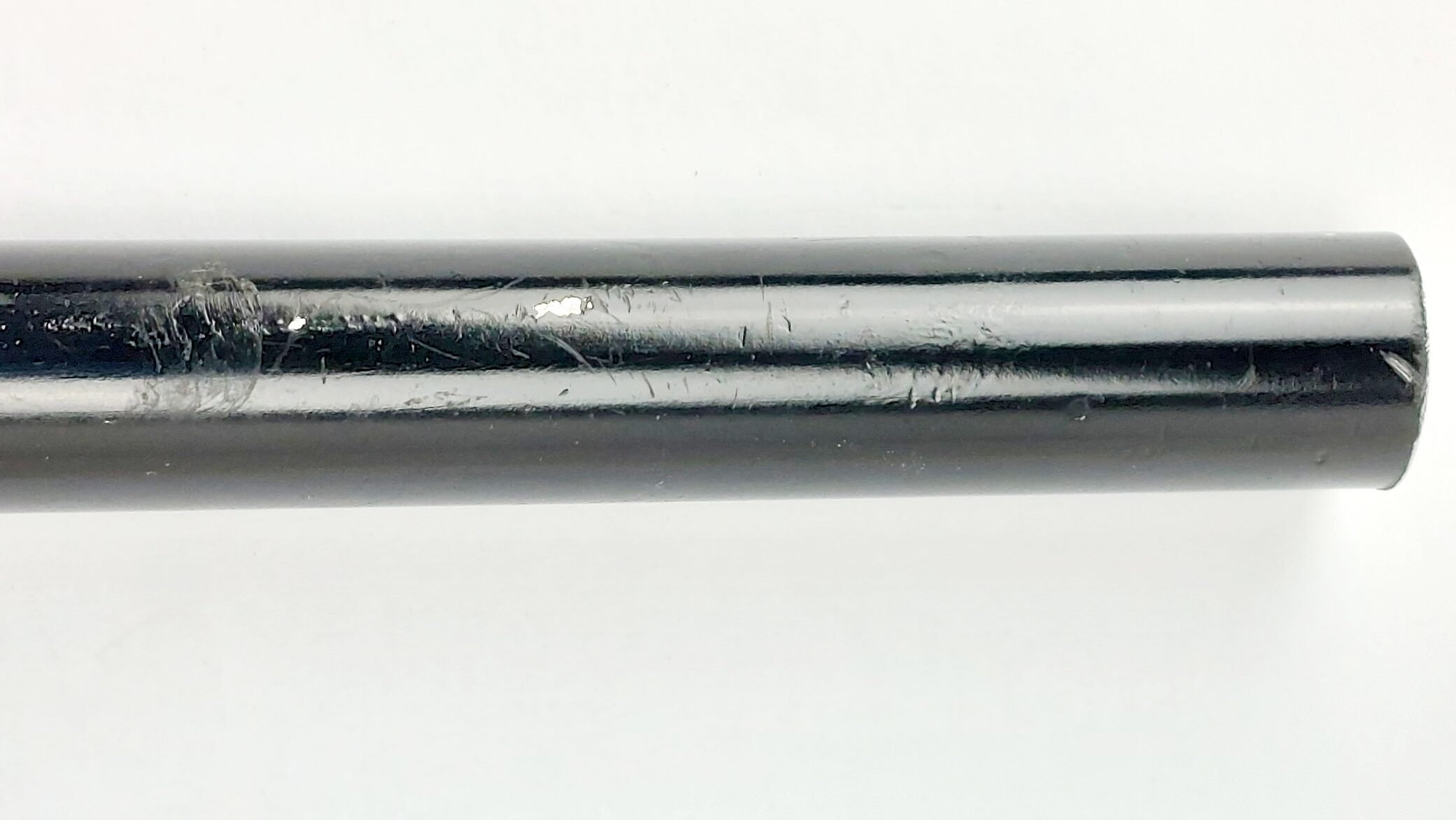
Good overall antique condition. The Alpacca handle retains its decorative detail with light age wear and surface marks consistent with use. The blade shows areas of oxidation, plating loss and surface corrosion, particularly near the forte and along the edges, though it remains structurally sound. The wooden internal section beneath the handle shows age darkening and wear. The black outer walking stick shaft shows scuffs, scratches and paint loss consistent with age and use. The blade withdraws correctly from the cane and the piece remains complete as a sword stick. Please see photographs as part of the condition report.
*In order to complete the online purchase we will require a picture/scan of a photo ID (Driving Licence, Passport or an official document with a recent picture). If you don't posses any such document please call to buy. If we consider that the proof of ID is incorect or insuficient, we reserve the right to cancel the transaction.
*We also reserve the right to cancel the transaction with a full refund if there is any suspicion that the provided item will be used in any way contrary to the laws and legislation of UK.