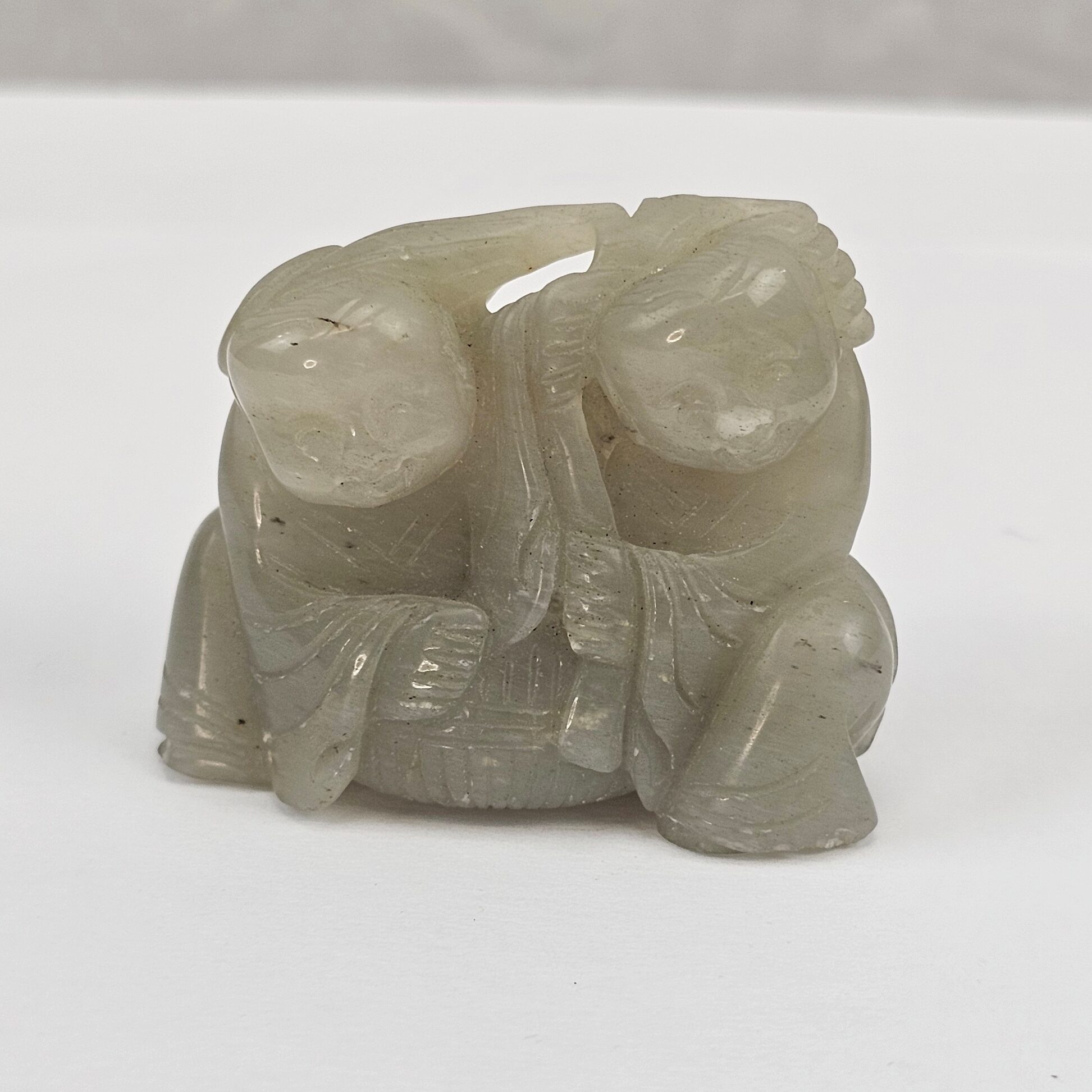
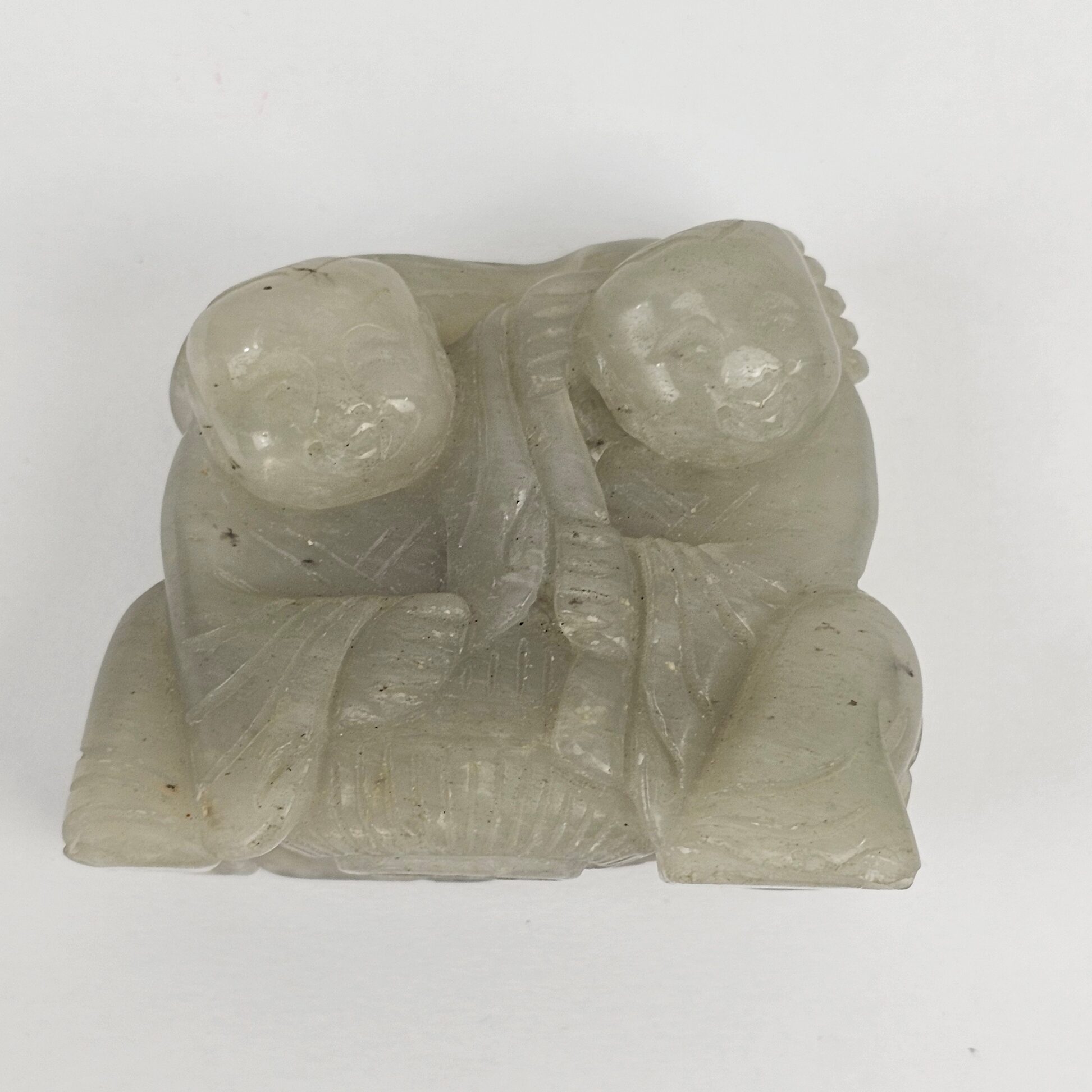
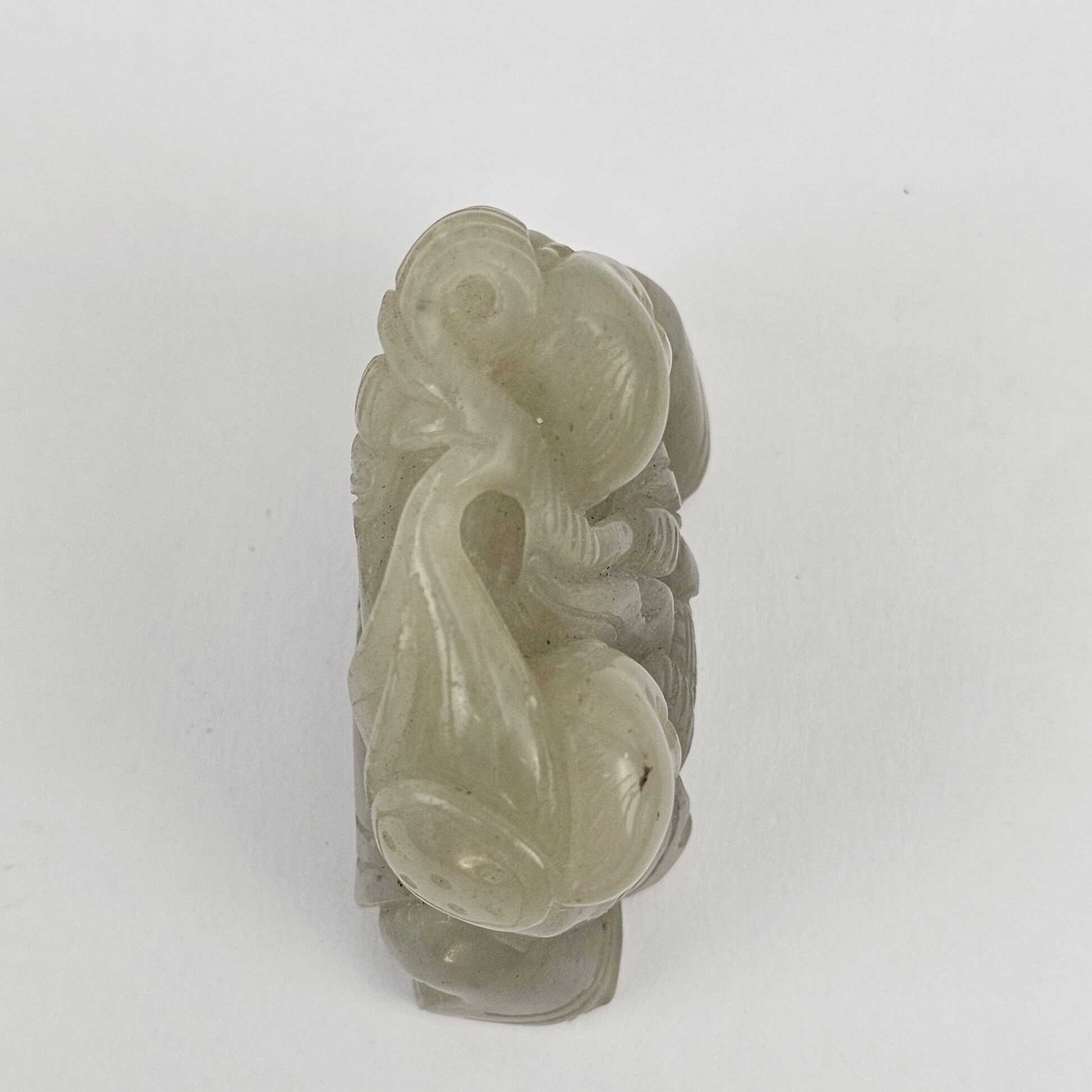
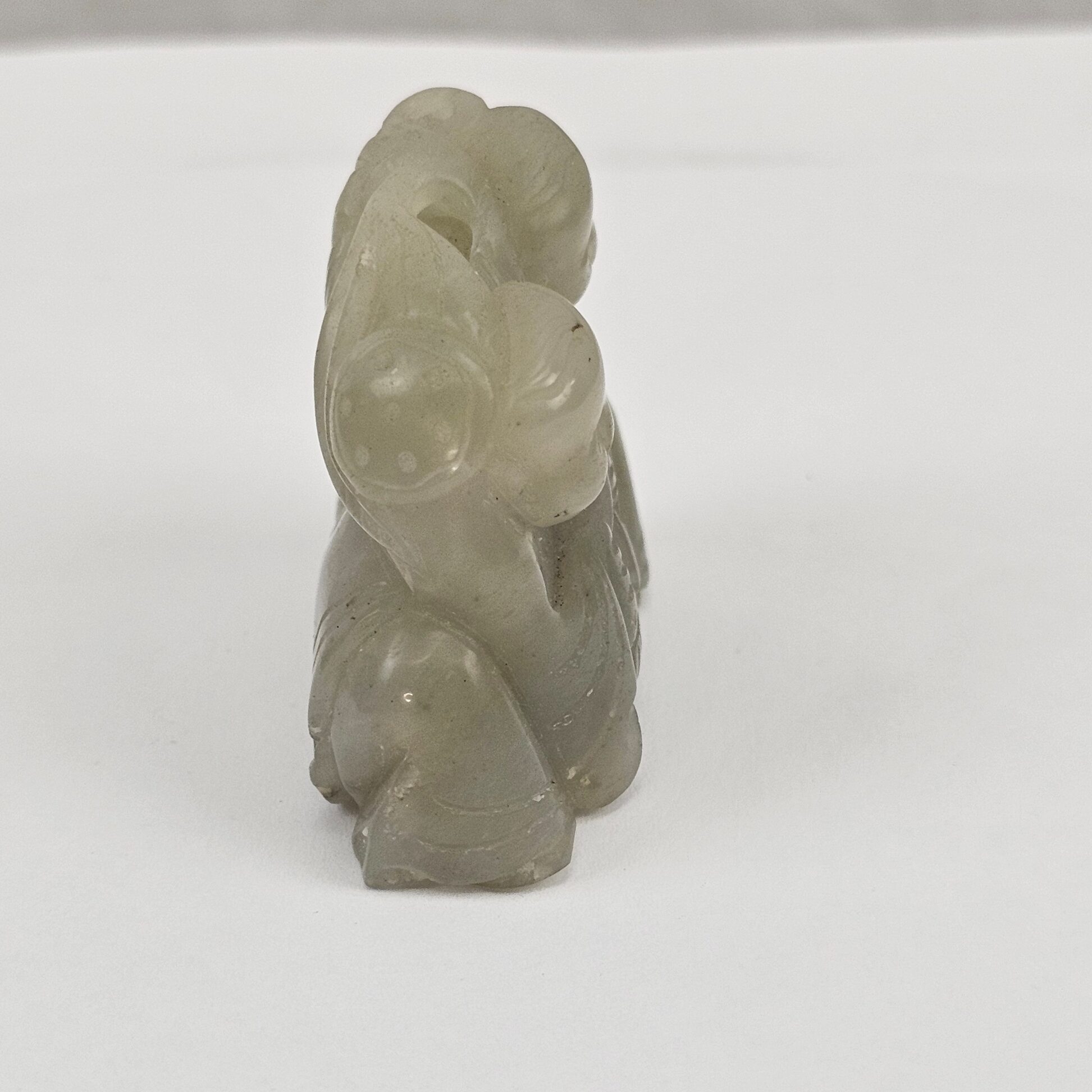
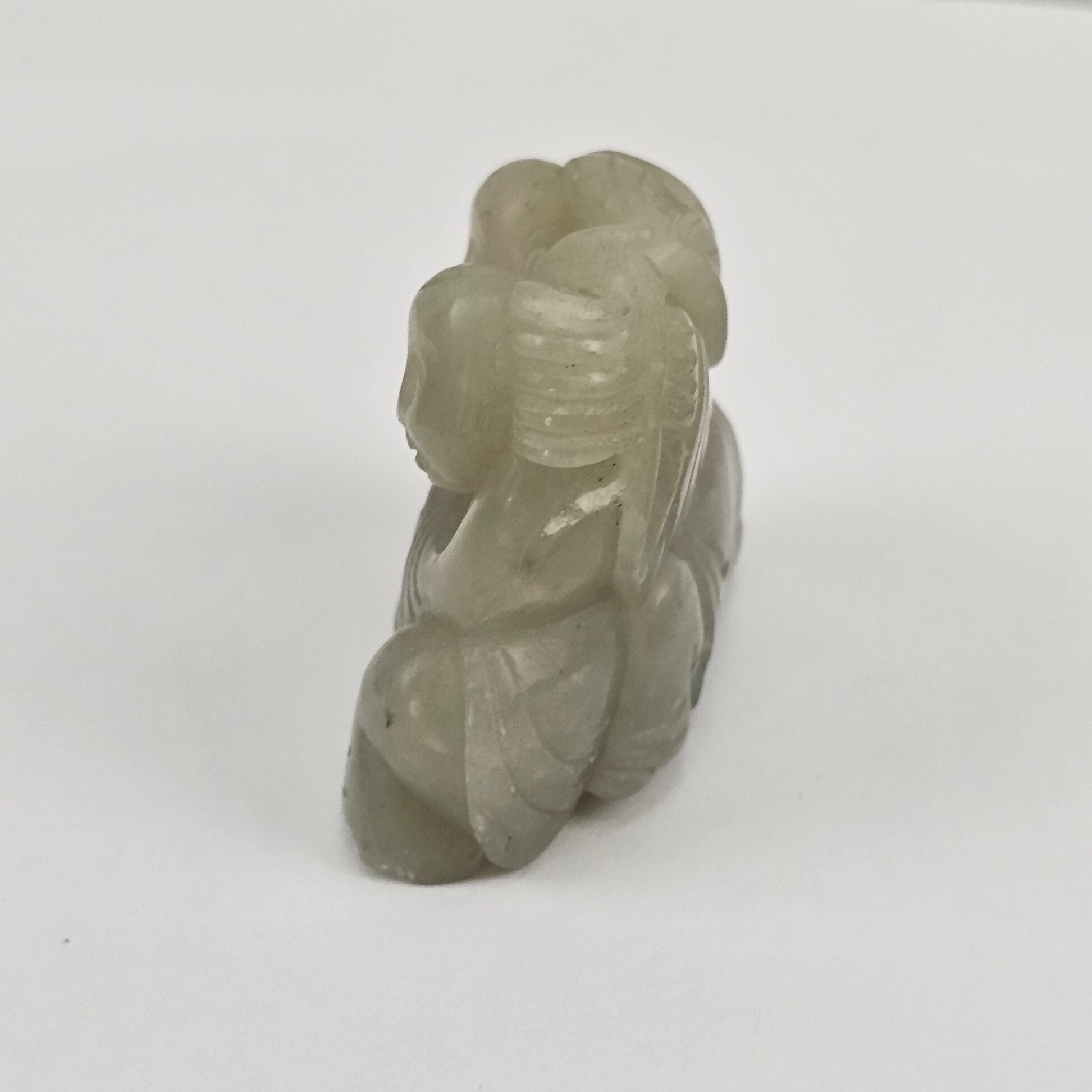
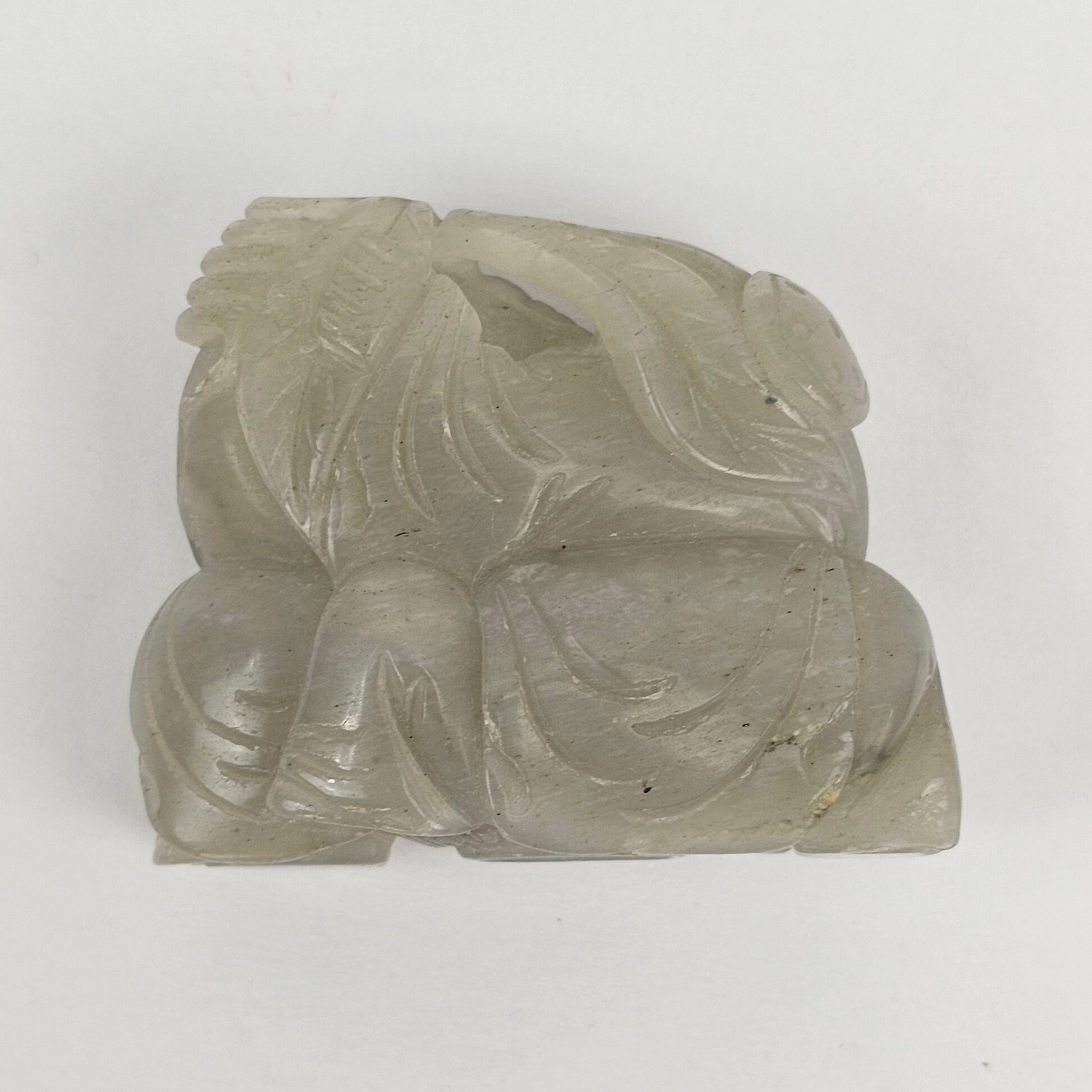
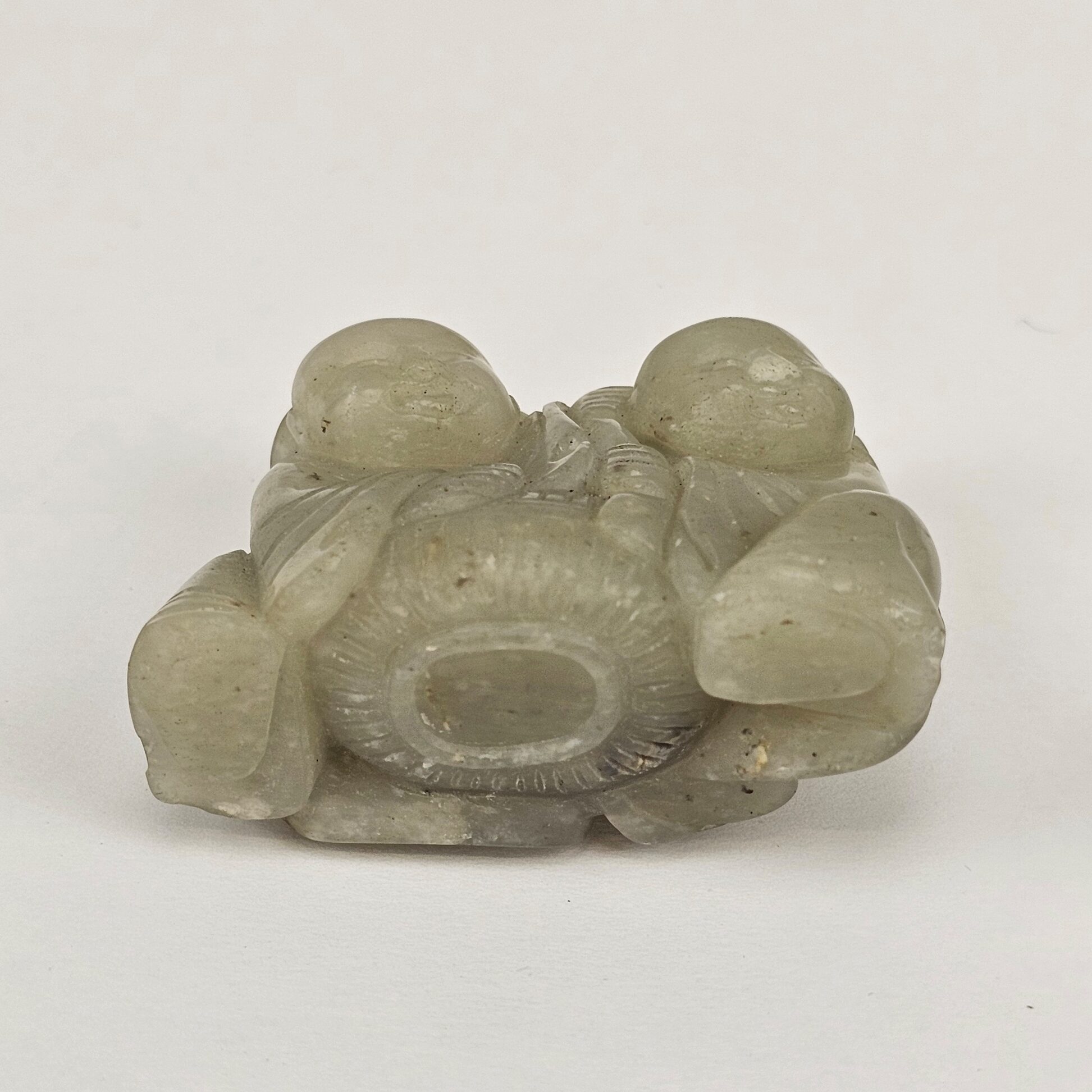
~ Chinese Qing Dynasty Pale Celadon Nephrite Jade Carving of Two Boys with Lotus, 18th to 19th Century ~
A finely hand-carved group worked from a single piece of pale celadon nephrite jade, depicting two chubby boys in close and playful interaction, surmounted by a large lotus flower. The two figures are presented in a compact and rounded composition, their bodies turned toward one another, the forms closely interlocked so that the group reads as a unified whole from all angles. Both boys are rendered with the characteristic full, rounded faces of the tongzi or auspicious boy type, with simple but expressive features, round cheeks and smooth foreheads. Each figure is dressed in loose, flowing robes with incised folds and hem decorations suggested through parallel line groups, and both have their heads raised toward the prominent floral element above. One boy is shown with more prominent facial detail from certain angles, with a clear profile and rounded ears visible. The lotus flower crown of the composition is boldly carved with broad, layered petals clearly delineated, rising centrally above and between the two boys and forming the visual apex of the piece. Additional leaf and petal elements flank the main bloom and extend to the sides of the composition, with a lobed or fingered secondary element visible to one side that may represent a lotus seed pod, gourd or subsidiary botanical form. The underside of the piece shows an oval recessed element with concentric incised rings surrounded by radiating petal forms, which may indicate that the piece was originally designed as a toggle or pendant for belt use, and should be examined in person to confirm the presence of any suspension aperture or fitting. The stone is a uniform pale grey-celadon throughout, with a good smooth polish and scattered dark mineral inclusions of the type inherent to nephrite of this character. An open negative space is visible between the two figures from the front, which is a mark of skilled carving.
Historical Context
The subject of chubby, joyful boys playing among lotus flowers is one of the most enduringly popular and commercially significant motifs in the entire history of Chinese decorative art. Known broadly as the lian sheng gui zi or tongzi xi lian motif, the composition draws its auspicious power from the phonetic resonance of the Chinese words for lotus, lian, which sounds like the word for continuous, and for seed pod, zi, which also means child or son. Together, the image of boys playing among lotus expresses the wish for continuous, abundant male offspring, one of the most prized blessings in traditional Chinese culture. The motif appears across almost every medium in Chinese art from at least the Song Dynasty onward, but reached a particularly high refinement in jade carving during the Ming and Qing periods.
In the context of nephrite jade carving, two-boy or multi-boy groups with lotus were produced at high quality throughout the 18th and 19th centuries for both personal devotional use and as gifts marking weddings, betrothals and auspicious occasions. The pale celadon nephrite here, a warm grey-green stone of the type sourced from Khotan and Yarkand, was among the most traditionally prized materials for such carvings. The compactness of the composition, the integration of the two figures with the lotus crown, and the finely incised robe detail are consistent with Qing period work of quality, and the oval recessed element at the base suggests the piece may have served originally as a belt toggle or pendant for personal wearing, a function that adds further depth to its auspicious significance as a worn talisman of fertility and good fortune.