
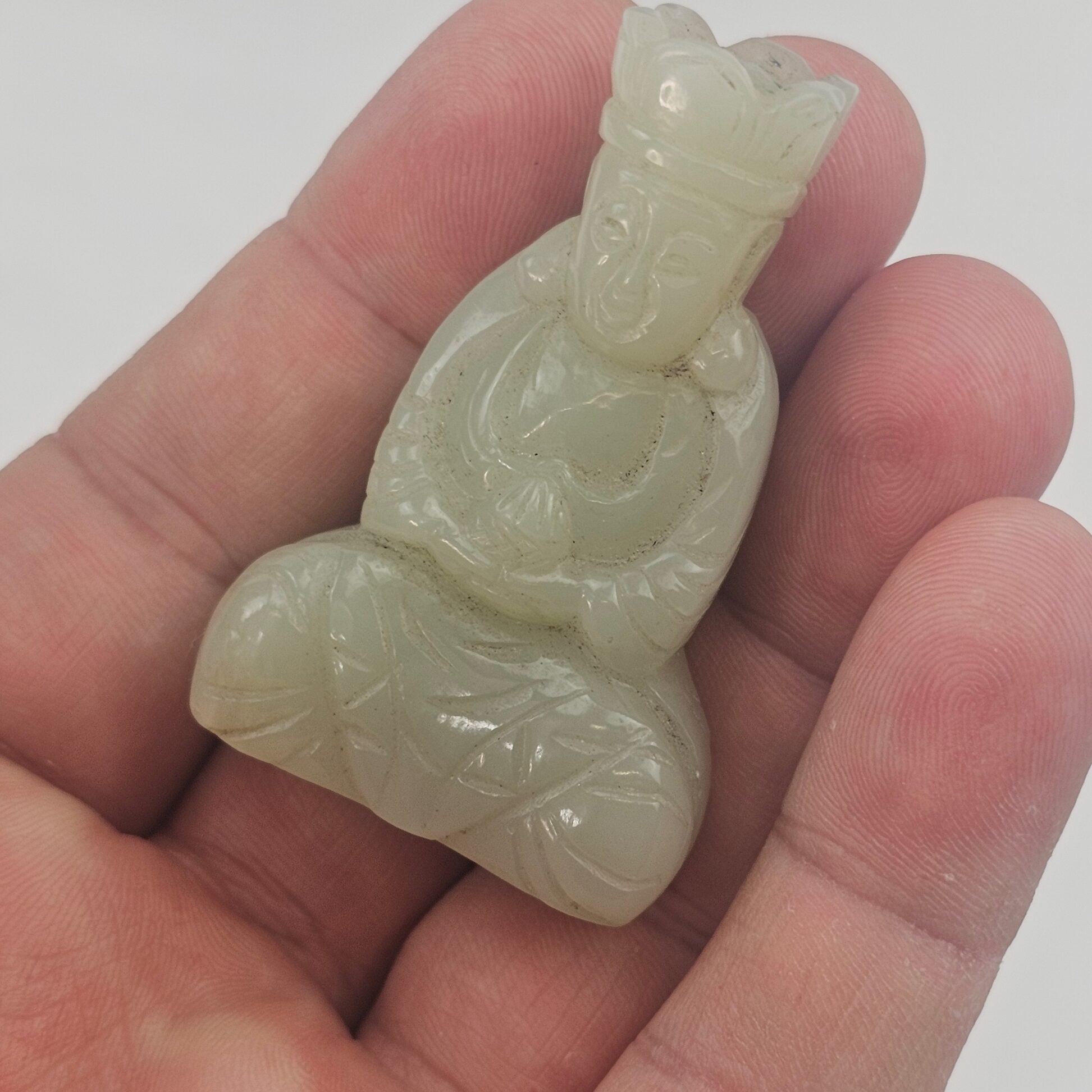
~ Chinese Qing Dynasty Pale Celadon Nephrite Jade Seated Crowned Deity Figure, 19th Century ~
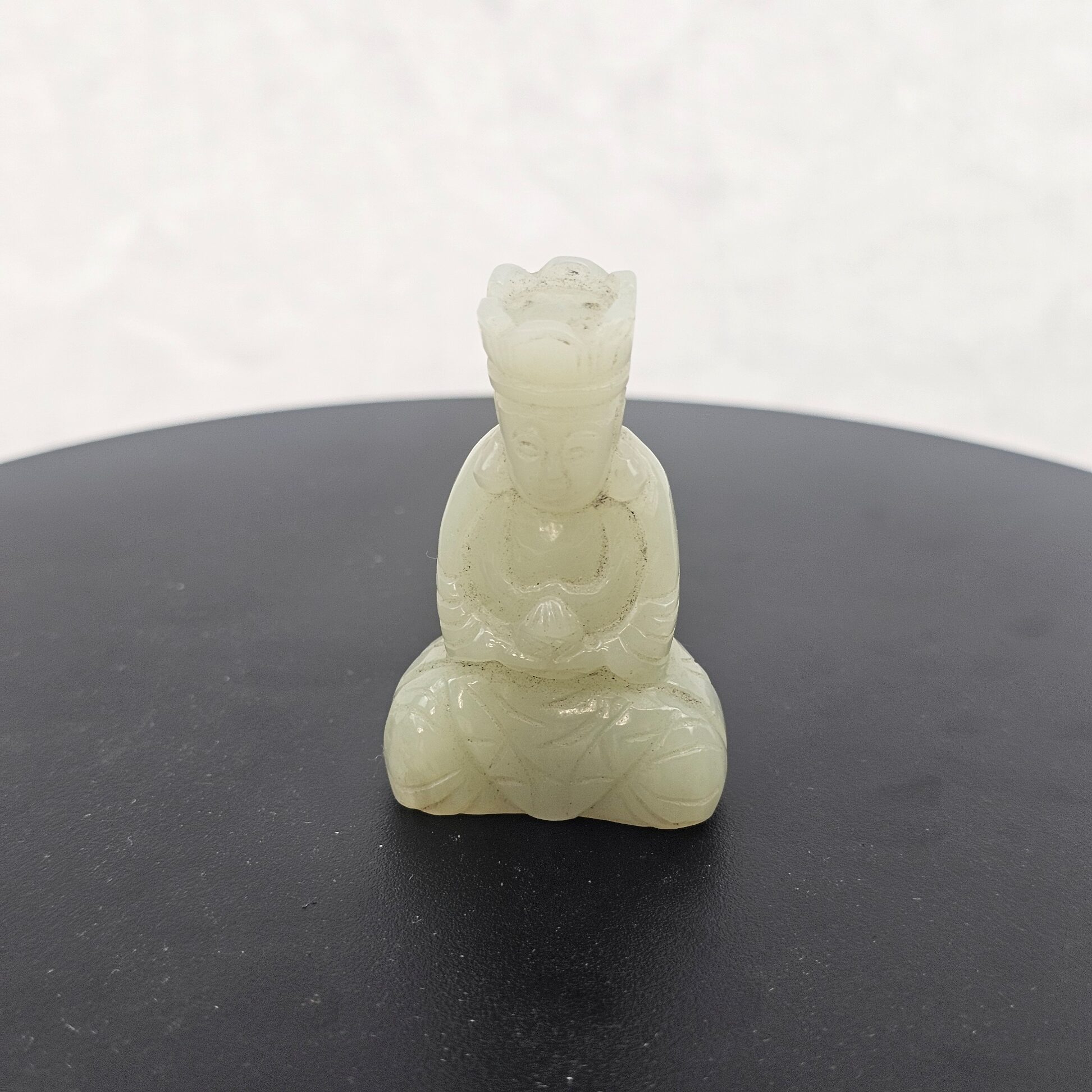
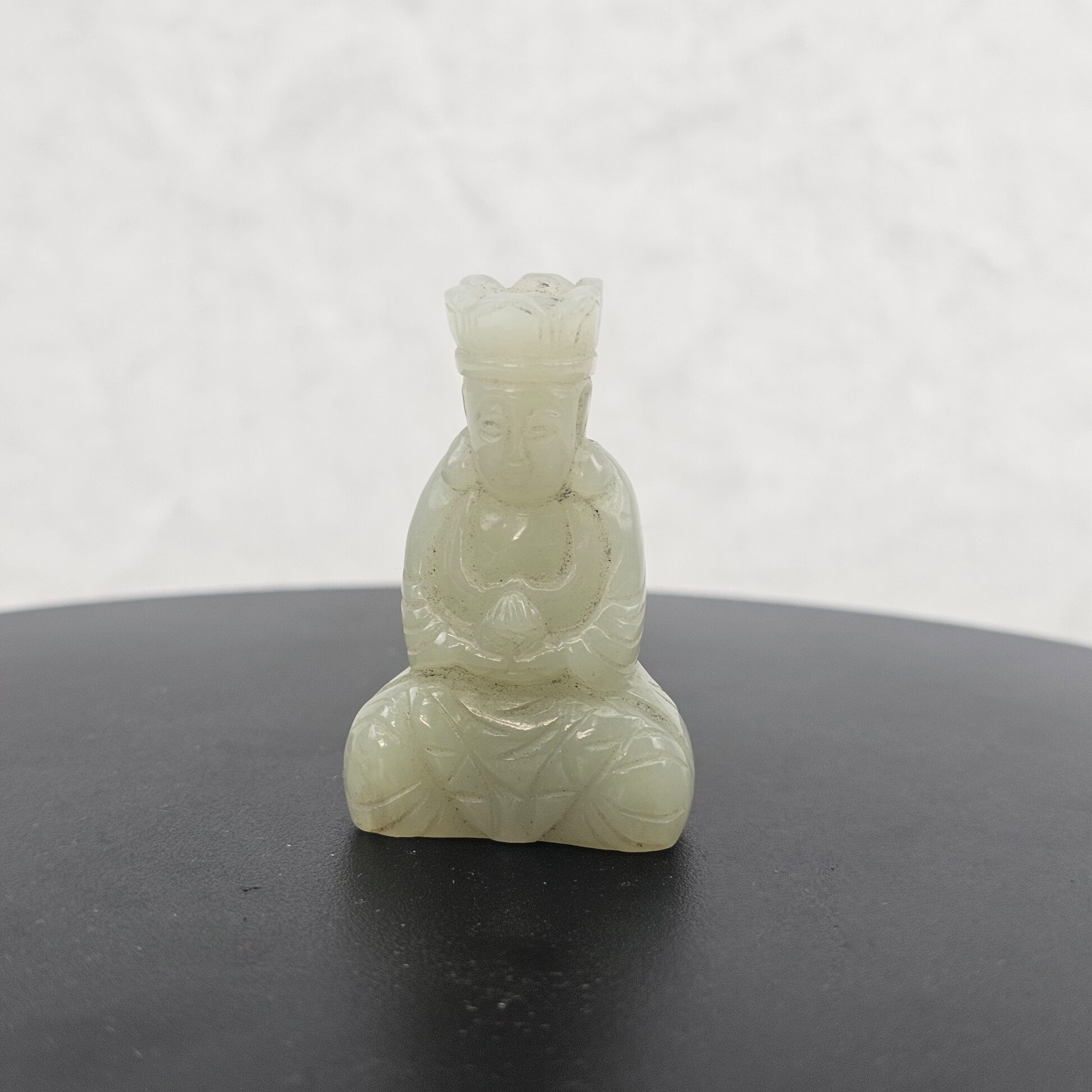
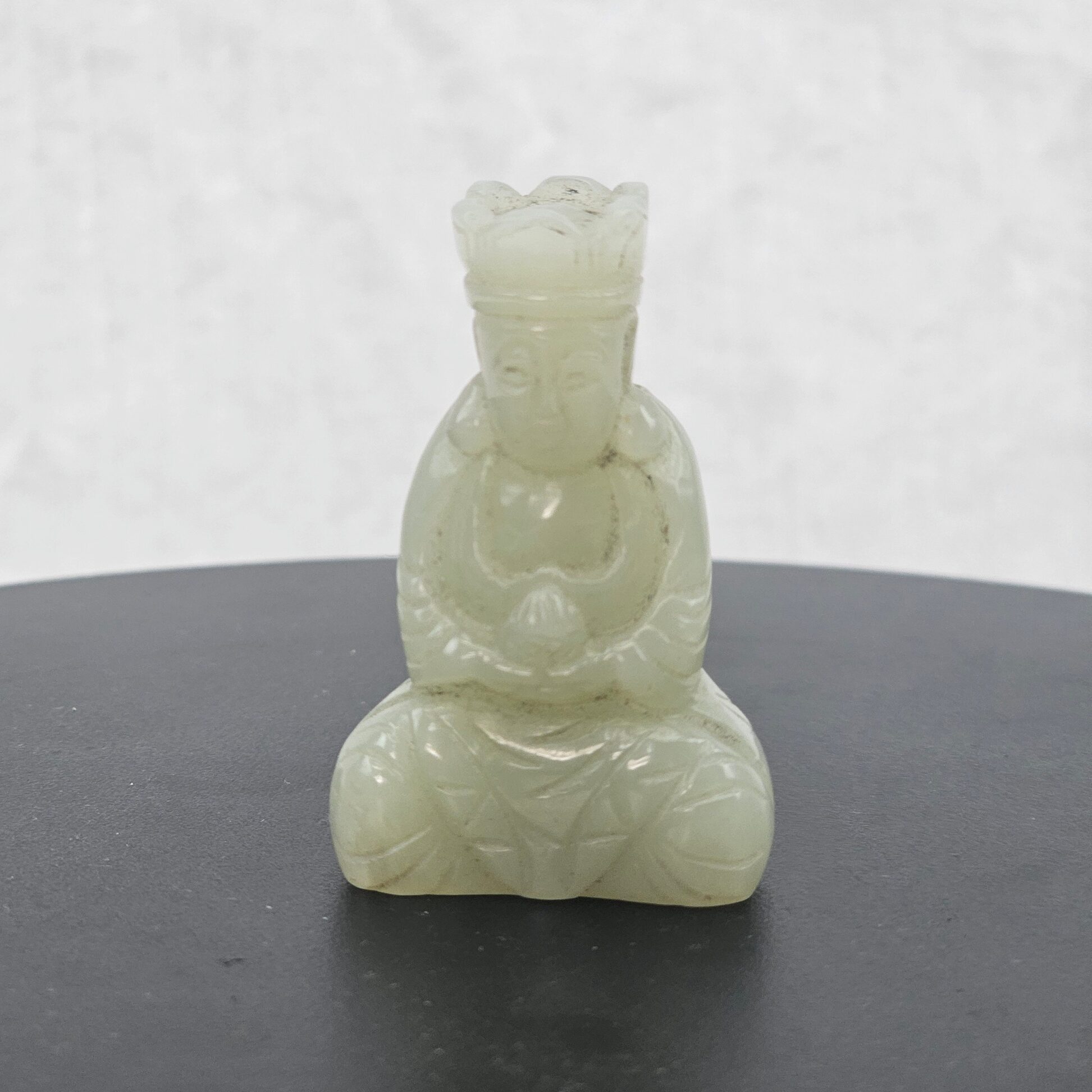
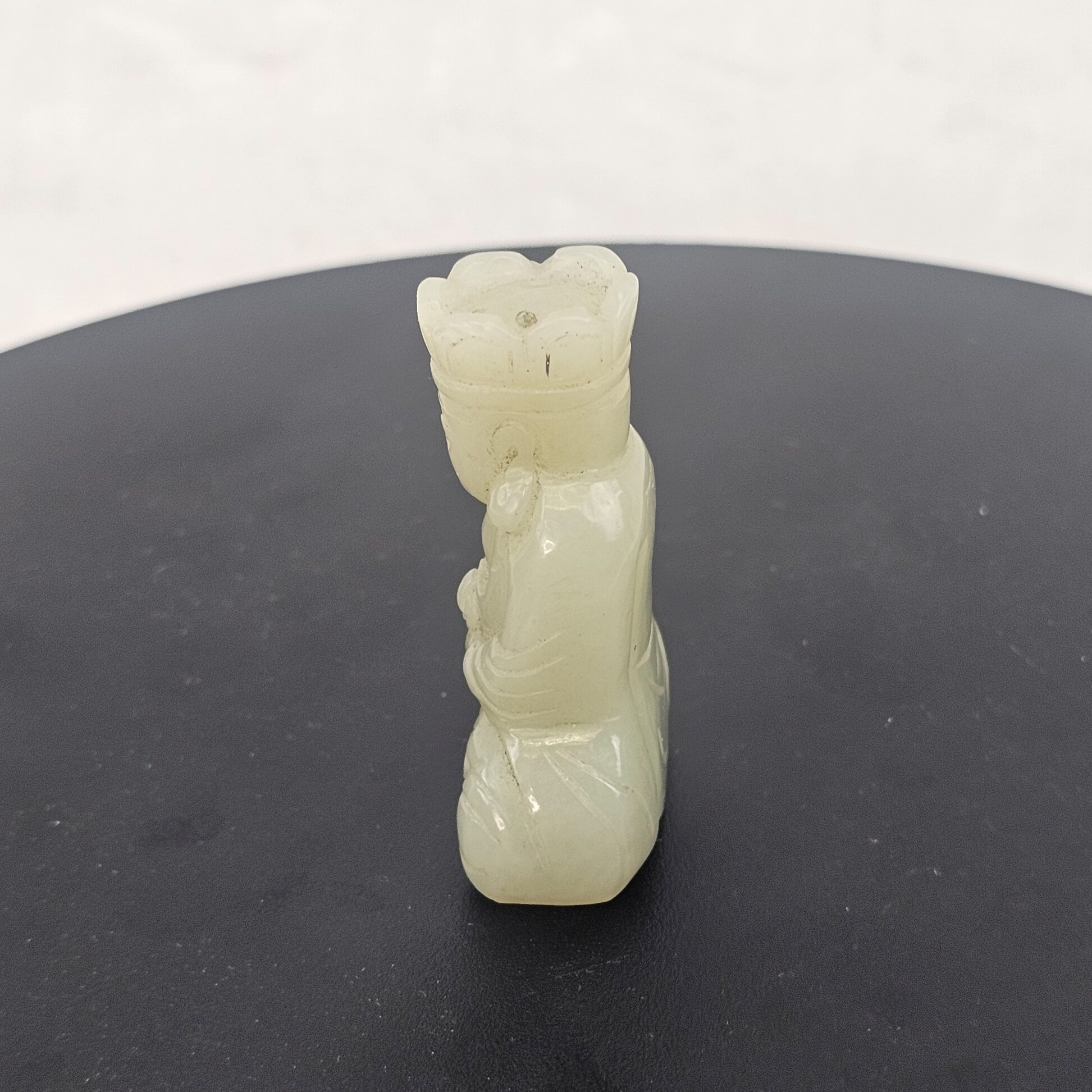
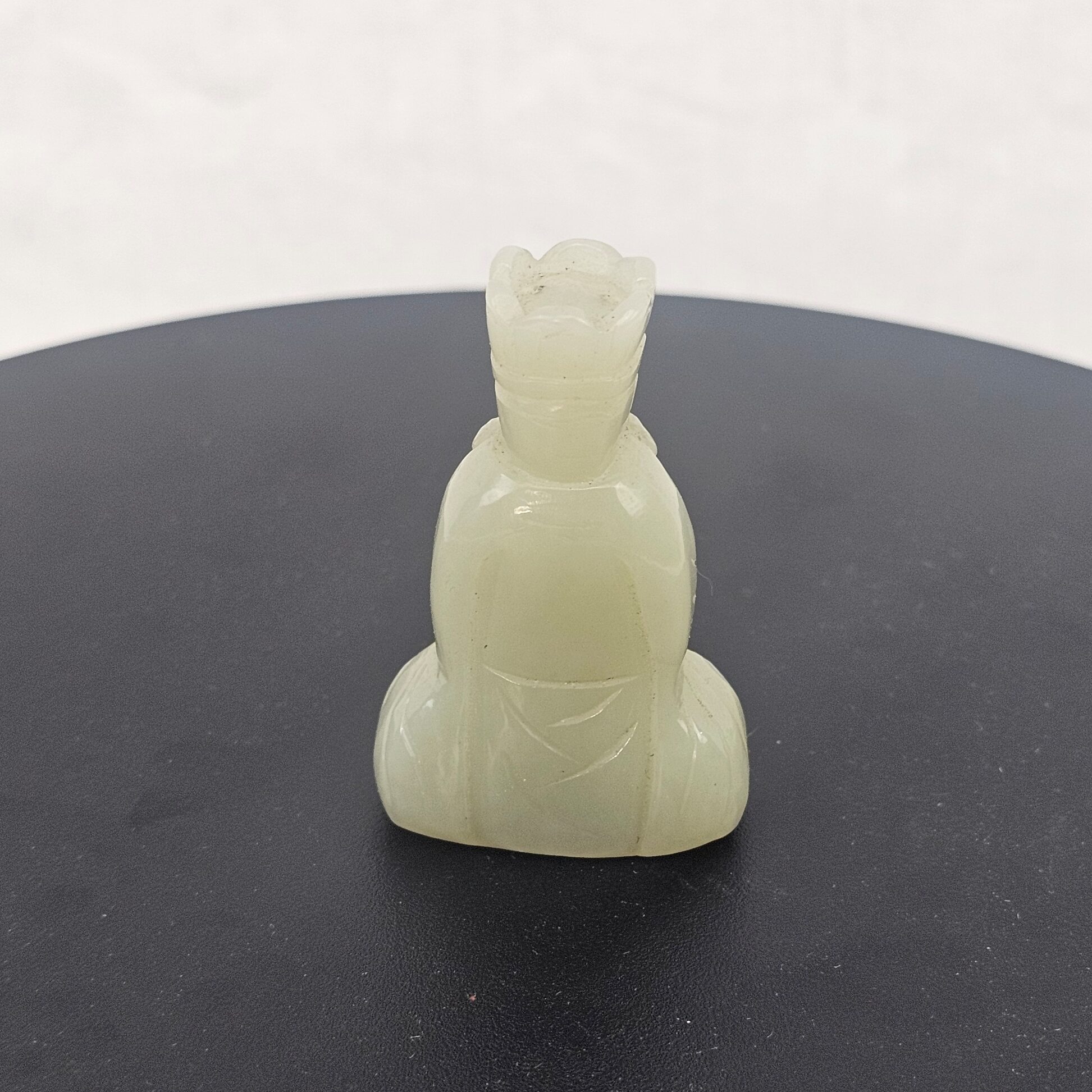
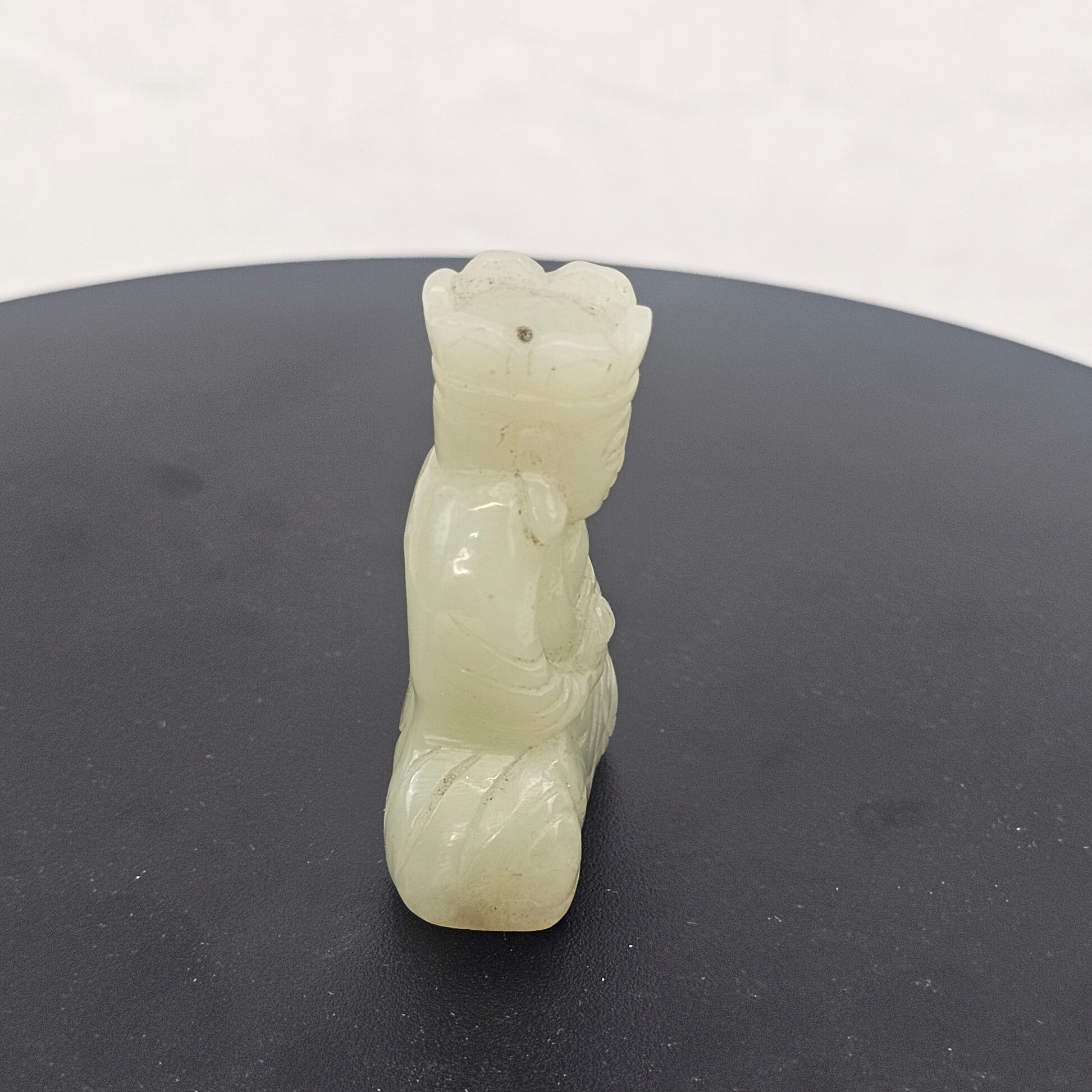
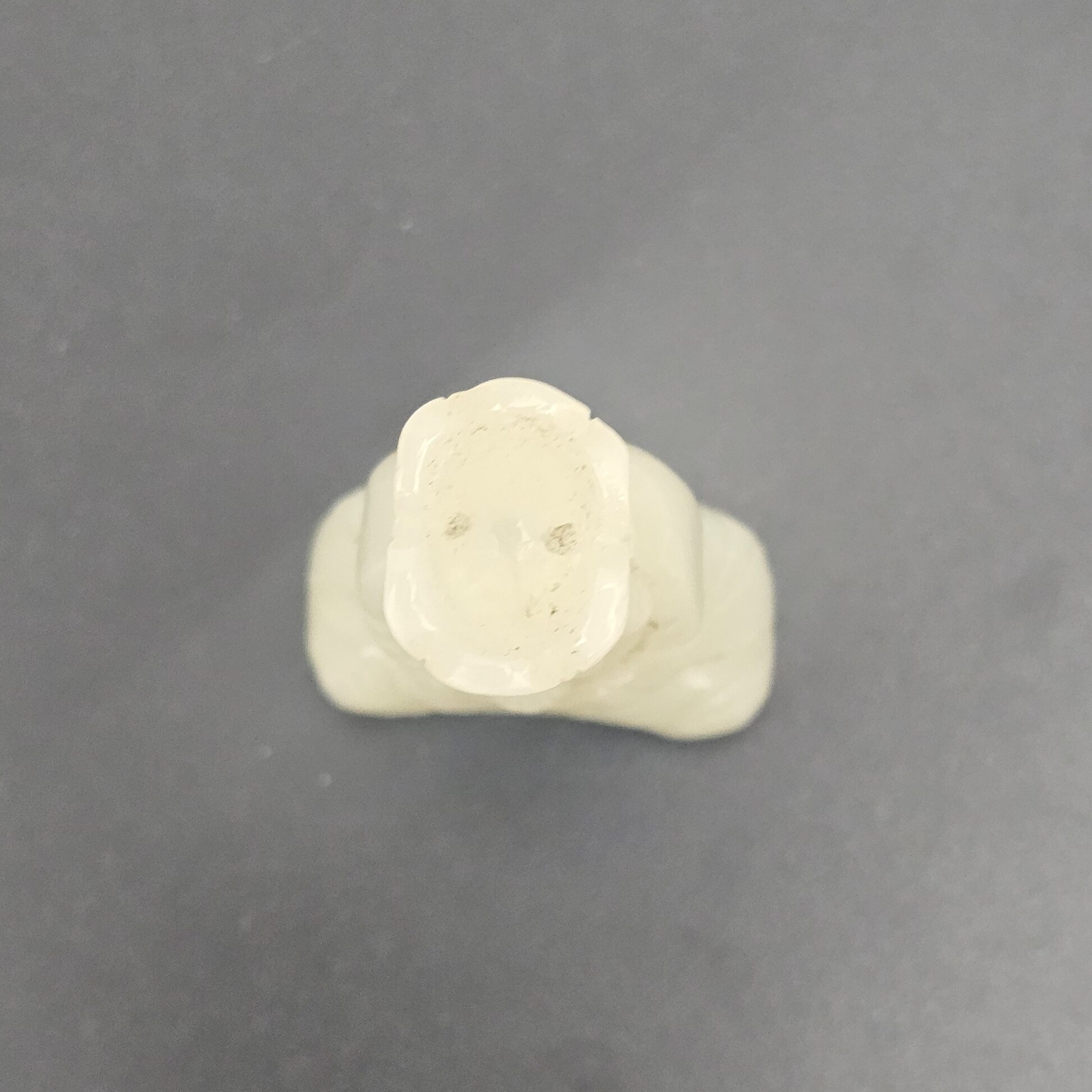
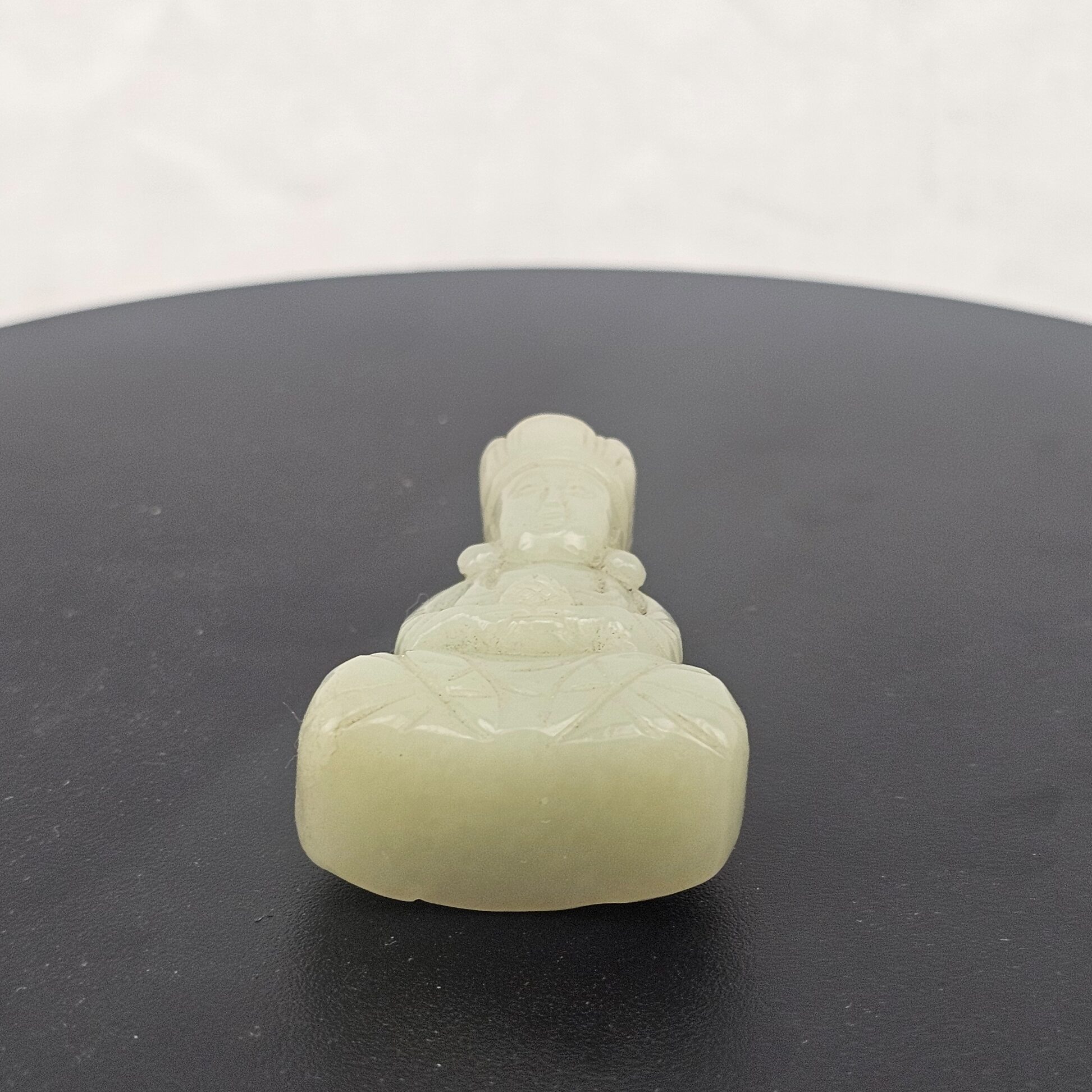
A finely hand-carved figure worked from a single piece of pale celadon nephrite jade, depicting a seated crowned deity in a compact and rounded form. The figure sits cross-legged in a meditative pose, the body broad and full, with the legs folded beneath voluminous robes incised with a repeating diamond and lozenge pattern across the lower body. The upper robes fall in softer, more naturalistic folds, with incised drapery lines describing the sash and collar. The arms are brought forward and across the chest, the hands appearing to clasp or hold a small rounded object at the waist. The face is characterful and expressive, with a small neat beard and moustache rendered in fine incised detail, heavy-lidded downward-looking eyes, a broad nose and gently closed lips. The head carries a tall, elaborate crown of multi-lobed or petalled form rising to a slightly flared or scalloped upper rim, with incised banding at the base of the crown. The sides of the head show close-coiled or banded hair beneath the crown, and small scroll or cloud-like elements appear to either side of the neck. The reverse of the figure is more summarily worked, with the continuation of the robe folds in broad arcs and a rounded, organic base. The top of the crown, visible from above, shows an oval flat platform surrounded by the lobed crown rim. The stone is a warm pale celadon throughout, tending toward an almost milky grey-white in the purest areas, with scattered dark grey mineral inclusions visible within the stone at certain angles. The surface carries a fine smooth polish.
A note on identification: the elaborate crown and the clearly rendered beard distinguish this figure from an unadorned Shakyamuni Buddha, and suggest instead a crowned Bodhisattva, a Daoist immortal, or a Chinese deity of the Buddhist or Taoist pantheon. Such crowned and bearded seated deity figures in pale nephrite are a well-established type within Qing Dynasty jade carving for personal devotional or scholar's studio use.
Historical Context
Pale celadon and near-white nephrite jade of the kind seen here was among the most prized materials available to Chinese craftsmen throughout the Qing Dynasty, sourced principally from the Khotan and Yarkand regions of Xinjiang. Its soft, warm translucency and fine-grained texture made it particularly well-suited to small devotional carvings, where the smooth polish of the finished surface invited both visual appreciation and tactile engagement. Small jade deity figures of this type were produced in significant numbers throughout the 18th and 19th centuries for personal use as objects of veneration, gifts of auspicious intent, and scholar's studio ornaments.
The iconography of a crowned, bearded figure seated in a meditative pose with hands clasped before the chest draws on a long tradition in Chinese religious art that blurs the boundaries between Buddhist and Daoist imagery. By the Qing period, popular Chinese religious practice had synthesised elements from Buddhism, Daoism and folk tradition into a fluid visual language, and craftsmen working in jade regularly produced small figures that could serve multiple devotional contexts. Crowned deity figures in pale nephrite of comparable size and form appear consistently in Qing period jade carving, and the combination of a lobed lotus crown, bearded face and seated meditative posture is consistent with a date in the 19th century. The quality of the stone and the care taken with the facial detail and robe patterning place this piece solidly within the tradition of finely made personal devotional carvings rather than export work.
Reviews
There are no reviews yet.