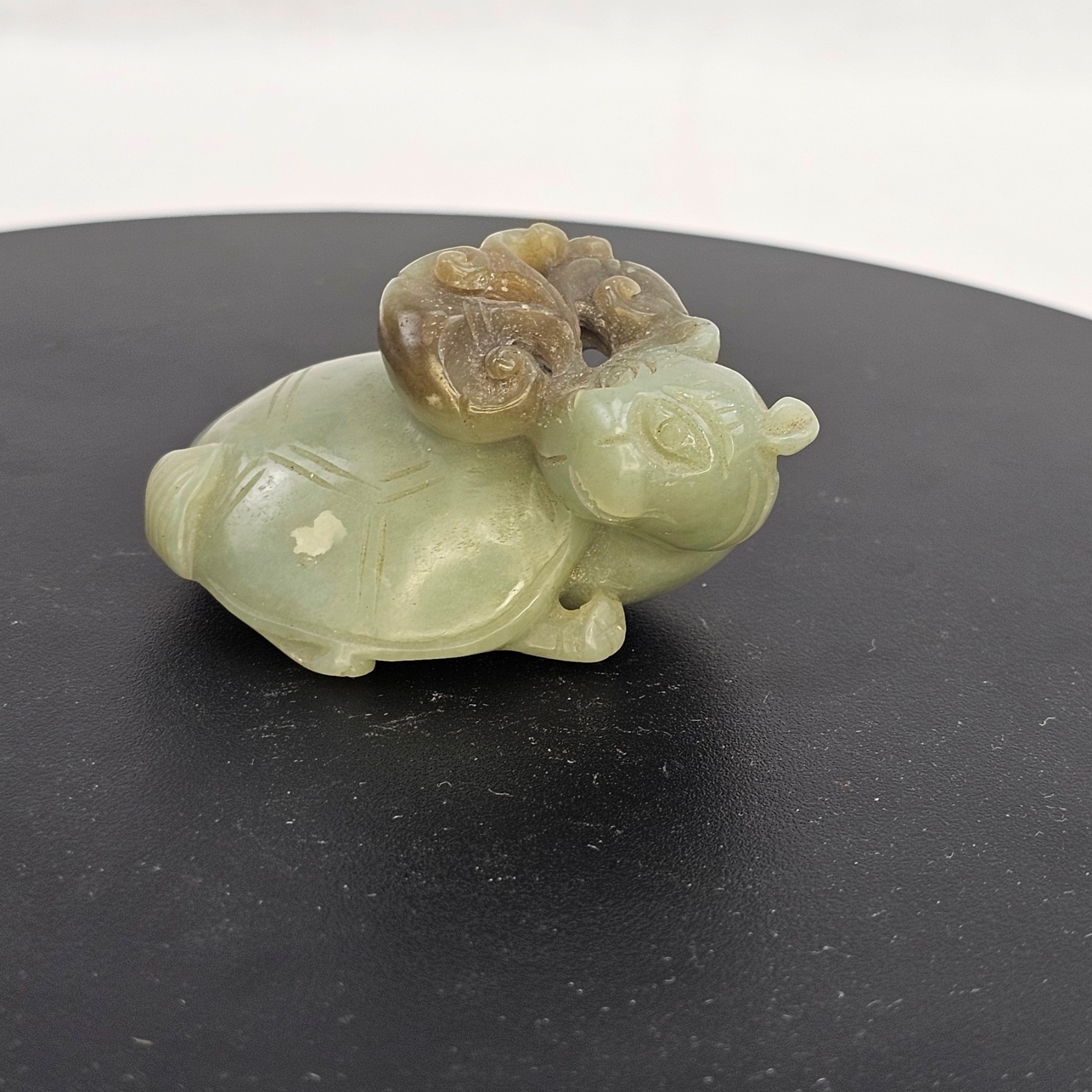
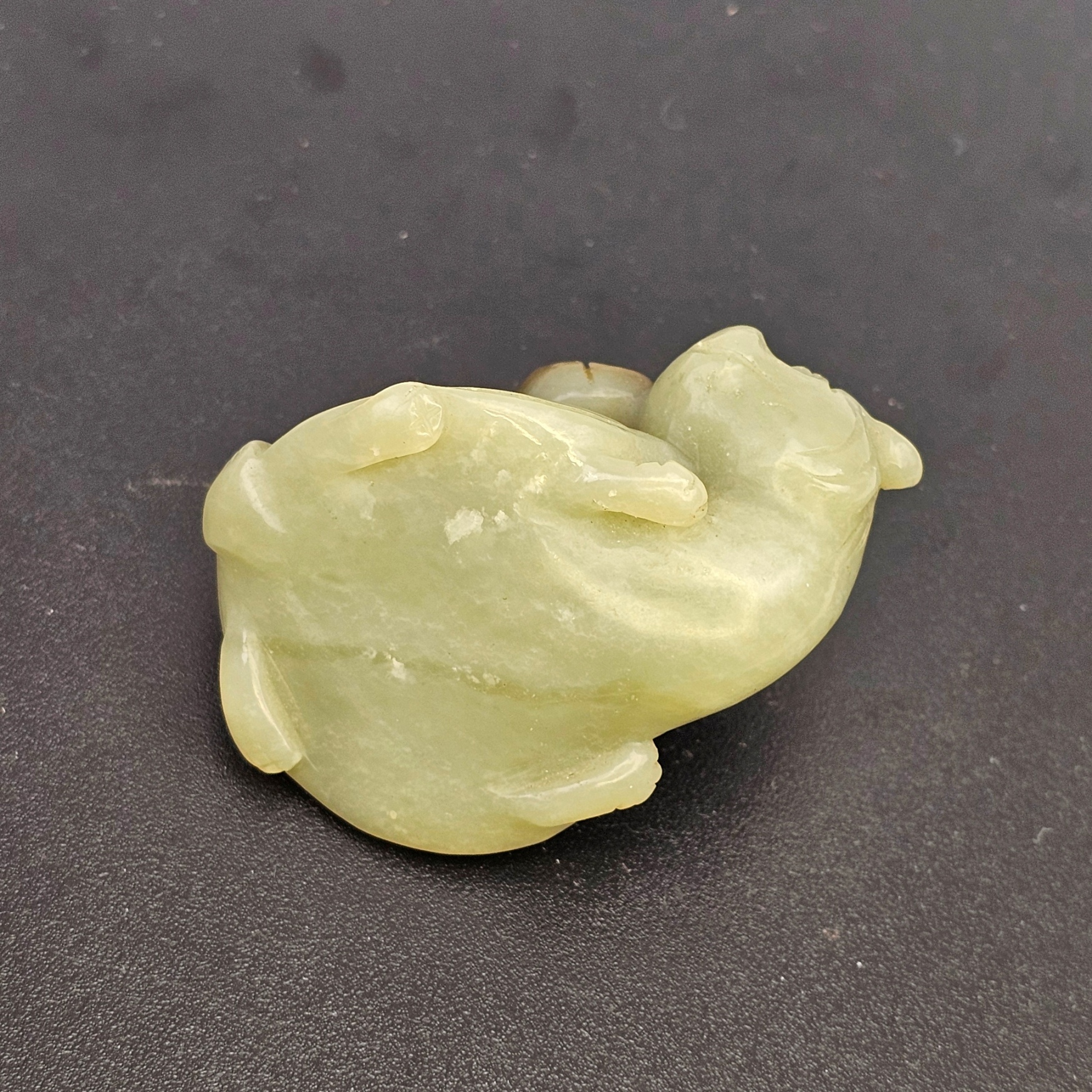
~ Chinese Qing Dynasty Nephrite Jade Carving of a Mythical Turtle with Lion's Head ~
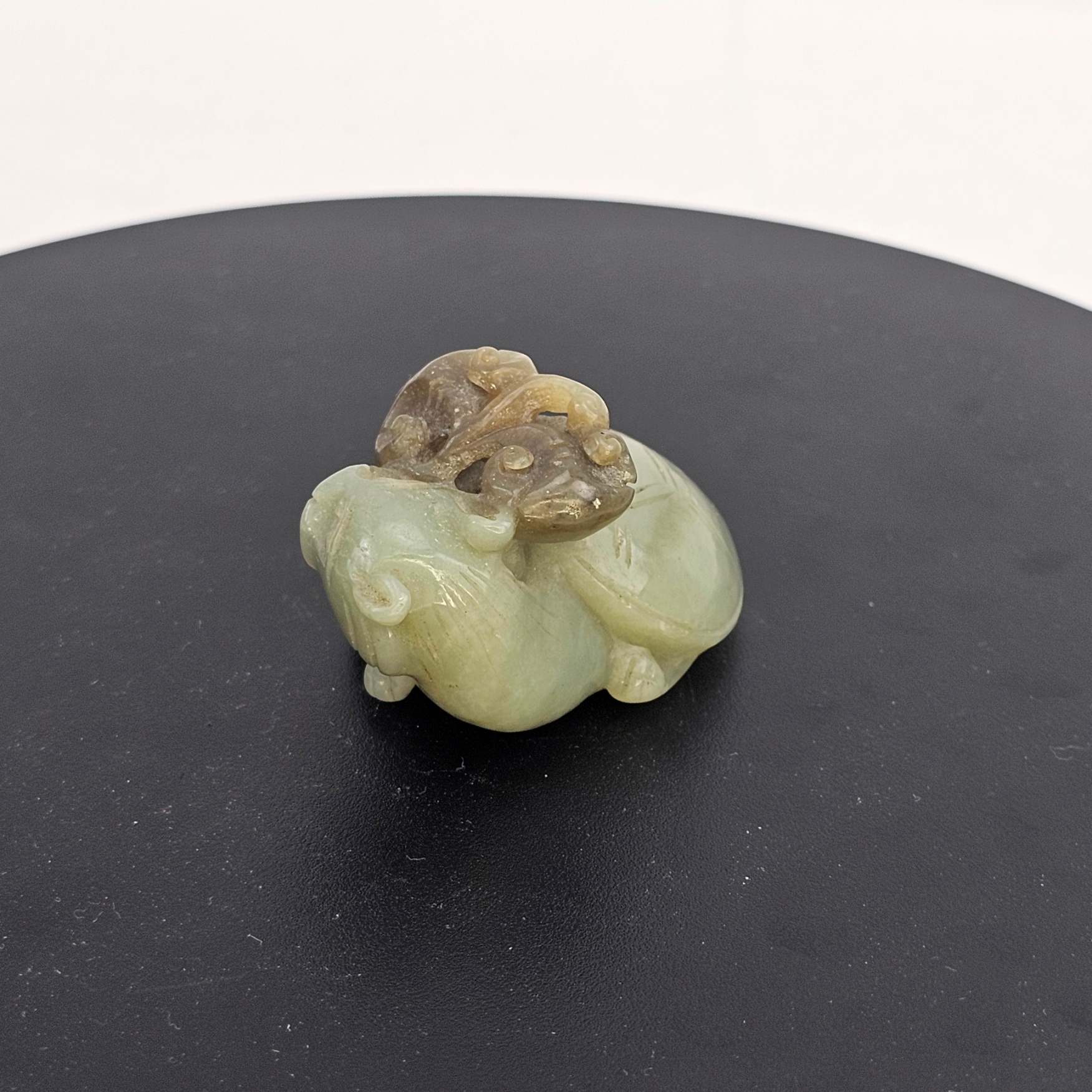
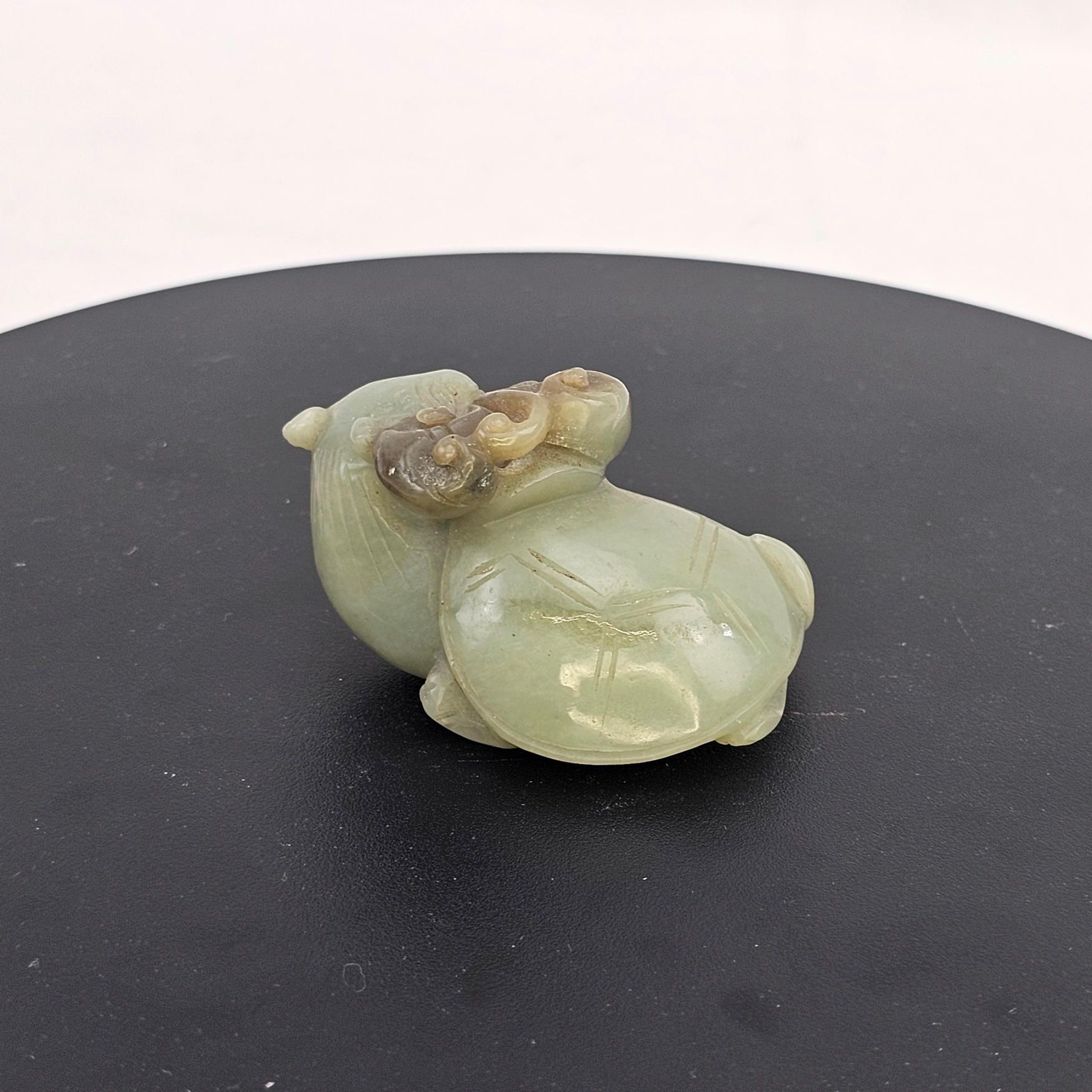
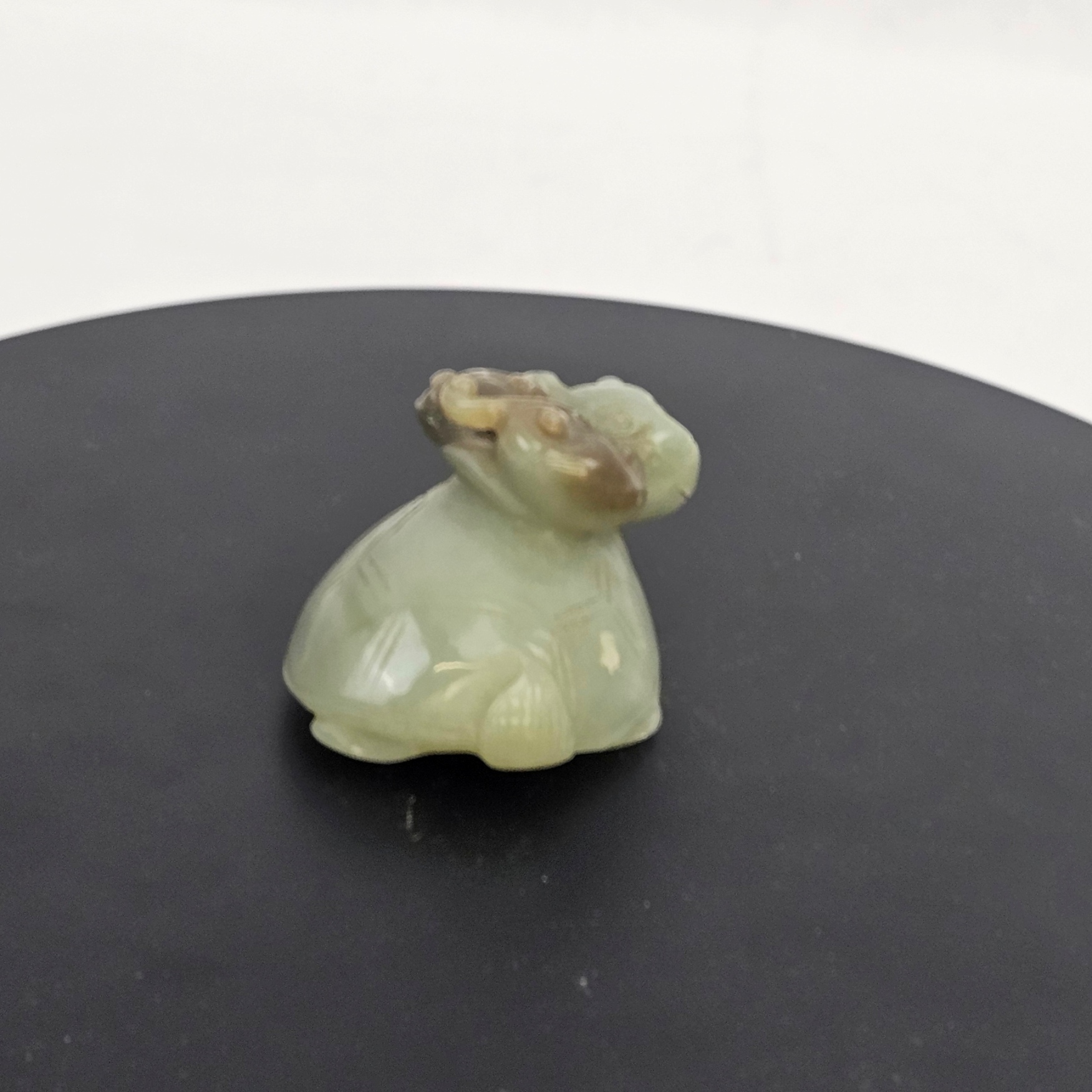
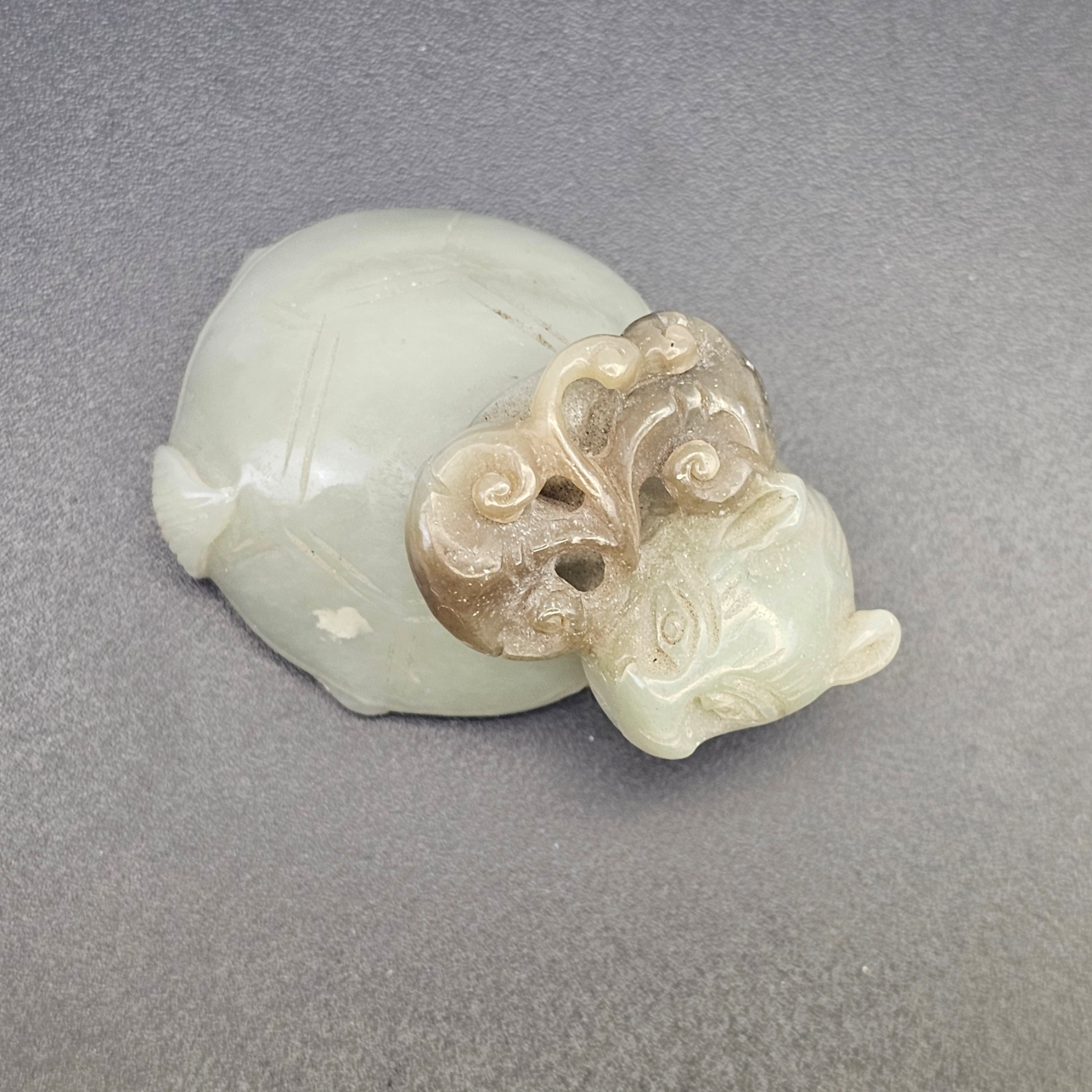
A delightful and highly characterful hand-carved nephrite jade carving depicting a mythical turtle, the body naturalistically rendered in the round with a domed carapace detailed with incised hexagonal and linear panels representing the shell segments, four stubby limbs tucked beneath the form, and a small expressive head turned upward at one end. Rising from the rear of the shell is a boldly carved finial in the form of a chilong, a hornless dragon or archaic lion-like mythical creature, reclining amid scrolling ruyi cloud or lingzhi fungus forms. This finial has been carved entirely from a natural russet brown inclusion within the stone, a technique greatly prized by Qing jade carvers as evidence of exceptional skill and aesthetic sensibility. The contrast between the pale celadon body of the turtle and the warm amber-brown of the chilong and lingzhi above creates a vivid two-tone composition from a single piece of stone. The lingzhi forms are rendered in high relief with spiralling volutes and swelling lobes, partially pierced to add visual depth, while the chilong crouches within them with alert expression.
Historical Context
The turtle, or gui, is one of the four sacred creatures in Chinese cosmology alongside the dragon, phoenix, and qilin, and is associated with longevity, wisdom, good fortune, and the stability of the universe. In Daoist and folk belief the turtle's domed shell symbolised the vault of heaven, and its long lifespan made it a potent emblem of immortality. Carved jade turtles were produced throughout the Ming and Qing dynasties as auspicious desk objects, scholar's accessories, and personal talismans. The addition of the chilong, a hornless dragon closely associated with protection and auspiciousness, elevates the composition beyond a simple naturalistic carving into a layered tableau of lucky symbolism. The lingzhi or sacred fungus of immortality further reinforces the longevity theme, making this piece a concentrated expression of Chinese good fortune iconography. The deliberate exploitation of the stone's natural russet skin to carve the upper finial is a hallmark of virtuosic Qing jade craftsmanship, reflecting the scholarly belief that the finest jade carvers worked with rather than against the character of the stone. The carver took great care to utilise the brown patch within the stone, working it into the design of the fungus and mythical creature above.
~ Dimensions ~
The carving has a length of 2.5 inches (6.4 cm), a depth of 1.75 inches (4.3 cm) & a height of 1.3 inches (3.5 cm).
It weighs 90g
~ Condition ~
The piece is in great condition with no cracks or chips.
#1319