
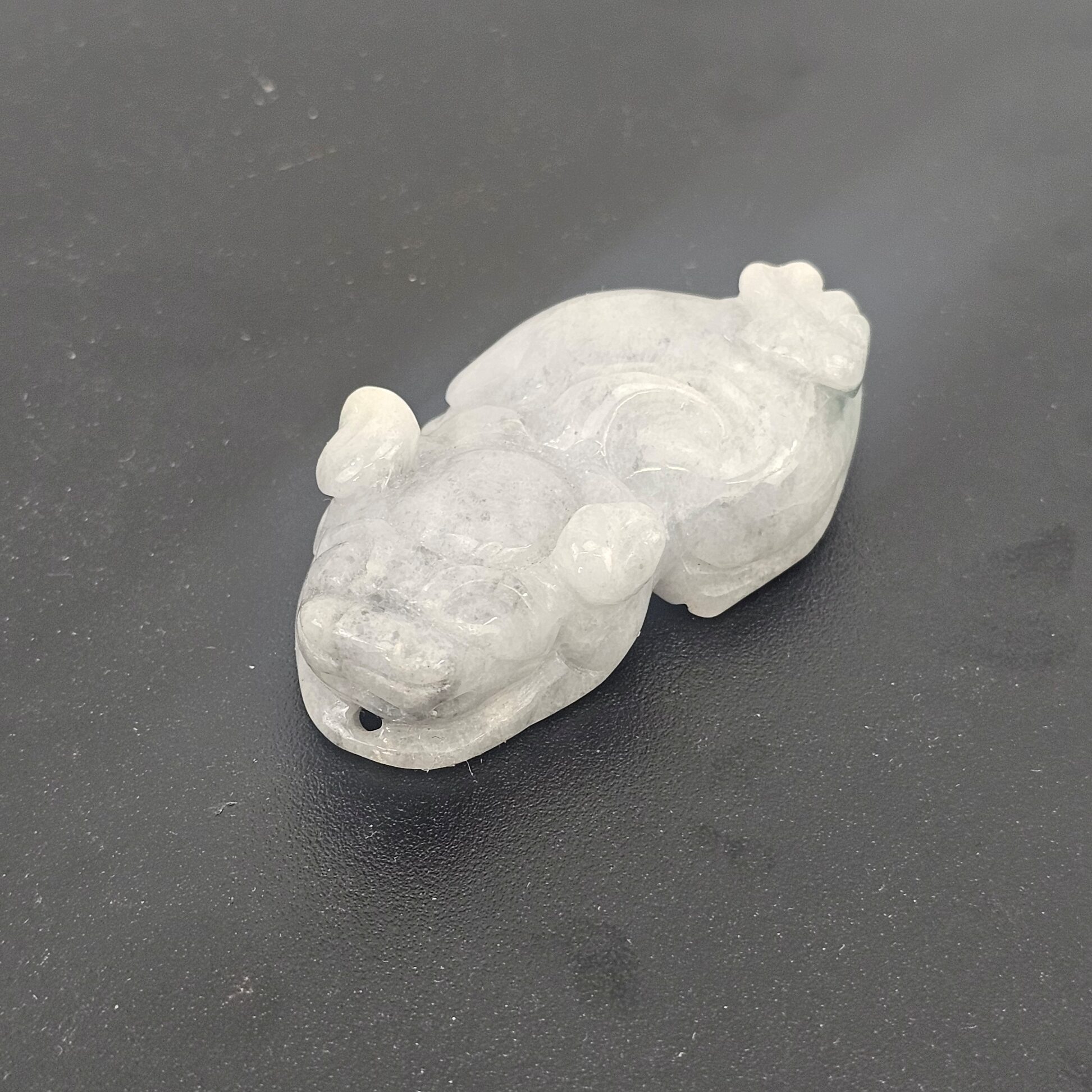
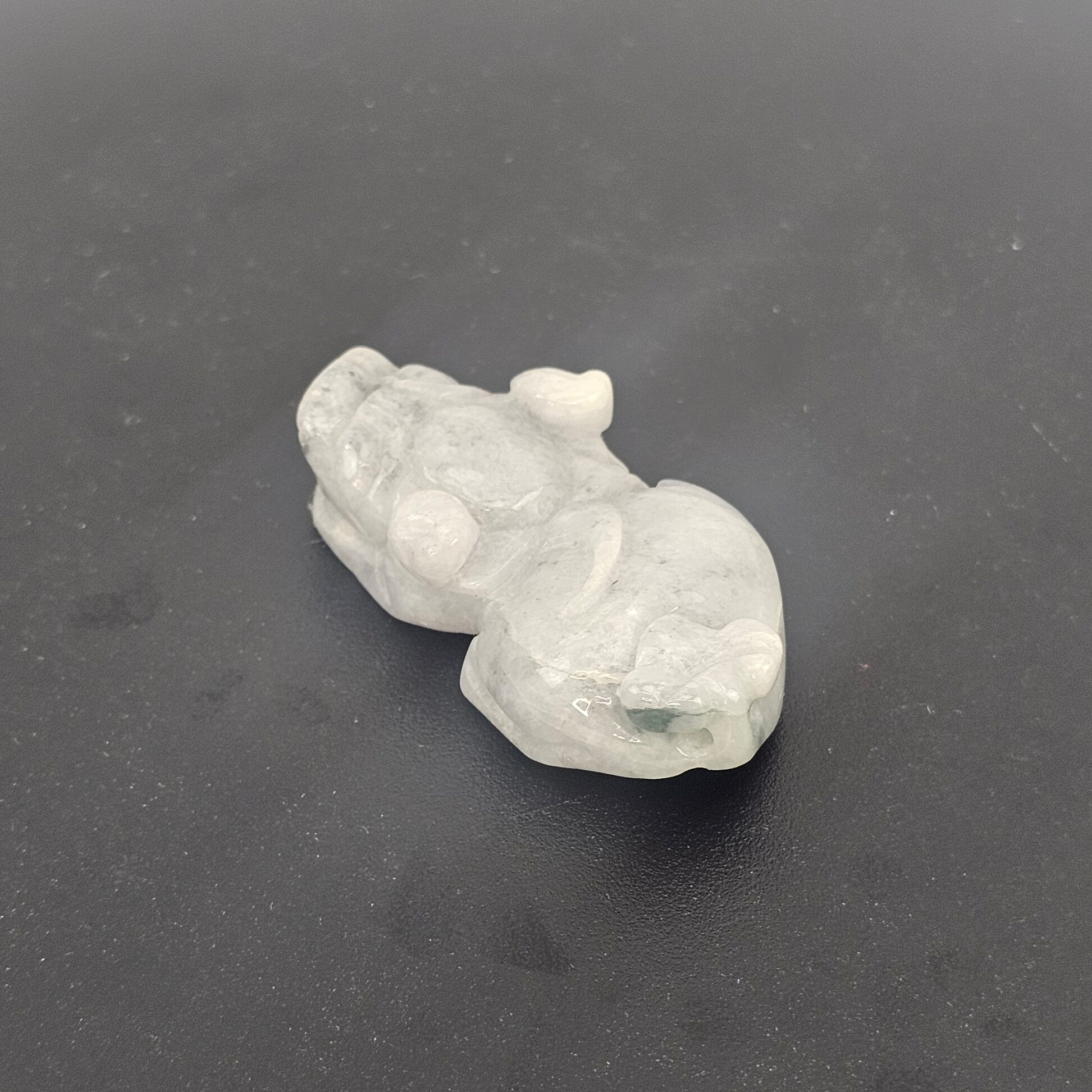
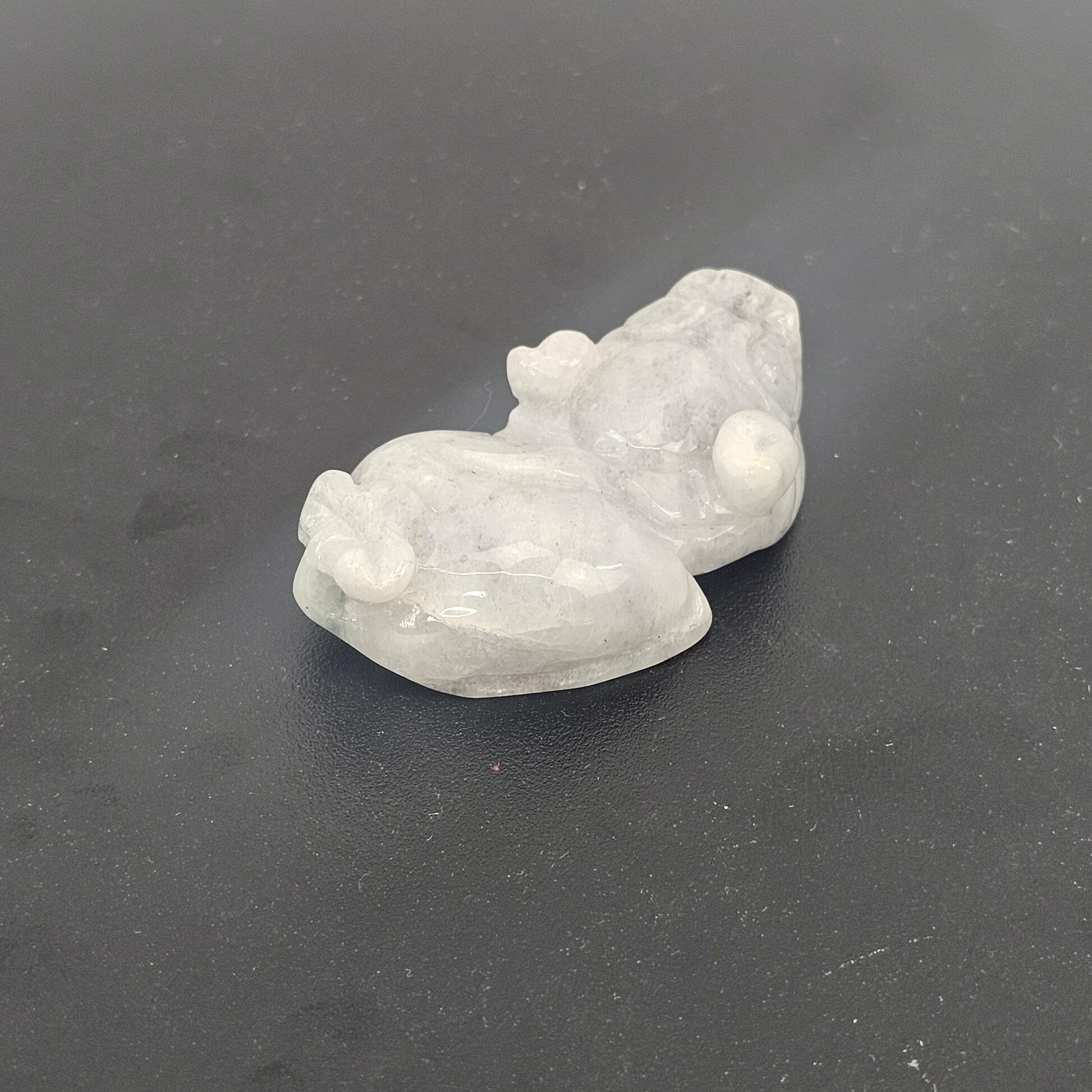
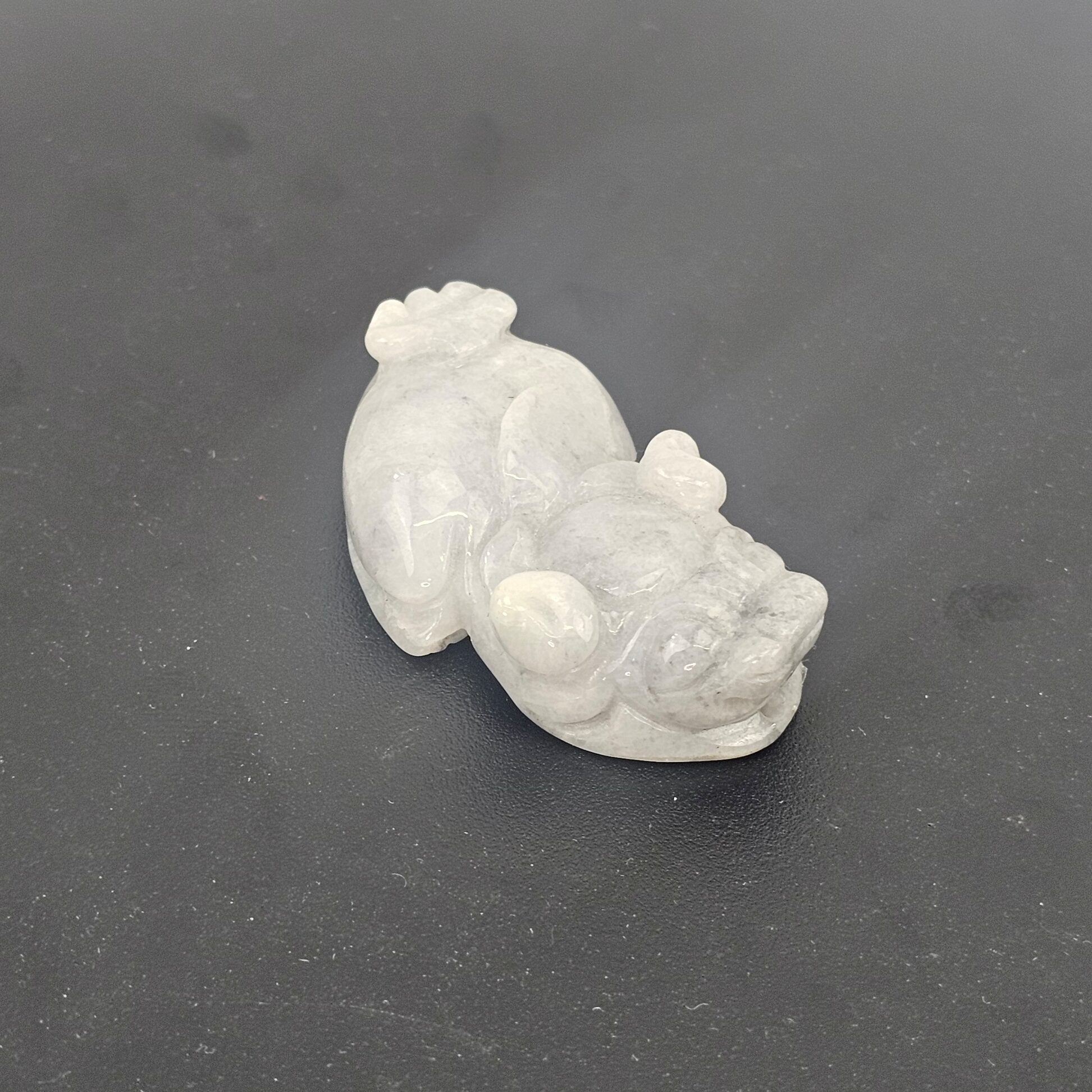
~ Chinese Qing Dynasty Carved Jadeite Foo Dog Pendant Amulet, 19th Century ~
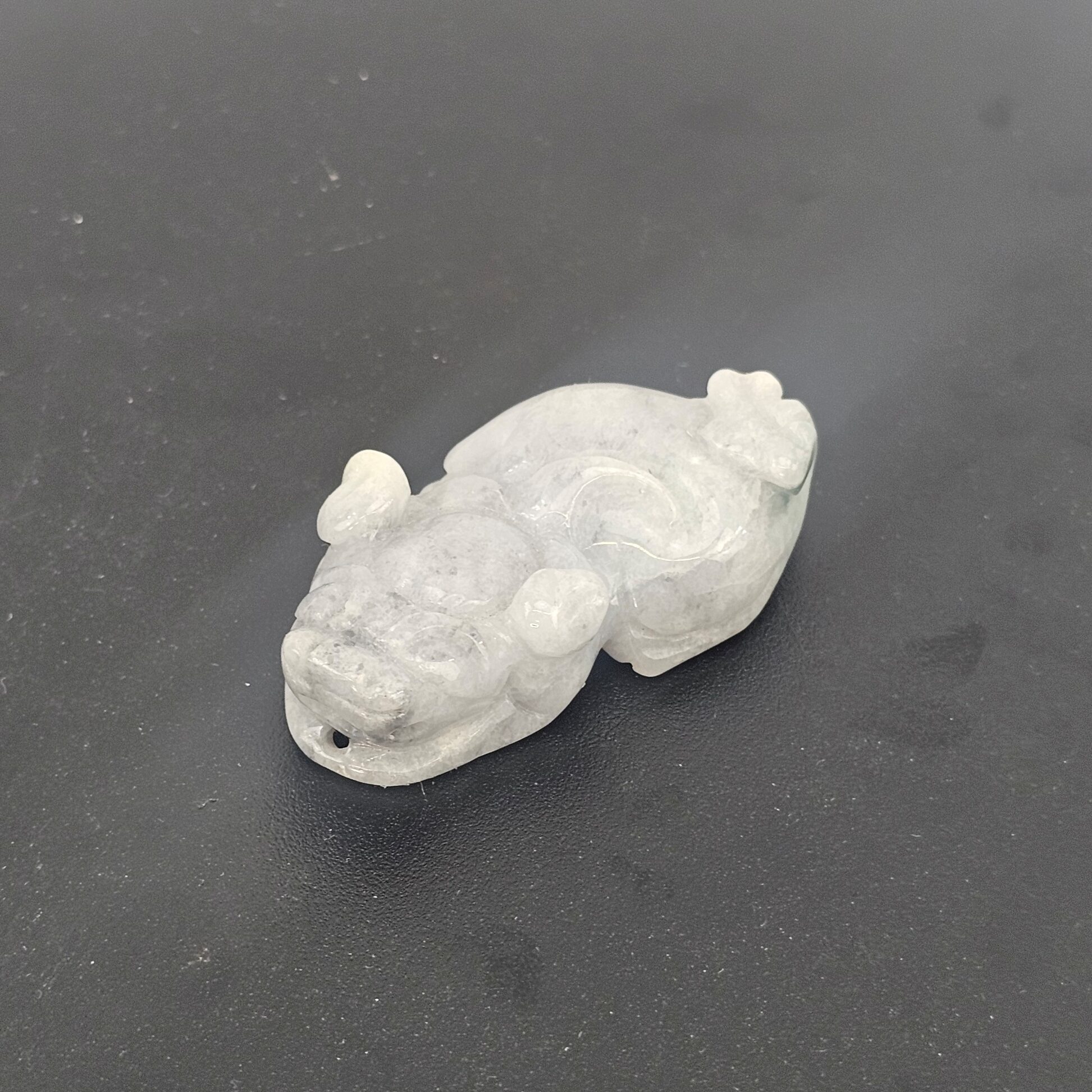
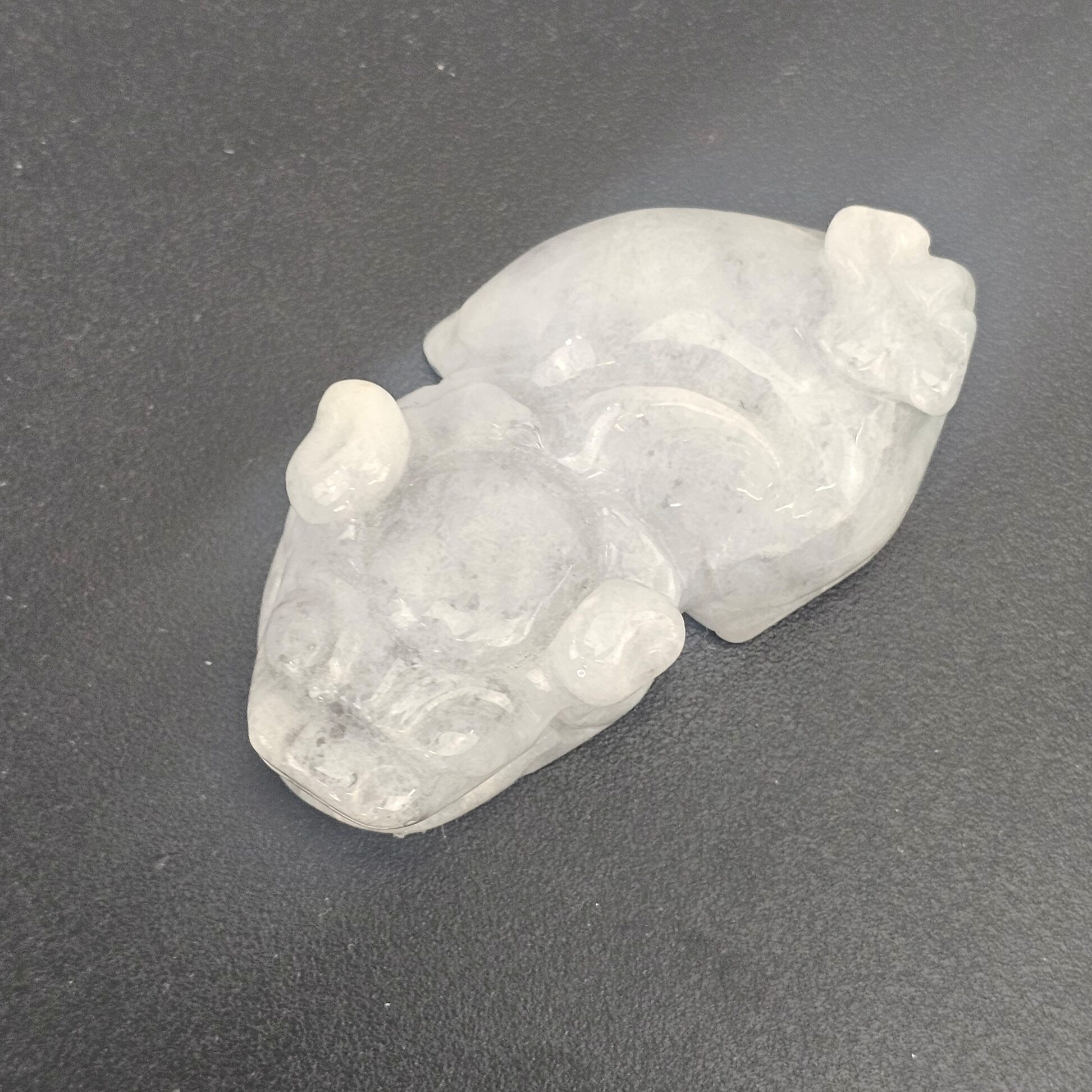
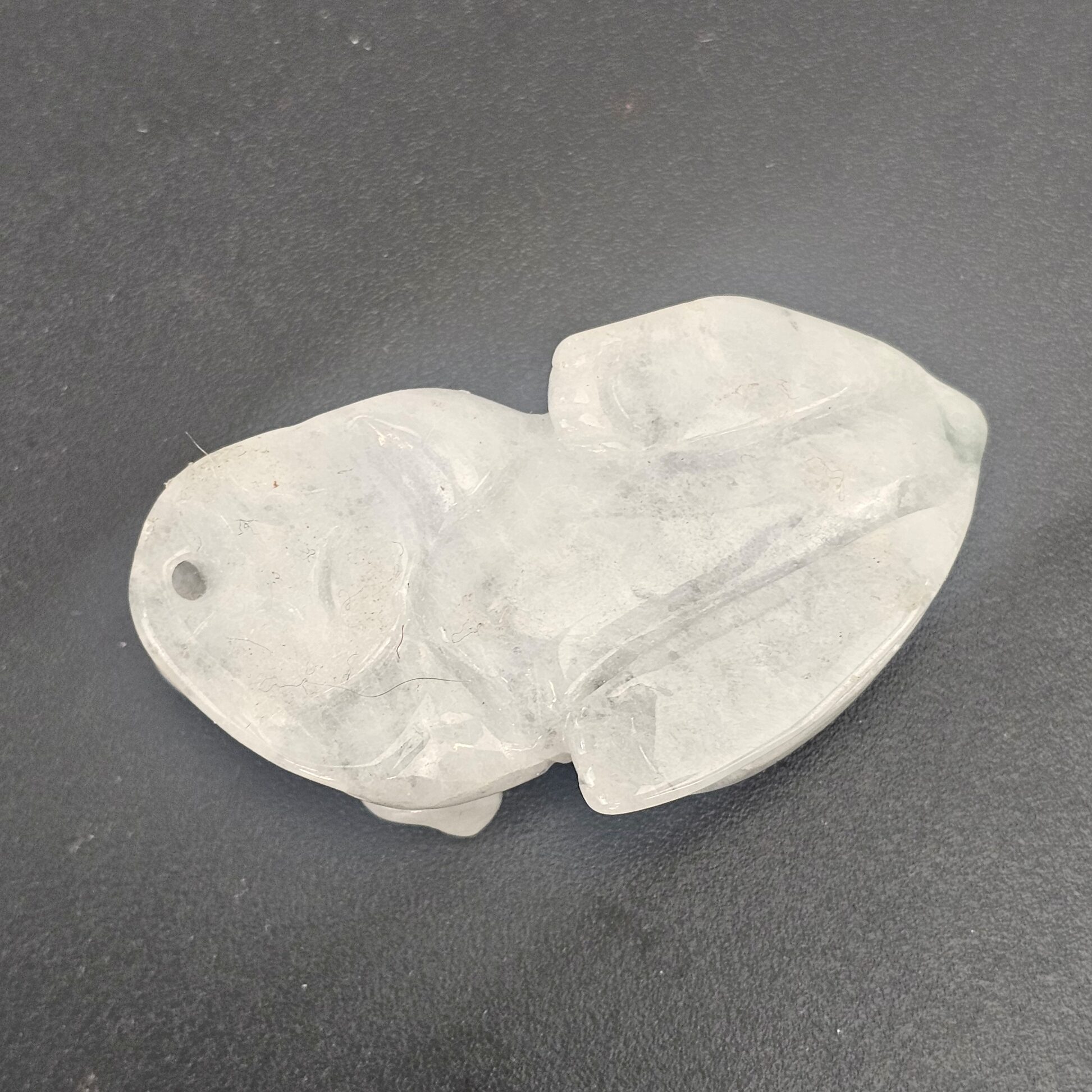
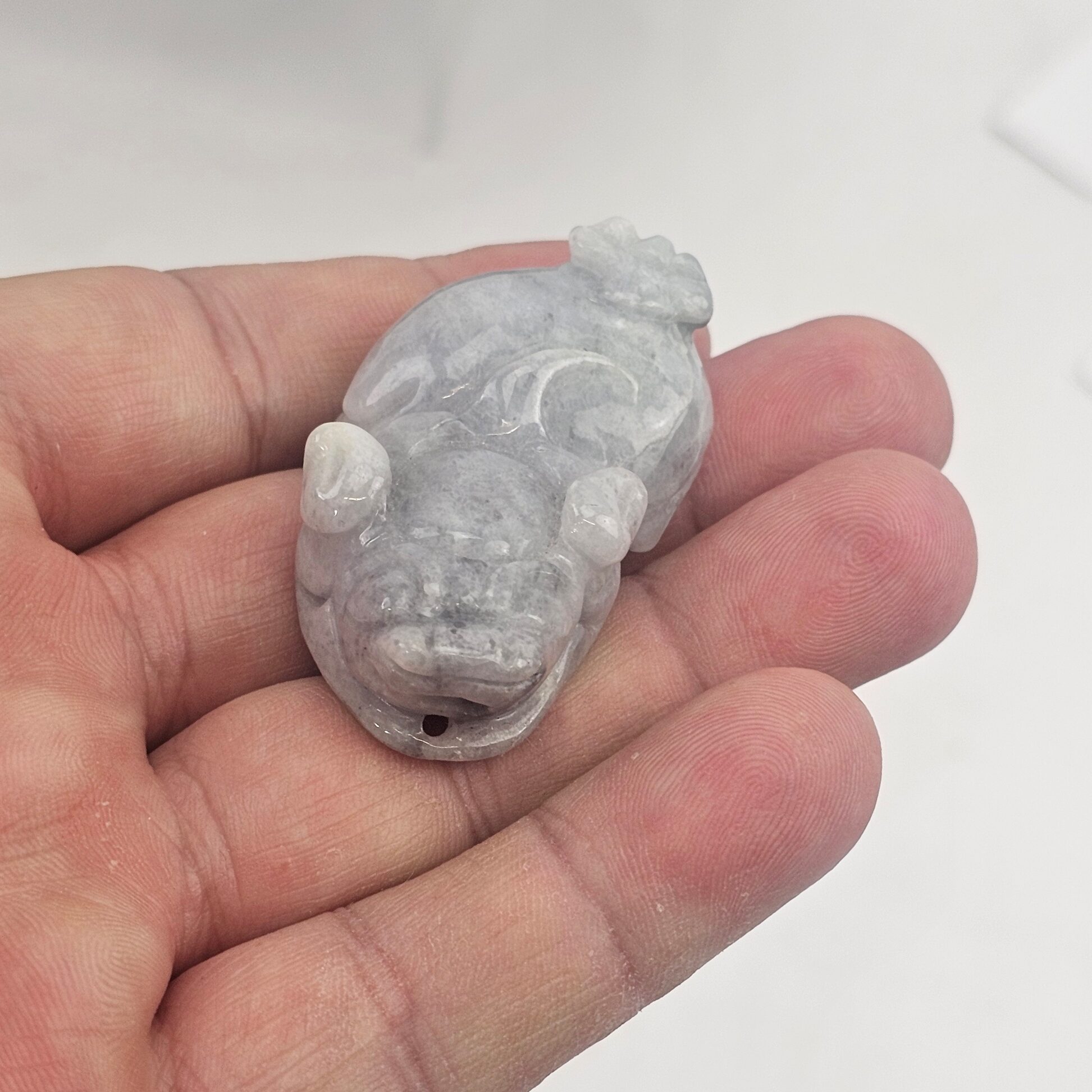
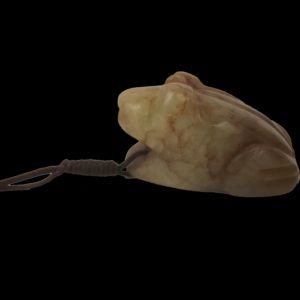
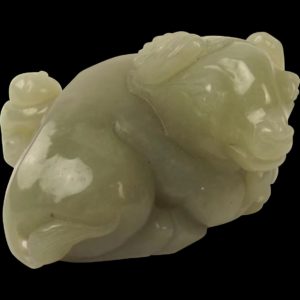
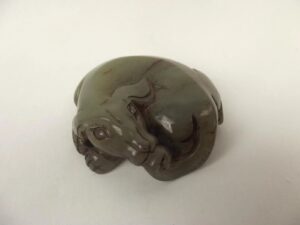
A hand-carved jadeite figure of a Foo Dog, the mythological guardian lion of Chinese tradition, modelled in a compact crouching or recumbent pose with the forequarters lowered and the rounded haunches raised behind. The creature's broad, blunt-muzzled head is thrust forward and slightly downward, with bulging eyes carved in relief, a wide flattened nose, and an open mouth with the lower jaw forming a squared snout. Small rounded horns or mane tufts project from the top of the head, and further rounded protrusions suggest ears to either side. The body is plump and full, with four stubby paws tucked beneath and a scrolling ridge or decorative crest running along the spine. The back carries a further cluster of small rounded bosses or mane detail. The underside of the piece is broadly flat with lightly incised curved lines suggesting the belly and limb contours. A small drilled suspension hole passes through the snout, confirming the piece was worn or suspended as a personal amulet or pendant. The stone is jadeite throughout, predominantly a pale cool grey-white with a characteristic glassy translucency, containing distributed grey-black internal inclusions and clouding typical of naturally occurring jadeite matrix. Small areas of pale green are present within the stone and visible from certain angles. The overall surface carries a good polish.
Historical Context
The Foo Dog or Shishi, more accurately described as a guardian lion, has been one of the most enduring and auspicious symbols in Chinese material culture for well over a thousand years. Derived originally from Buddhist iconography in which lions guarded temple entrances, the guardian lion was adopted wholesale into Chinese religious, imperial and popular tradition as a protector against evil forces and a bringer of good fortune. Paired stone lions flanked the gates of palaces, temples and wealthy residences throughout the Ming and Qing dynasties, while miniaturised versions in hardstone, bronze, ceramic and wood served as personal talismans.
Jadeite, known in Chinese as feicui, became the dominant prestige jade of the Qing period following the opening of trade routes through Burma that brought large quantities of jadeite to China from the mid-18th century onward. Unlike nephrite, which had been worked in China for millennia, jadeite was a relative newcomer but was quickly embraced by the Qing court and the broader collecting market for its glassy translucency and ability to occur in vivid greens and delicate lavenders. Lavender and pale grey-white jadeite of the kind seen here was widely used for personal pendants and amulets, particularly in the 19th century. The drilled suspension hole through the snout of this piece is a traditional method of mounting such carvings for wearing, either suspended from a cord around the neck or incorporated into a toggle or belt fitting, and indicates the piece was made specifically for personal rather than display use. Guardian lion amulets of this type were believed to offer the wearer protection and to ward off misfortune, making them popular gifts and devotional objects throughout the Qing period.
Reviews
There are no reviews yet.