~ Chinese Ming Nephrite Jade Carving Of A Bird Of Prey ~
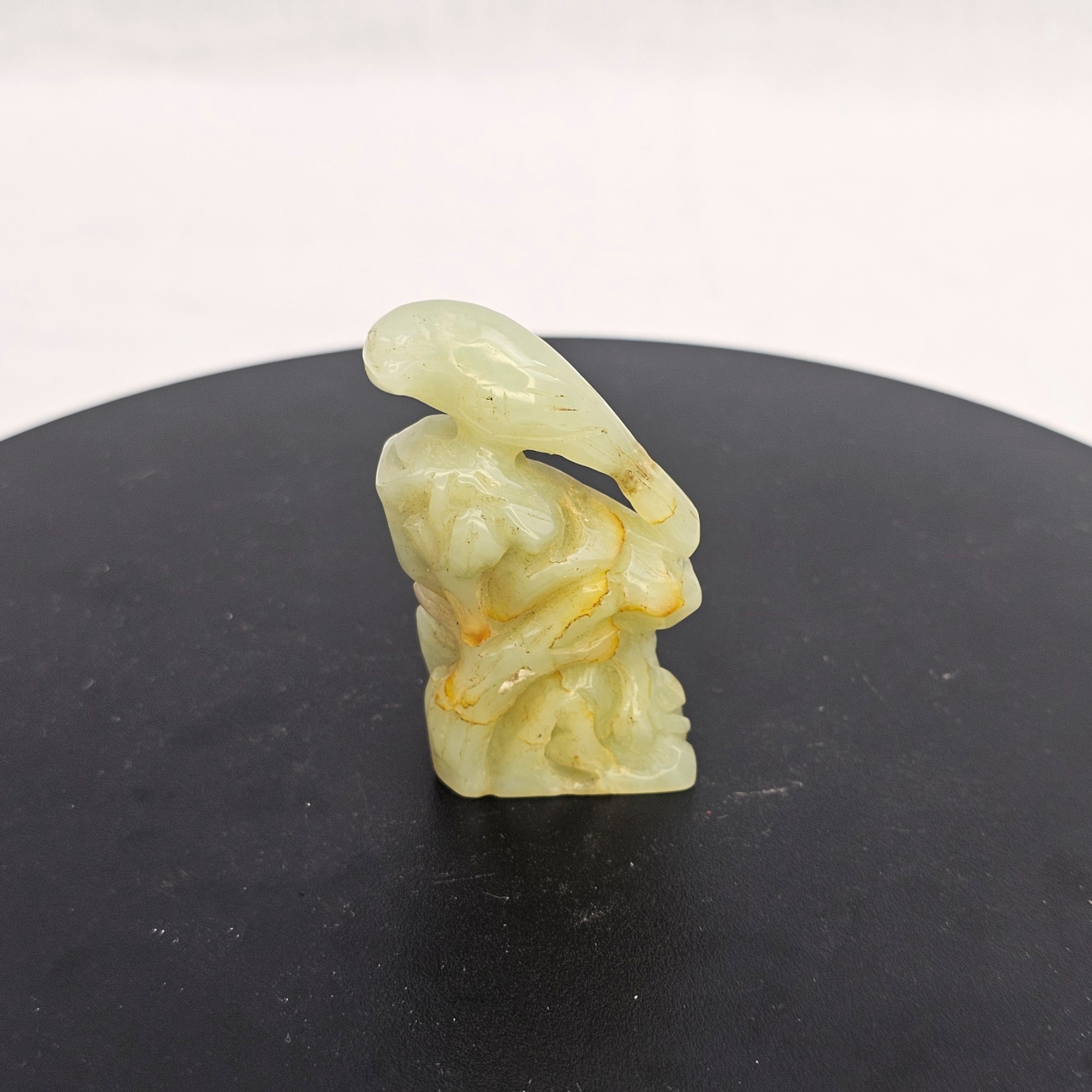
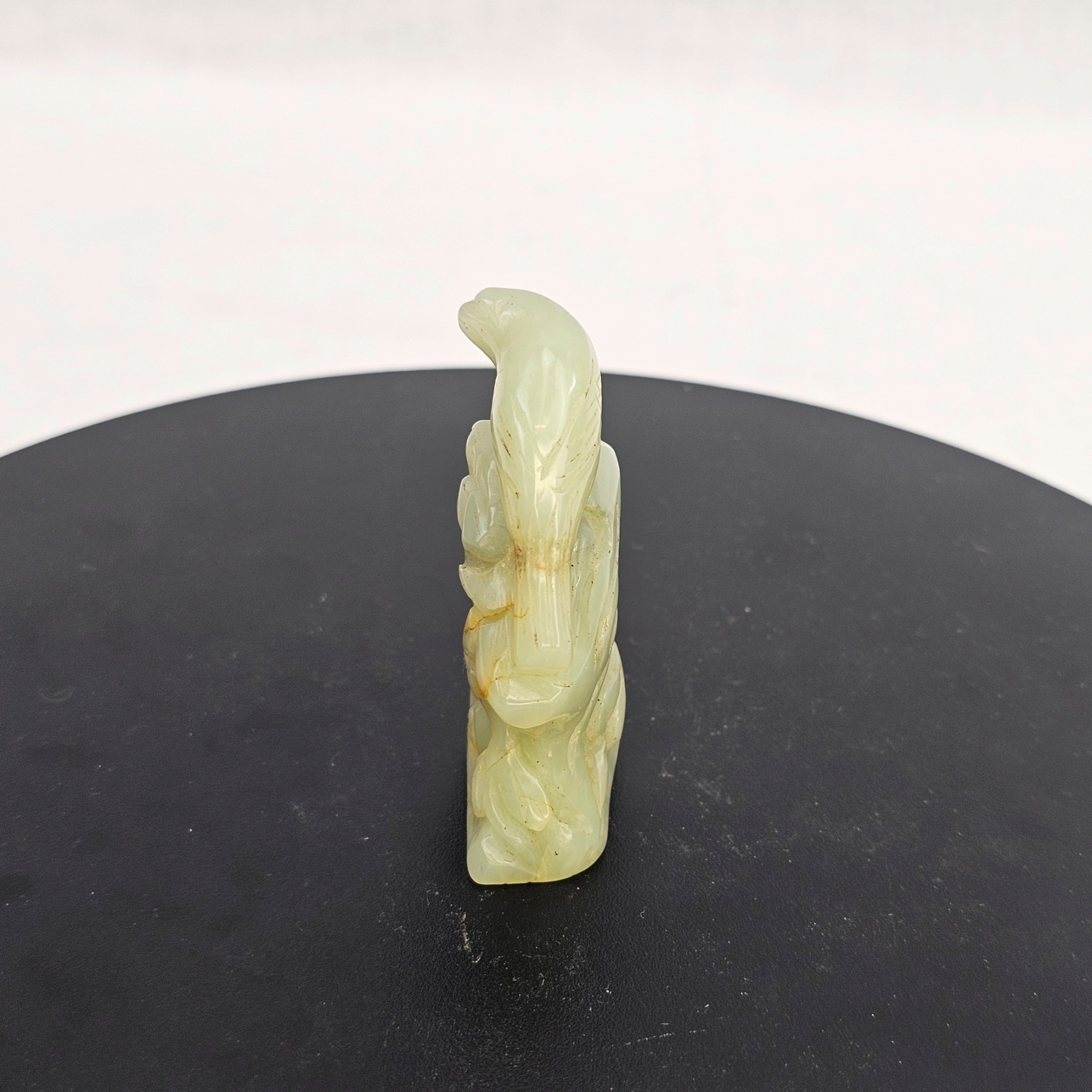
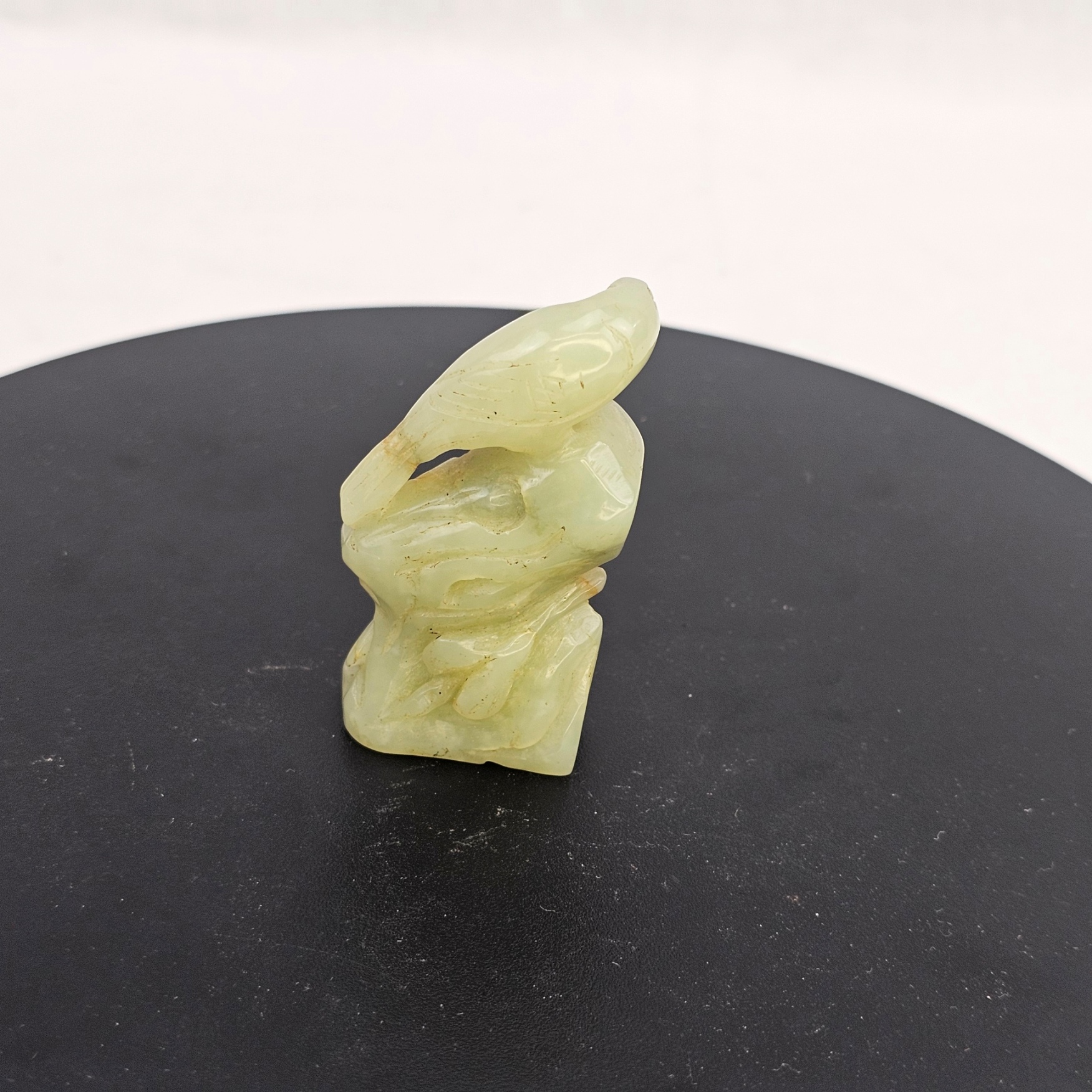
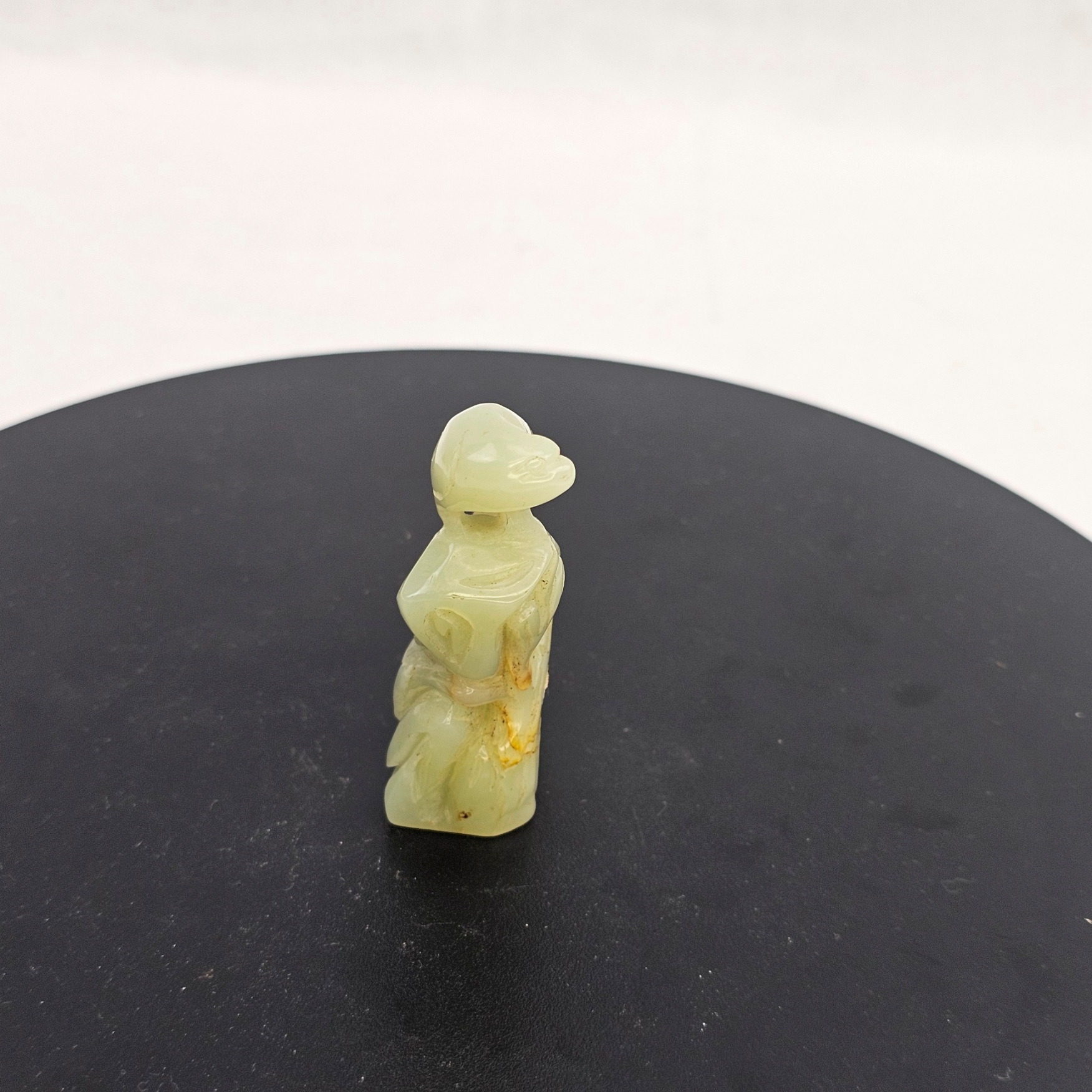
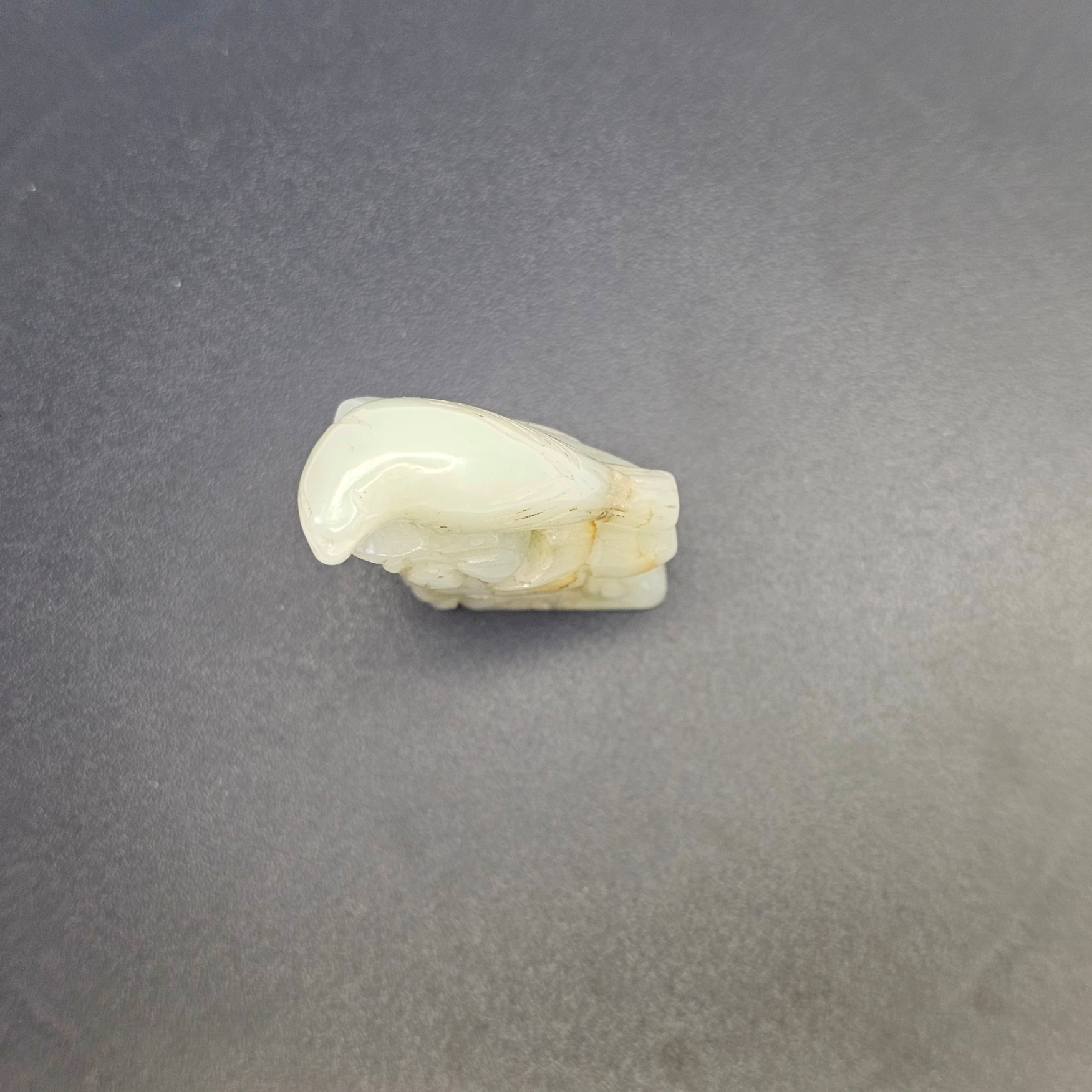
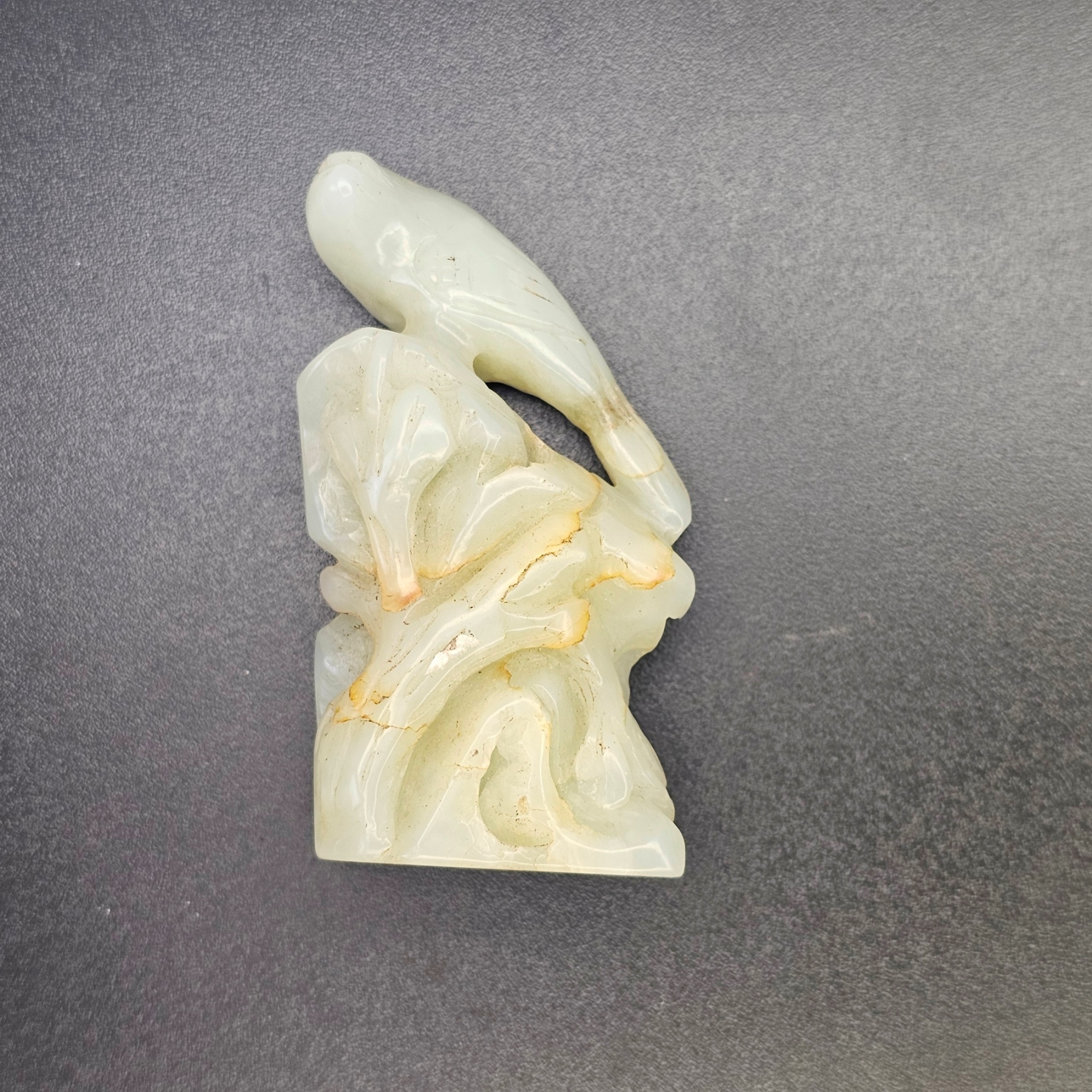
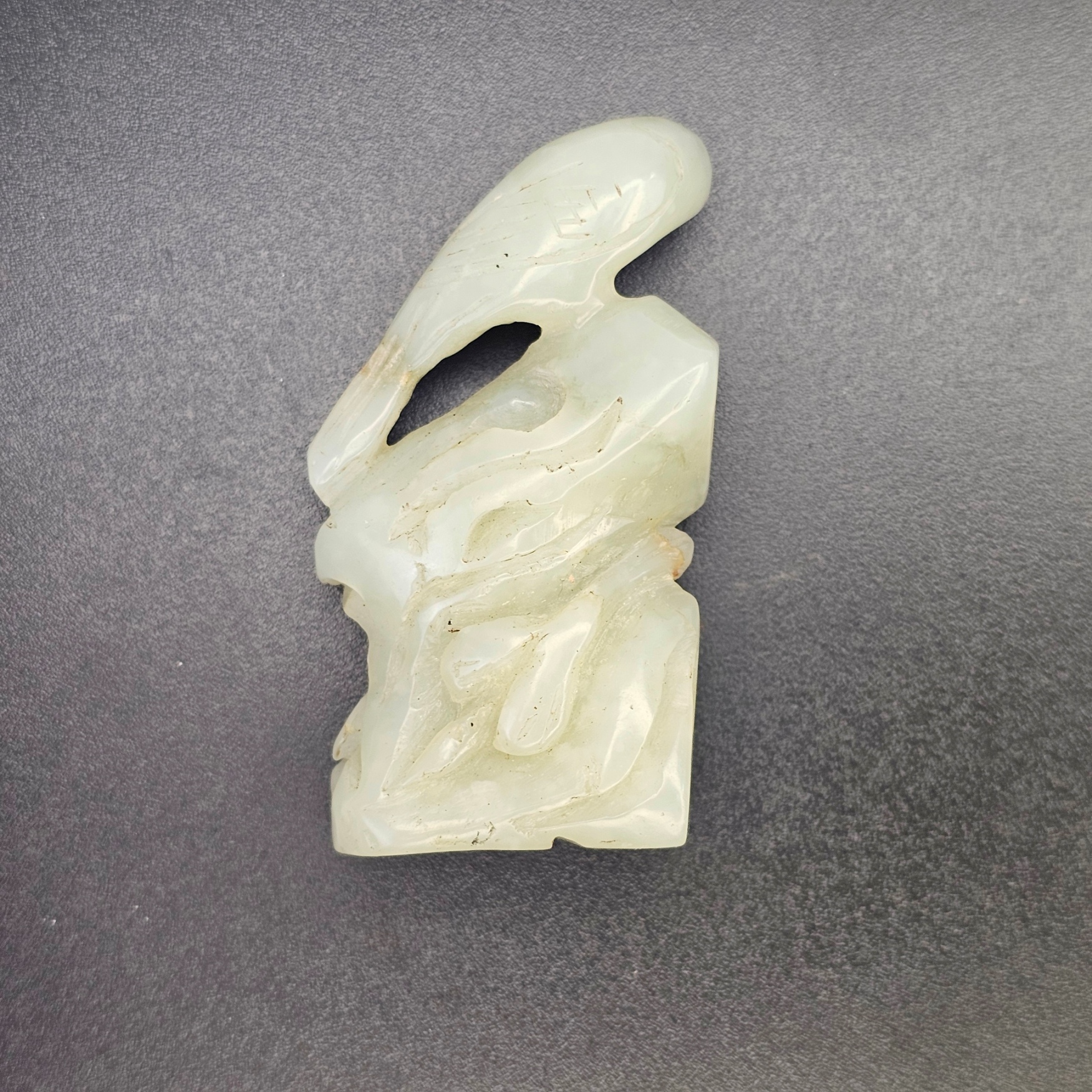
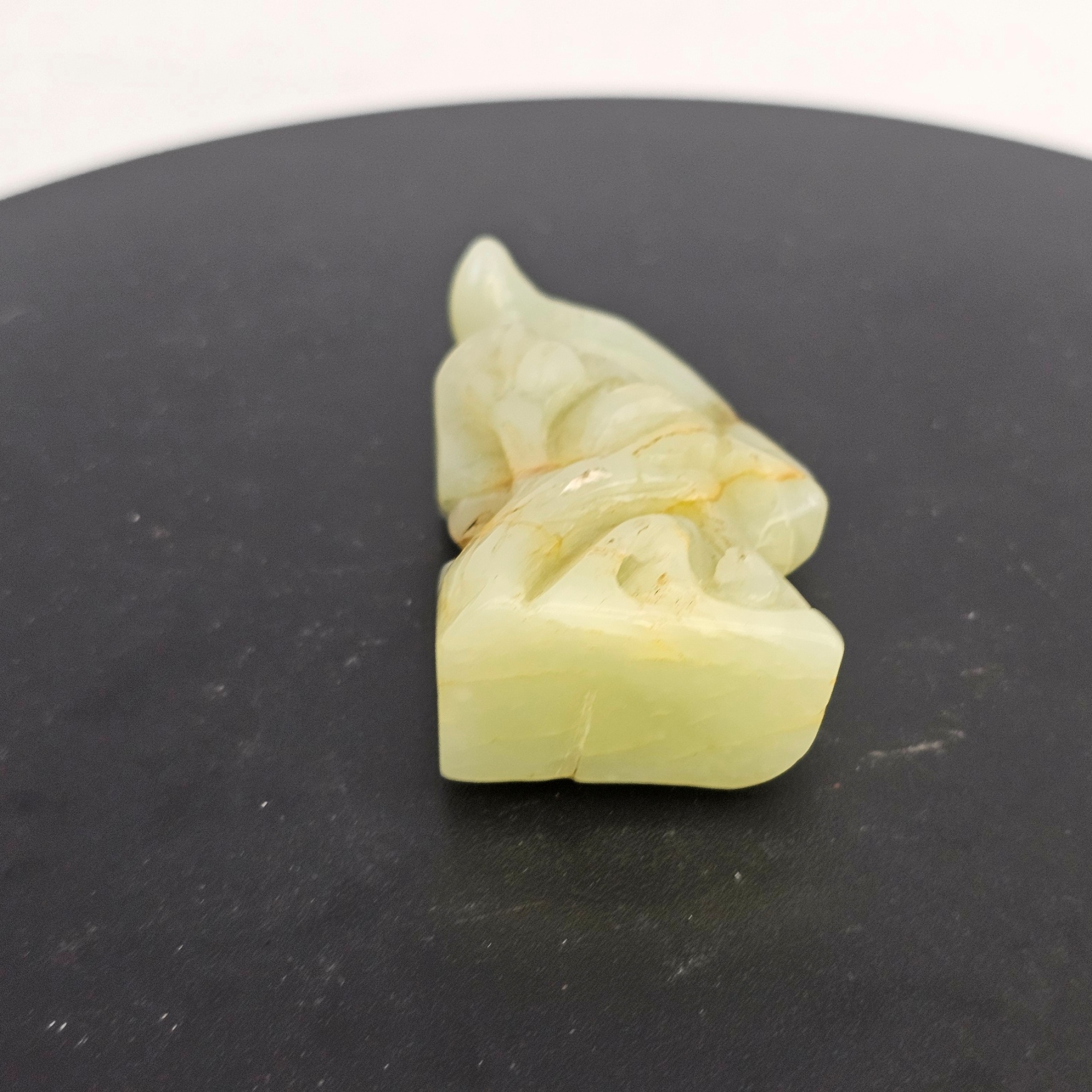
A fine hand-carved nephrite jade carving depicting a bird of prey, almost certainly a hawk or falcon, perched in a dynamic resting pose atop a naturalistically carved rockwork and foliate base. The stone is a pleasing pale celadon green, enriched throughout with amber and russet veining that the carver has skilfully incorporated into the composition, concentrating warm tones toward the lower body and base to suggest the texture of rock and earth. Viewed from the front the bird's body is compact and well-resolved, with the wings folded and the tail swept downward, and the head turned to one side conveying alert watchfulness. A pierced aperture through the body adds depth and lightness to the composition. From the reverse the form becomes more sculptural and abstract, with sweeping lines reminiscent of the scholar's rock aesthetic. The flat rectangular base is left largely undecorated, consistent with the form being intended as a seal finial or desk object. The carving is confident and assured, the polish smooth and even.
~ Historical Context ~
The hawk and falcon held particular significance in Ming Dynasty China (1368 to 1644) as symbols of power, martial virtue, and swift decisive action, and were closely associated with the warrior class and imperial falconry culture that flourished during the early and middle Ming period. Nephrite jade carved in the form of birds of prey appears in Ming imperial and aristocratic contexts as scholar's desk objects, belt hooks, and seal finials, reflecting the Confucian ideal of combining scholarly refinement with martial readiness. The use of naturally occurring russet skin tones within the carving is a technique prized by Ming jade carvers, who regarded the ability to incorporate the stone's natural colour variation as a mark of virtuosic skill. The bold, slightly abstracted treatment of the form, together with the rockwork base and the pierced void through the composition, are all hallmarks of Ming period jade carving, distinguishing it from the more precisely detailed and finely finished Qing period work that followed. This carving follows a tradition of small contemplative objects intended for handling as much as display, prized for the warm tactile quality of polished nephrite.