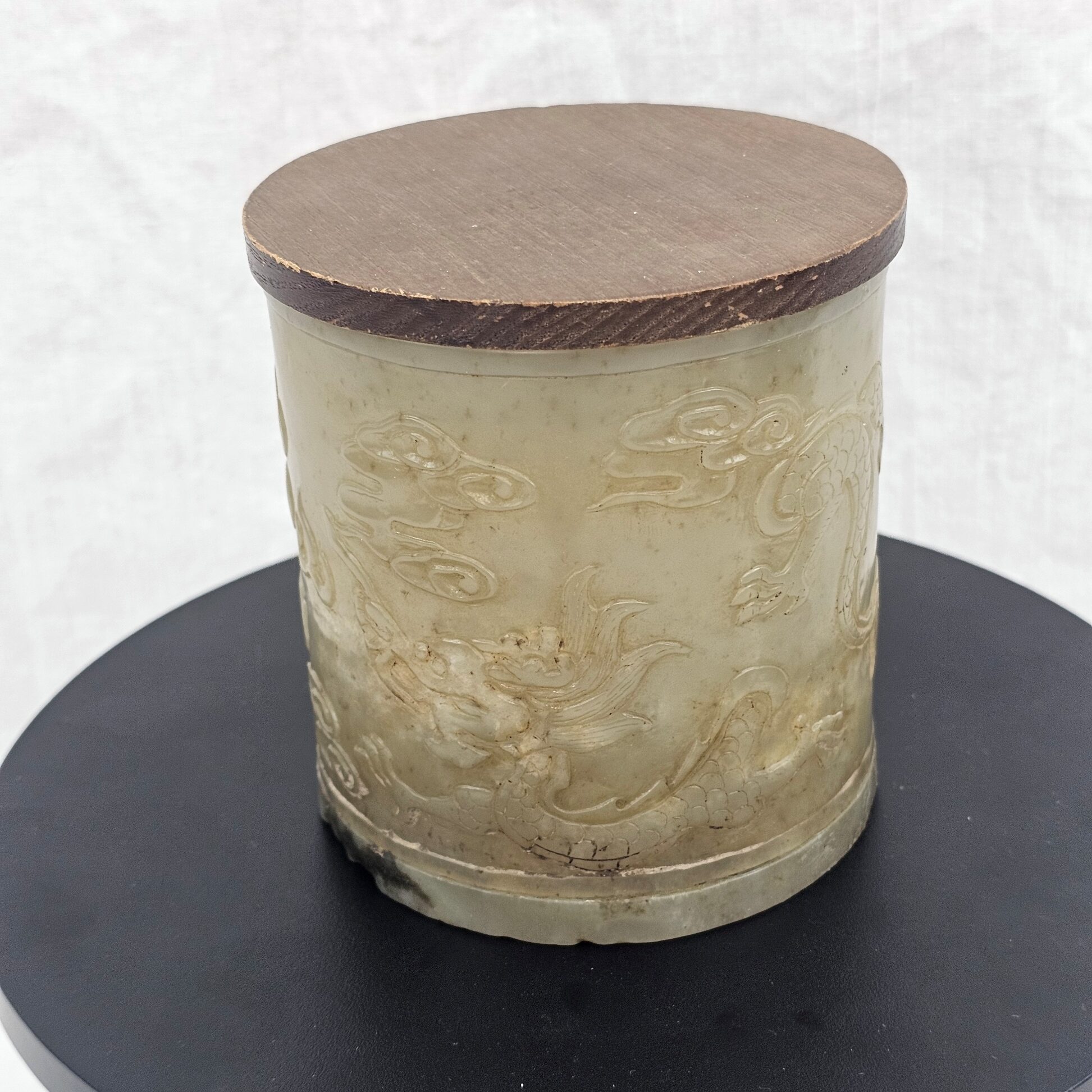
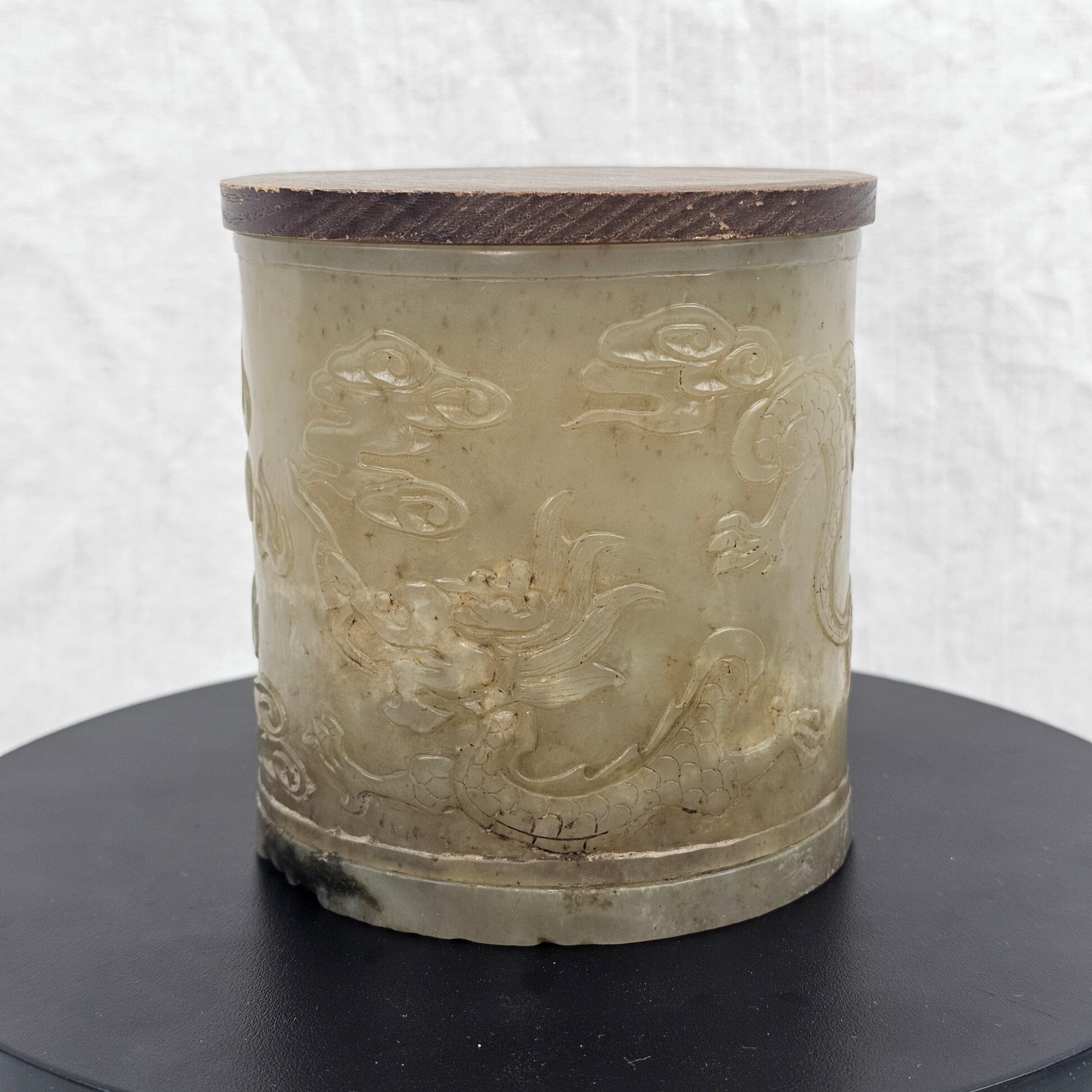
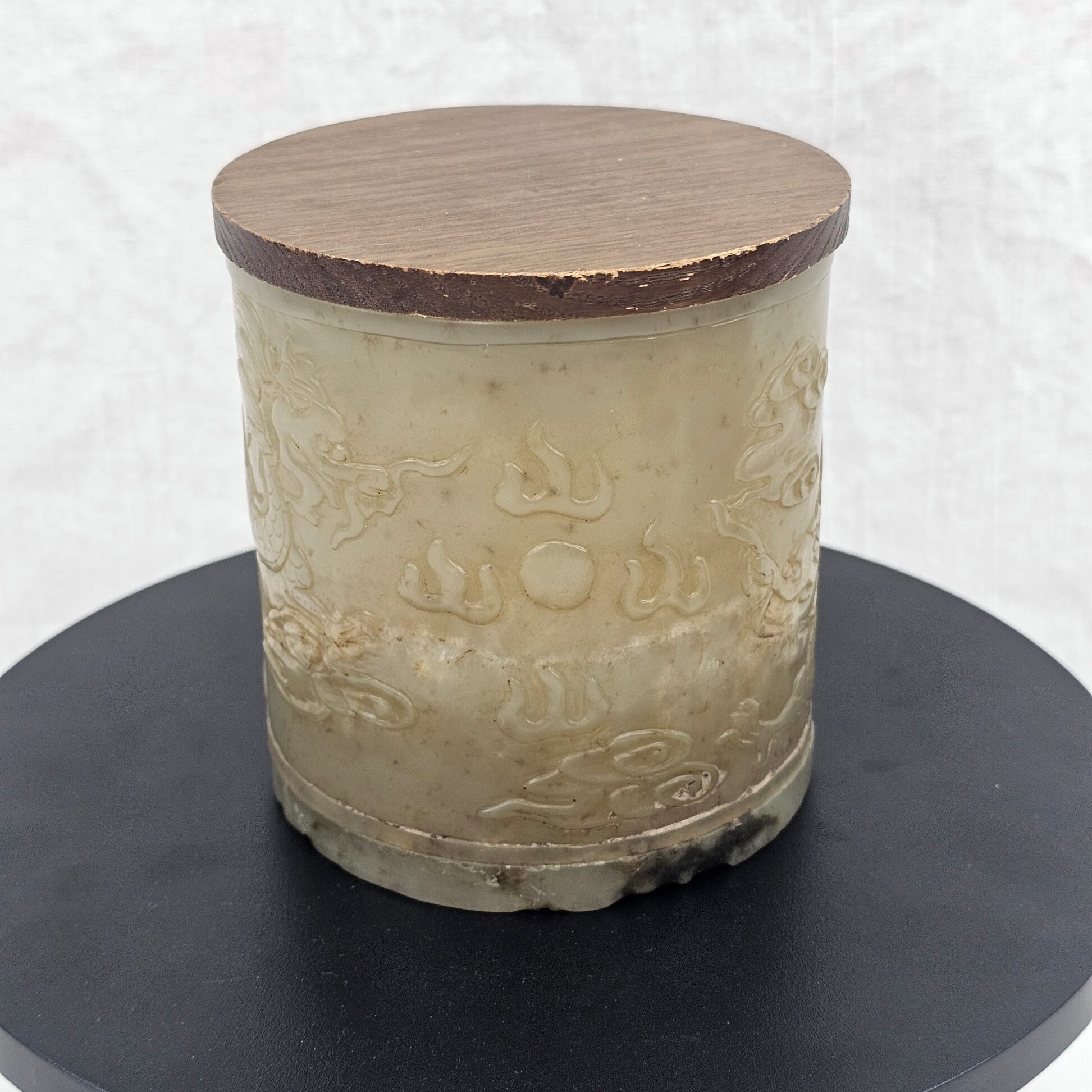
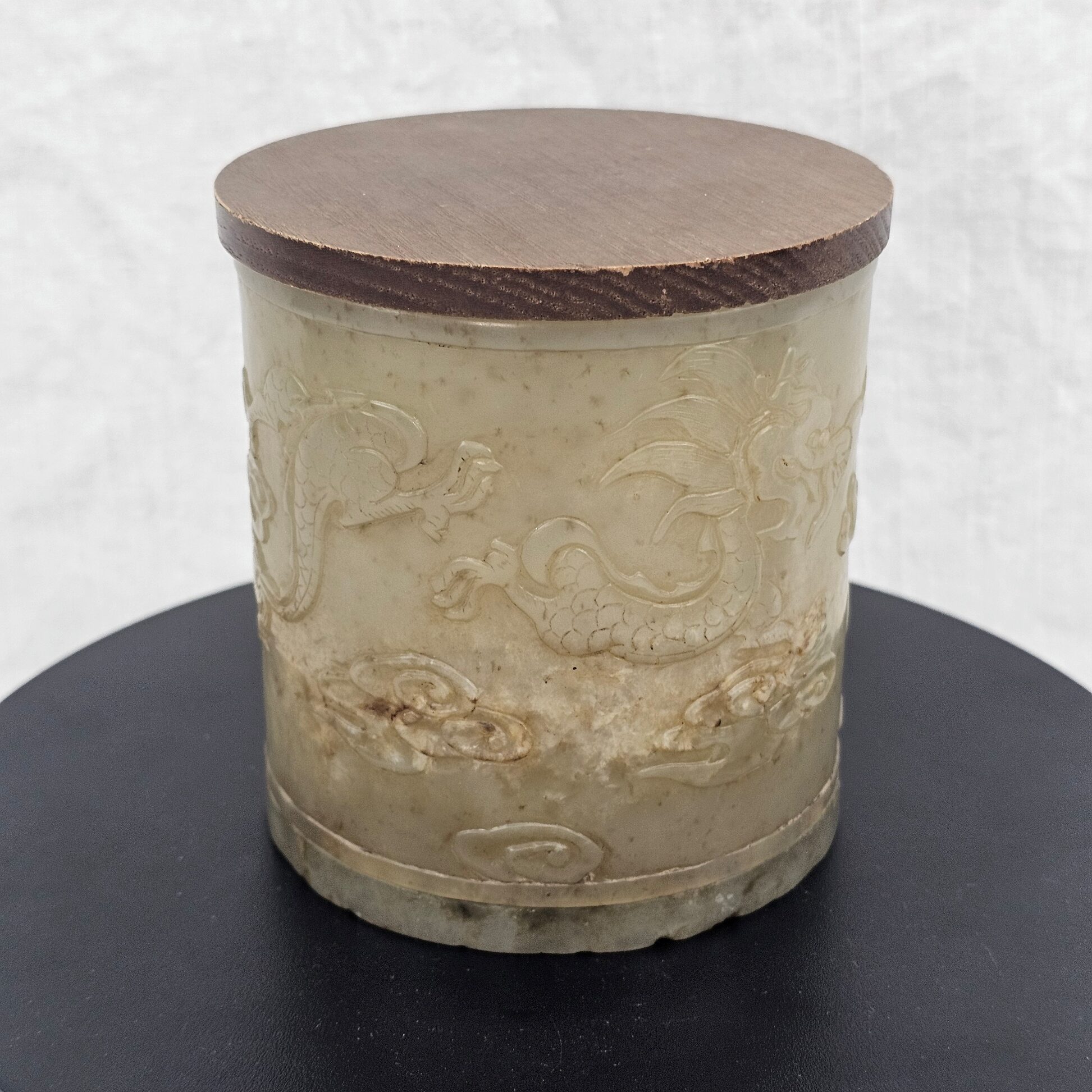
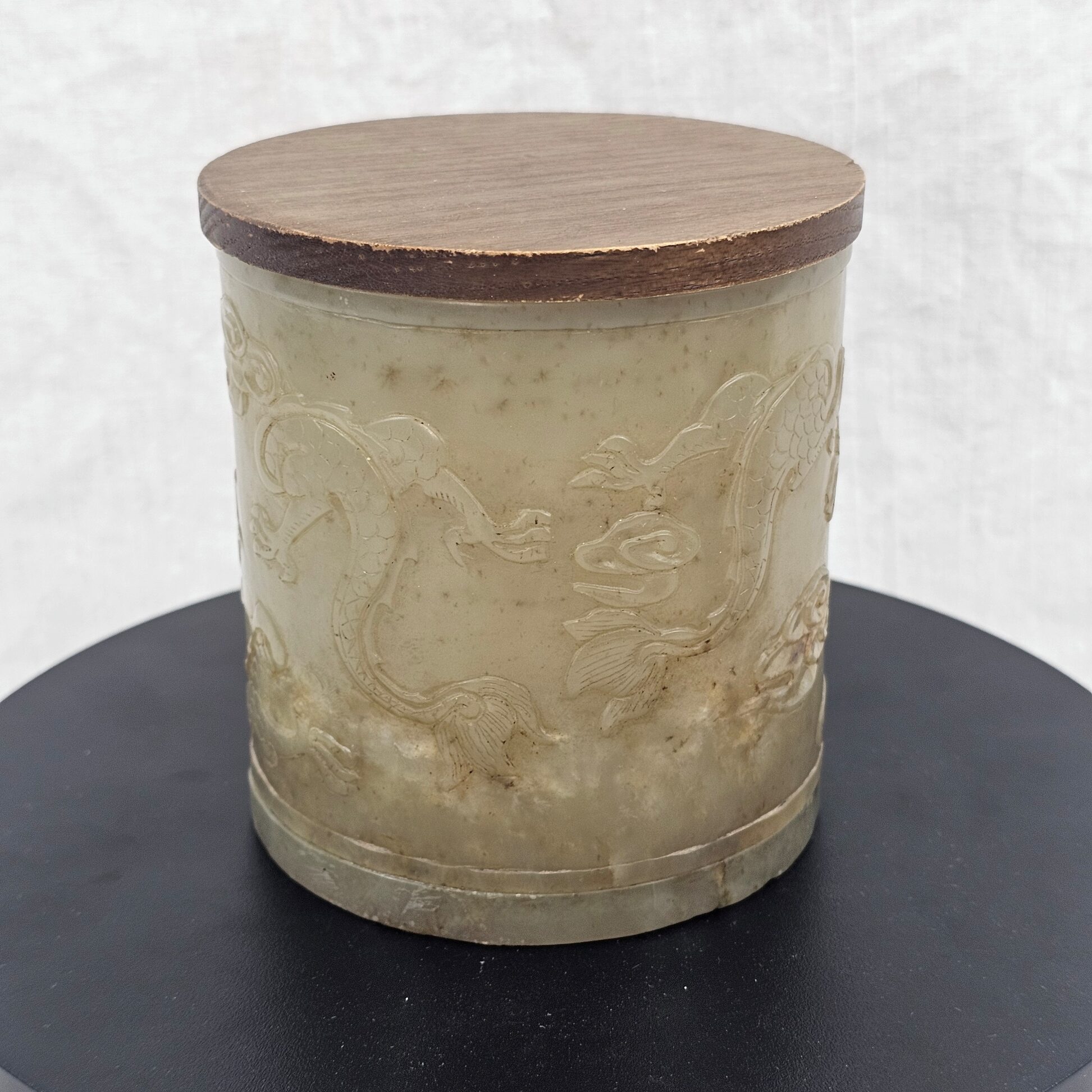
~ Chinese Celadon Nephrite Jade Brush Pot Carved with Dragon in Clouds, Ming to Early Qing Dynasty, 16th to 17th Century ~
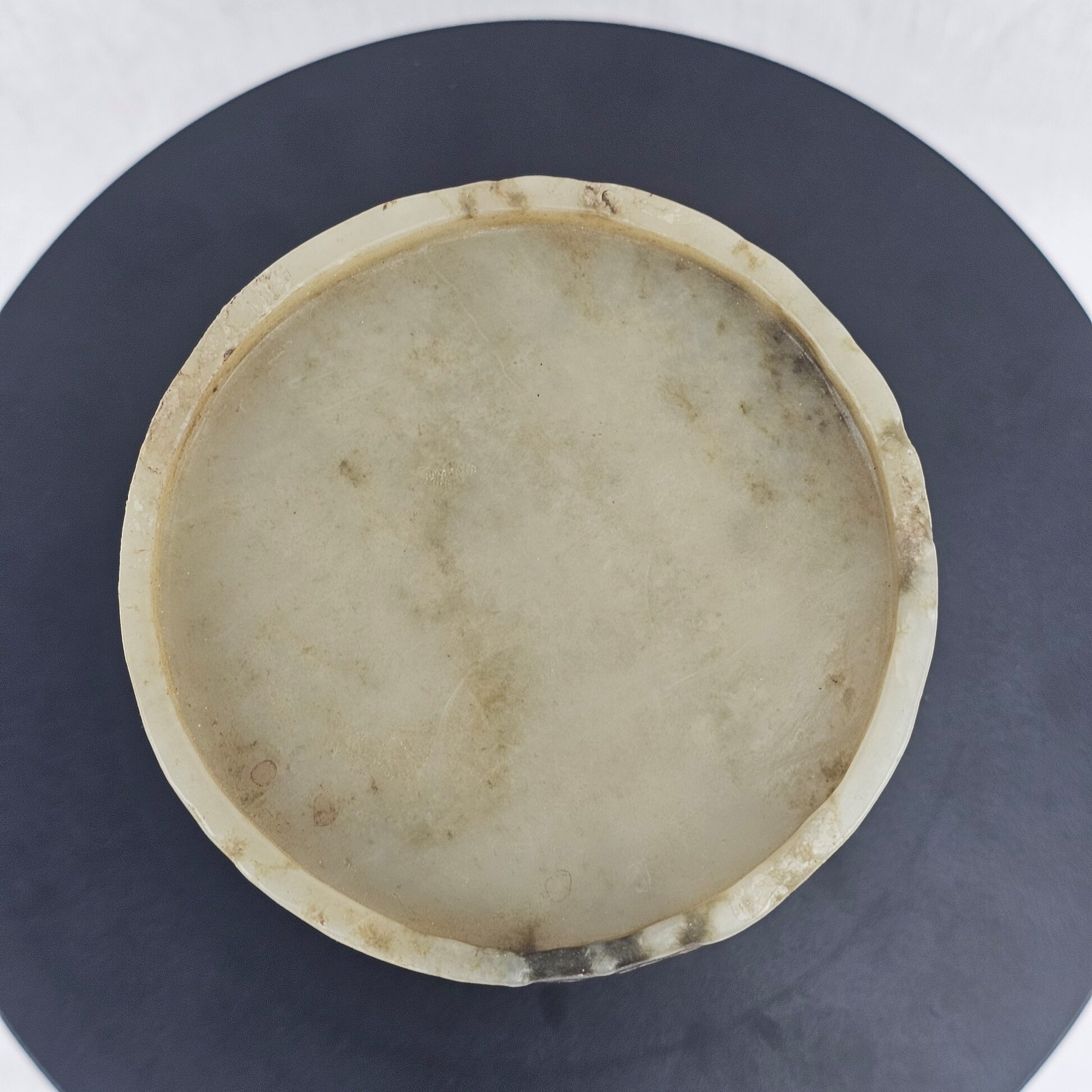
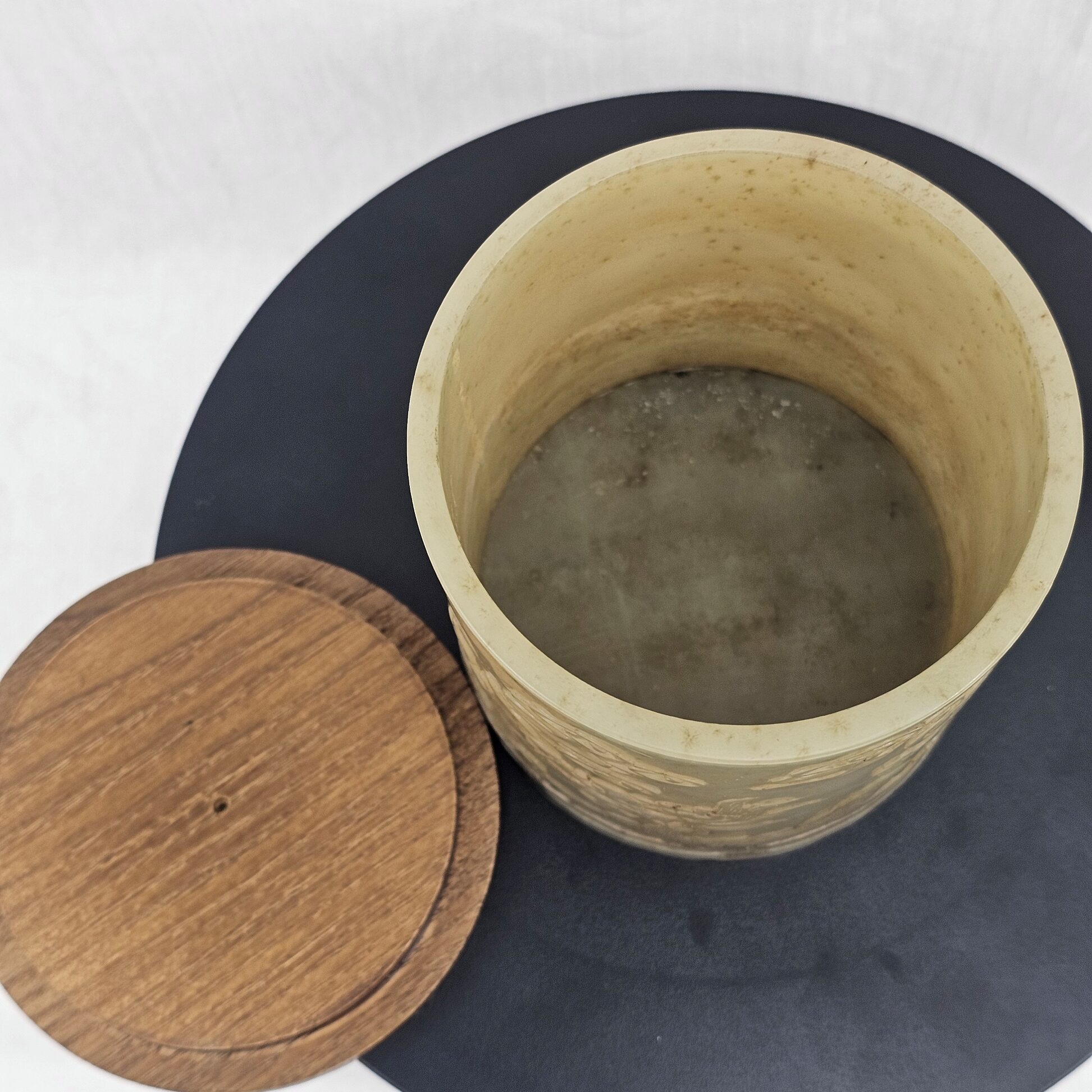
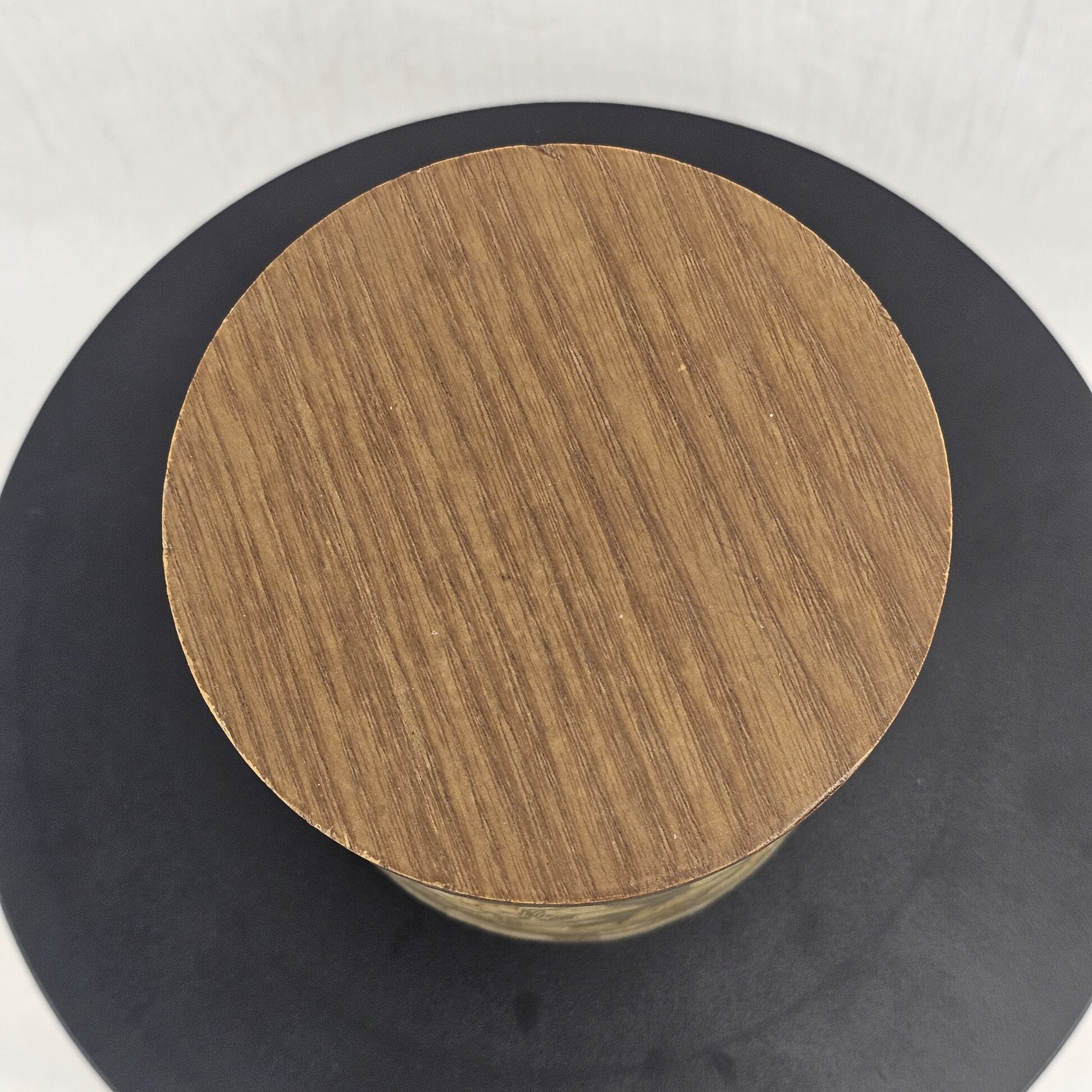
A substantial cylindrical brush pot, bitong, hollowed from a single block of pale celadon nephrite jade and carved in bold low relief with a continuous dragon design encircling the full exterior. The dragon is depicted in a vigorous sinuous pose, its elongated body undulating across the surface with clearly articulated scales shown in overlapping rows, the clawed feet extended, the head raised with the characteristic open-mouthed fierce expression, and the mane and beard trailing behind in flowing arcs. Surrounding the dragon, curling cloud scrolls and flame or wave elements fill the available ground, creating a dynamic atmosphere of movement consistent with the traditional depiction of the imperial dragon ascending through the celestial realm. One face of the pot carries what appears to be an additional decorative or inscribed panel with further motifs, which should be examined and translated by a specialist in person. The upper rim is level and plain, with a narrow raised band running just below the rim on the exterior. A further raised band marks the lower register of the body, above a slightly widened base with a more roughly finished exterior surface at this level, showing natural brown-black stone inclusions and age patination concentrated at the foot. The interior is hollow and smooth, showing the characteristic warm amber-celadon stone colour where the walls thin toward the interior surface, and with accumulated deposits at the base consistent with long term use and age. The base is flat and broadly plain, without a visible inscription in the images provided, and should be examined in person. A fitted circular wooden lid, turned from a medium-toned hardwood with a fine straight grain, sits to the top of the pot; this appears to be a later addition or replacement. The stone is a pale celadon nephrite throughout, leaning toward a warm grey-green in the upper body areas and a more cream-celadon toward the interior, with scattered black mineral inclusions distributed across the body wall, and the heavier patination and dark deposits concentrated at the foot.
Historical Context
The brush pot, bitong in Chinese, is among the most prestigious and enduring objects of the Chinese scholar's studio, wénfáng. Used to hold calligraphy and painting brushes upright and accessible during scholarly and artistic work, the brush pot occupied a central position on the writing table alongside the inkstone, water dropper and other scholar's implements. Brush pots in nephrite jade are among the rarest and most costly examples of the form, requiring a block of jade of sufficient size and quality to be hollowed to useful depth without cracking or splitting, representing a considerable investment of both material and skill.
The dragon motif on this piece draws on the most powerful visual vocabulary available to Chinese craftsmen. The dragon represents imperial authority, cosmic power, and the celestial forces of creation, and its use as the sole decorative subject on a scholar's vessel of this kind elevates the piece into the highest register of auspicious and prestigious imagery. Dragon-decorated jade vessels were produced throughout the Ming and Qing periods for officials, scholars and court circles, and the bold, energetic style of the dragon depicted here, with its sinuous body, overlapping scales and vigorous clawed feet, is consistent with the characteristic treatment of the subject in works attributable to the late Ming to early Qing period, broadly the 16th to early 17th century. The somewhat matte, aged quality of the stone surface, the depth of the natural brown patination at the foot, and the character of the relief carving, particularly the treatment of the cloud scrolls and scale patterning, support an attribution to this period, though formal confirmation of a Ming rather than early Qing date would require specialist physical examination and ideally thermoluminescence testing if applicable.
The fitted wooden lid, while a later addition, reflects the Chinese tradition of providing protective covers for precious jade vessels, and is consistent with the care typically lavished on scholar's studio objects of this quality.