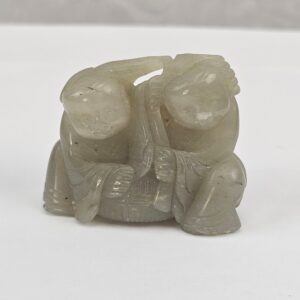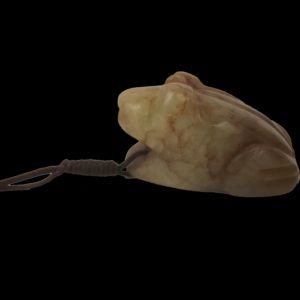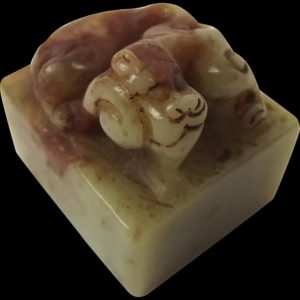
~ Chinese Carved Celadon and Russet Nephrite Jade Pendant Double Peach Group, Qing Dynasty or Earlier ~
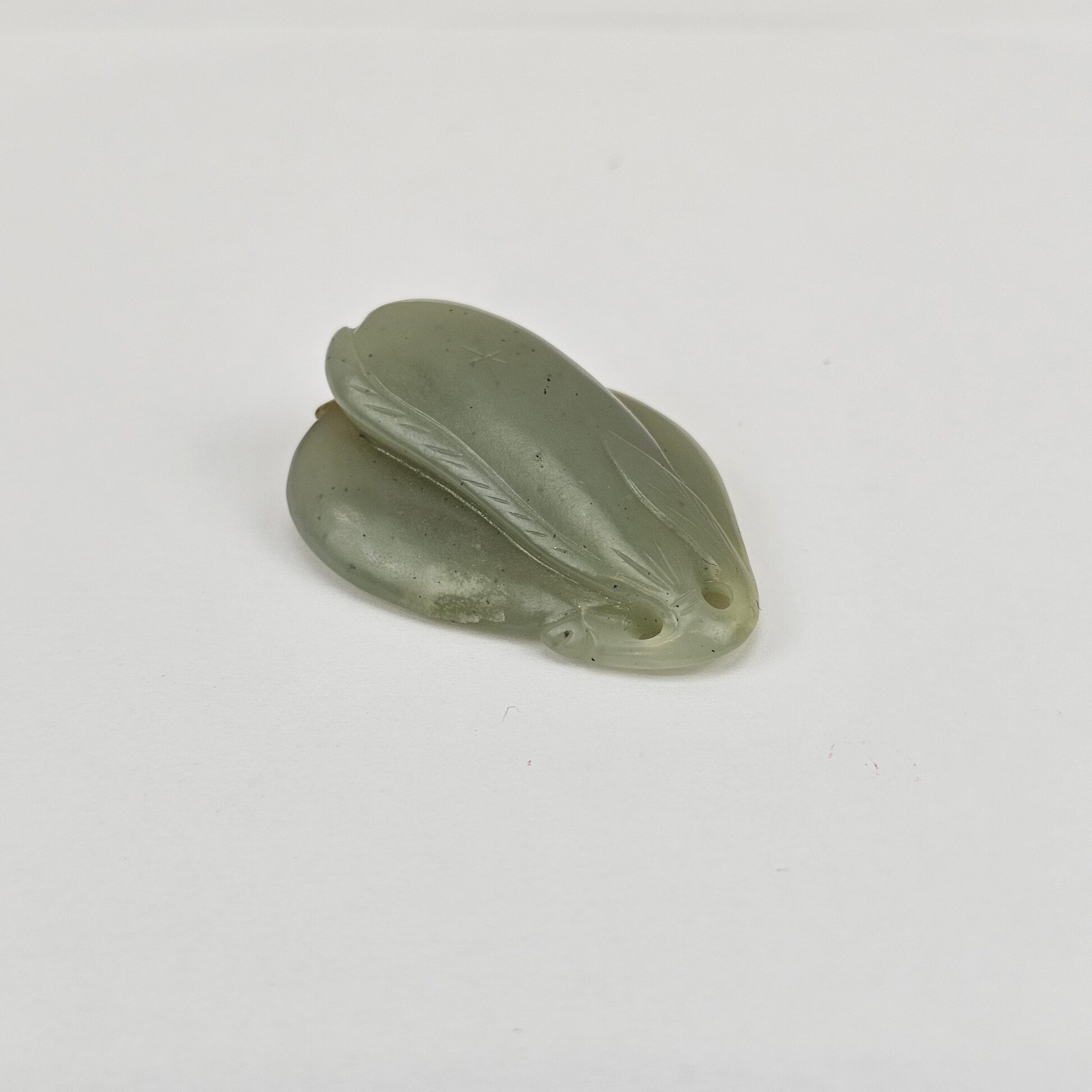
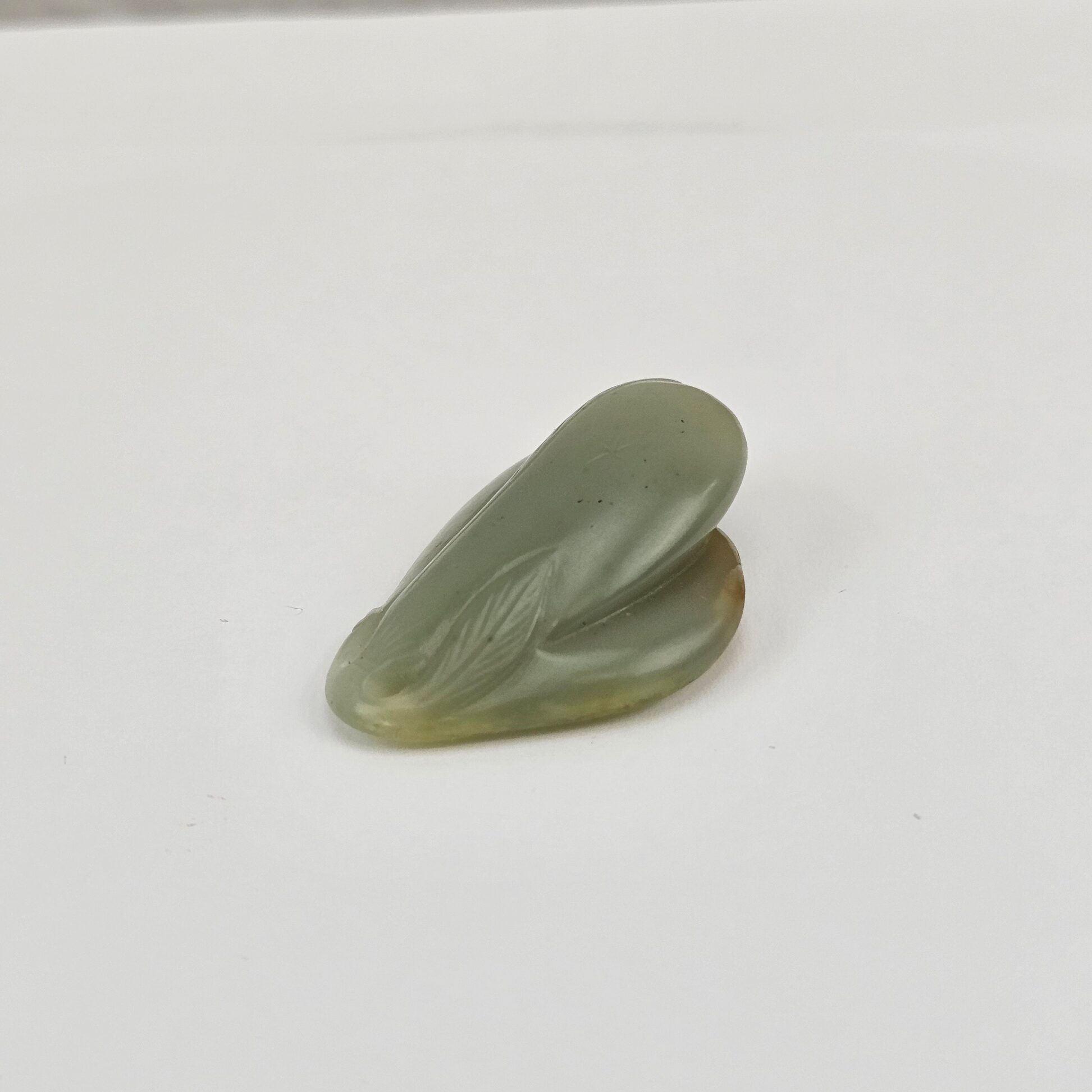
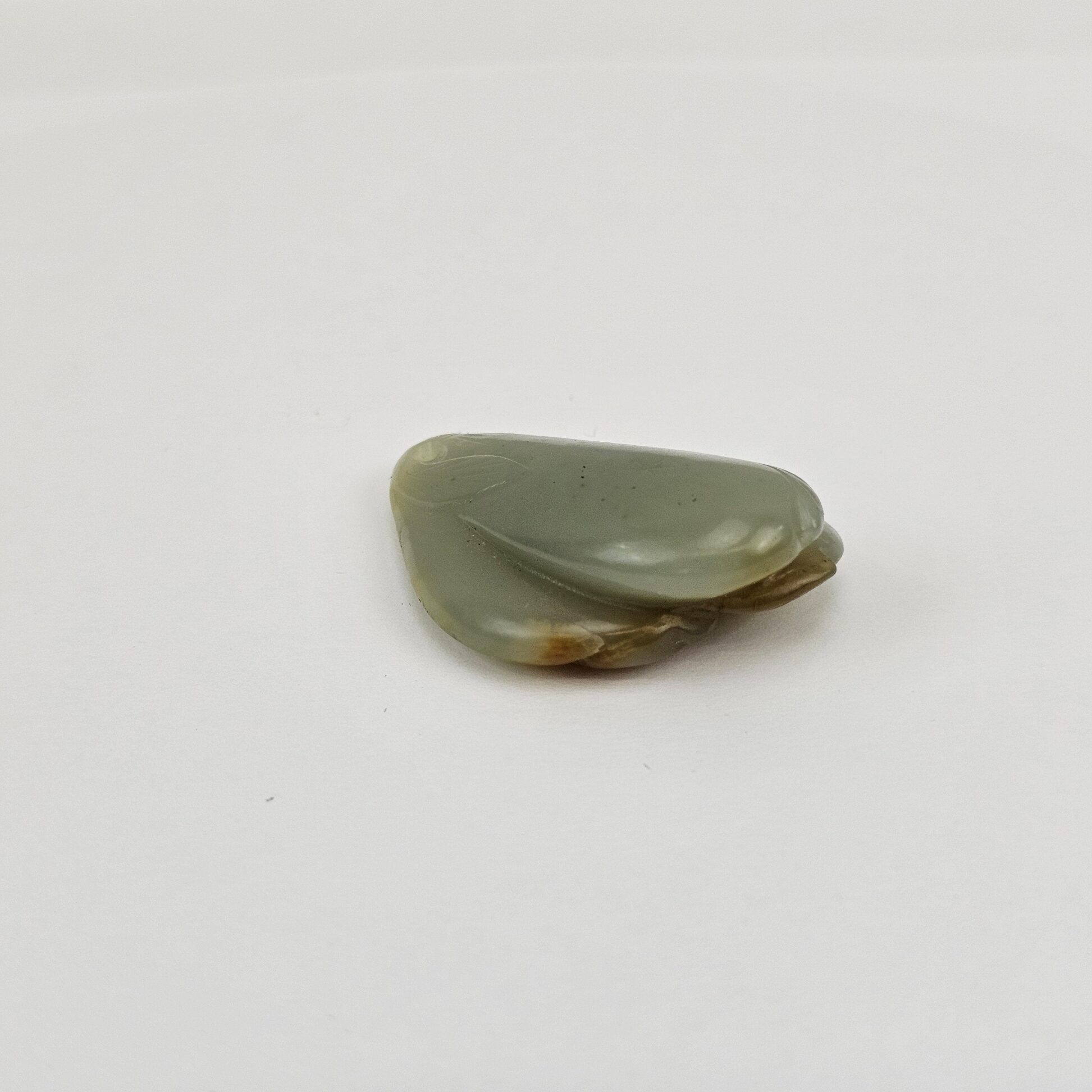
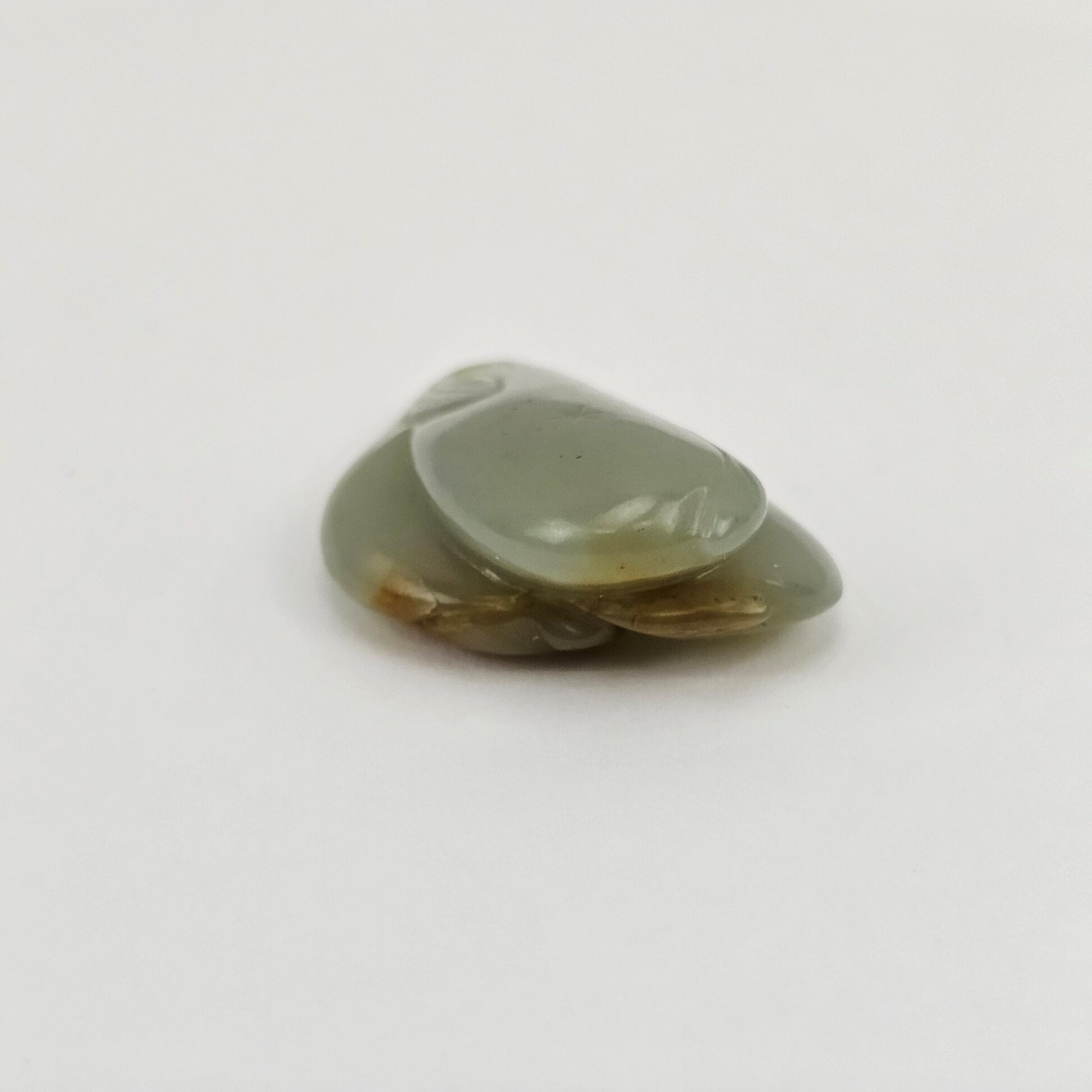
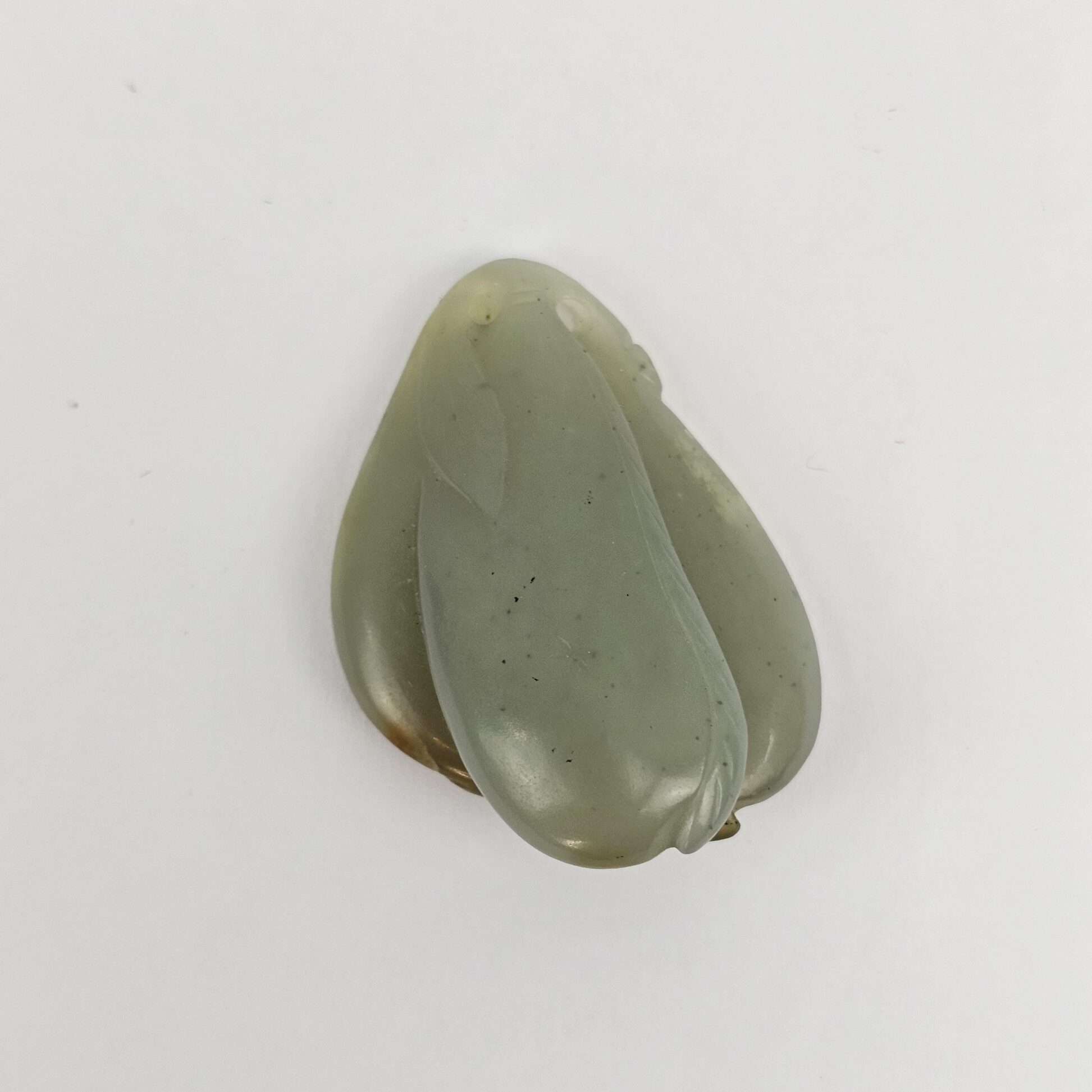
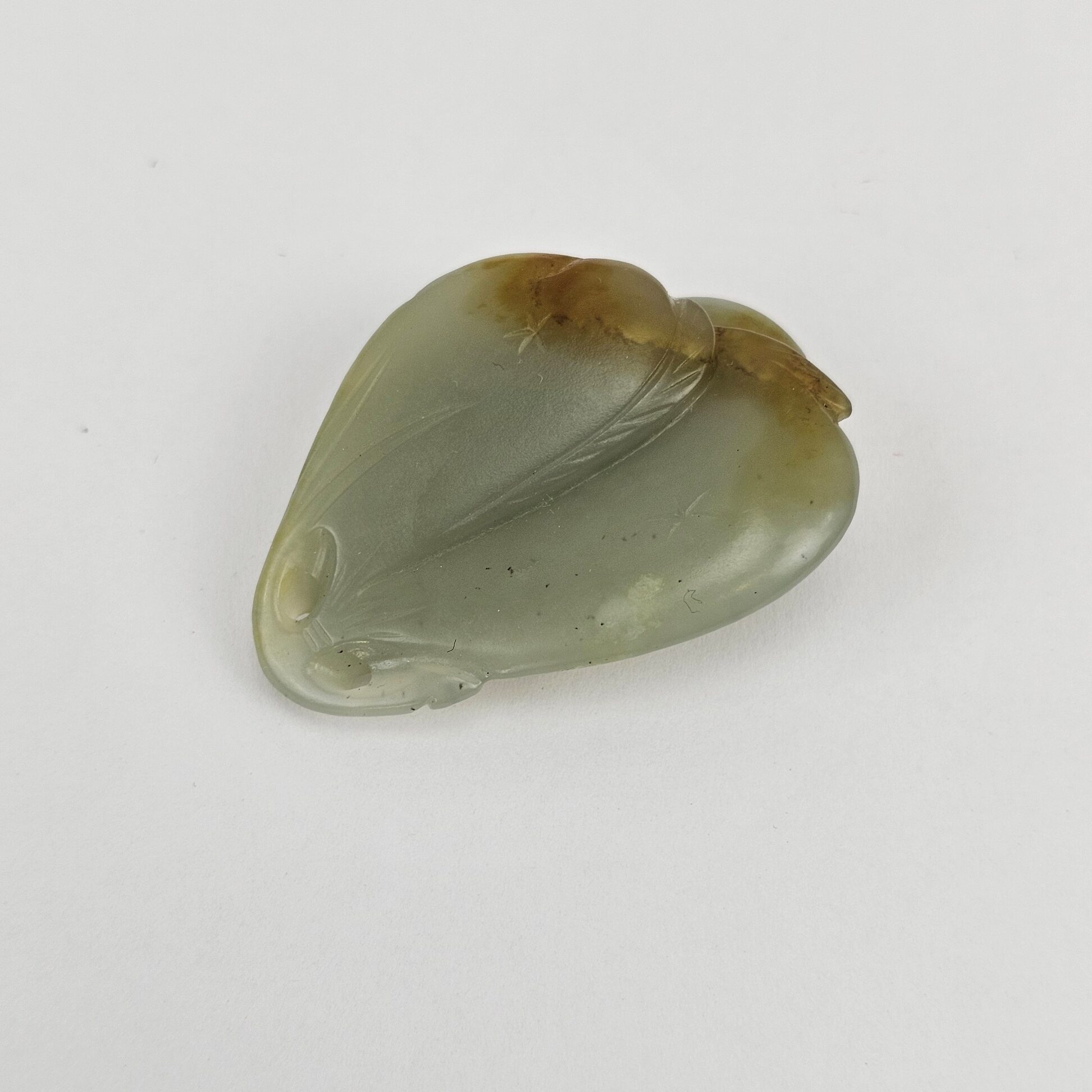
A beautifully conceived and well-carved Chinese jade pendant depicting two peaches (shòutáo 壽桃) nestled together, with a carved leaf arching across the joined forms and a smaller subsidiary element, possibly a stem, bud, or additional foliage, carved at the junction in the lower russet zone. The piece is carved fully in the round, presenting a different and pleasing composition from every angle.
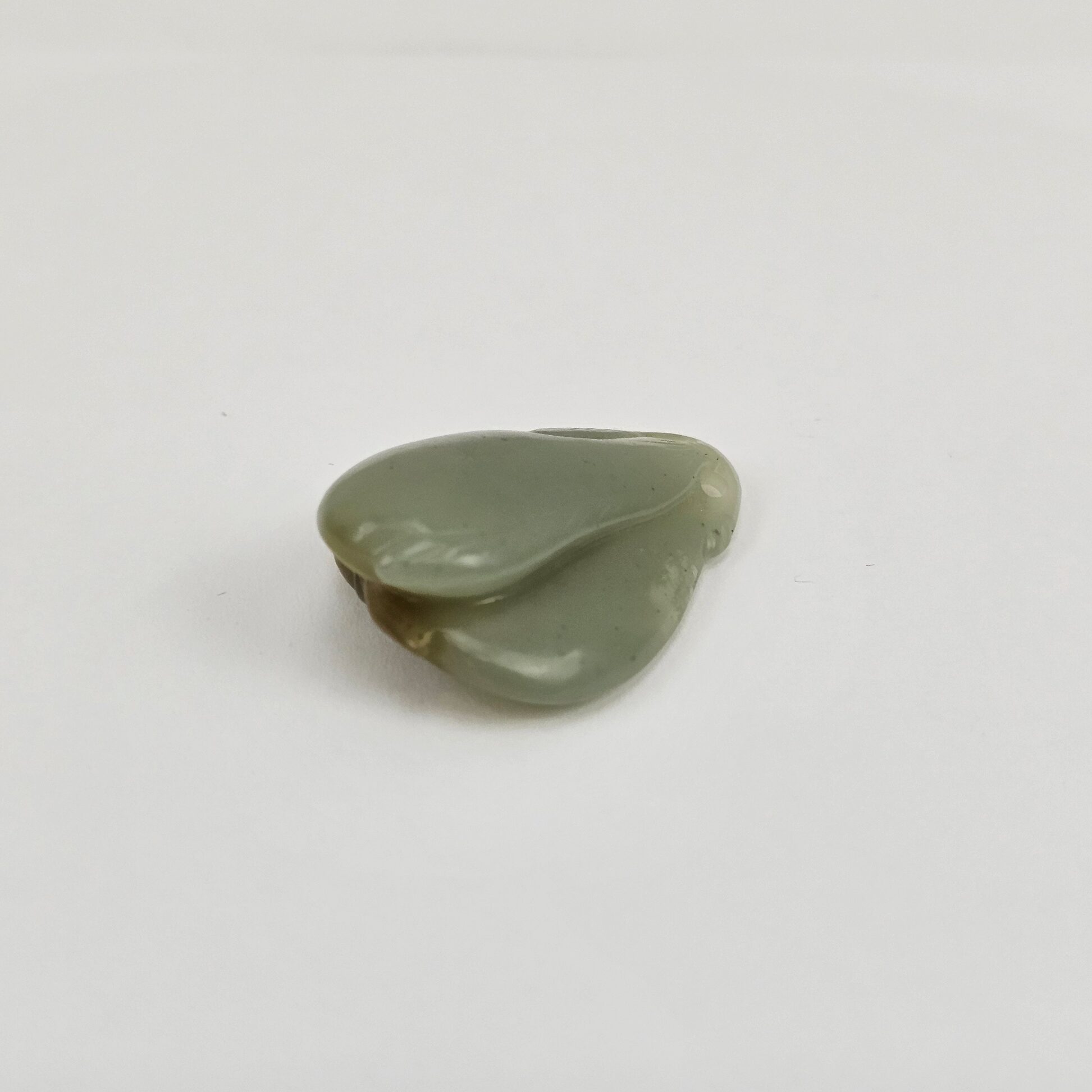
The stone is a fine pale celadon green, a soft, slightly cool grey-green with excellent translucency, with a concentrated area of warm russet-amber skin (pí sè 皮色) at the upper stem and junction zone. This natural skin has been deliberately and skilfully incorporated into the design: the russet tones fall precisely at the point where the peaches join and where the leaf and stem emerge, imitating the natural blush and woody stem of the living fruit. This exploitation of the stone's natural colour variation, known as qiǎosè (巧色, literally "skilful use of colour"), is a hallmark of accomplished jade carving and substantially enhances the piece's aesthetic and collector appeal. Natural black mineral inclusions are present throughout the celadon body, consistent with authentic nephrite. A suspension hole is drilled through the piece (visible in image 1), confirming its function as a pendant or toggle.
The polished surfaces are of high quality throughout, smooth, even, and with a fine waxy lustre on all faces. The carving of the leaf veination and the modelling of the peach forms are crisp and assured.
~ Historical Context ~
The peach (táo 桃) is one of the most potent longevity symbols in Chinese art and culture, and its depiction in jade carries profound auspicious significance. In China, the peach represents immortality and longevity, the mythological peaches of the Queen Mother of the West (Xī Wángmǔ 西王母) in her Garden of Immortality were said to ripen every three thousand years and confer eternal life upon those who ate them. The double peach, two fruits joined at the stem, intensifies this symbolism and was among the most beloved motifs in the decorative arts of the Ming and Qing dynasties, appearing on porcelain, embroidery, lacquer, and jade. Presented as a pendant or toggle, such a piece would have been worn or carried as a protective amulet and a wish for long life. The clever use of the natural russet skin of the jade pebble (pí sè), incorporating its warm tones into the design as an expressive element, was a highly valued technique in Chinese jade carving. When the russet inclusions of the jade are cleverly sculptured to be part of the design, it transforms what might otherwise be a perceived imperfection into a mark of quality and artistry. The russet skin on this piece, concentrated precisely at the stem and junction, mimicking the blush of the living peach, demonstrates this skill with considerable sophisticationThe celadon colour with russet skin, the pendant form, and the quality of carving are all consistent with Chinese jade production from the Qing dynasty, though earlier dating cannot be excluded without physical examination.
~ Condition ~
Overall: Excellent condition; no chips, cracks, or losses observed to any face of the carving.
Carving: All detail intact, leaf veination, fruit forms, subsidiary stem element, and suspension hole are all present and undamaged.
Surface: Uniformly fine waxy polish throughout; no scratches, abrasions, or tool marks inconsistent with antique production visible in photographs.
Russet skin: Natural and unenhanced in appearance; well-integrated into the design.
Suspension hole: Clean and intact; no cracking visible around the aperture.
Inclusions: Natural black mineral speckles distributed through the celadon body, consistent with genuine nephrite and not a detractor.
~ Dimensions ~
The pendant is 4.5 cm (1.75 inches) in length.