~ Caughley Blue & White Porcelain Bowl c1780 ~
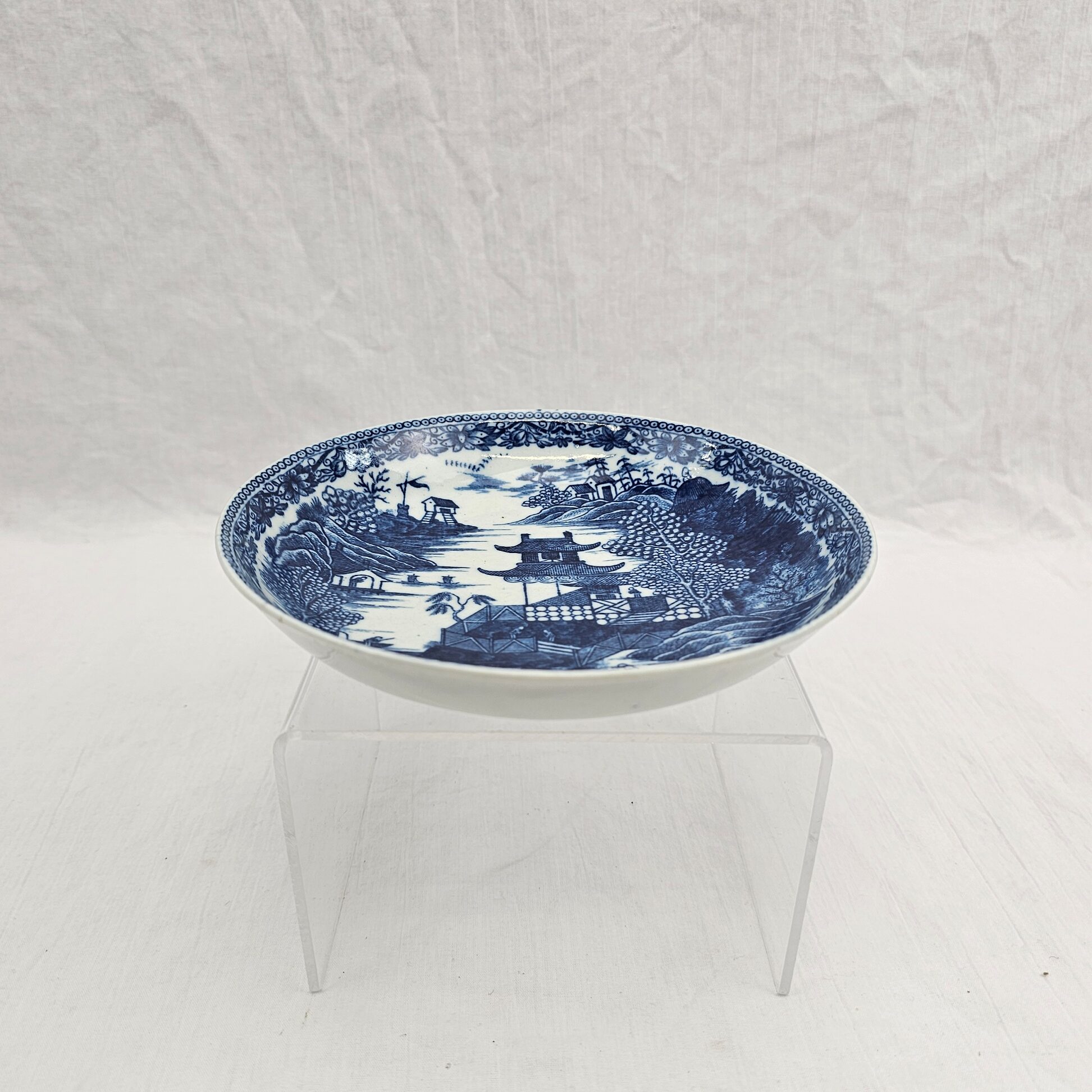
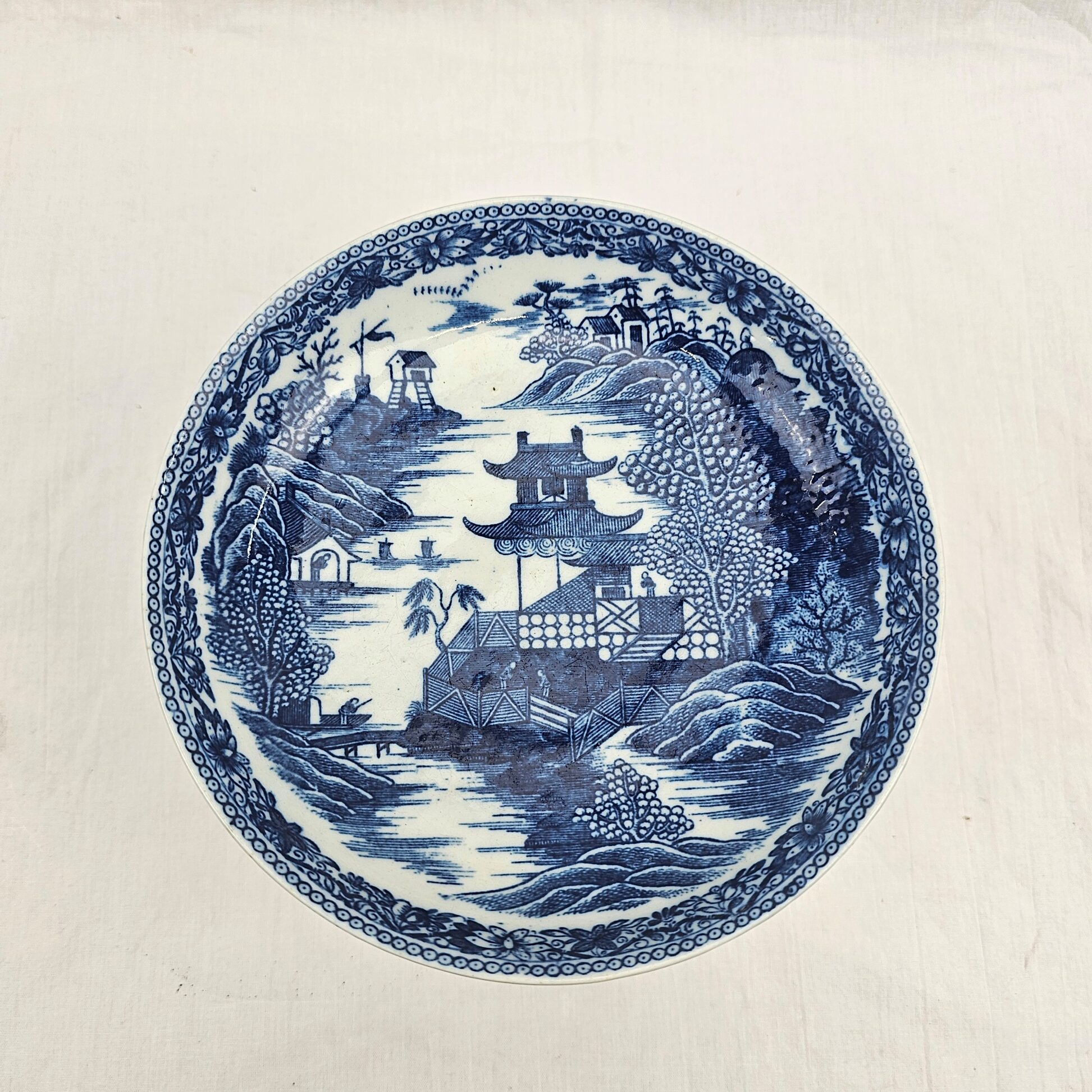
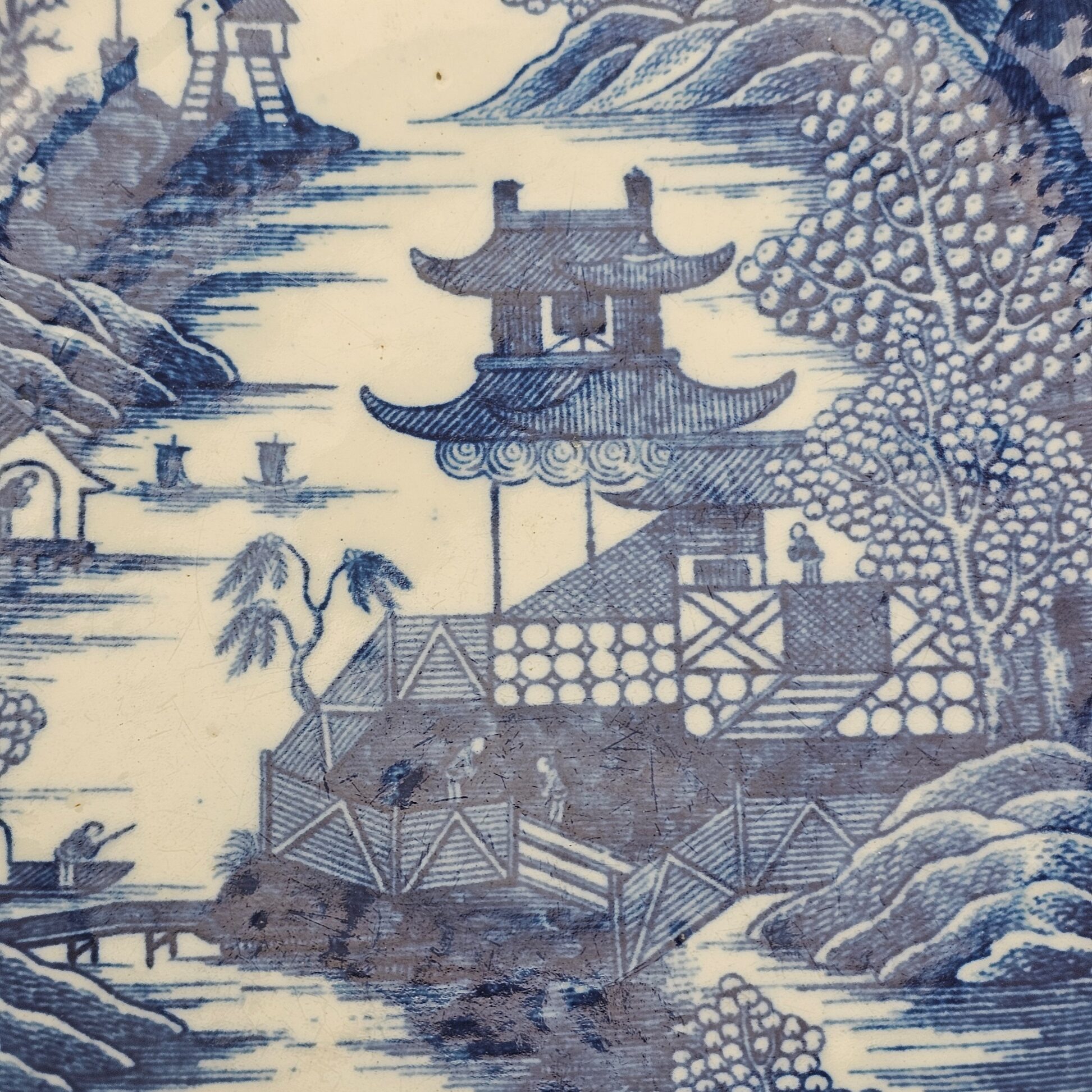
This shallow circular bowl is a handsome piece of Caughley soapstone porcelain, decorated in underglaze blue with the factory's well-known 'Pagoda' chinoiserie landscape pattern, printed by transfer. The design centres on a multi-tiered pagoda rising from a rocky island amid a broad river or lakeside setting, flanked by weeping willow trees, stylised foliage, and distant buildings on rocky outcrops. Sailing junks are visible on the water, and a standing figure appears beside fenced garden enclosures - all elements drawn from the Chinese export porcelain tradition that Caughley's founder Thomas Turner so successfully adapted for the English market.
The interior of the bowl is fully decorated to the well and the wide, gently flaring sides. The border consists of a neat beaded ring, within which runs a continuous scroll of acanthus, foliage, and floral motifs — a border characteristic of the Caughley factory's output of the 1780s. The blue is a warm, slightly purplish mid-tone, typical of Caughley's underglaze printing, distinguishable from the cooler, greyer tone of Worcester.
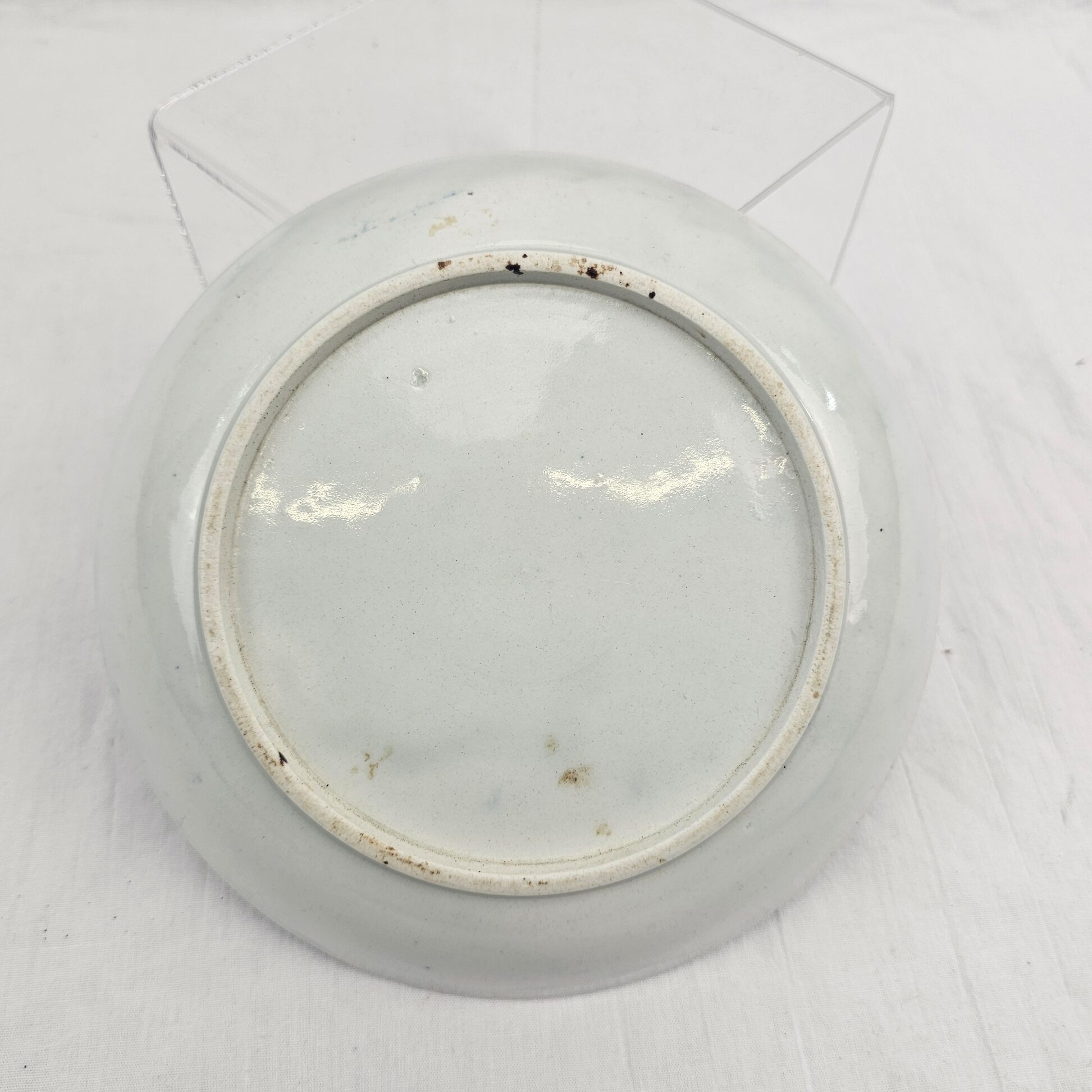
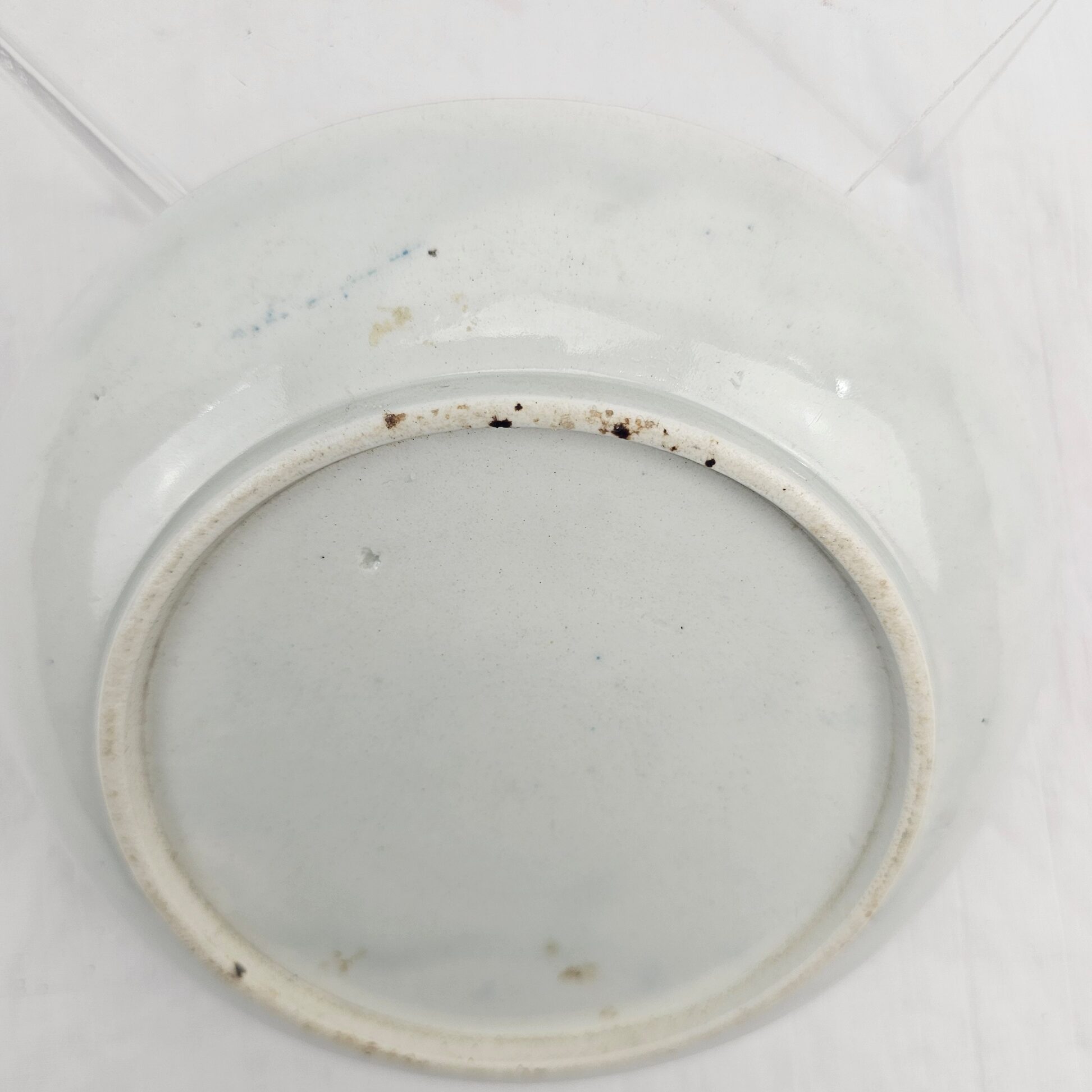
The exterior and base are covered in a clean, slightly blue-tinged white glaze — again entirely characteristic of the soapstone paste used at Caughley. The unglazed foot ring is neat and well-formed, showing the pale cream-grey body with minor kiln deposits typical of the period. No maker's mark is visible, which is consistent with a substantial proportion of Caughley's production, as not all pieces received the factory's "S" (Salopian) or "C" mark.
~ Historical Context ~
The Caughley China Works was established near Broseley in Shropshire by Thomas Turner in 1772, following his apprenticeship as an engraver at the Worcester factory. Turner was a skilled technician and shrewd businessman who recognised the enormous commercial appetite in England for blue and white porcelain in the Chinese export taste. Using a soapstone-based soft-paste body similar to Worcester's, and employing skilled copper engravers to produce transfer-printed designs, Caughley rapidly became one of the leading provincial porcelain manufacturers in Britain.
The Pagoda pattern was among Caughley's most enduring and commercially successful designs. Introduced in the late 1770s and produced throughout the 1780s and into the 1790s, it drew on the broad tradition of chinoiserie landscape decoration that Chinese export potters had been producing for the European market since the early 18th century. Turner's achievement was to adapt and standardise these designs into crisp, well-engraved transfer prints that could be applied consistently at volume, making high-quality blue and white wares available to the growing Georgian middle-class market.
Caughley wares are closely associated - and frequently confused - with those of the Worcester factory, which is itself a mark of the quality Turner achieved. The factory was sold in 1799 to John Rose of Coalport, and production of Caughley-style wares eventually transferred fully to the Coalport factory by 1814.
Today, Caughley porcelain is keenly collected, particularly pieces in the Pagoda, Fisherman, and Willow Nankin patterns. The factory is celebrated in specialist literature, and the Caughley Society actively researches and documents its output.
~ Dimensions ~
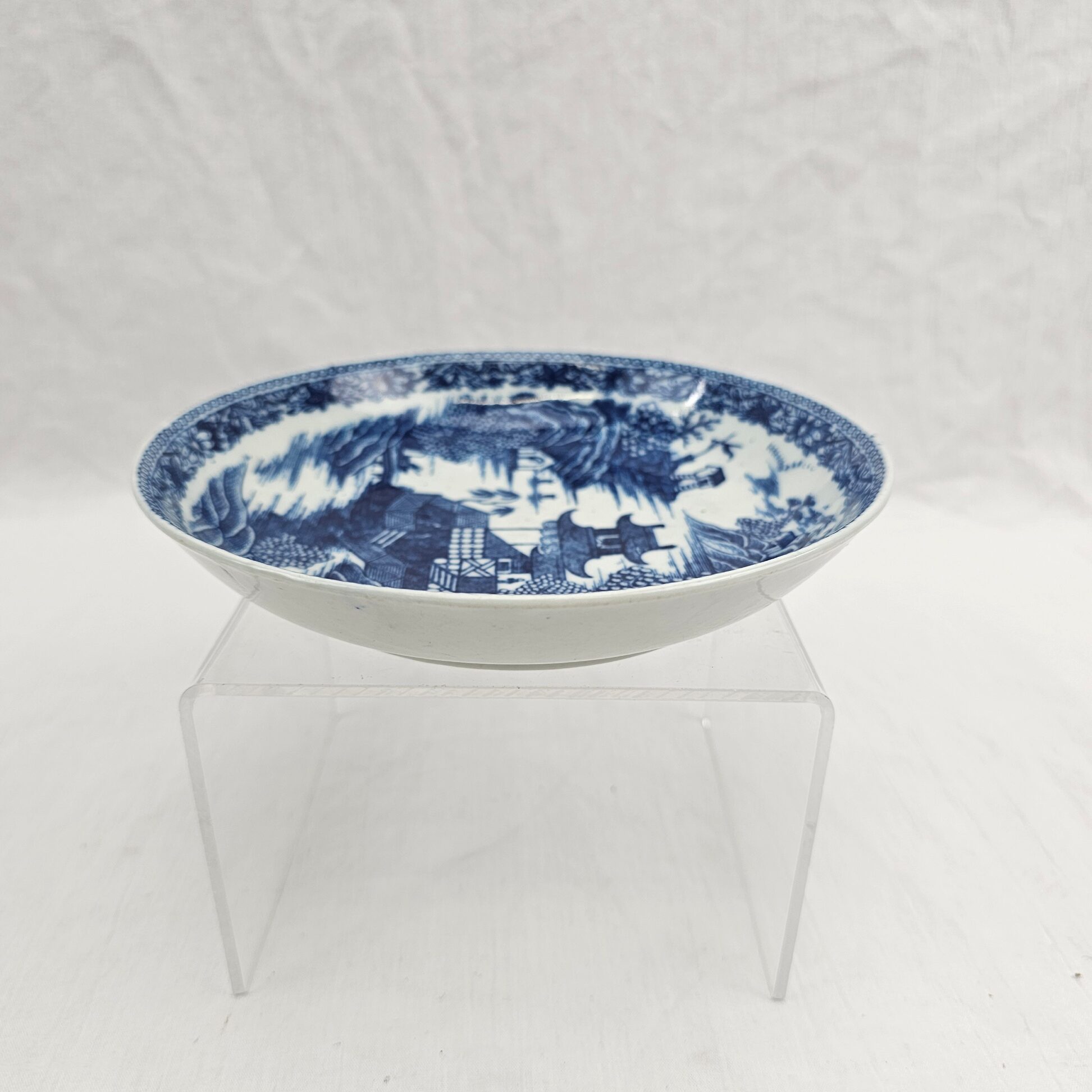
The bowl has a diameter of 18cm (7 inches) and a depth of 3.5cm (1 ¼ inches).
It weighs 265g.
~ Condition ~
The bowl is in a very nice condition with minimal wear and no cracks, chips or signs of repair.
#1868