*British, WWI, Medal Group, Pte. John Shaughnessy, North Staffs Regiment & Machine Gun Corps, With Research*
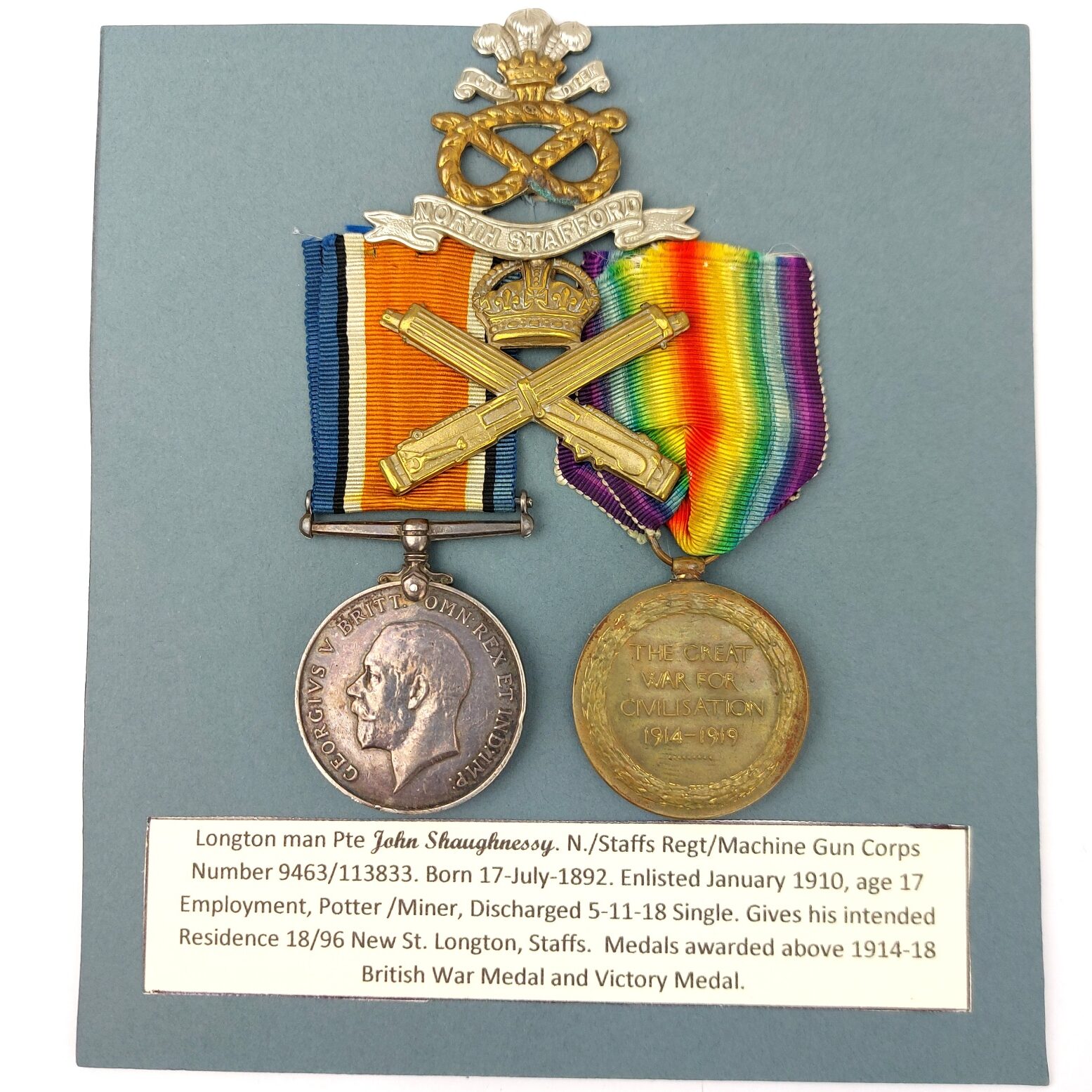
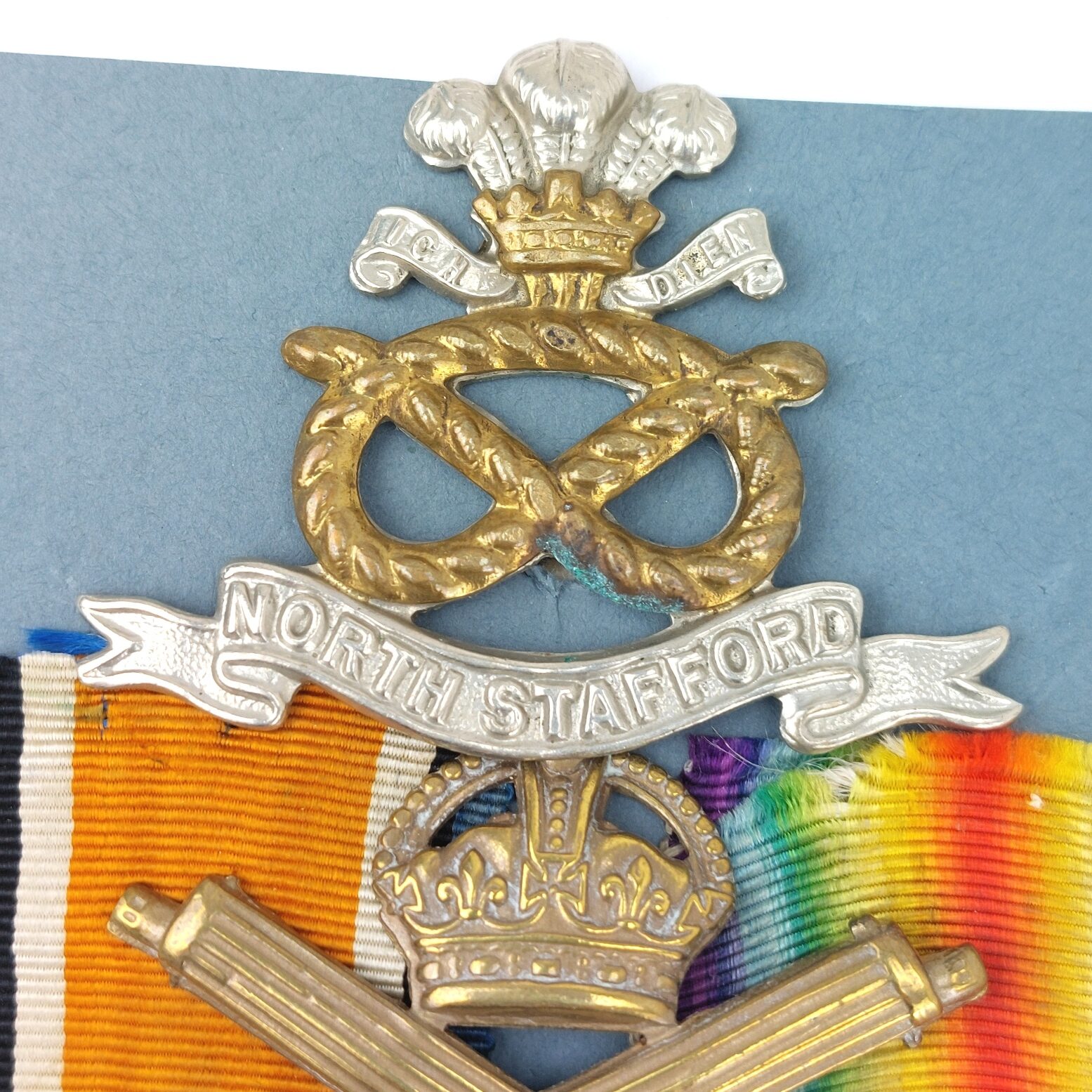
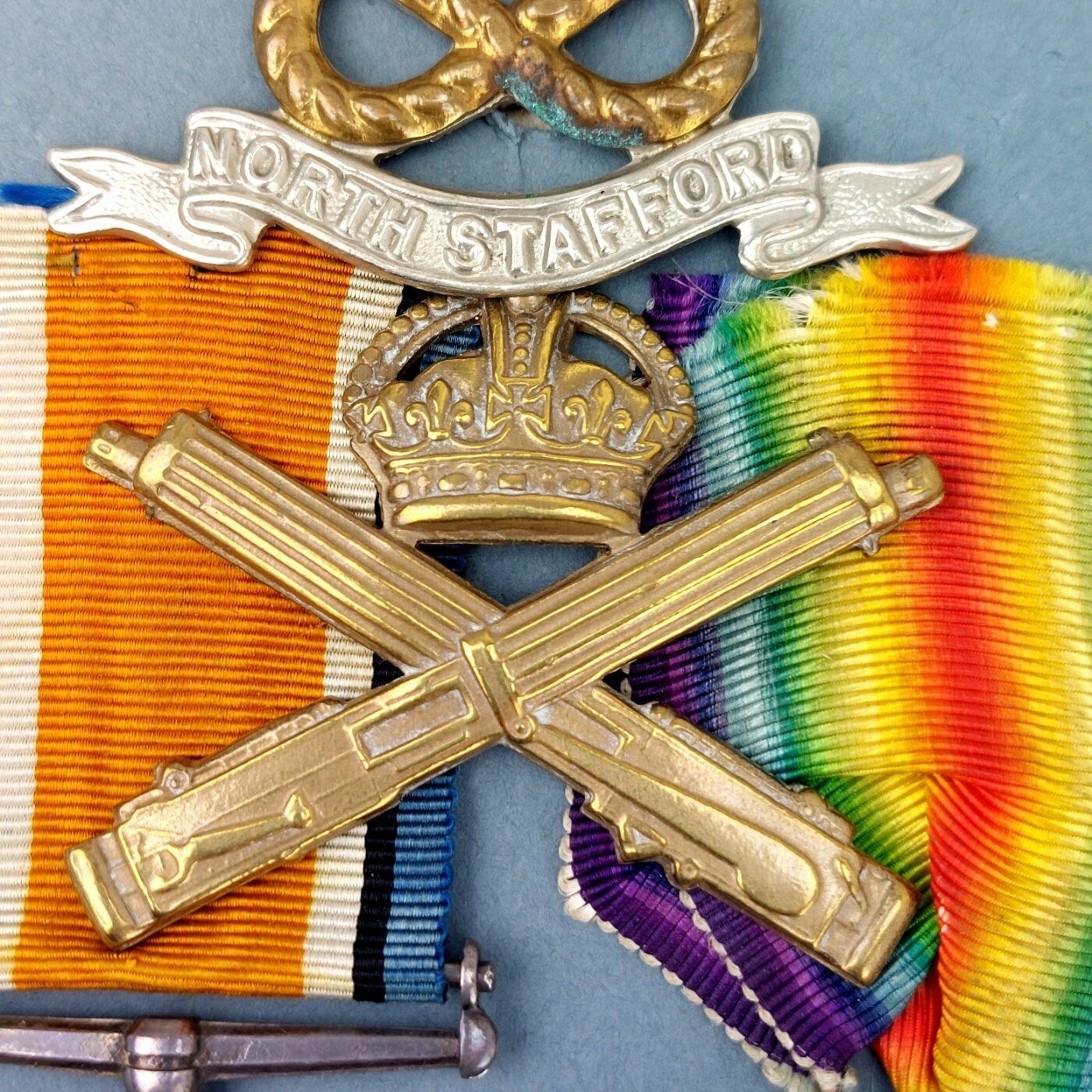
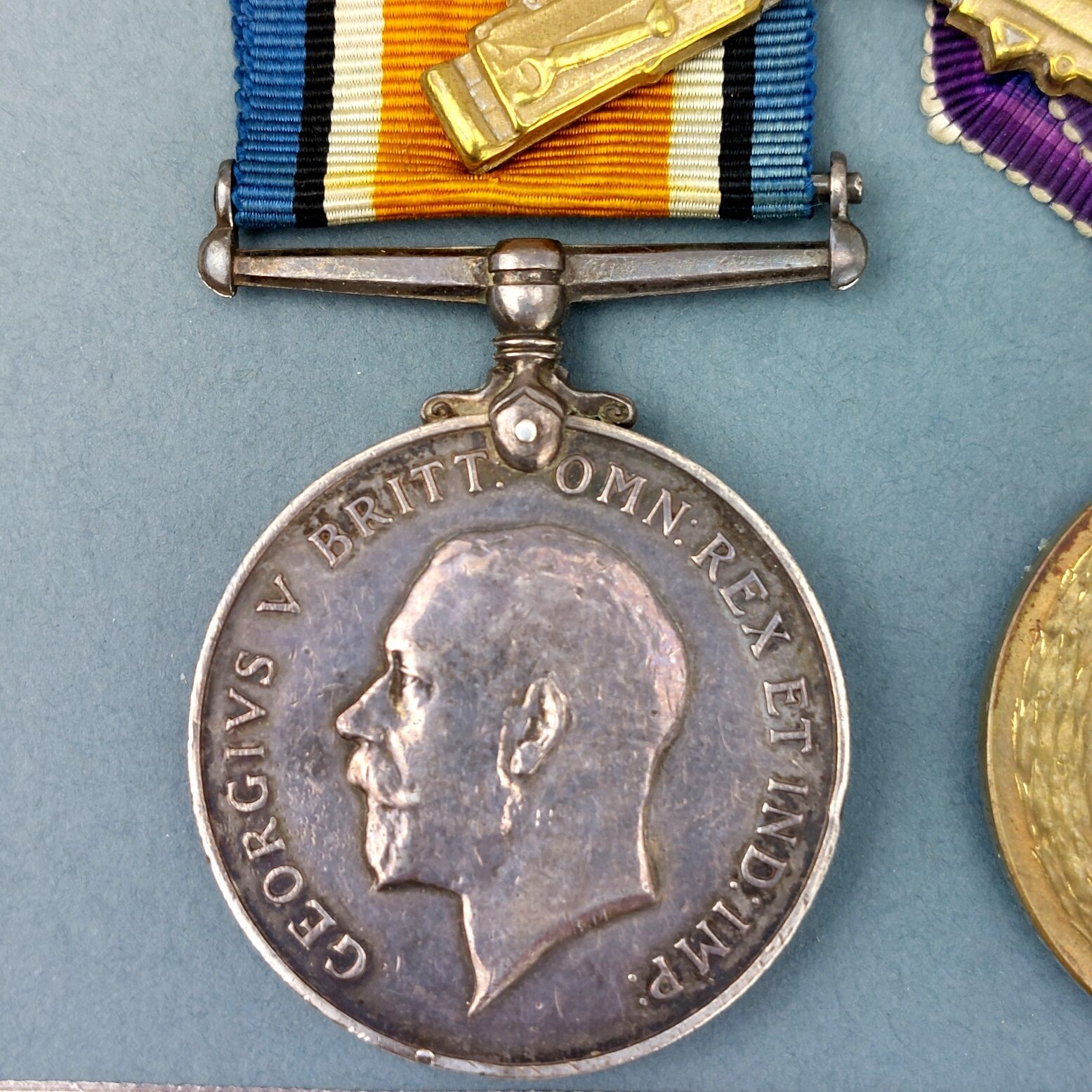
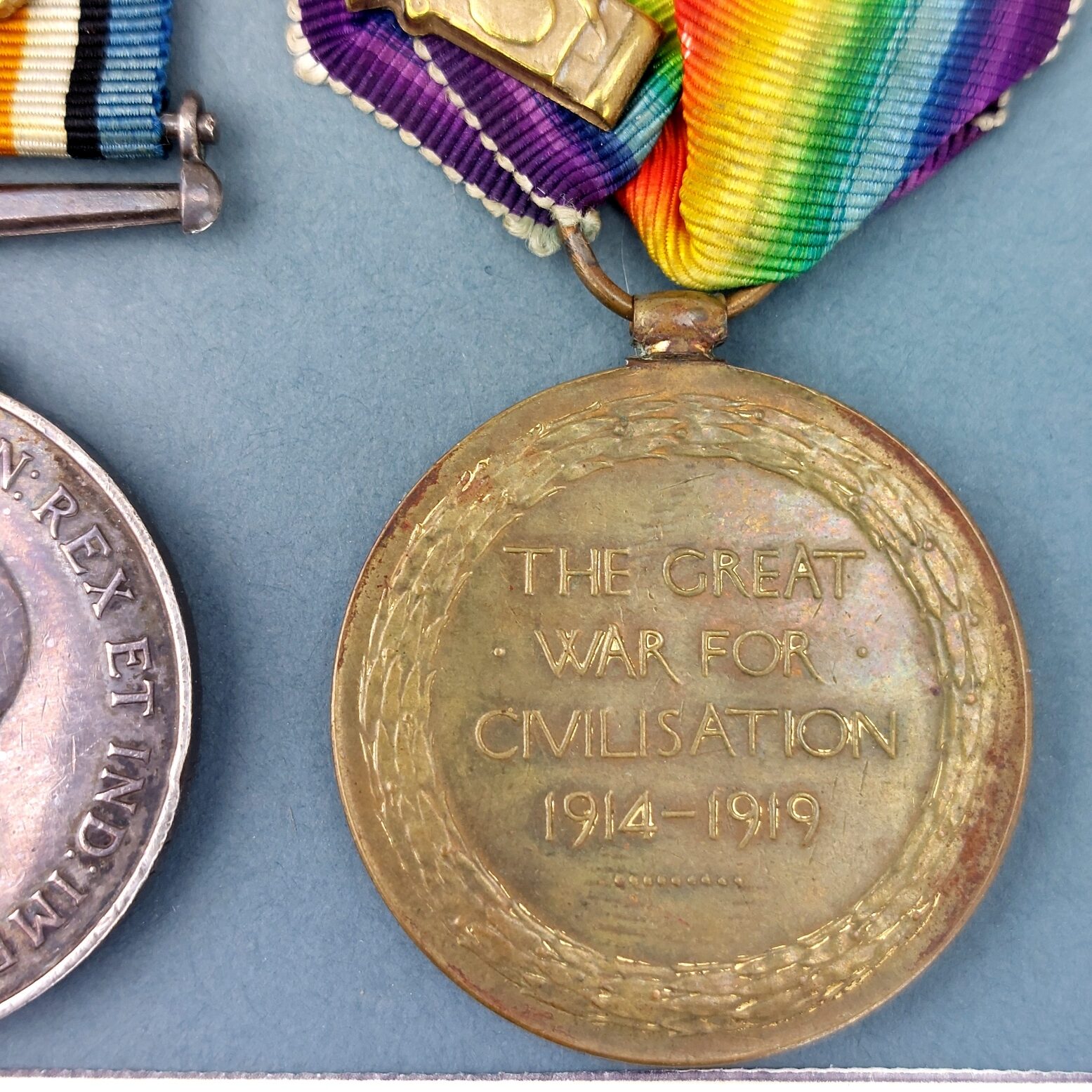
This is a First World War medal pair awarded to Private John Shaughnessy, who served with the North Staffordshire Regiment and later transferred to the Machine Gun Corps. The group comprises the British War Medal and Victory Medal, both correctly impressed "9463 Pte. J. Shaughnessy. N. Staff. R.". The medals are mounted for display alongside a North Staffs cap badge, a Machine Gun Corps badge, with a biographical label included. Though the medals themselves are named to the North Staffordshire Regiment, surviving service papers and later archival references confirm his subsequent service with the Machine Gun Corps under different numbers.
Historical Note:
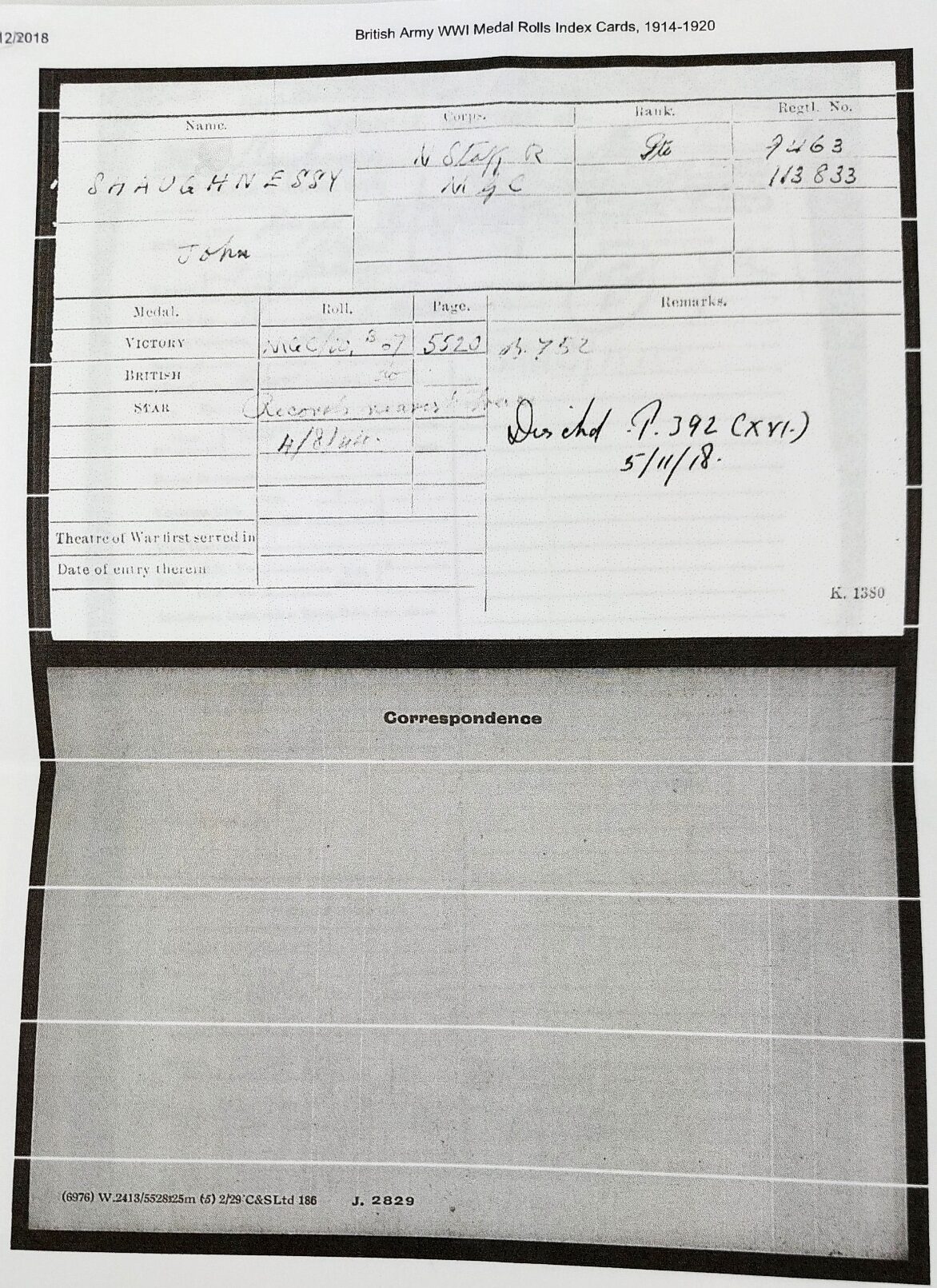
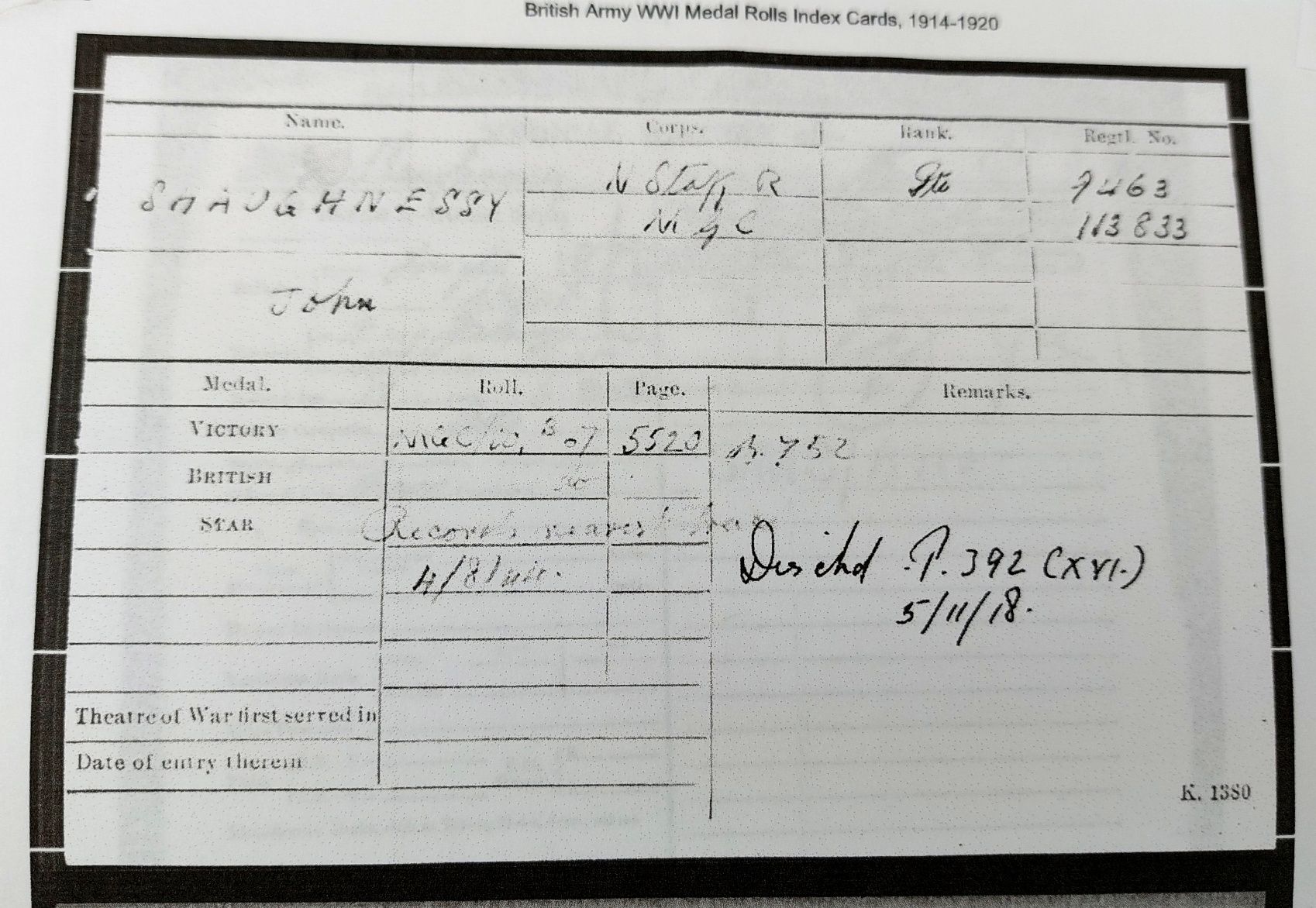
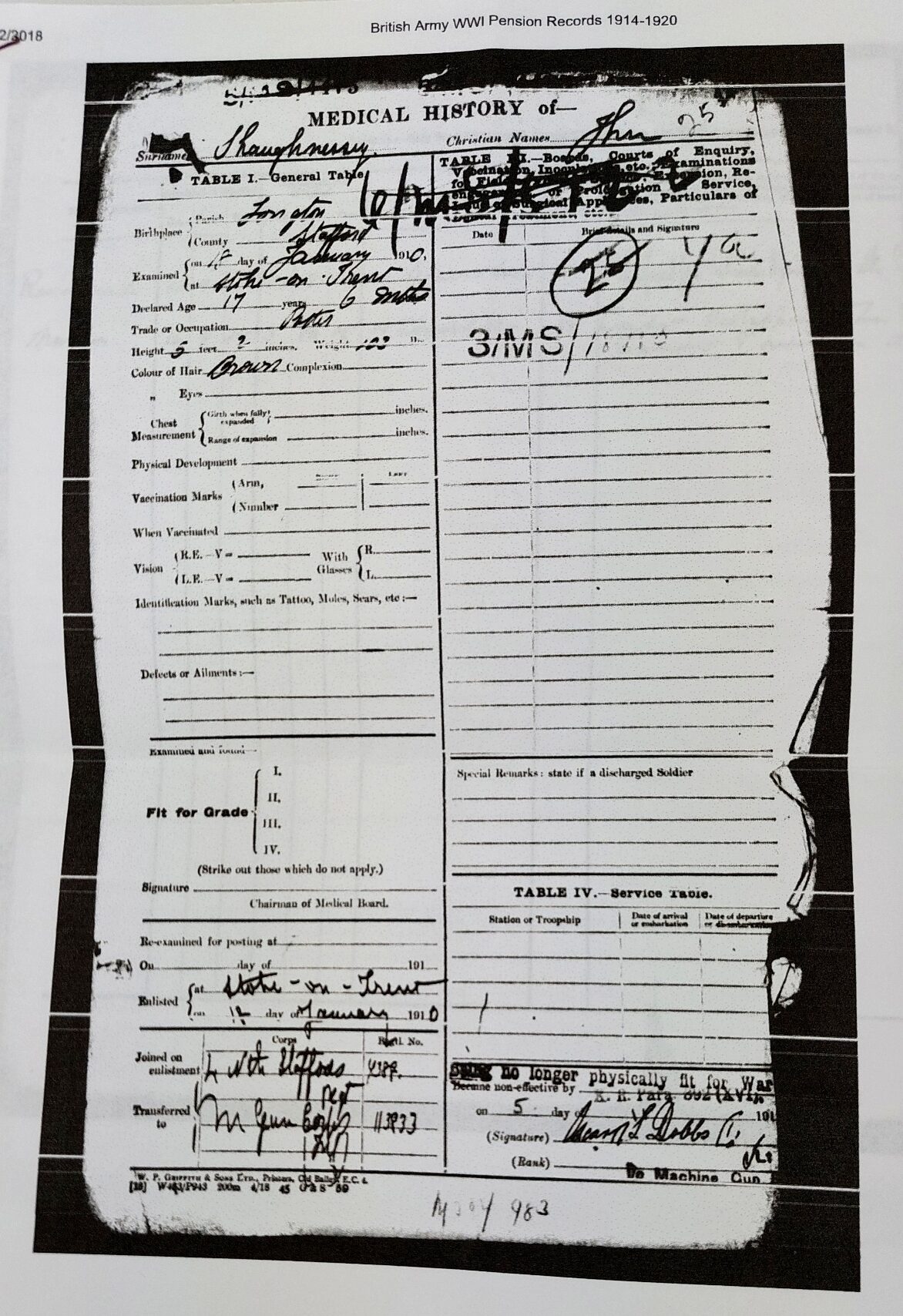
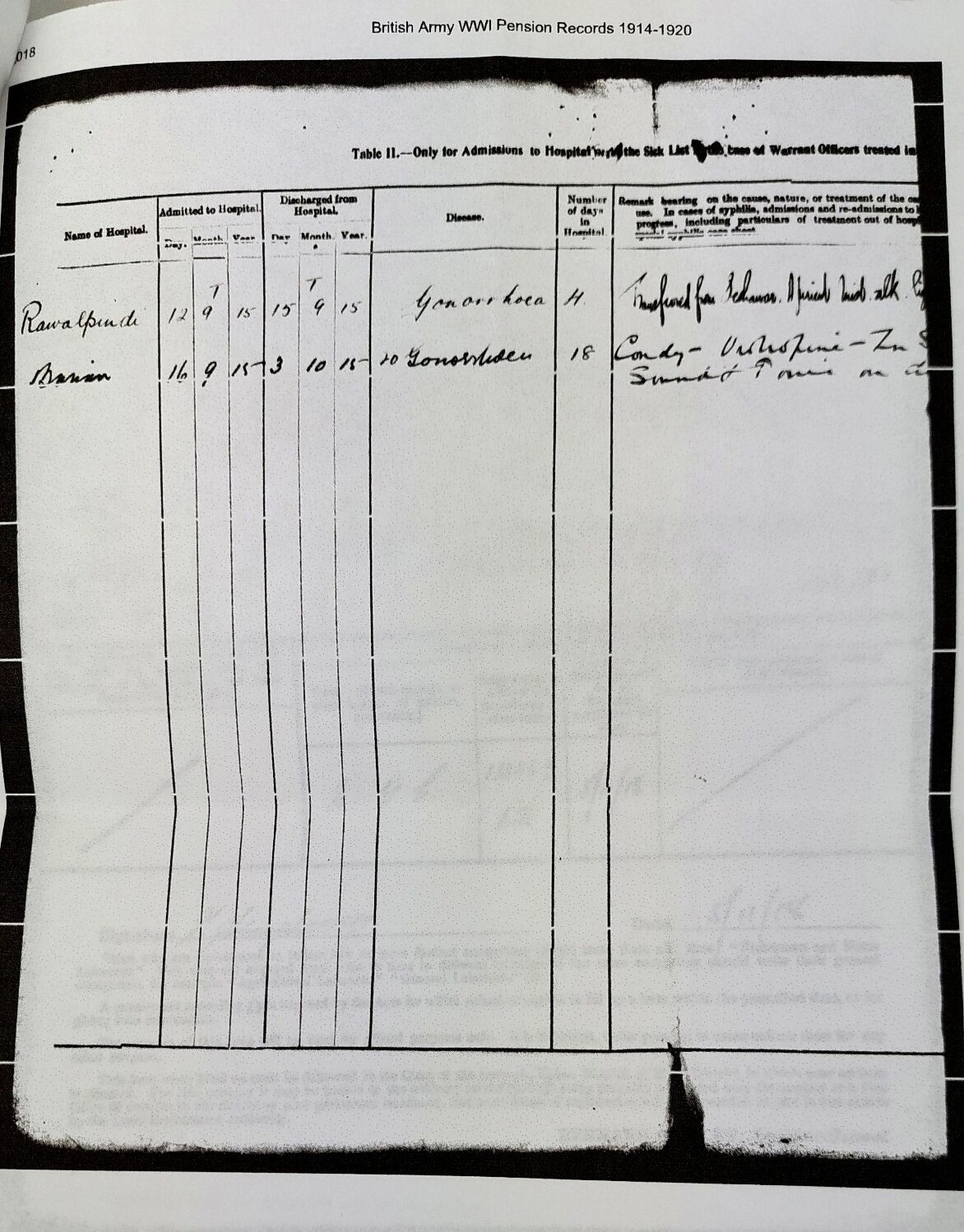
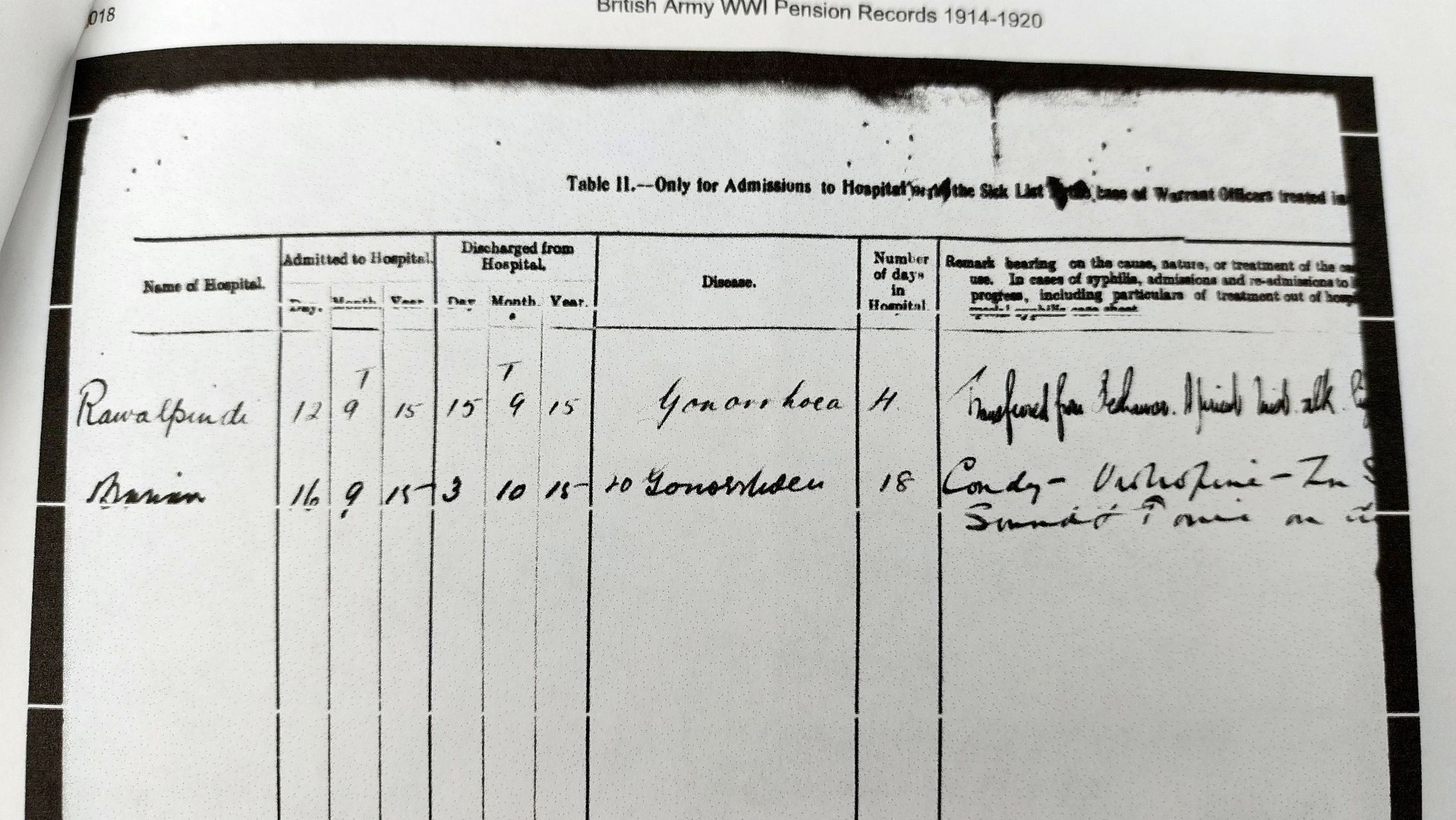
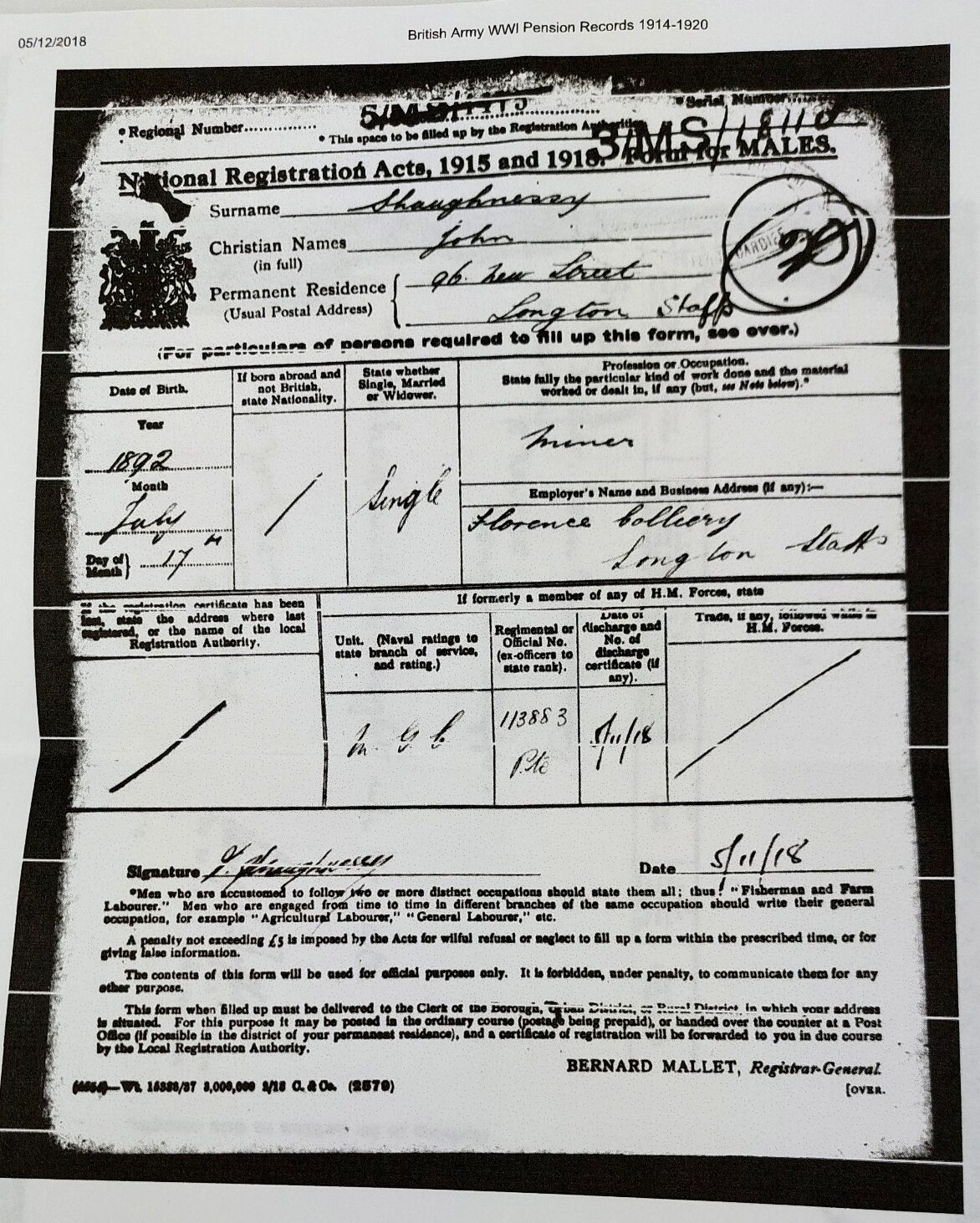
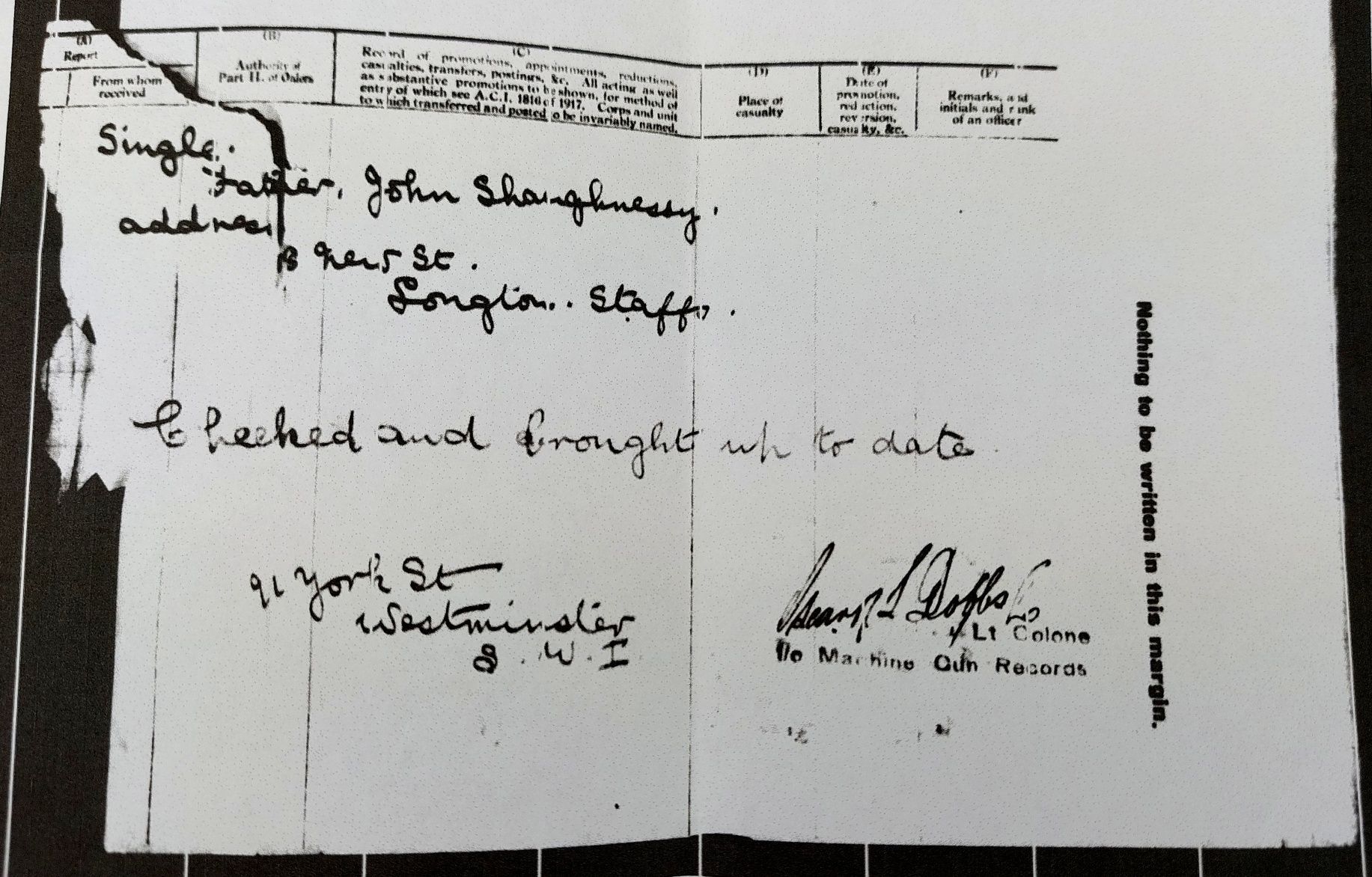
John Shaughnessy was born on 21 July 1892 in Longton, Staffordshire, and worked as a miner at the Florence Colliery before enlisting in January 1910. His father, also John Shaughnessy of 18 New Street, Longton, was recorded as his next of kin. Enlisting as No. 9463 in the North Staffordshire Regiment, he is later cross-referenced in official records under additional service numbers 7388, 13833 and 113833 in the Machine Gun Corps. His service included a period overseas, with records showing hospitalisation at Rawalpindi in September 1915 and Bannu shortly afterwards, where he was treated and returned to duty. He was eventually discharged from the Army on 5 November 1918 under King’s Regulations 392 (xvi) as no longer physically fit for war service. Later WFA archive entries also list a Catherine Shaughnessy, widow, of Rhyl, as a relative, suggesting a further family connection noted after the war. His entitlement to the British War Medal and Victory Medal is confirmed by the Medal Index Card and medal rolls, though impressed to his first regiment in accordance with War Office practice.
The North Staffordshire Regiment raised a total of 21 battalions during the First World War, serving on the Western Front, in Gallipoli, Mesopotamia, India and Palestine. The regiment fought in some of the most bitterly contested campaigns of the war, including the early battles of the Marne and Ypres, the Somme in 1916, and the later offensives at Arras and Cambrai. Battalions of the North Staffords also saw extensive service in the Middle East, particularly in Mesopotamia, where disease and climate proved as dangerous as the enemy.
The Machine Gun Corps was formed in October 1915 to bring together the scattered machine-gun sections of the infantry into a dedicated corps. Its units served in every major theatre of the war, providing concentrated firepower to support attacks, defend trench systems, and cover retreats. Often exposed and vulnerable to counter-fire, MGC soldiers suffered some of the highest casualty rates of any British formation. By the Armistice, the corps had earned a formidable reputation for discipline and effectiveness, with its motto “Saul hath slain his thousands, but David his tens of thousands” reflecting its grim efficiency on the battlefield.
Research Sources:
The group is accompanied by a substantial file of copied documents photographed from the original records. These include his Medal Index Card, showing entitlement to the British War Medal and Victory Medal, his medical and pension records detailing hospital admissions in India, and his discharge papers confirming his release from service on medical grounds in November 1918. Further sources include multiple references from the Western Front Association archive, cross-referencing his service under numbers 113833, 7388 and 13833, including cover sheets for his discharge documentation and post-war pension file. These photographed records are supplied with the group.
Additional confirmation is drawn from Forces War Records (not pictured), which lists him as Private John Shaughnessy, service number 9463, North Staffordshire Regiment, with archival reference WO 372/18/14561, and as Private John Shaughnessy, service number 113833, Machine Gun Corps, with associated references to family and pension documentation.
*Condition*
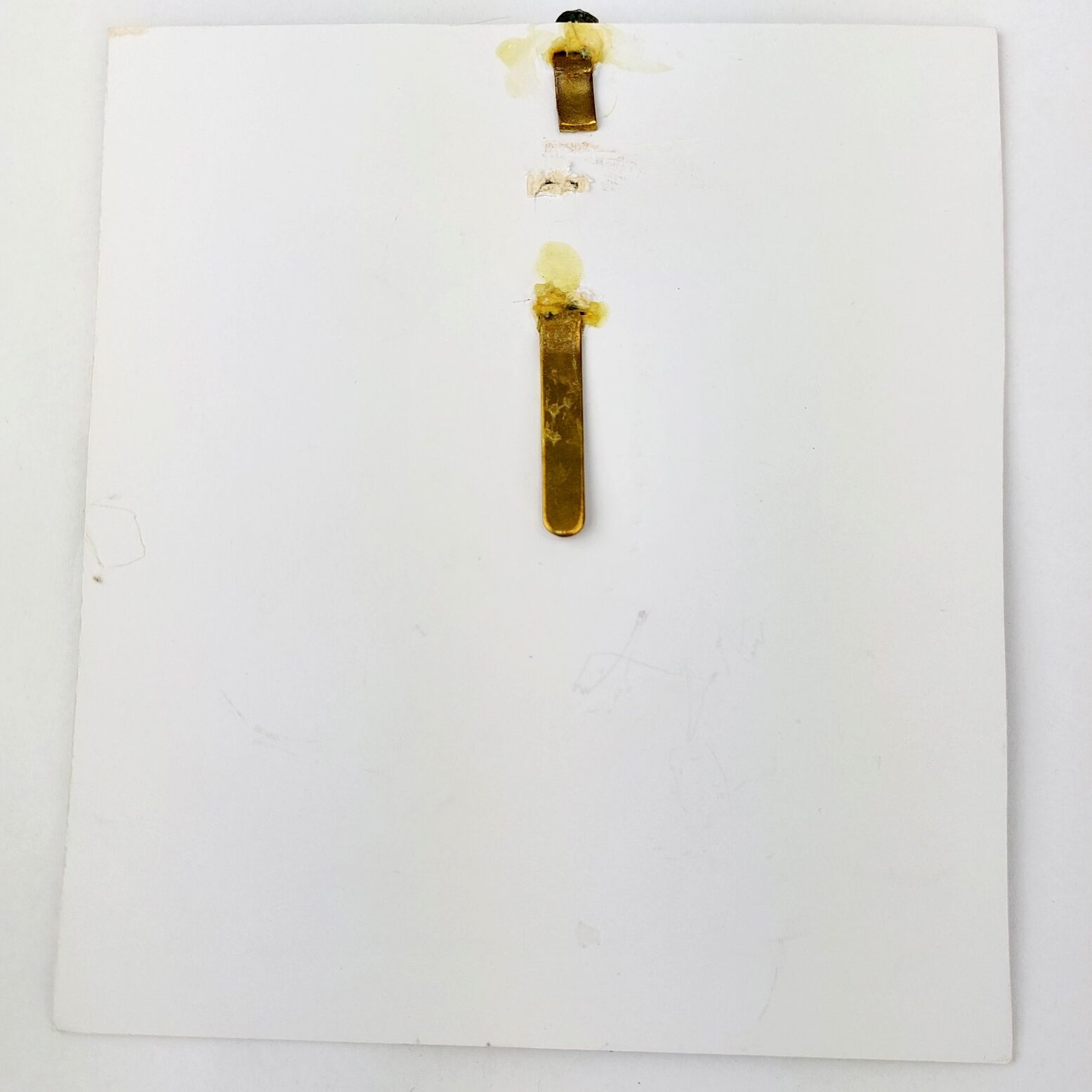
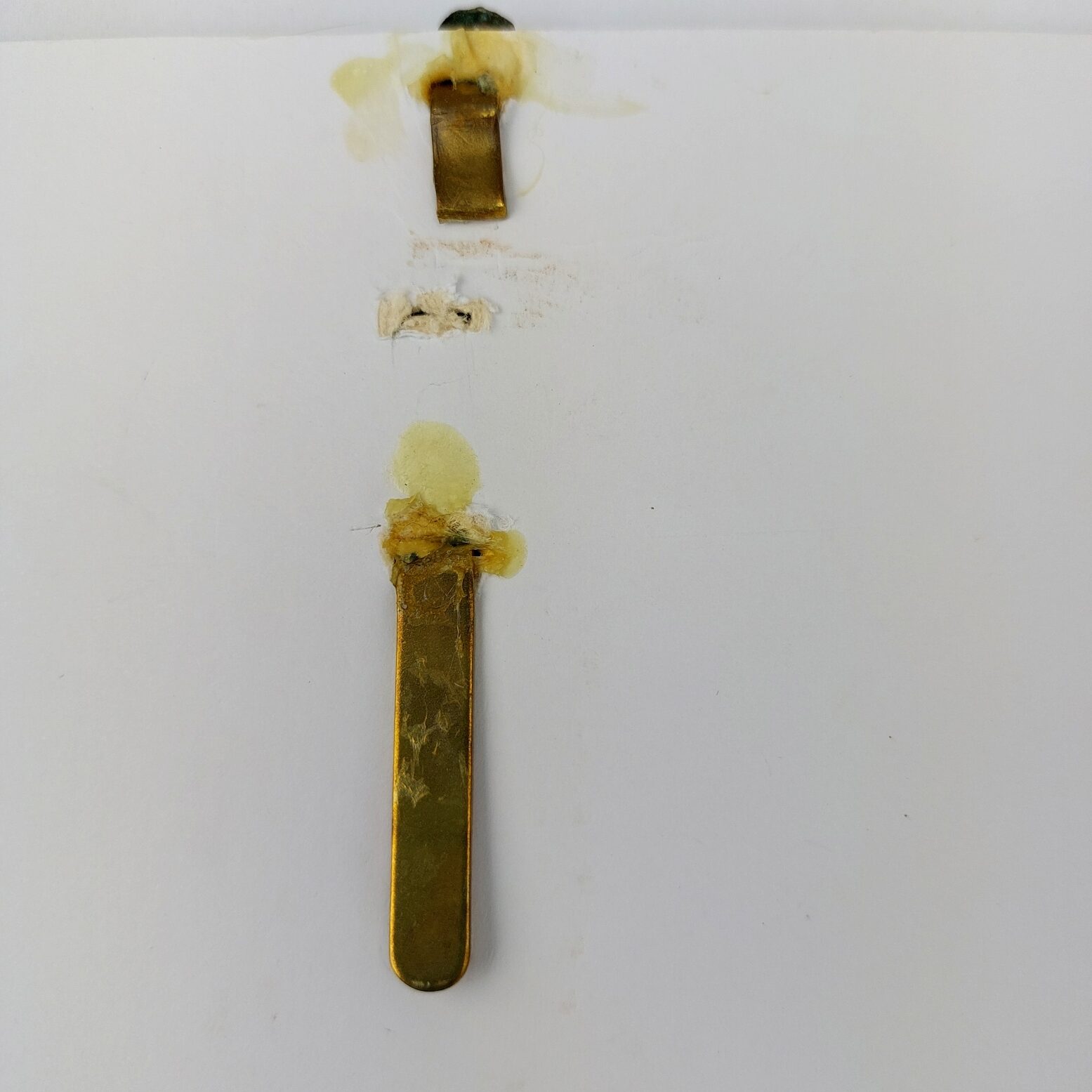
The medals retain their original finish with good age toning and clear naming to the rims. They are attractively mounted for display with associated regimental insignia, providing a visual link to both the North Staffordshire Regiment, to which they are officially impressed, and to his later service with the Machine Gun Corps. The North Staffs cap badge included in the display has a broken slider, though it remains presentable for mounting. The group is accompanied by a strong set of research documents, combining both photographed archive copies and additional records confirmed through Forces War Records. Please see photographs as part of the condition report.