British, WWI, Mark VI Officers’ Pocket Compass – Terrasse W. Co., War Department Issue, Serial 92531, Dated 1918
£175.00
An original 1918-dated British War Department Mark VI officers’ pocket compass by Terrasse W. Co., retaining clear government markings, intact glass, and honest service wear — a desirable late-WWI navigation instrument.
*British, WWI, Mark VI Officers’ Pocket Compass – Terrasse W. Co., War Department Issue, Serial 92531, Dated 1918*
An original First World War British Army Mark VI Officers’ Pocket Compass, dated 1918 and manufactured by Terrasse W. Co., complete with War Department ownership markings.
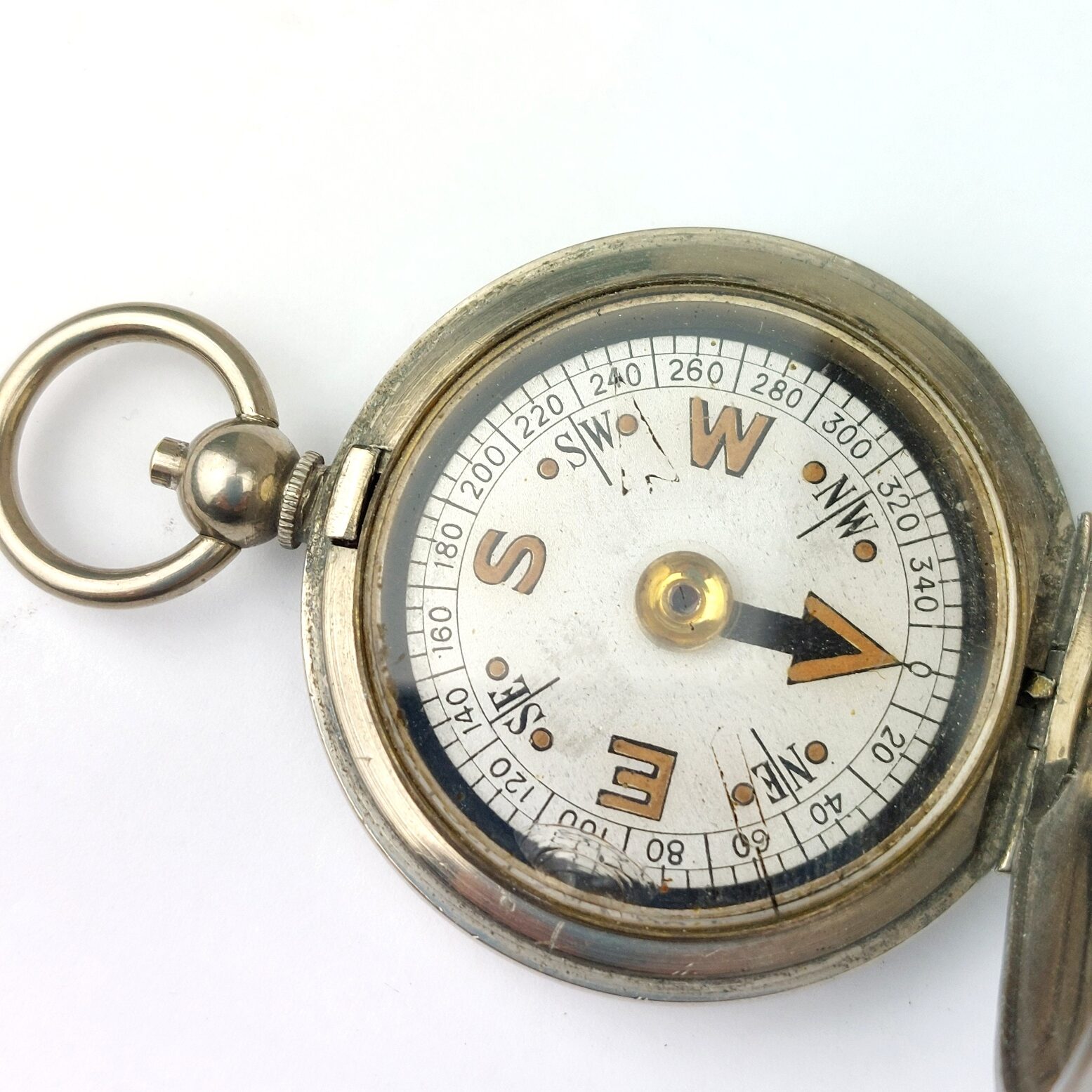
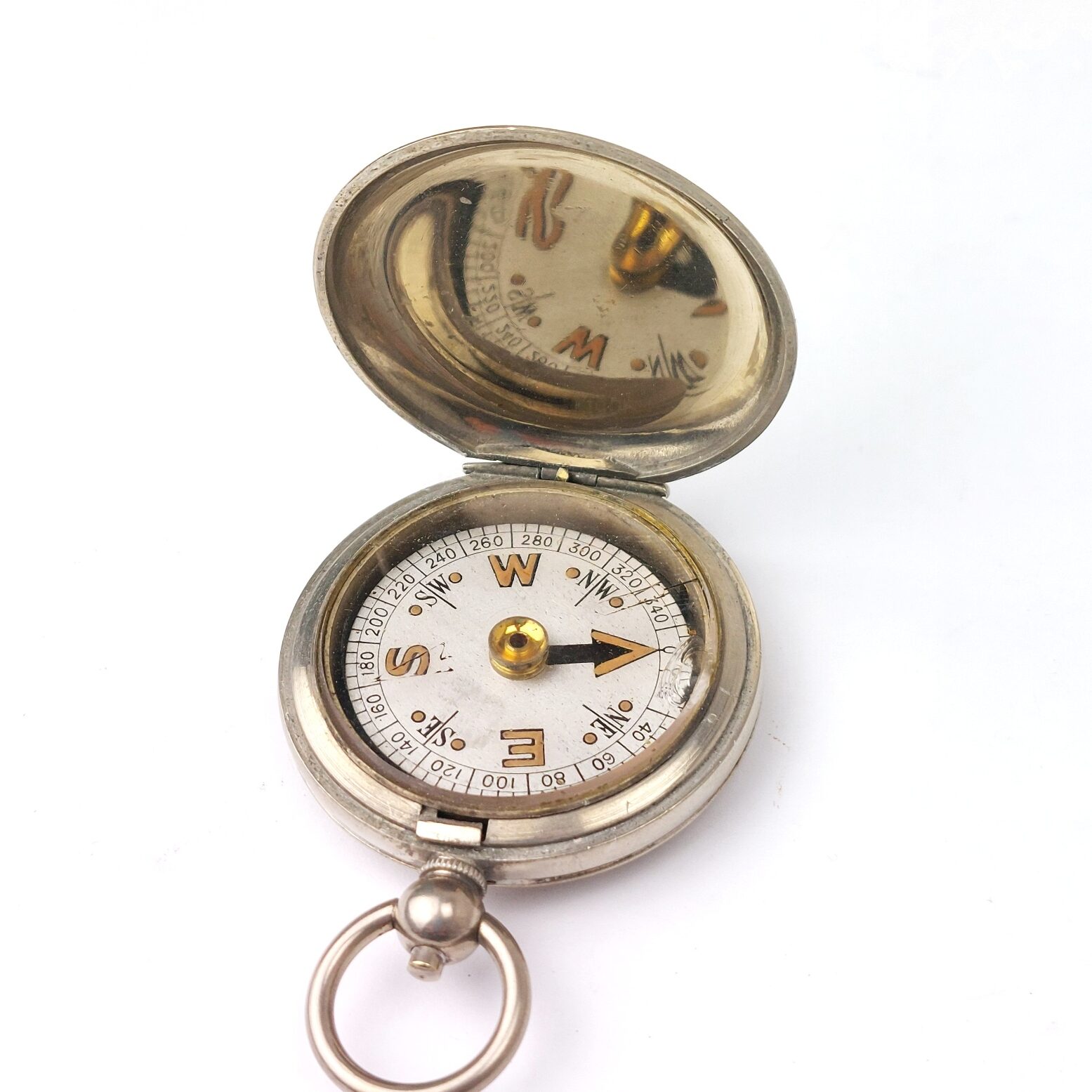
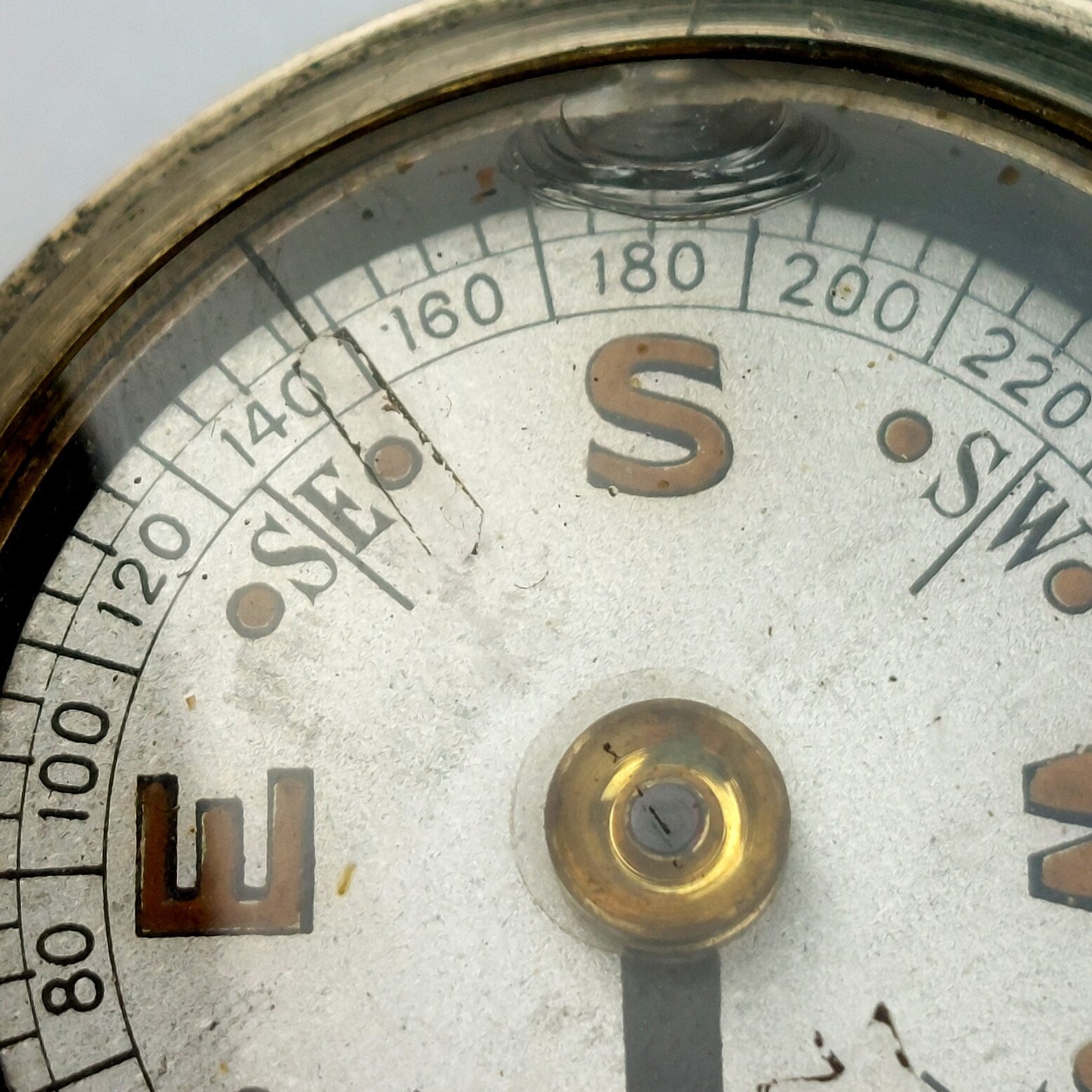
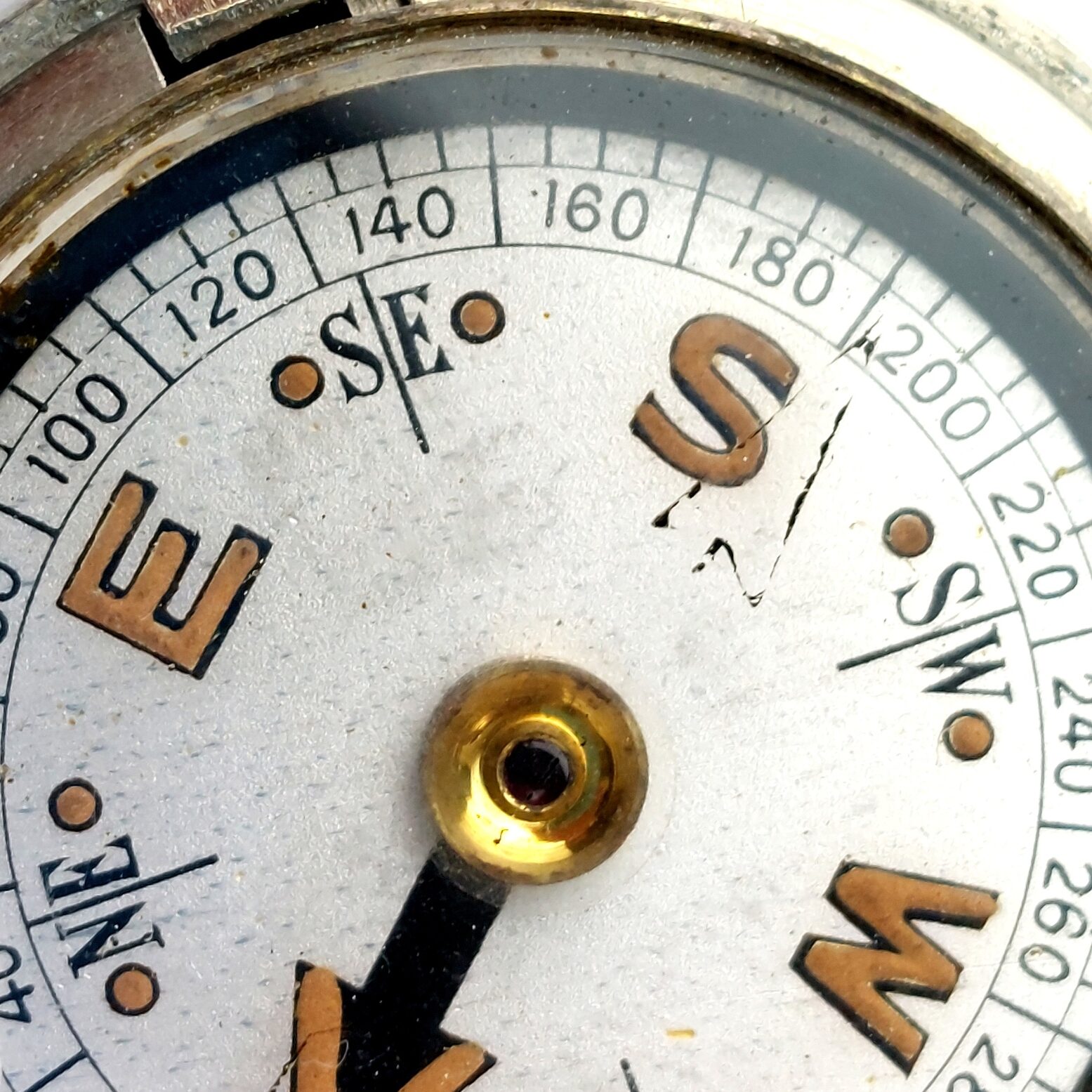
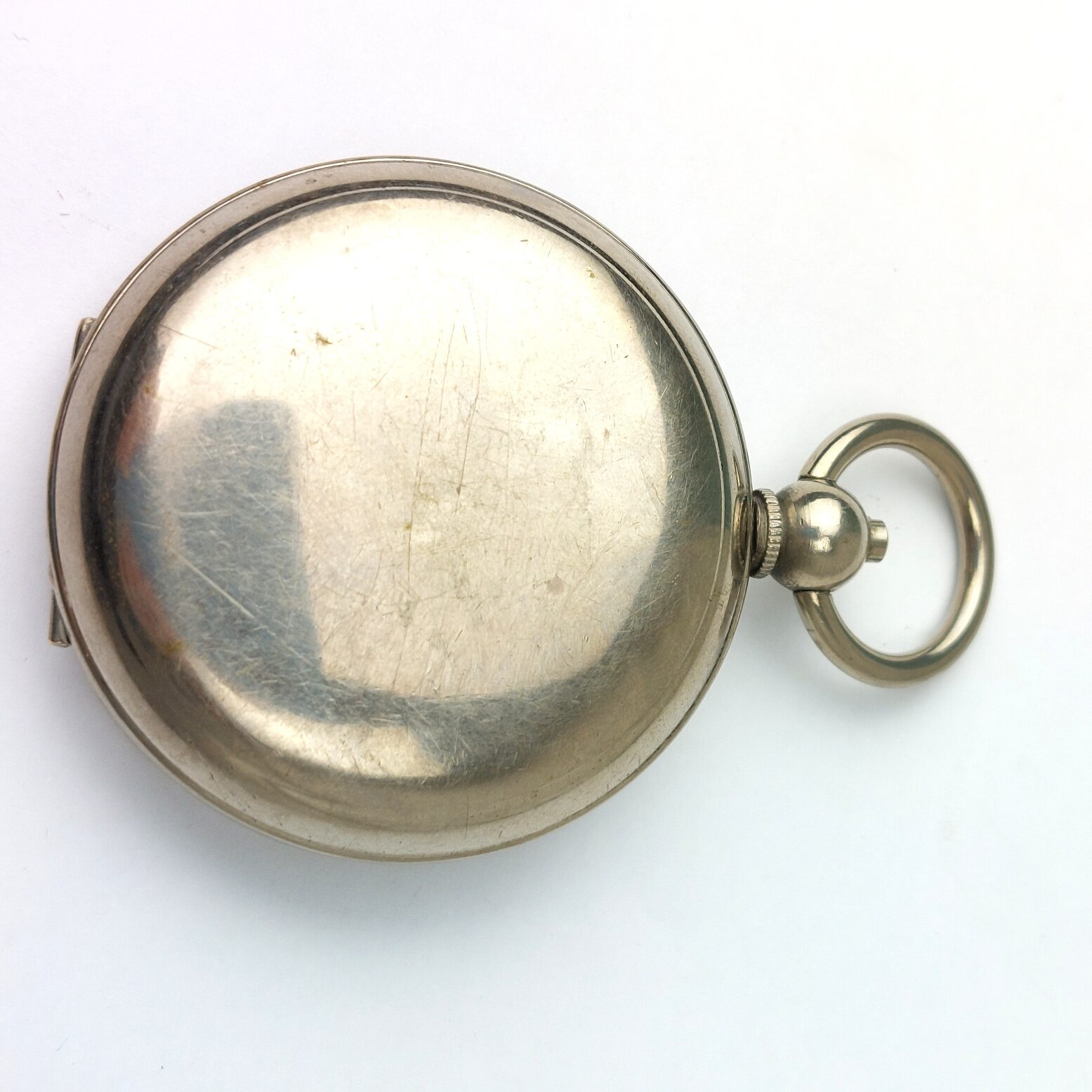
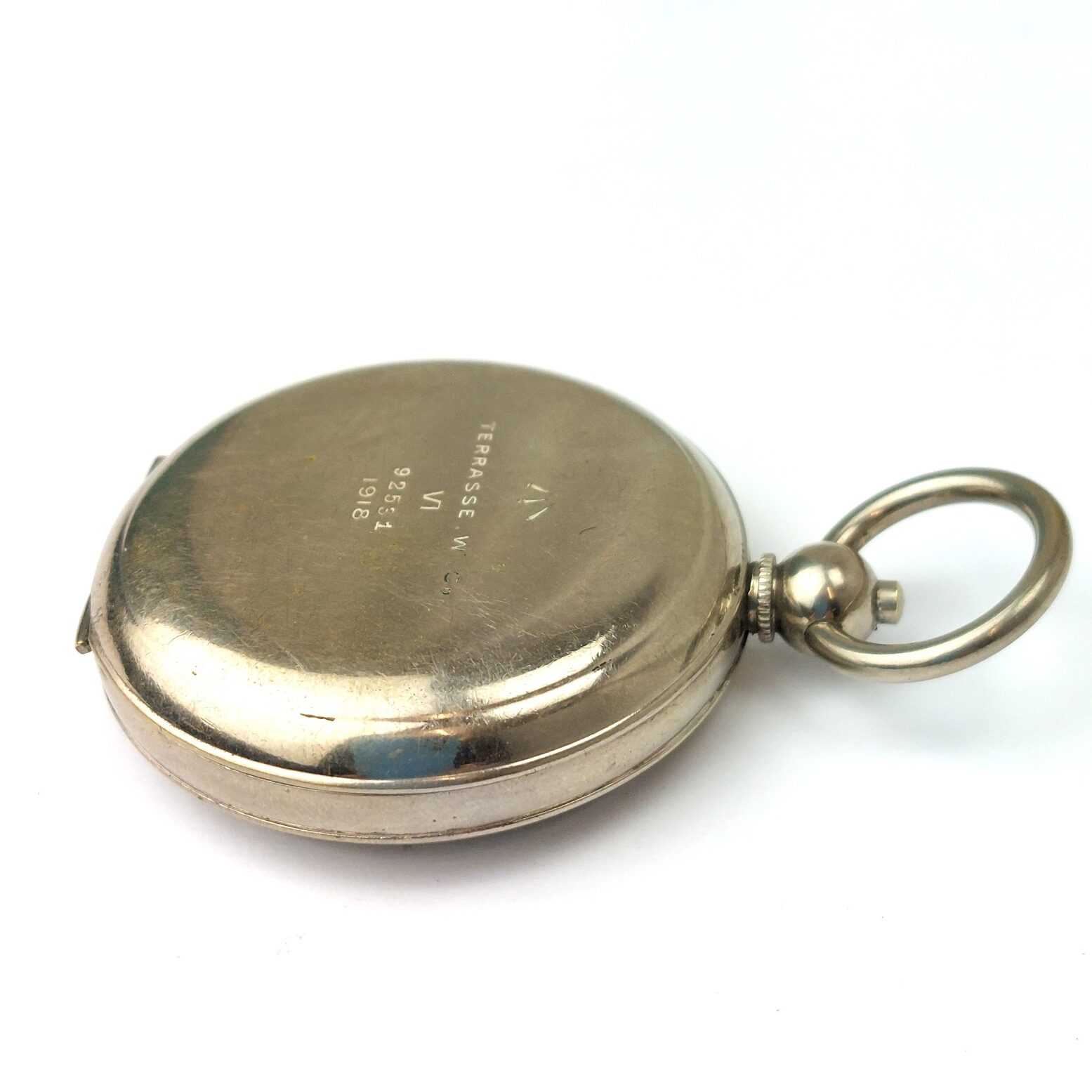
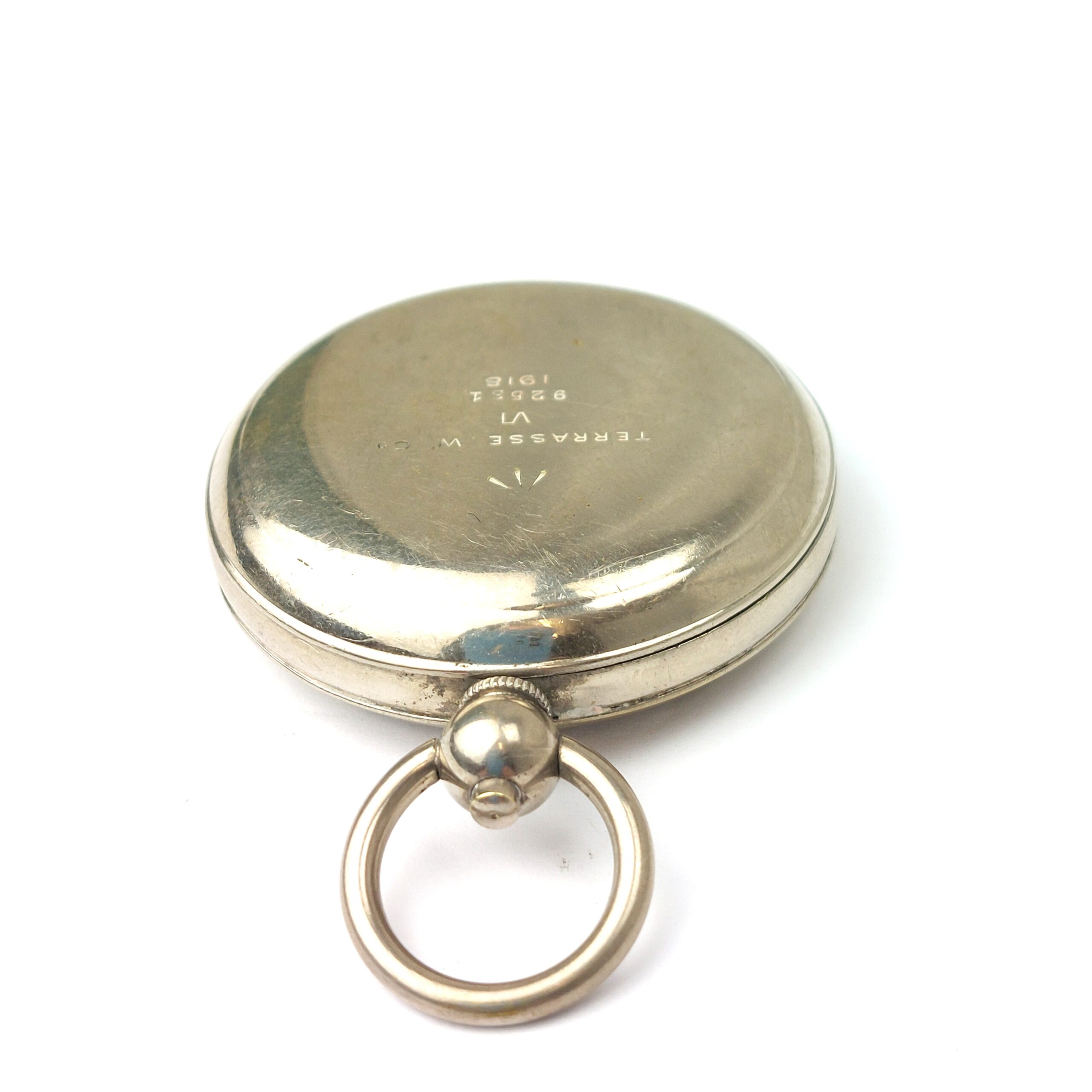
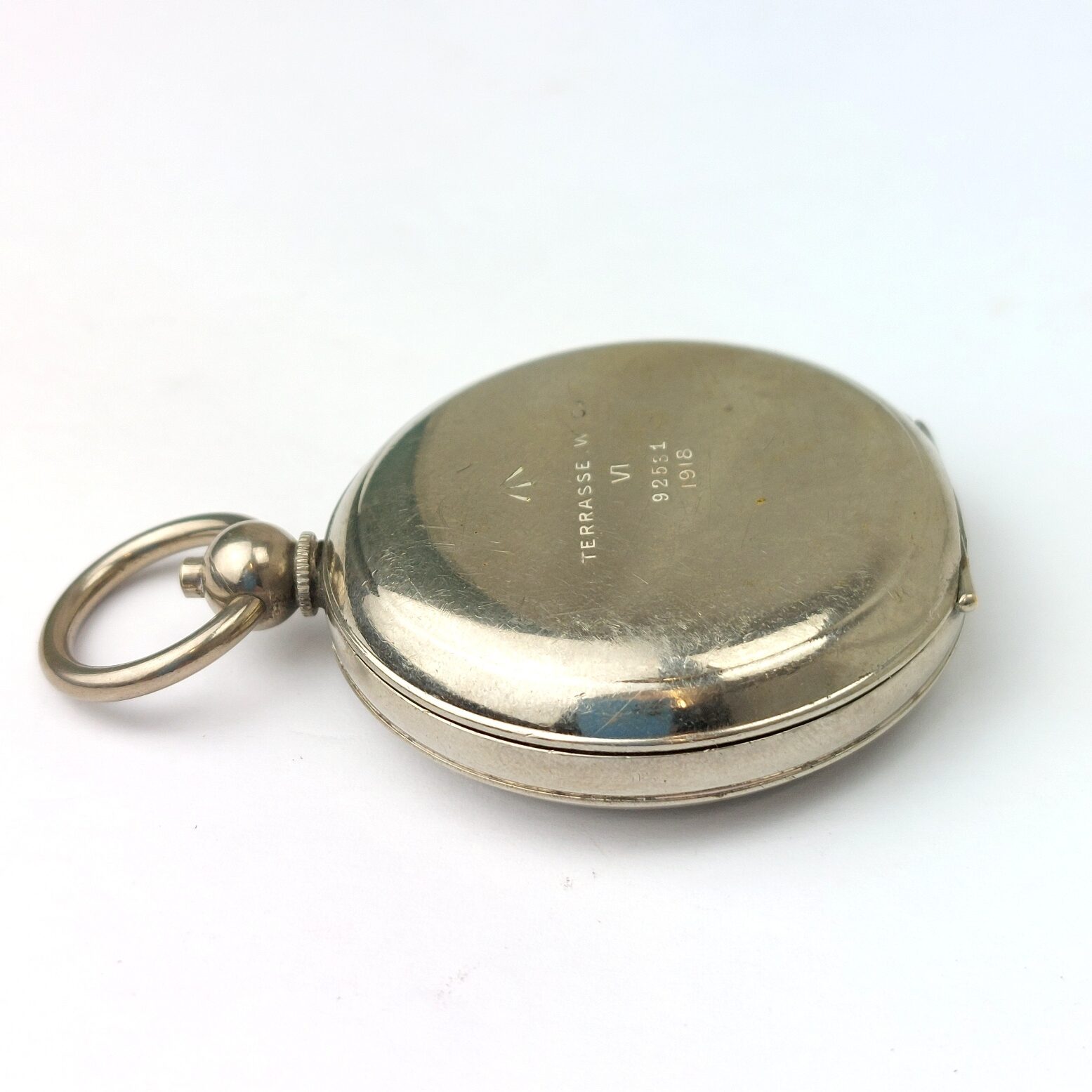
Housed in its nickel-plated, watch-form case with hinged lid and suspension ring, the compass retains its classic pocket-watch appearance — a practical and discreet design intended for field use by officers. The dial is fully graduated to 360 degrees, figured every 20 degrees, with five-degree interval markings. The principal compass points (N, E, S, W) retain their original radium-luminous infill, with subsidiary luminous dots at the intermediate points. The glass carries the correct black hairline sighting line (lubber line), terminating in an arrow form — originally radium treated — allowing night-time bearing readings. The floating compass card moves freely on its central pivot.
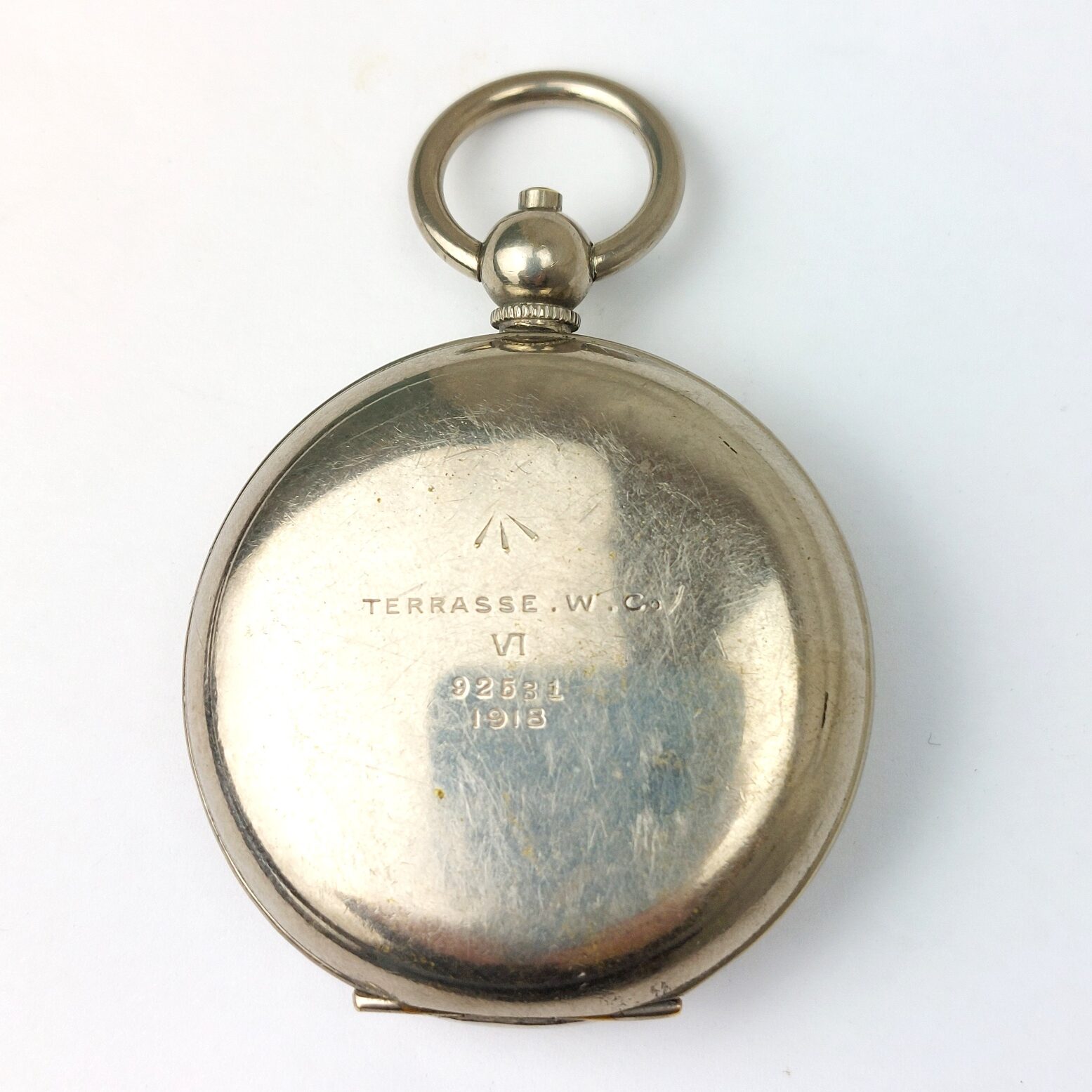
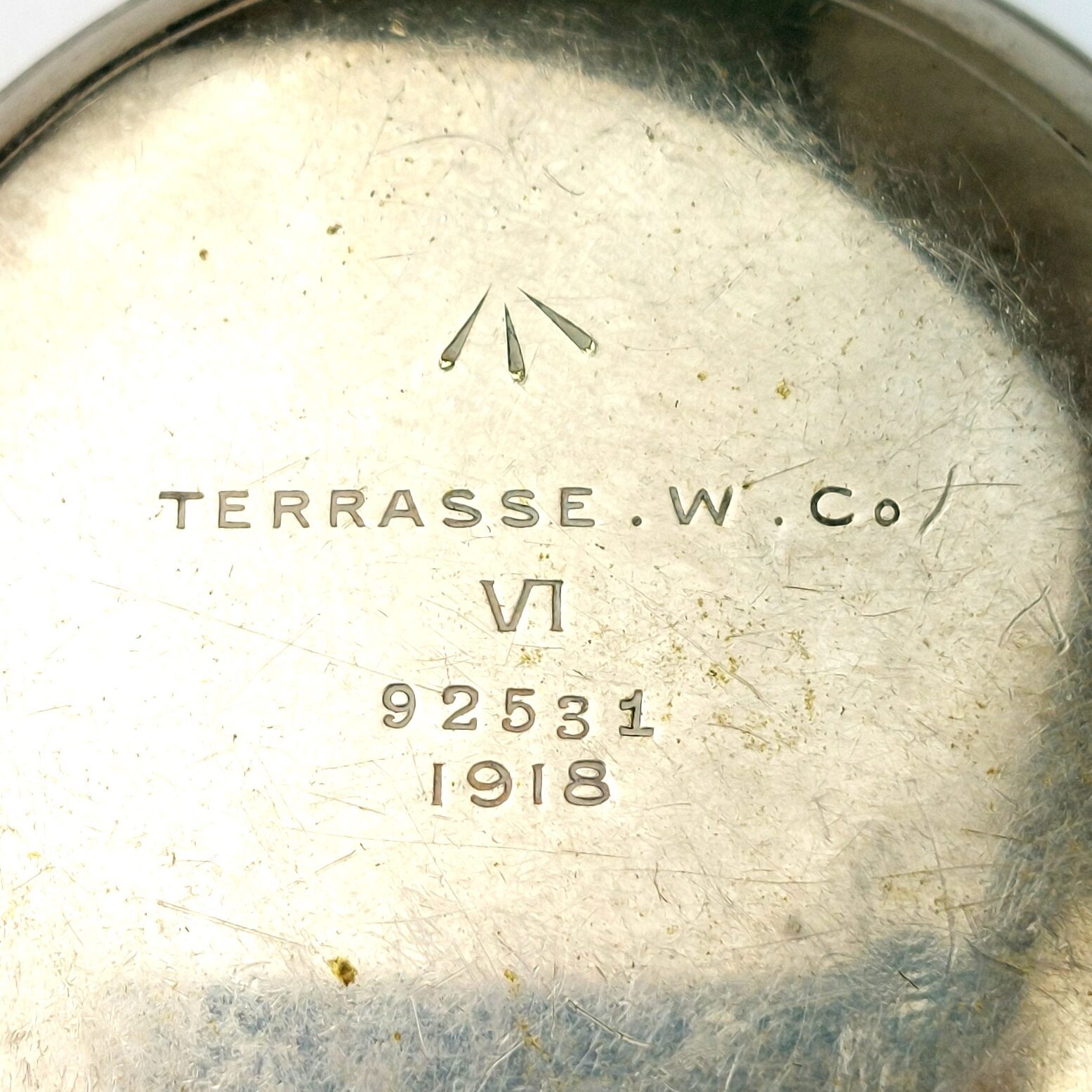
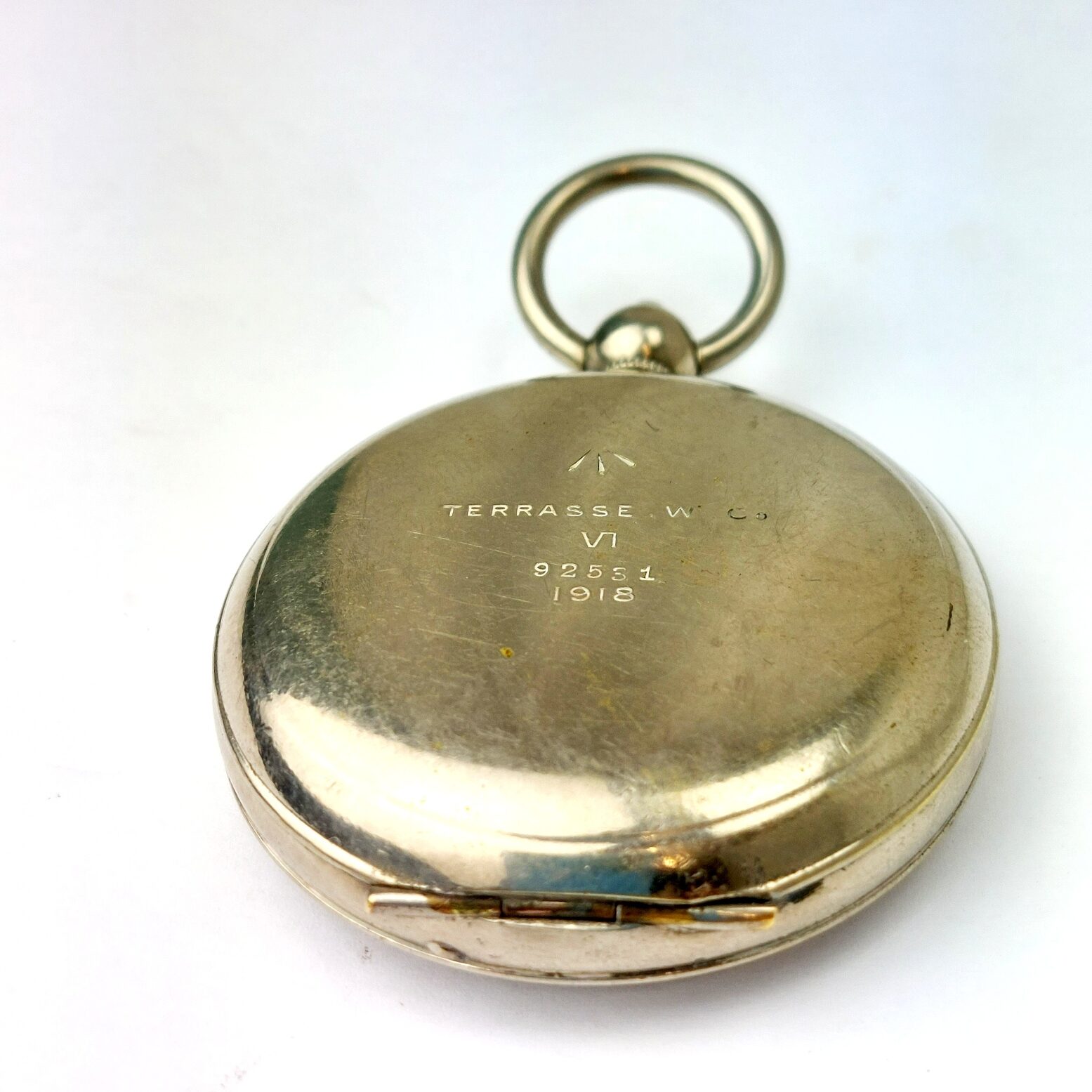
The reverse is crisply engraved with:
Broad Arrow (War Department ownership mark) TERRASSE W. Co. VI 92531 1918
A textbook late-war example.
Approx. Measurements – Diameter: approx. 4.5 cm. Overall length including suspension ring: approx. 6.6 cm.
Historical Note:
The Mark VI pocket compass was the standard British officers’ compass during the latter part of the First World War. It represented an improvement over the earlier Mark V pattern, introducing full degree graduation and improved luminous visibility for trench and night operations. Unlike earlier arm-type compasses, the Mark VI features a fixed glass-mounted lubber line with a floating internal dial. To take a bearing, the user aligns the North arrow on the dial with the fixed hairline reference, allowing precise degree readings. These instruments were essential for trench navigation, patrol work, artillery observation and staff duties, particularly during the final offensives of 1918.
Terrasse Watch Co., founded in 1881 in Le Locle, Switzerland, was one of the principal suppliers of pocket compasses to the British War Office during WWI, alongside Barker and Dennison. Their examples are well regarded for quality manufacture and are encountered less frequently than Barker-produced pieces.
The 1918 date places this example in the final year of the war, during a period of intense operational demand.
*Condition*
Nickel-plated case shows honest age-related surface wear and light scratching consistent with field handling. Hinged lid functions correctly. Dial clear and legible with natural age toning. Original luminous material present but aged. The glass is intact and free from structural cracks, showing only minor surface wear and a small edge bruise above the S consistent with age. The original black hairline reference line (lubber line) remains visible. The painted arrow terminal and luminous infill are now very faint, having largely faded with age — a common occurrence on early radium-treated examples. The compass card rotates freely on its central pivot and settles as expected. Accuracy has not been formally tested. A sound and genuine late-war example. Please see photographs as part of the condition report.