*British, WW2, Royal Navy Rum Issue Flagon, Wicker-Cased Stoneware Demijohn, O.H.M.S. Label - Dated July 1942*
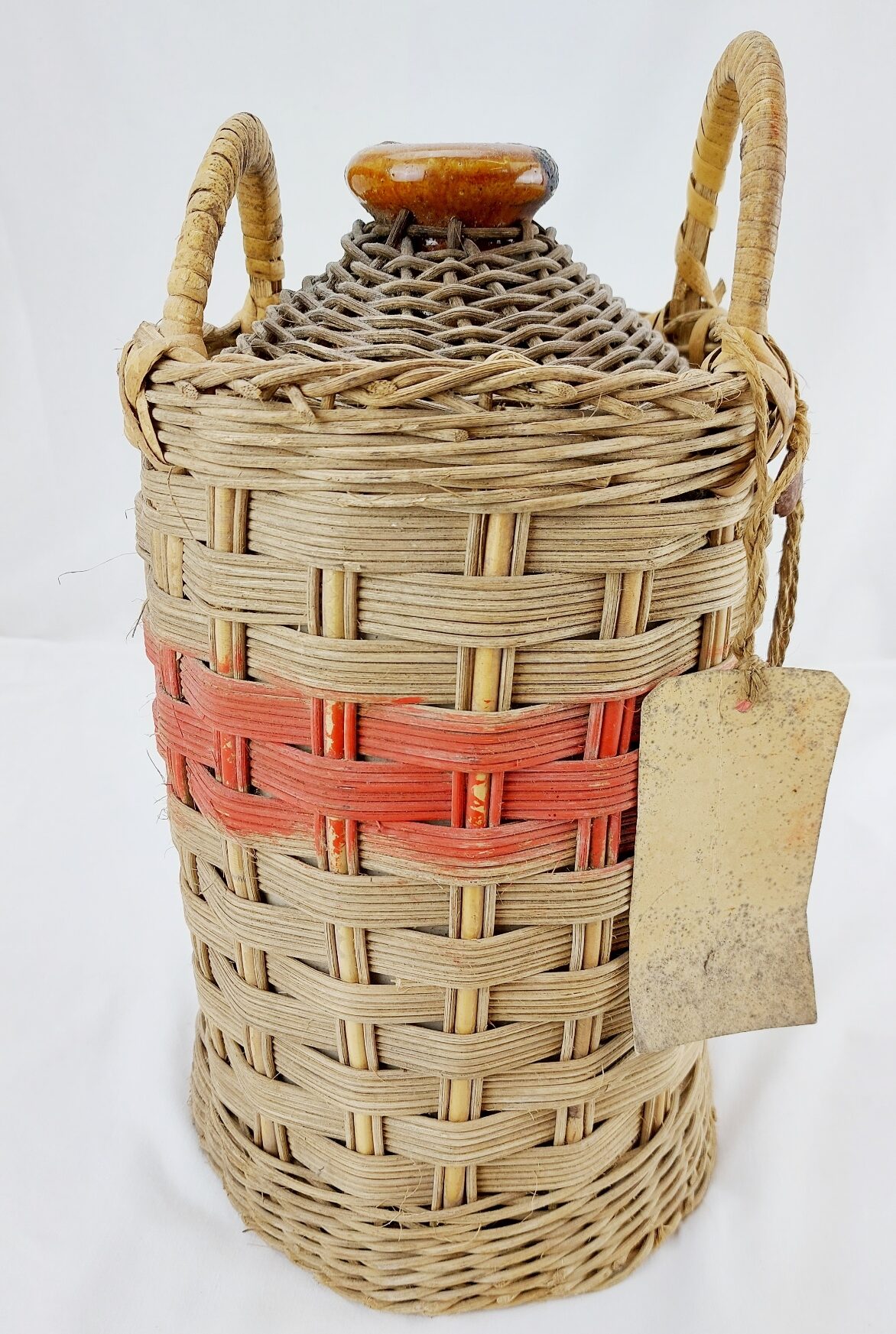
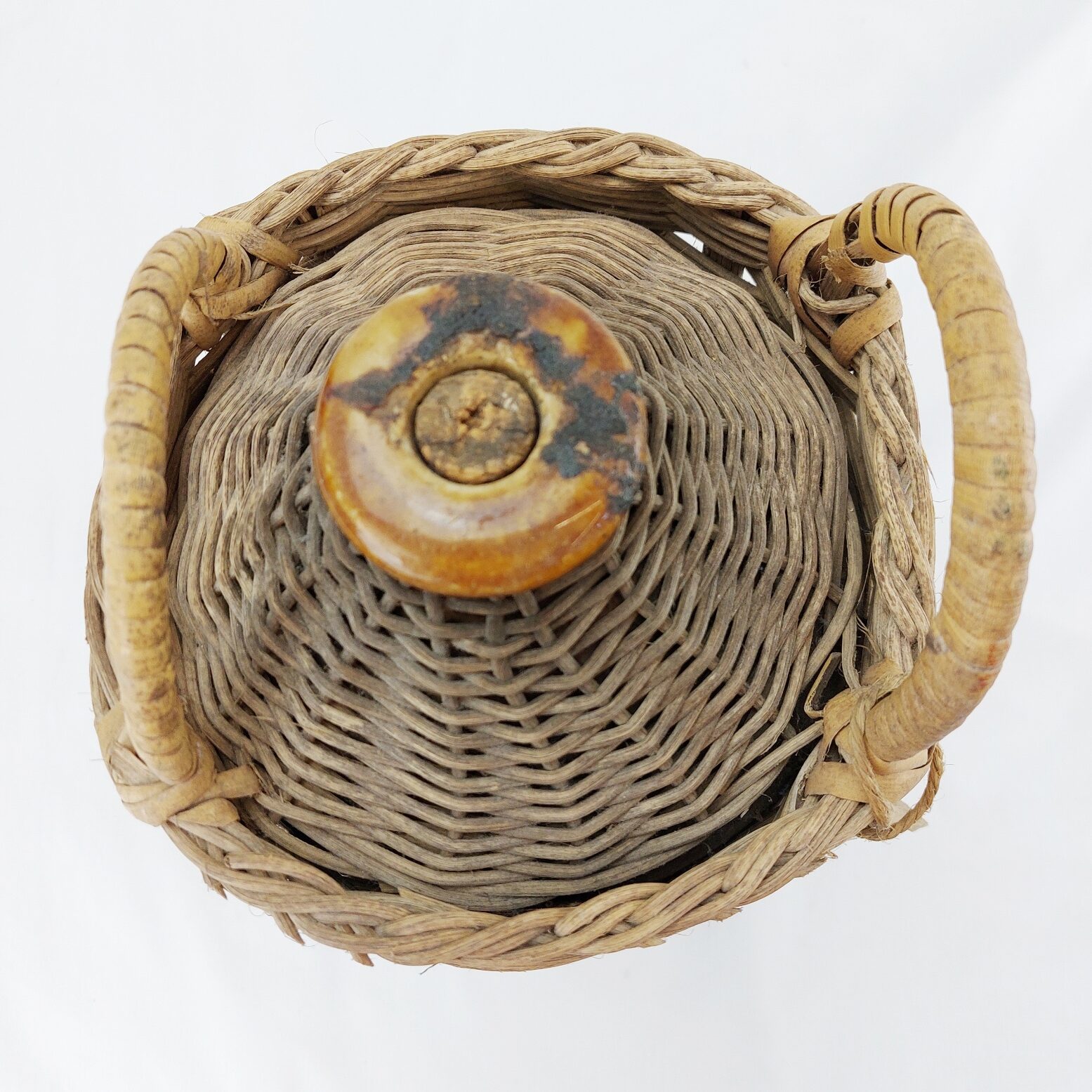
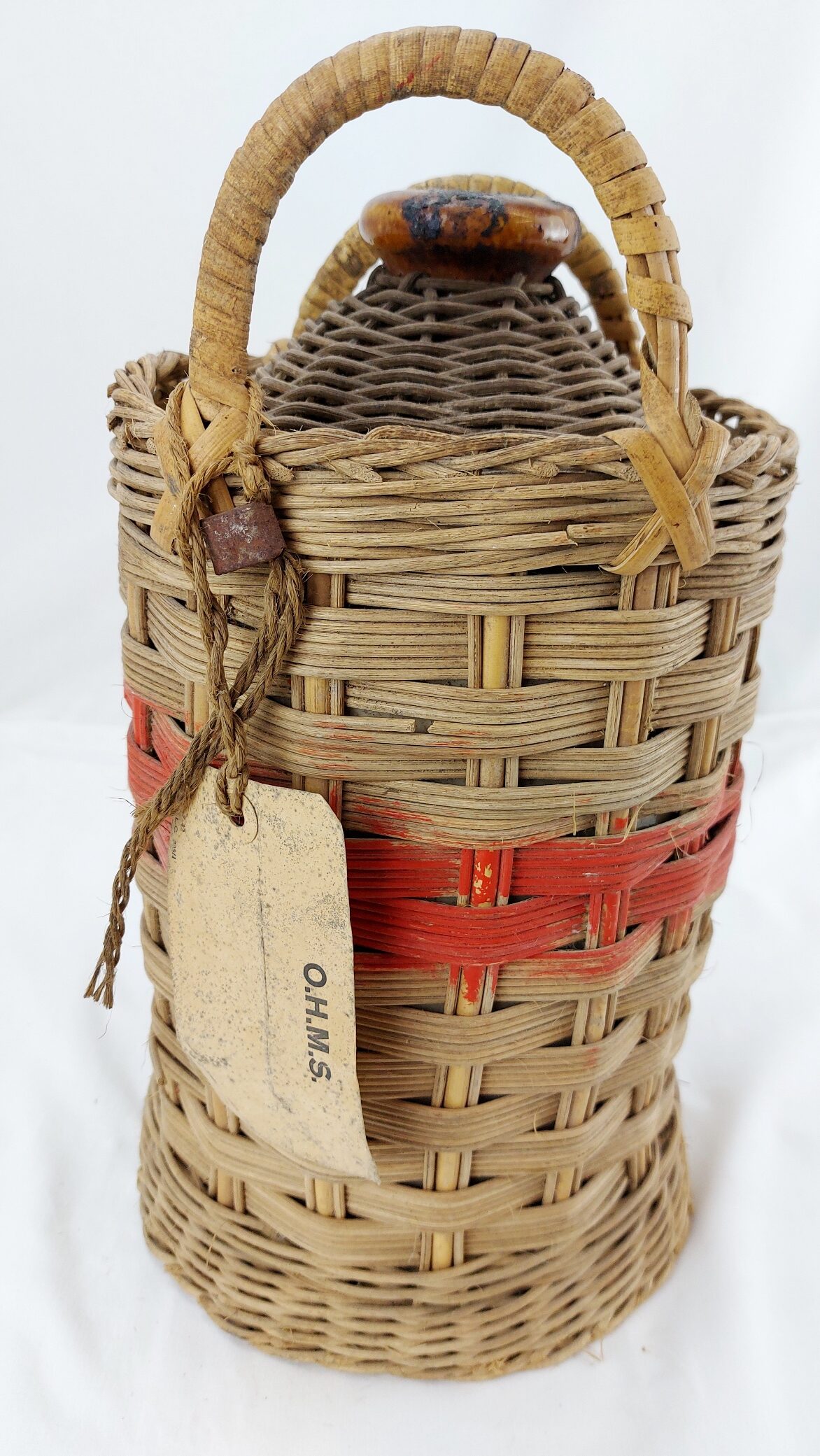
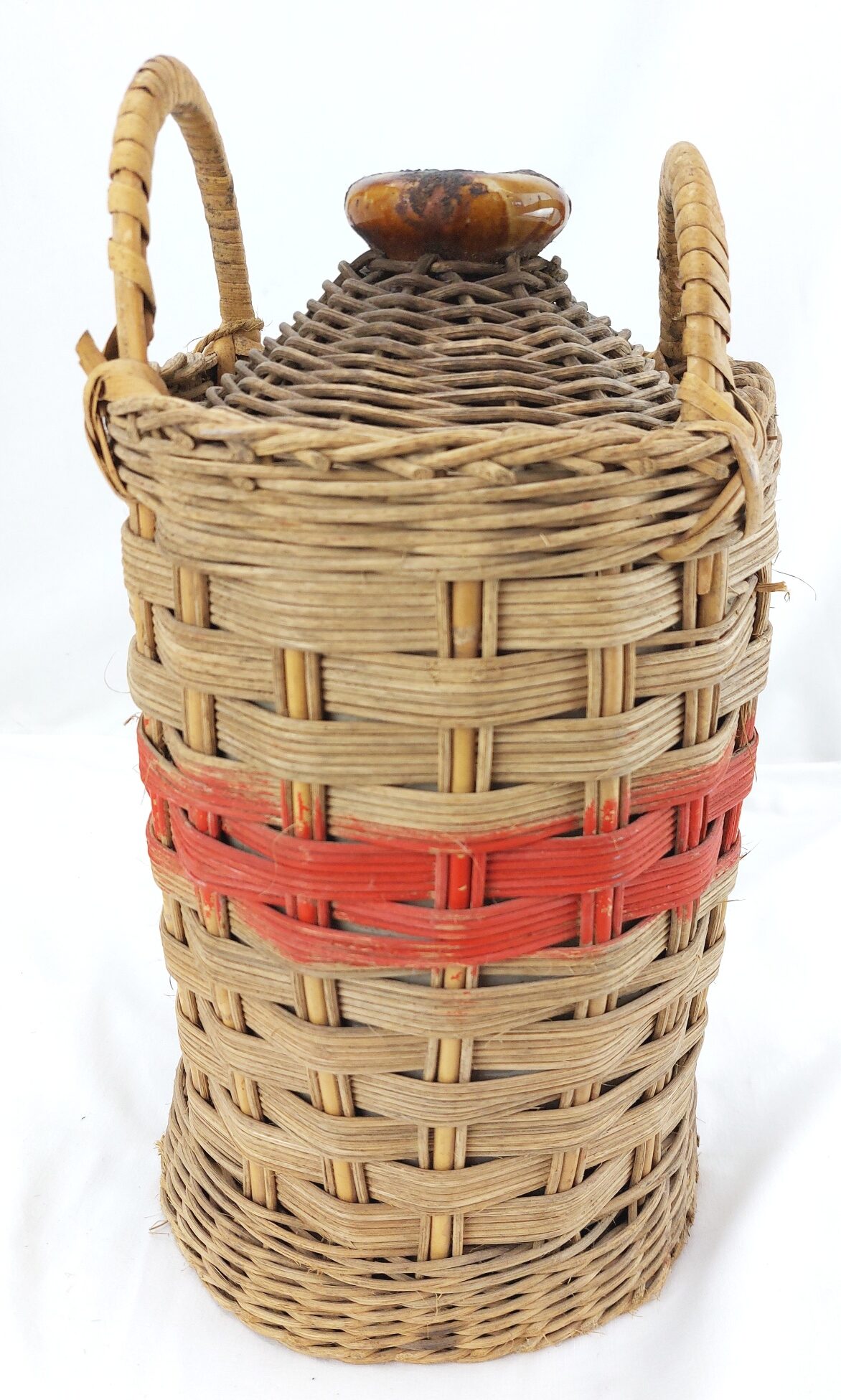
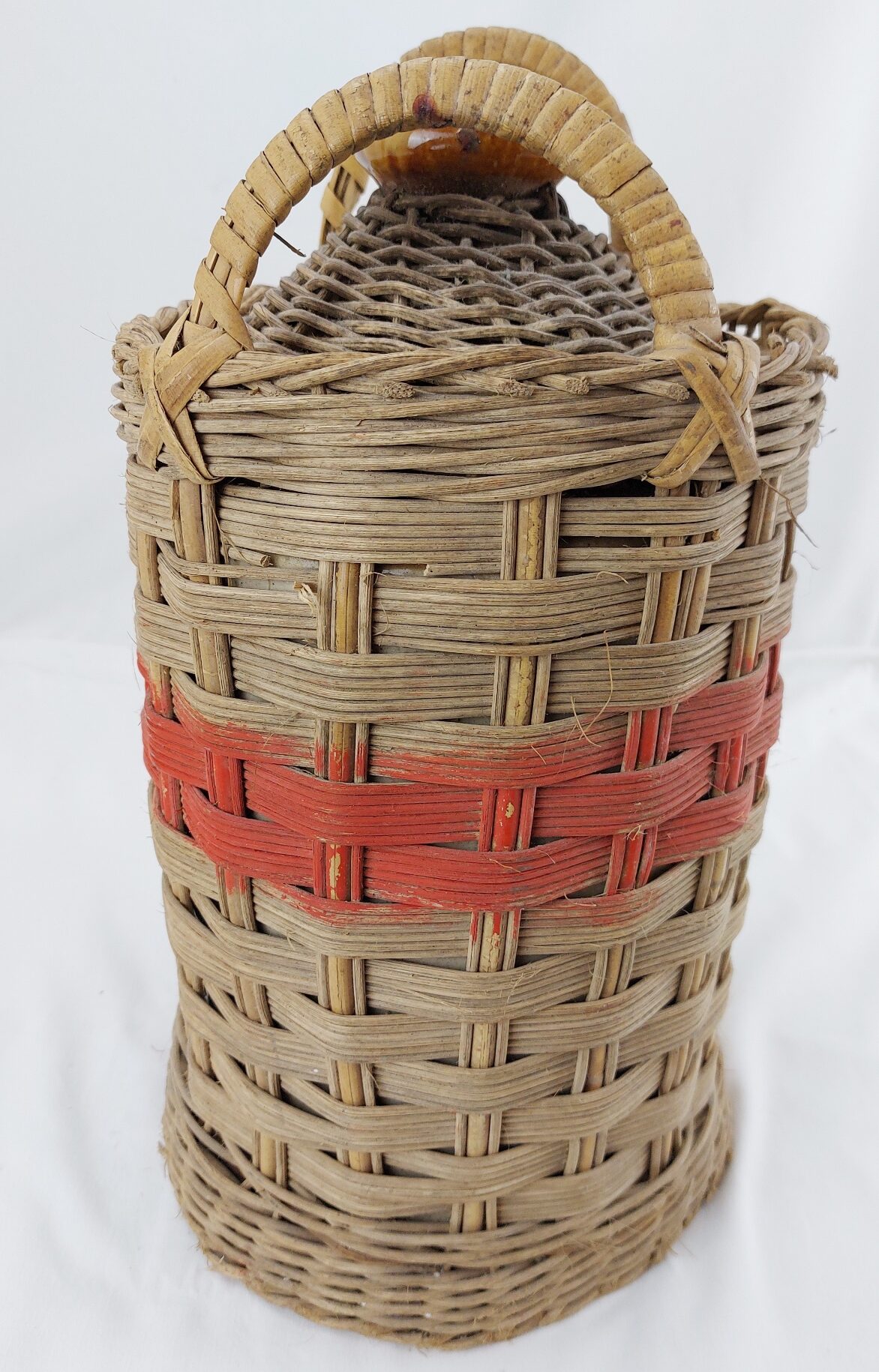
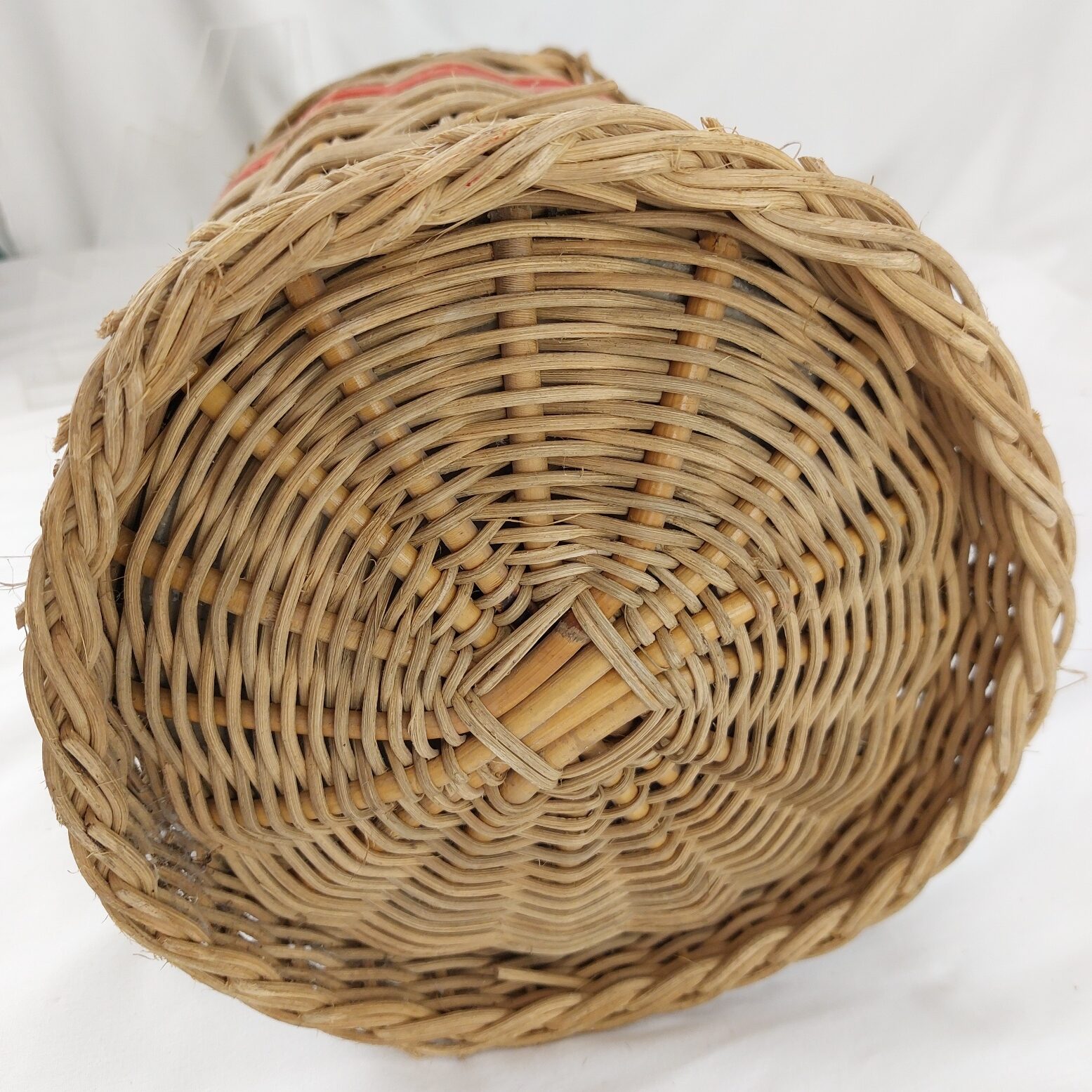
A fine and rare Royal Navy rum issue flagon, dating to the Second World War. This stoneware demijohn is encased in its original wickerwork covering with rope-tied carrying handles and a glazed stopper still in place. Around the body runs a single red-painted band, thought to denote either duty-free issue or to distinguish rum from vinegar, which was transported in similar containers.
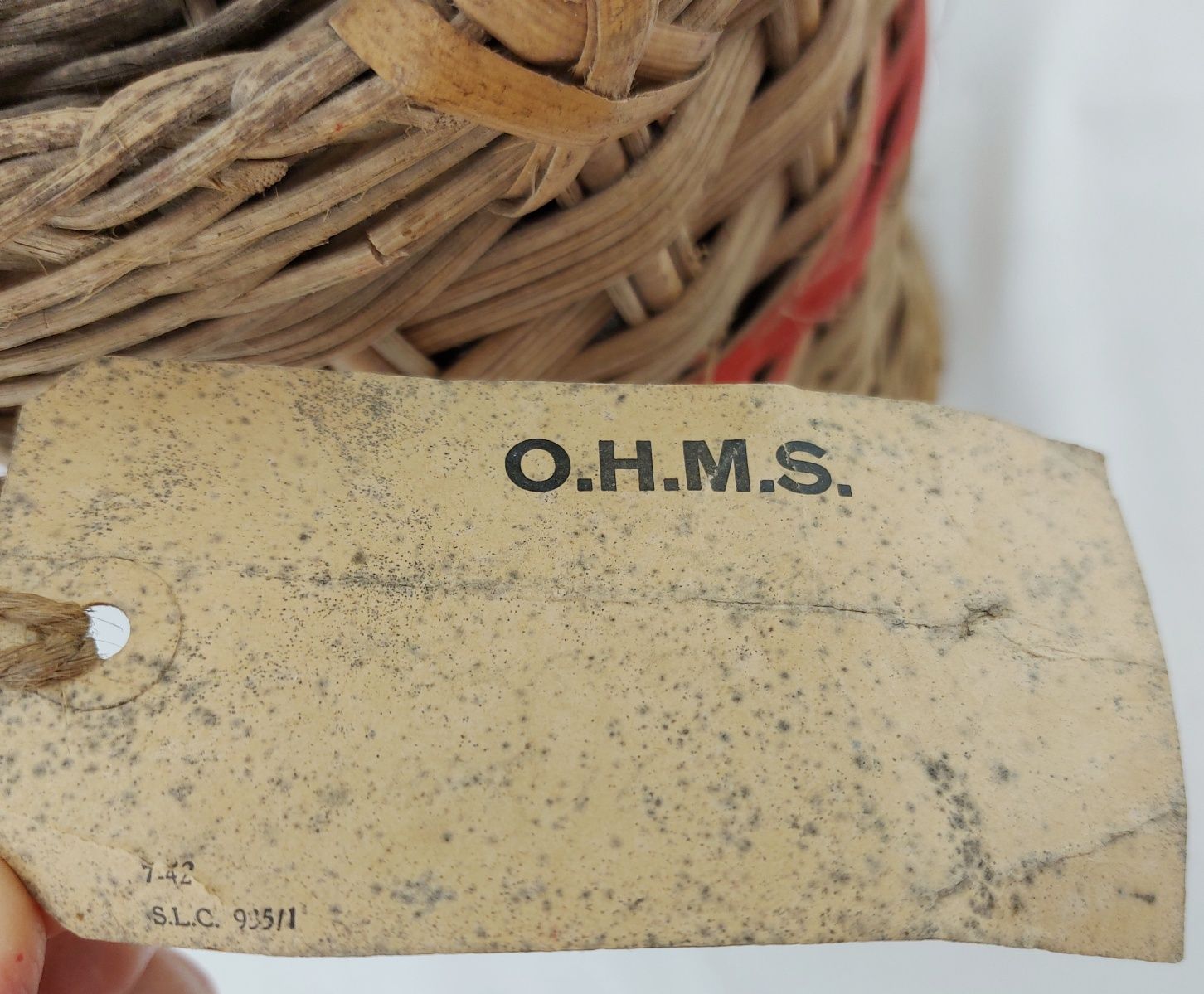
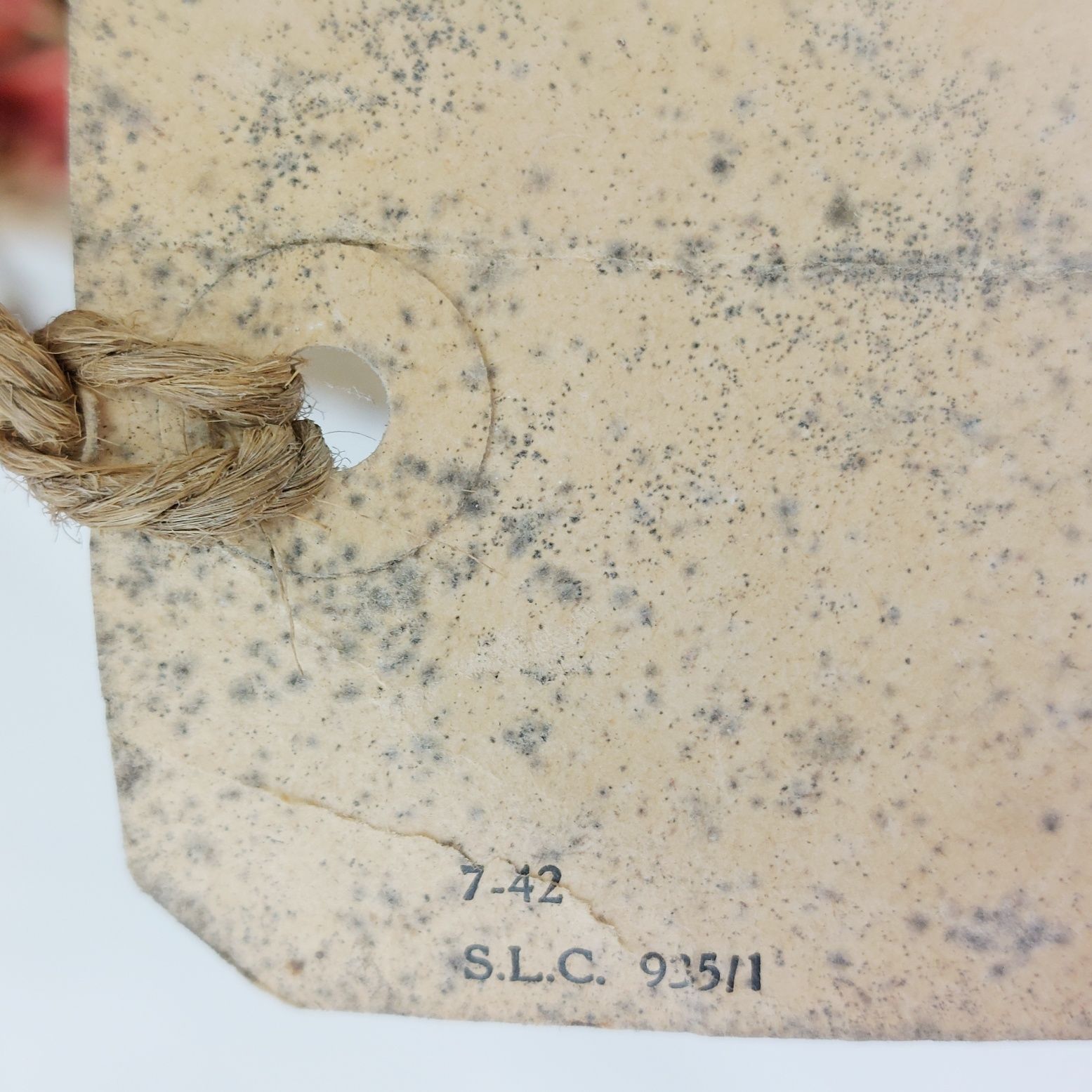
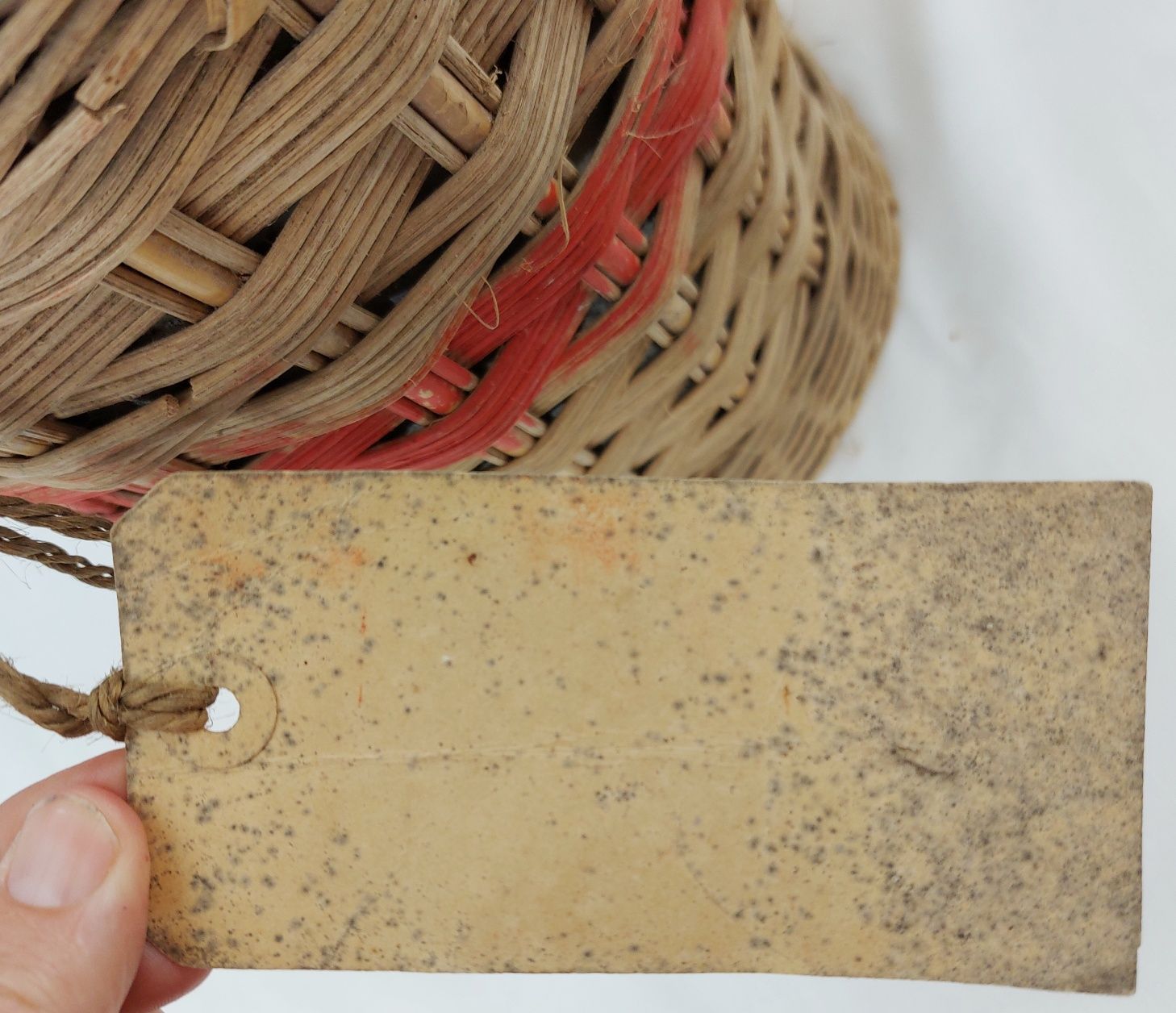
The flagon measures approx. 37.5 cm tall including handles (one handle slightly taller than the other, as made) and 21 cm diameter. Crucially, it retains its original manila O.H.M.S. tag, still attached by its sealed metal clasp, confirming it is not a later addition. The label is printed “O.H.M.S.” (On His Majesty’s Service) with form reference S.L.C. 925/1 and date code 7-42, confirming July 1942 wartime issue. The clasped attachment significantly strengthens provenance, marking this as an unusually complete and authentic example.
Historical Note:
Rum was central to life in the Royal Navy, with sailors receiving their daily “tot” from 1655 until its abolition on 31 July 1970 (“Black Tot Day”). During the Second World War, rum remained an important ration, both for morale and endurance, particularly during arduous duties such as Atlantic convoys, Arctic runs, and extended sea deployments.
Flagon-like stoneware jars such as this were supplied to warships and shore establishments by the Victualling Yards, and their contents were ceremoniously poured into the communal rum-tub before issue to the crew. The wicker casing provided protection from damage during transport and stowage on board, while the red stripe has been the subject of debate: some suggest it indicated duty-free naval rum, while others maintain it distinguished rum from vinegar, which was issued in similar jars.
This is a fantastic piece of distilling and naval history, and part of a long and storied British naval tradition dating back to 1655. On the 31st of July 1970, henceforth remembered as “Black Tot Day”, this centuries-old custom was consigned to history when the ration was formally abolished.
*Condition*
In very good original condition. Empty. The wicker casing is intact with only light service wear and natural patina. The glazed stopper remains in place with traces of sealing residue. The original paper O.H.M.S. label survives, spotted and toned with age but still legible, and importantly still attached by its original clasp. Both handles are secure. A rare survivor, unusually complete with all the features collectors look for. Please see photographs as part of the condition report.