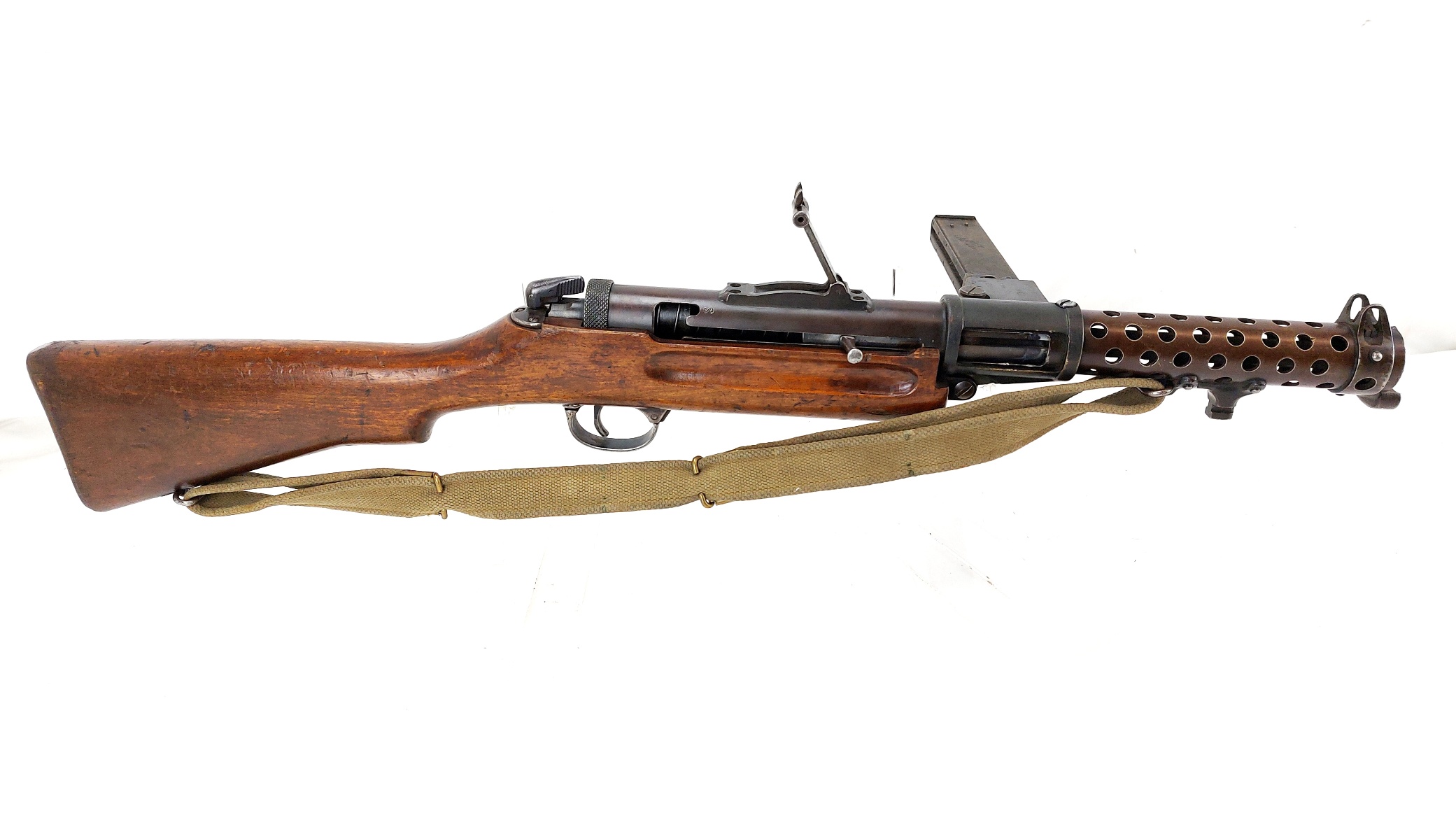
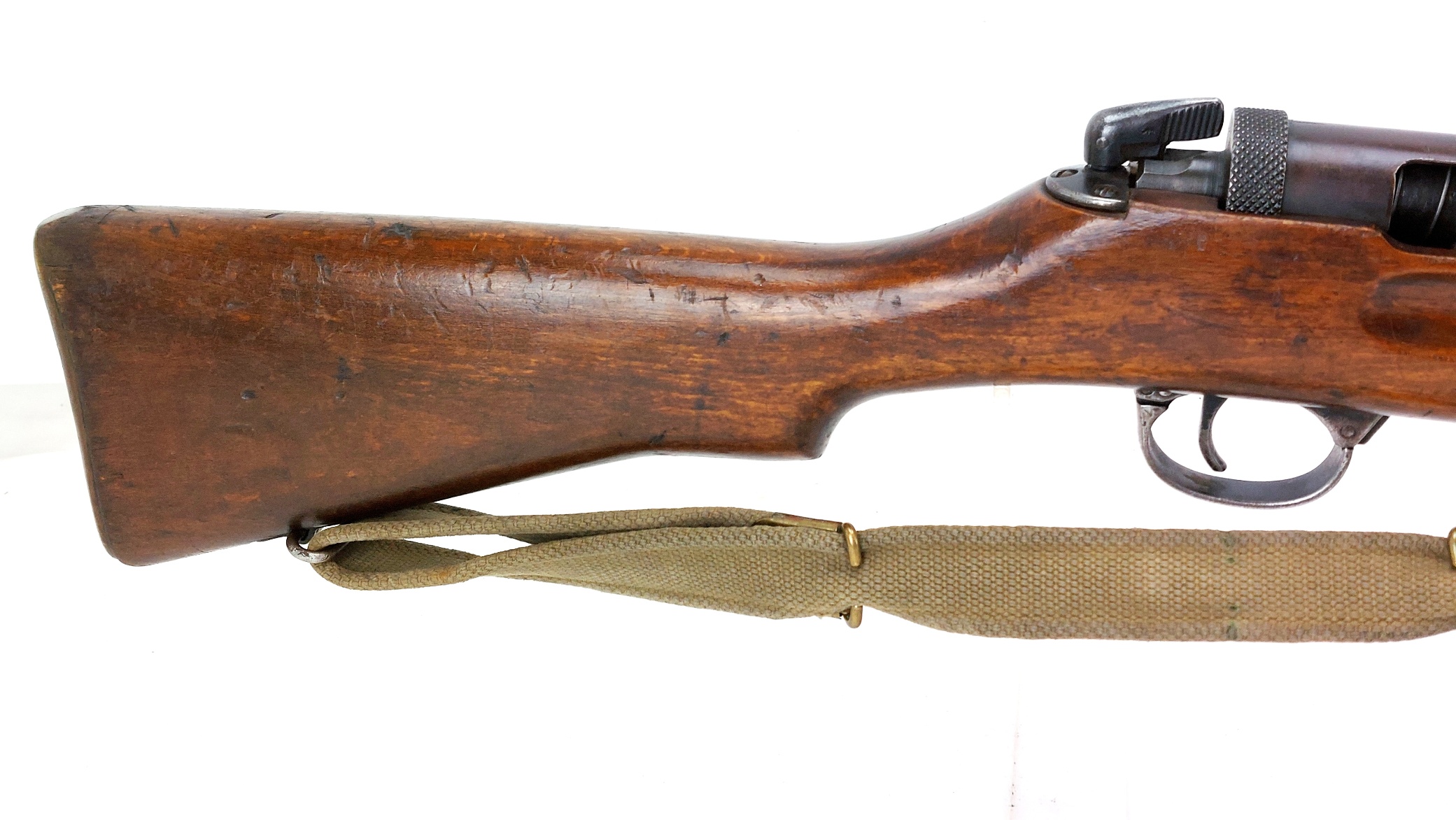
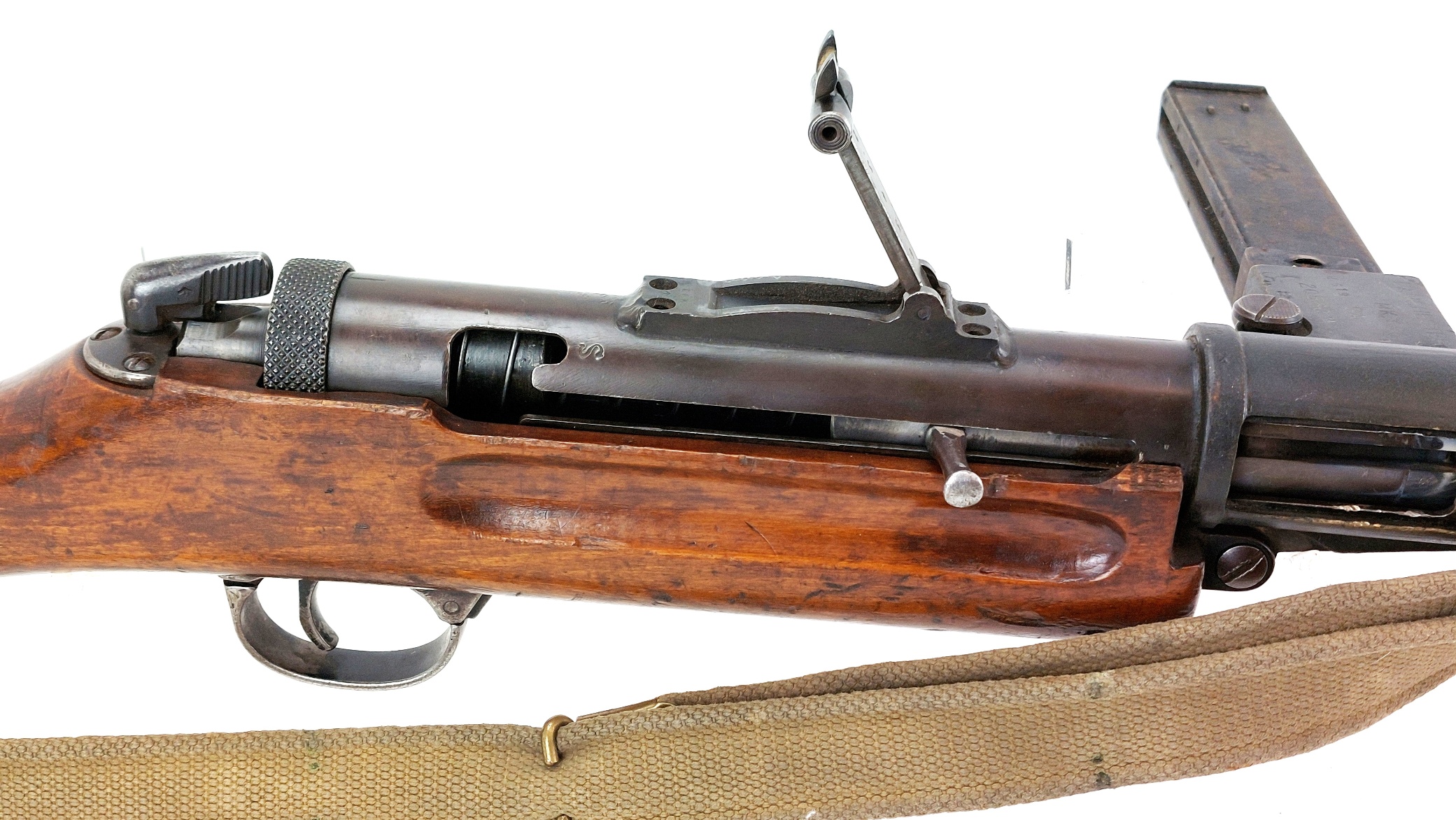
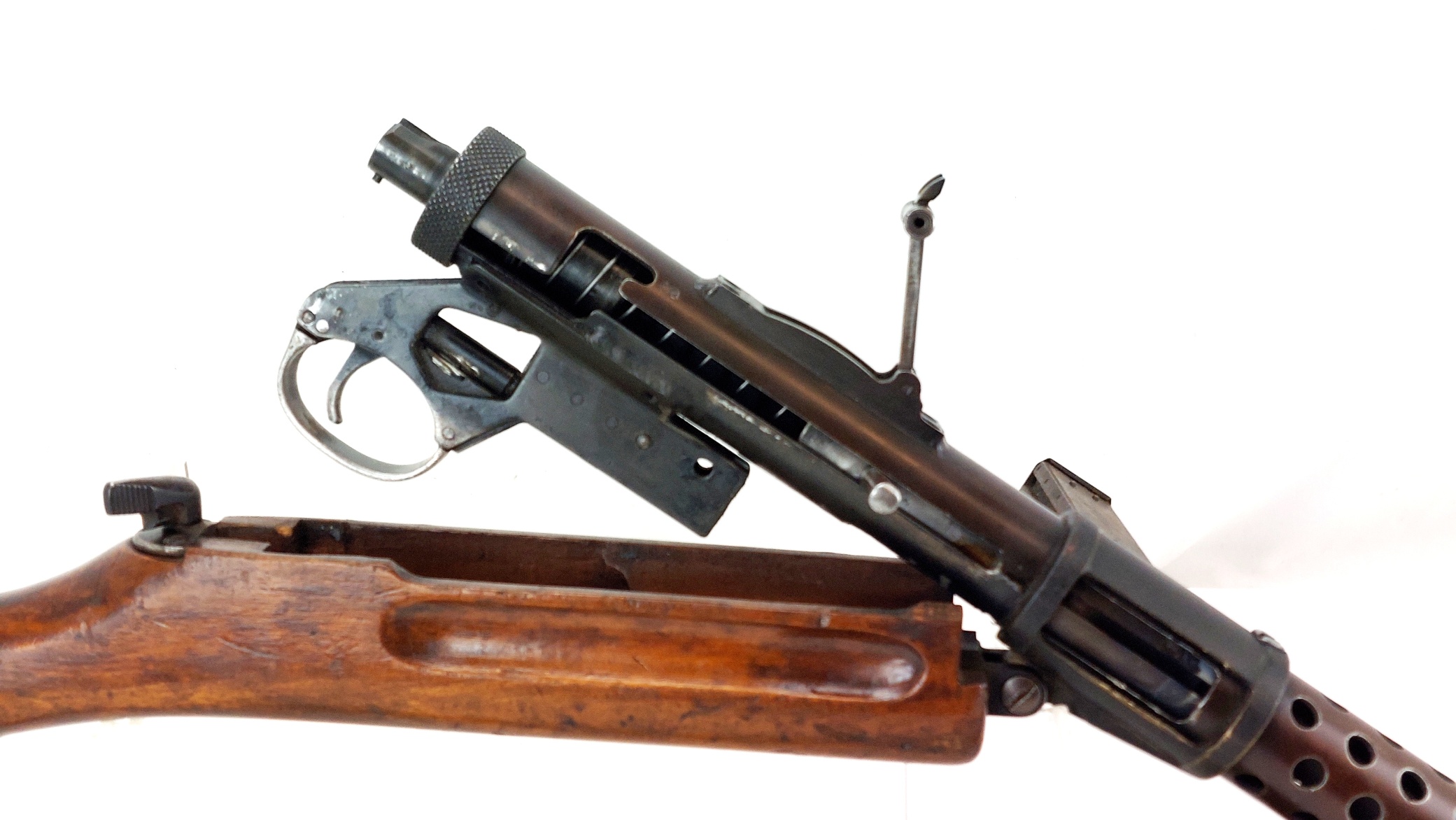
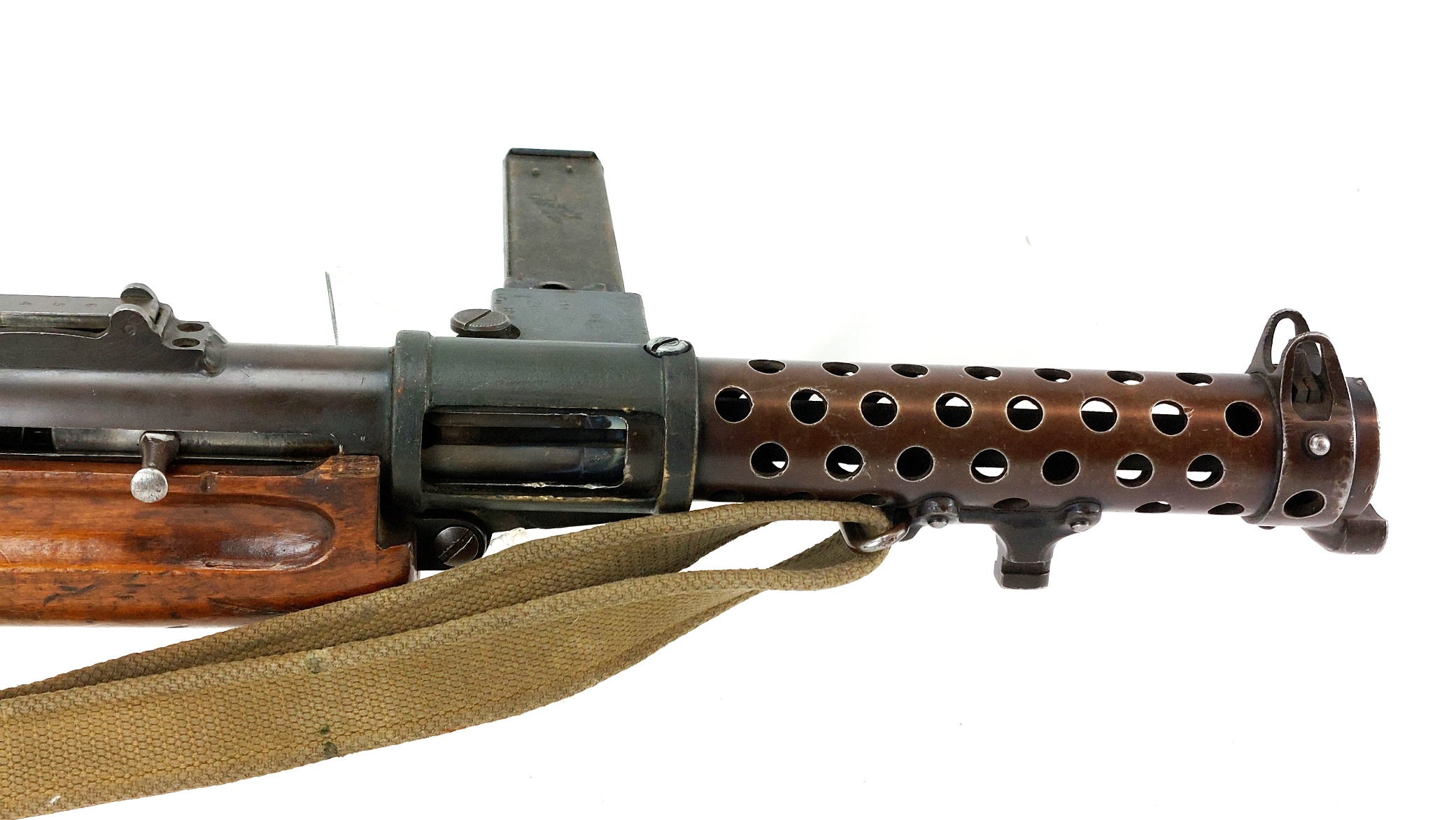
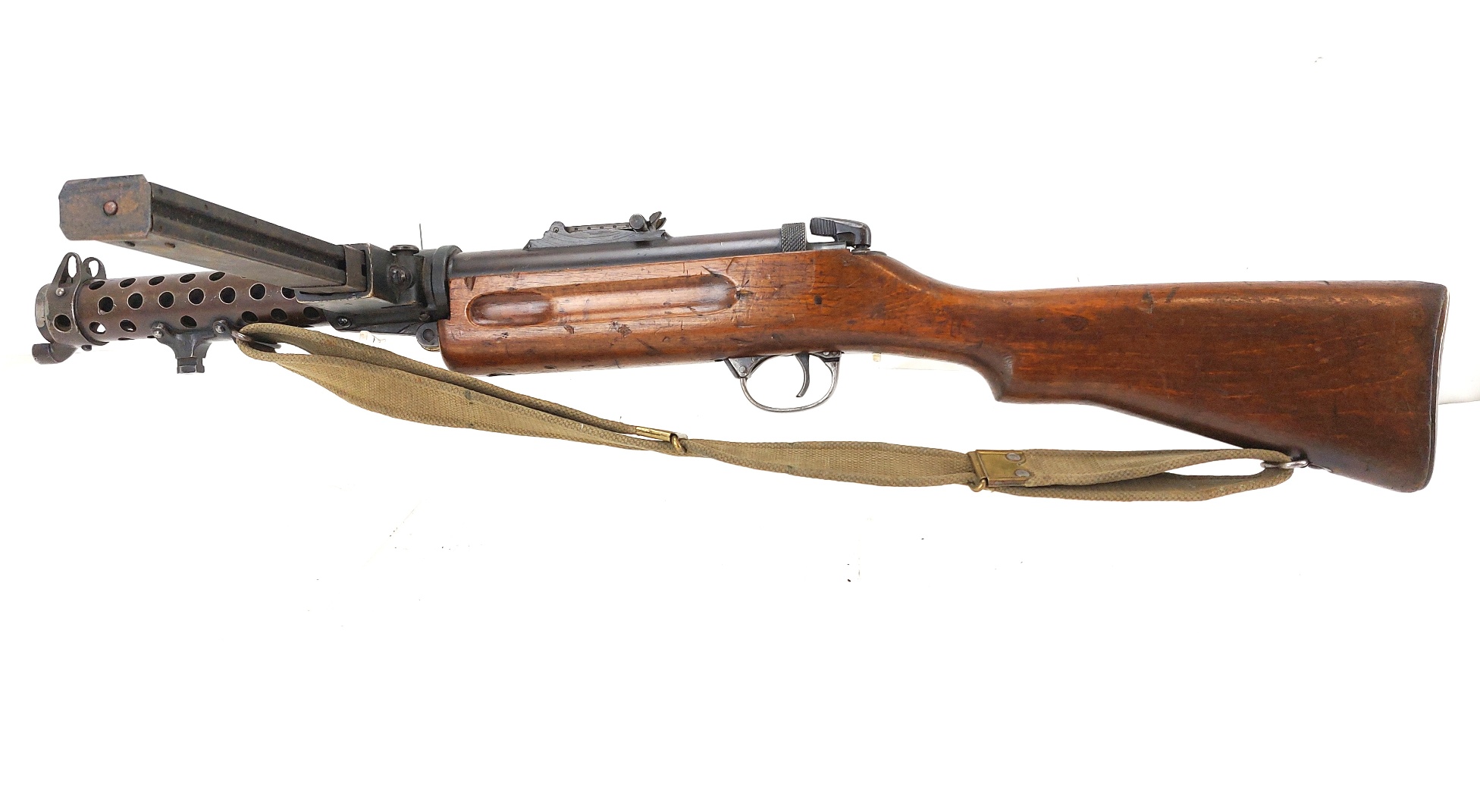
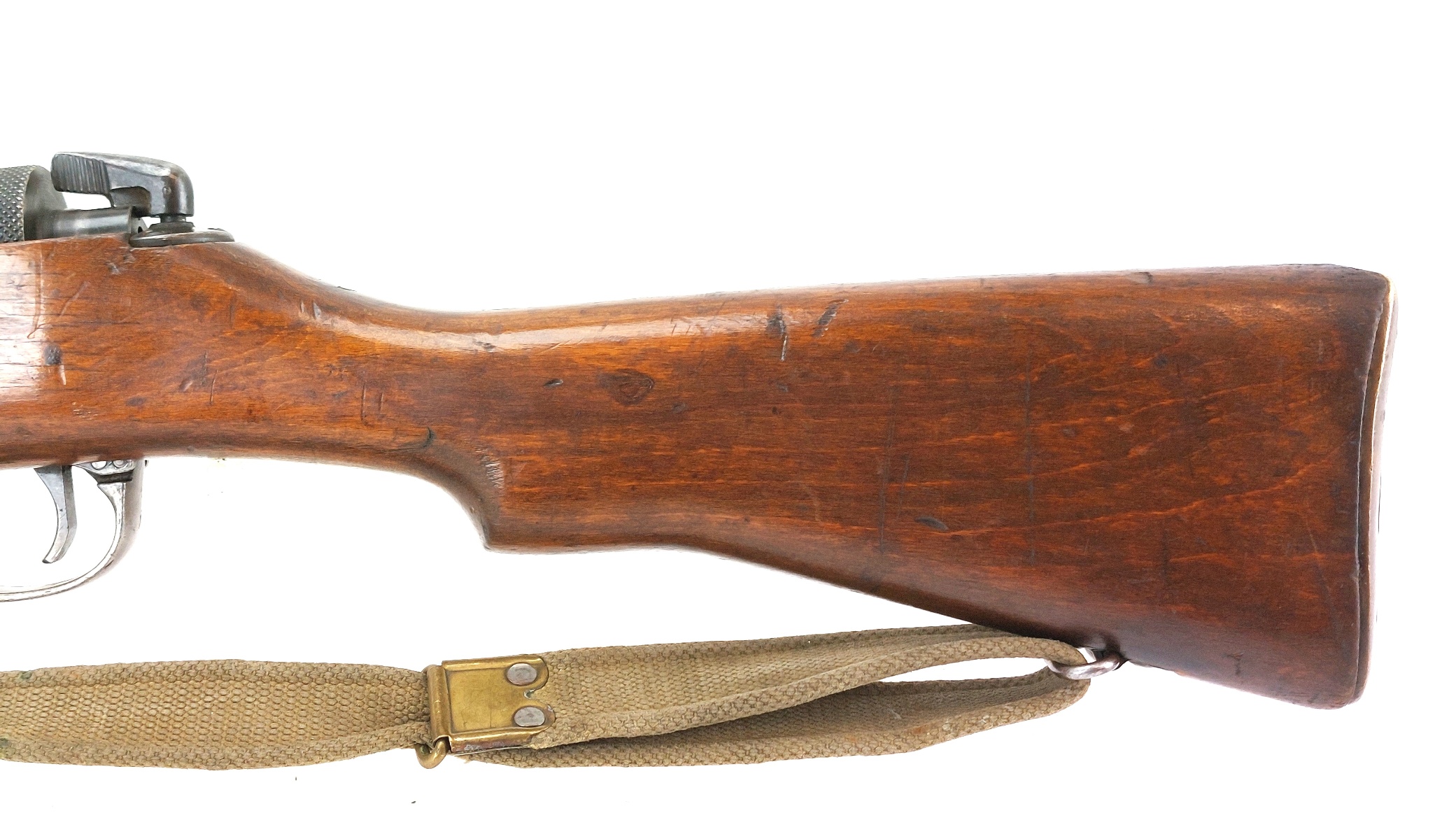
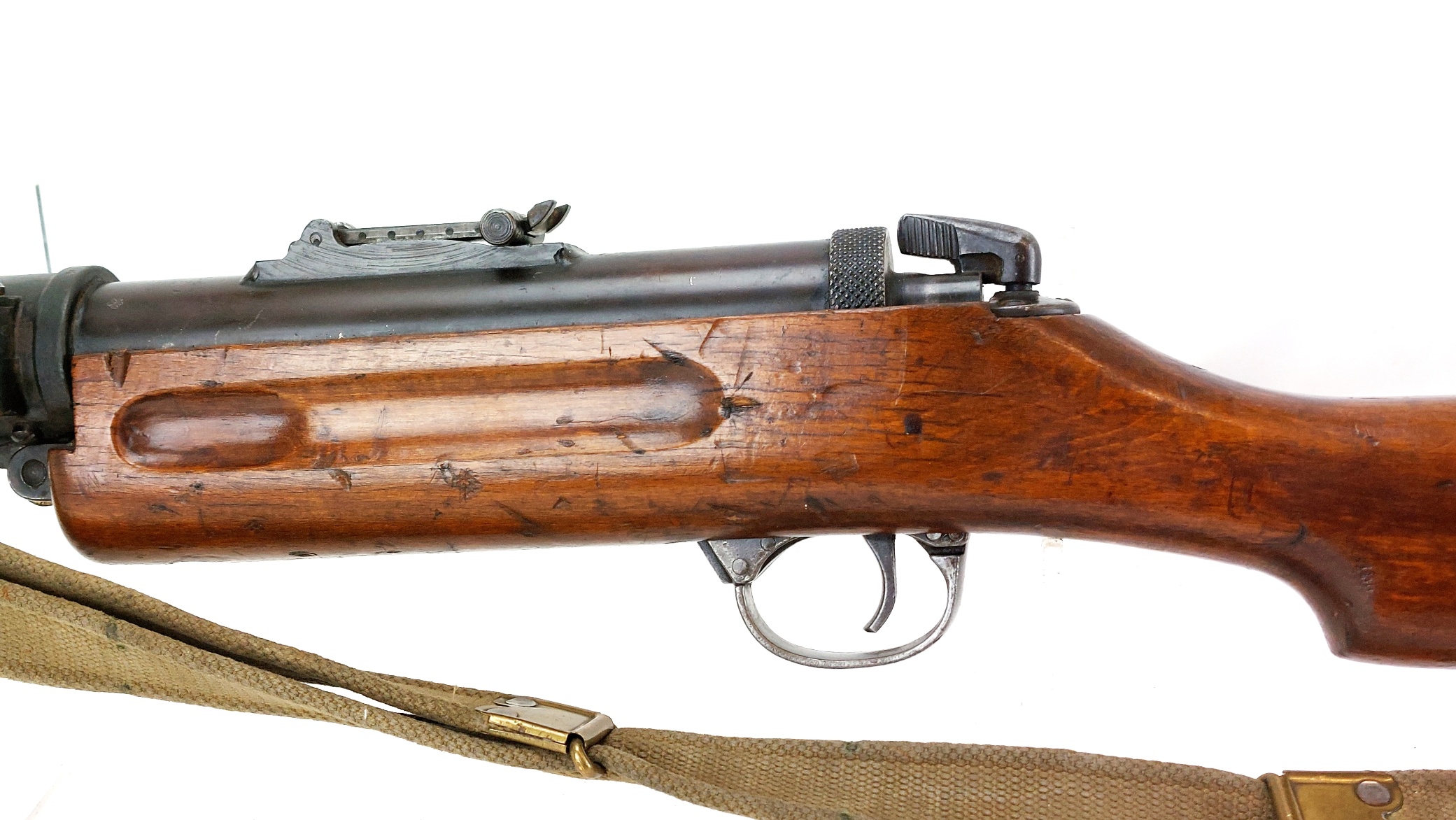
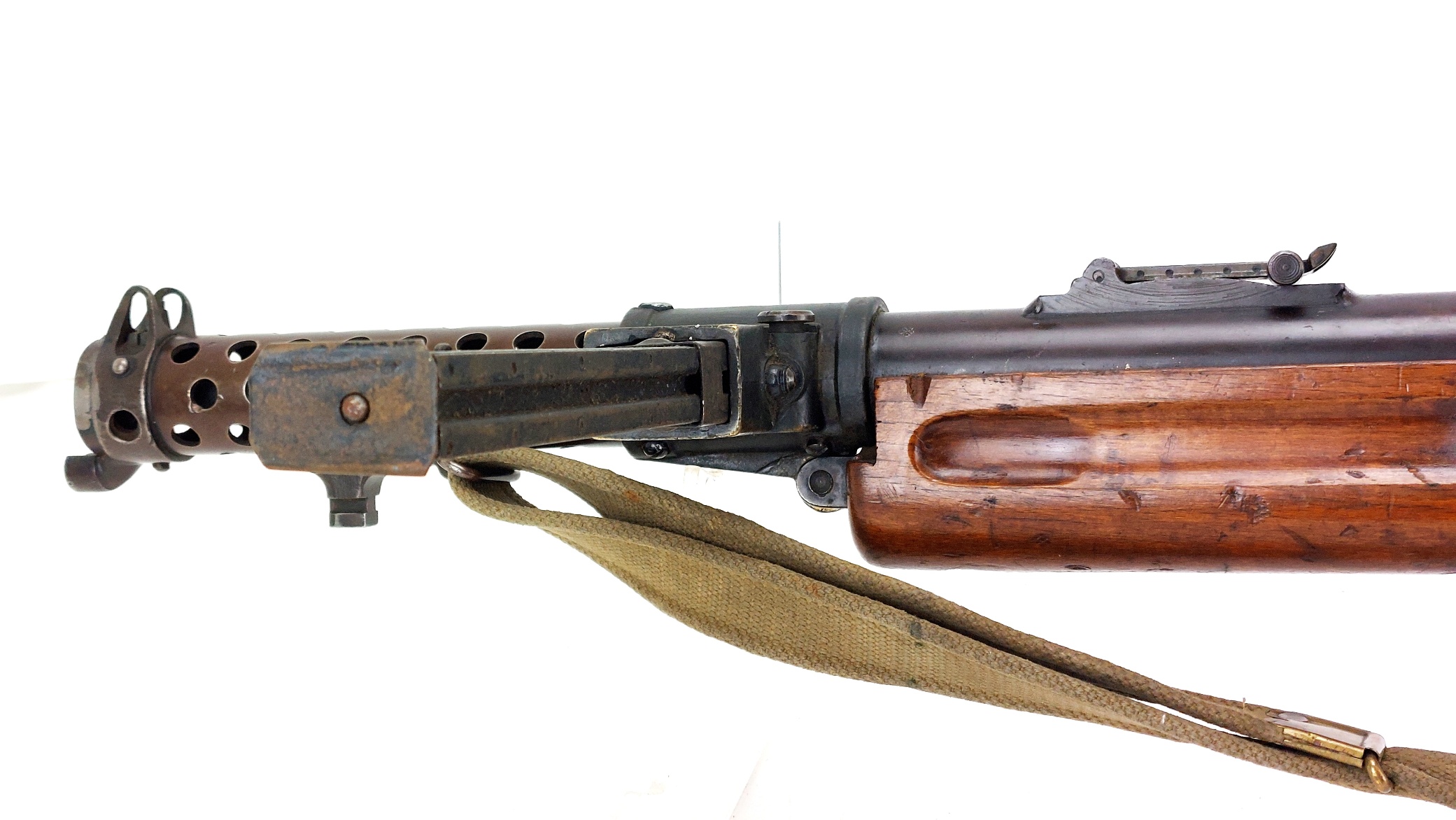
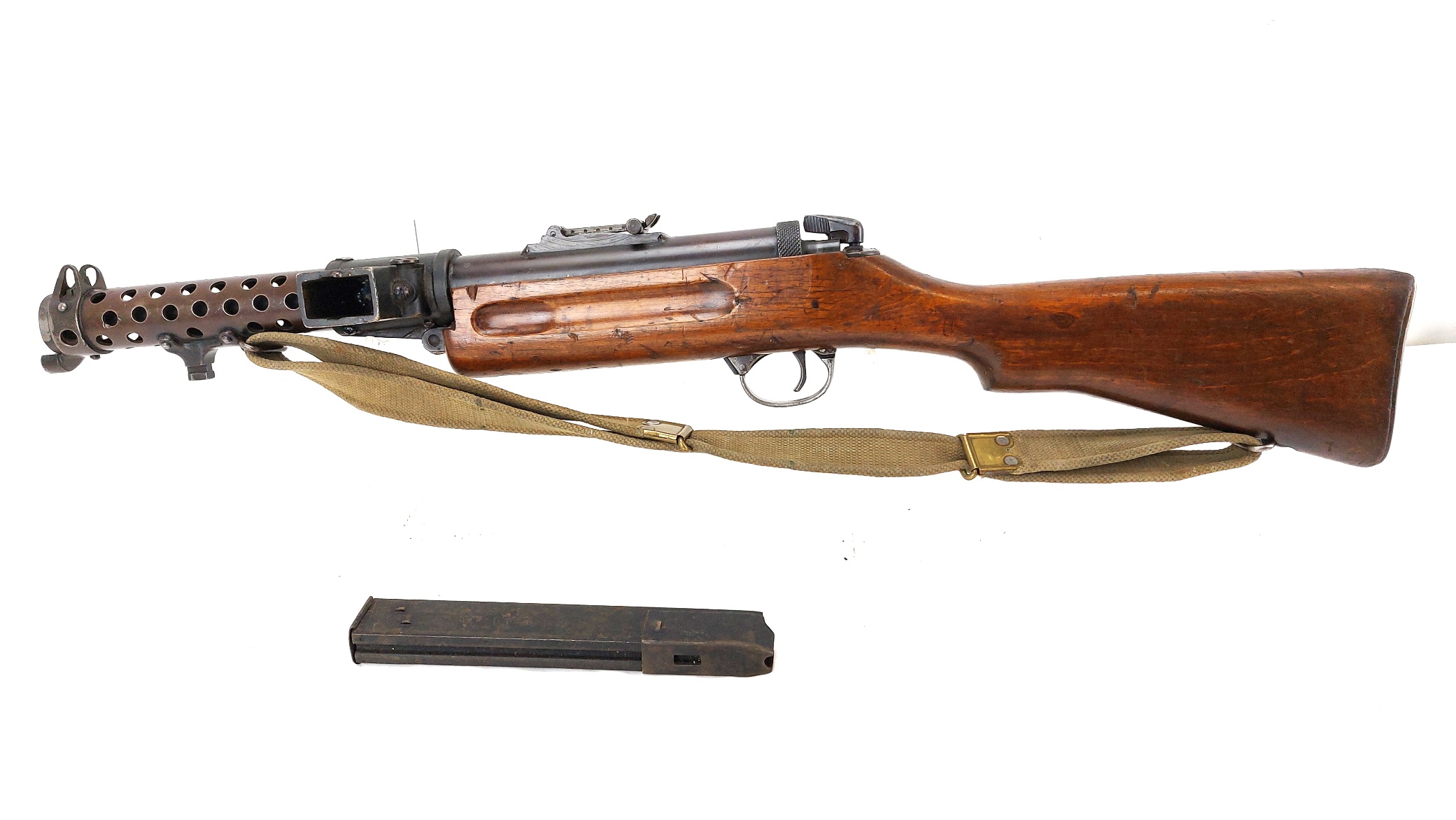
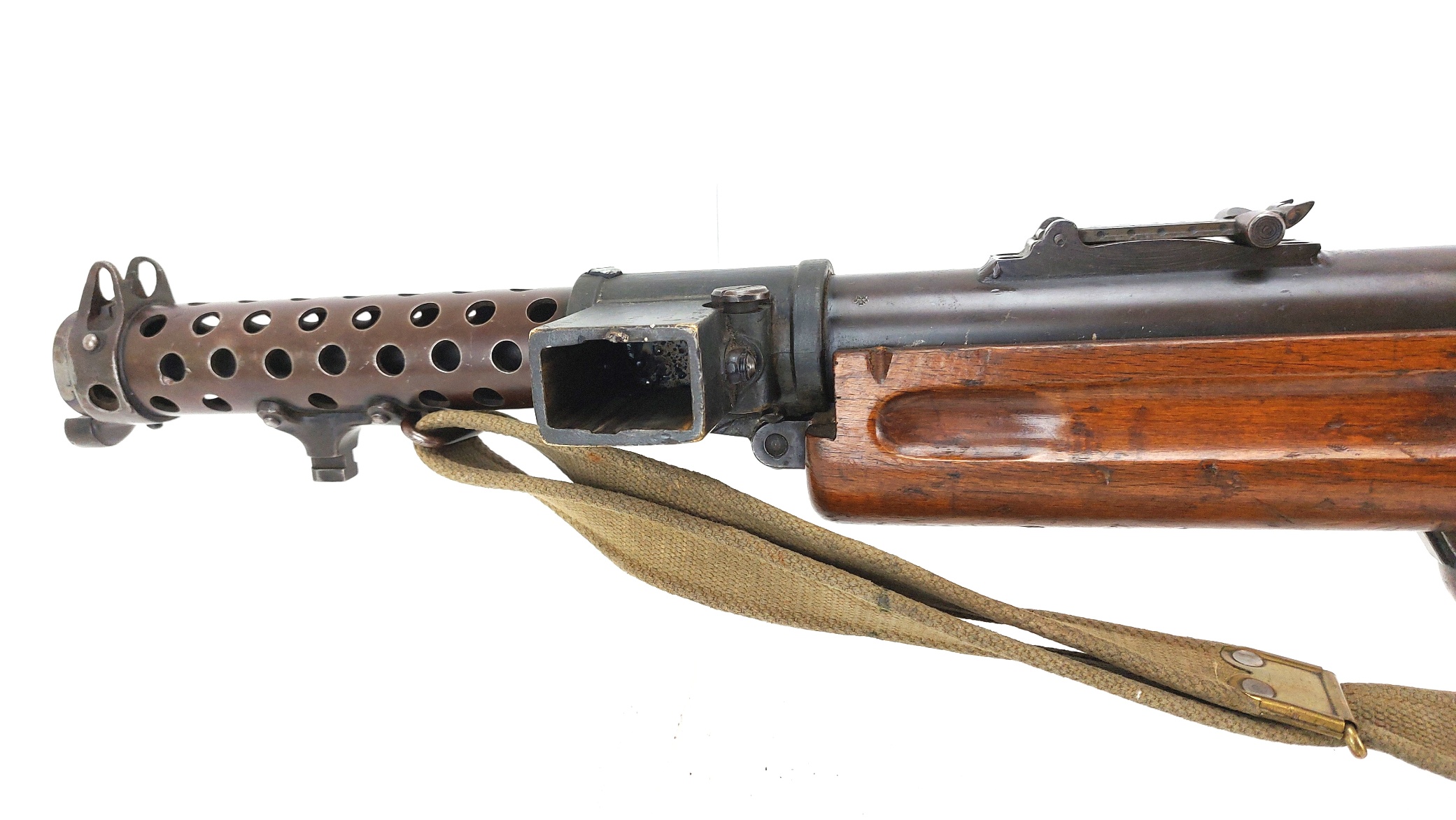
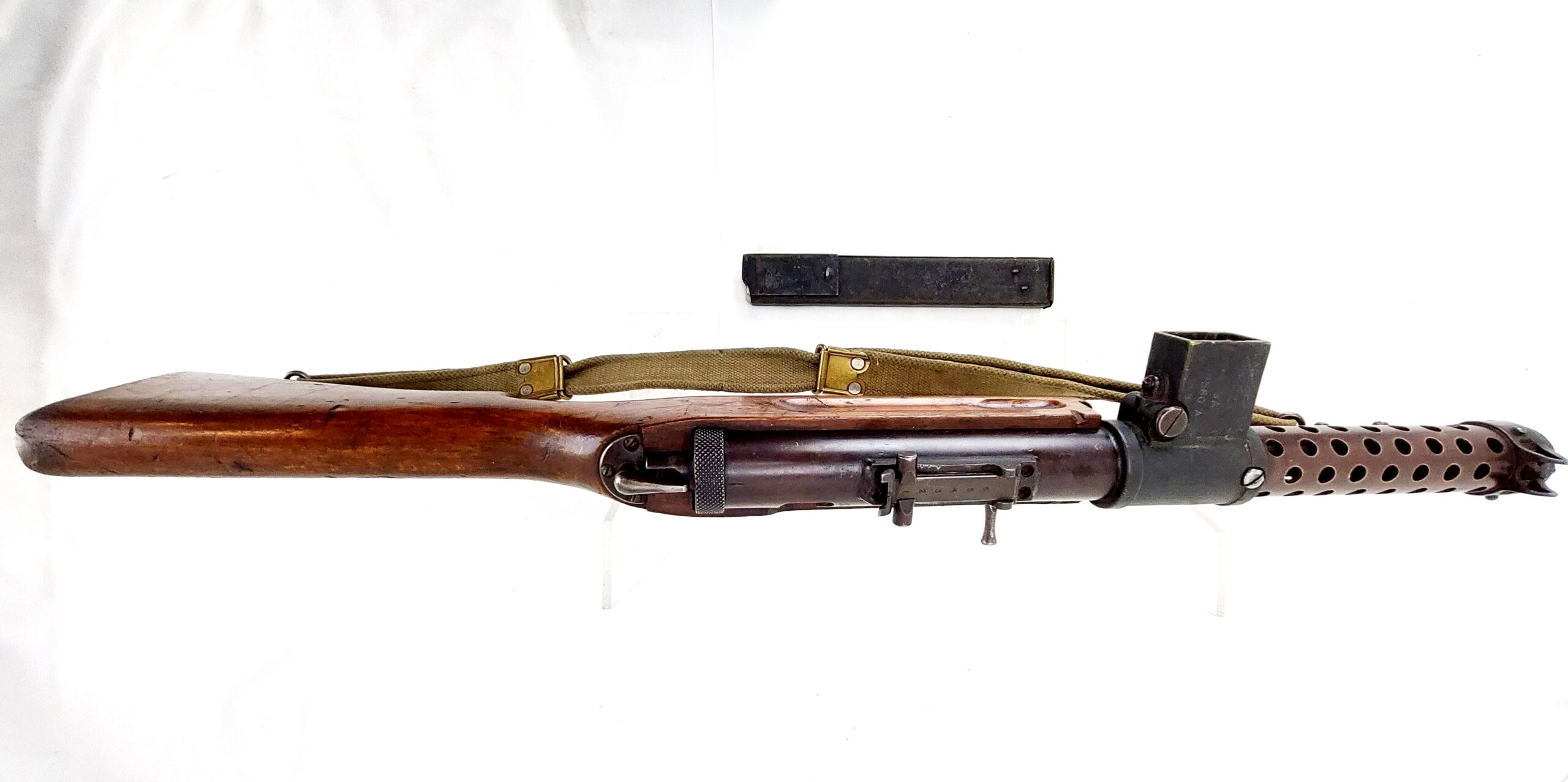
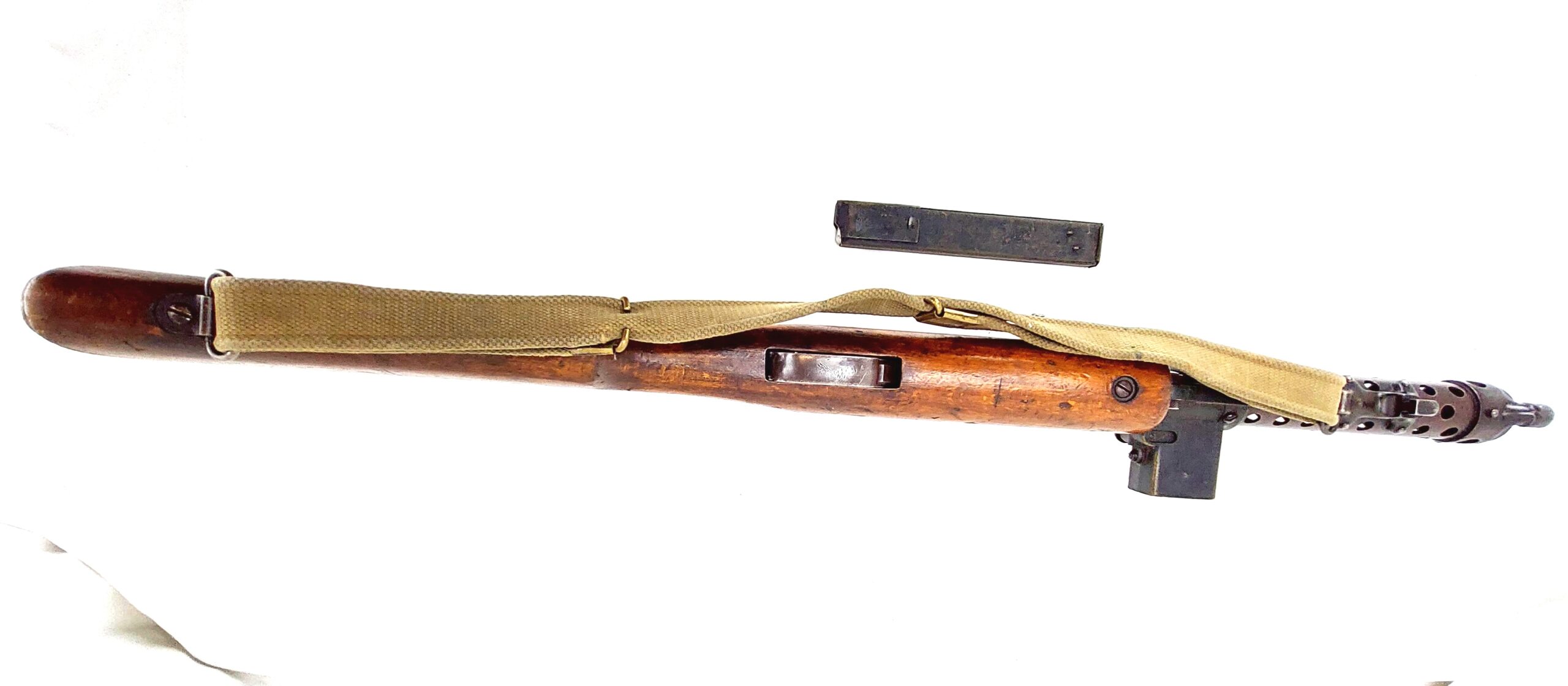
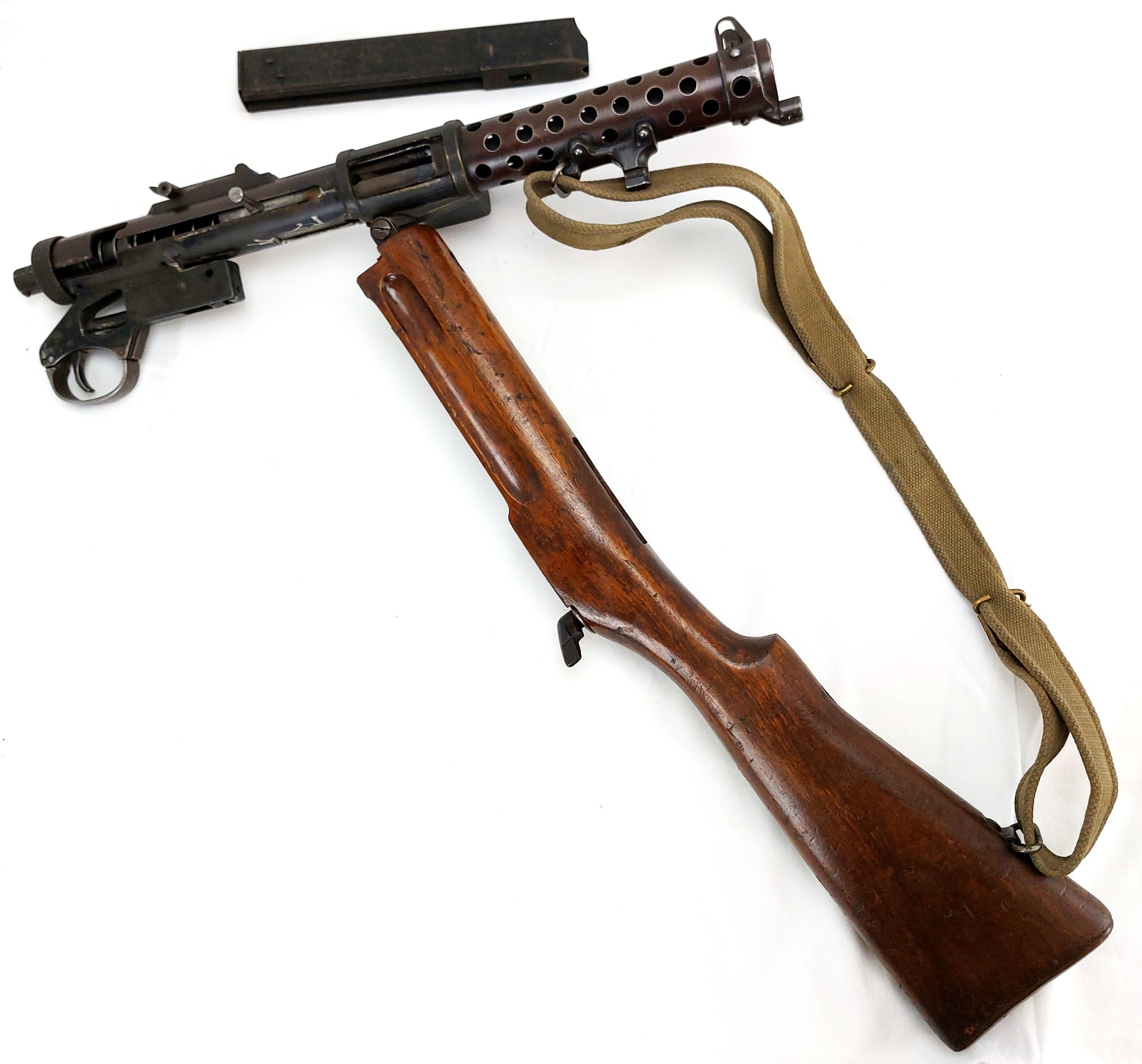
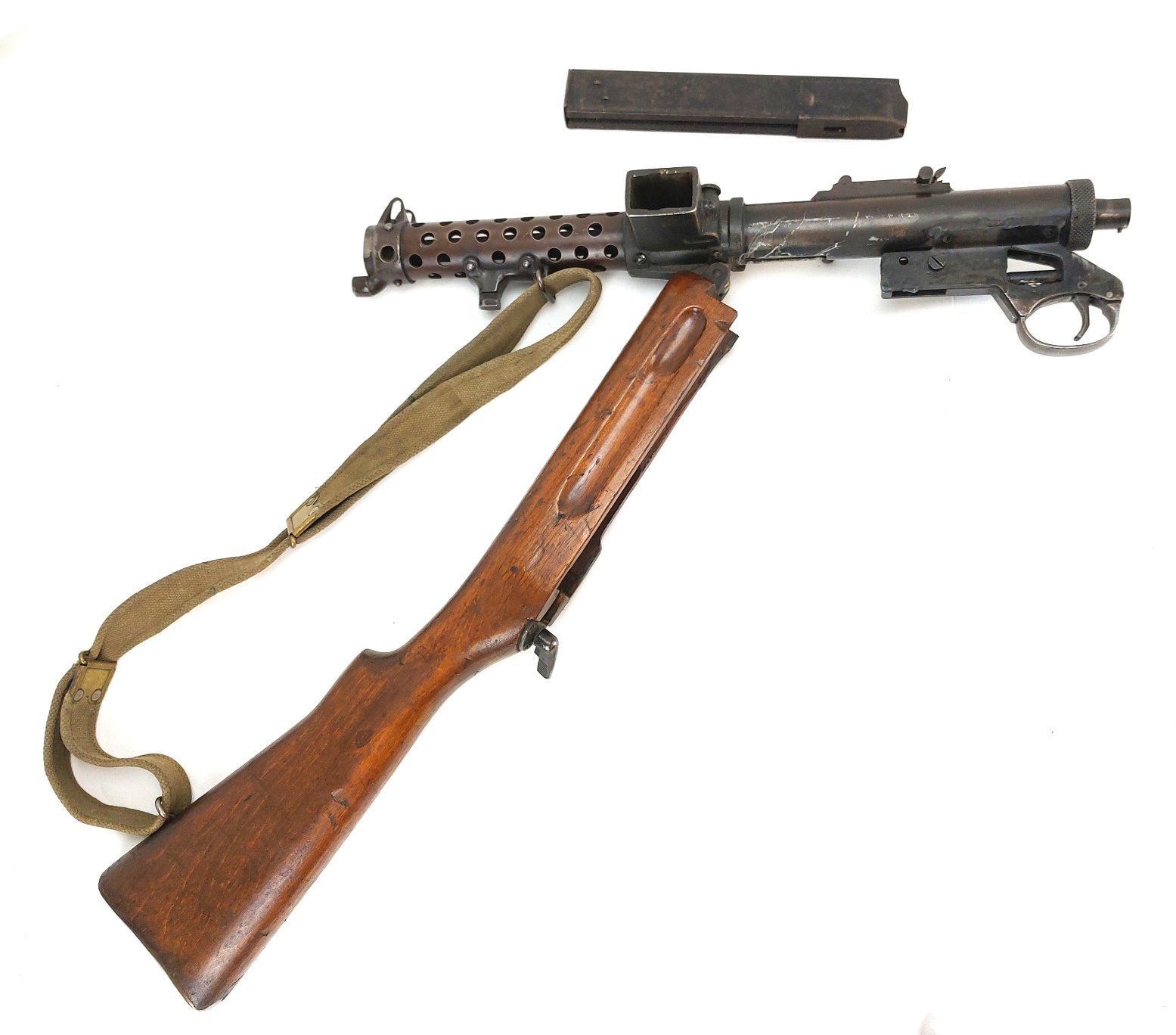
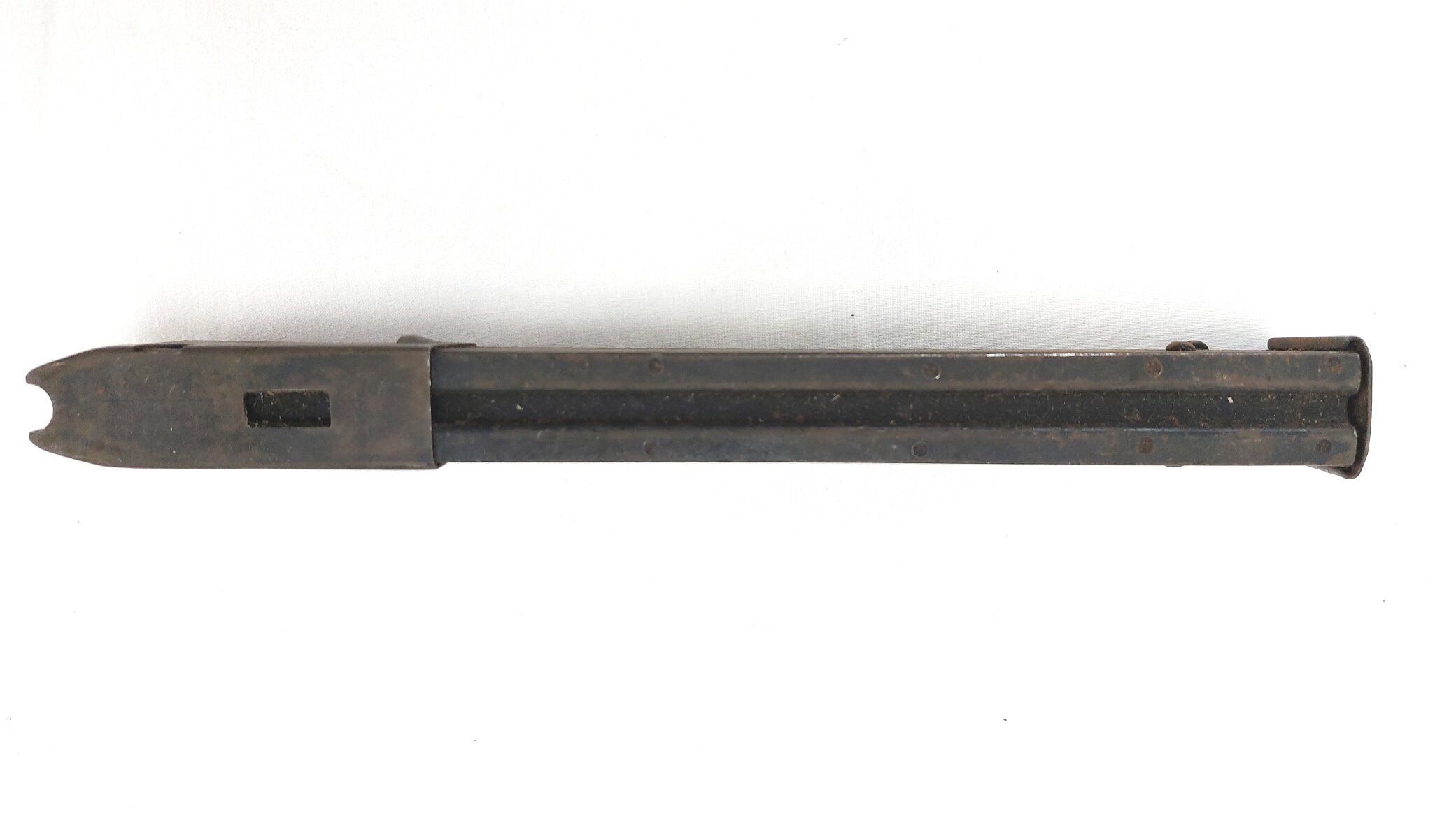
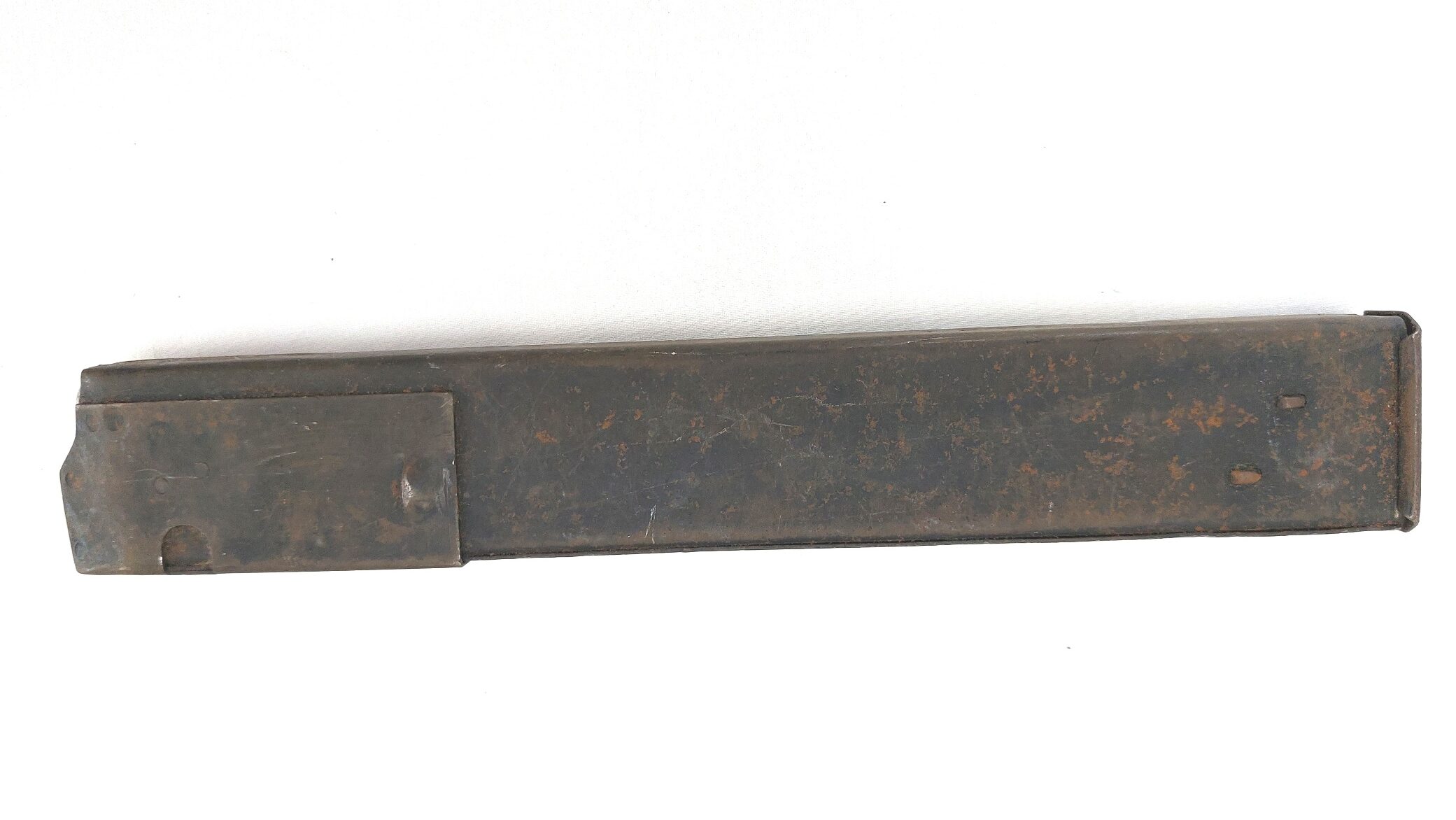
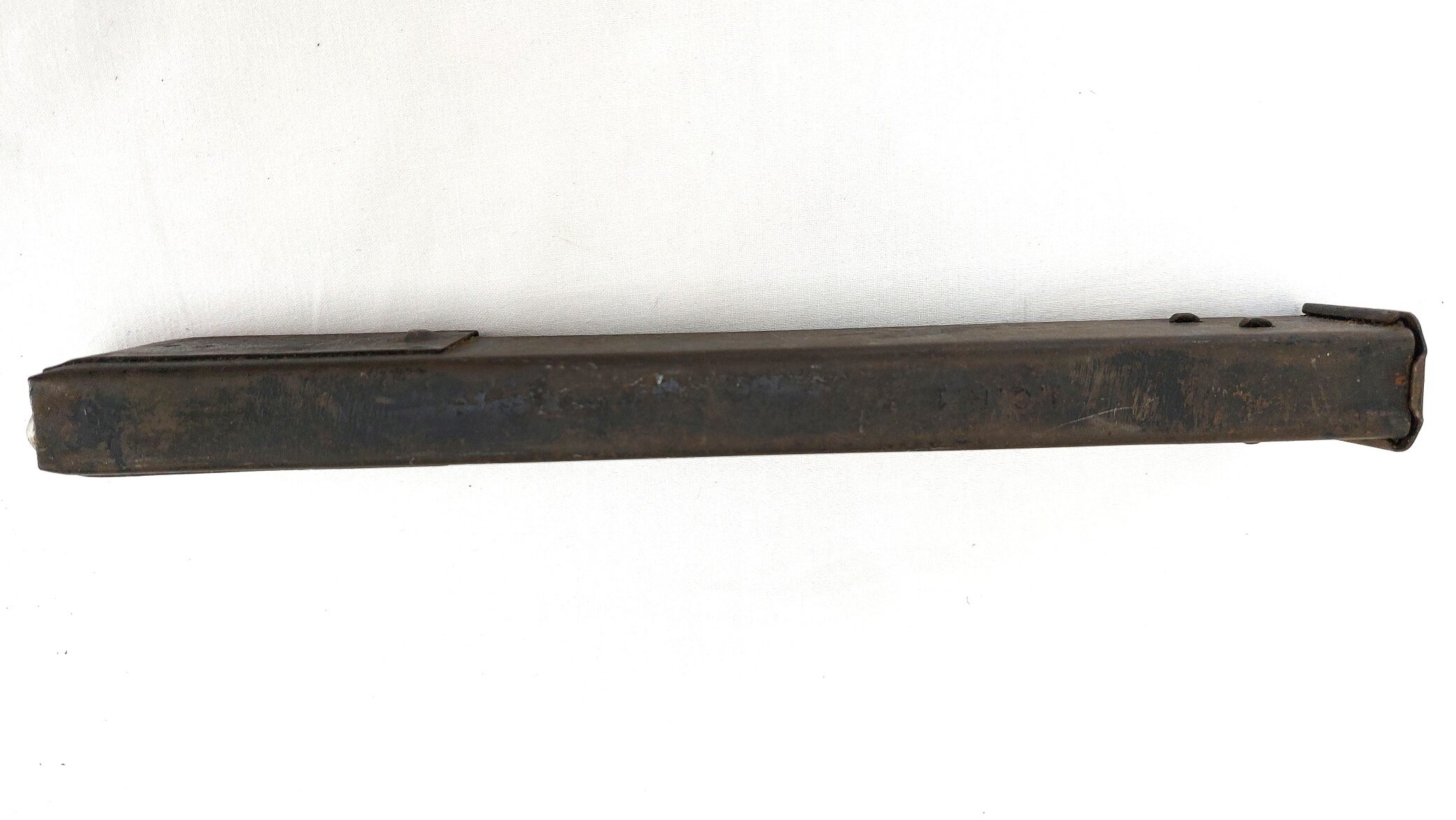
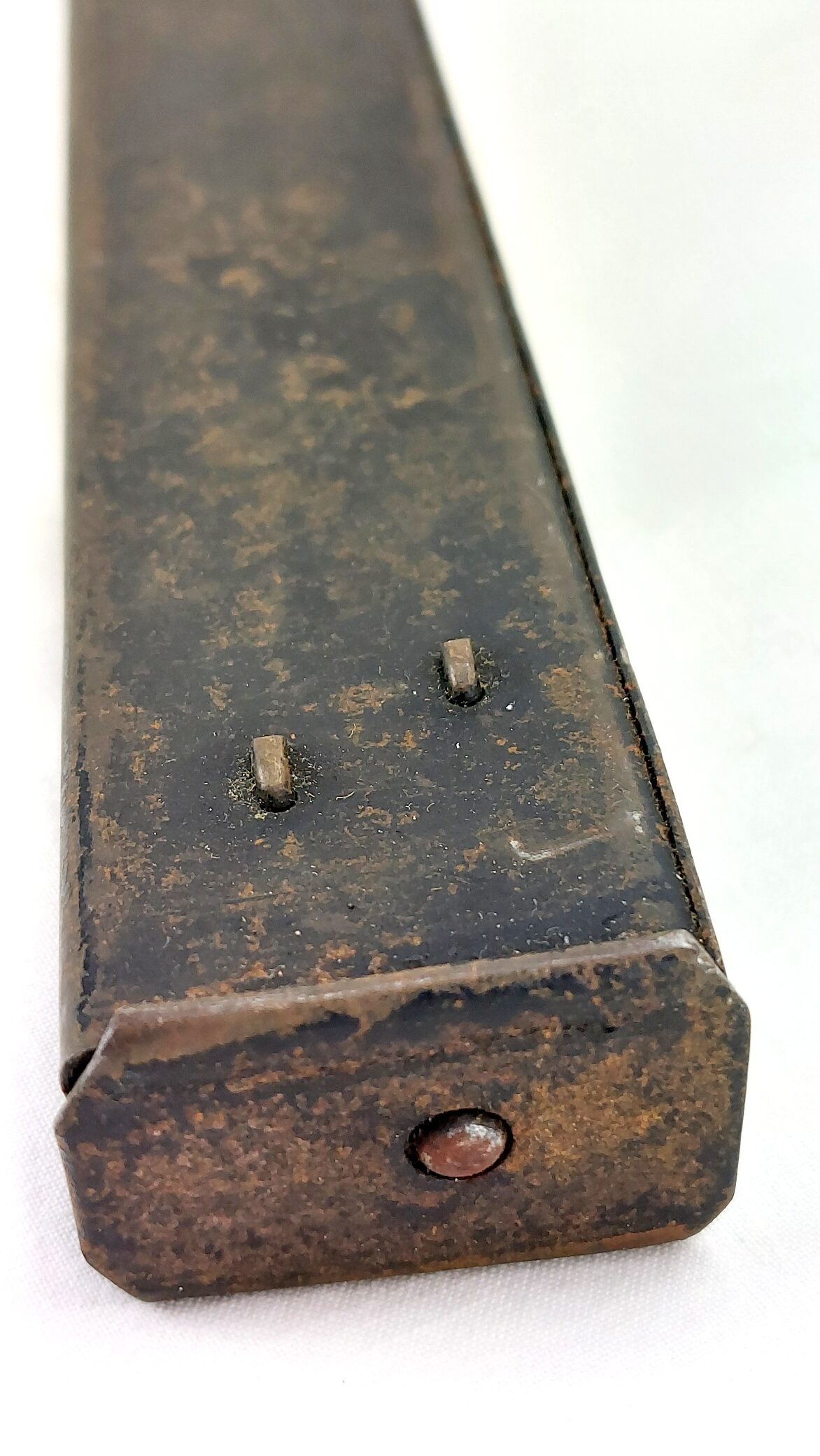
*British, WW2, Royal Navy, Lanchester Mk.I 9mm Sub-Machine Gun (SMG), by Sterling Armaments Co., Dated 1942, Deactivated*
Serial Number: 20560 A
Approximate measurements: 83.4cm overall, 9mm calibre
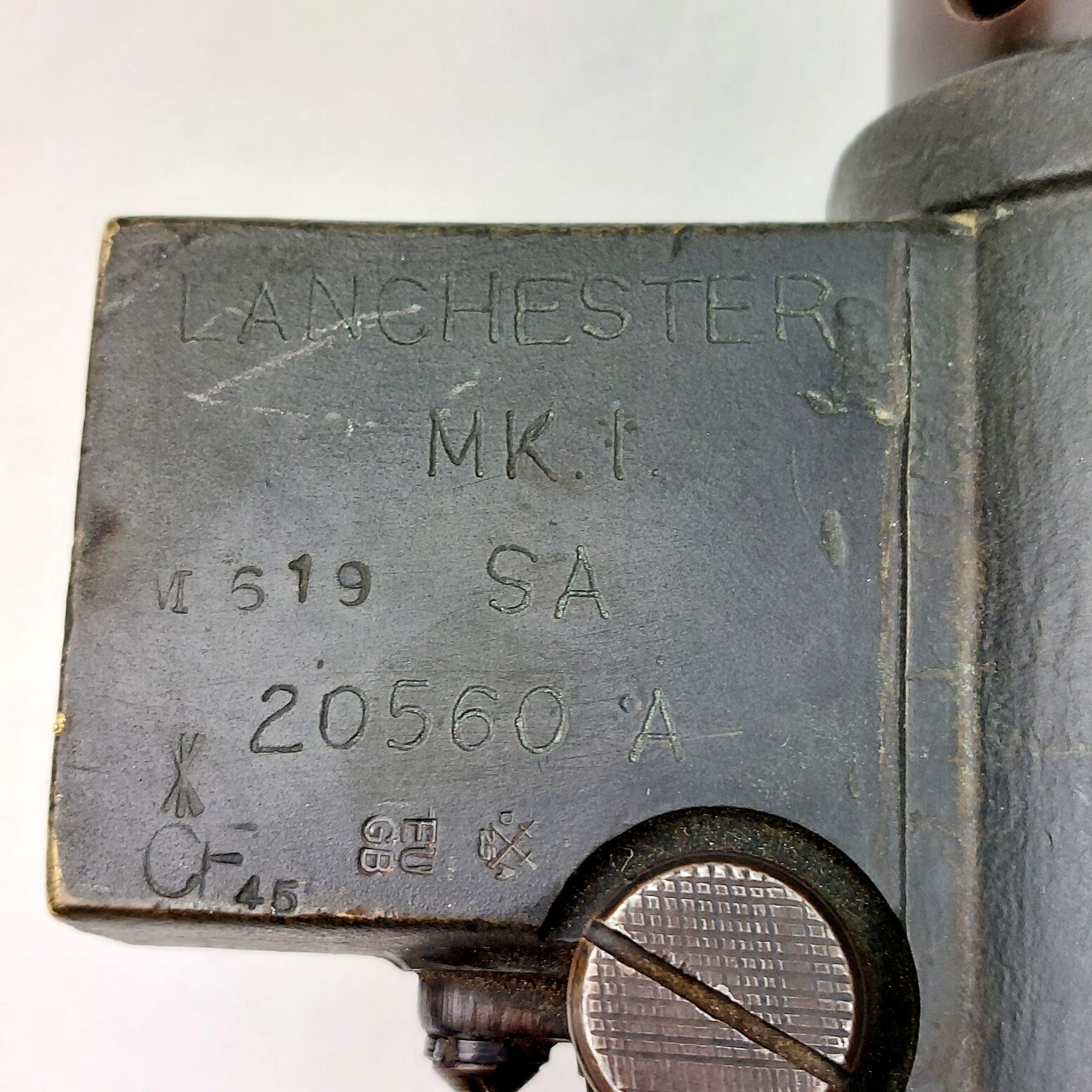
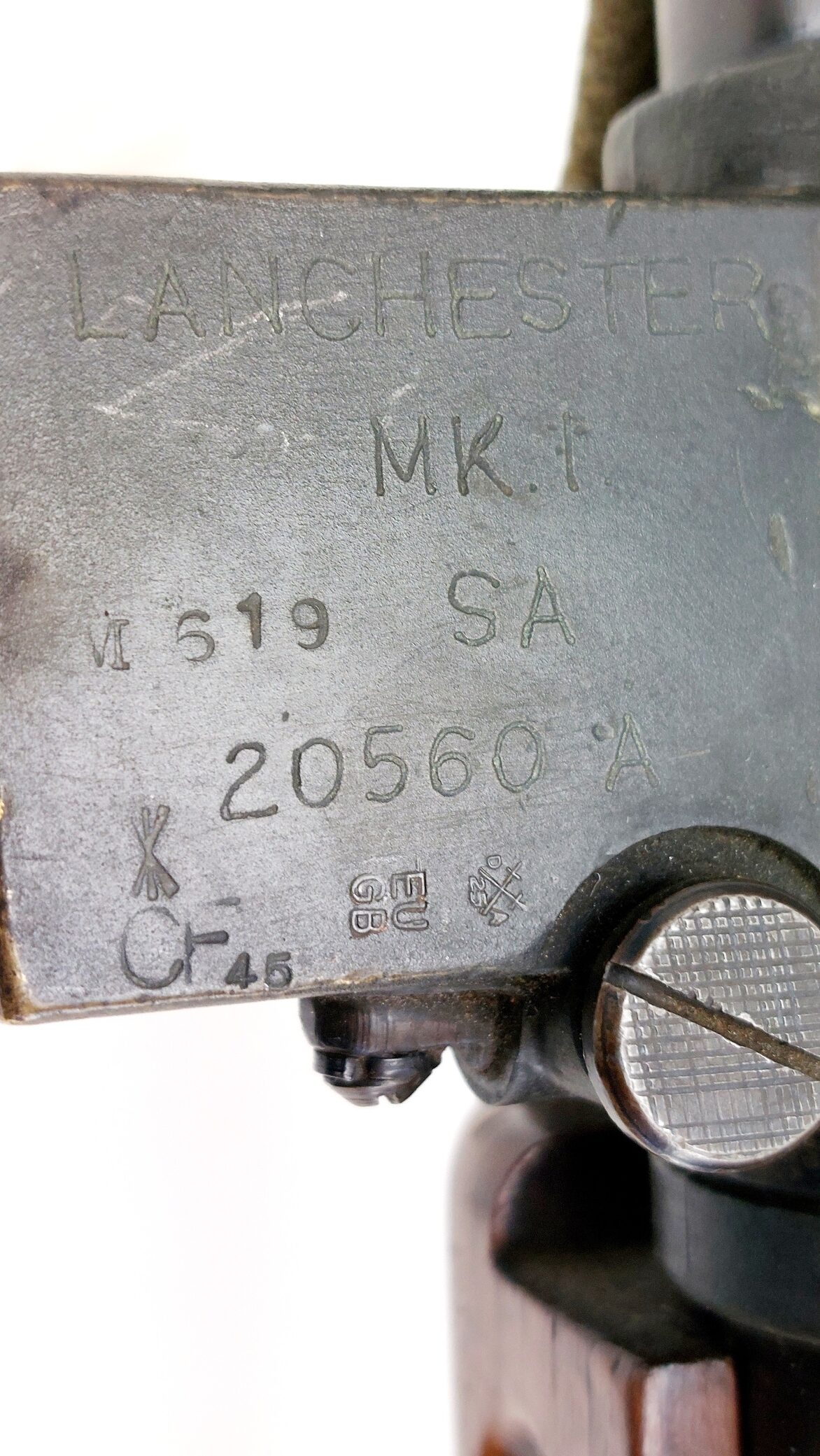
Built to the Royal Navy’s demanding wartime specification, this 1942 Lanchester Mk.I by Sterling (M619) represents the definitive naval-pattern submachine gun — later re-stamped ‘CF 45’, indicating transfer to Denmark’s Civilforsvaret (Civil Defence) in 1945.
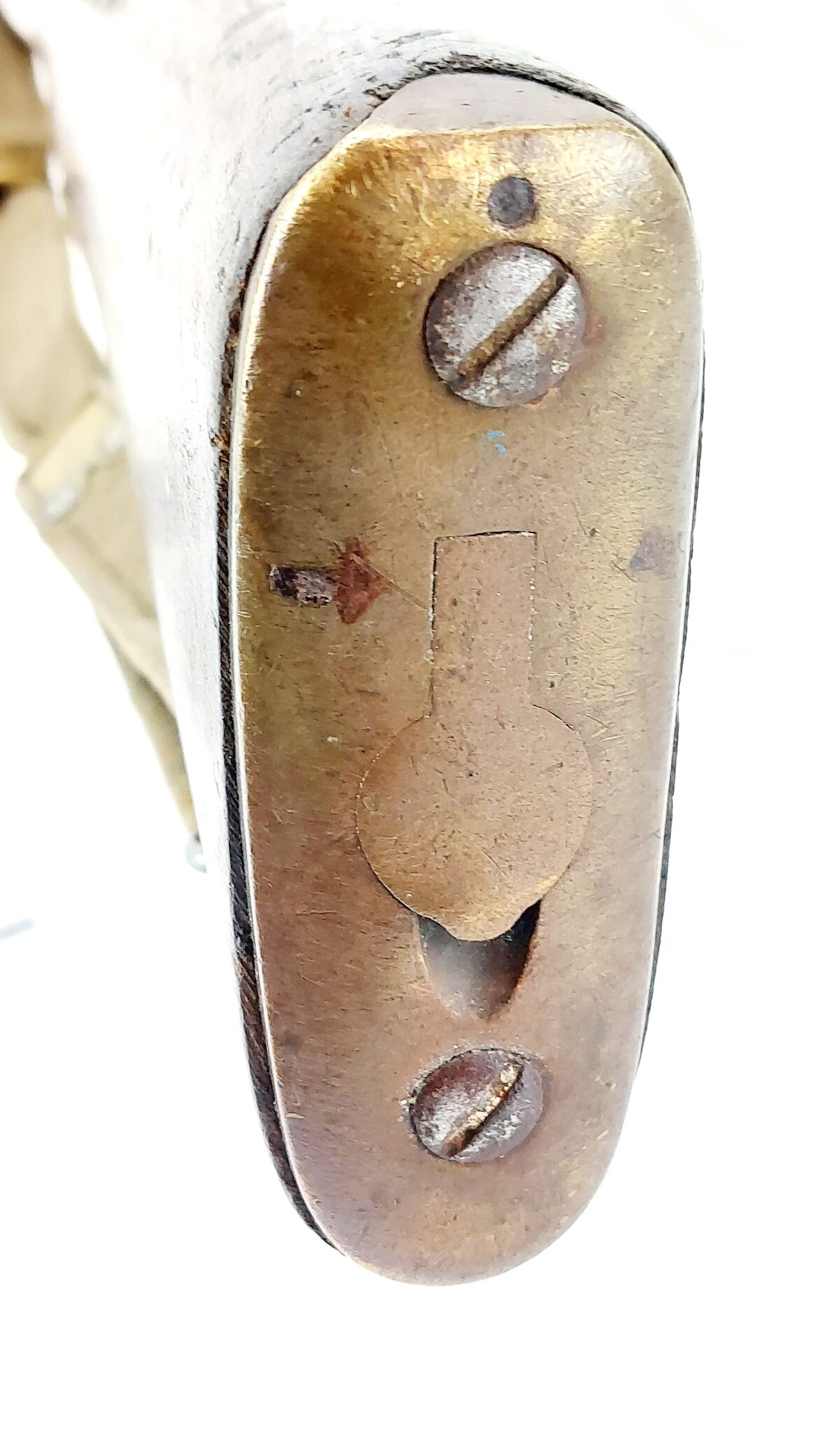
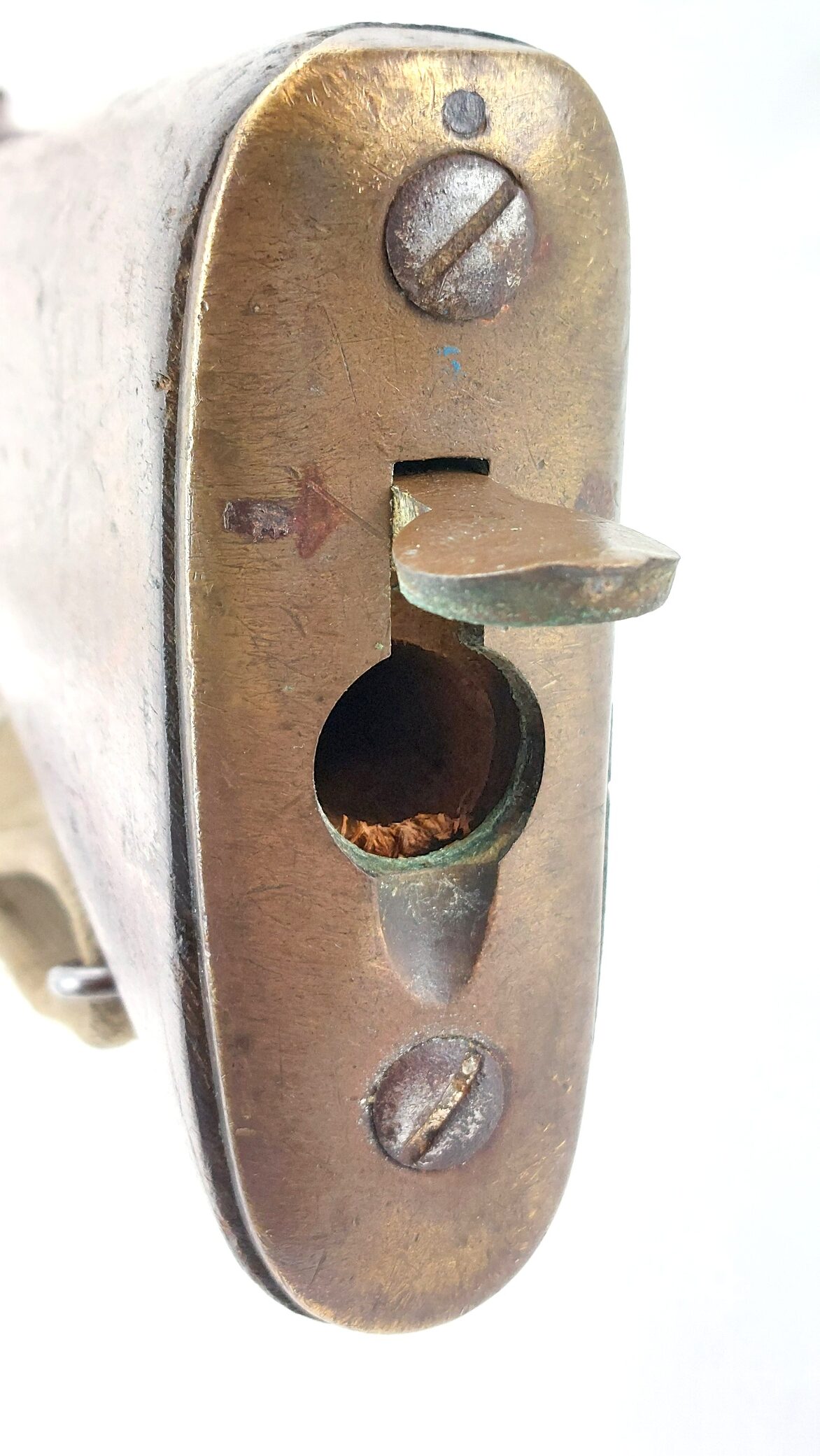
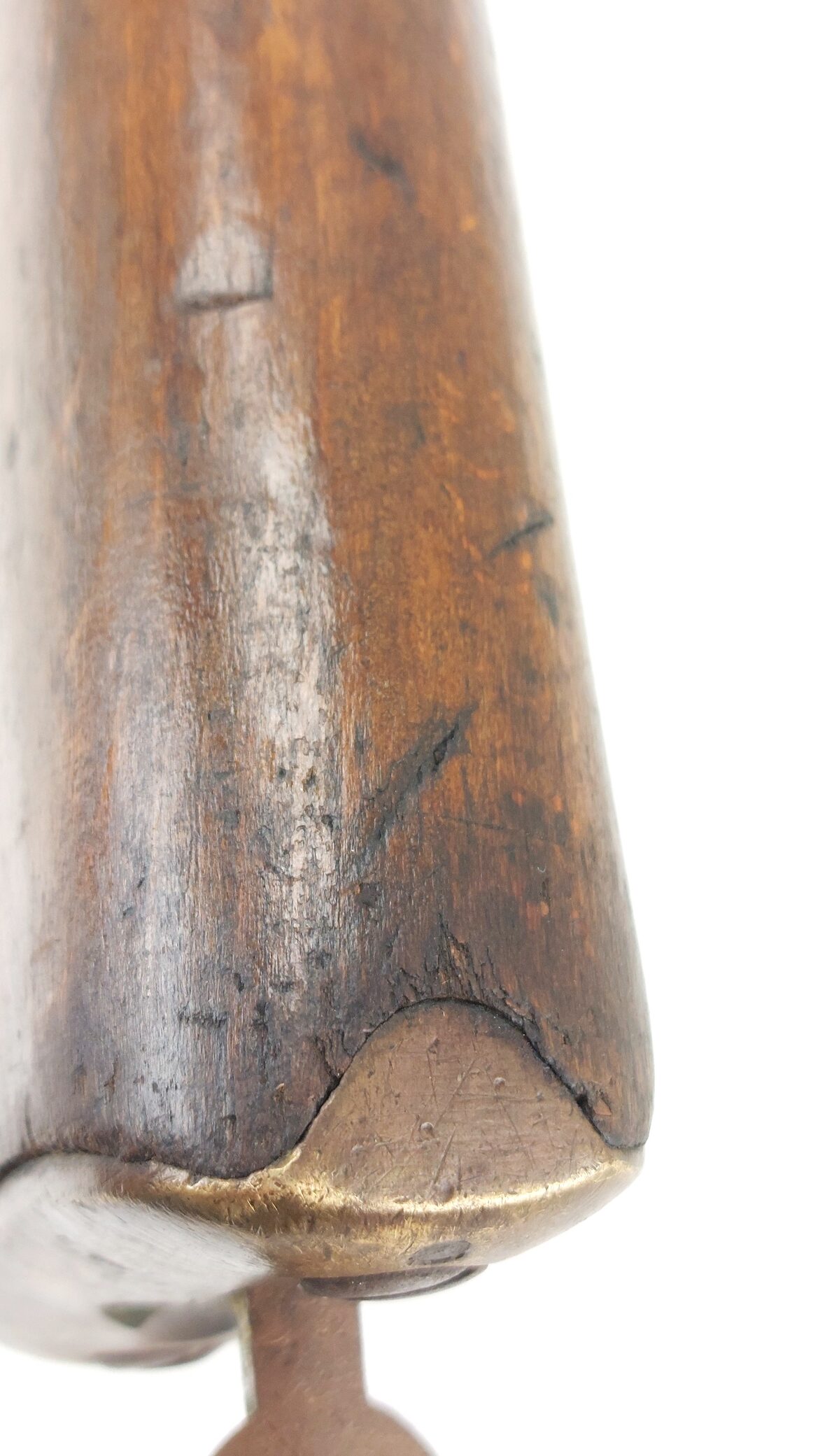
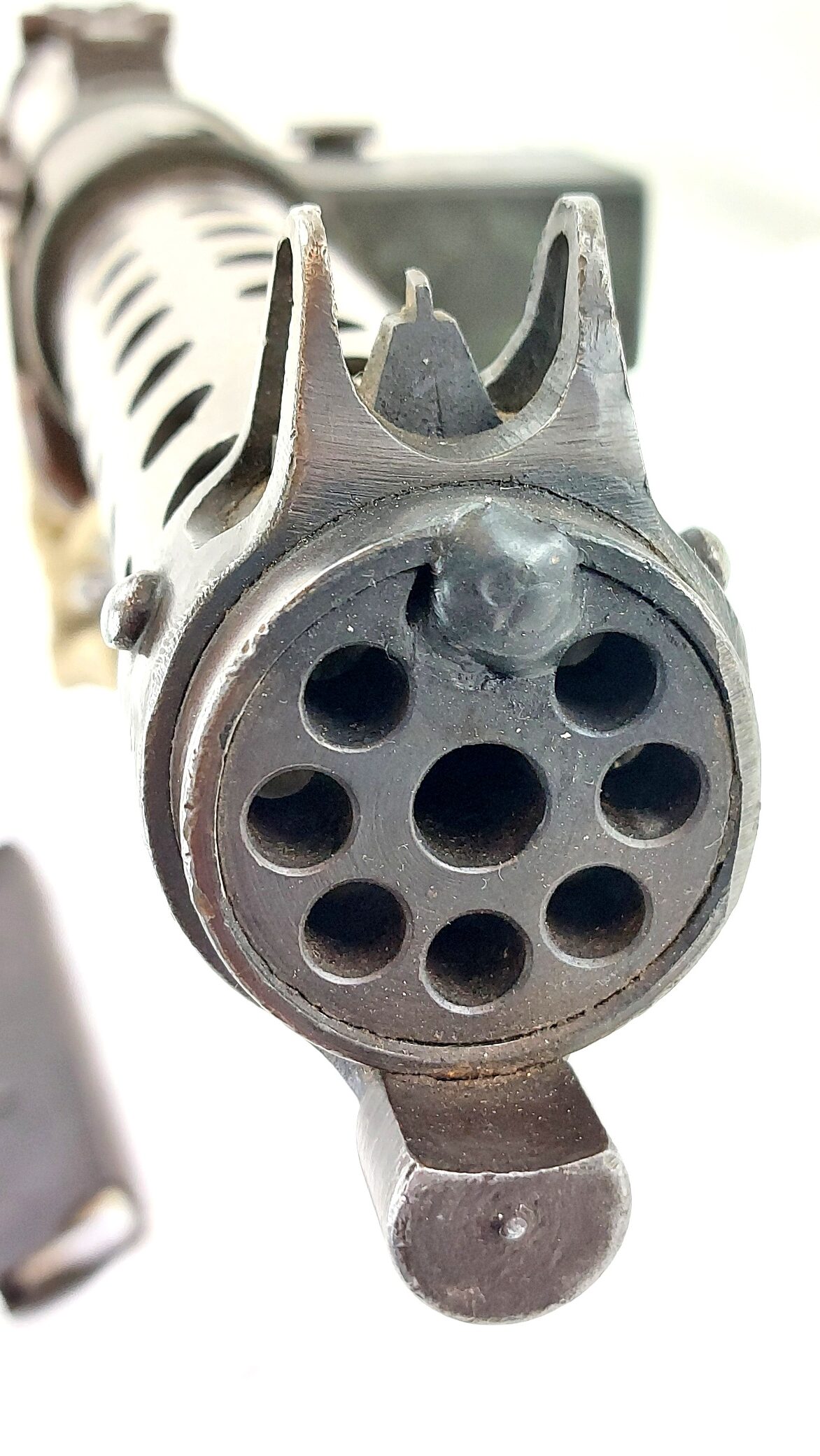
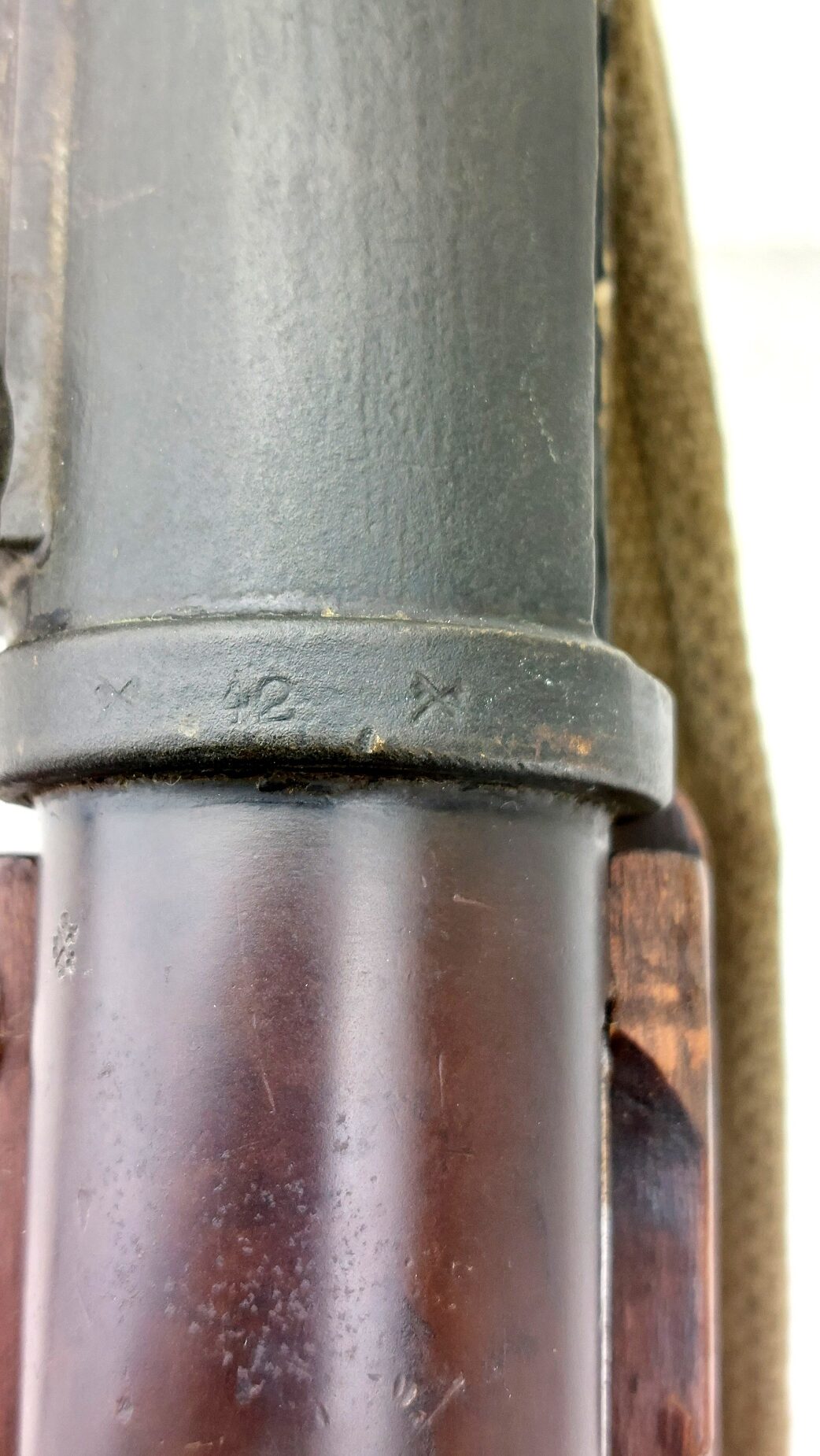
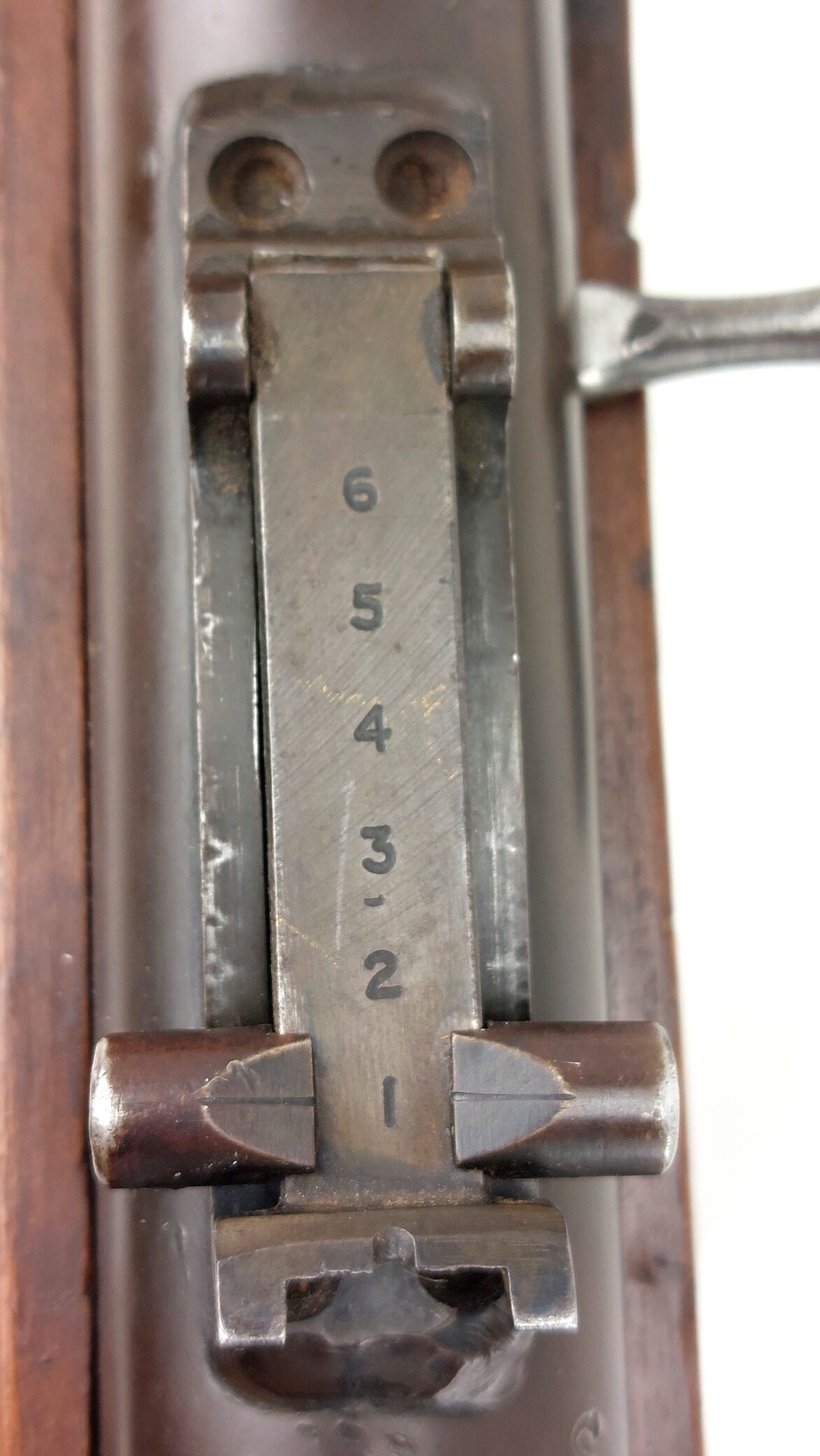
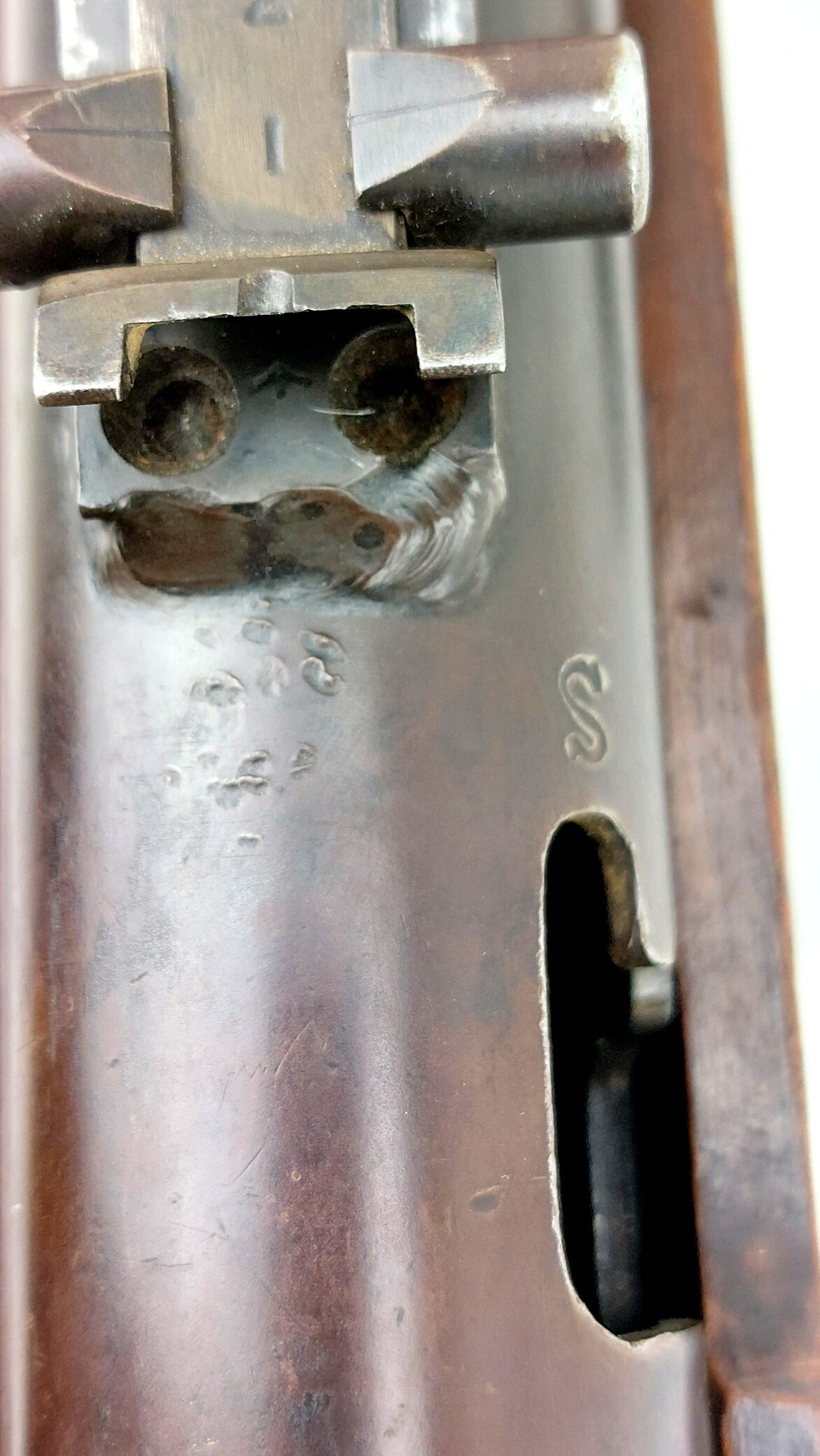
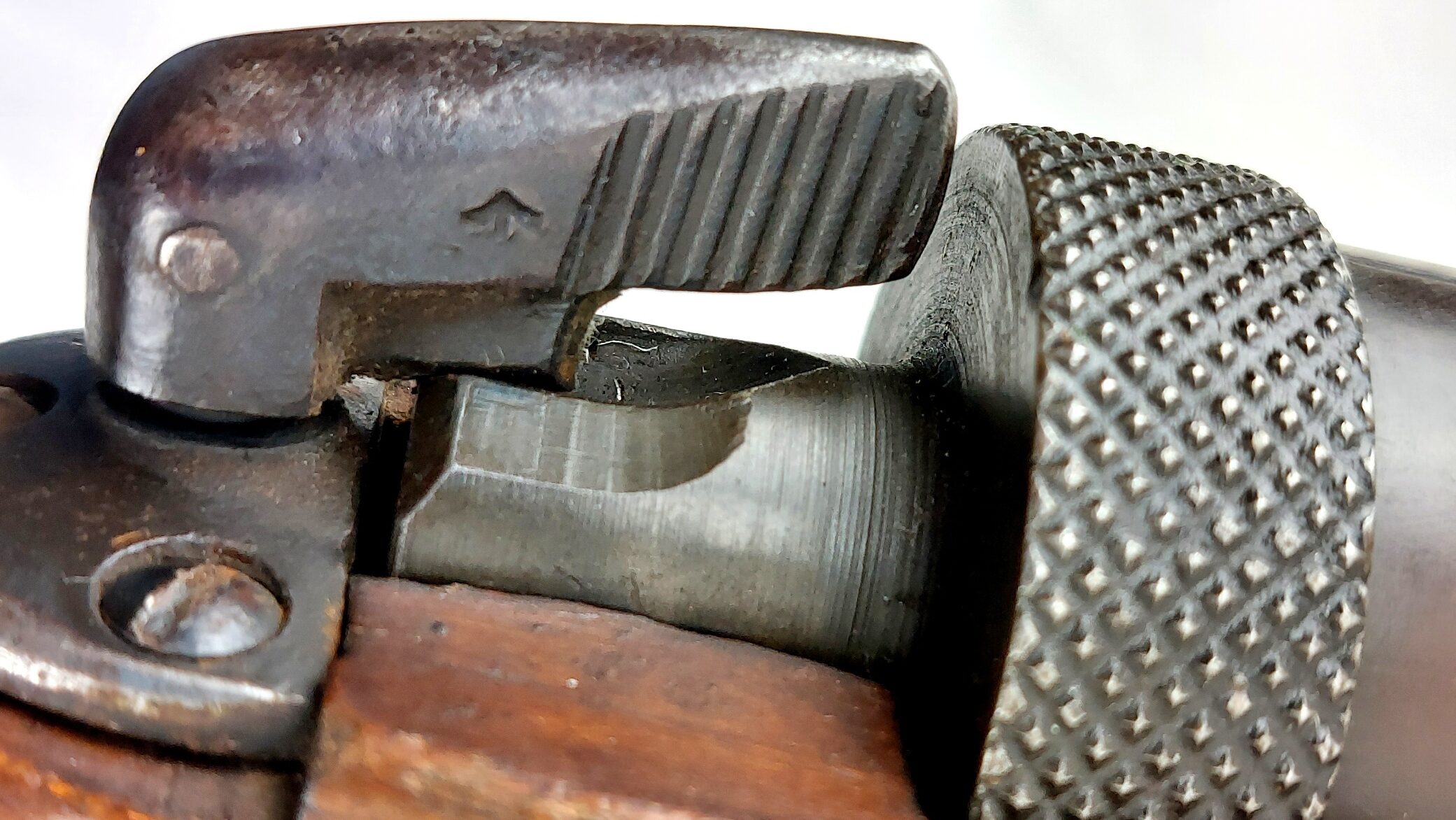
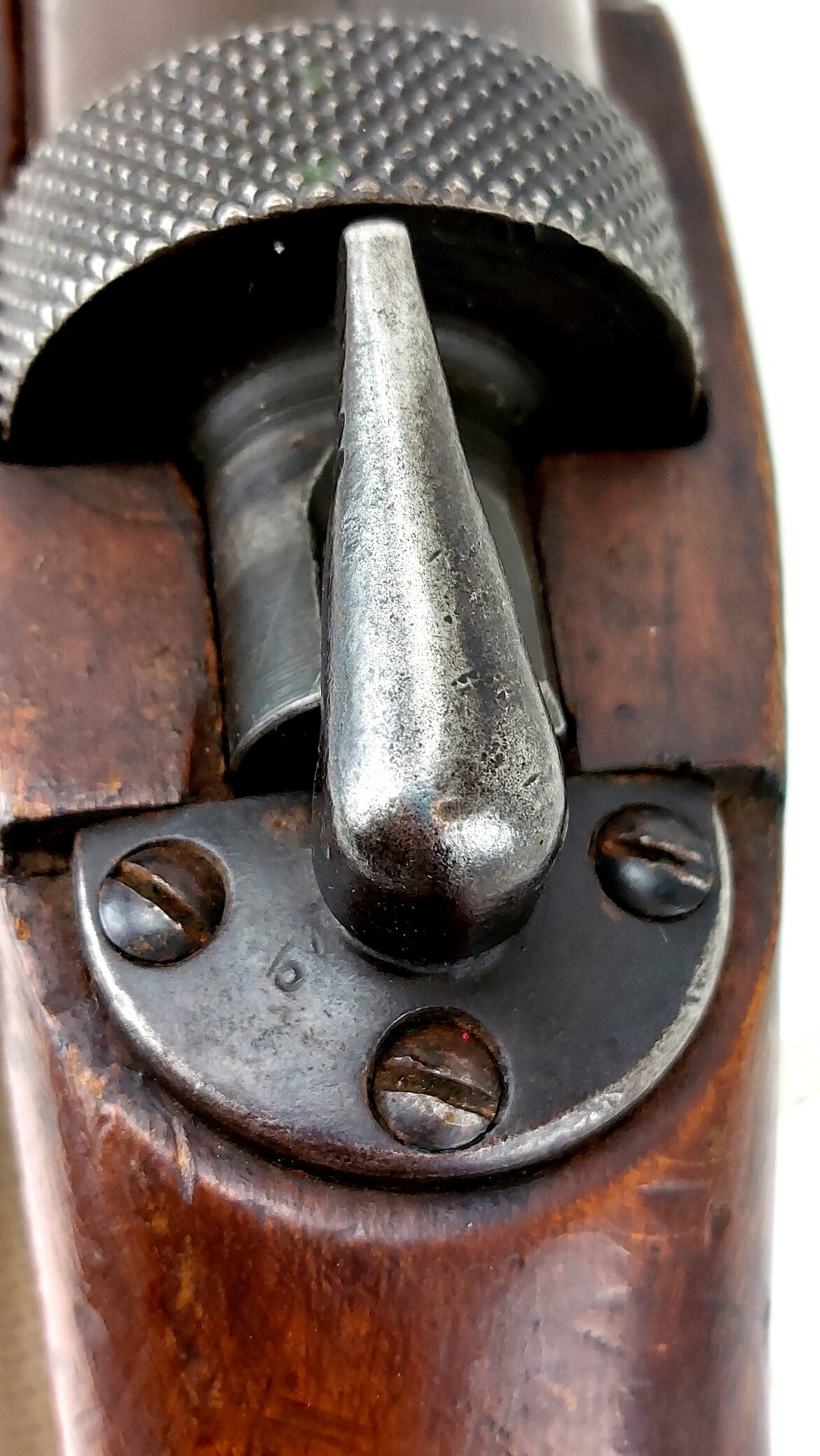
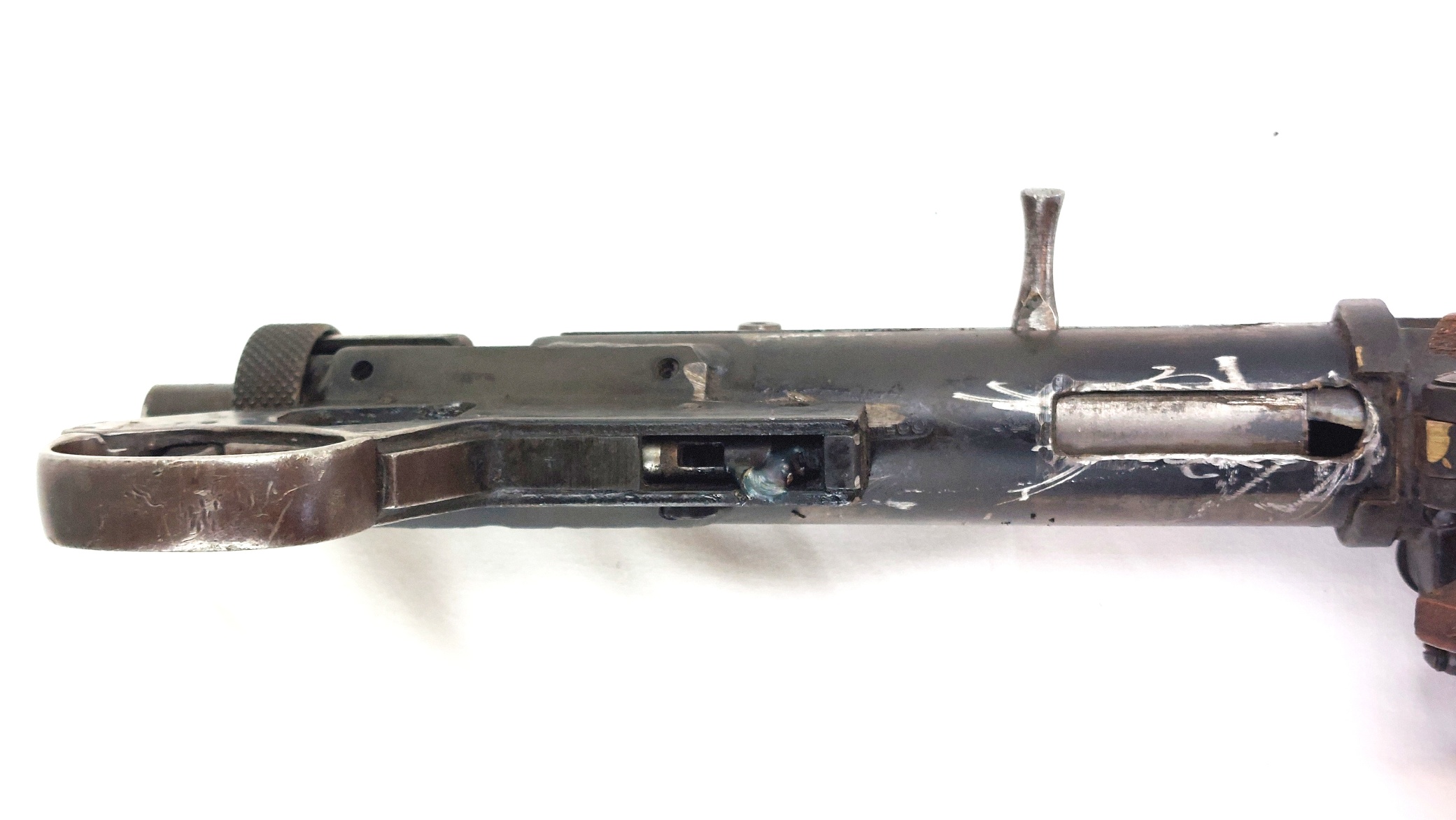
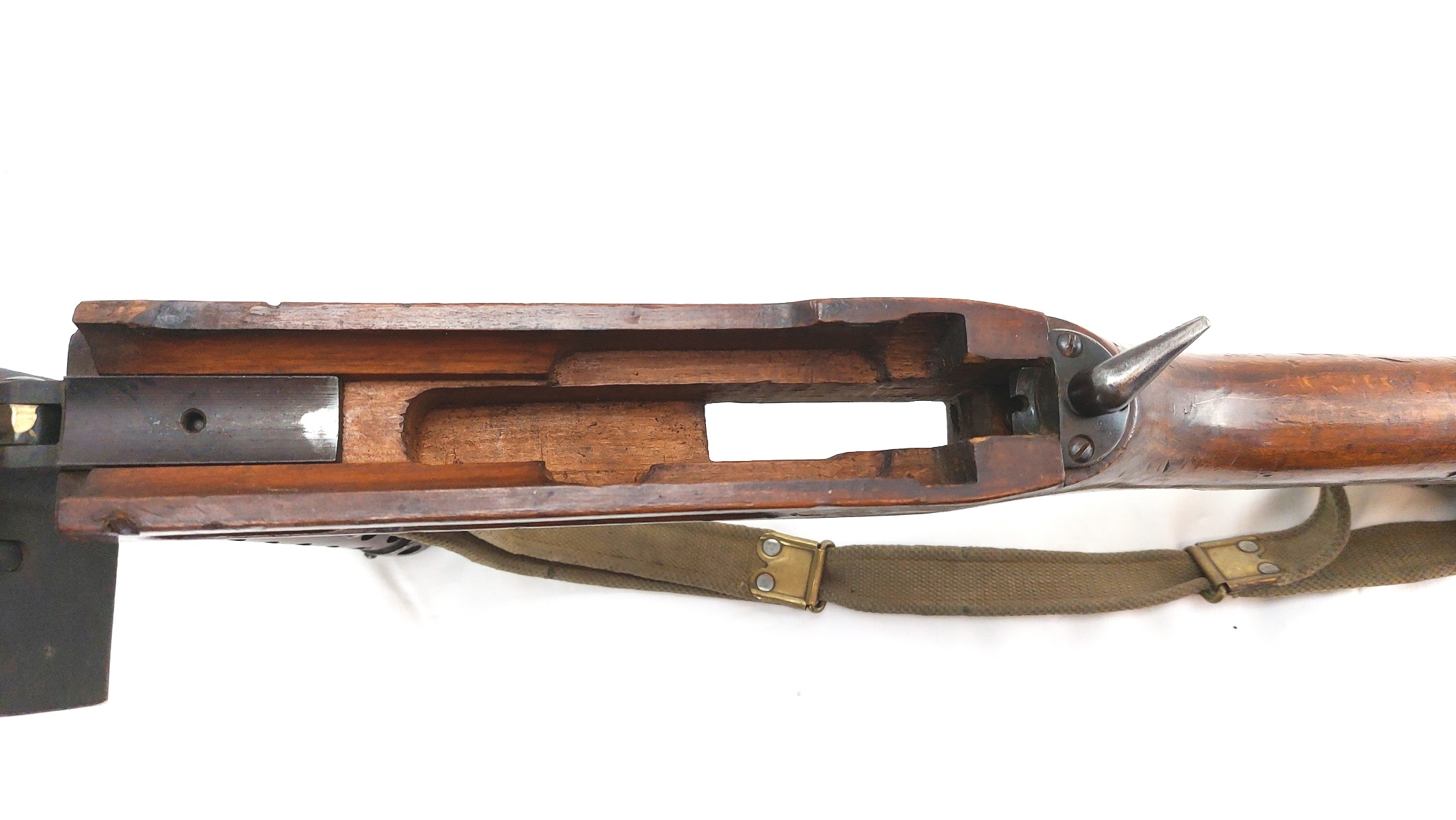
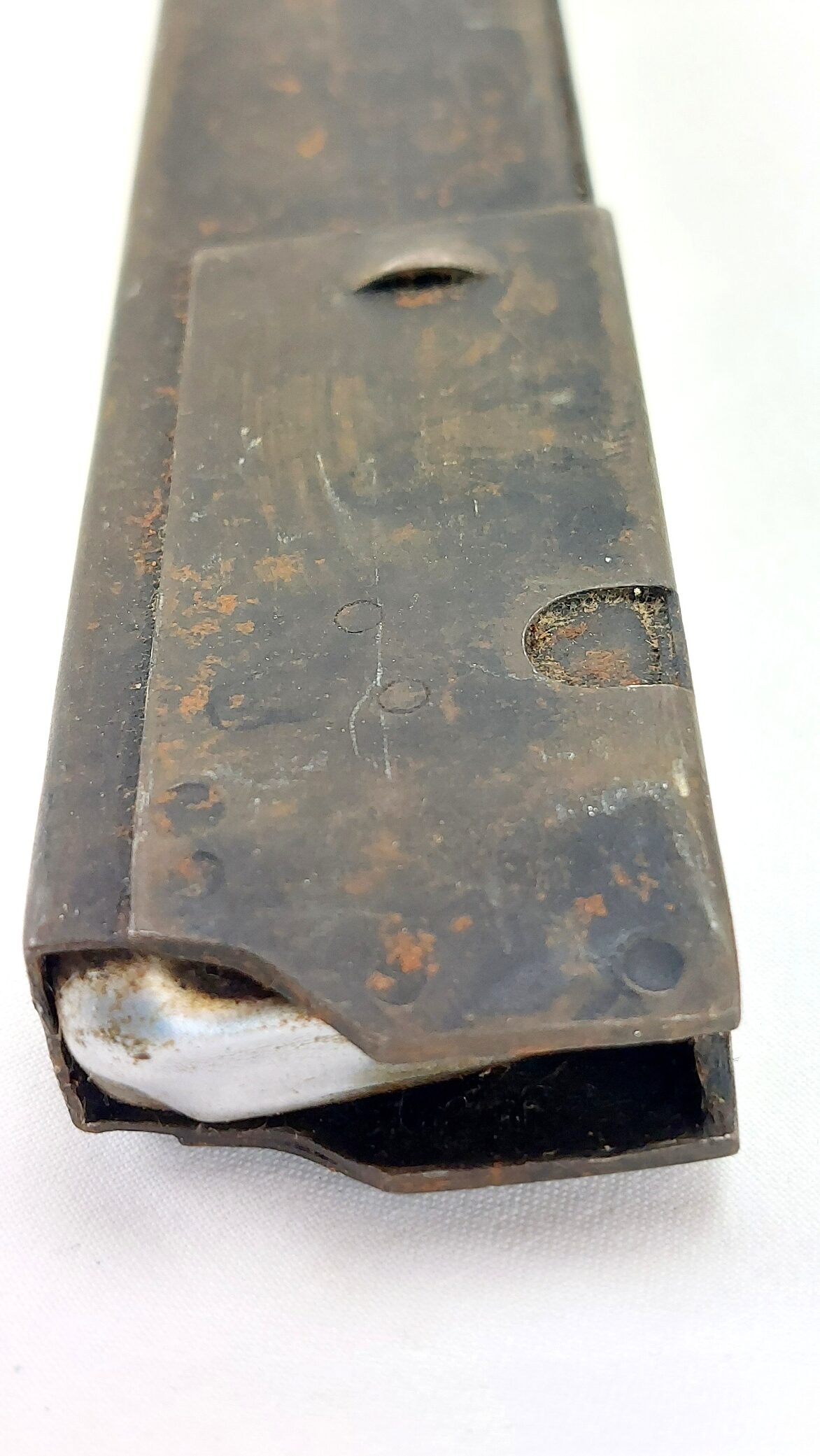
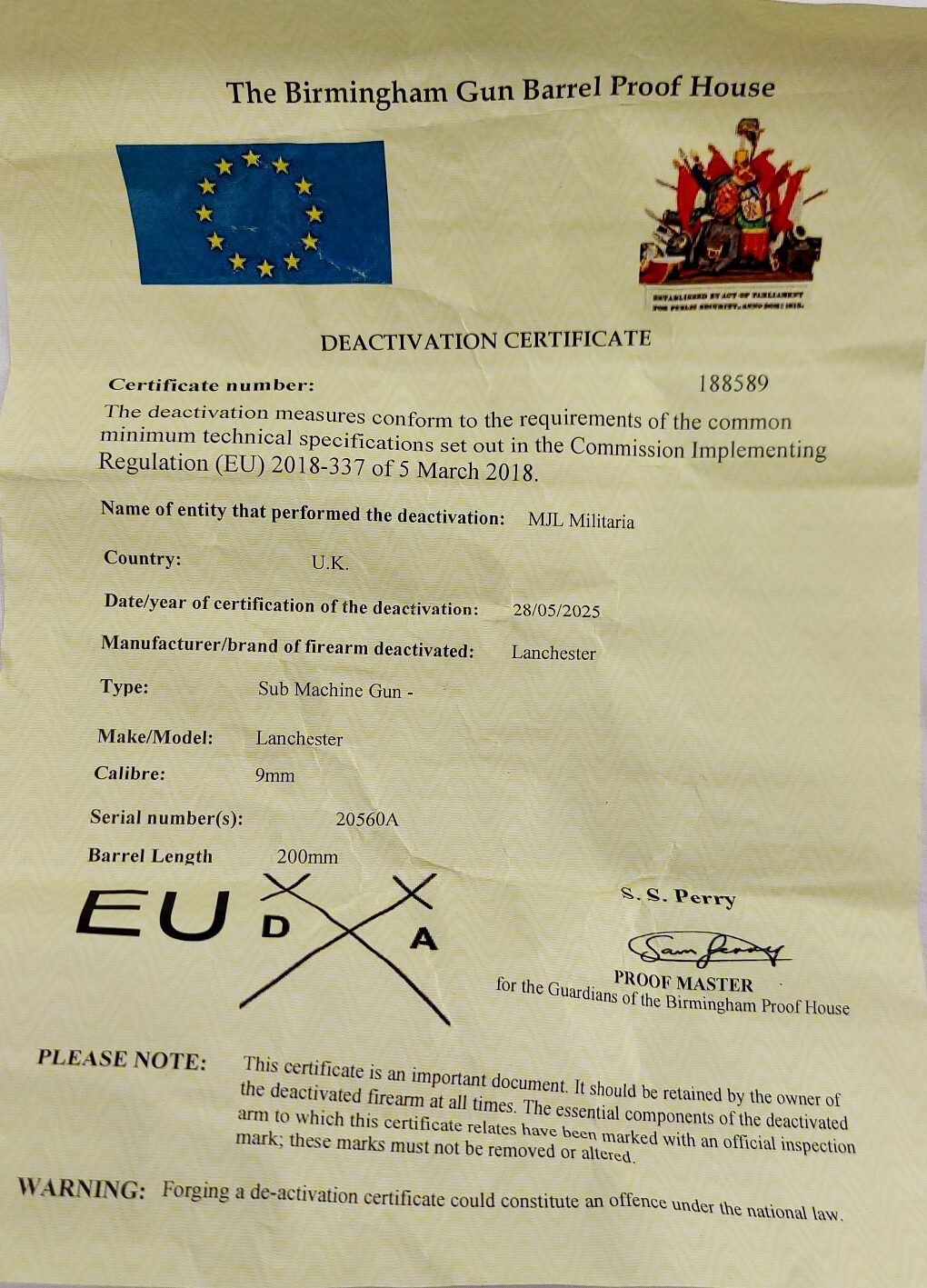
A fine WW2 British Lanchester Mk.I 9mm sub-machine gun, serial SA 20560A, manufactured by the Sterling Armaments Company, Northampton (factory code M619) in 1942. This early, naval-pattern example retains its correct brass butt plate with oiler trap, solid walnut stock, perforated barrel jacket, and bayonet lug for the SMLE Pattern 1907 bayonet. The top of the magazine housing is crisply stamped “LANCHESTER Mk.I M619 SA 20560A”, with clear ordnance and property markings, while the barrel collar bears the minute crossed-flags / 42 proof confirming 1942 acceptance. The metalwork shows honest service patina; the stock is sound and uncleaned, with period knocks and wear from operational use. Birmingham Proof House EU/UK deactivation certificate (2025) included.
Markings:
LANCHESTER MK.I M619 SA 20560 A (magazine housing)
Double broad arrows (inverted) – Sold out of Service (magazine housing)
CF 45 – Danish Civilforsvaret property mark c.1945 (magazine housing)
Crossed flags / 42 / crossed flags – 1942 proof date (barrel collar)
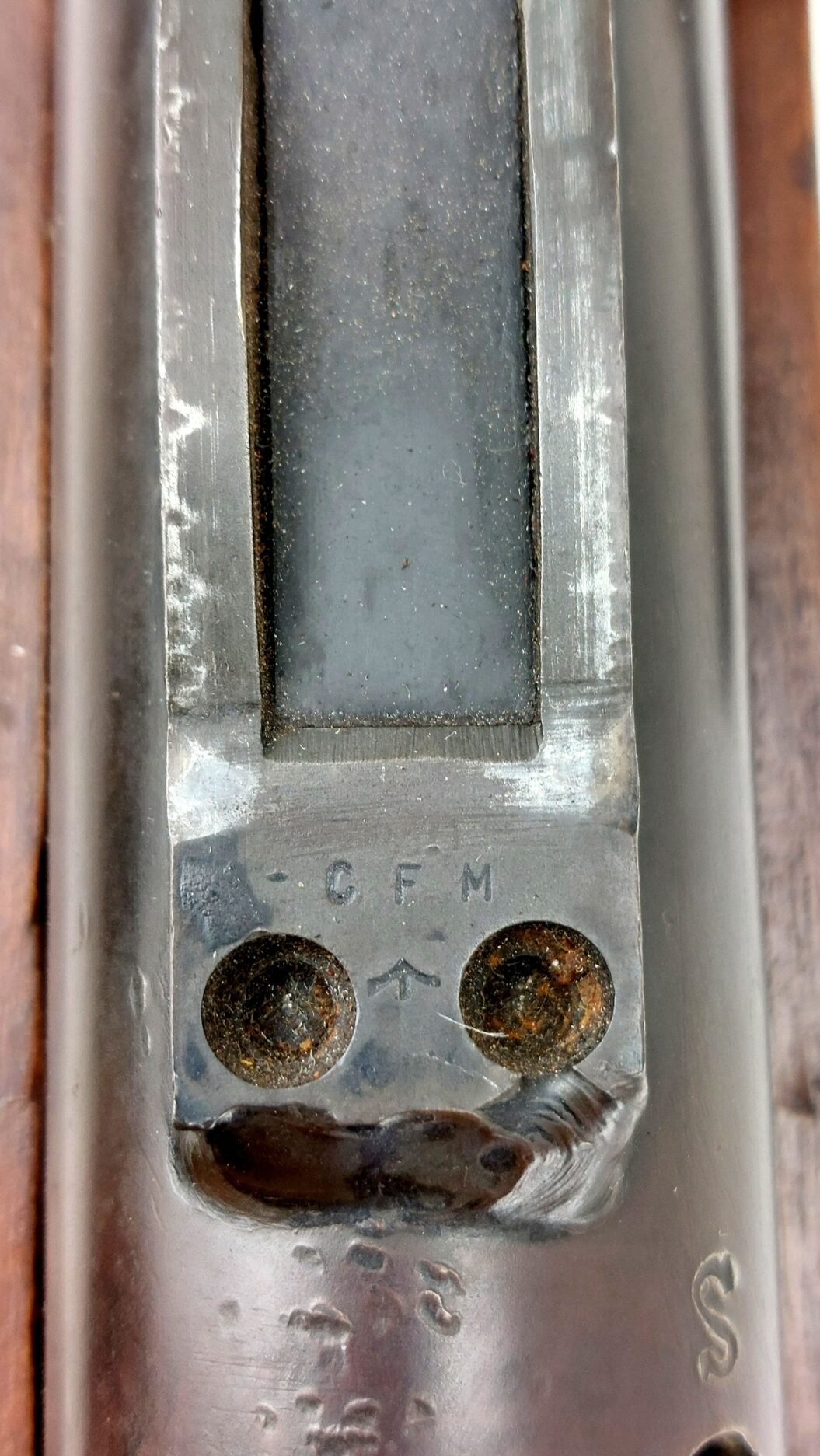
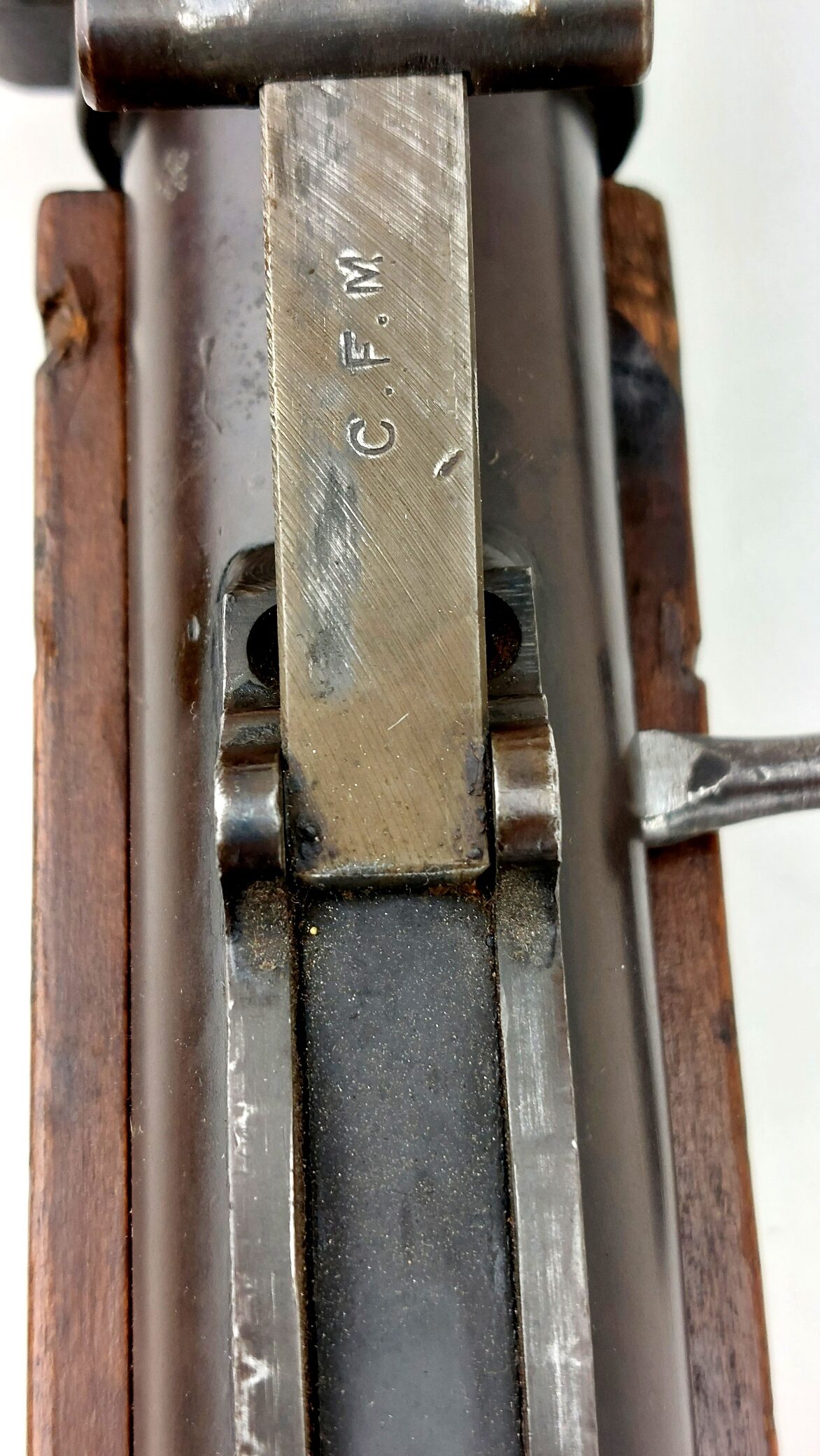
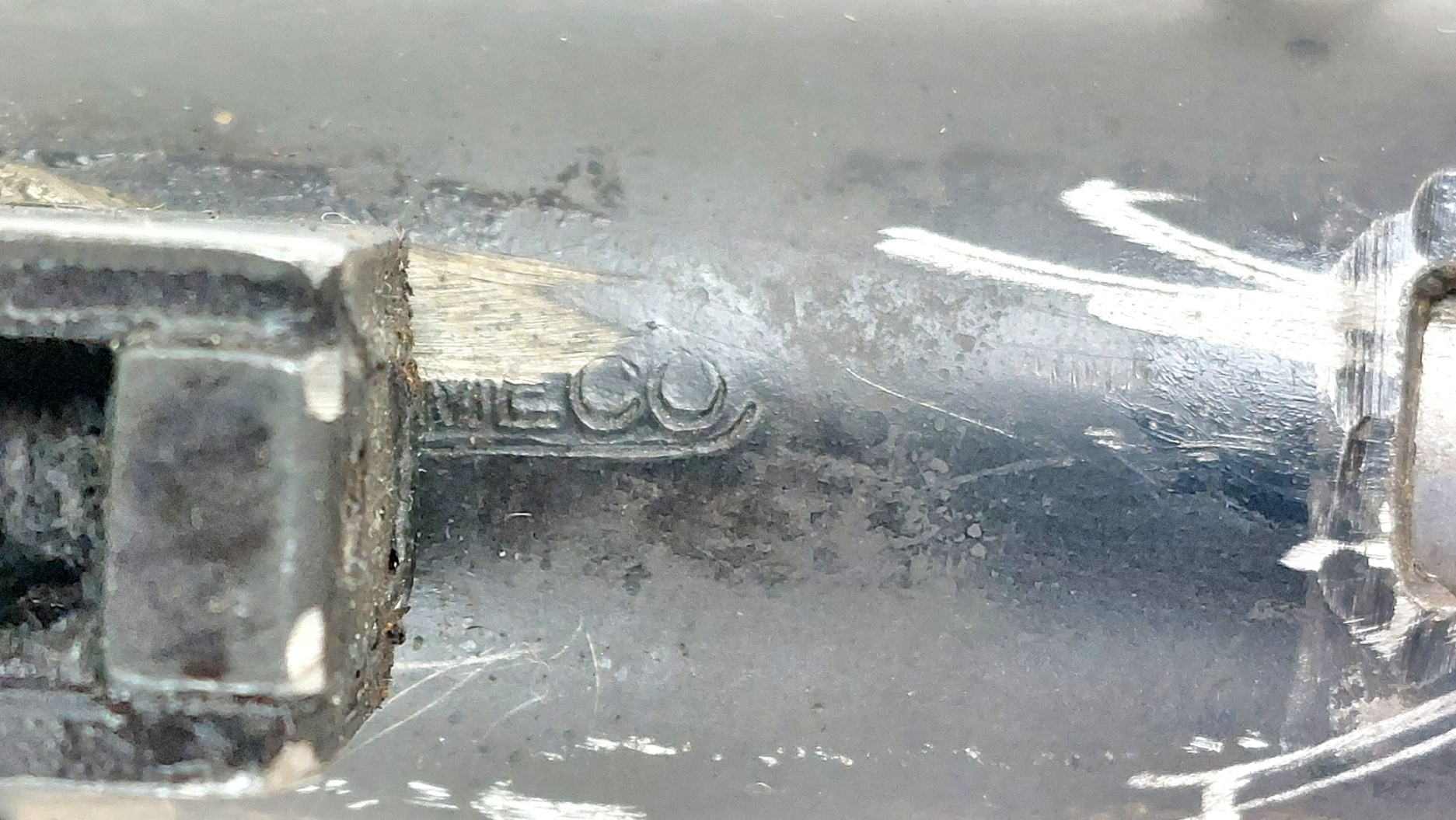
War Arrow (top-cover/receiver release catch) C.F.M. – Charles Frank (Mfg.) Ltd., Manchester (sight) ME Co. – Mechanical Engineering Co. Ltd., Slough (inside receiver) EU/GB Birmingham Proof House deactivation stamps (2025)
Historical Note:
Developed in 1941 by George Herbert Lanchester at Sterling Armaments, the Machine Carbine, 9mm Lanchester was Britain’s high-quality answer to the submachine-gun shortage that followed Dunkirk. While the Army adopted the cheap, disposable Sten, the Royal Navy and RAF Regiment required a durable, precision-built weapon for shipboard and airfield defence. Lanchester based his design closely on the German MP 28/II, but improved it for naval service — fitting a brass magazine housing and butt plate resistant to salt corrosion, and adapting the wood butt and stock of the Lee-Enfield No.1 Mk III rifle for familiarity and strength.
Two principal versions were made: the Mk.I, as here, with fire selector, tangent rear sight to 600 yards, and bayonet lug for the SMLE Pattern 1907; and the simplified Mk.I* without selector. Production lasted about 28 months (1941–43), averaging 3,400 guns per month. The Sterling plants at Dagenham (S109) and Northampton (M619) produced roughly 74,500 examples, supplemented by smaller Admiralty contracts to W.W. Greener (M94) and Boss & Co. (S156). Serial numbers ran from 1–9999 then A1–A64580; the SA 20560 A sequence places this gun firmly within the 1942 Northampton series.
The “SA” marking denotes Sterling manufacture and the early “A-series” assembly batches, hand-fitted before full parts interchangeability was achieved. The crossed-flags / 42 proof on the barrel collar confirms inspection and acceptance in 1942, during the main Royal Navy contract. Notably rugged and reliable, the Lanchester’s brass and steel fittings swung open for easy cleaning — essential for naval and air personnel less versed in small-arms maintenance. Though it cost around £14 against the Sten’s £2, it remained in service with the Royal Navy, Royal Canadian Navy, and other Commonwealth fleets well into the 1960s, seeing action in the Malayan Emergency and even limited Army use during the Mau-Mau uprising.
After the war, this example was released from British stores — signified by the double inverted broad arrows — and re-stamped “CF 45”, the recognised abbreviation for Civilforsvaret (Danish Civil Defence), indicating transfer to Denmark in 1945. Danish-issued examples remained in reserve through the 1950s, giving this weapon a distinctive dual provenance: British wartime naval manufacture and post-war Scandinavian service.
*Condition*
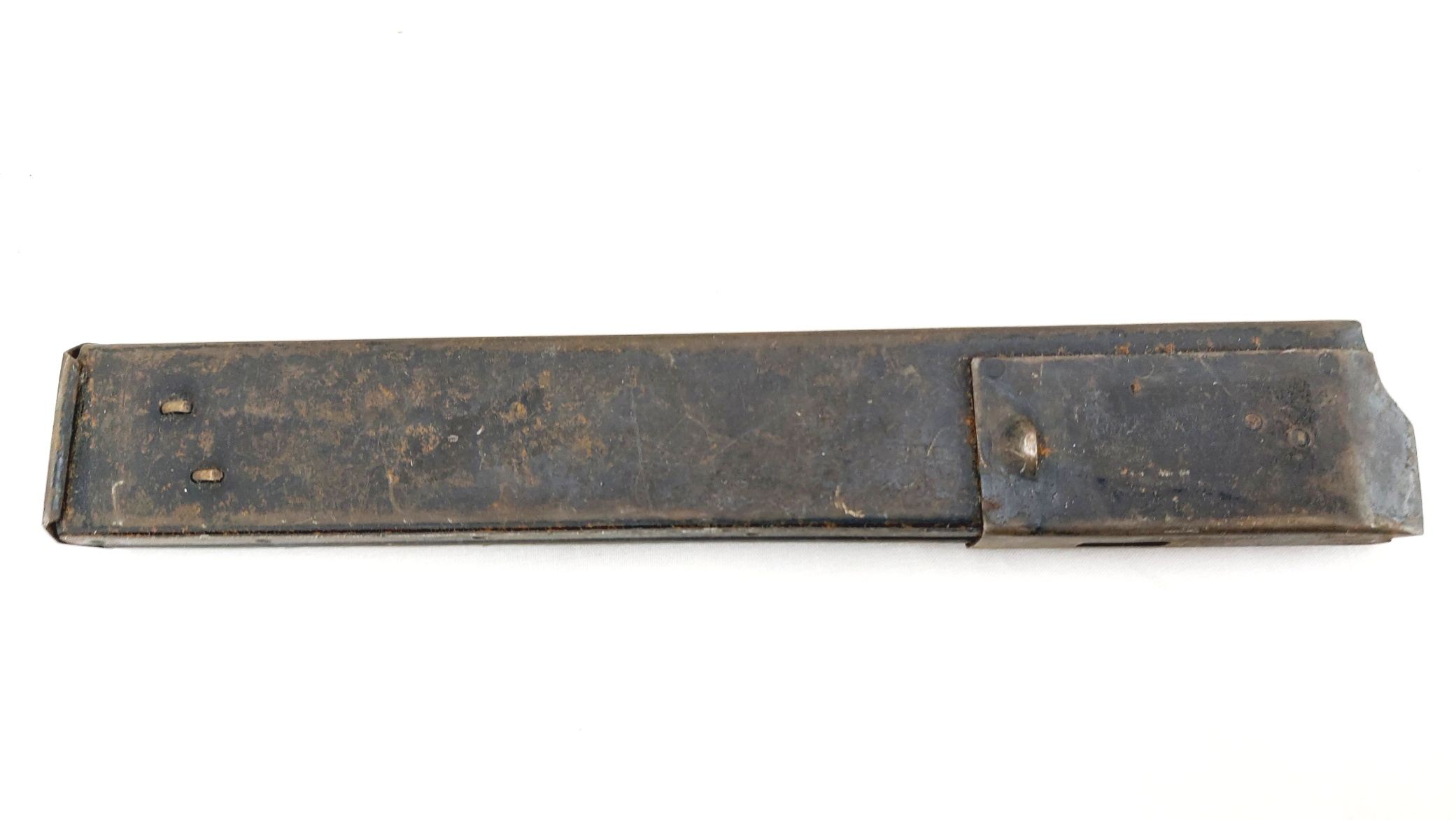
Metal surfaces show mixed original finish and smooth service patina, with all markings clear and legible. Wooden stock complete and solid, with expected handling marks, light bruising and a few age fissures. Brass fittings toned to an attractive patina. Action permanently deactivated and certified to current EU/UK standards by the Birmingham Proof House (2025). Complete with 50-round magazine and period sling. A genuine, unpolished survivor with exceptional character and documentary interest.
*In order to complete the online purchase we will require a picture/scan of a photo ID (Driving Licence, Passport or an official document with a recent picture). If you don't posses any such document please call to buy. If we consider that the proof of ID is incorect or insuficient, we reserve the right to cancel the transaction.
*We also reserve the right to cancel the transaction with a full refund if there is any suspicion that the provided item will be used in any way contrary to the laws and legislation of UK.