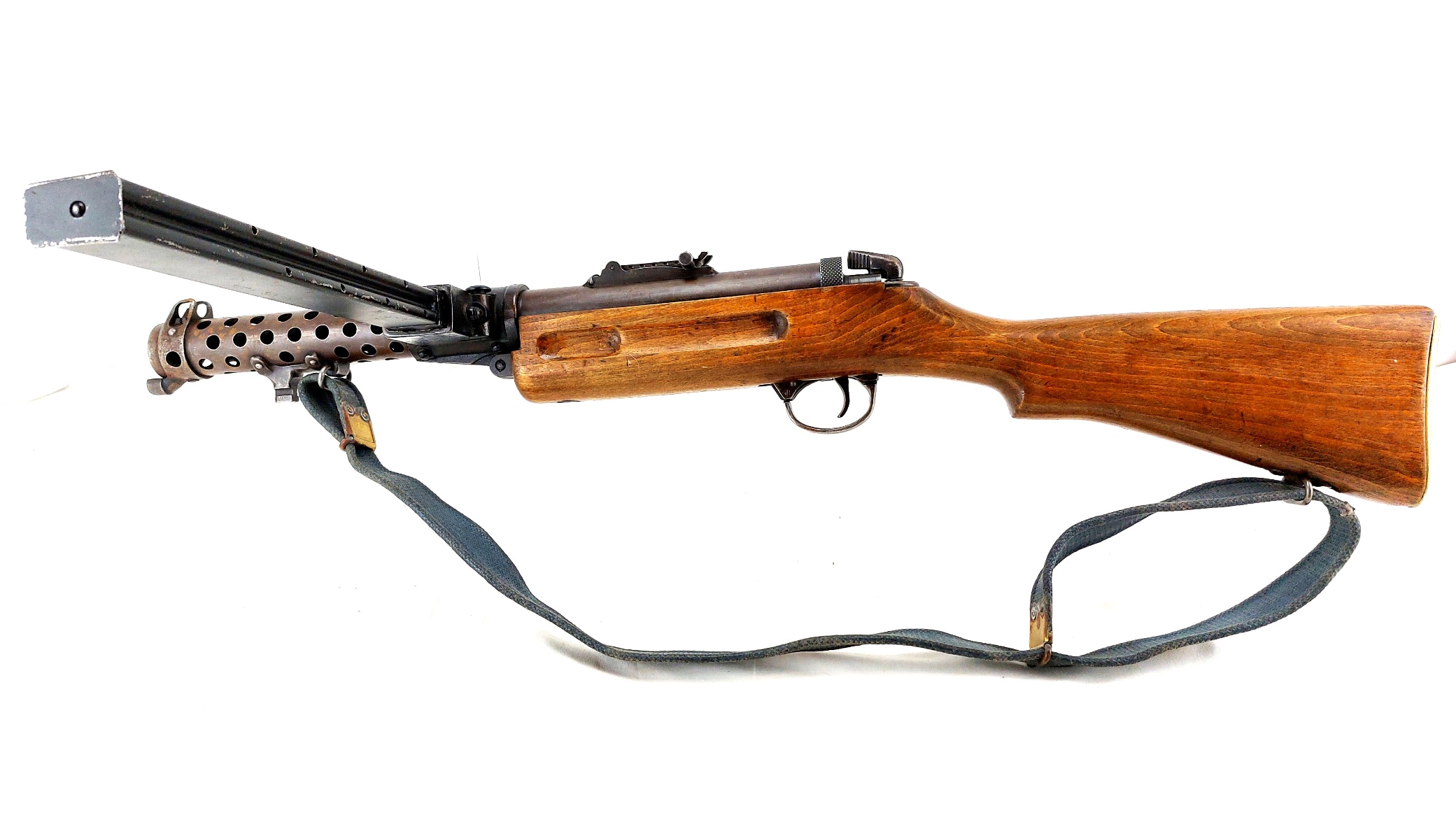
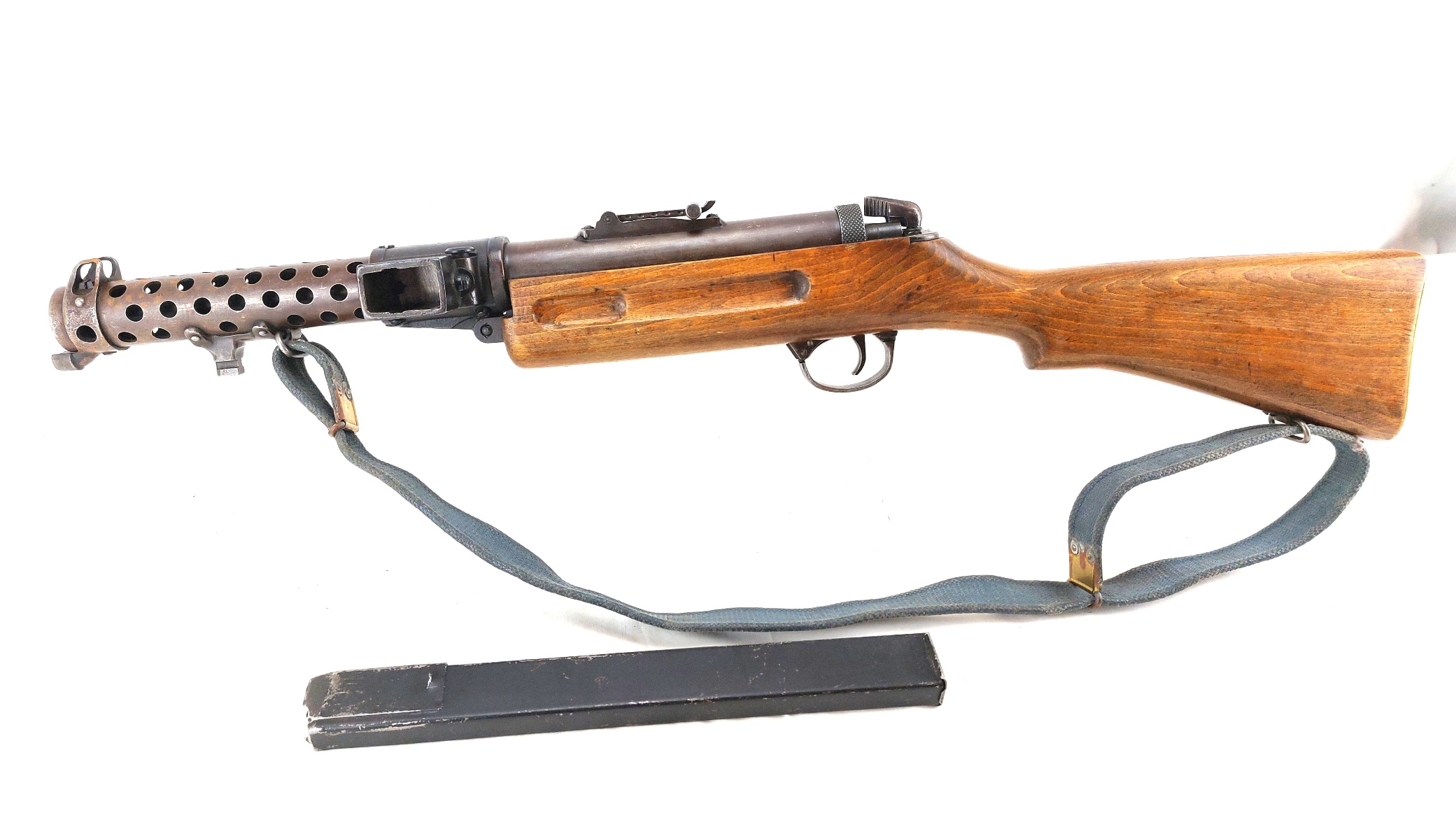
*British, WW2, Royal Navy Lanchester Mk.I 9mm Sub-Machine Gun by Sterling Armaments Co., Dated 1942 – With Original Naval Sling, Old Spec Deactivated*
Serial SA 14696A – A Superb Triple-Provenance Example (RN → Denmark → Egyptian Police)
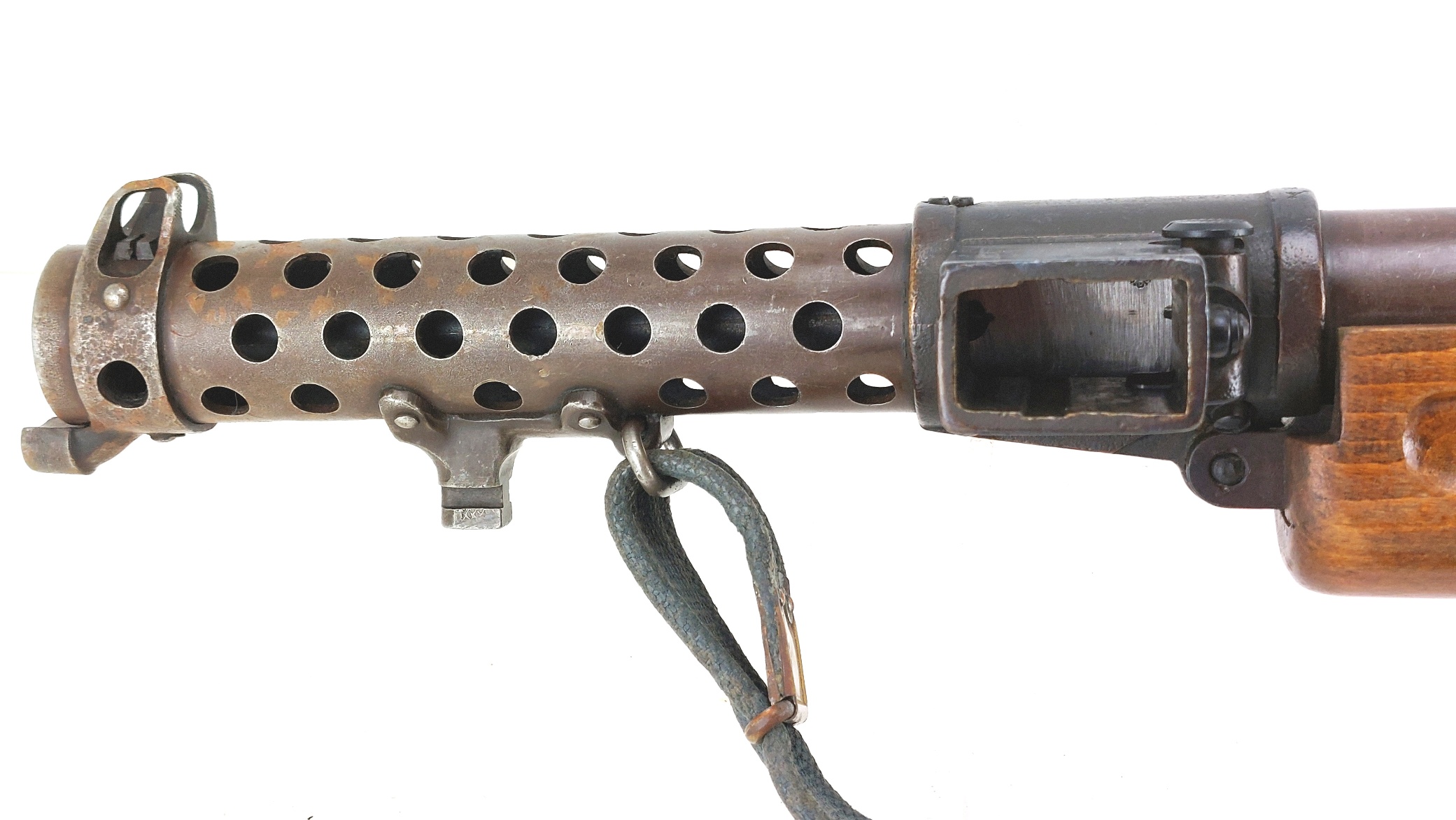
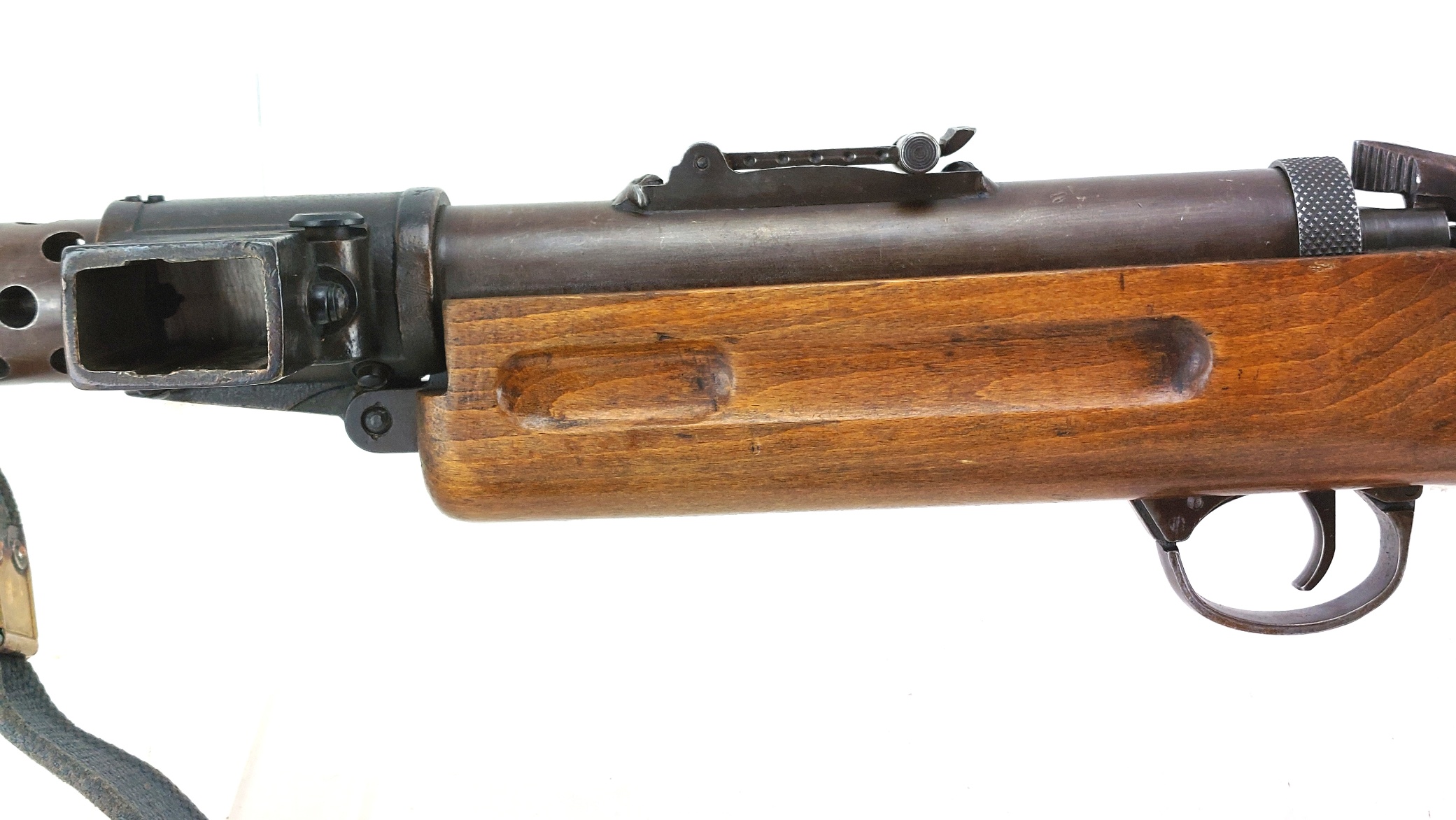
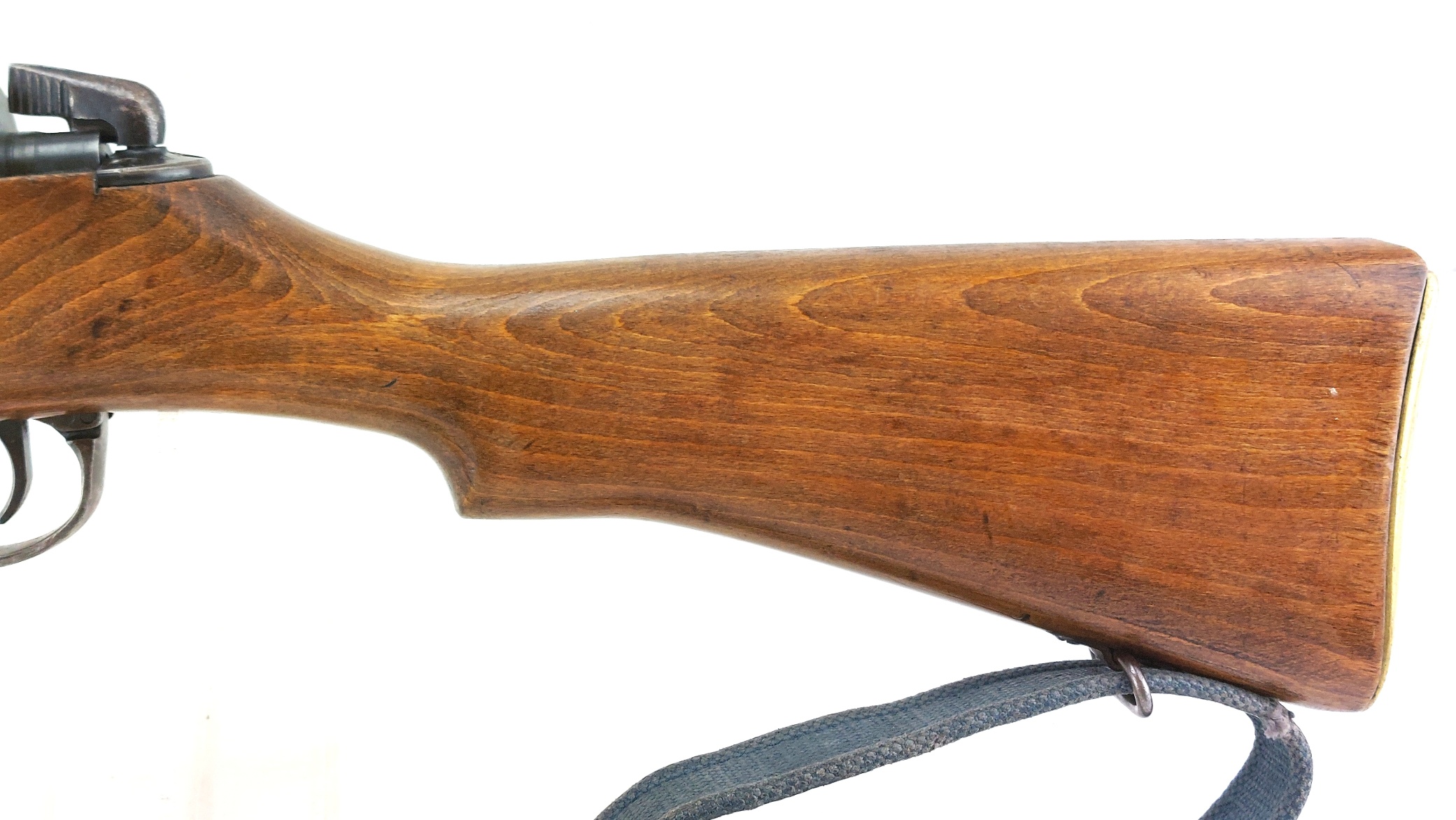
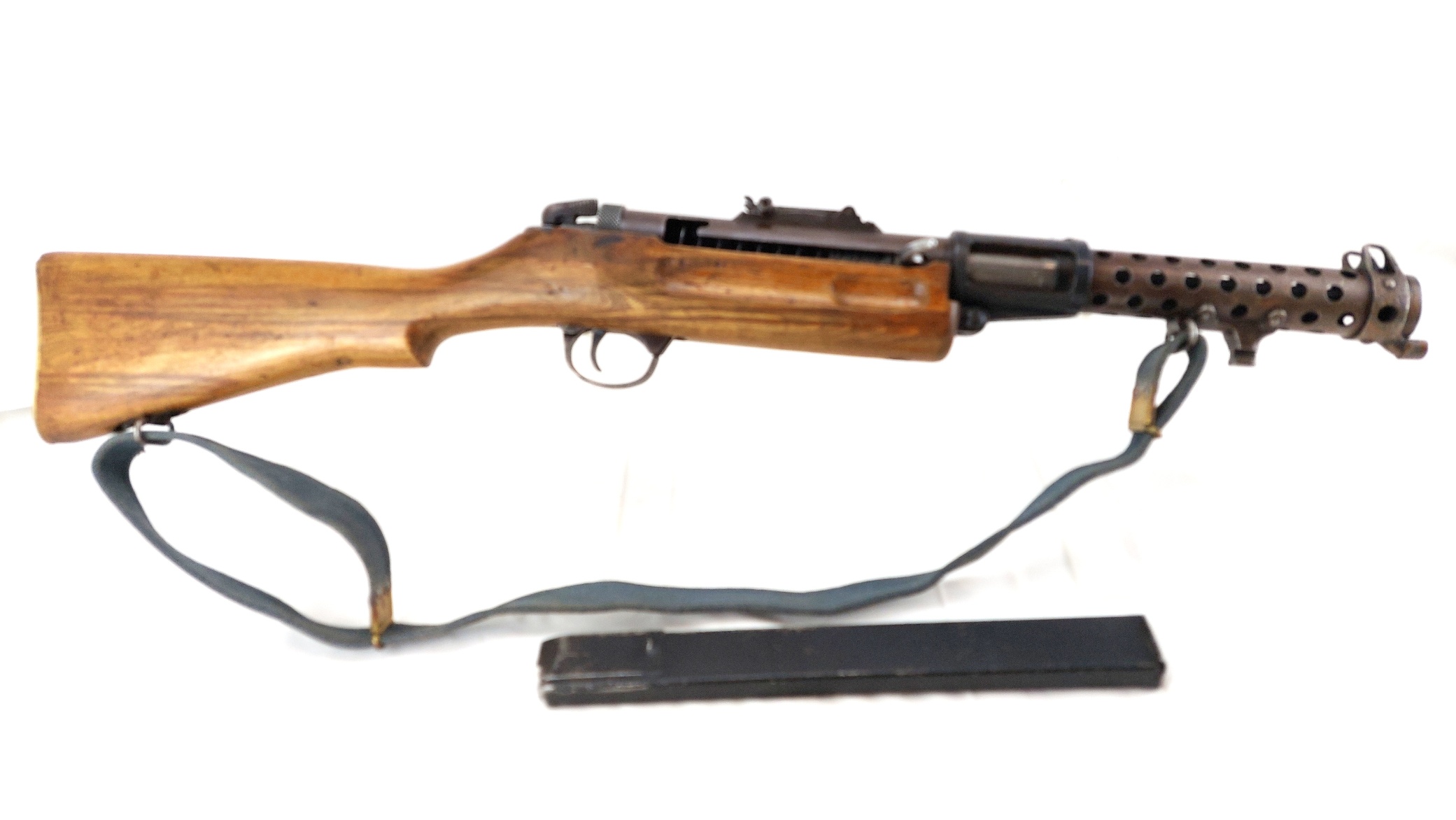
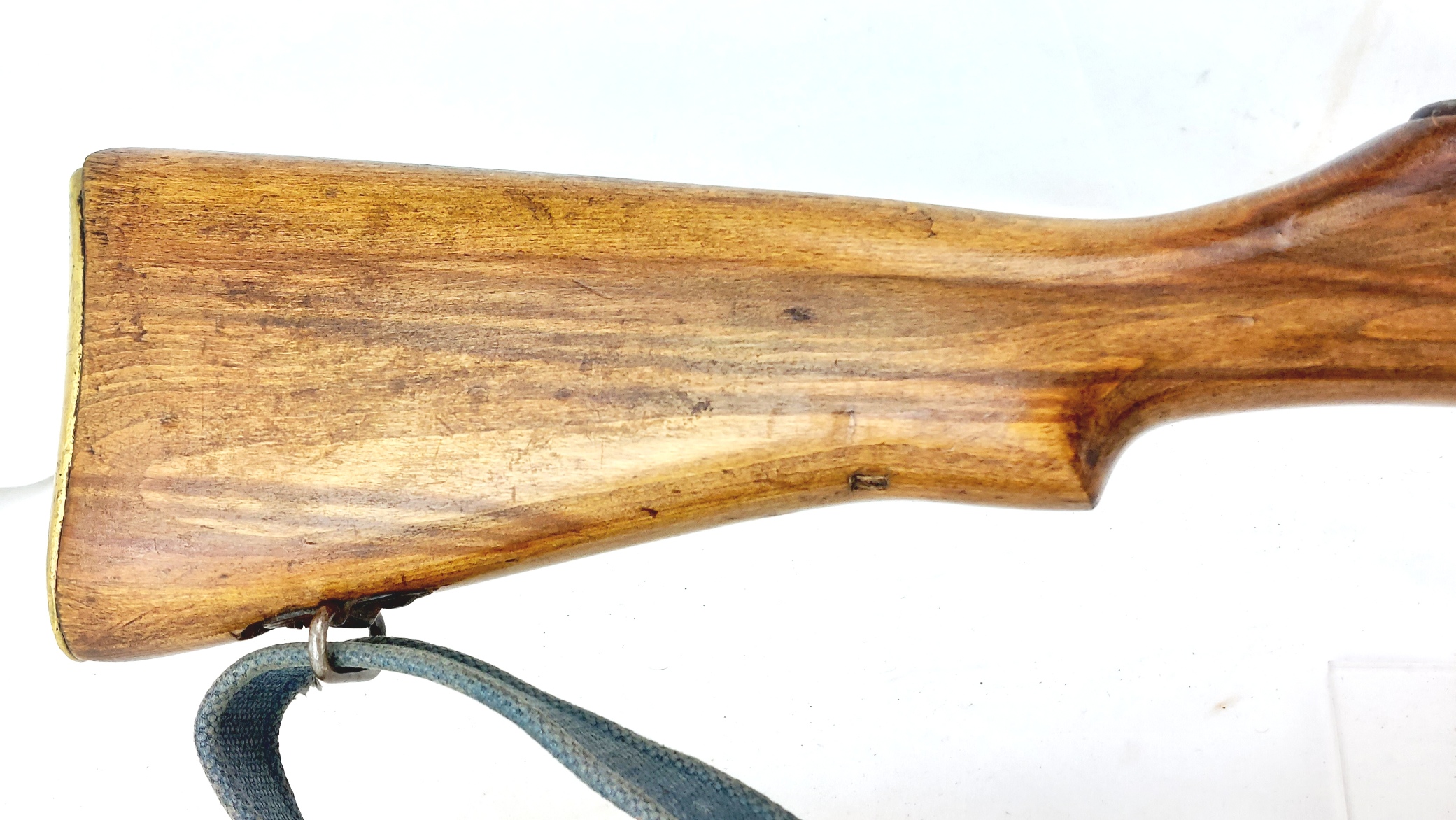
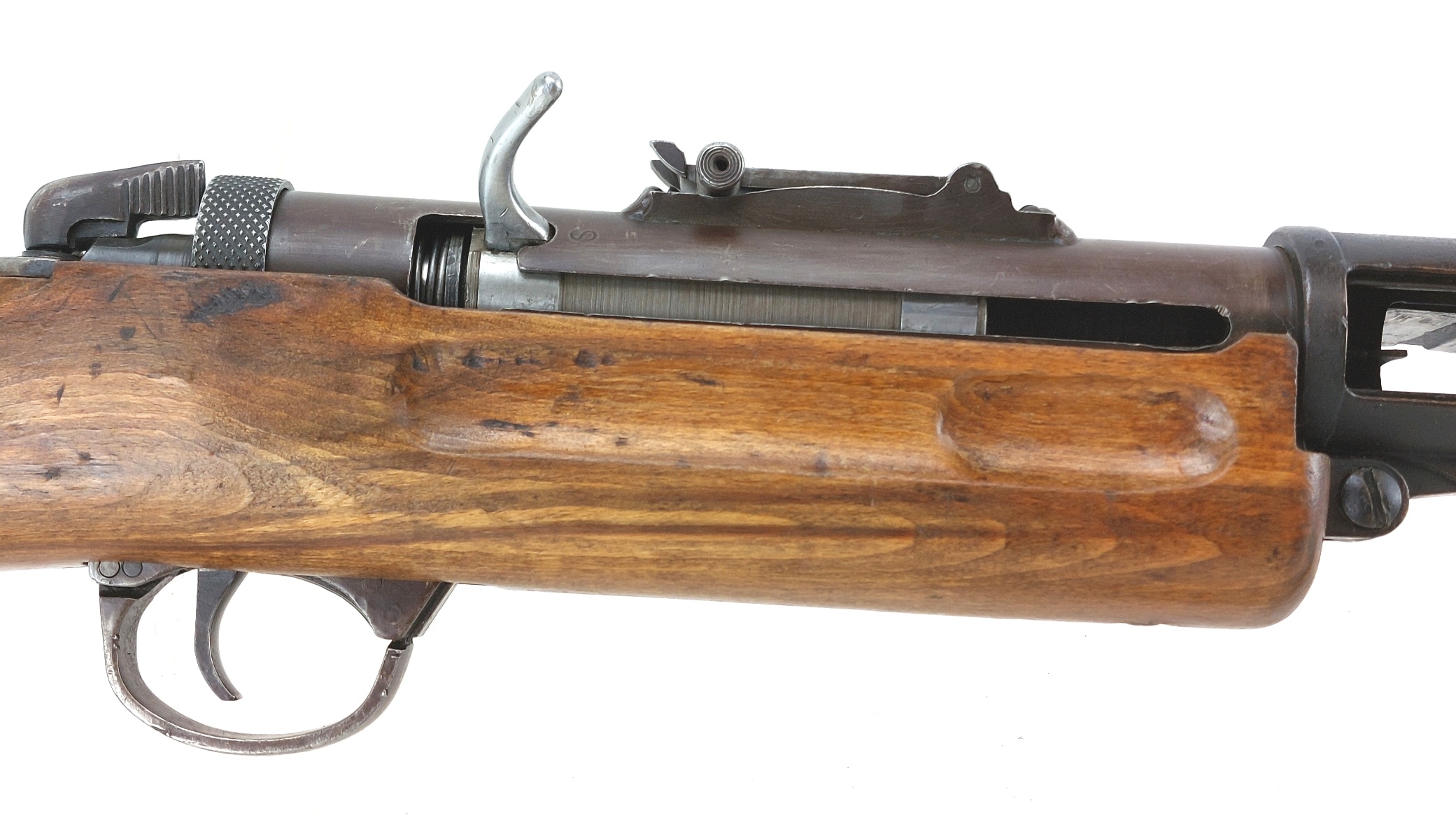
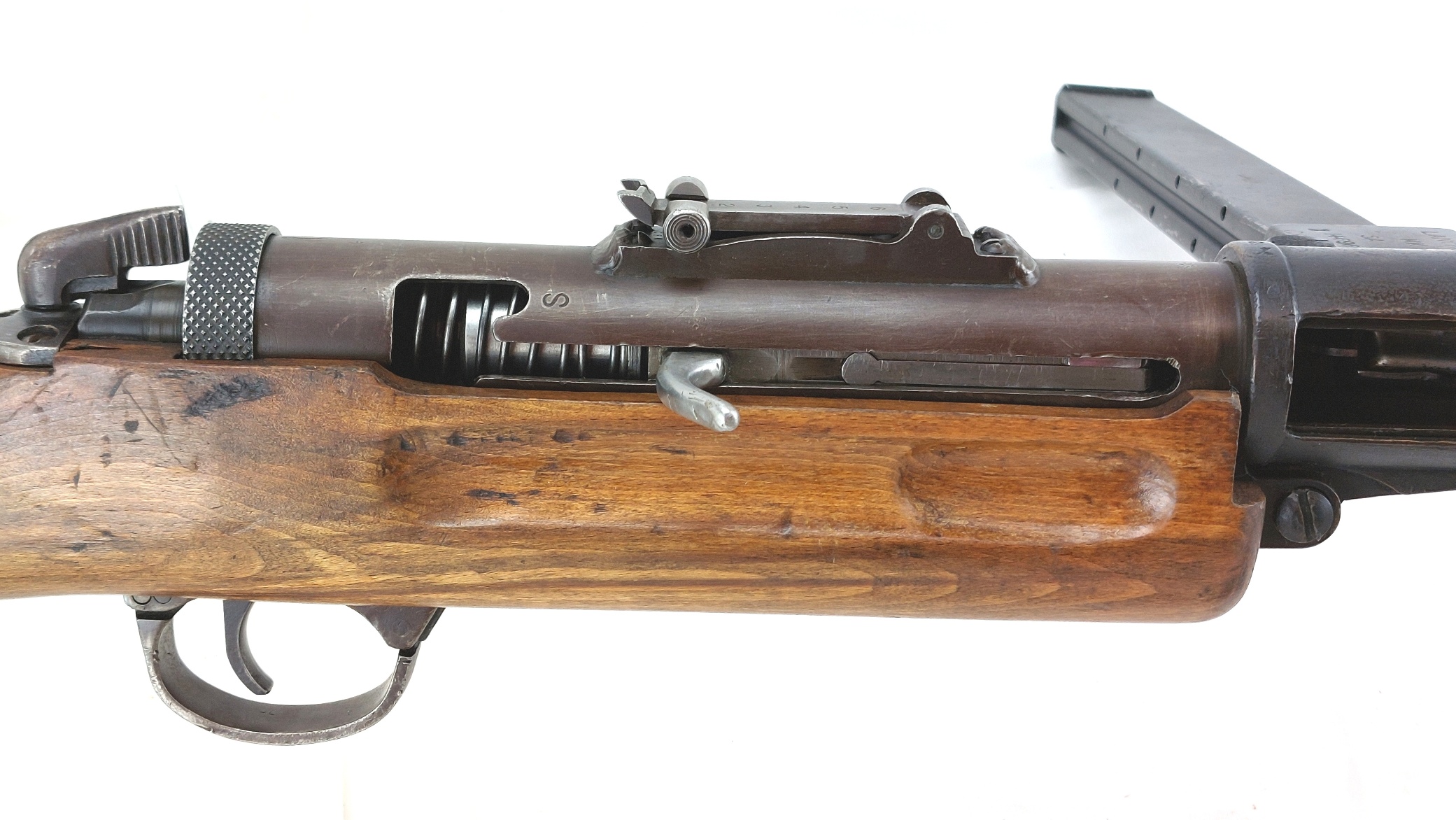
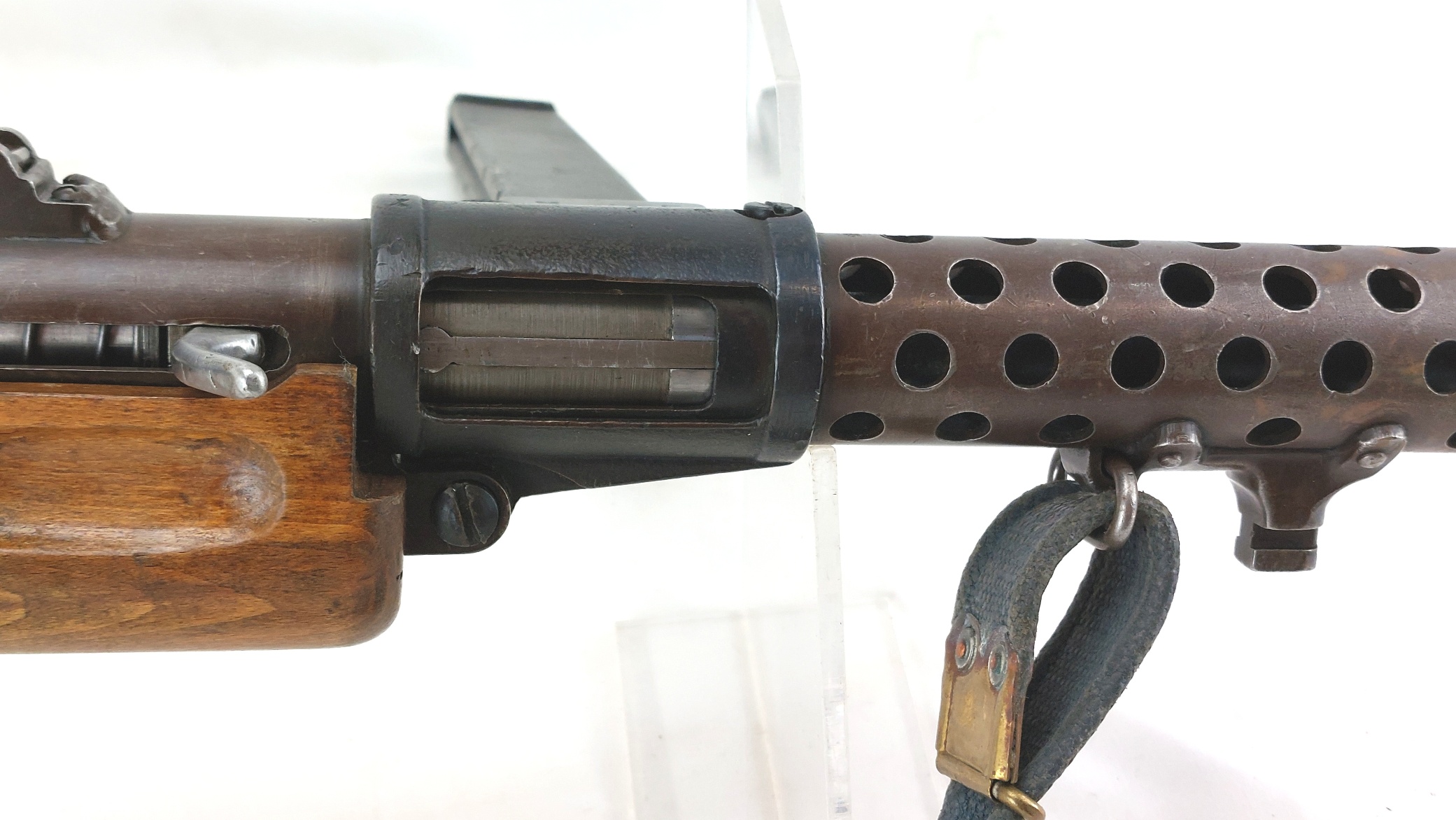
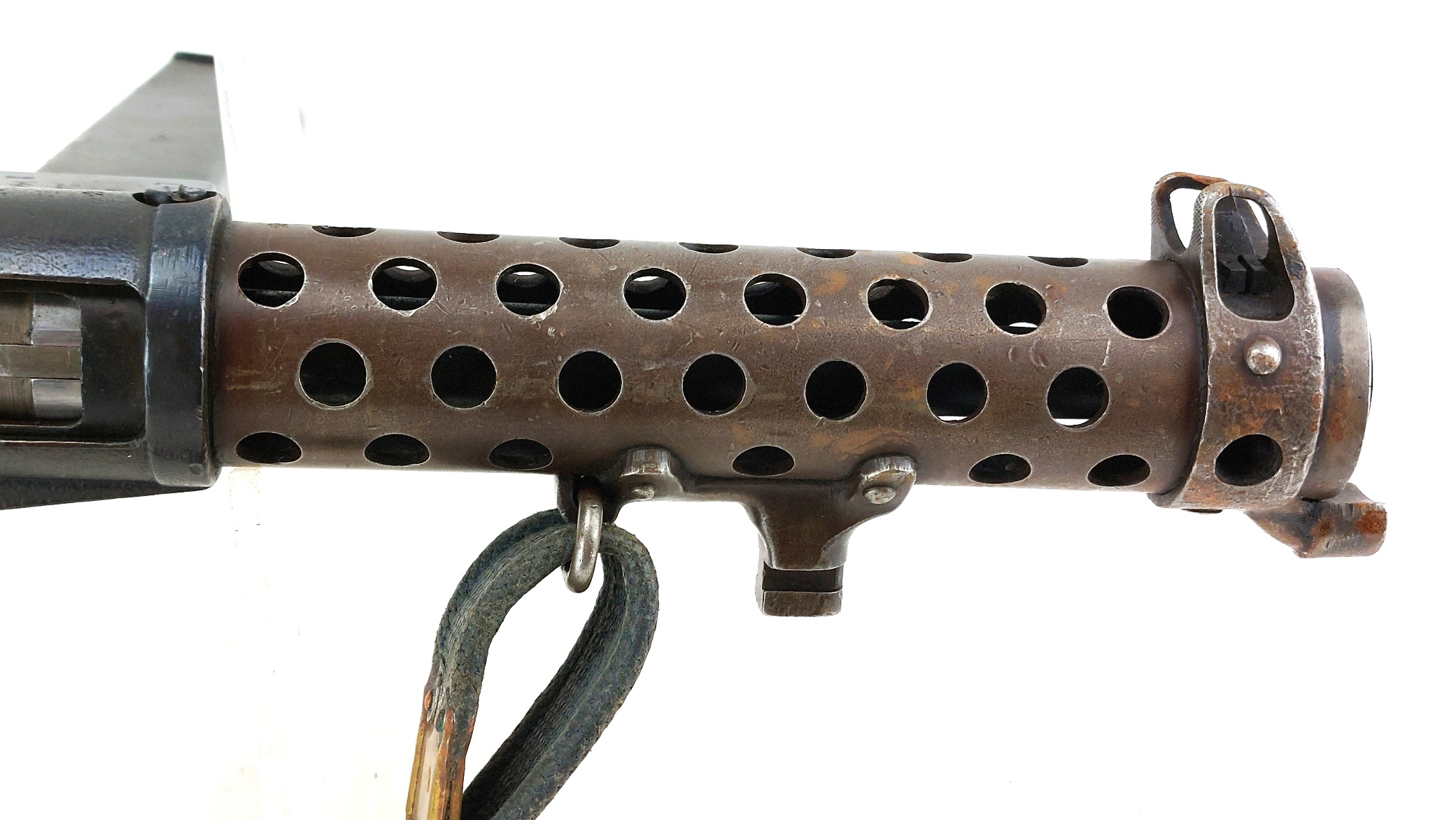
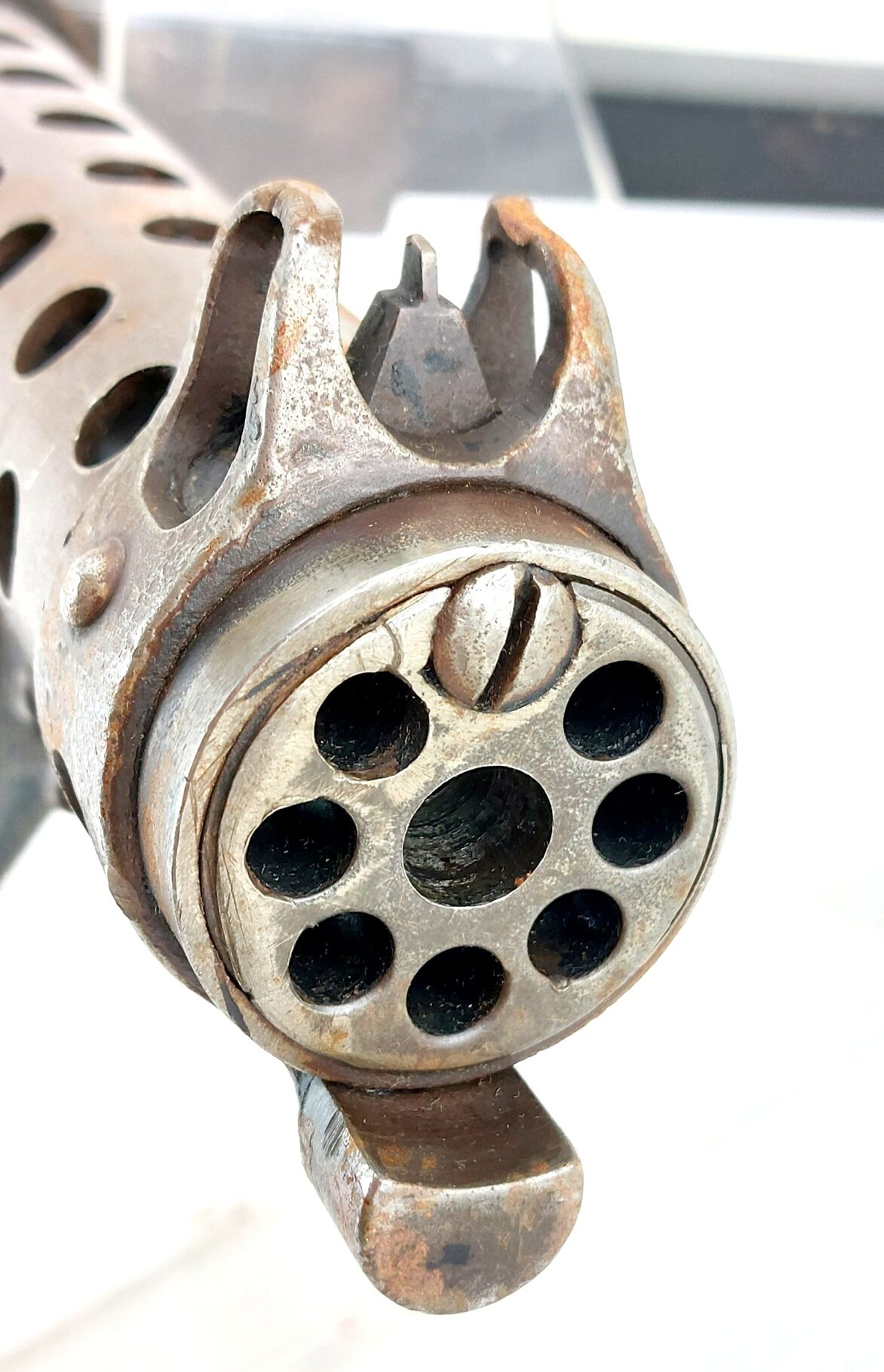
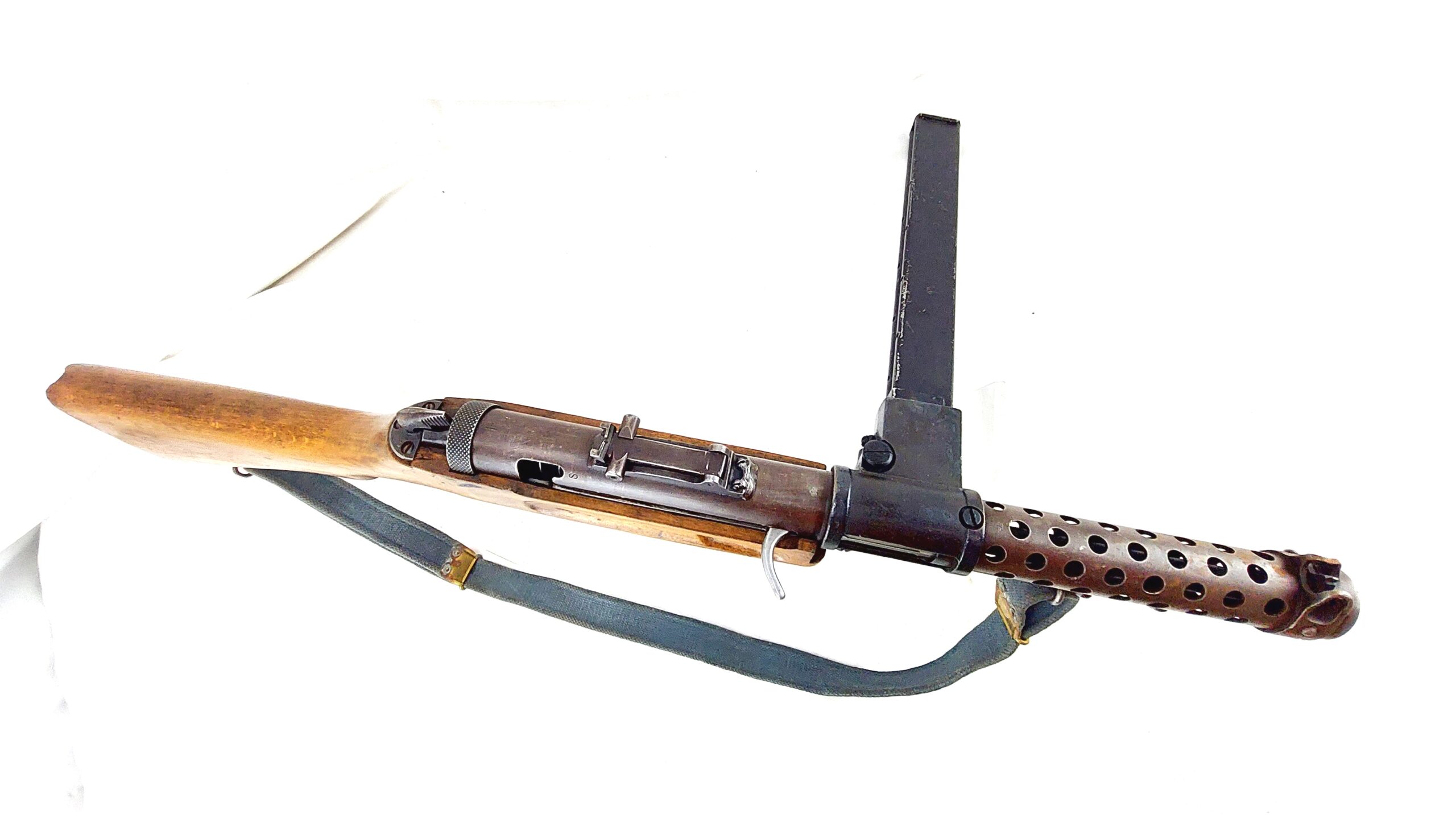
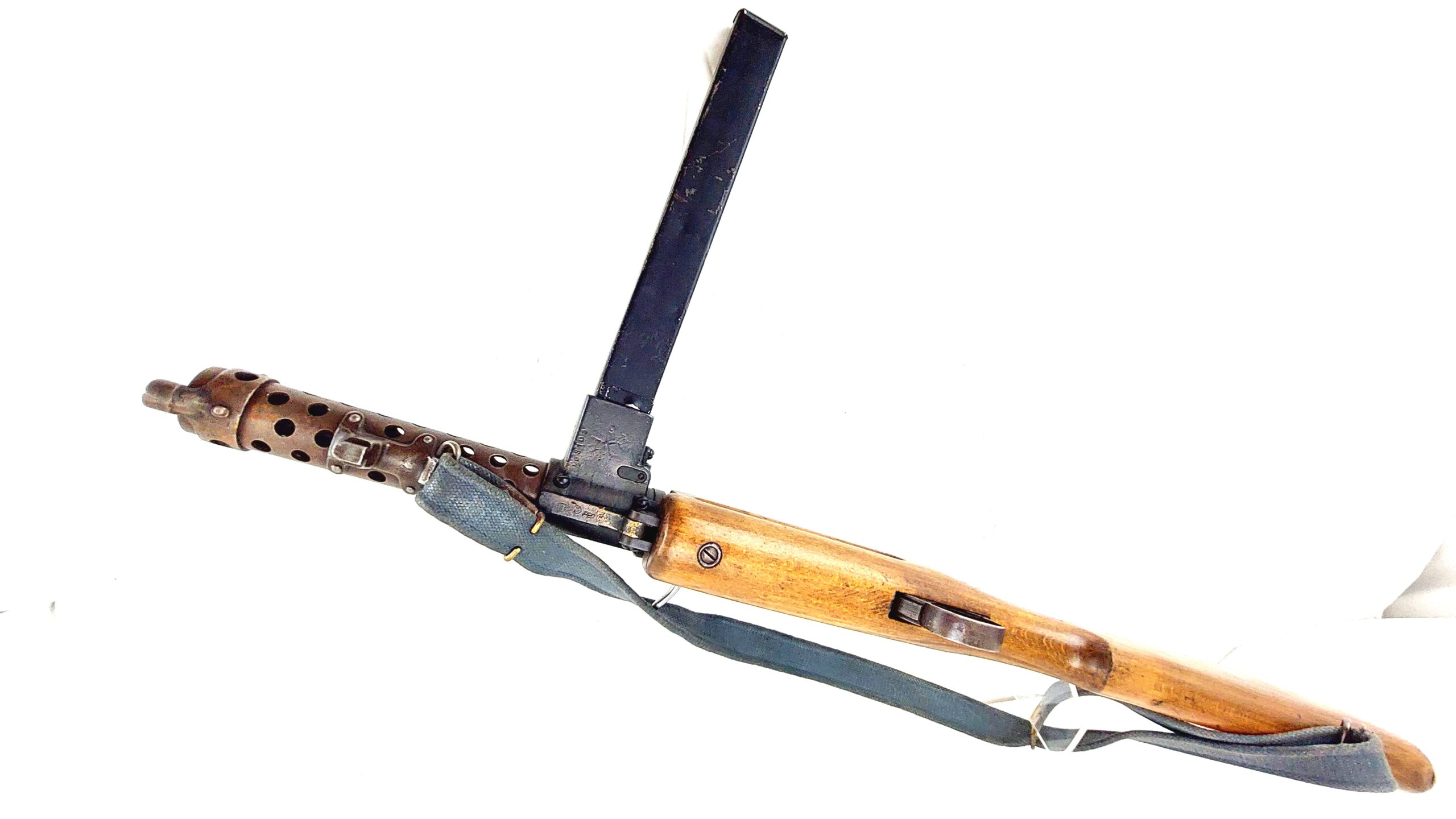
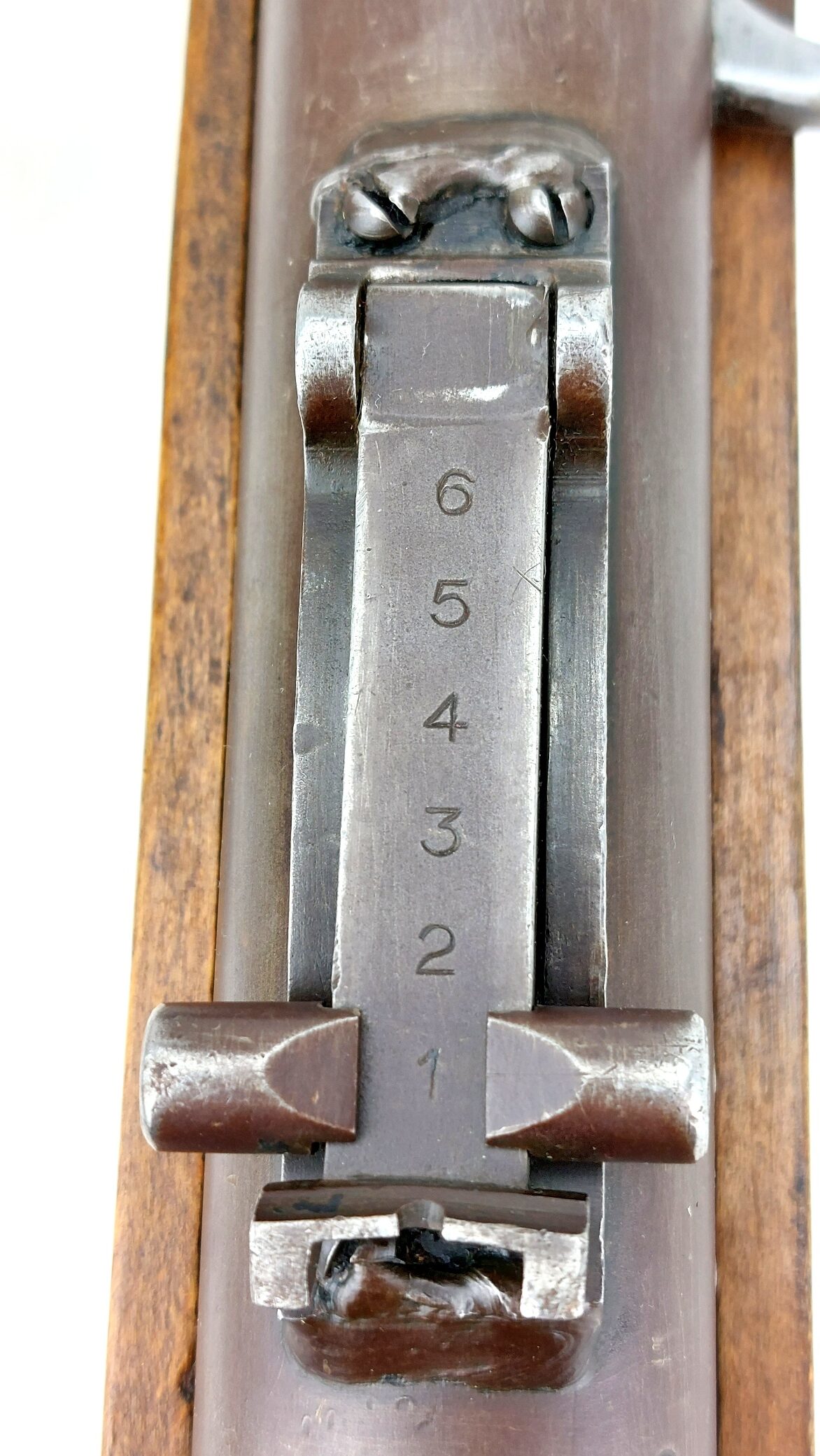
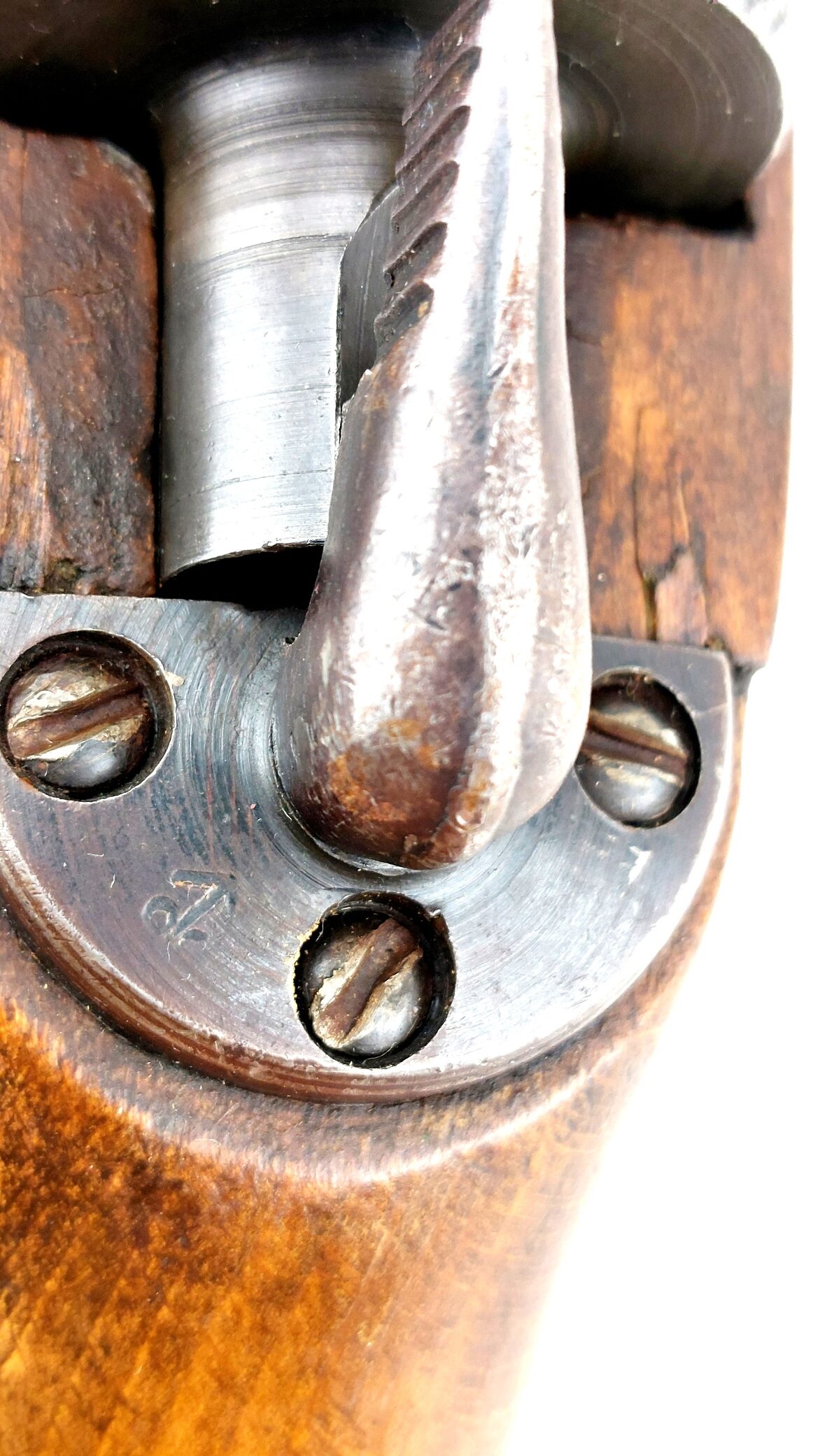
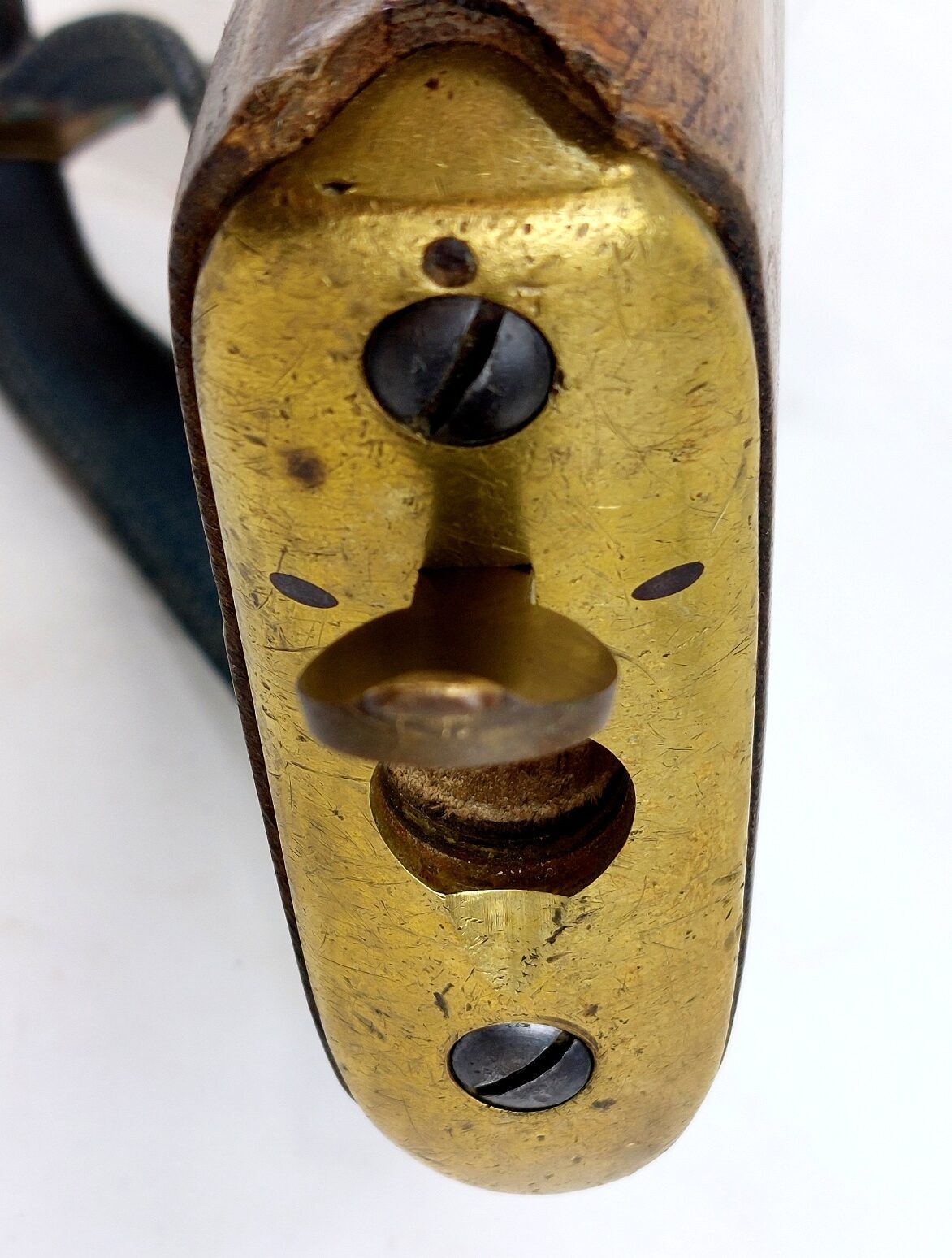
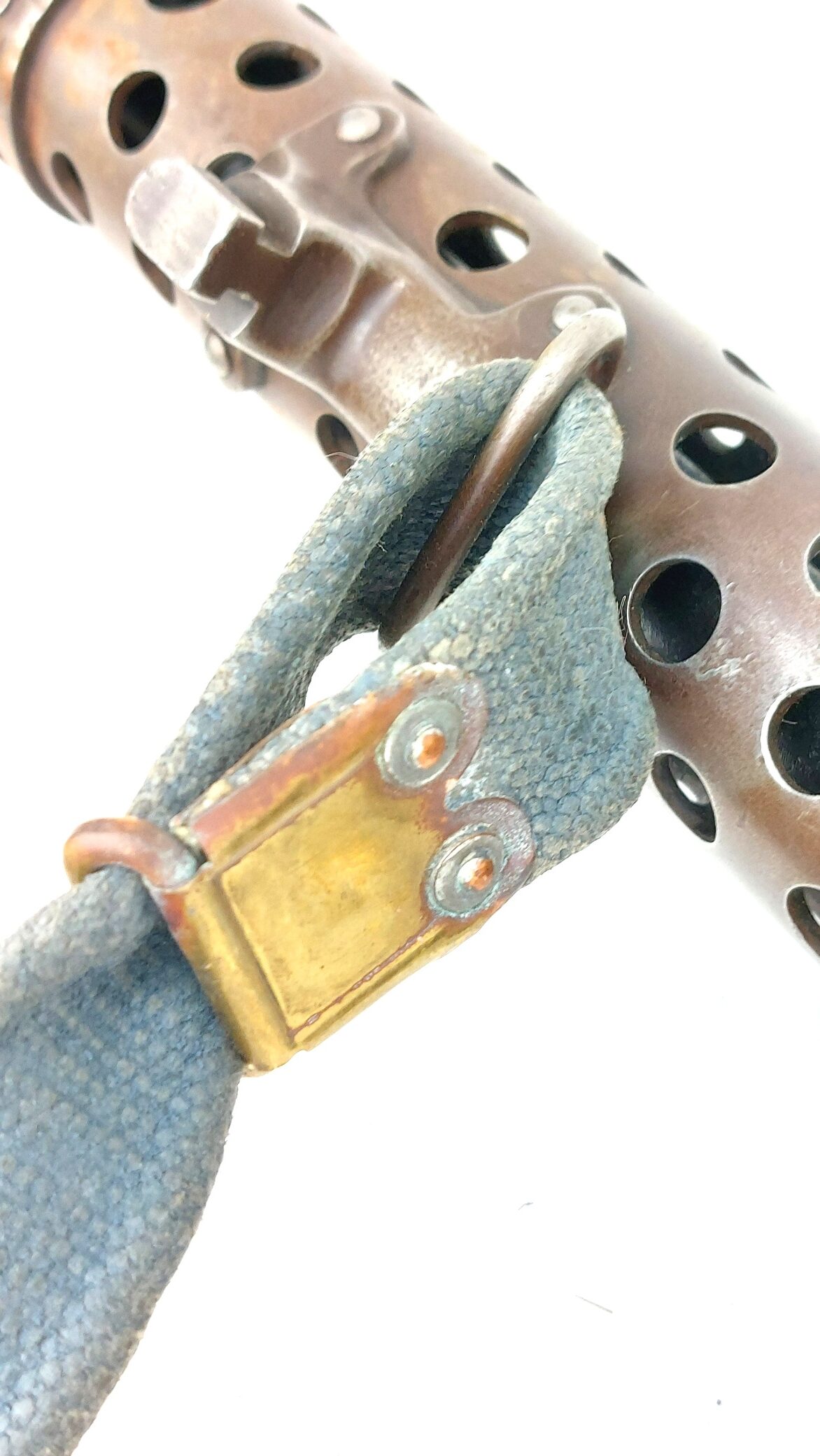
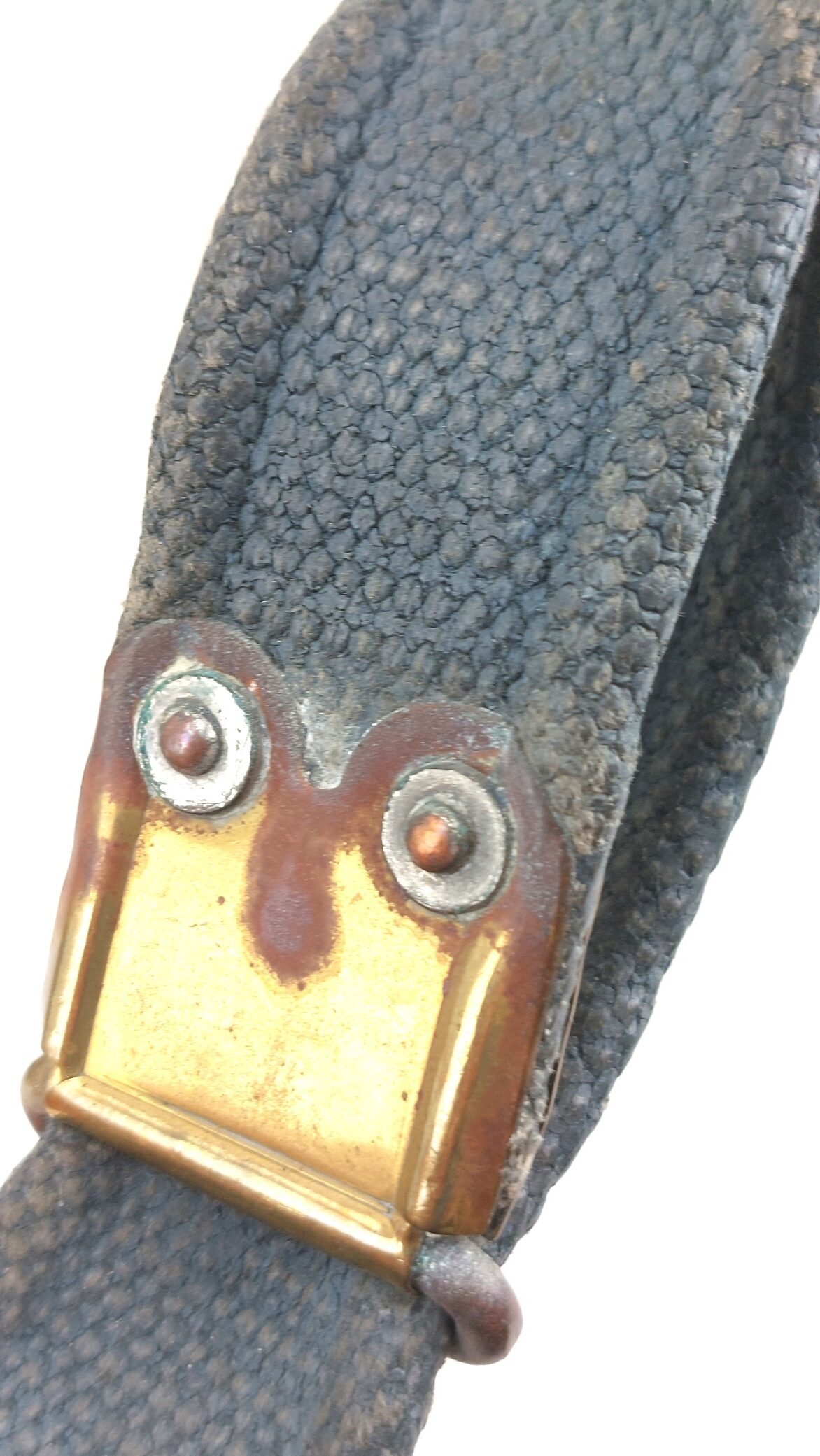
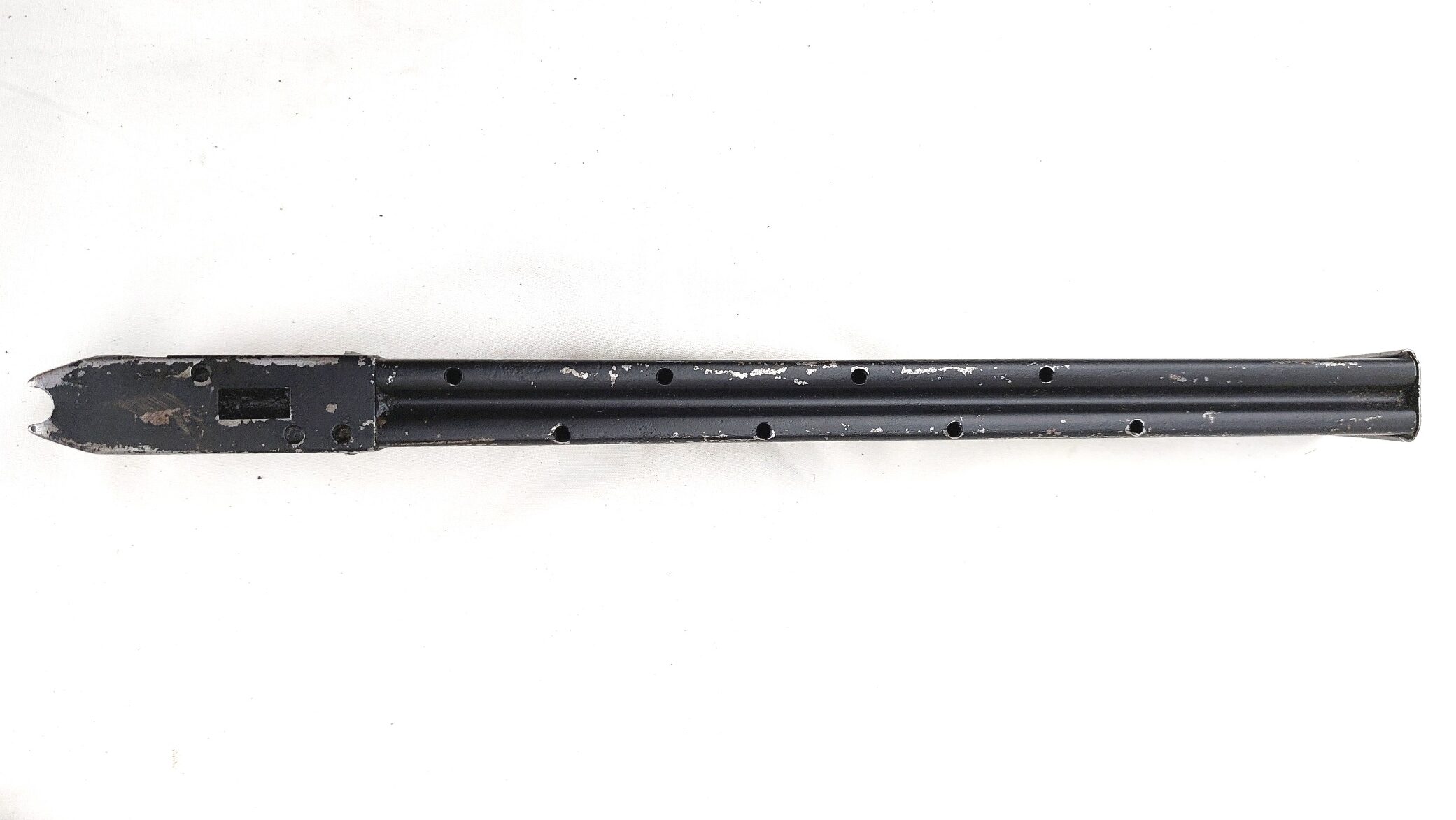
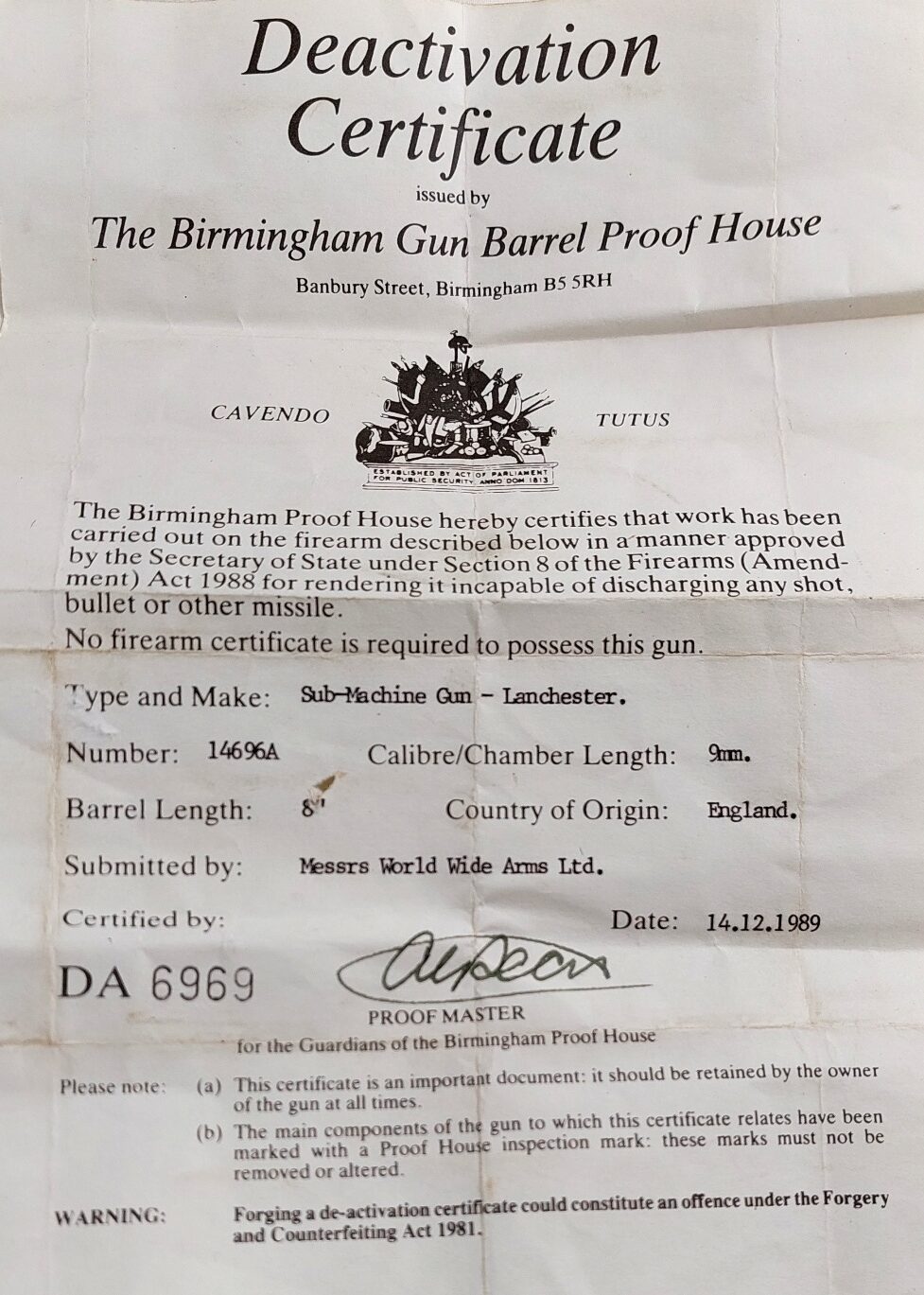
A particularly handsome and well-marked WW2 Lanchester Mk.I, built in 1942 by Sterling Armament (“SA”) for the Royal Navy and retaining all correct naval features: brass buttplate with oiler trap, early walnut stock, perforated barrel jacket, Mk.I fire-selector, and tangent rear sight to 600 yards. This is an old-spec 1989 deactivation, still cocks and dry-fires with excellent mechanical feel and a crisp selector movement. Complete with its original naval-pattern sling. Approx. 84cm overall.
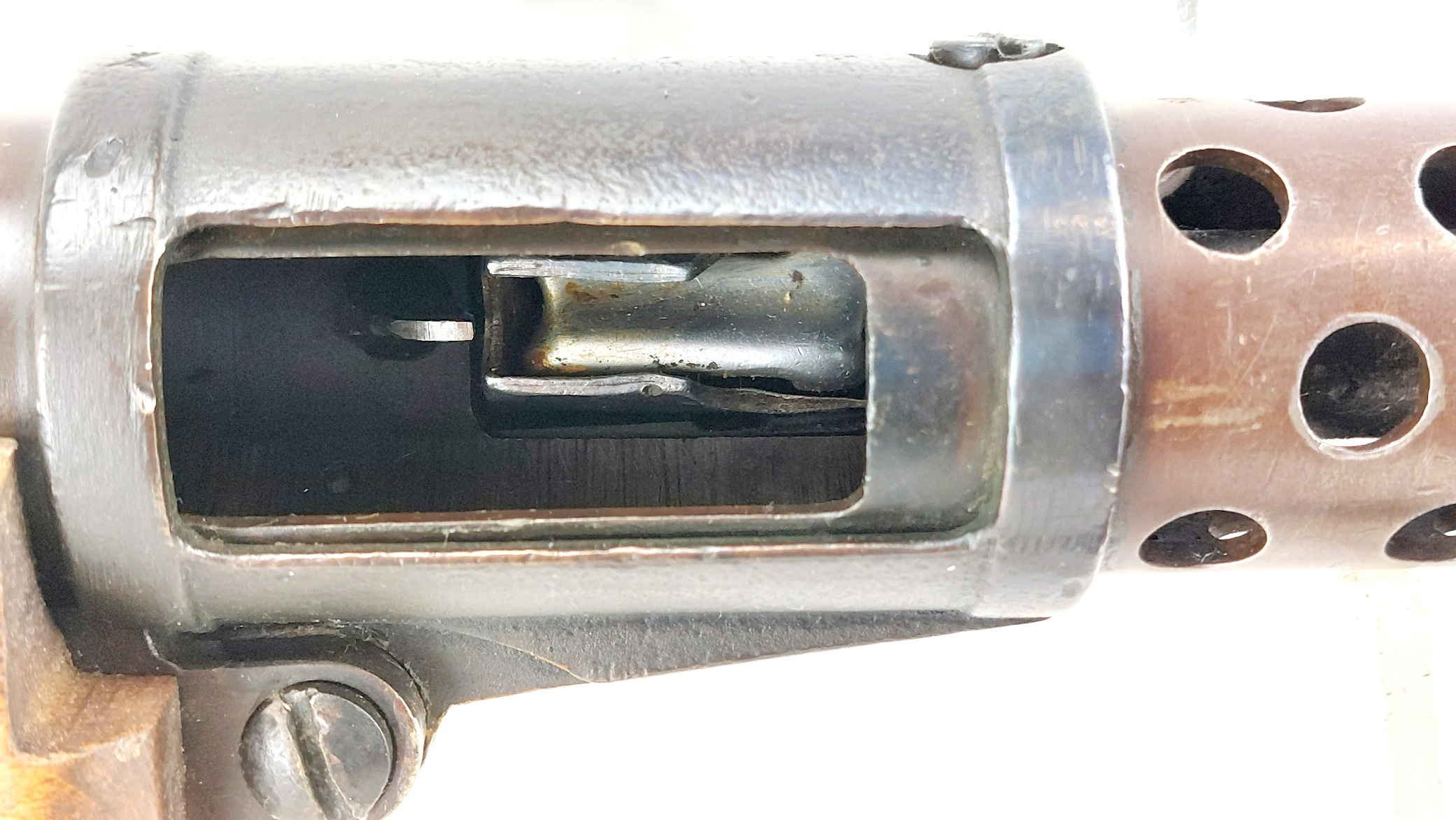
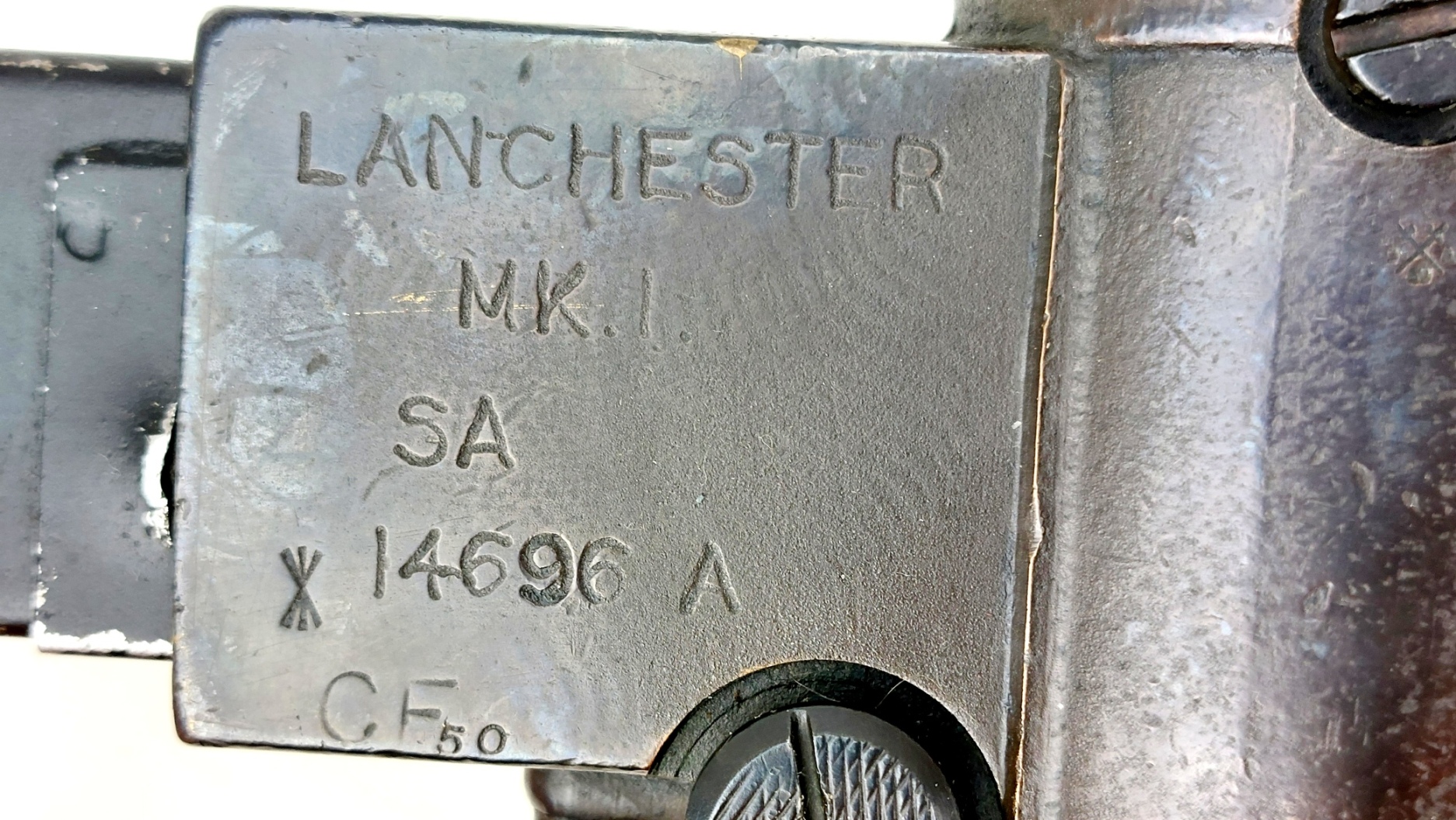
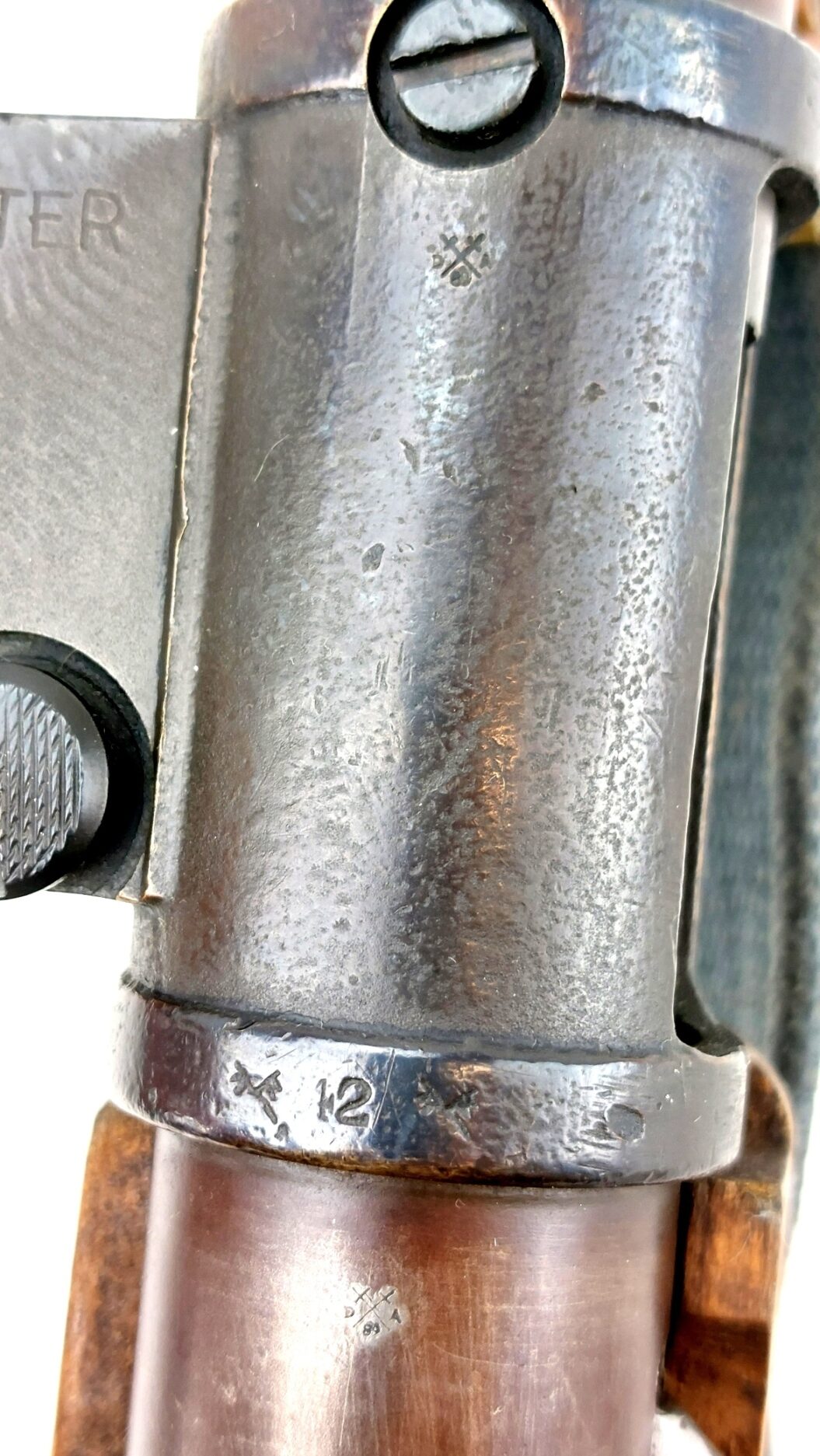
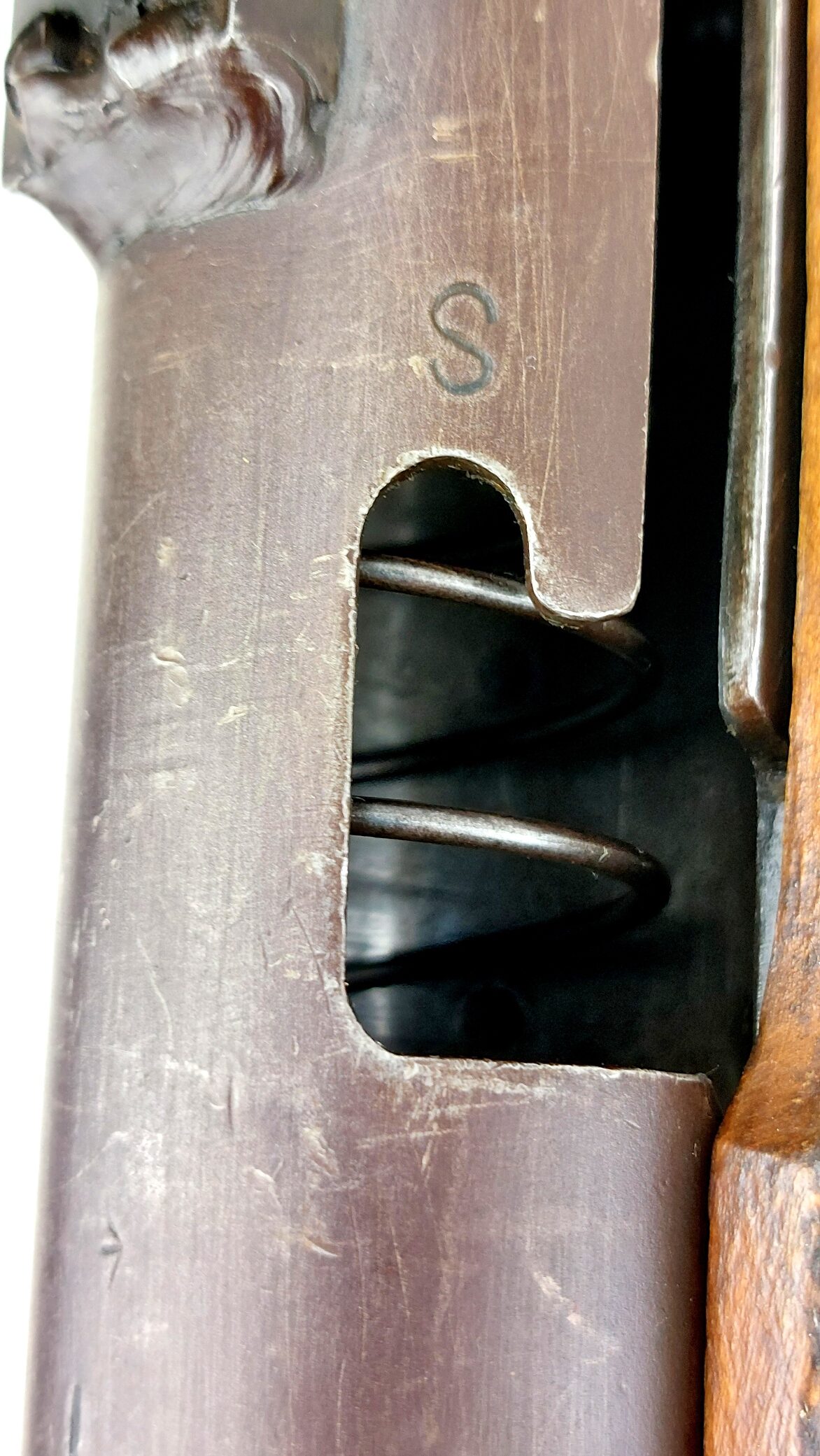
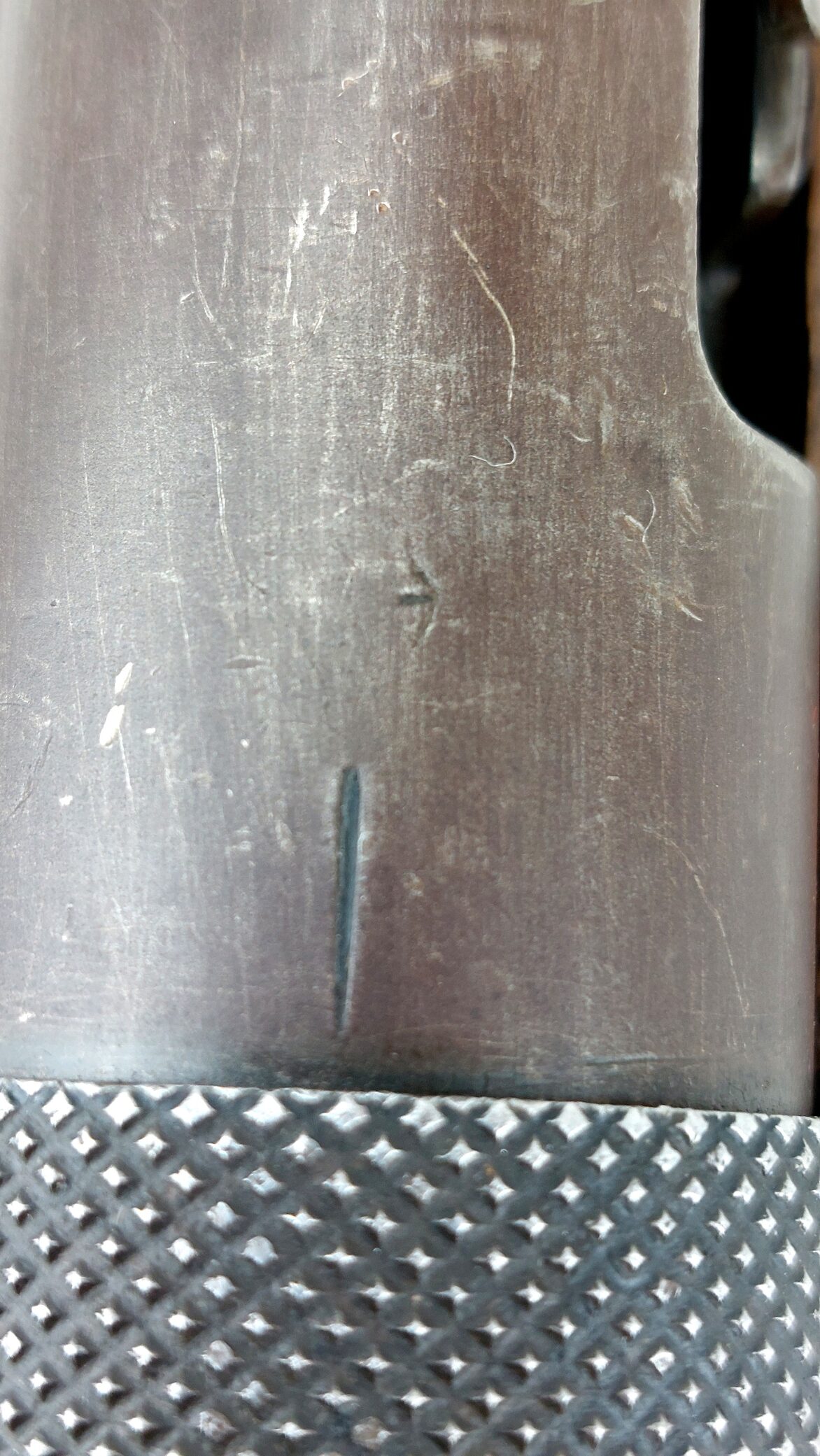
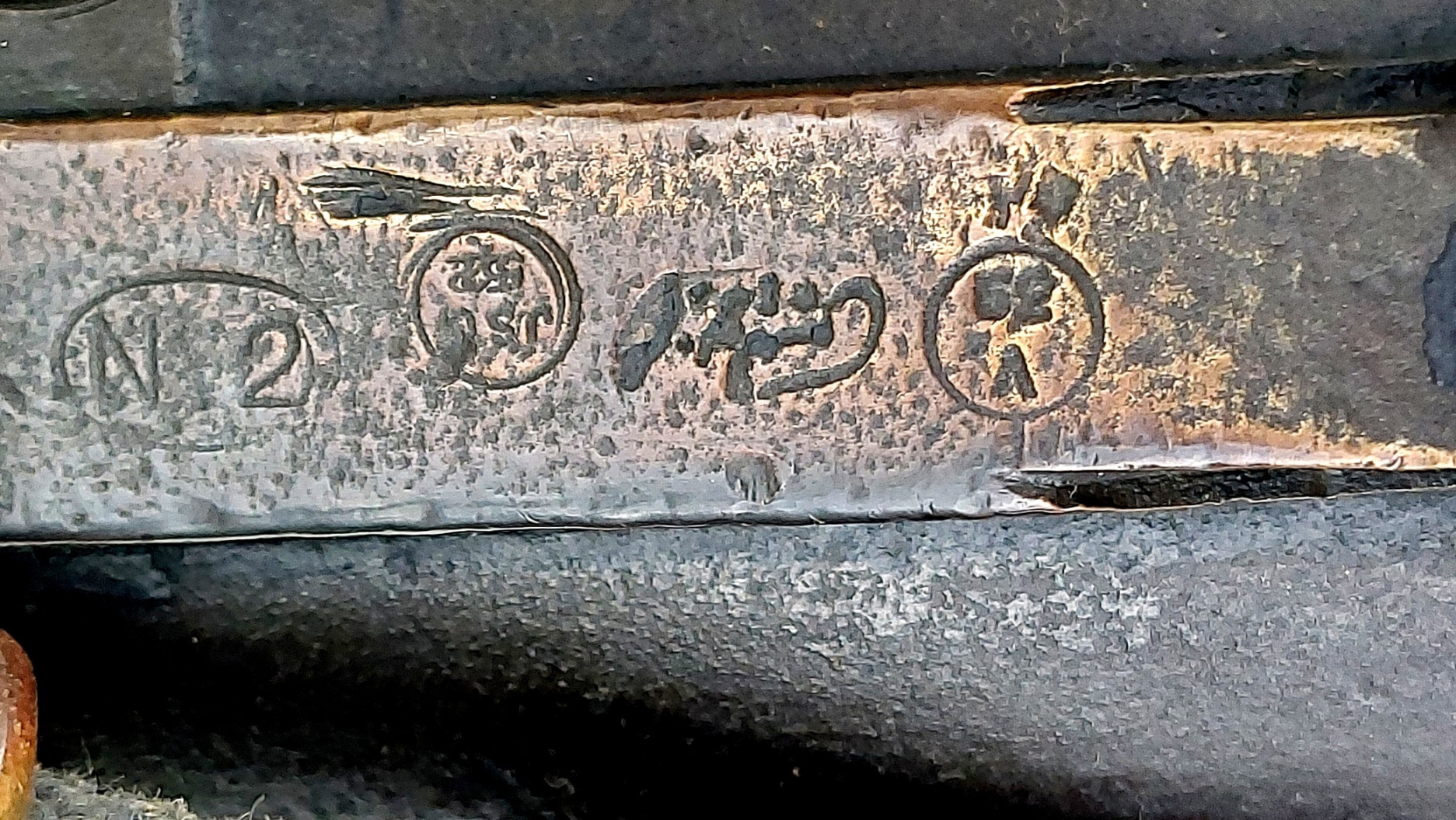
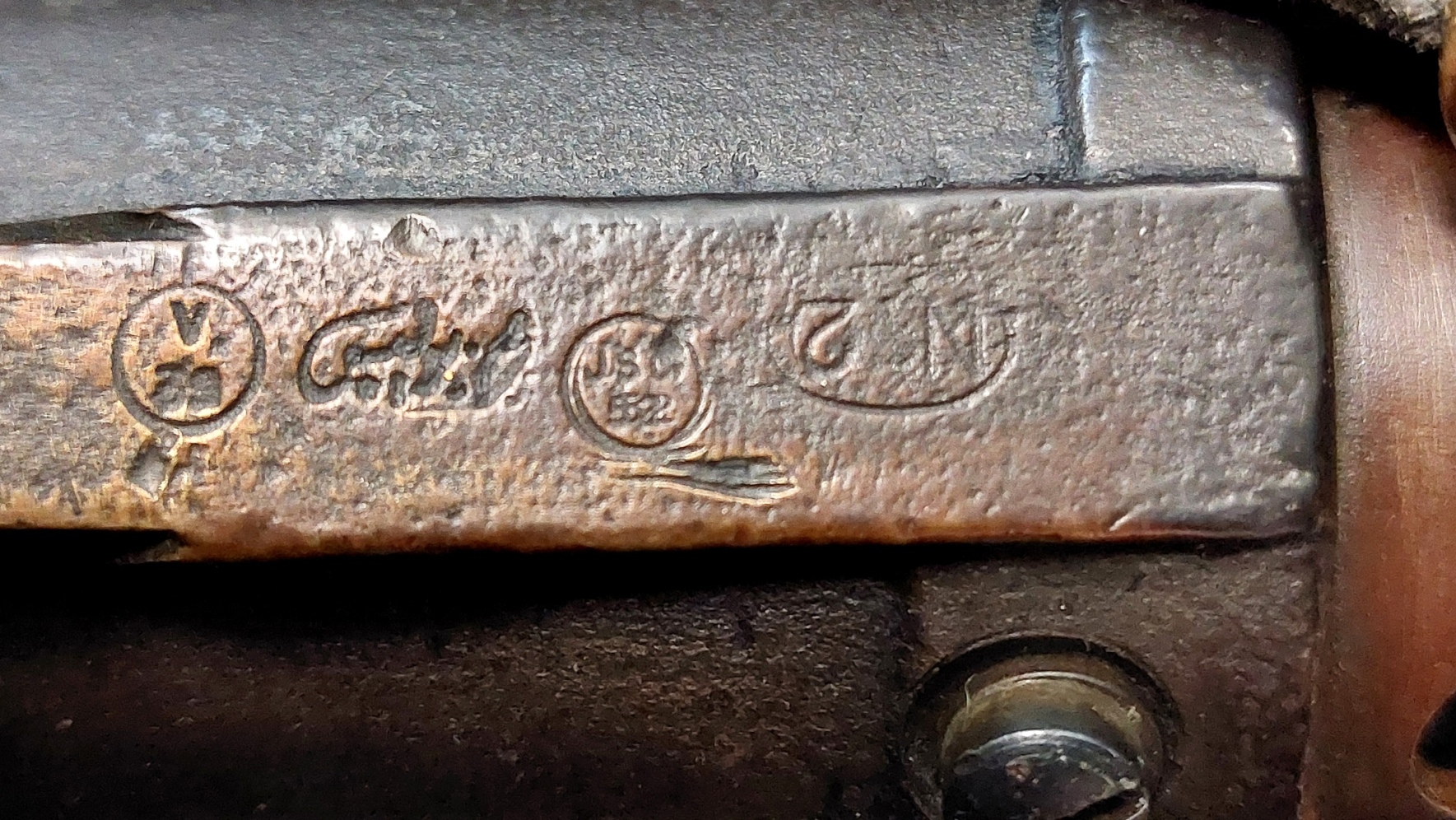
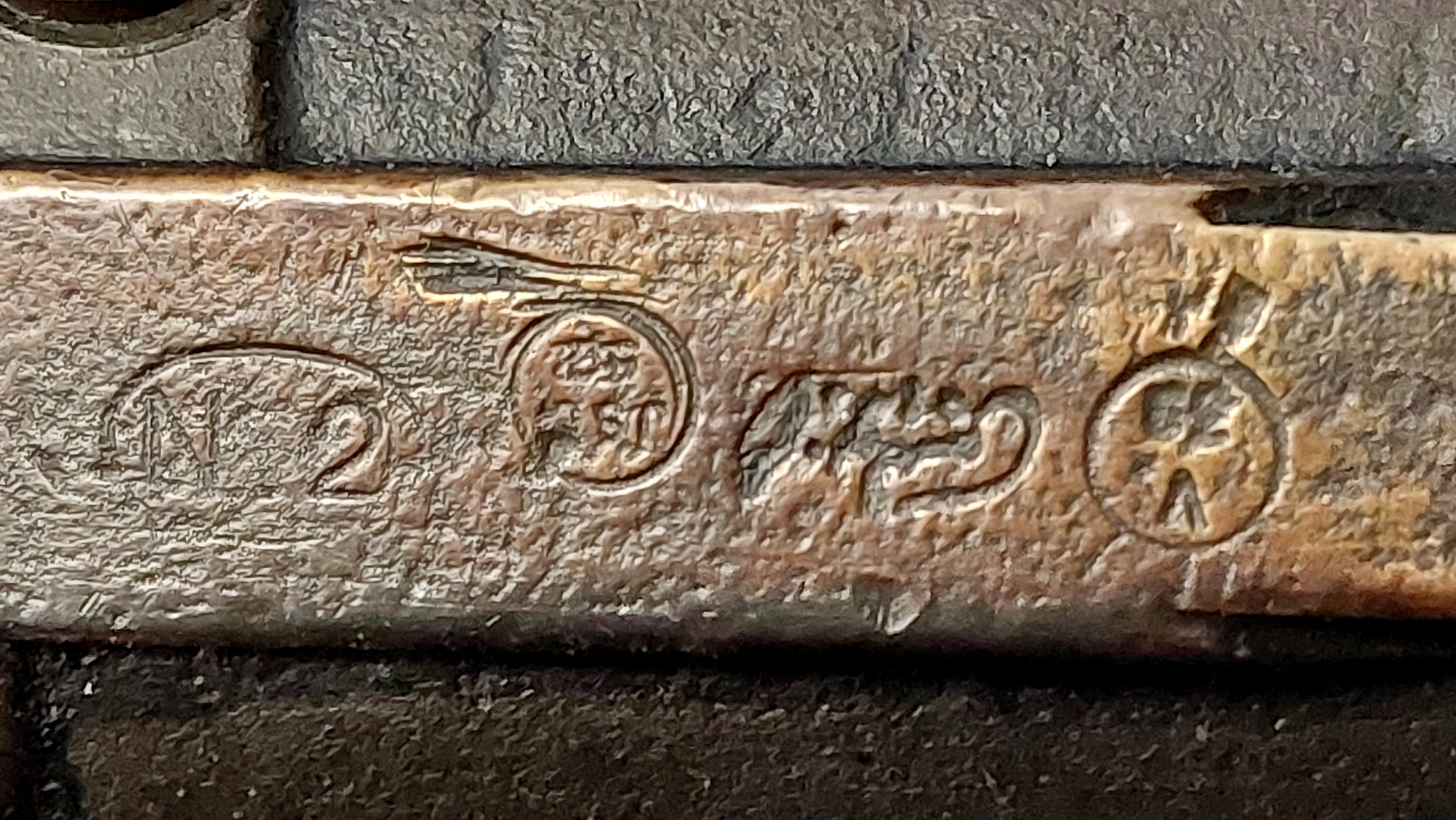
The magazine housing is clearly stamped “LANCHESTER Mk.I SA 14696 A”. The “A” suffix is characteristic of early Sterling production, before full precision gauging was introduced in mid-1943, resulting in small batches of hand-fitted, non-interchangeable components. The barrel collar shows the correct crossed-flags / 42 proof, confirming 1942 inspection and acceptance for naval issue.
Historical Note:
Designed in 1941 as a robust, high-quality alternative to the Sten, the Lanchester Mk.I closely followed the MP28/II pattern but was strengthened for naval use, incorporating brass fittings, a heavy barrel jacket, and a full-length walnut stock. Costing nearly seven times as much as a Sten, it was issued primarily to the Royal Navy, Royal Marines, and some Commonwealth naval forces, with limited RAF Regiment use. Built in relatively small numbers—approximately 79,790 guns—sterling quality and naval storage ensured many survived the war in excellent condition. Though superseded operationally by lighter weapons, the Lanchester remained in British and Commonwealth service into the 1950s and saw further post-war export and re-issue abroad.
Markings & Post-War Service History:
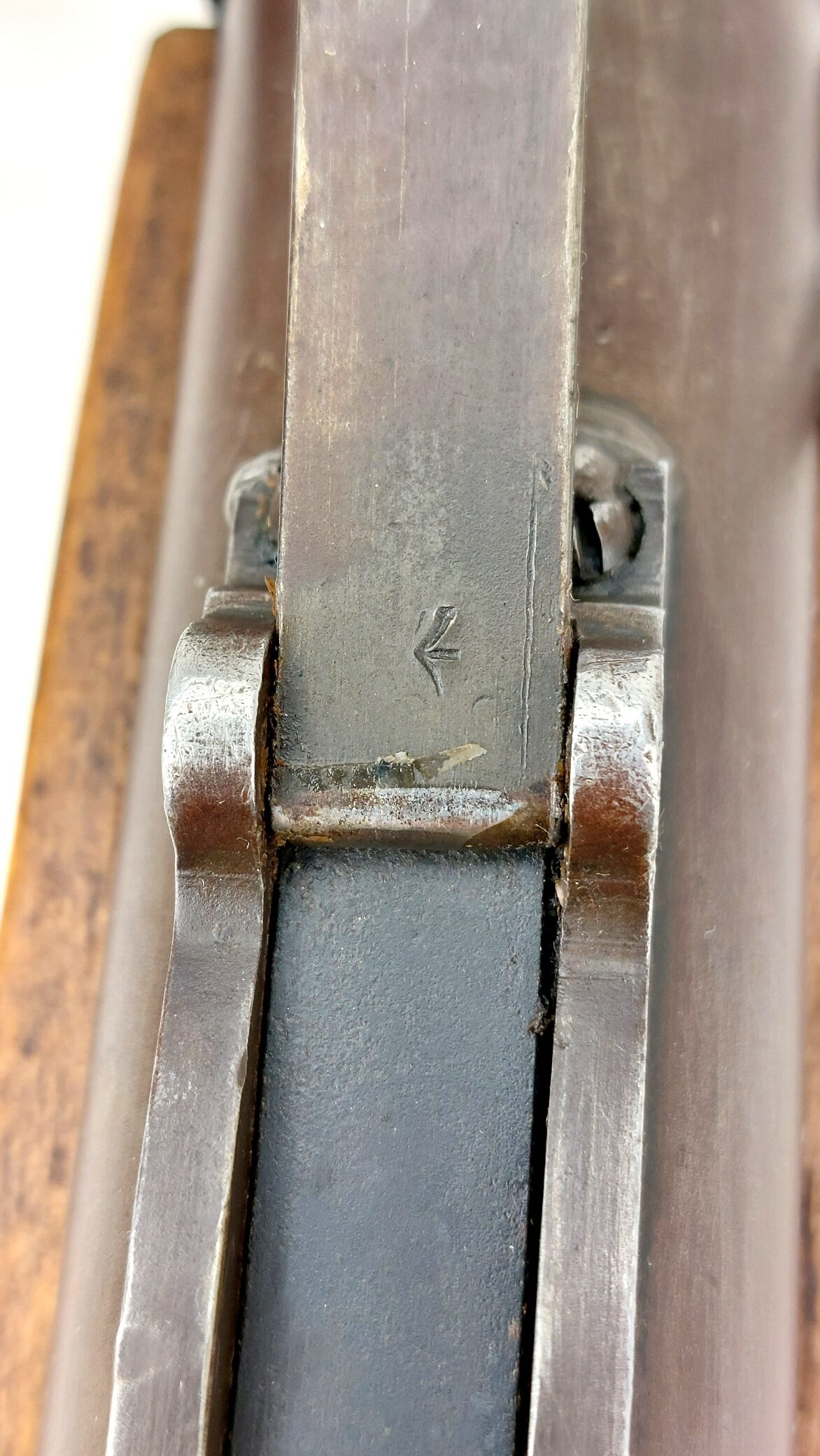
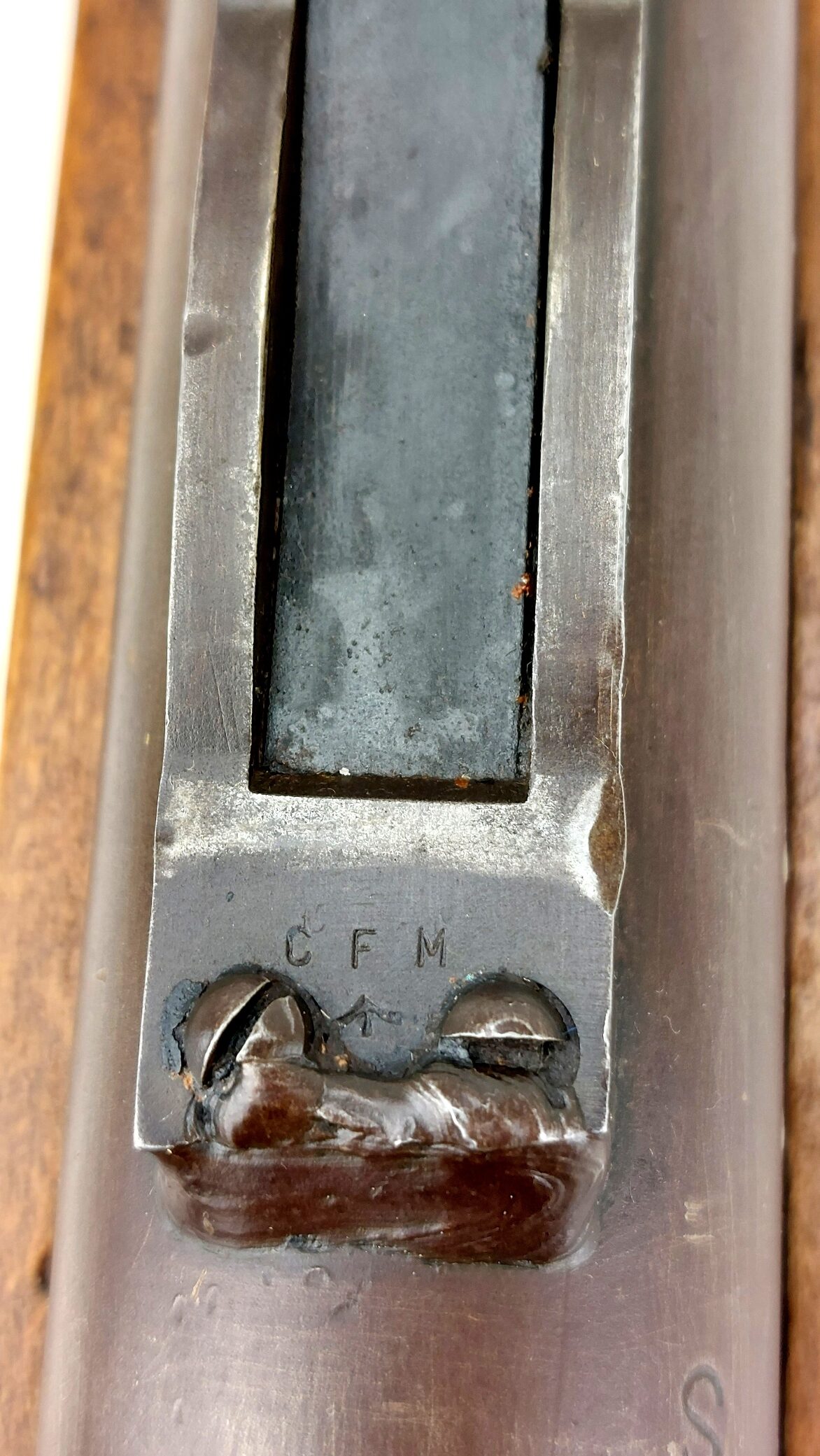
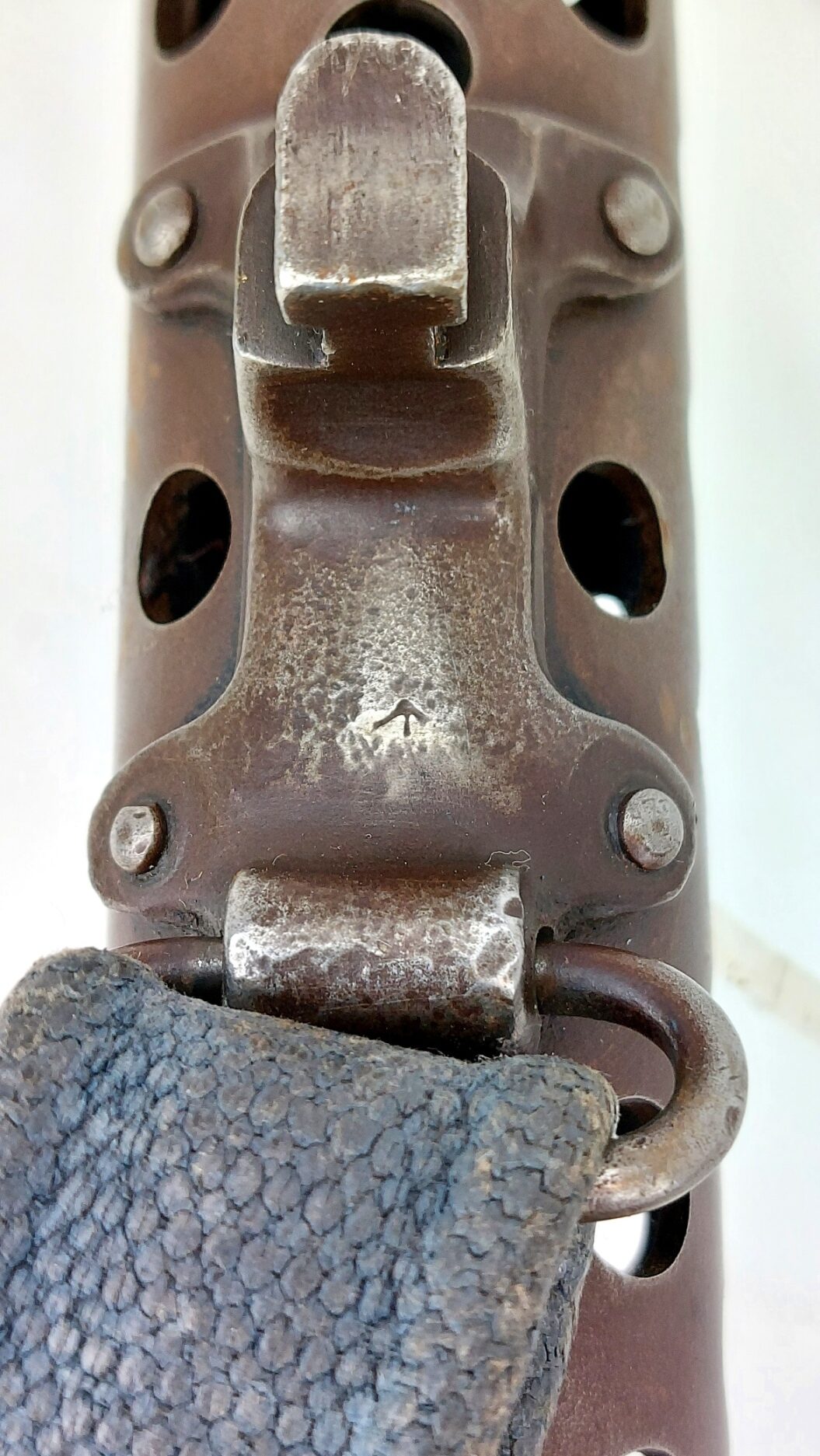
The weapon carries an unusually comprehensive set of markings charting its entire service life. The tangent rear sight base is stamped “CFM”, identifying Charles Frank (Manufacturing) Ltd., Manchester, a recognised subcontractor for Mk.I sight components. The barrel-release catch bears the small Royal Navy anchor, confirming Admiralty ownership, and additional wartime broad arrows appear on the body and fittings.
After the war, the weapon was formally released from British stores—shown by the double inverted broad arrows on the magazine housing. Beneath these is the property stamp “CF 50”. While “CF” is sometimes attributed to Component Fittings Ltd., the large-letter format with a two-digit date suffix aligns more convincingly with the Danish Civilforsvaret (Civil Defence) marks documented on known Danish Lanchesters (“CF 50”, “CF 51”, “CF 53”). This strongly indicates Danish Civil Defence service around 1950.
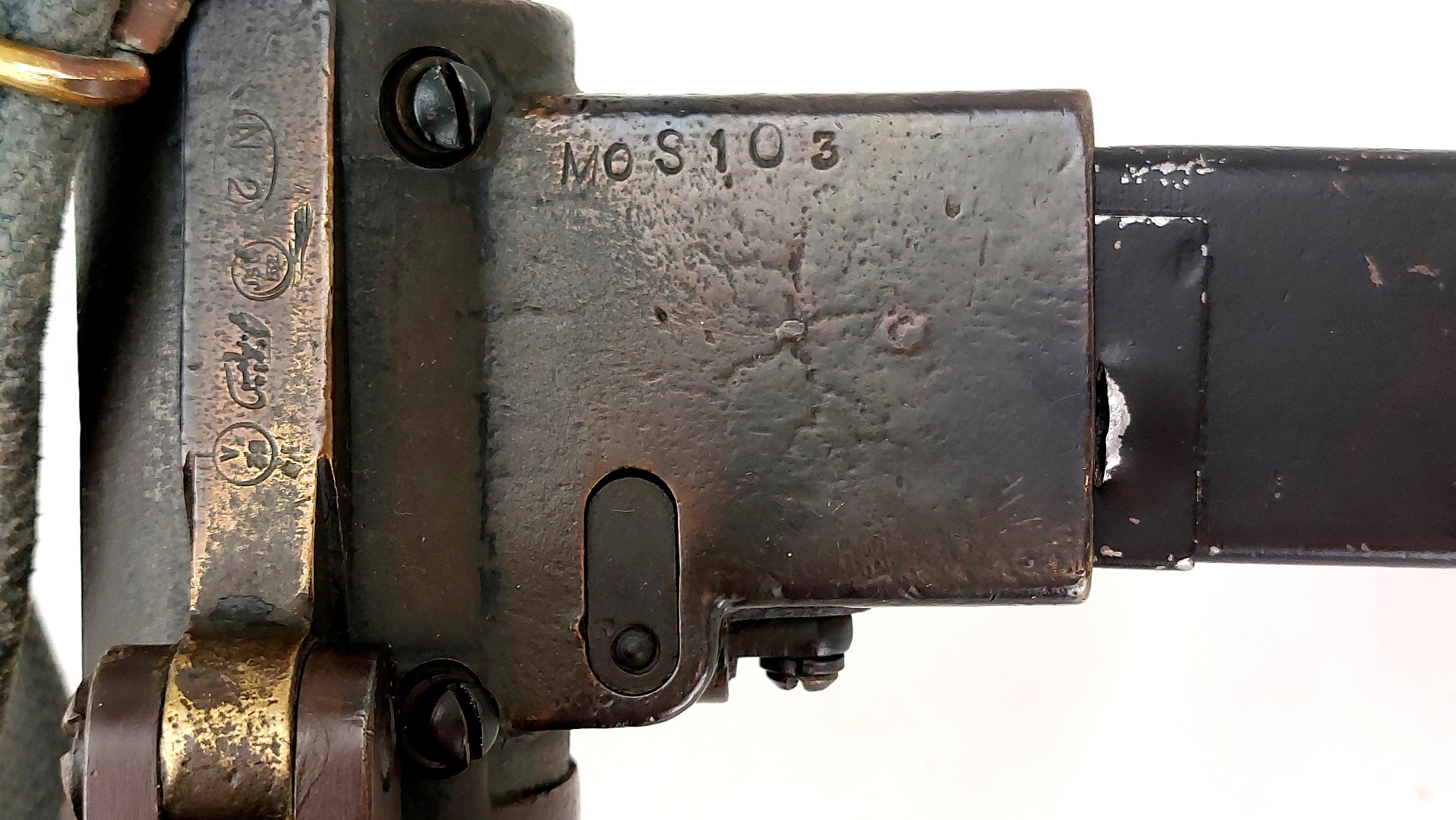
On the underside of the barrel jacket sits a distinctive post-war acceptance marks. The flowing cursive stamp is the documented Egyptian Police inspector’s cipher, photographed on Lanchesters, Stens and Brens in the WWII After WWII research archive and confirming later intake into Egyptian Ministry of Interior service. Adjacent is “MoS103”, an Egyptian Ministry of Security rack number, consistent with the alphanumeric system (“MoS / MOS / MS + numerals”) used for Egyptian Police and Internal Security SMGs in the 1950s–60s. Together these markings trace a rare and well-documented post-war trajectory: Royal Navy → Danish Civil Defence → Egyptian Police / Internal Security.
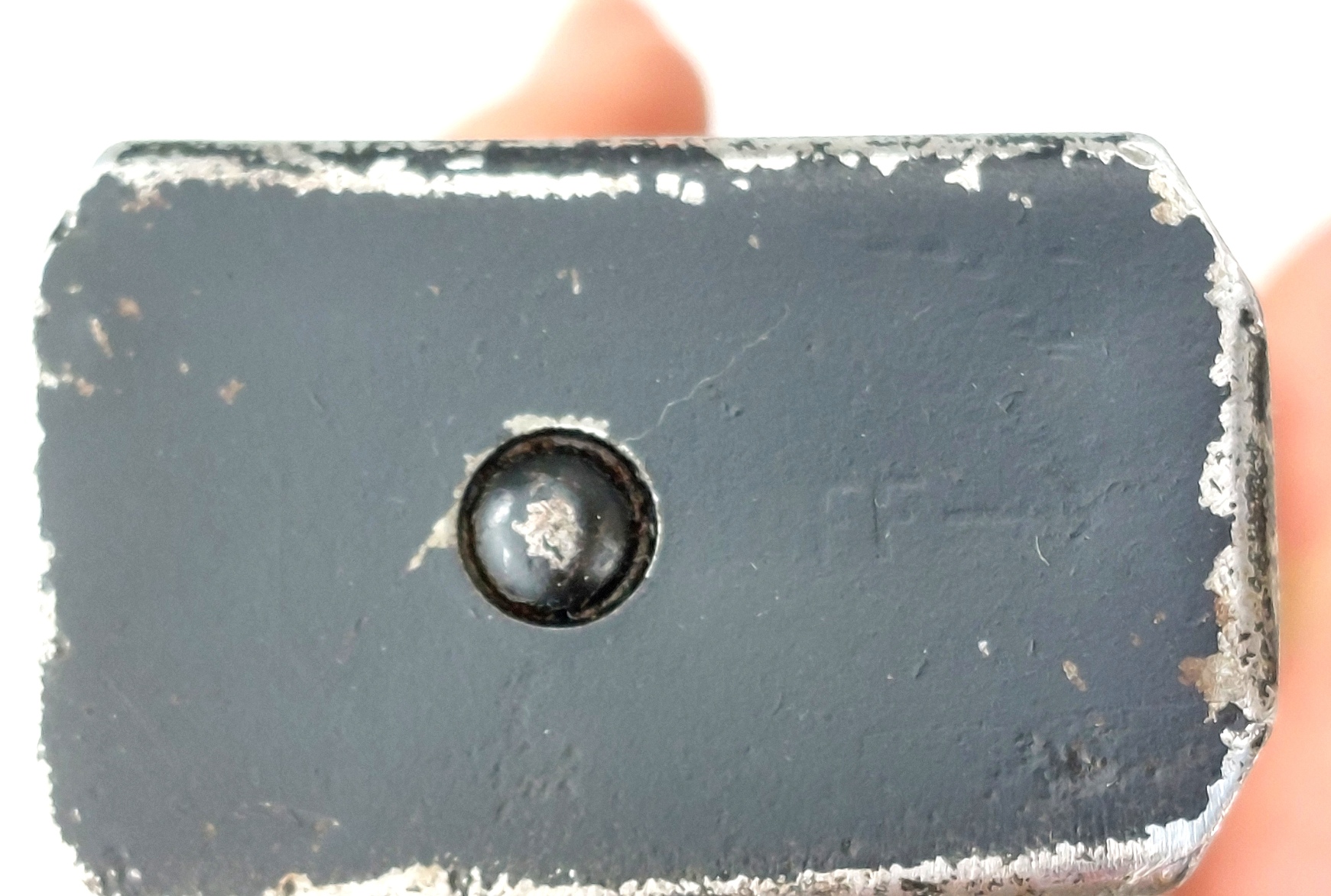
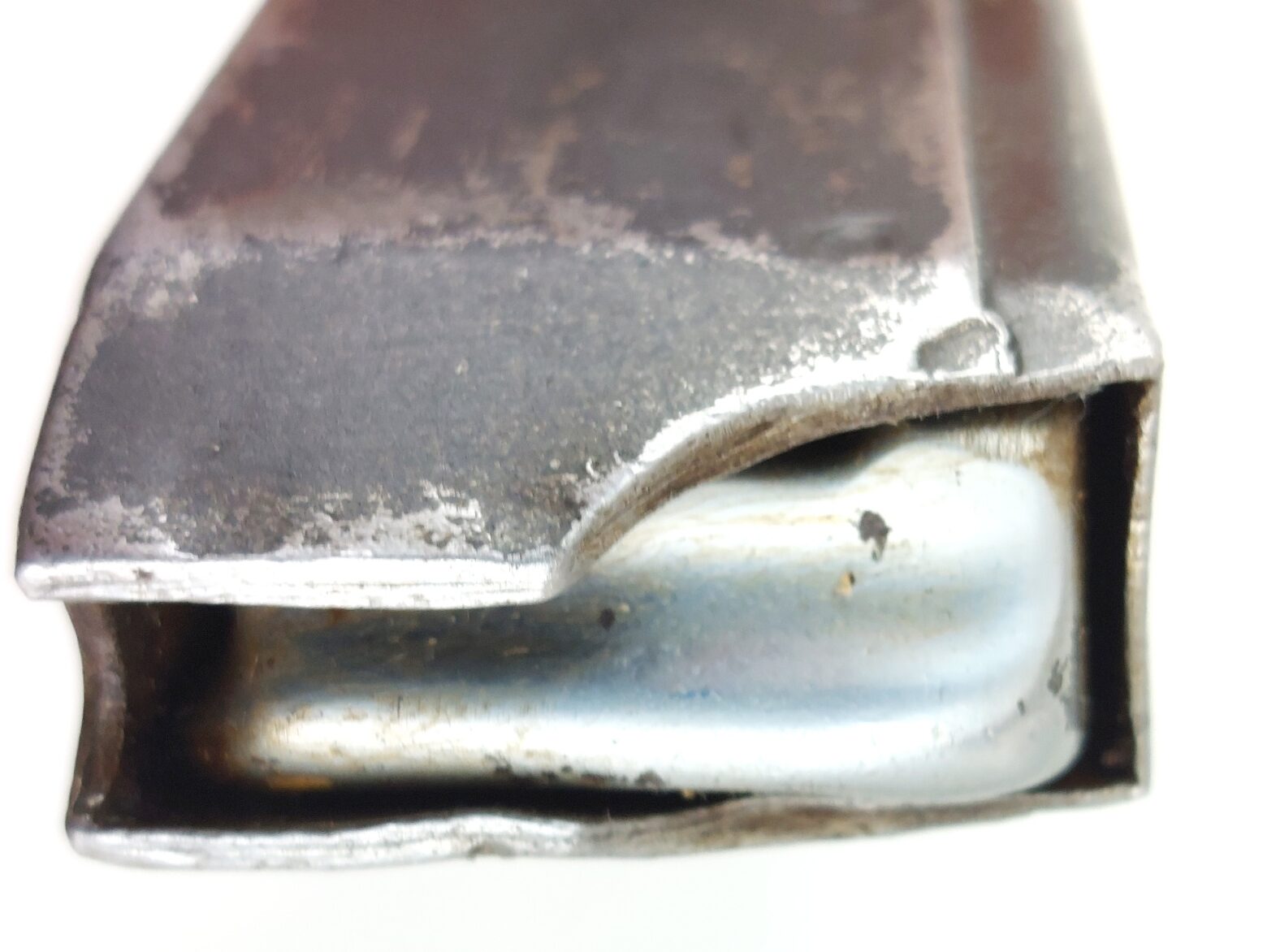
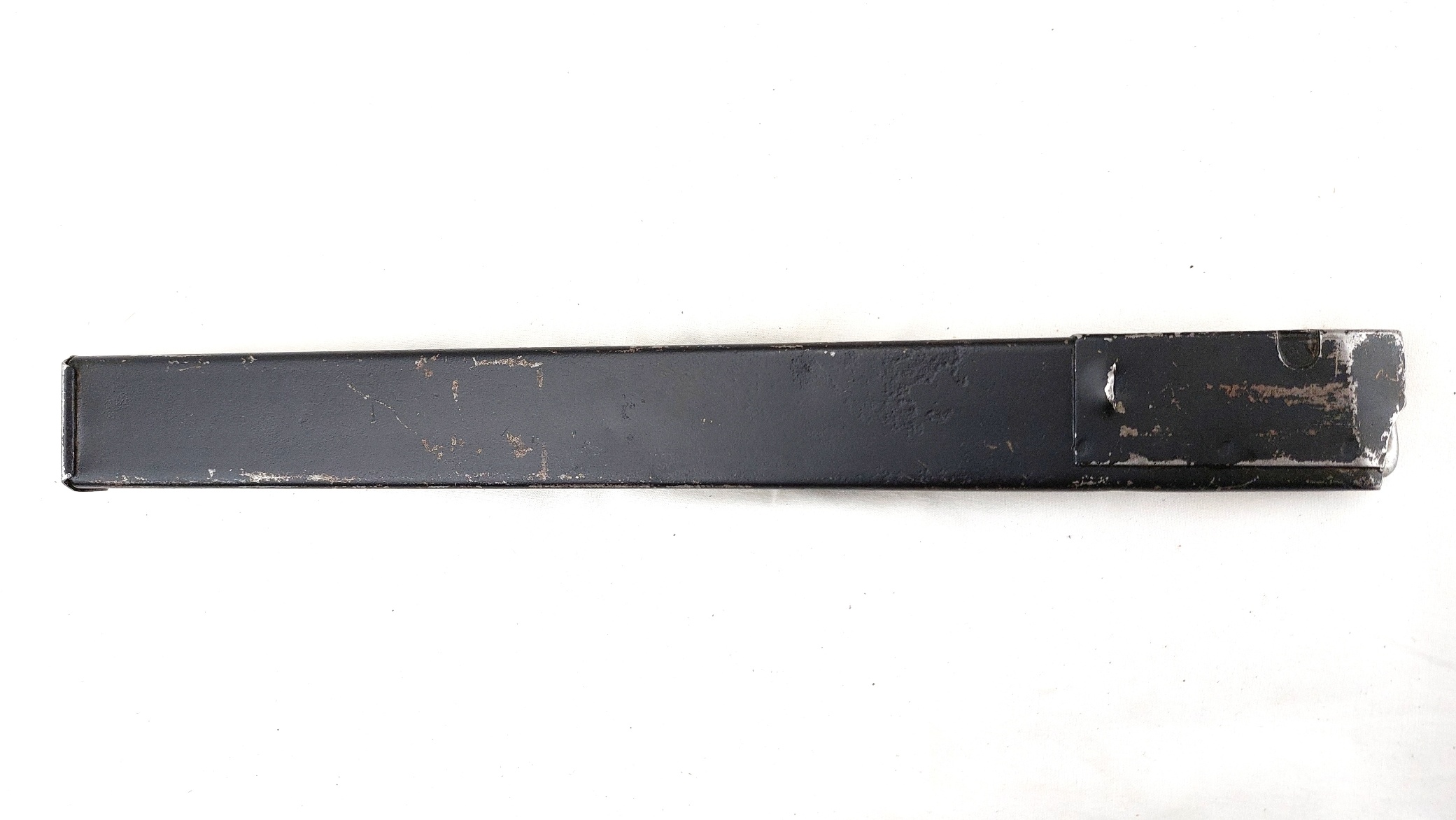
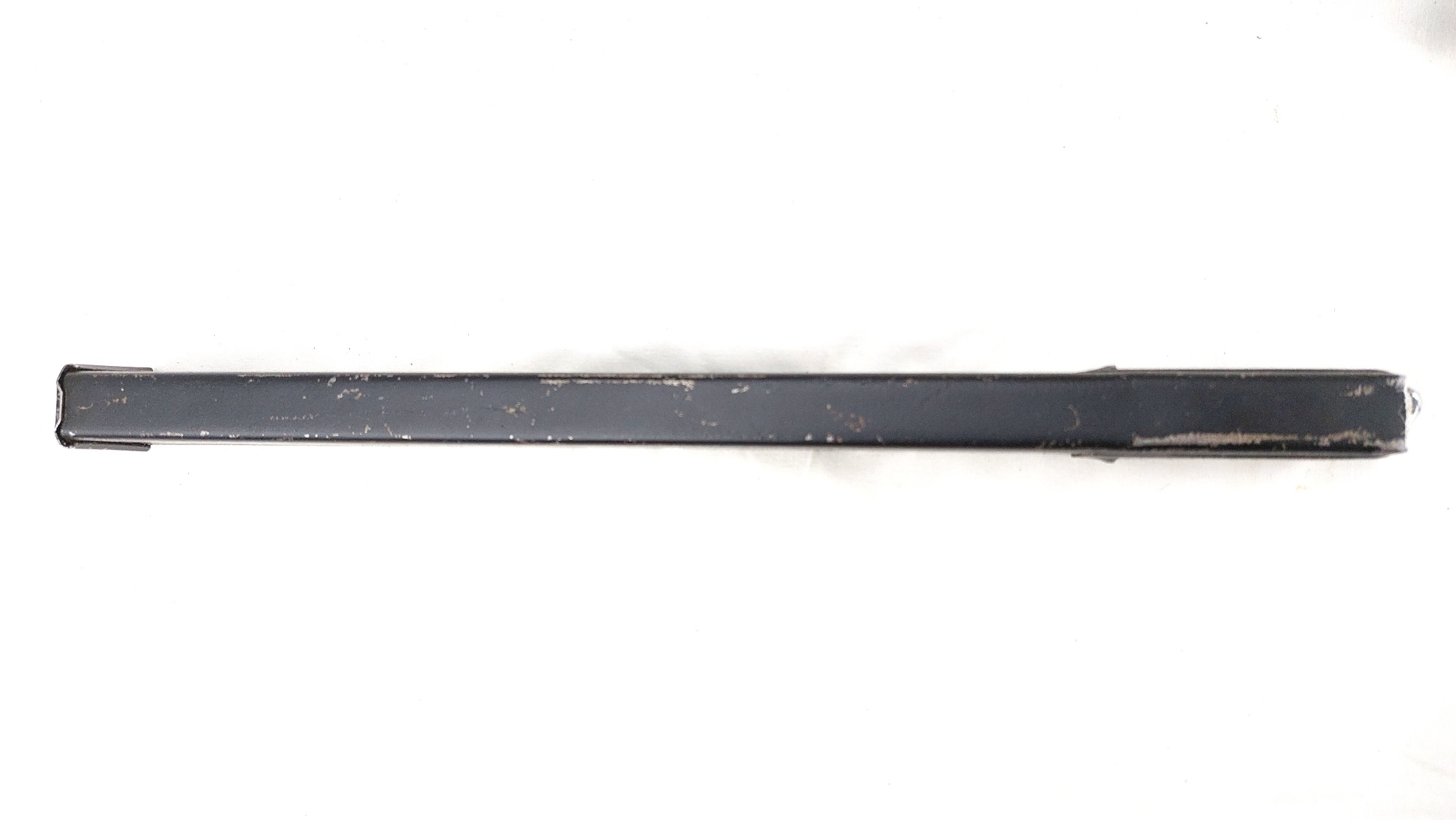
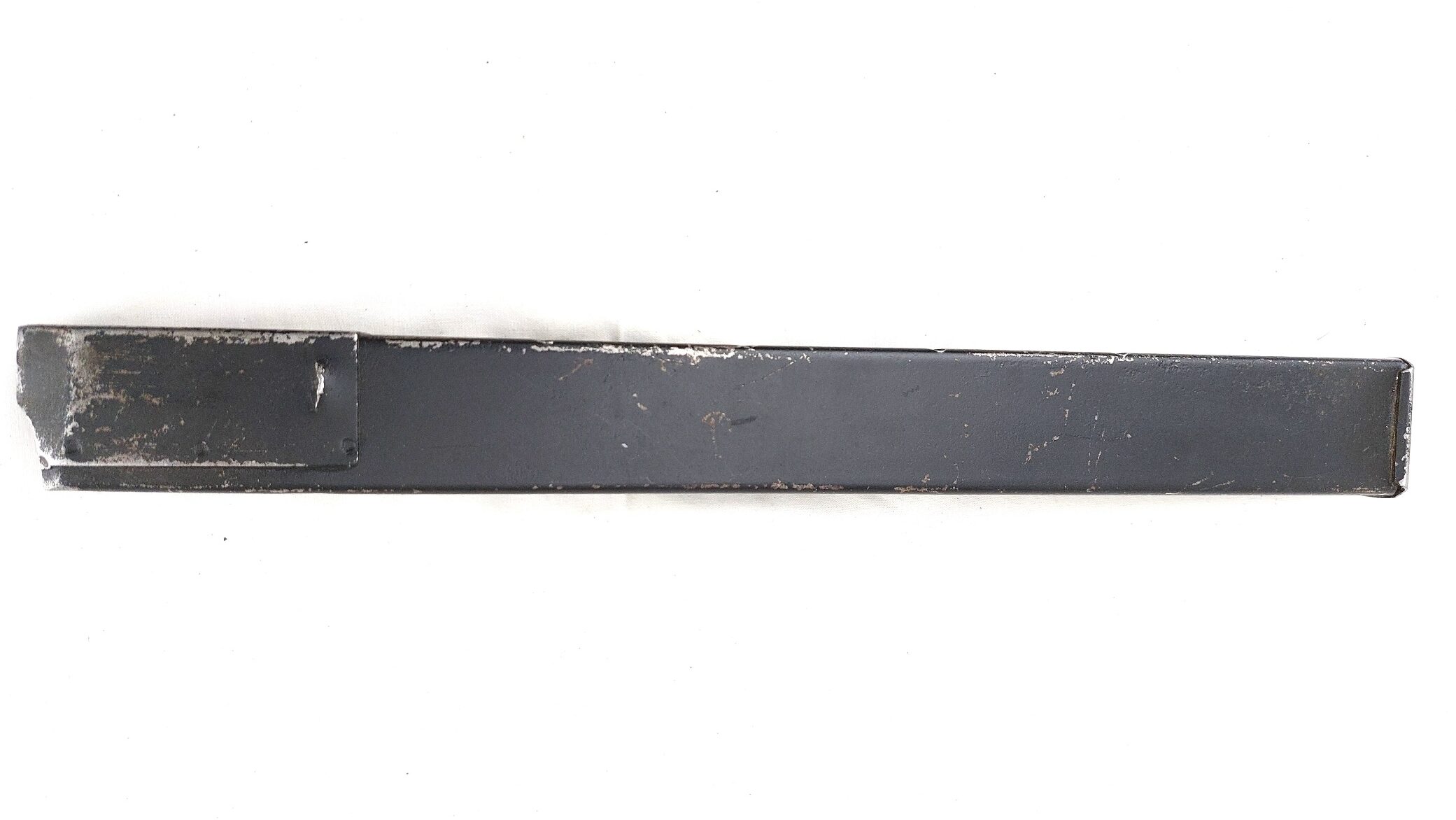
Further British inspector’s stamps include “V / 39” and the oval “No.2” bench mark. The 50-round magazine carries the correct wartime subcontractor code “FF”, attributed to Fisher & Ludlow Ltd., Birmingham, producers of pressed-steel magazines for both the Lanchester and Sten.
*Condition*
An attractive, honest example with untouched character. Metalwork shows service patina but no corrosion of concern; markings remain crisp and legible throughout. Woodwork retains its original naval-issue finish with expected operational dings and wear but no cracks or structural defects. Brass buttplate with oiler trap intact. Old-spec deactivation (Birmingham Proof House, 1989): cocks and dry-fires, selector and safety operate smoothly, and bolt movement is clean. Sling remains complete and period correct. A superior, unmolested example with exceptional provenance. Please see photographs as part of the condition report.
RQMAOOOXAFEO_1749222244