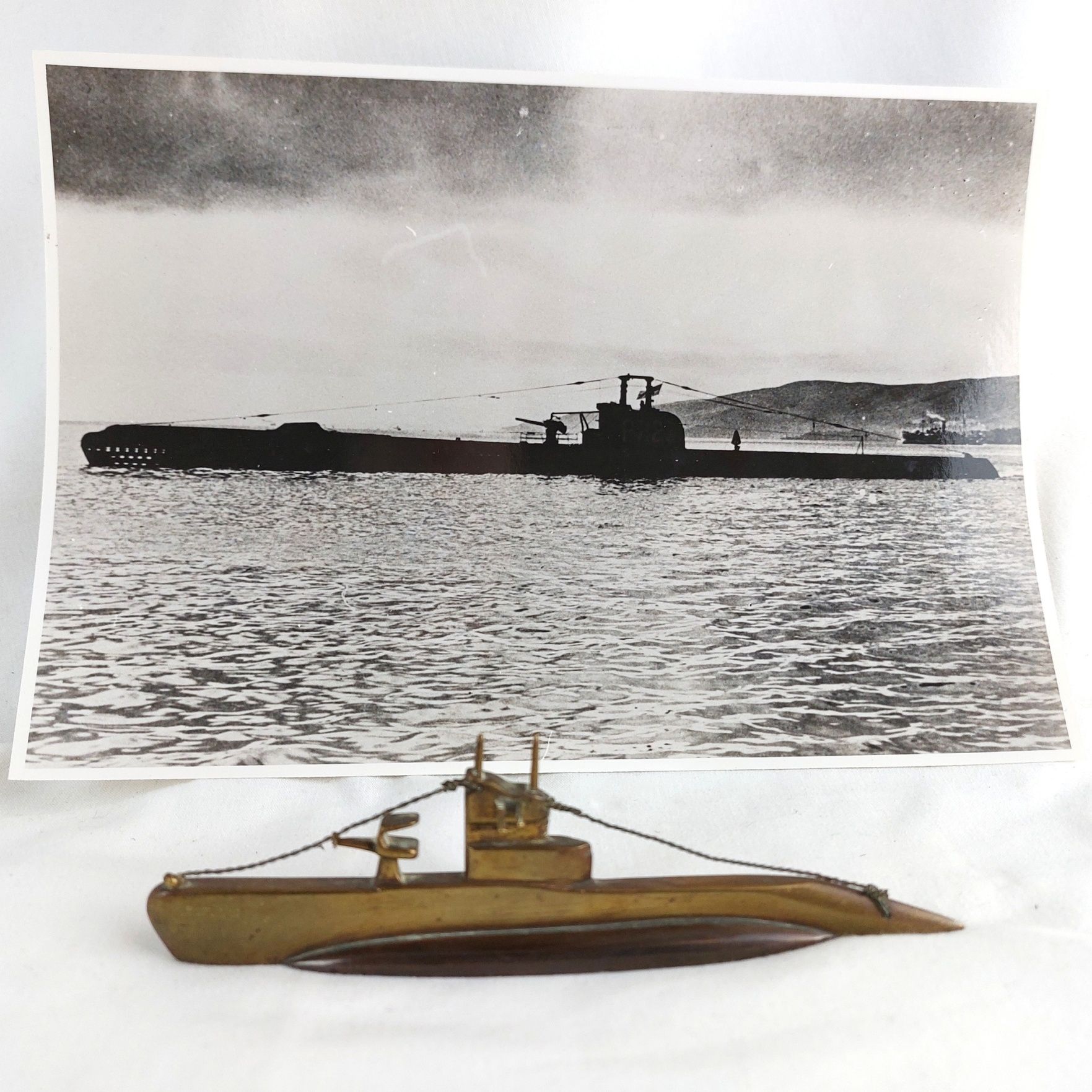
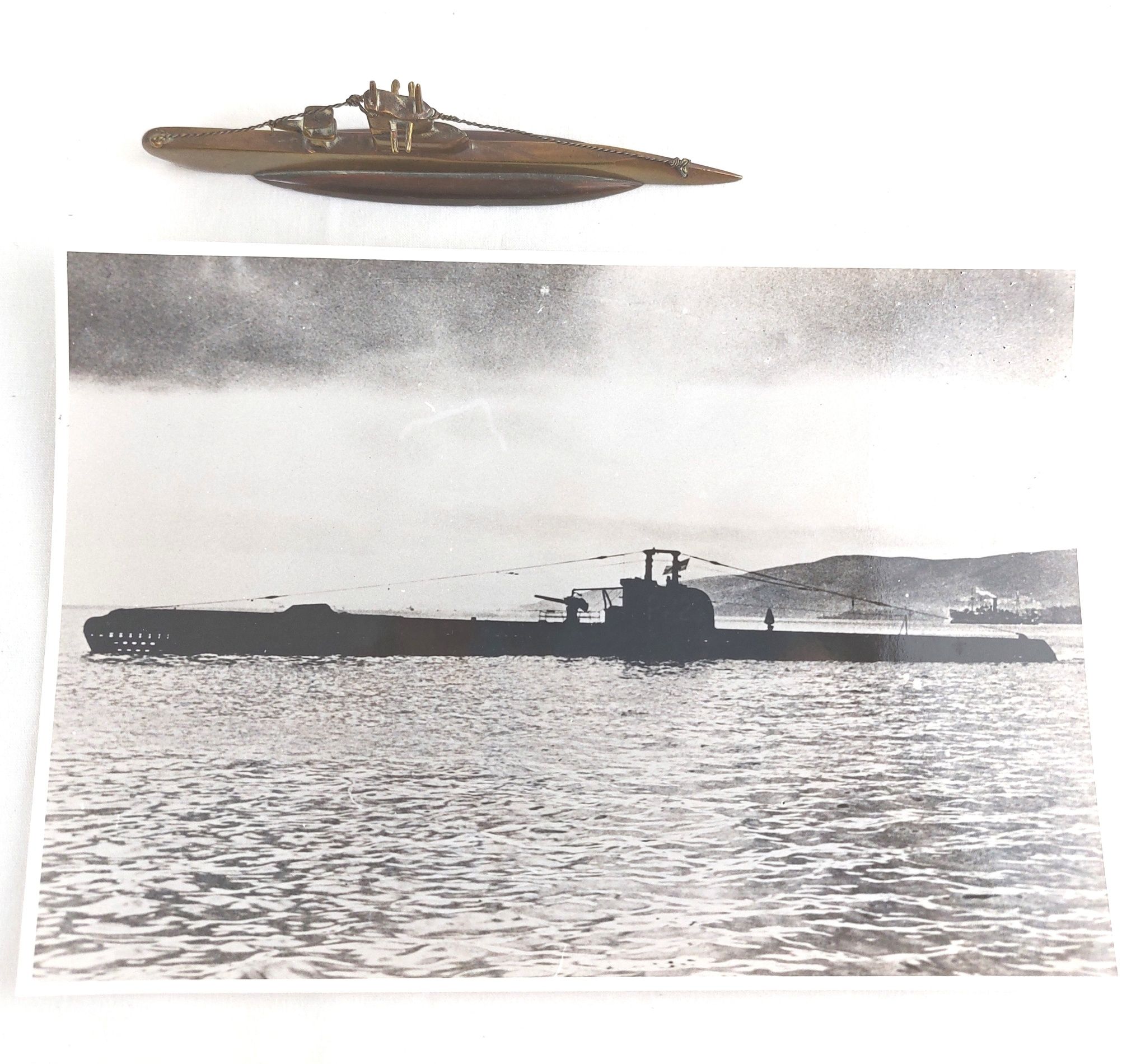
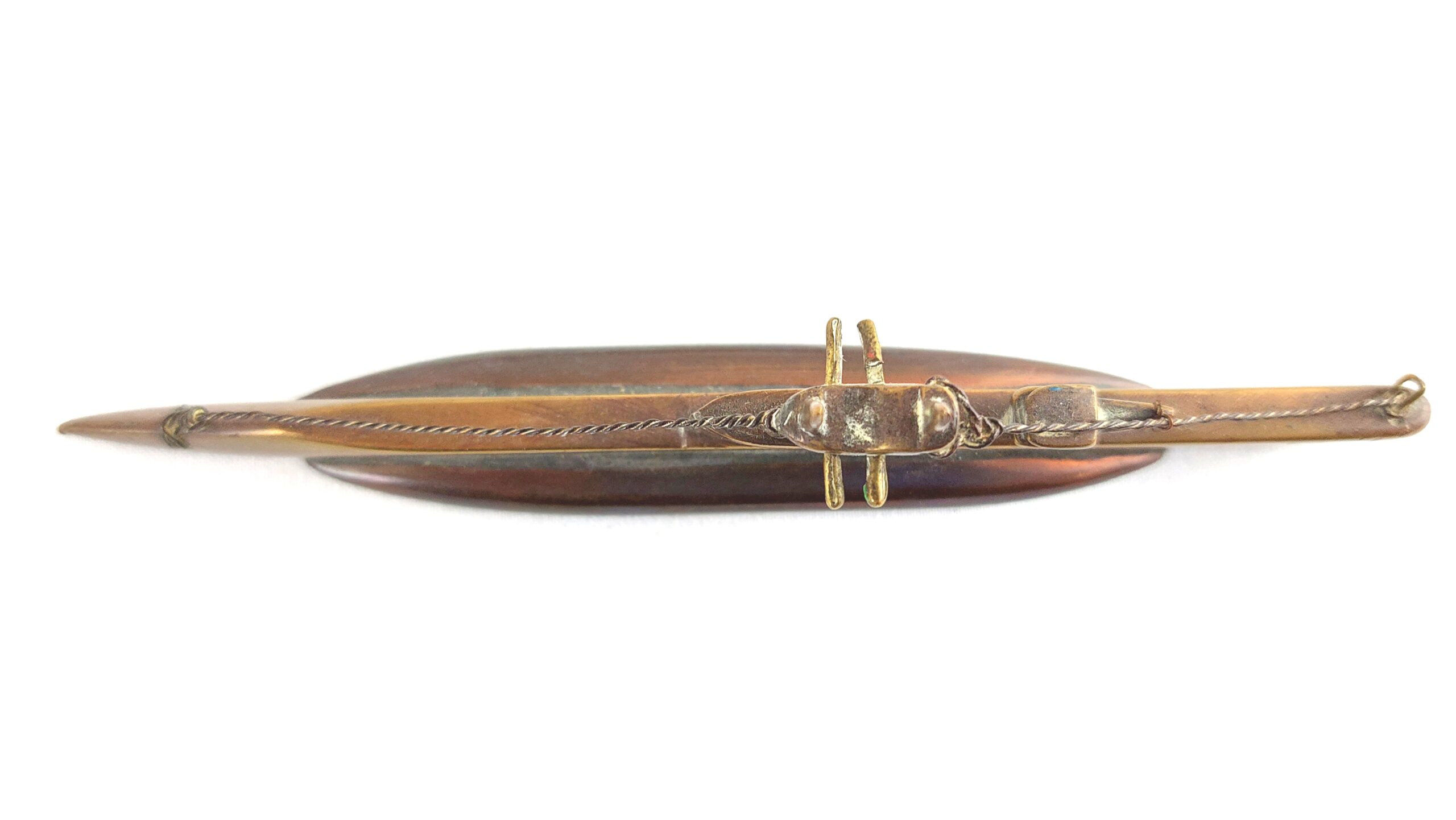
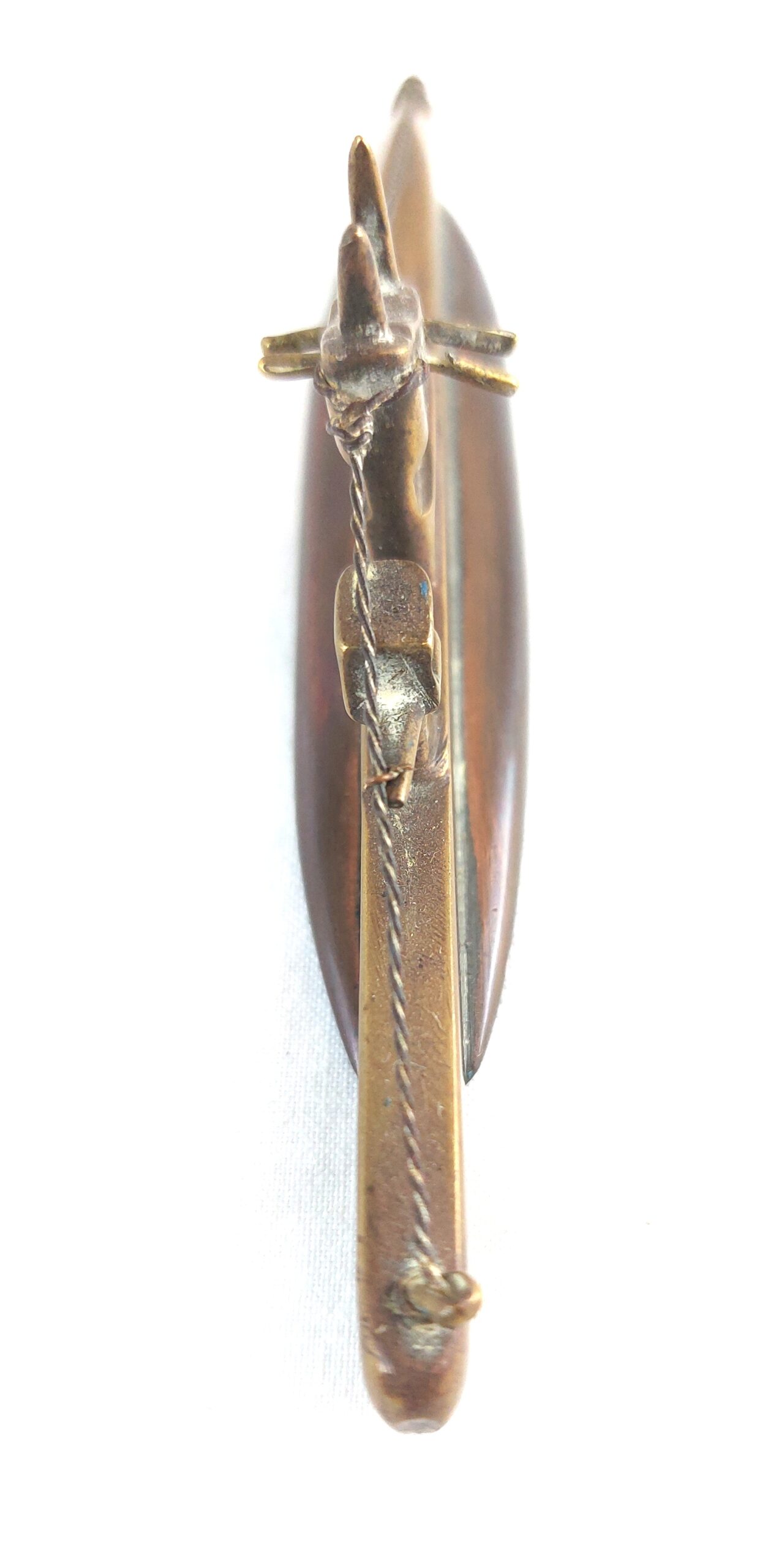
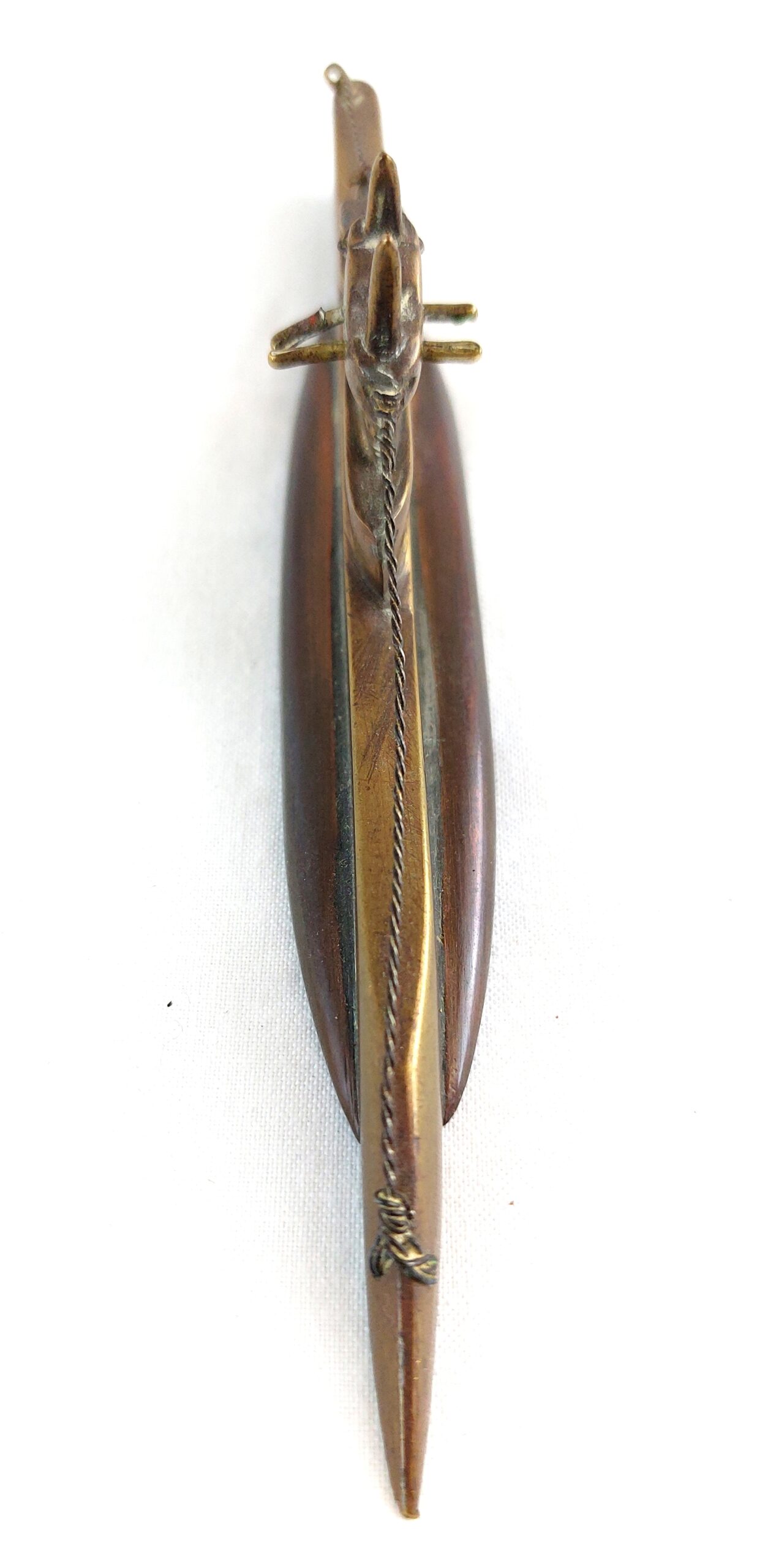
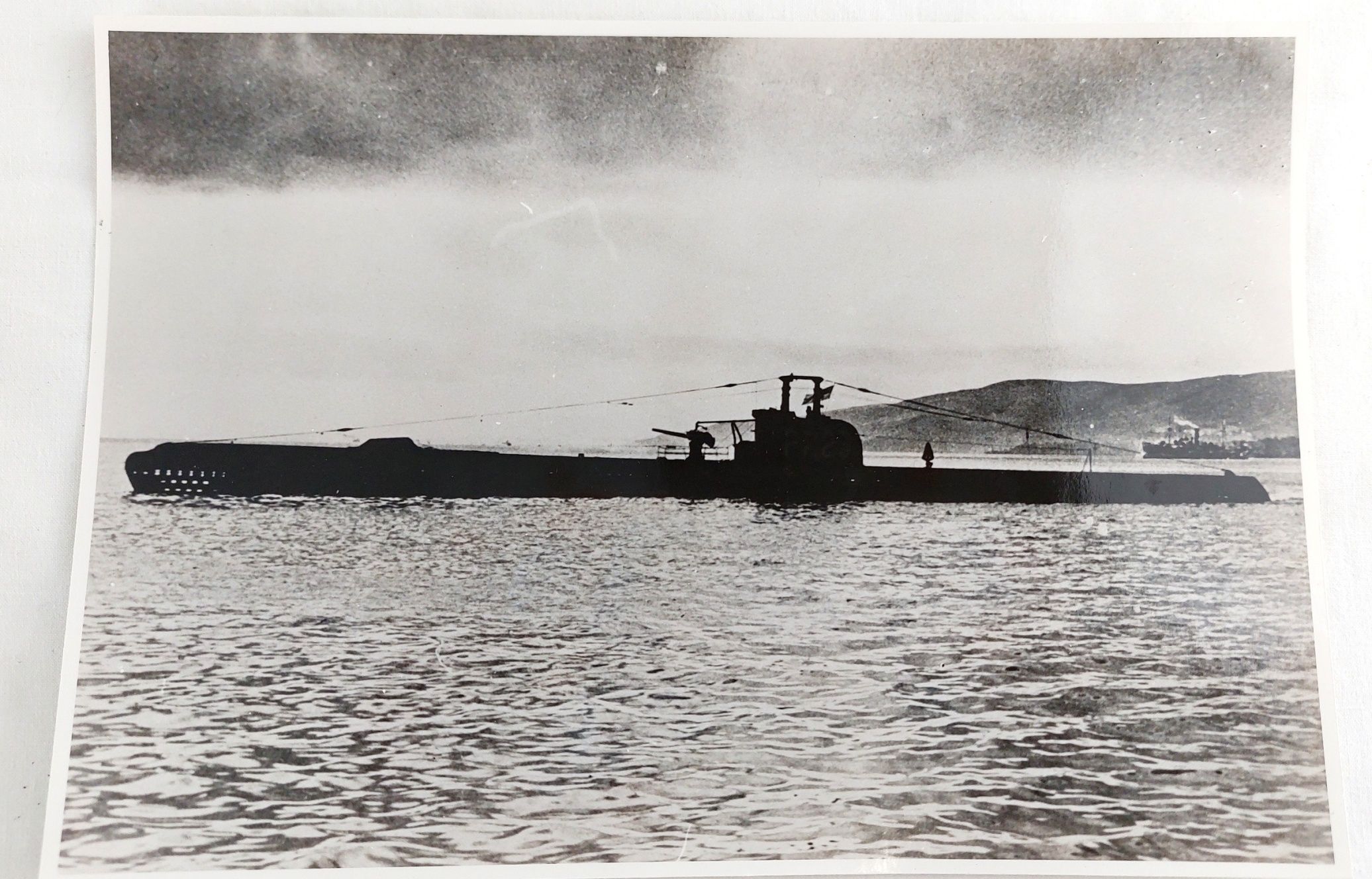
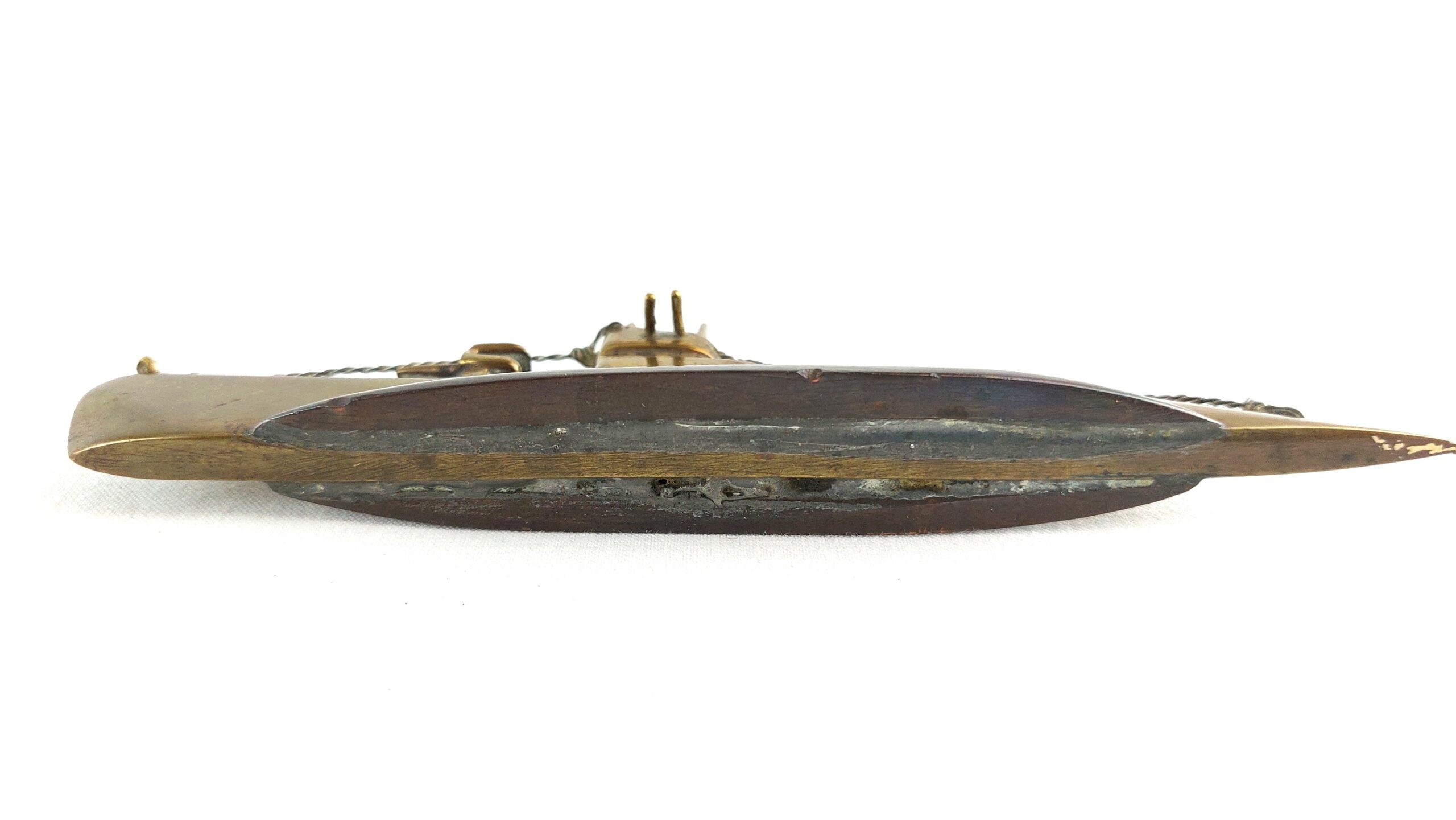
*British, WW2, HMS Sea Nymph - Original Photograph and Small Brass Model of S-Class Submarine*
Approximate Dimensions:
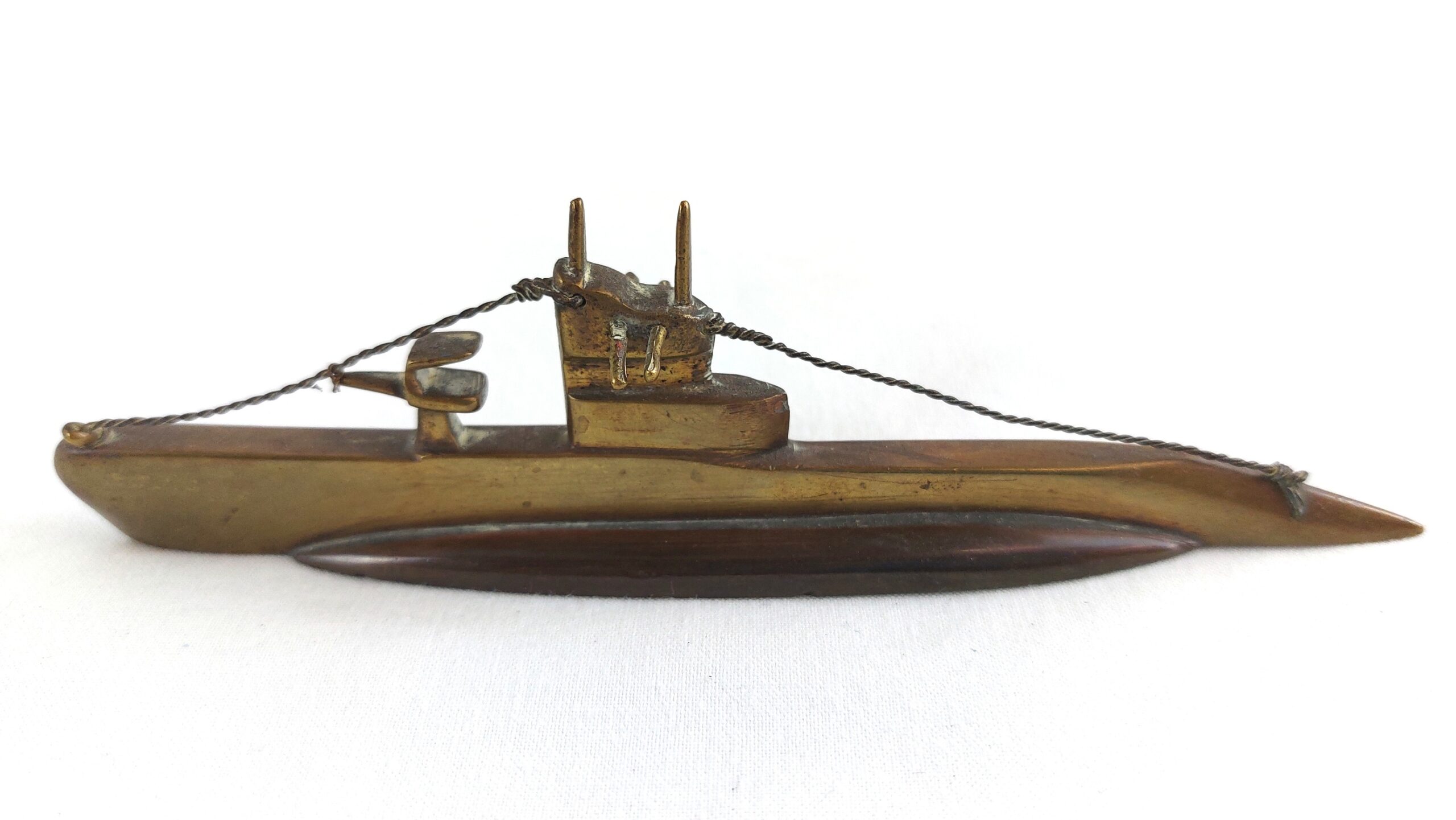
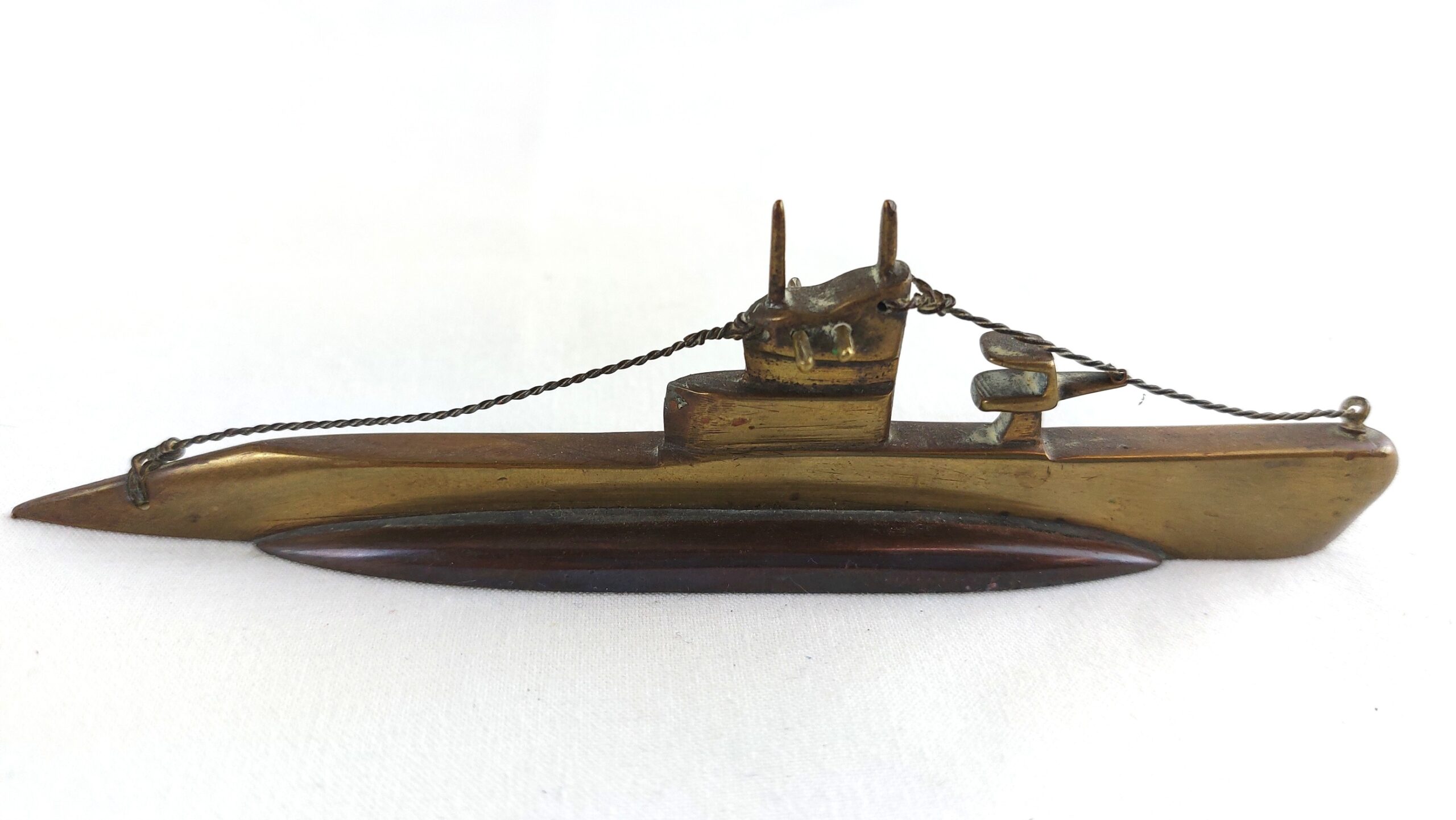
Brass Model: 14.8cm x 4.2 tall x 2cm wide
Photograph: 25cm x 17.4cm
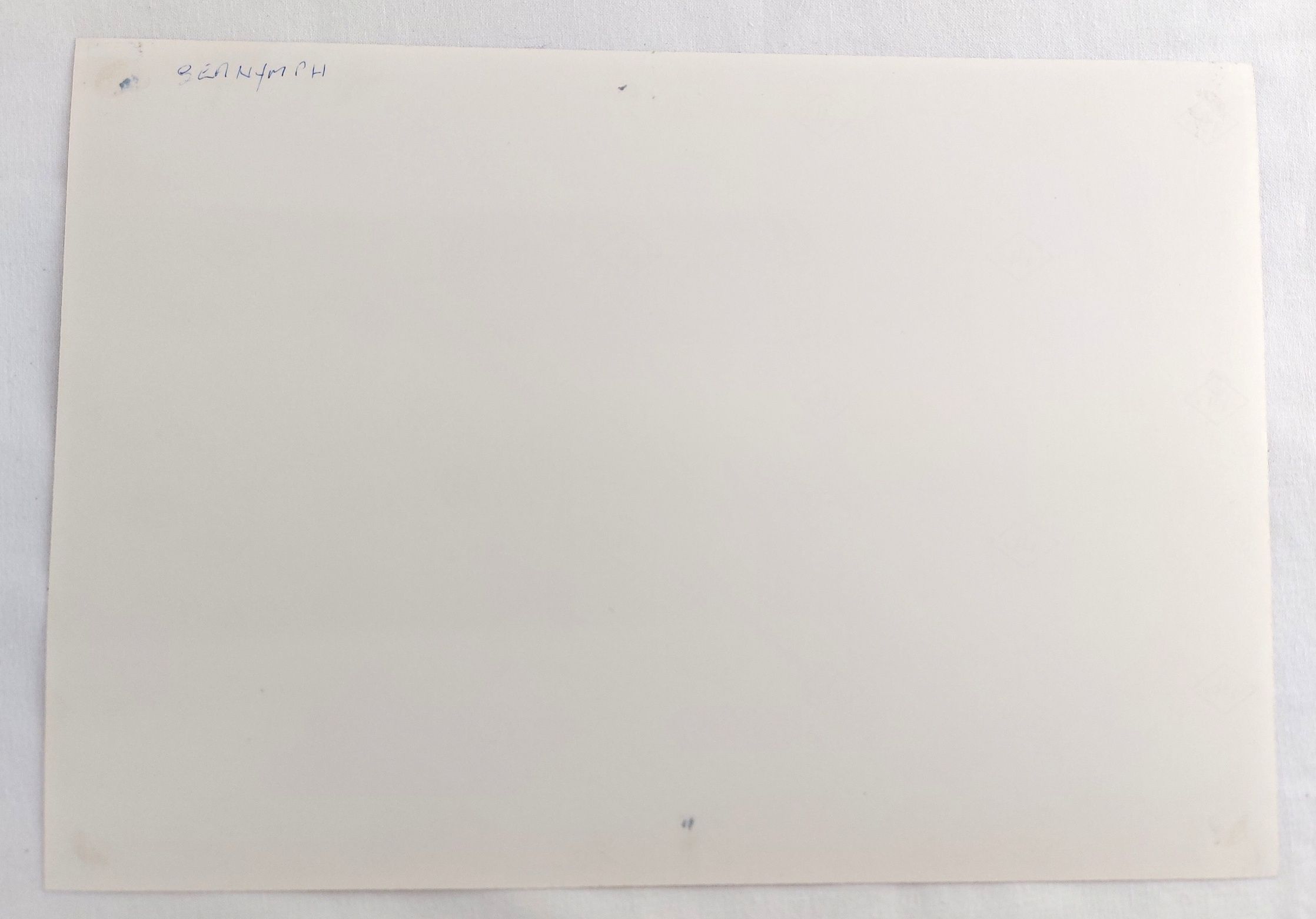
The brass model features an unnamed WW2 British submarine, likely S-Class. Accompanied by an original photograph of HMS Sea Nymph. This photograph originally formed part of the Lou Britton British Submarine Collection, which was acquired by the Royal Navy Submarine Museum, Gosport in 2007.
HMS Sea Nymph was a third-batch S-class submarine launched by Cammell Laird in July 1942 and commissioned in November 1942. During World War II, she patrolled the North Sea, Bay of Biscay, and Arctic waters, but her missions were largely uneventful, with several torpedo attacks on German ships and U-boats missing their targets.
In 1943, Sea Nymph participated in Operation Source, towing the midget submarine X8 to attack the German battleship Tirpitz. However, X8 was scuttled due to technical issues, and the mission was aborted. She later transported British agents to Norway and continued patrols, but with little success.
In March 1944, she was sent to the U.S. for refit and returned to service by October. Reassigned to the Pacific in 1945, Sea Nymph experienced battery issues and, after reaching the Philippines, suffered fire damage that rendered her beyond local repair. With the war ending, she returned to Britain and was placed in reserve. In June 1948, she was scrapped in Troon, Scotland.
Design
The third-batch S-class submarines displaced 865 long tons (surface) and 990 long tons (submerged). They measured 217 ft in length with a 23 ft 9 in beam and had a diving depth of 300 ft. Powered by diesel engines and electric motors, they reached 15 knots (surface) and 10 knots (submerged) with a range of 6,000 nautical miles. Armaments included seven 21-inch torpedo tubes, a 3-inch deck gun, and an optional 20 mm Oerlikon gun, along with advanced radar and ASDIC systems.
The Royal Navy's S-class submarines were developed in the early 1930s to replace the H-class and patrol restricted waters like the North Sea and Mediterranean. The "S" in S-class submarines stands for "Small" or "Short-Range", reflecting their design purpose, where their smaller size and range made them highly effective. During World War II, they became the largest submarine class built for the Royal Navy, with 62 constructed over 15 years, including 50 "improved" versions launched between 1940 and 1945. At the war's start, the S class was among the most advanced submarine designs, alongside the British U and T classes, Dutch O 21 class, and German Type VII. Of the twelve S-class boats that were in service in 1939, only three survived to see the end of World War II.
*Condition*
Good used condition. Minor marks to the model commensurate with age and service. Please see photographs as part of the condition report.
RQMAEOXBDO_5965192606