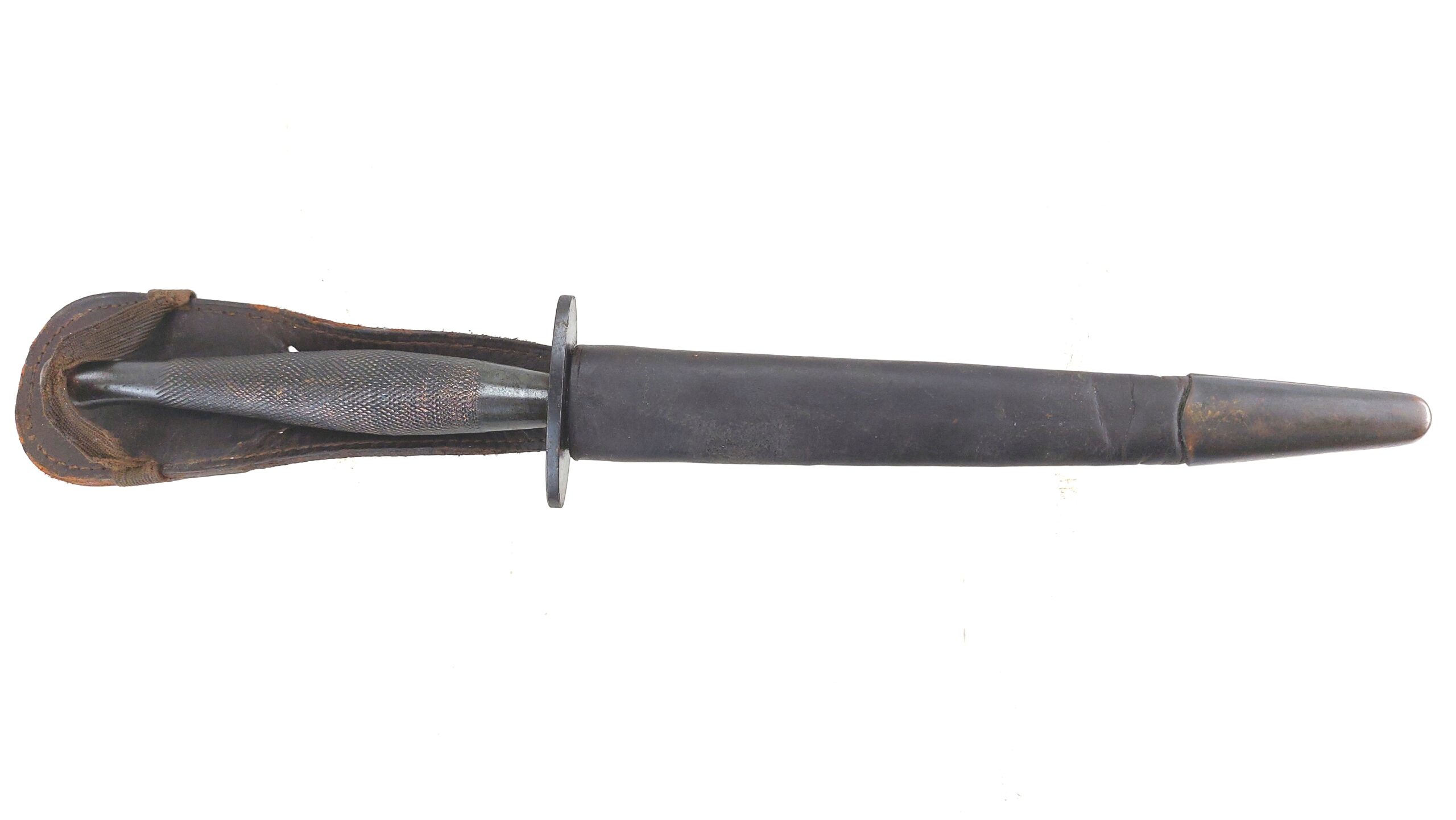
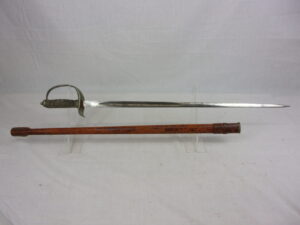
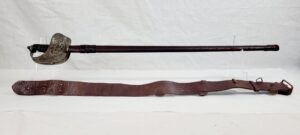
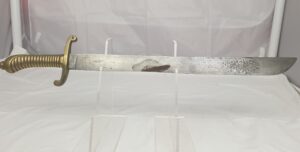
*British, WW2, 2nd Pattern Fairbairn-Sykes Fighting Knife by Wilkinson Sword, with Original Sheath*
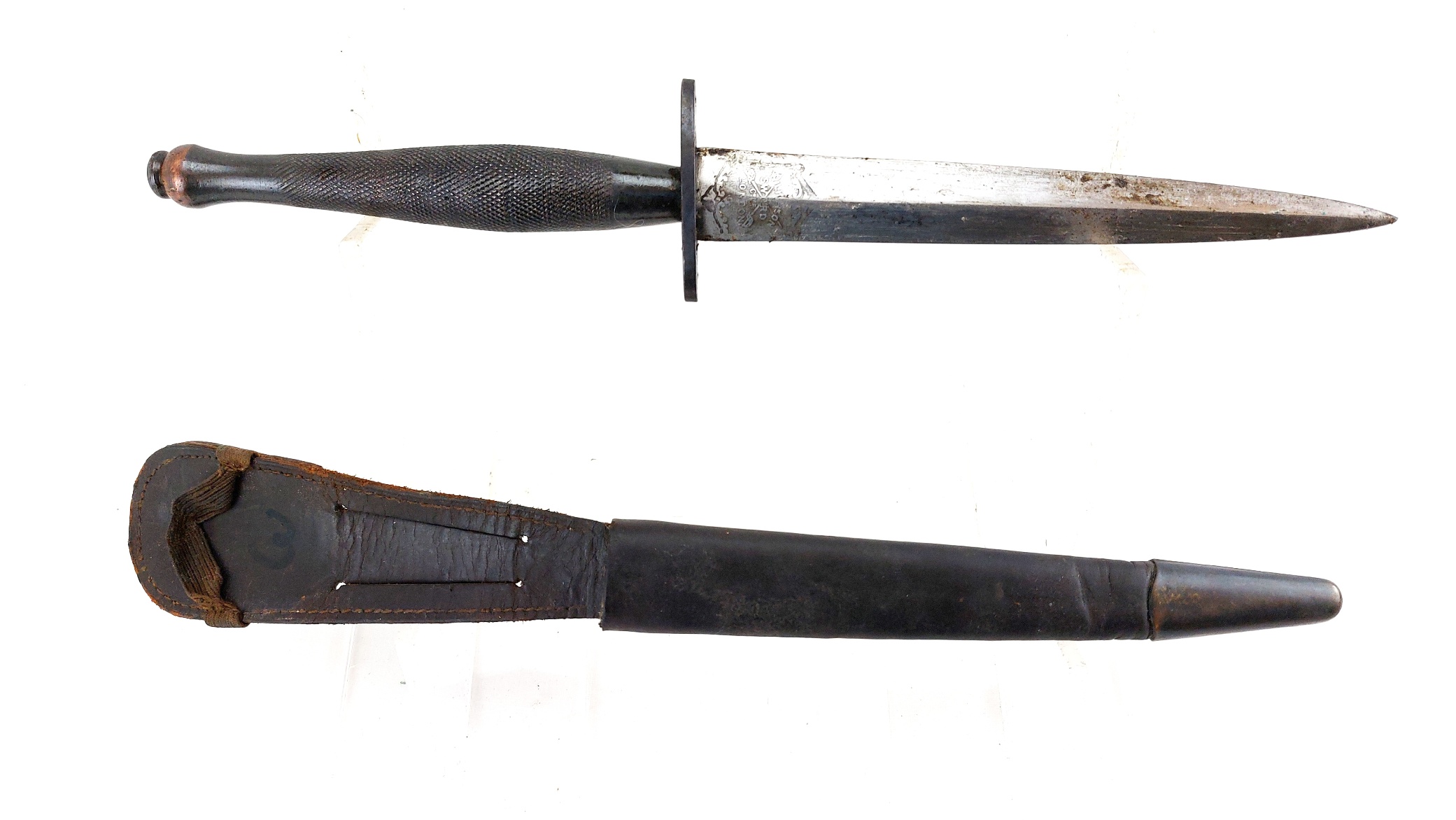
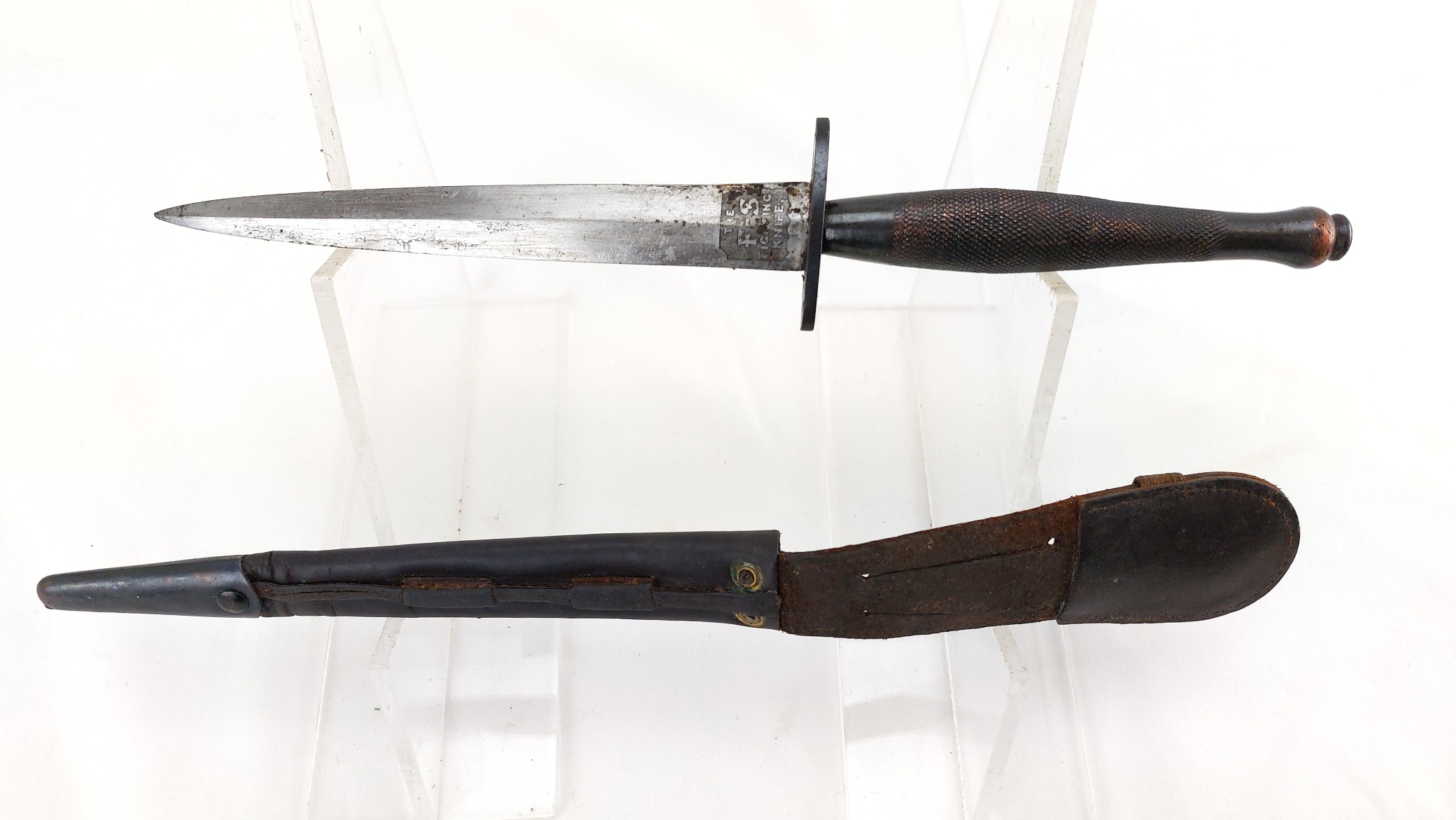
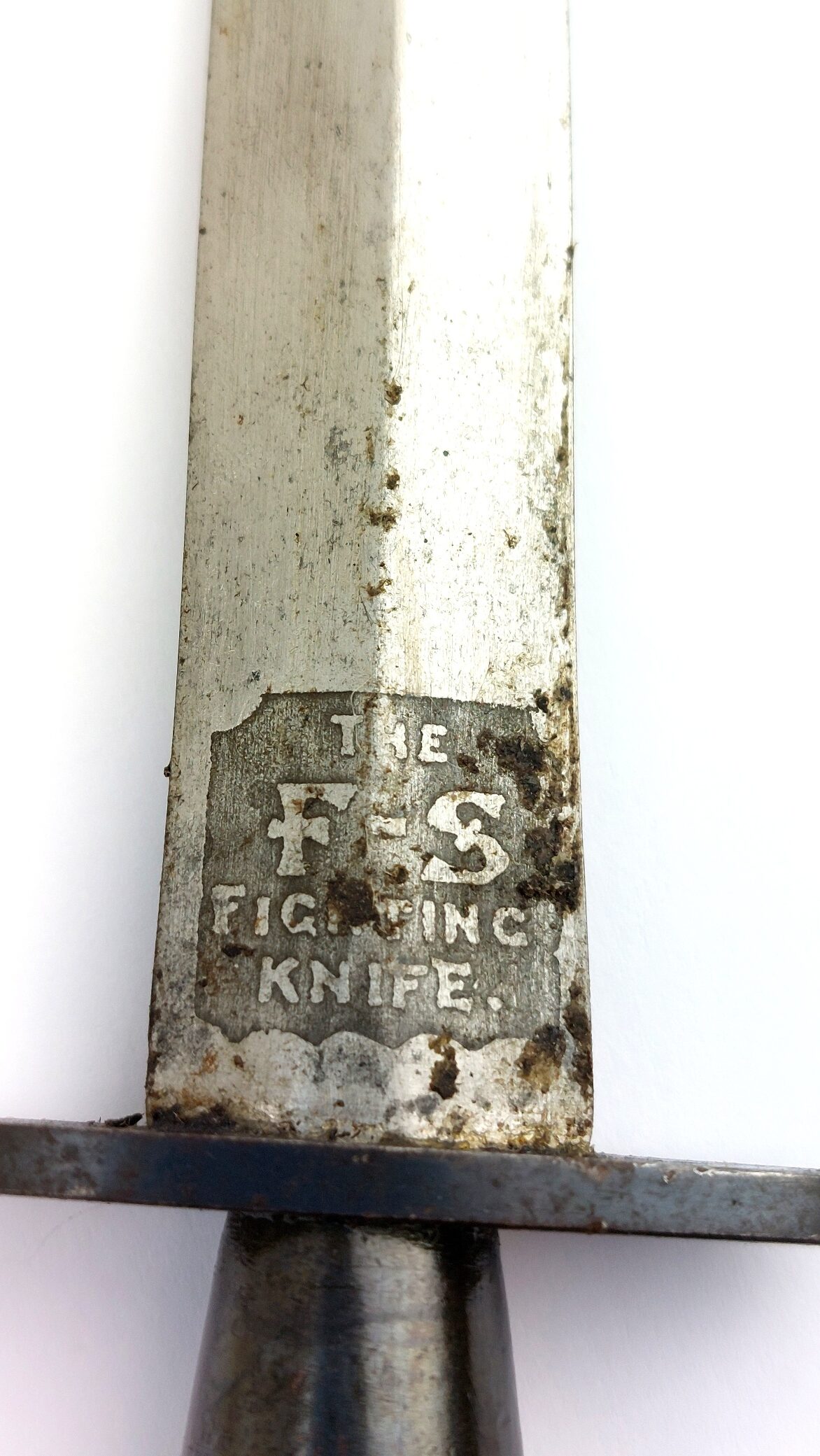
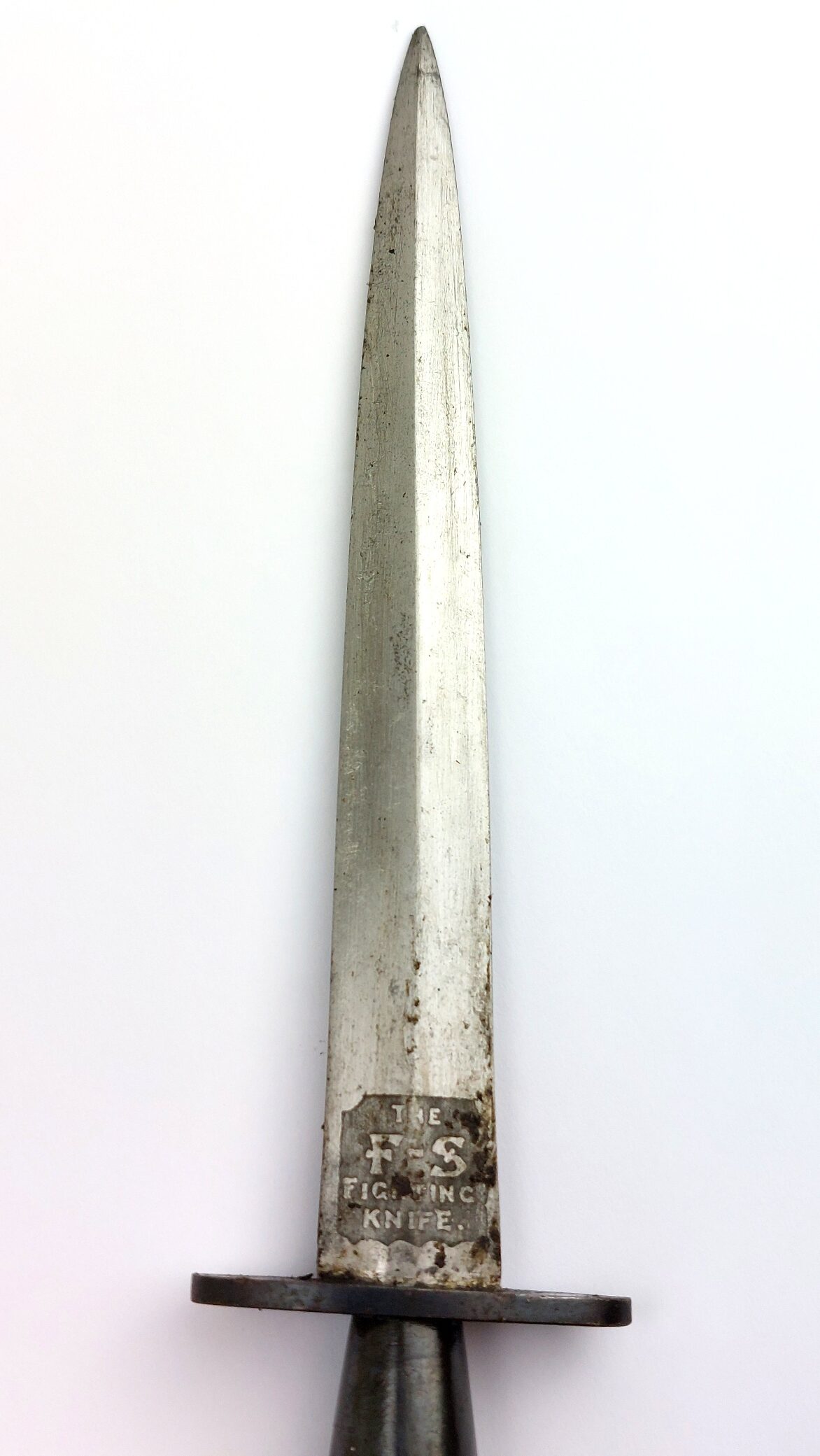
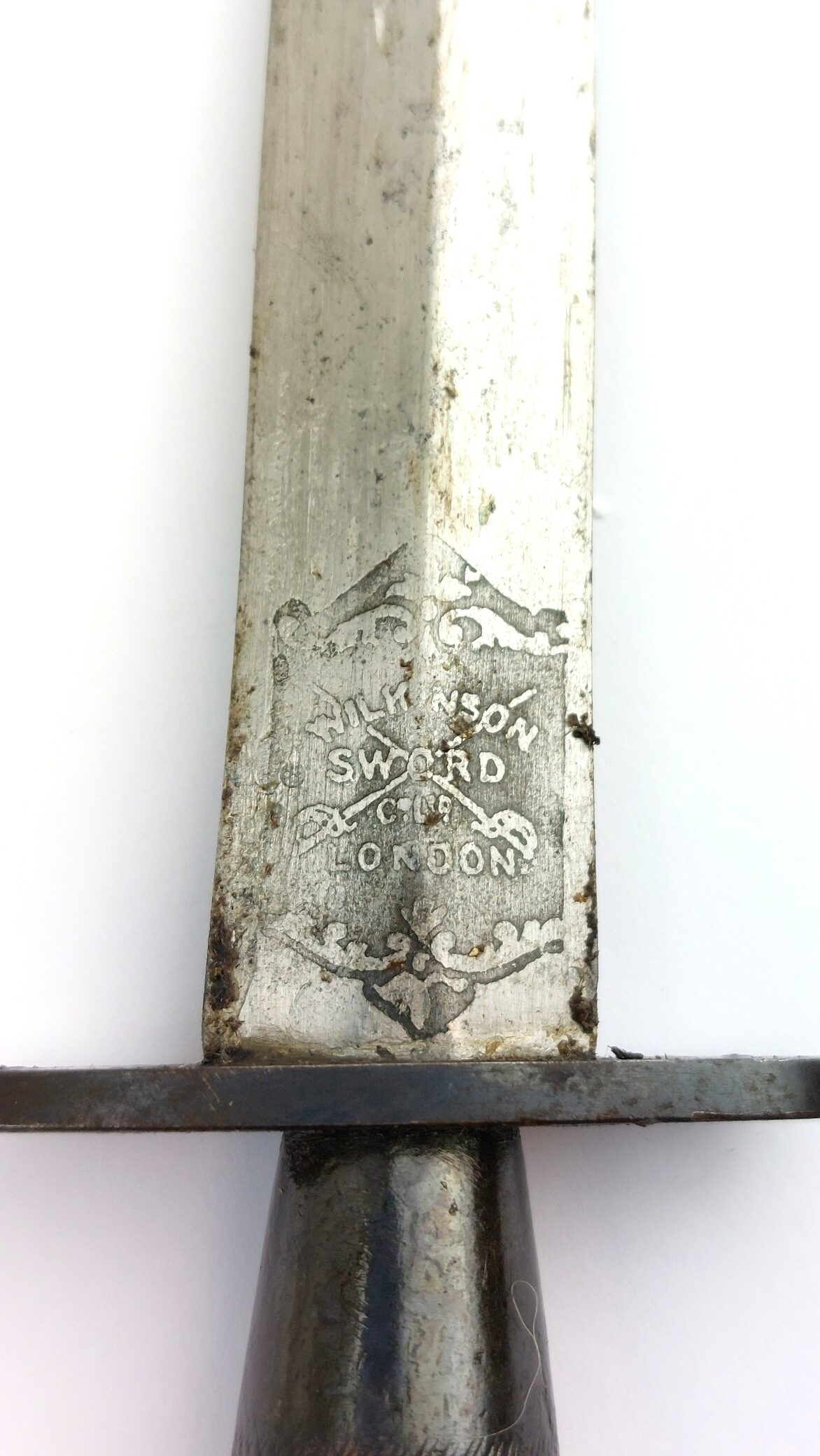
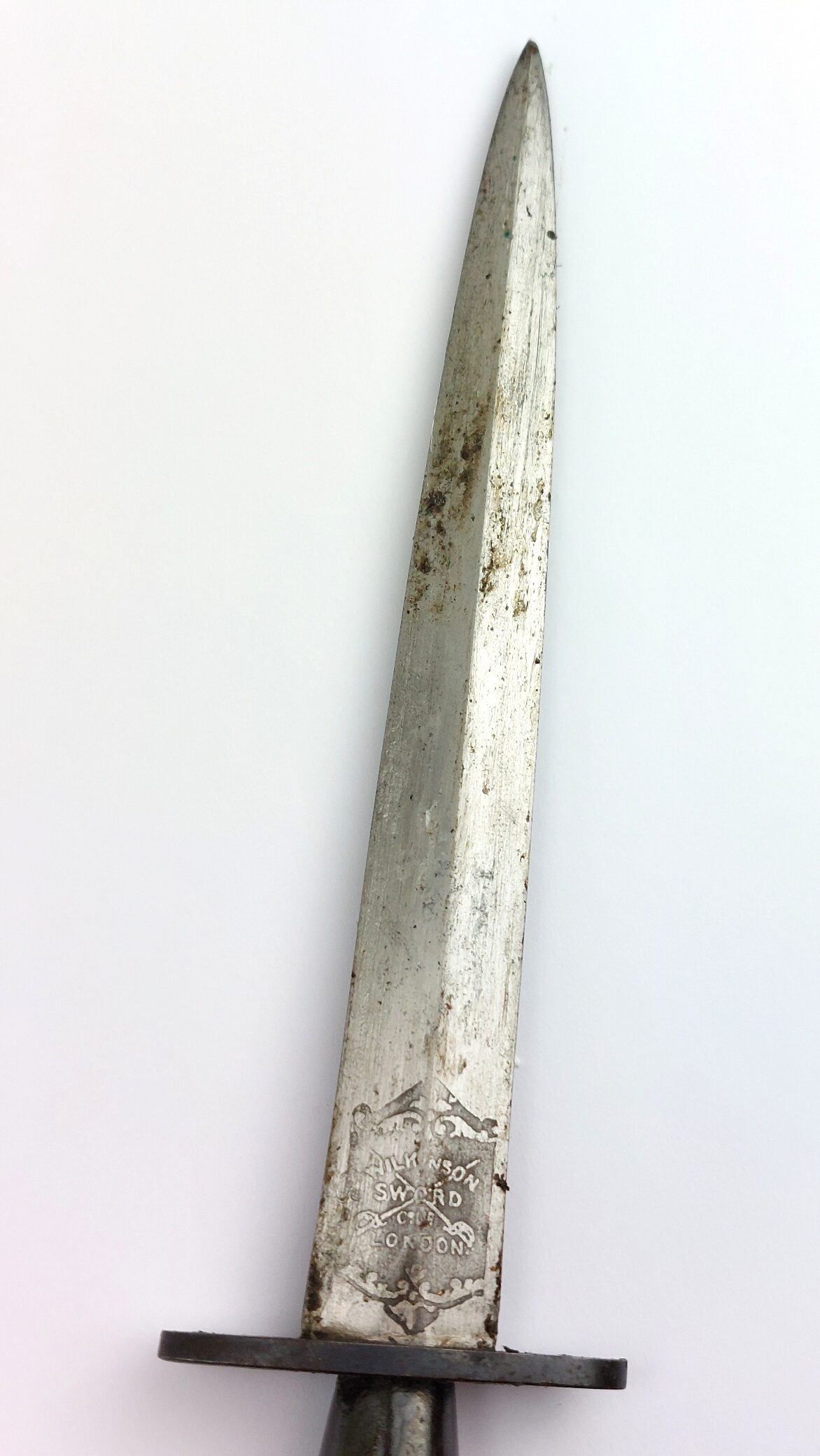
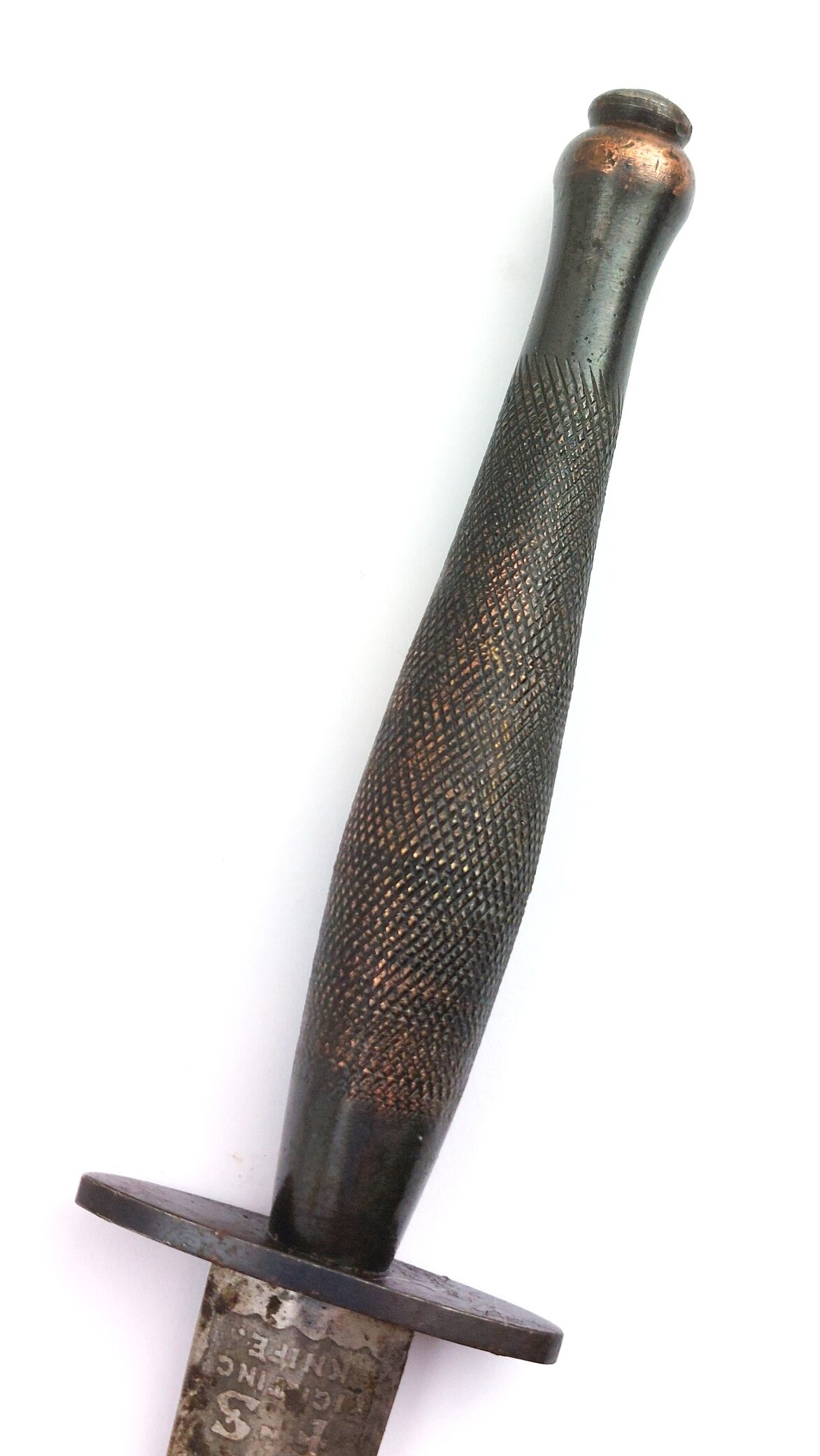
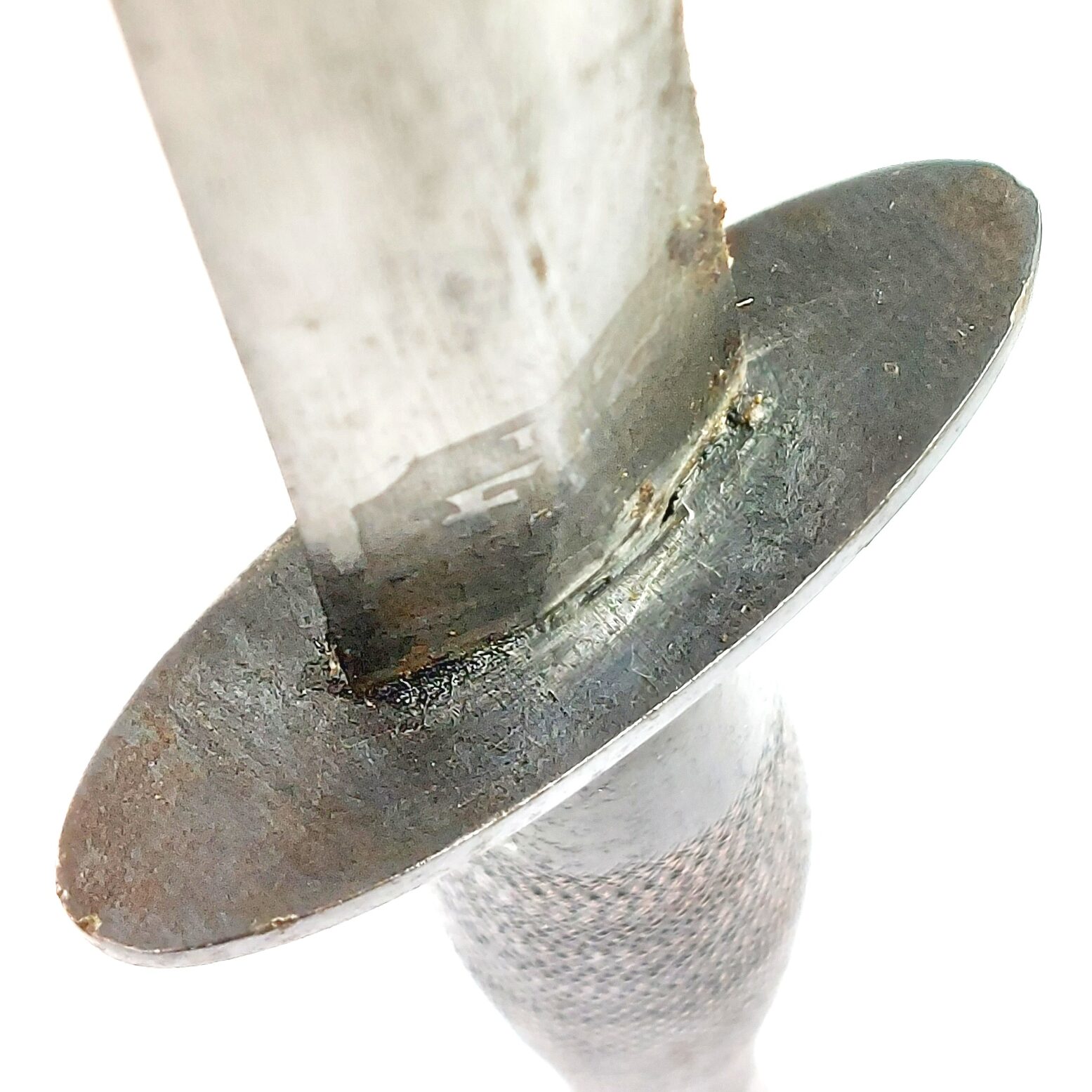
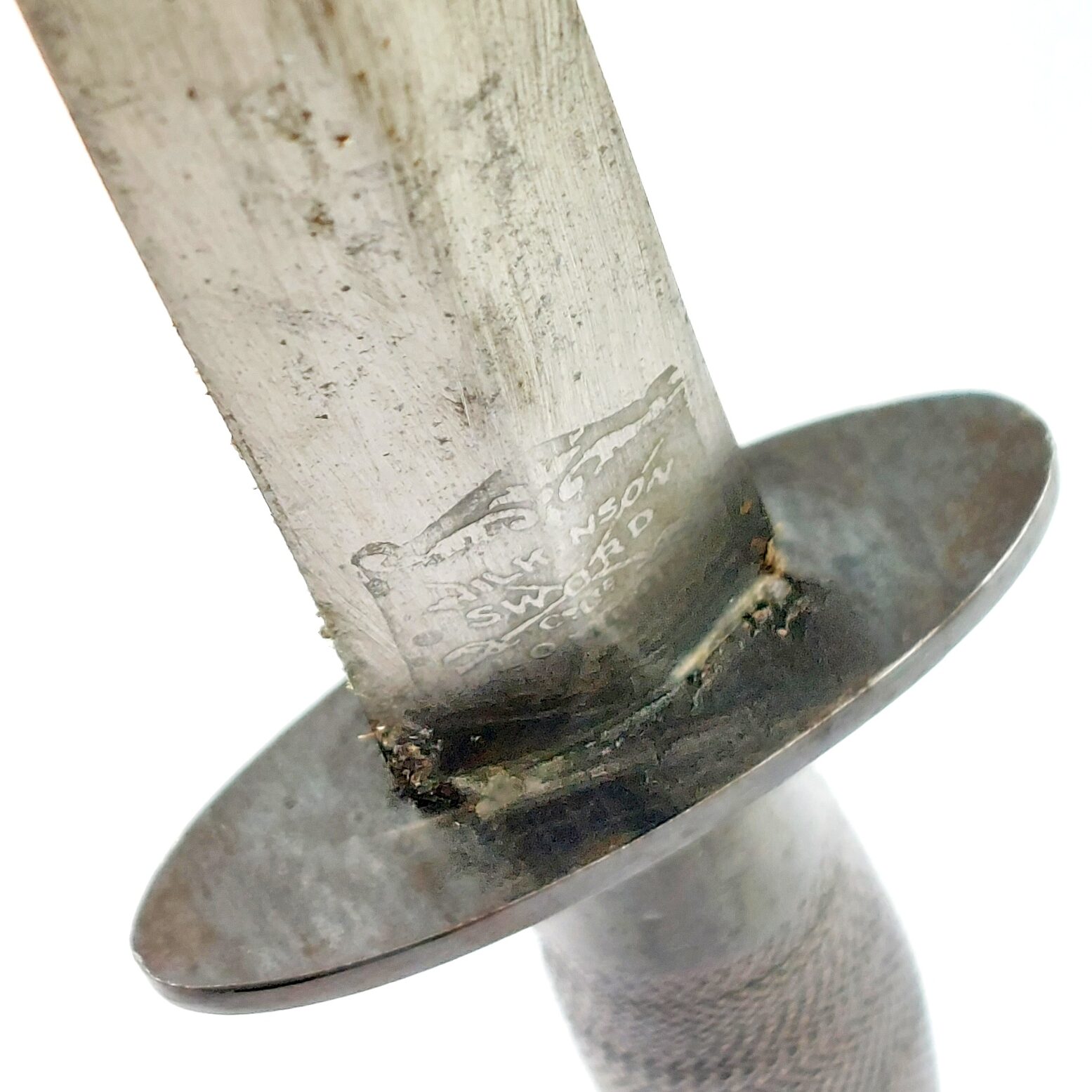
A very good and authentic WW2 2nd Pattern Fairbairn-Sykes Fighting Knife, manufactured by Wilkinson Sword, and bearing both correct wartime etched panels: “The F-S Fighting Knife” to one side and the Wilkinson Sword Ltd. cartouche to the reverse. The double-edged blade retains an excellent profile with very minor scattered age staining and traces of old storage grease still present.
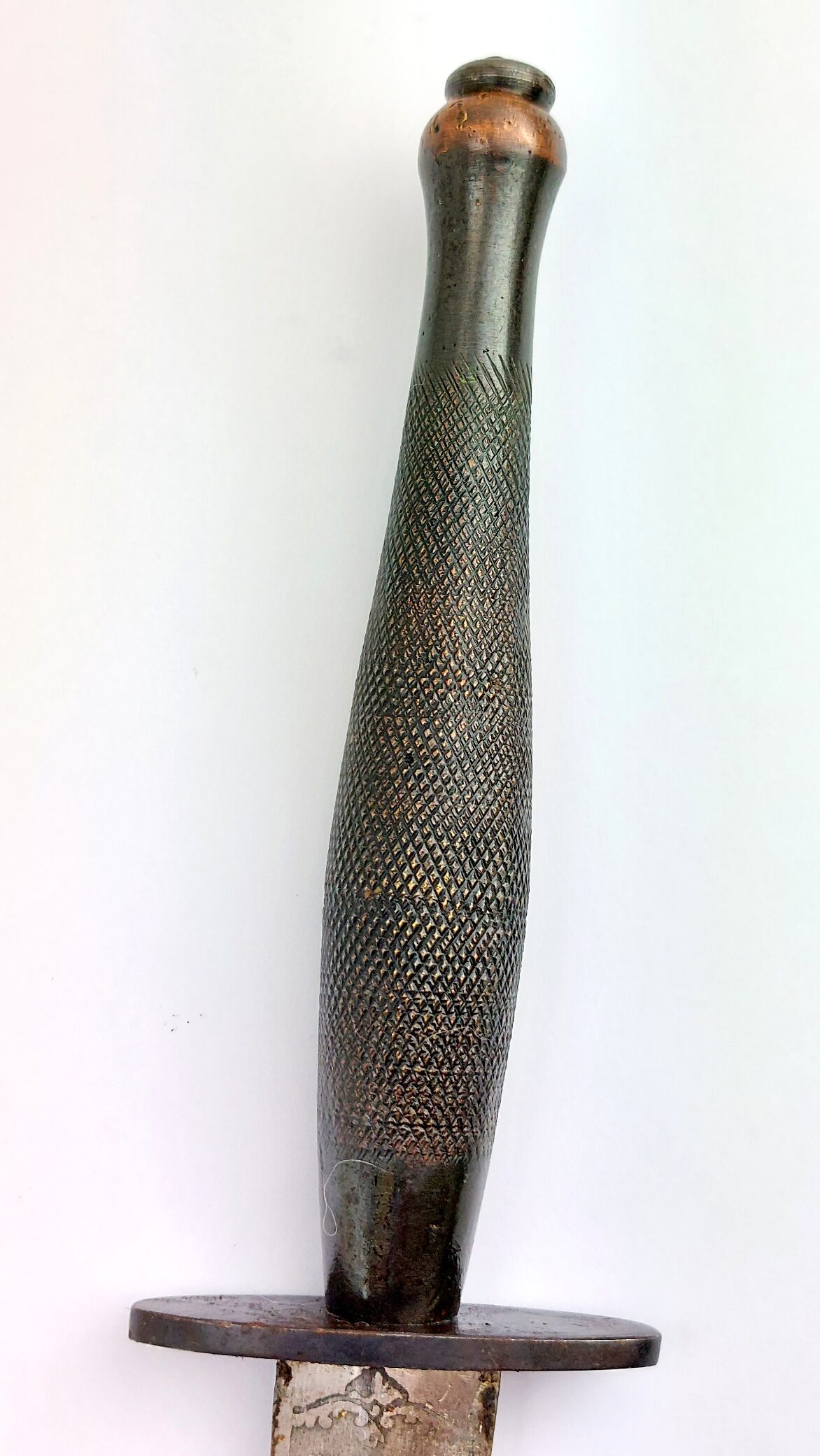
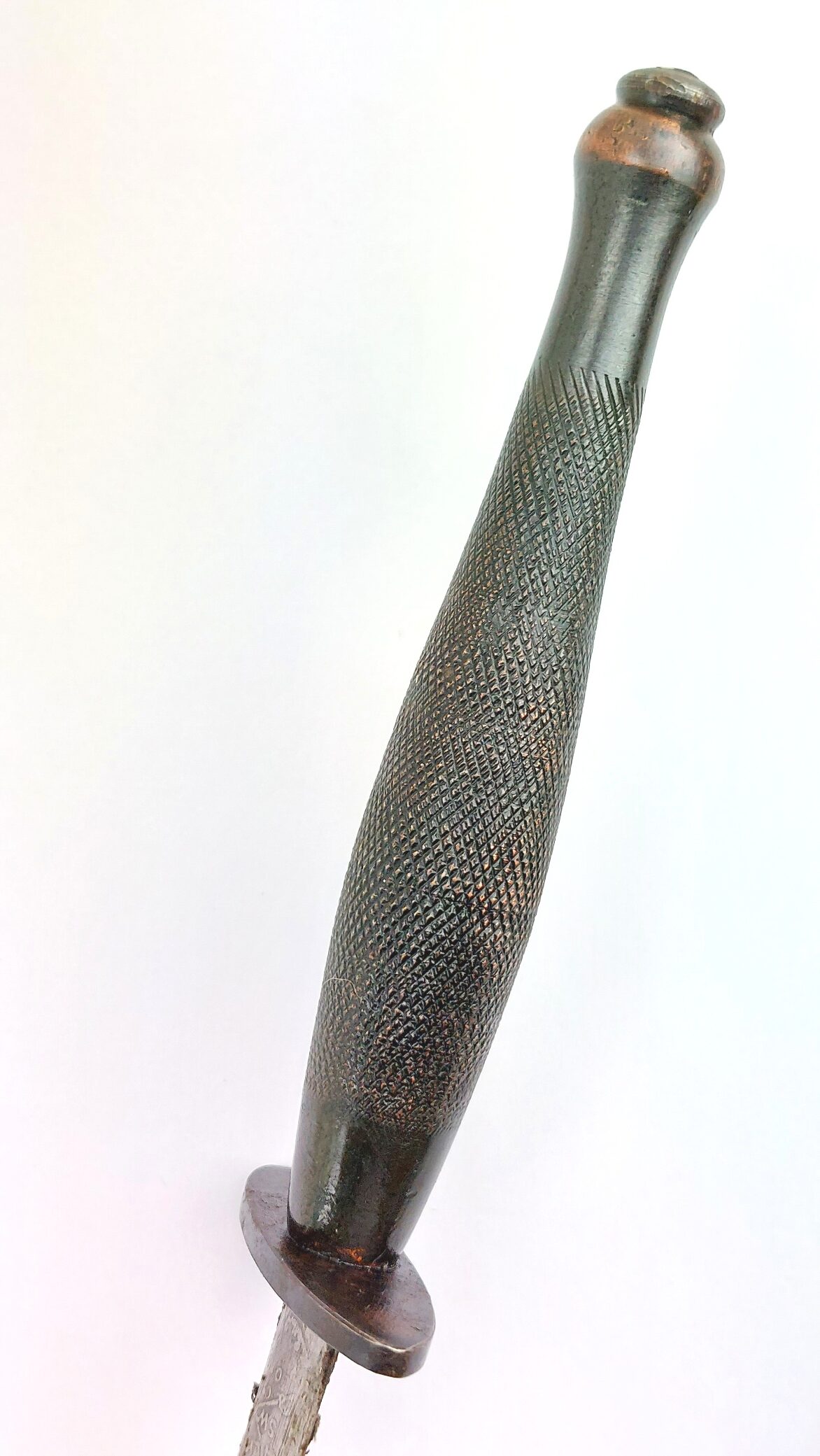
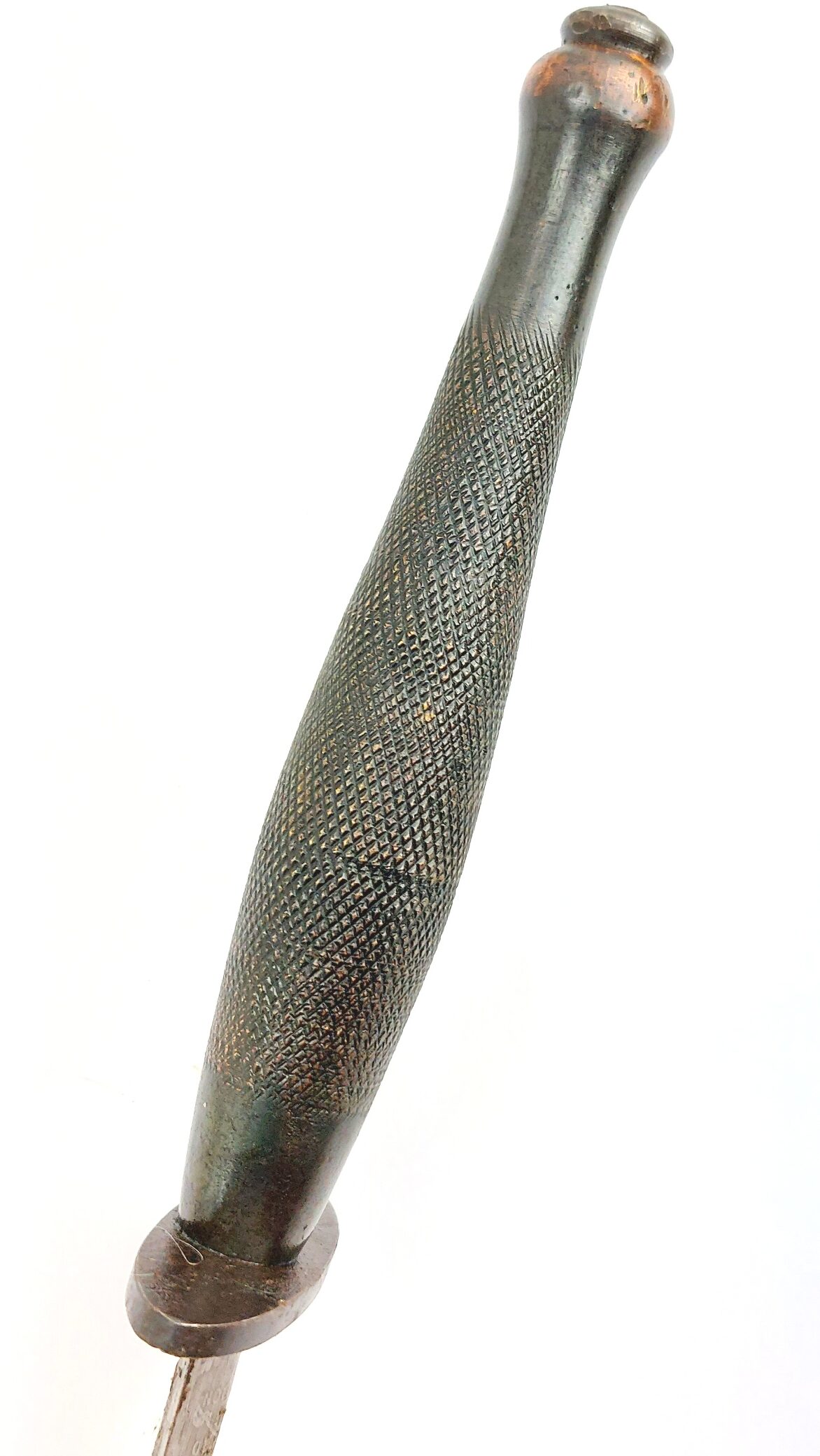
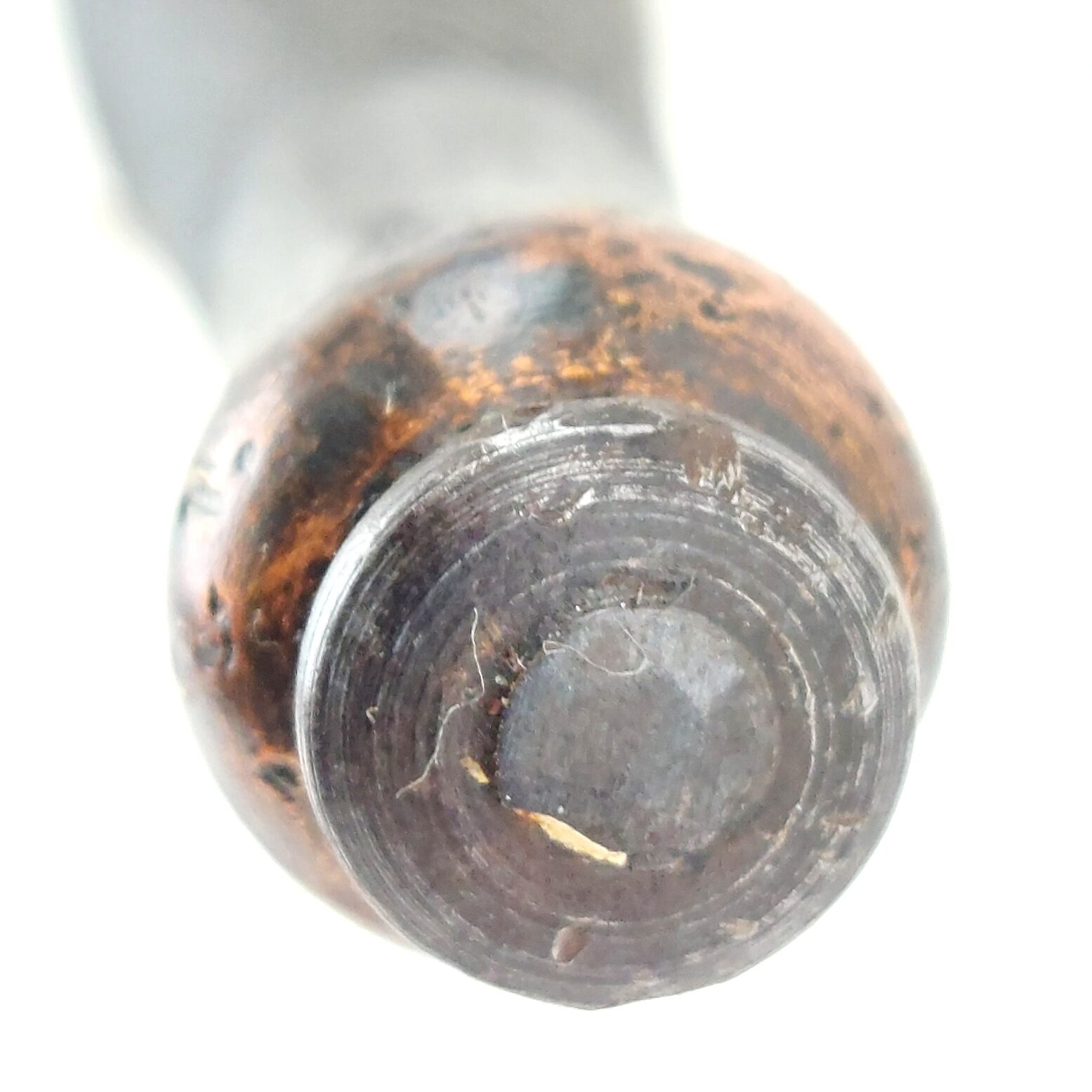
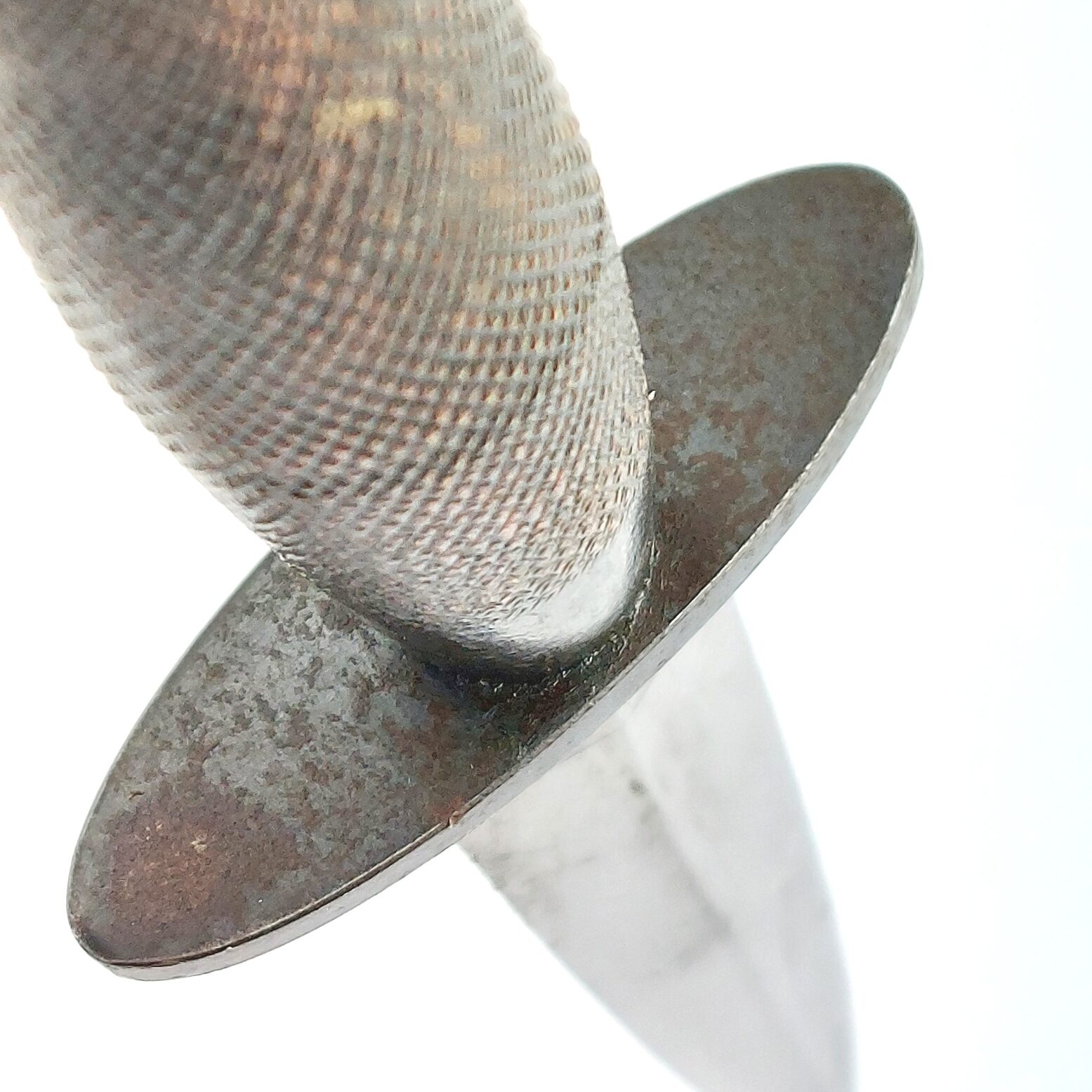
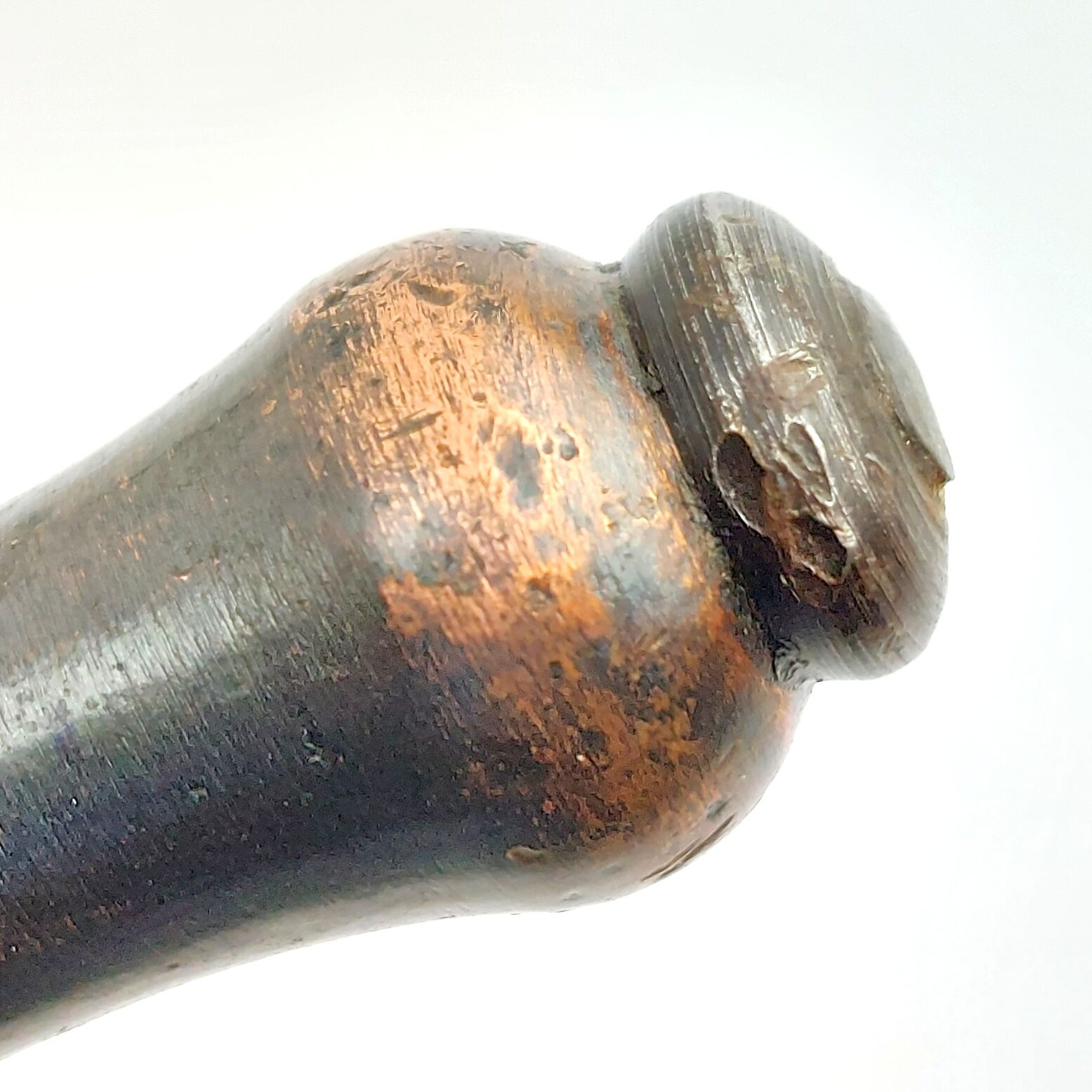
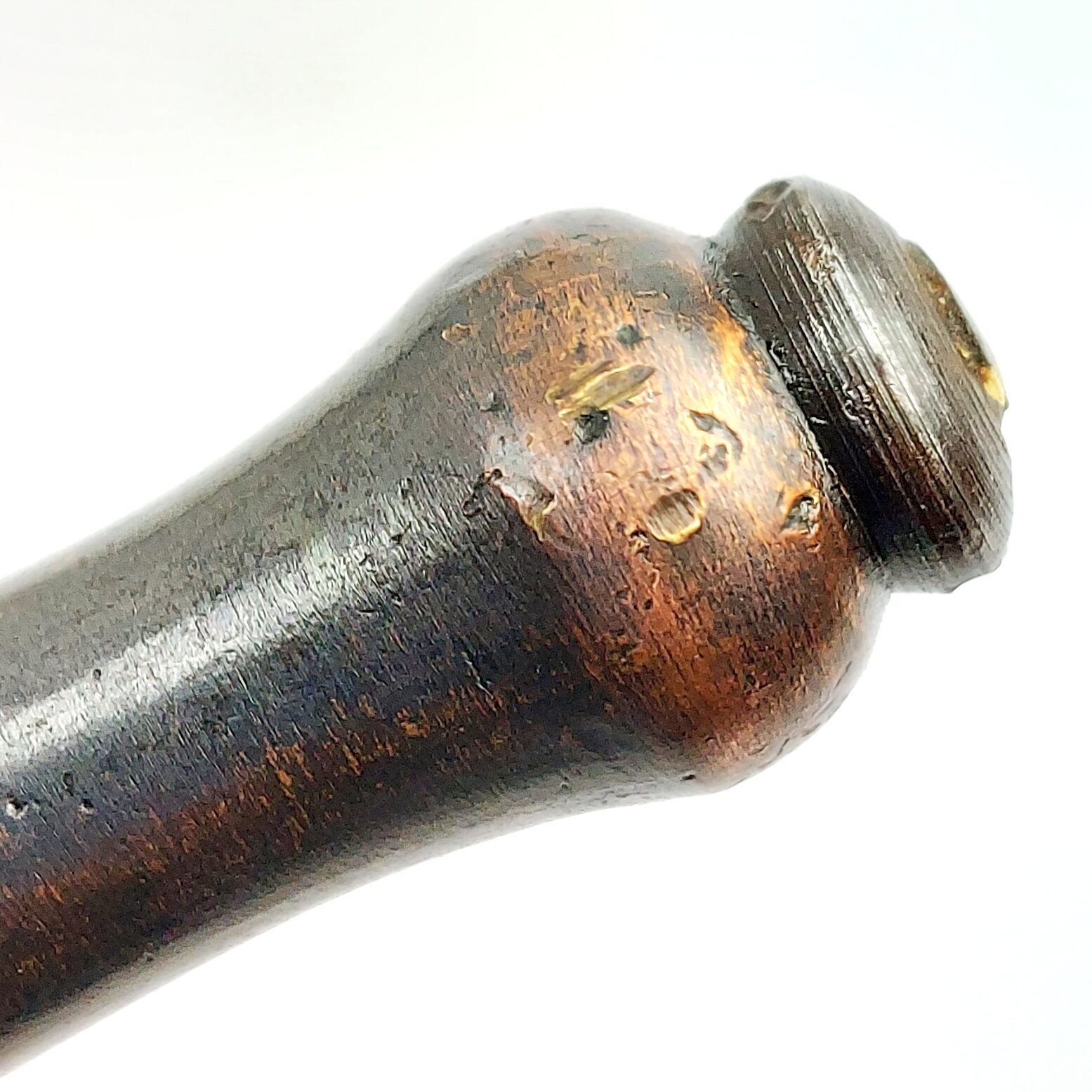
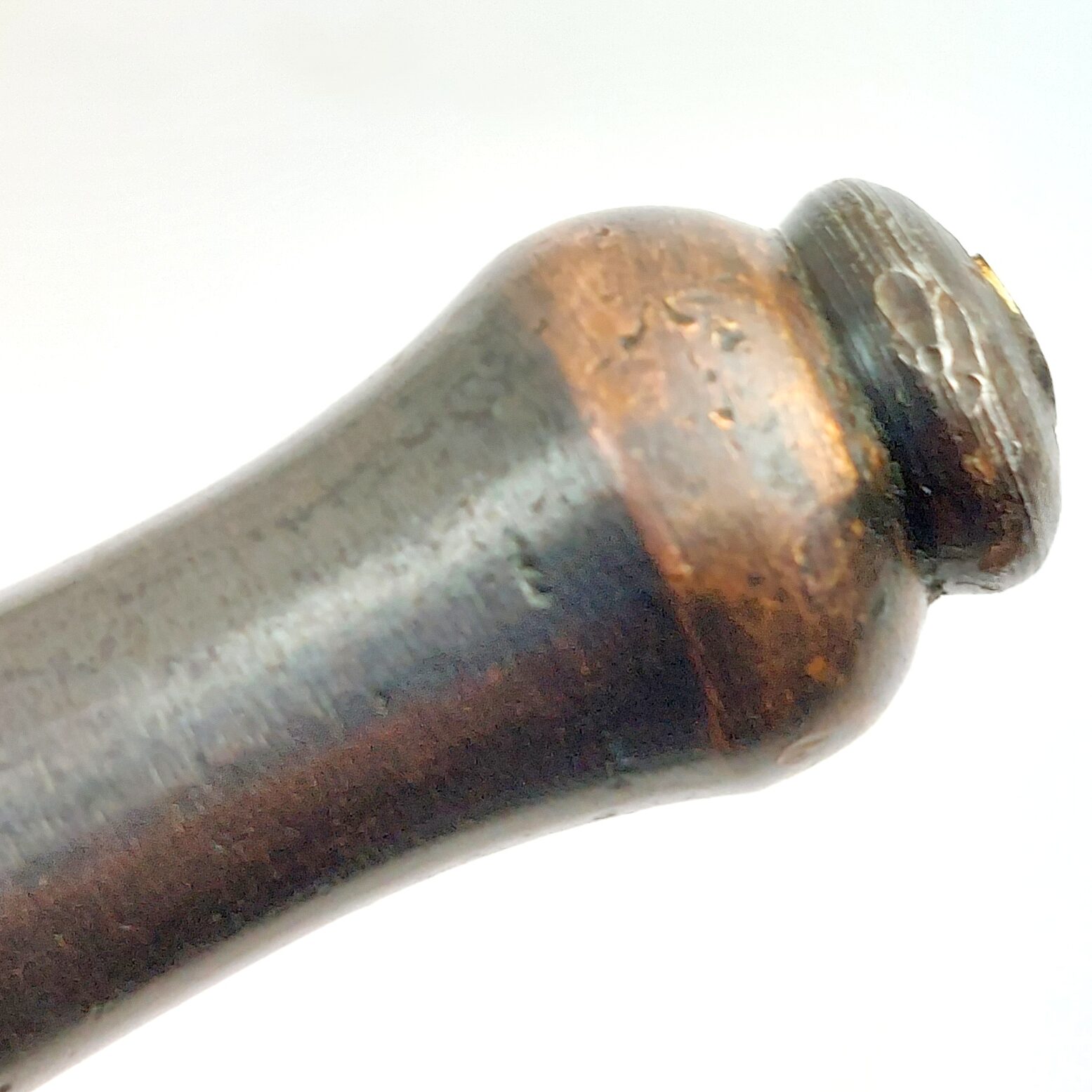
The turned brass grip retains the majority of its wartime blackened/parkerised finish, with honest handling wear revealing brass on the high points. The pommel is finished with the correct domed, hand-peened tang nut, untouched and fully correct for wartime production. The oval steel guard is tight, with age-consistent oxidation.
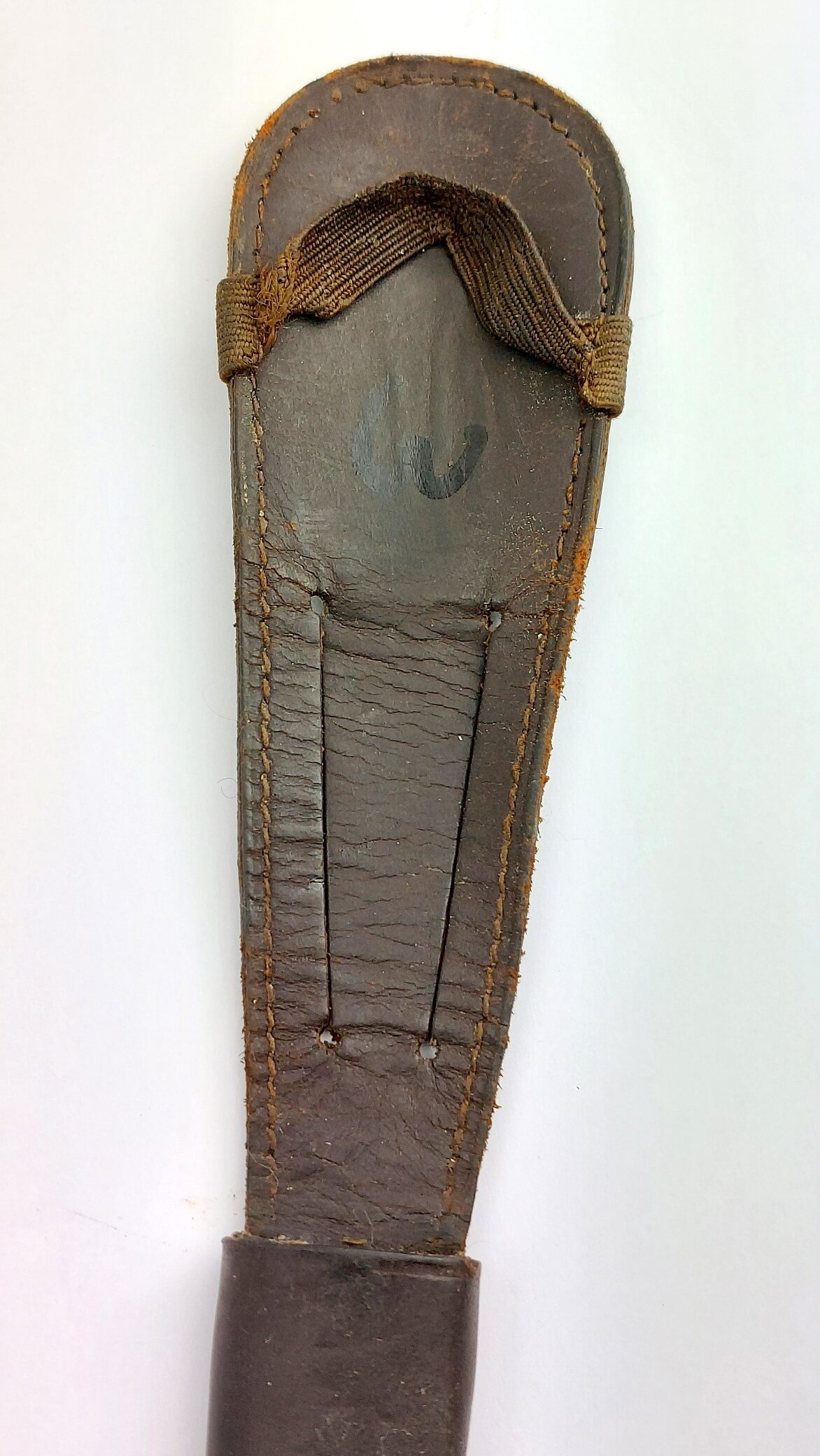
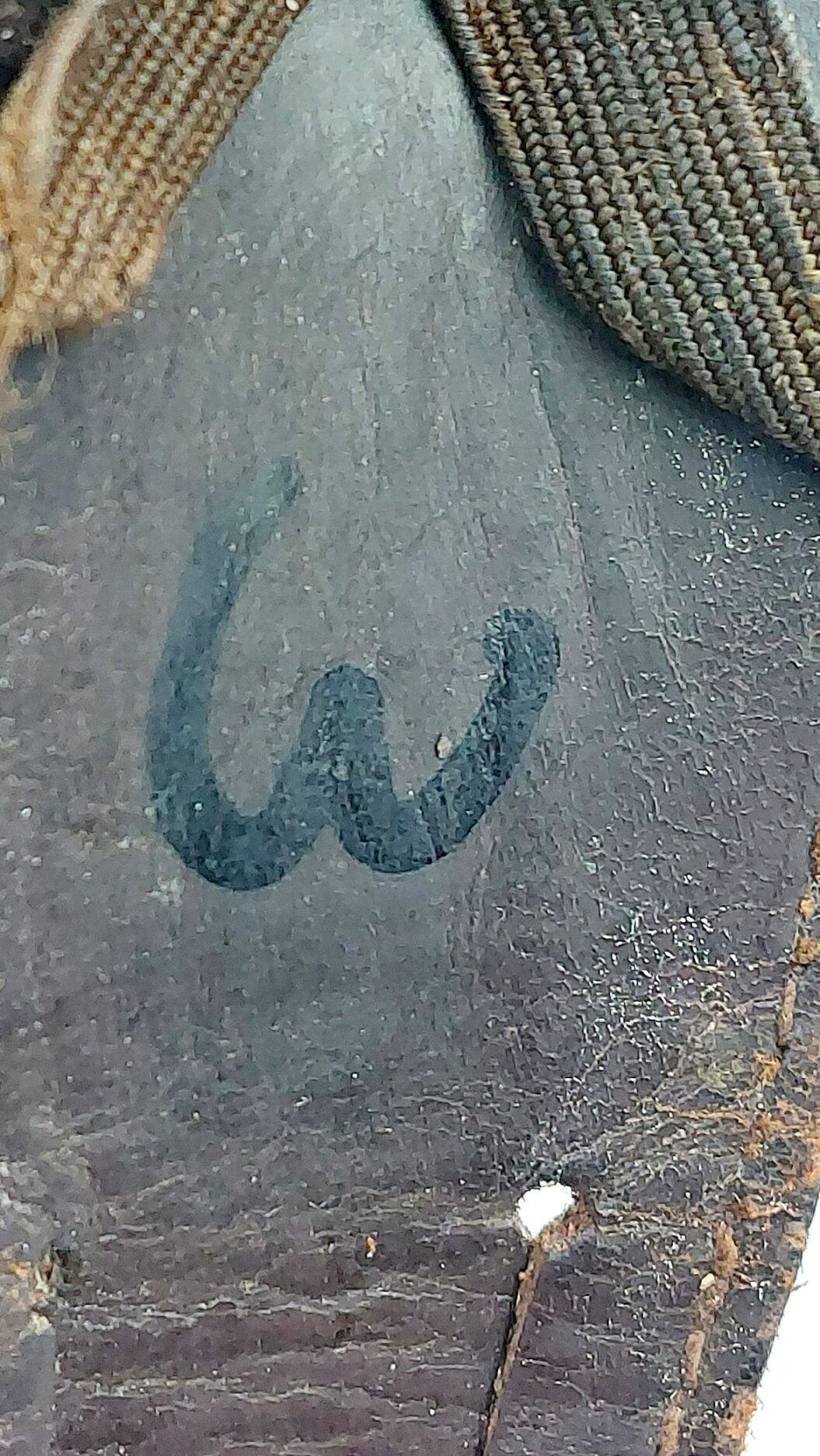
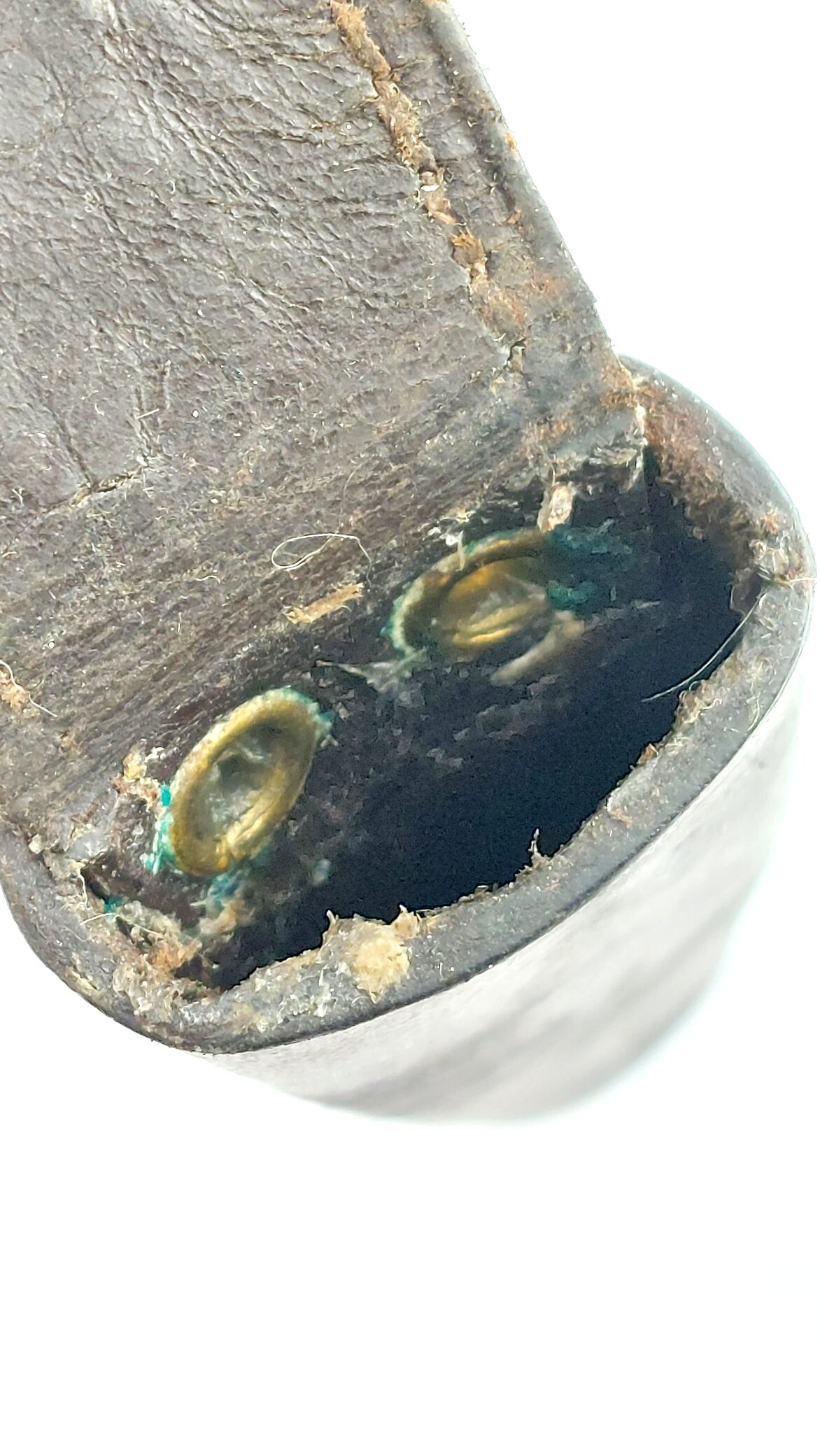
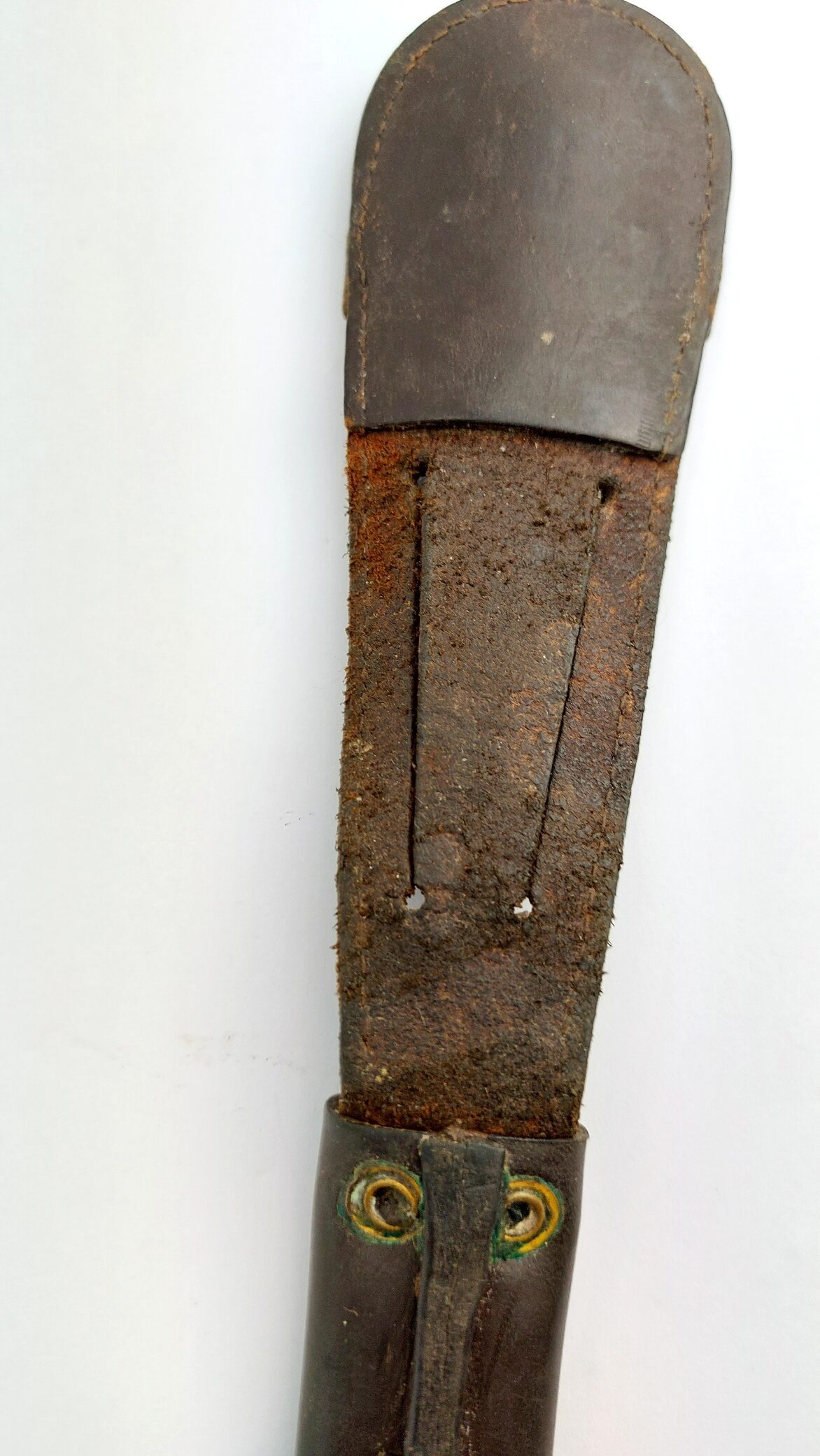
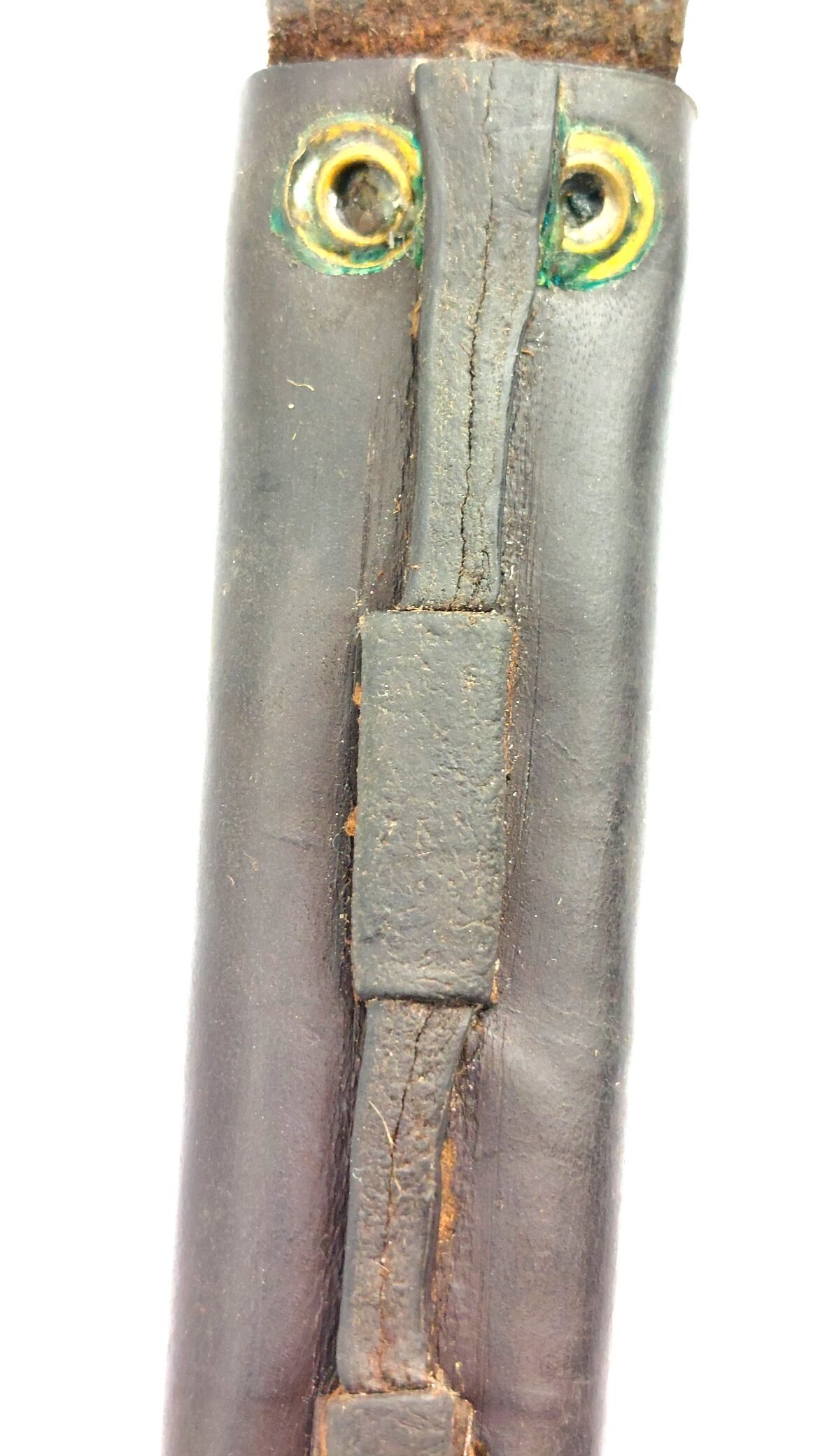
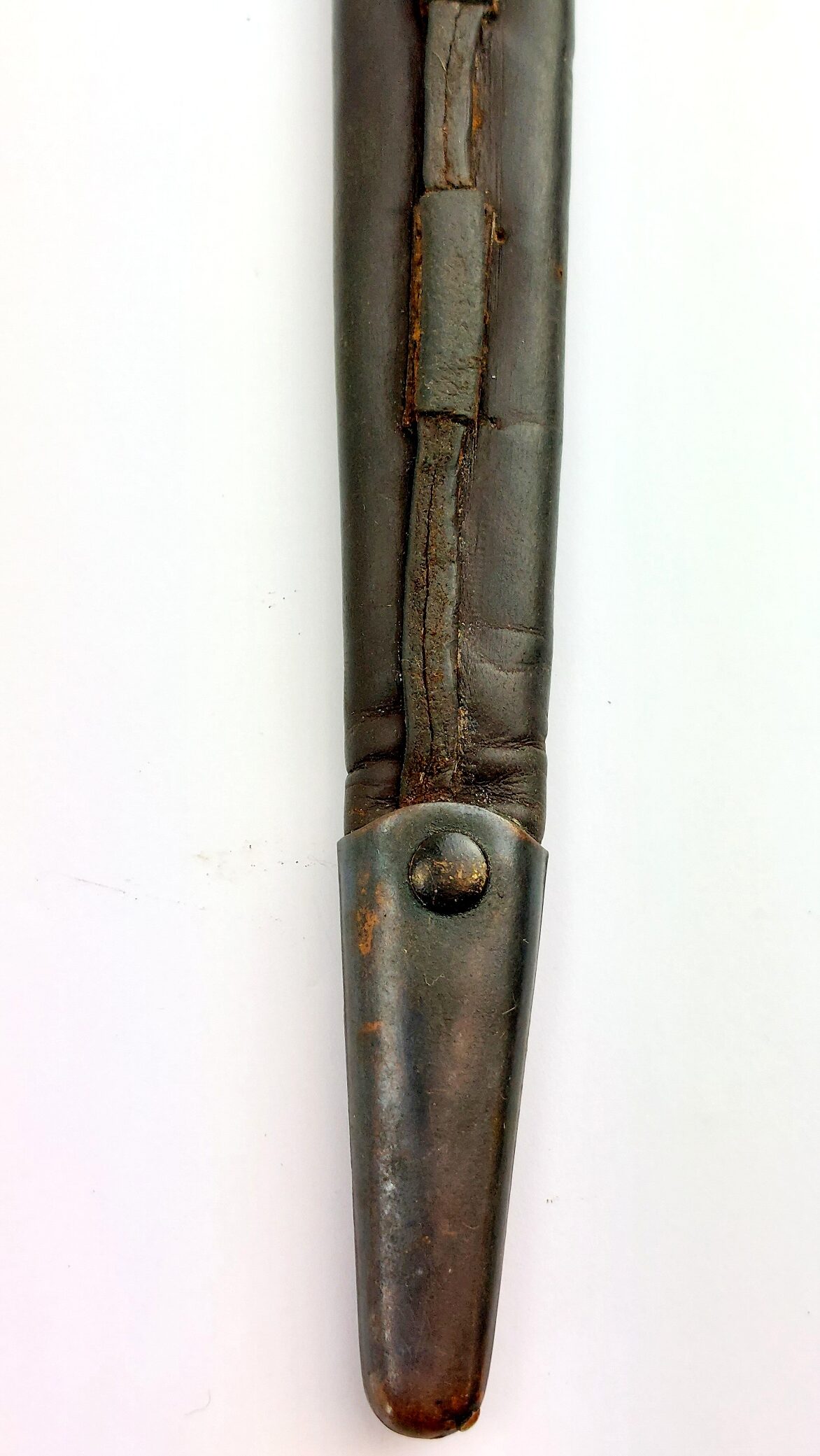
Accompanied by its original wartime leather sheath, showing heavy but entirely honest field use, including the loss of all four rear securing tabs. The front face bears a large inked character — possibly a “3” or a “W” — likely an ownership mark applied during service. Brass rivets show verdigris, the internal leather is worn, and the chape remains firmly attached.
Approx. Measurements: Blade- 15.8 cm, Overall- 28.5 cm.
Historical Note: Introduced in 1942, the 2nd Pattern Fairbairn-Sykes dagger superseded the scarce 1st Pattern and became the standard close-quarters fighting knife for British Commandos, Airborne troops, SOE agents, and other special forces. The 2nd Pattern retained the elegant double-edged stiletto blade but introduced several key changes that define the type: the grip was simplified to a turned, chequered blackened-brass handle (replacing the deeply chequered nickel-plated grip of the 1st Pattern), and the guard was standardised as an oval steel crosspiece instead of the earlier straight quillon guard. Early Wilkinson examples — such as the present knife — also carried etched maker’s panels rather than the later stamped markings, and were individually hand-ground, giving them a noticeably higher level of finish.
These 2nd Pattern knives were carried on operations in every theatre of the war — from Norway and North Africa to Sicily, Normandy, Italy, Burma, and the Far East — and quickly became the iconic fighting knife of Britain’s wartime raiding and clandestine units.
The presence of both etched panels, the early grip finish, and the untouched peened tang nut all mark this example as a desirable early-war production knife.
Condition* The blade is in excellent shape with light age staining; etched panels clear and readable; remnants of original grease in recesses. Original and tight guard, showing uniform wartime oxidation. Turned brass grip with its original wartime blackened finish, showing characteristic thinning and brass showing through on the high points from handling. Knurling remains sharp with no flattening. Minor dings and handling marks are visible around the pommel shoulder but entirely consistent with service use. The domed tang nut is the correct wartime type with untouched hand-peened finish, confirming the grip assembly has never been disturbed. Original wartime leather sheath, heavily worn; leather dry but stable; all four tabs absent; stitching intact; verdigris around rivets; internal wear along throat; chape secure; front marked with an inked “3” or “W”, likely a period ownership . Please see photographs as part of the condition report.
*In order to complete the online purchase we will require a picture/scan of a photo ID (Driving Licence, Passport or an official document with a recent picture). If you don't posses any such document please call to buy. If we consider that the proof of ID is incorect or insuficient, we reserve the right to cancel the transaction.
*We also reserve the right to cancel the transaction with a full refund if there is any suspicion that the provided item will be used in any way contrary to the laws and legislation of UK.