British, WW1 – c.1916–1918, Royal Navy Lang Wooden Aircraft Propeller Blade Section, for 130 hp Clerget Engine for use with Sopwith Camel and Avro 504 variants
*British, WW1 – c.1916–1918, Royal Navy Lang Wooden Aircraft Propeller Blade Section, for 130 hp Clerget Engine for use with Sopwith Camel and Avro 504 variants*
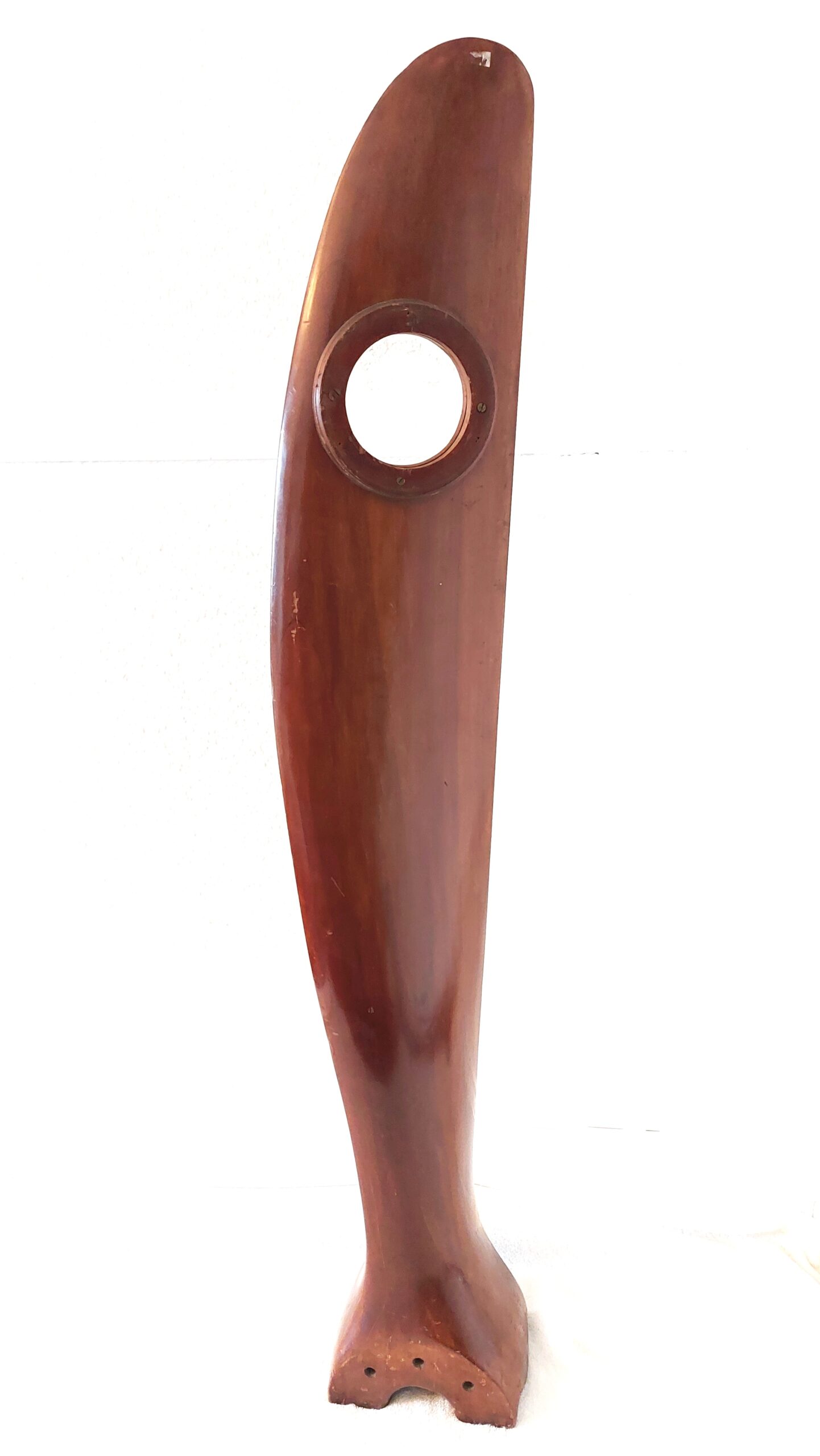
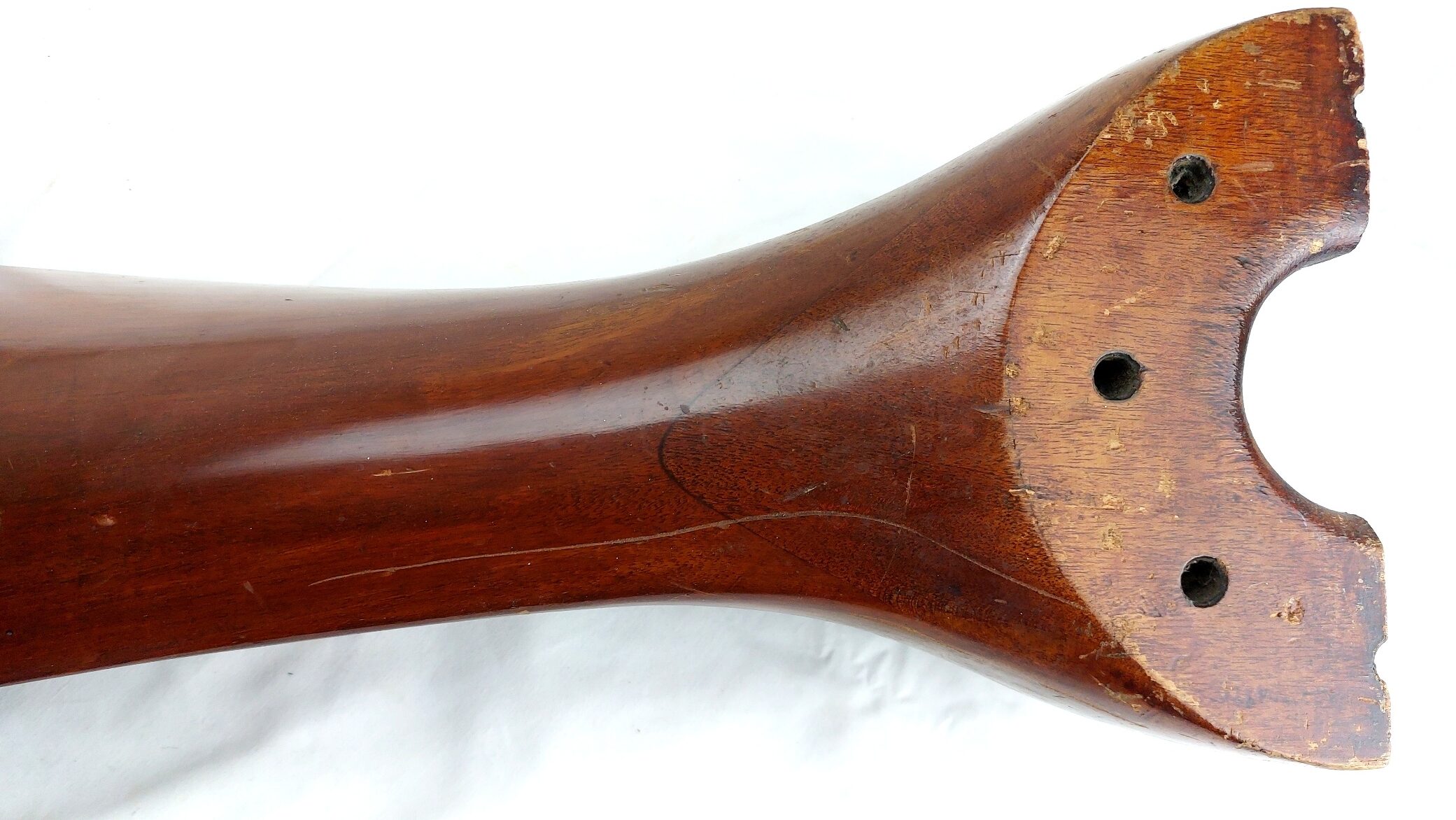
A well-documented and visually striking section of an original British First World War laminated wooden aircraft propeller by Lang Propeller Company, associated with Clerget-powered Royal Flying Corps aircraft, of a type supplied for Sopwith or Avro airframes, including the Sopwith Camel and Avro 504K. The surviving hub section retains an eight-bolt fixing pattern, consistent with RFC Clerget installations of the period. An excellent example of early military aviation technology, equally appealing to the serious aviation collector or as a dramatic interior display piece.
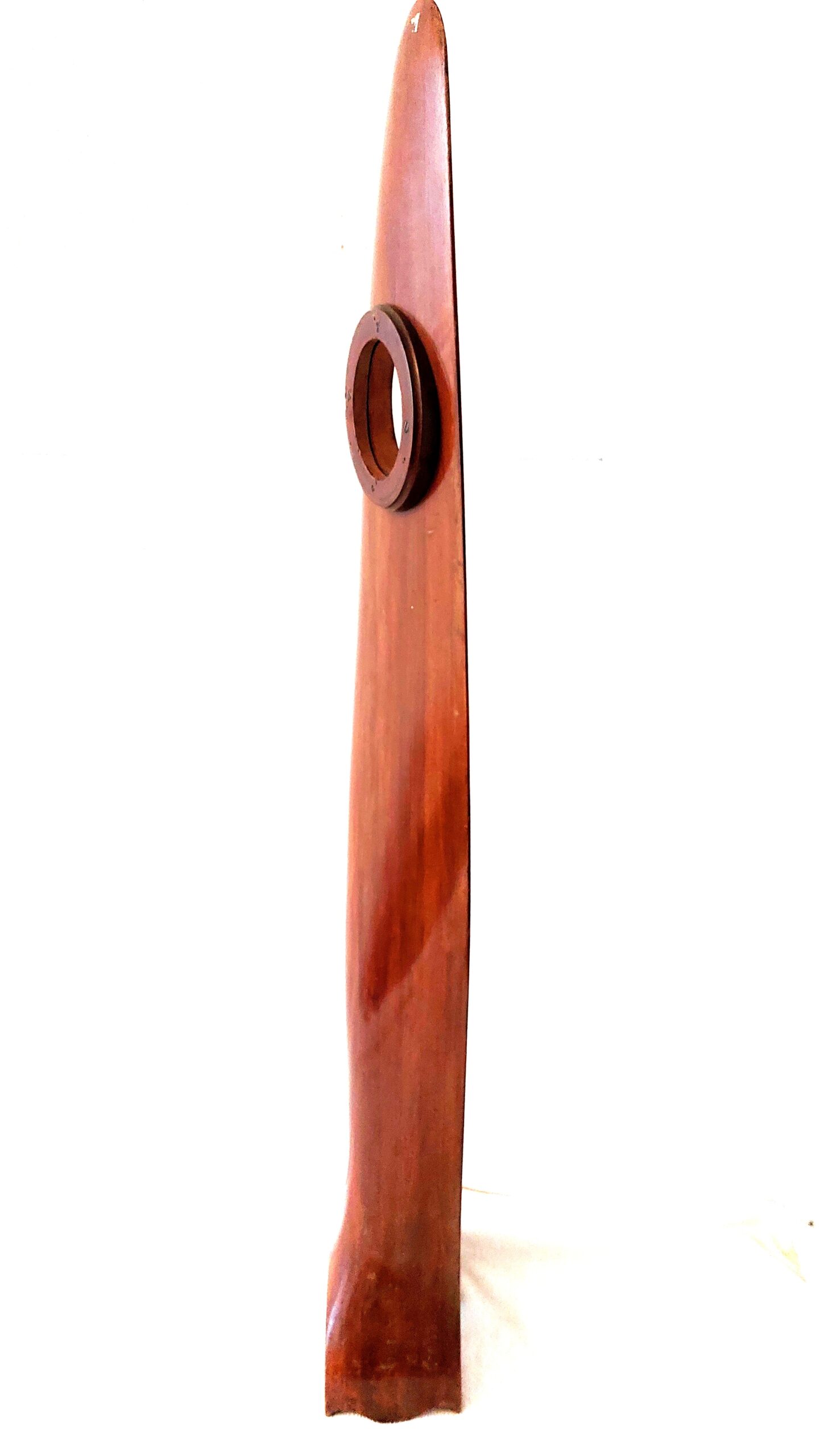
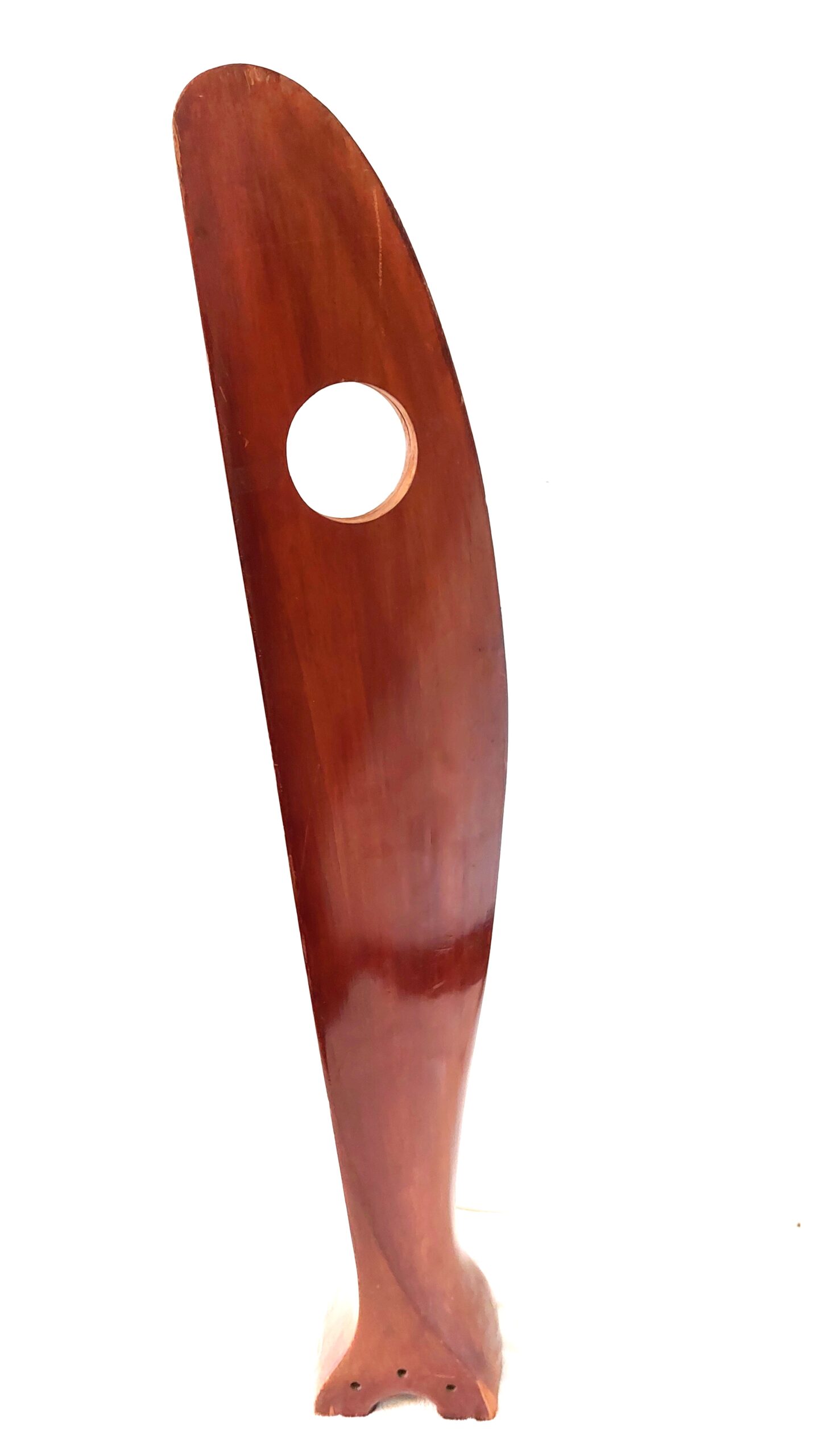
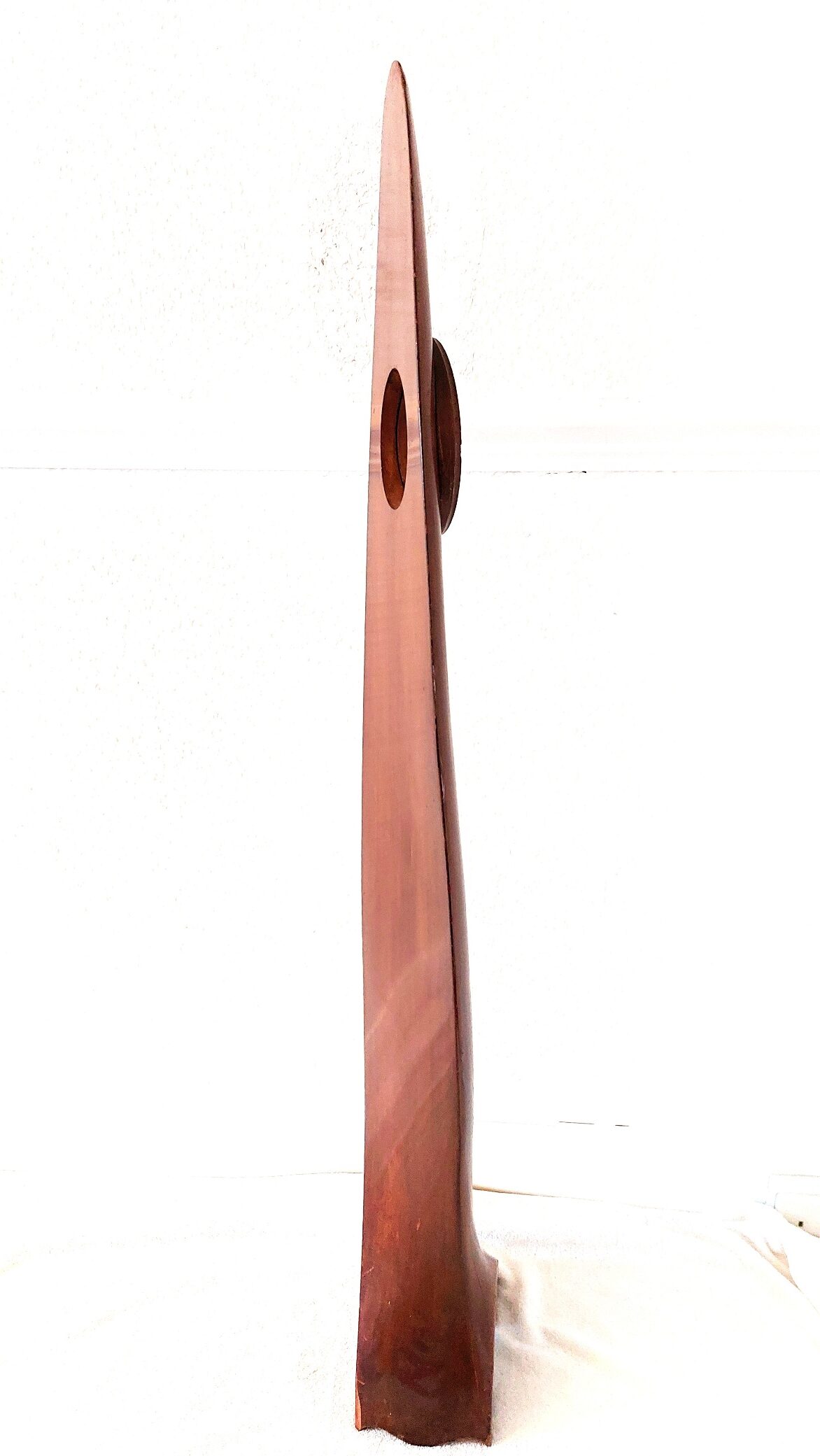
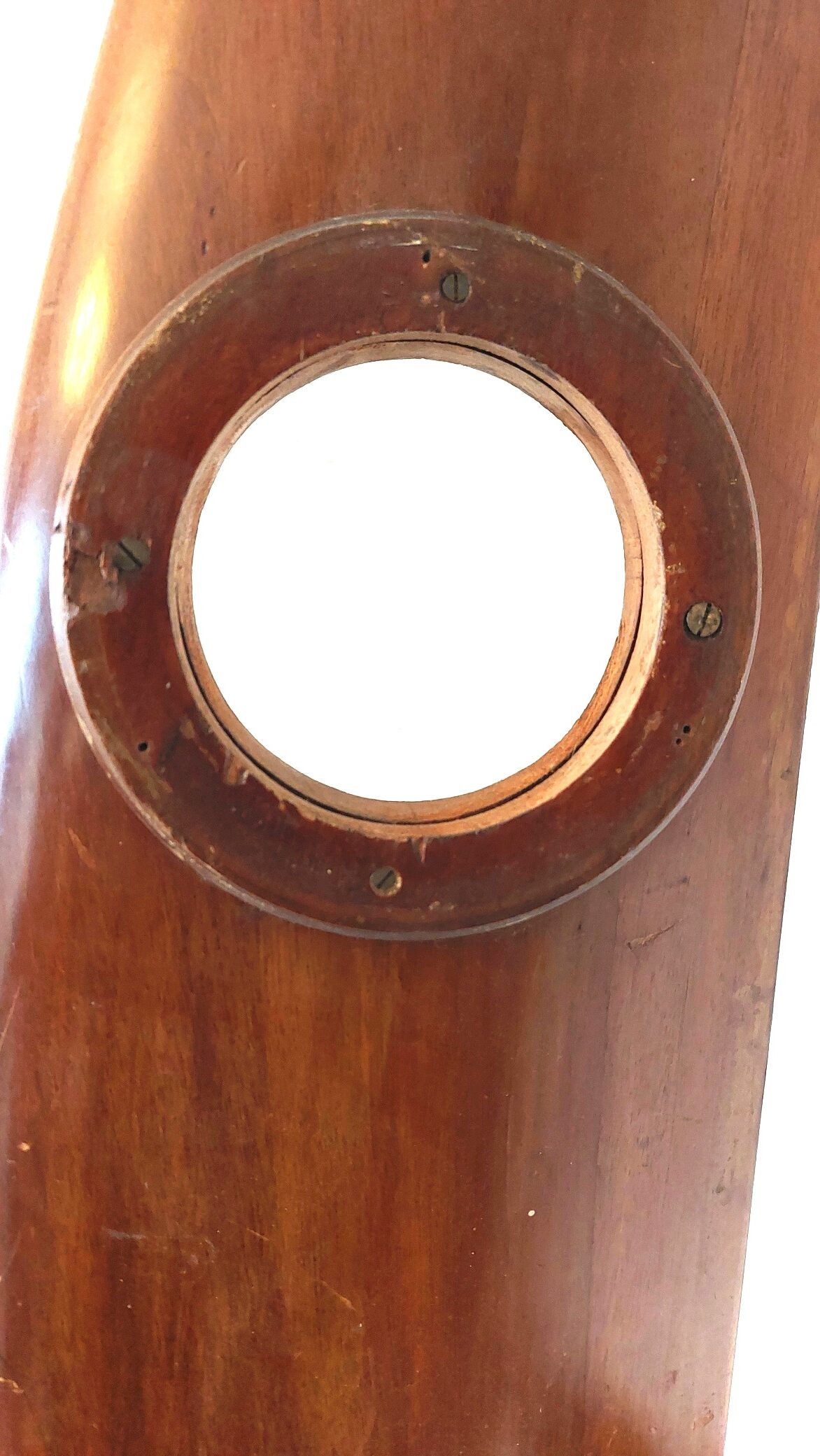
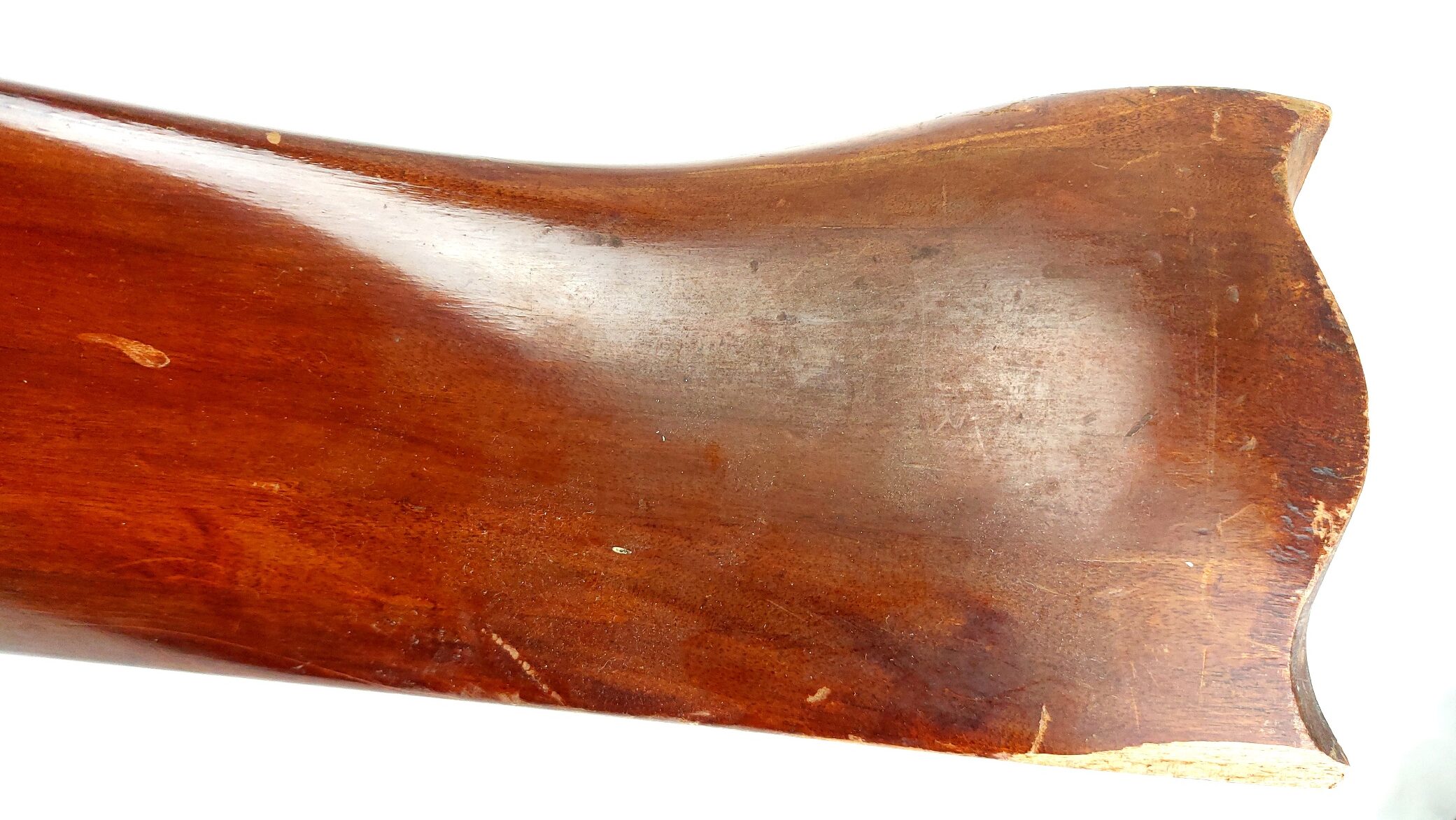
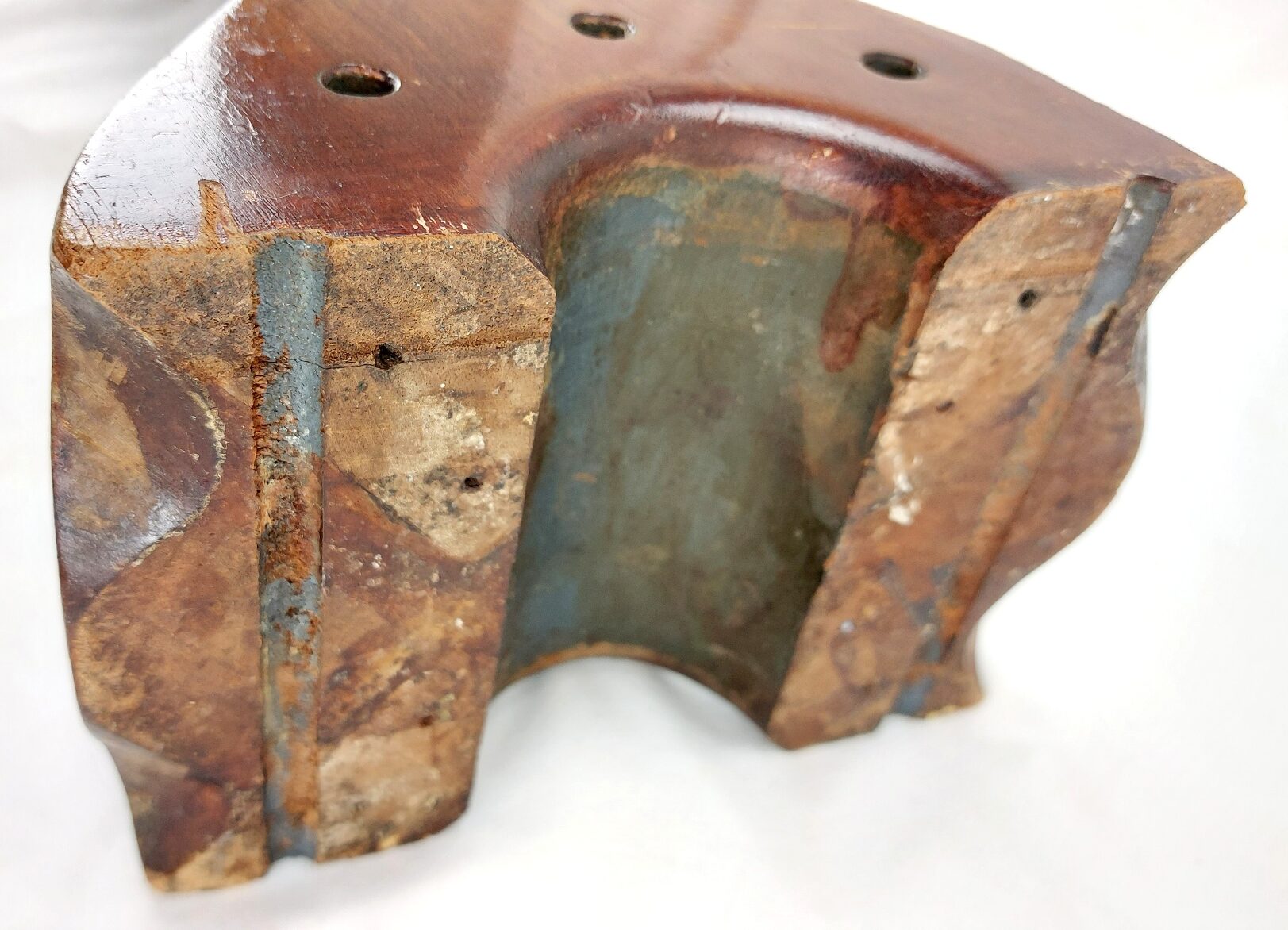
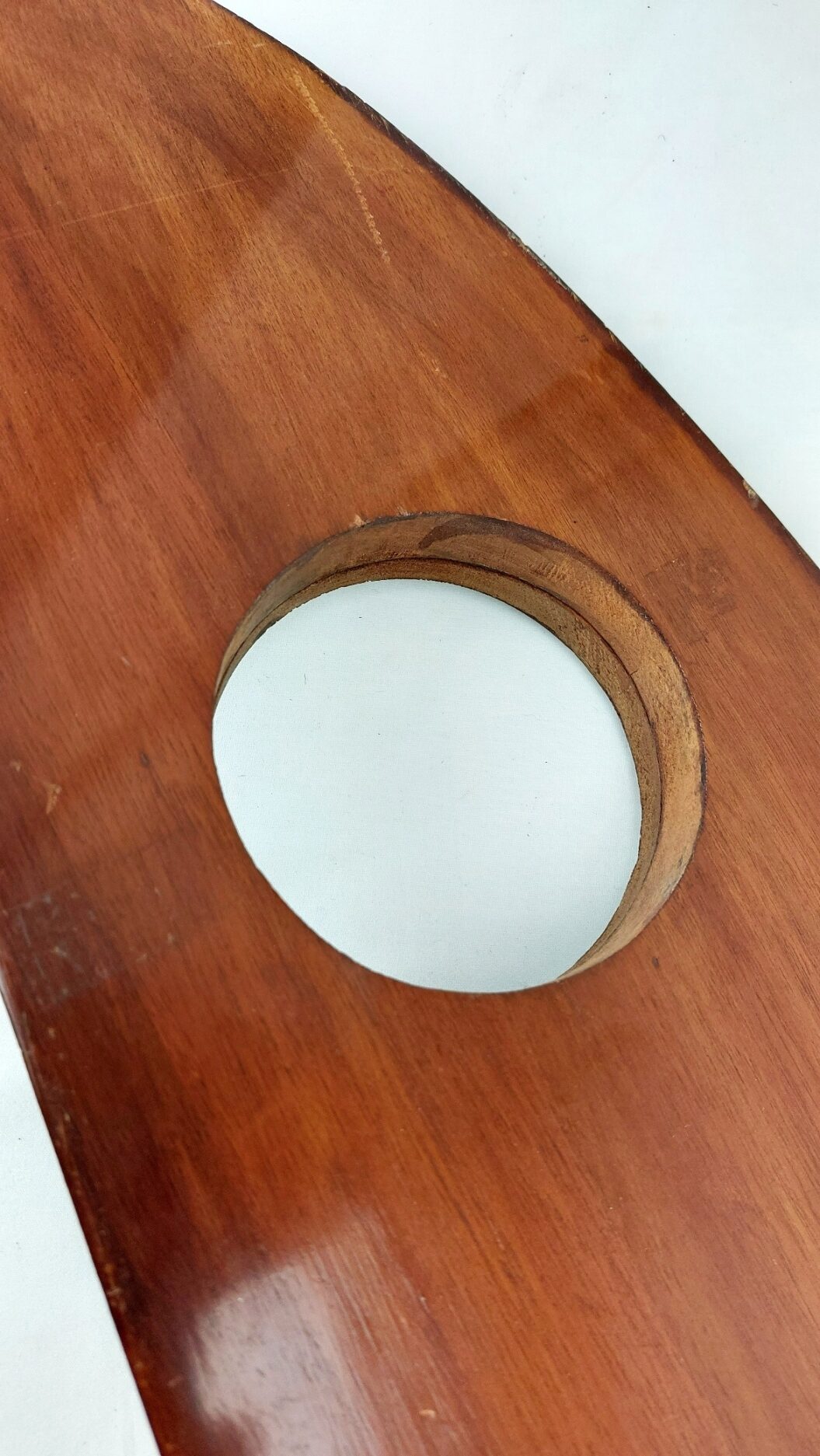
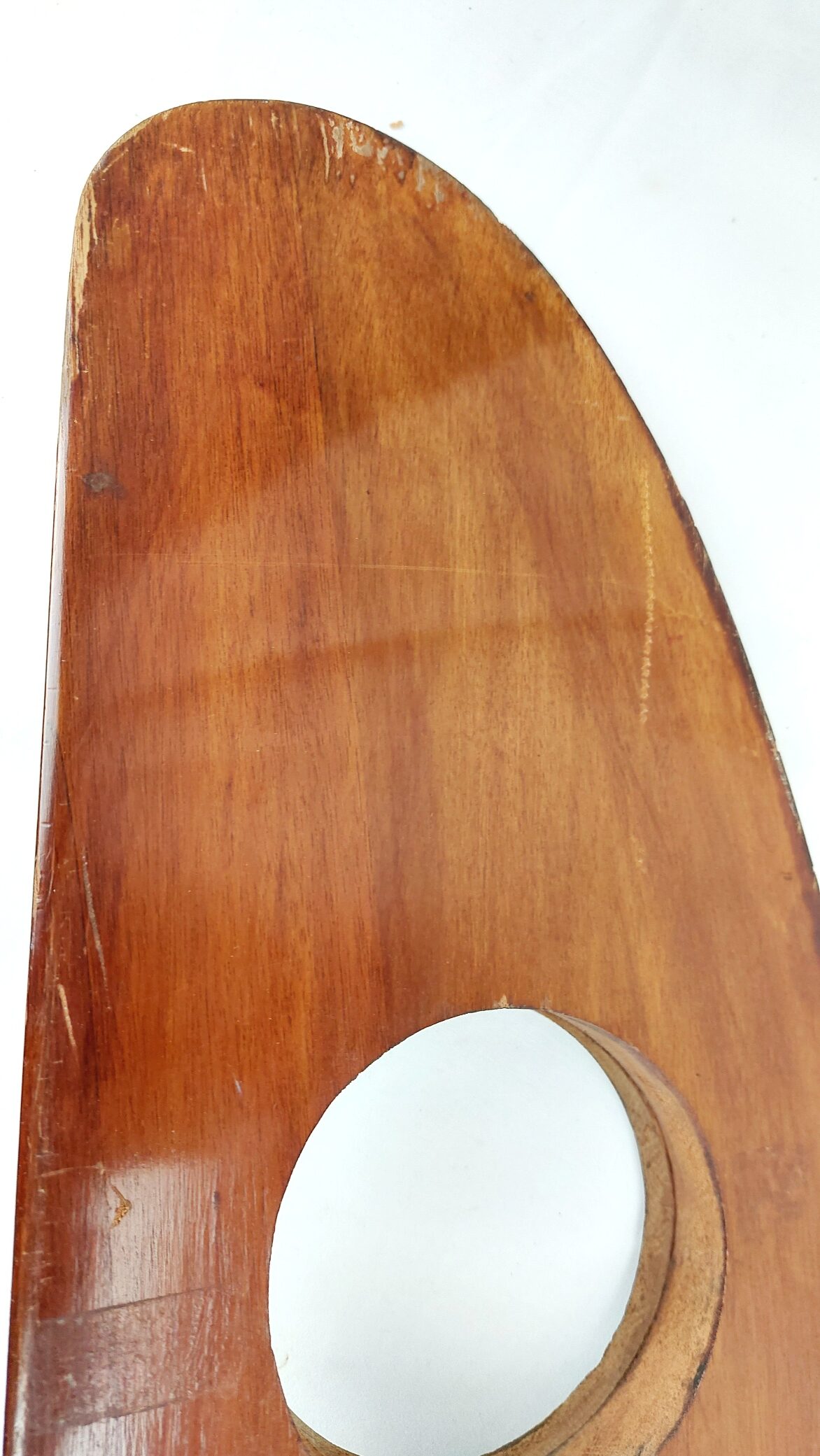
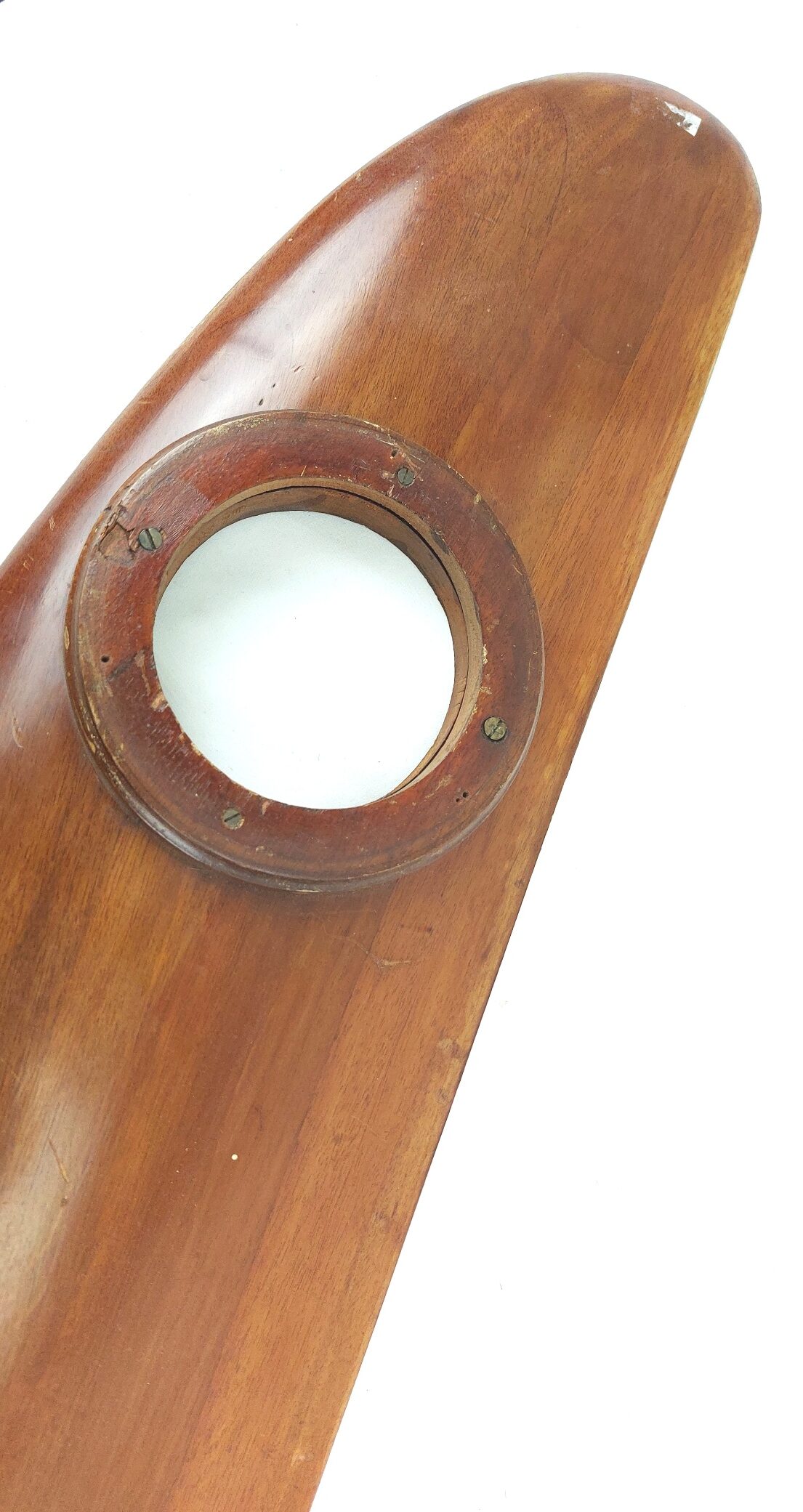
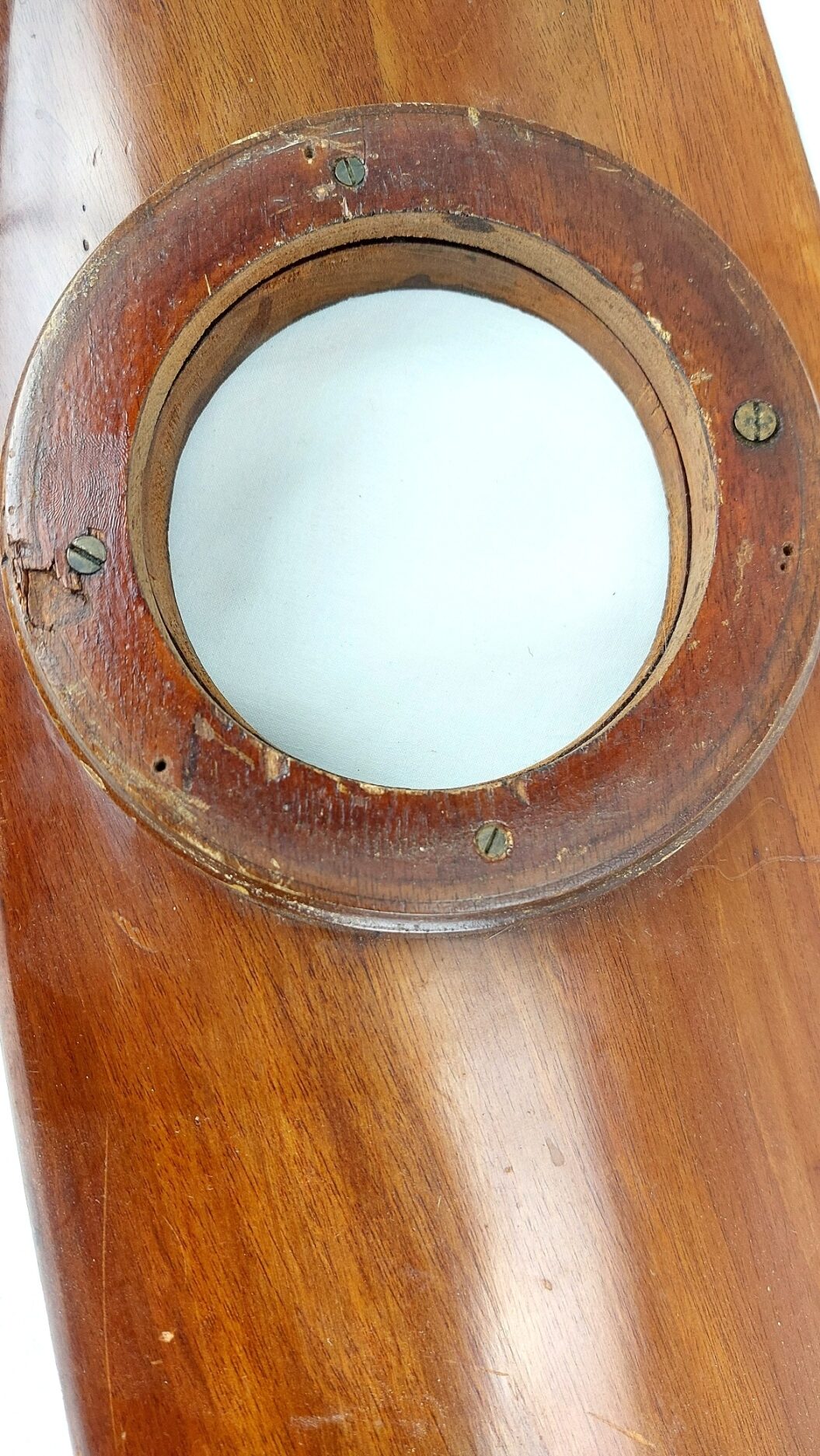
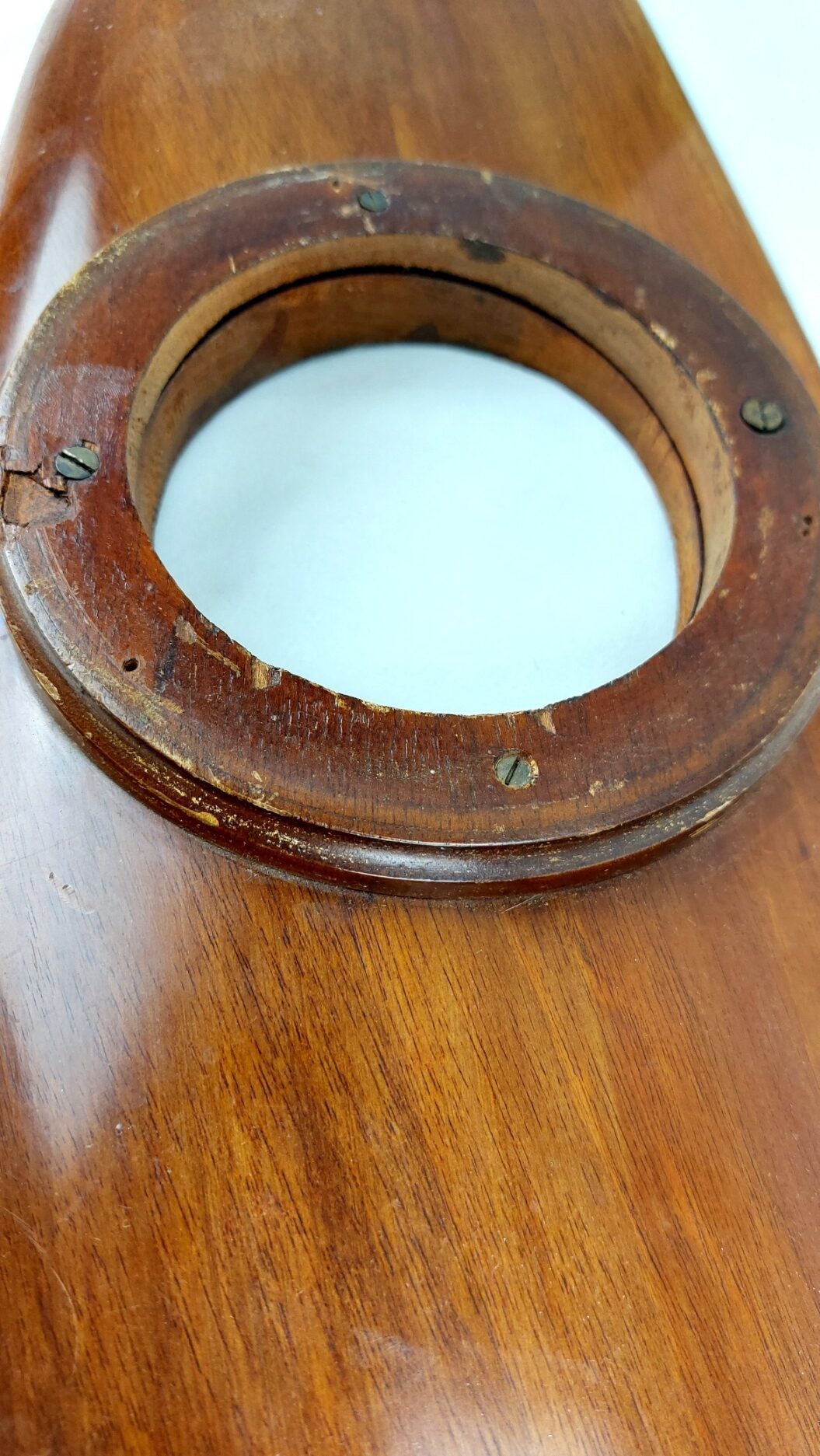
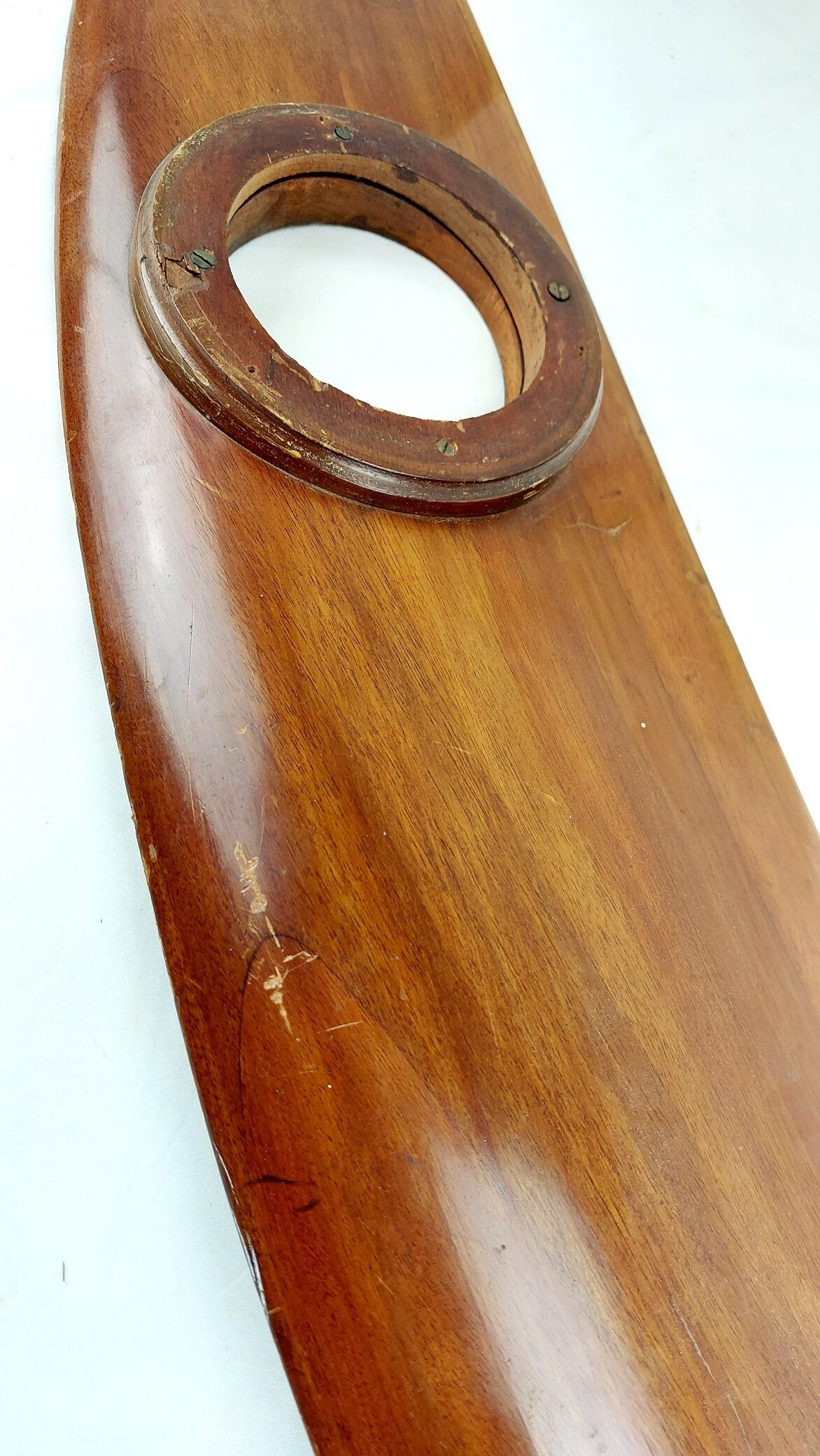
The propeller has been longitudinally cut through the central hub aperture, resulting in a flat-backed form suitable for freestanding or wall display. A large circular aperture remains through the blade face, making it particularly well suited for conversion into a display clock or aviation-themed wall feature, while remaining highly decorative as presented. The piece stands approximately 132 cm tall, with a maximum blade width of 24.2 cm, giving it strong sculptural presence.
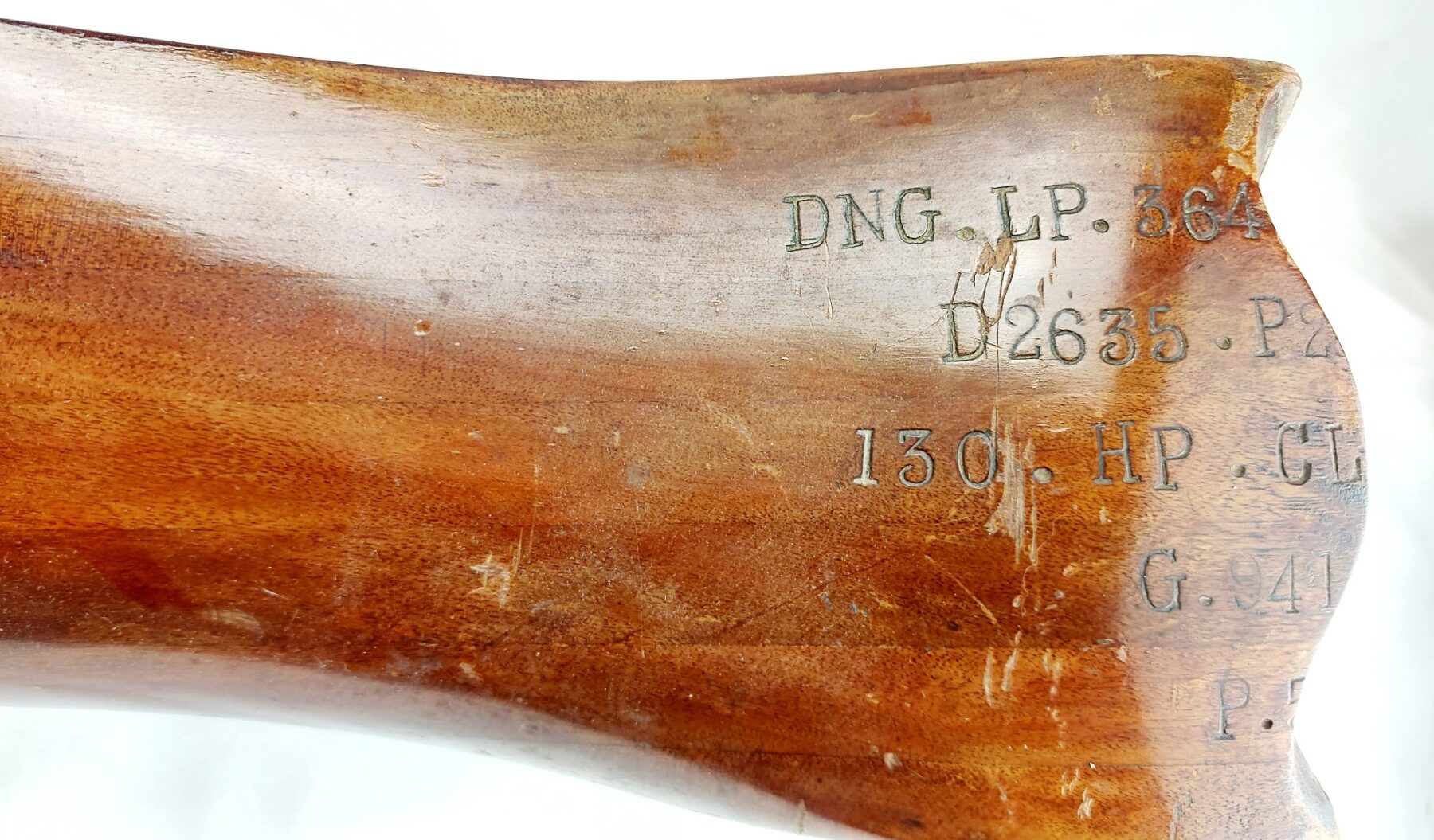
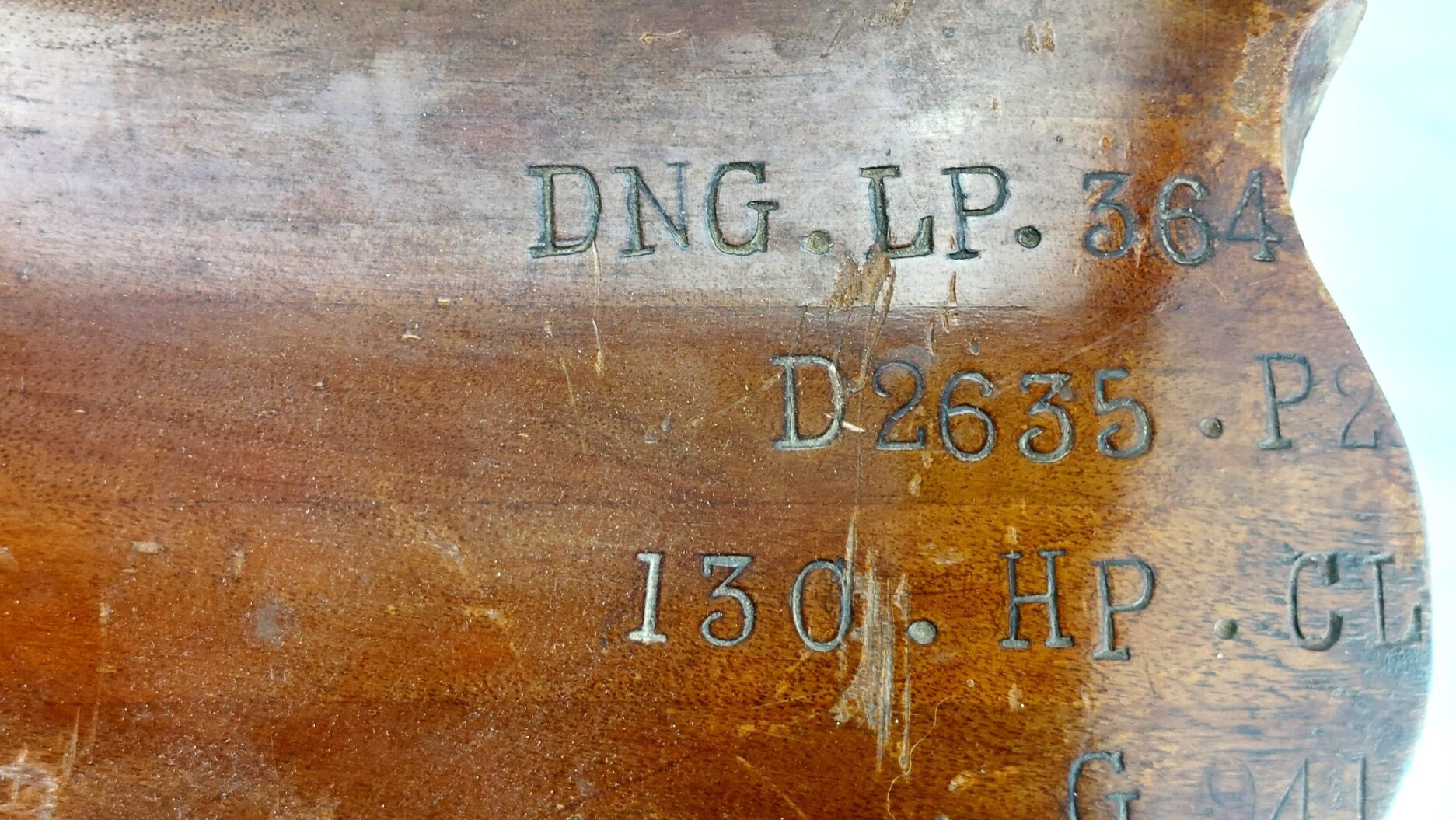
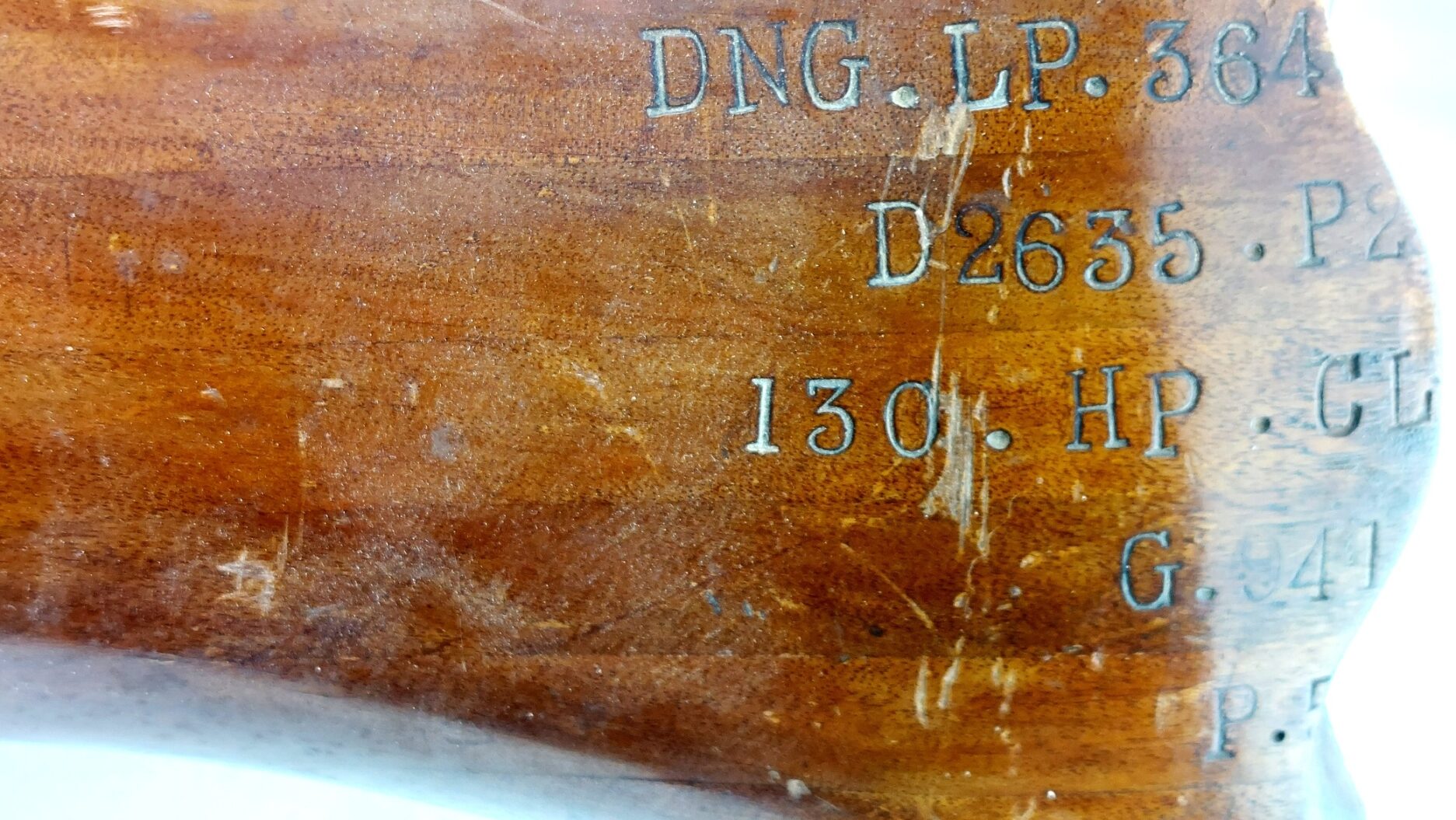
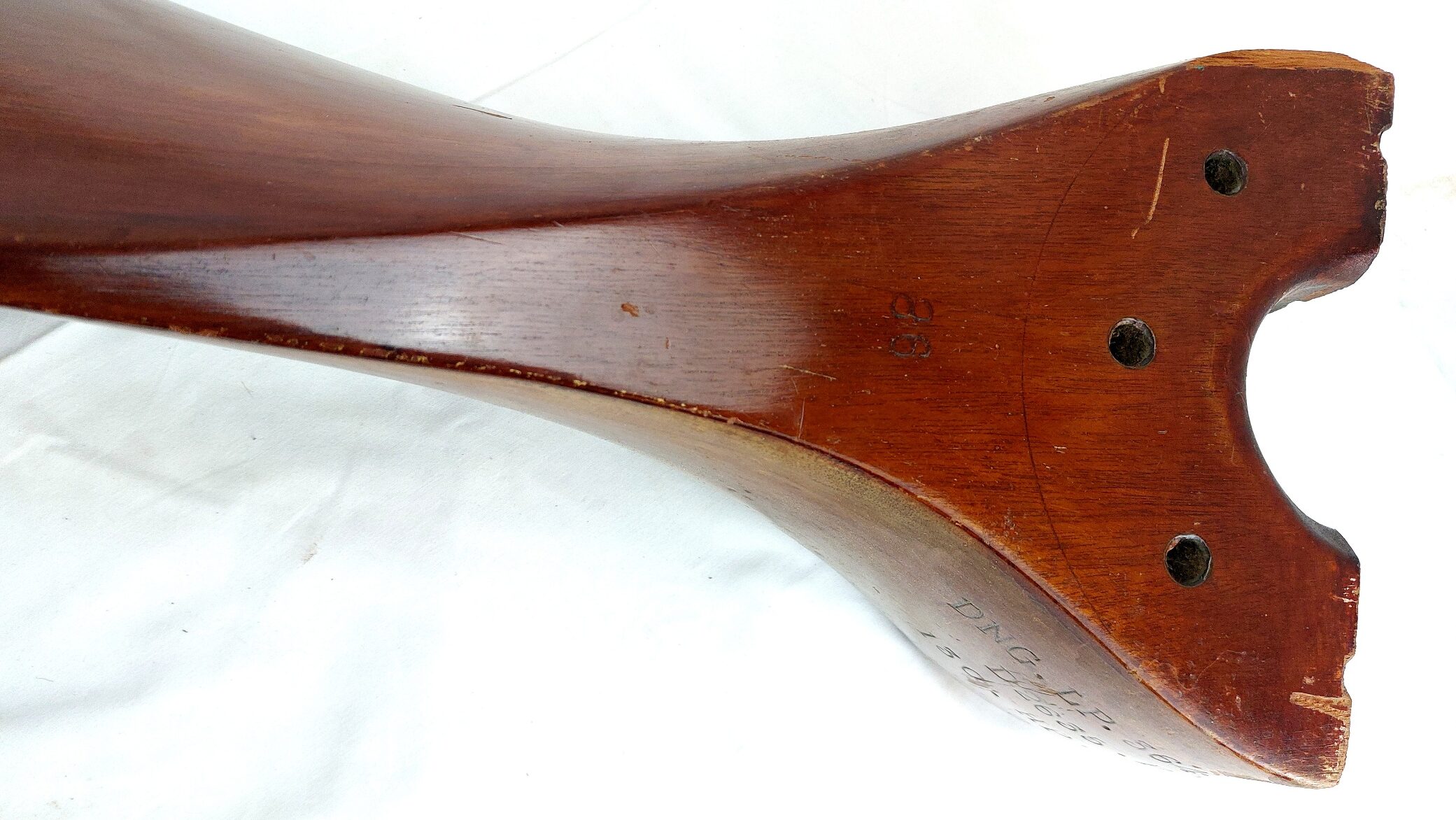
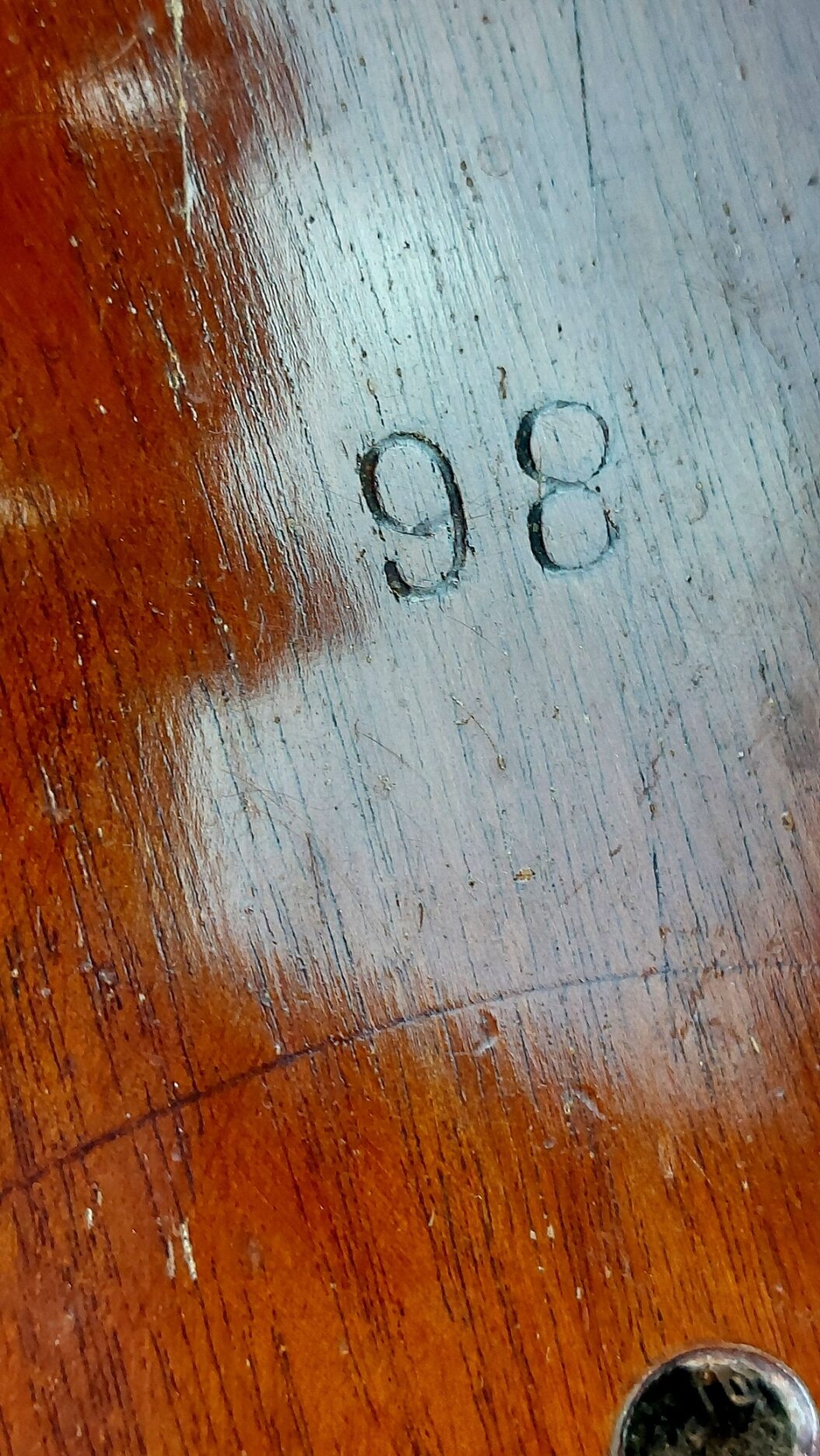
Surviving stamped markings, partially truncated by the hub cut, include: DNG. LP. 364(0) / D2635 / P2(500) / 130.HP.CL / G.941 / P.5, with an additional stamped “98” on the opposing face. These markings are consistent with Lang production to Air Board specifications for 130 hp Clerget rotary engines, with an approved diameter of 2635 mm and a pitch reference consistent with P 2500 mm.
Historical Note: The surviving stamped markings indicate manufacture by Lang Propeller Company of Weybridge (LP), the principal British supplier of wooden aircraft propellers to the Royal Flying Corps and Royal Naval Air Service during the First World War. Lang produced propellers to approved Air Board drawings, each specifying the engine type, diameter, and pitch for particular aircraft, and reused these approved drawings across compatible airframes.
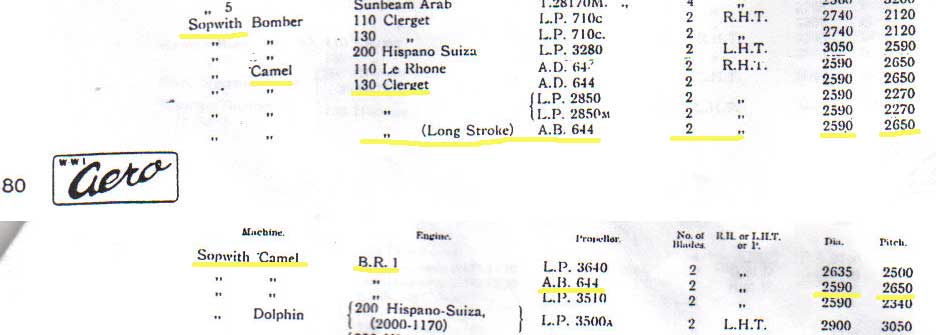
The marking 130.HP.CL denotes suitability for the 130 horsepower Clerget rotary engine, most commonly the Clerget 9B, which entered widespread British service from 1916. The drawing reference LP 364(0) series corresponds to a Lang internal design for Clerget-powered aircraft. The stamped diameter D2635 records a blade diameter of 2635 mm, while the partially truncated pitch markings P2(500) / P.5 are consistent with a pitch reference of approximately P 2500 mm. Contemporary WWI Air Board propeller specification tables list Lang Propeller drawing L.P. 3640 for the Sopwith Camel fitted with the 130 hp Clerget engine, specifying a 2635 mm diameter and 2500 mm pitch. These published specifications directly correspond with the surviving markings on this blade, confirming that it conforms to an approved wartime configuration rather than an experimental or post-war pattern. Further research compiled by Bob Gardner, author of WWI British Propellers and WWI German Propellers, records LP 3640 as one of several approved propeller drawings supplied for the Avro 504K when fitted with Clerget rotary engines of 110, 130, or 140 hp, demonstrating that this Lang drawing series was used across multiple Clerget-powered RFC aircraft types during the late-war and immediate post-war period (photograph attached).
Of additional interest is the “G”-prefixed batch marking (G.941). Comparative examples of intact Lang Clerget propellers show this prefix in use during the second half of 1917, providing a credible manufacturing timeframe for this blade. The propeller was later cut through the hub, a common post-war practice when damaged or surplus propellers were retired from service and repurposed as souvenirs or display pieces.
Despite this later alteration, the blade remains a genuine and well-documented survivor from Britain’s First World War aircraft industry, closely aligned with Clerget-powered Sopwith Camel and Avro 504K aircraft of the 1917–1919 period.
*Condition* In good vintage condition overall. The blade shows expected surface wear, scuffs, scratches, and small edge losses consistent with age and former service. The laminated structure remains stable, with no active cracking observed. The cut hub area shows old wear and remnants of protective coatings. Please see photographs as part of the condition report.
Measurements (approx.): Overall height: 132 cm Maximum blade width: 24.2 cm Hub thickness: 15 cm Hub centre bore: 6.9 cm diameter Central hub cut aperture: approx. 8 cm diameter Blade face aperture: 11 cm internal diameter (15.5 cm including frame)
RQMGEOXAEOO_8573222925
Please contact the shop prior to purchase if you'd like to make alternative collection arrangements.