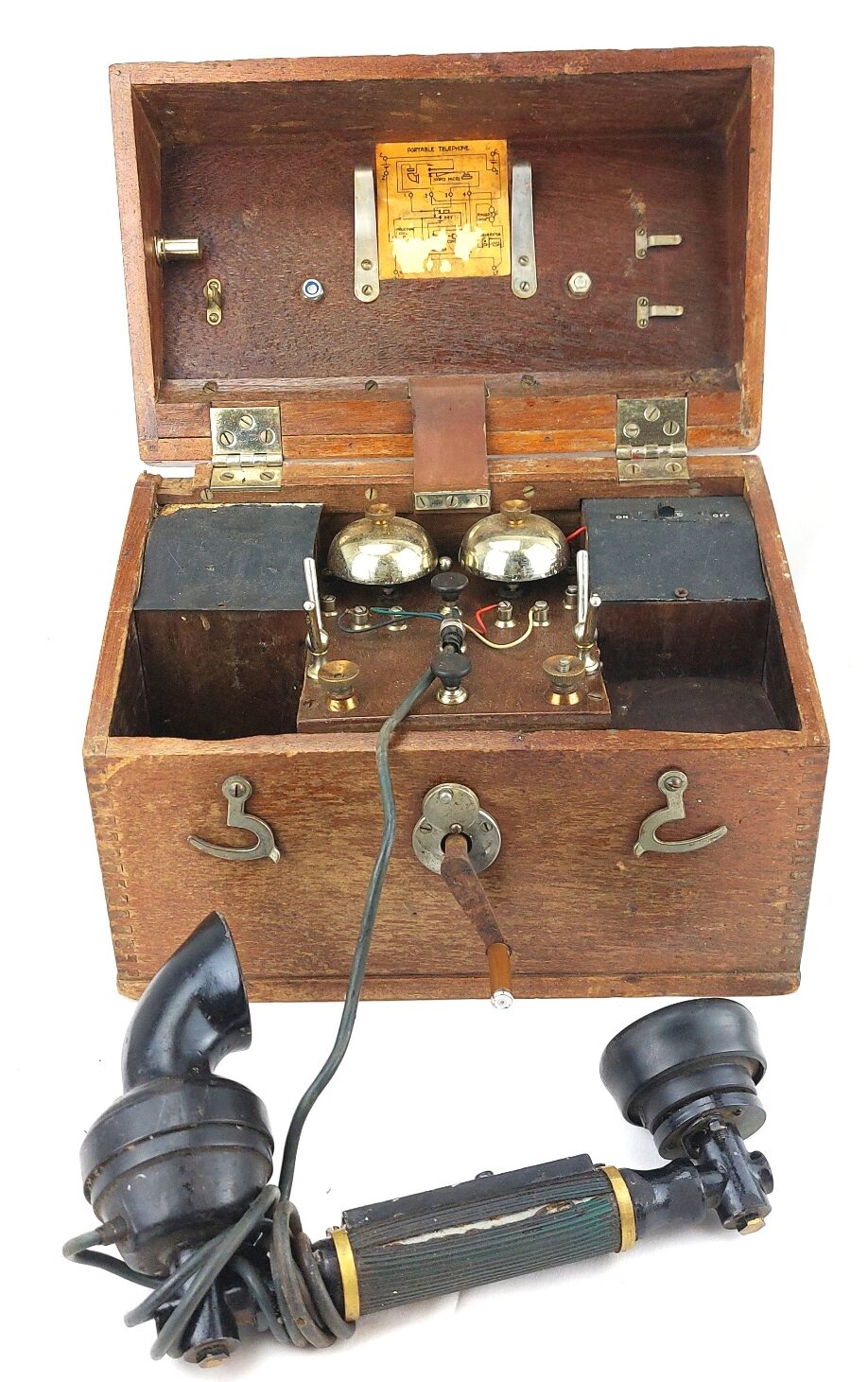
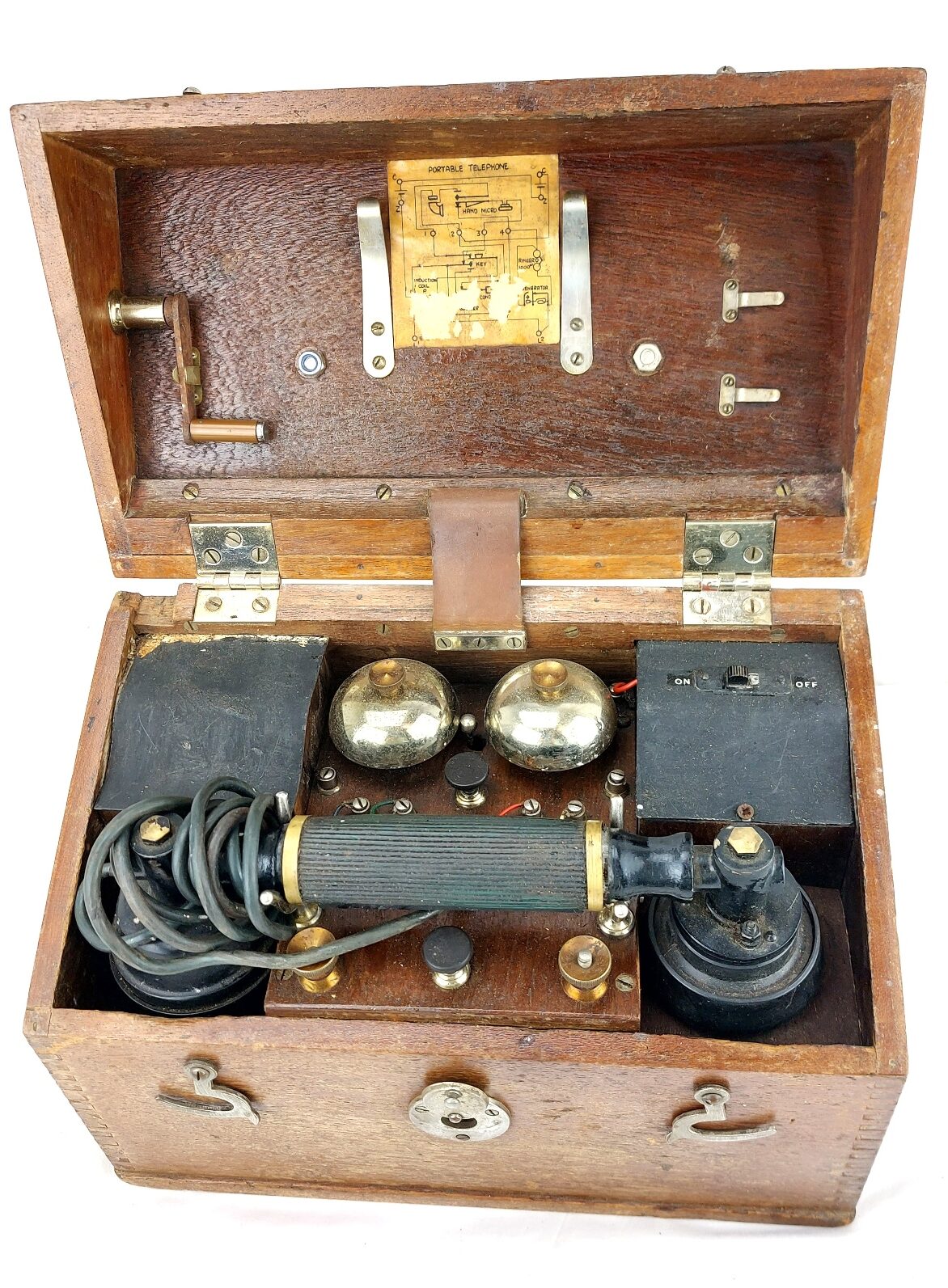
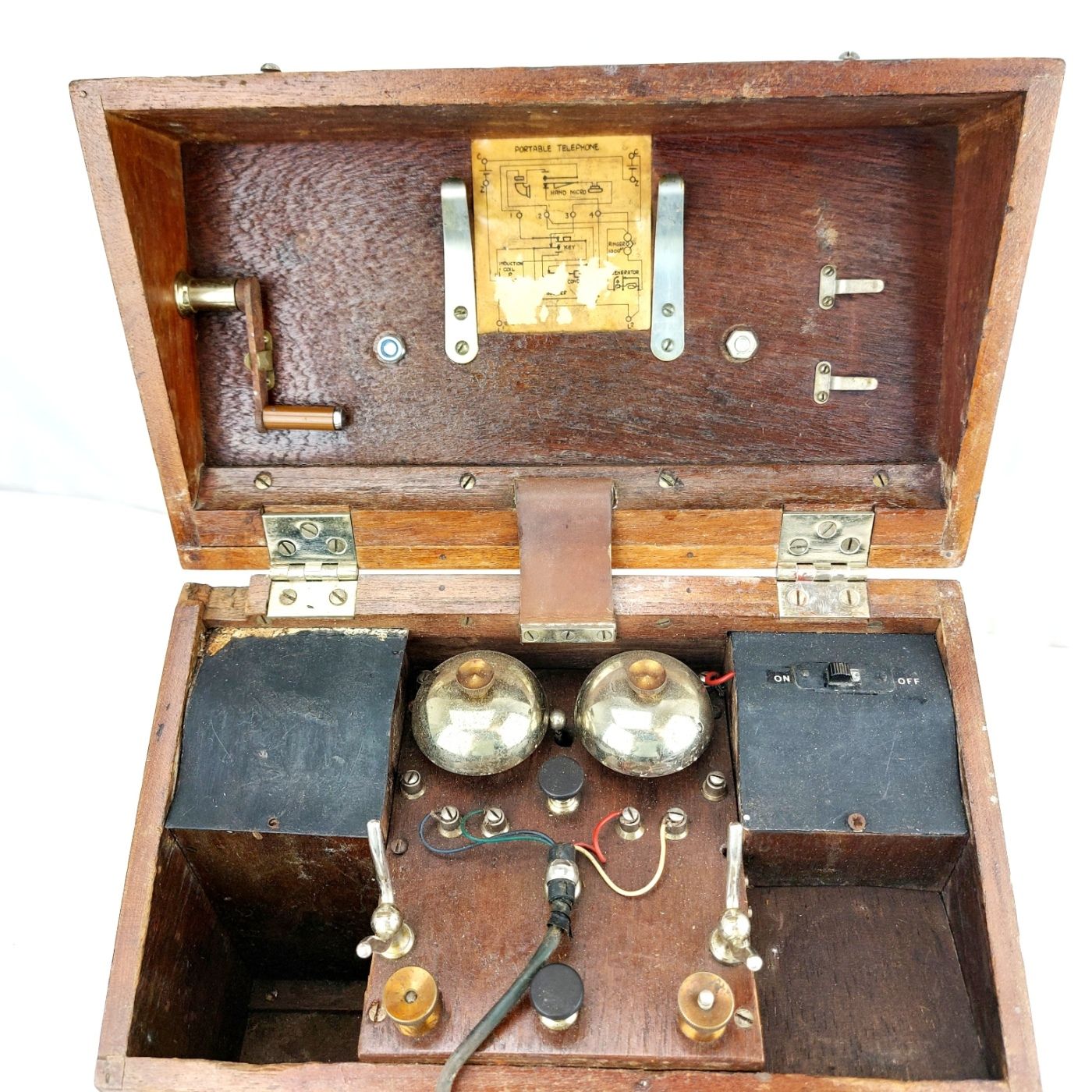
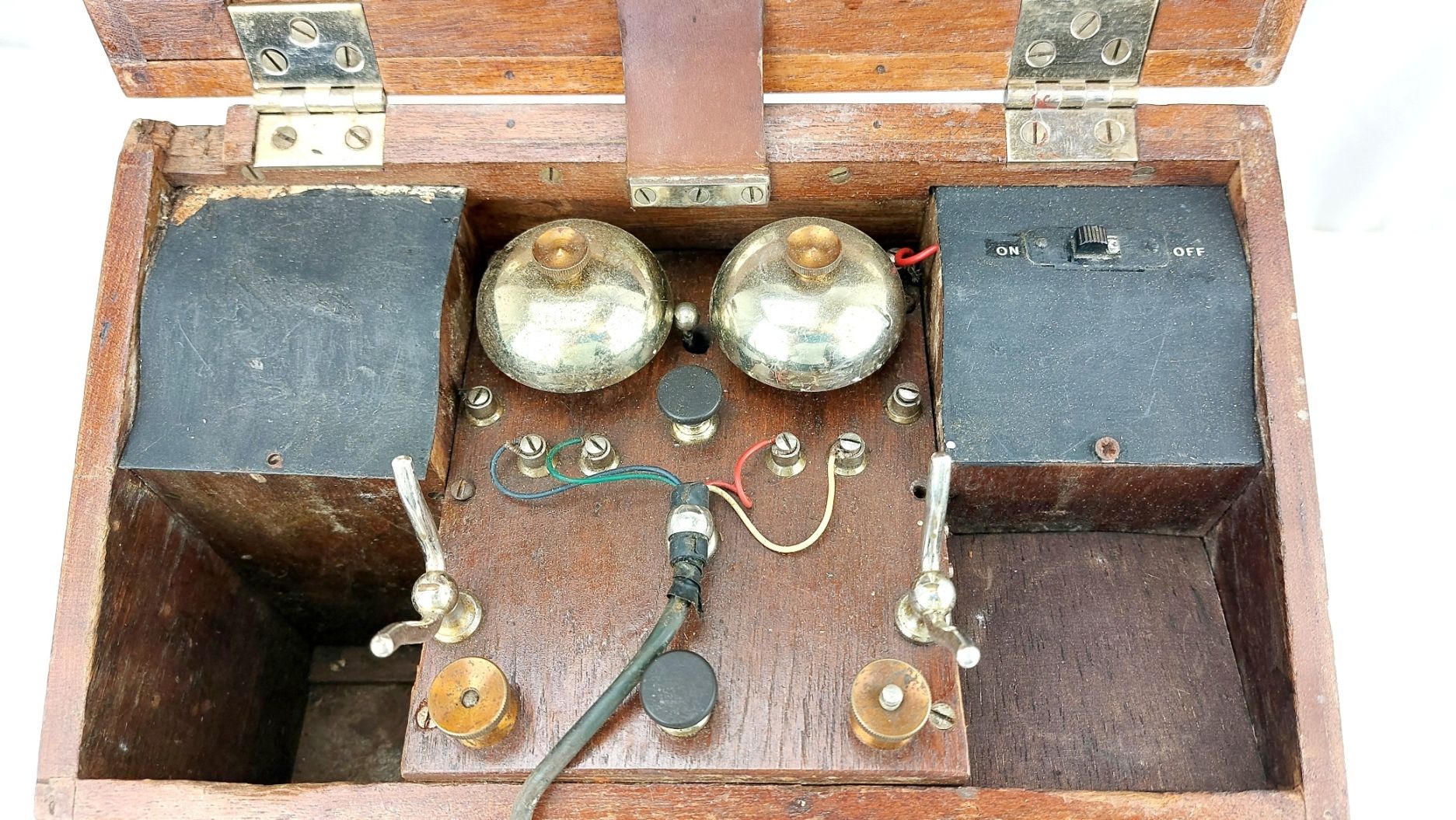
*British, WW1- c.1914–18, Standard Electric Portable Field Telephone, West India House plate — complete with handset, wiring diagram & crank*
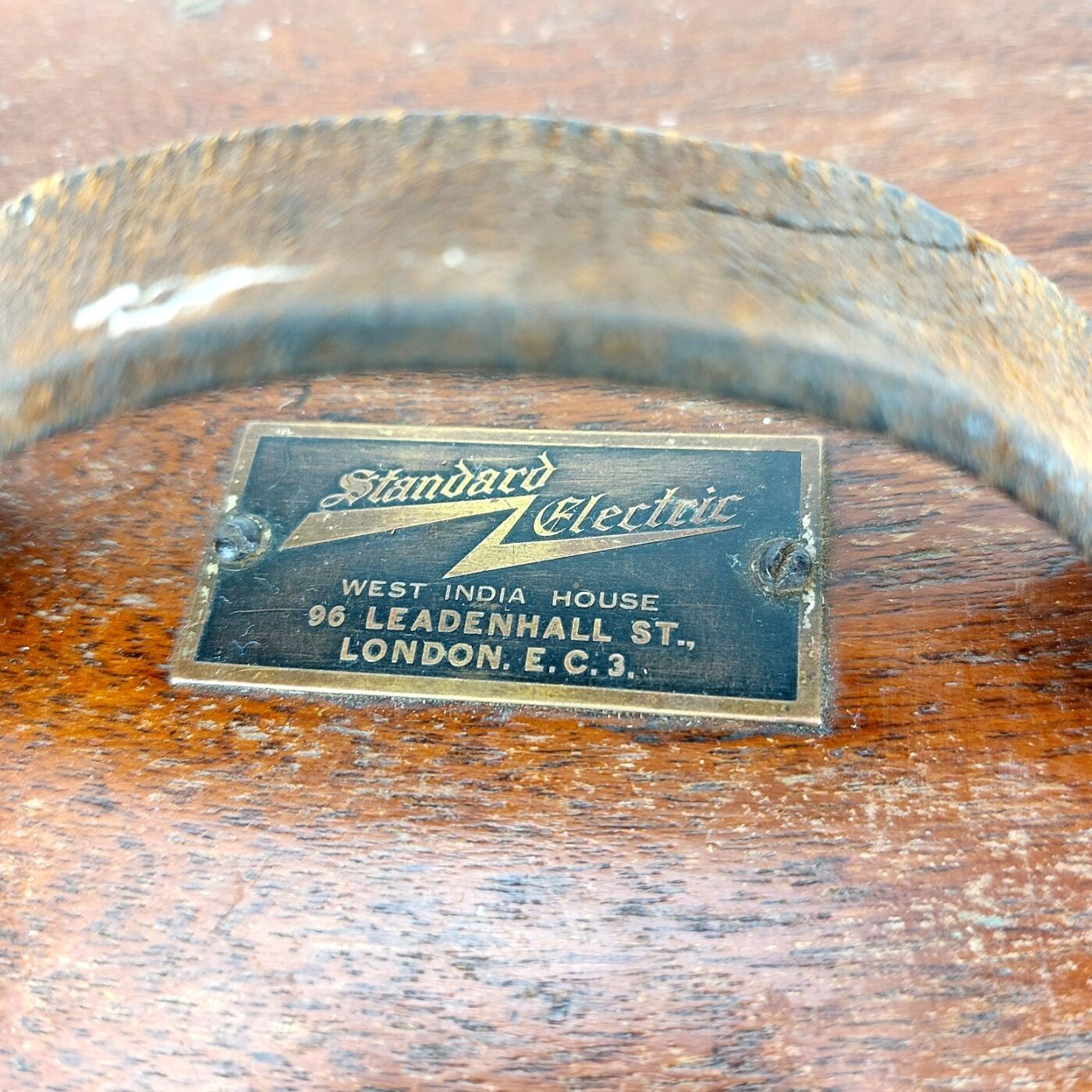
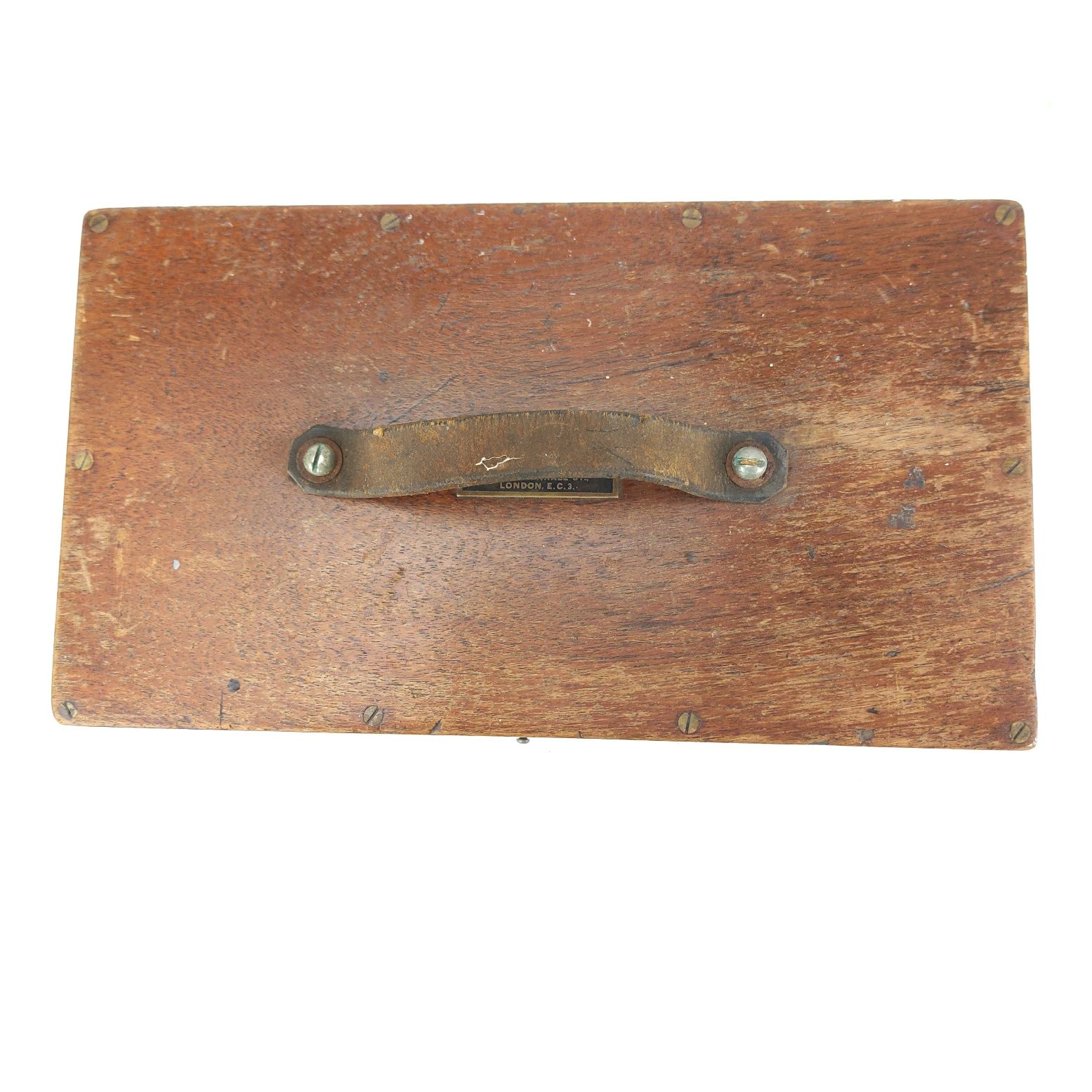
Supplied by Standard Electric of London (Western Electric’s British arm) from its City offices at West India House, 96 Leadenhall Street, before the 1925 reorganisation into Standard Telephones & Cables (STC).
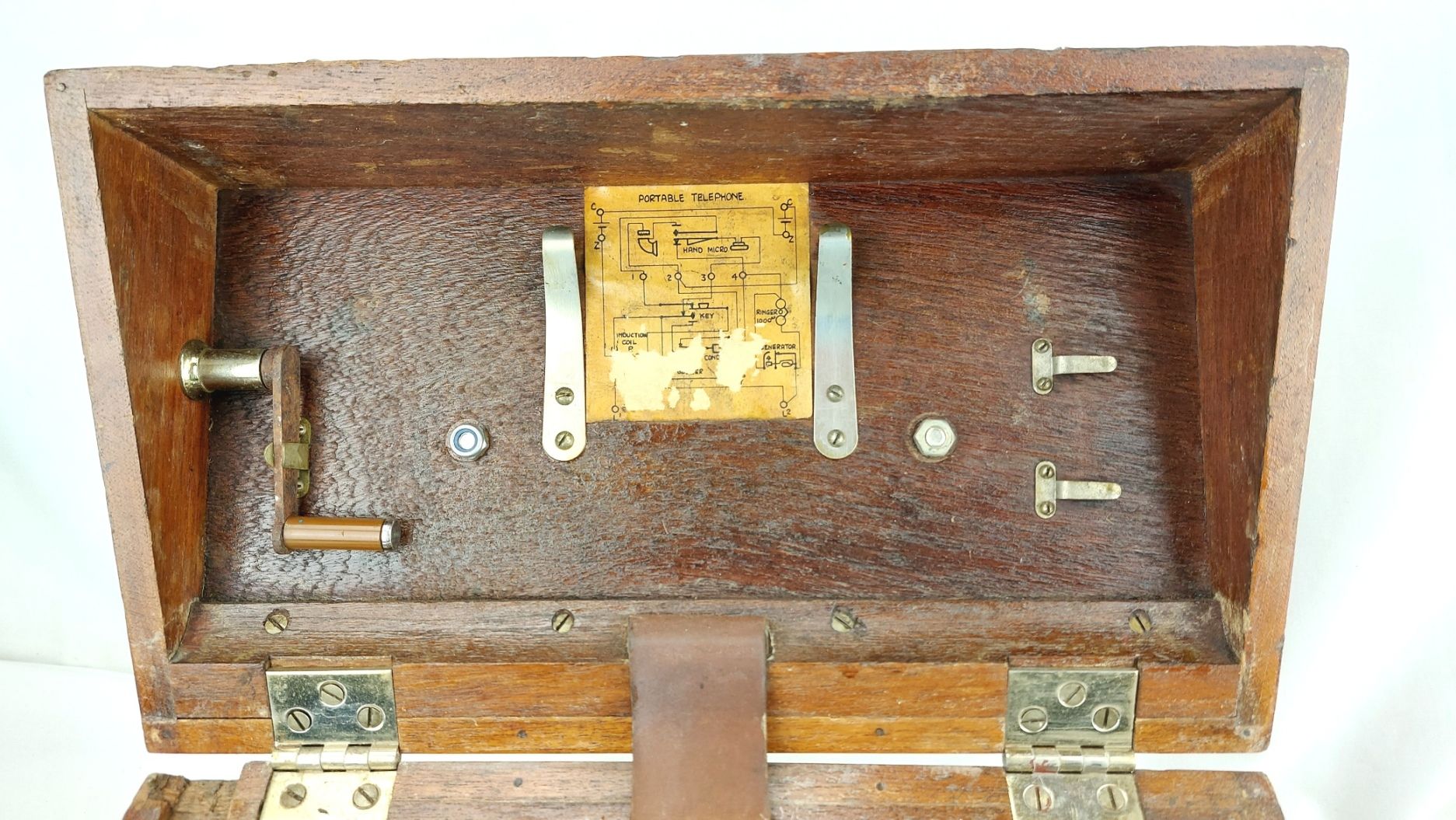
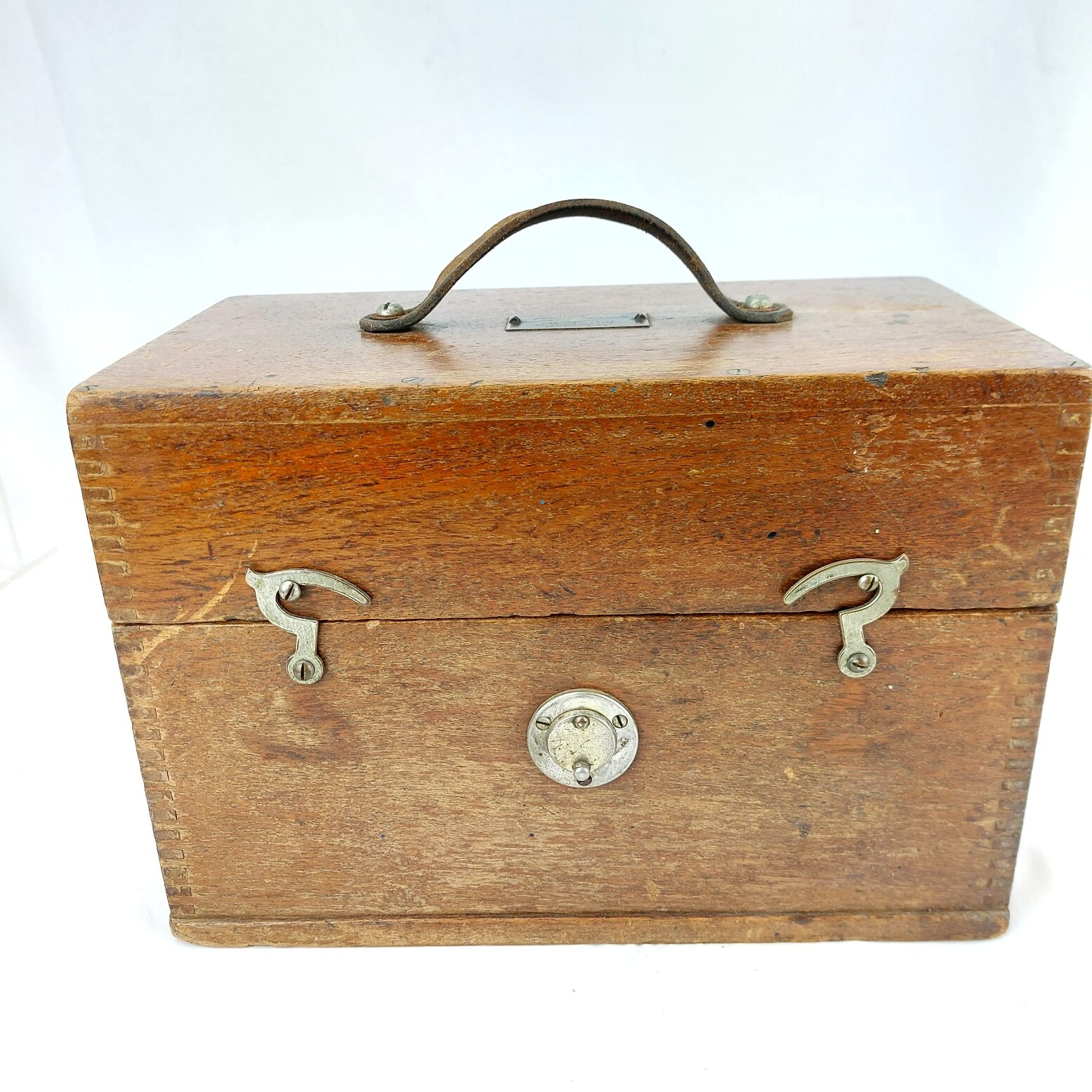
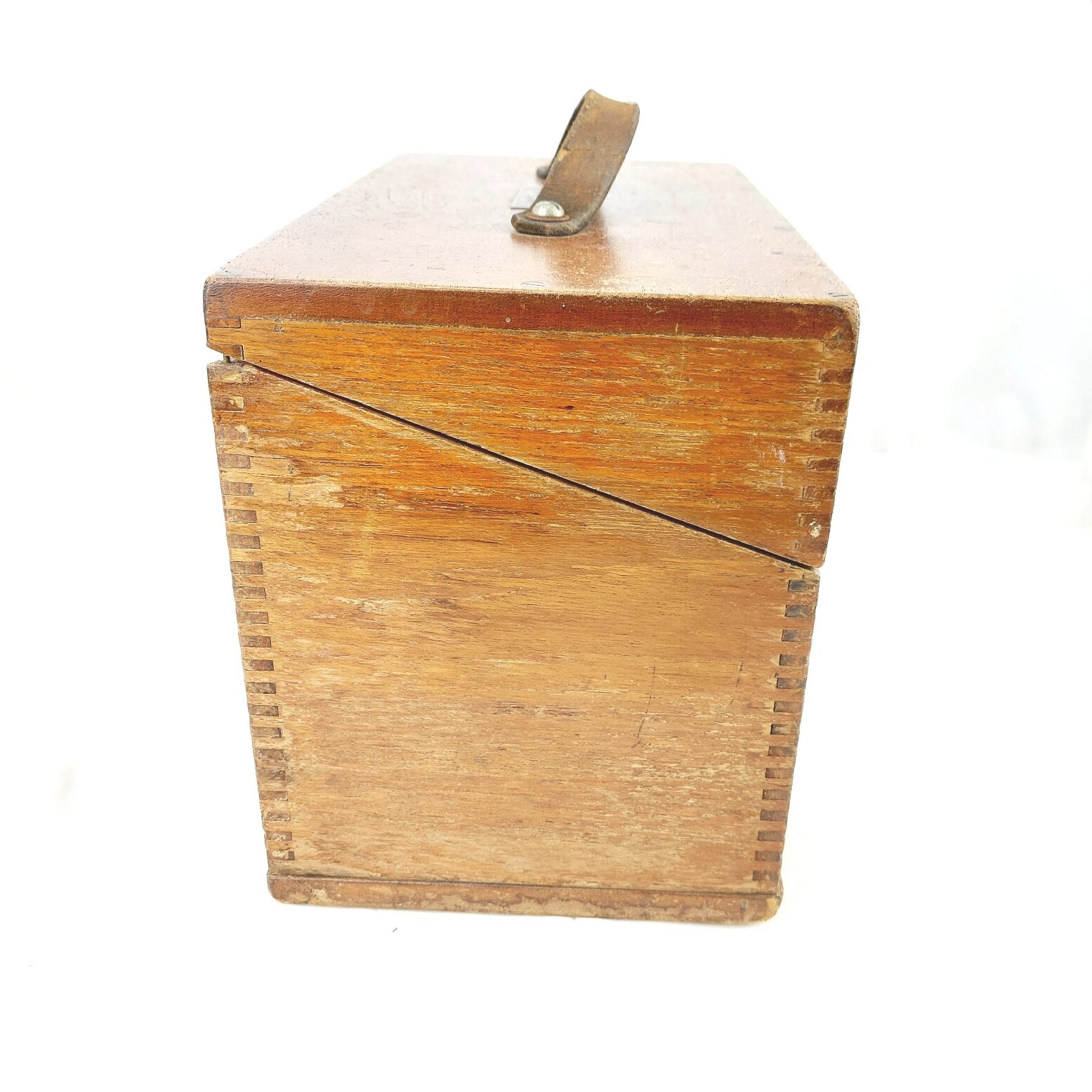
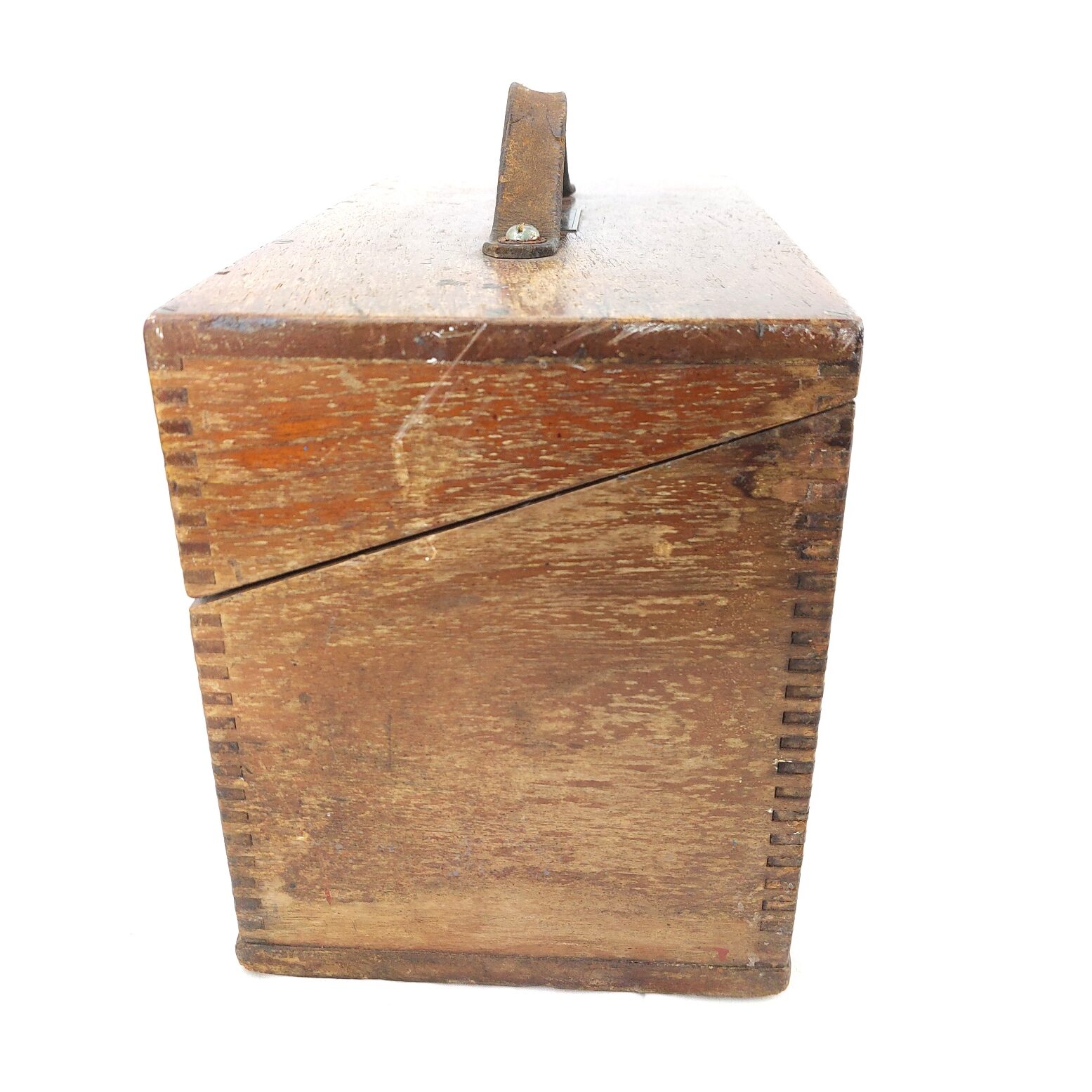
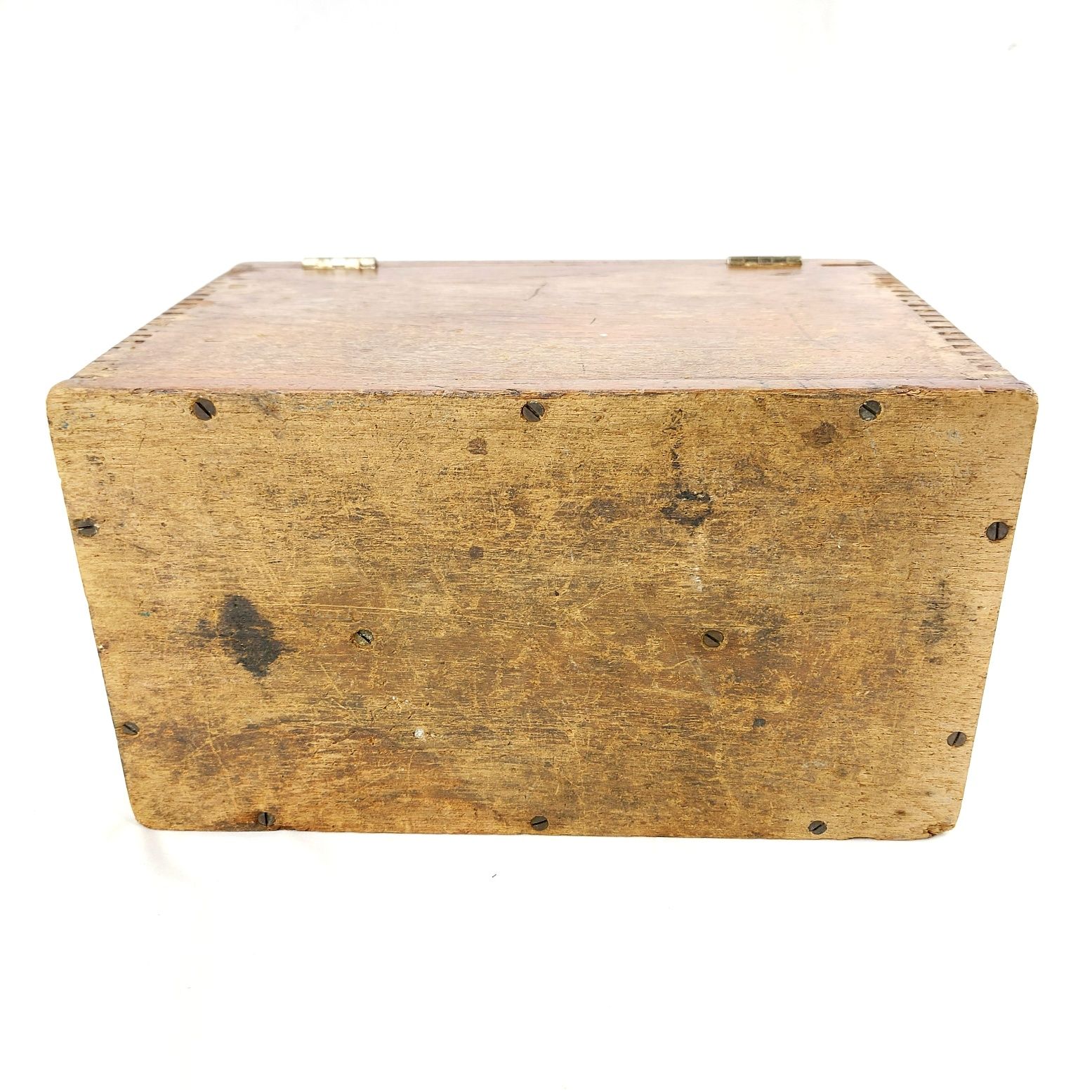
A scarce WWI-era portable field telephone by Standard Electric (Western Electric’s London subsidiary), housed in its dovetailed oak case with leather carrying handle and original maker’s plate: “Standard Electric, West India House, 96 Leadenhall St., London E.C.3.”
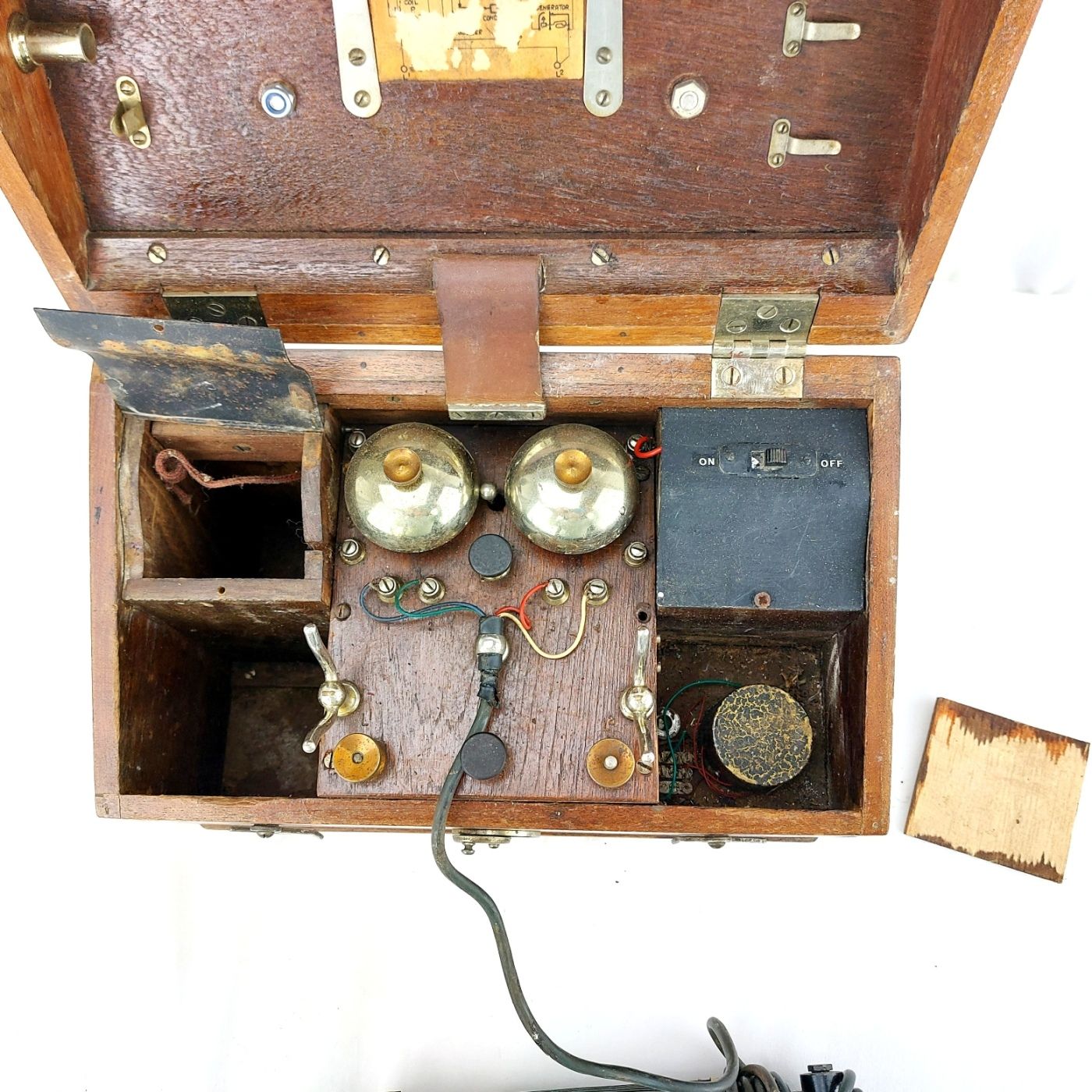
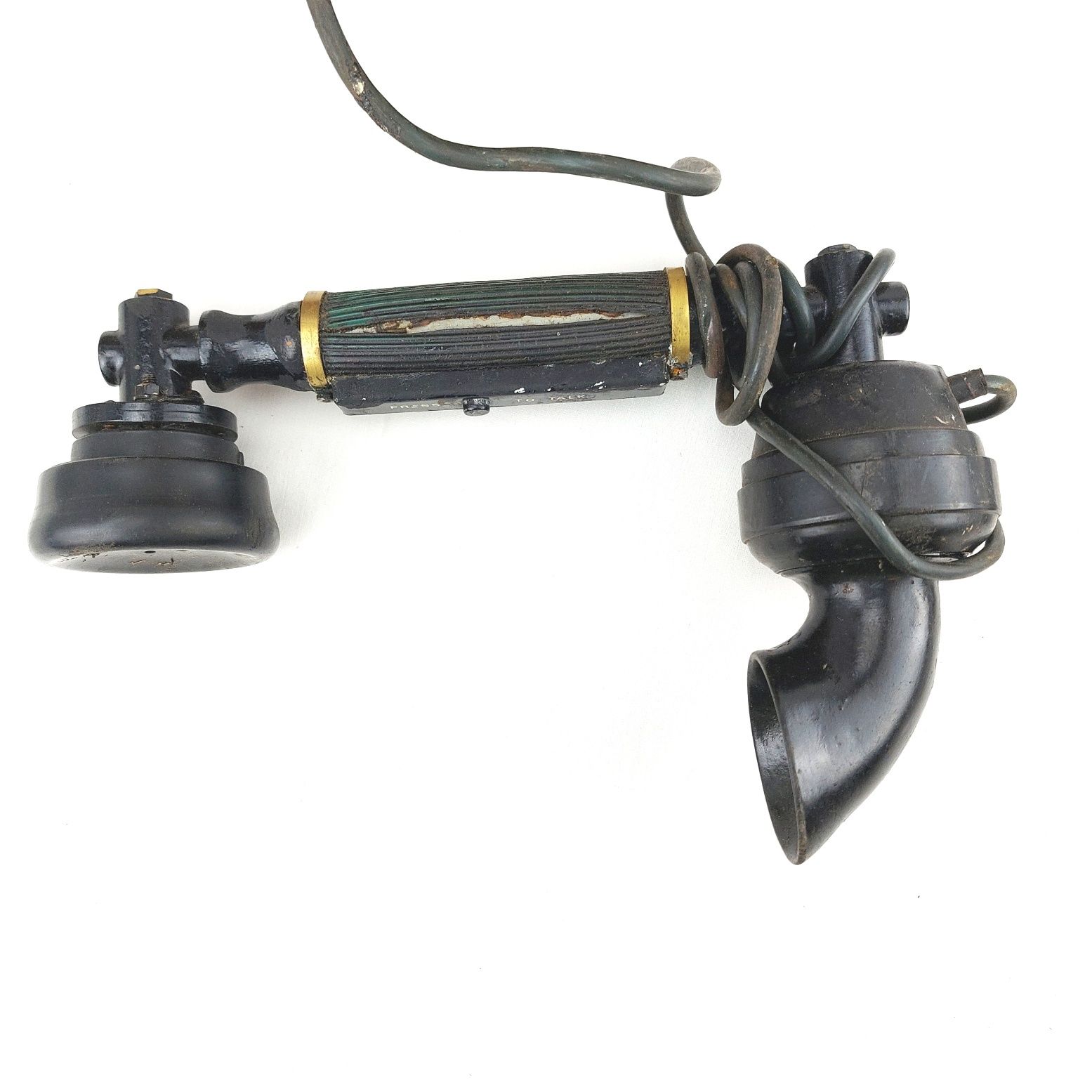
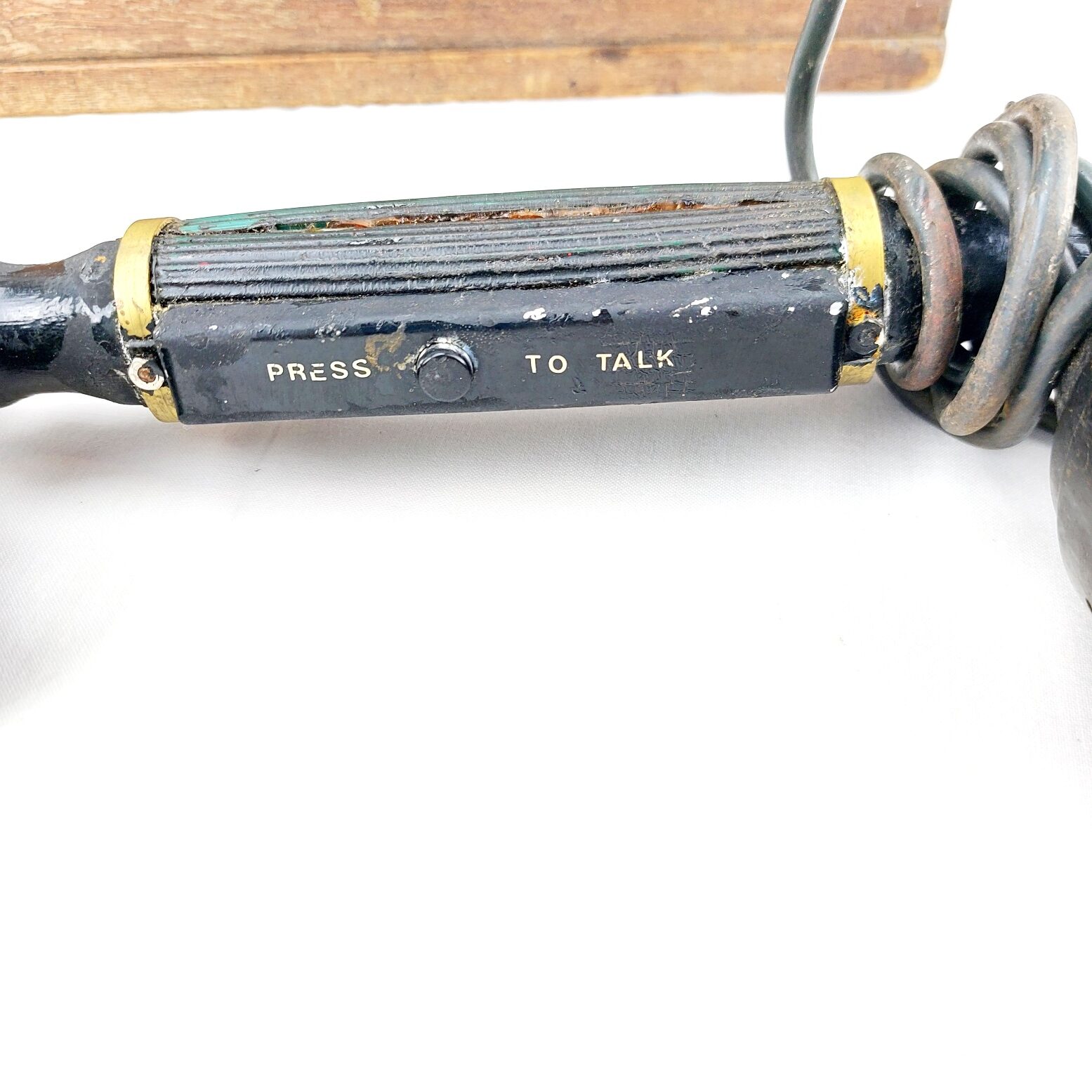
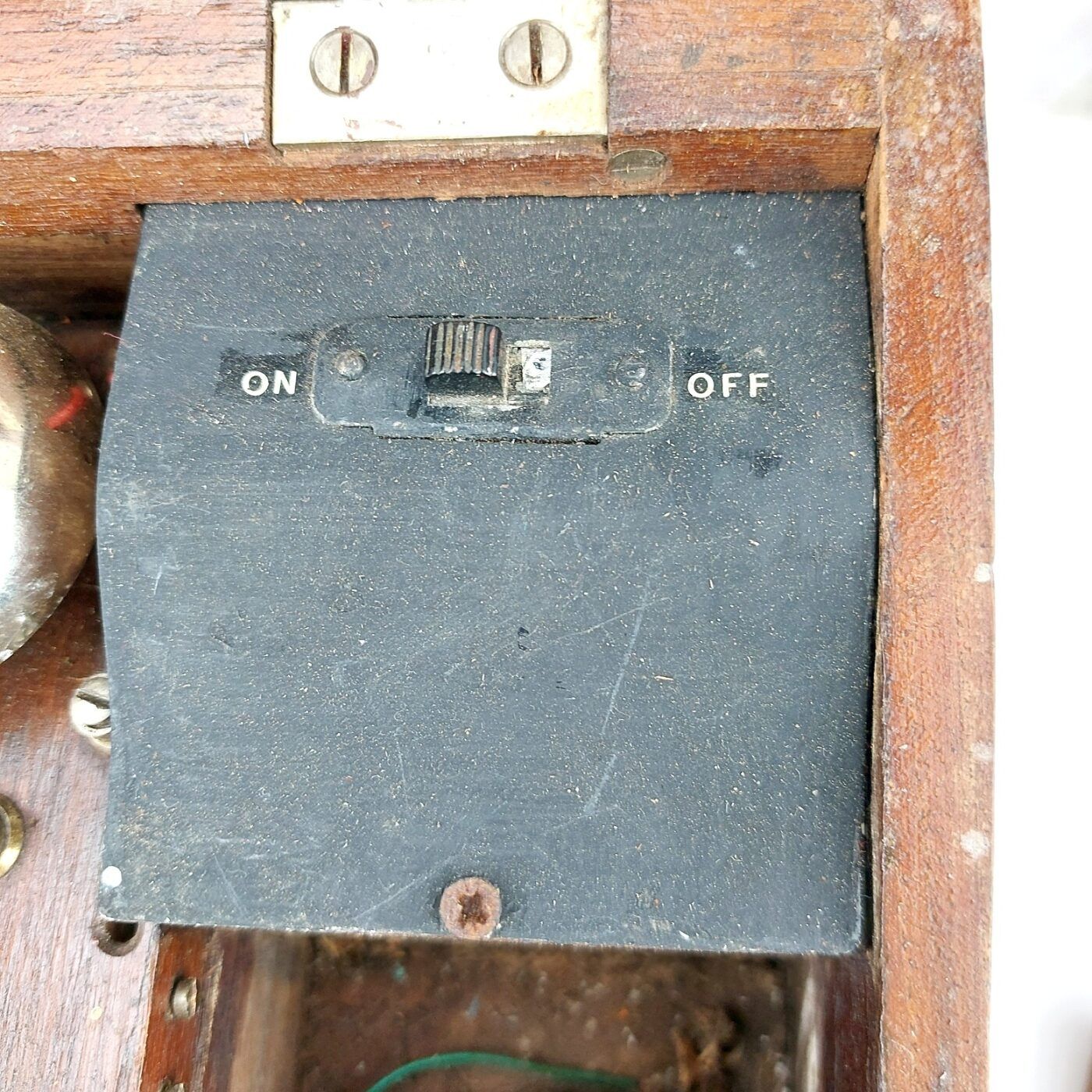
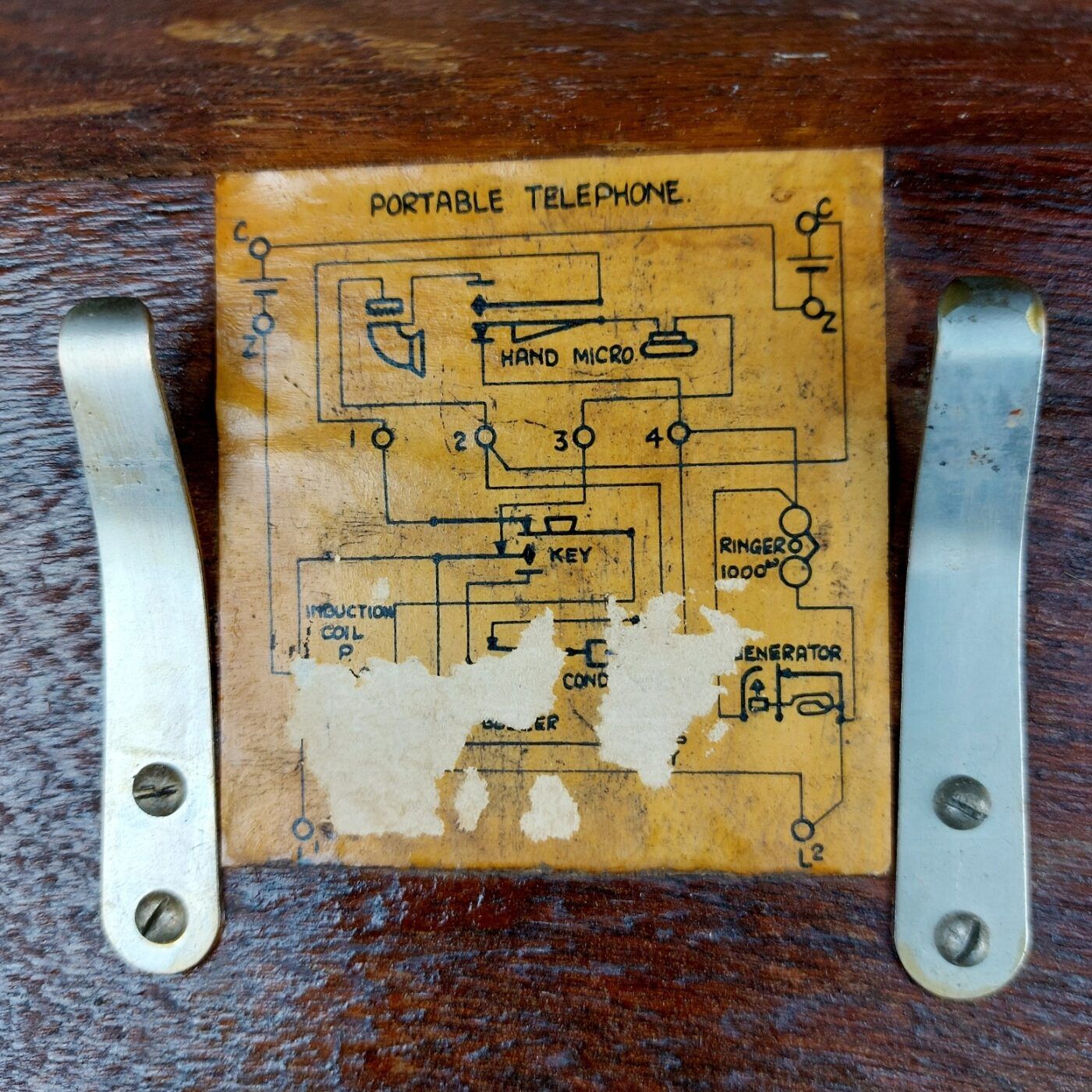
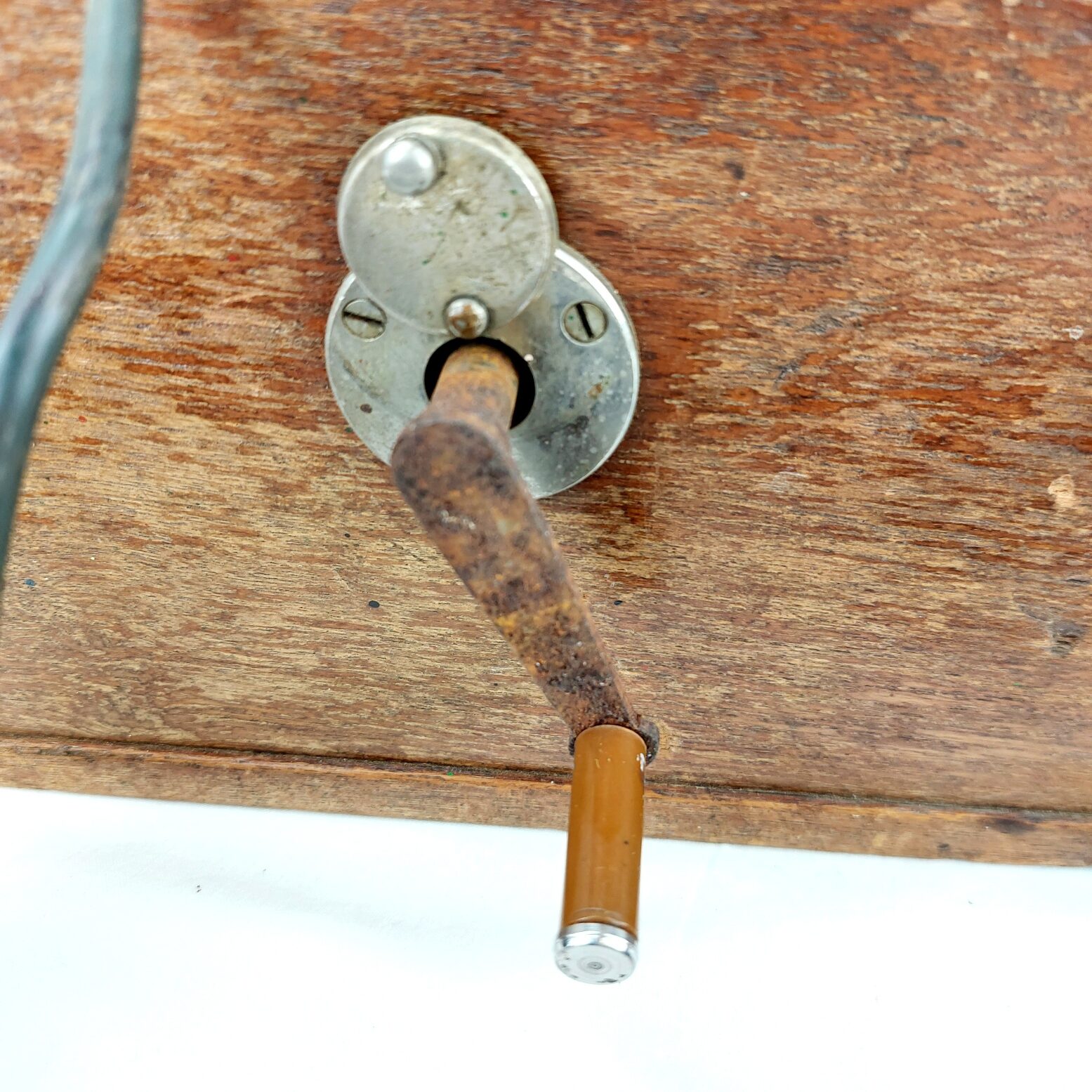
The set is complete with its combined “Press to Talk” handset, twin bells, induction coil, battery compartments, and the printed wiring diagram in the lid marked “PORTABLE TELEPHONE”. Importantly, the original folding hand-crank magneto is still present, neatly stowed inside and fitting to the generator boss for operation. Designed as a local-battery/magneto set, two dry cells powered the carbon transmitter while the hand crank generated the calling signal. A fine and largely complete survivor of the trench-to-HQ communication technology that transformed Great War command and control.
Dimensions: 30.1 × 16.9 × 20.9 cm.
Historical Note:
“Standard Electric” was the British branch of Western Electric, active in London from the 1880s and formally incorporated in 1910. From its City address at West India House, 96 Leadenhall Street, the company supplied telephony equipment to the British Army during the First World War. In 1925, the business was reorganised under ITT as Standard Telephones & Cables (STC), which went on to dominate British telecommunications. Pre-STC “Standard Electric” instruments such as this are tied directly to Britain’s earliest adoption of American-designed field telephony and the urgent communications demands of WWI.
*Condition*
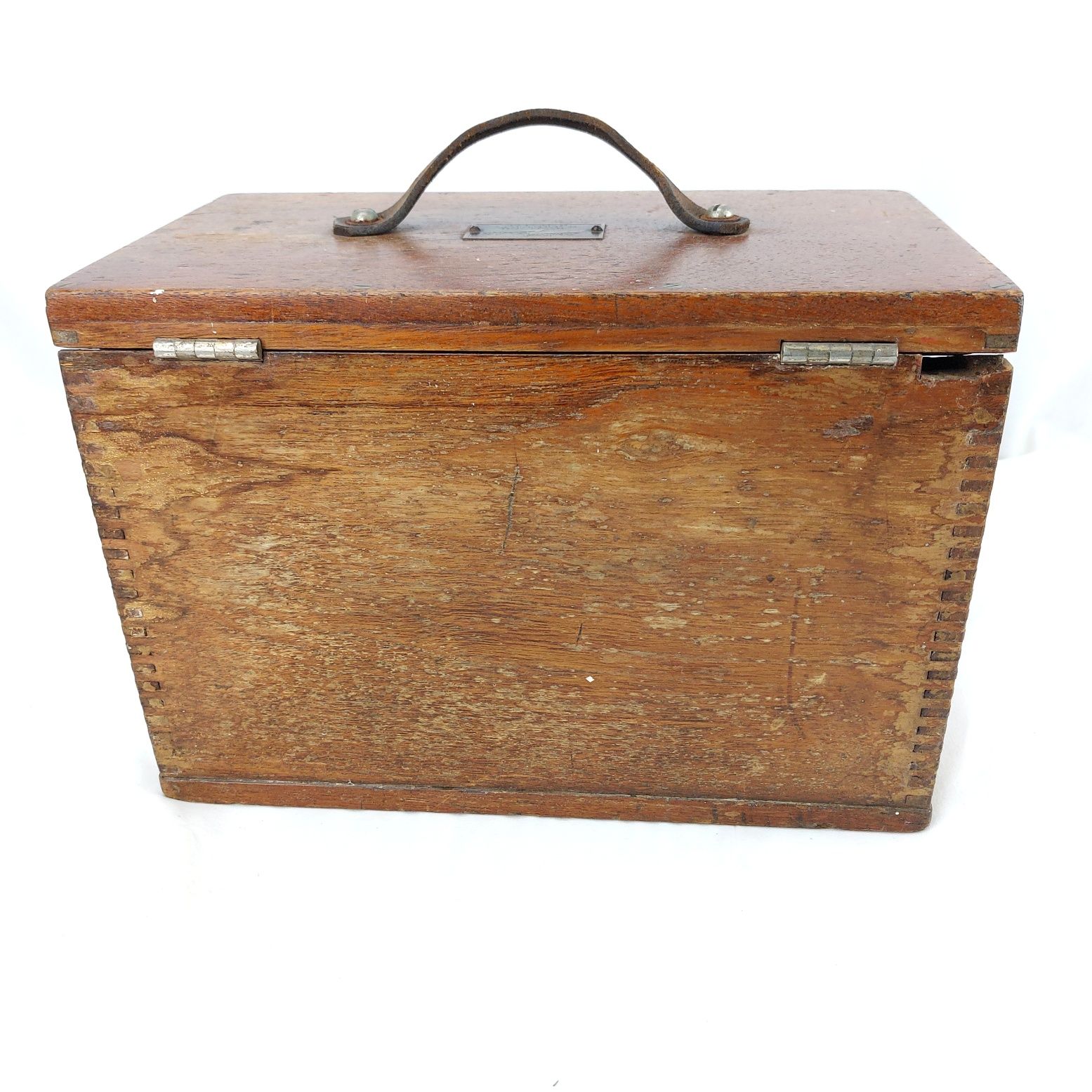
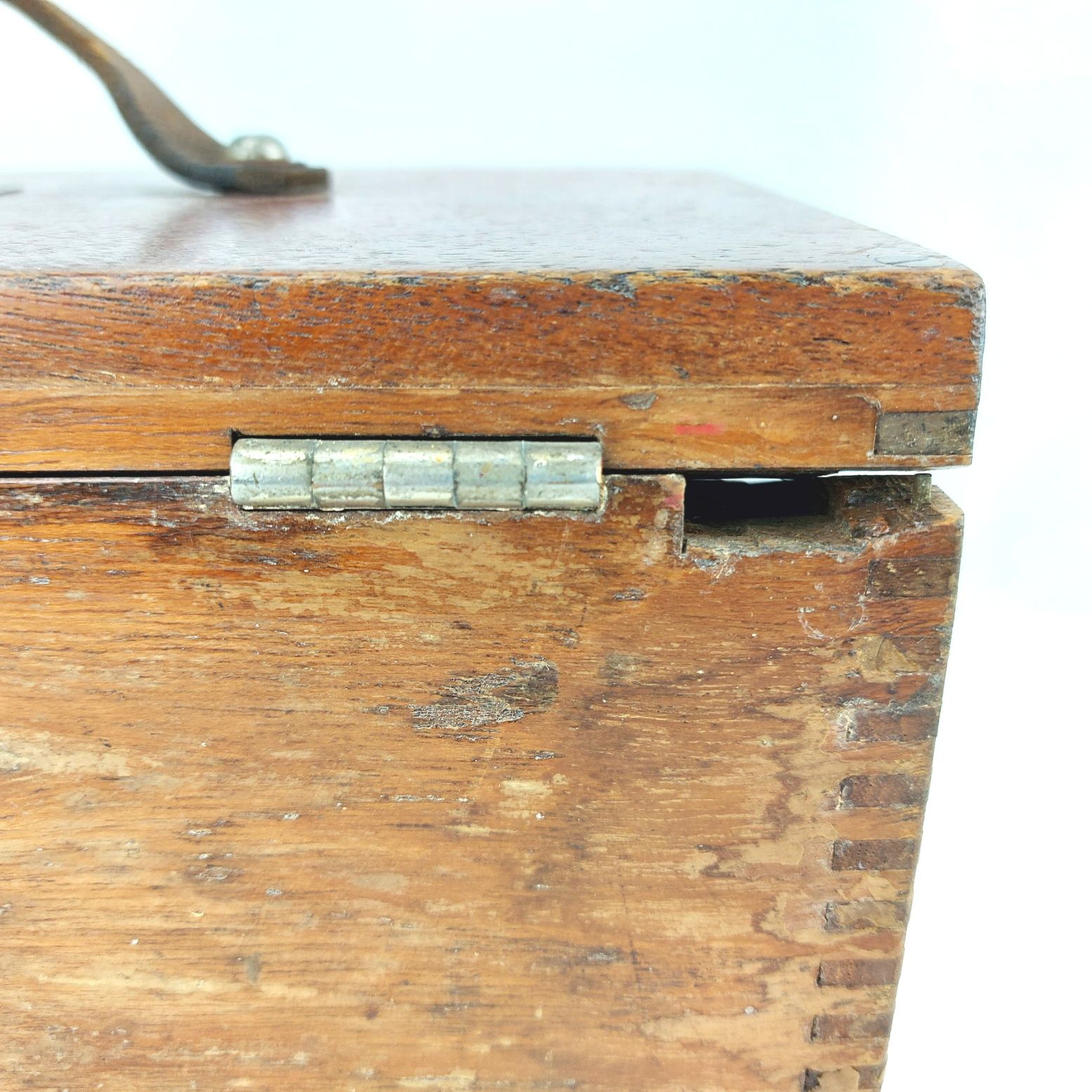
The oak case is structurally sound with expected surface wear, scuffs and knocks from service. A chip and loss are noted to the rear right hinge area with a minor lid gap, though the hinges remain functional. The leather carry handle is present and aged but intact. Inside, the handset retains its original mouthpiece and earpiece caps with scuffs and paint loss to the grip and a split to the rubber; the cloth-covered cord remains. Twin bells, induction coil, and wiring board are present and complete. The original folding crank is now fitted, showing honest wear and a rusty patina but fully functional. The printed wiring diagram survives in the lid with abrasions but legible detail. Battery compartments show traces of long-expired dry cells. Untested and offered as a display piece. Please see photographs as part of the condition report.
Field telephones with “Standard Electric” plates are significantly rarer than later STC-marked examples, as this branding only existed prior to the 1925 ITT reorganisation. These early sets embody the first generation of Western Electric designs adapted for British wartime use and are particularly desirable to collectors of WWI communications and early STC history.