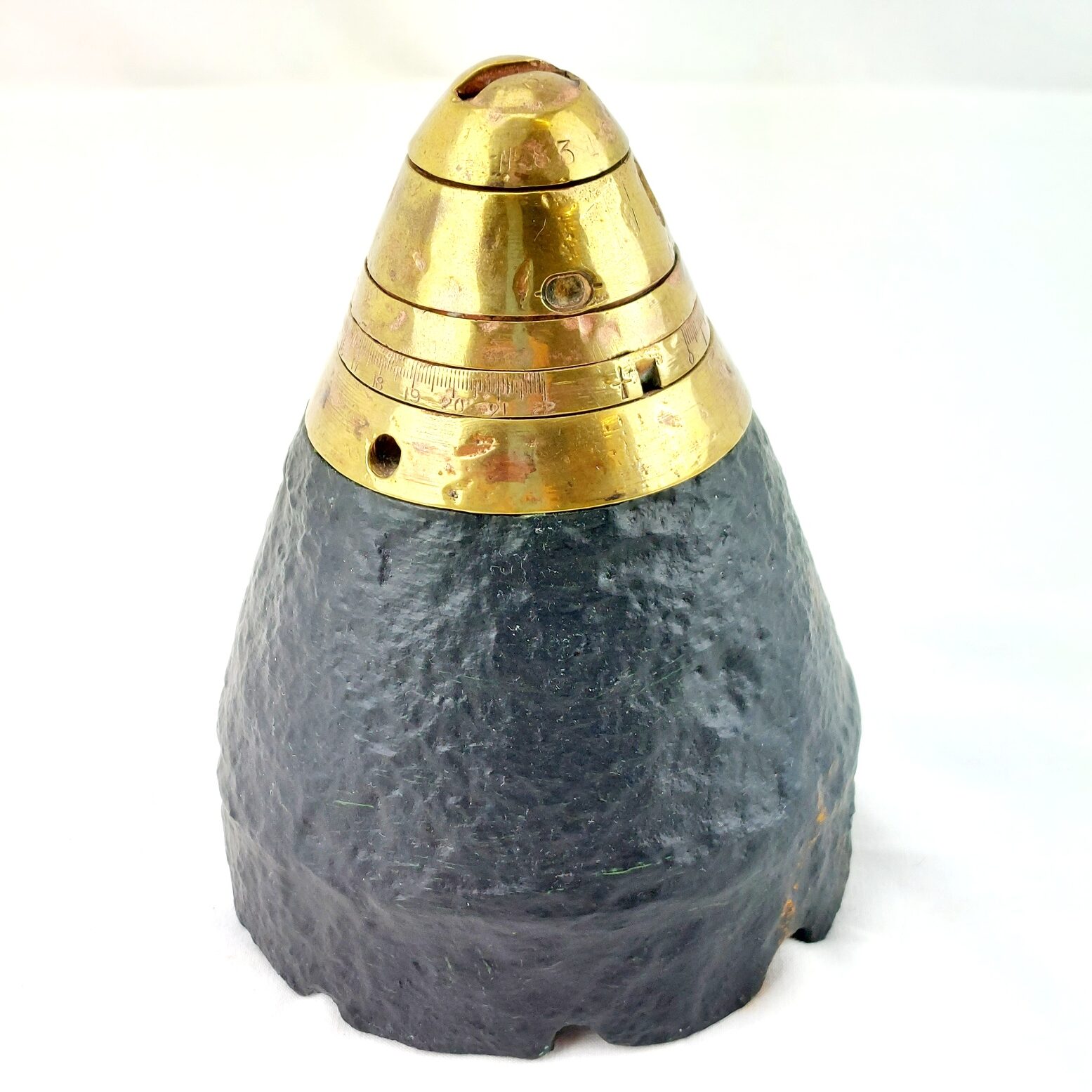
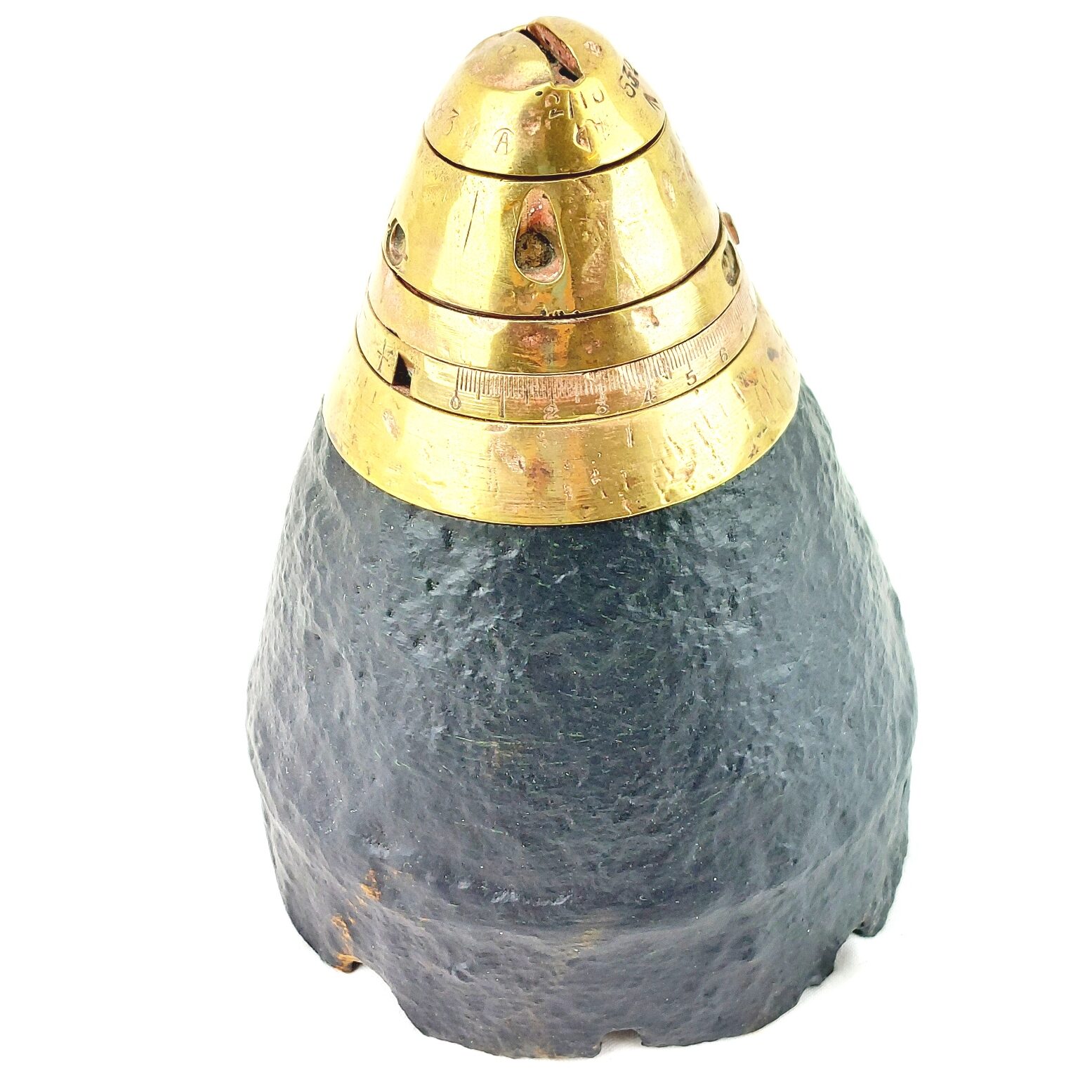
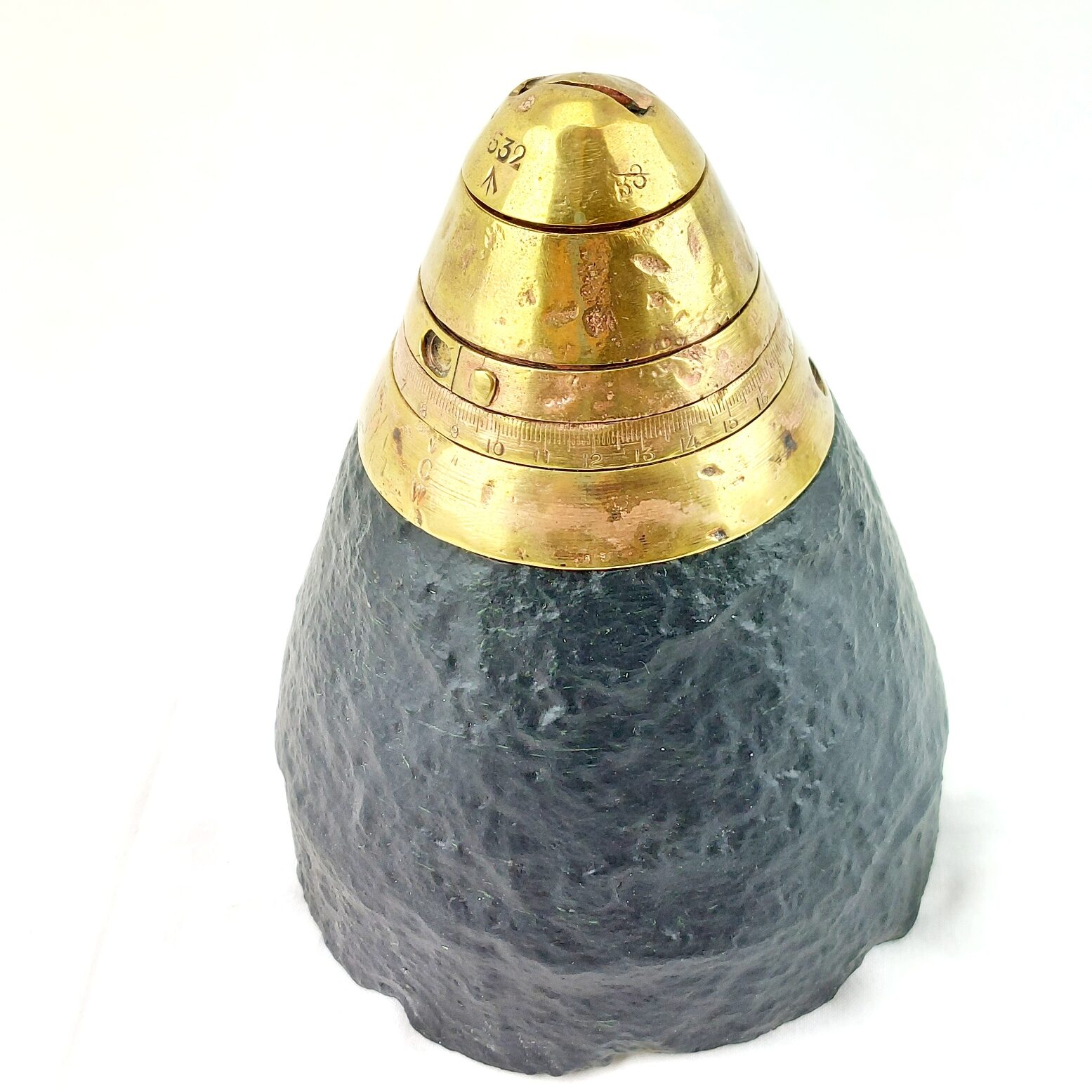
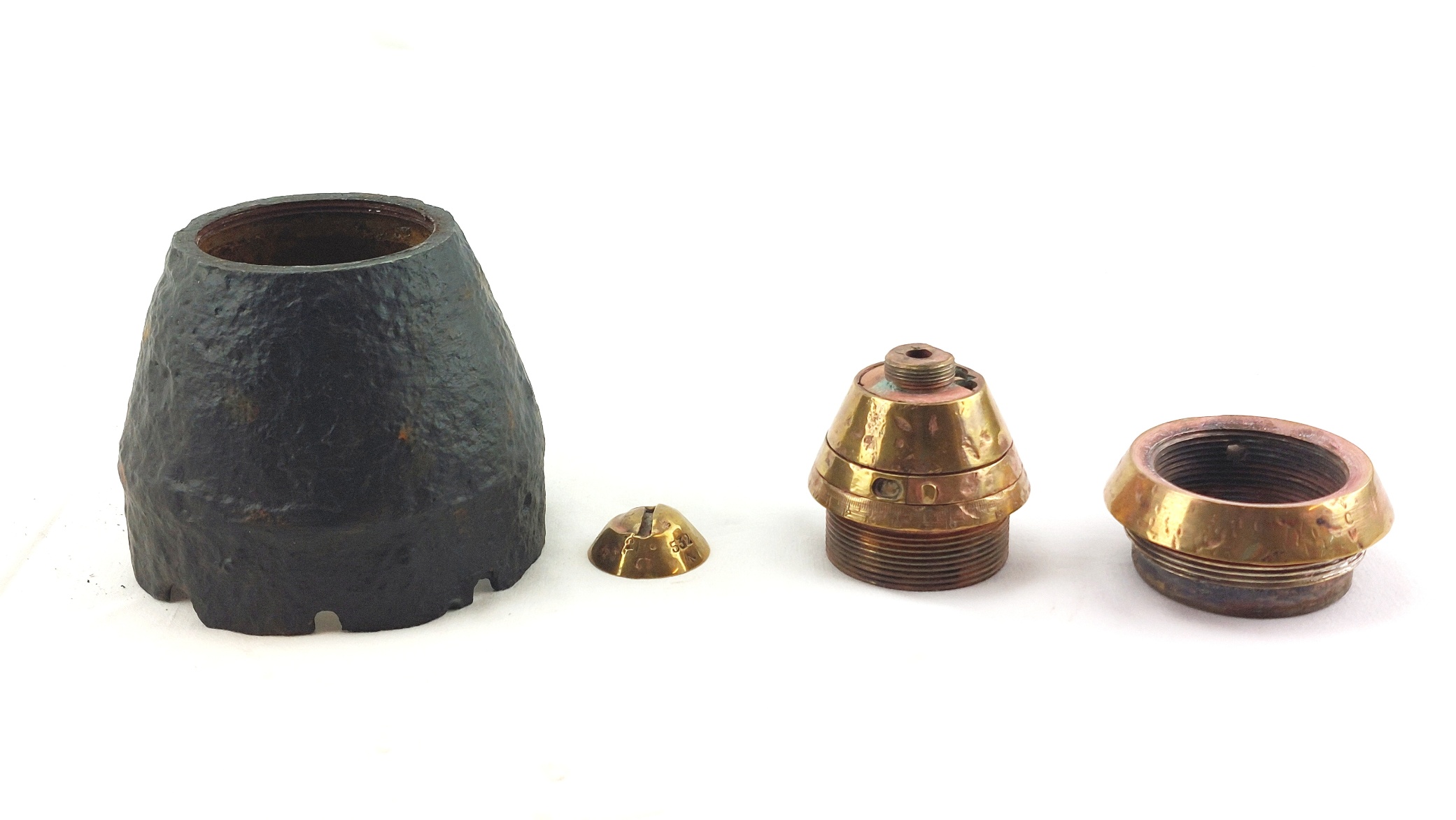
*British, WW1, 18-pounder Shrapnel Shell Head with No. 80 Mk II Time & Percussion Fuse, Dated Feb 1918, (Somme Battlefield Recovery)*
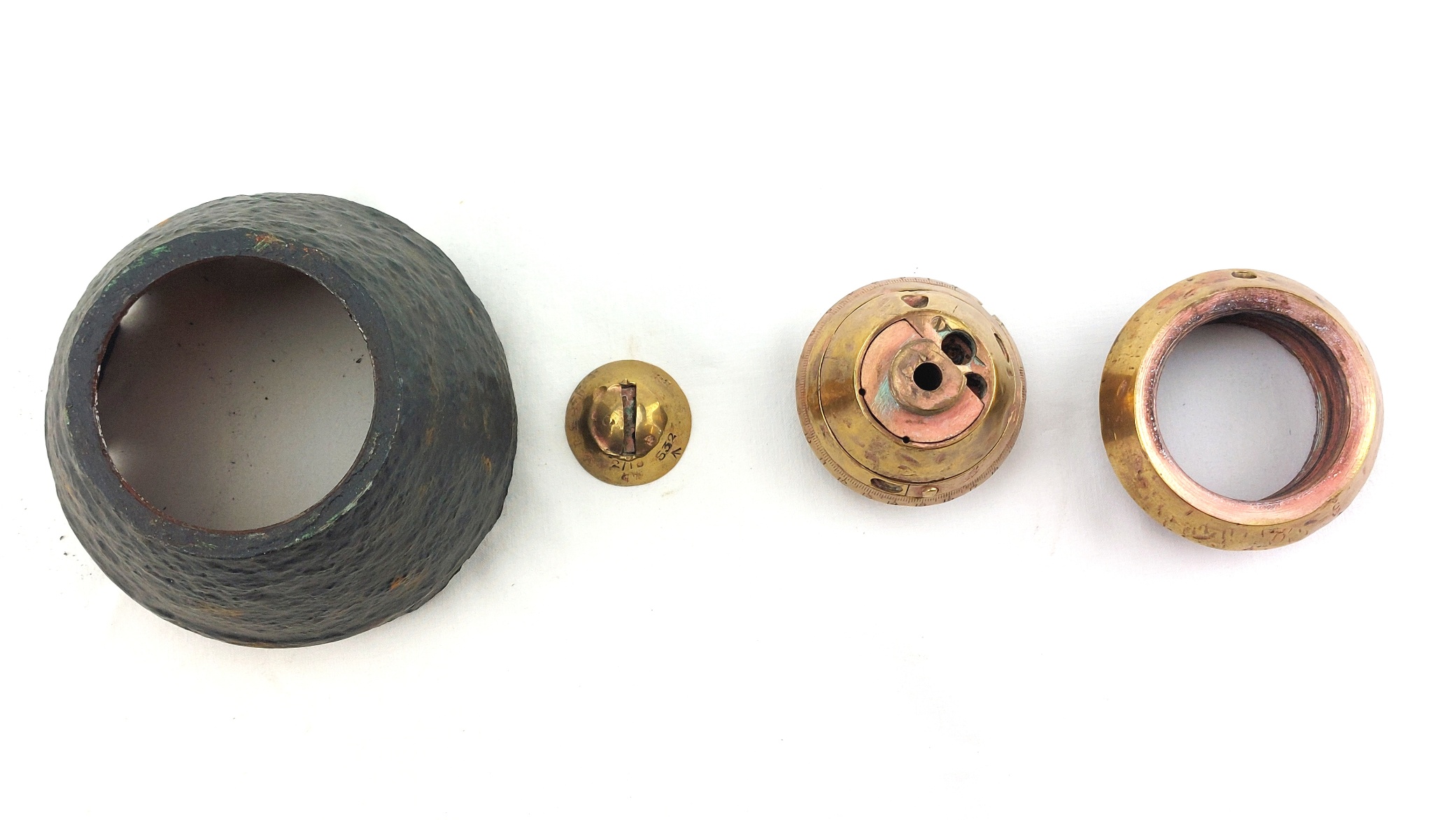
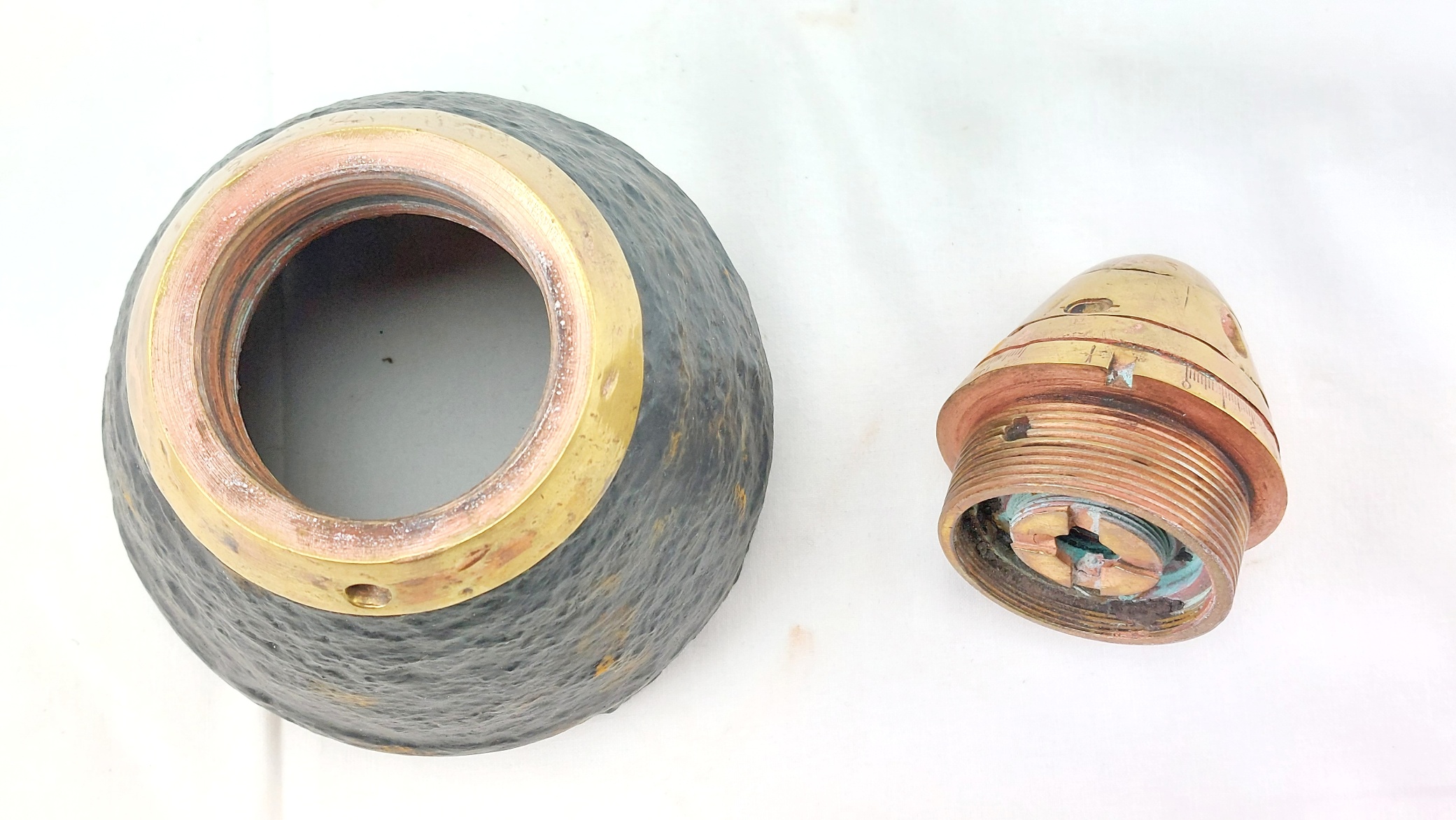
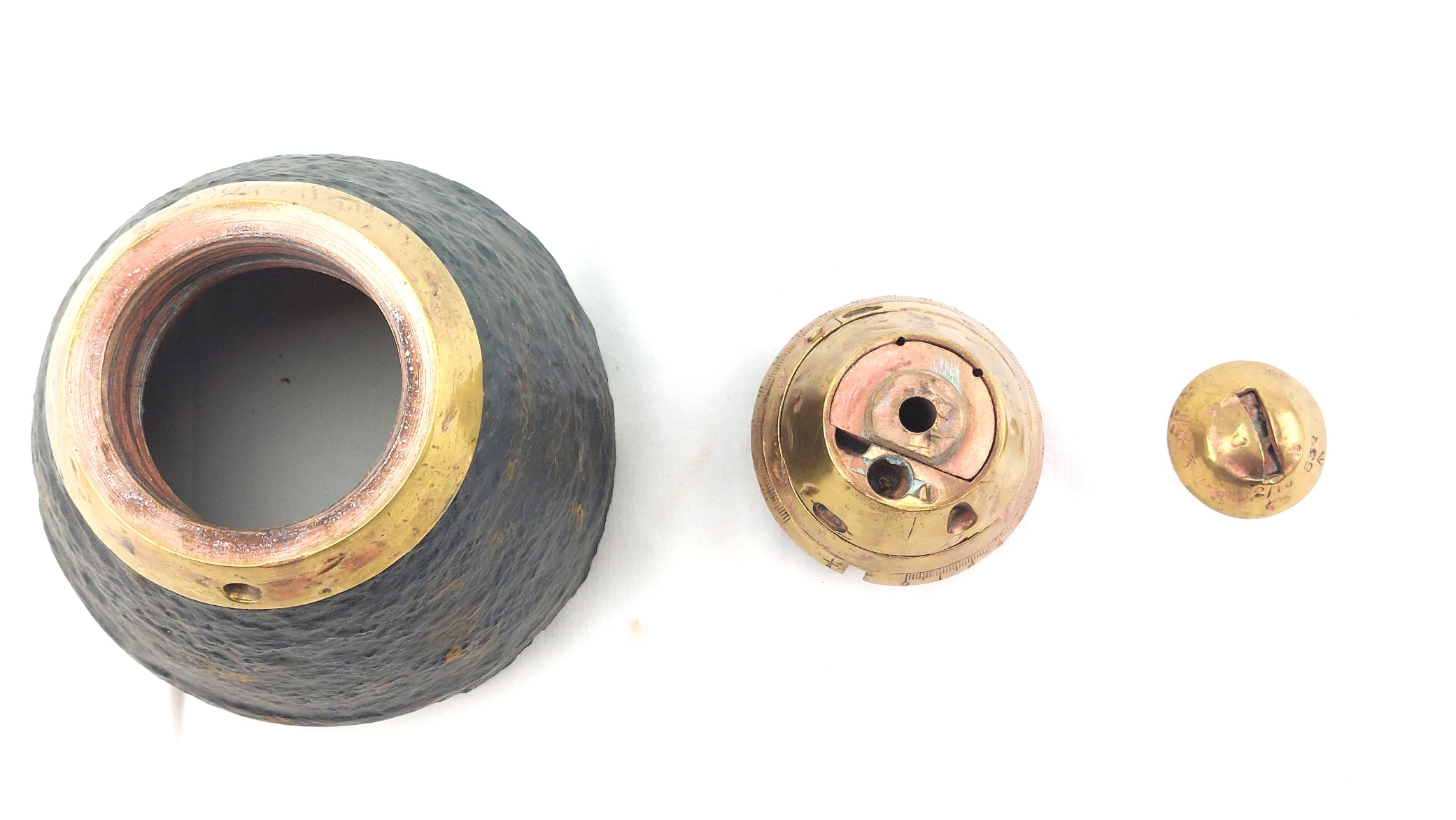
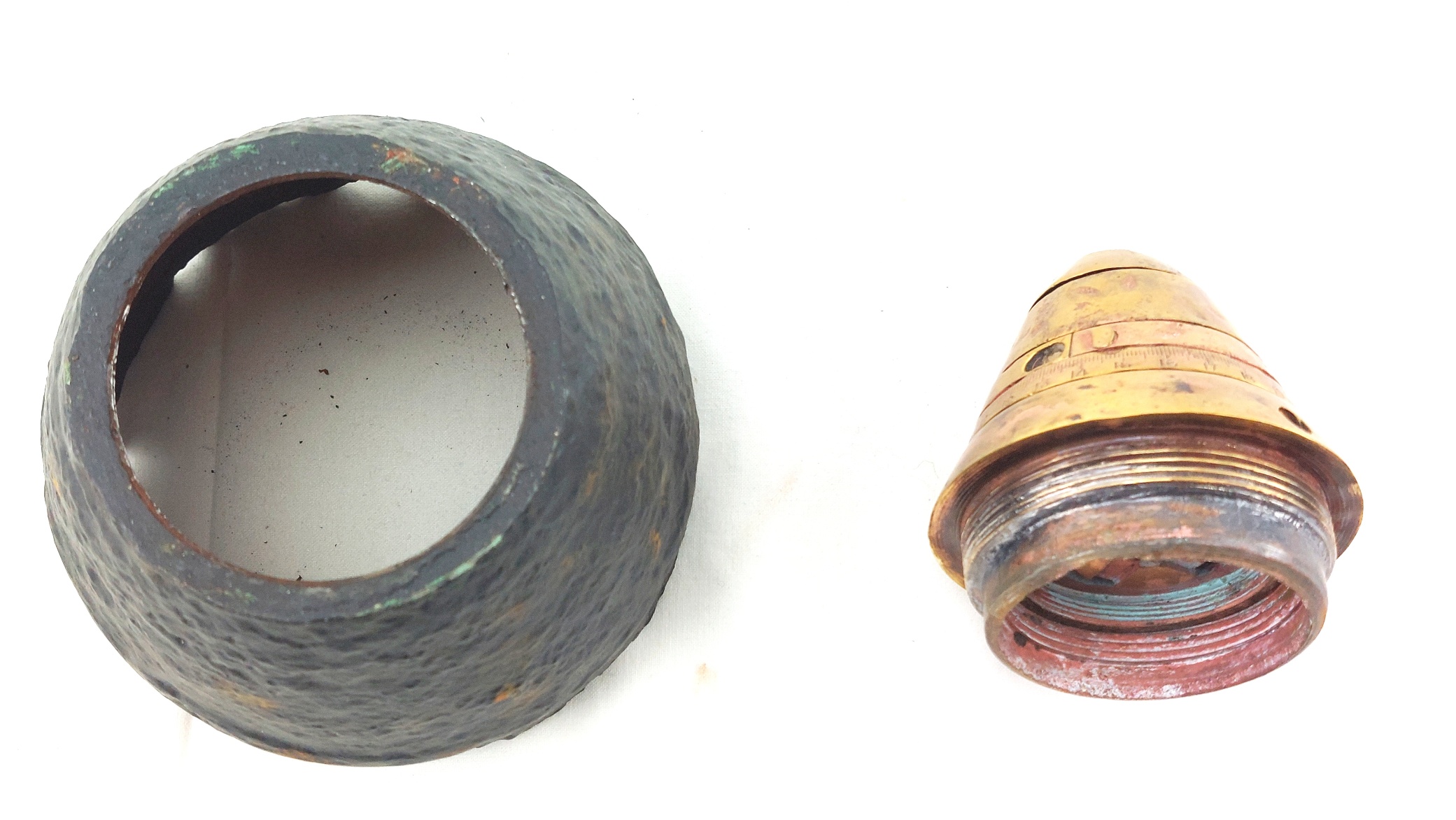
A well-preserved British First World War shrapnel shell head complete with its original brass No. 80 Mk II time-and-percussion fuse, as used with the standard 18-pounder field gun. The fuse measures approximately 7 cm high × 8 cm diameter and screws into the fragmented iron shell head, which measures 16 cm overall including fuse and 11.5 cm across the base. Recovered from the Somme battlefield, this example represents one of the late-war production lots issued to the Royal Field Artillery in early 1918.
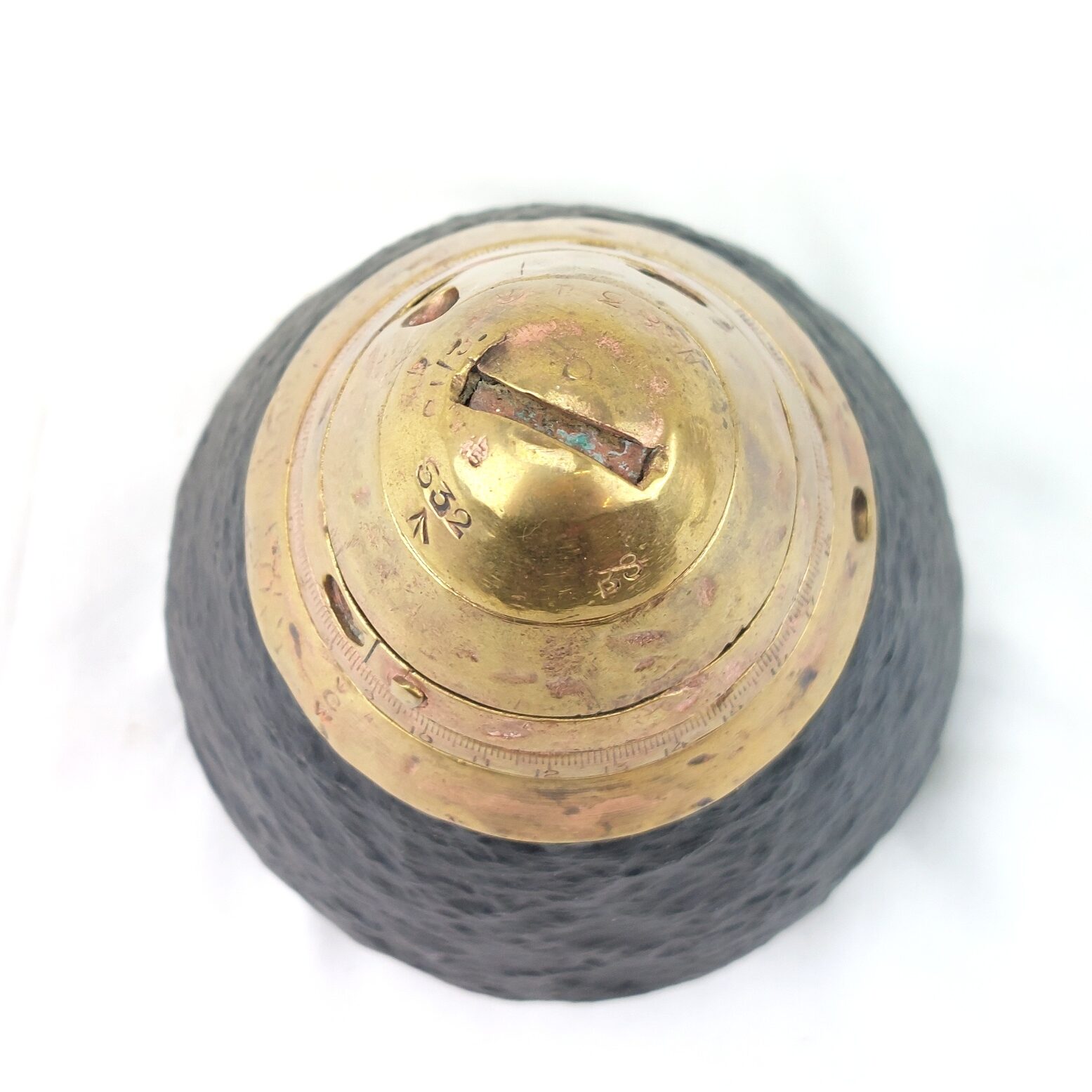
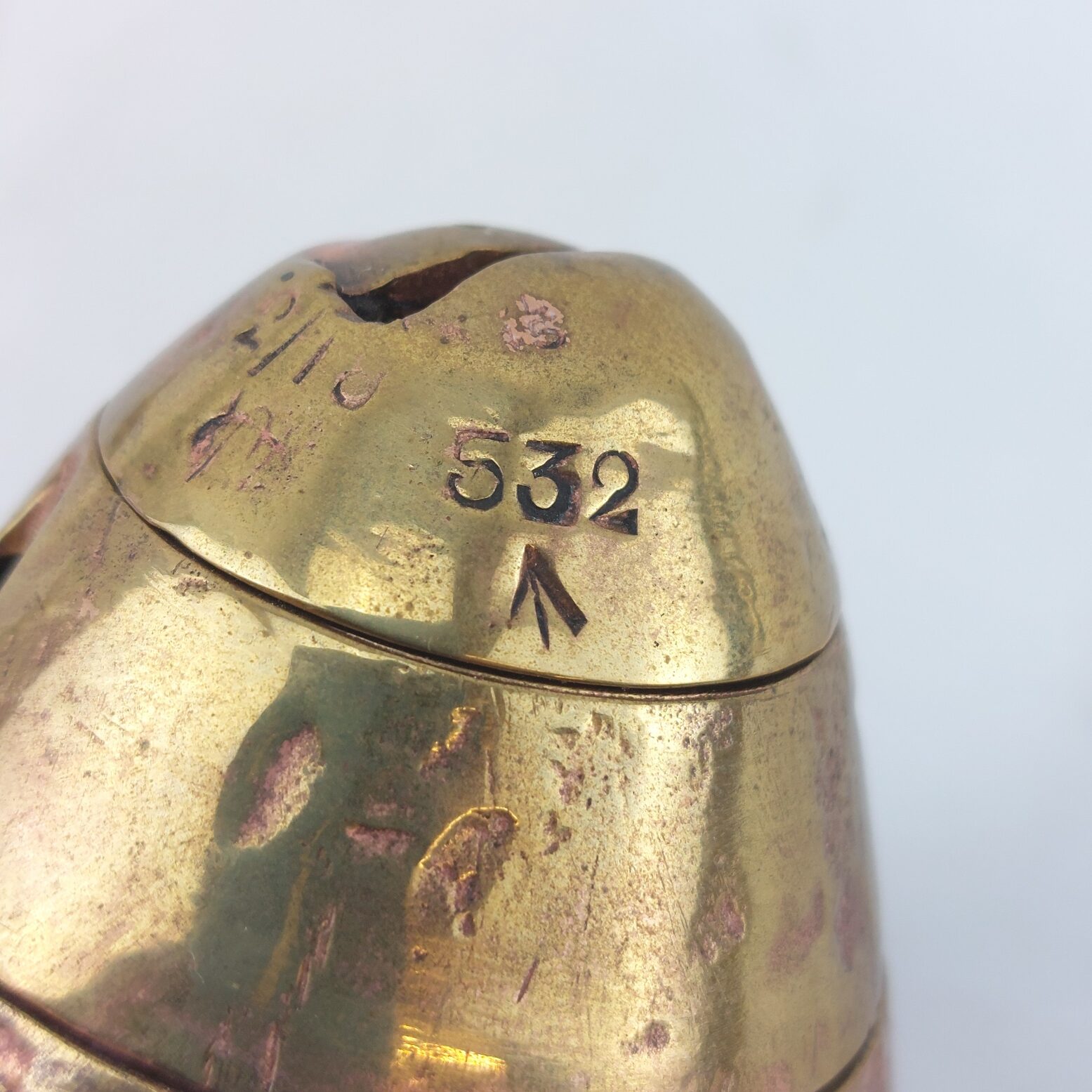
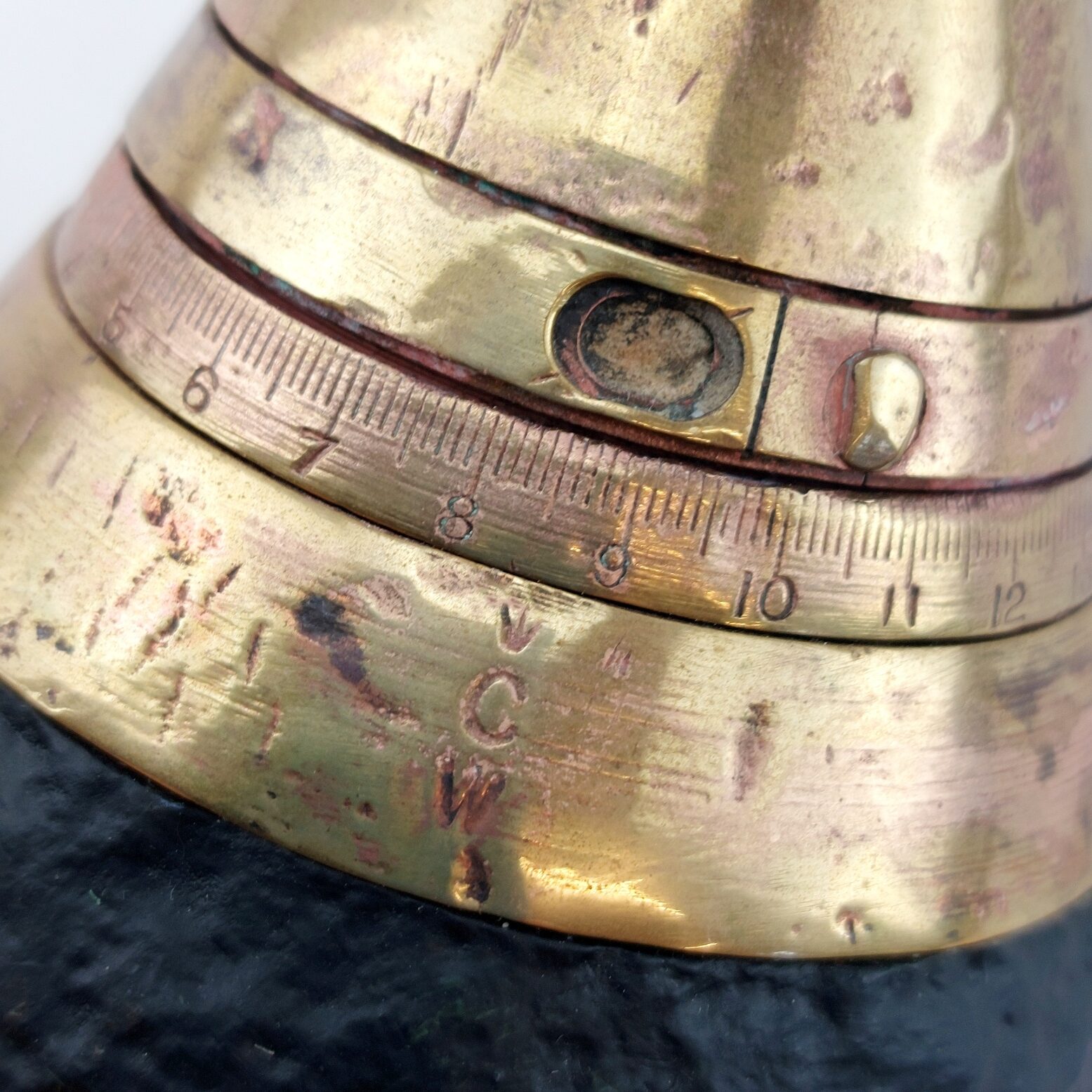
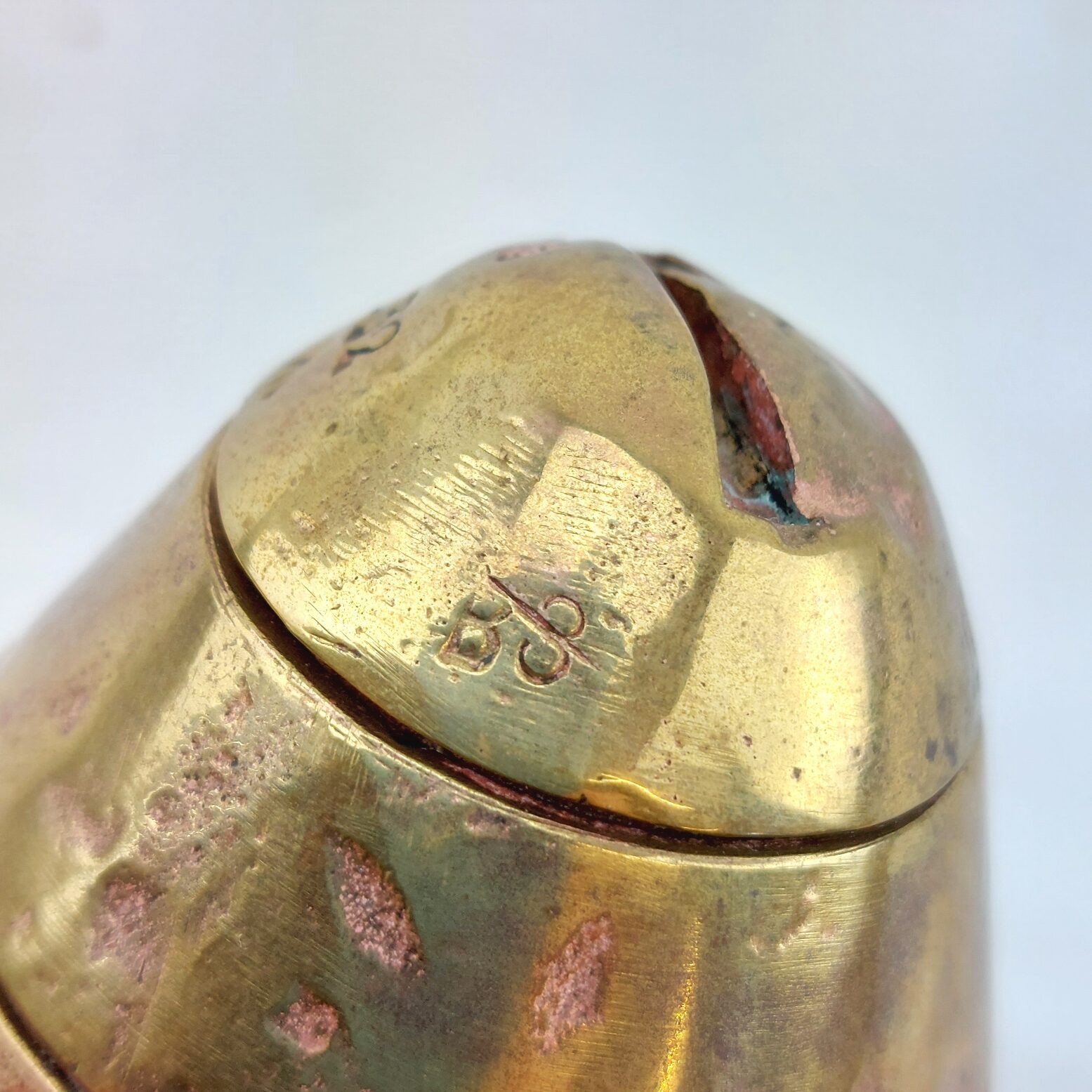
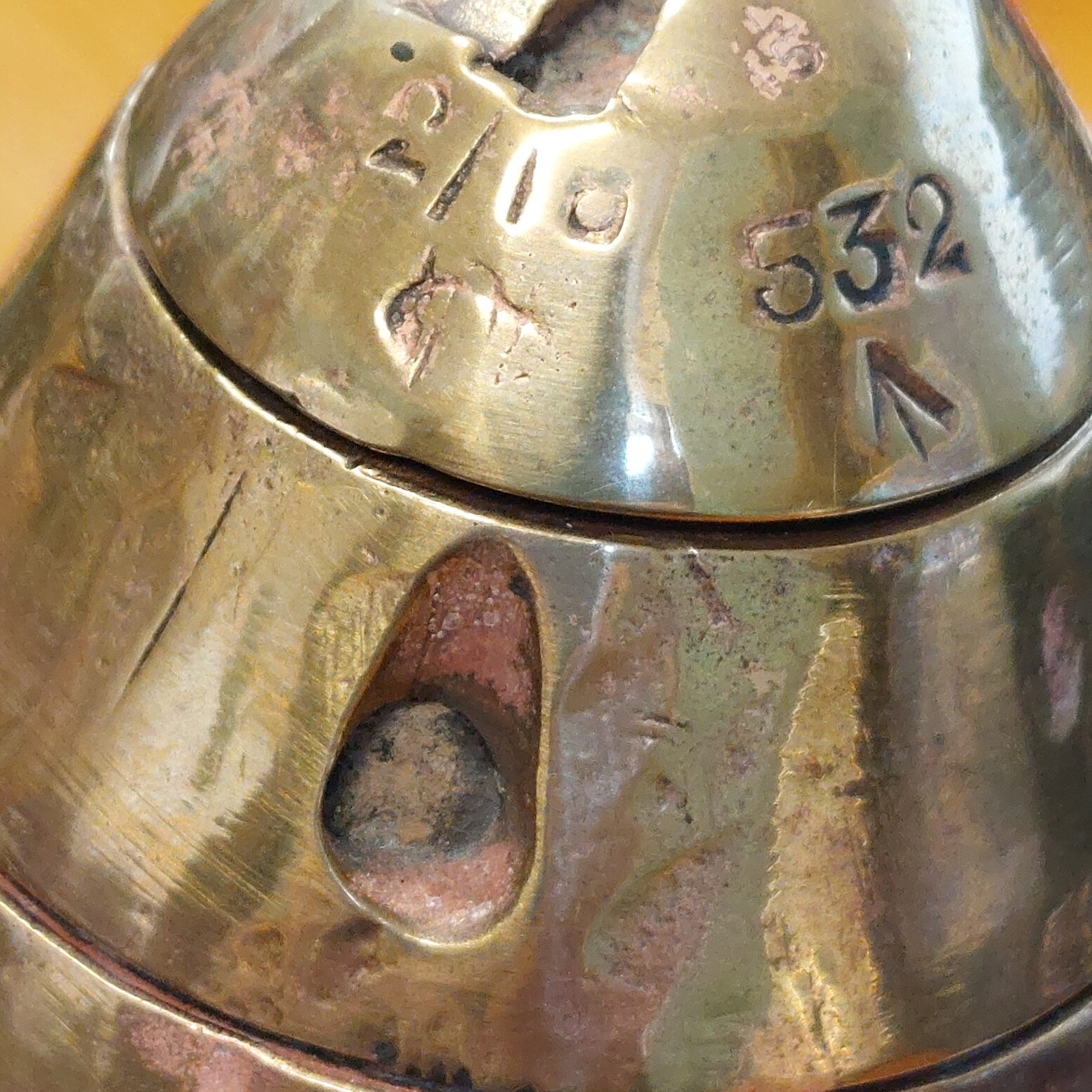
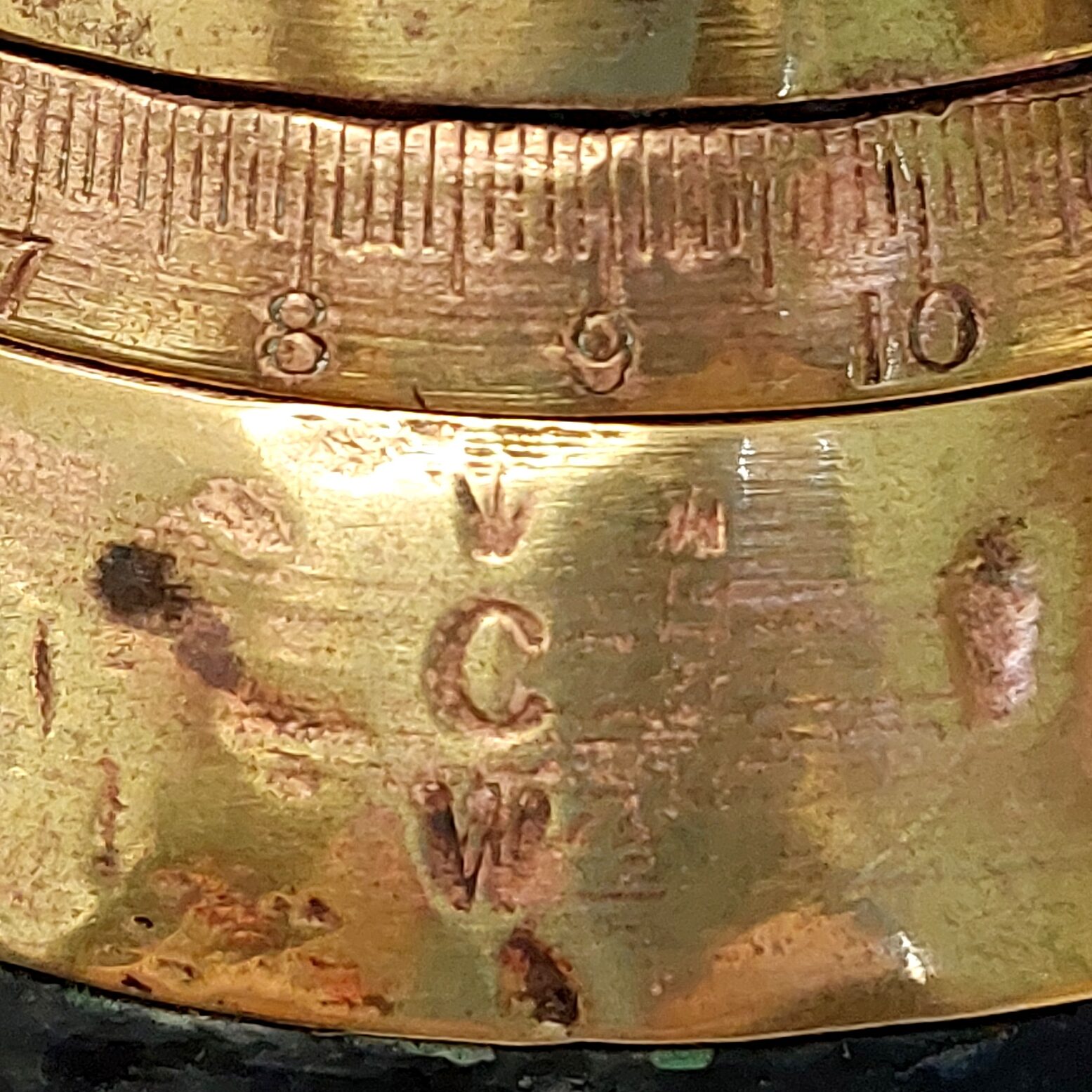
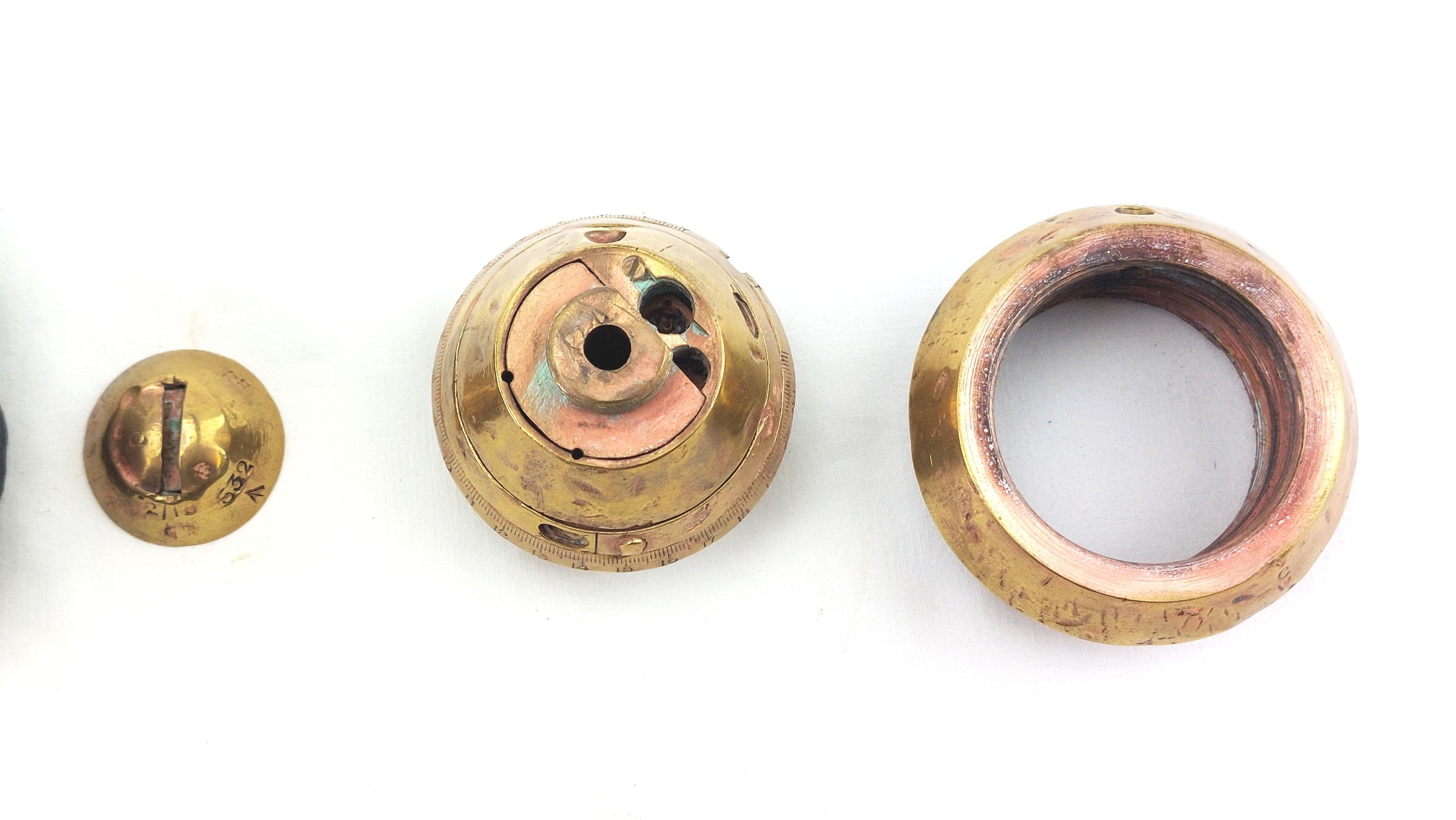
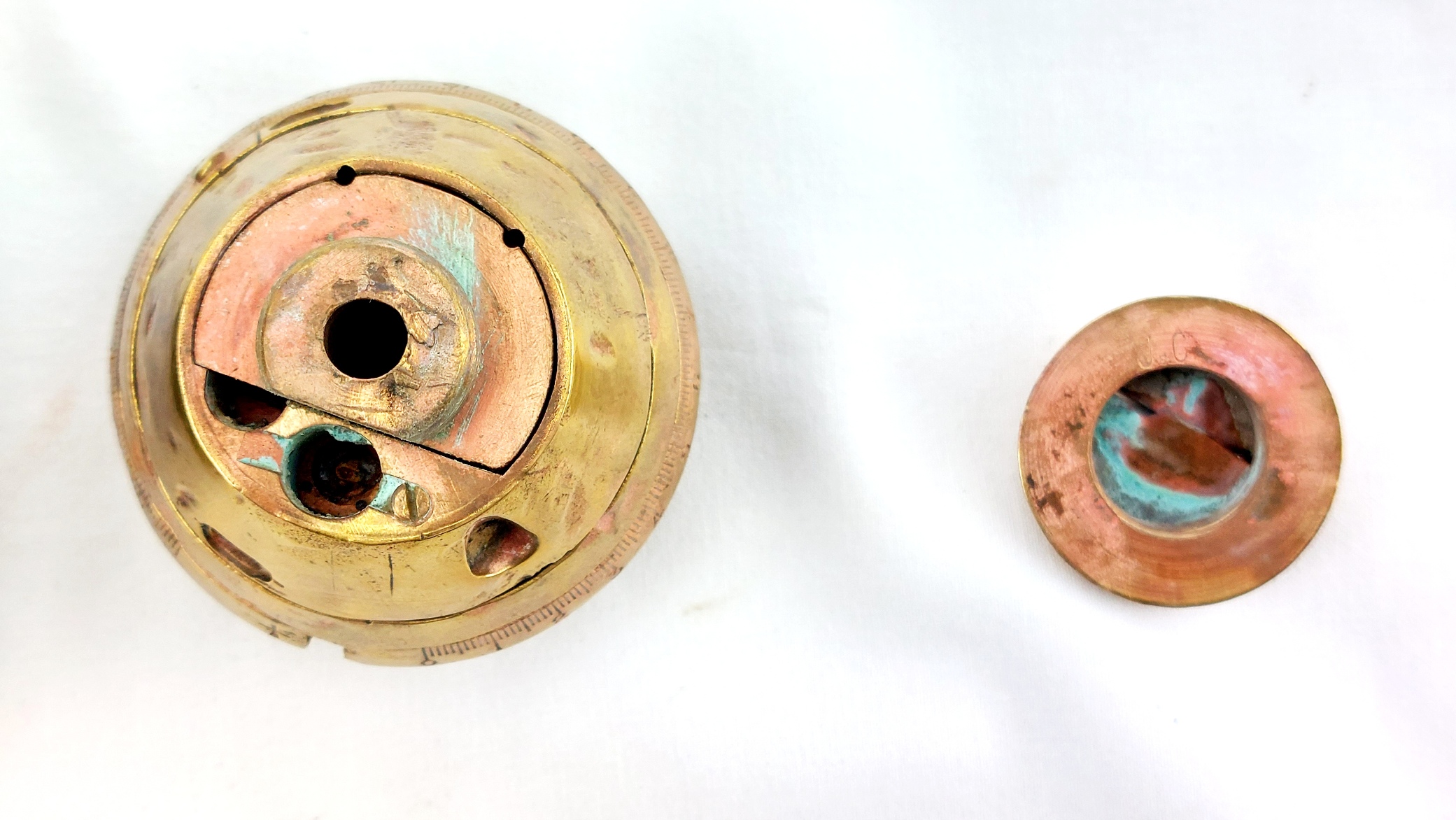
The fuse body retains its numbered 0–22 second graduated time ring and finely cut external threads. Markings are clear and legible throughout, including:
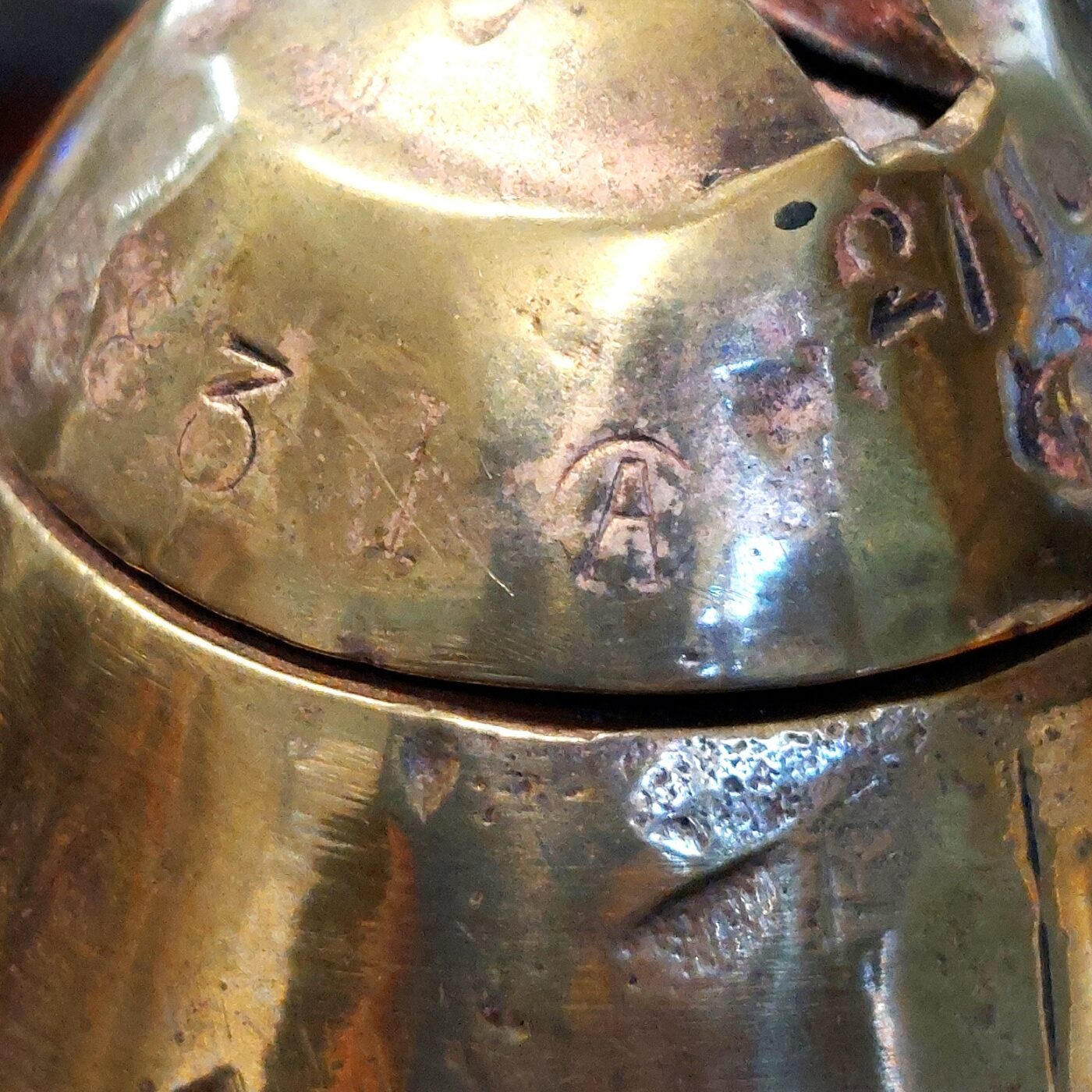
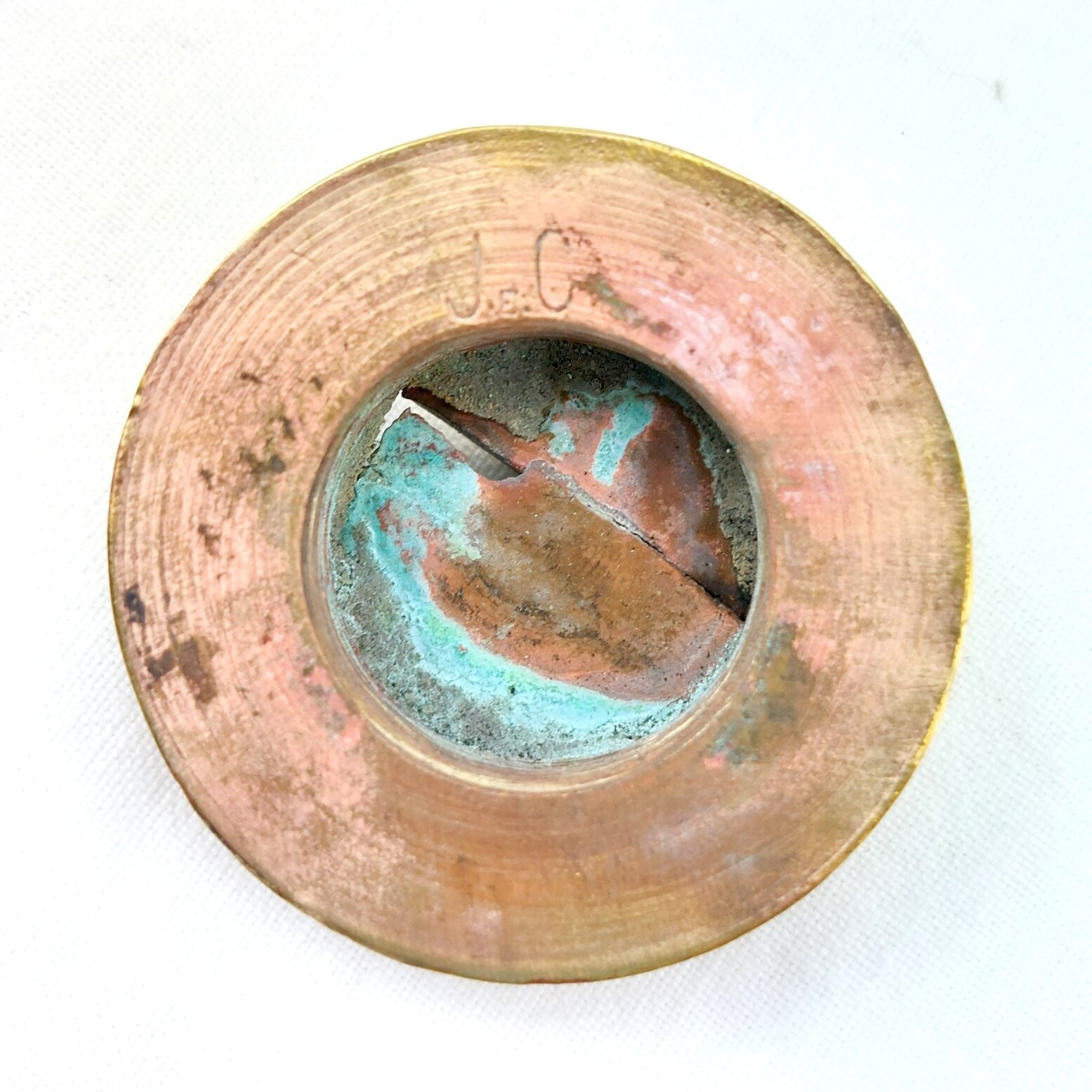
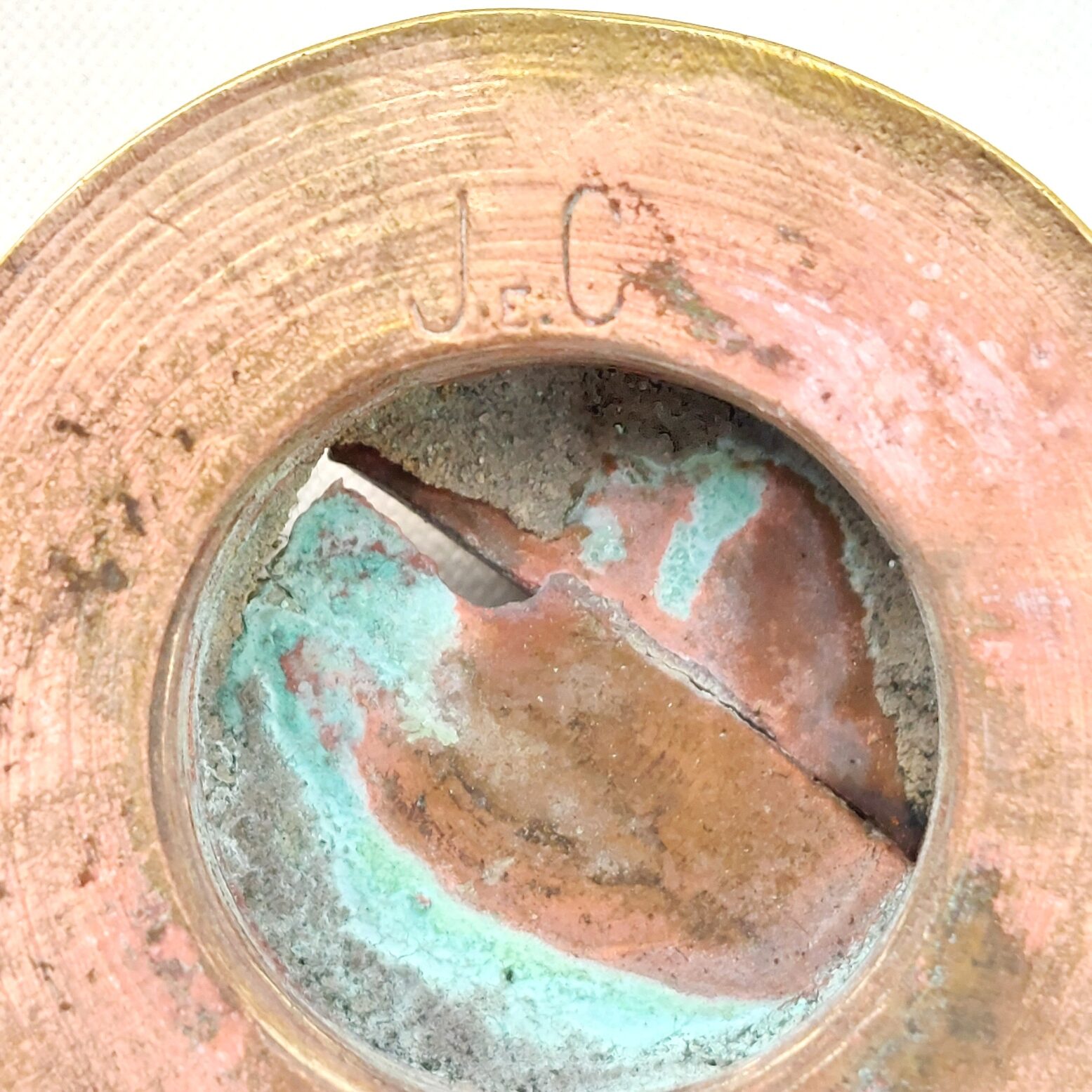
- ↑ 532 – War Department broad-arrow with batch number. - 2/18 – date of manufacture or inspection, February 1918. - J.E.G. – inspector’s initials, repeated on the interior components. - ↑ C / W – Chief Inspector of Armaments, Woolwich Arsenal. - A in circle / A ↑ C – component contractor or Approved Component mark.
- Additional small C / S and lot letters denoting the time-train composition section.
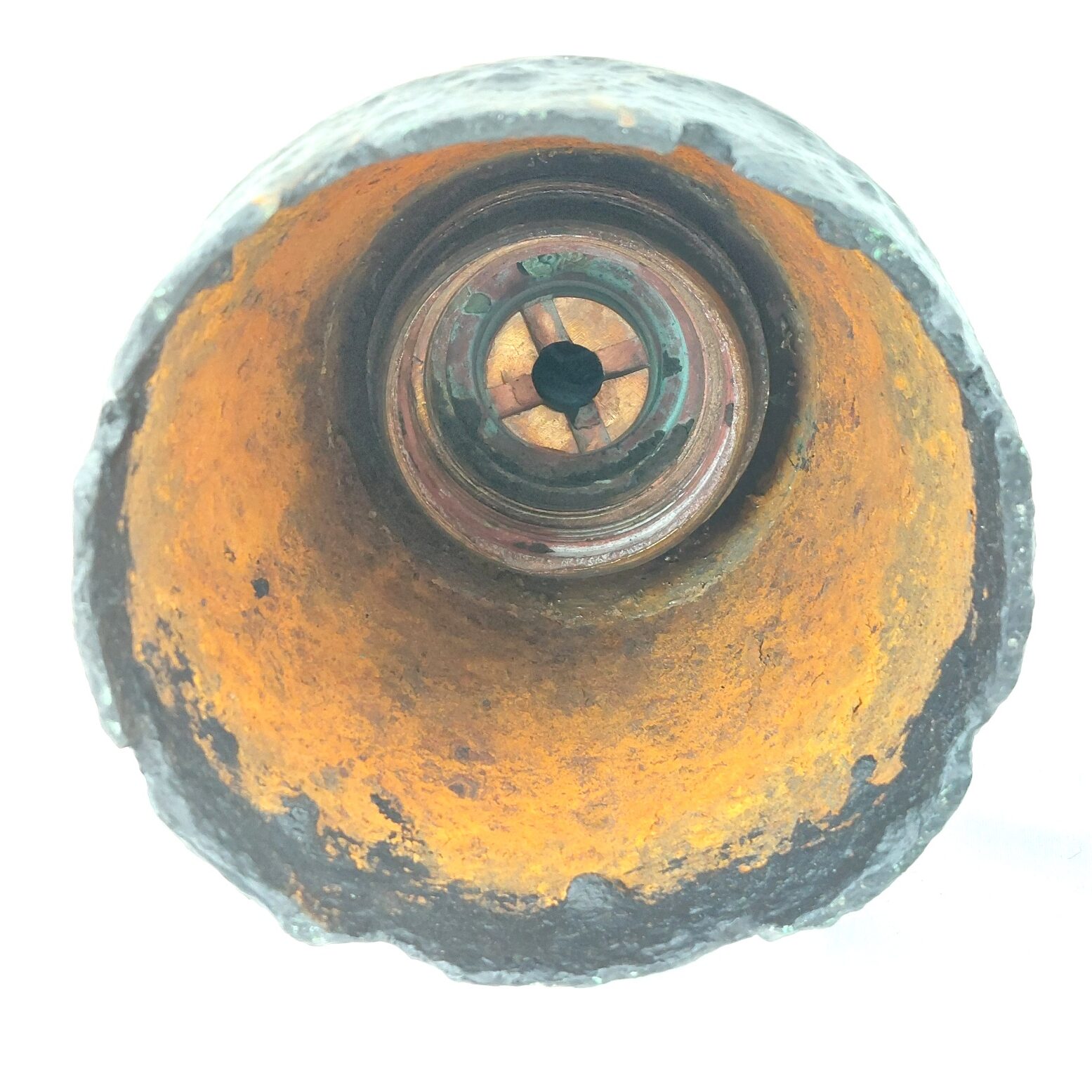
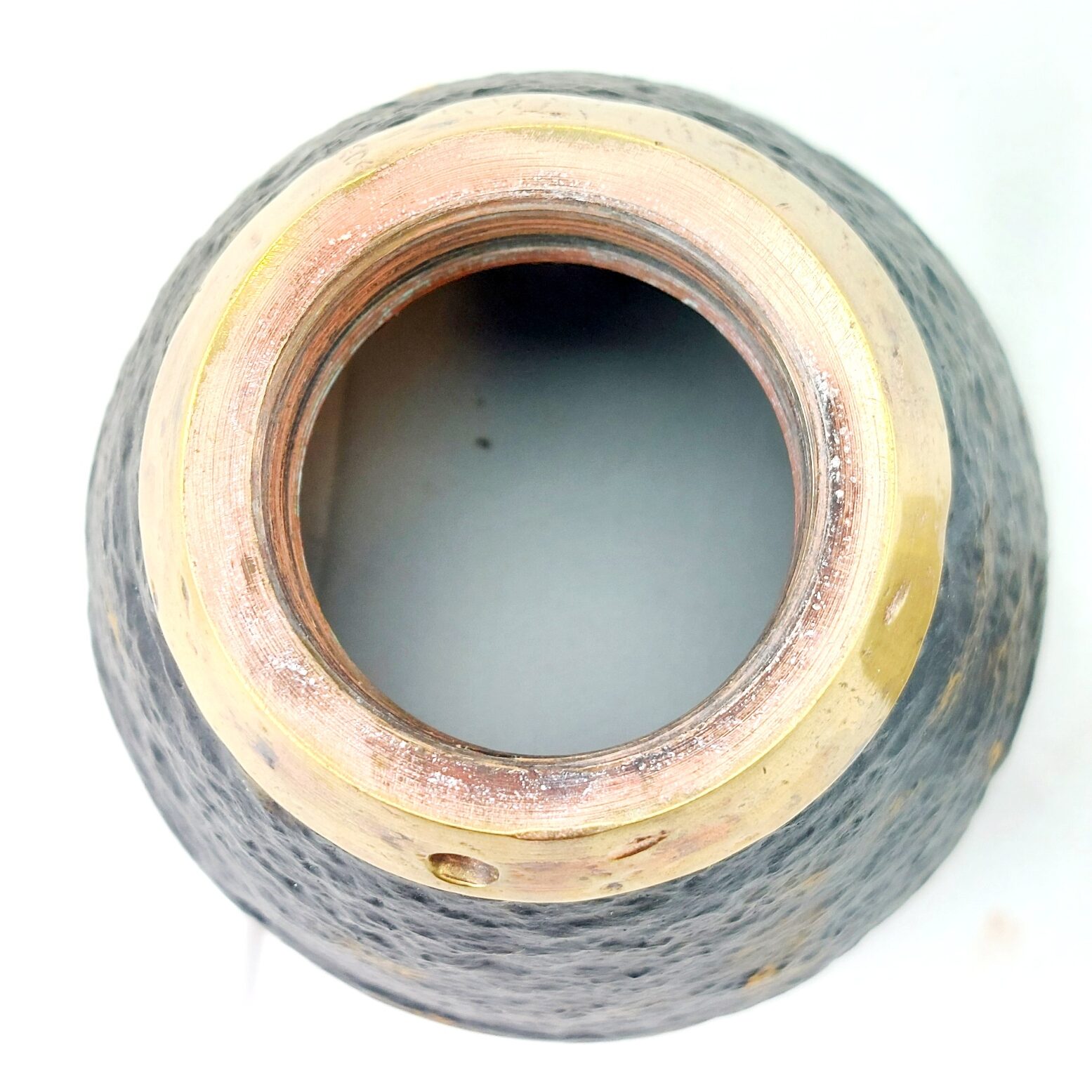
The fuze retains its full 0–22 second graduated timing ring and clear machining to the striker head and base thread. The iron shell head exhibits the typical flat shoulder and central burster-tube bore of the 18-pounder pattern. Recovered on the Somme, the piece remains fully inert and safely disassemblable.
Historical Note: Introduced in 1905, the Fuze No. 80 became the standard British time-and-percussion fuze for field-gun shrapnel and high-explosive ammunition, used with the 13- and 18-pounder guns of the Royal Field Artillery. By rotating the graduated ring, a gunner could set a timed airburst; if the delay failed, the impact striker guaranteed detonation on contact.
The 18-pounder—a 3.3-inch field gun firing a 18.5-lb shell at 1,600 fps—was the backbone of British artillery on the Western Front. Its shrapnel rounds, each fitted with a fuze of this pattern, formed the lethal curtain barrages of the Somme and the 1918 Allied offensives. The markings on this example, apparently dating to February 1918, correspond to Woolwich Arsenal production inspected by J.E.G. under the Chief Inspector’s mark ↑ C/W.
Technical Note – Identification as 18-Pounder:
- Base diameter 11.5 cm and broad shoulder precisely match the 18-pounder shell head (13-pounder is c. 8.5–9 cm). - Fuze No. 80 Mk II thread size (2.035 in / 51.7 mm) is standard for the 18-pdr shrapnel adapter. - Time scale 0–22 seconds is the 18-pdr pattern (13-pdr used 0–19 s). - Somme provenance fits Royal Field Artillery use, as the 13-pdr saw little service there after 1915.
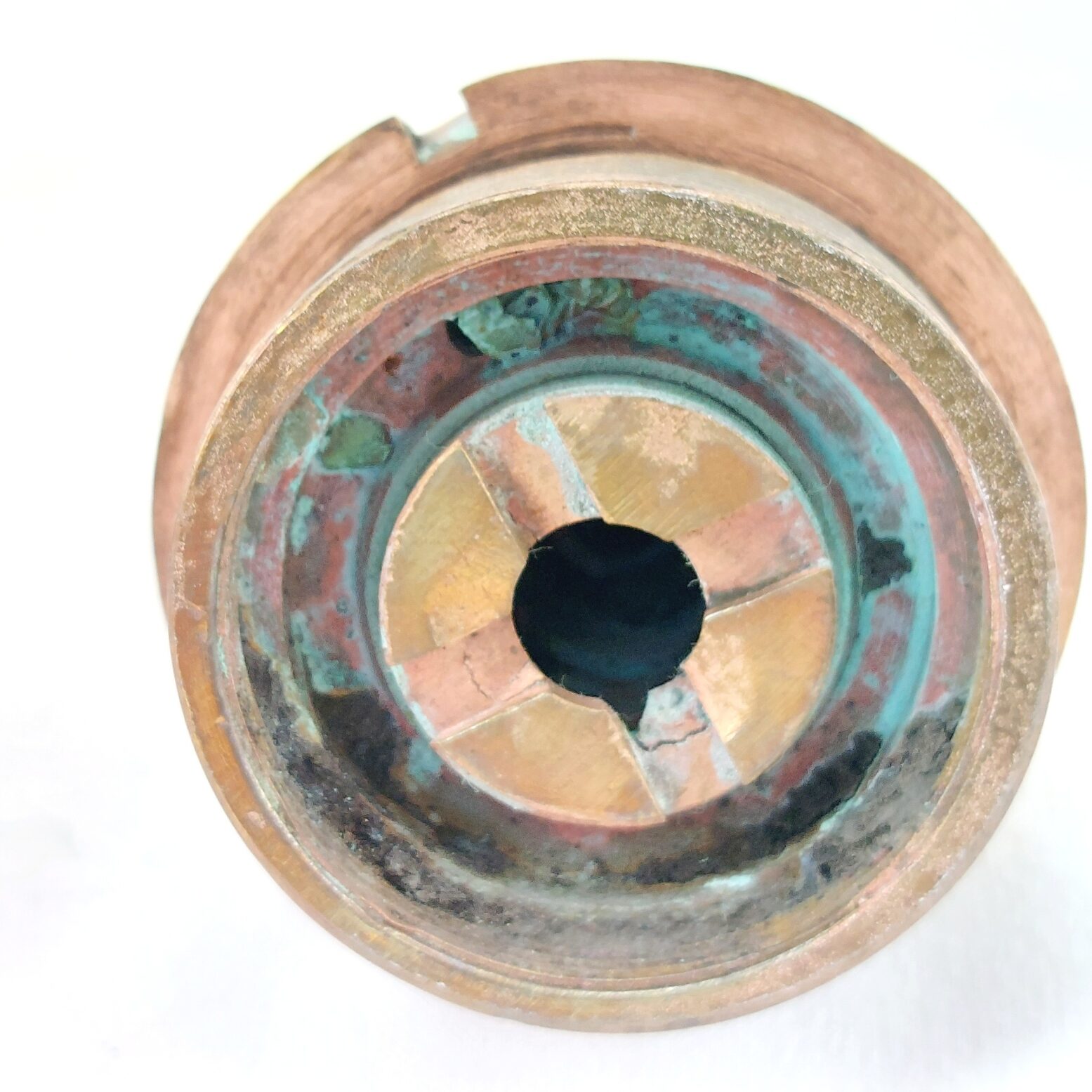
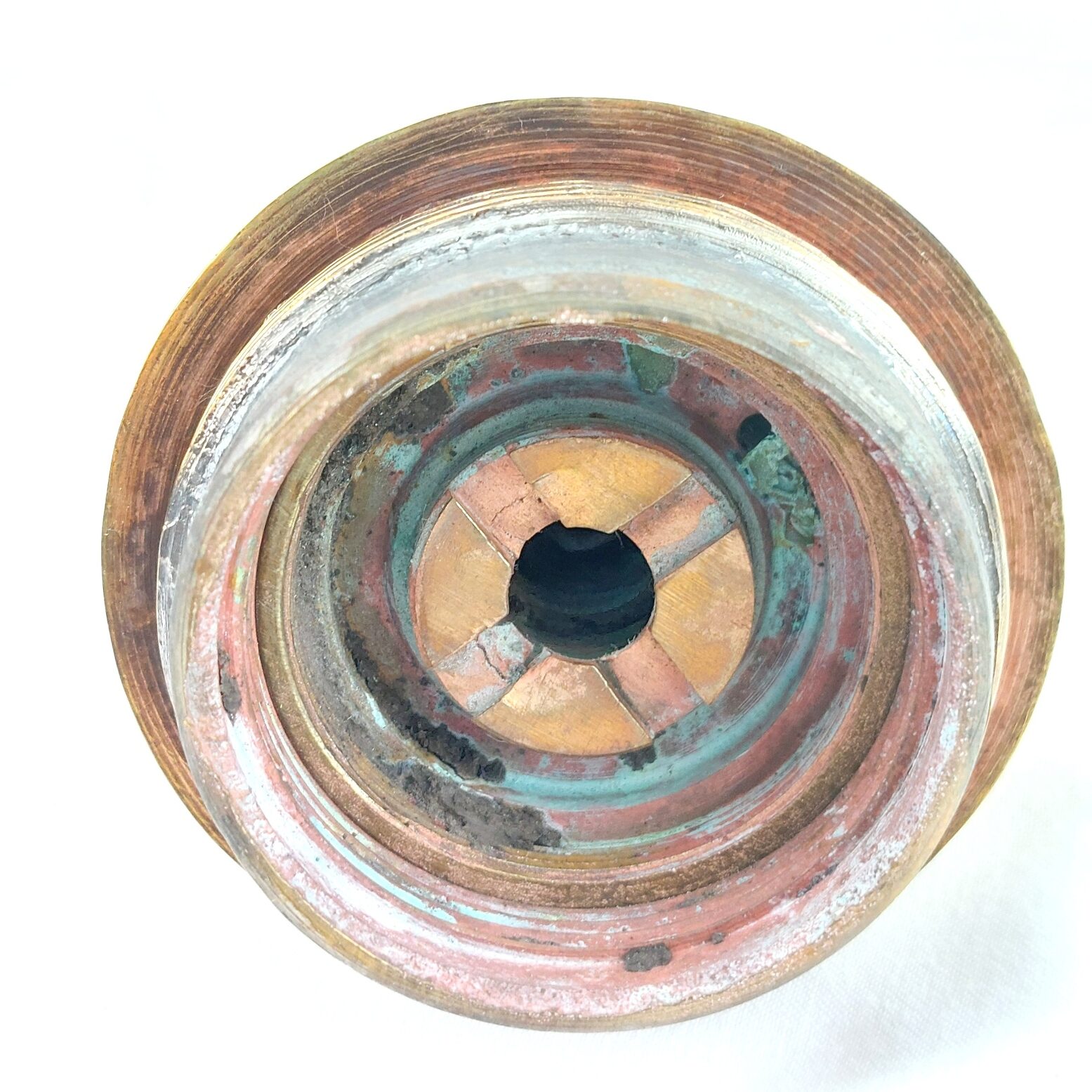
*Condition* Battlefield-recovered but stable and completely inert. The iron shell head displays uniform blackened patina and mild surface pitting consistent with ground recovery. Brass fuse components retain clear stamps, sound threads and intact internal construction, with light verdigris within the base cavity. Disassembles in three principal sections for inspection. Please see photographs as part of the condition report.
*In order to complete the online purchase we will require a picture/scan of a photo ID (Driving Licence, Passport or an official document with a recent picture). If you don't posses any such document please call to buy. If we consider that the proof of ID is incorect or insuficient, we reserve the right to cancel the transaction.
*We also reserve the right to cancel the transaction with a full refund if there is any suspicion that the provided item will be used in any way contrary to the laws and legislation of UK.