*British, Victorian Era c.1850–1870, Richmond National School Prize Medal, Queen Victoria “Gothic Bust”*
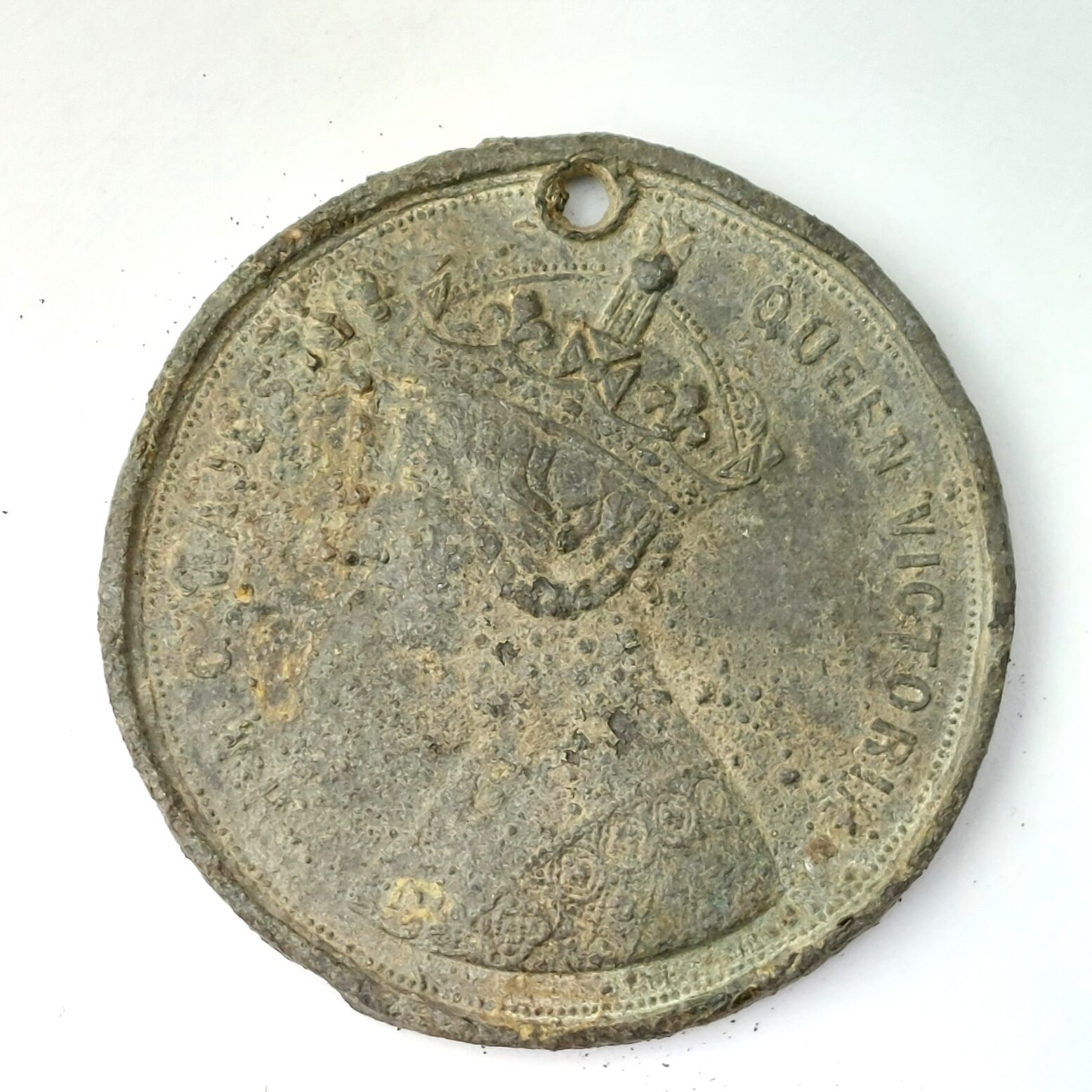
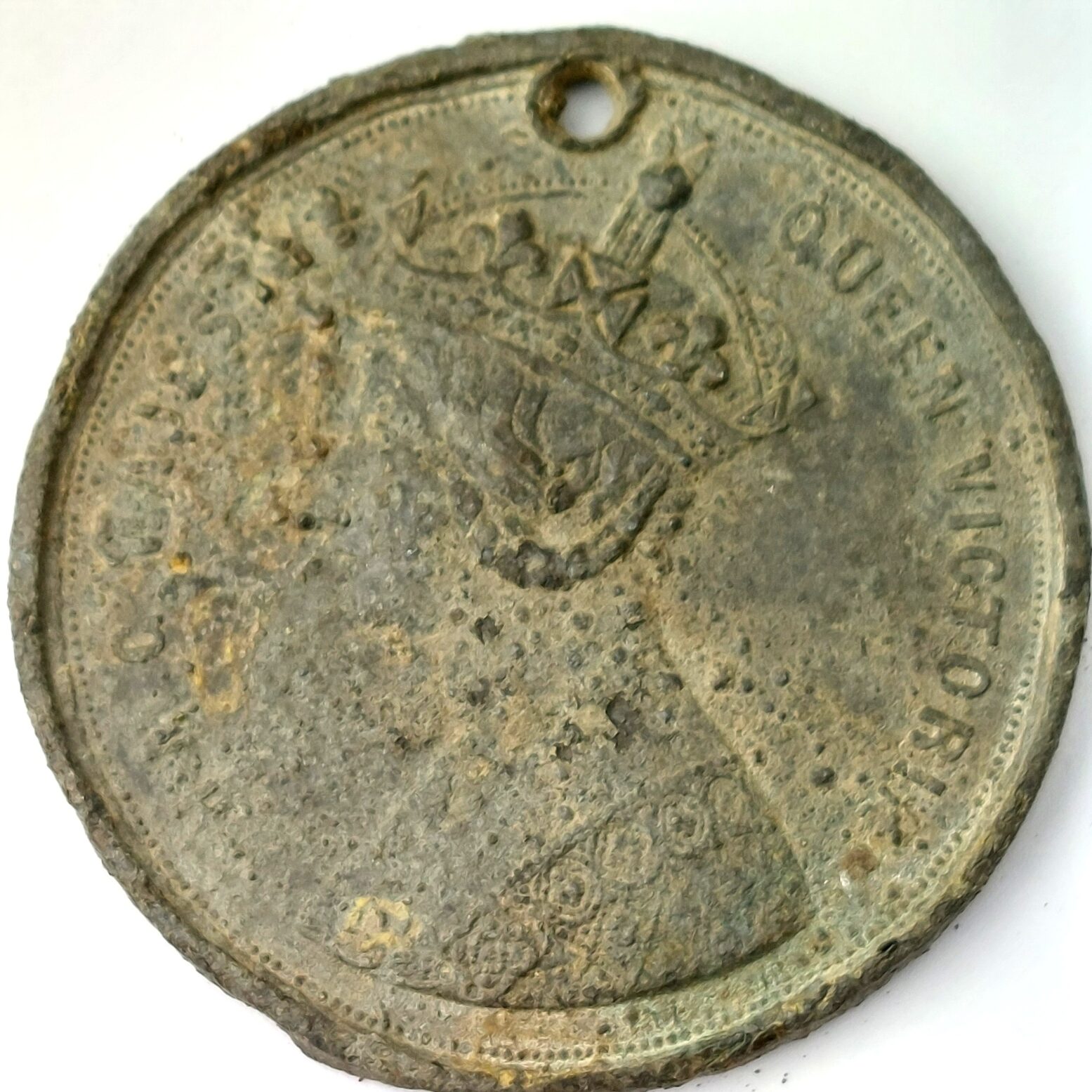
A Victorian commemorative school award medal issued by Richmond National School, dating to the mid-19th century during the reign of Queen Victoria. The medal is struck in white metal and features the well-known “Gothic bust” portrait of Queen Victoria on the obverse, wearing a crown and surrounded by the inscription “QUEEN VICTORIA”.
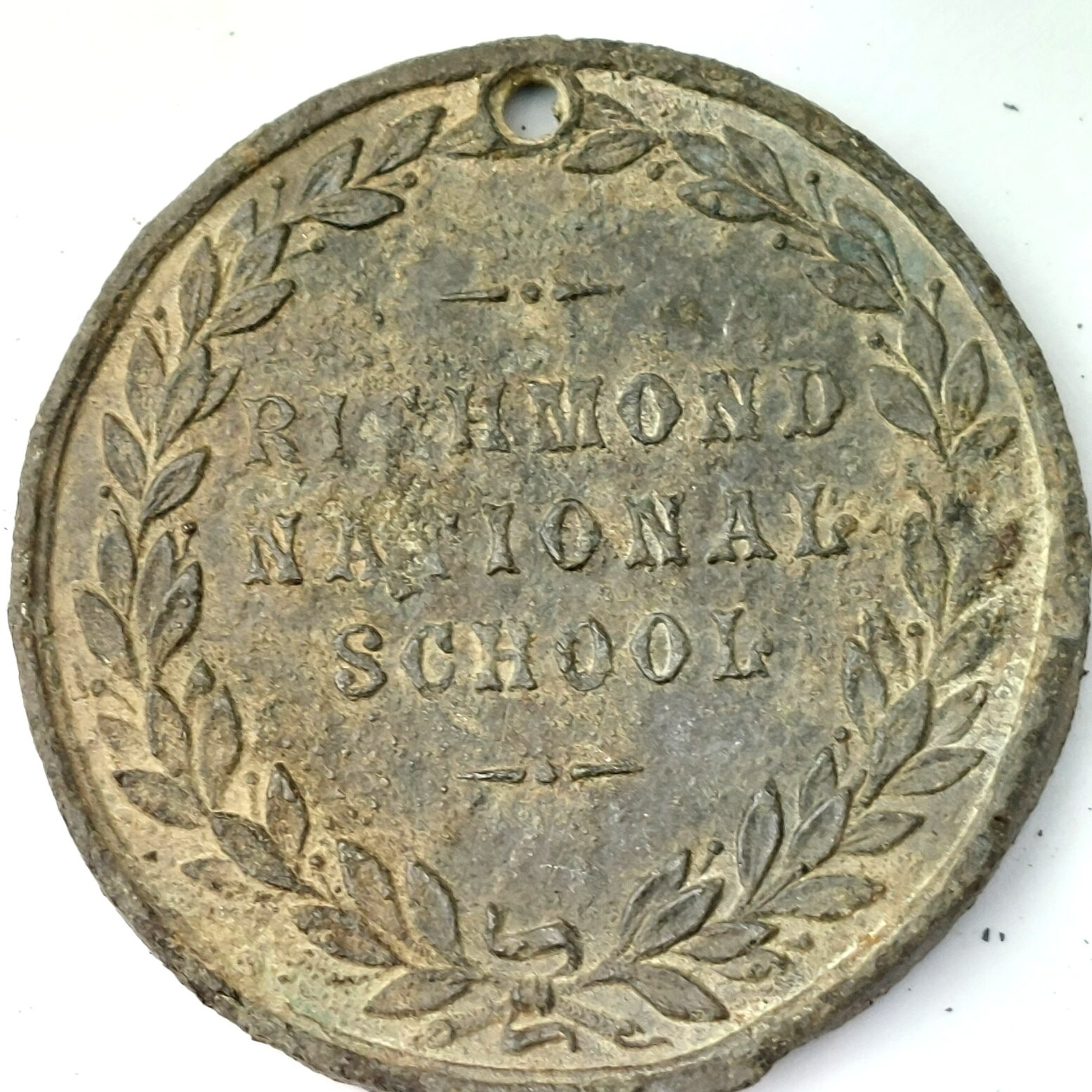
The reverse displays the inscription “RICHMOND NATIONAL SCHOOL” arranged across three lines within a decorative laurel wreath, symbolising academic achievement and merit. A small suspension hole at the top indicates the medal was originally intended to be worn on a ribbon or attached to a badge, as was typical for Victorian school prizes and attendance awards.
Approx. Measurements – Diameter: 38 mm.
History Note: During the Victorian period, National Schools were established throughout Britain under the auspices of the National Society for Promoting Religious Education, providing basic education to children, particularly those from working-class families. Schools often awarded medals such as this example to pupils in recognition of good conduct, regular attendance, diligence, or academic achievement.
The portrait of Queen Victoria used on this medal — commonly referred to as the “Gothic bust” — was widely employed on commemorative medals and school awards throughout the mid-19th century. Pieces of this type were generally struck in inexpensive white metal alloys, allowing schools to distribute them widely while still presenting pupils with a tangible mark of distinction.
Richmond National School most likely refers to the parish school in Richmond, Surrey, though similar institutions existed across Britain during the Victorian educational expansion.
*Condition* White metal construction with typical Victorian age-related wear and oxidation. The surface shows pitting and corrosion consistent with the alloy used for these medals. The suspension hole remains intact and the main design and inscriptions remain legible. A well-preserved example of a mid-19th century school award medal. Please see photographs as part of the condition report.