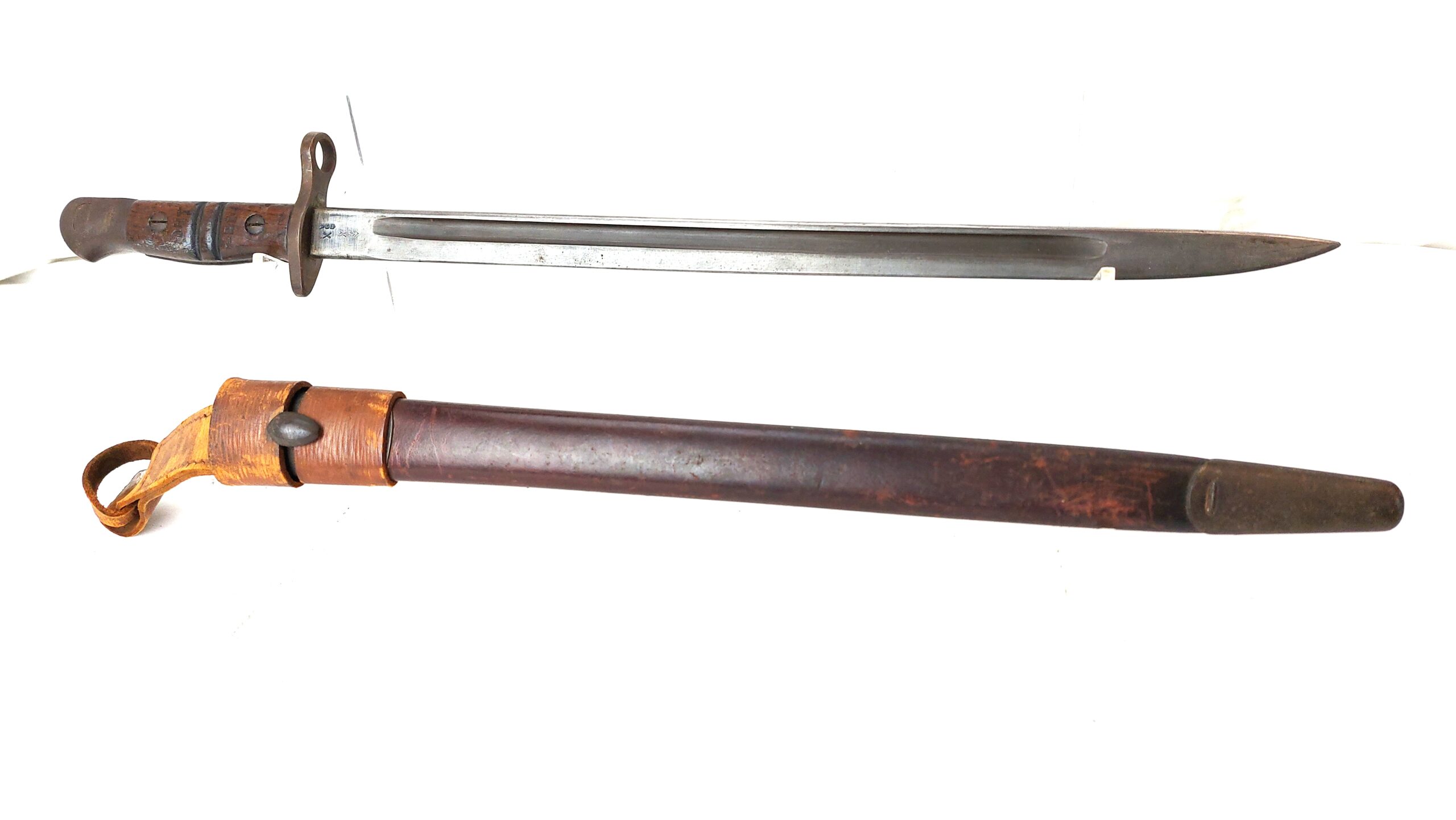
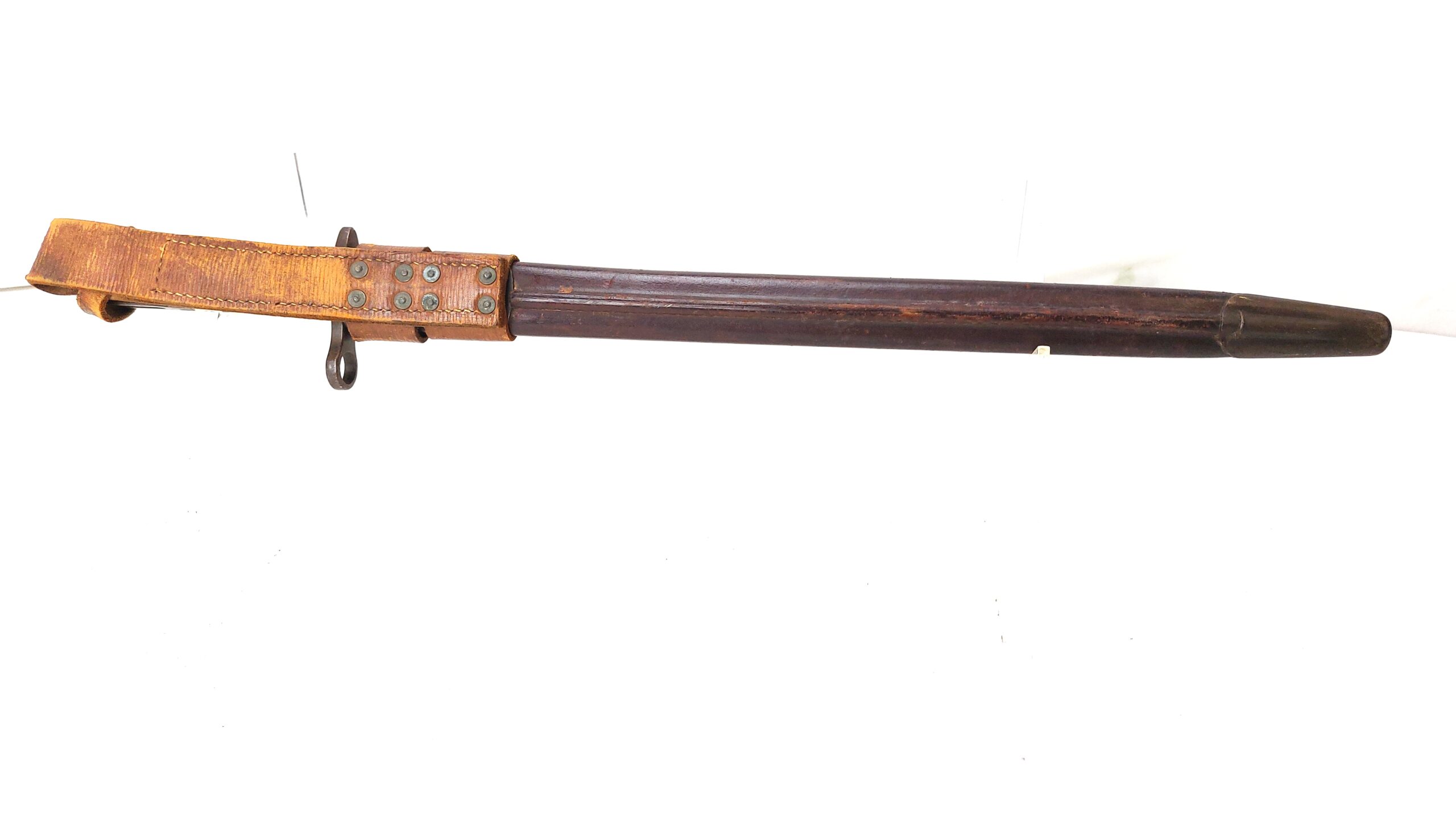
British (US Made), WW1, M1913 Sword Bayonet By Remington, Dated 1916, RE marked Original Scabbard & Frog, Unit Marked DHY (Denbighshire Hussars Yeomanry). VGC
£245.00
WW1 Remington Pattern 1913 bayonet dated June 1916, unit marked DHY (likely Denbighshire Hussars Yeomanry), with scabbard and frog.
*British (US Made), WW1, M1913 Sword Bayonet By Remington, Dated 1916, RE marked Original Scabbard & Frog, Unit Marked DHY (Denbighshire Hussars Yeomanry), VGC*
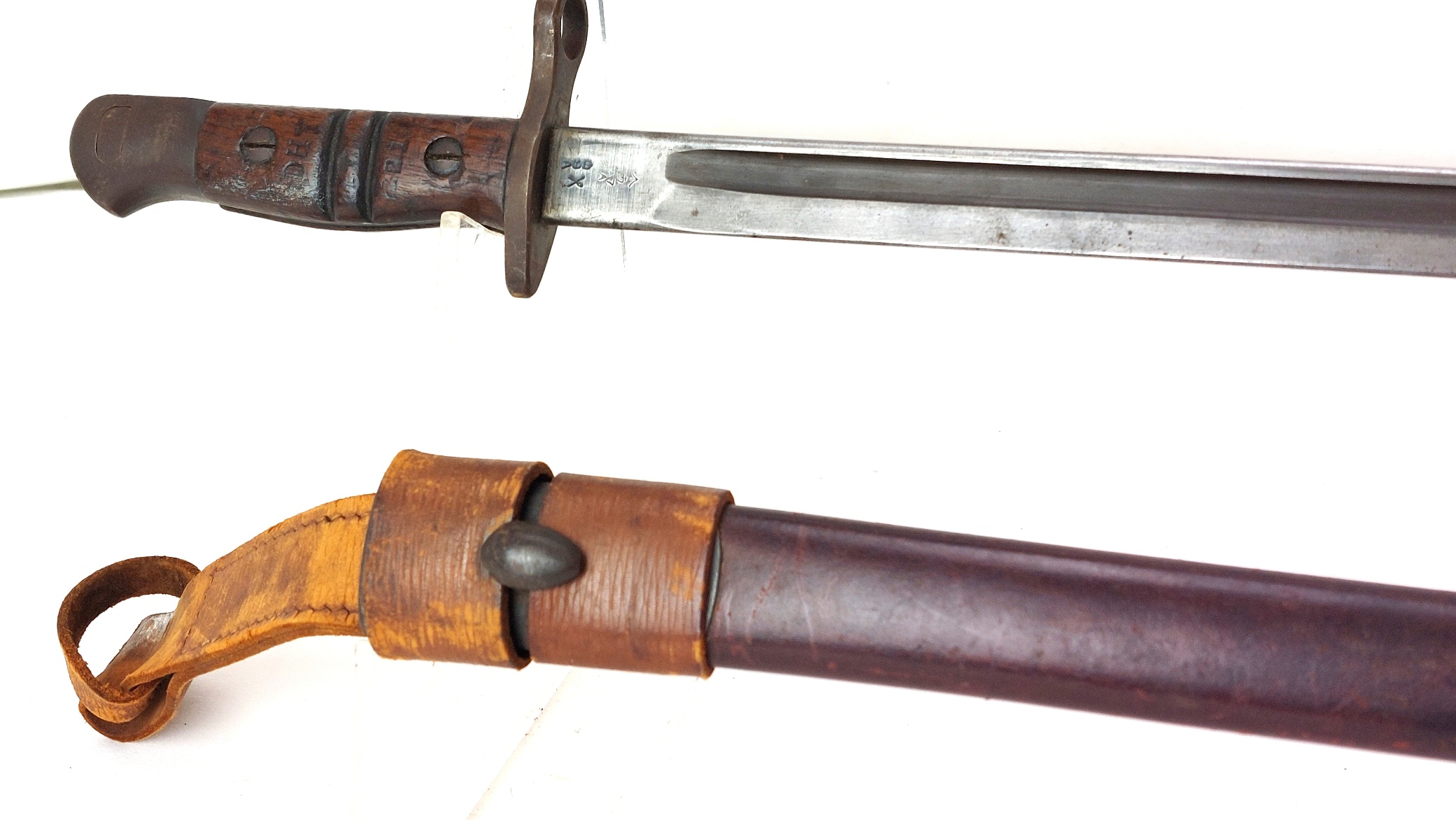
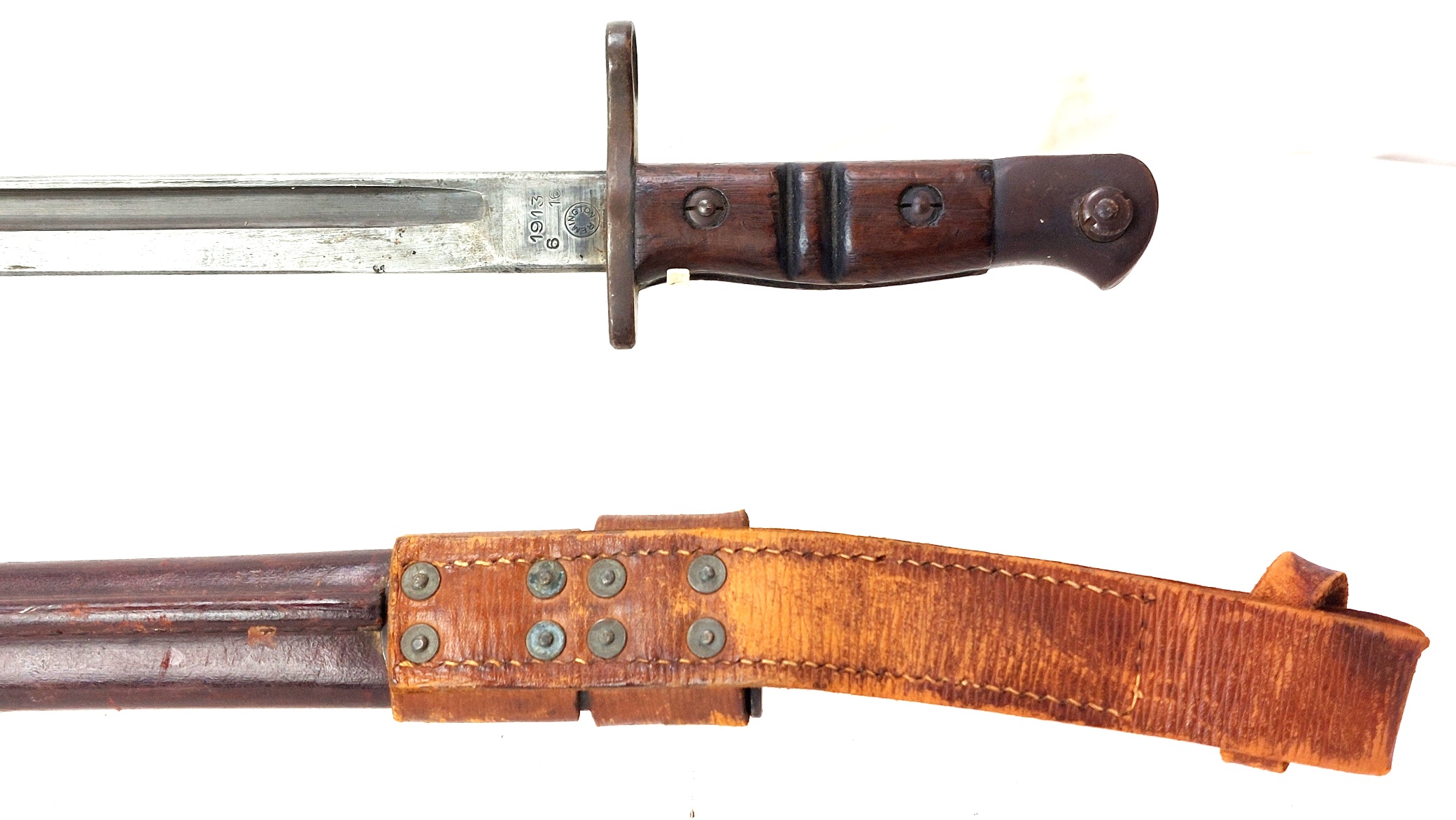
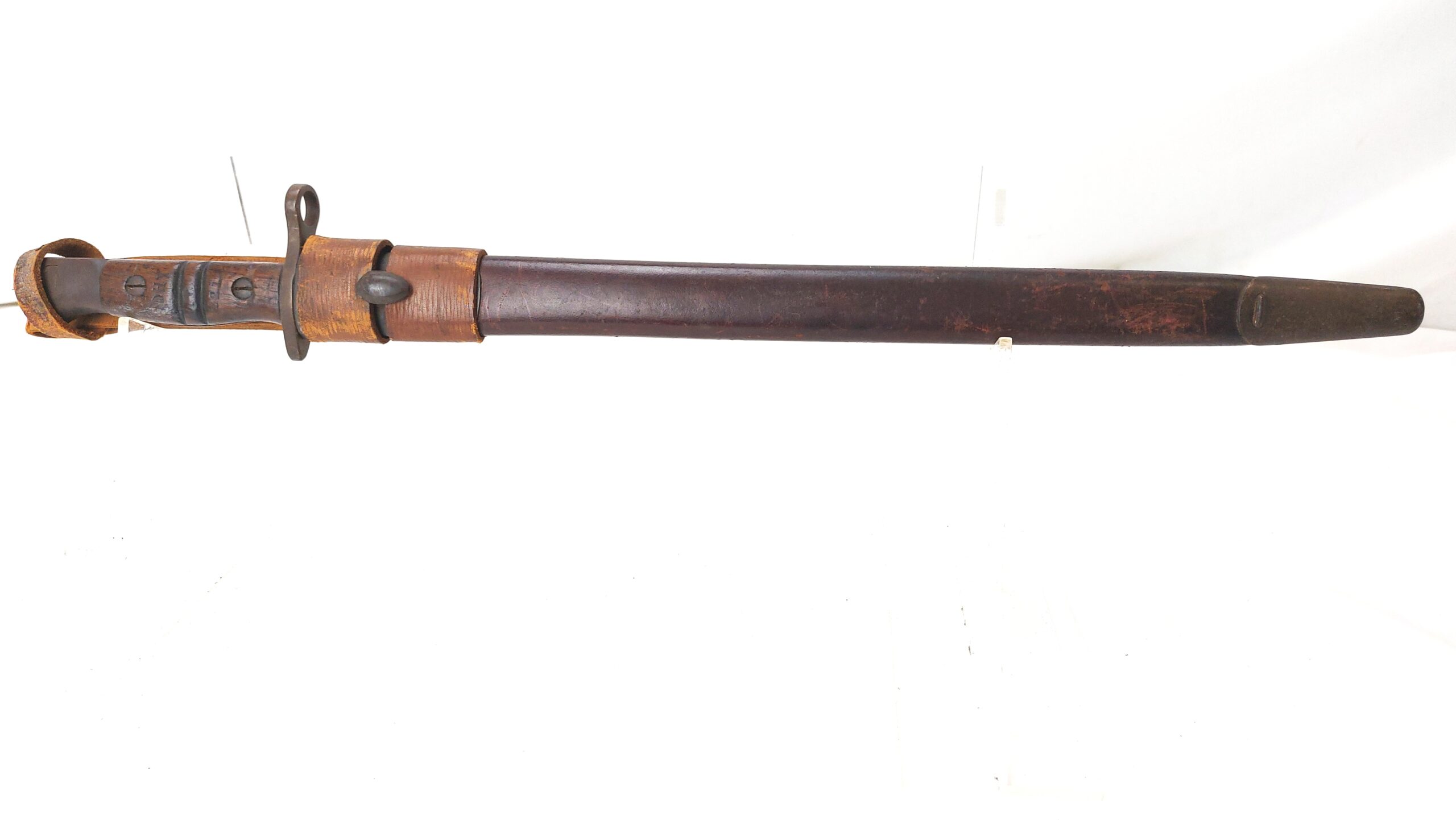
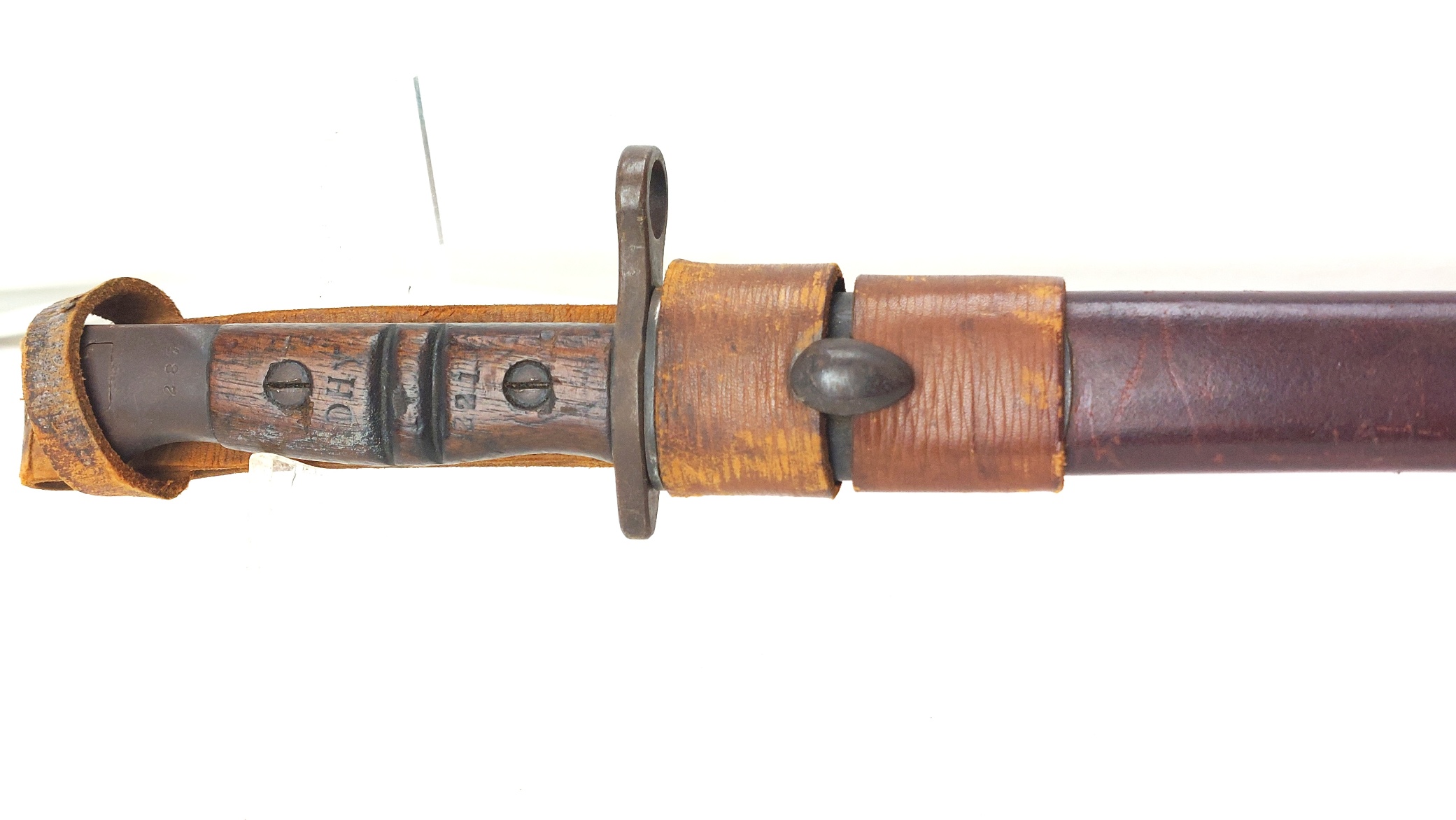
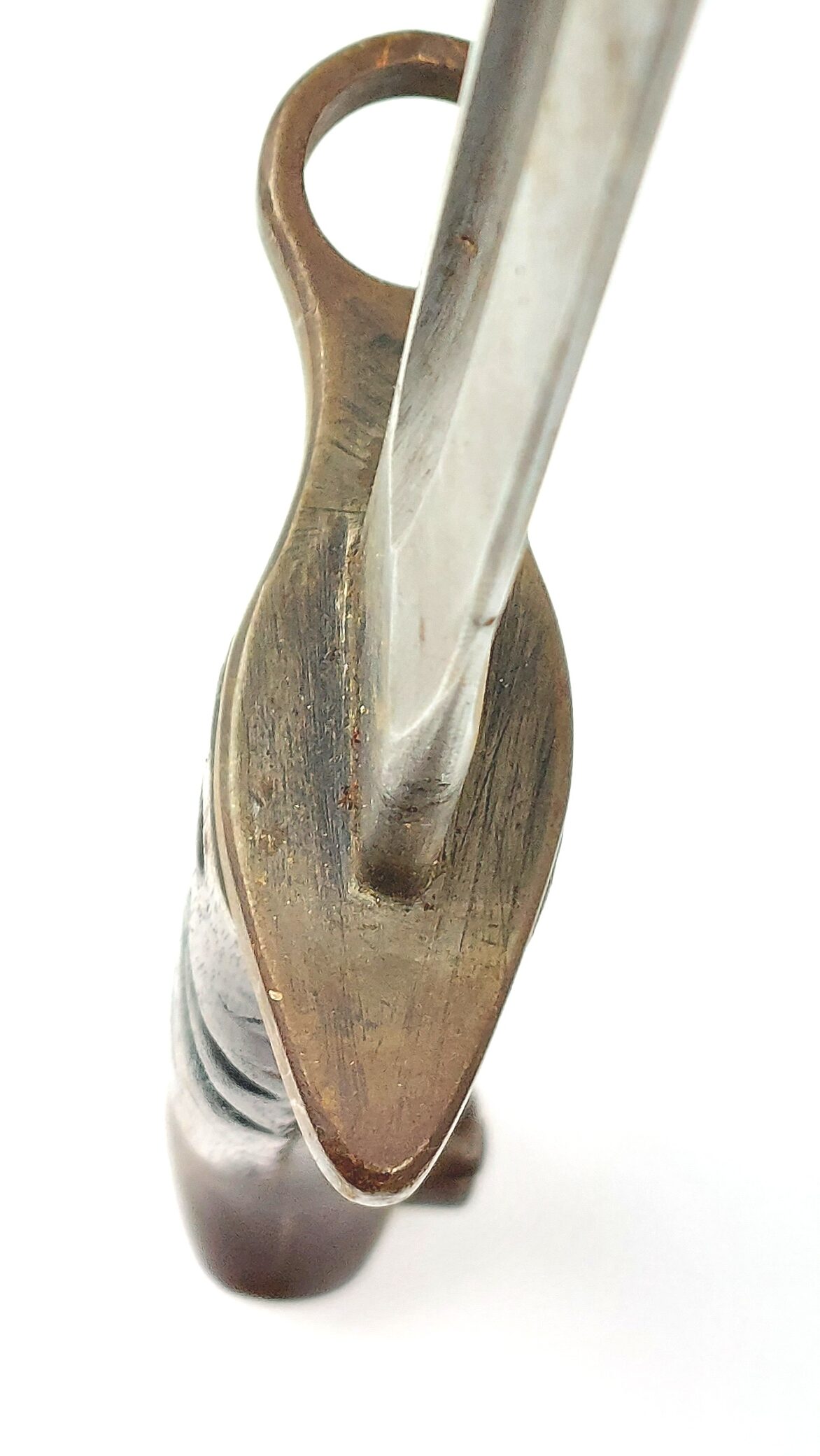
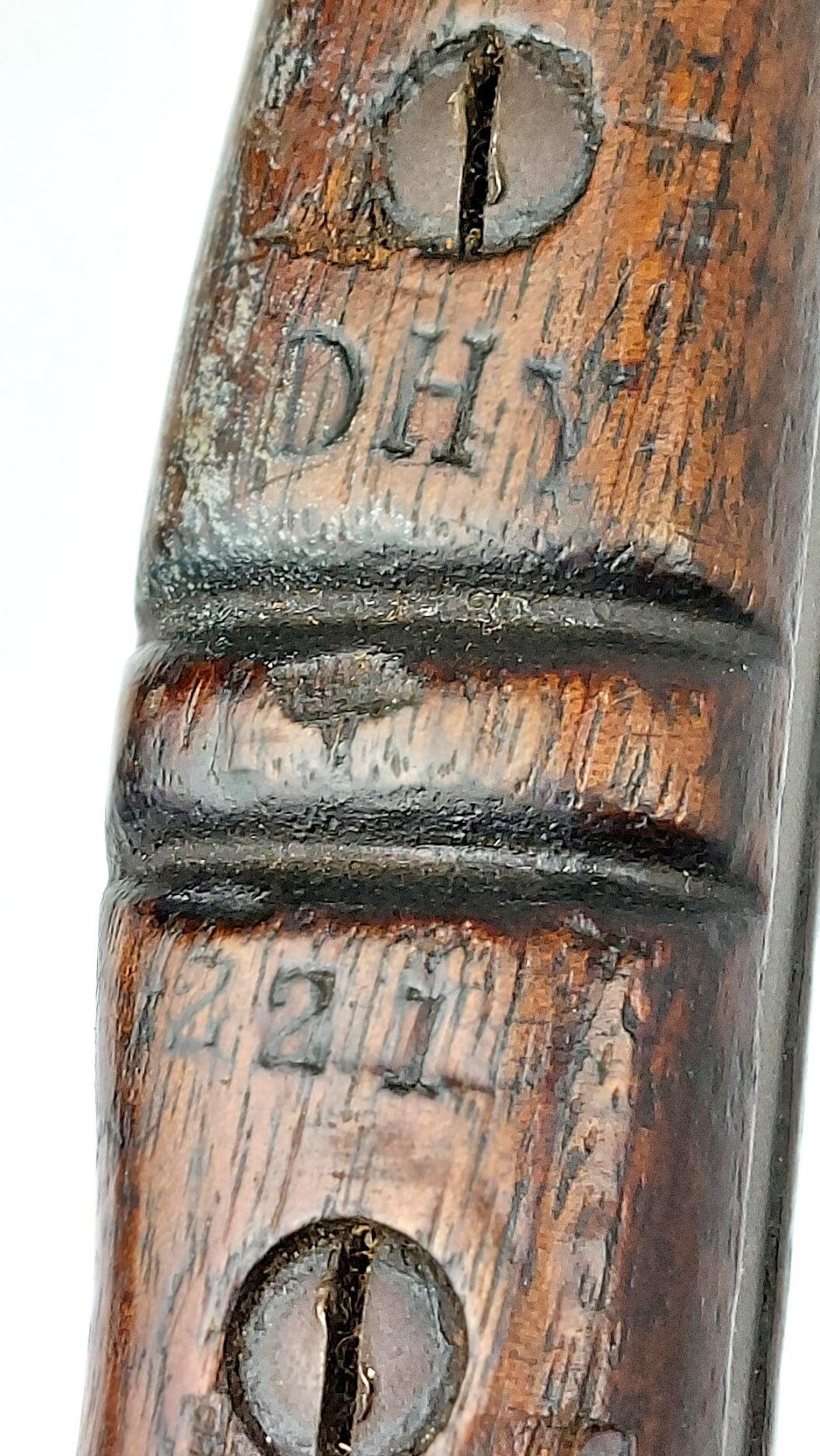
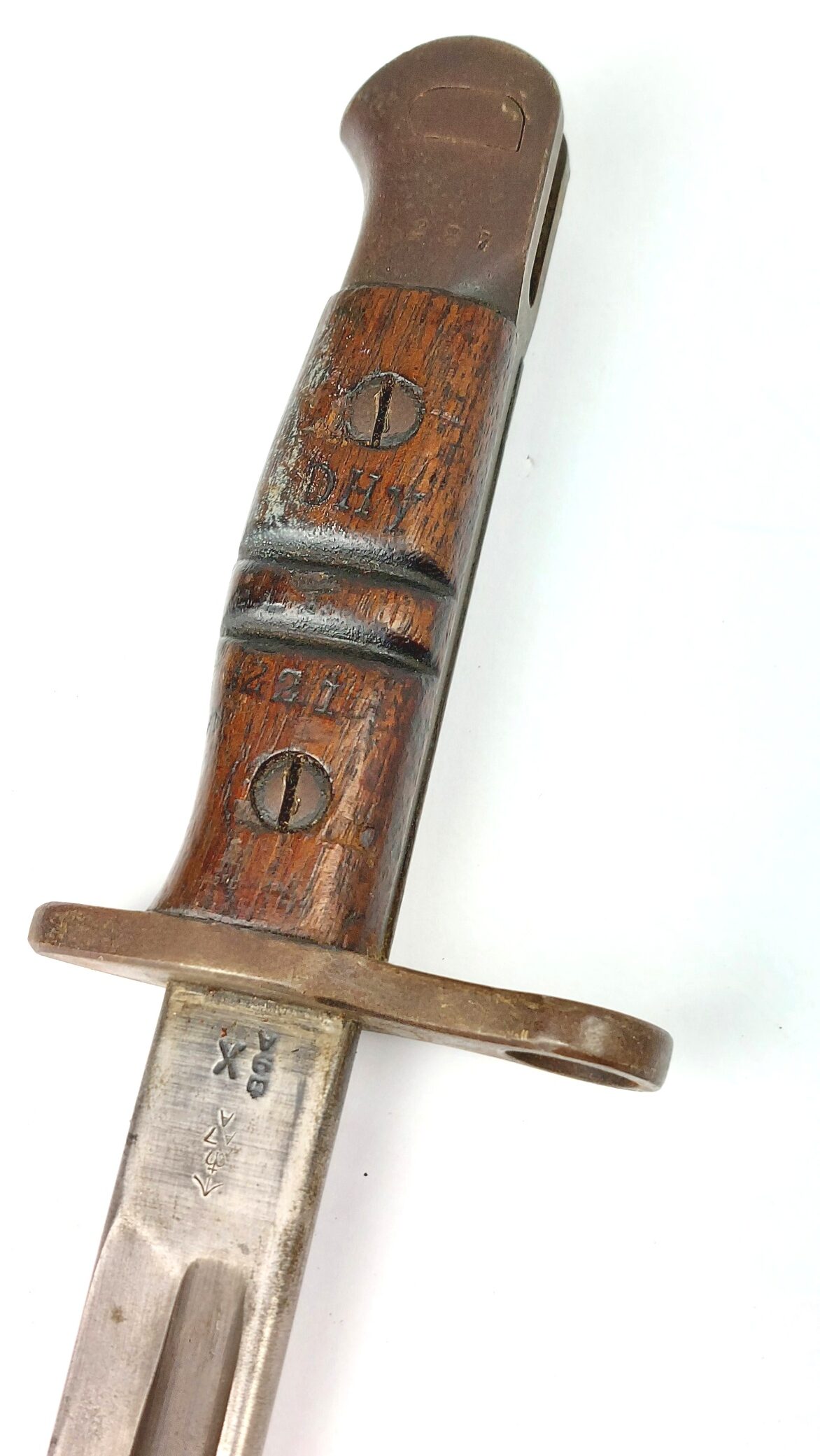
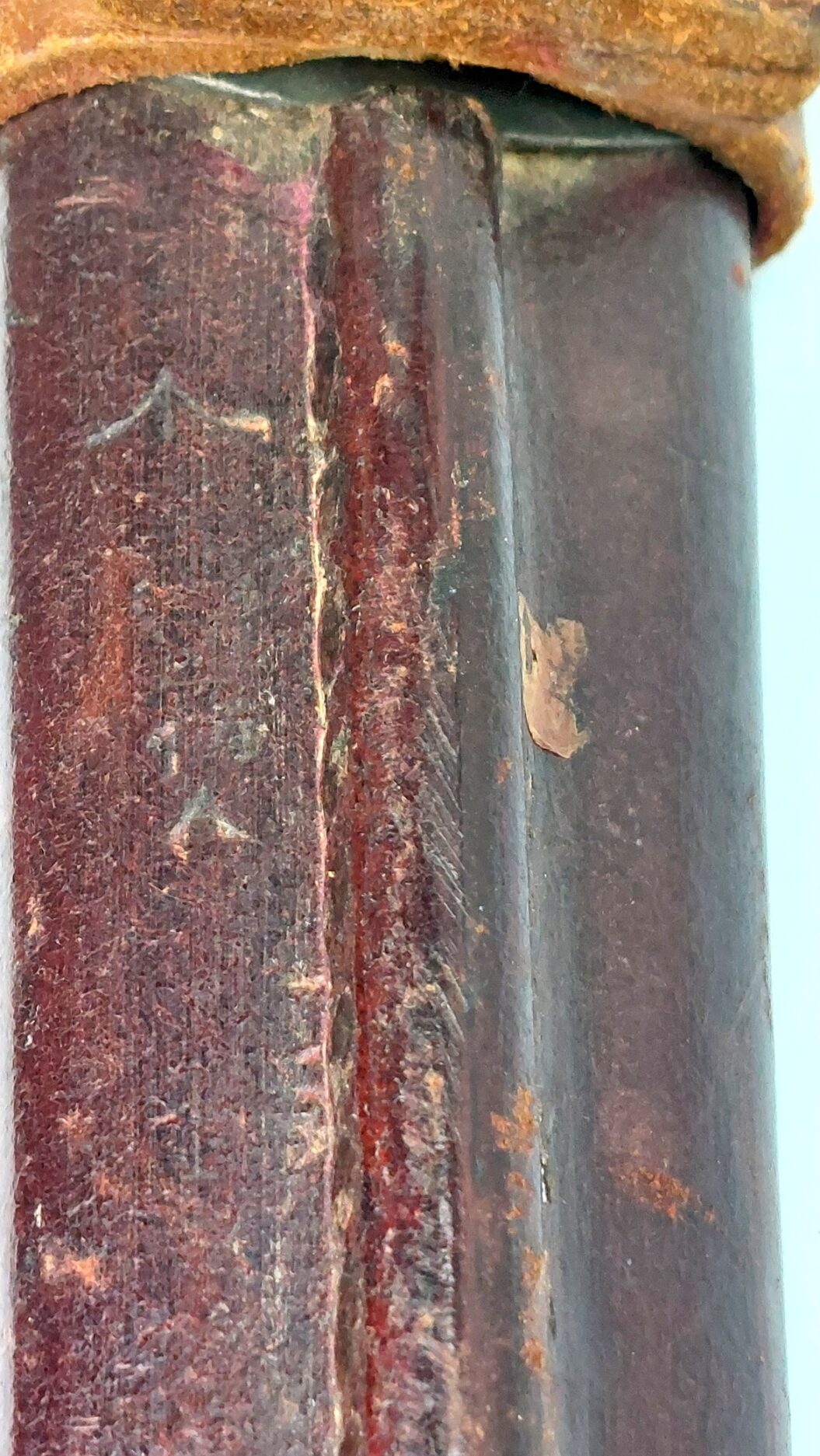
An excellent example of the Pattern 1913 sword bayonet, manufactured in the United States by Remington under British contract and dated June 1916, complete with its original leather scabbard with steel mounts and brown leather frog. The grip is unit marked DHY / 221, most likely referring to the Denbighshire Hussars Yeomanry, making this a particularly interesting First World War marked example.
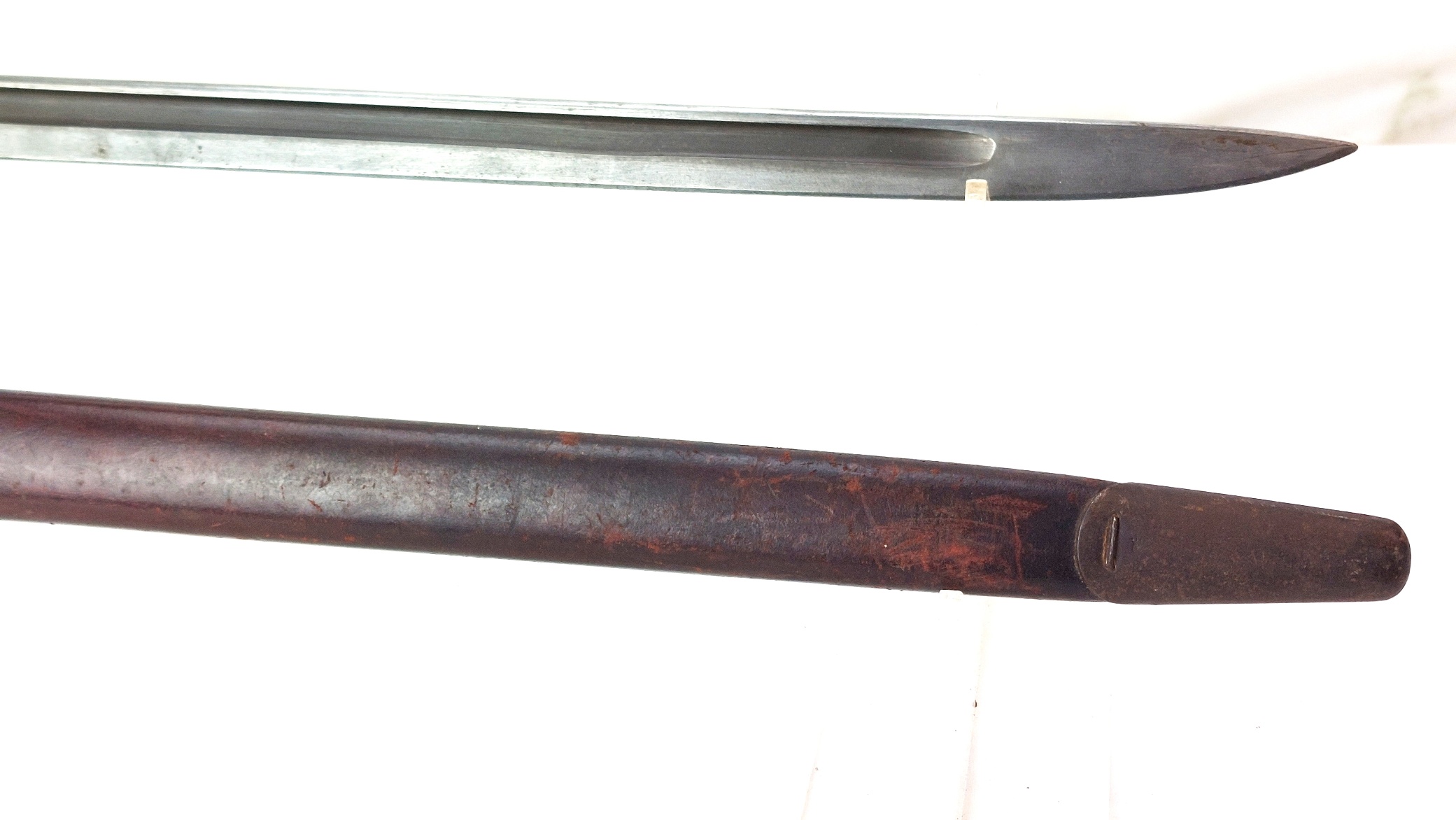
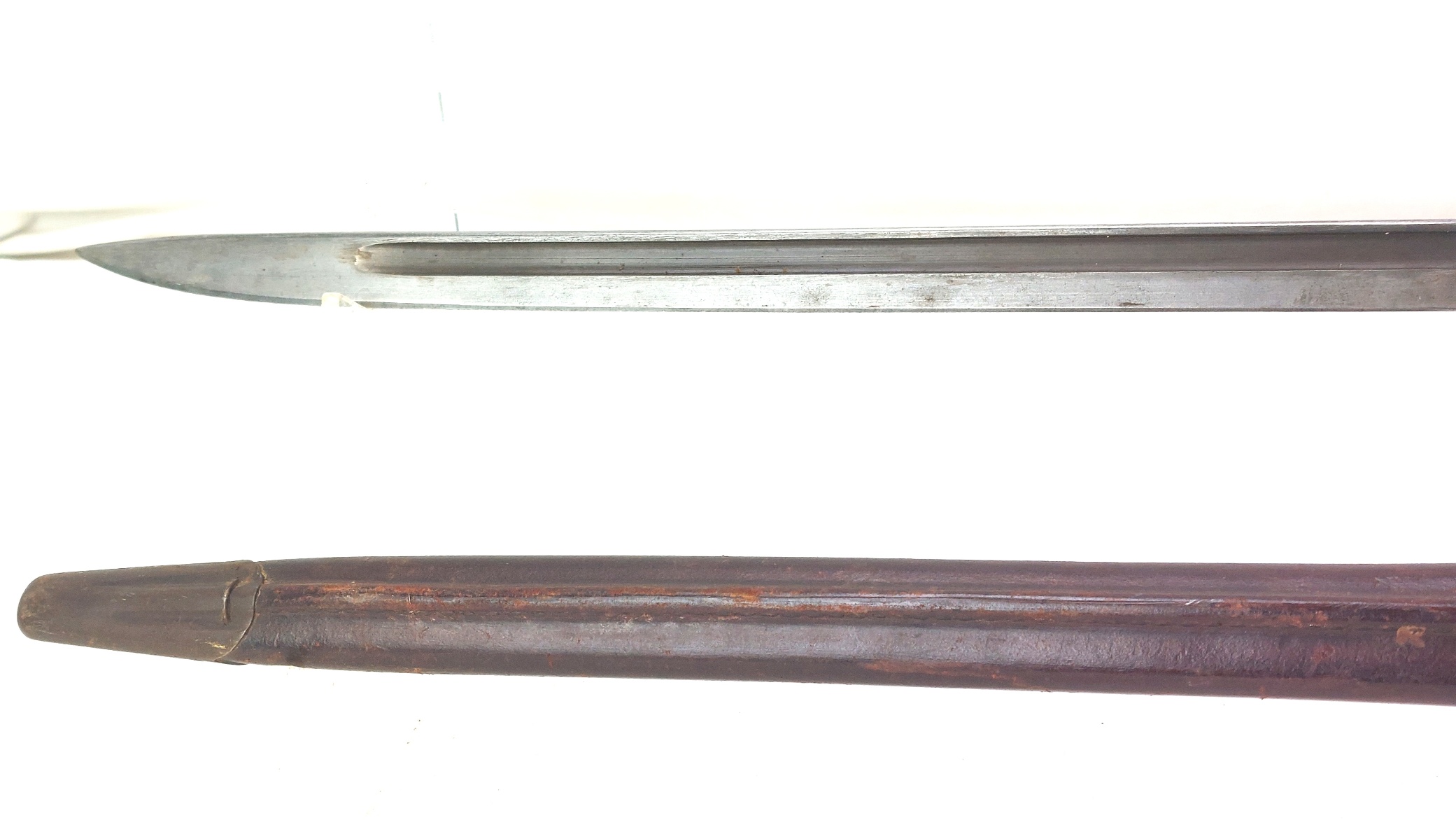
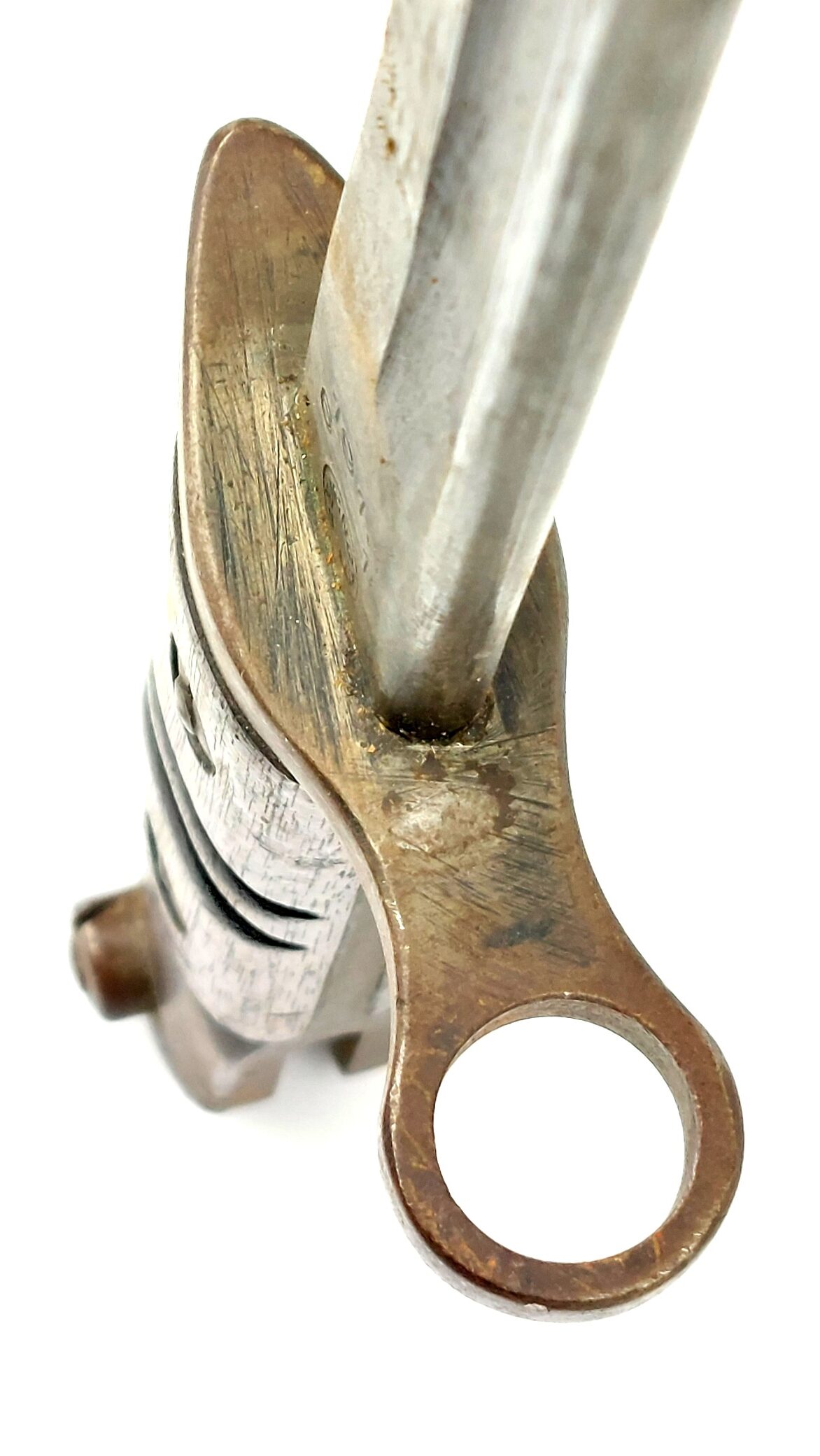
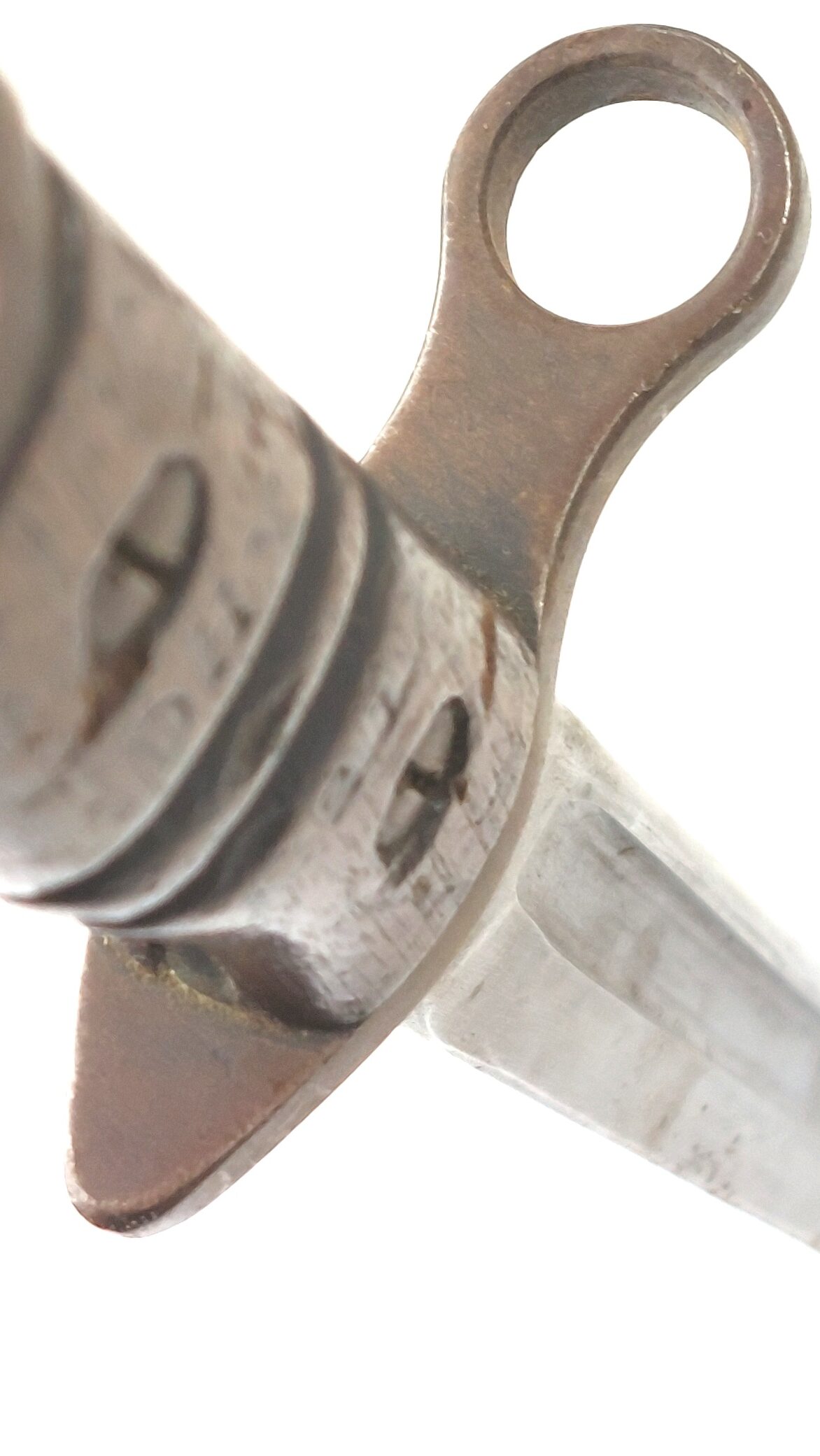
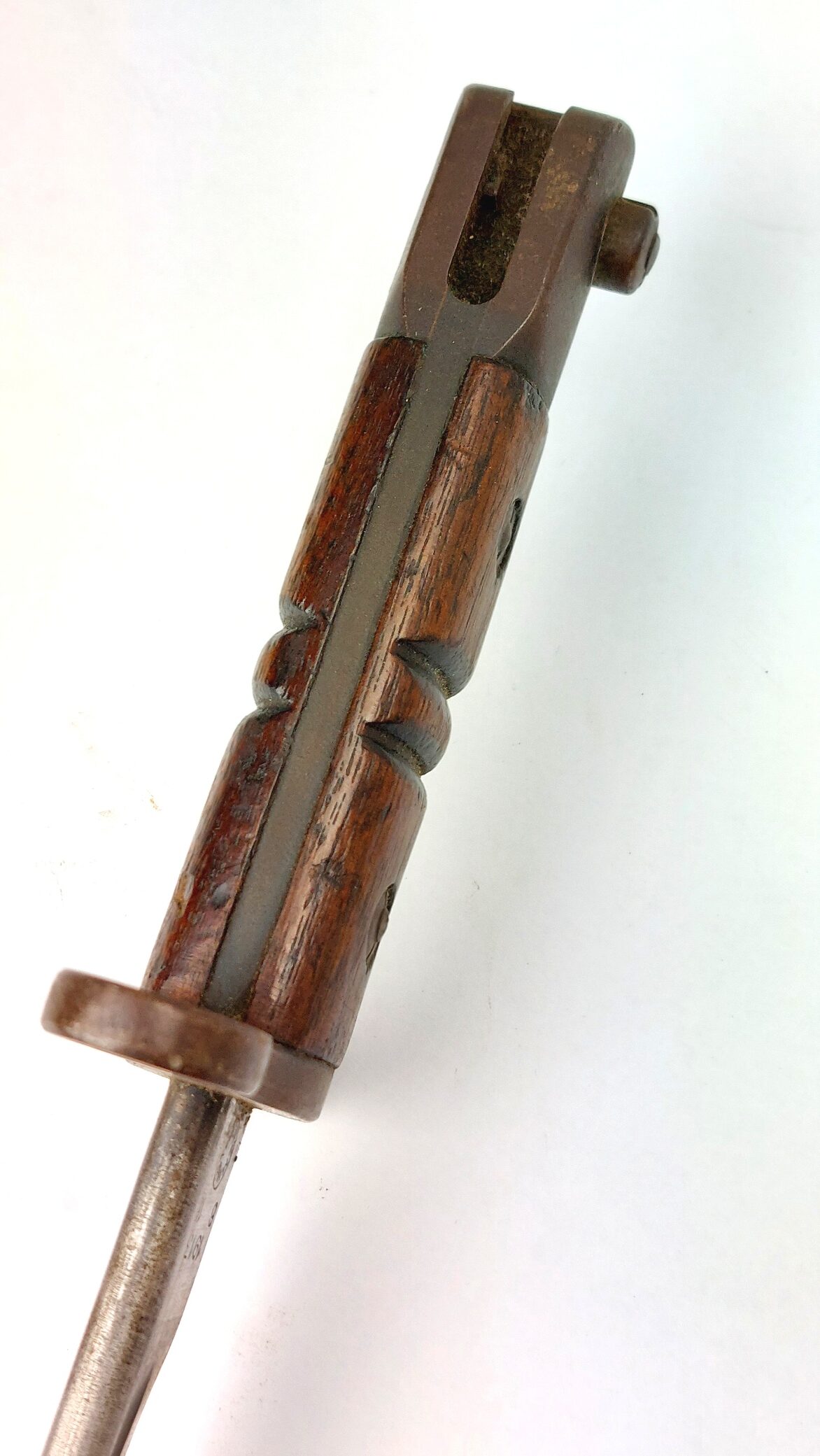
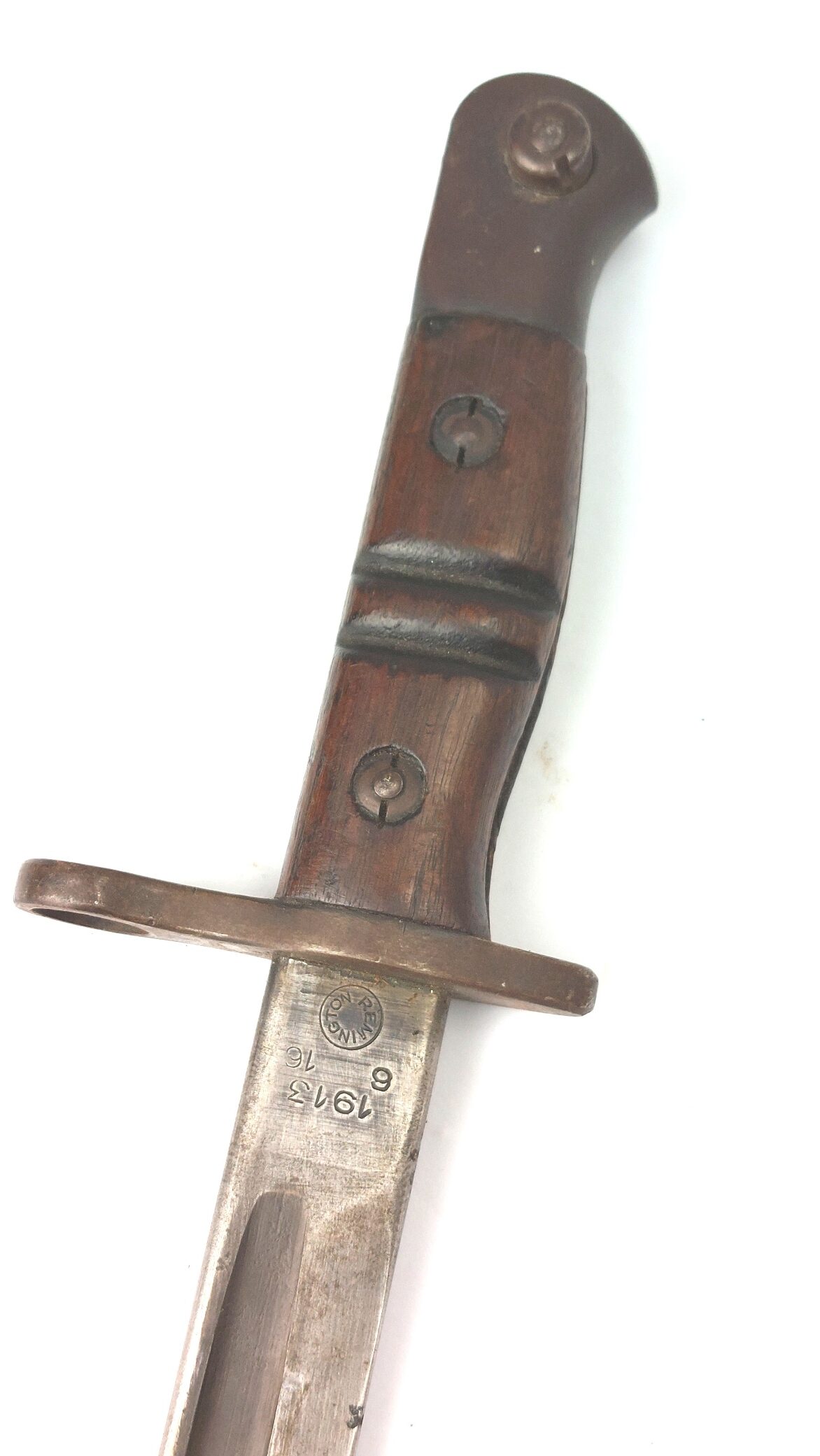
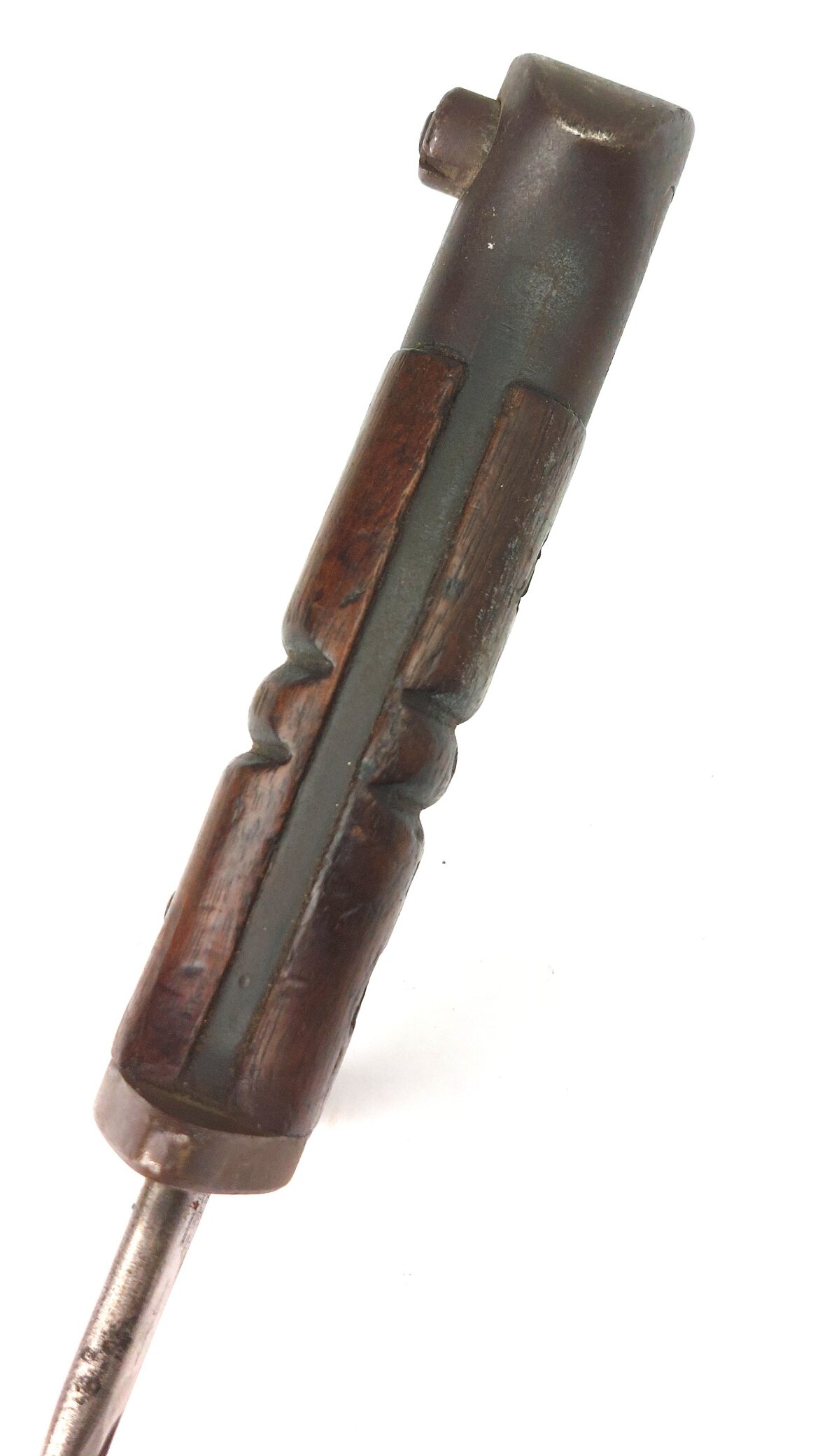
The bayonet features a straight, single-fullered knife blade measuring 427 mm in length, with the standard steel hilt incorporating a large muzzle ring for the Pattern 1914 rifle. The wooden slab grips are of the correct Pattern 1913 type, each slab cut with the distinctive pair of long parallel grooves, a characteristic feature of the P1913 / P14 / M1917 pattern bayonets, and secured by two screw bolts.
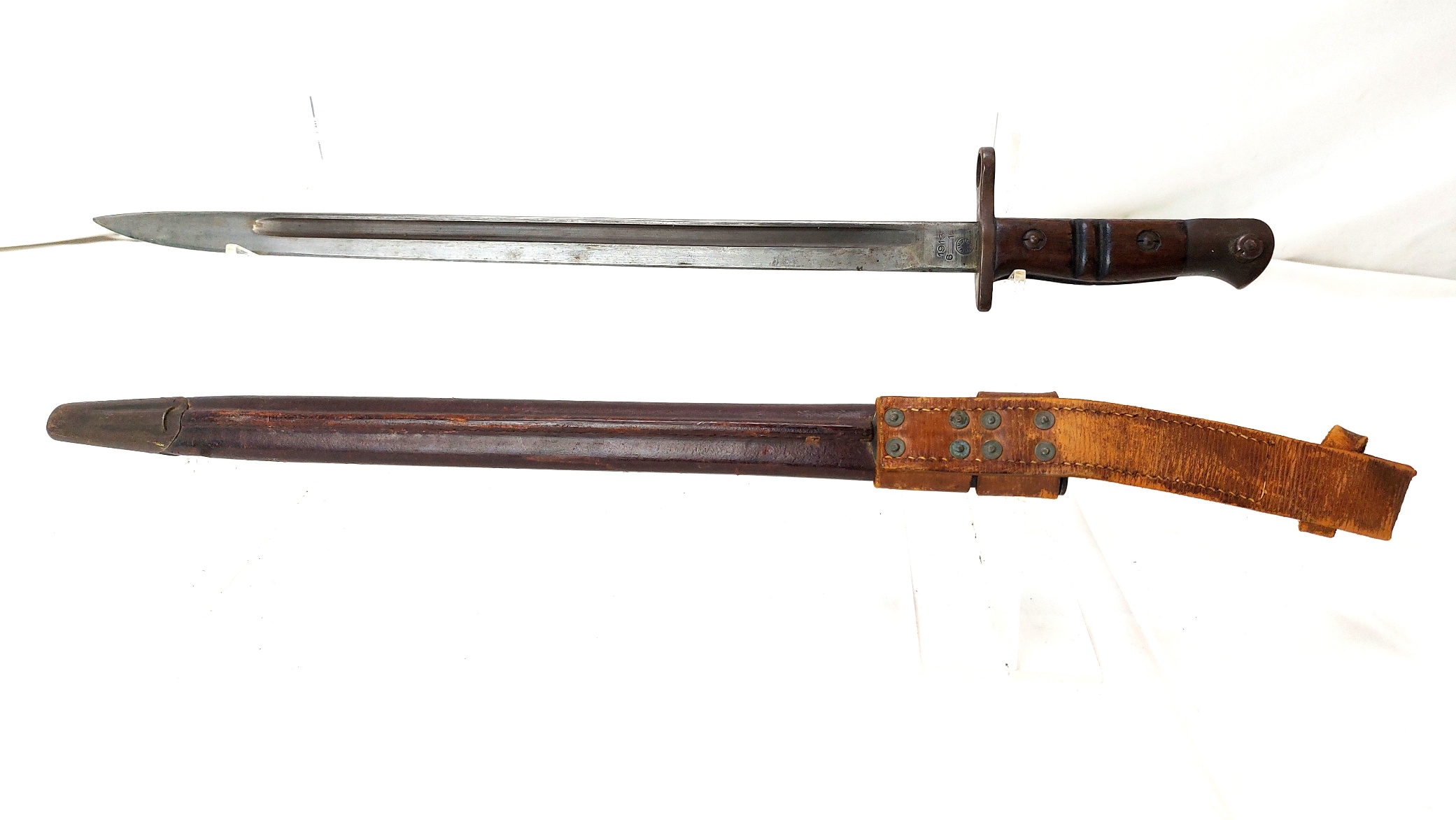
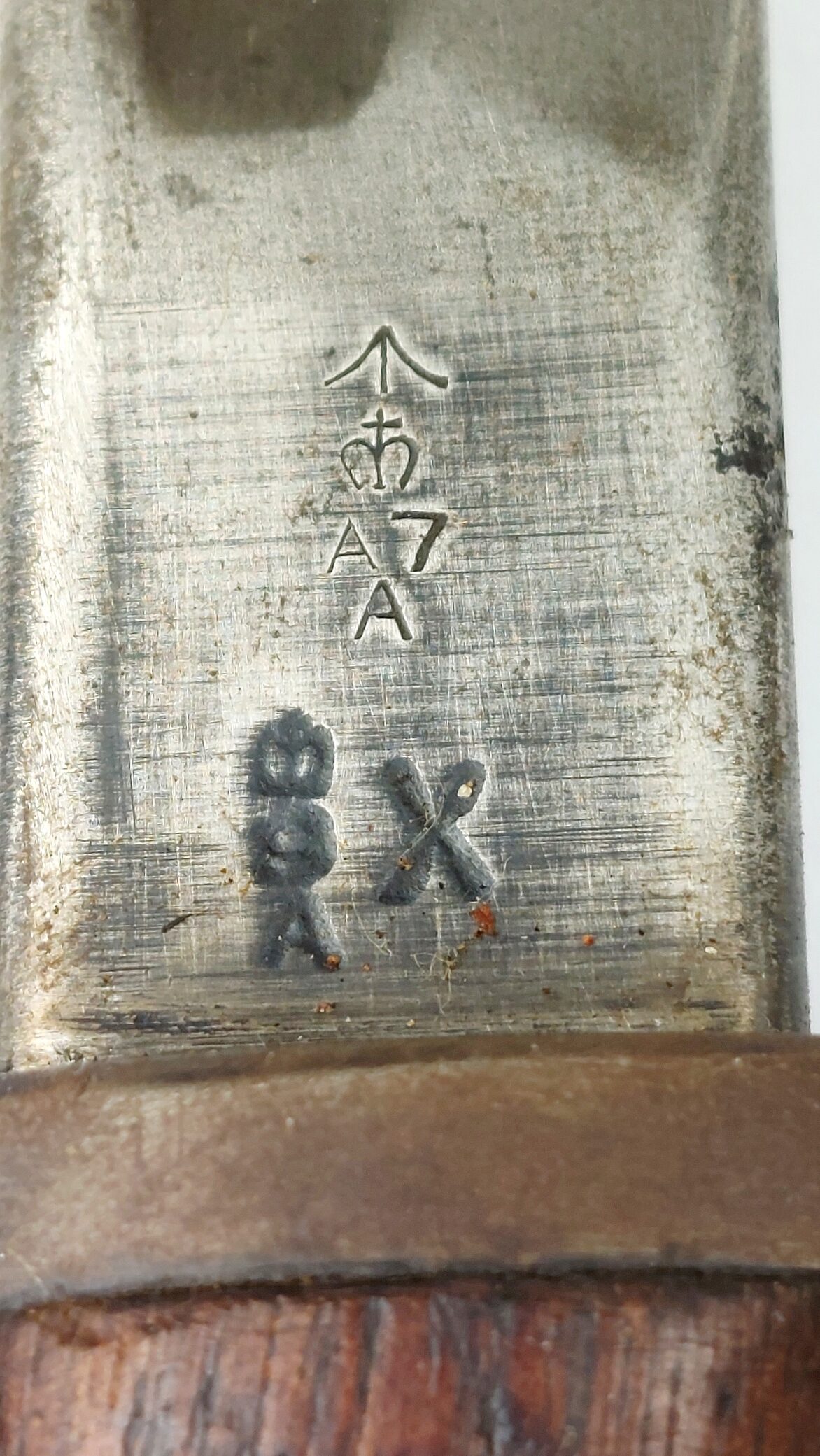
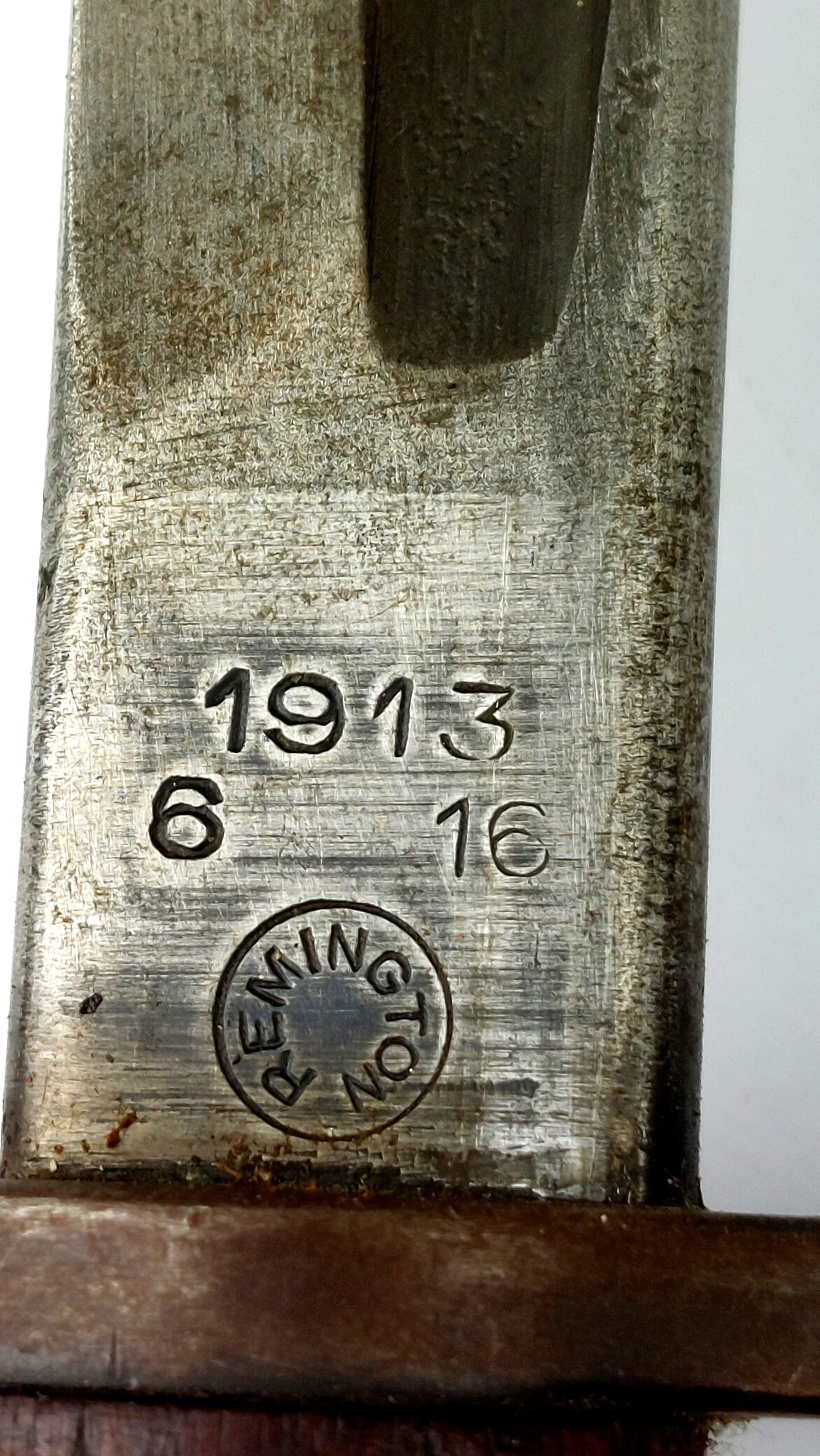
The blade is clearly stamped on the ricasso 1913 / 6 ’16 / REMINGTONwithin a circle, indicating Pattern 1913 manufacture by Remington in June 1916 under British contract. The reverse ricasso bears British military acceptance marks including the Broad Arrow, together with crown inspection marks over the letter A, denoting inspection in America for British service, and an X bend-test mark, showing the blade passed the official proof test. Additional crowned inspection marks are present, consistent with the multiple stages of British acceptance applied to bayonets produced in the United States during the First World War.
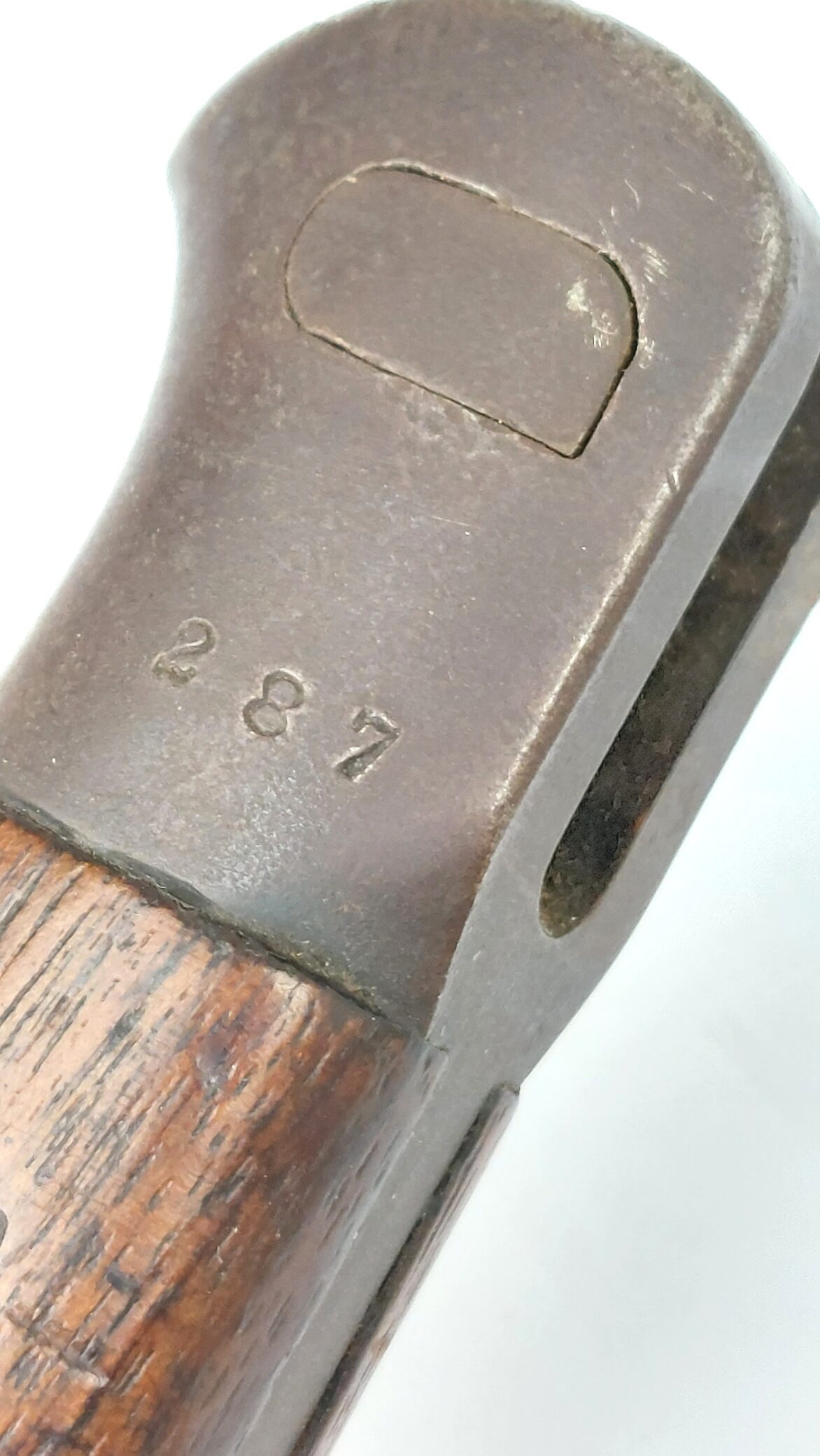
The pommel is stamped 287, likely a rack or issue number, while the wooden grip is engraved DHY / 221, almost certainly a regimental or armoury rack marking applied during service.
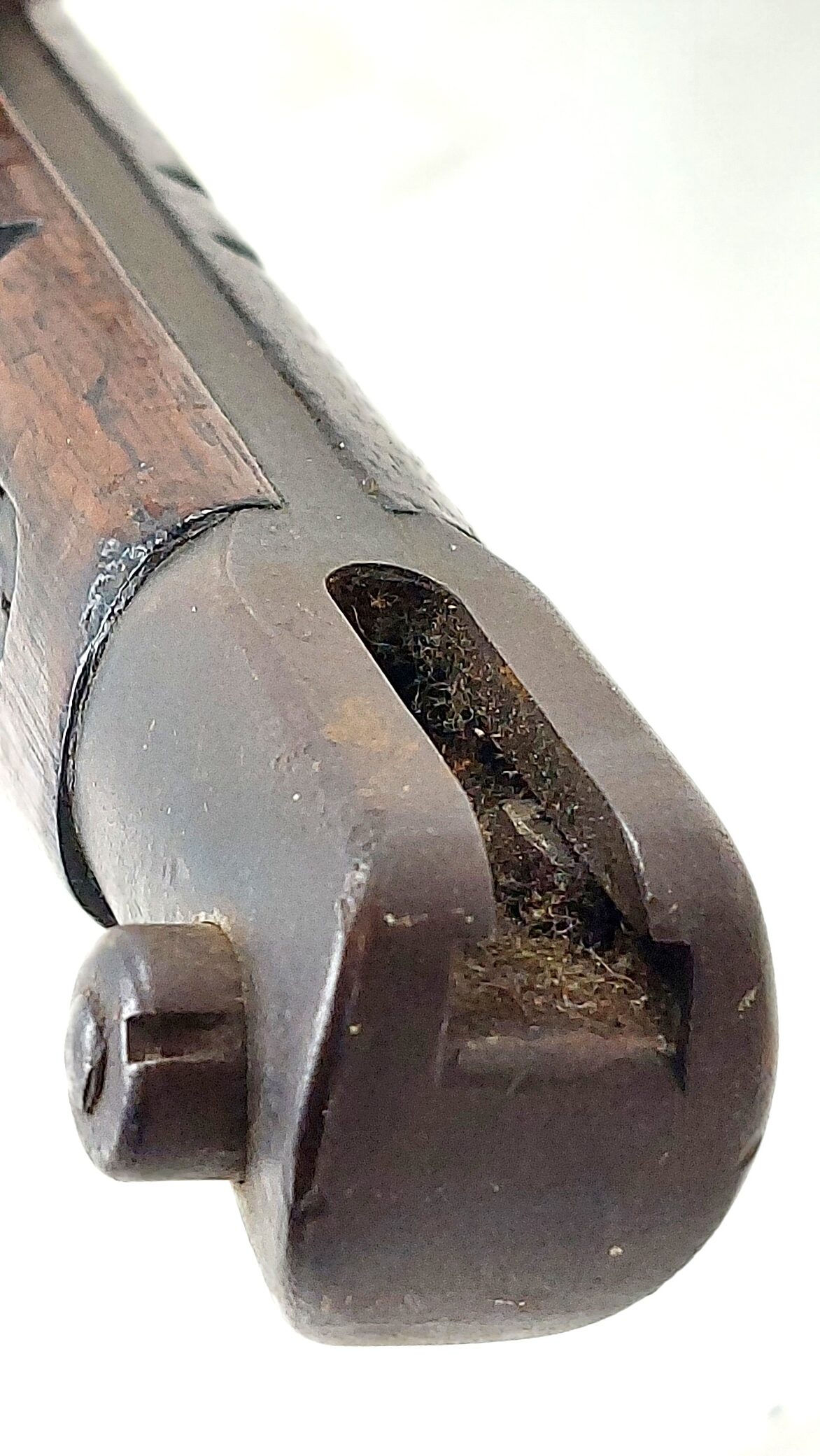
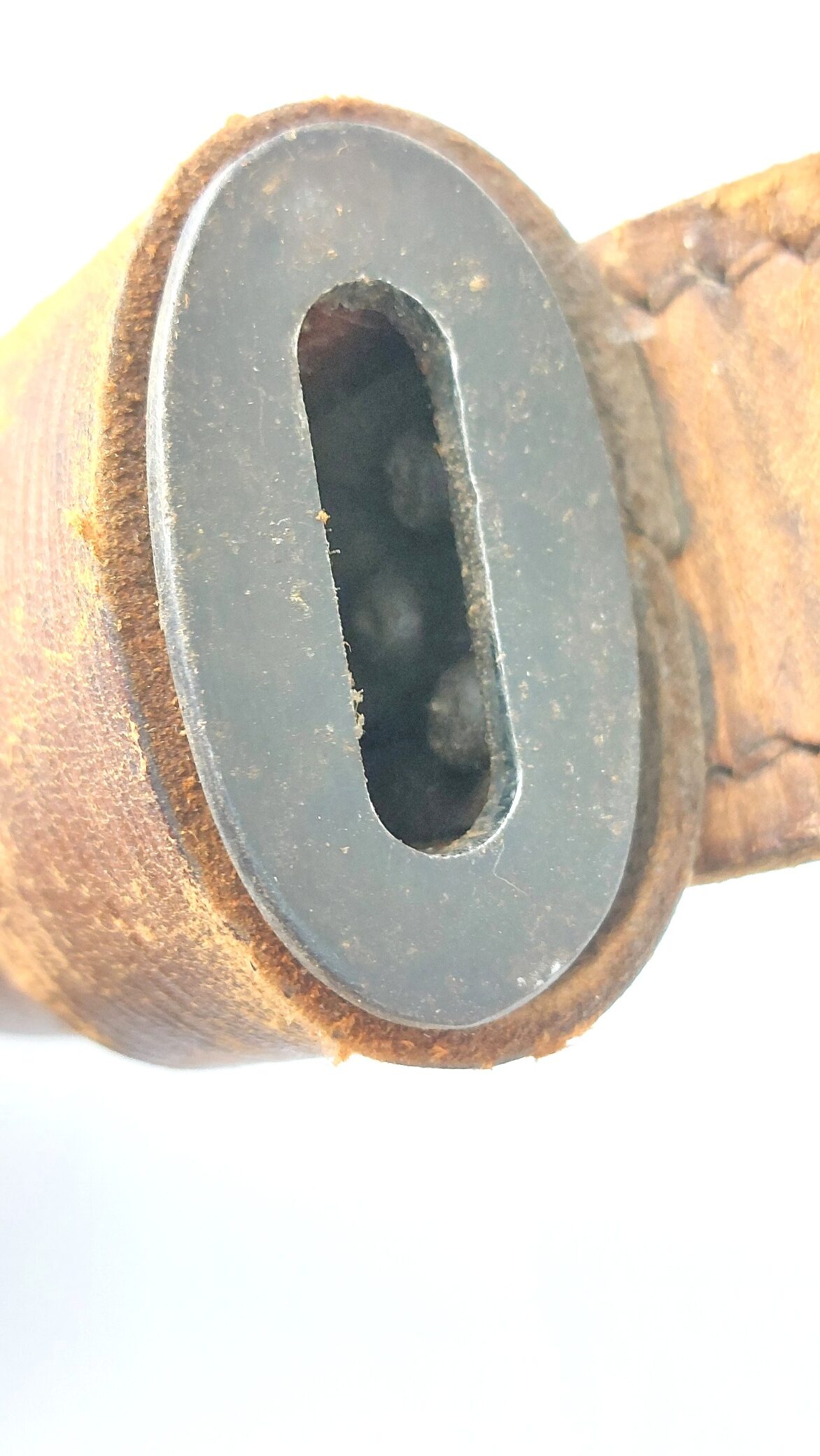
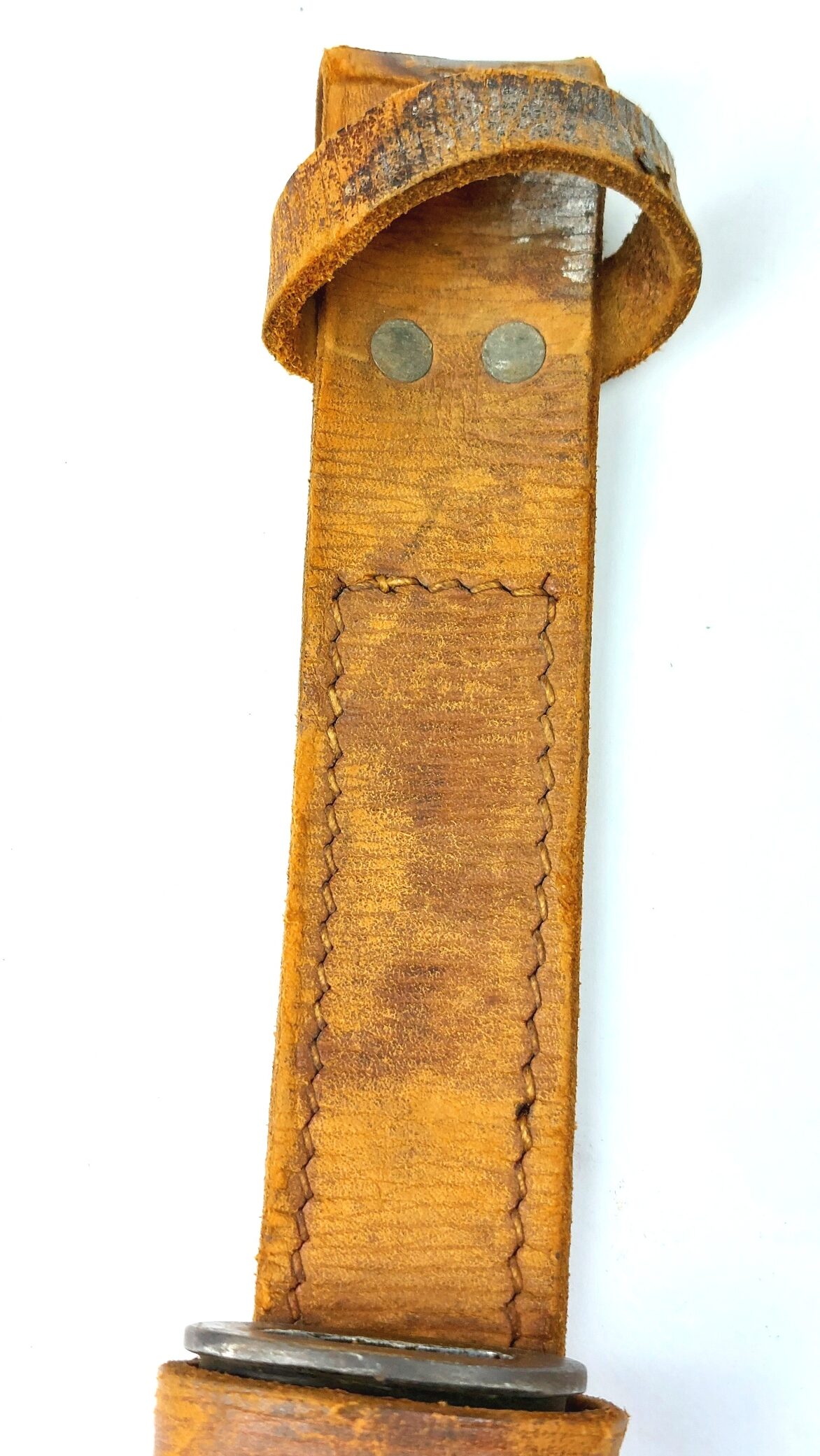
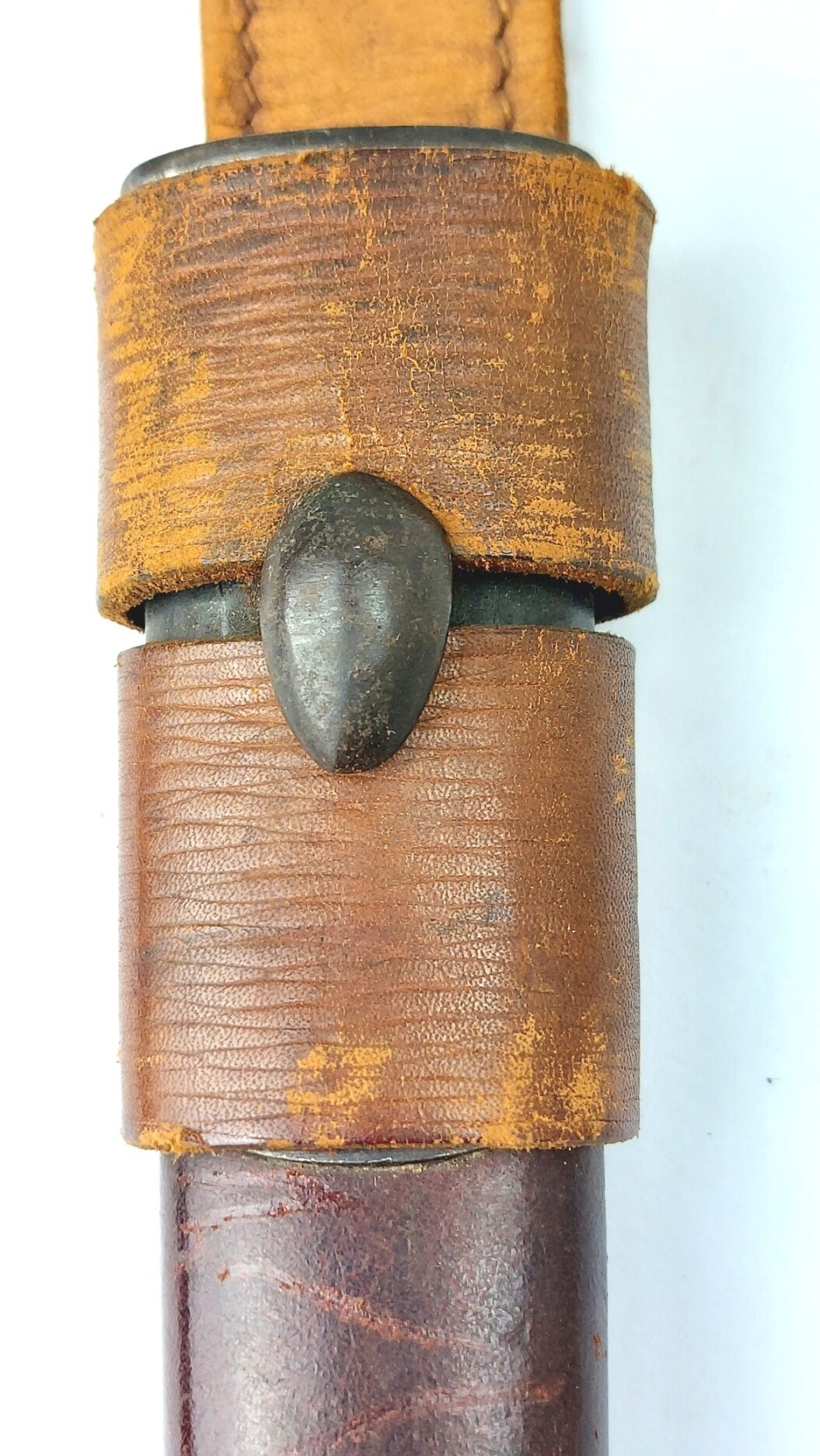
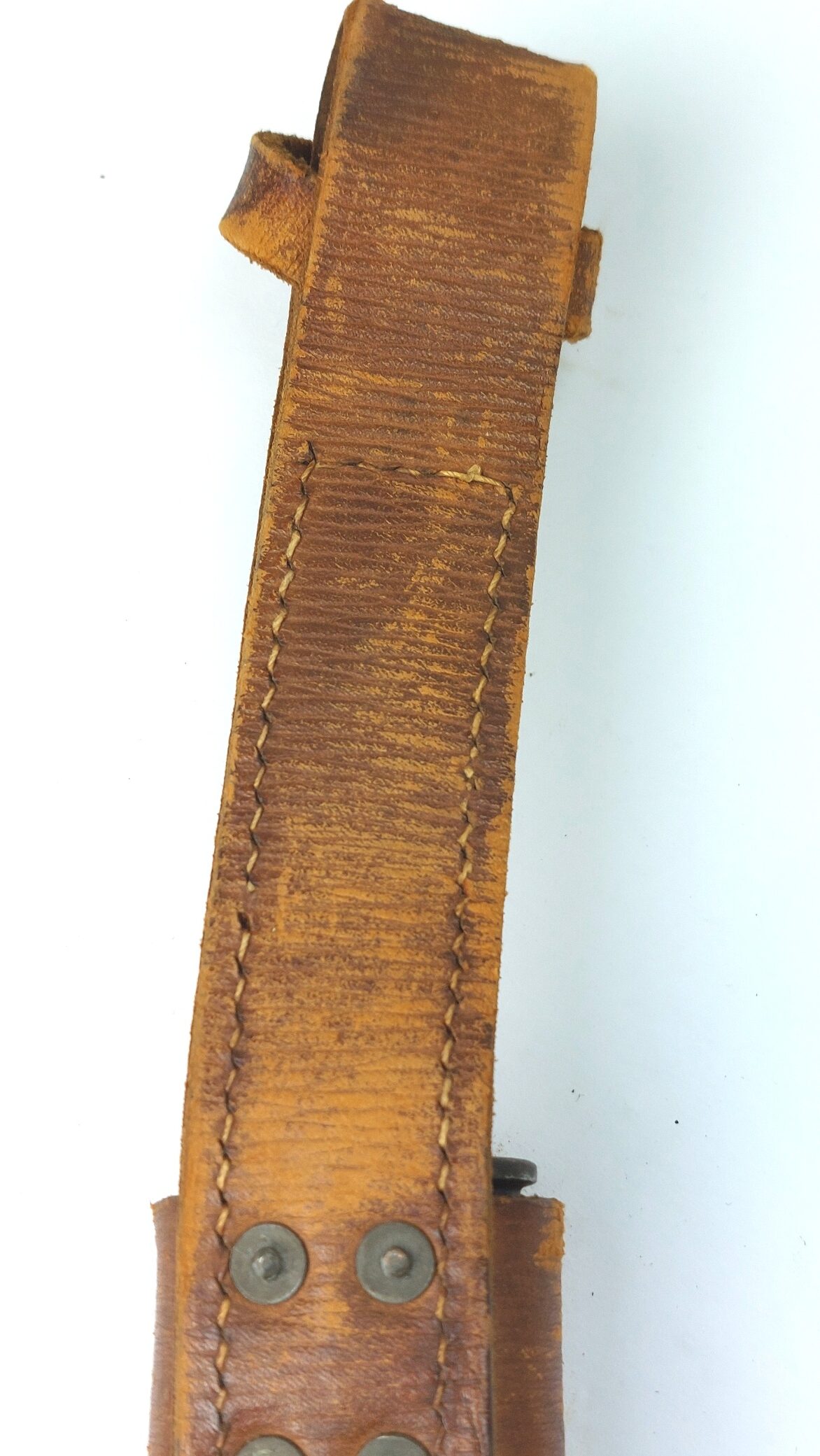
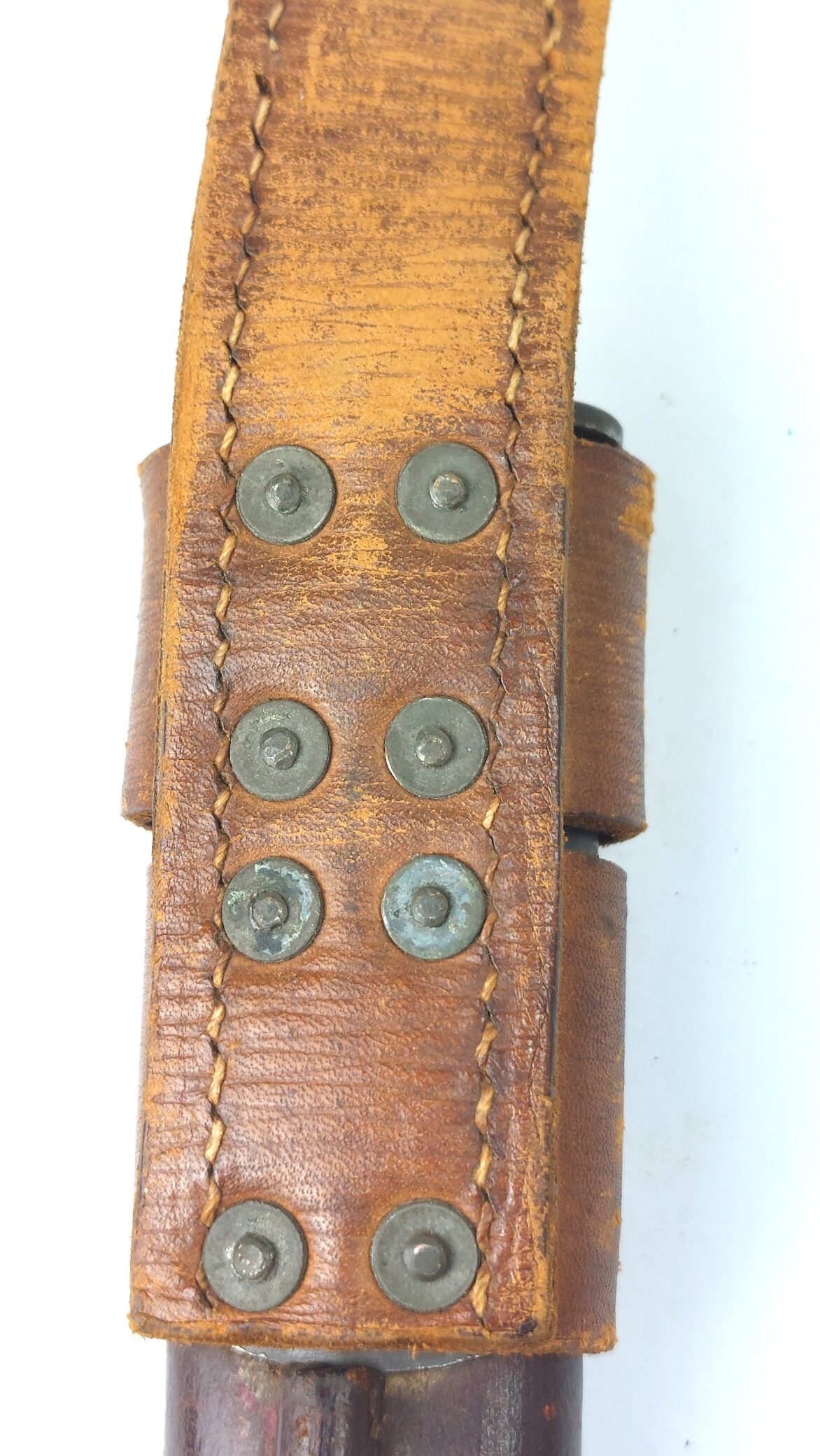
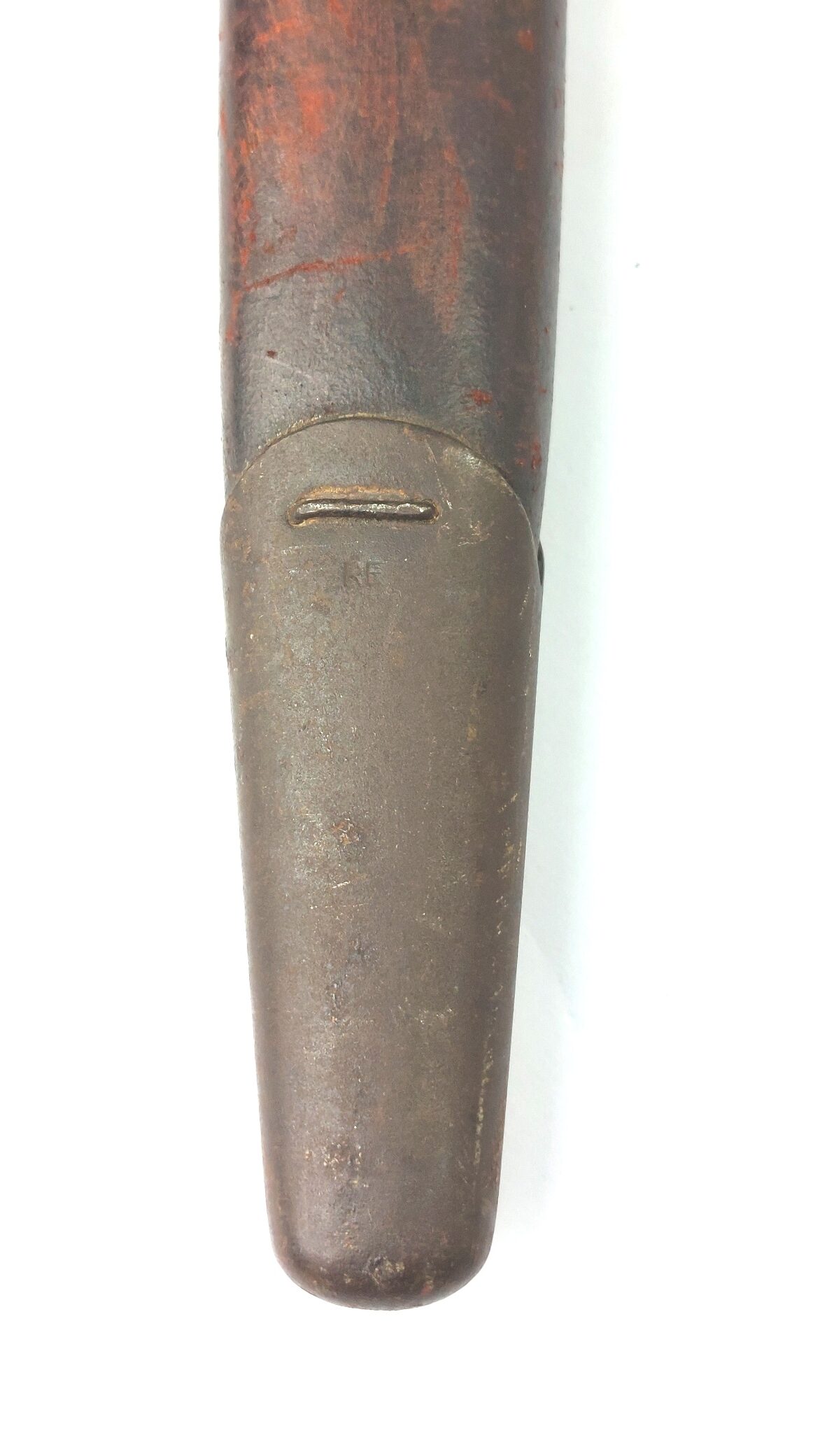
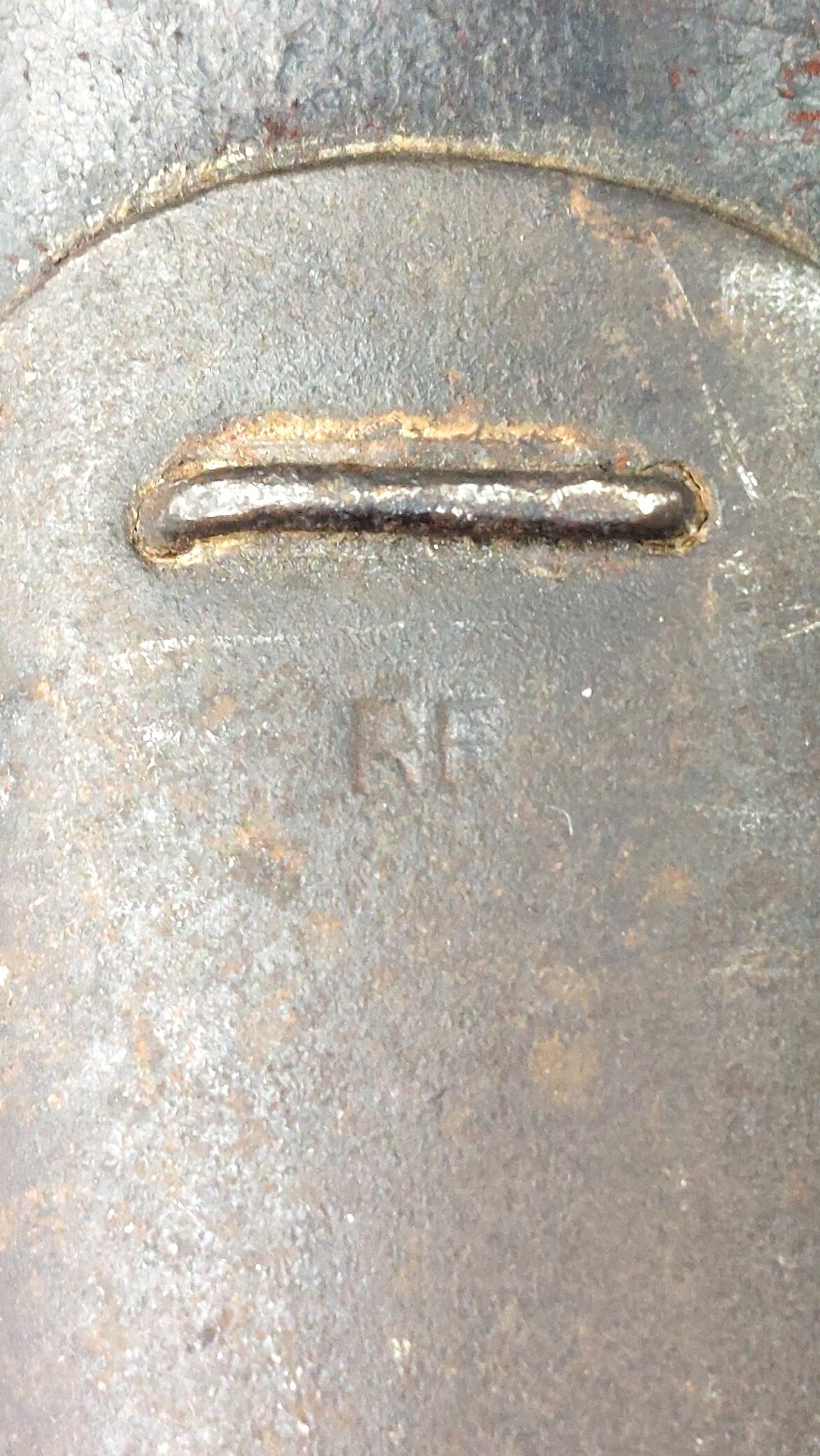
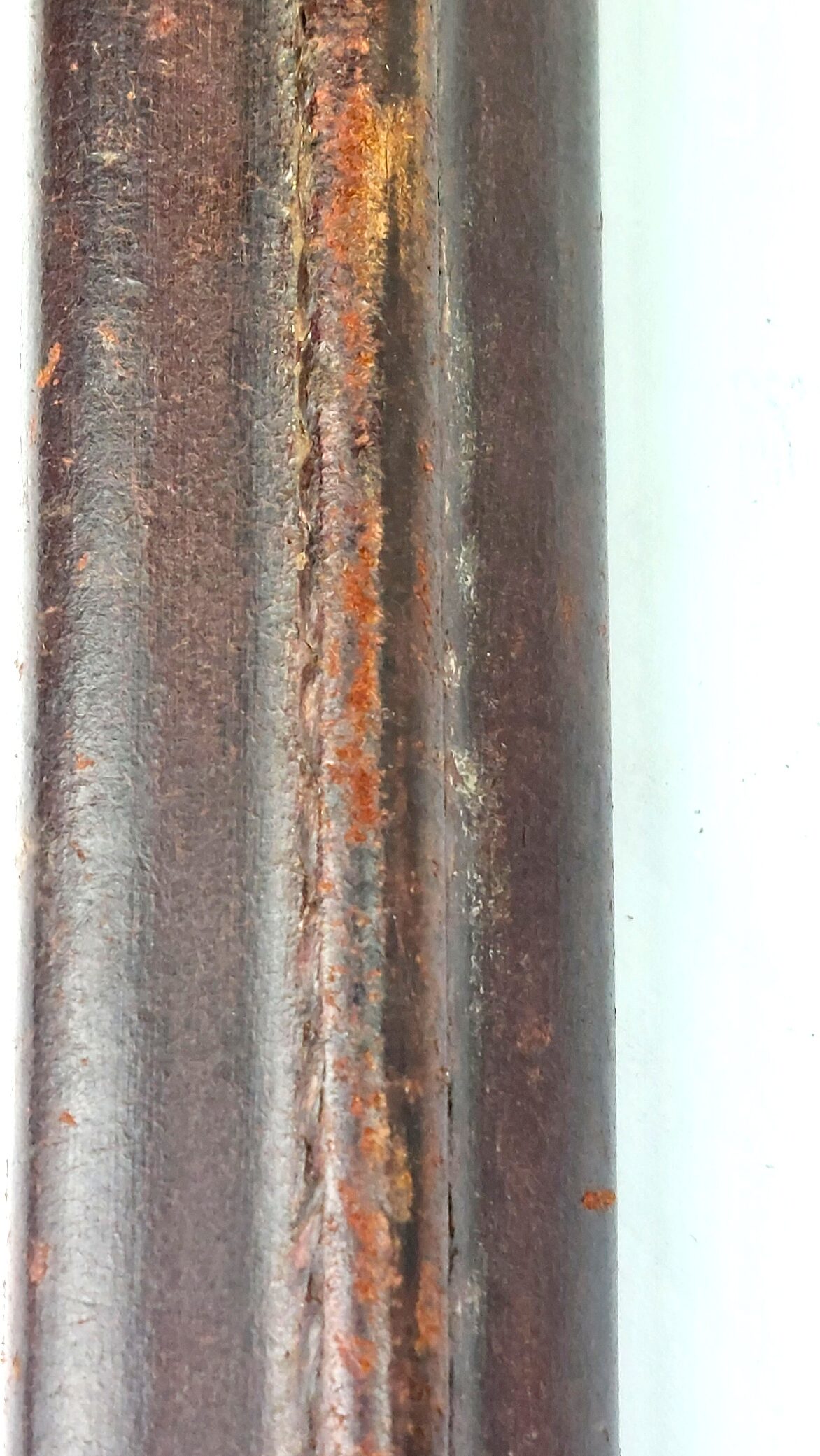
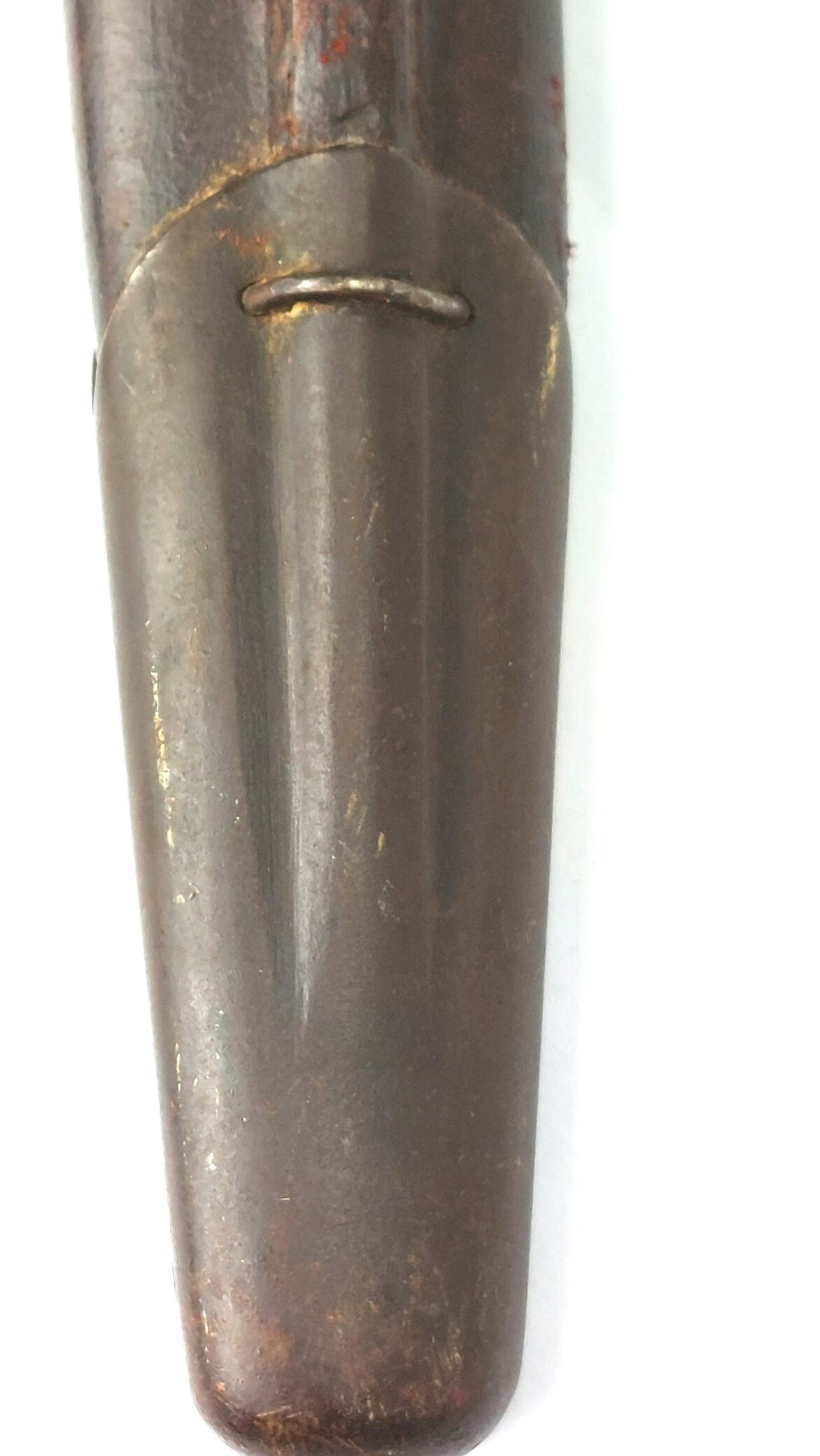
The bayonet is complete with its original leather scabbard with steel mounts, the chape stamped RE, with War Department Broad Arrow on the leather on the reverse, confirming Remington manufacture of the scabbard for British issue, and retained in a period brown leather frog.
Approx. Measurements – Blade length: 42.7 cm. Overall length: 55.2 cm.
History Note: The Pattern 1913 bayonetwas designed for the experimental Pattern 1913 Enfield rifle, a Mauser-type design intended to fire the new high-velocity .276 cartridge. With the outbreak of the First World War, development of the new cartridge was halted and the rifle redesigned to fire the standard .303 round, becoming the Pattern 1914 rifle, while the bayonet design remained unchanged. Because British factories were fully occupied producing the SMLE rifle, manufacture of the Pattern 1914 rifles and bayonets was contracted to American companies, principally Remingtonand Winchester, with Remington producing well over one million bayonets for British service.
The grip marking DHY / 221is most plausibly interpreted as a unit marking for the Denbighshire Hussars Yeomanry, a Welsh Territorial cavalry regiment of the British Army. The abbreviation matches the standard form used for Yeomanry units, and the June 1916 production date corresponds closely with the period when Territorial and Yeomanry units were being re-equipped during wartime expansion.
During the First World War the Denbighshire Hussars were initially deployed as dismounted cavalry in Egypt in 1916. In early 1917 the regiment was converted to infantry and became the 24th (Denbighshire Yeomanry) Battalion, Royal Welsh Fusiliers, part of the 74th (Yeomanry) Division. The battalion served in the Sinai and Palestine campaign, taking part in the advance against Ottoman forces including operations around Gaza, Beersheba, Jerusalem and the Jordan Valley, before being transferred to the Western Front in 1918, where the division fought in the final Allied offensives in France and Belgium.
Sword bayonets of the Pattern 1913 type were widely issued to training, reserve and Territorial formations, and examples with Yeomanry or depot markings are known, making the DHY stamp entirely consistent with issue to such a unit during this period.
It should be noted that British unit markings were not always standardised, and while Denbighshire Hussars Yeomanry is the most convincing interpretation, the letters may also represent a depot, district or Yeomanry armoury marking, as similar abbreviations are found on other First World War bayonets.
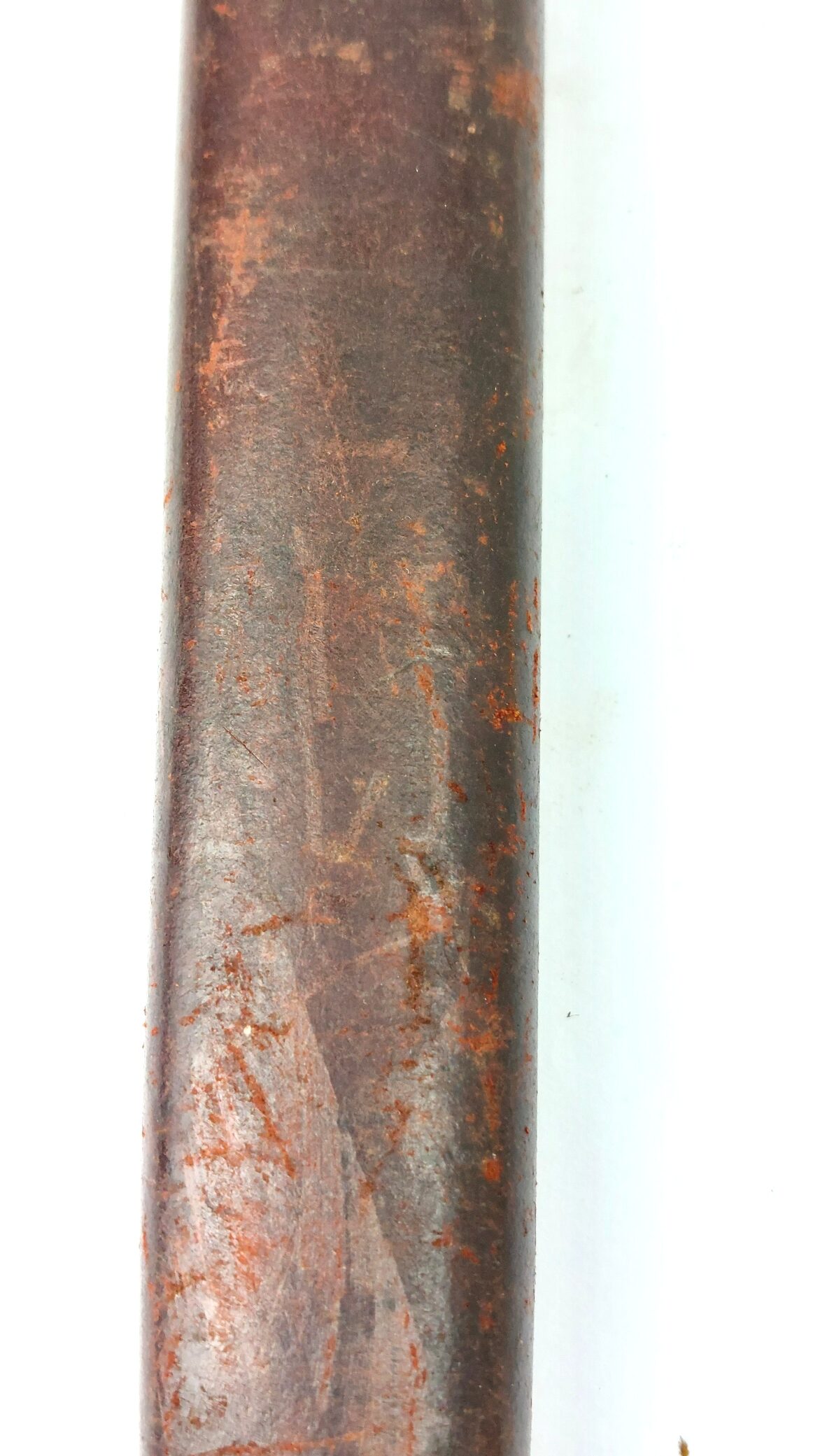
*Condition* Very good original condition for its age. Blade clean with light age staining and minor surface wear. Markings clear and fully legible. Grip slabs tight with service wear and unit marking visible. Pommel and locking mechanism working correctly. Scabbard leather complete with age wear and surface cracking but structurally sound, with correct steel mounts marked REand War Department arrow. Frog complete with rivets intact and good honest service wear. Please see photographs as part of the condition report.
*In order to complete the online purchase we will require a picture/scan of a photo ID (Driving Licence, Passport or an official document with a recent picture). If you don't posses any such document please call to buy. If we consider that the proof of ID is incorect or insuficient, we reserve the right to cancel the transaction.
*We also reserve the right to cancel the transaction with a full refund if there is any suspicion that the provided item will be used in any way contrary to the laws and legislation of UK.