*British, Pre WW1, HM Submarine Holland 1 - Four Original Photographs*
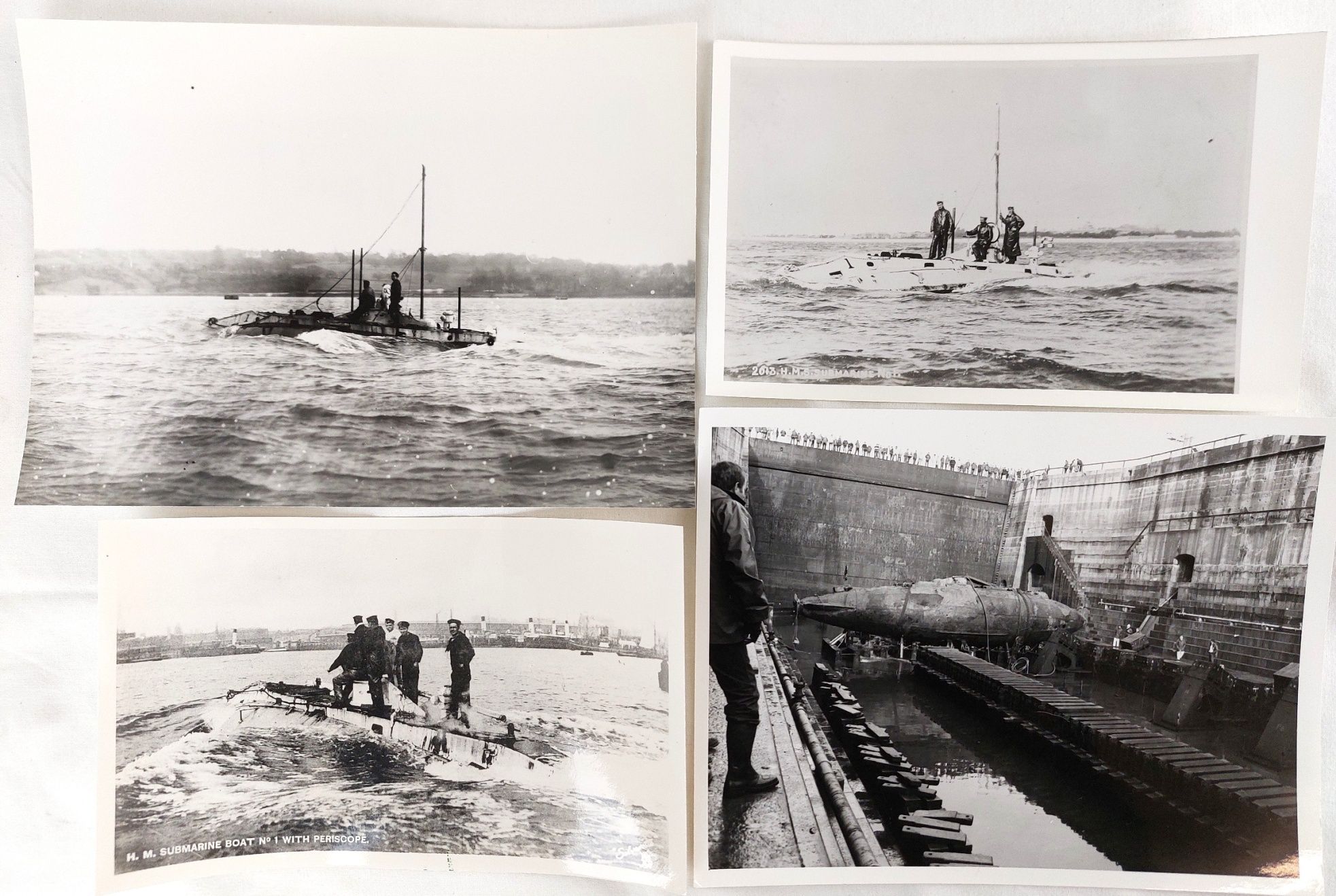
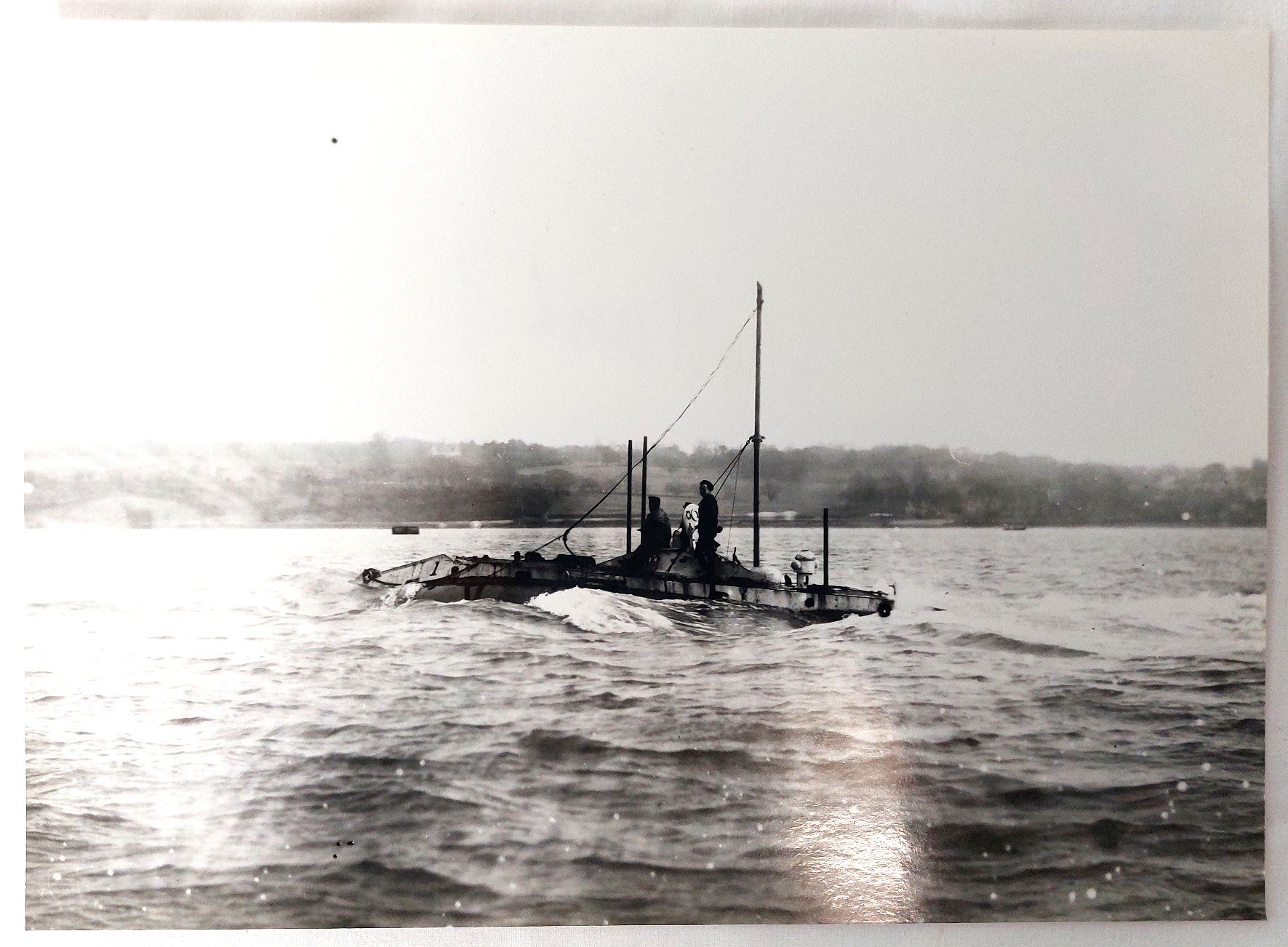
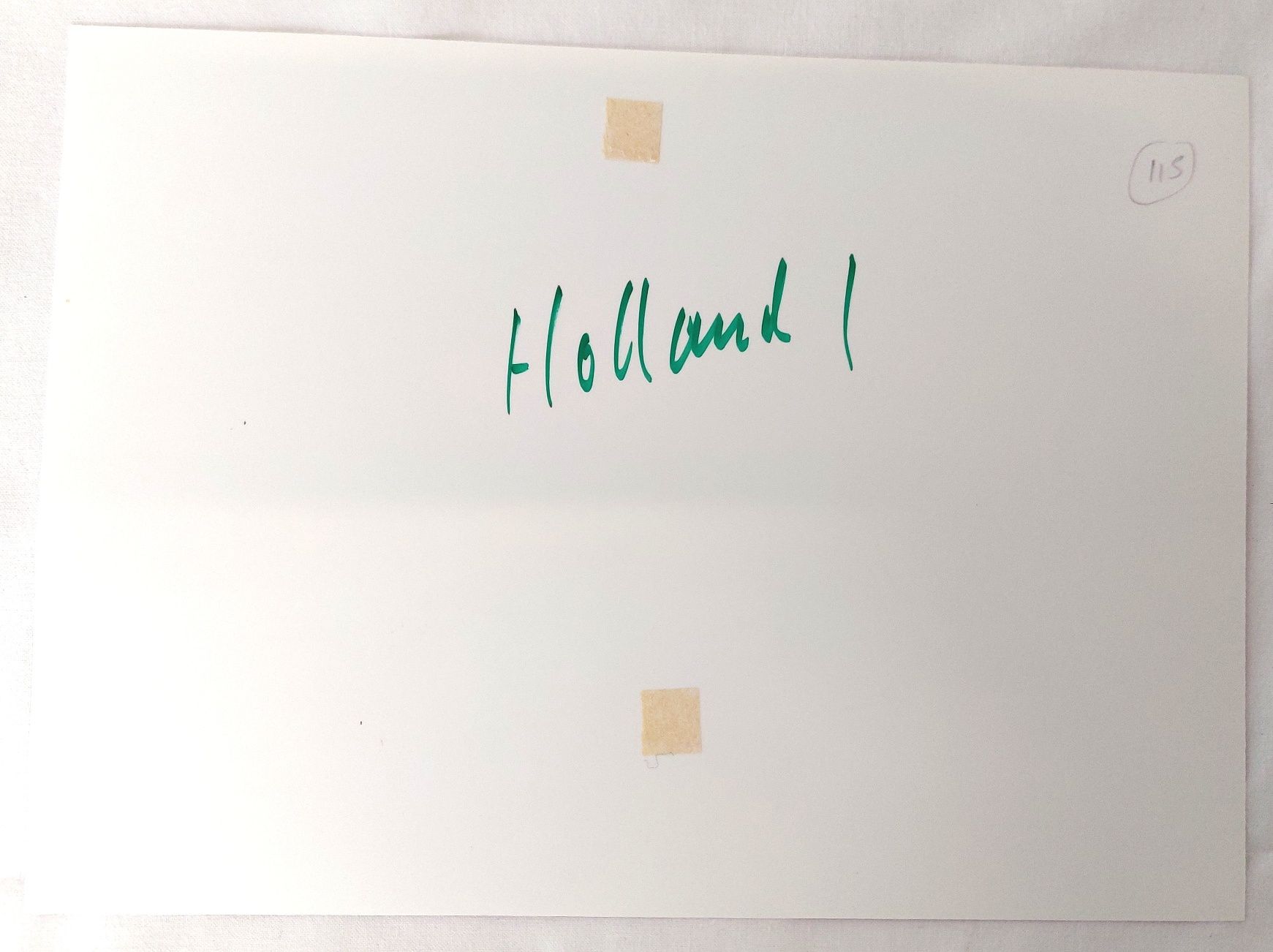
Three Original Photographs of HM Submarine Holland 1. These photographs originally formed part of the Lou Britton British Submarine Collection, which was acquired by the Royal Navy Submarine Museum, Gosport in 2007.
Approximate Dimensions:
Picture 1: 23.4cm x 16.8cm ("Holland 1" - handwritten on the reverse)
Picture 2: 20.3cm x 12.5cm ("2013 H.M.S. Submarine No.1" - printed on the front. "Holland 1, 4992, one of 3 negs 35" - handwritten on the reverse)
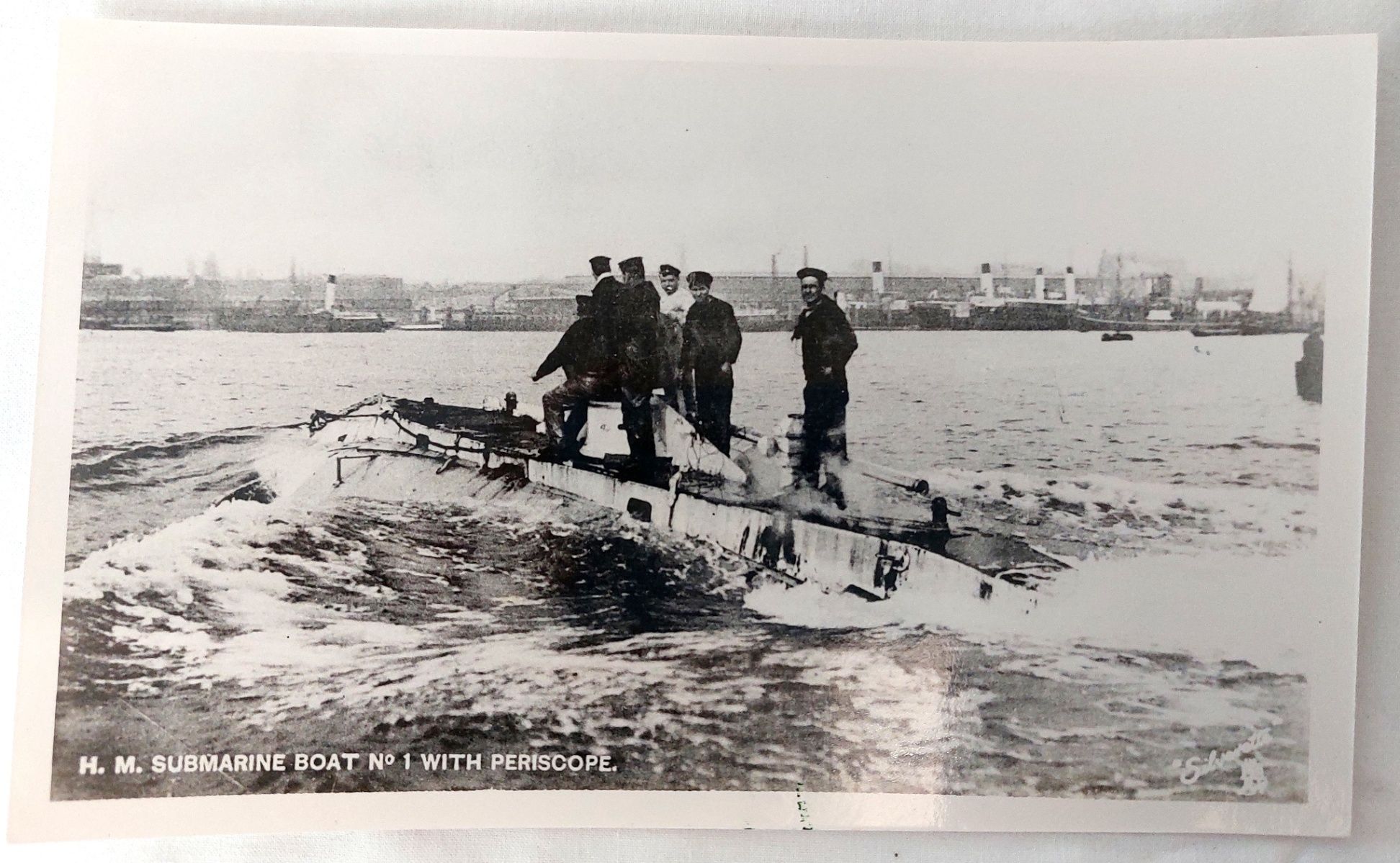
Picture 3: 20.3cm x 12.5cm ("H.M. Submarine Boat No 1 With Periscope" - printed on the front)
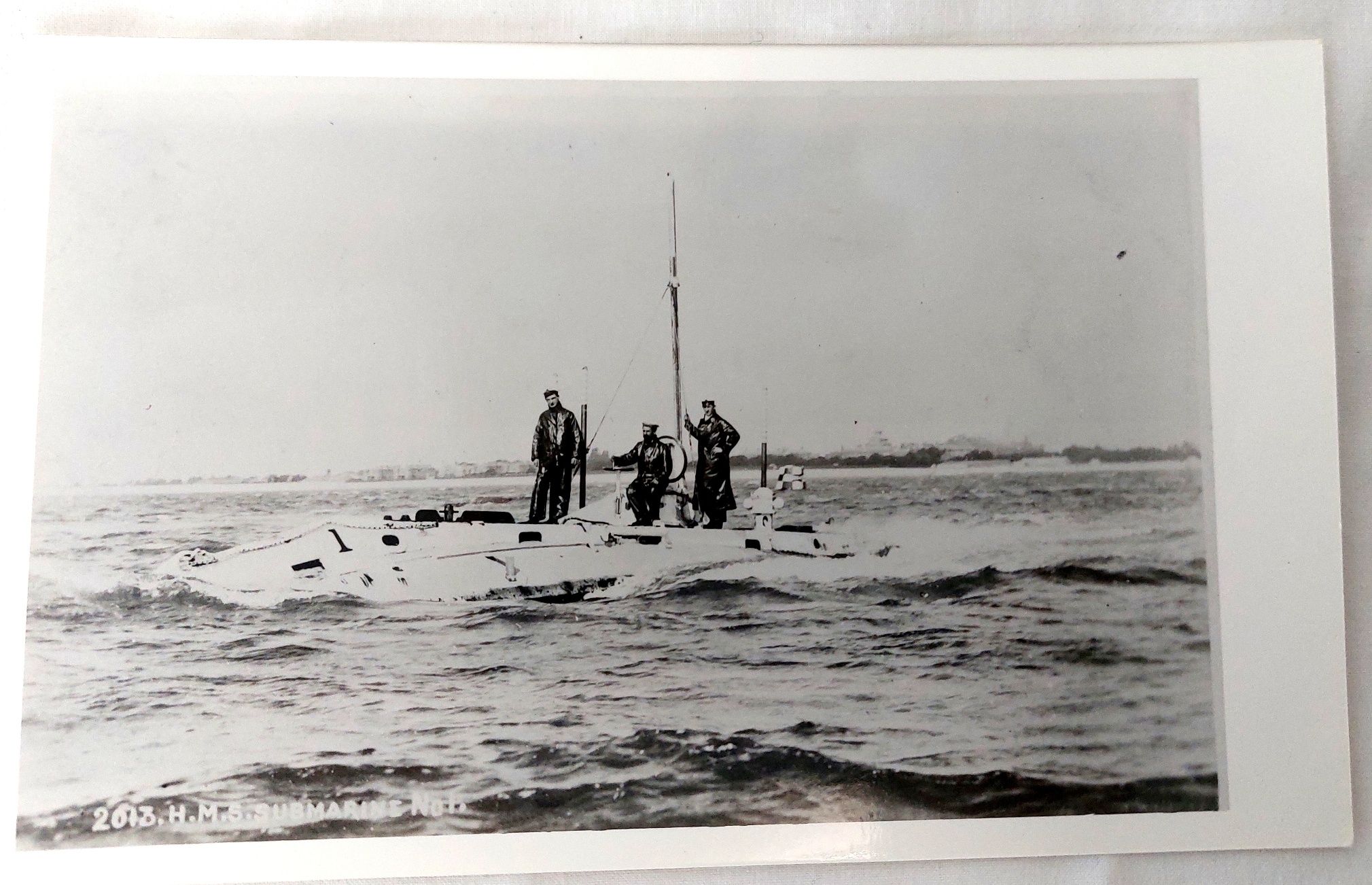
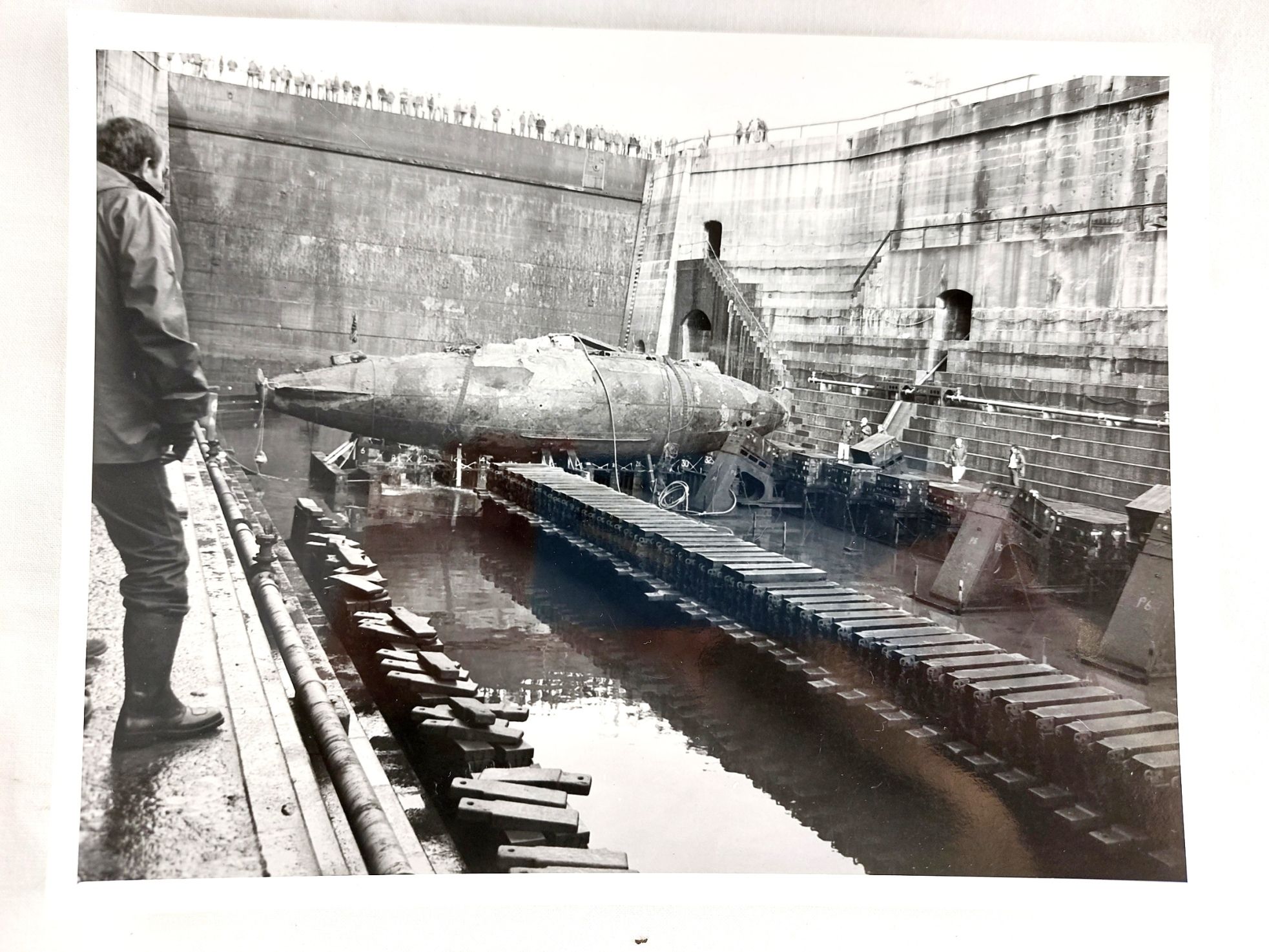
Picture 4: 21.6cm x 16.6. (Unclear stamp on the reverse: May be: "S. Coldman Colection Plymouth". Marked in pen "82881-59".) The Holland I, in a basin at Devonport dockyard after being salvaged, 8th December 1982.
Holland 1 (HM Submarine Torpedo Boat No. 1) was the Royal Navy’s first commissioned submarine and the lead vessel of the Holland-class. Launched in 1901, she was decommissioned in 1913 and sank in rough weather while being towed for scrapping. Raised in 1982, she is now displayed at the Royal Navy Submarine Museum, Gosport. Remarkably, her recovered battery bank was still functional after cleaning and recharging.
History
Ordered in 1901 from John Philip Holland and built in Barrow-in-Furness, Holland 1 was assembled in secrecy, with components labelled as “pontoon no. 1.” Launched on 2 October 1901, she completed her first dive in March 1902 and began sea trials in April. By September, she arrived in Portsmouth with her sister submarines and tender, HMS Hazard, forming the Royal Navy’s first submarine flotilla under Captain Reginald Bacon. On 3 March 1903, an explosion aboard Holland 1 injured four crew members. The following year, she joined the fleet in response to the Dogger Bank incident but was recalled before engaging. Declared obsolete by 1913, she was sold for £410 with all fittings intact, except for a disabled torpedo tube.
Loss and Recovery
While under tow to a scrapyard, severe weather caused Holland 1 to sink near Eddystone Lighthouse. The crew, anticipating the loss, released the tow rope, preventing further damage. Historian Michael Pearn located the wreck in 1981, and it was raised in 1982. After conservation, the submarine went on display in 1983. When initial preservation efforts proved insufficient, she was immersed in a sodium carbonate solution from 1995 to 1999 to remove corrosive elements. In 2001, a climate-controlled exhibit was opened to mark her centenary, and the Royal Mail featured her on a stamp.
Battery Discovery
The submarine’s original lead-acid batteries, recovered with the wreck, were tested by Chloride Industrial Batteries Ltd. After cleaning and recharging, they were found to be in working order, with some still preserved by Enersys in Newport, South Wales.
*Condition*
Excellent used condition. Please see photographs as part of the condition report.