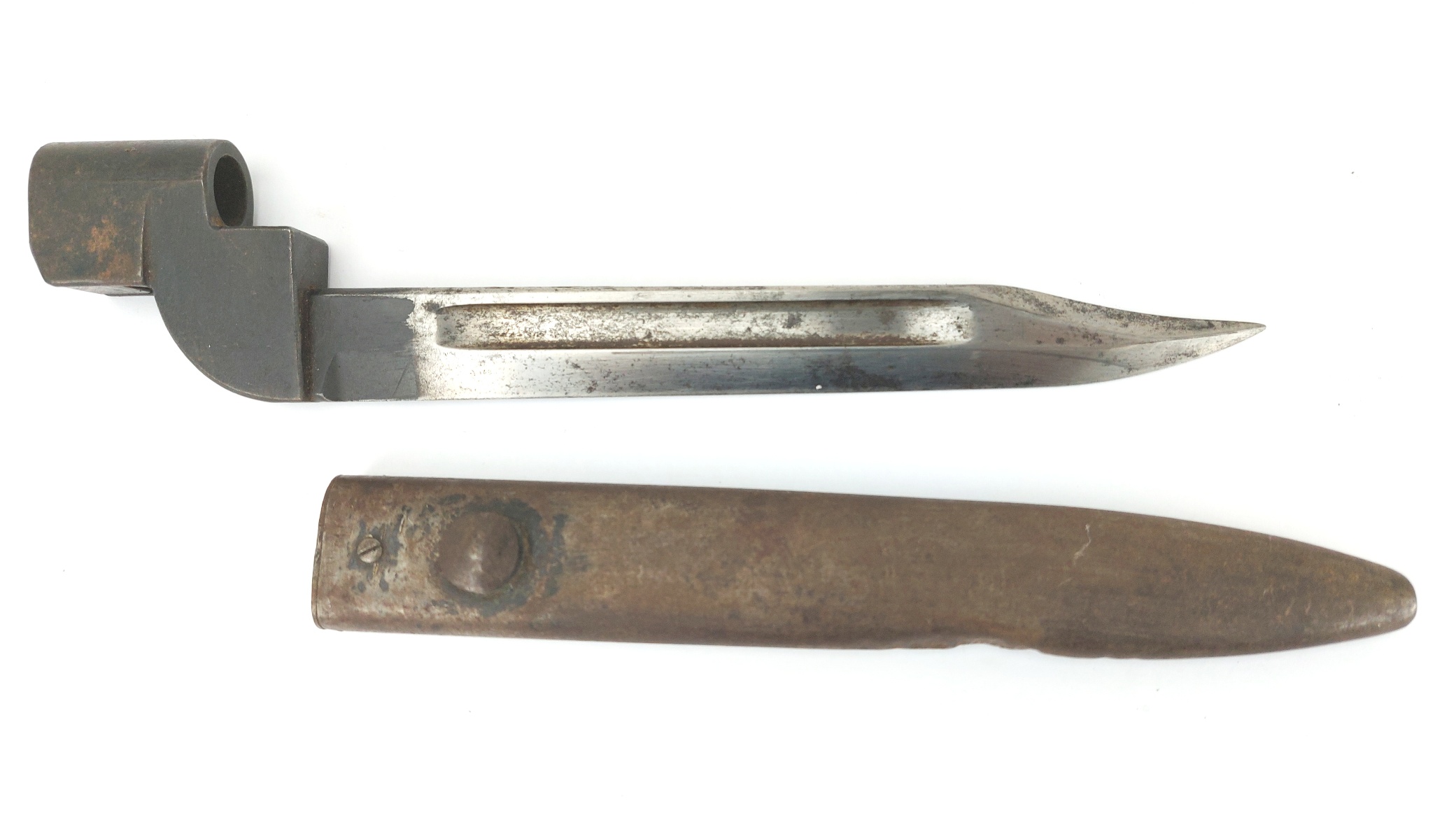
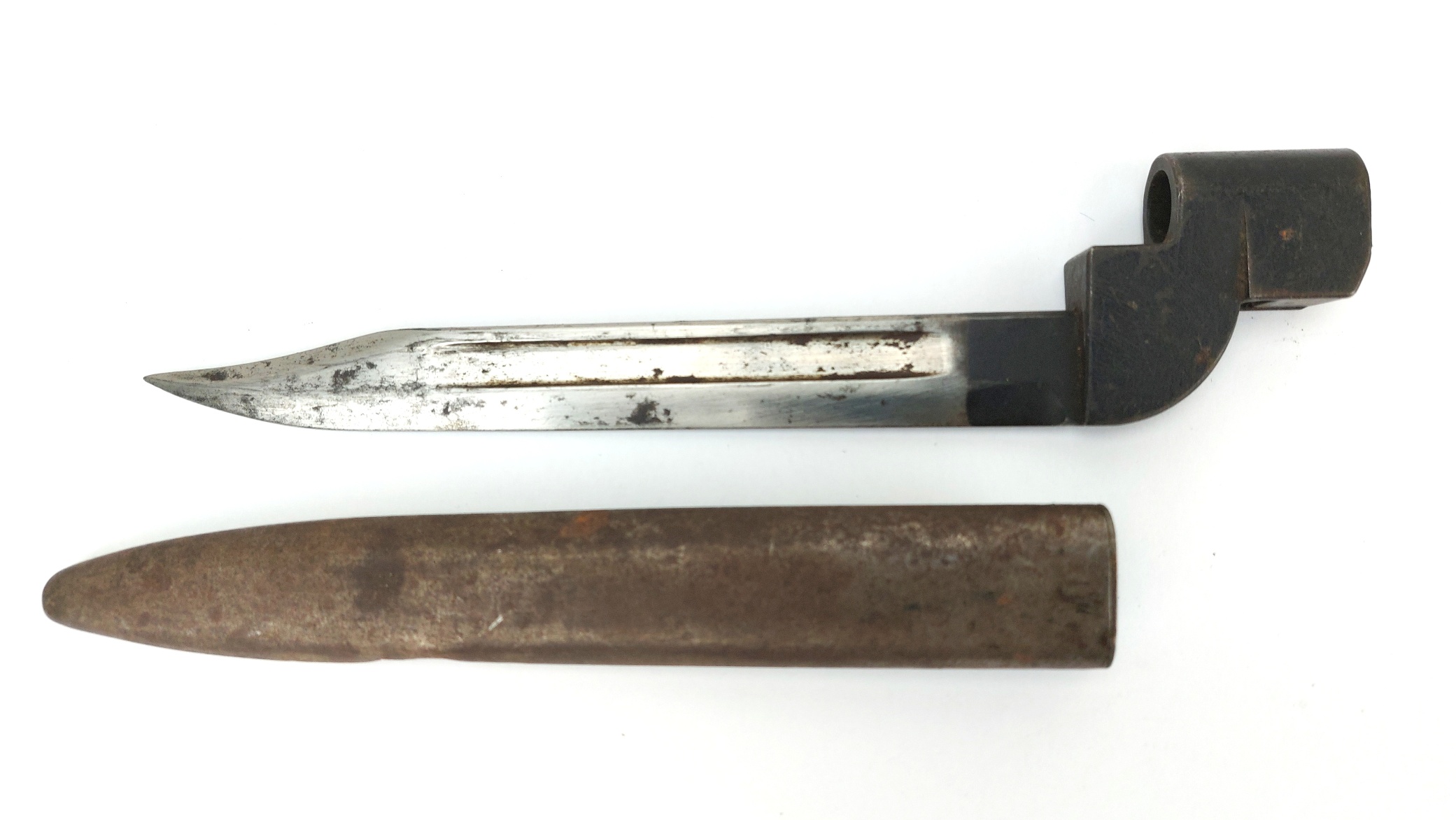
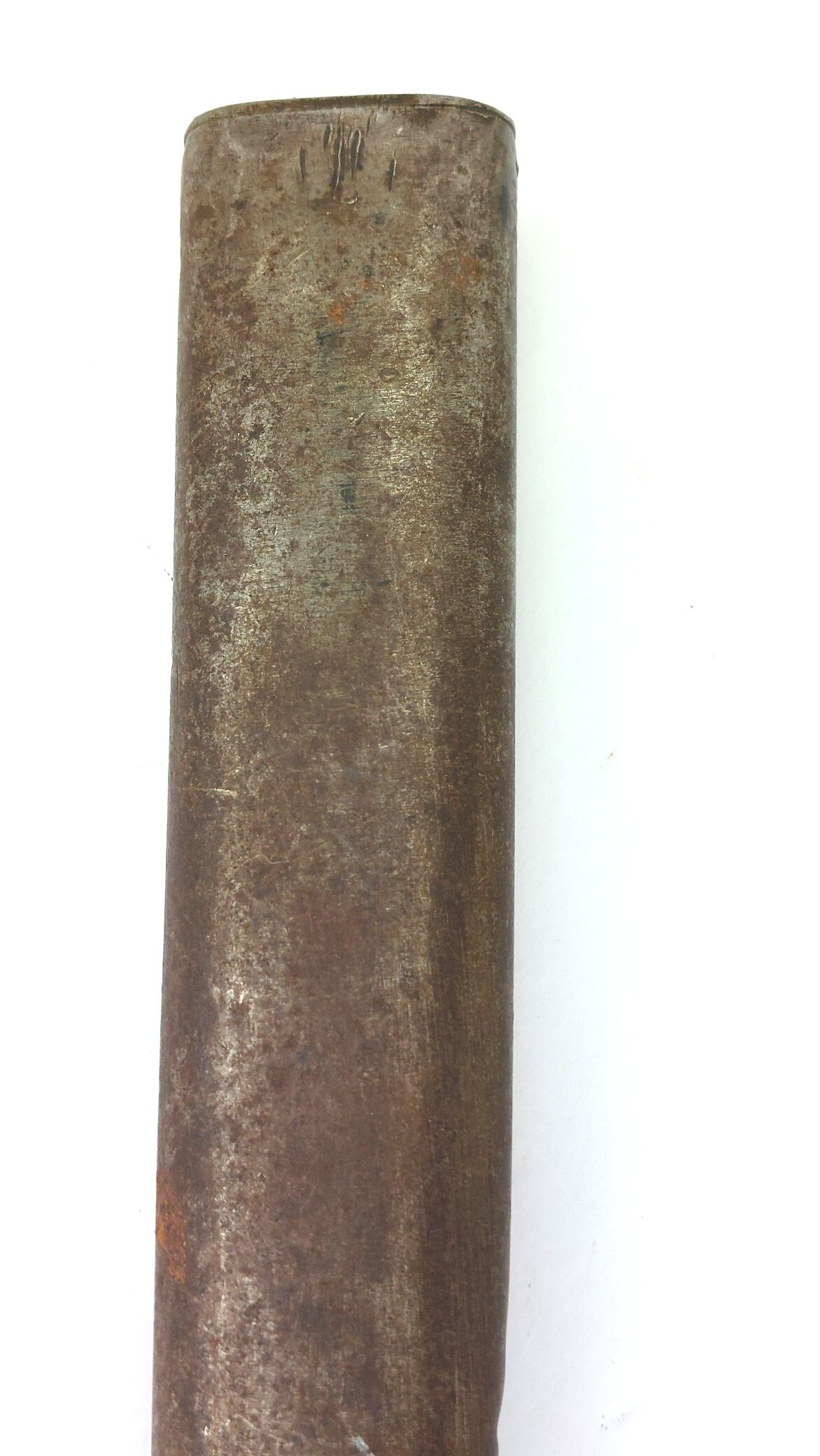
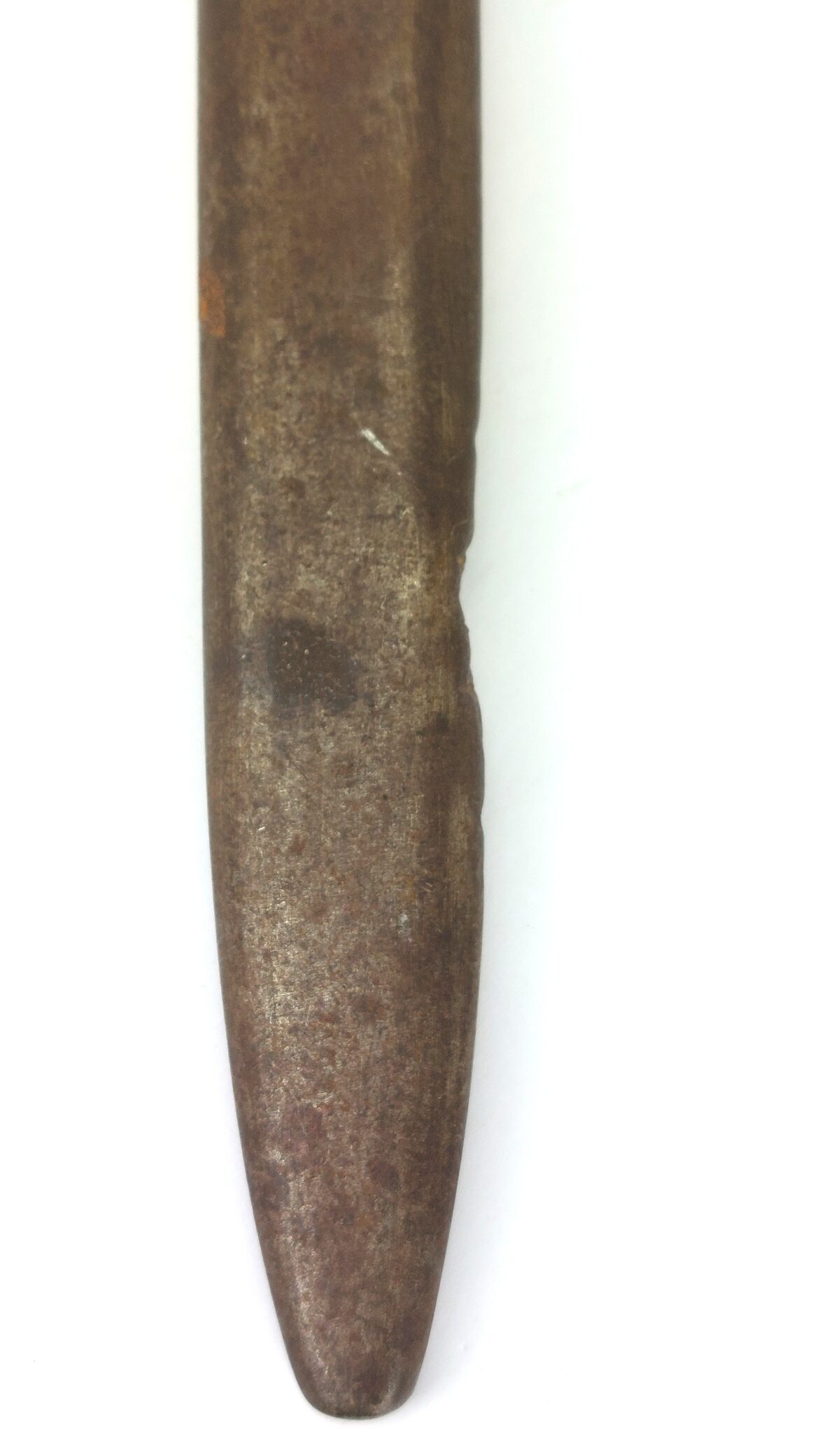
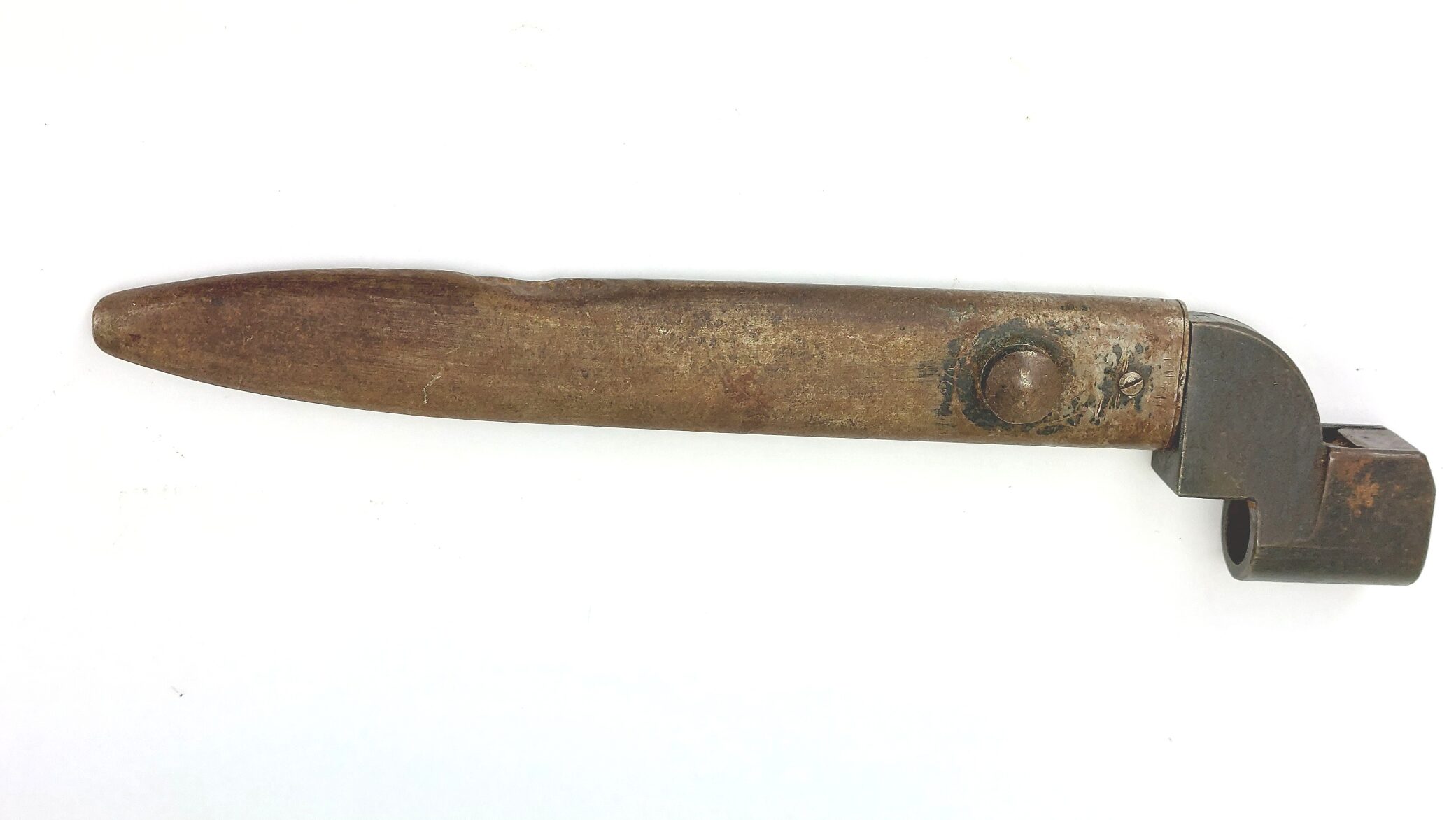
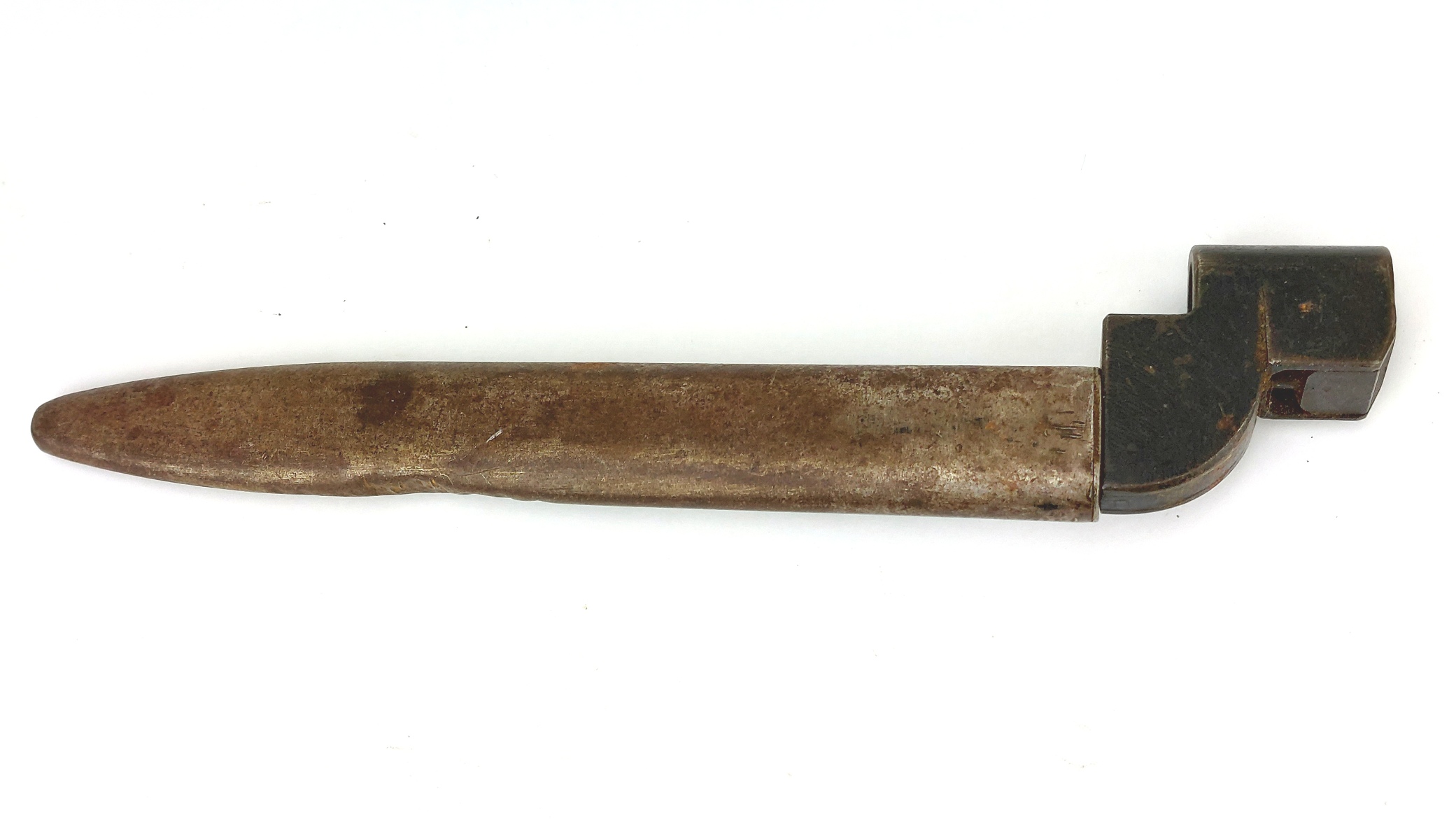
*British, Post-War (c.1947–1949), No.9 Mk.I Lee-Enfield Socket Bayonet & Scabbard, Made by ROF Poole*
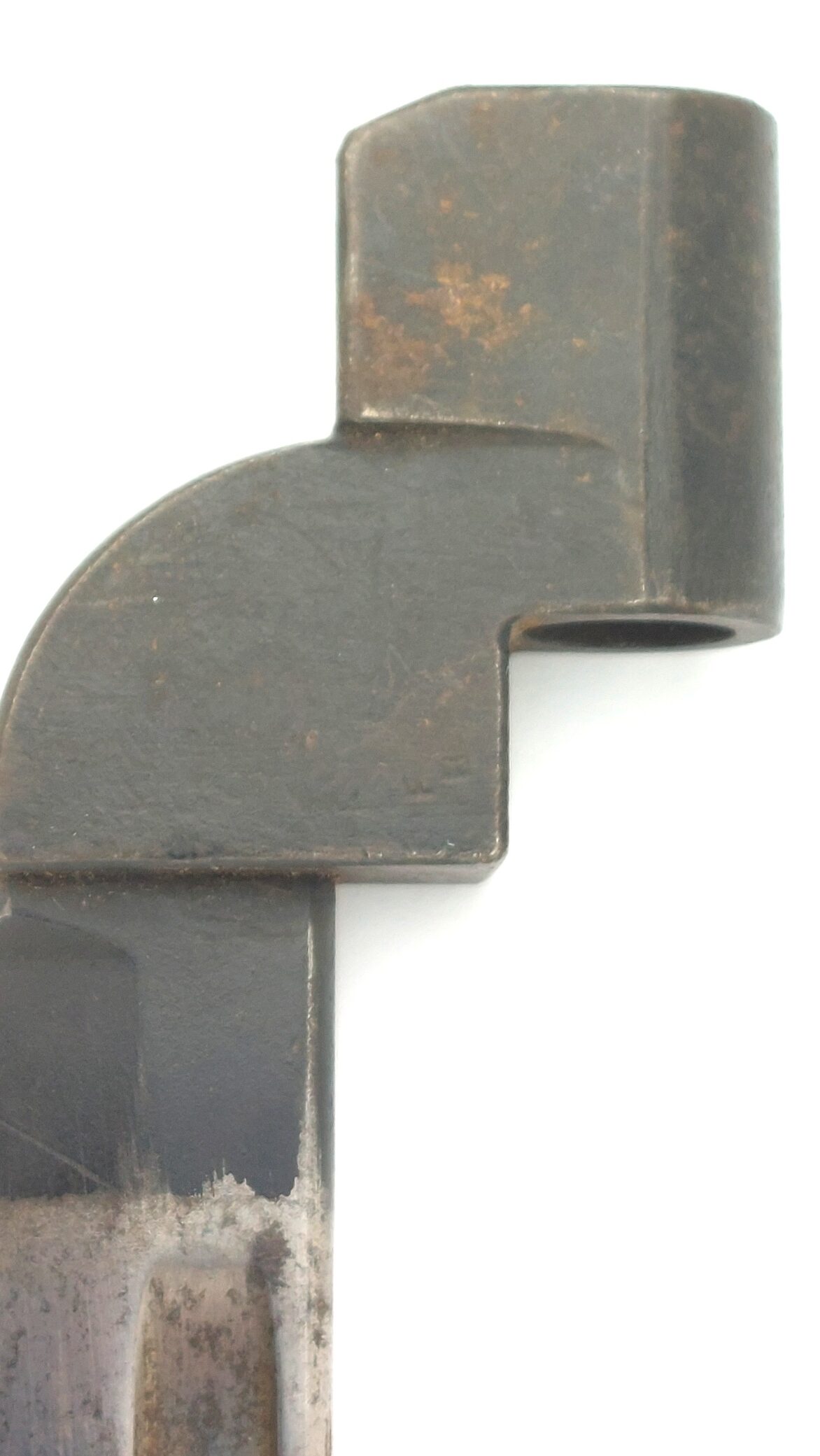
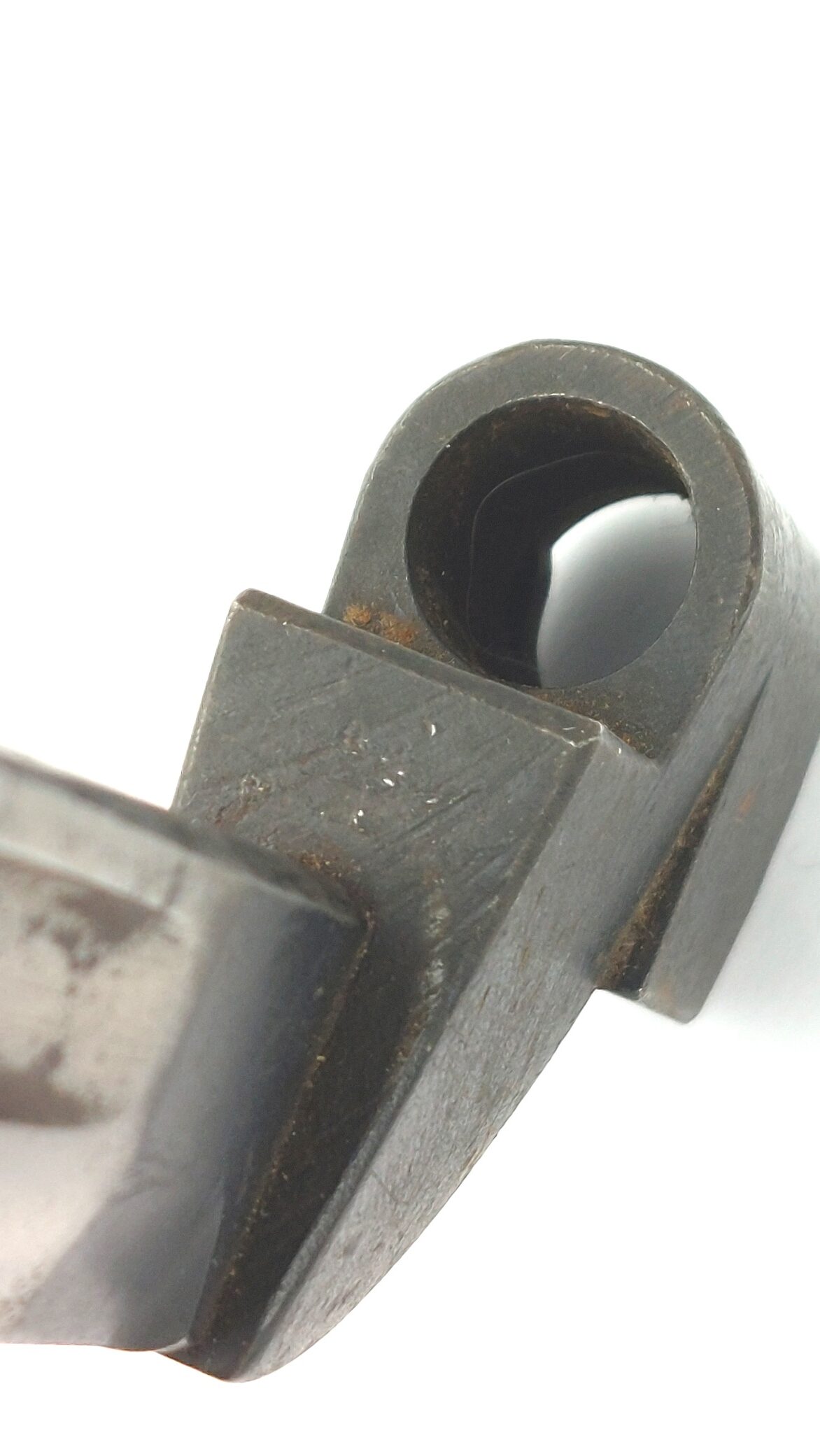
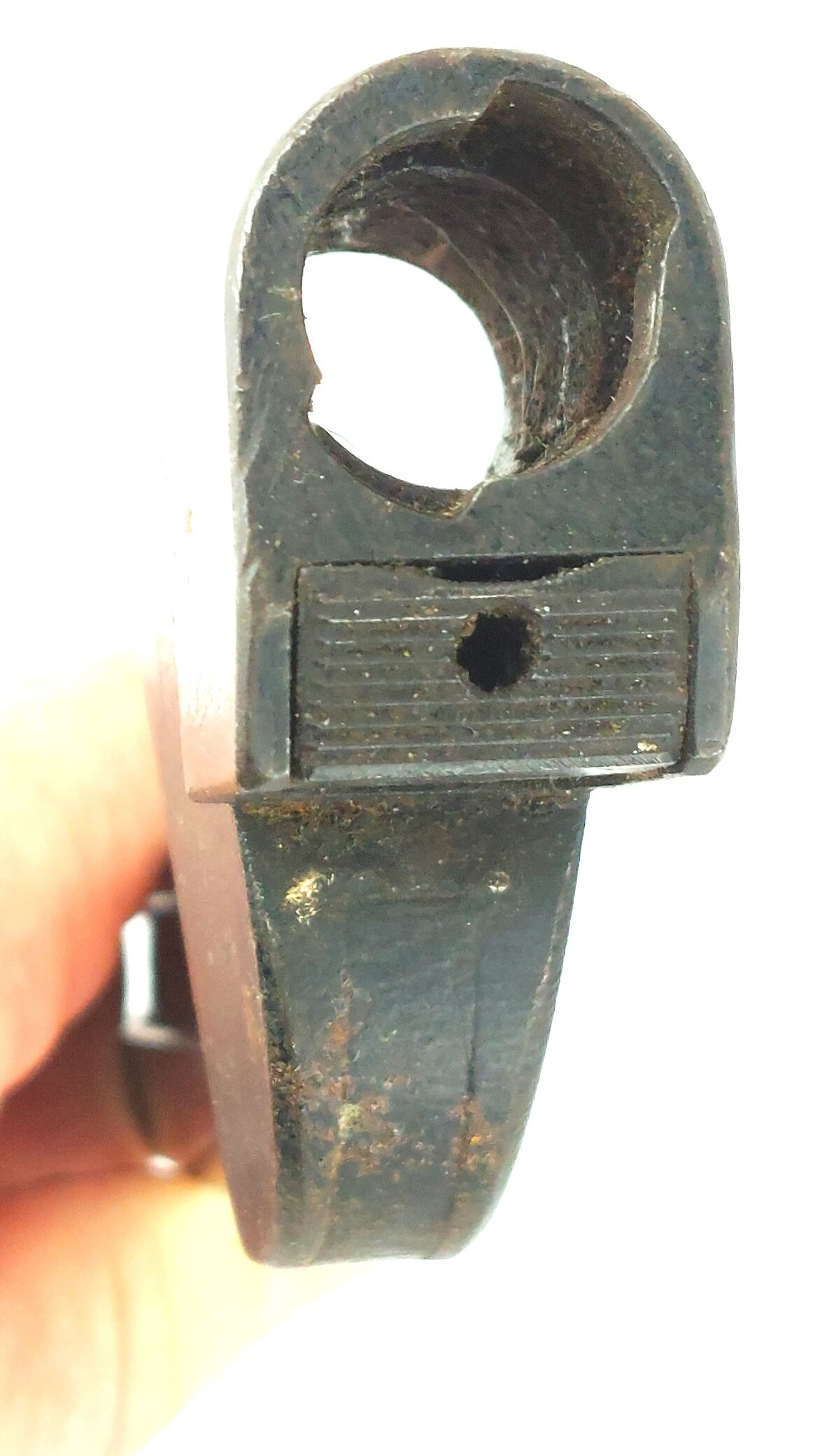
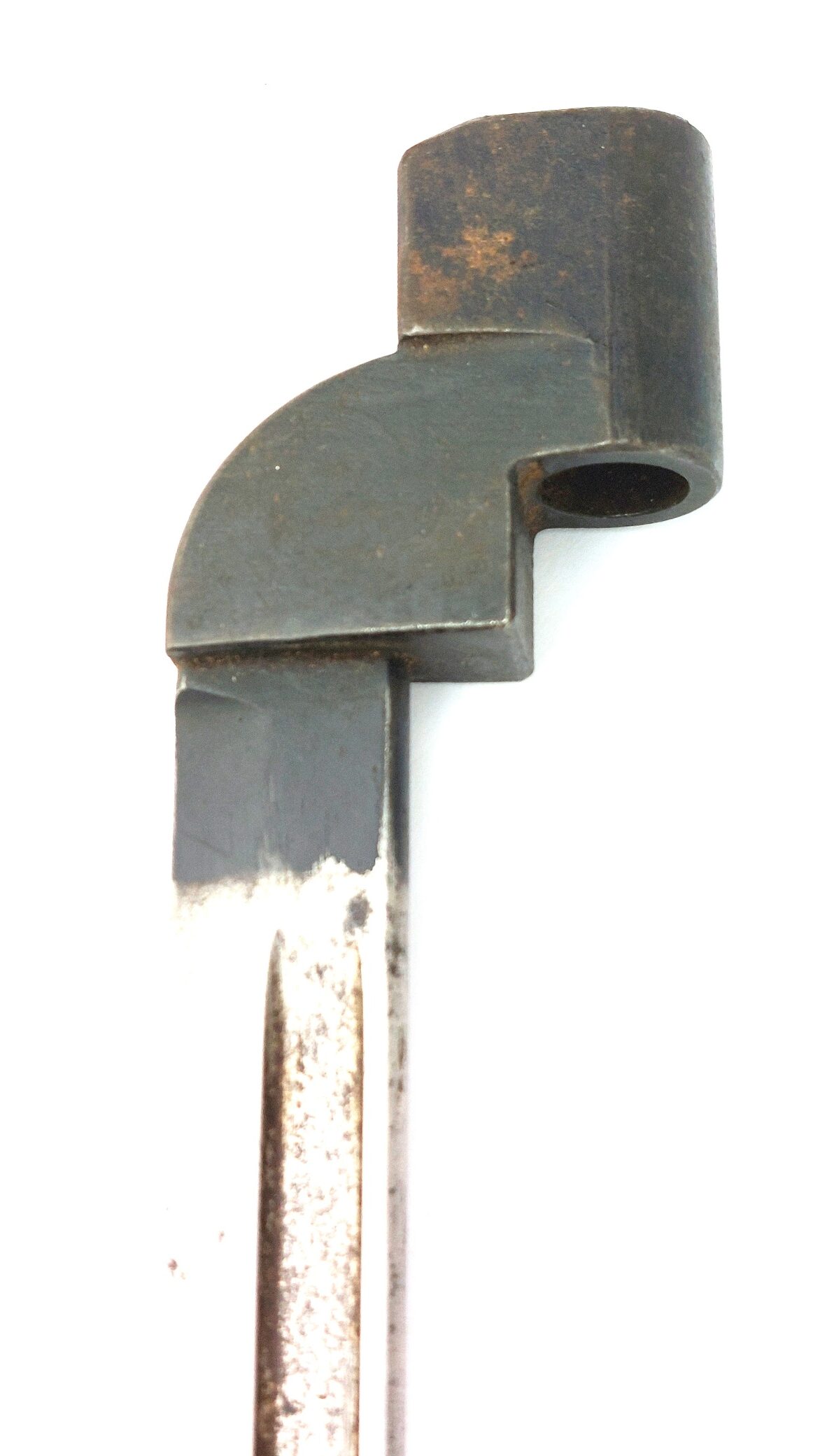
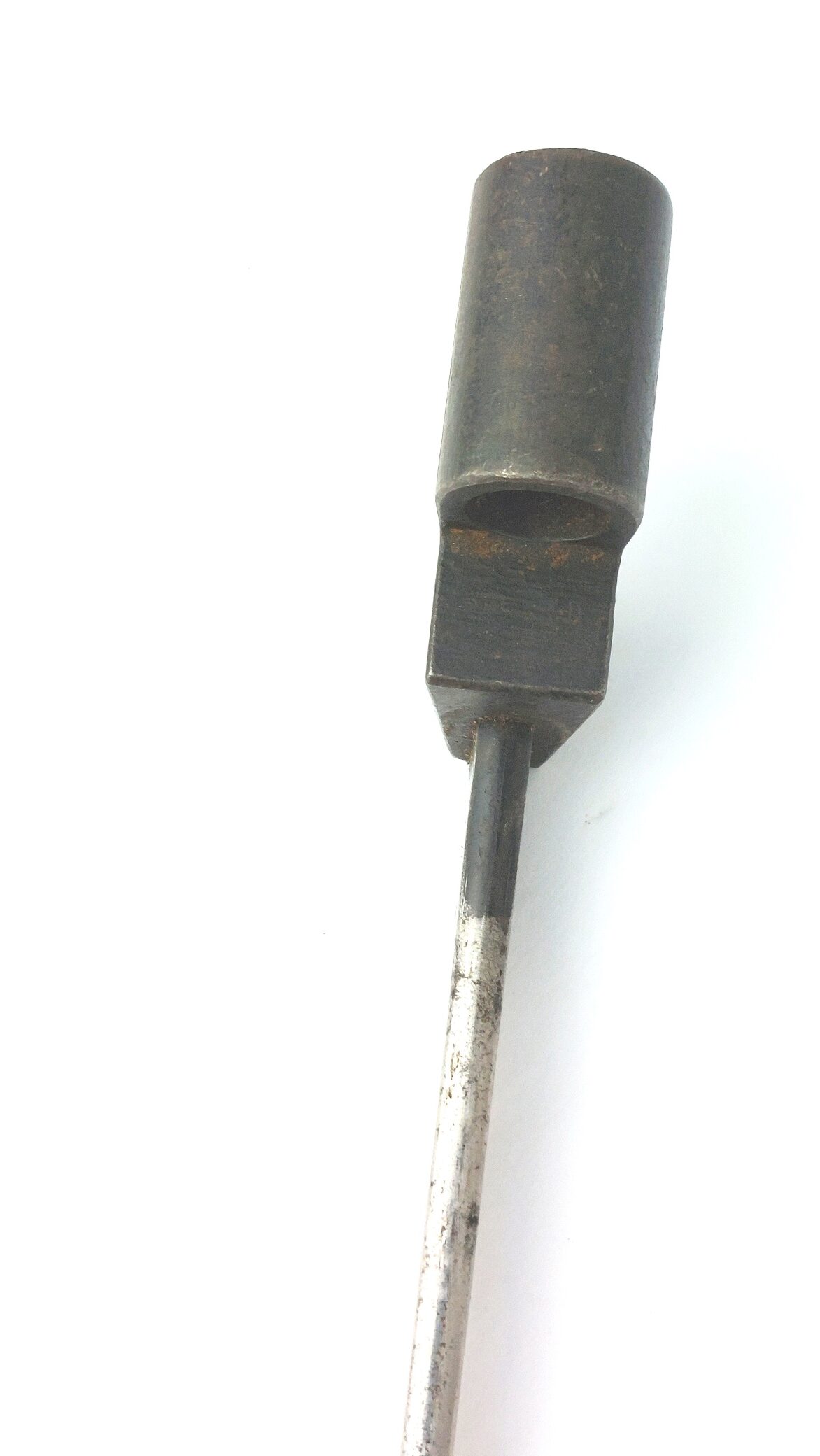
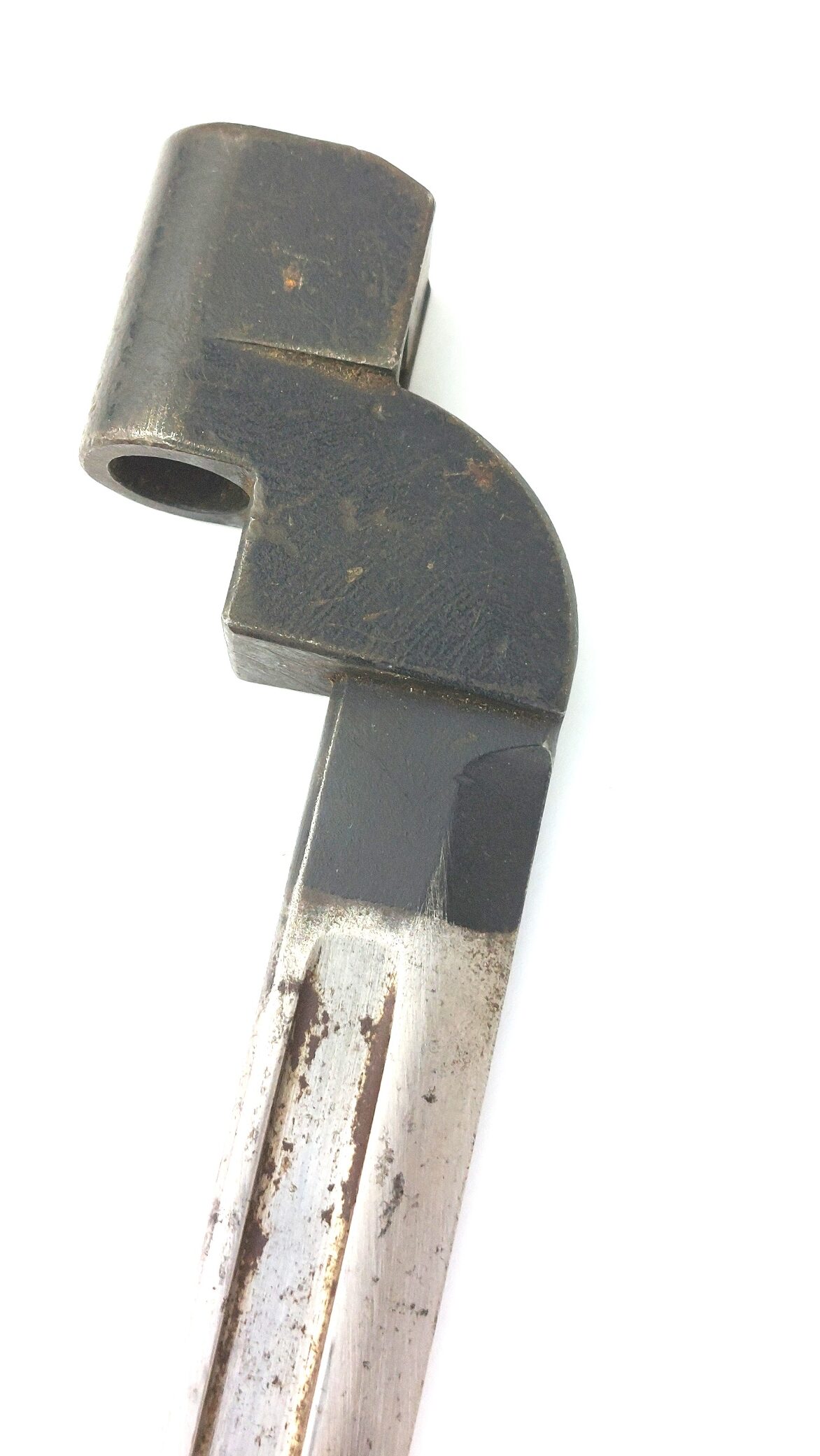
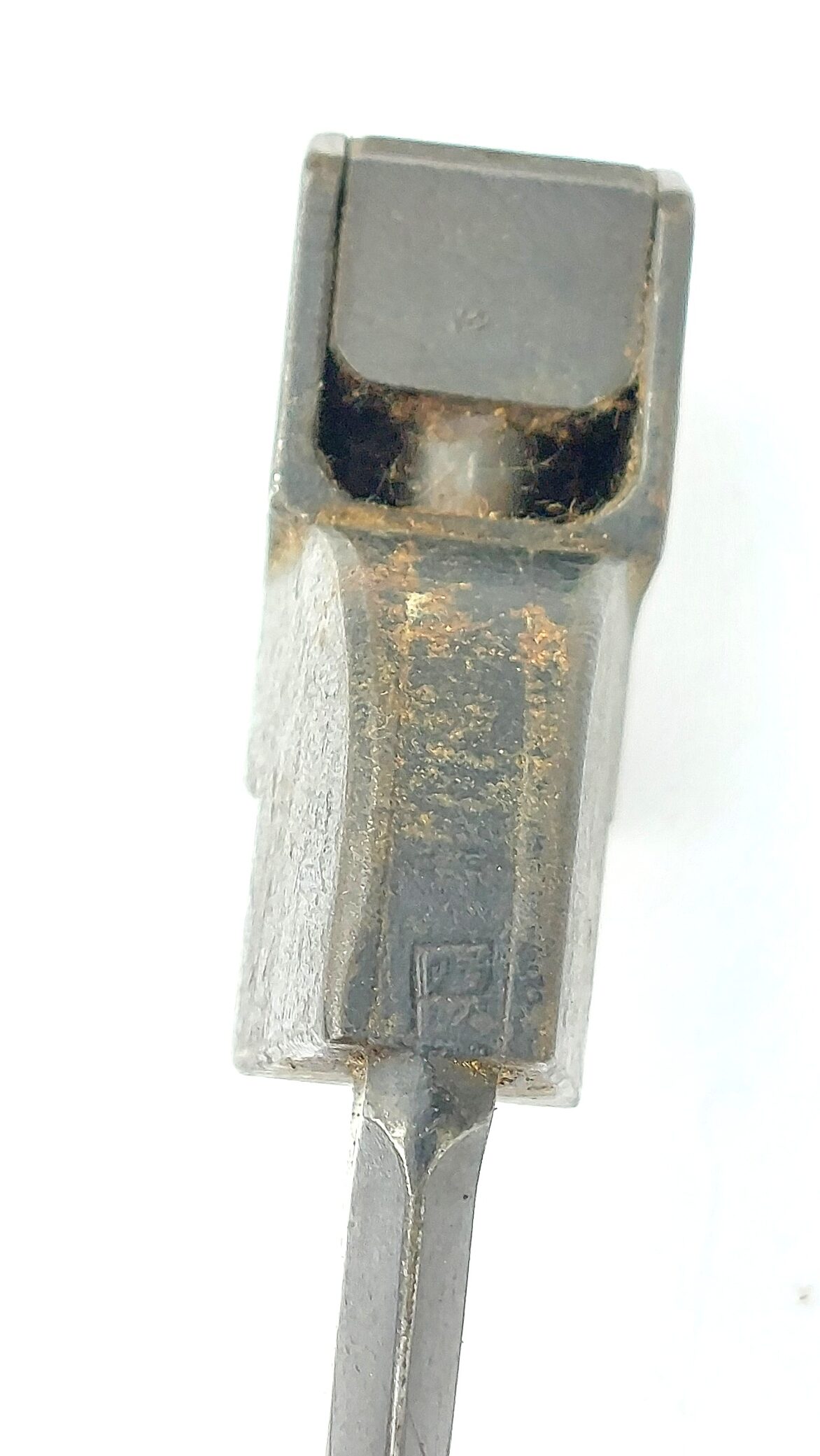
A British No.9 Mk.I socket bayonet with original steel scabbard, designed for use with the .303 calibre Lee-Enfield No.4 rifle. The bayonet features a robust socket-mounted clip-point blade derived directly from the No.5 Mk.I “Jungle Carbine” bayonet, combining the proven blade profile with a simplified socket mounting in place of a conventional hilt.
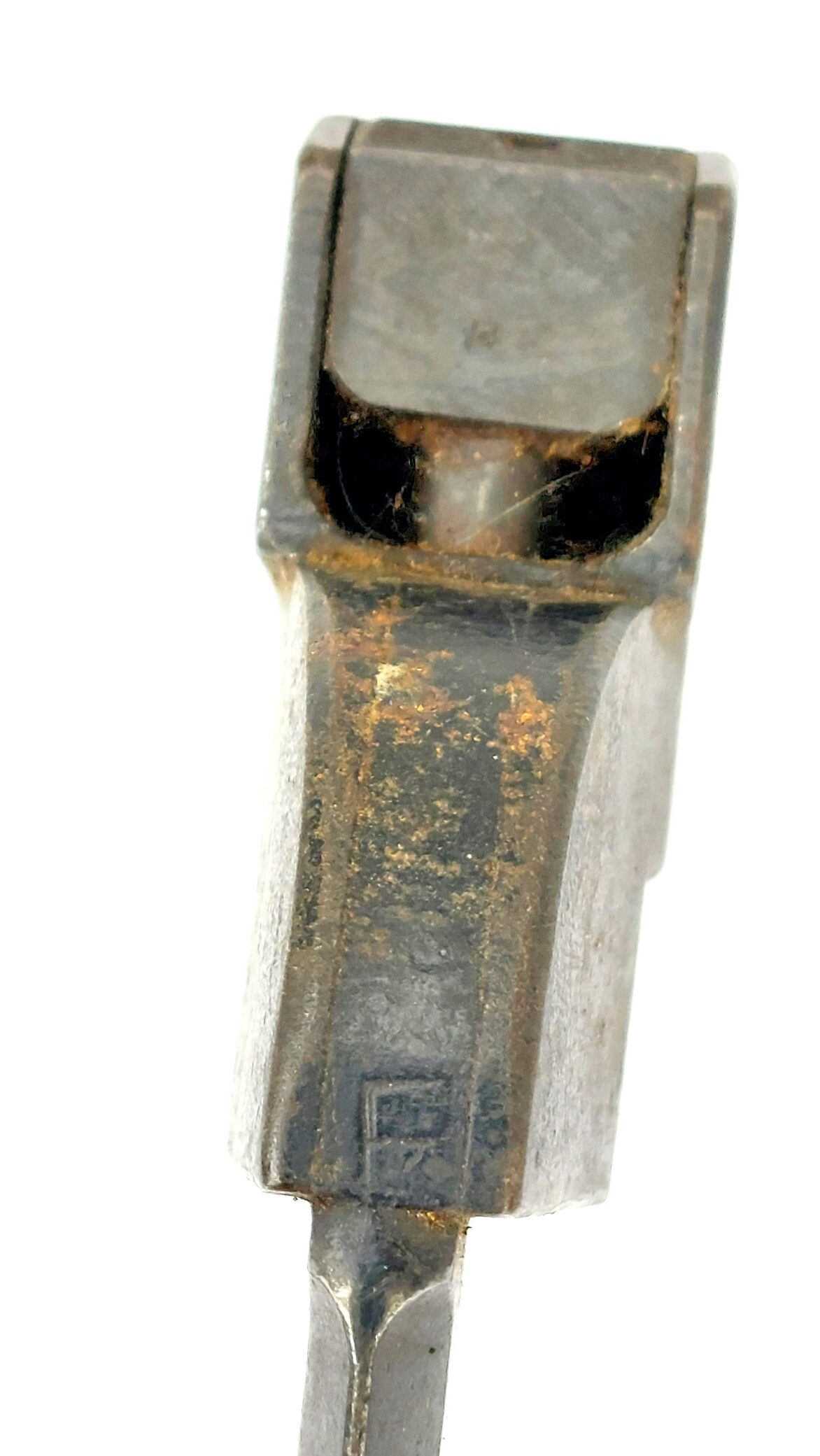
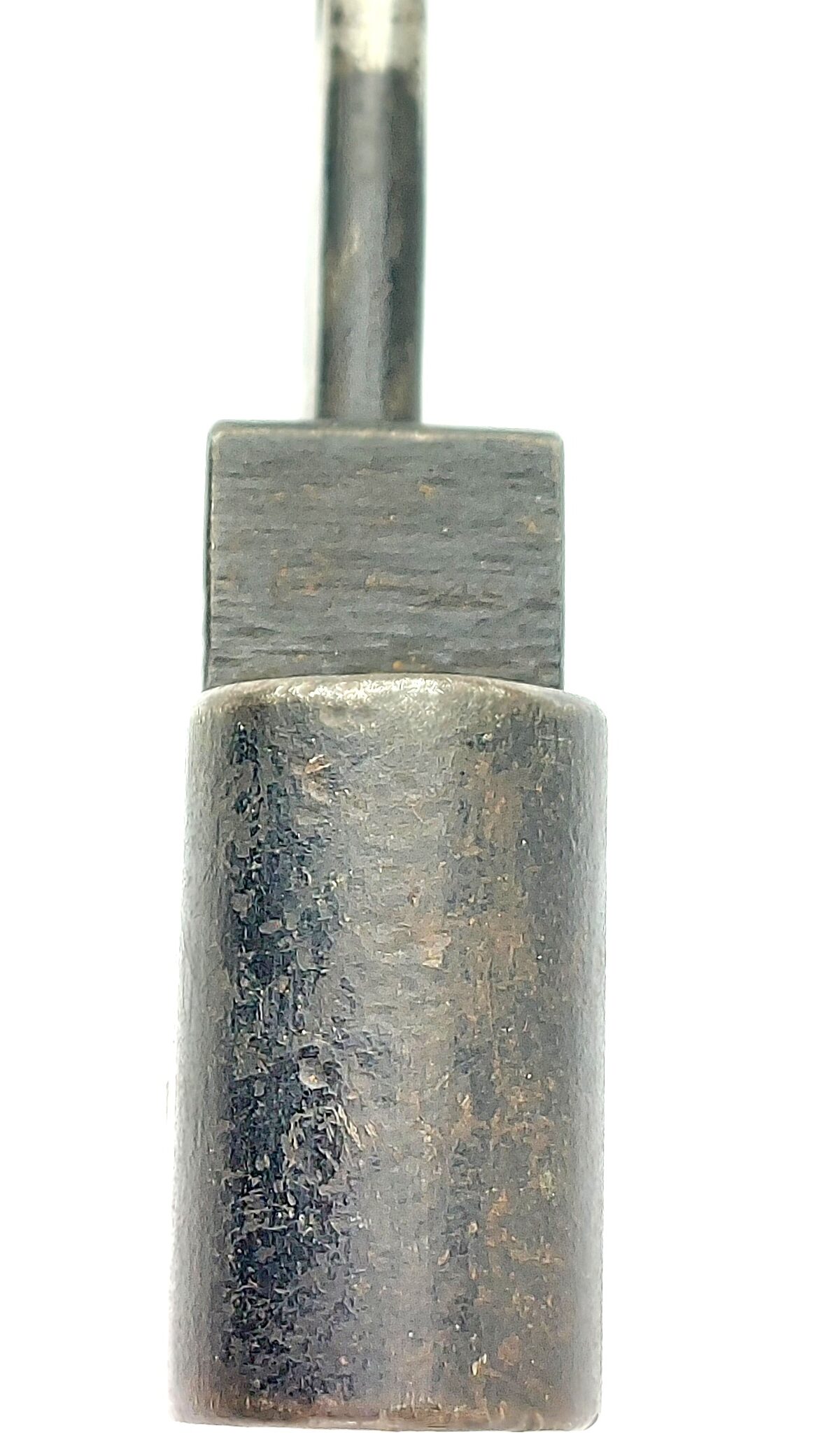
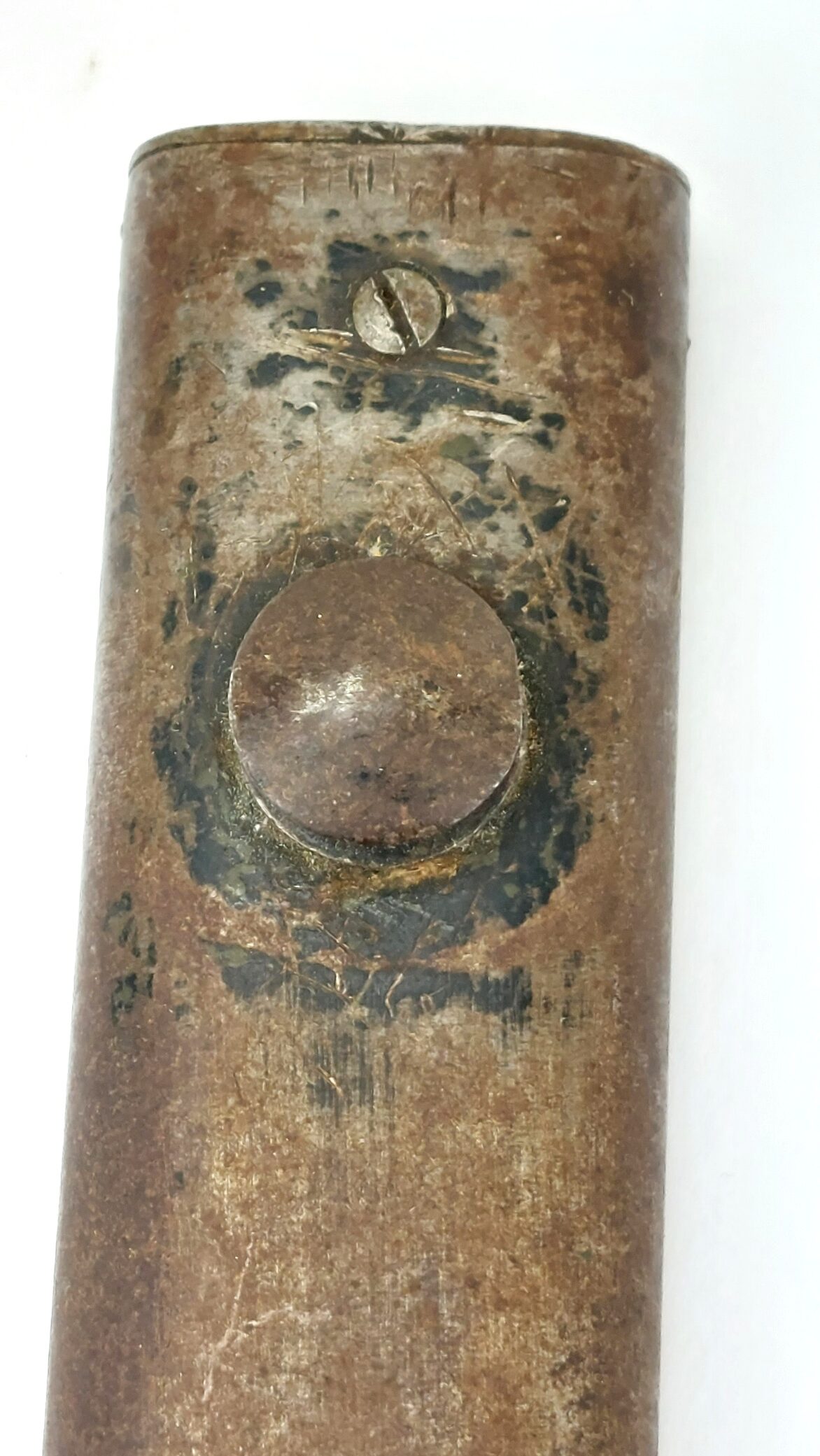
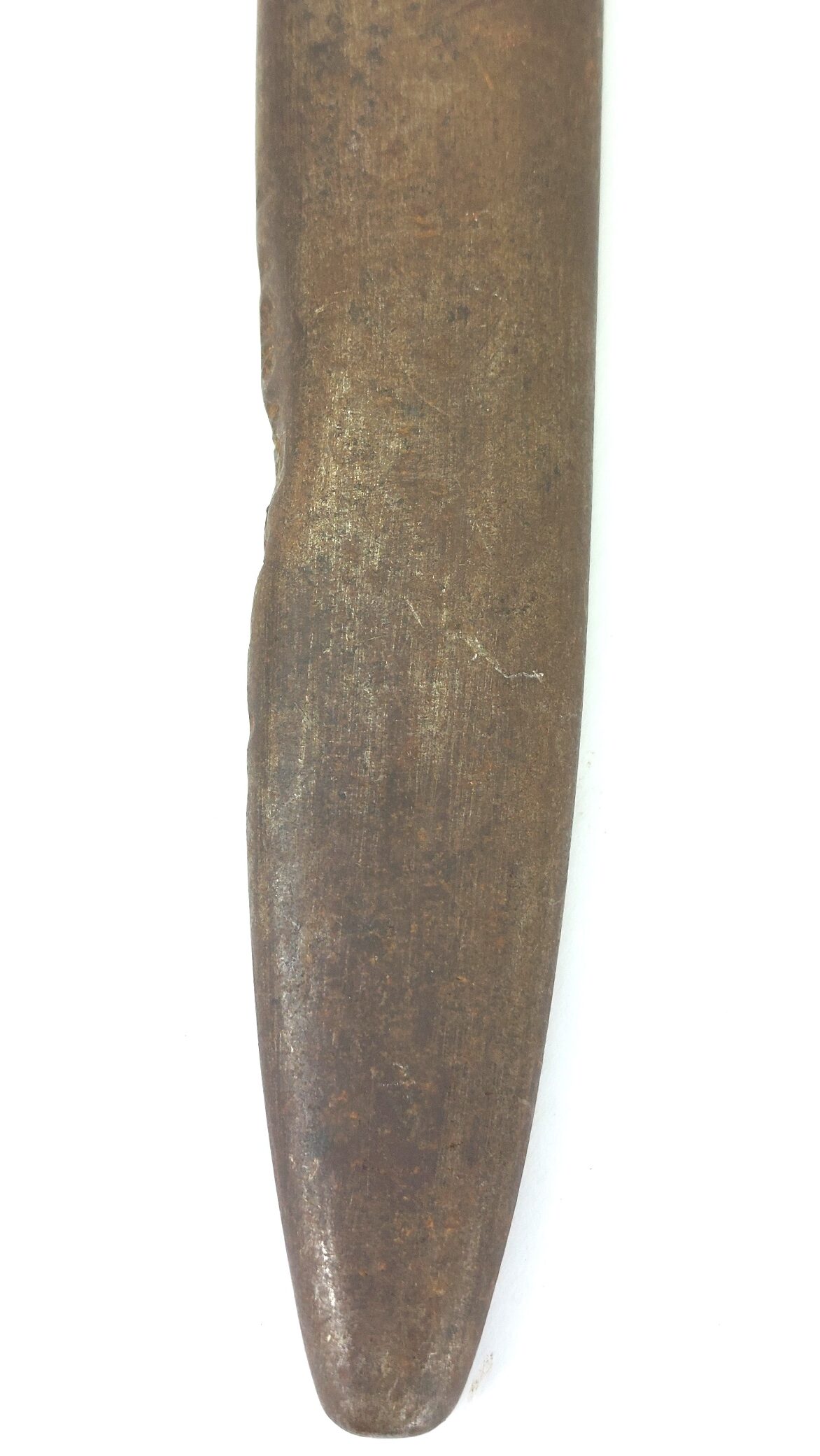
The blade measures 20 cm, with an overall length of 25.5 cm. The socket is of forged steel construction with mortise slot and locking recess, and the blade retains clear fuller definition with honest service wear. The bayonet is paired with the correct No.5 pattern steel scabbard, which was officially retained for use with the No.9 Mk.I.
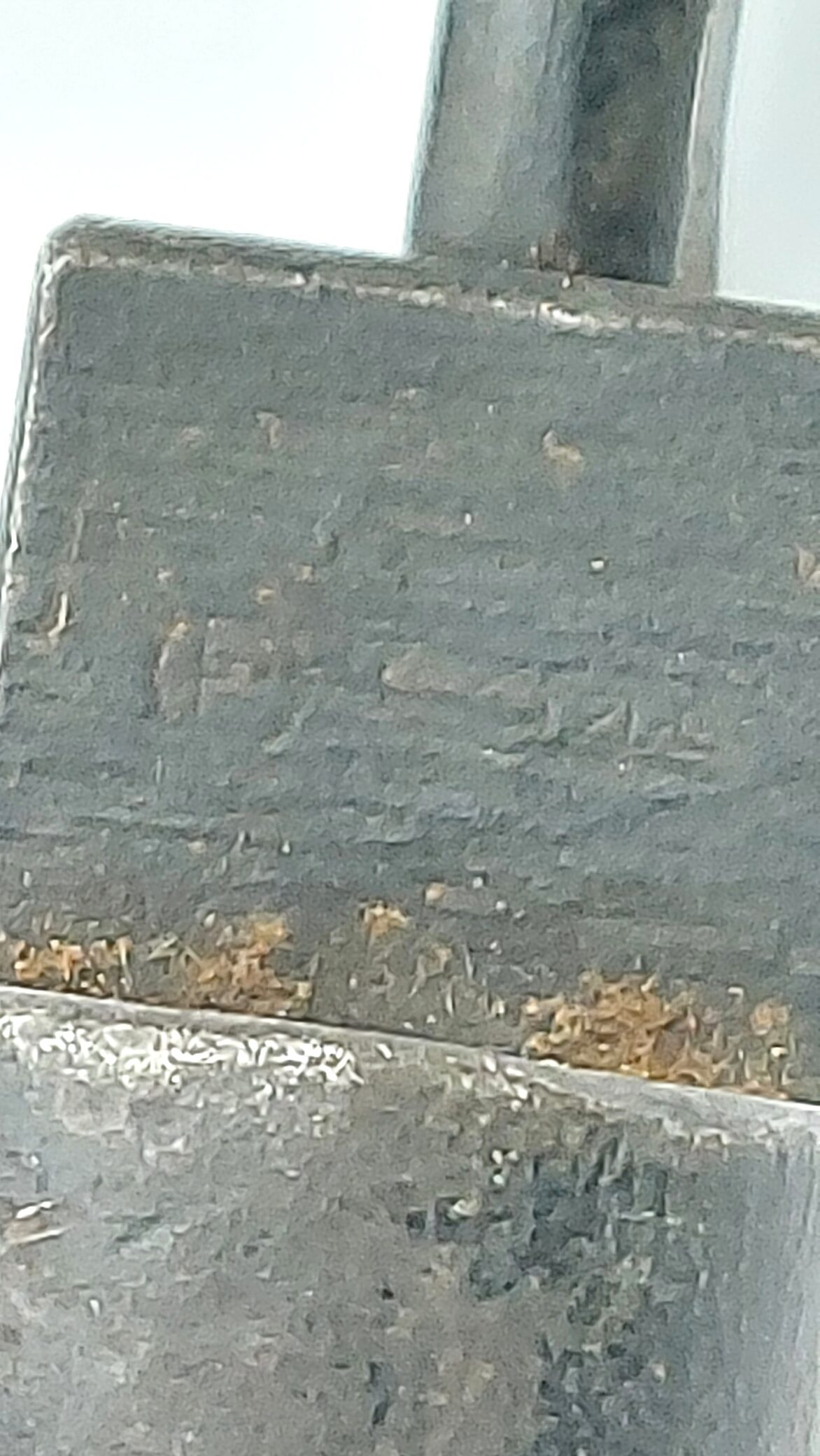
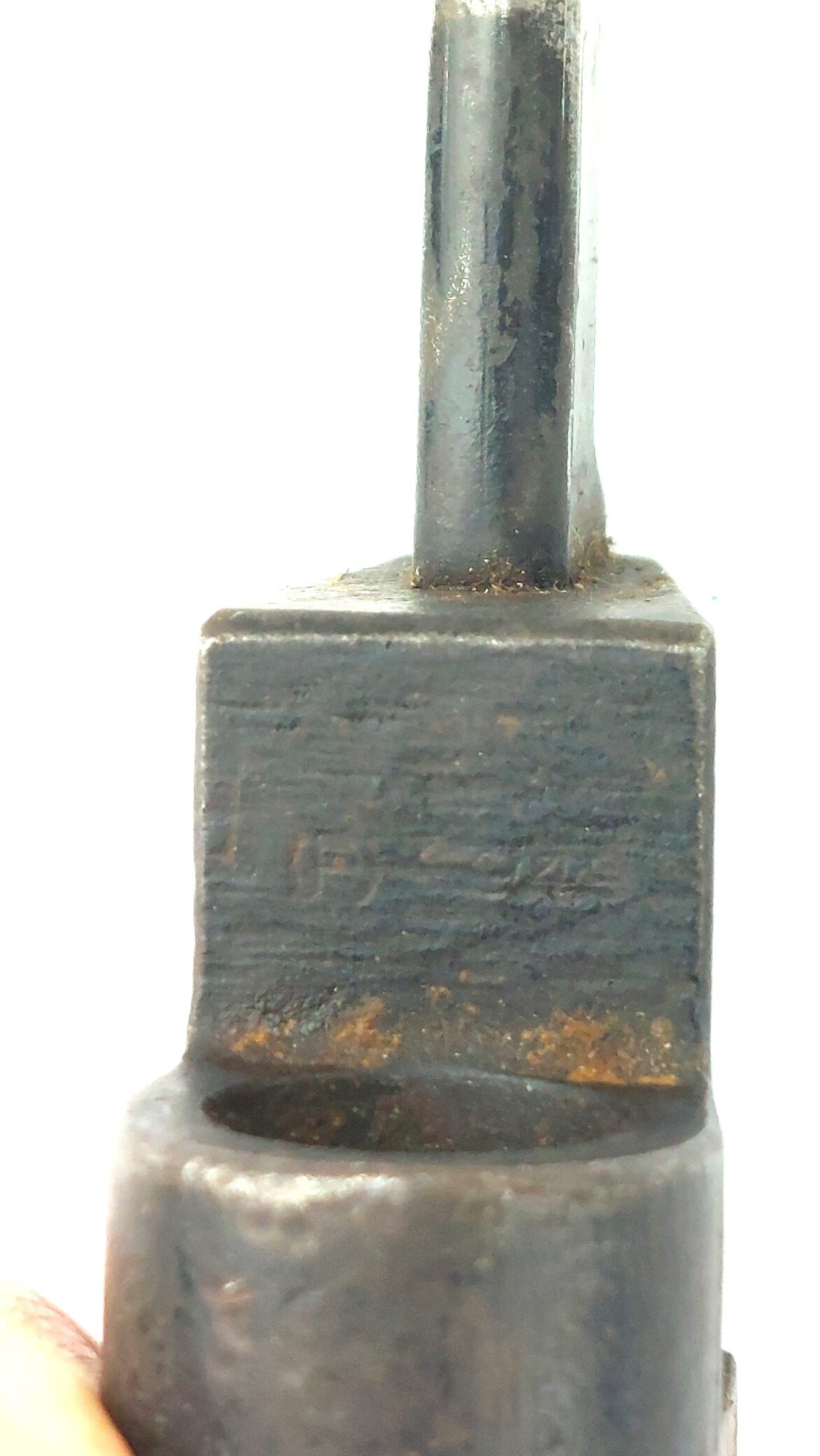
Maker’s mark is a clear circled P for Royal Ordnance Factory, Poole but the date is indistinct.
Historical Note:
The No. 9 Mk. I bayonet represents the final post-war British effort to replace the unpopular No. 4 spike bayonet, which, while effective, was widely criticised for its lack of cutting capability. An earlier attempt, the mechanically complex No. 7 Mk. I/L bayonet, was ultimately rejected for general issue with the .303 calibre Lee-Enfield No. 4 rifle, leaving a continued requirement for a simpler alternative.
The solution was the deliberately utilitarian No. 9 Mk. I, combining a robust forged socket with the proven clip-point blade of the No. 5 Mk. I “Jungle Carbine” bayonet. This approach allowed rapid, economical production while retaining a practical fighting blade. As the blade was directly derived from the No. 5 Mk. I, the existing No. 5 pattern scabbard was retained.
Production began in 1947, notably before formal approval, reflecting the urgency to replace the spike bayonet. Approximately 200,000 examples were produced between 1947 and 1949, primarily at the Royal Ordnance Factory, Poole, whose bayonets are typically marked with a “P” within a circle and a date, often weakly struck. Smaller quantities were produced by RSAF Enfield and several private firms under dispersal contracts, including G. Buggins & Co. Ltd., Francis & Barnett Ltd., and Byfords Ltd. Indigenous versions were also later manufactured in Pakistan and South Africa.
*Condition*
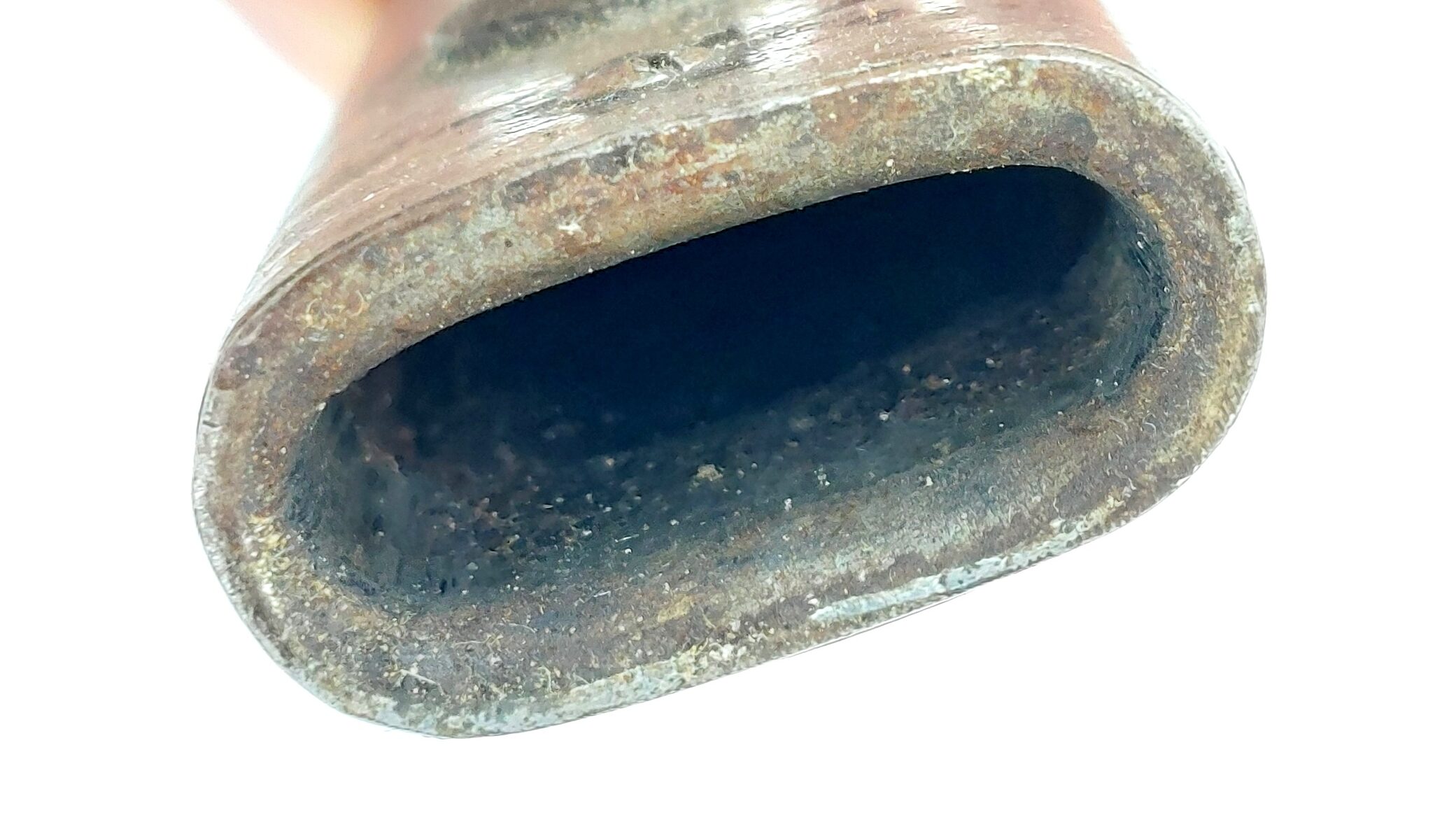
The bayonet is in good service-used condition, showing honest wear consistent with post-war military storage and issue. The blade retains its correct profile with clear fuller definition and scattered surface oxidation; no evidence of re-shaping or abuse is noted. The socket is structurally sound with intact mortise slot and locking surfaces, showing expected patina and light corrosion. Markings are present but indistinct, as commonly encountered on Poole-manufactured examples. The accompanying No. 5 pattern scabbard is correct and original, displaying age-related wear, surface corrosion, and handling marks but remaining complete and solid. Please see photographs as part of the condition report.
*In order to complete the online purchase we will require a picture/scan of a photo ID (Driving Licence, Passport or an official document with a recent picture). If you don't posses any such document please call to buy. If we consider that the proof of ID is incorect or insuficient, we reserve the right to cancel the transaction.
*We also reserve the right to cancel the transaction with a full refund if there is any suspicion that the provided item will be used in any way contrary to the laws and legislation of UK.