*British, Pattern 1876 Martini-Henry Socket Bayonet (“Lunger, Long Common”), Scabbard & White Leather Frog, Nepalese Service Marked*
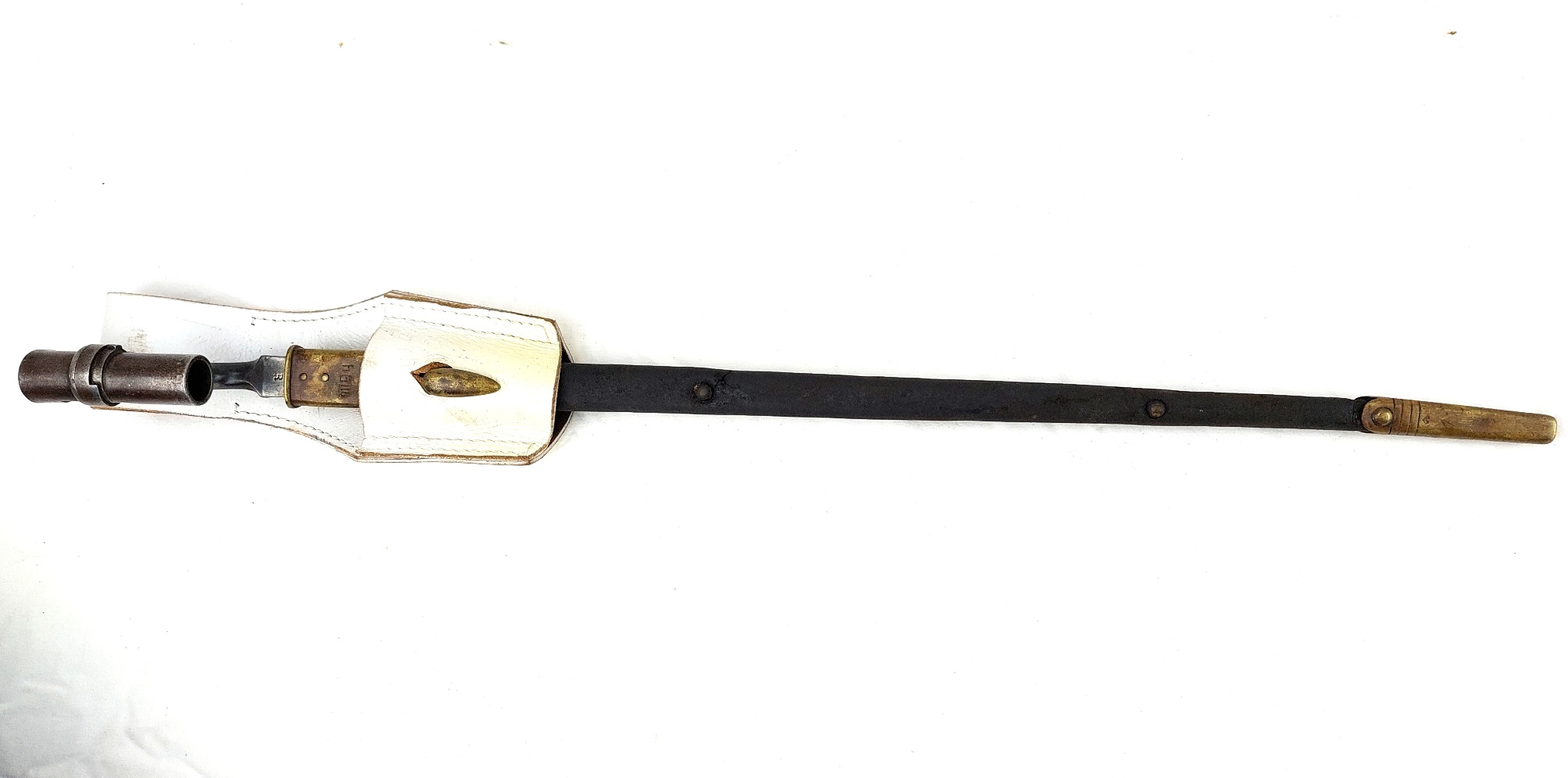
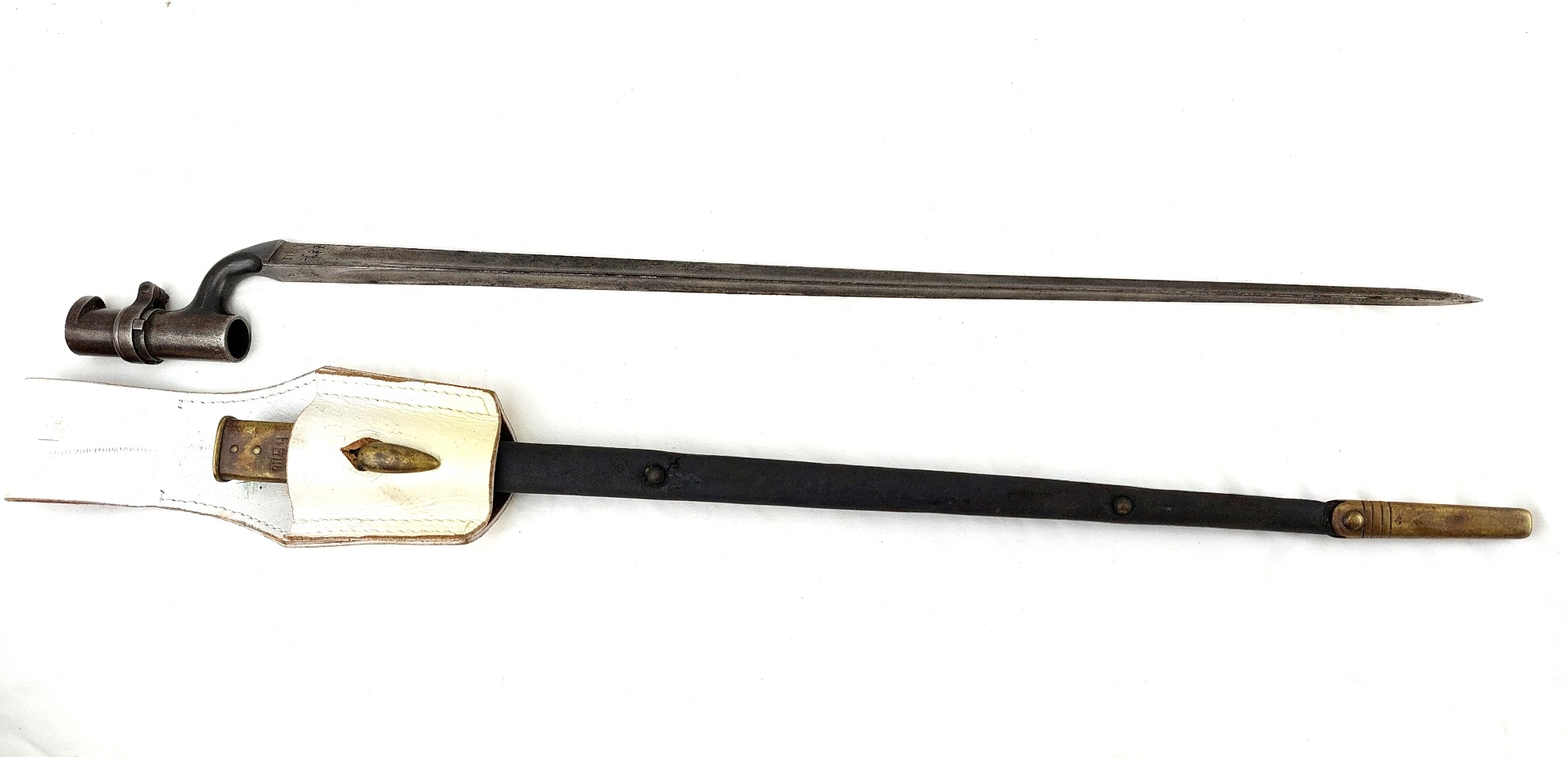
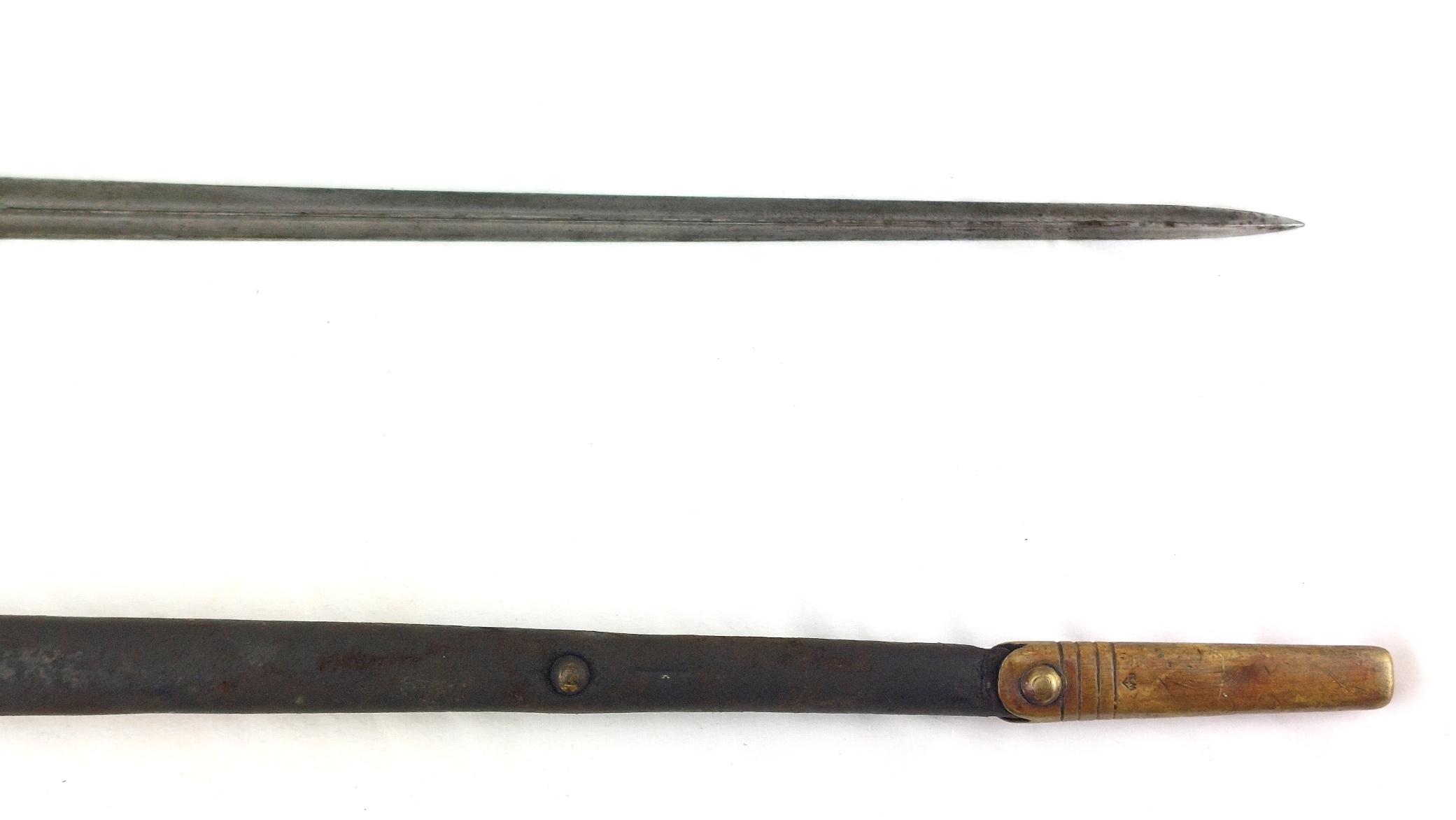
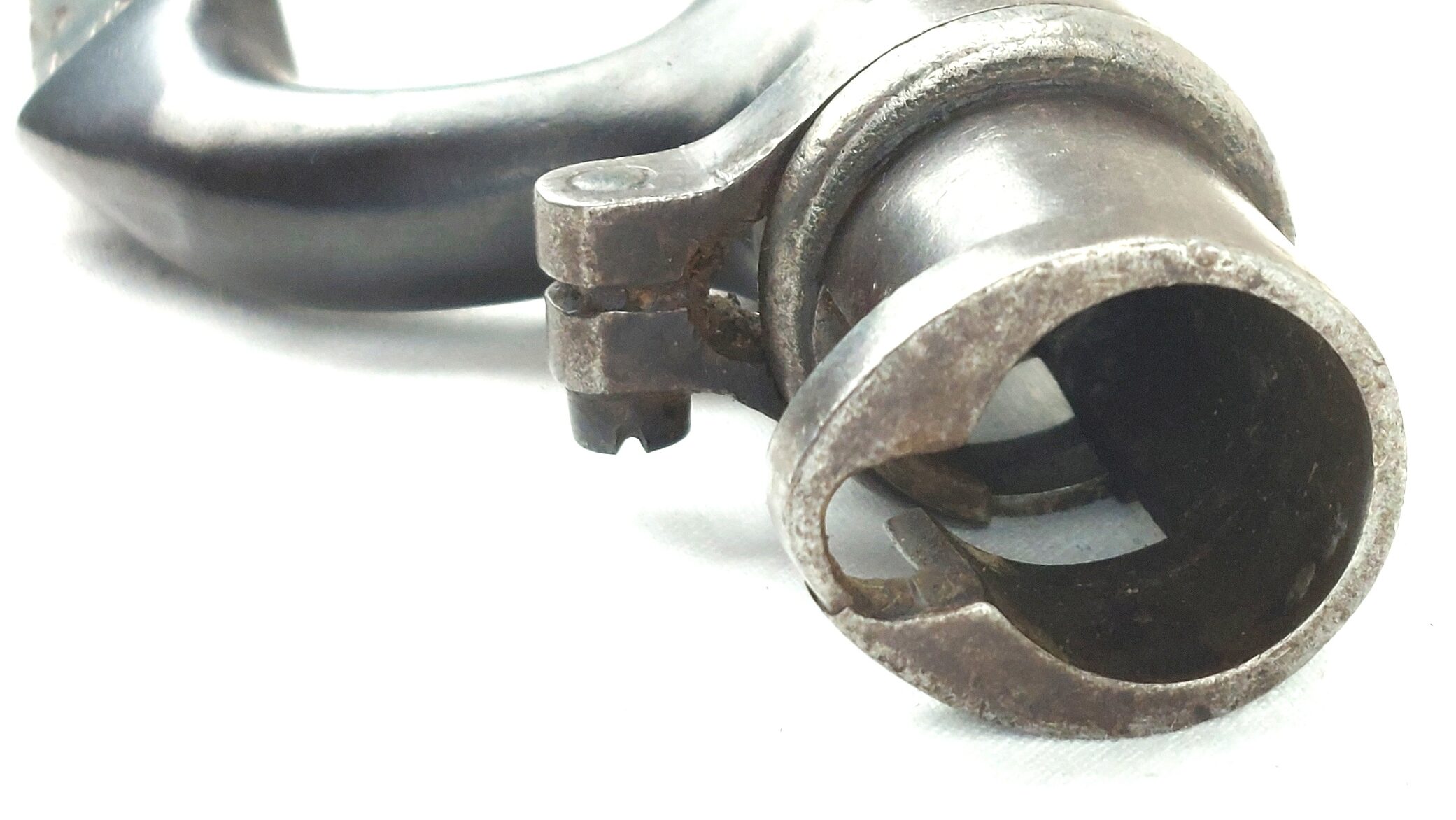
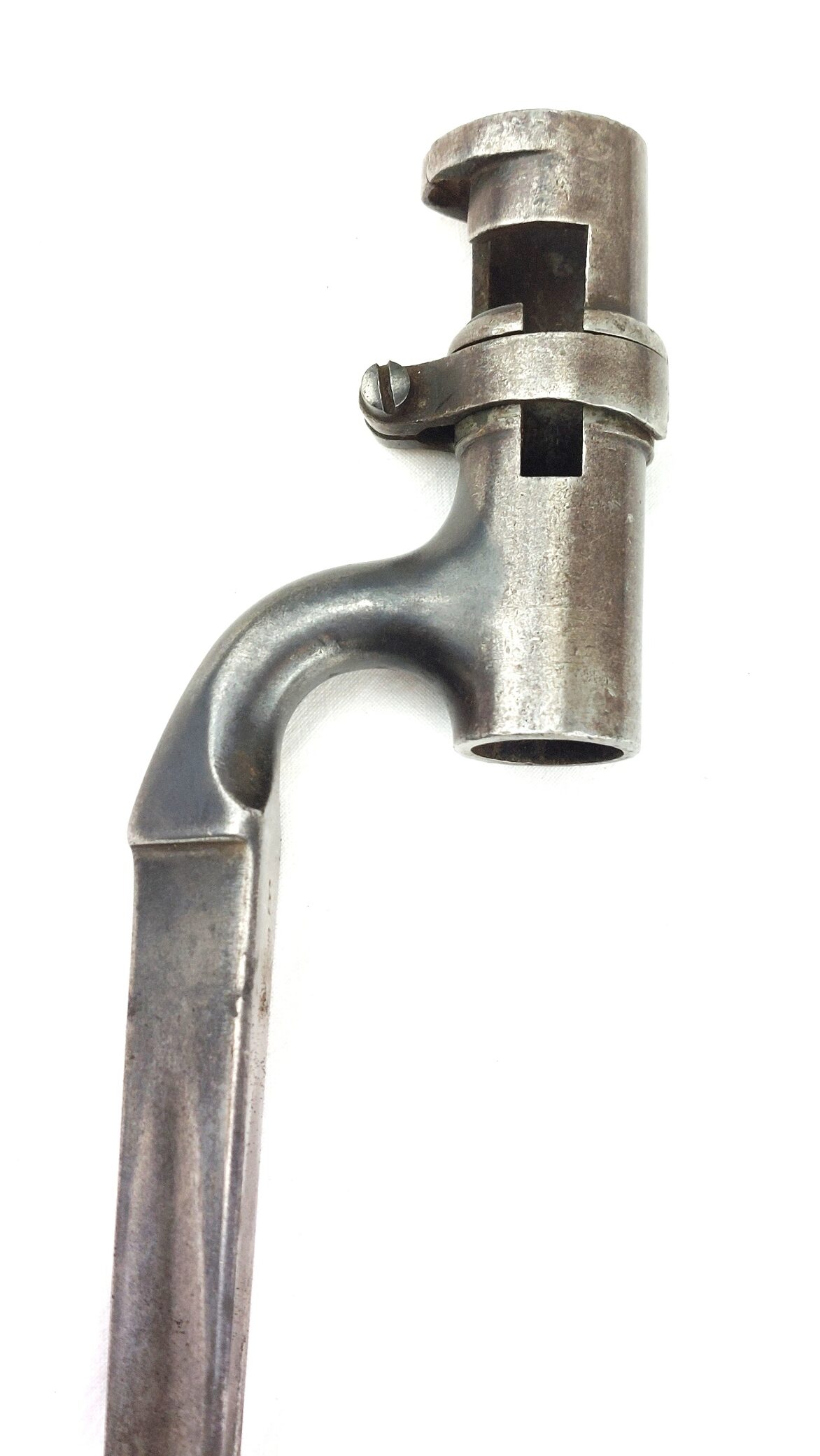
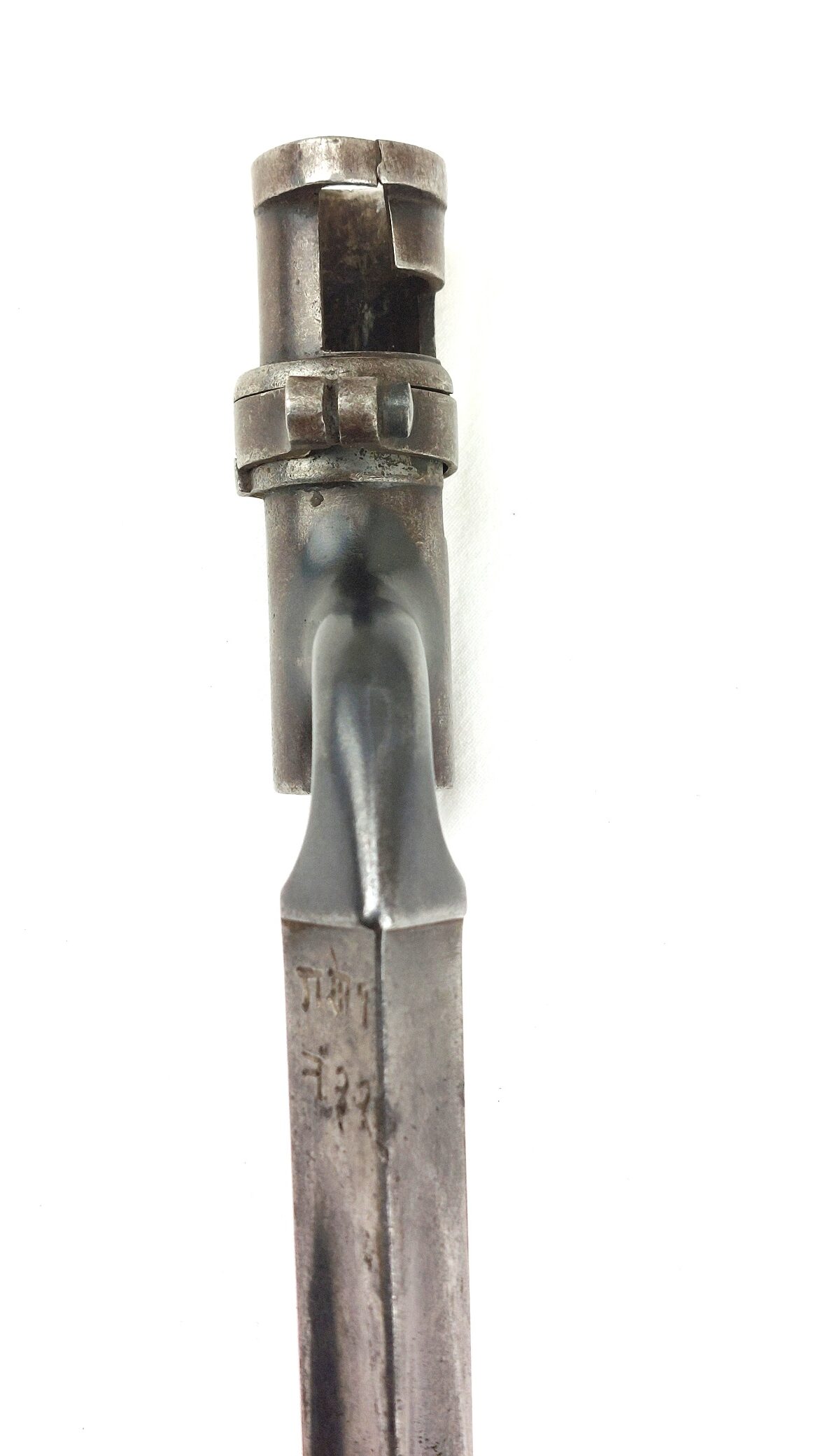
British Pattern 1876 socket bayonet for use with the .577/450 calibre Martini-Henry rifle, commonly referred to as the “Long Common Socket Bayonet” or the “lunger”! This pattern was introduced as an improved and lengthened successor to the Pattern 1853, following concerns that the earlier bayonet lacked sufficient reach when fixed.
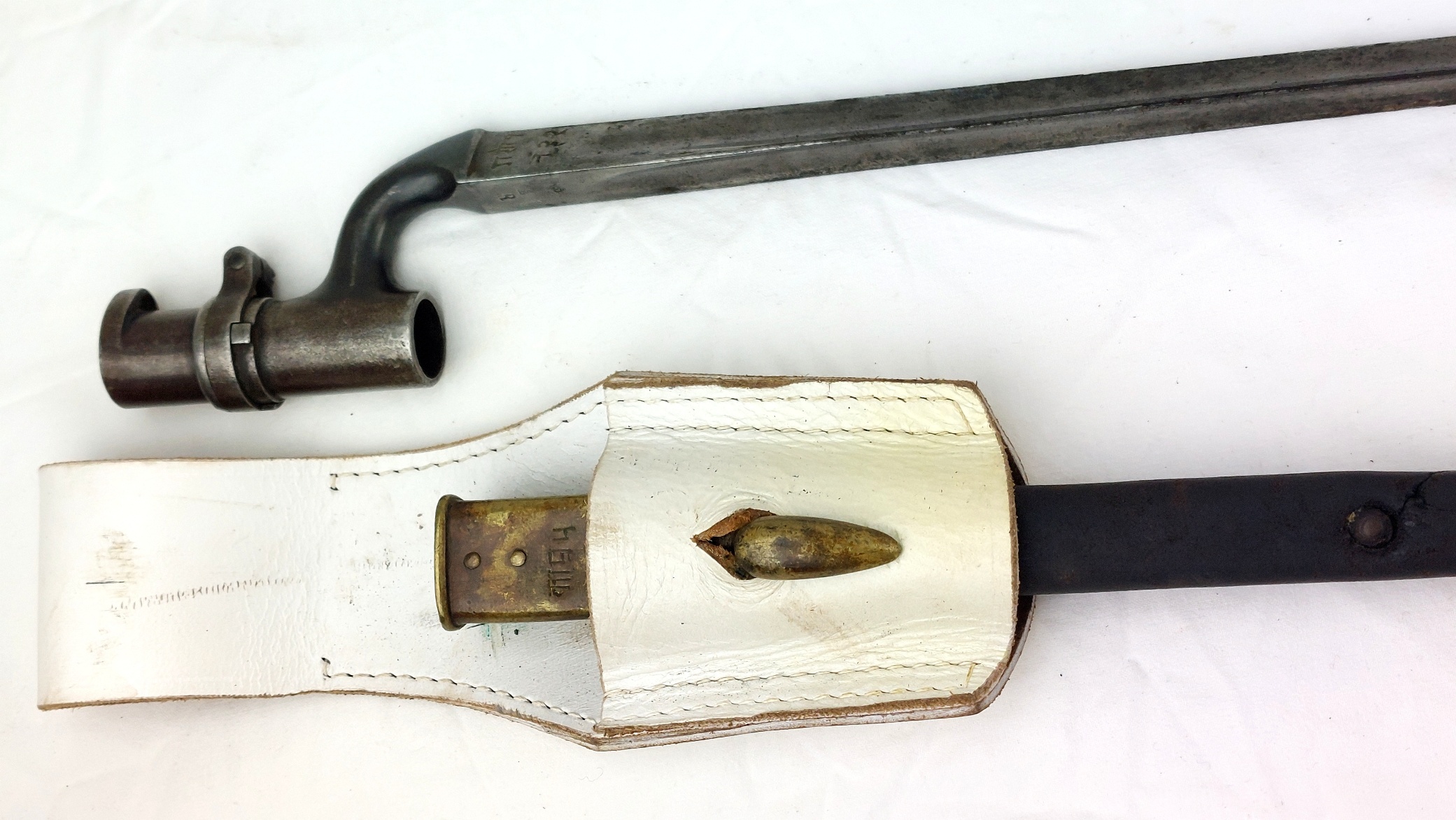
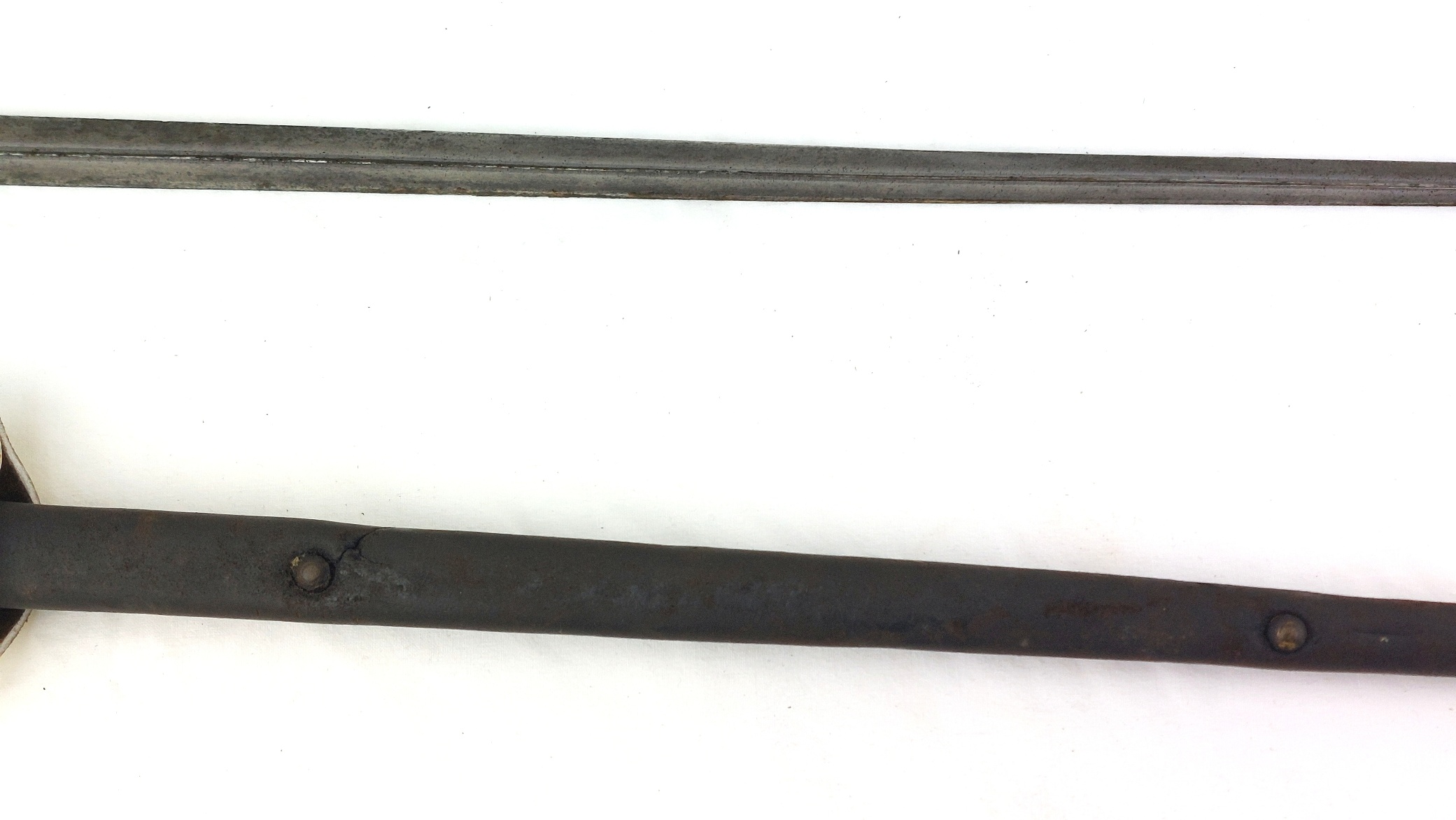
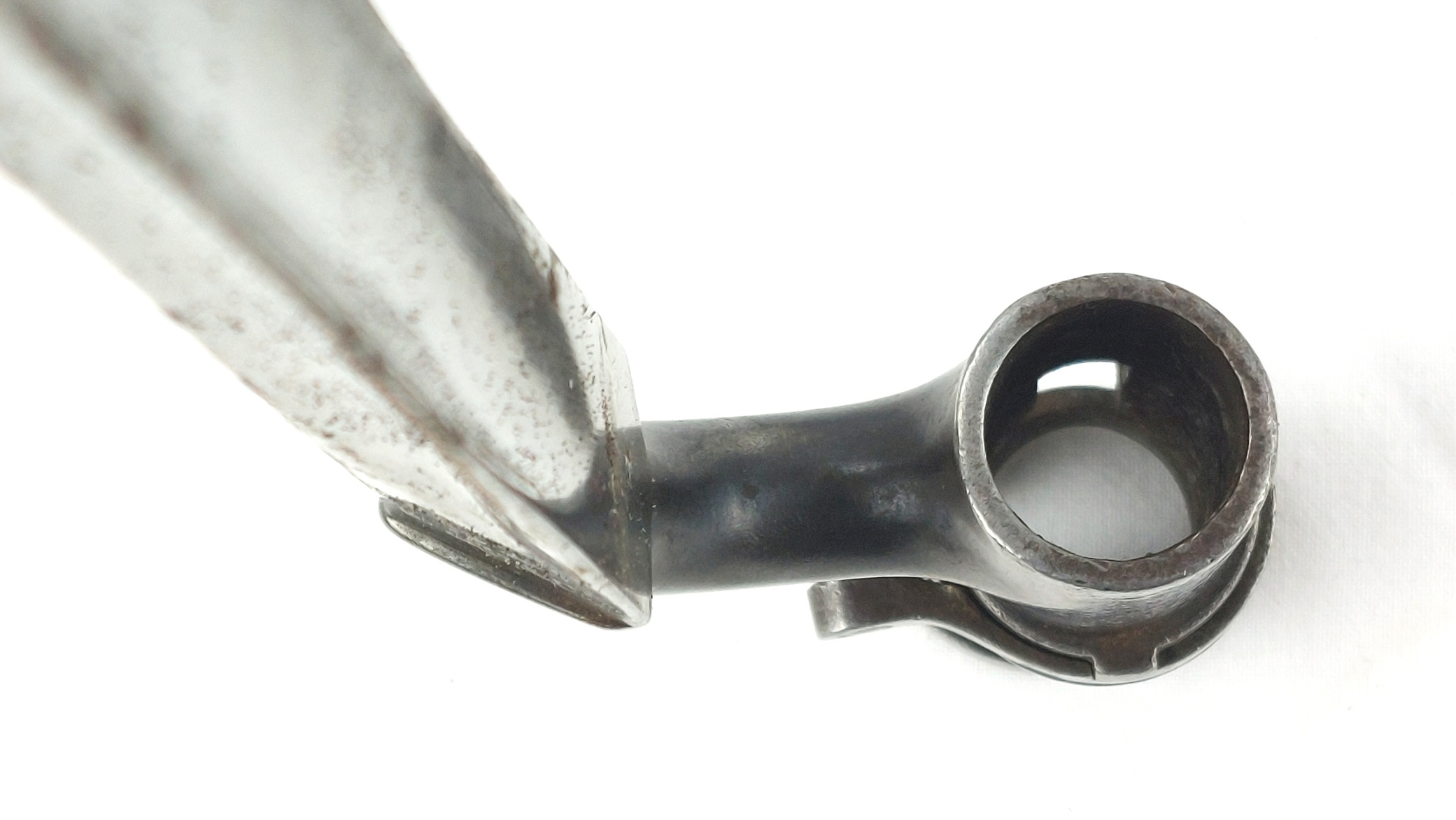
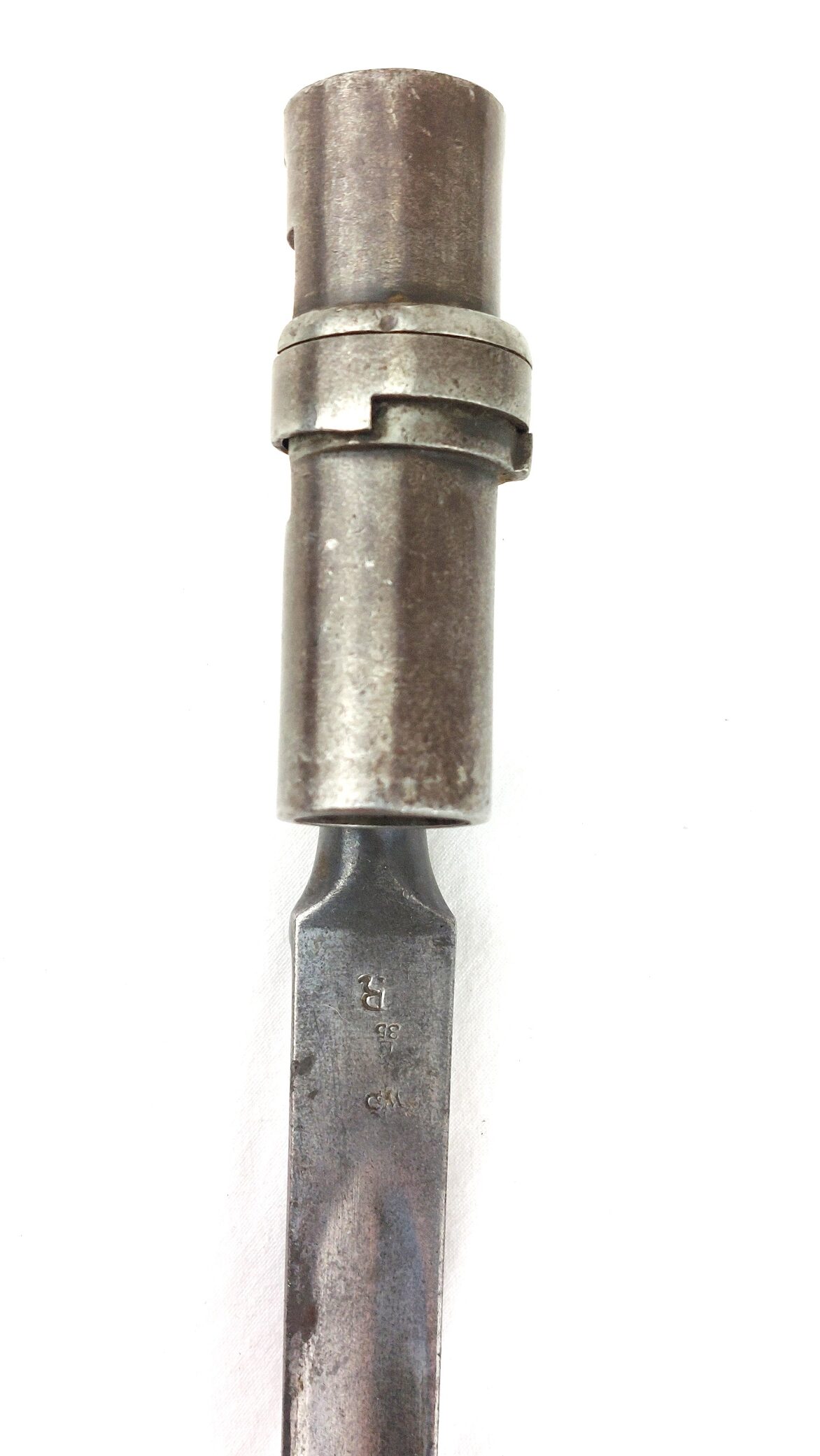
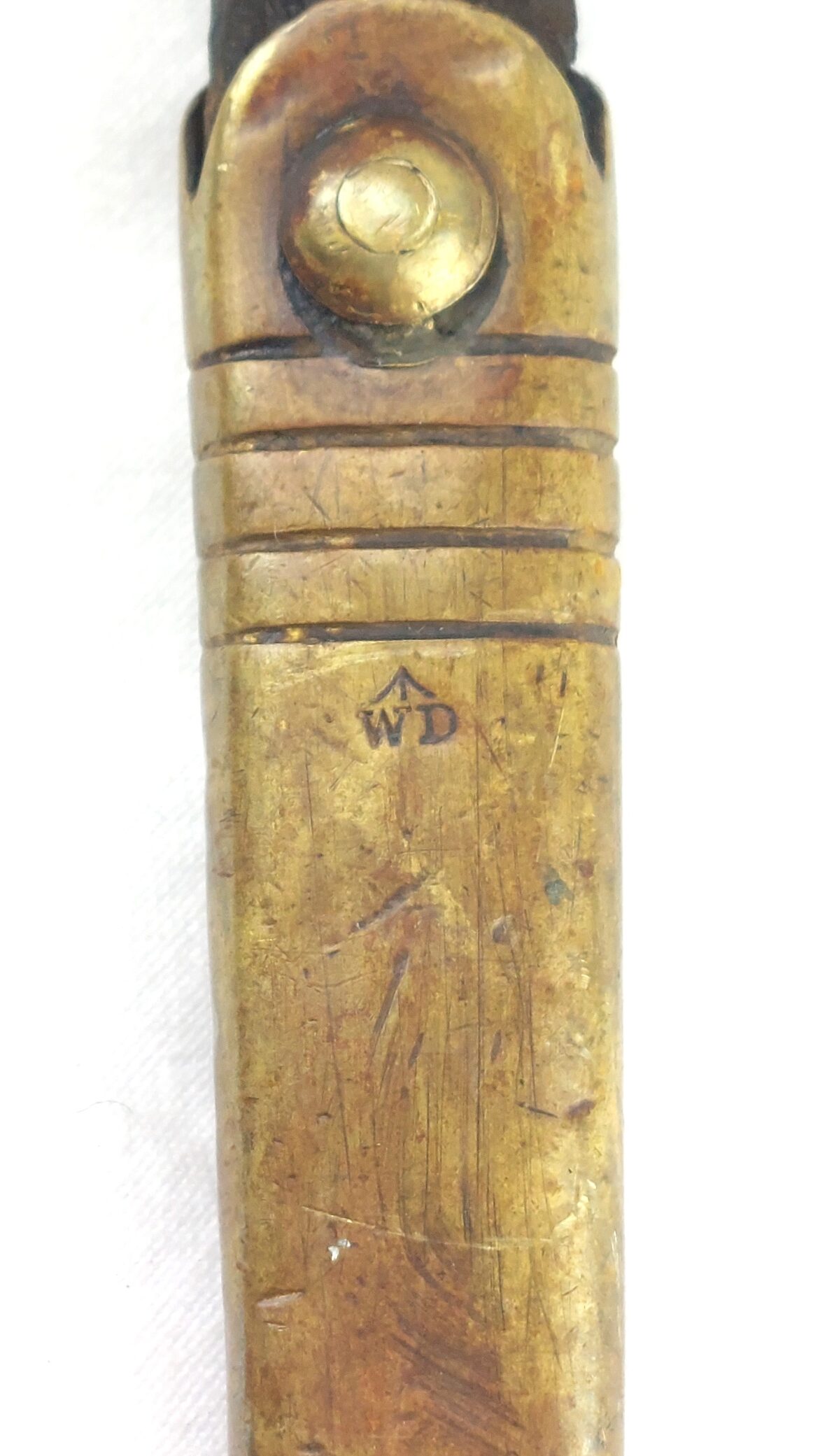
The blade is of straight, rigid form with an equiangular triangular cross-section, replacing the earlier Pattern 1853 profile which was broader on the upper face. As the Pattern 1876 was intended solely for breech-loading rifles, the outward curvature characteristic of earlier socket bayonets was omitted. The socket retains its original locking ring and correct mortise cut, with the blade firmly seated.
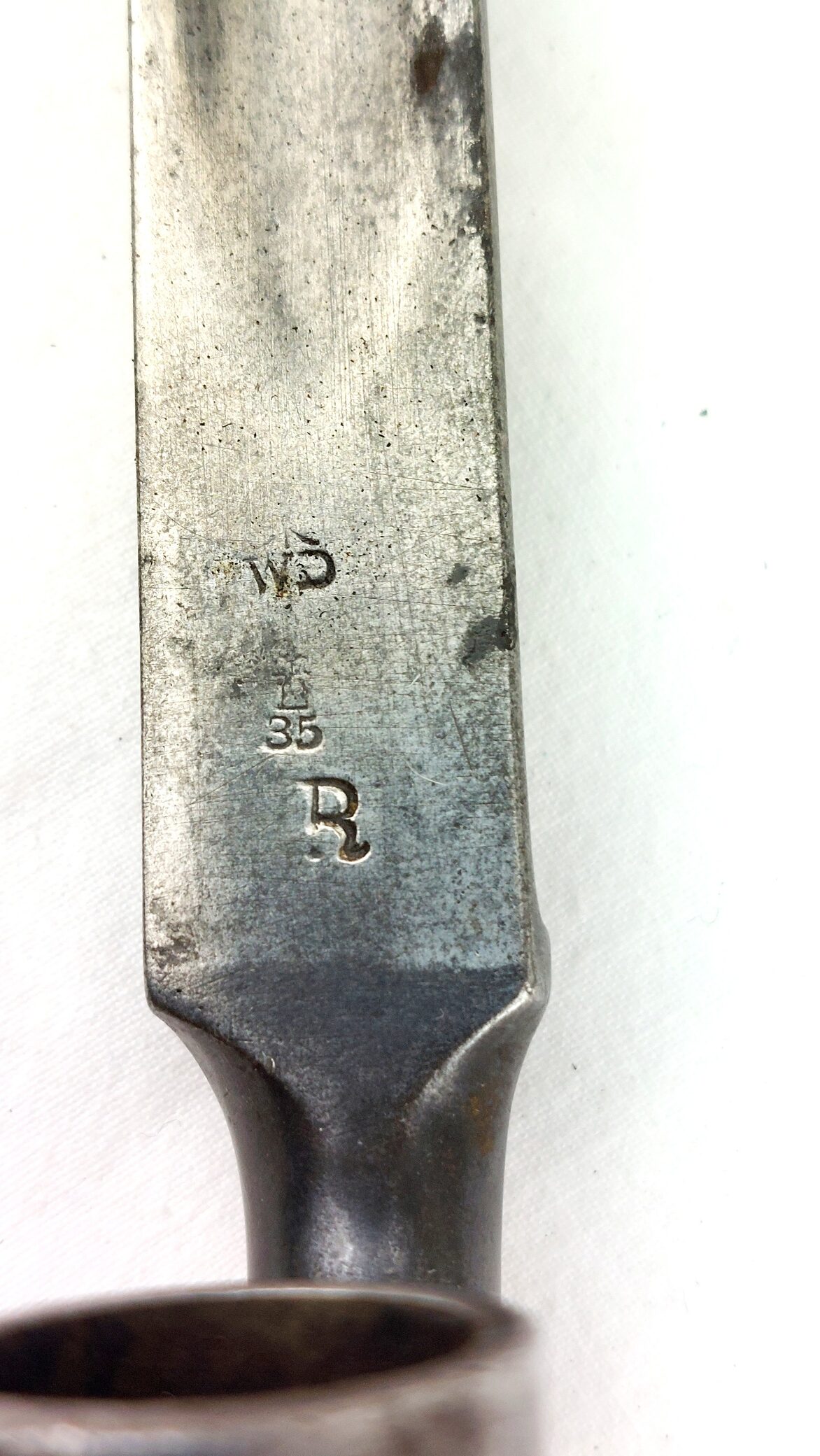
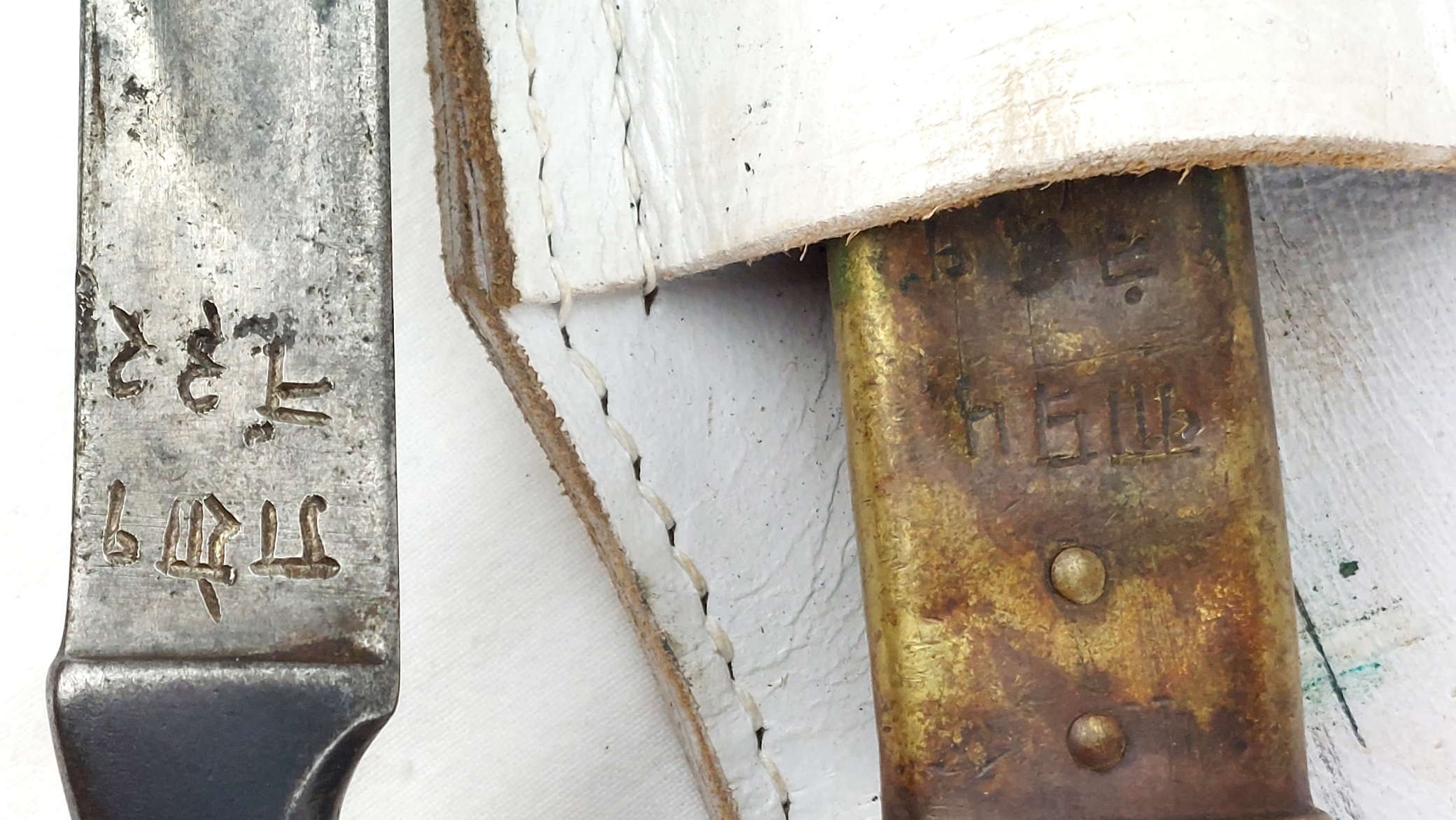
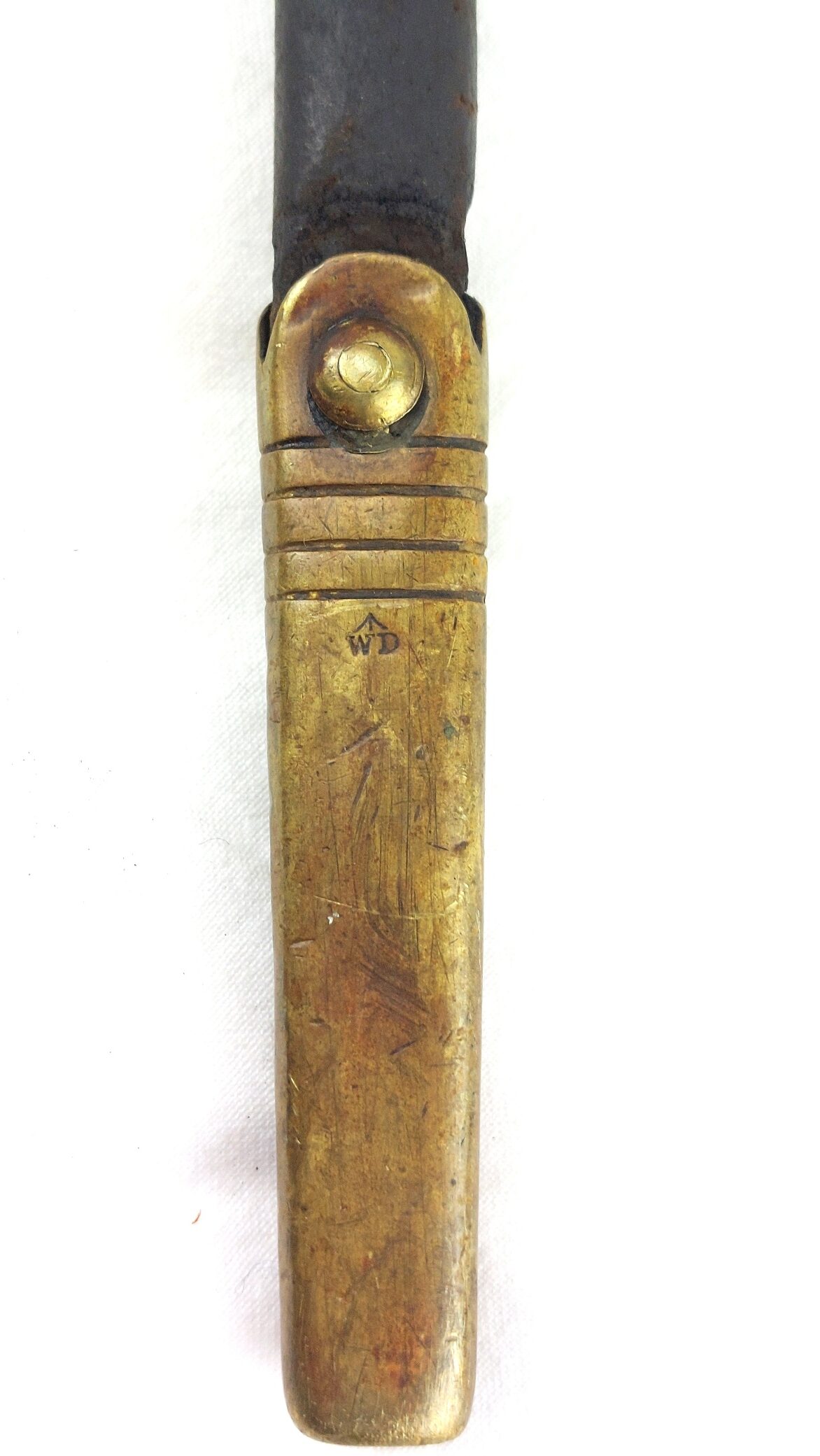
The ricasso bears clear British ordnance markings, including War Department arrow over “WD”, together with a Crown over E (indistinct) over “35” over a large “R”. The prominent “R” is a recognised British re-temper / re-test mark, indicating the blade was officially tested and heat-treated before being returned to service.
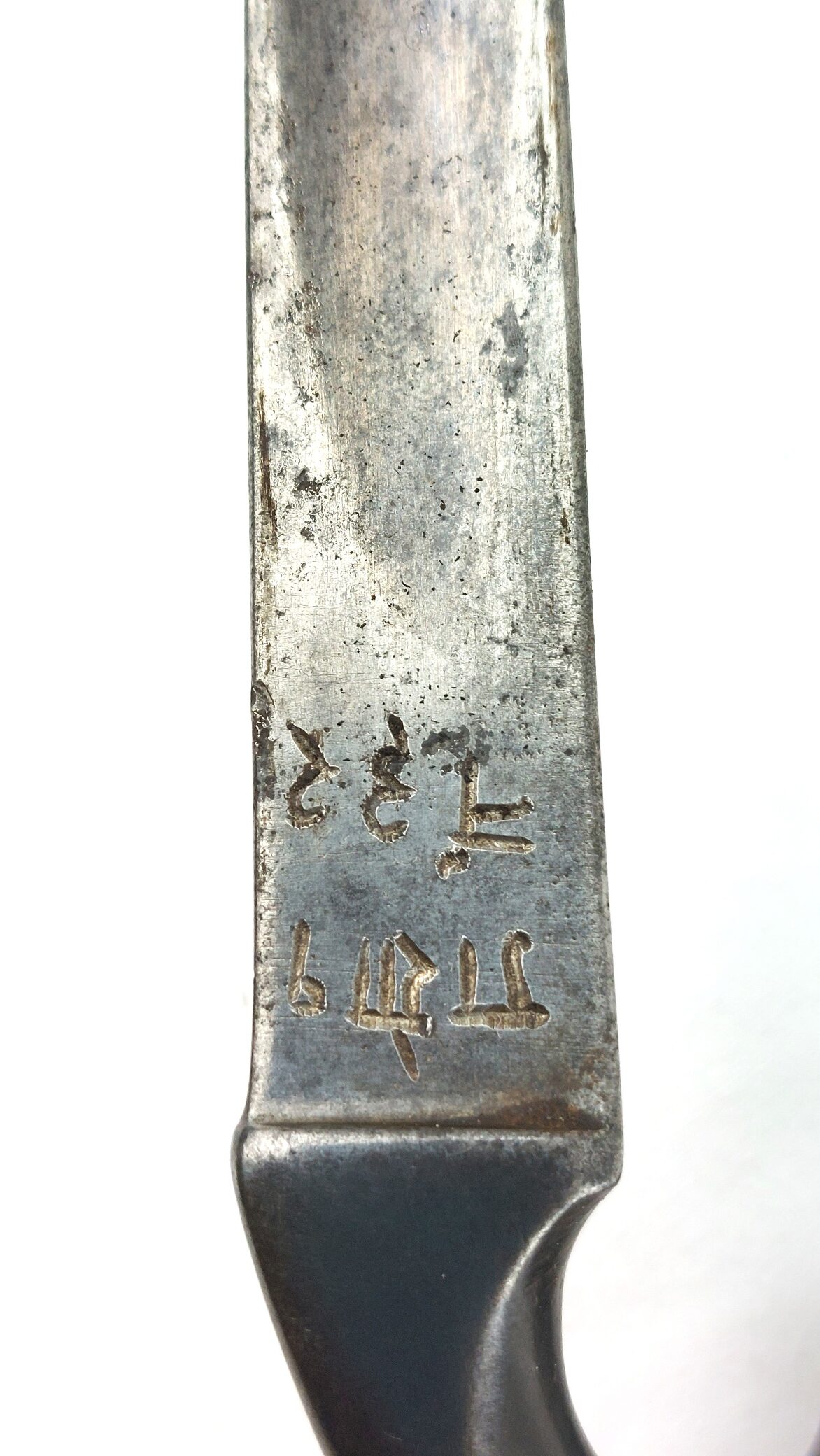
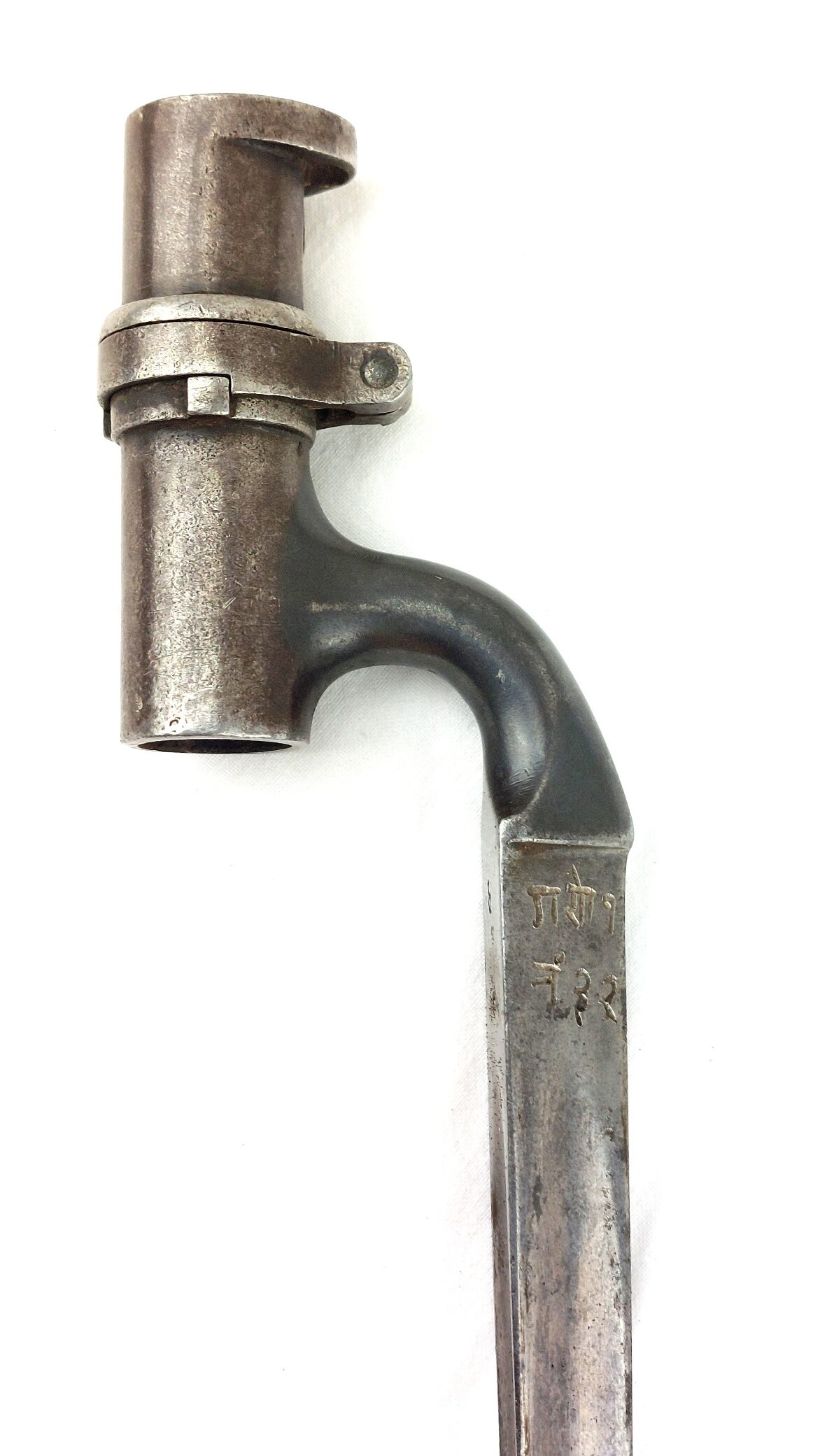
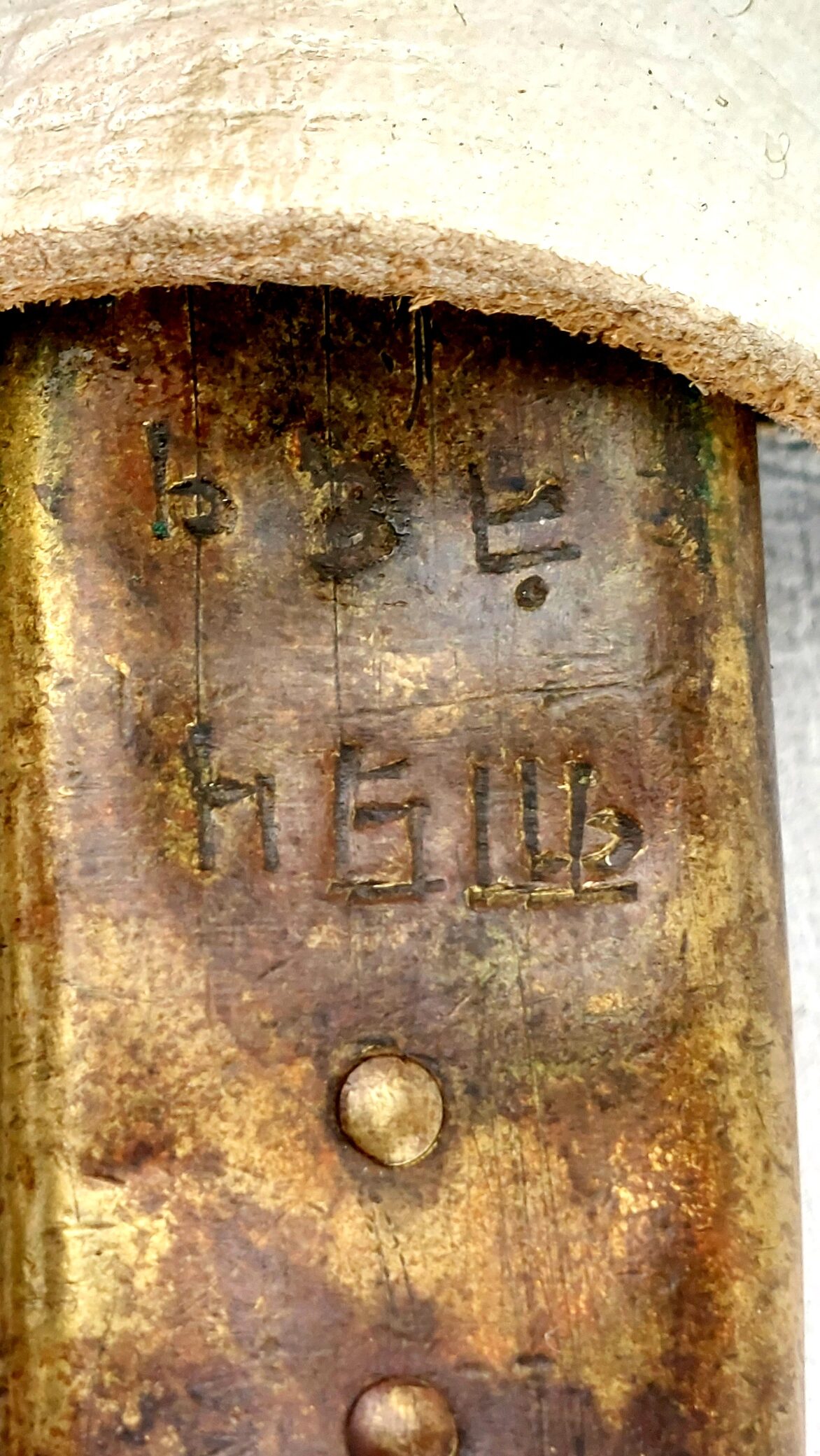
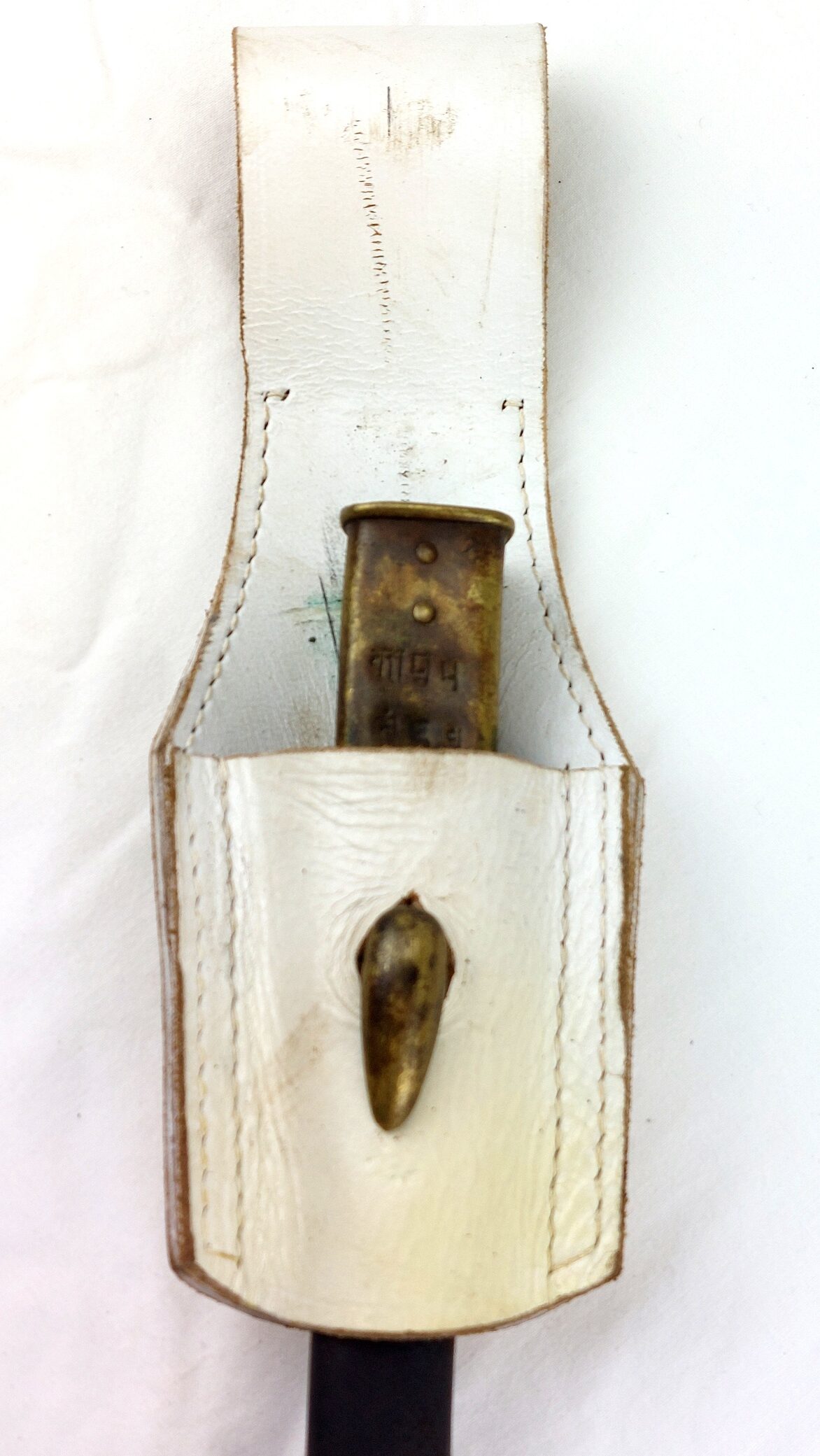
Also present are Nepalese Devanagari script markings, struck during subsequent service in the Kingdom of Nepal. These consist of “श्री ३” (Shri 3) over the numeral “१४६५”, repeated on the scabbard throat. Such markings are characteristic of arms held in Nepalese state armouries during the late 19th to early 20th century and function as official inventory or control marks rather than dates. The presence of matching Nepalese markings on both blade and scabbard indicates period pairing in Nepalese service.
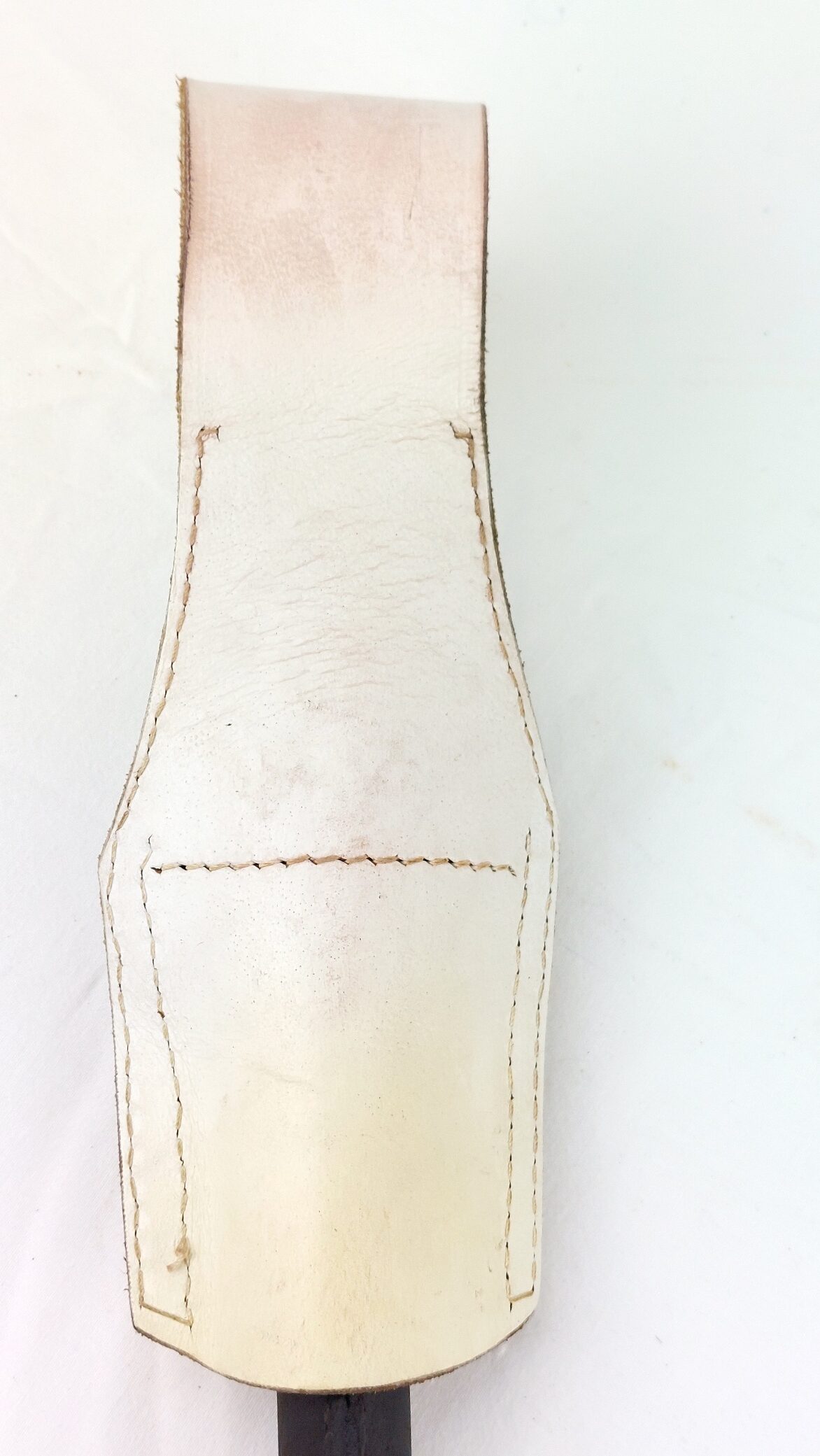
The bayonet is accompanied by a white leather frog of non-British issue, most likely a locally produced Nepalese or South Asian example, as commonly encountered with Martini-Henry bayonets released from the Nepalese state armouries.
Approx. Measurements Blade length: 54.5 cm. Overall length: 63.7 cm
Historical Note The Pattern 1876 Socket Bayonet represents the final long socket bayonet adopted by Britain. It was designed specifically for the Martini-Henry rifle and addressed criticisms of the Pattern 1853 by providing increased reach and a stronger, more uniform blade section. Large numbers were later sold, transferred, or otherwise exported, with Nepal receiving significant quantities. These bayonets were retained in Nepalese service for decades, stored in state arsenals and marked accordingly, before emerging on the collector market in the modern era.
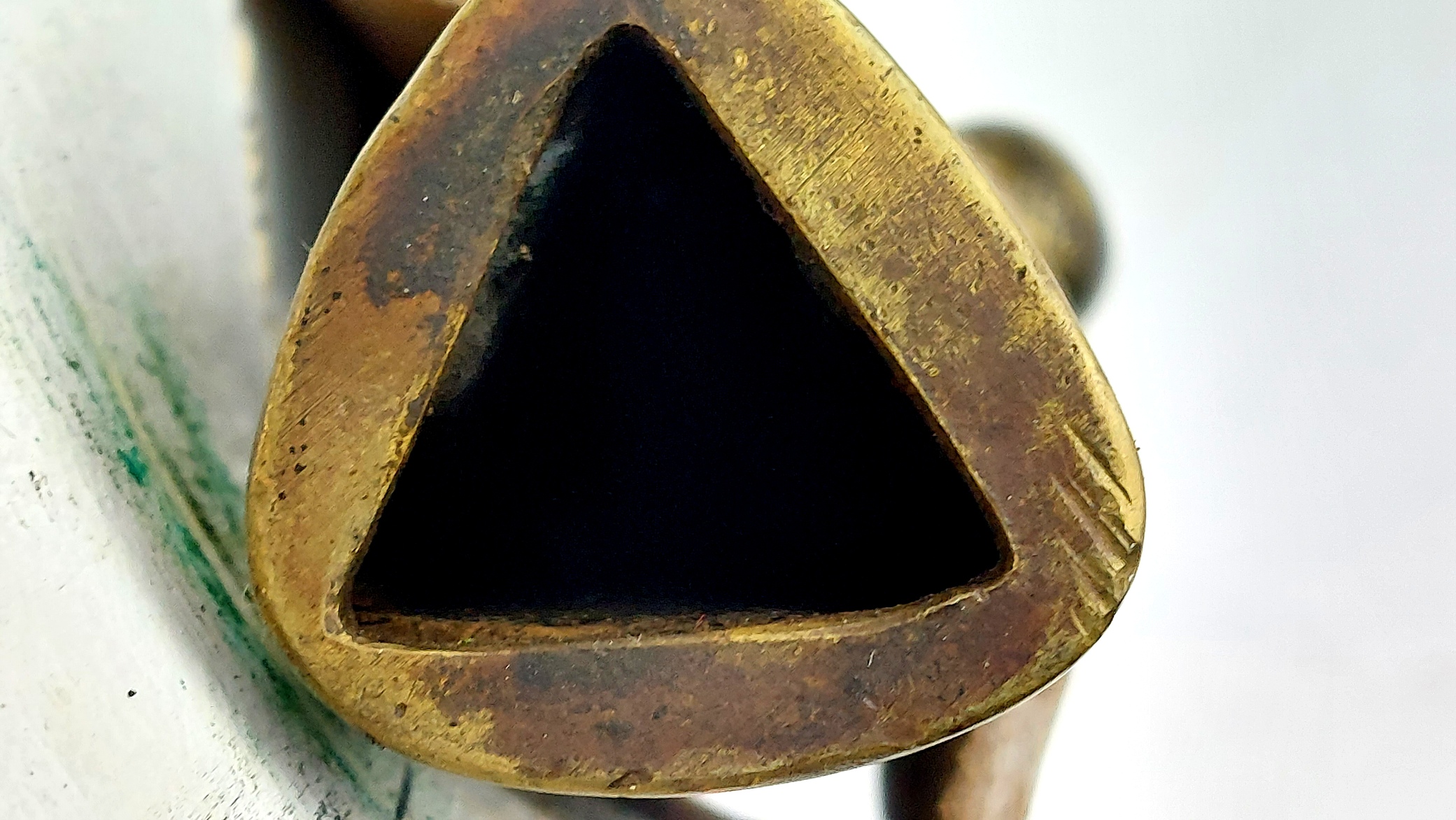
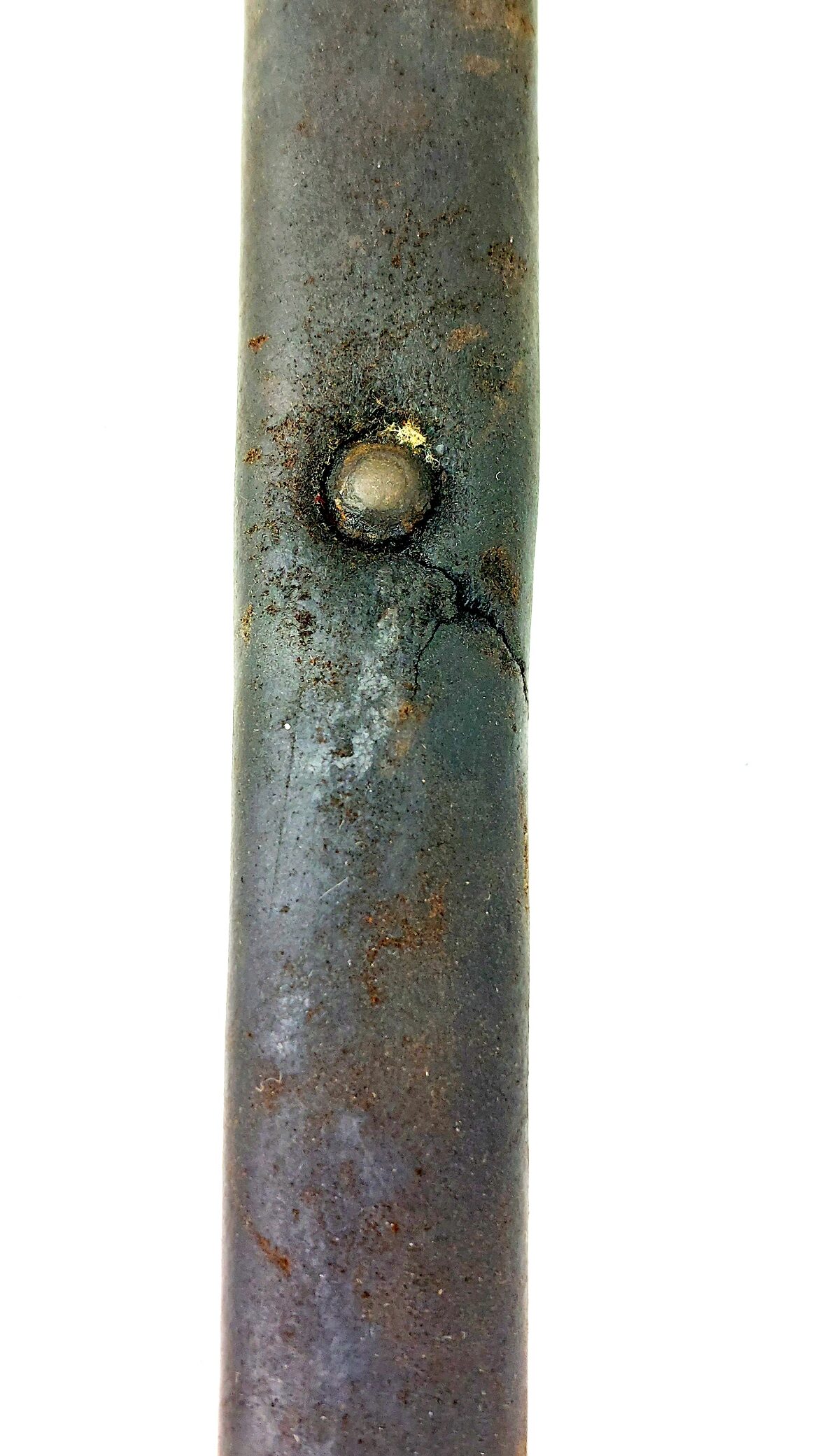
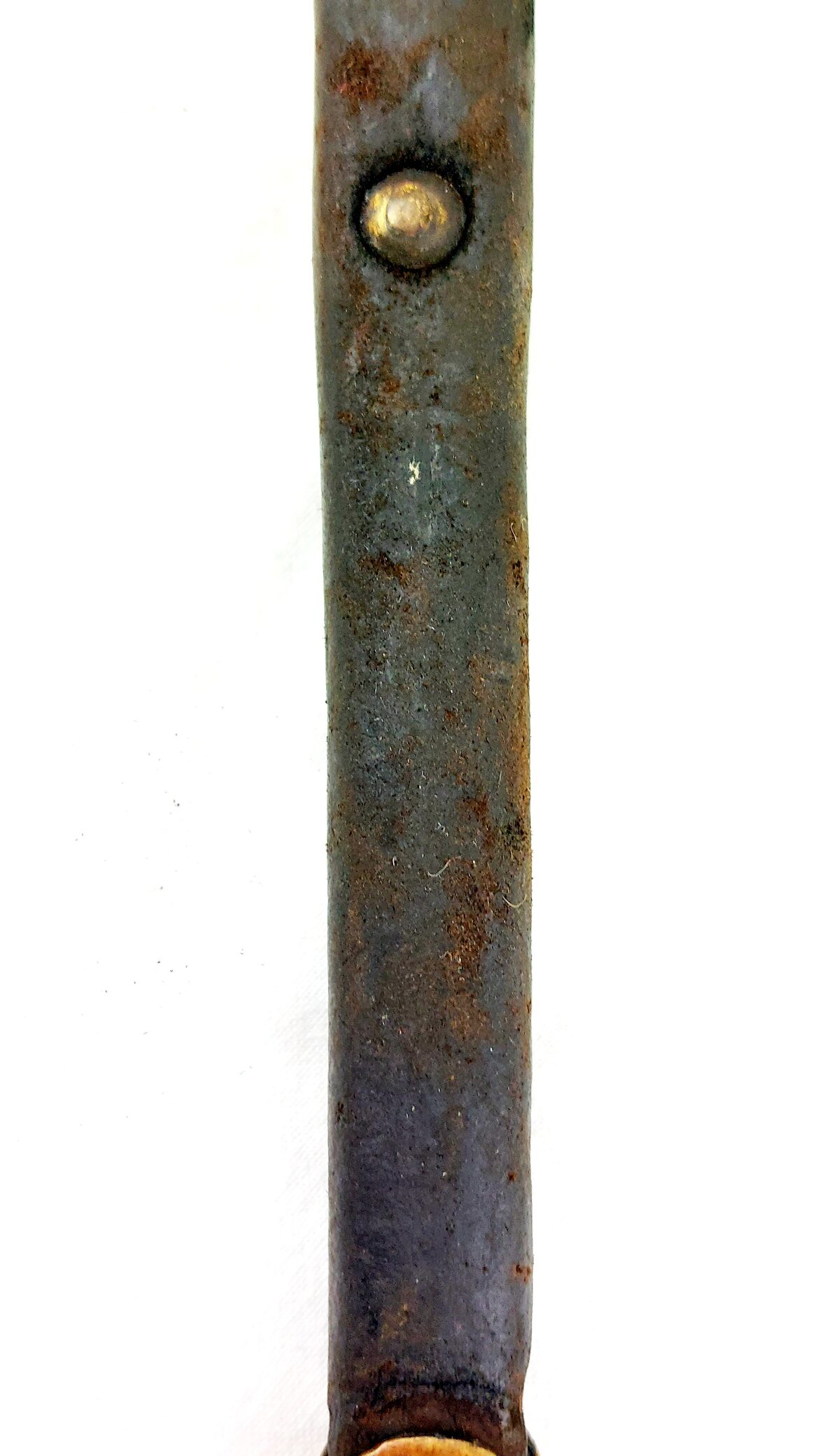
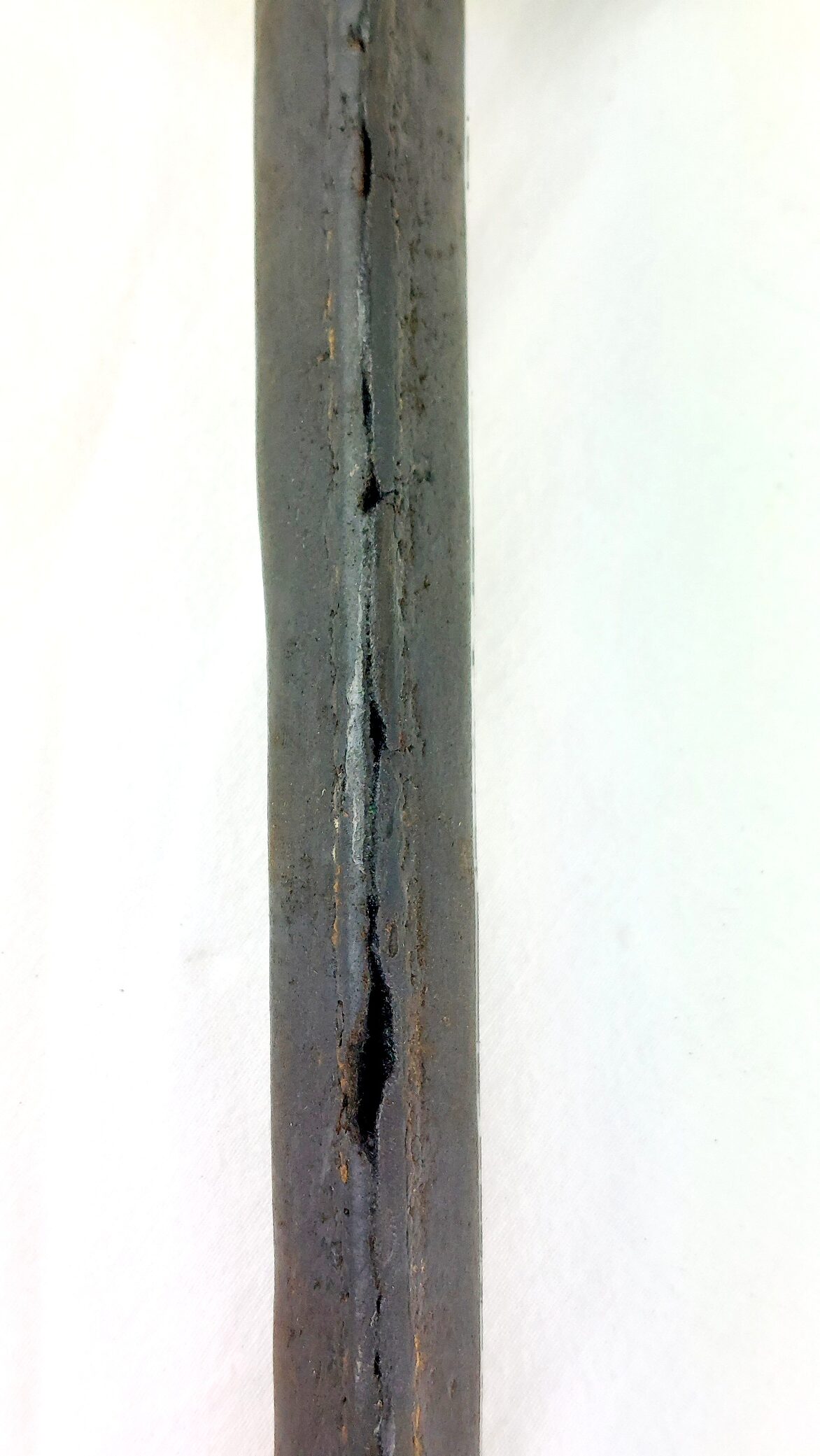
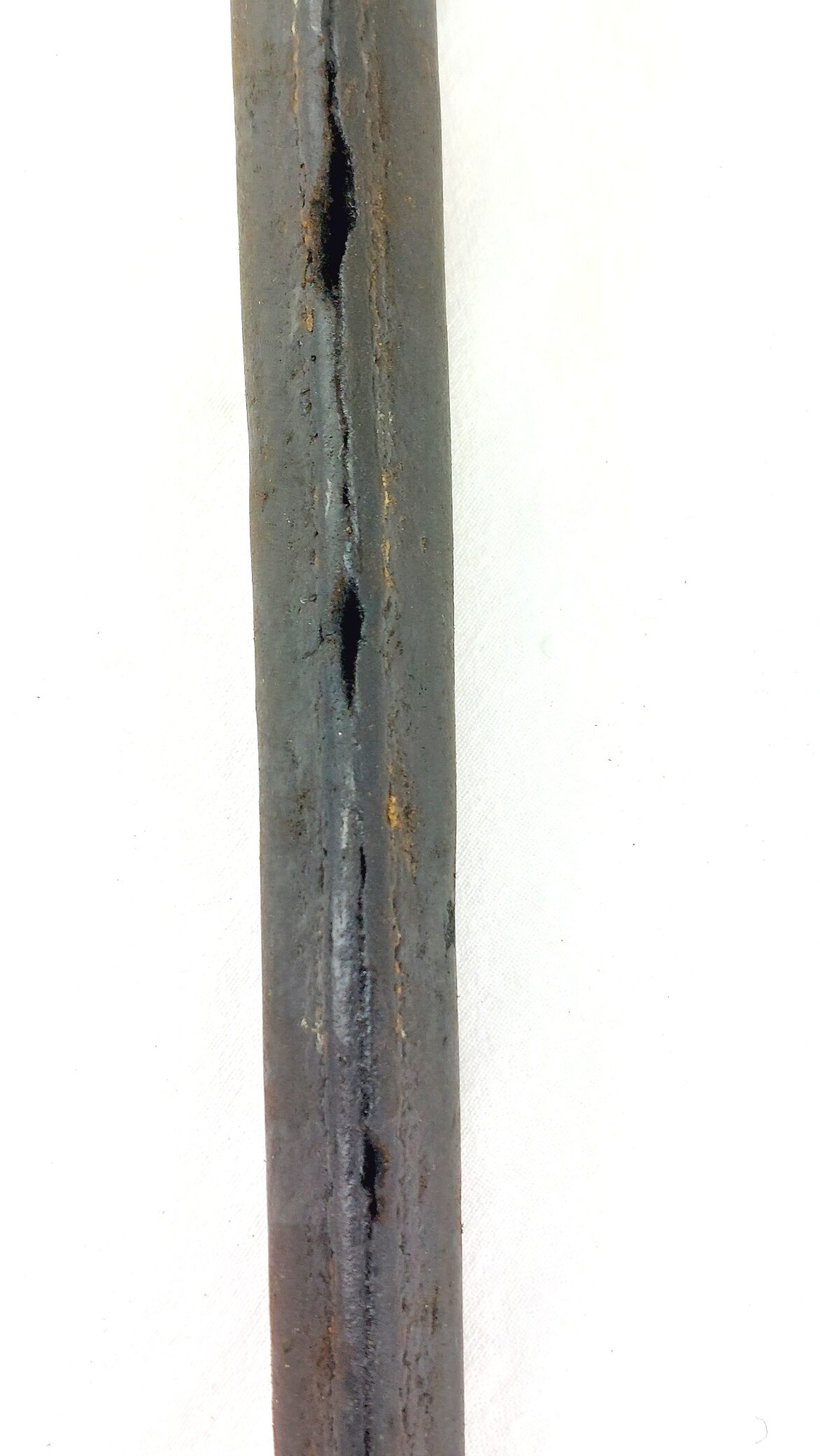
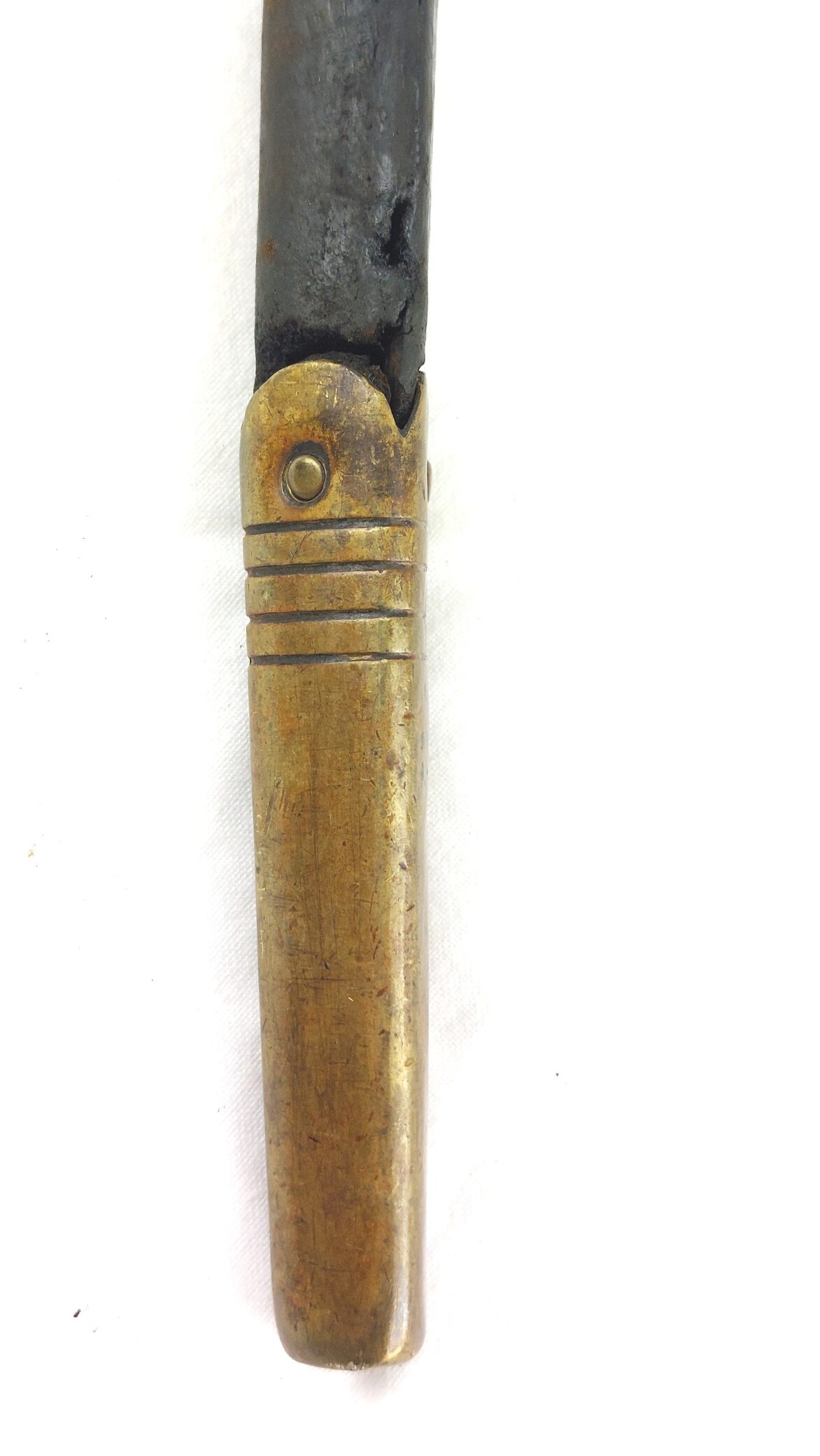
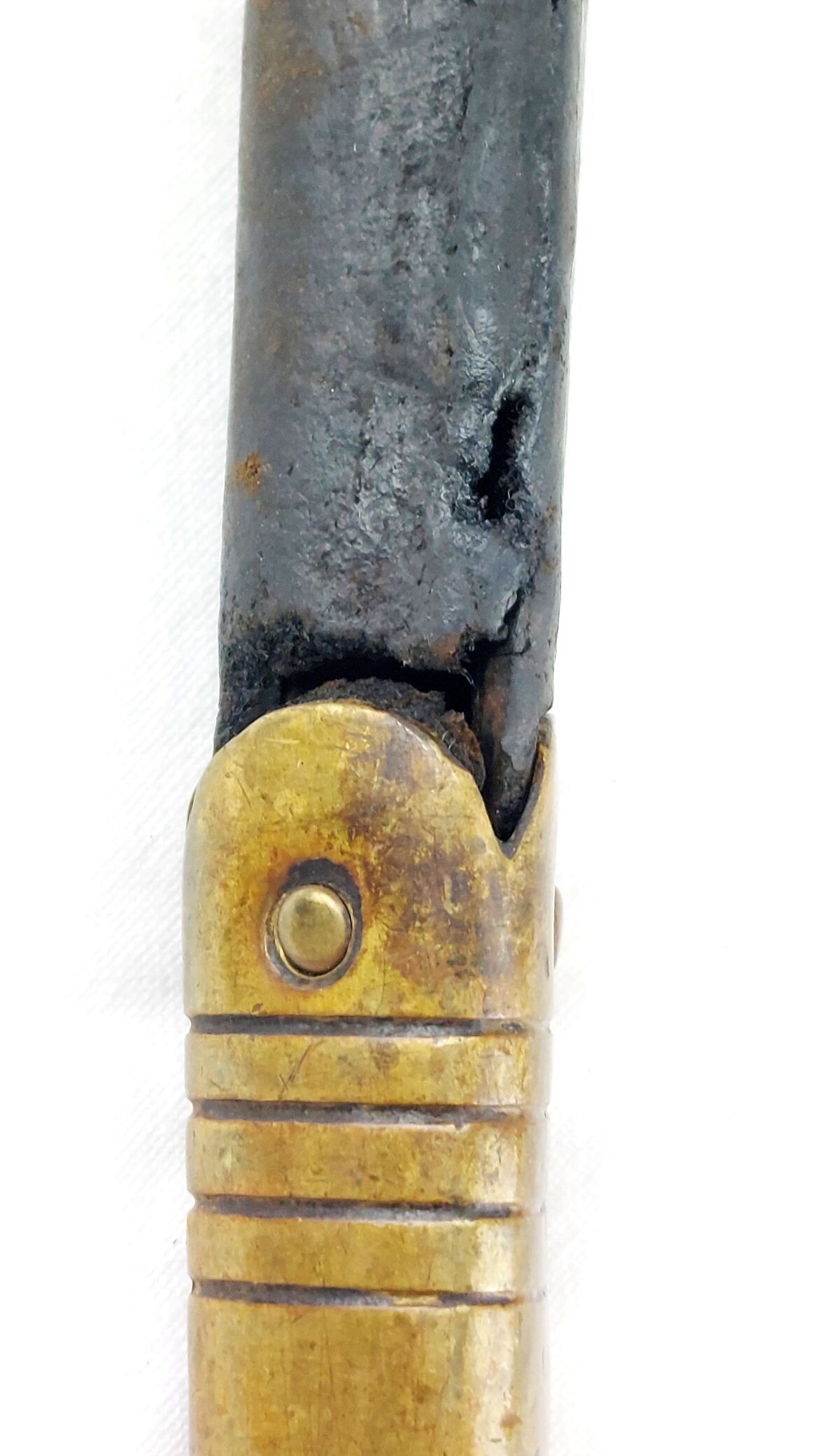
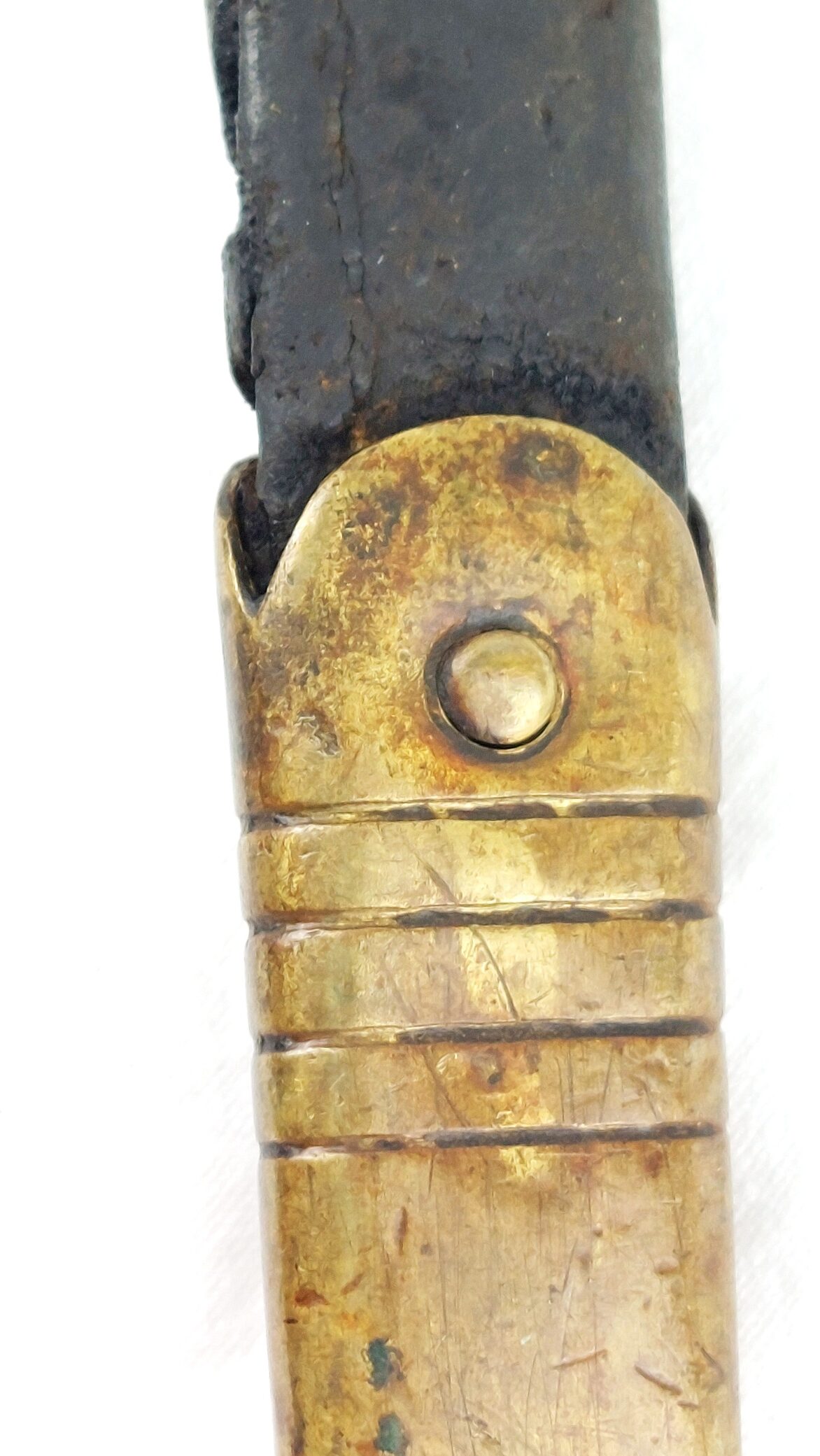
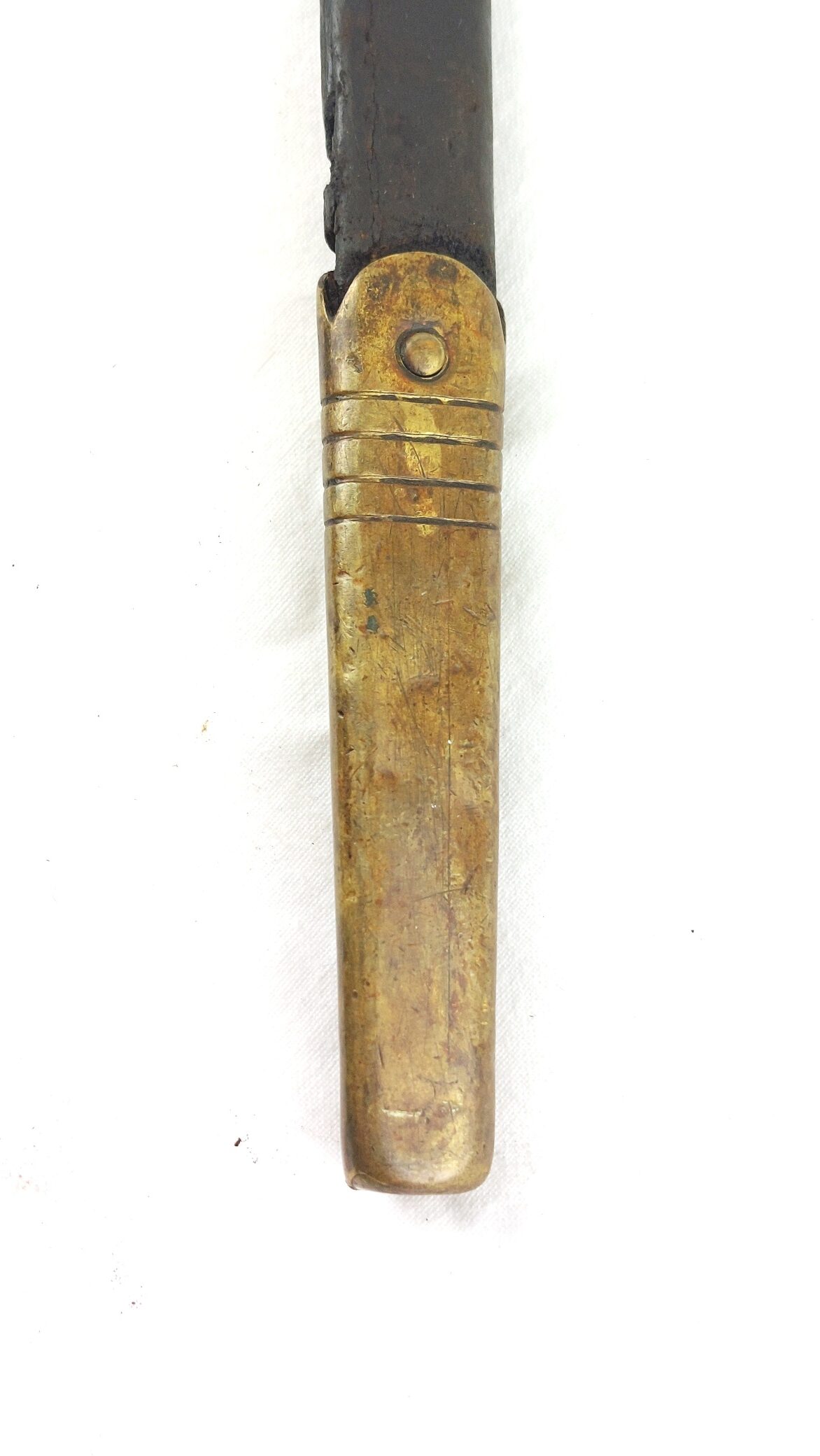
*Condition* Blade with overall greyed patina and scattered pitting consistent with age and long storage; no evidence of modern cleaning. British and Nepalese markings remain legible. Socket and locking ring intact and functional. Scabbard present but in poor condition, with heavy corrosion, losses, and structural degradation, as illustrated. White leather frog present, showing age-related stiffening, surface wear, and soiling, but remaining structurally intact and suitable for display. Please see photographs as part of the condition report.
*In order to complete the online purchase we will require a picture/scan of a photo ID (Driving Licence, Passport or an official document with a recent picture). If you don't posses any such document please call to buy. If we consider that the proof of ID is incorect or insuficient, we reserve the right to cancel the transaction.
*We also reserve the right to cancel the transaction with a full refund if there is any suspicion that the provided item will be used in any way contrary to the laws and legislation of UK.