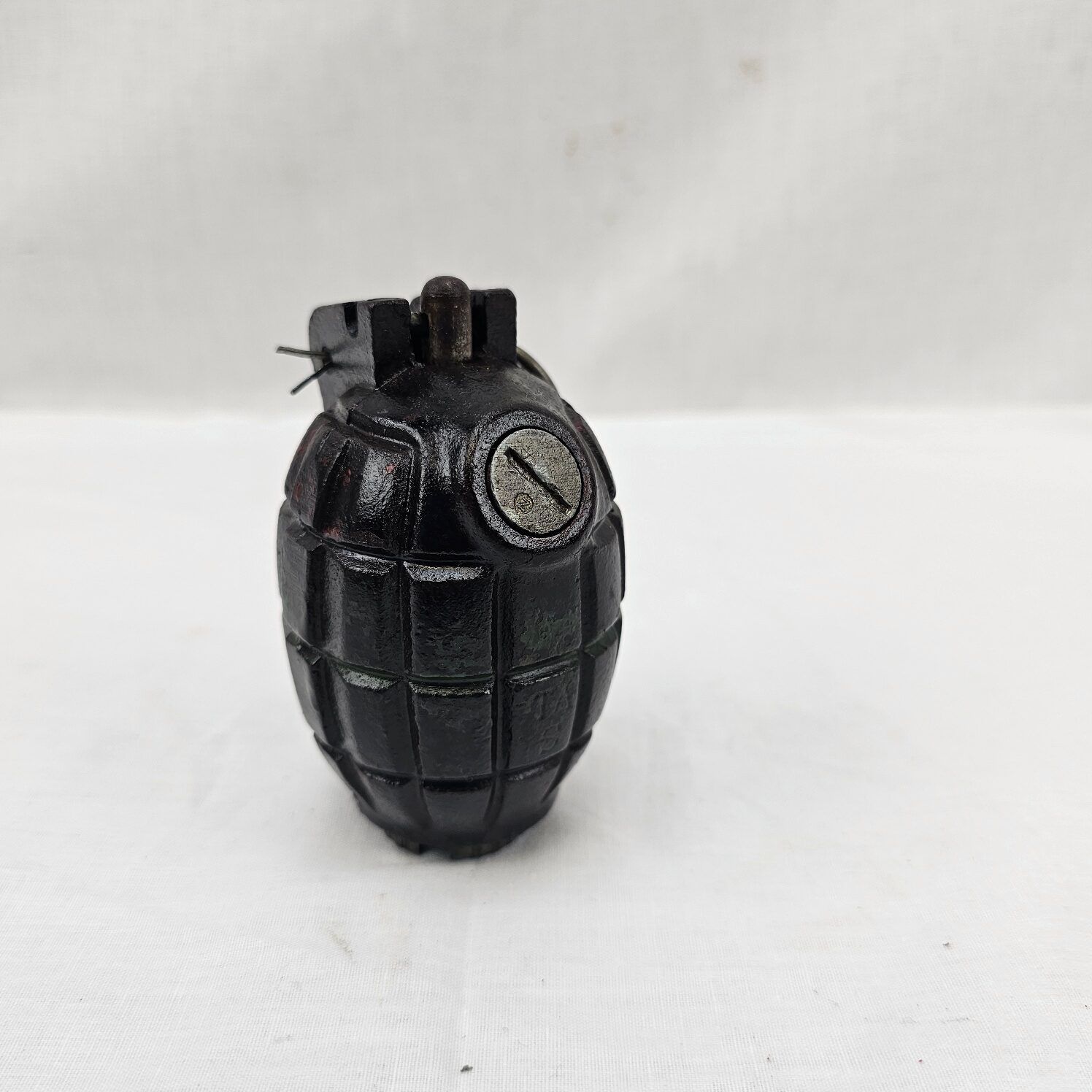
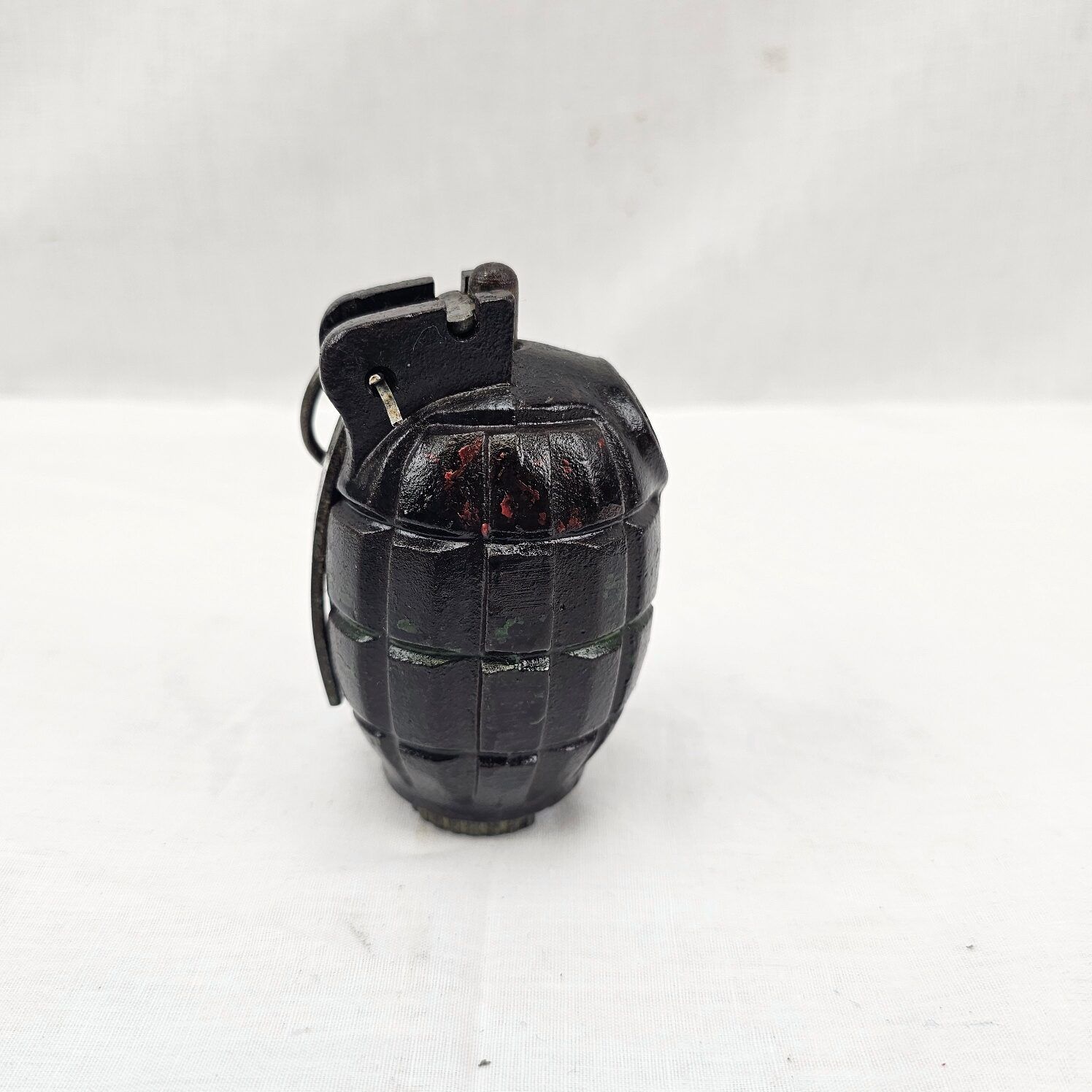
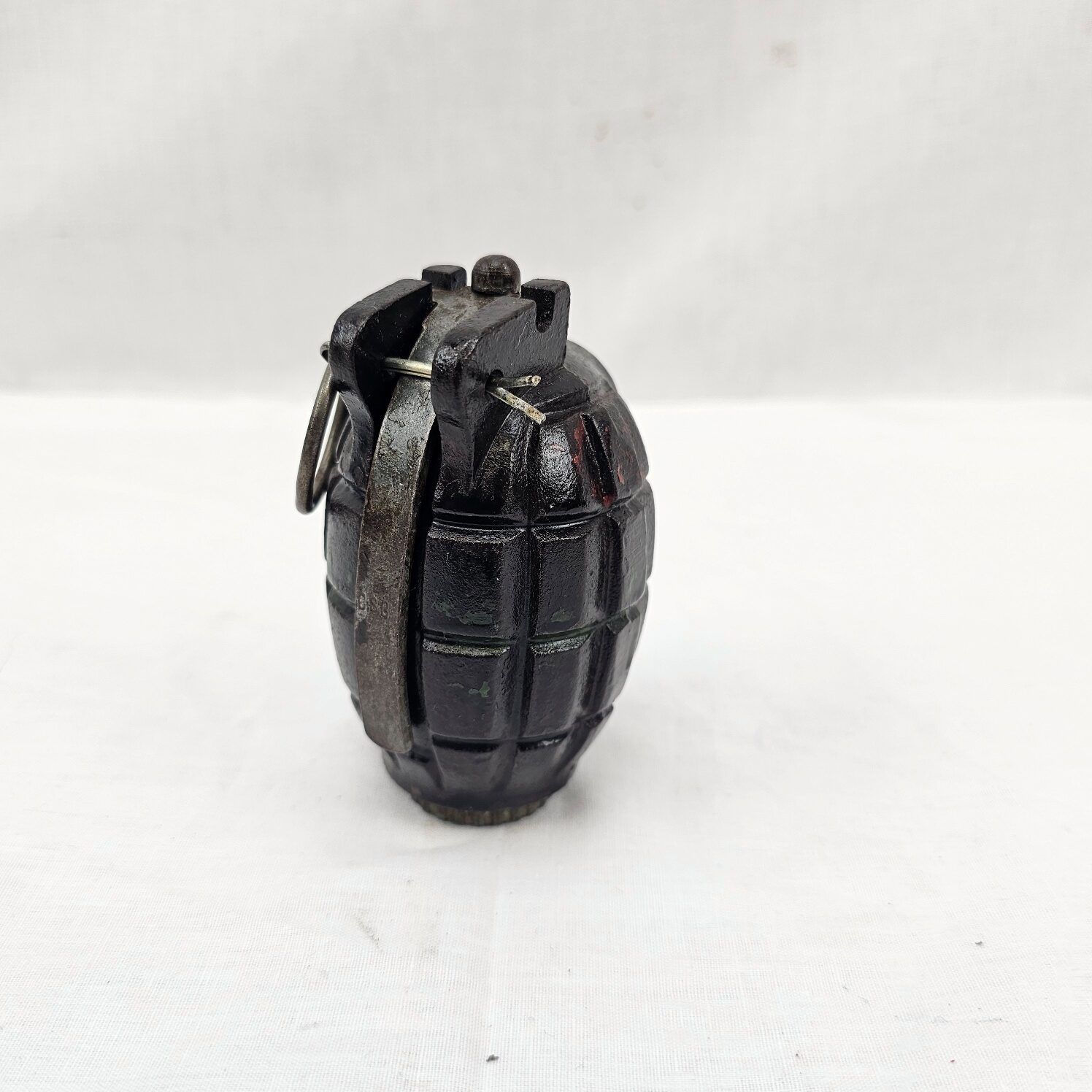
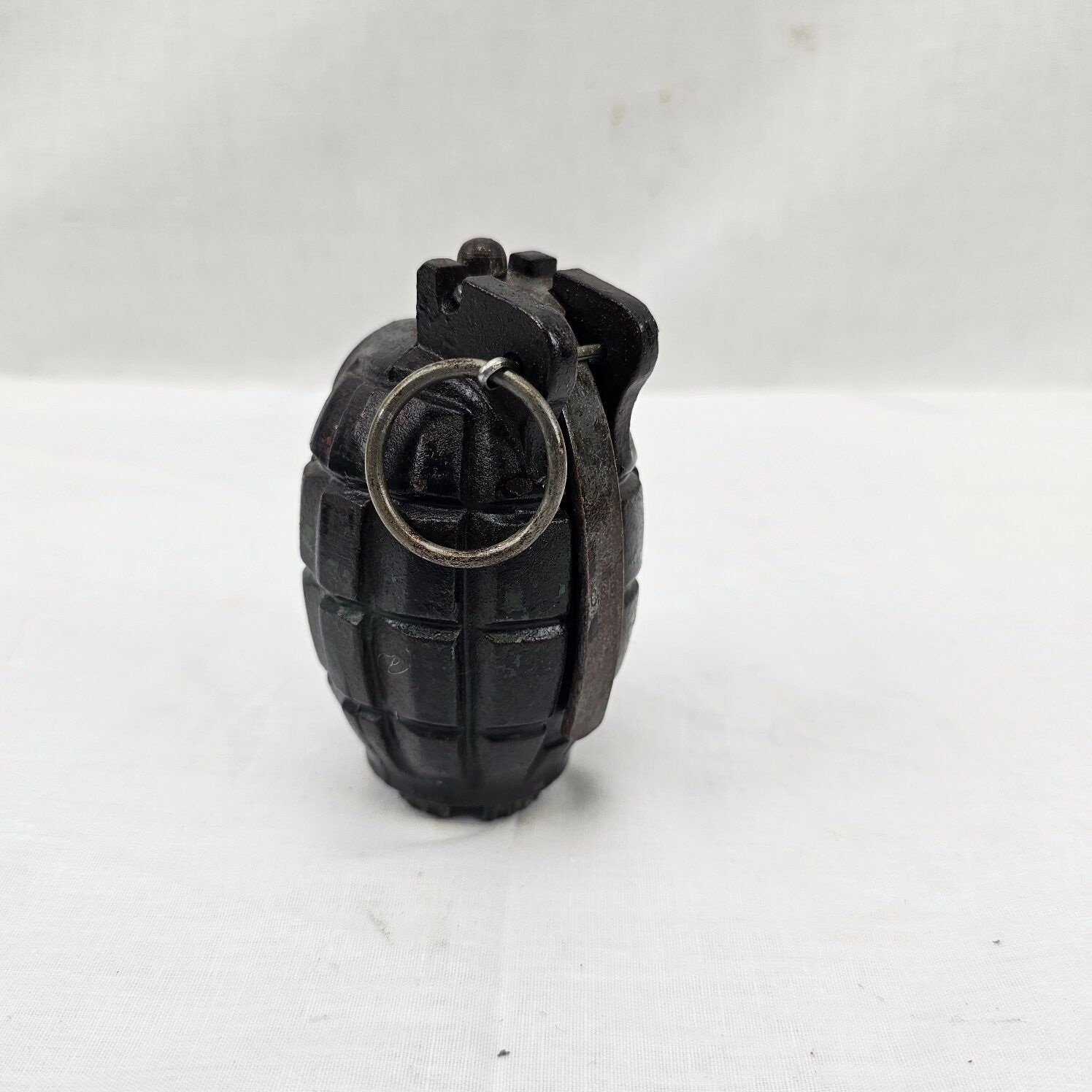
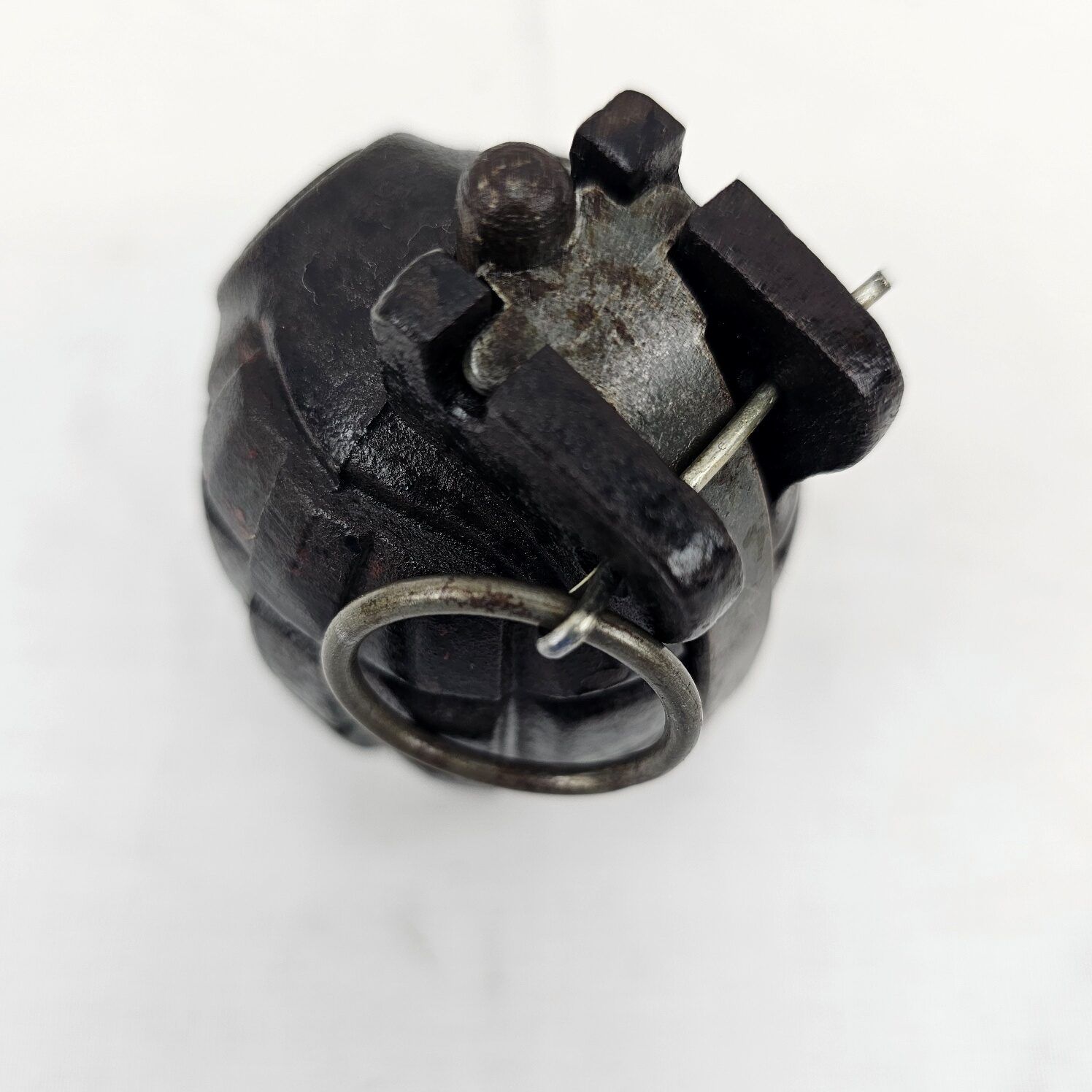
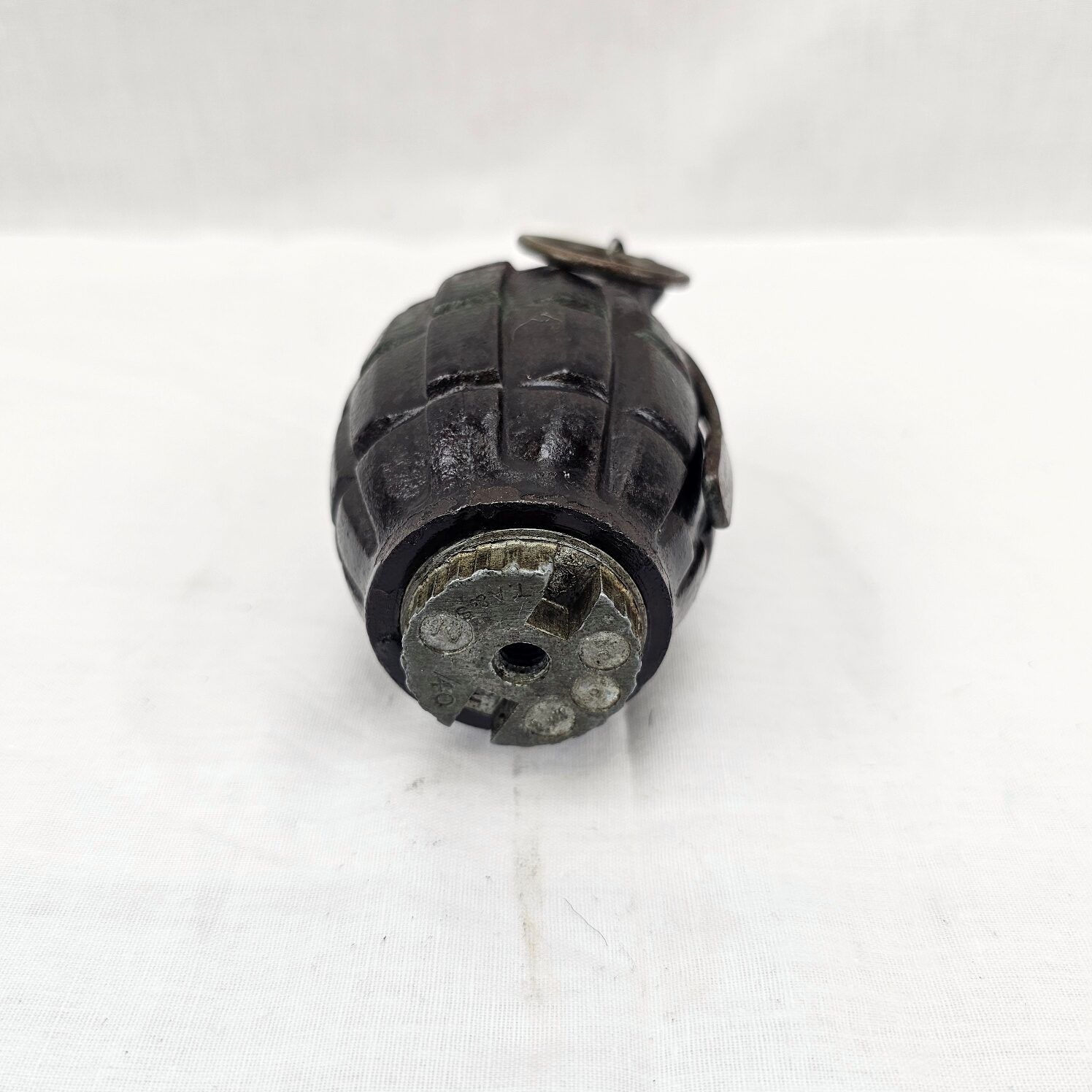
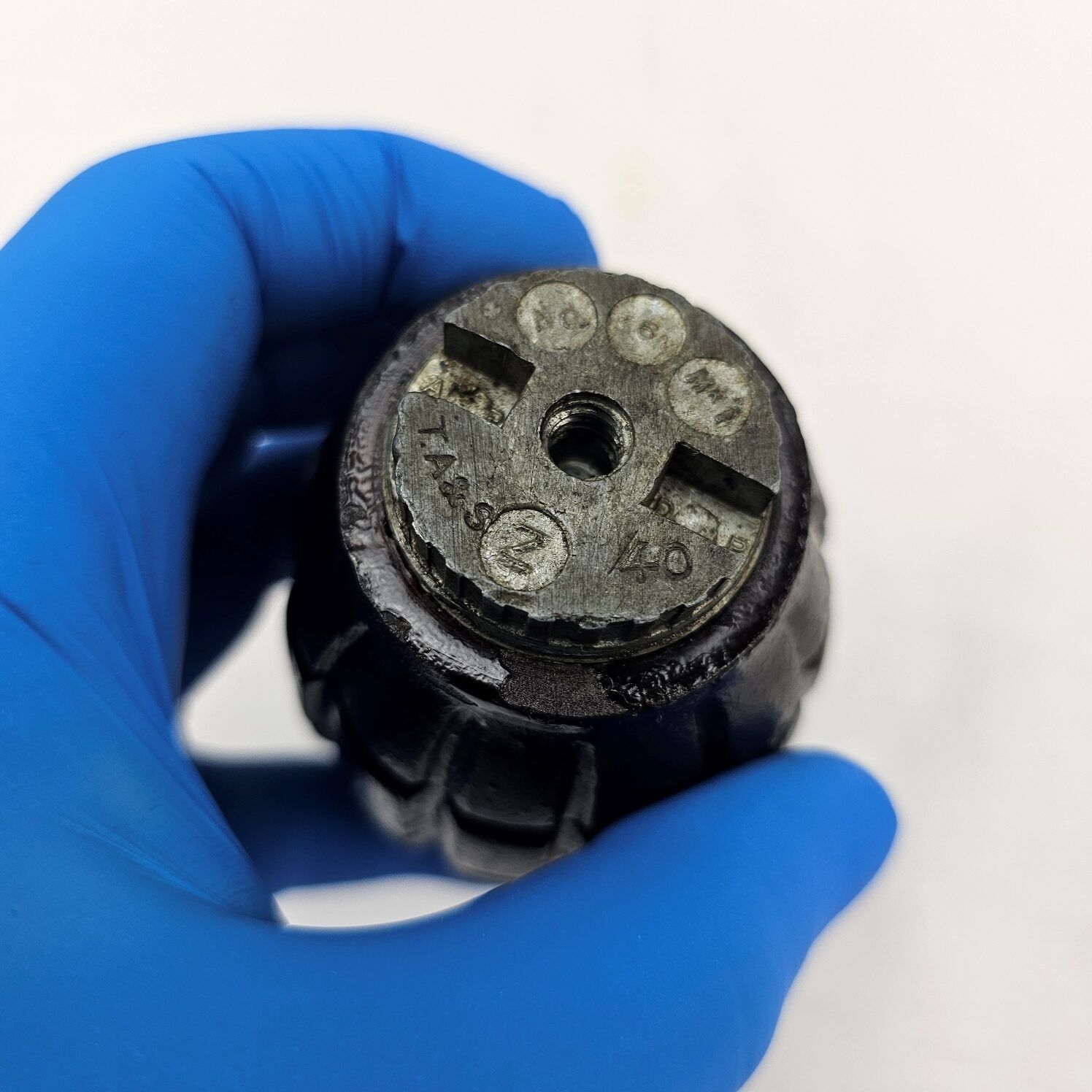
~ British No 36 WW2 Grenade ~
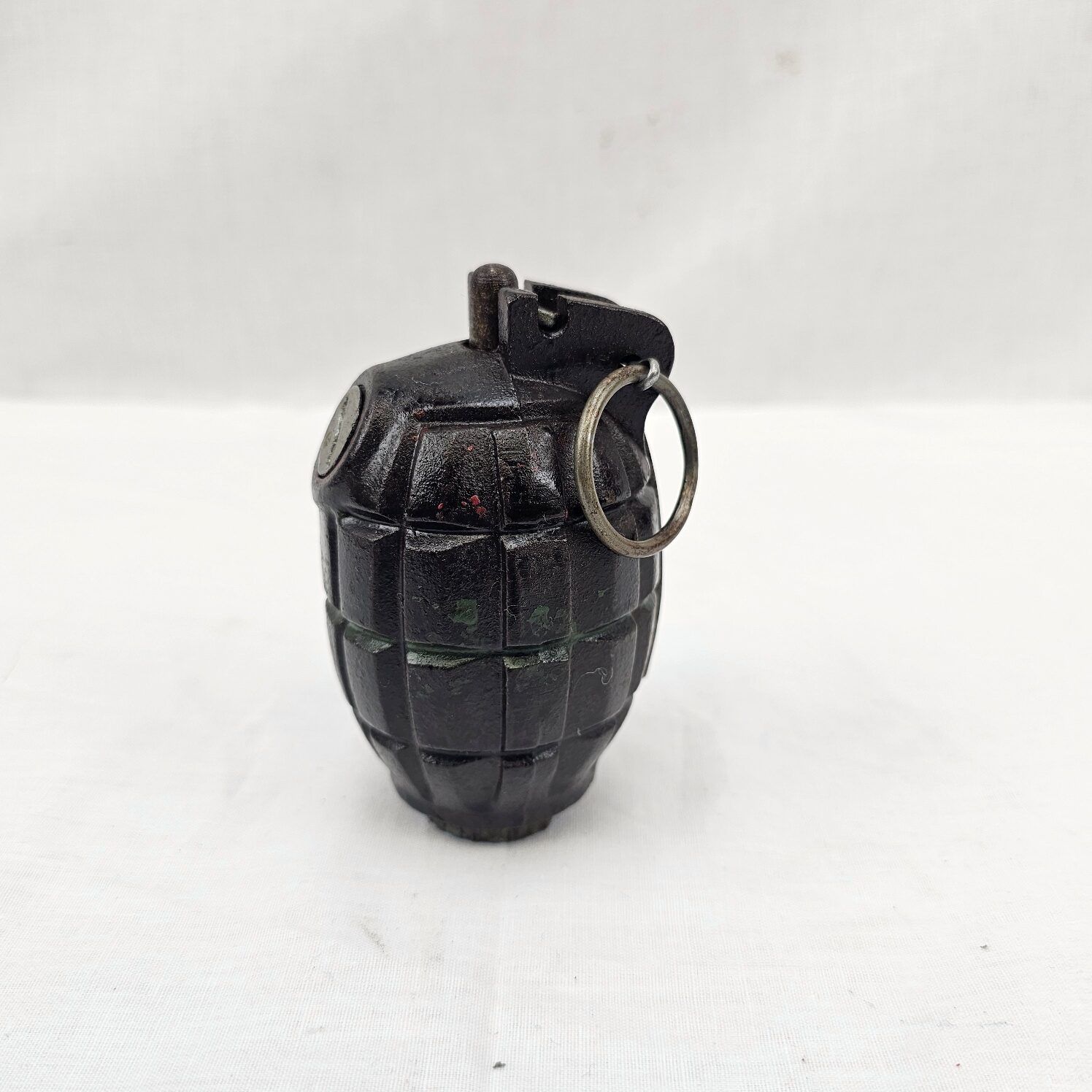
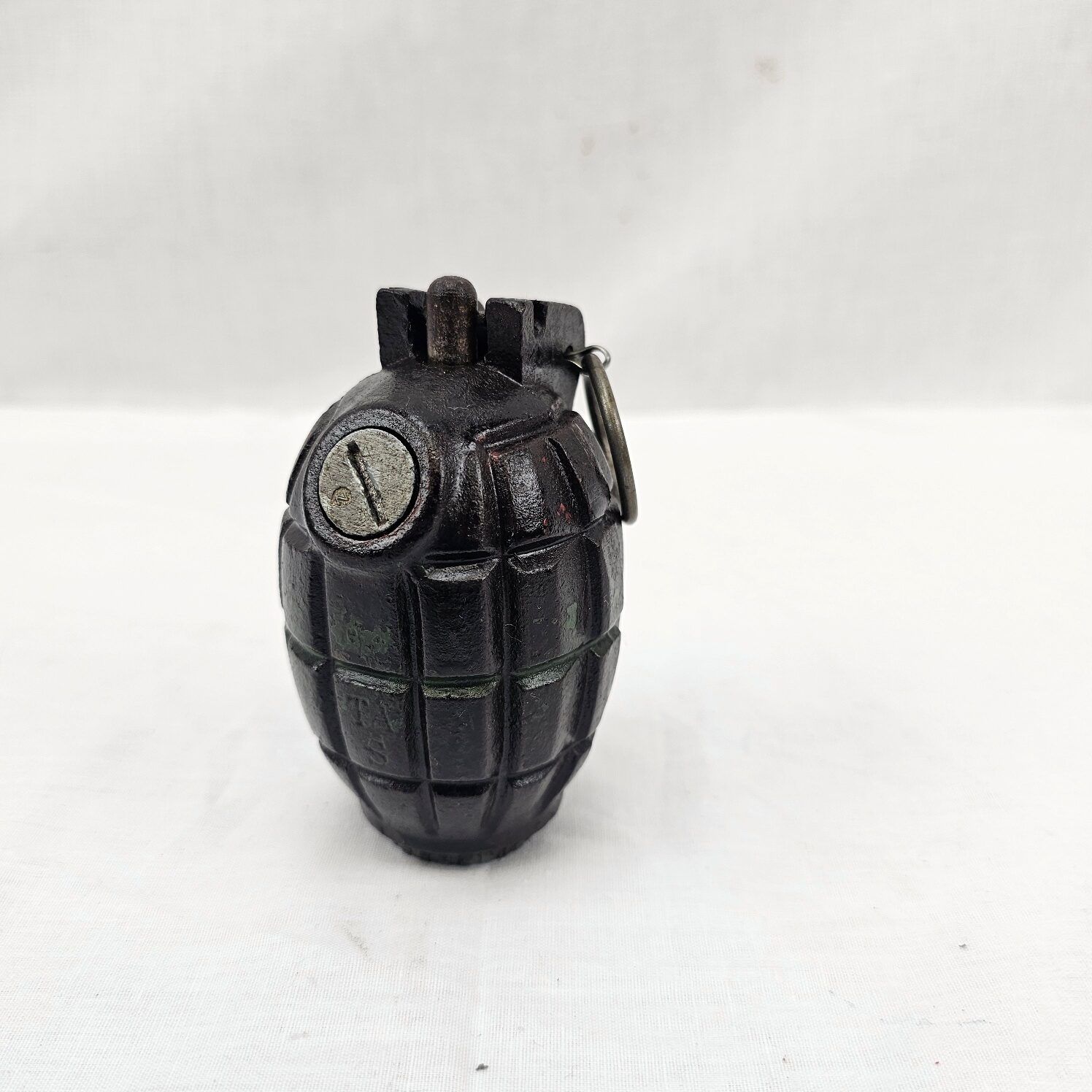
The British No. 36 grenade, also known as the Mills Bomb, was a hand grenade widely used during World War II. It was an improved version of the earlier No. 5 and No. 23 models and became the standard British hand grenade throughout the war.
Development and History:
Inventor: The Mills Bomb was invented by William Mills, a hand grenade designer from Sunderland, England.
Introduction: The No. 36 model was introduced in 1918, towards the end of World War I, but saw extensive use in World War II.
Purpose: Designed to be a versatile and reliable fragmentation grenade, it aimed to replace earlier grenade models with a more effective and user-friendly design.
Design and Features:
Fragmentation: The body of the grenade was made of cast iron with a grooved exterior, designed to produce a large number of high-velocity fragments upon detonation.
Weight: Approximately 765 grams (1.7 lbs).
Size: The grenade was 95 mm (3.7 inches) in height and 61 mm (2.4 inches) in diameter.
Filling: Initially filled with Amatol, later versions used TNT.
Fuze Mechanism: The No. 36 used a time-delay fuze, which typically provided a 4-second delay before detonation after the safety lever (spoon) was released.
Components:
Body: Made of cast iron, the grooved design helped in the effective fragmentation of the grenade.
Fuze Assembly:
Safety Pin: Held the safety lever in place, preventing accidental detonation.
Safety Lever (Spoon): Released when the grenade was thrown, allowing the striker to ignite the delay fuze.
Striker and Cap: The striker was spring-loaded and would ignite the fuze upon release of the safety lever.
Detonator: Activated by the striker, leading to the explosion of the main charge.
Operation:
Preparation: The soldier would remove the safety pin while firmly holding the safety lever.
Throwing: Upon throwing the grenade, the safety lever would release, allowing the striker to ignite the delay fuze.
Detonation: The grenade would explode after the delay, producing lethal fragments.
Advantages:
Reliability: The design was robust and less prone to accidental detonation compared to earlier models.
Ease of Use: Simple to operate, making it suitable for soldiers with minimal training.
Versatility: Could be used as a hand grenade or fired from a rifle with the appropriate adapter.
Disadvantages:
Weight: Heavier compared to some other grenades, potentially reducing the throwing distance.
Production Complexity: The cast iron body and intricate fuze mechanism made it more complex to manufacture.
Usage in WWII:
Standard Issue: The No. 36 was the standard grenade for British and Commonwealth forces throughout World War II.
Combat Situations: Widely used in various combat scenarios including trench warfare, urban combat, and against enemy fortifications.
Training: Extensively used in training to ensure soldiers were proficient in its use.
Legacy:
The No. 36 Mills Bomb is remembered as a symbol of British ingenuity in military ordnance. Its design influenced future grenade developments, and it remained in service well beyond World War II, illustrating its effectiveness and reliability as a hand grenade.
Post-WWII:
Continued Use: Used by British and Commonwealth forces in post-WWII conflicts.
Variants: Several variants were developed, including practice and smoke versions.
Replacement: Eventually replaced by more modern grenades, but the design principles of the Mills Bomb influenced future grenade technology.