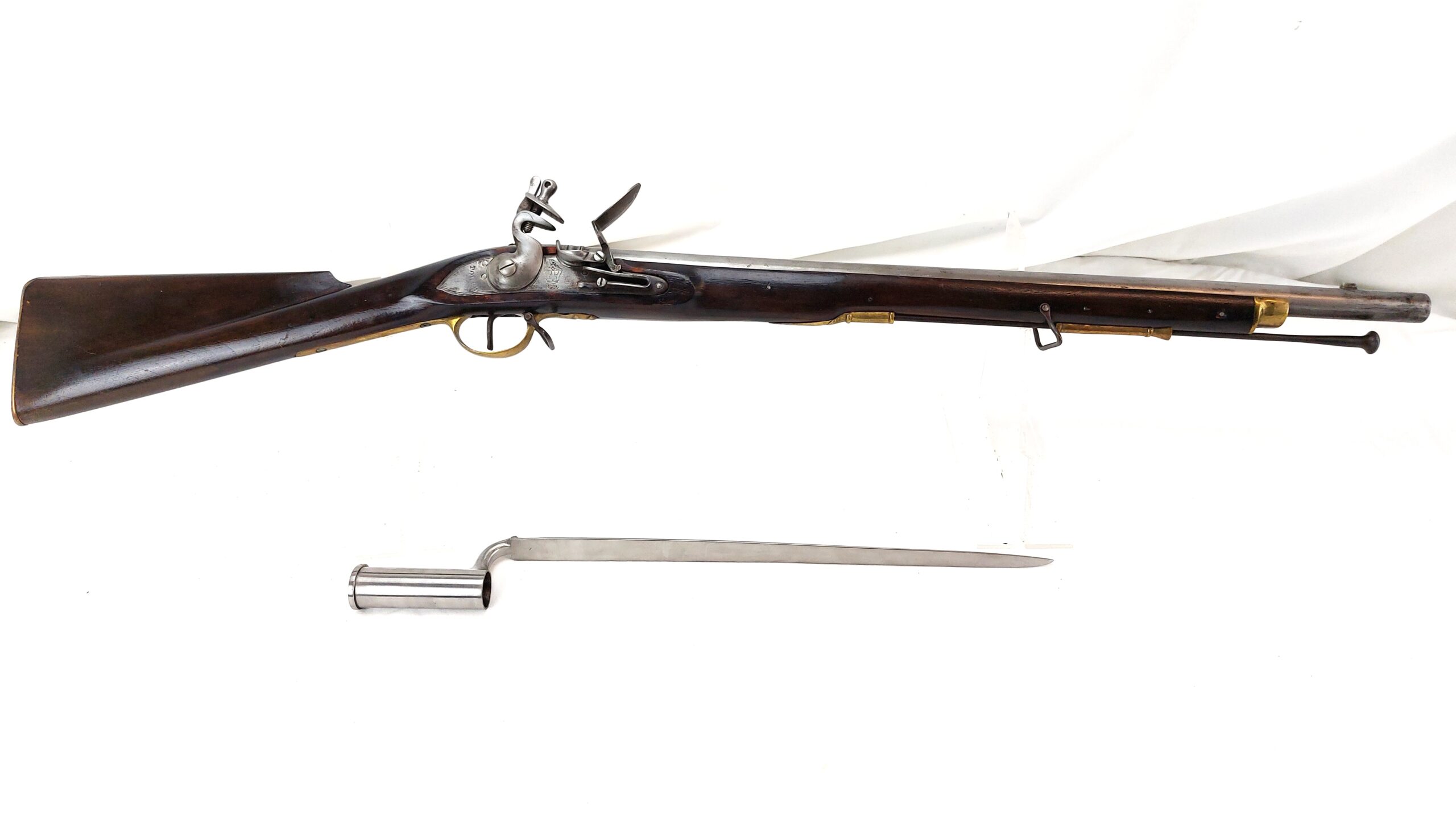
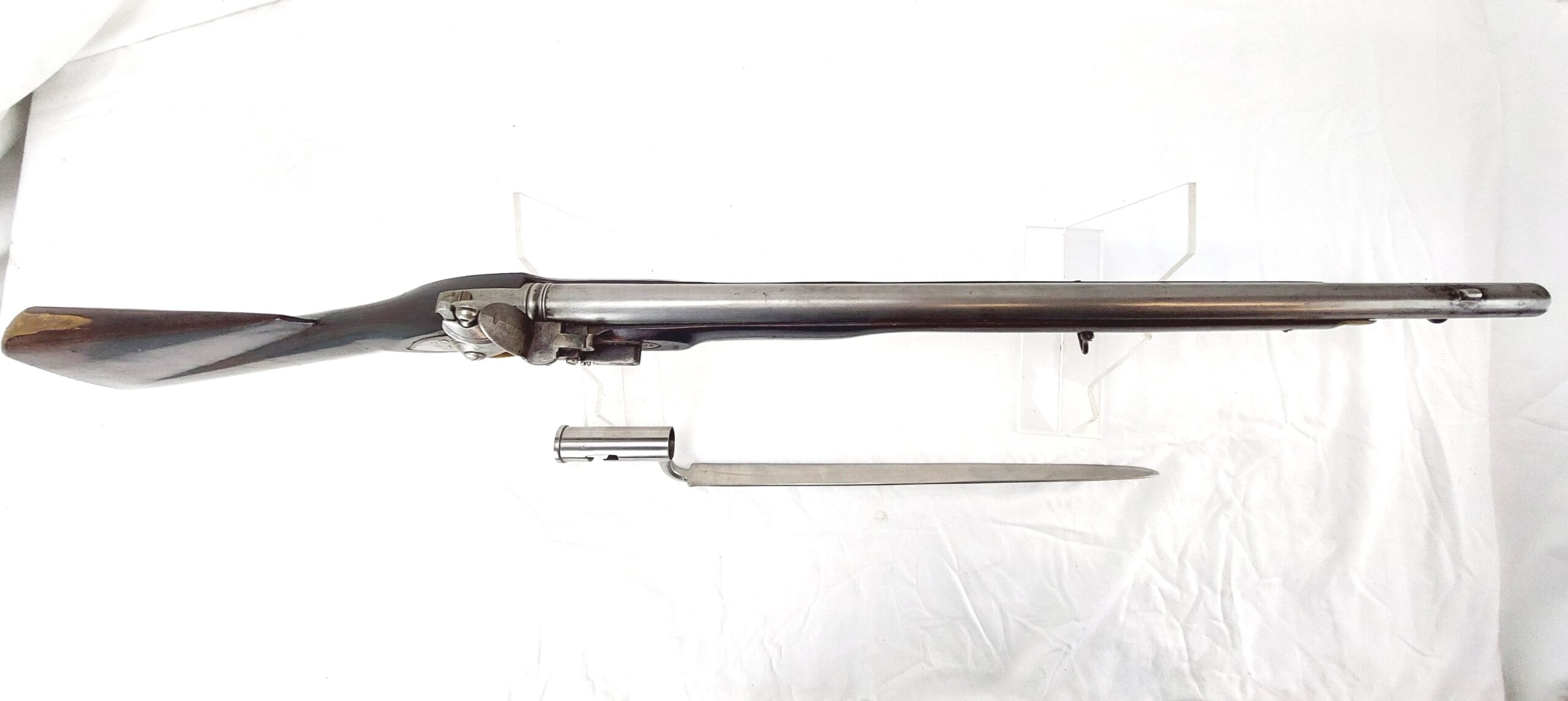
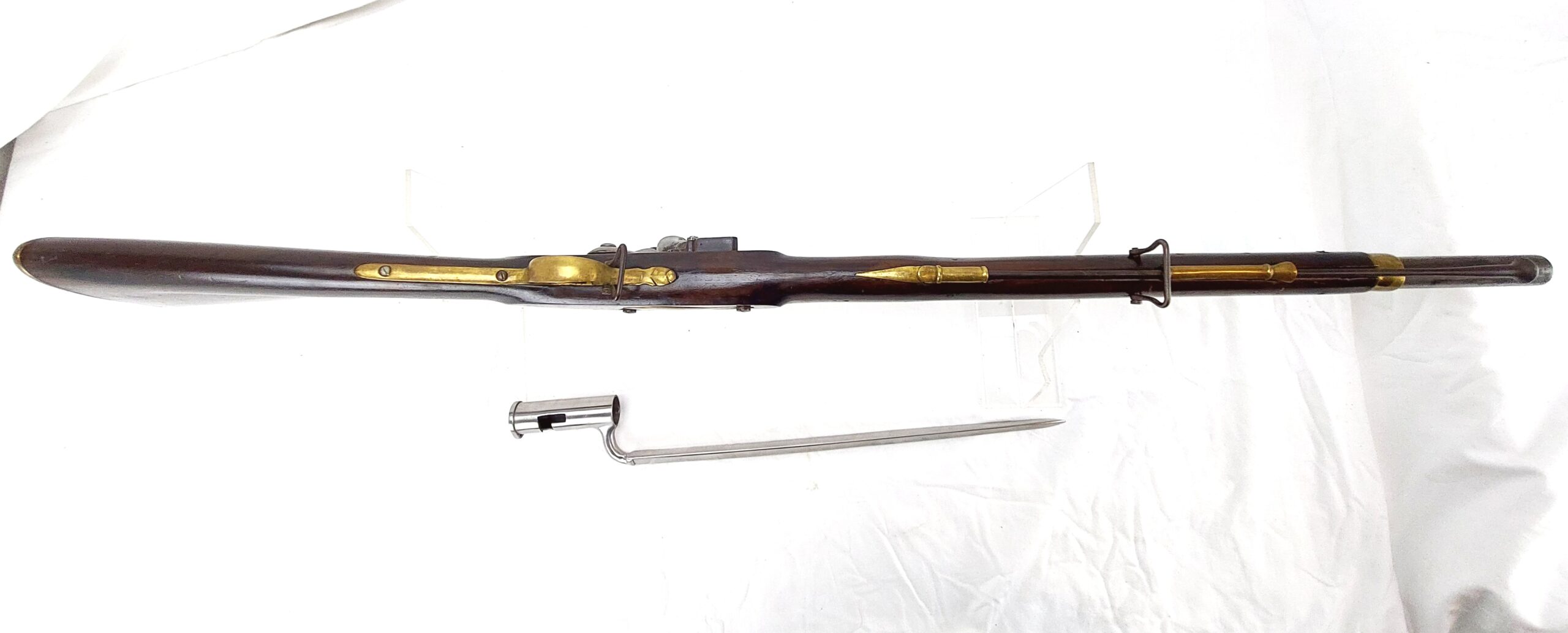
*Deactivated British, Napoleonic Period c.1790–1815, Tower Flintlock Brown Bess Musket (Sea Service / Carbine Length) with Replica Socket Bayonet *
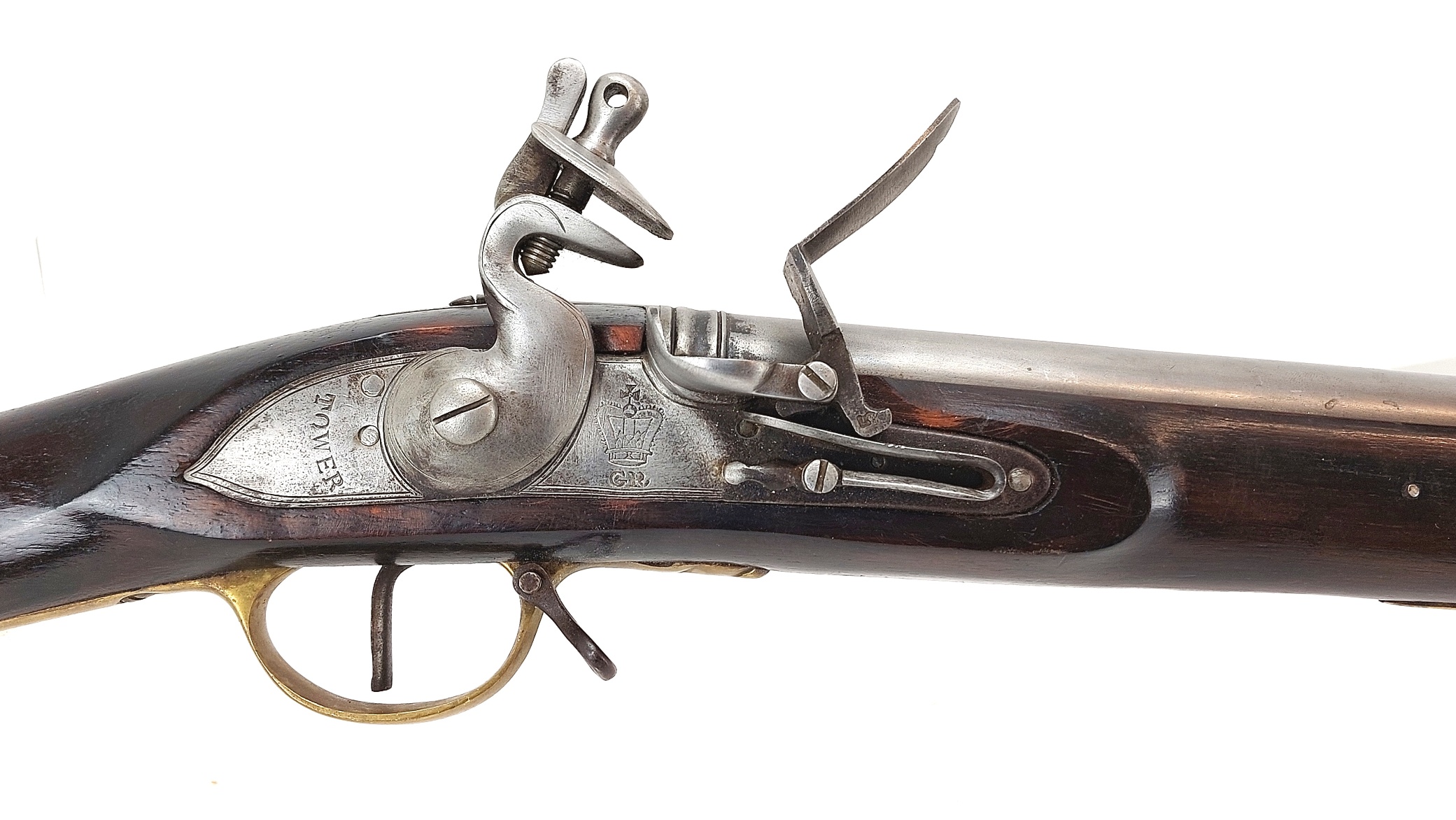
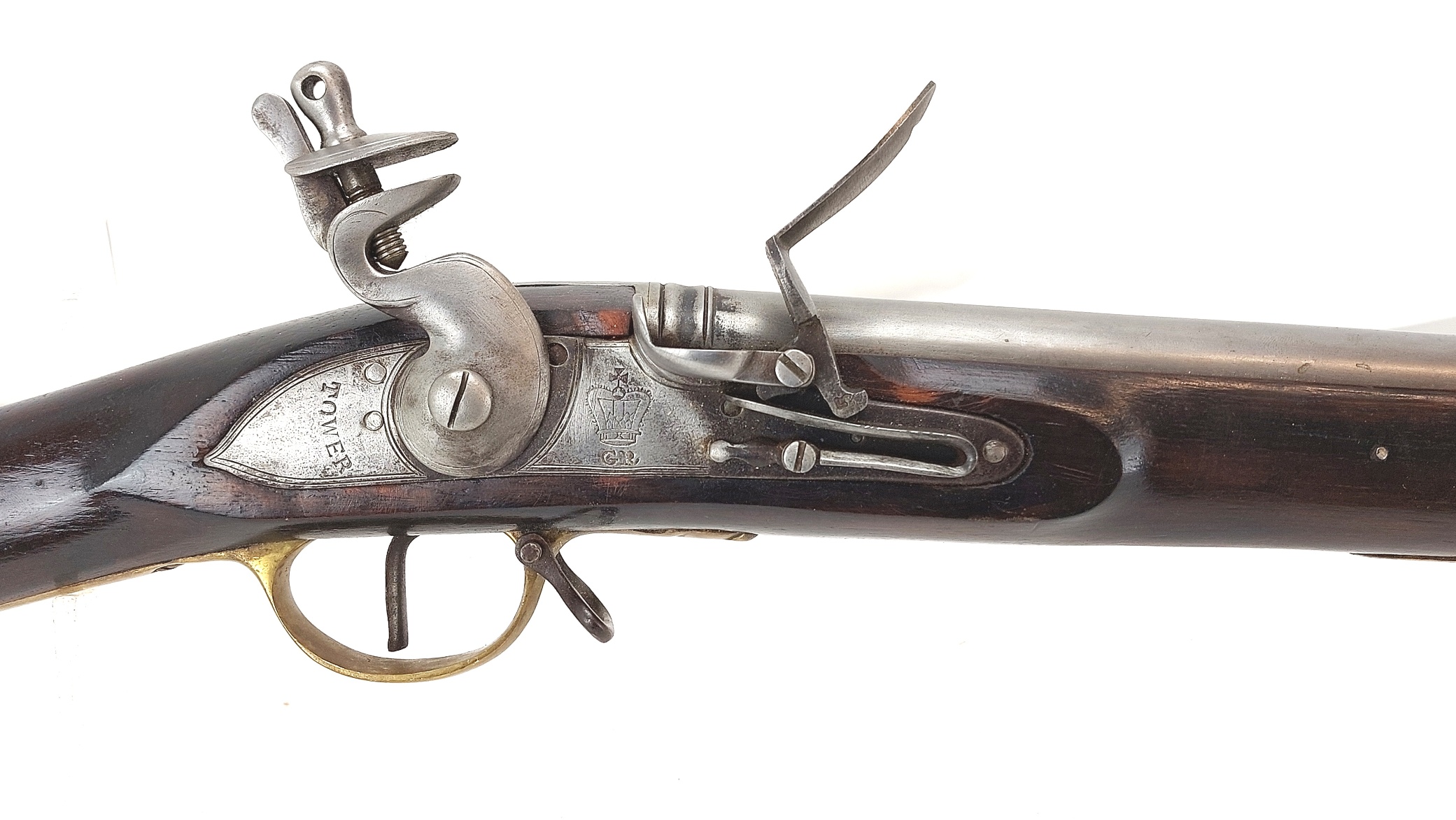
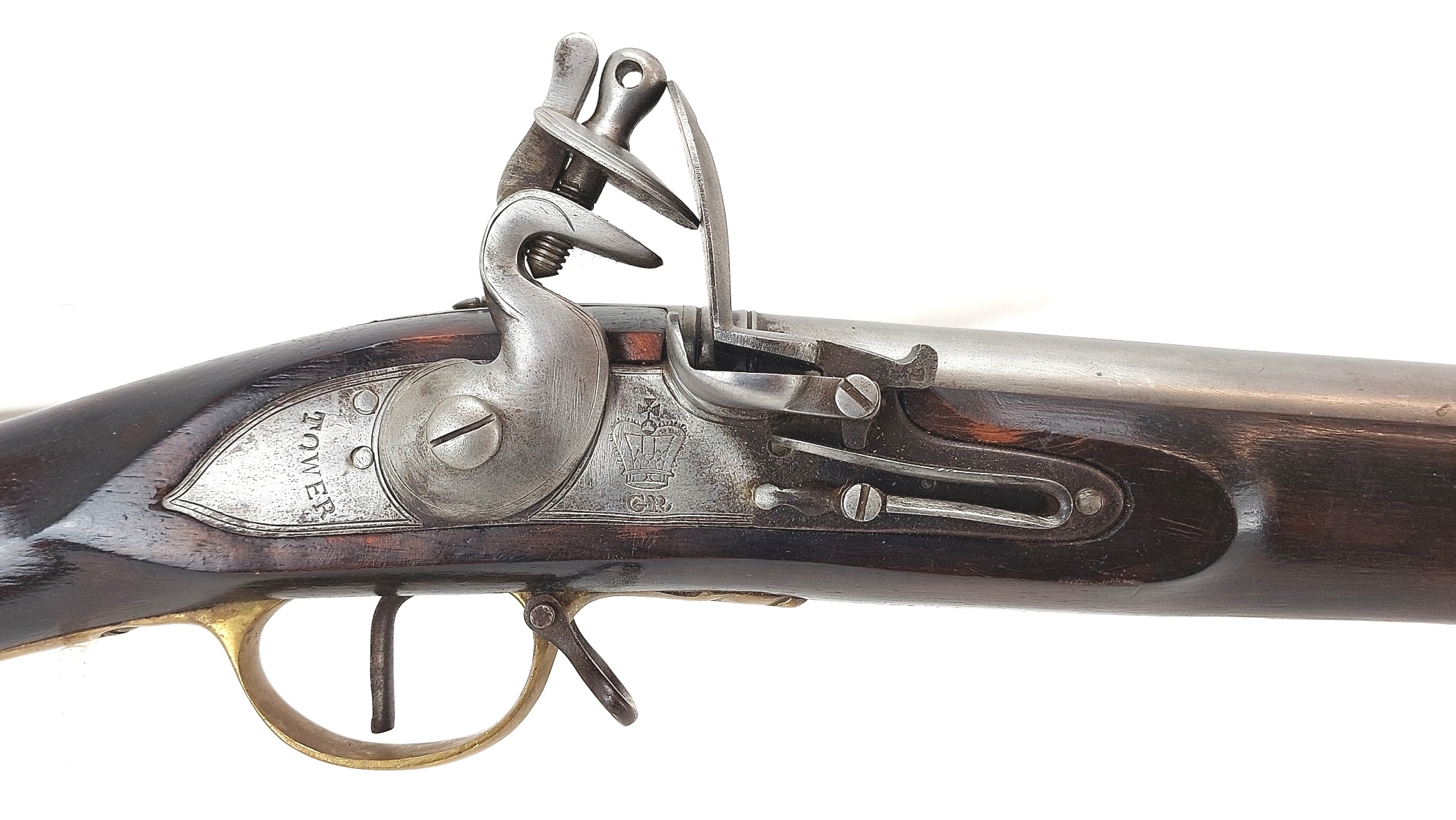
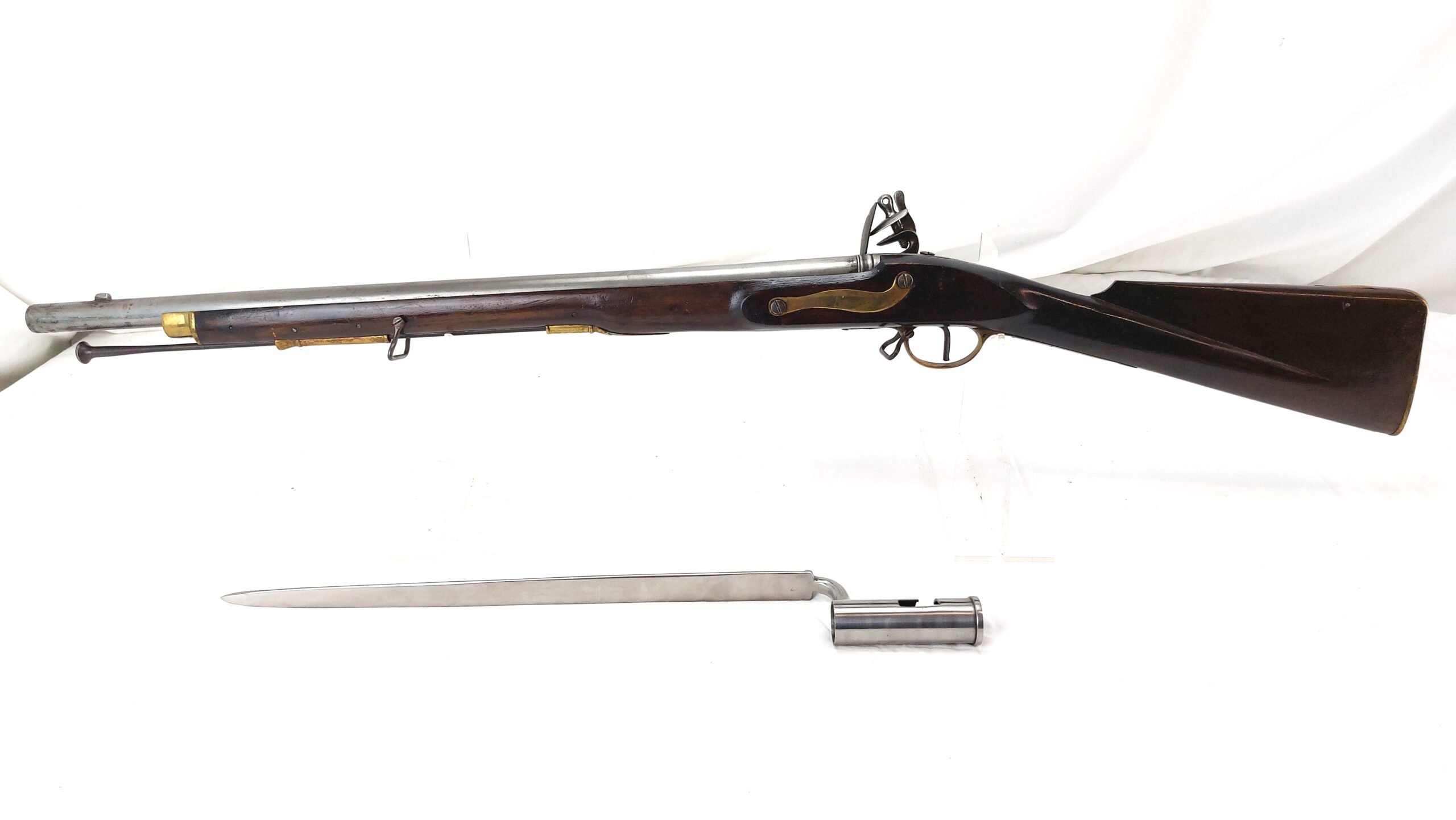
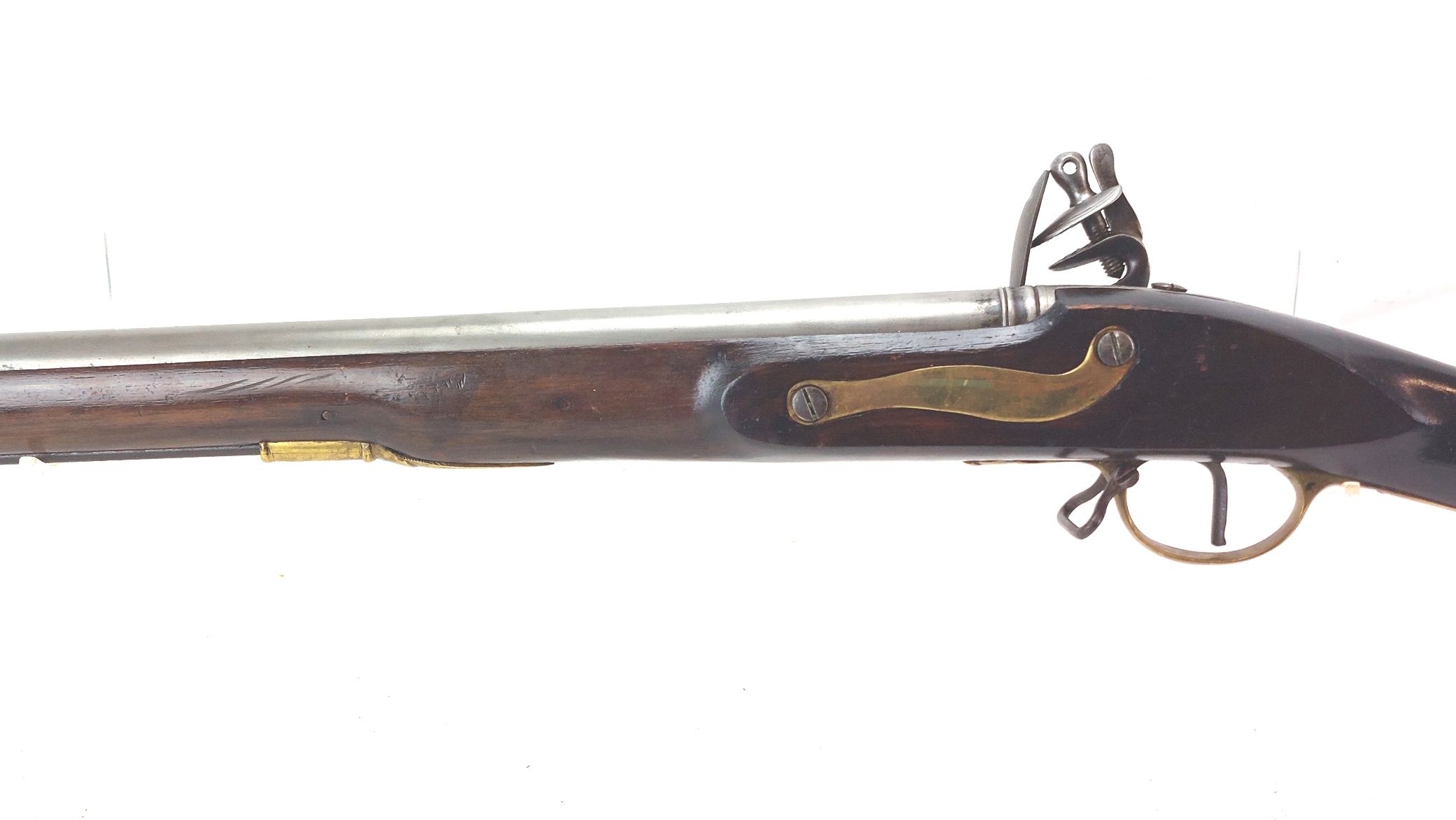
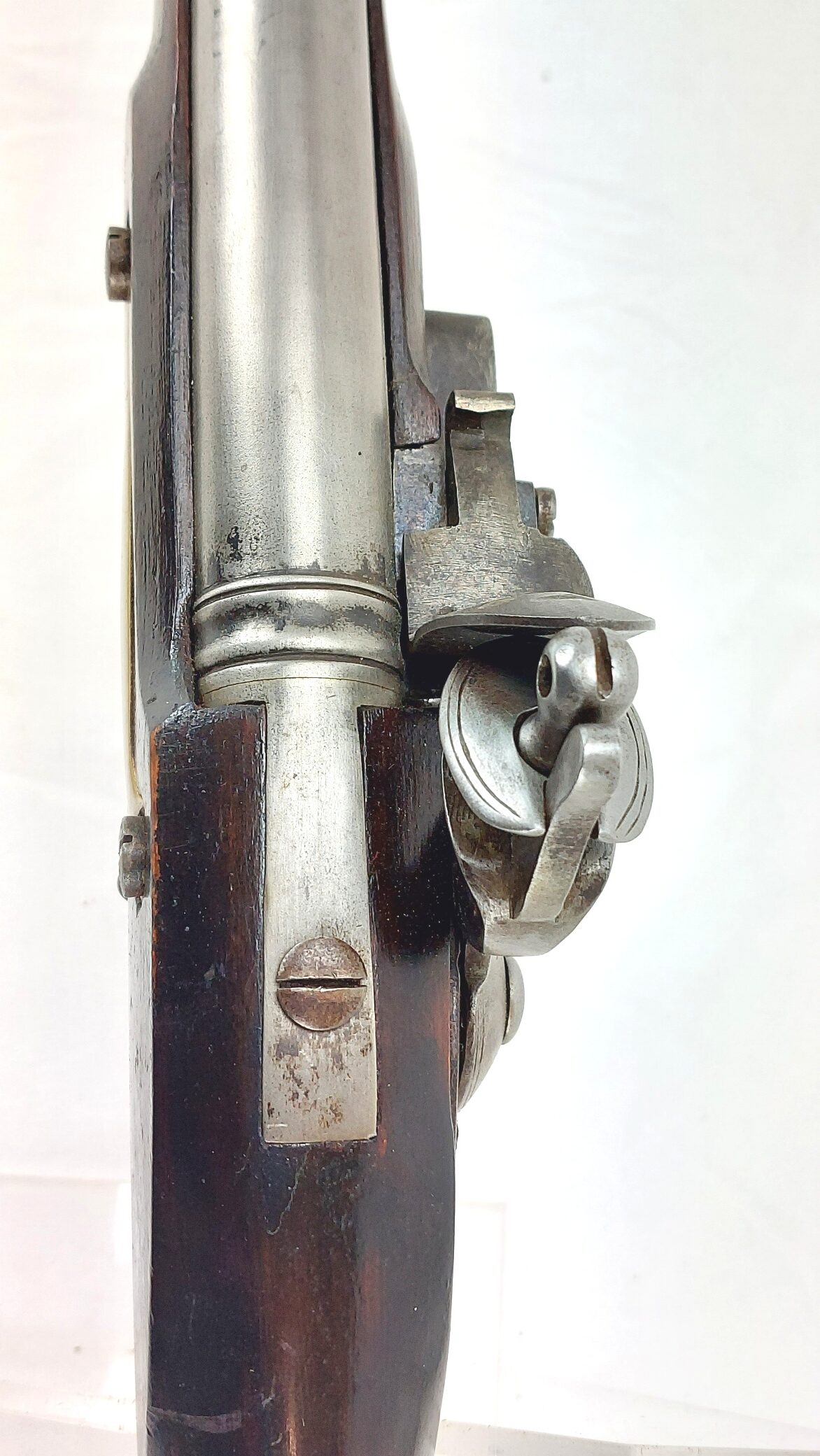
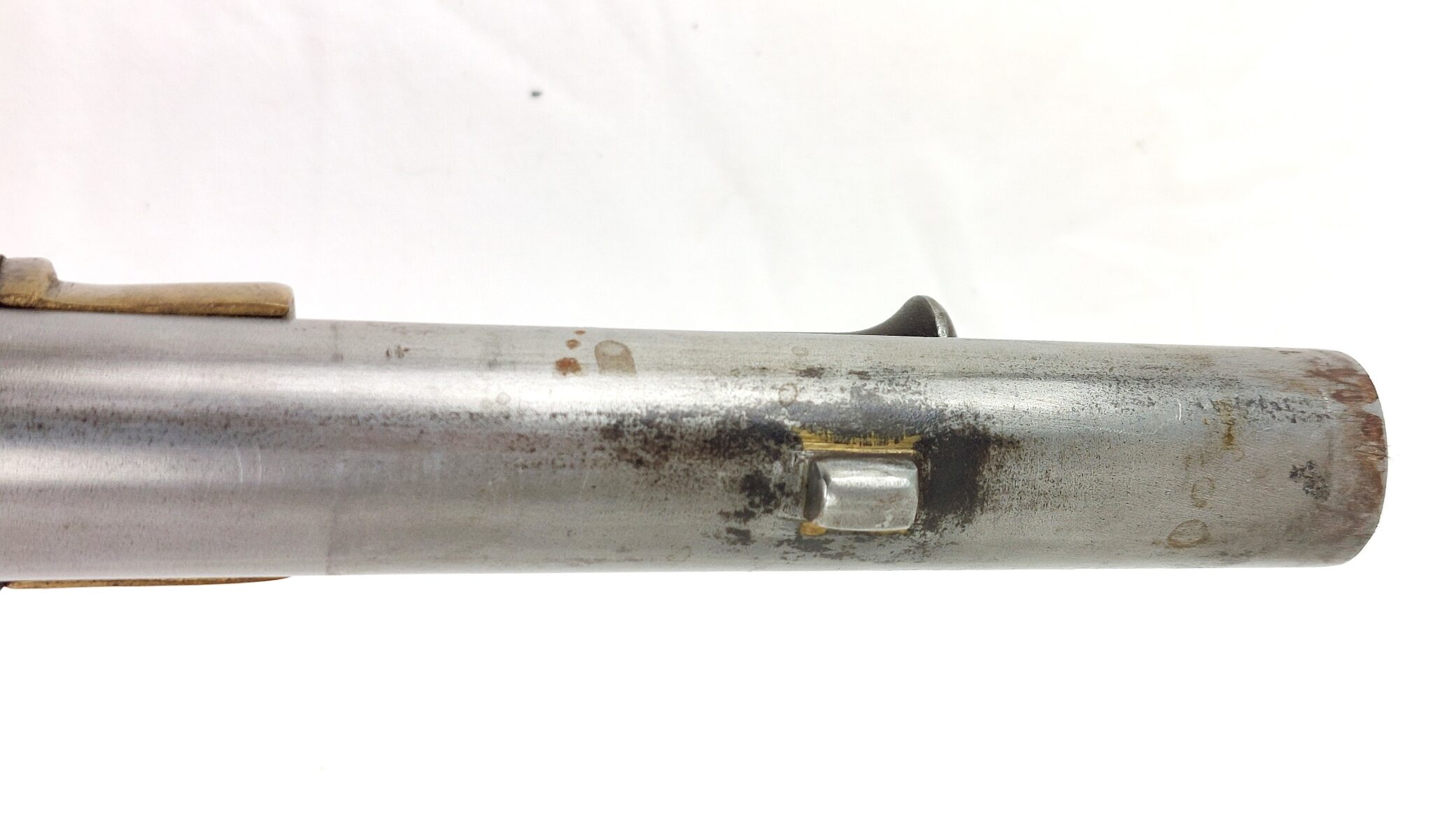
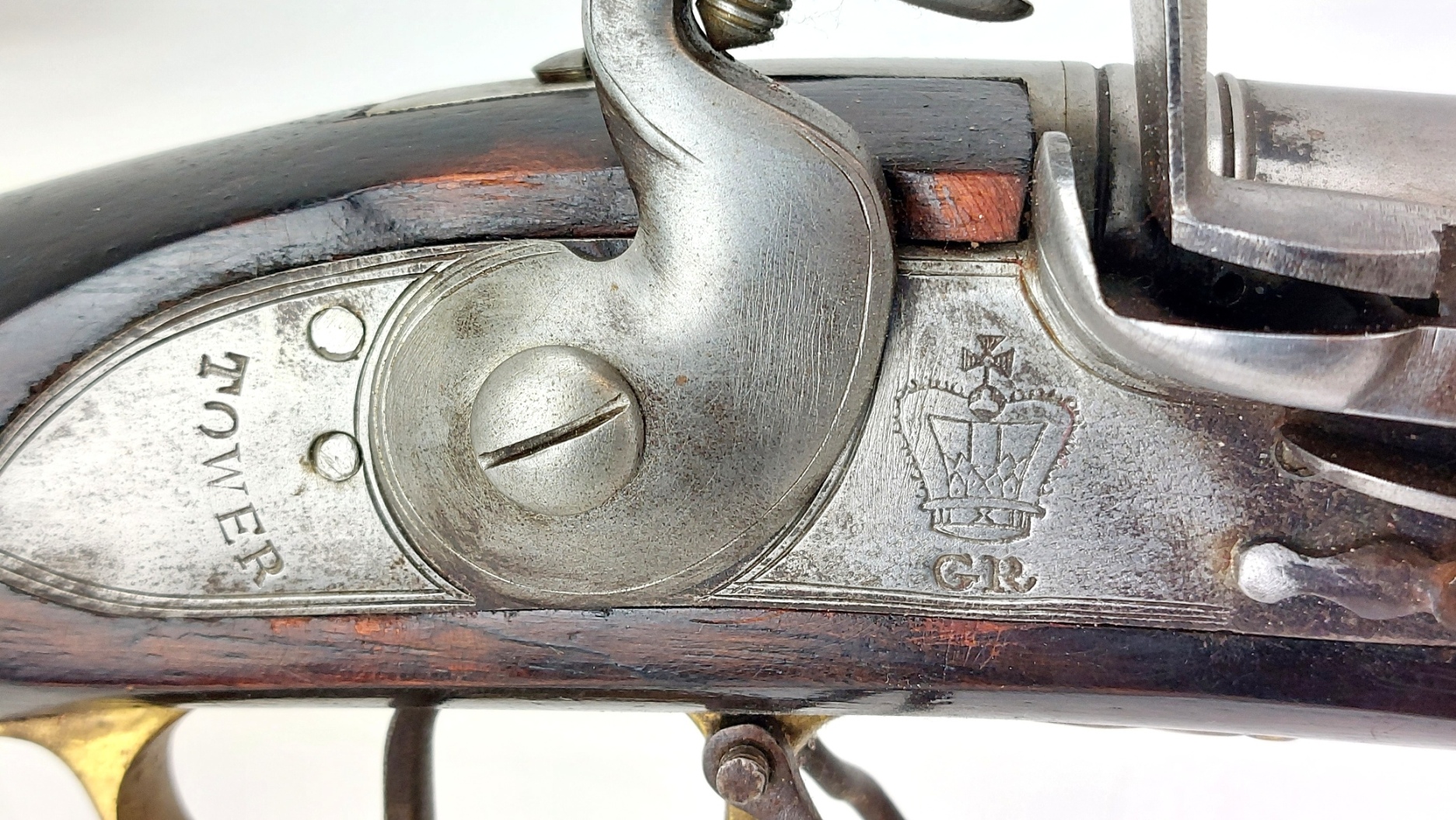
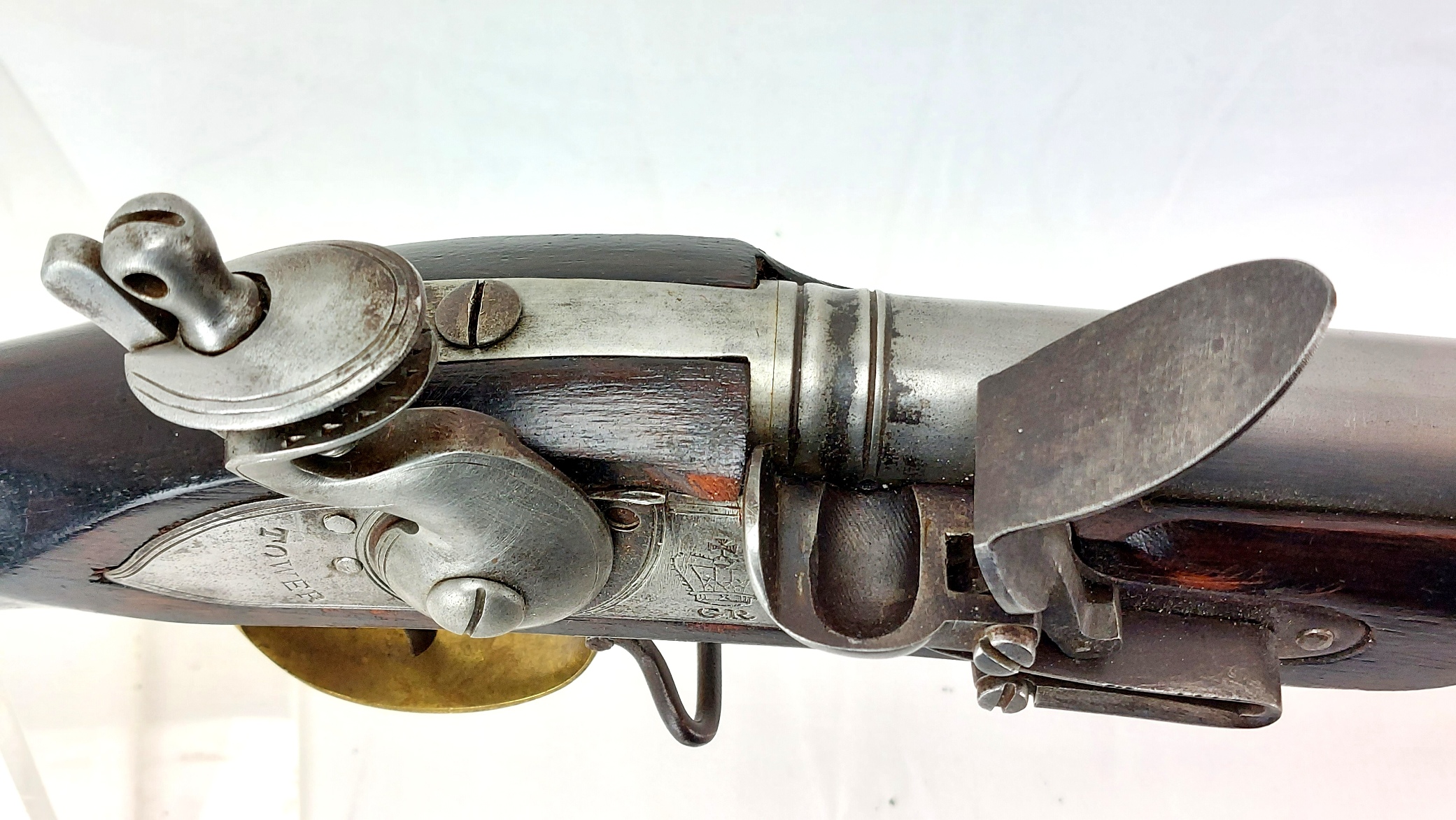
A heavily restored (part original components and part replica components) and deactivated (slotted barrel) British flintlock musket of shortened sea-service or carbine length, the lock plate clearly marked TOWER and stamped with the Crown over GR cypher of King George III, indicating manufacture under the authority of the British Board of Ordnance during the Napoleonic era.
Most probably this piece was used as a display example in a museum or regimental headquarters and the barrel was slotted to make it inoperative, even if this is not a requirement on obsolete caliber wapons.
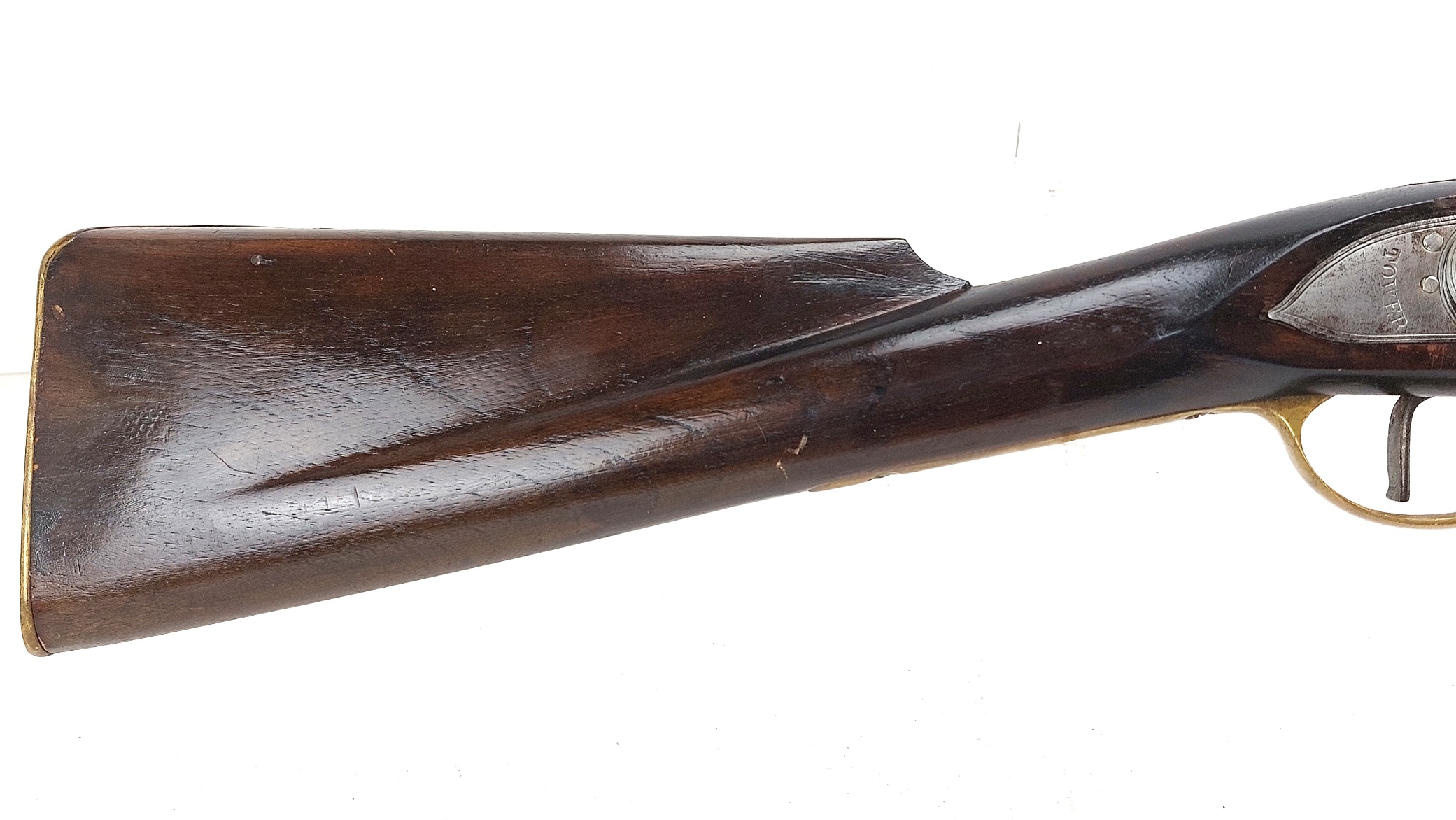
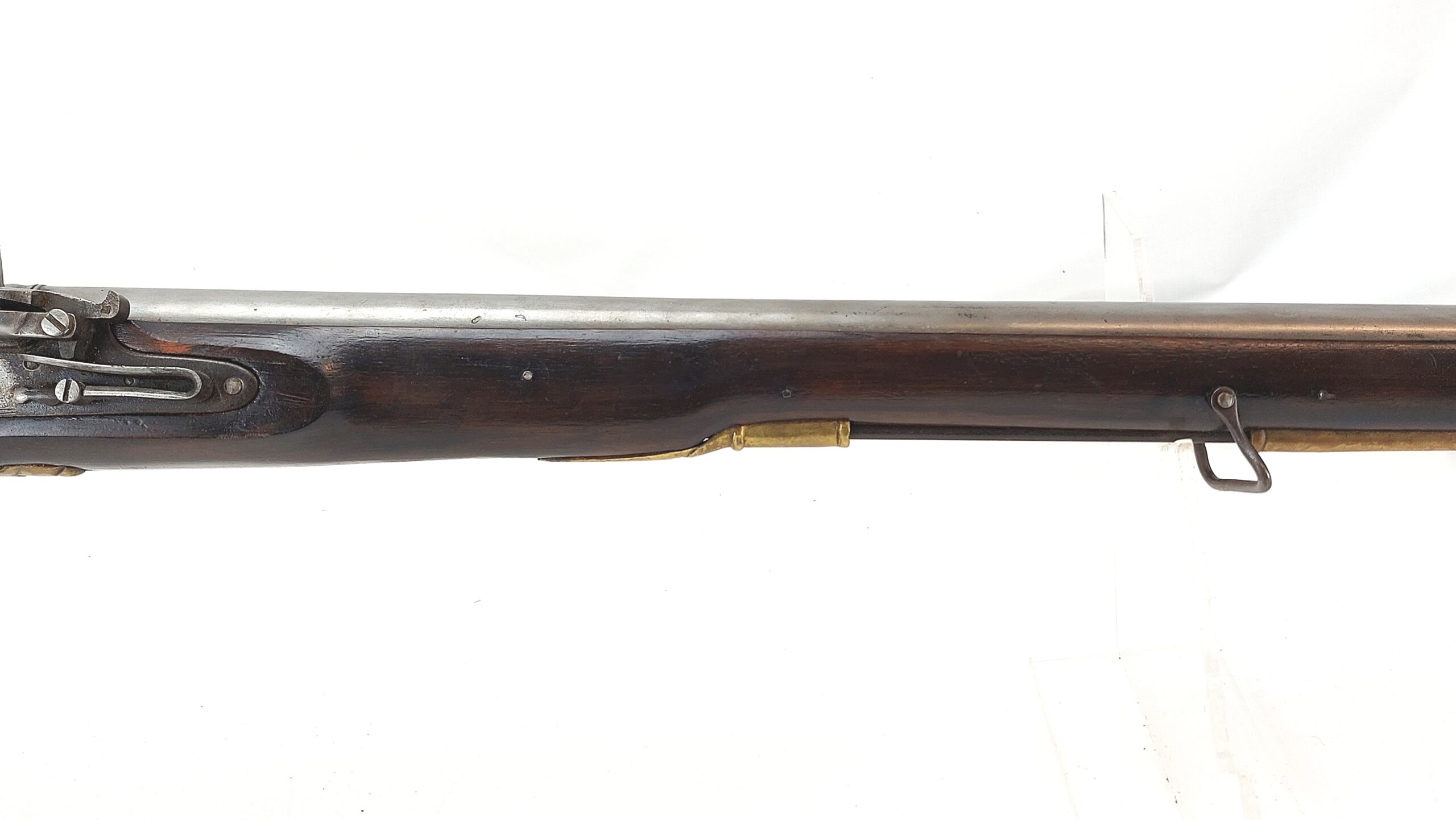
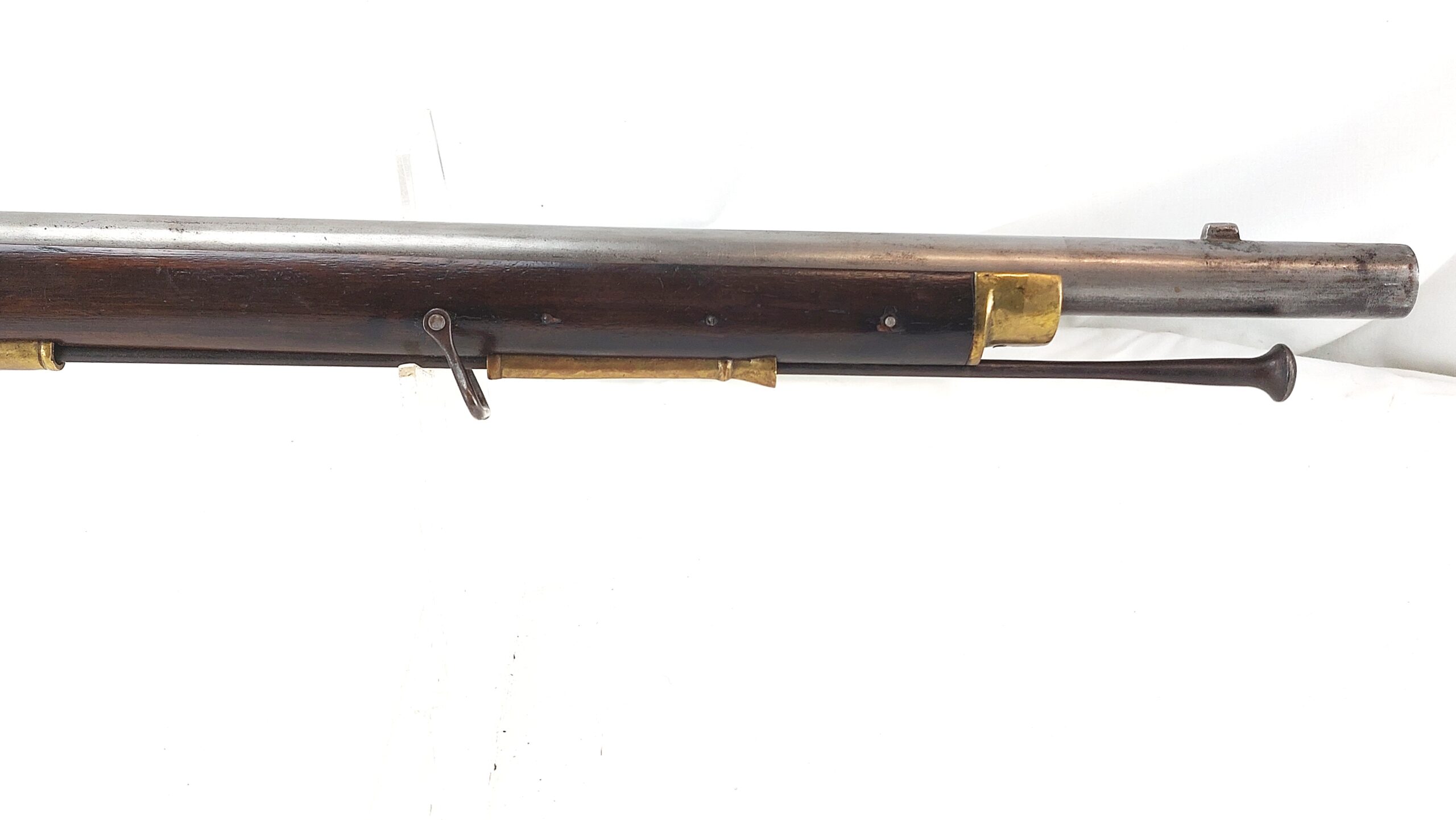
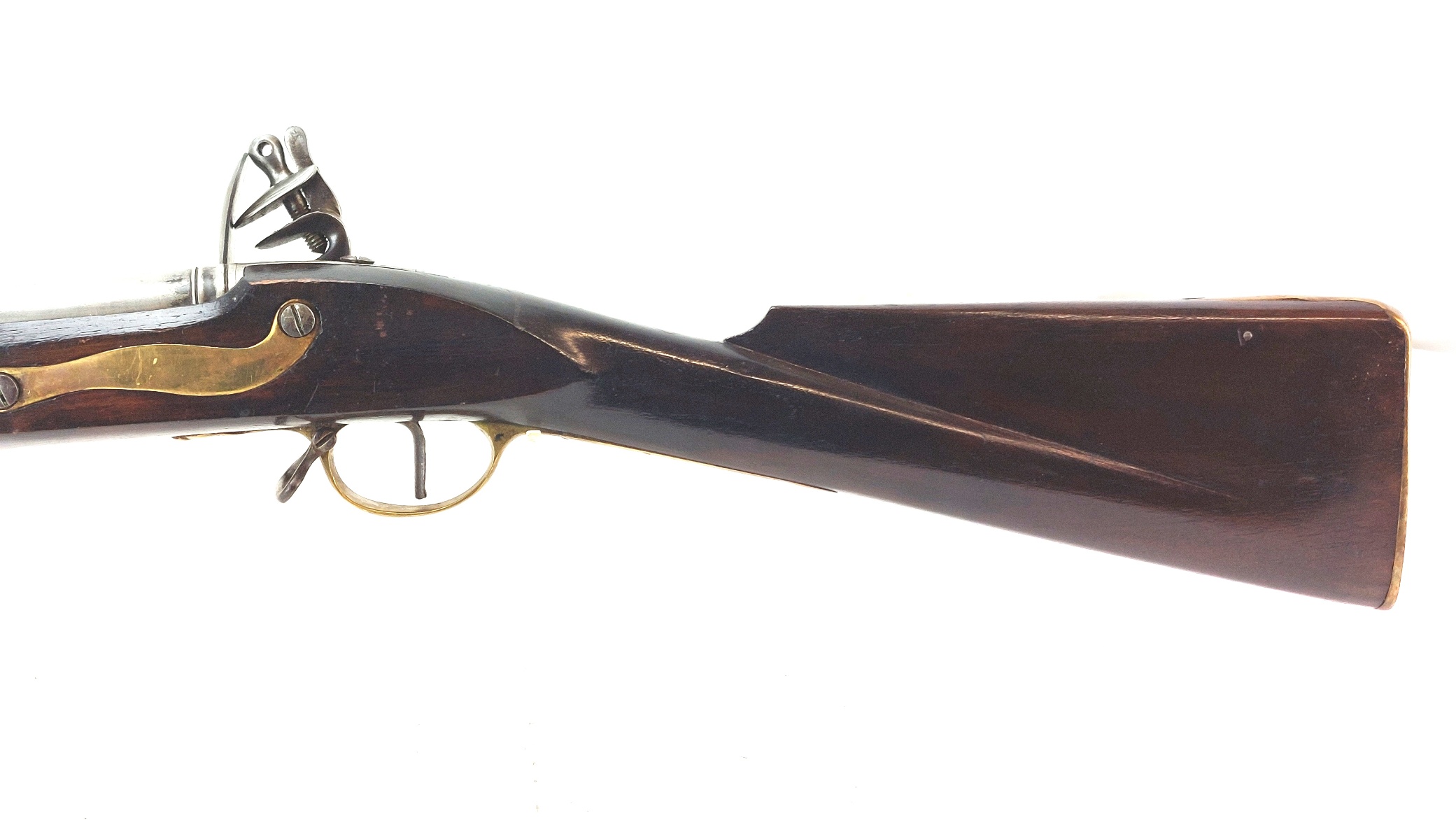
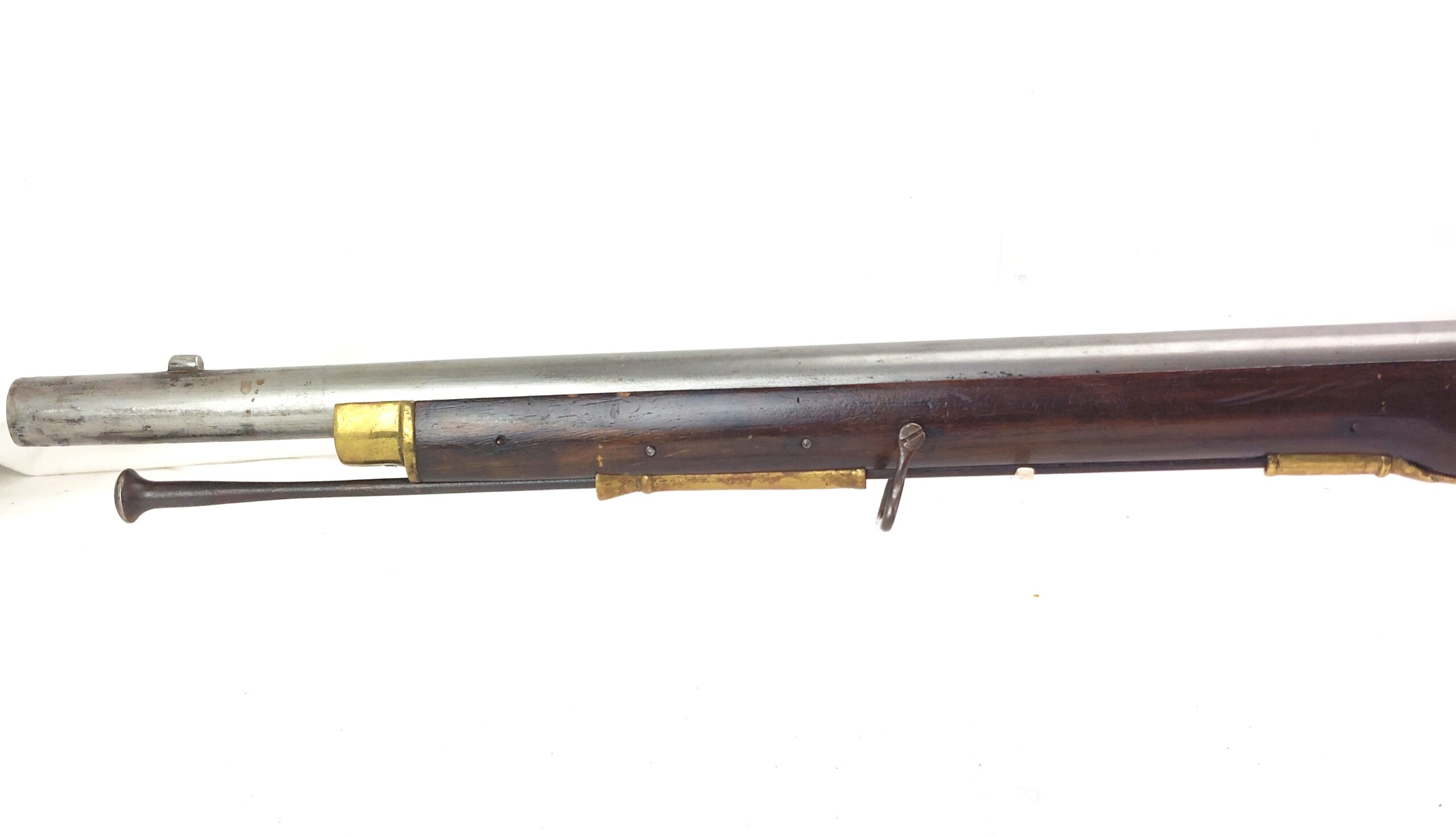
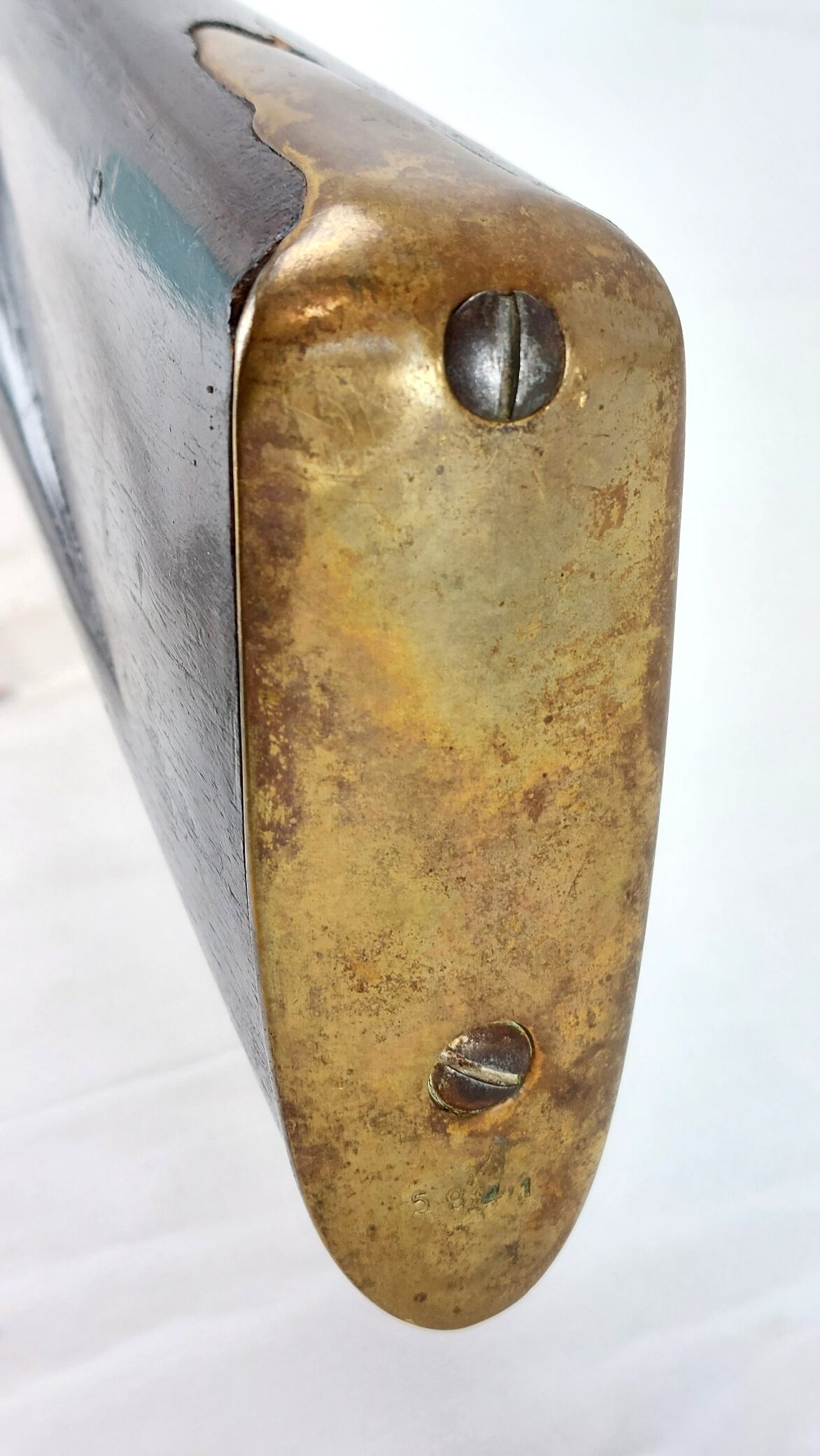
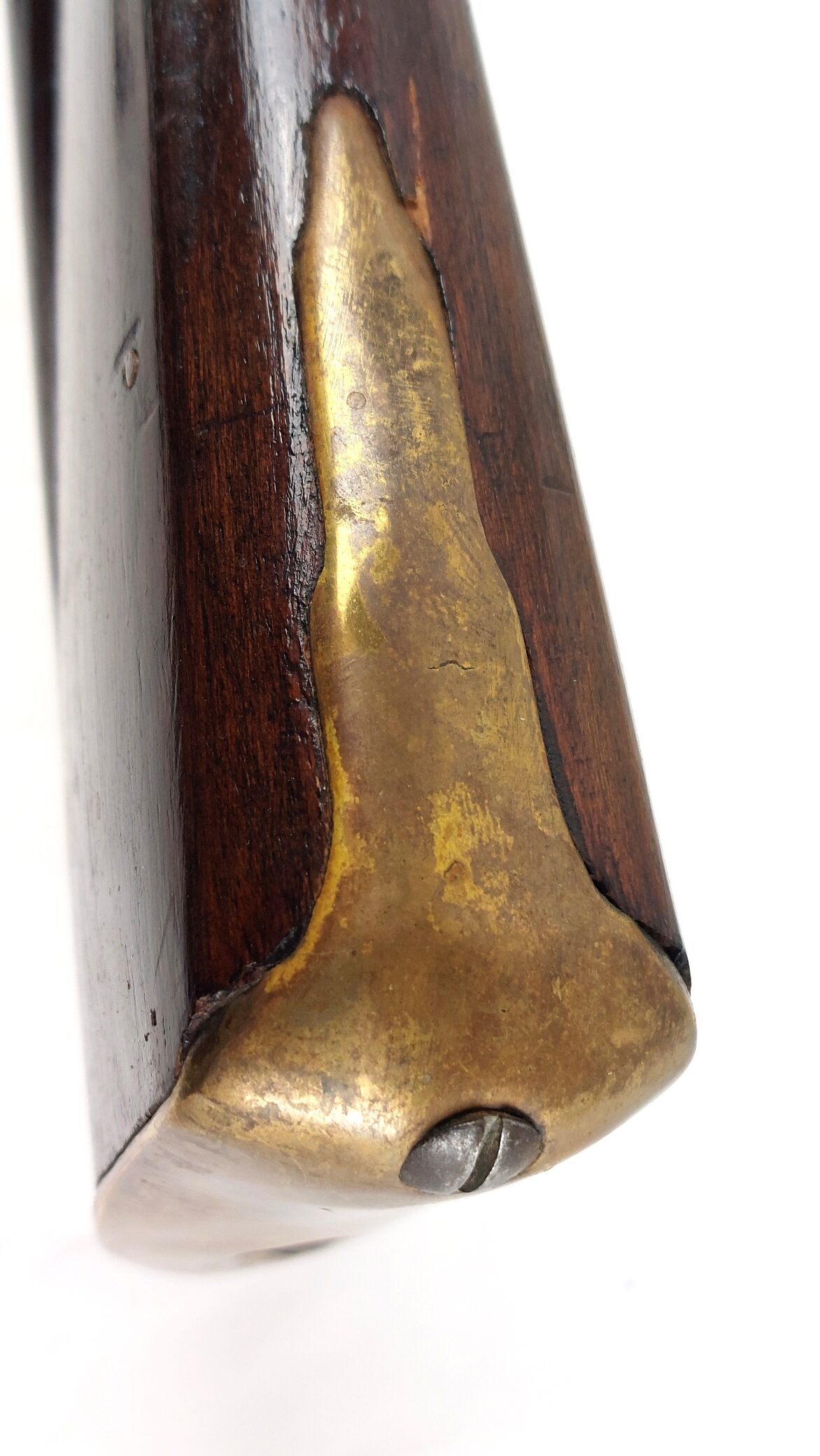
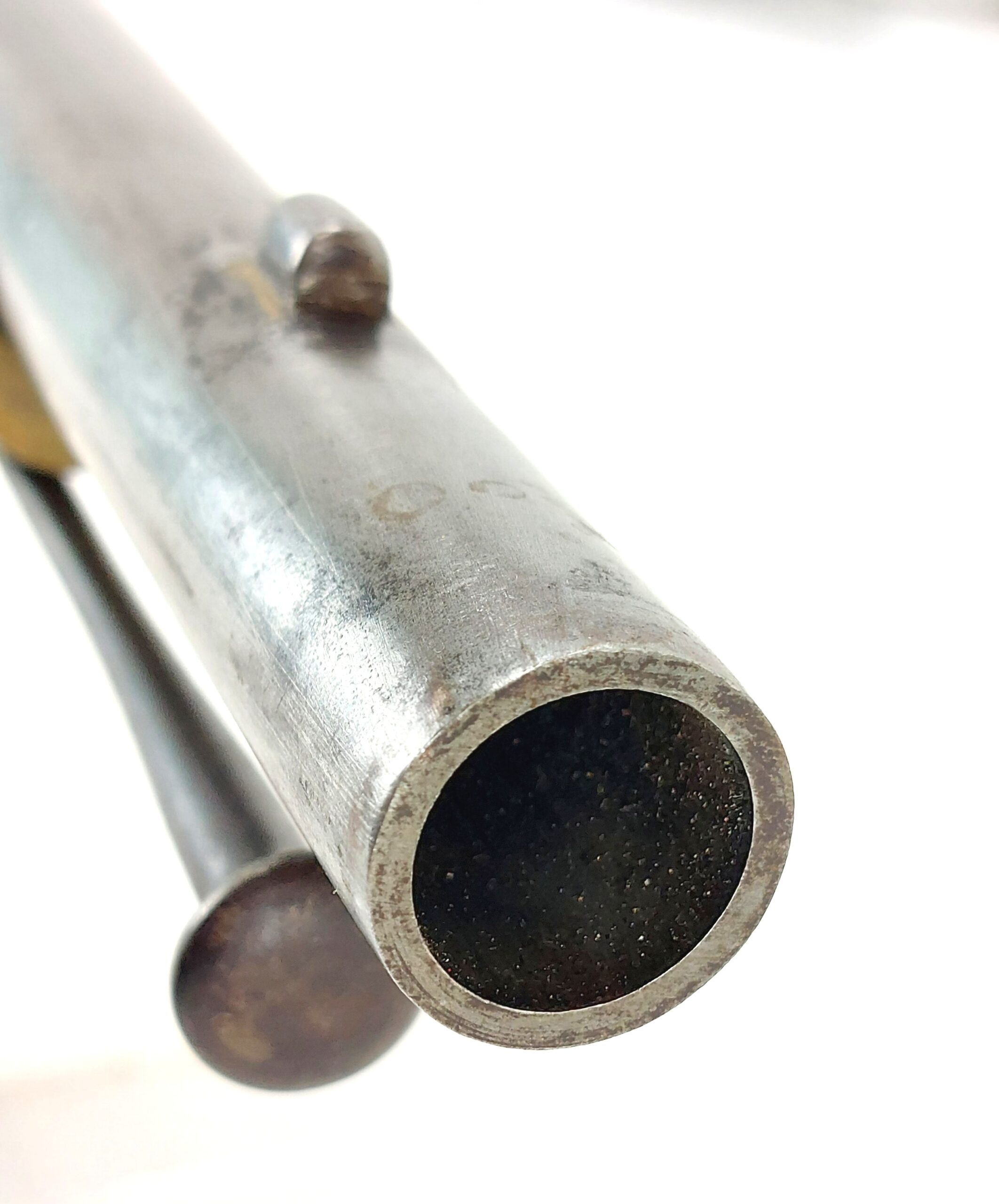
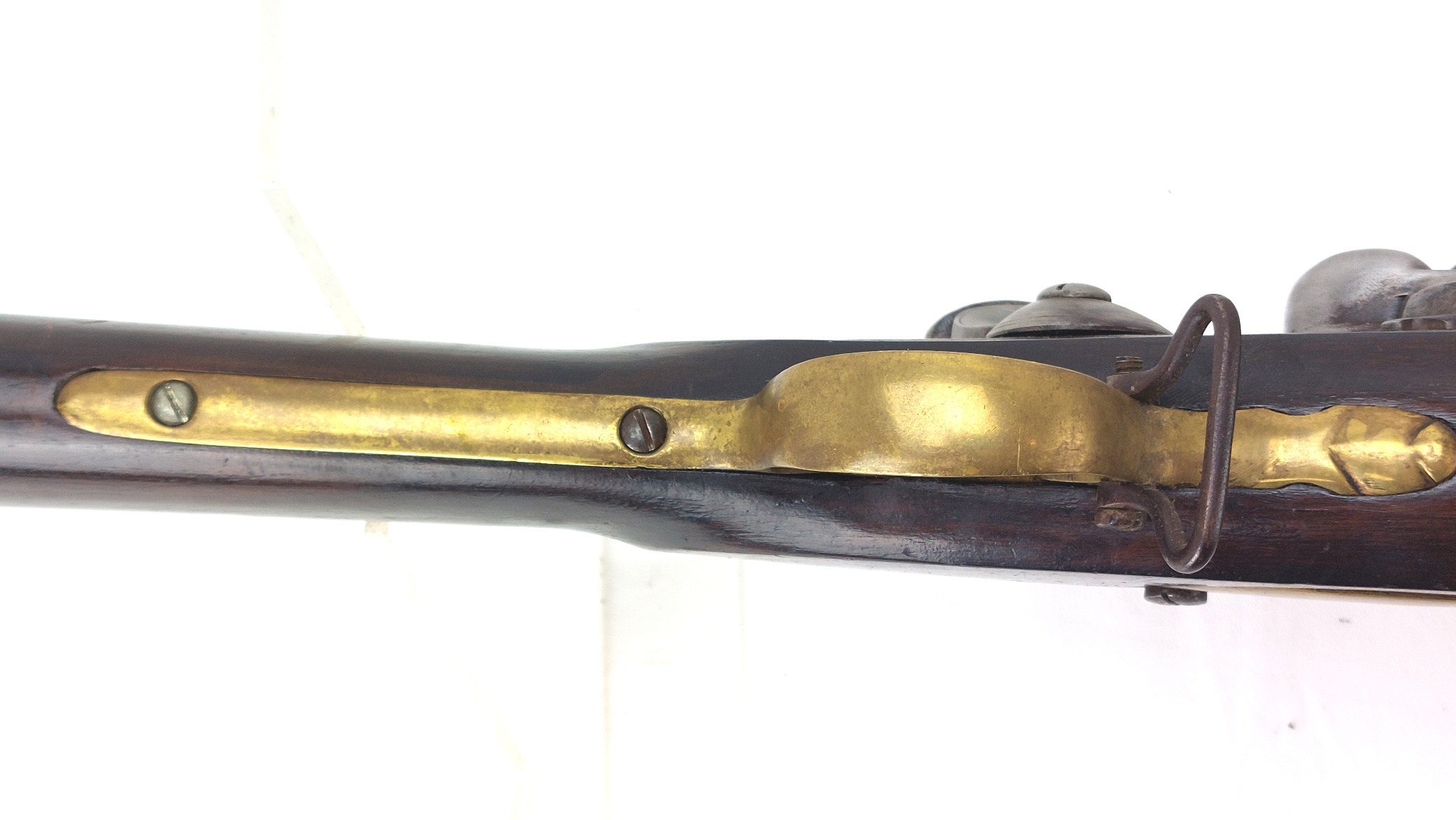
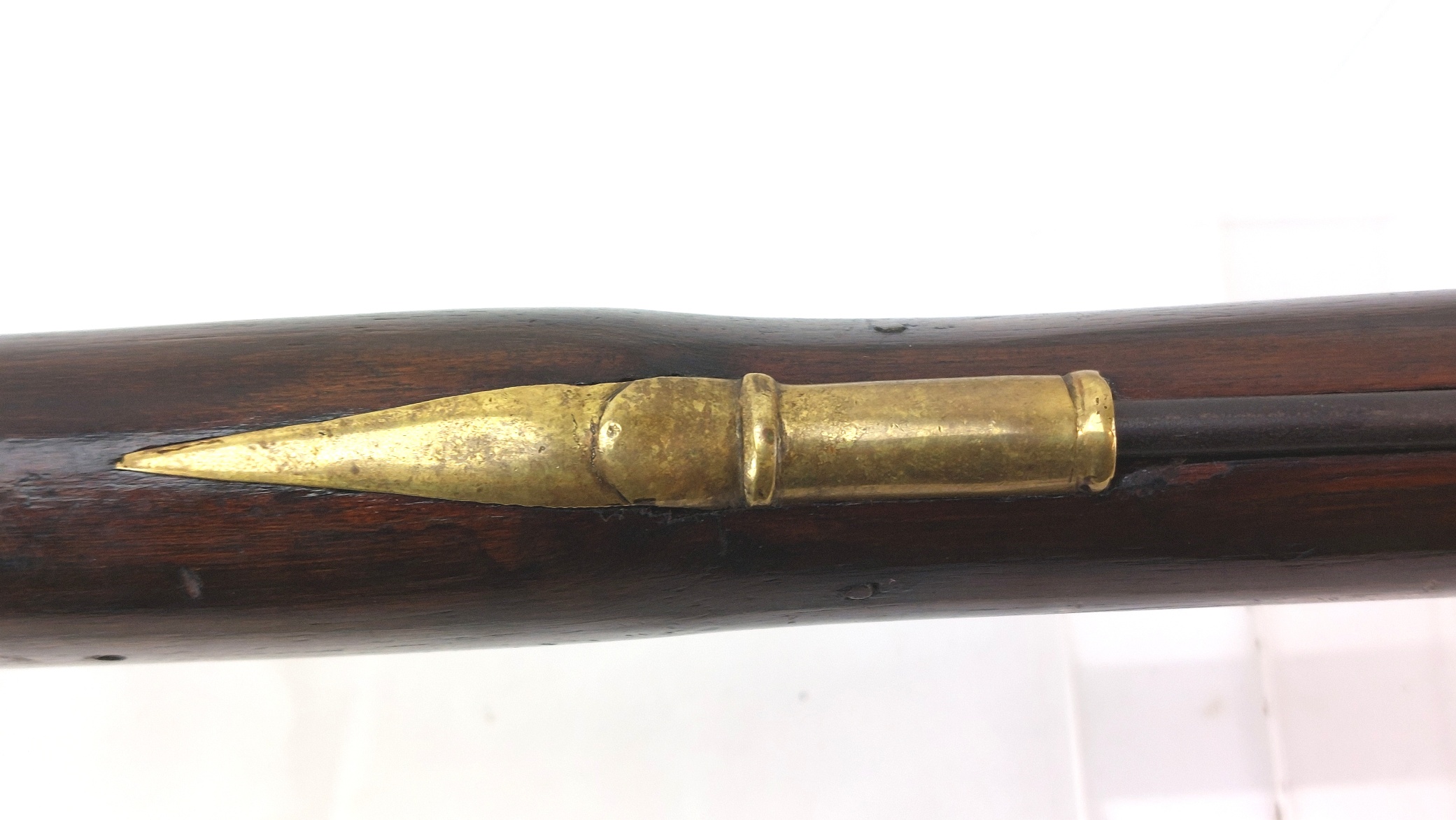
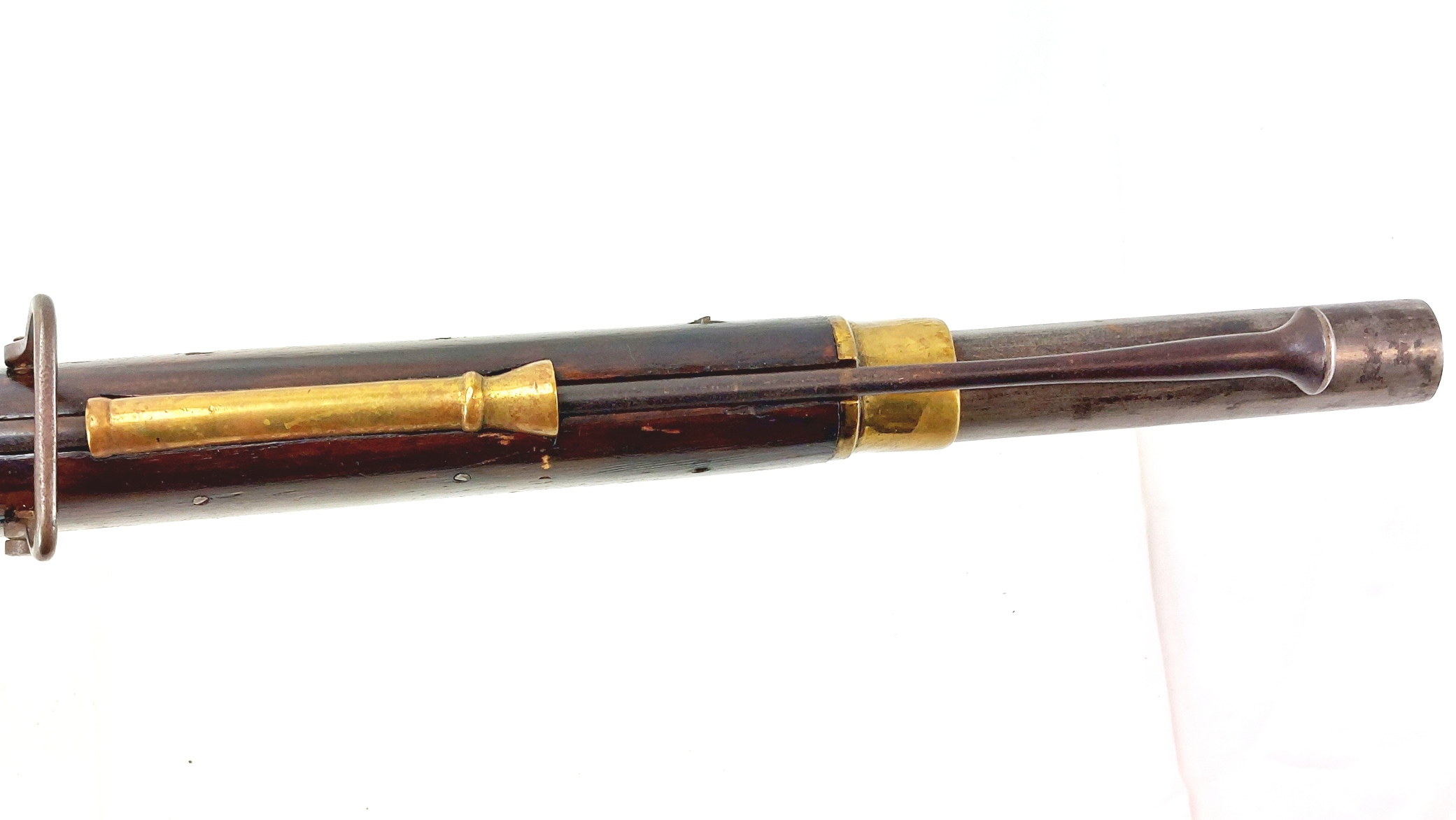
The musket is stocked in walnut with brass furniture including trigger guard, ramrod pipes, fore-end cap and butt plate, and fitted with a steel ramrod. The barrel is of round section and notably shorter than regulation long infantry muskets, giving the piece a more compact profile associated with naval, marine, or auxiliary service.
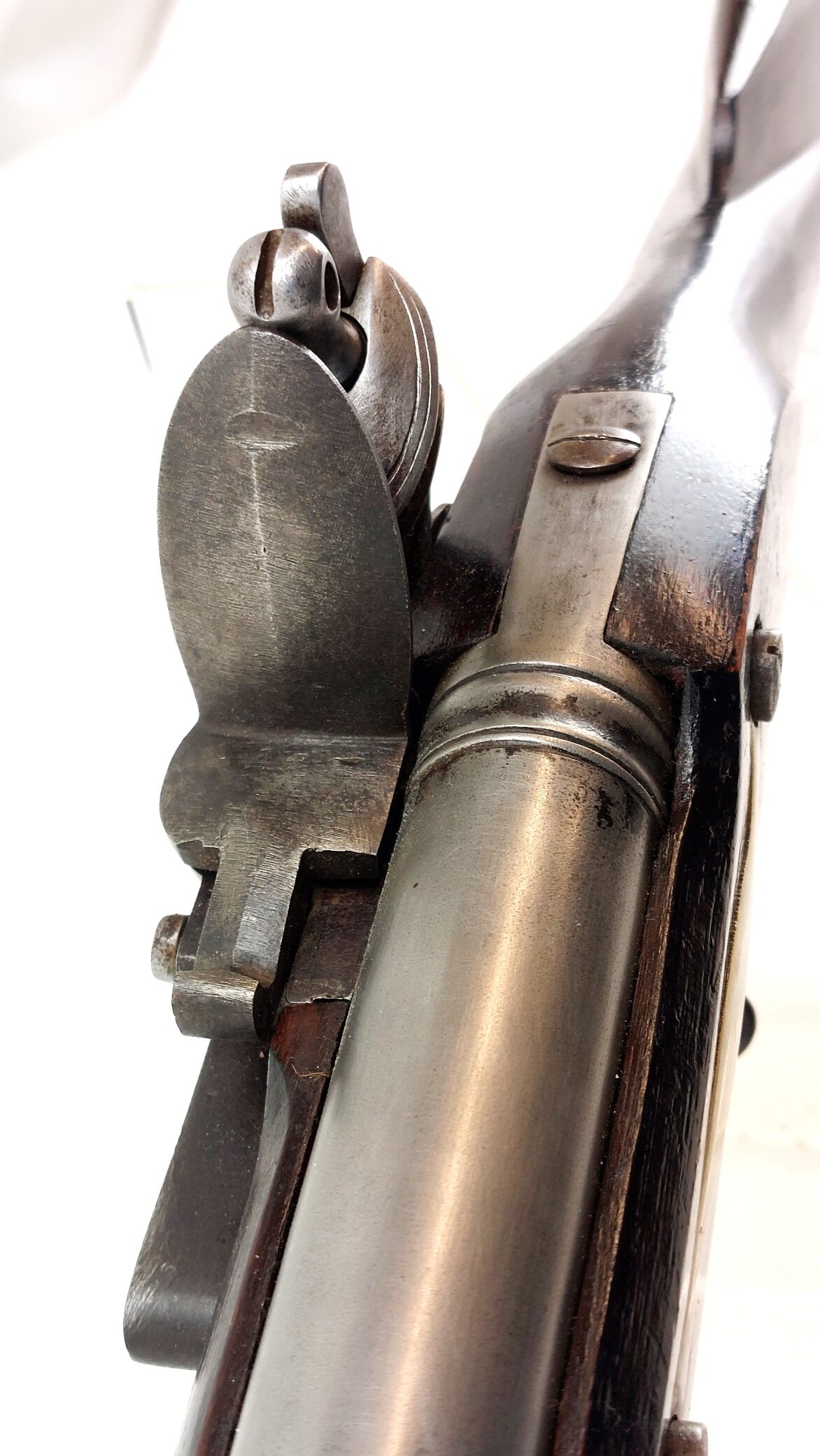
The lock retains its original flintlock ignition with swan-neck cock and correct Board of Ordnance configuration. Overall construction and finish are consistent with late 18th to early 19th century British military production.
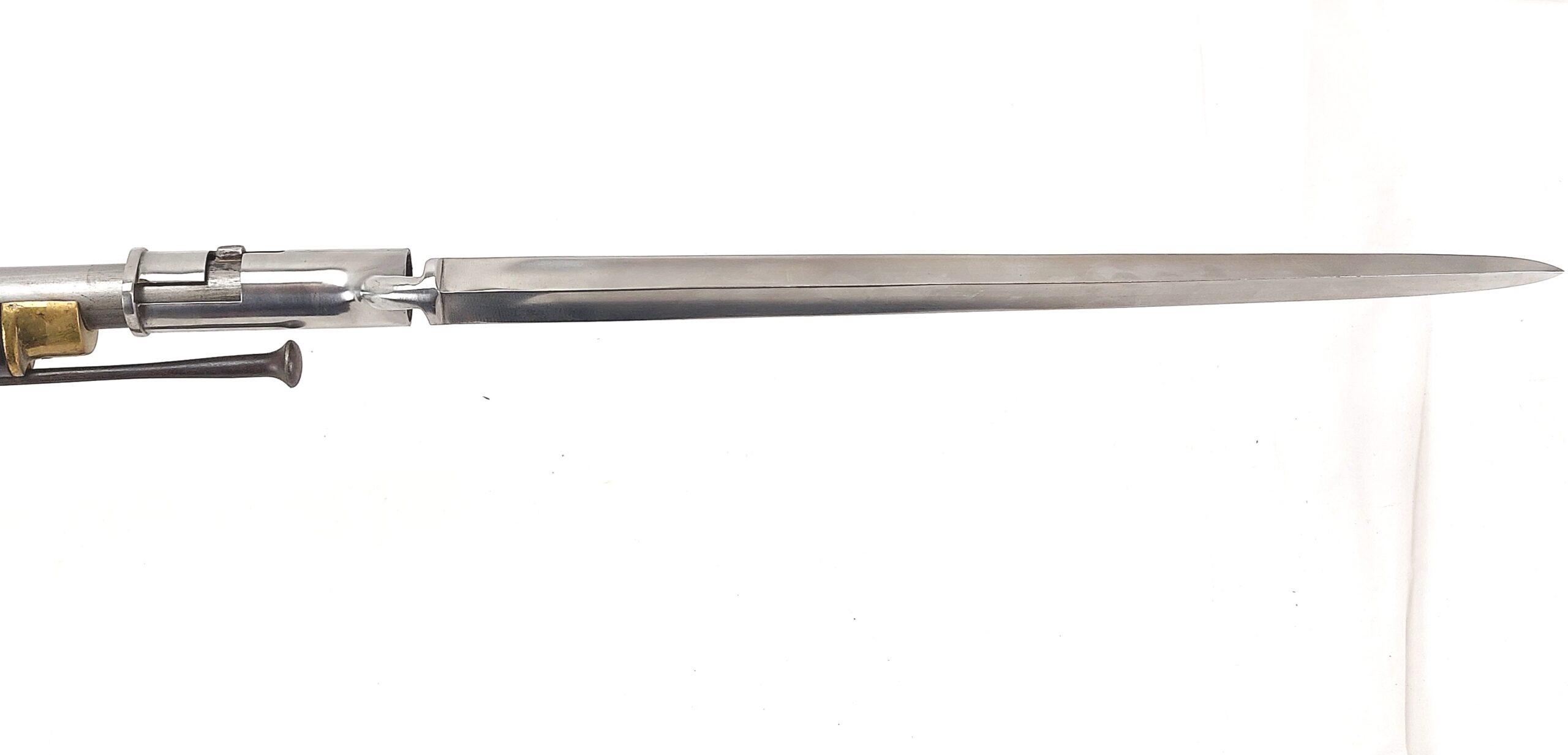
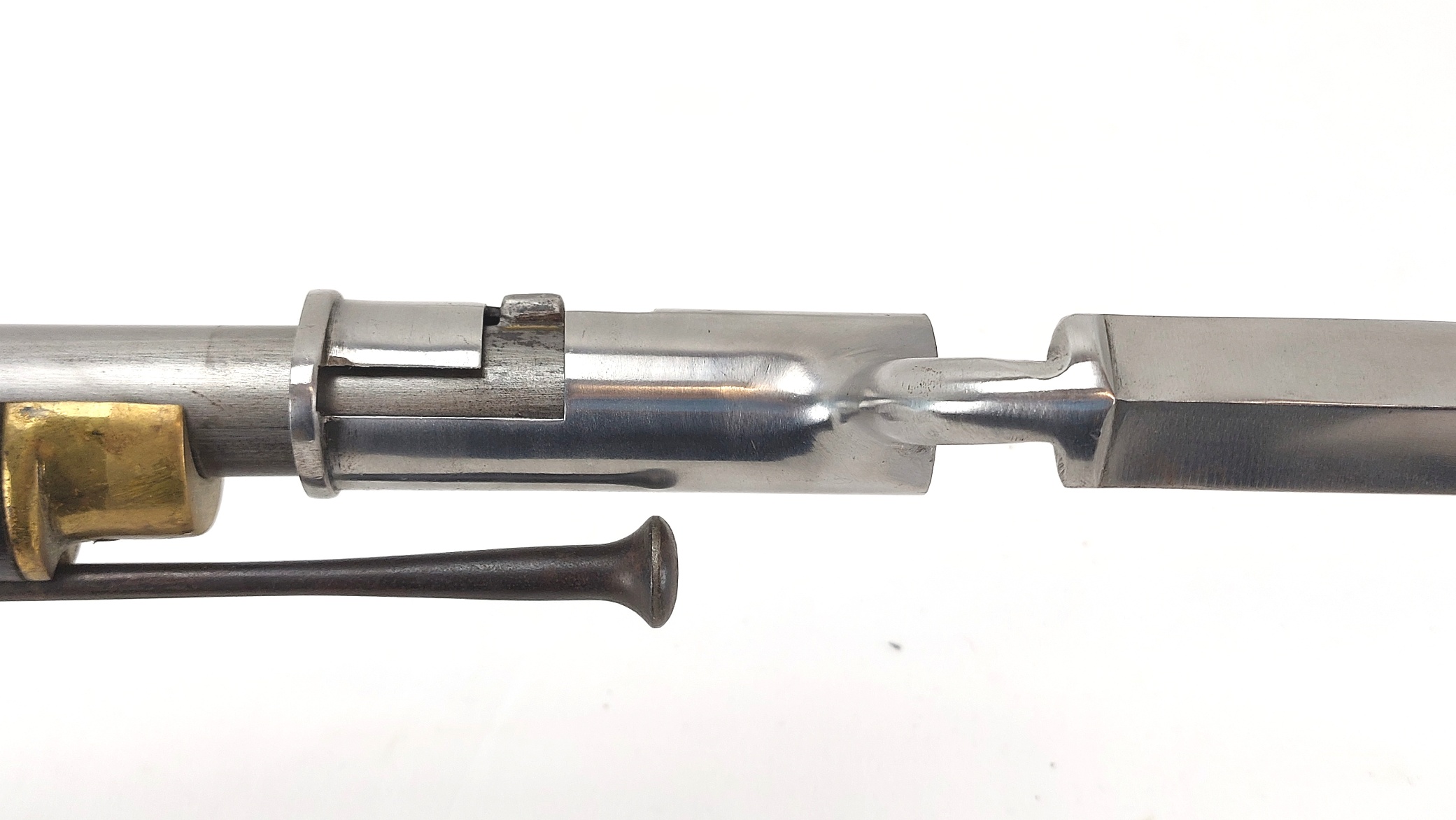
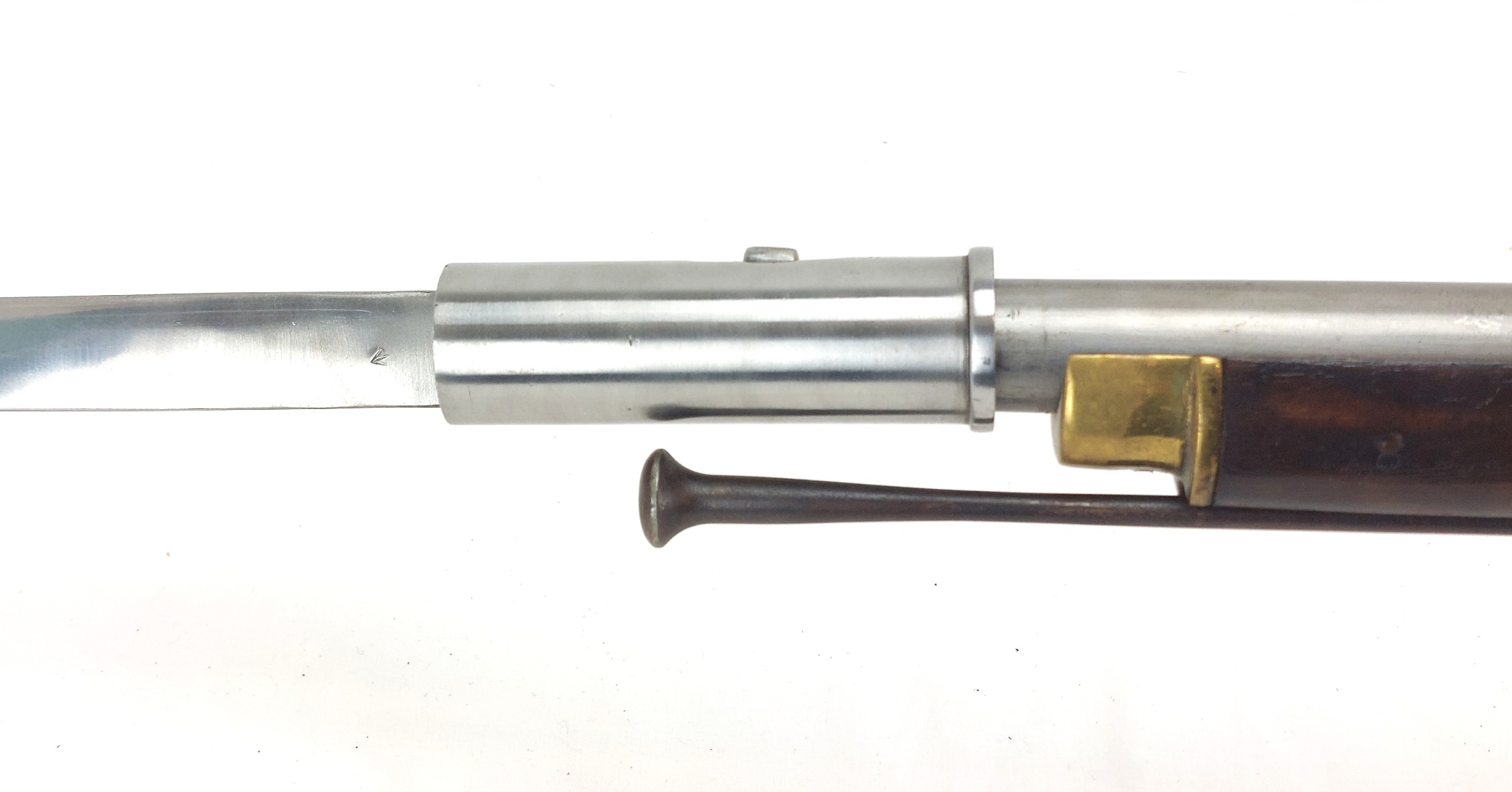
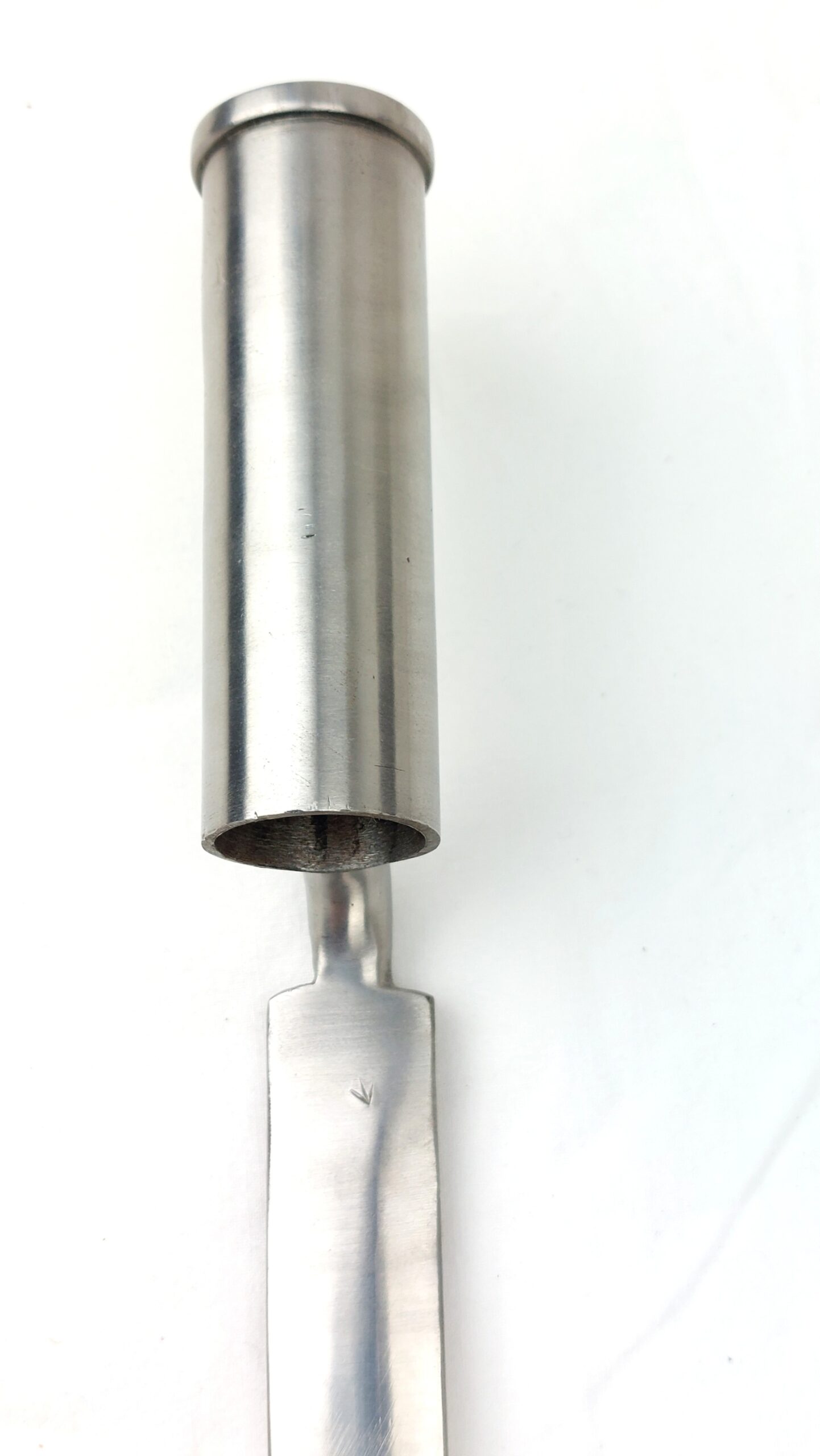
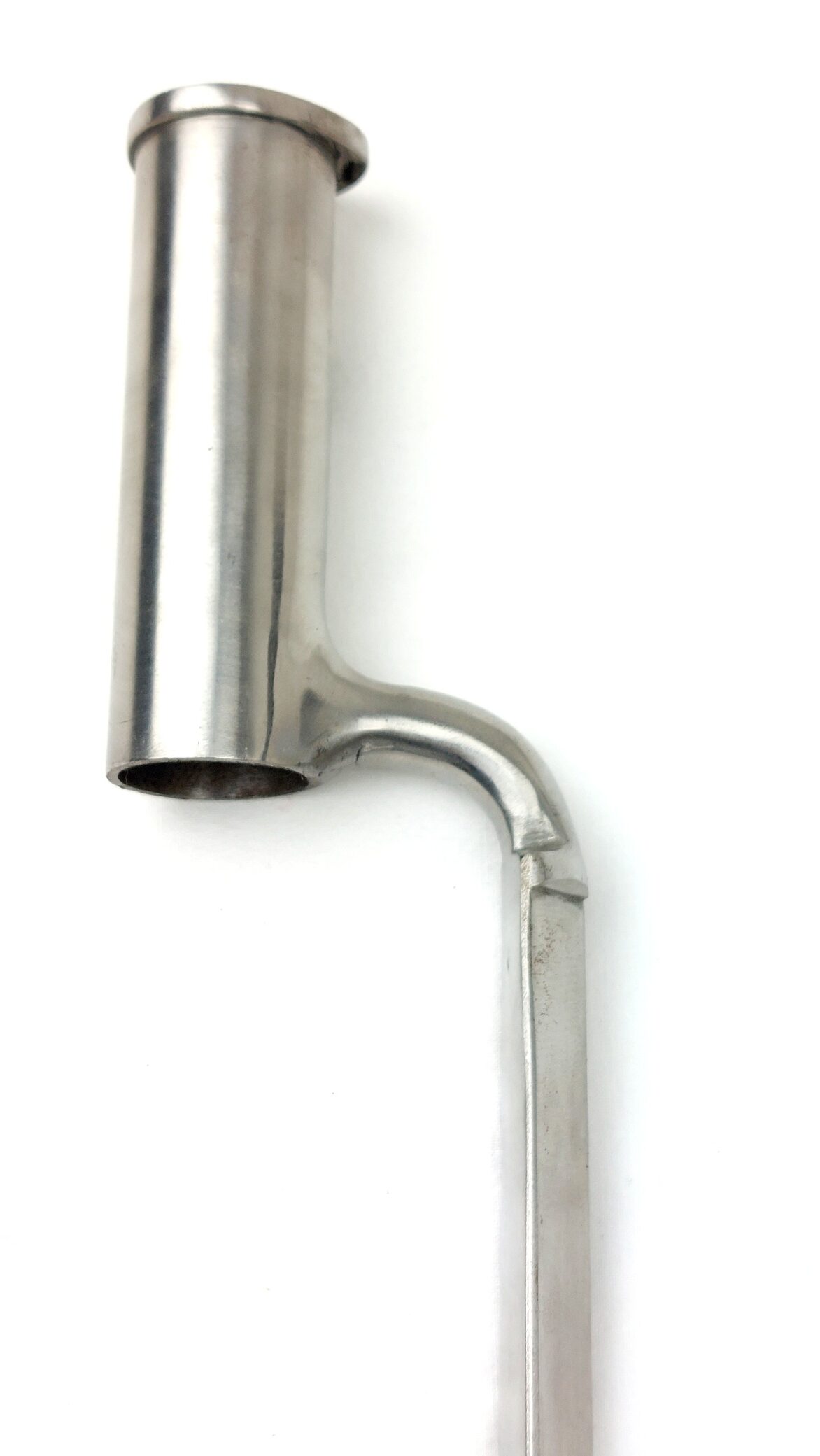
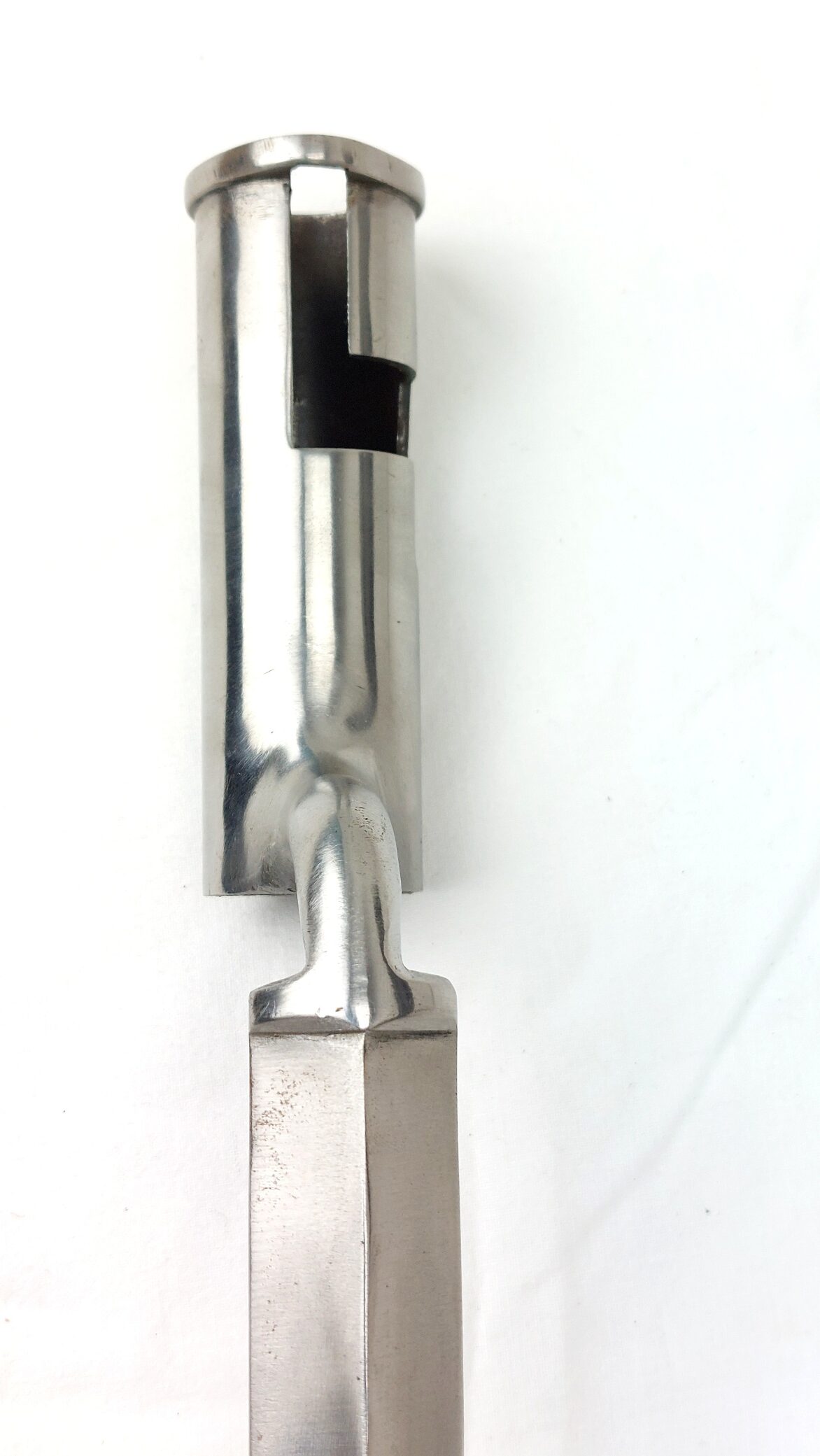
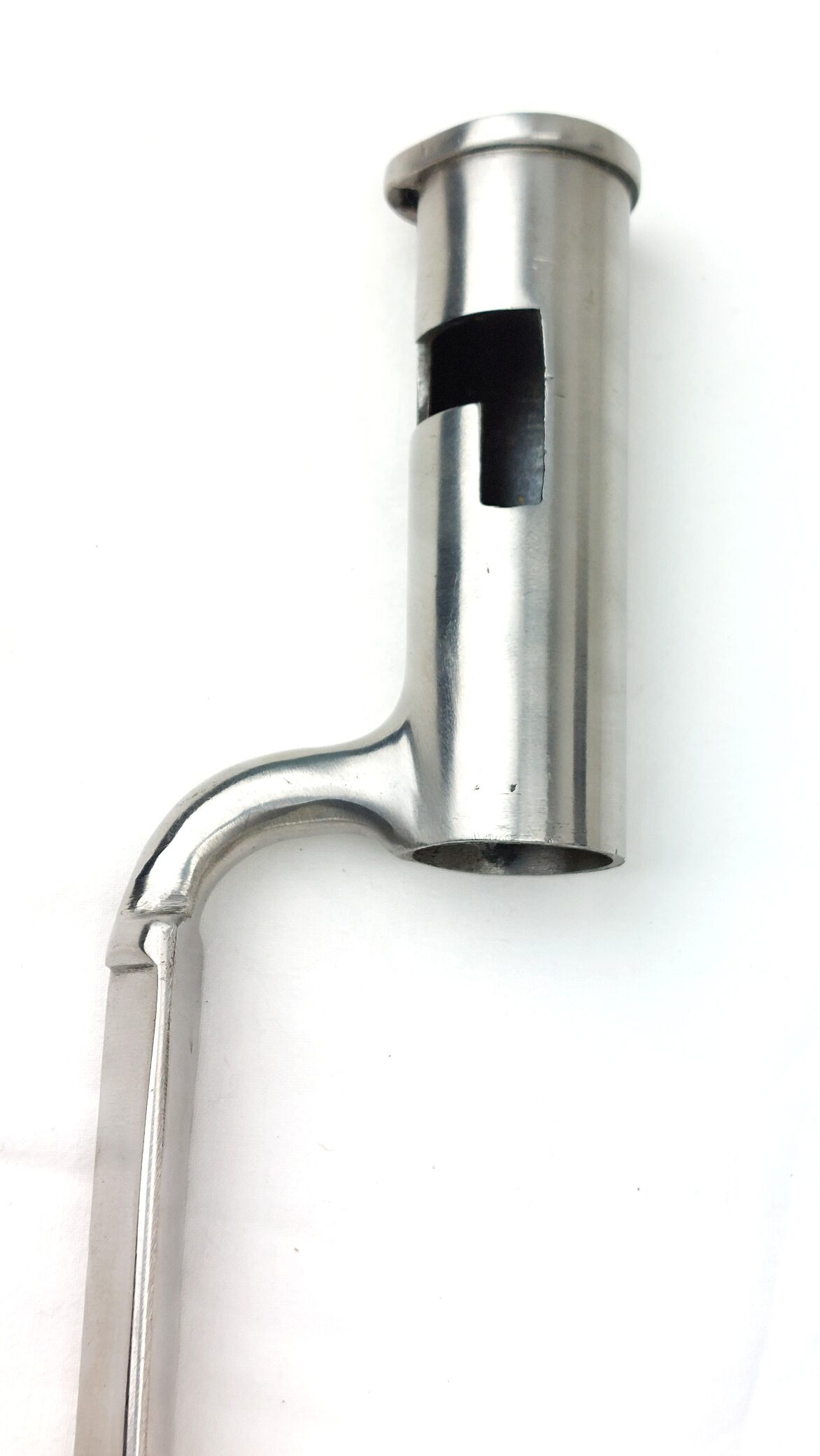
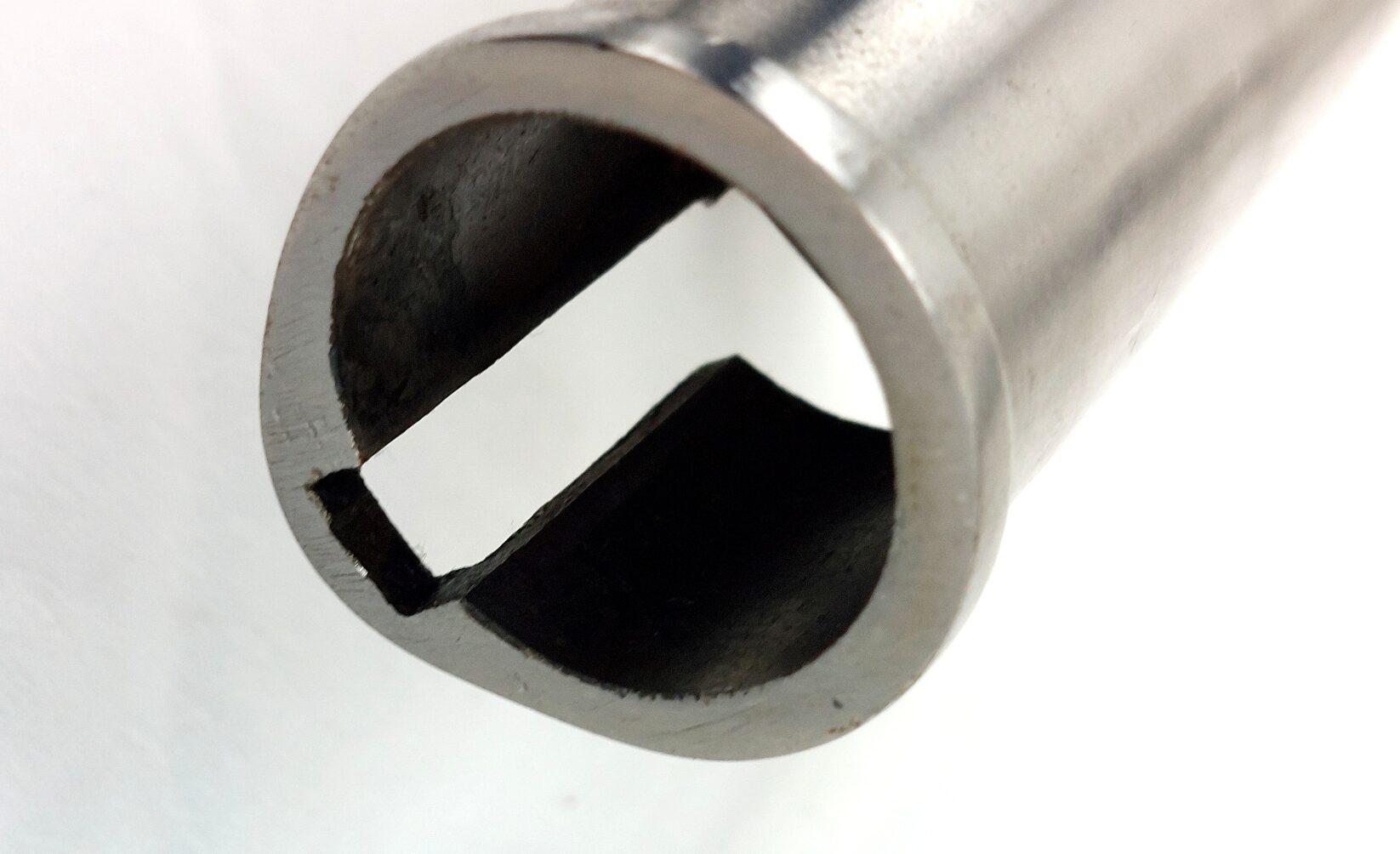
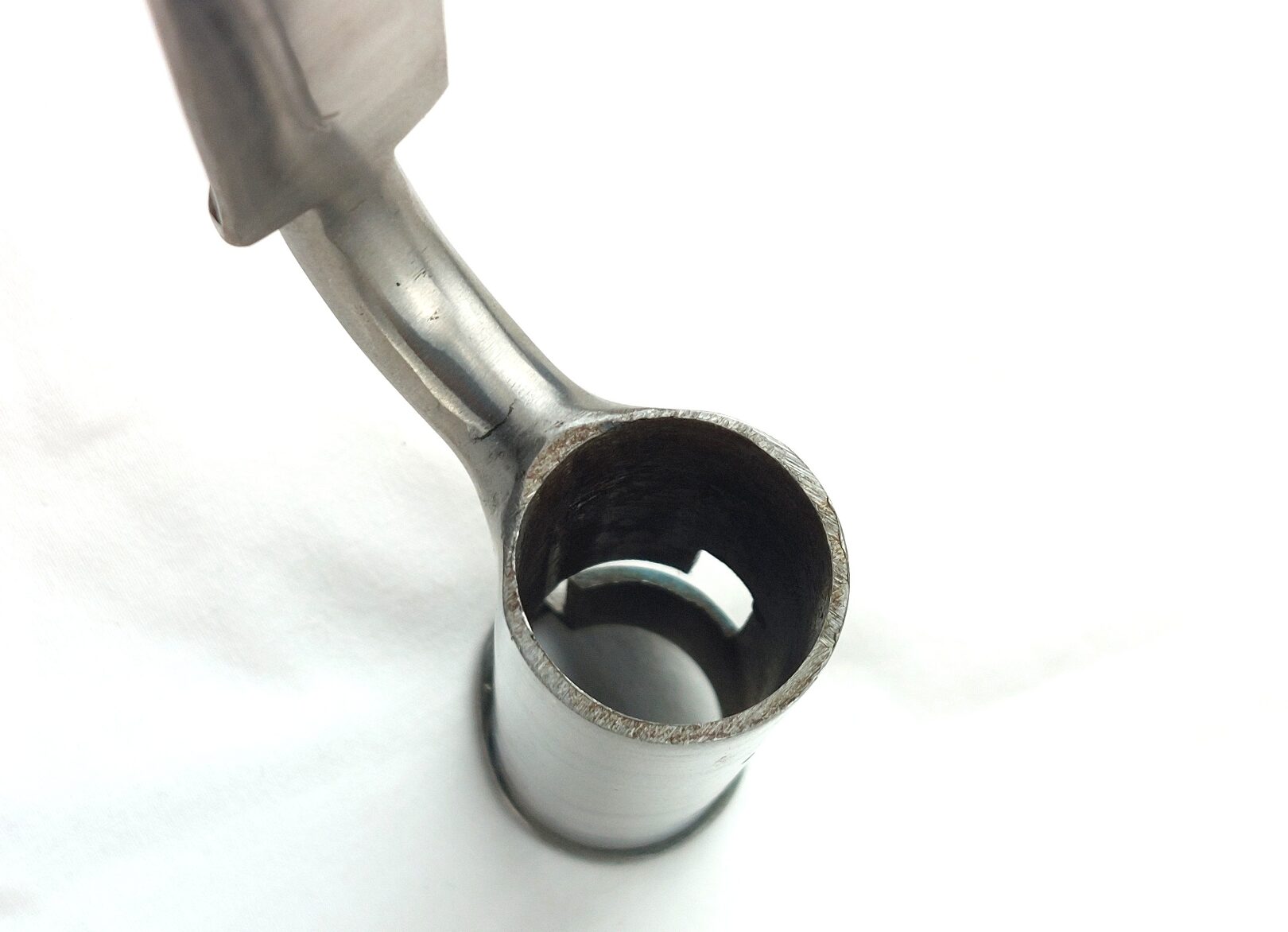
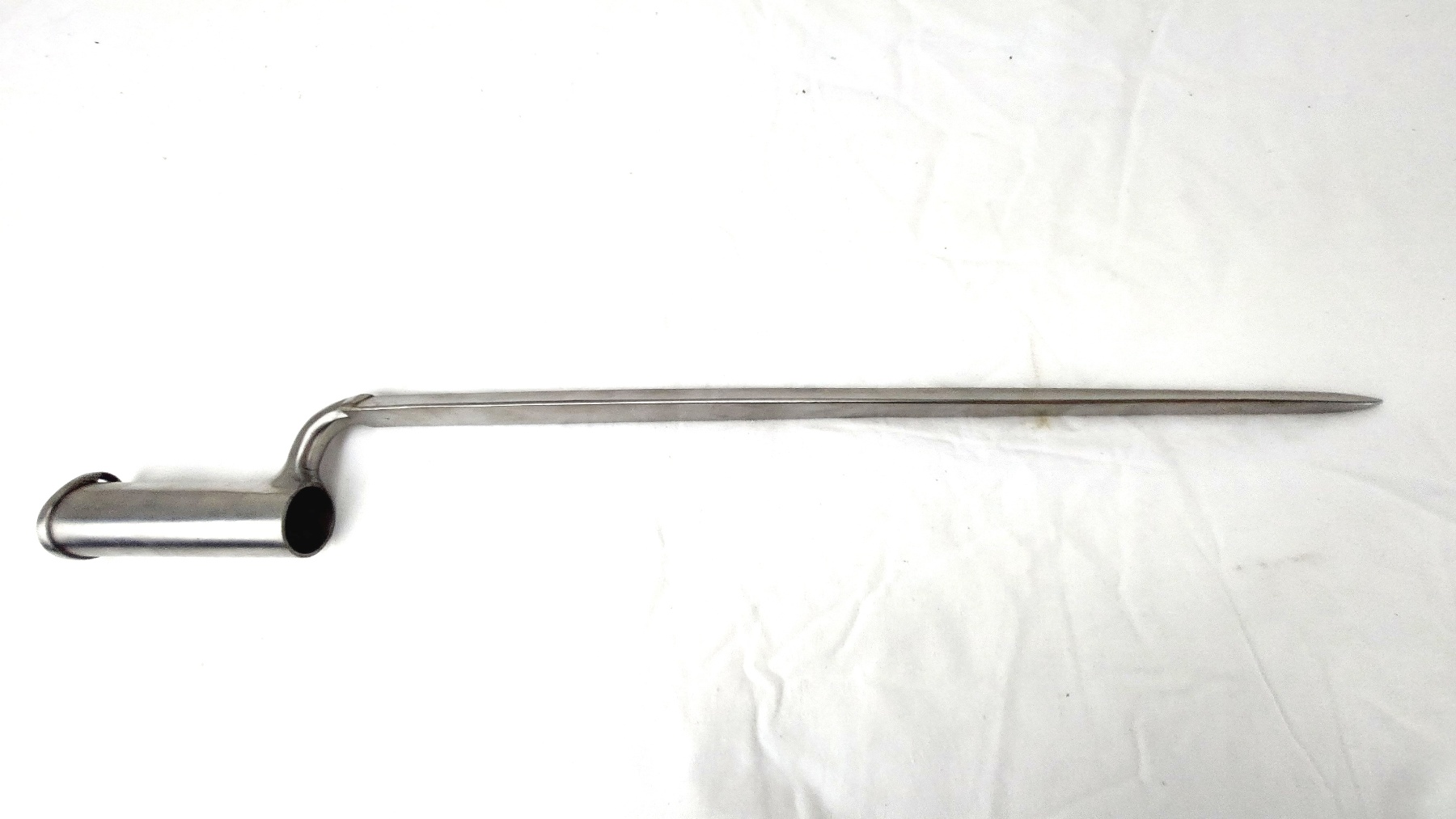
The accompanying socket bayonet is a substantial example with a heavy triangular blade, bearing a broad arrow government ownership mark.
Approx. Measurements – Barrel length: 85.8 cm. Overall length: 107.2 cm. Bayonet overall: 53 cm. Bayonet blade: 42.5 cm.
Historical Note:
Muskets marked TOWER with the Crown over GR cypher were produced for British military service during the reign of King George III (1760–1820), the period encompassing the American War of Independence, the French Revolutionary Wars, and the Napoleonic Wars.
British regulation “Brown Bess” muskets were produced in several principal lengths during the 18th and early 19th centuries. The early Long Land Pattern measured approximately 62 inches (c.157 cm) overall with a barrel of about 46 inches (c.117 cm), while the later Short Land Pattern was reduced to roughly 58–59 inches (c.148–150 cm) with a 42 inch (c.106–107 cm) barrel. By the Napoleonic period the more economical India Pattern became standard, typically around 55 inches (c.139–140 cm) overall with a barrel of about 39 inches (c.99 cm). In contrast, the present musket—at 107.2 cm overall with an 85.8 cm barrel—is substantially shorter than all three regulation infantry patterns, placing it within the range associated with sea-service, carbine-length, or period-shortened muskets intended for use where a full-length infantry arm was impractical, particularly in naval or auxiliary roles.
Shorter muskets of this type were commonly issued where a full-length infantry arm was impractical, particularly for:
- Royal Navy shipboard service
- Royal Marines
- Artillery and transport units
- Militia and colonial detachments
Their reduced length made them better suited to the confined spaces aboard warships and for close-quarters fighting during boarding actions. Arms of this general form were in widespread British service throughout the major naval campaigns of the Napoleonic period, including the era of Trafalgar.
In its construction and overall layout the musket shares several features commonly associated with the late-18th century India Pattern “Brown Bess” family, including the use of simplified brass furniture, the form of the trigger guard and ramrod pipes, and the standard Board of Ordnance TOWER lock with Crown over GR cypher typical of Napoleonic-period production. While the present arm cannot be definitively attributed to a specific regulation pattern due to the absence of clear barrel proofs or storekeeper’s marks, its architecture is consistent with the widely produced wartime muskets of that type. The accompanying socket bayonet likewise corresponds closely with the robust India Pattern style, with its heavy triangular blade of approximately 42–43 cm and government broad arrow marking, a form issued in large numbers alongside British flintlock muskets during the French Revolutionary and Napoleonic Wars.
*Condition*
An honest period example with strong military character. The TOWER marking and Crown over GR cypher remain clearly visible on the lock. Metal surfaces show age patina and light scattered pitting consistent with service use and long storage. The stock is sound with expected handling marks and wear, particularly toward the fore-end. Cocks and dry-fires. Brass furniture is of correct military form and has developed a mellow tone. The musket retains its ramrod. The socket bayonet is solid and heavy with visible government marking. Please see photographs as part of the condition report.
*In order to complete the online purchase we will require a picture/scan of a photo ID (Driving Licence, Passport or an official document with a recent picture). If you don't posses any such document please call to buy. If we consider that the proof of ID is incorect or insuficient, we reserve the right to cancel the transaction.
*We also reserve the right to cancel the transaction with a full refund if there is any suspicion that the provided item will be used in any way contrary to the laws and legislation of UK.