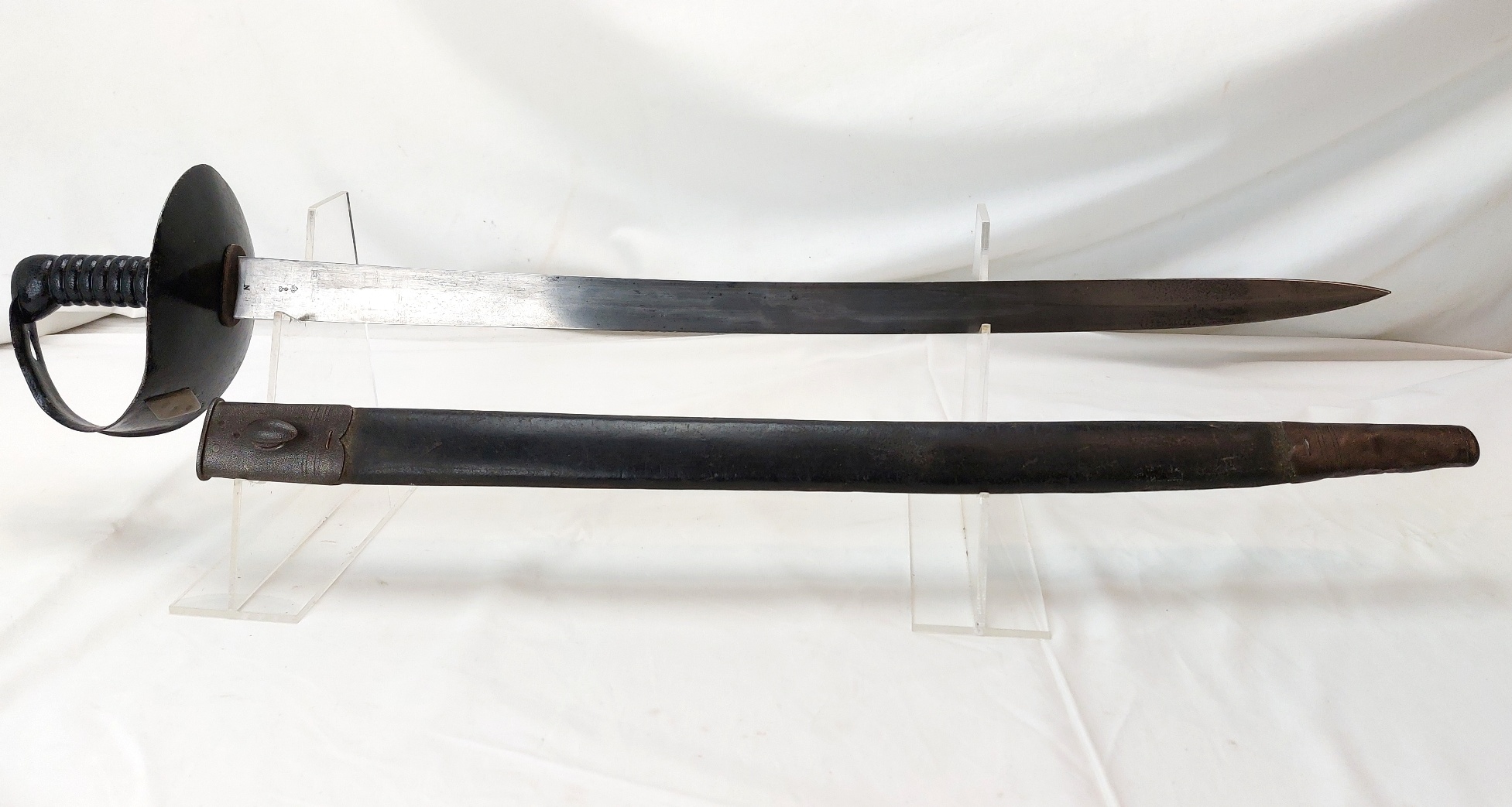
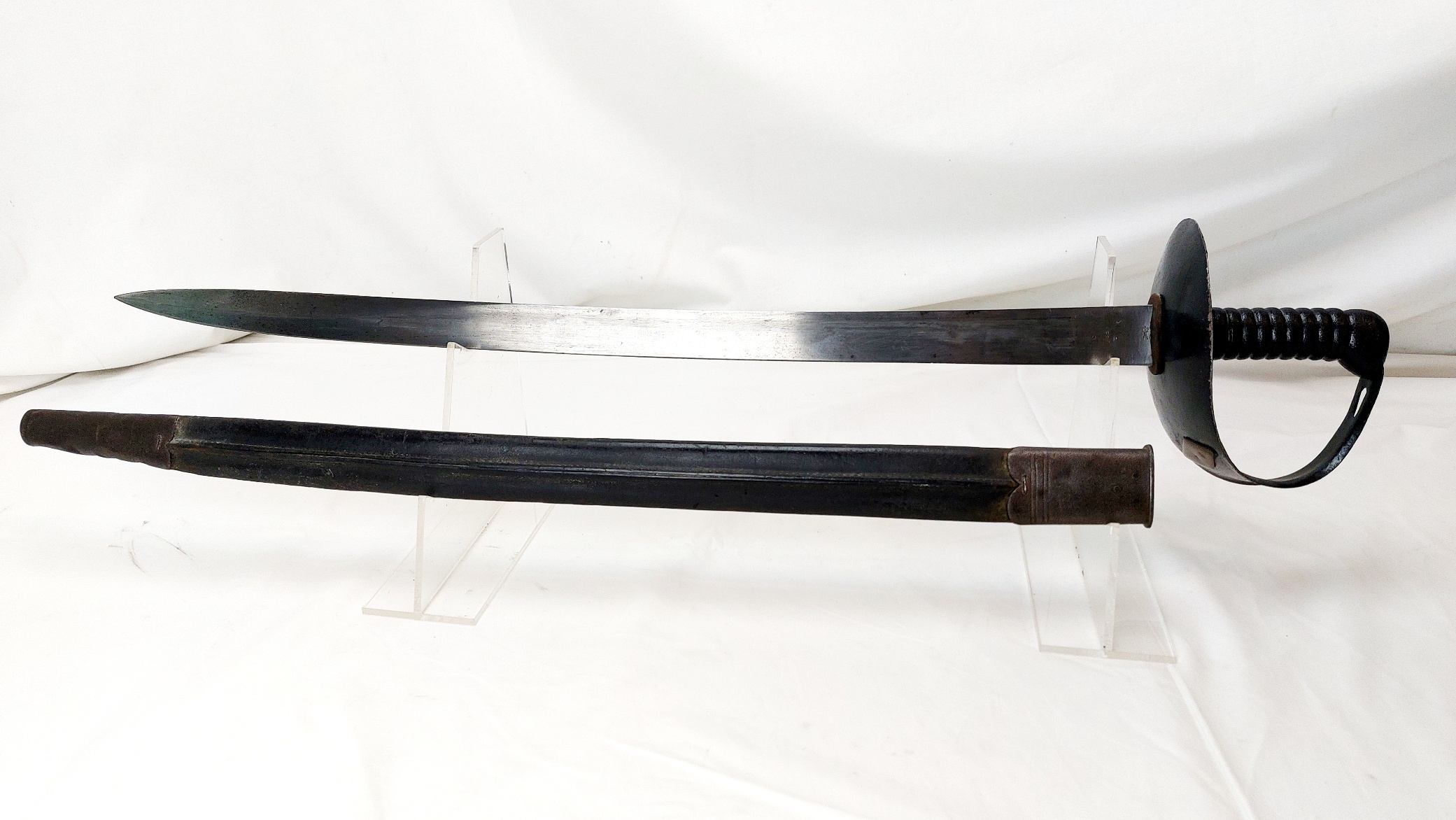
*British, mid-19th Century / Converted 1888, Royal Navy 1845 Pattern Cutlass with Scabbard, WD Marked, Rack Numbered Guard*
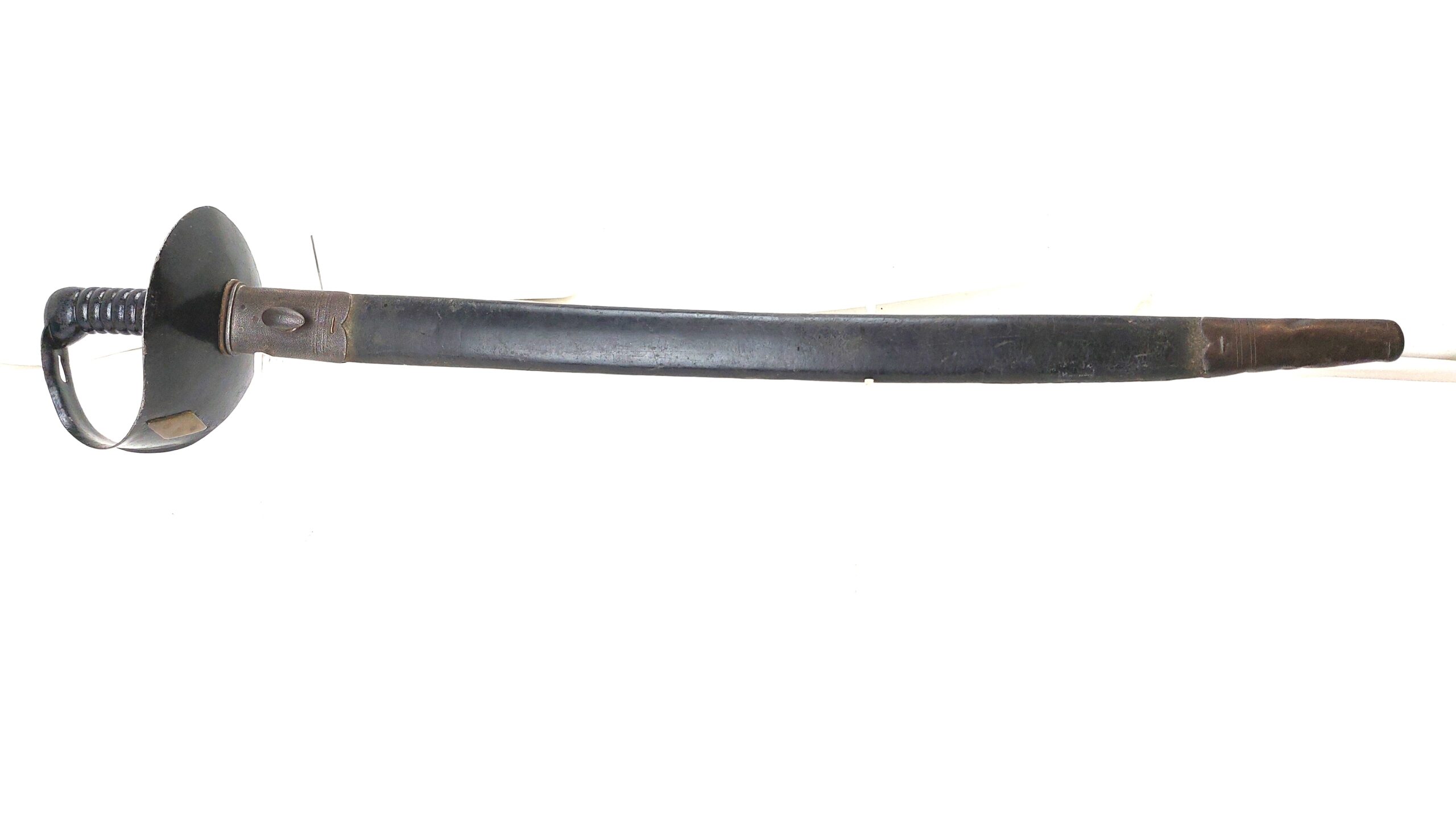
A very fine and well-documented example of the Royal Navy 1845 Pattern cutlass, complete with its original scabbard and showing a full sequence of government ownership, inspection, and later conversion marks consistent with long Victorian naval service.
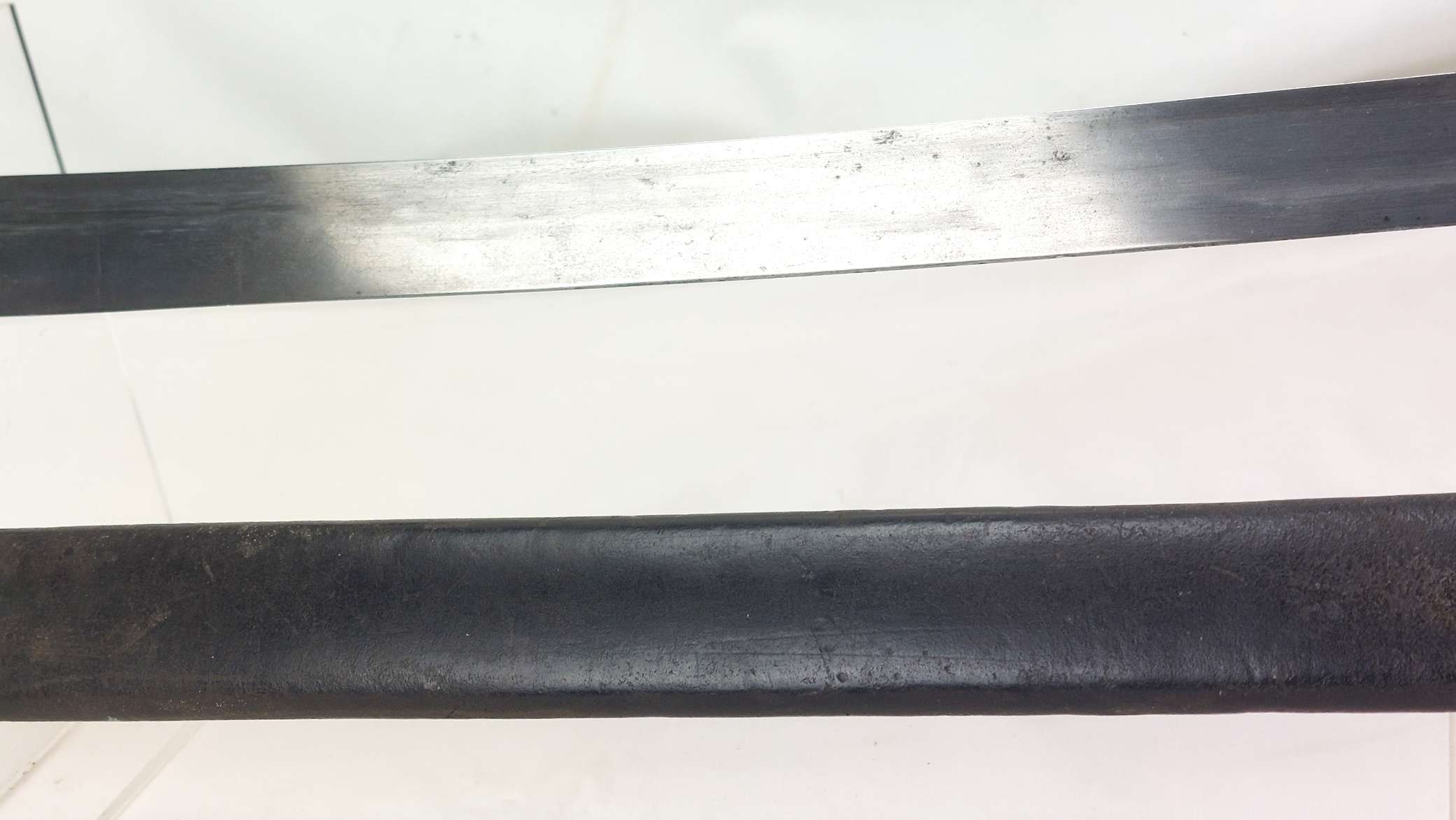
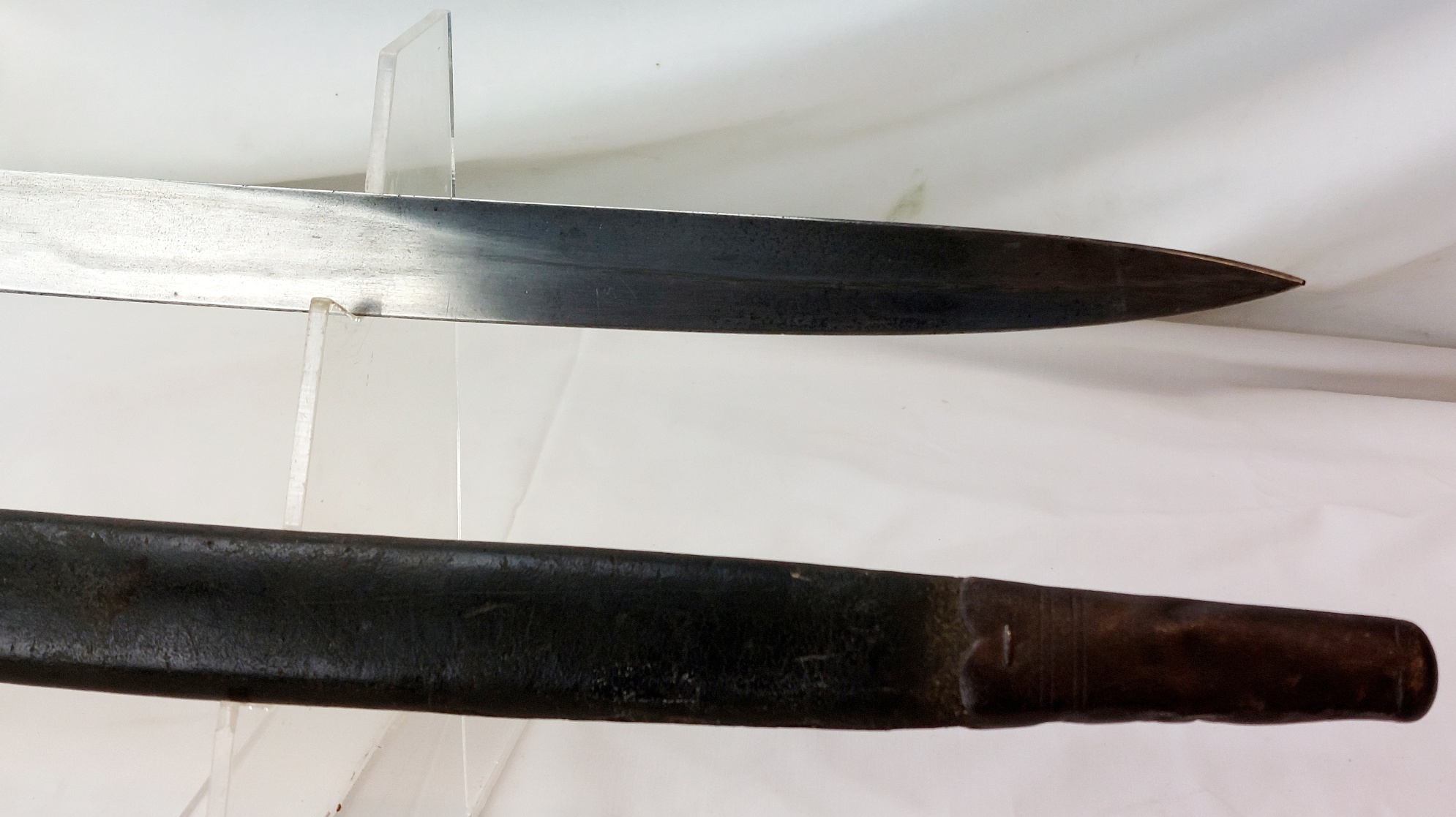
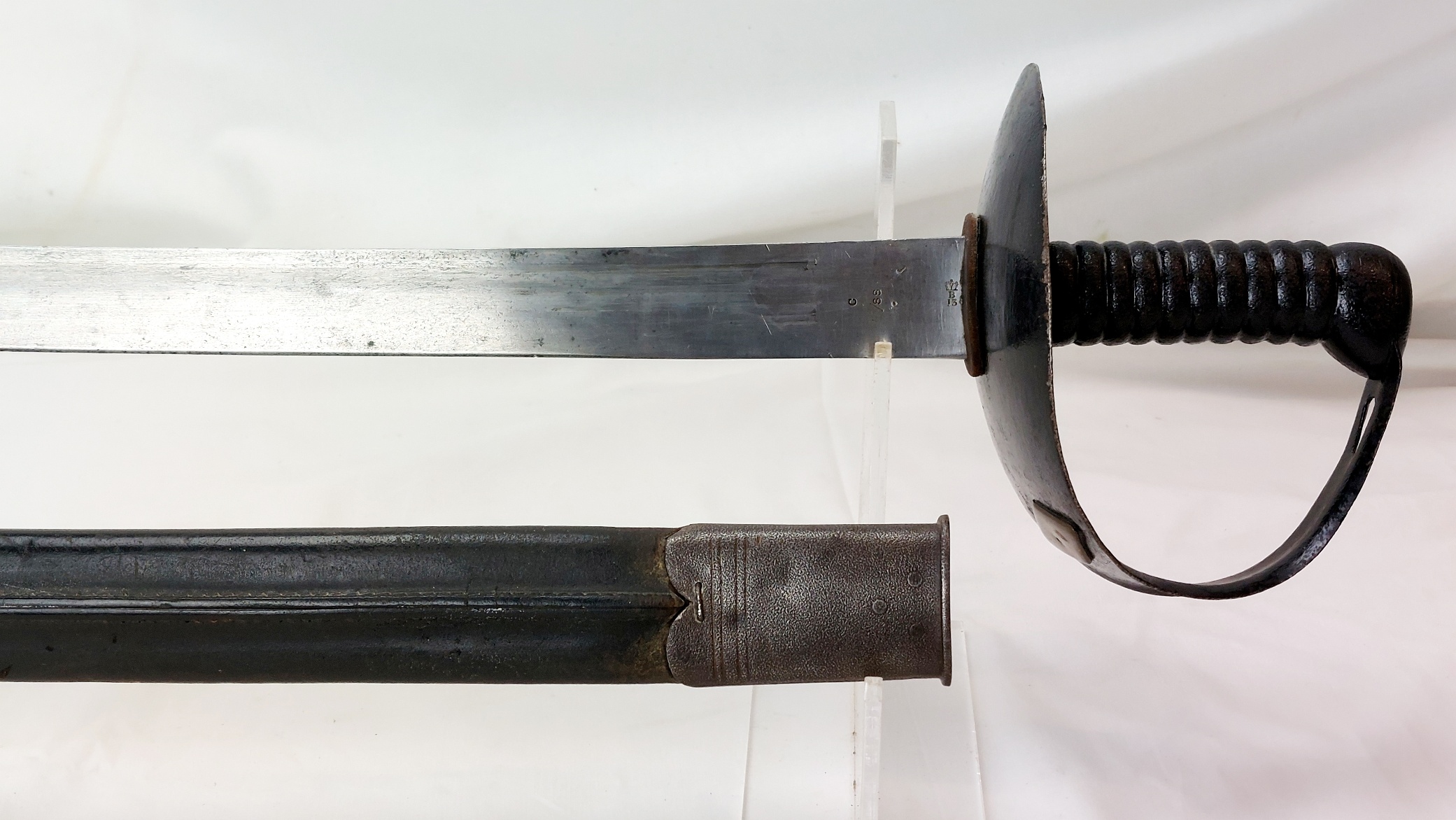
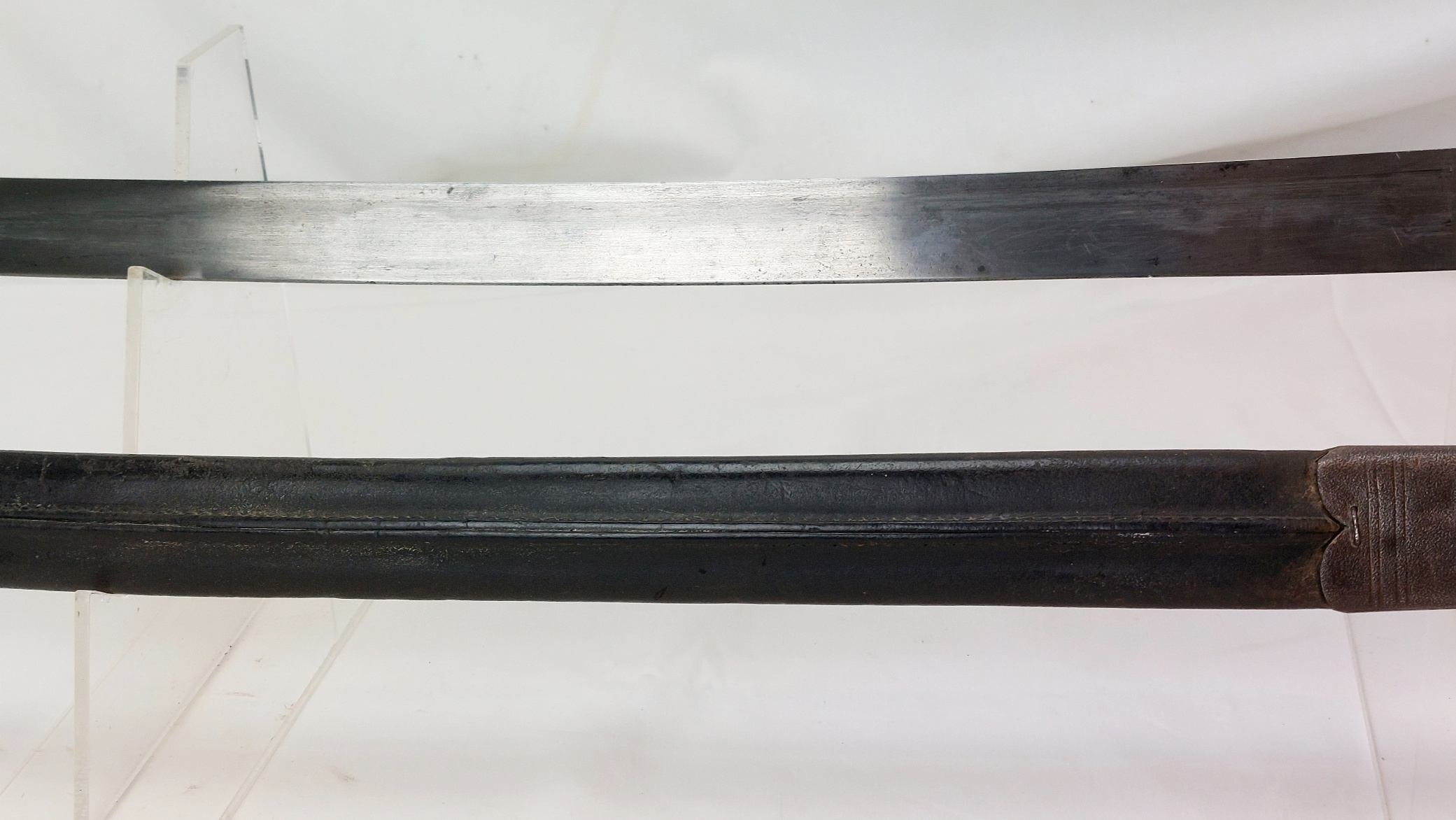
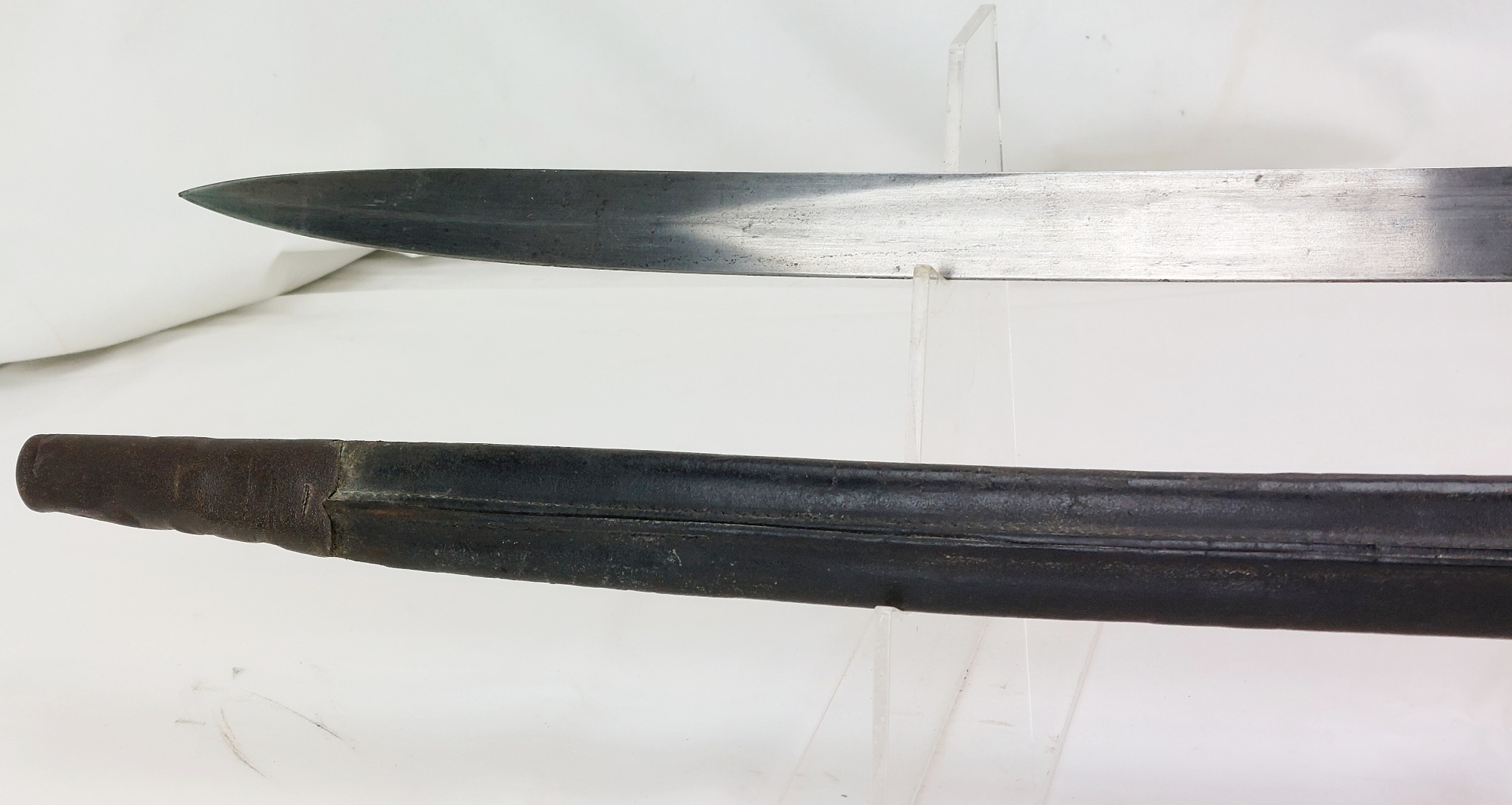
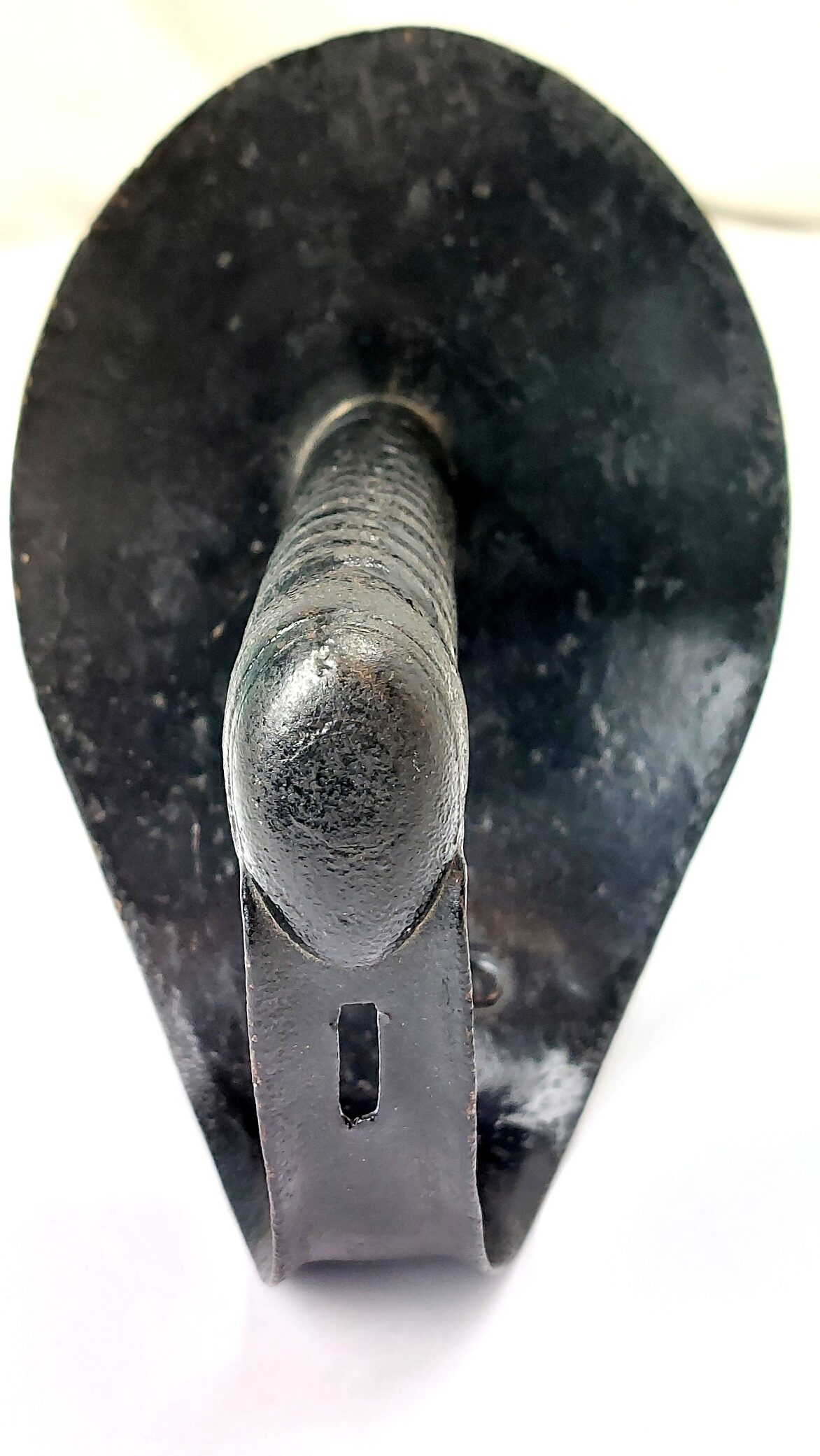
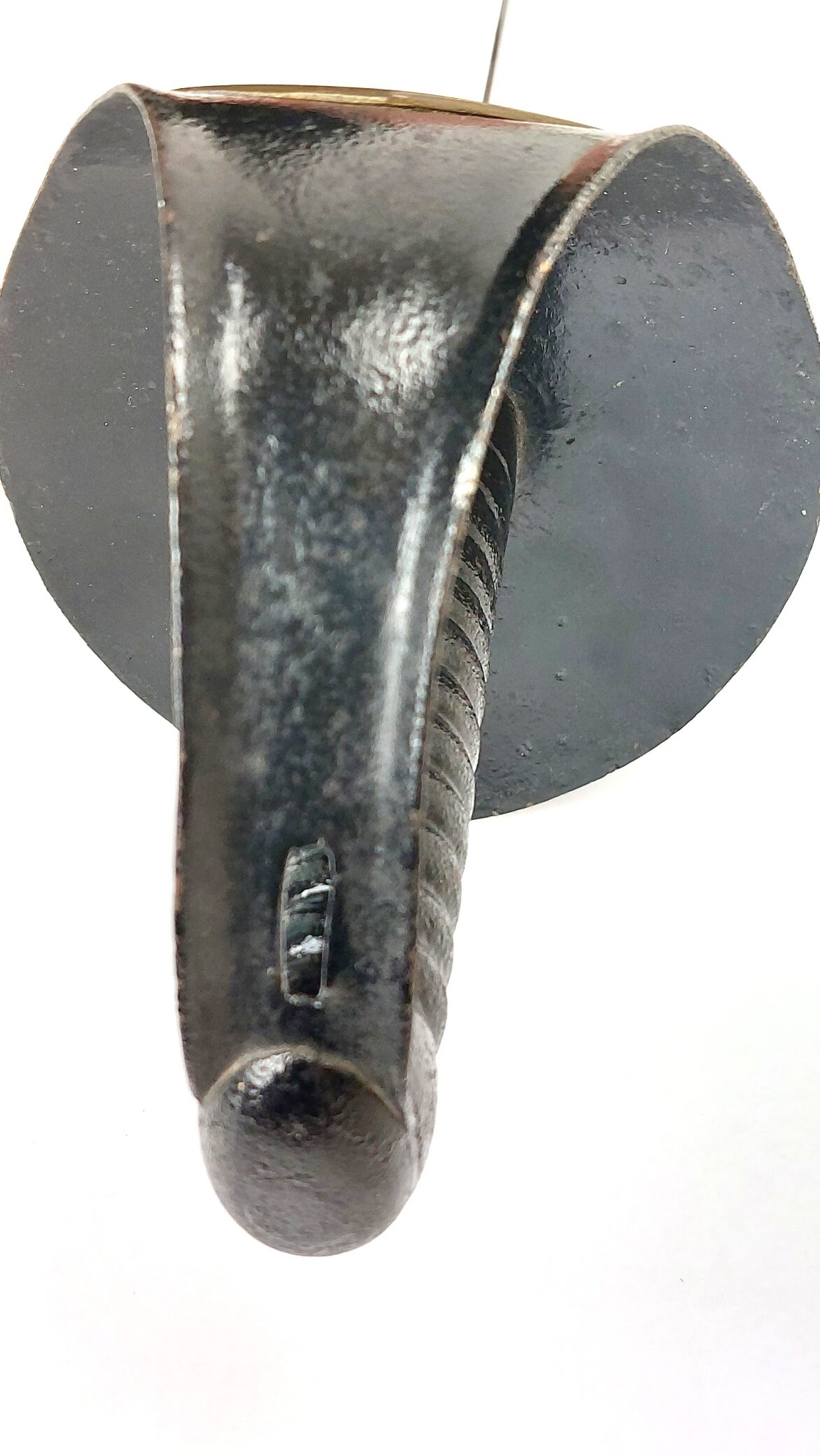
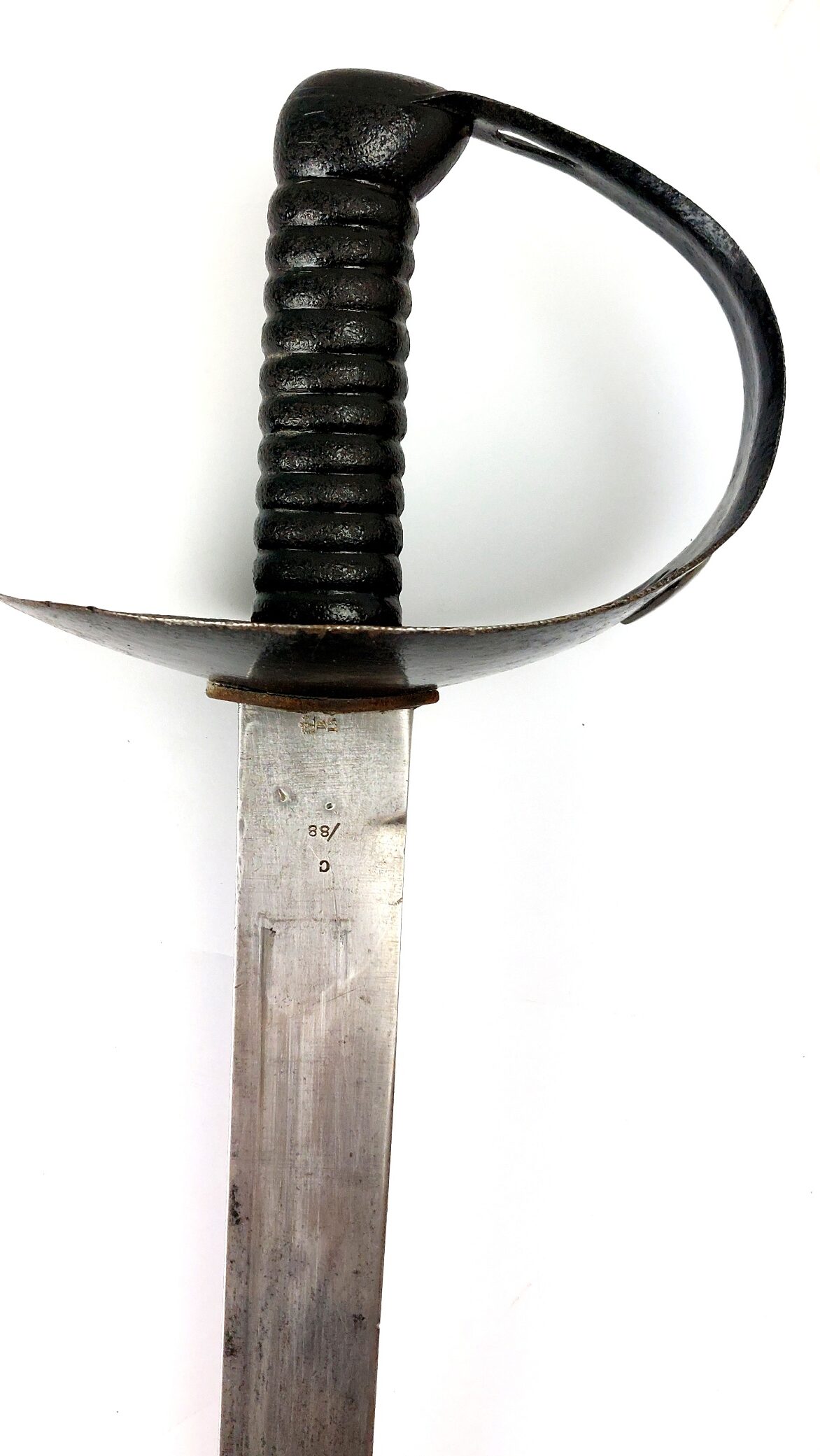
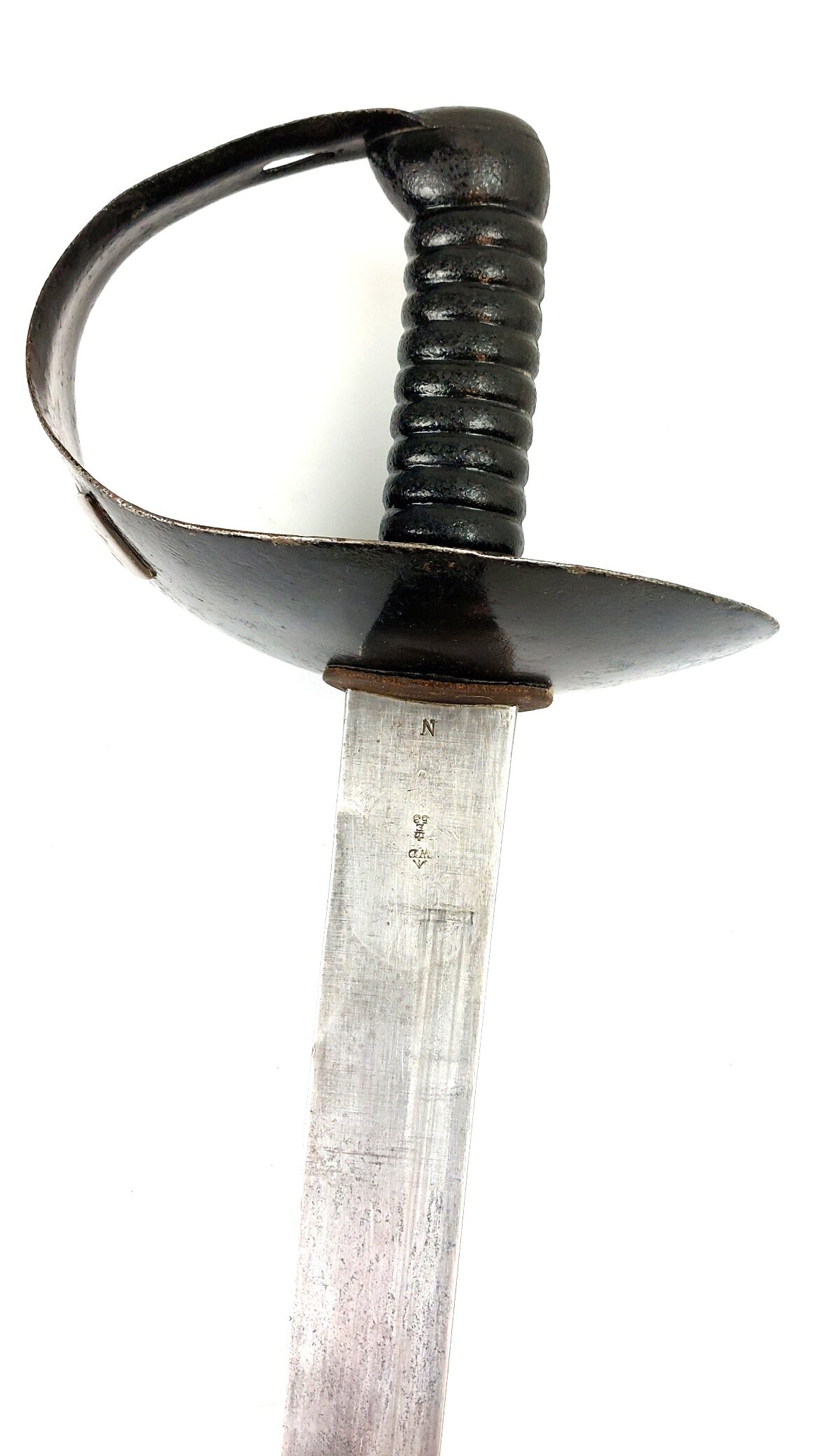
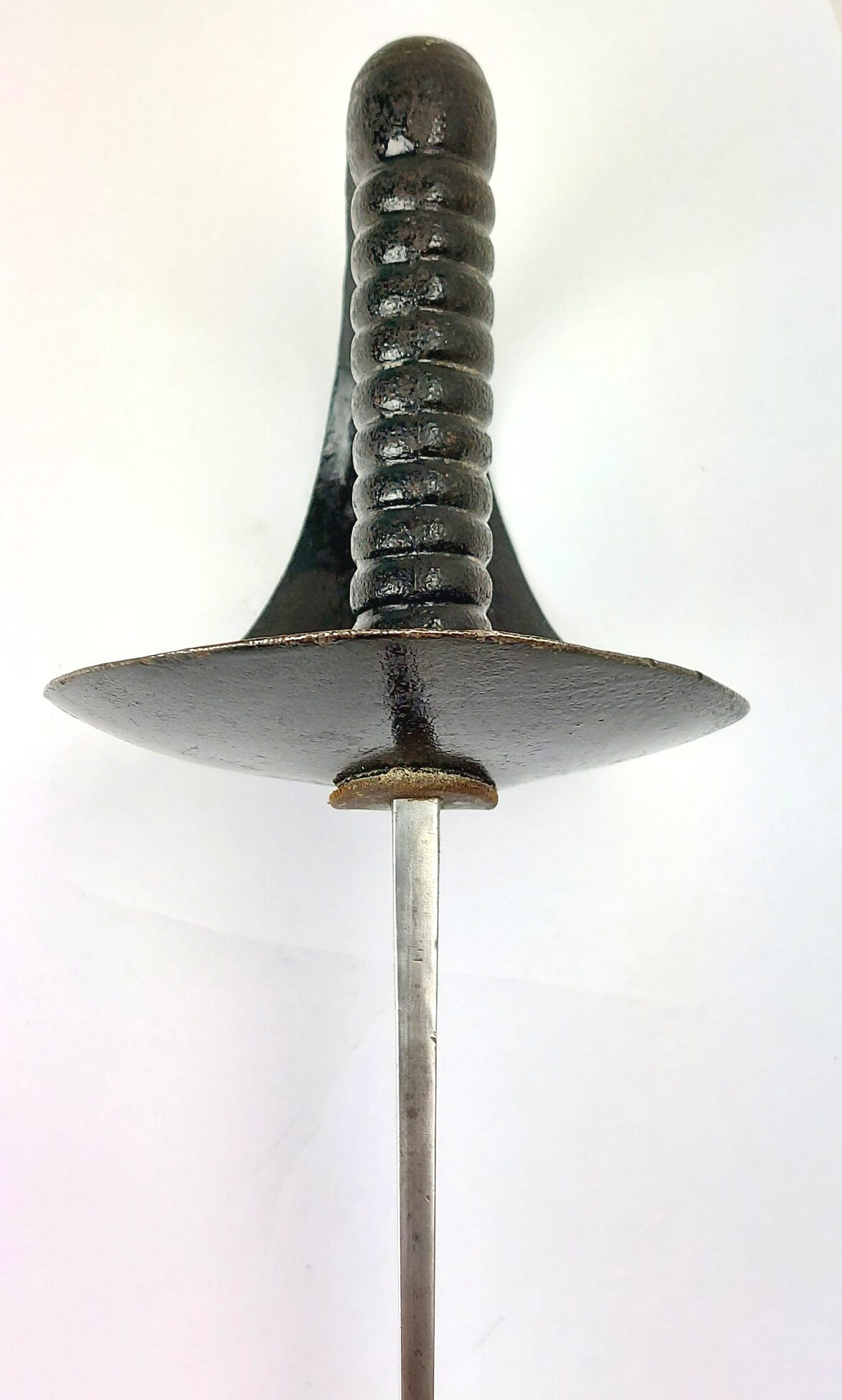
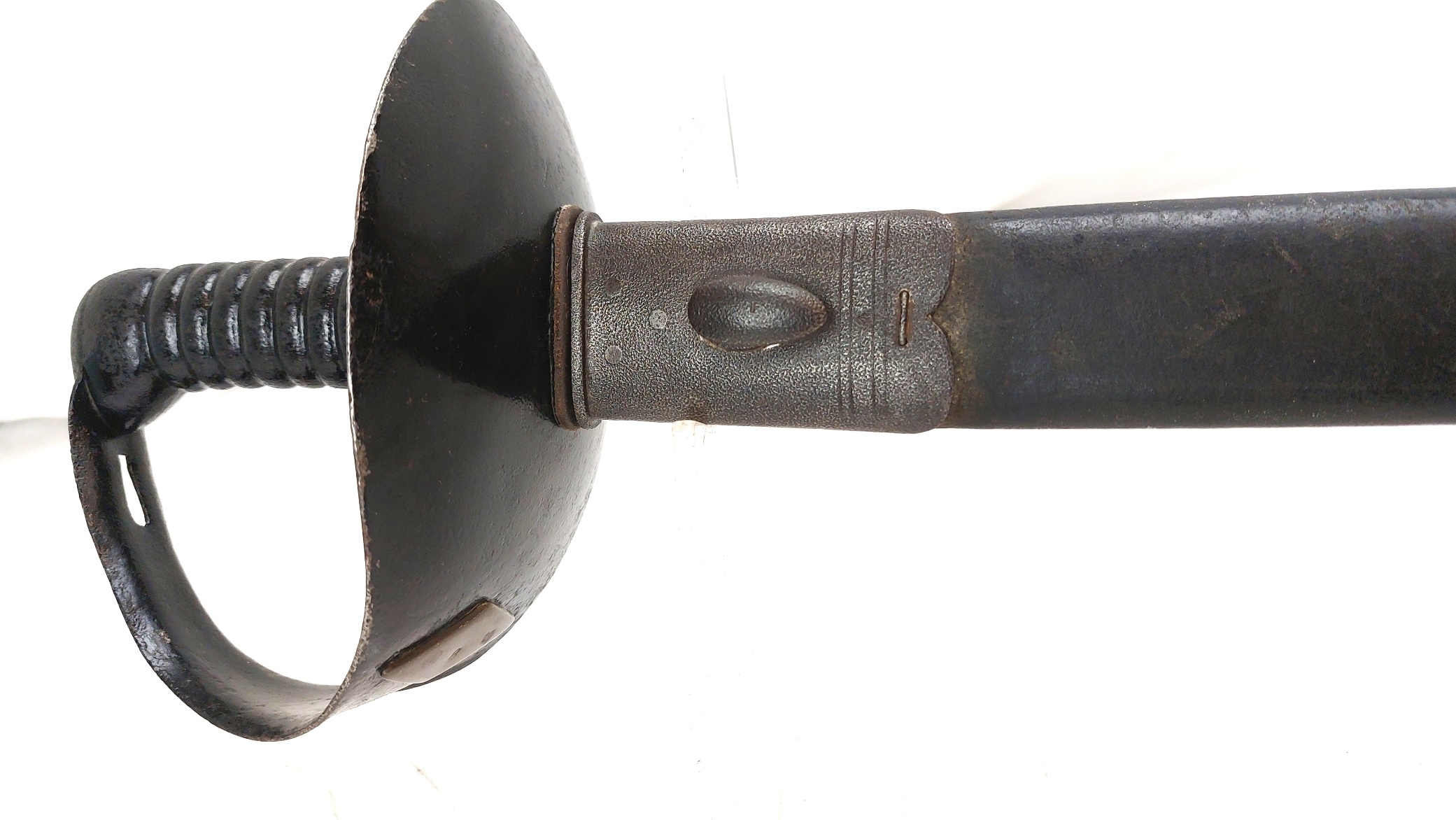
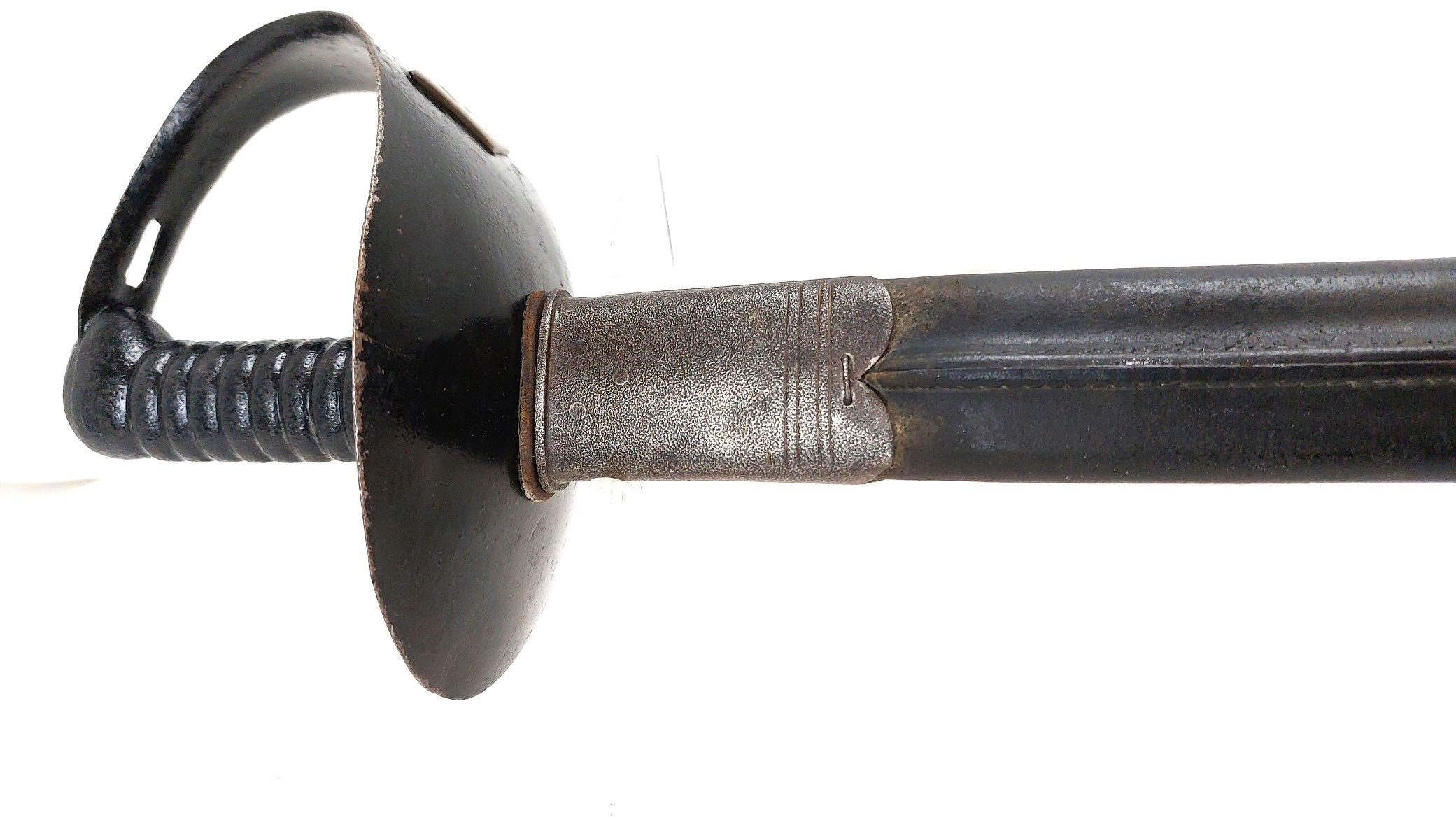
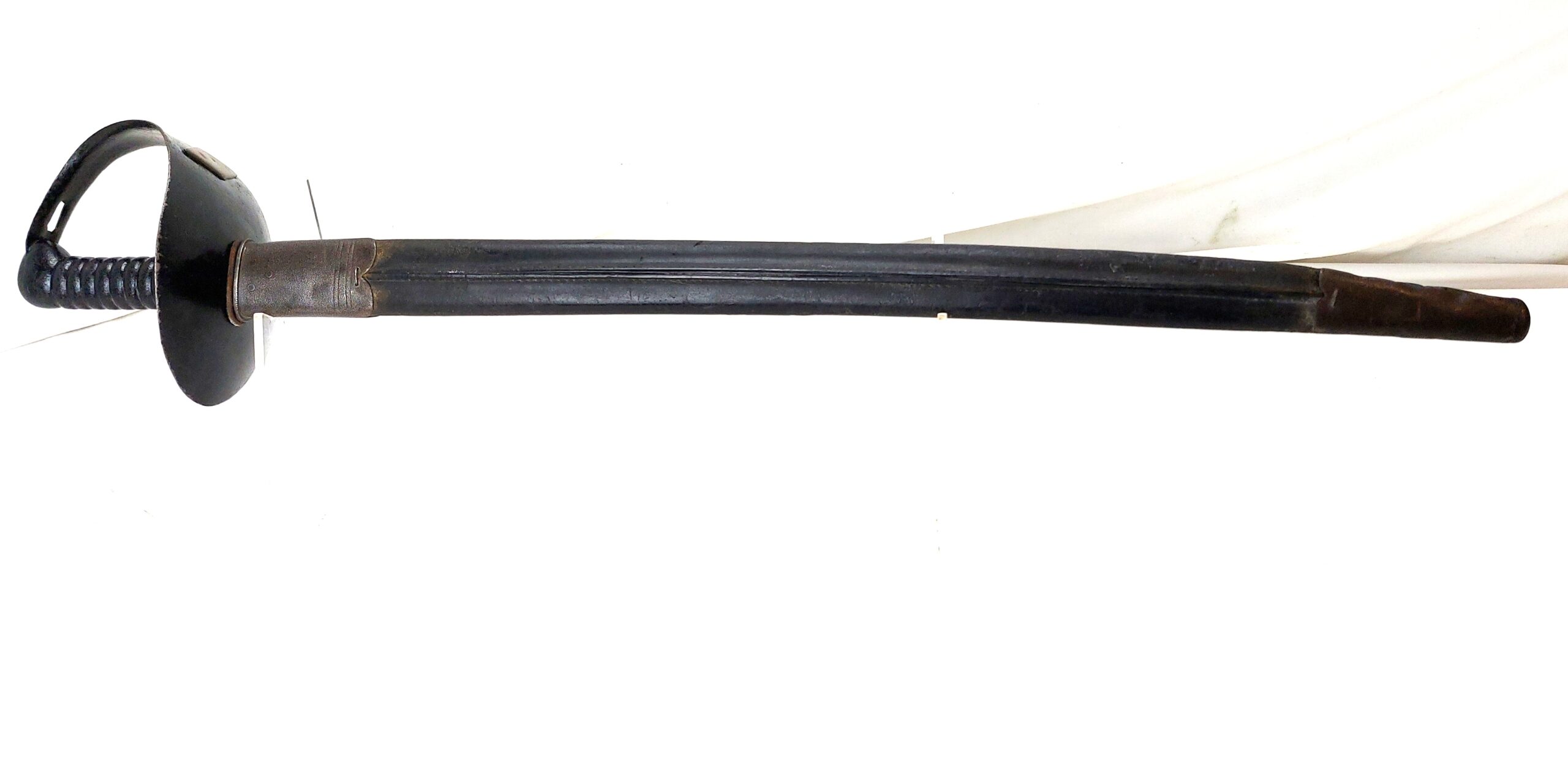
The cutlass has the regulation straight single-edged blade with spear point, iron bowl guard, ribbed cast iron grip, and iron-mounted scabbard, all correct for the mid-19th-century naval pattern. The blade remains in very good condition with clear profile and only light age wear and sharpening marks from service.
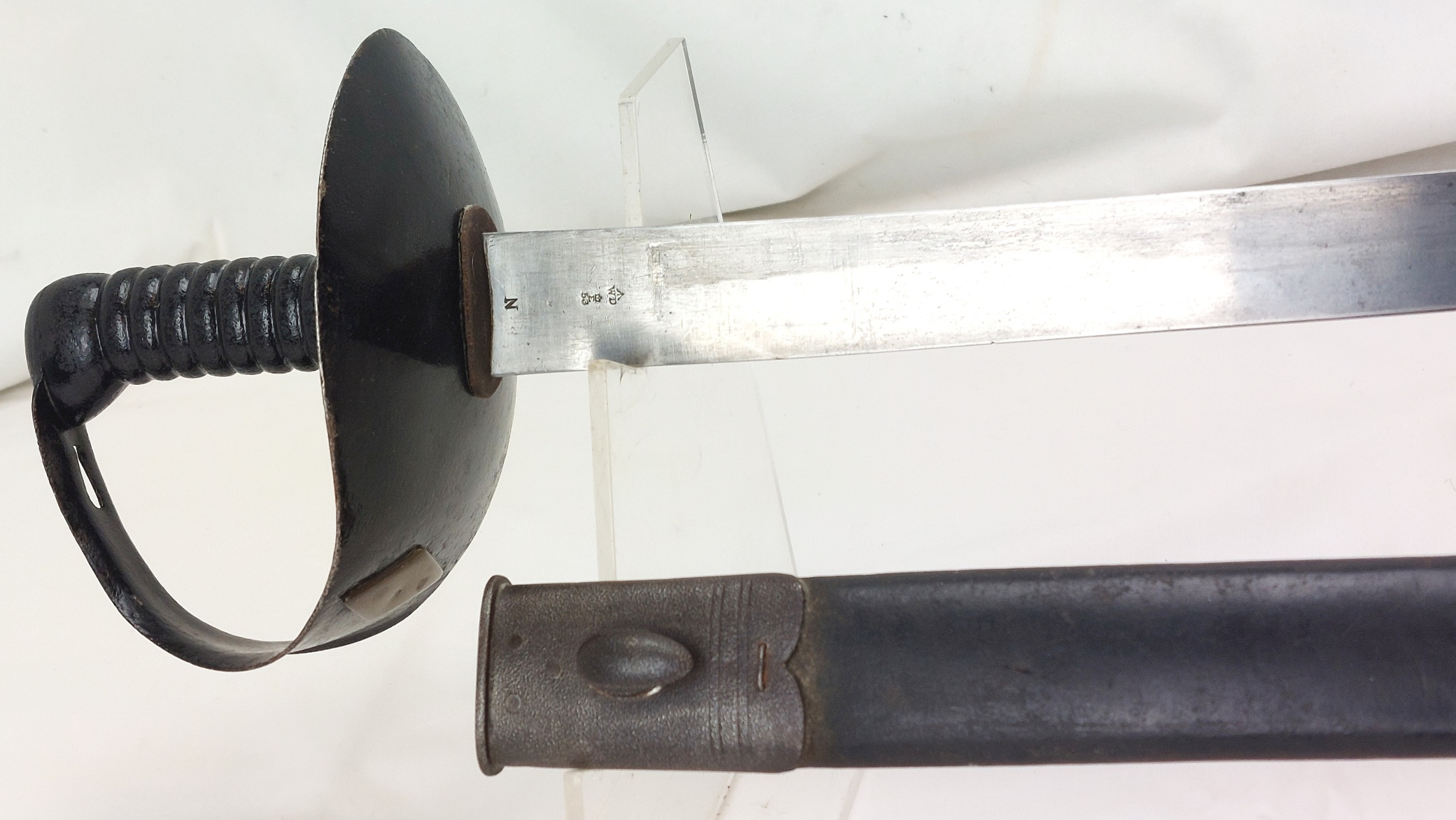
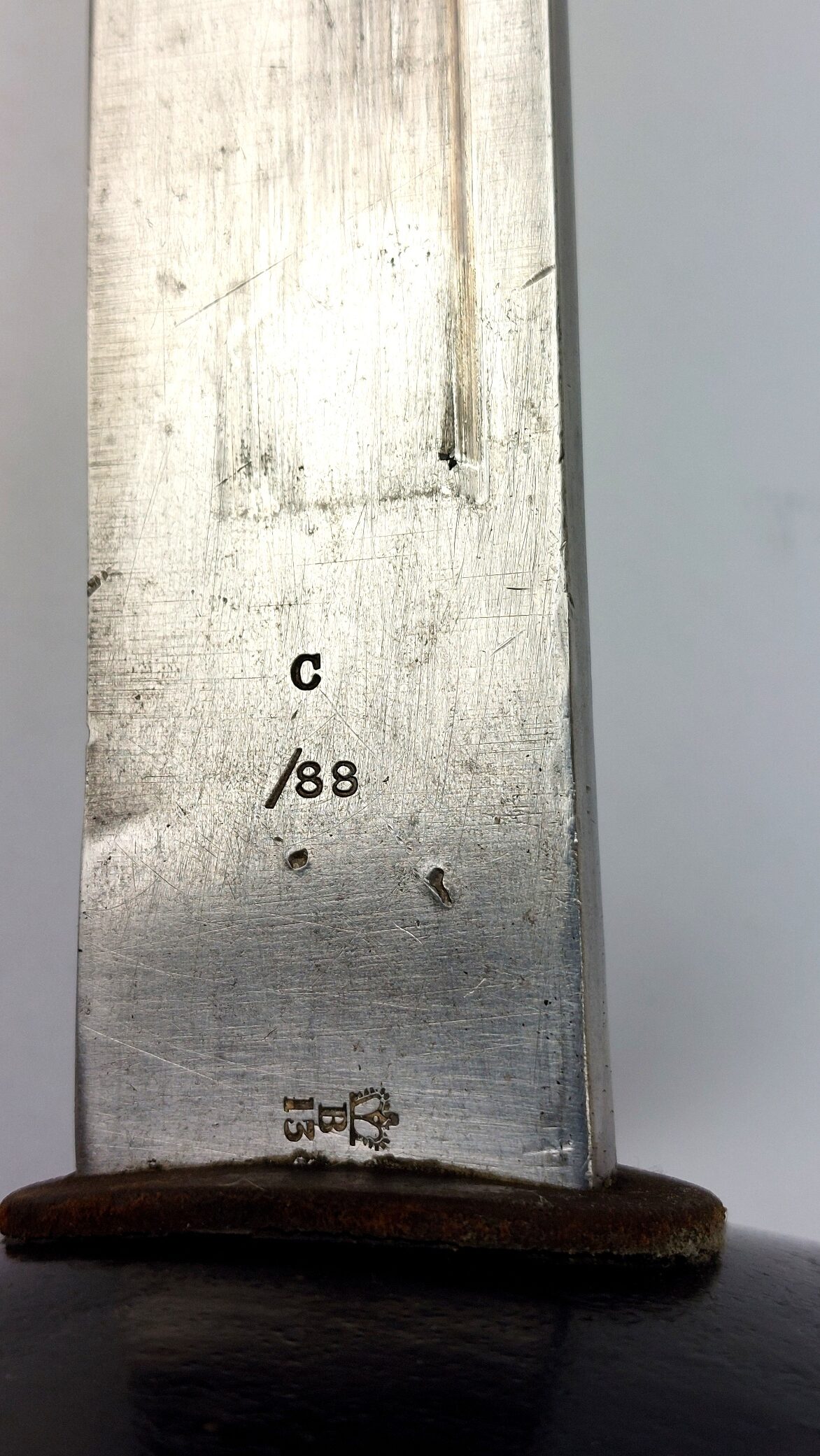
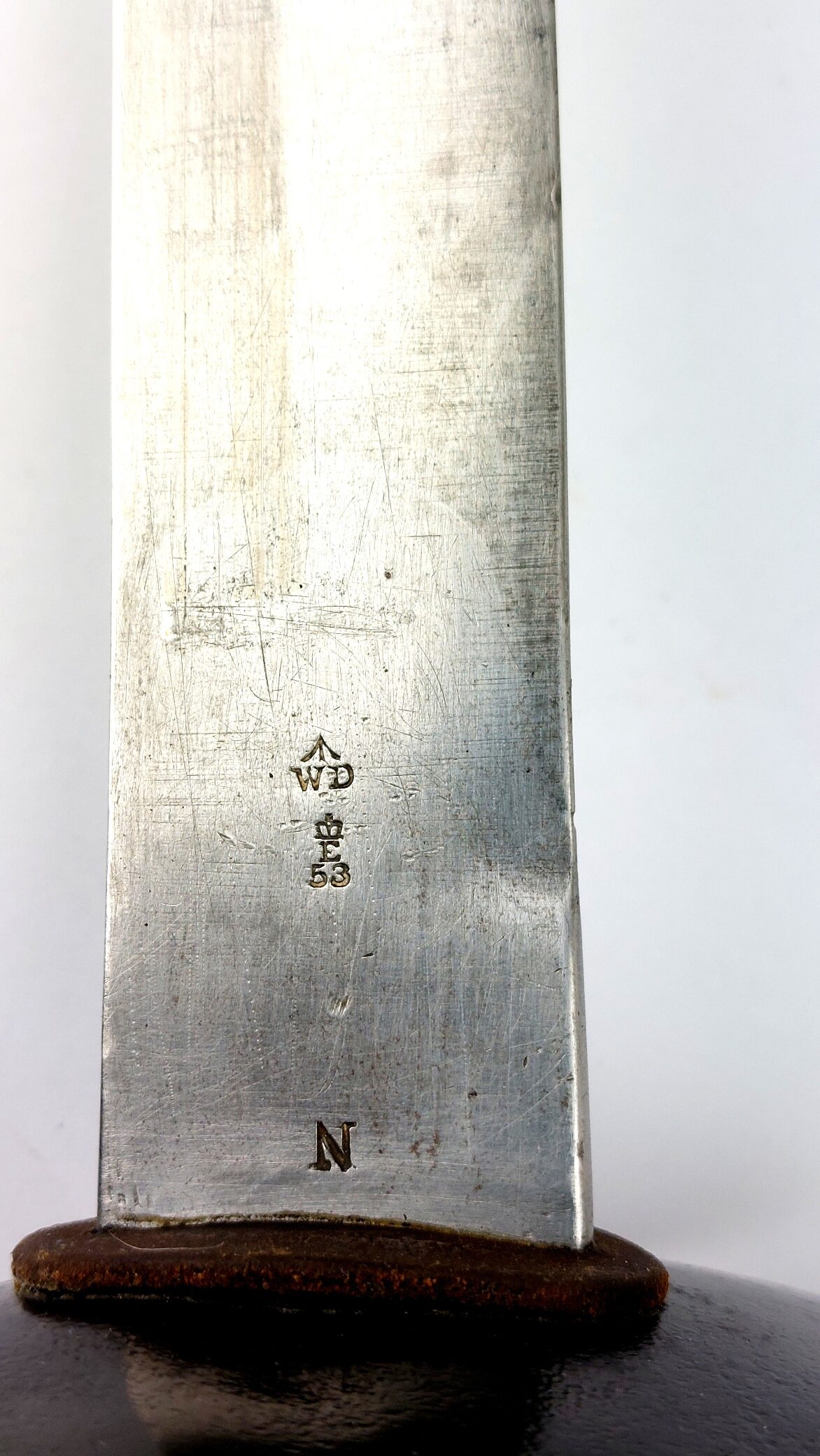
The ricasso carries clear ordnance markings including Broad Arrow over WD, confirming War Department ownership, together with inspection stamps Crown / E / 53 andthe naval designation N, the obverse has the and the later mark C / 88 and inspection stamps Crown / B / 13. The Crown / letter / numberstamps are government inspection marks, the crowned letter identifying the inspection location (E for Enfield and B for Birmingham) and the number identifying the individual government viewer. The marking C / 88is consistent with the late-19th-century system used when earlier cutlasses were officially modified during service. Period records note that converted weapons were stamped C / followed by the last two digits of the year of conversion, and frequently received an additional inspection mark at the same time. The present blade length of approximately 27 inches corresponds with the shortened form adopted during later Victorian modifications to the 1845 pattern.
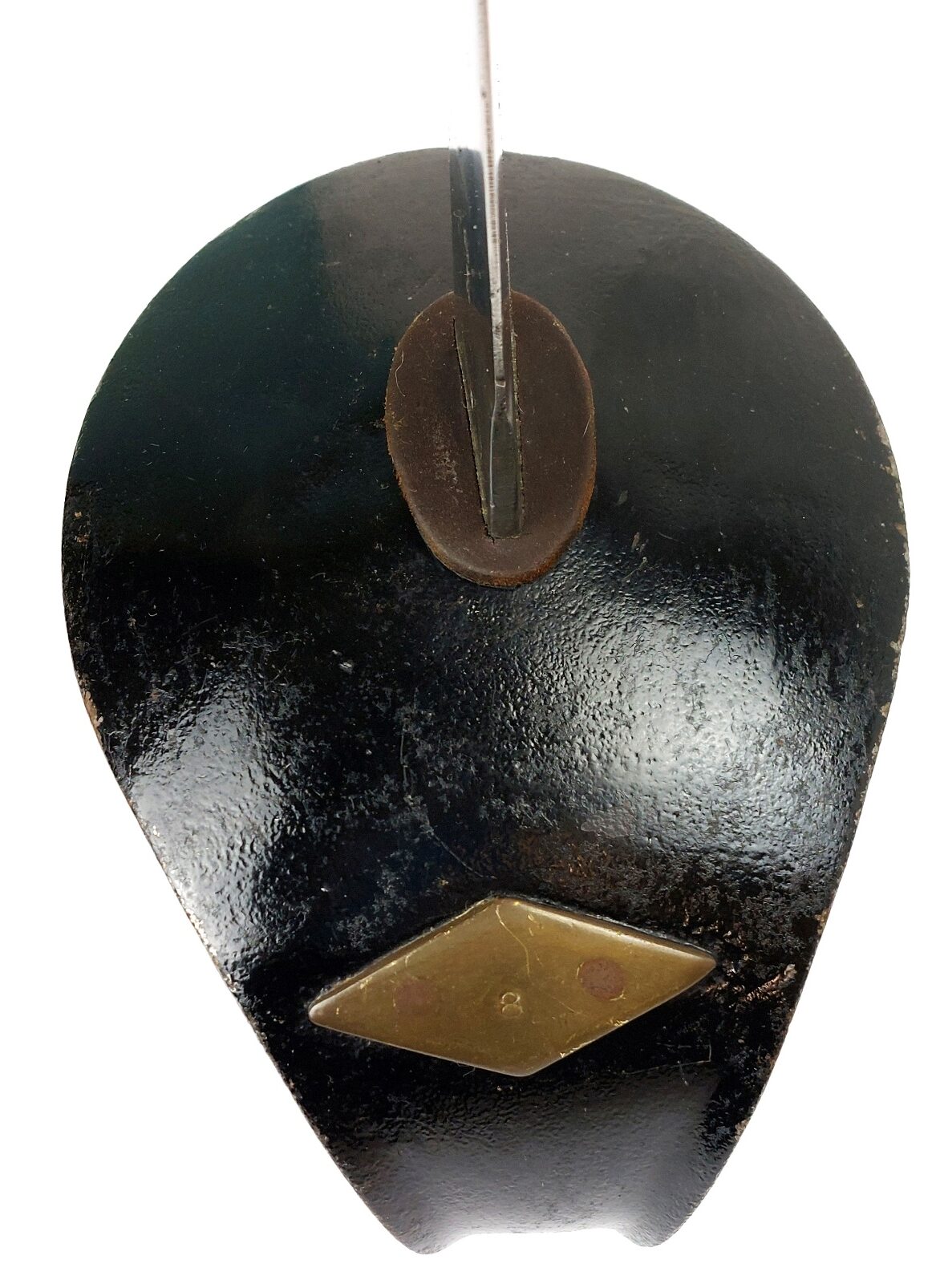
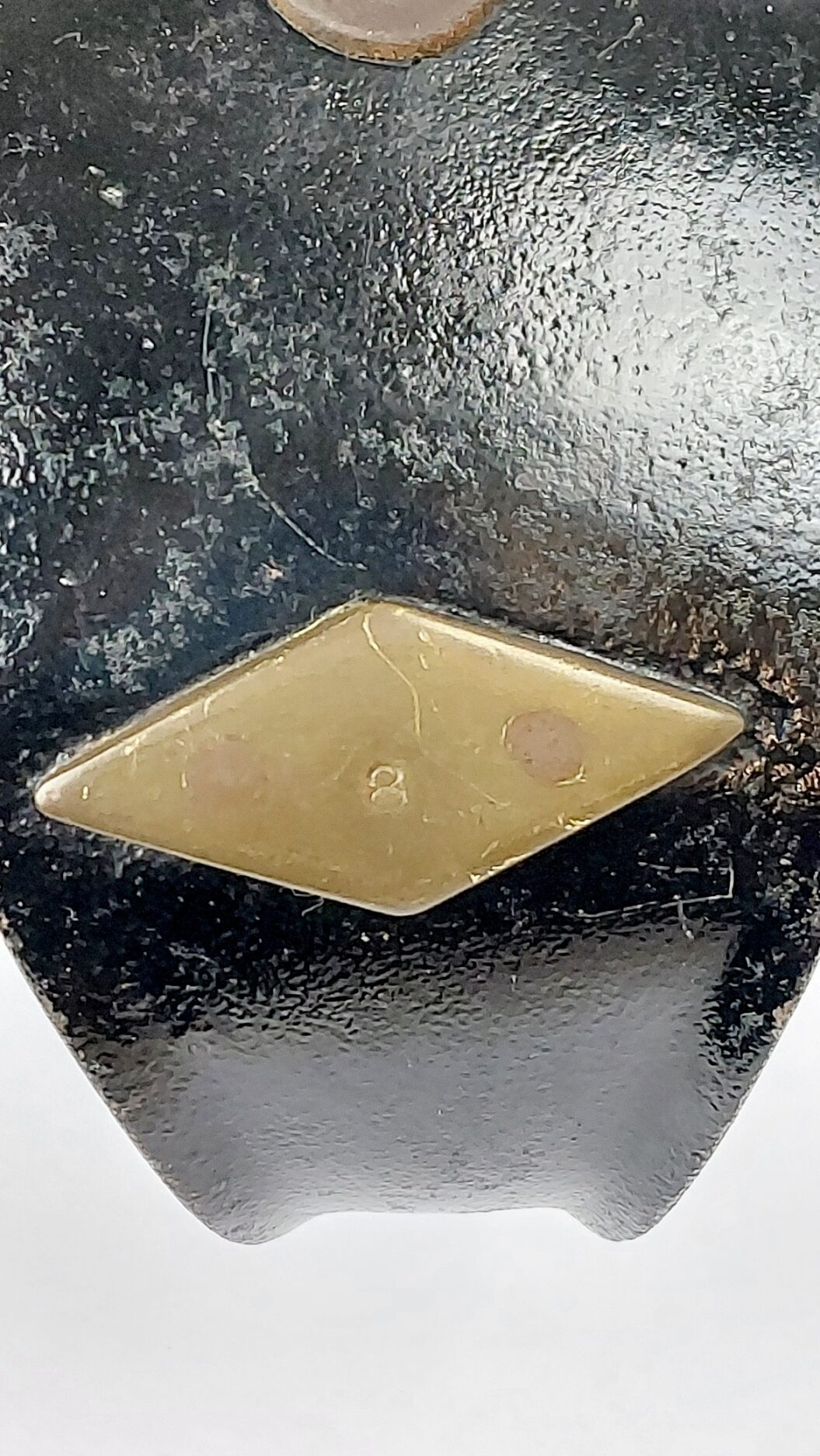
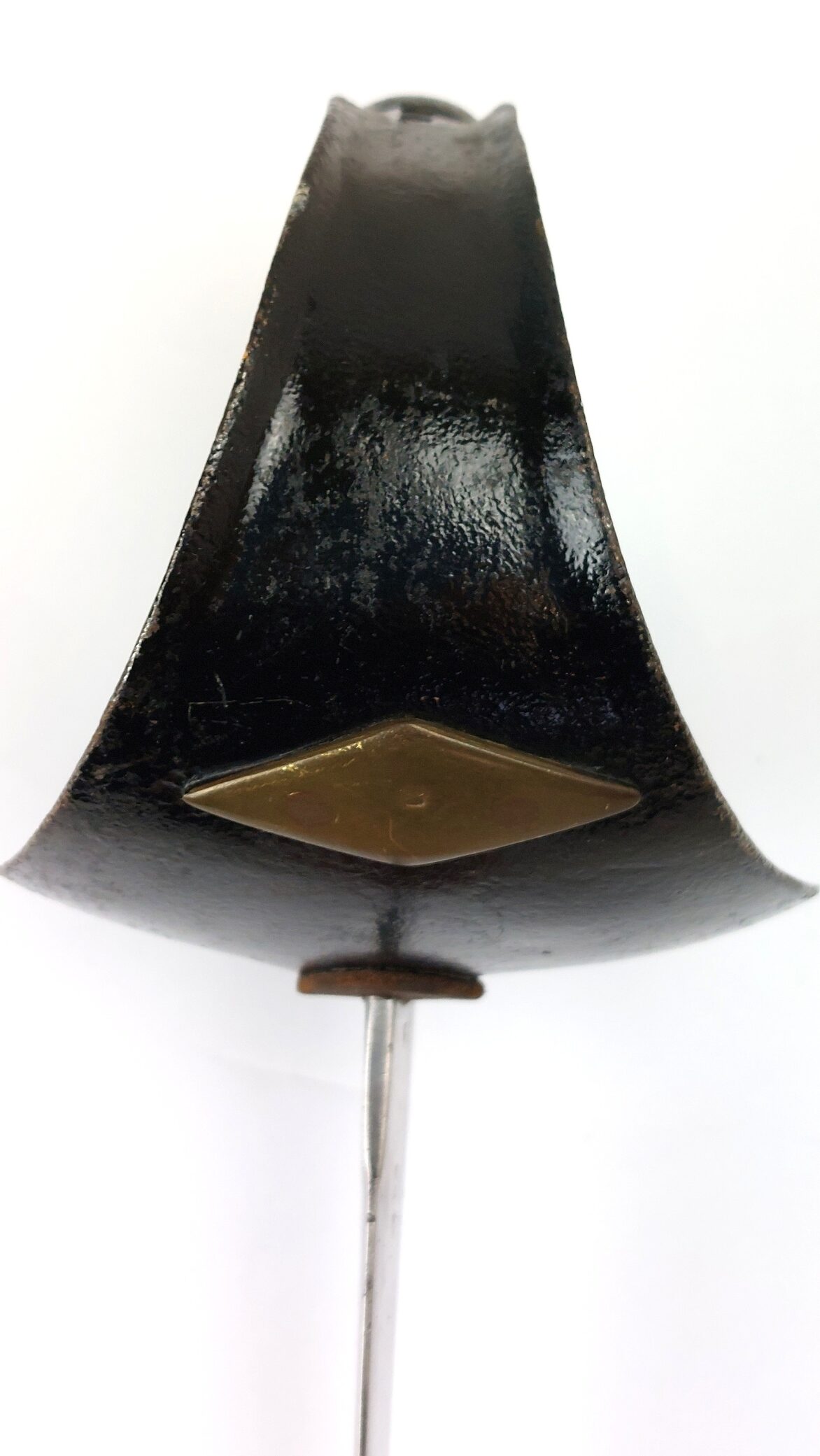
The iron bowl guard retains its original blackened finish and is fitted with the correct brass diamond rack plate stamped “8”, indicating its numbered position in a ship’s weapons rack. The ribbed cast iron grip is in excellent condition and remains tight to the hilt.
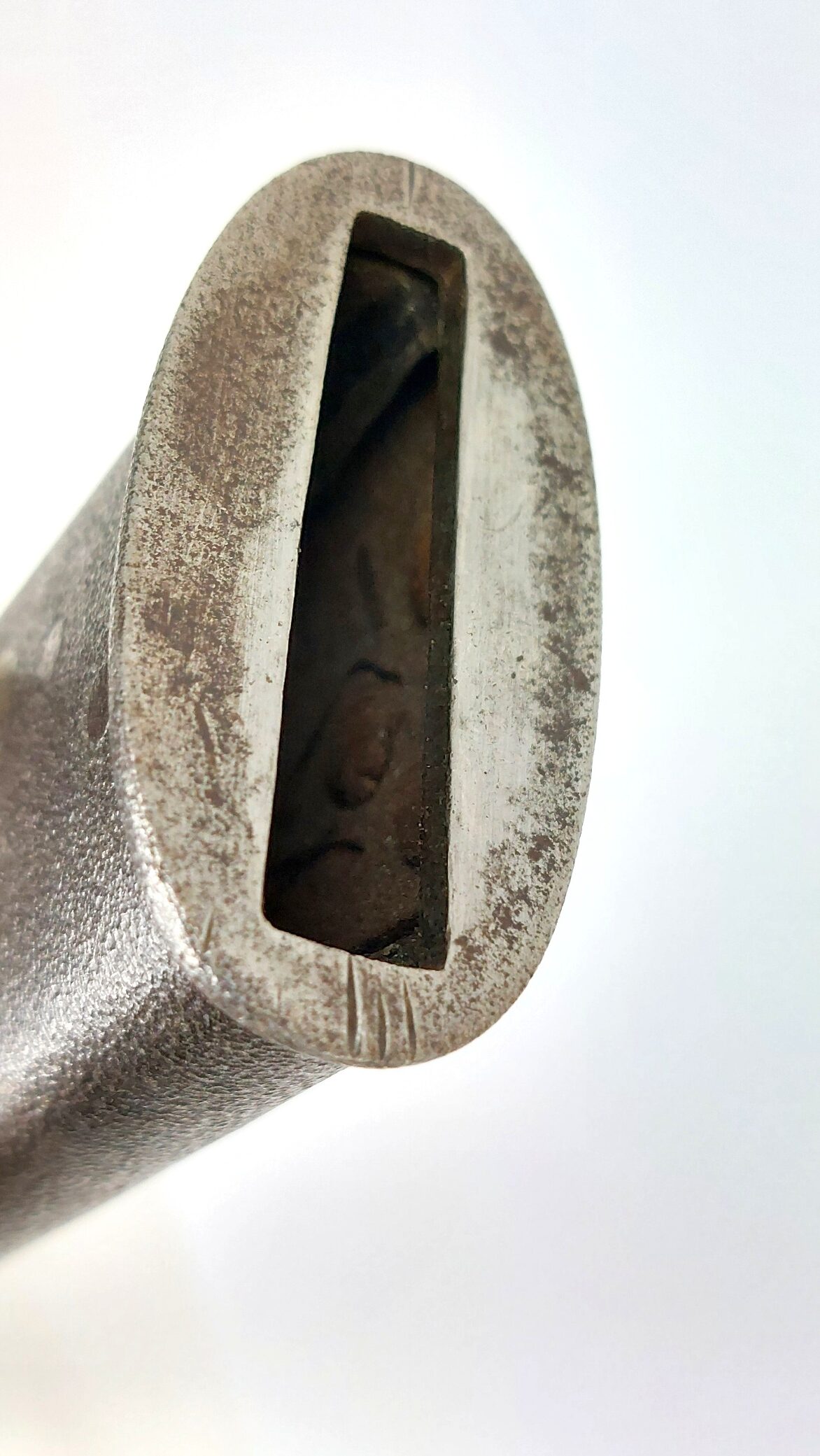
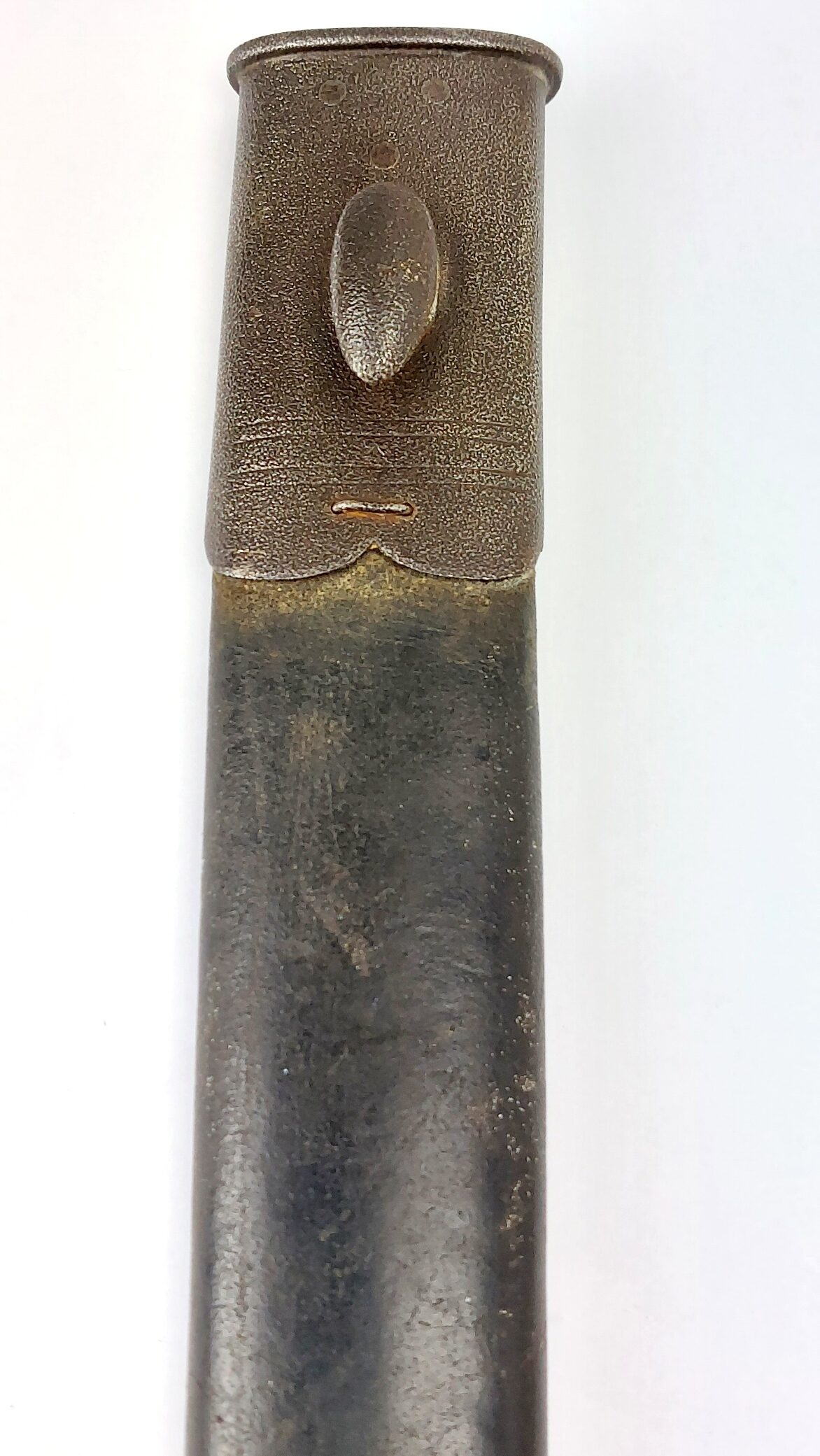
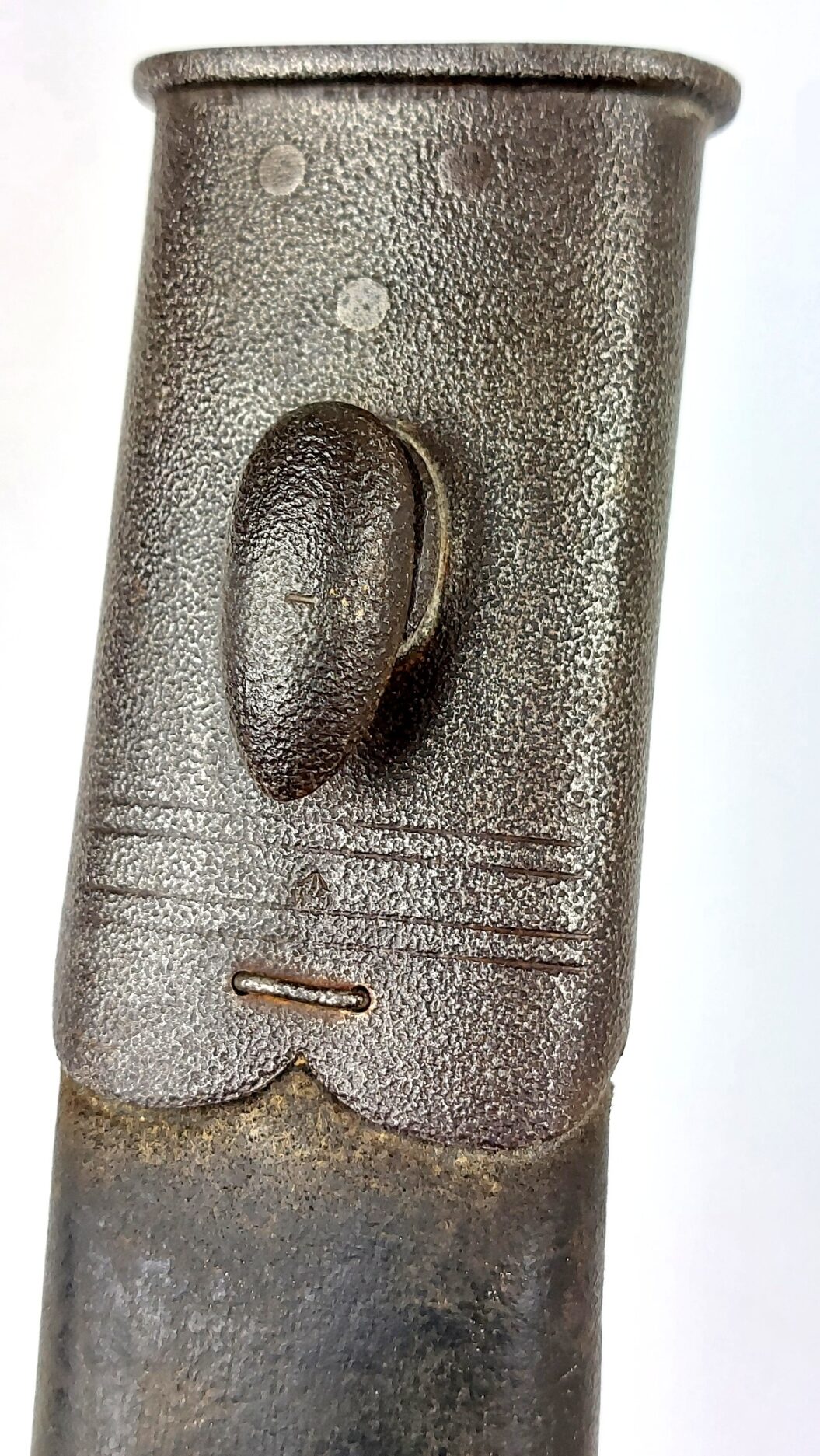
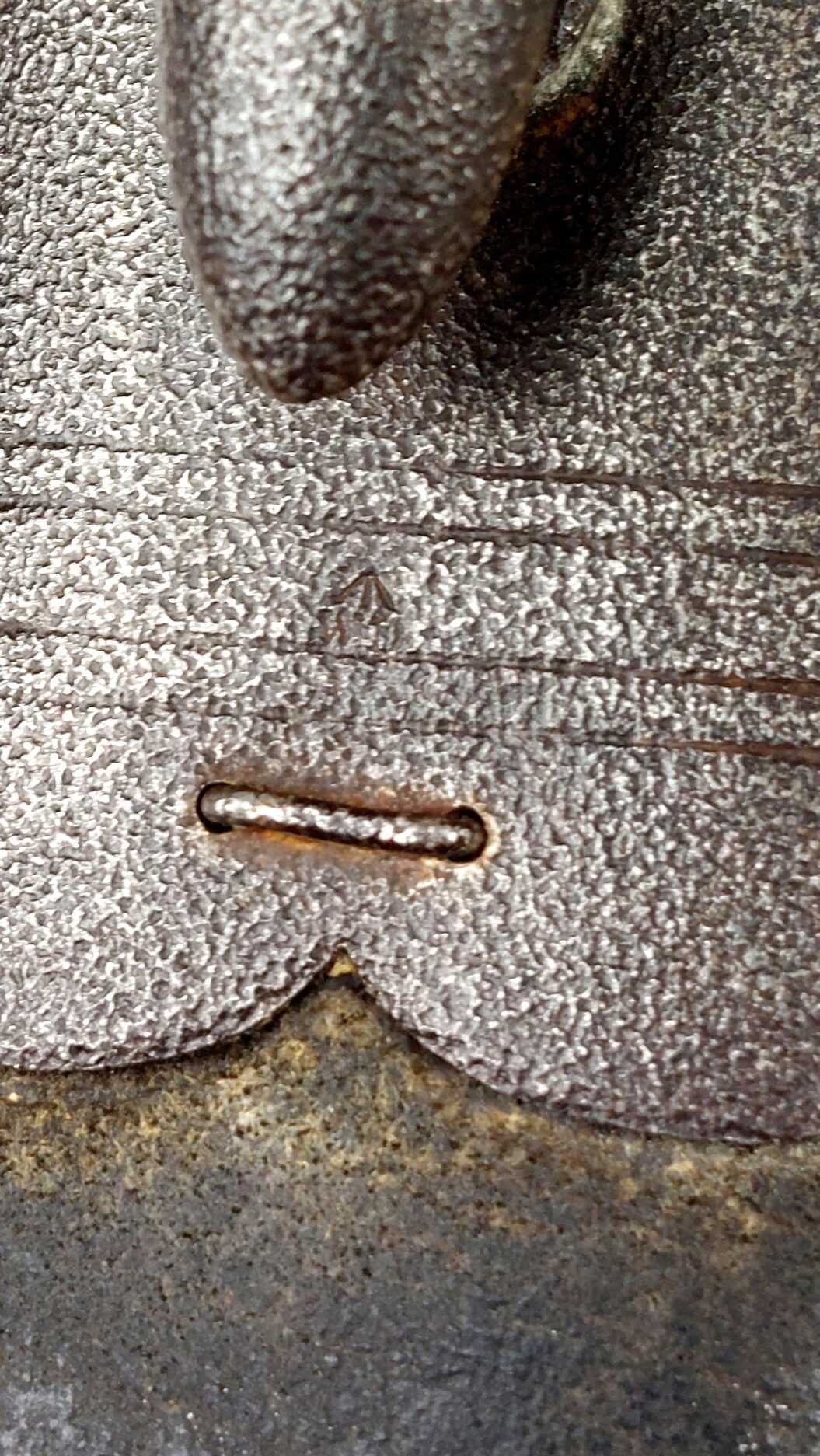
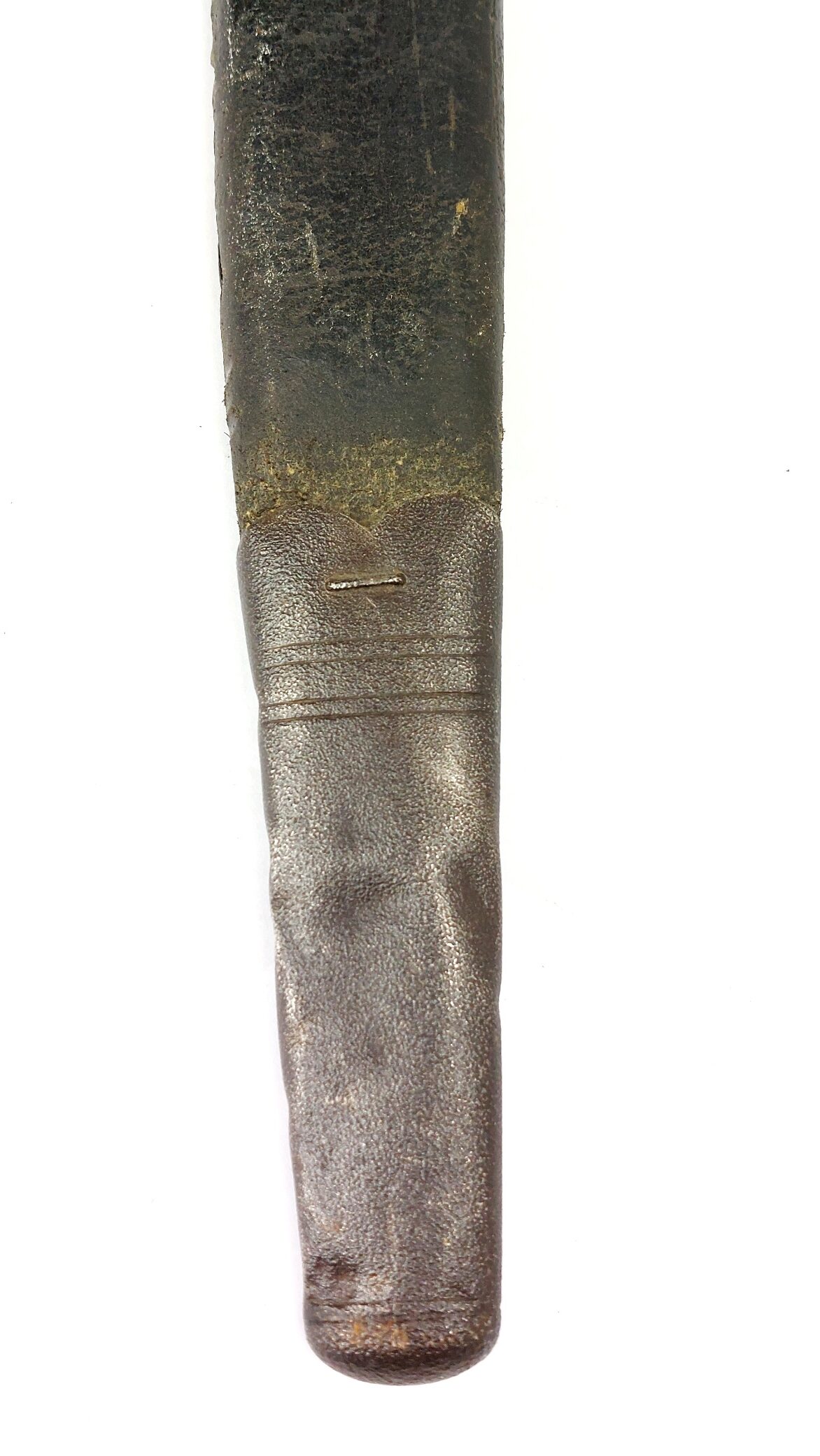
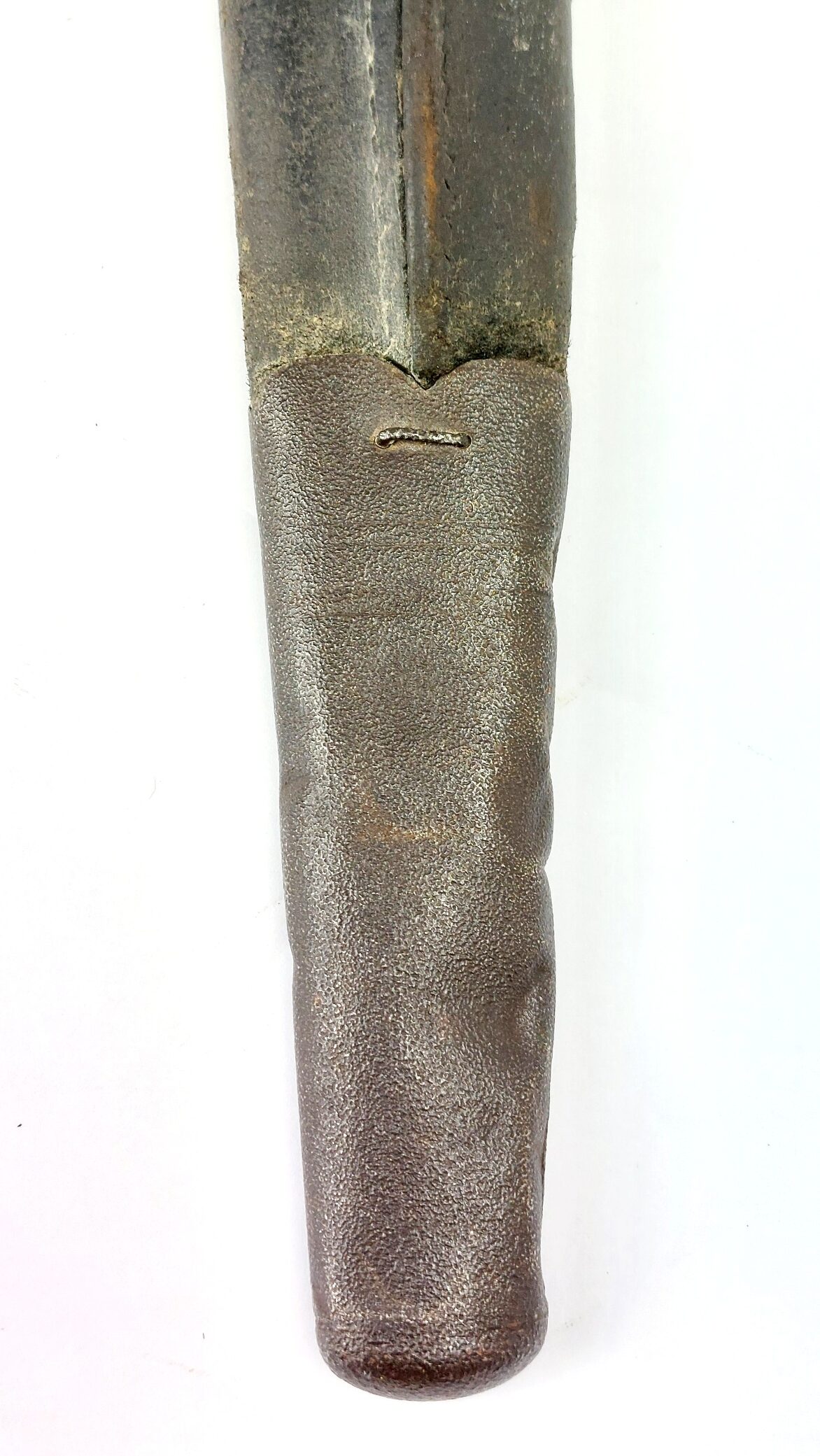
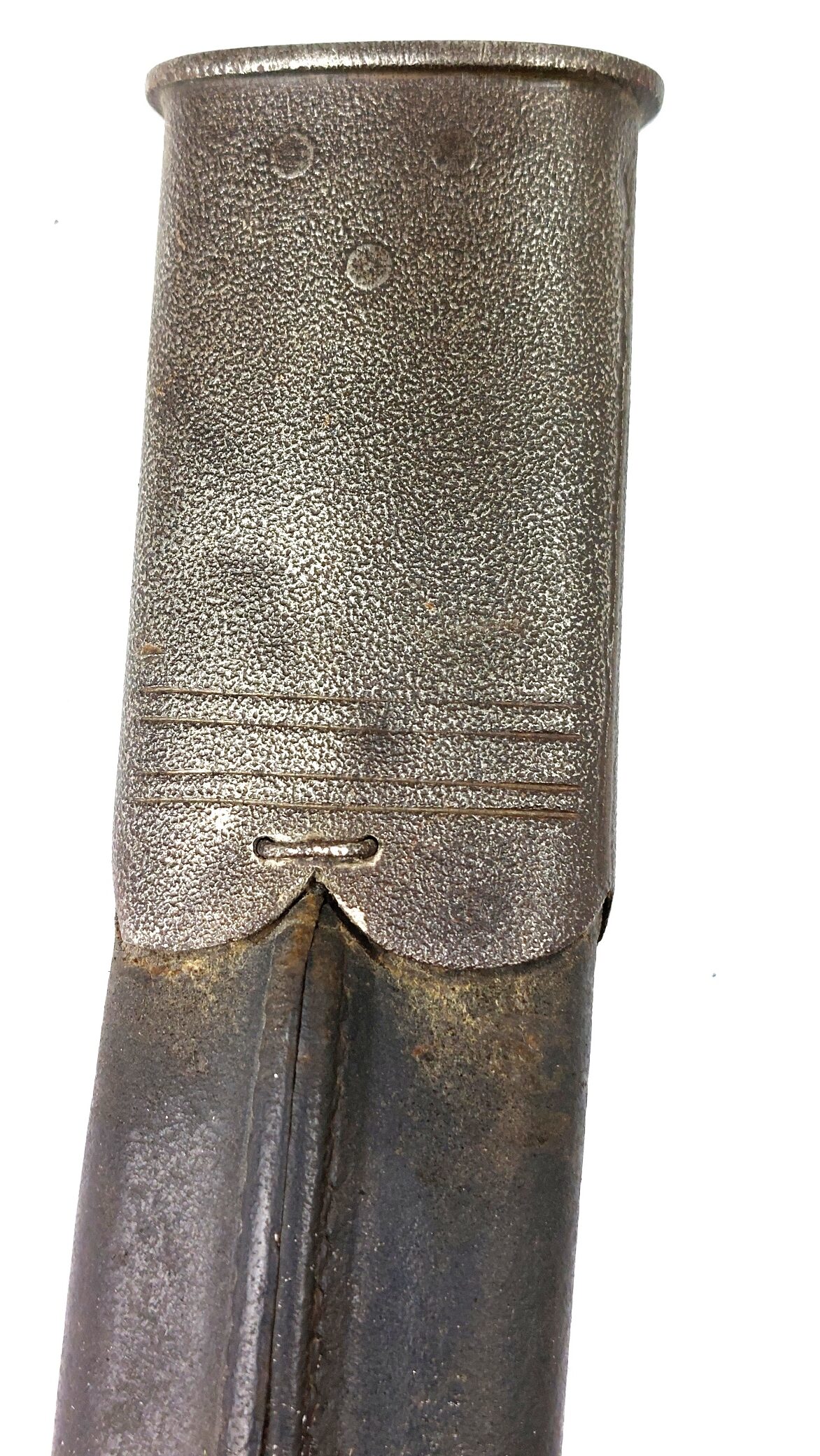
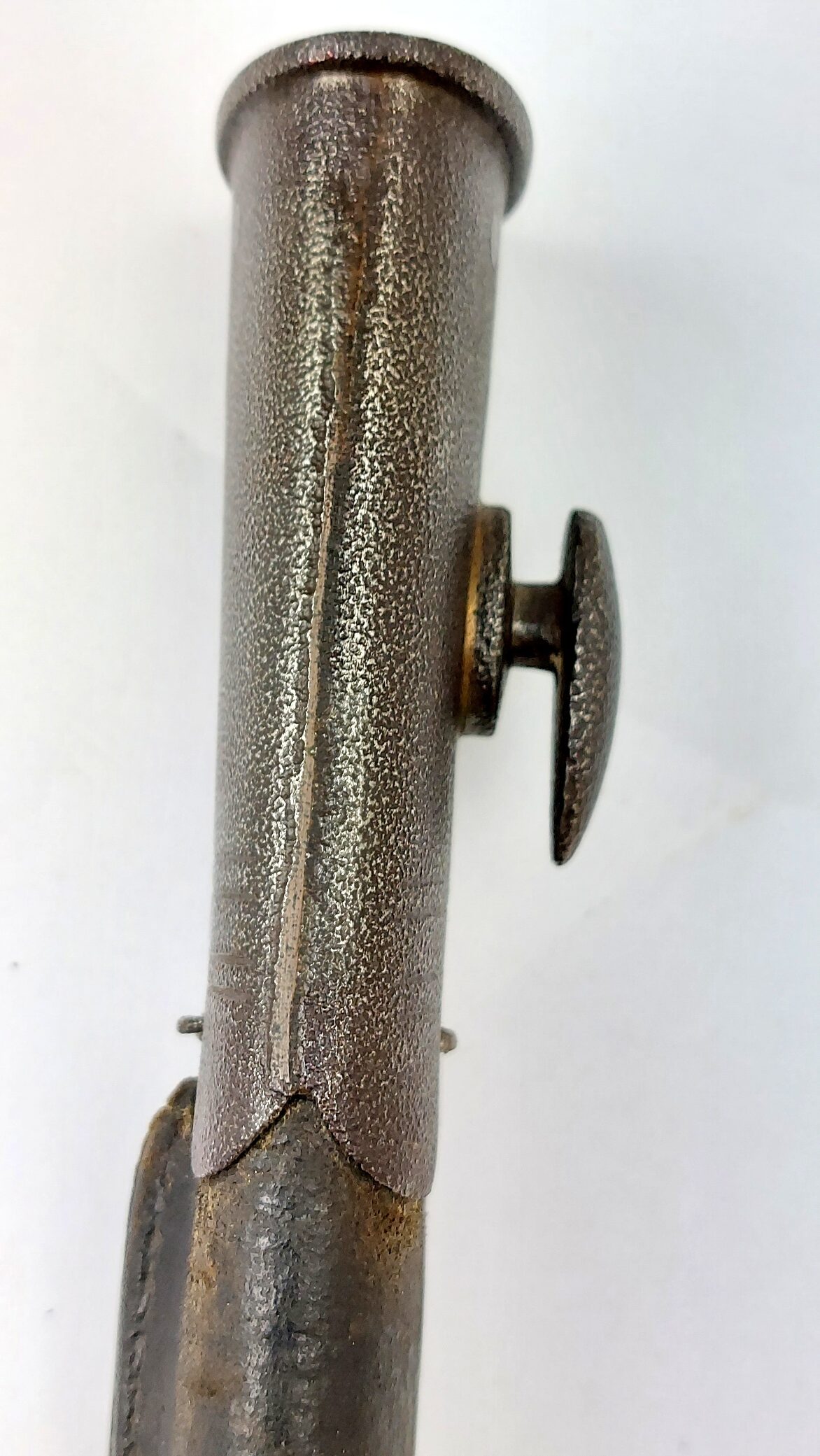
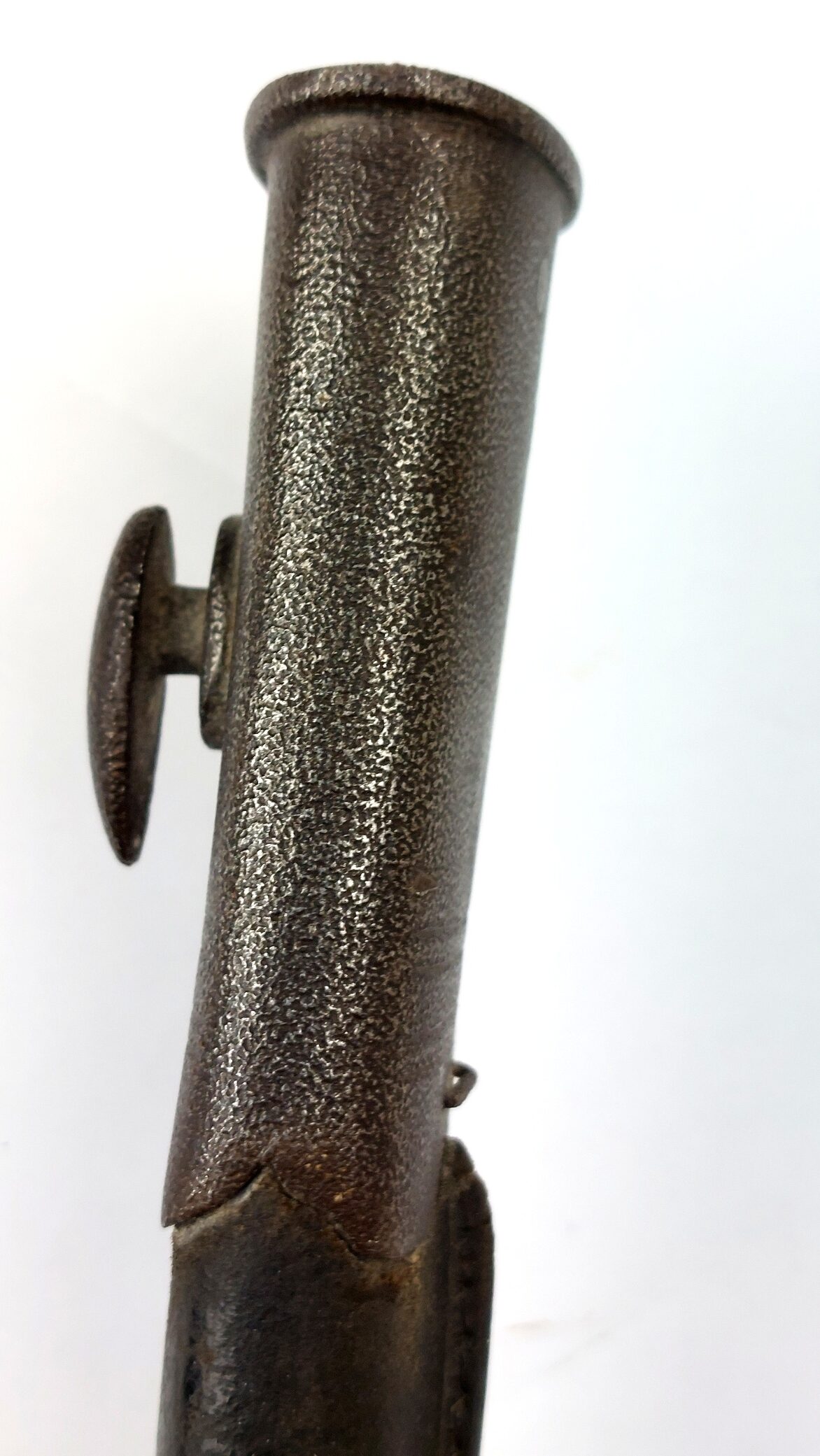
The cutlass is complete with its original scabbard, which retains its aged finish and is stamped with the Broad Arrow, confirming government ownership.
Overall this is a very honest and highly marked example showing clear evidence of manufacture, inspection, modification, and continued service use.
Approx. Measurements – Blade length: 68.4 cm. Overall length: 82.5 cm.
History Note: The 1845 Pattern cutlasswas introduced following trials in the early 1840s based on a design by George Lovell, Inspector of Small Arms, and became the standard naval sidearm for the Royal Navy throughout the mid-Victorian period. Unlike earlier patterns, it used a strong sheet-iron bowl guard and cast iron grip, with a long curved blade intended for close-quarters fighting aboard ship.
From the 1850s onward responsibility for naval weapons passed to the War Department, and cutlasses were marked with the Broad Arrow and WD, often together with naval issue marks and government inspection stamps. These weapons remained in store for many years and were repeatedly inspected, refurbished, and modified as required.
During the later 19th century the Royal Navy underwent major reorganisation and modernisation. The introduction of ironclads, changes in naval drill, and increasing use of landing parties in colonial service reduced the need for long, heavily curved cutlass blades. Instead of producing entirely new weapons, large stocks of existing 1845 pattern cutlasses were altered to improve handling and durability. Official modifications carried out from the late 1850s through the 1870s and 1880s included shortening the blade, reducing its curvature, and re-tempering or straightening earlier examples. Converted weapons were usually stamped C / followed by the year of conversion, and then re-inspected before being returned to naval stores. The marking C / 88on this example is consistent with one of these late-Victorian refurbishment programmes, when older cutlasses were brought up to the later standard rather than replaced. Such work reflects the continued retention of cutlasses for boarding drill, shipboard defence, and landing party use even at a time when naval warfare itself had largely moved beyond the age of sail.
The numbered brass plate on the guard shows that the weapon was stored in a rack aboard ship, where cutlasses were kept ready for issue when a vessel was cleared for action. Surviving examples that show clear inspection, conversion, and rack markings provide a particularly good record of the long service life typical of Royal Navy weapons of the Victorian period.
*Condition* Very good original condition for its age. Blade clean with age wear and light sharpening marks. All inspection and ordnance stamps clear. Guard retains original finish with expected service wear. Grip solid and undamaged. Scabbard original with age patina and service marks. Please see photographs as part of the condition report.
*In order to complete the online purchase we will require a picture/scan of a photo ID (Driving Licence, Passport or an official document with a recent picture). If you don't posses any such document please call to buy. If we consider that the proof of ID is incorect or insuficient, we reserve the right to cancel the transaction.
*We also reserve the right to cancel the transaction with a full refund if there is any suspicion that the provided item will be used in any way contrary to the laws and legislation of UK.